
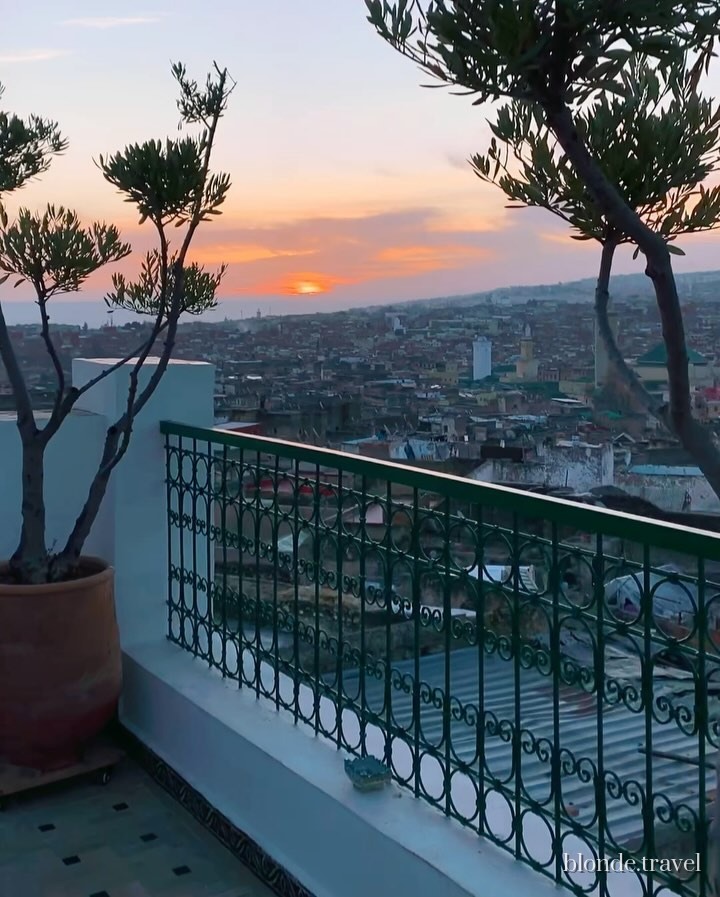
The medina was already making itself heard when I stepped onto the terrace. Dawn was breaking beyond the buildings, and below me Fez had begun its day. From that height I could see the old city spread out in the February light. I could not tell where one lane ended and another began. I could only hear life moving through them.
Long before I arrived in Morocco, I had known a different Fez. It came from O Clone, the Brazilian telenovela in which romance, desert, tiled courtyards, and leather tanneries seemed to exist within convenient running distance of one another. That imaginary geography stayed with me. Later, in the narrow lanes, I half expected Uncle Ali to appear around a corner.
Three nights, one dense day
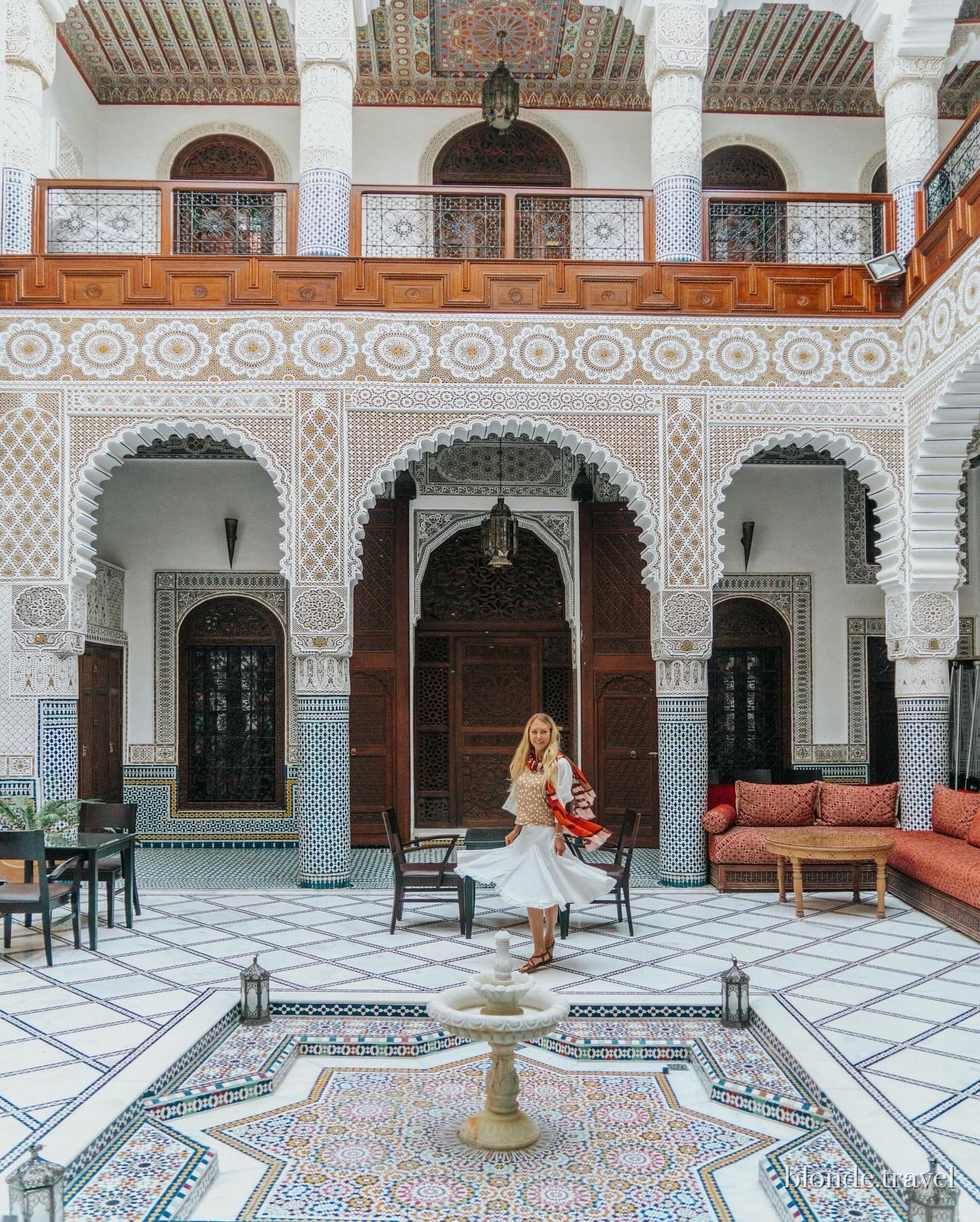
We reached Fez after a seven-hour drive from Merzouga and stayed for three nights at Riad Batchisarai. The schedule sounds generous until the details are added: one day went to Meknes and a vineyard lunch outside the city. Fez itself occupied an arrival evening, one concentrated day in the medina, and a final morning before the drive to Chefchaouen.
That single full day held Chouara Tannery, Al Attarine Madrasa, the area around Al-Qarawiyyin, and the gates of the Royal Palace. My itinerary reduced them to one line. Walking between them took the day.
Fez el-Bali has no tidy avenues separating one monument from the next. Workshops, homes, food stalls, religious buildings, and shoppers share the same narrow circulation system. An incidental turn can become the part of the walk that stays with you. A place marked dutifully on a map can stop the day altogether.
The Medina of Fez has been on UNESCO’s World Heritage List since 1981. UNESCO describes an urban fabric shaped over centuries, with many of its madrasas, fondouks, palaces, houses, mosques, and fountains dating from the city’s Marinid height in the thirteenth and fourteenth centuries. The designation explains the architecture. The streets reveal the rest: people still live and work among it.
The place I nearly treated as optional
Al Attarine Madrasa was the first site I entered in Fez. That morning I had added it to the map lazily, without much enthusiasm. Then I crossed the threshold.
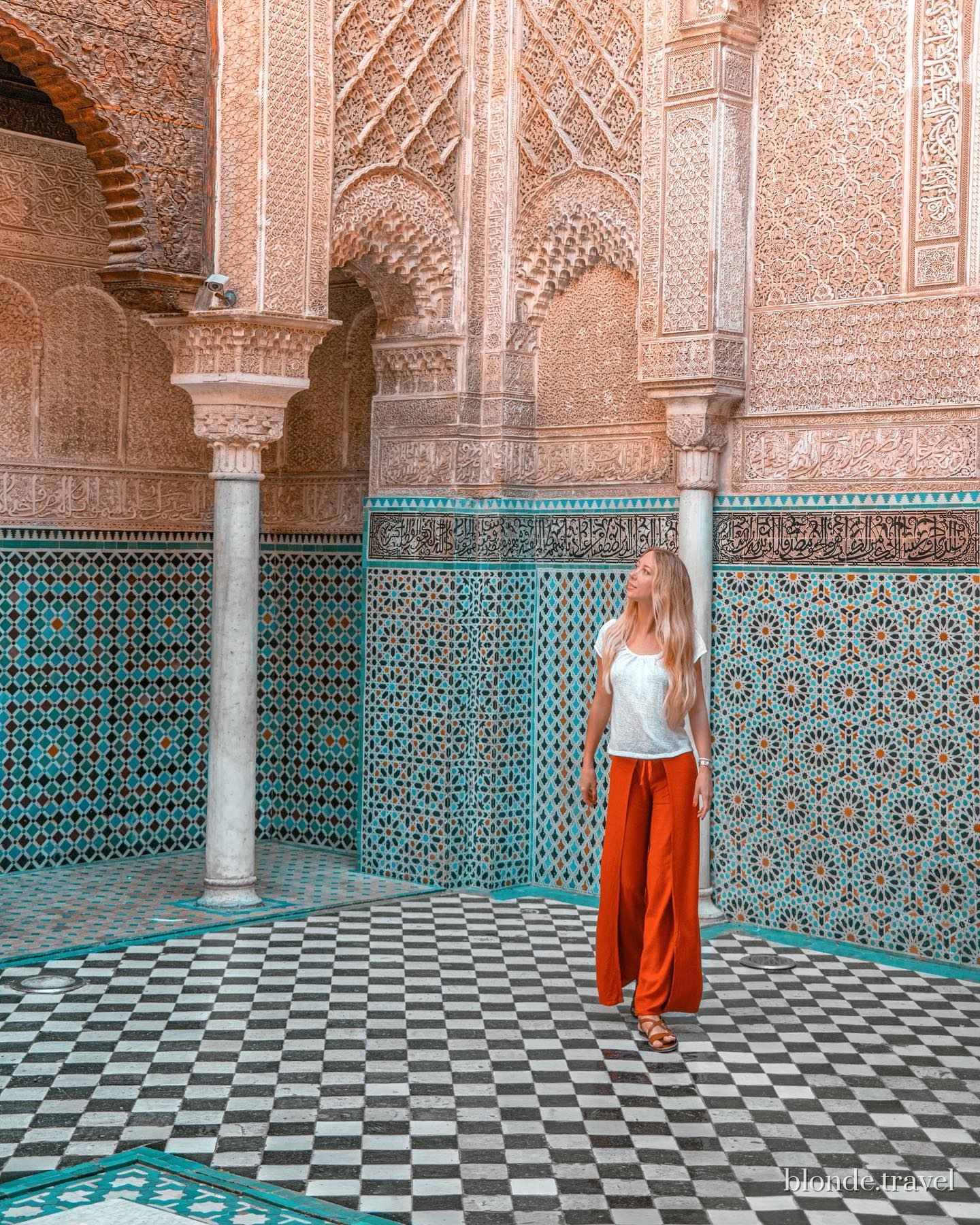
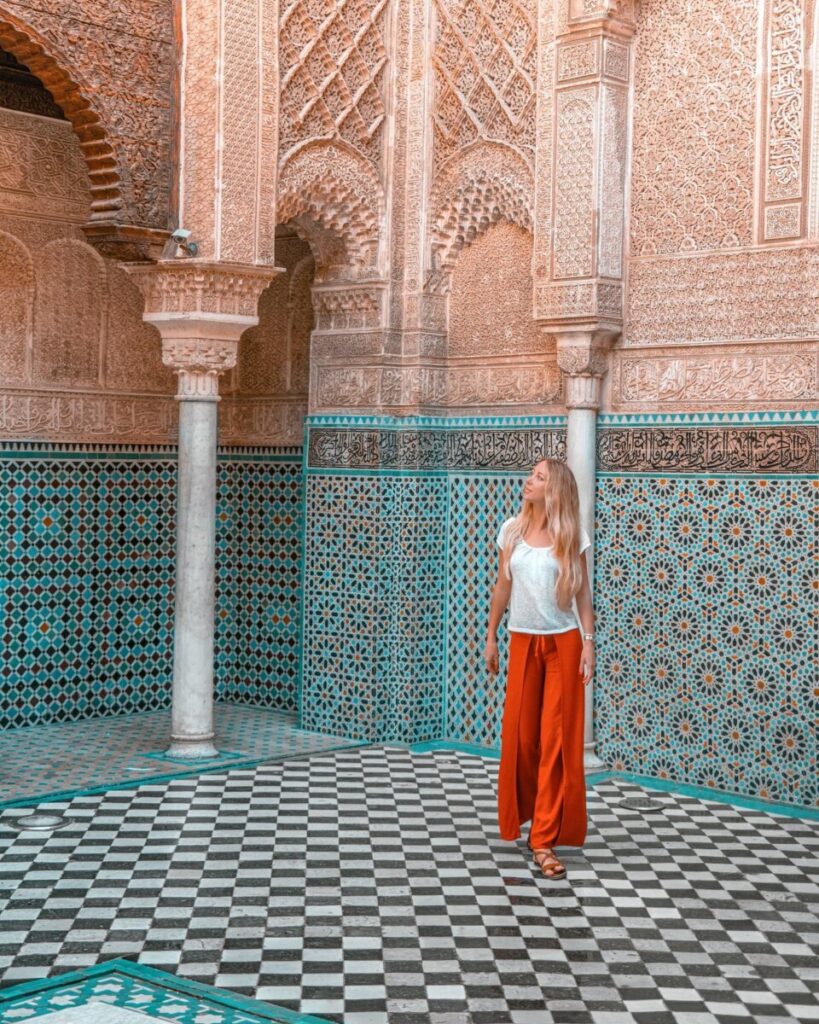
Carved cedar arches, marble, calligraphy, zellige, and fine arabesque met inside a small courtyard. I kept moving my eyes between them. No single surface seemed to finish the composition, yet the room did not feel confused.
The madrasa belongs to the Marinid period, and its foundation inscription records 1324. Its name comes from the neighboring market associated with spice and perfume sellers. The medina gives very little warning before the street opens into this inward-looking courtyard.
Perhaps it struck me so forcefully because I had expected so little. The place I almost treated as a minor stop became one of my clearest memories of Fez.
Following the leather through the medina
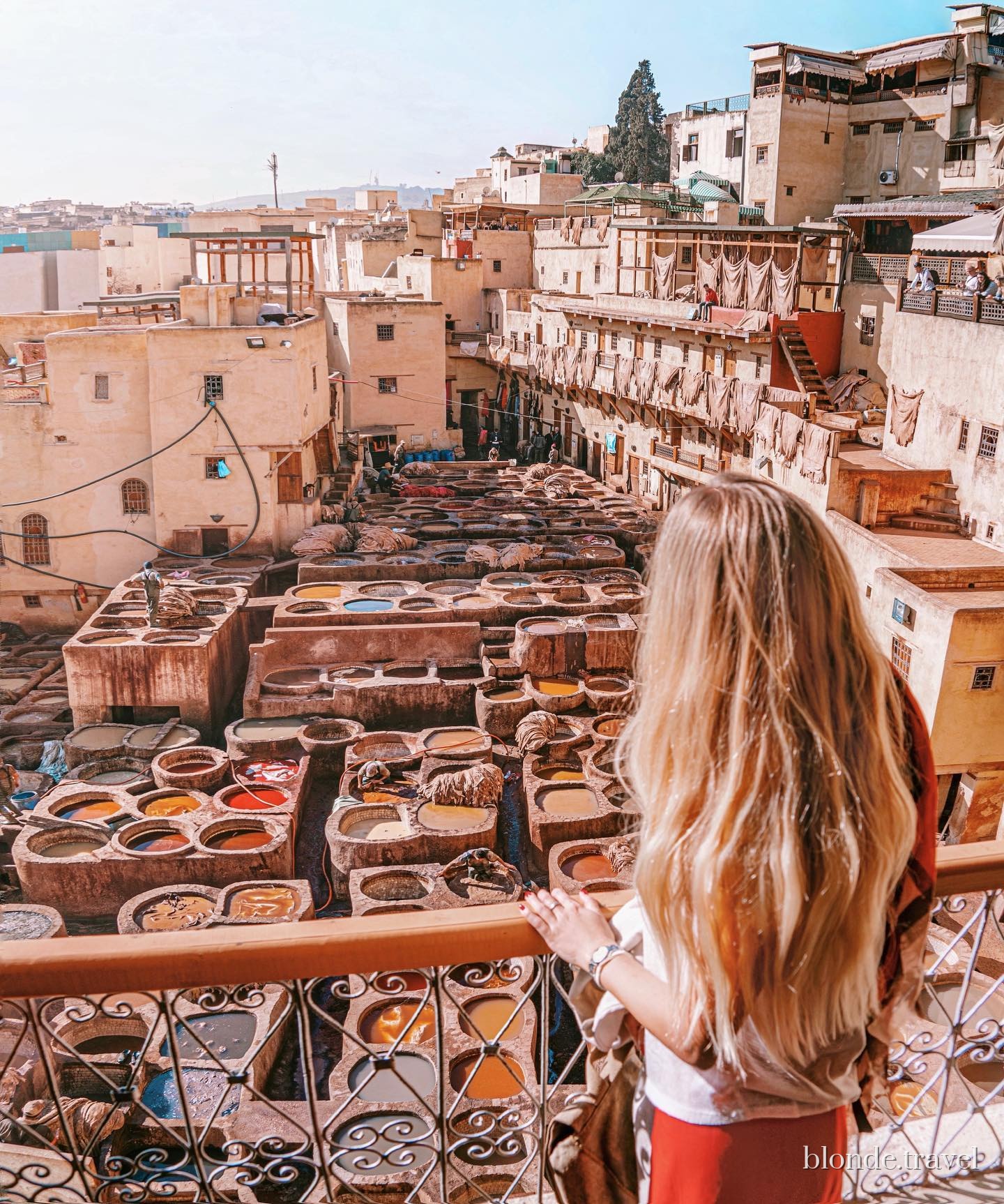
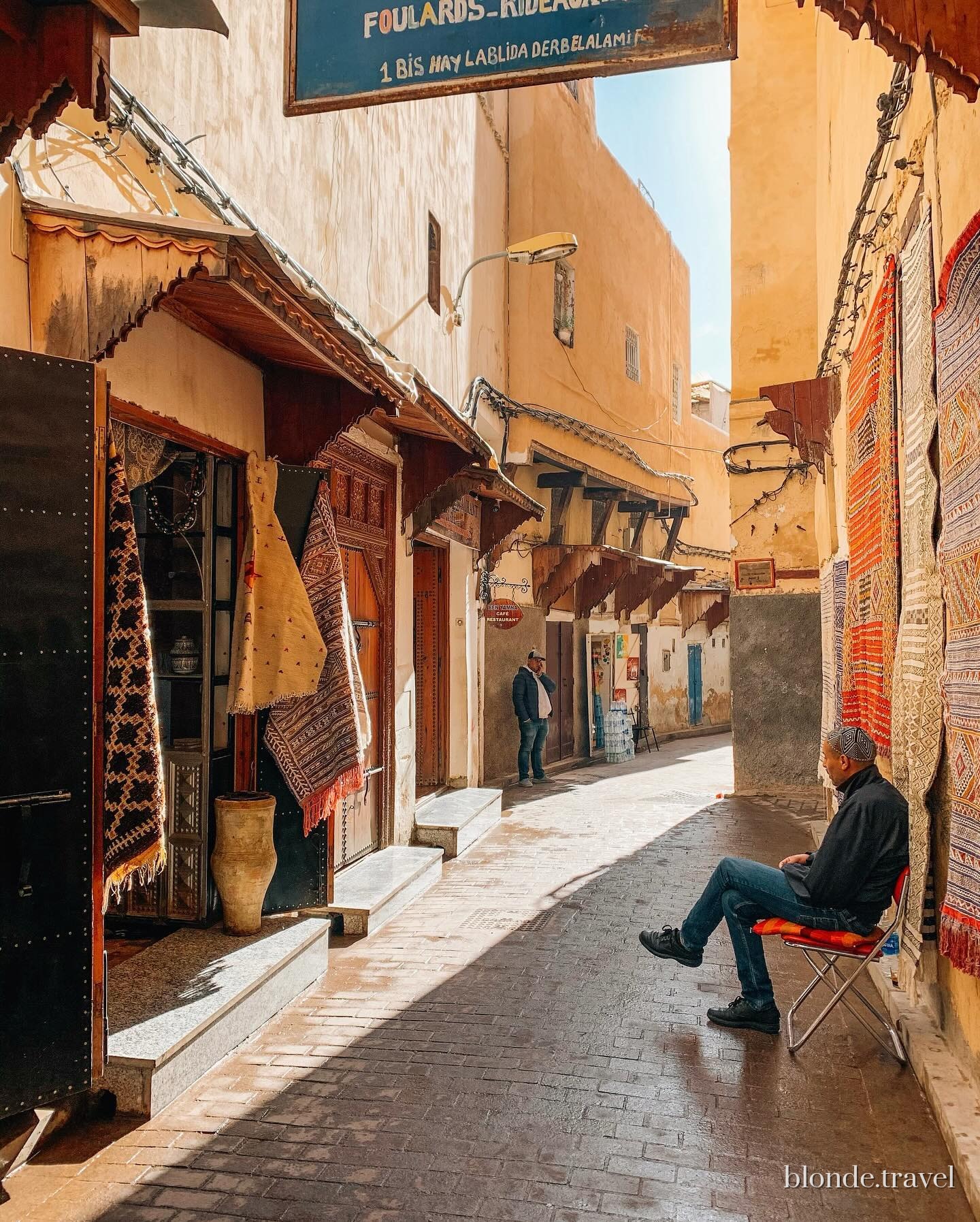
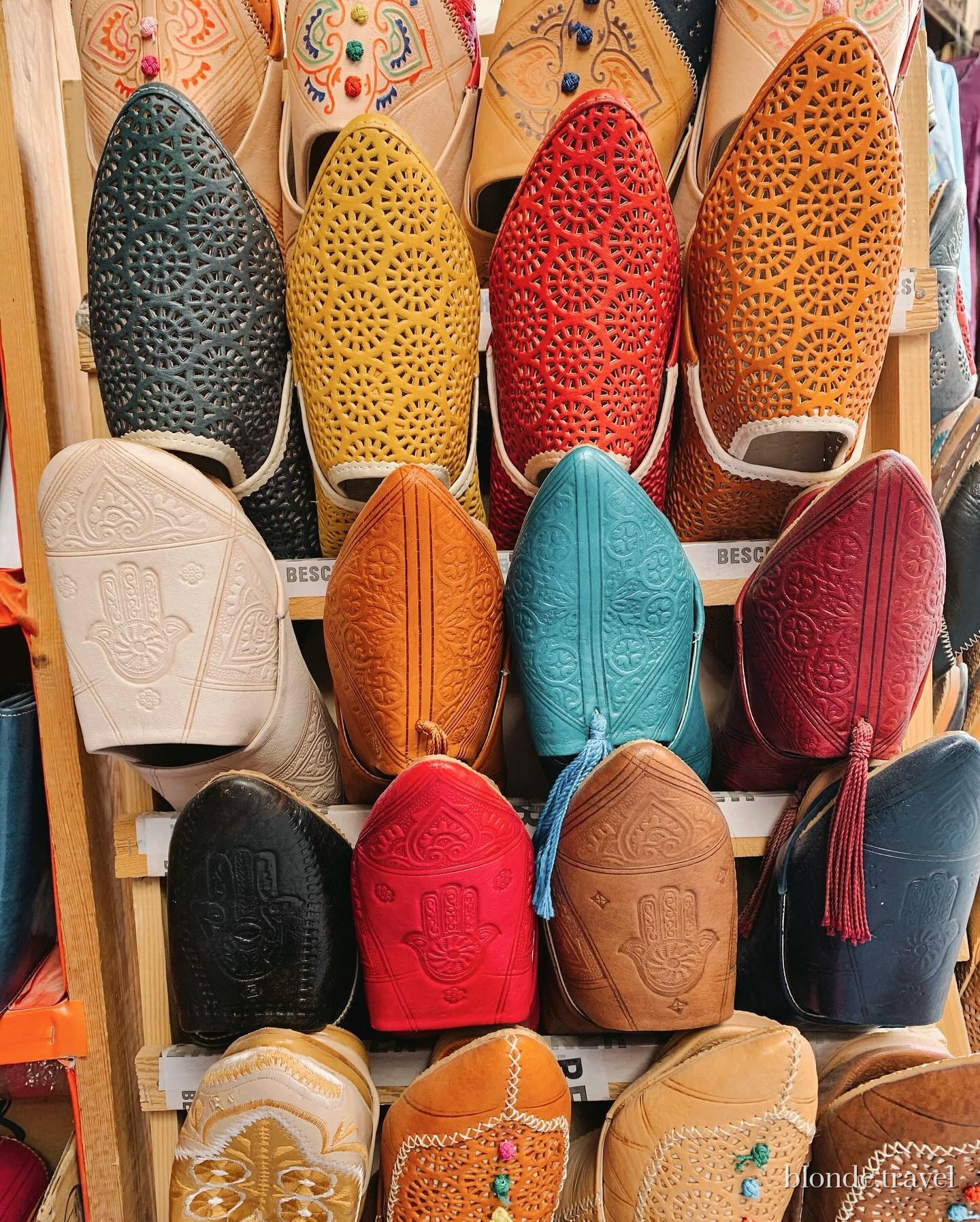
Chouara announces itself differently. Leather goods multiply in the surrounding souks: pointed babouche slippers, sandals, bags, and wallets stacked by color. Their origin is below, in an open courtyard crowded with stone vats.
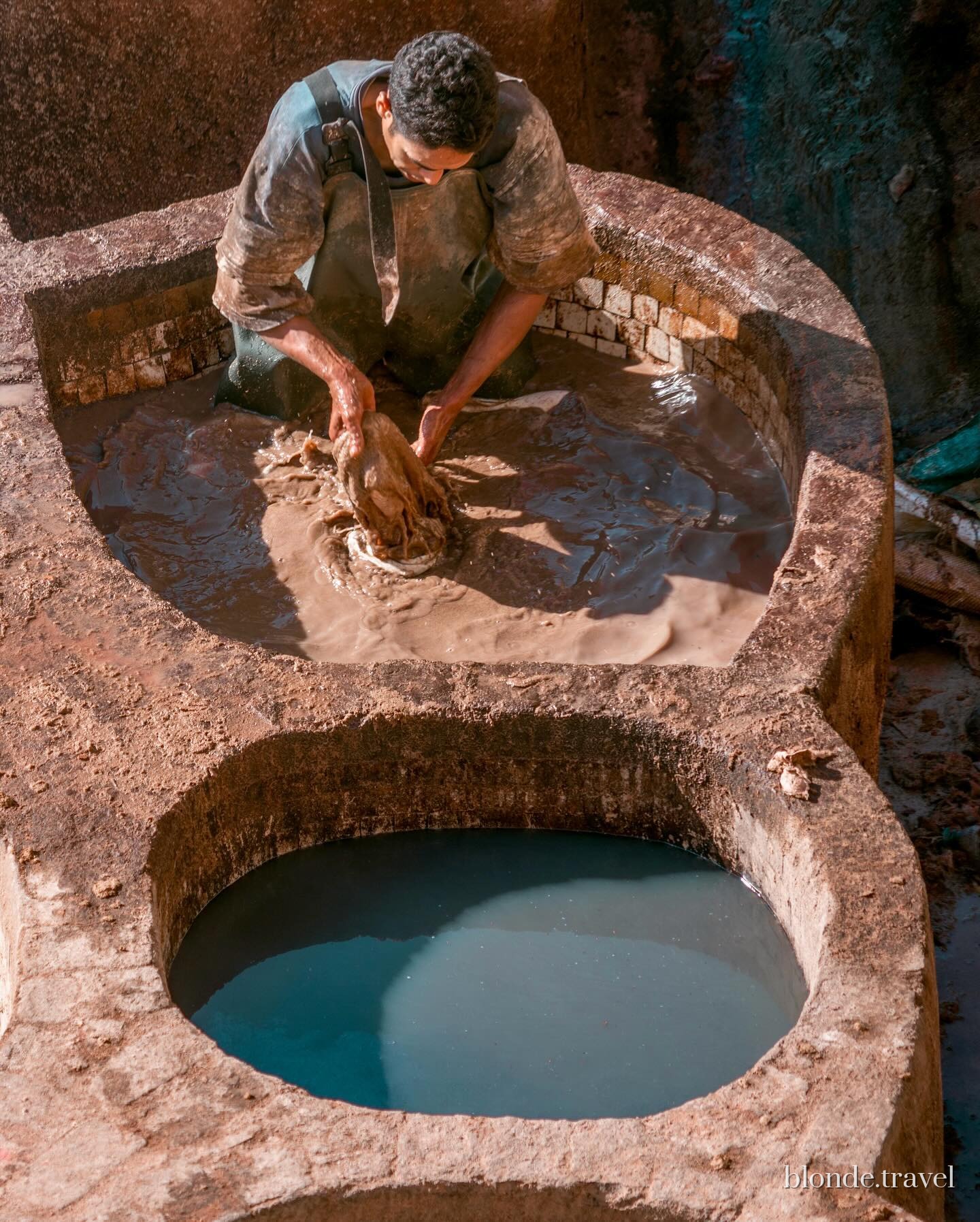
From the terrace above the tannery, the vats looked like a watercolor palette set into the earth. Some held pale liquids used to prepare the hides; others carried dye. Workers moved between them and handled the leather by hand.
Chouara is a workplace. The hides pass through cleaning, softening, washing, drying, dyeing, and finishing. Pigeon droppings are part of the process; their ammonia helps soften the leather and contributes to Chouara’s notorious smell.
The smell was the second-most-common question people asked me about Fez. I visited in February, when the air was cool, and found it much less dramatic than promised. I barely noticed it at the tannery. Even the mint was unnecessary.
Then I bought babouche slippers.
The leather carried Chouara away from the vats. Color was the first thing I noticed; smell became the persistent souvenir. The medina, its craft, and its pigeon droppings were packed into a pair of pointed shoes.
When the television city disappeared
The Fez of O Clone lingered because I had carried it with me for years. Walking the medina made the television shortcuts increasingly funny. The desert was hours away. Aït Benhaddou belonged to an entirely different stretch of our road trip. And Uncle Ali would never have kept his windows open above Chouara.
The old association gave me a way into Fez. I had anticipated the city, however inaccurately, instead of meeting it as an abstract historic destination. Soon I had my own images: the medina stirring below the terrace, a madrasa I nearly skipped, leather changing color in open vats, and a souvenir that refused to remain merely decorative.
I arrived expecting to step into a remembered story. I left carrying the city’s smell in my luggage.
Shared on

The post and its conversation
The photographs as they appeared on Instagram, with what readers said there. Likes and replies open on Instagram.



 Join the conversation on Instagram