
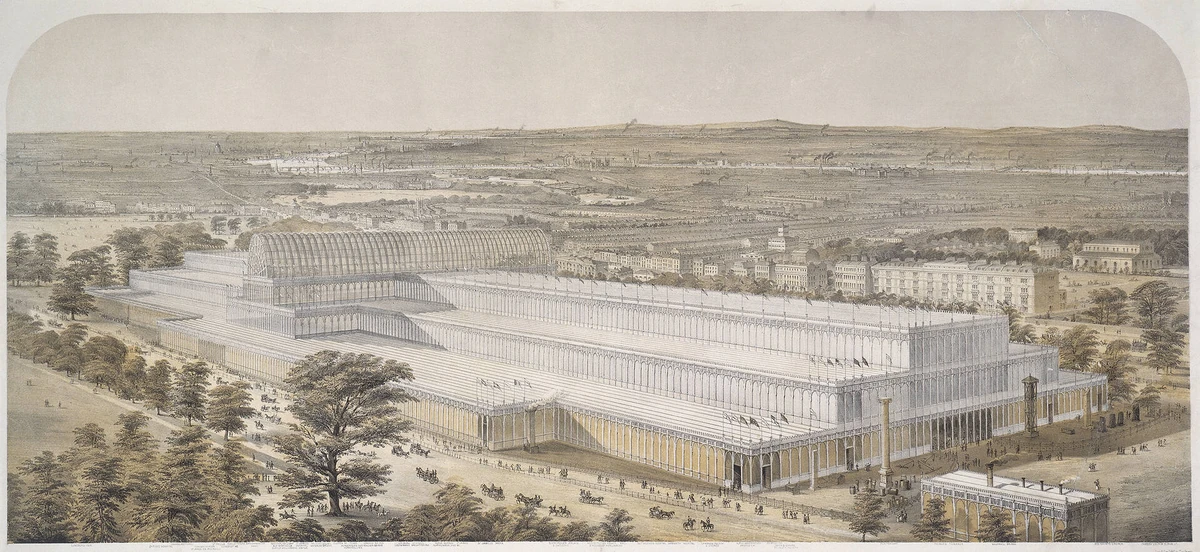
The original Crystal Palace in Hyde Park, 1851. Charles Burton; © Victoria and Albert Museum, London.
Long before anyone spoke of tourism as an industry, travellers already had a list of wonders.
The Greeks called extraordinary sights theamata—things to be seen. Lists gathered the structures that justified a difficult journey across the known world: the pyramids of Egypt, the colossal statue at Rhodes, the Temple of Artemis at Ephesus. The exact seven varied with the writer. The idea did not. There were things so astonishing that merely knowing they existed was not enough. One should travel to stand in front of them.
The wonders existed first. Travellers came second.
The Great Pyramid had not been built to increase visitor nights in Giza. Temples, palaces, tombs and cathedrals continued to rise for centuries, serving gods, dynasties and civic pride. Travellers inherited the results.
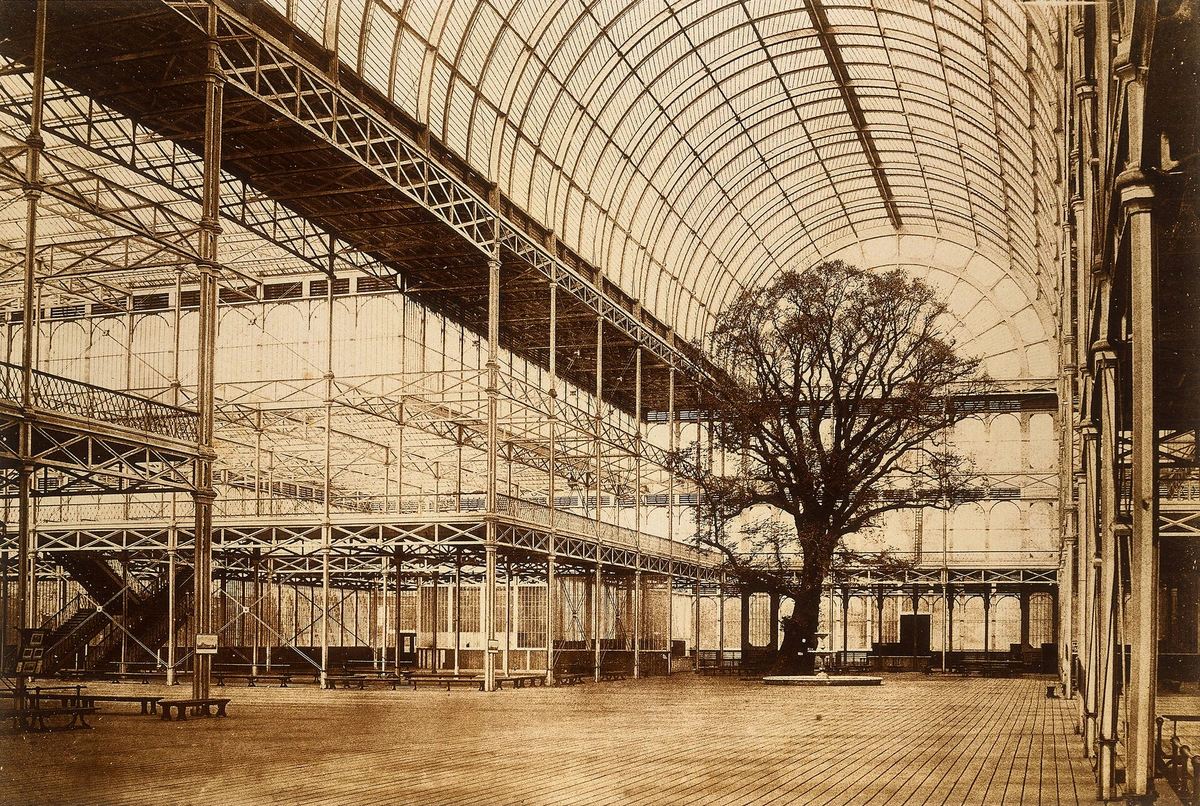
Then, in 1851, an enormous building appeared in Hyde Park. It was made of iron and glass, enclosed mature elm trees and contained more than 100,000 objects gathered from Britain, its empire and countries around the world. Machines, fabrics, furniture, scientific instruments and luxuries shared an address that had not existed the previous summer.
It was called the Crystal Palace. It was expected to disappear. Before the Great Exhibition closed, it had recorded more than six million visits.
A British civil servant named Henry Cole had helped bring it into existence. With Prince Albert and an assortment of reformers, manufacturers and engineers, he had also helped establish an institution with a remarkable consequence for travel: it gave the world a recurring reason to build something extraordinary.
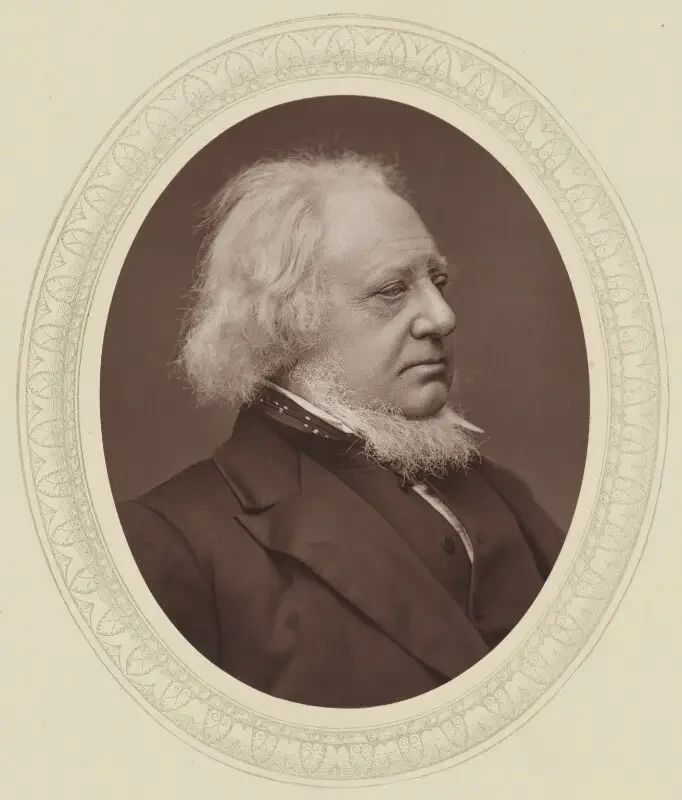
A man irritated by things that did not work
Cole, born in 1808, made his temperament visible in bureaucracy. It was a useful place for a man with little patience for avoidable difficulty.
In 1836 he appeared before a parliamentary committee investigating the Record Commission, for which he worked. He described official documents left damp and decaying, with rat skeletons embedded among them. Then he produced animal remains as evidence. The National Archives still keeps two of the rats. One has become known as Sir Henry Cole’s rat: an unusually durable tribute to administrative reform.
Cole went on to help the campaign for cheap postage. In 1843, faced with a more domestic problem—unanswered Christmas correspondence—he asked the artist John Callcott Horsley to design a greeting that could be reproduced. A thousand copies of what the V&A identifies as the first commercial Christmas card were printed.
The rat and the Christmas card make an improbable pair. Yet both belong to a career spent making desirable activities easier to carry out. Records should be accessible; correspondence should be affordable; good design should reach beyond those who already understood it.
Cole belonged to that nineteenth-century species of reformer who did not see administration as the opposite of imagination. Administration was how imagination became infrastructure.
That instinct would eventually meet the railway. A mountain may have existed for millions of years, but a timetable, a ticket and somebody willing to organise the journey change who can reach it. Cole’s contribution would concern the other end of the line: the thing people wanted to go and see.
Britain could make almost anything
By the 1840s, Britain’s industrial capacity was extraordinary. Its factories could produce goods in quantities that earlier generations would have found inconceivable. Cole worried about how those goods looked.
He tried to bring artists and manufacturers together and launched The Journal of Design and Manufactures. Through the Society for the Encouragement of Arts, Manufactures and Commerce, today’s Royal Society of Arts, he pursued a belief that taste could be educated. Better examples would teach buyers what to want and manufacturers what to make.
Exhibitions supplied those examples. France had been holding national exhibitions of industrial products since 1798. In 1849, Cole accompanied the architect Matthew Digby Wyatt to Paris to study the latest one. The French minister Louis Buffet told them of his frustration that these exhibitions had not become international.
That adjective enlarged the proposition. A national exhibition asked what a country could make. An international one invited comparison with everybody else.
Francis Fuller, another member of the Society of Arts, had visited Paris and returned with the same idea. On 30 June 1849, Fuller, Cole, the builder Thomas Cubitt and the society’s secretary John Scott Russell met Prince Albert at Buckingham Palace. The project they discussed outgrew the society’s resources. A Royal Commission followed in January 1850, with Albert as president.
The French supplied the precedent; Albert supplied royal authority and a vision of industry drawing nations together. Cole helped turn that ambition into arrangements that could actually be made. His importance lay in recognising how much a useful existing format might change when the invitation crossed national borders.
The opening was set for 1 May 1851. They had sixteen months.
The first wonder was supposed to be a container
The Exhibition needed a building, and the search for one almost produced an expensive absurdity.
An international competition brought 245 proposals. The building committee eventually offered its own solution: a colossal temporary structure requiring millions of bricks. It was a cumbersome answer to a brief that included leaving Hyde Park again.
Joseph Paxton proposed something else. His experience came from glasshouses. He understood how iron, glass and repeated components could enclose a great space without the weight and delay of conventional masonry. Working with Fox, Henderson & Co., he offered a building that could be manufactured in parts, assembled rapidly and dismantled afterwards.
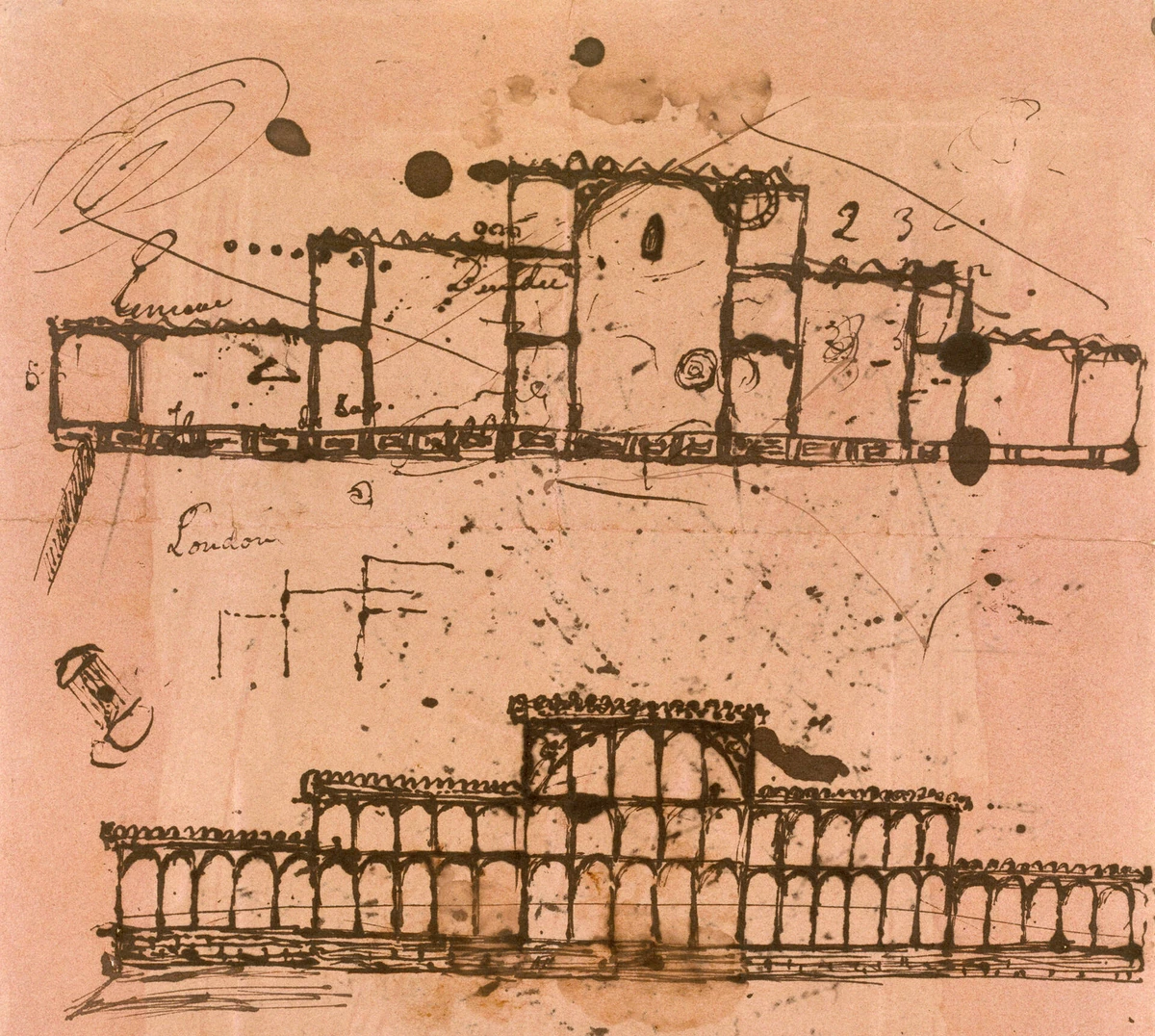
Cole and Albert needed somewhere to put the exhibits. Paxton gave them an exhibit that competed with everything inside.
The Crystal Palace made industrial methods perceptible at a scale no drawing or lecture could match. Its prefabricated parts were the means of construction and part of the argument. The building demonstrated the productive power the Exhibition had been established to display.
Nor did seriousness prevent spectacle. Goods were arranged into a vast account of human production, from raw materials to finished manufactures and fine art. Owen Jones gave the structure a striking interior colour scheme. The whole undertaking could be understood as a lesson in design, an argument for free trade or a day out among astonishing things.
The nineteenth century had built a cathedral to its own capacity to make things.
Millions wanted to see it.
A destination with a closing date
The Great Exhibition’s internationalism had a British imperial floor plan. Britain and its territories occupied the western half; foreign nations shared the east. The goods on display travelled through commercial and colonial systems whose inequalities were not dissolved by putting them under one roof. Industrial confidence and a claim to educate the world sat beside genuine admiration for work from elsewhere.
Public access was carefully organised too. Expensive opening days were followed by cheaper admission. From late May, a shilling bought entry on designated days. Local committees helped some working people fund the journey; railways made London reachable on a new scale. Cheap admission mattered, although the price of travel and time away from work still determined who could use it.
Thomas Cook recognised the opportunity. Ten years earlier he had arranged a charter train for temperance campaigners. By 1845, he was organising profit-making excursions. People valued having the difficulties removed: transport was only part of what he sold.
The National Archives records that Cook arranged travel for 165,000 people to the Great Exhibition.
The railways supplied the capacity. Cook and other excursion organisers brought passengers. Cole, Albert and Paxton supplied a reason for them to move.
And that reason came with an expiry date. The Exhibition opened on 1 May and closed on 11 October. A cathedral could wait for another year; the impossible palace full of the world could not.
The destination could be scheduled.
This was not the first time a festival or spectacle had caused people to travel. What London demonstrated was the scale at which a temporary international exhibition could do it—and how much attention the host might win in return.
Paris raised the stakes
The Great Exhibition inspired successors in Europe and beyond. The format carried an awkward inheritance: each host would be seen against what the previous host had achieved. Comparison among manufacturers became comparison among cities.
Paris proved particularly good at it.
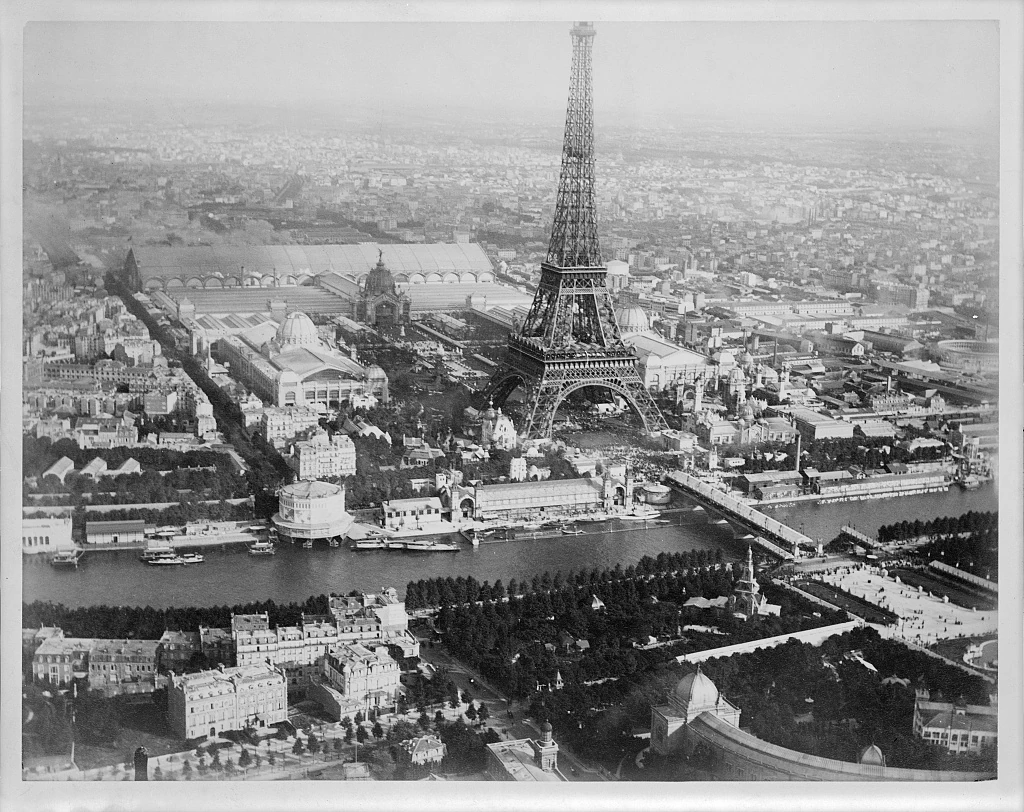
The Exposition Universelle of 1889 celebrated the centenary of the French Revolution. Its most enduring structure grew from a proposal for a 300-metre iron tower. Engineers Maurice Koechlin and Émile Nouguier developed the first idea in Gustave Eiffel’s company; architect Stephen Sauvestre helped shape its appearance. Eiffel brought the project forward, and it was selected for the fair.
The Tower was a new wonder commissioned for an occasion that needed to astonish. An exposition had given engineering ambition a deadline, an audience and a prominent place in the city.
It also gave Paris something to argue about. In 1887, artists and writers protested against the proposed structure. Their objections make its later familiarity more interesting. A monument now inseparable from the city began as an intrusion into what some of its most cultivated inhabitants thought Paris ought to be.
Cole had died in 1882. The Tower was the work of other people, in another political and architectural world. The connection runs through the exhibition tradition he helped establish: a recurring public competition in which extraordinary construction could serve a host’s prestige.
A temporary event had manufactured a permanent destination.
Chicago needed an answer to Eiffel
Four years later, the World’s Columbian Exposition of 1893 brought that competition to Chicago. Paris had left an irritatingly tall benchmark.
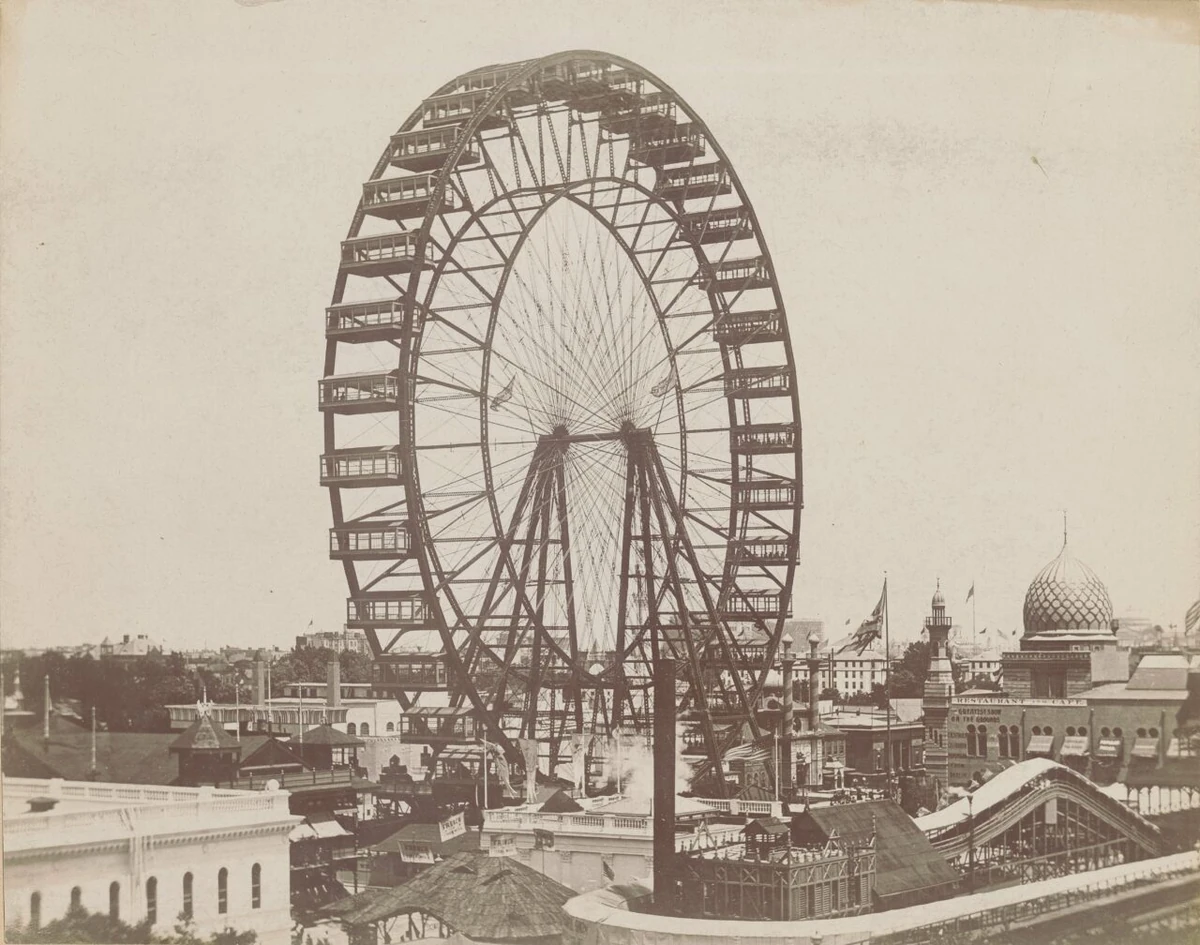
George Washington Gale Ferris Jr. answered it with a giant rotating observation wheel. The Chicago History Museum places the wheel in a lineage of exposition viewing structures, a technological marvel intended to rival the Eiffel Tower.
Engineering became a ride. Instead of merely looking up at the achievement, visitors could be carried through it. The attraction’s improbability was part of the pleasure: an enormous moving structure made the fair itself something to look down upon.
The original wheel did not survive. Its idea did. Giant observation wheels became a kind of attraction that cities could commission without holding a world’s fair at all.
The exposition had produced an attraction type.
Brussels made science inhabitable
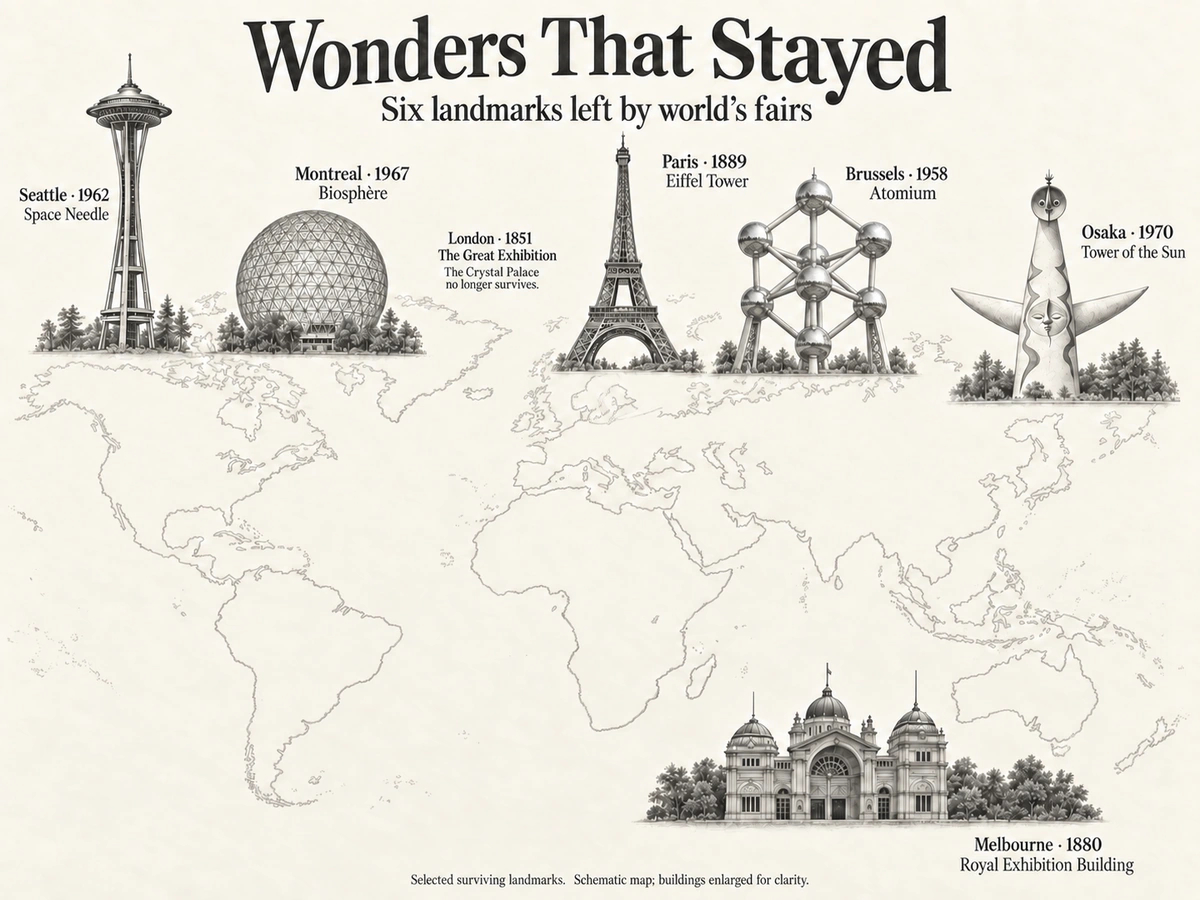
By 1958, Brussels was finding an answer in the language of the atomic age. André Waterkeyn’s Atomium, developed with architects André and Jean Polak, represented an elementary iron crystal magnified 165 billion times. Visitors could enter its spheres. Belgian industrial skill and scientific optimism had become a building.
Paxton had made the materials and manufacturing methods of his age into an experience of the future. Brussels did something comparable with the hidden structure of matter. Its Expo 58 pavilion became another enduring emblem of its city.
Four years later, Seattle opened the Space Needle for its 1962 world’s fair. Its flying-saucer silhouette promised a different future, but the ambition was familiar: make a structure for an exhibition that could remain a symbol of the city.
The objects changed because wonder was never a style. The fair supplied the occasion; each host had to discover what would make its own moment worth the journey.
The quiet proof is in South Kensington
For all this spectacular inheritance, Cole’s most direct surviving work asks the visitor to do something less vertiginous: enter a museum, stay for a while and perhaps have lunch.
The Great Exhibition made a substantial surplus. The Royal Commission used its success to help acquire land in South Kensington for institutions devoted to science, art and education. Albert’s ambition acquired a permanent address in the district sometimes called Albertopolis.
Cole became the founding director of the museum that evolved into the Victoria and Albert Museum. His enthusiasm for educating public taste could run ahead of public appetite. At the early museum in Marlborough House, a display of supposedly bad design amused visitors and offended manufacturers. It closed after two weeks.
He was on firmer ground when he thought about how people would use the place.
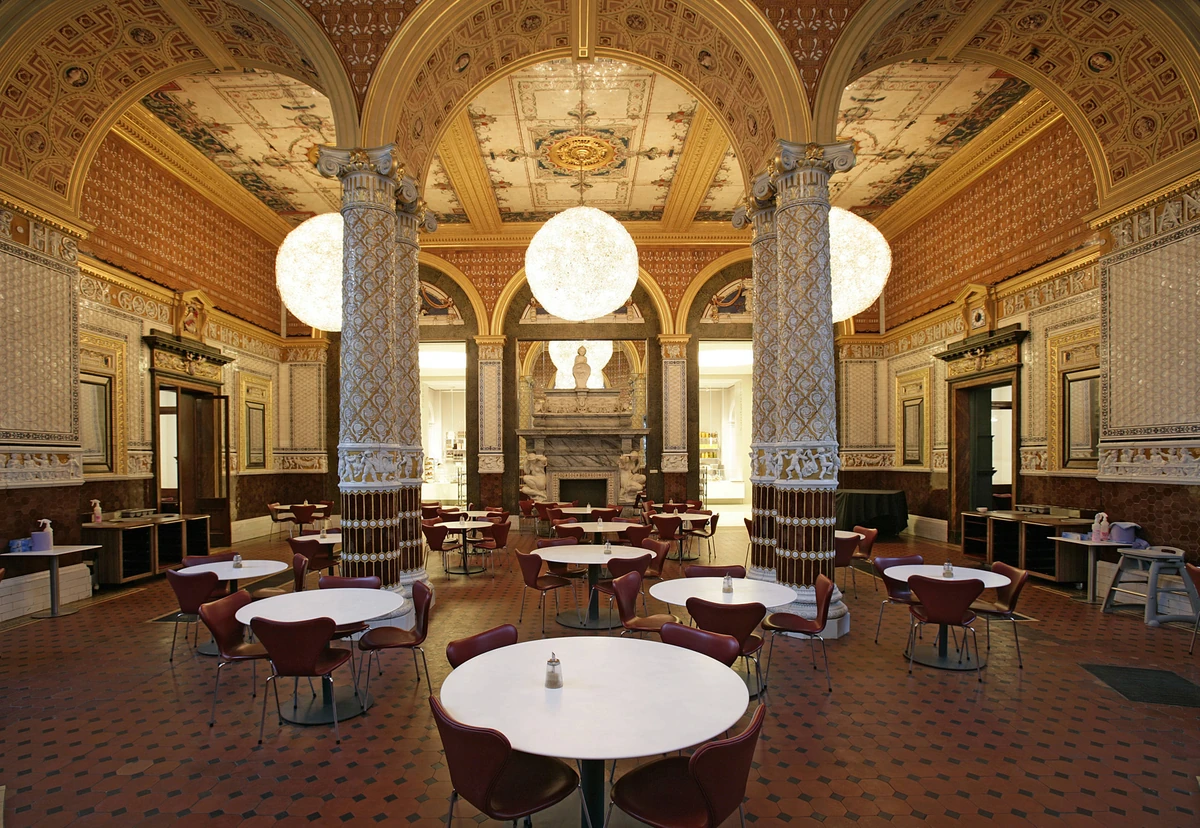
Gas lighting allowed evening visits after working hours. Refreshment rooms helped make a trip to what was then an outlying part of London worth the effort. The museum’s first restaurant opened in a temporary building in 1856; the three celebrated rooms that succeeded it opened in 1868, while their decoration continued.
Cole’s welcome had a reformer’s purpose. He hoped the museum would offer an alternative to the gin palace. Art, education, food and opening hours belonged to the same project of improvement. His confidence in what other people ought to do with their leisure could be paternal; his willingness to make it possible was practical.
A wonder is not enough. People must be able to reach it, enter it, understand it and remain comfortably inside. The museum café may seem a modest inheritance beside the Eiffel Tower. It is much closer to Cole’s own hand.
The reason to build another one
The ancient lists told travellers what civilisation had already produced. The international exhibition asked what it could produce next, for an appointed date, in front of a visiting world.
A city could commission architecture for that occasion. It could invite other nations to compete for attention, give engineers an audience and use temporary spectacle to alter its permanent image. Occasionally, the temporary wonder would refuse to leave.
The Crystal Palace had an afterlife too. It was dismantled in Hyde Park and rebuilt in altered form at Sydenham, where it opened in 1854. The fire of 1936 destroyed that later palace. The exhibition tradition had long since escaped its walls.
Cole’s greatest contribution was never the building. It was helping establish the reason to build another one.
The Seven Wonders were a traveller’s list. The world’s fair became a challenge addressed to the builders of the future:
What will you make that is worth crossing the world to see?
Cities have kept answering.
Read more lives that shaped travel in Portraits.