
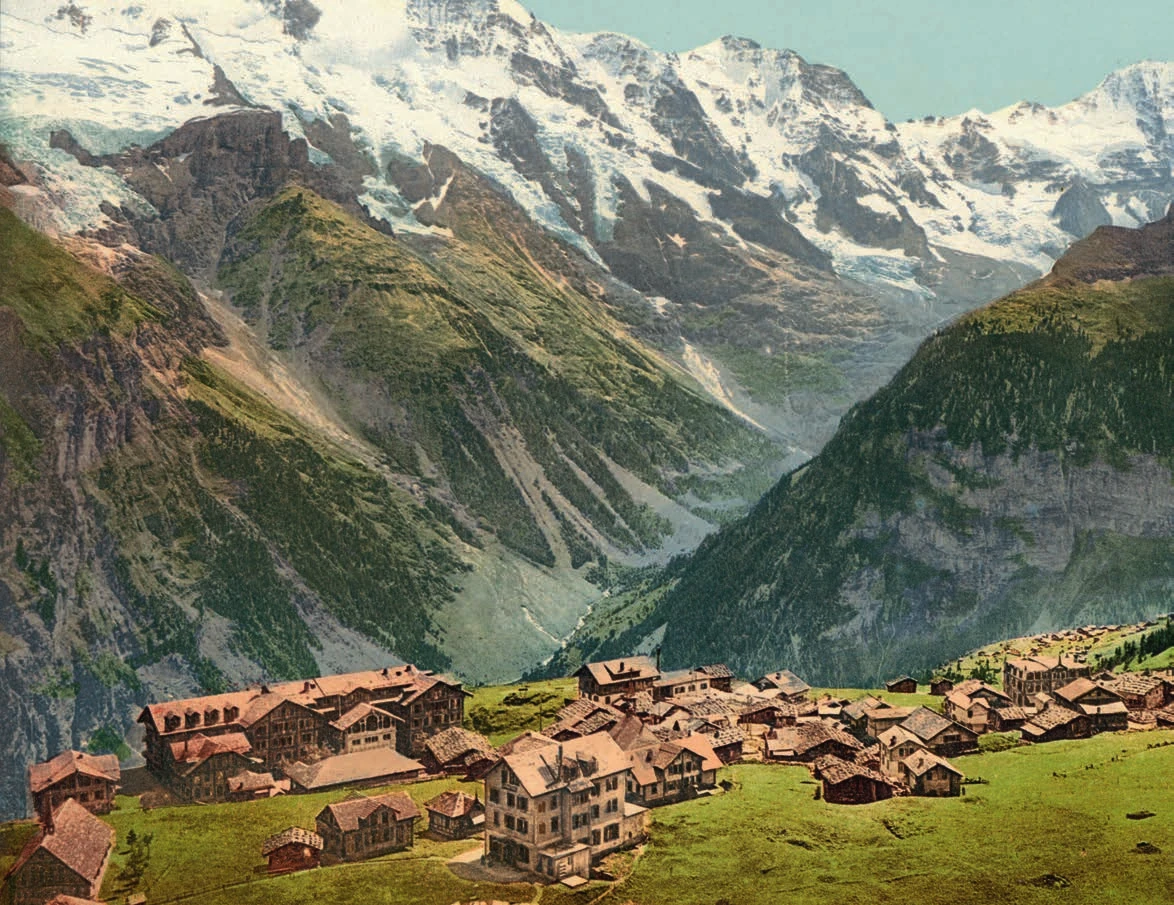
Mürren after 1896. Library of Congress, reproduced in Heimatschutz/Patrimoine, 2014.
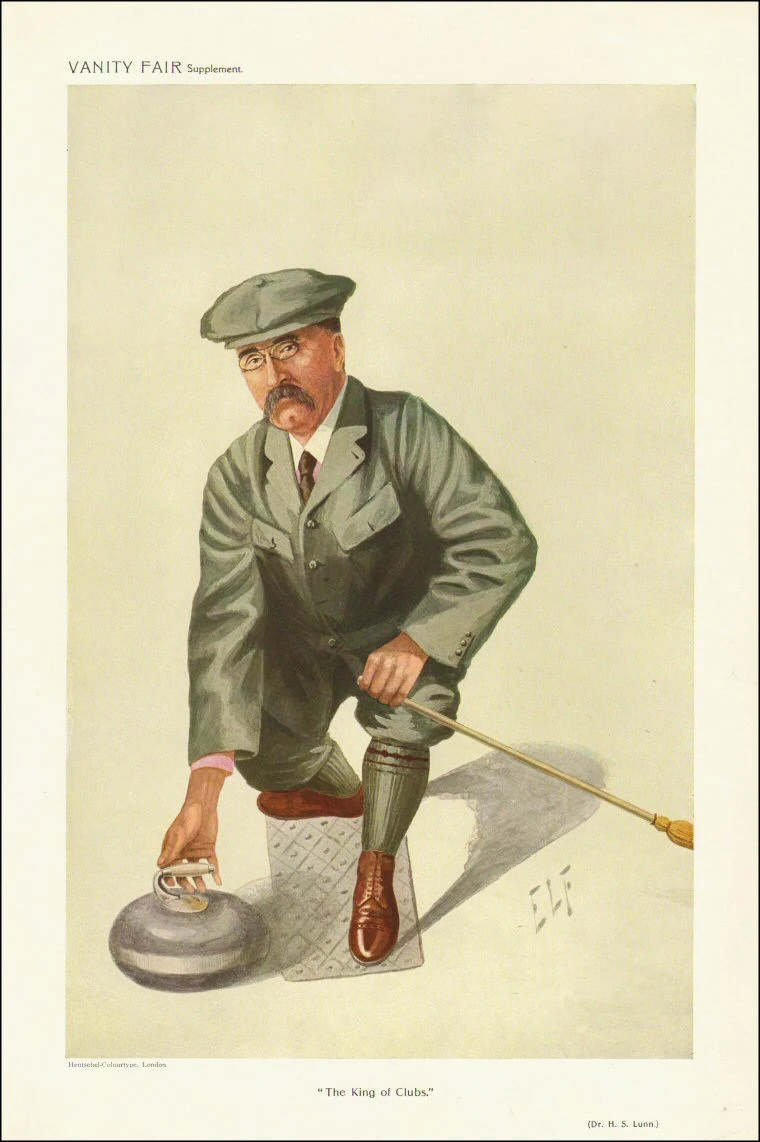
In October 1909, Vanity Fair published a caricature of Henry Lunn under a title that, with hindsight, was almost perfect: “The King of Clubs.”
He was crouched over a curling stone.
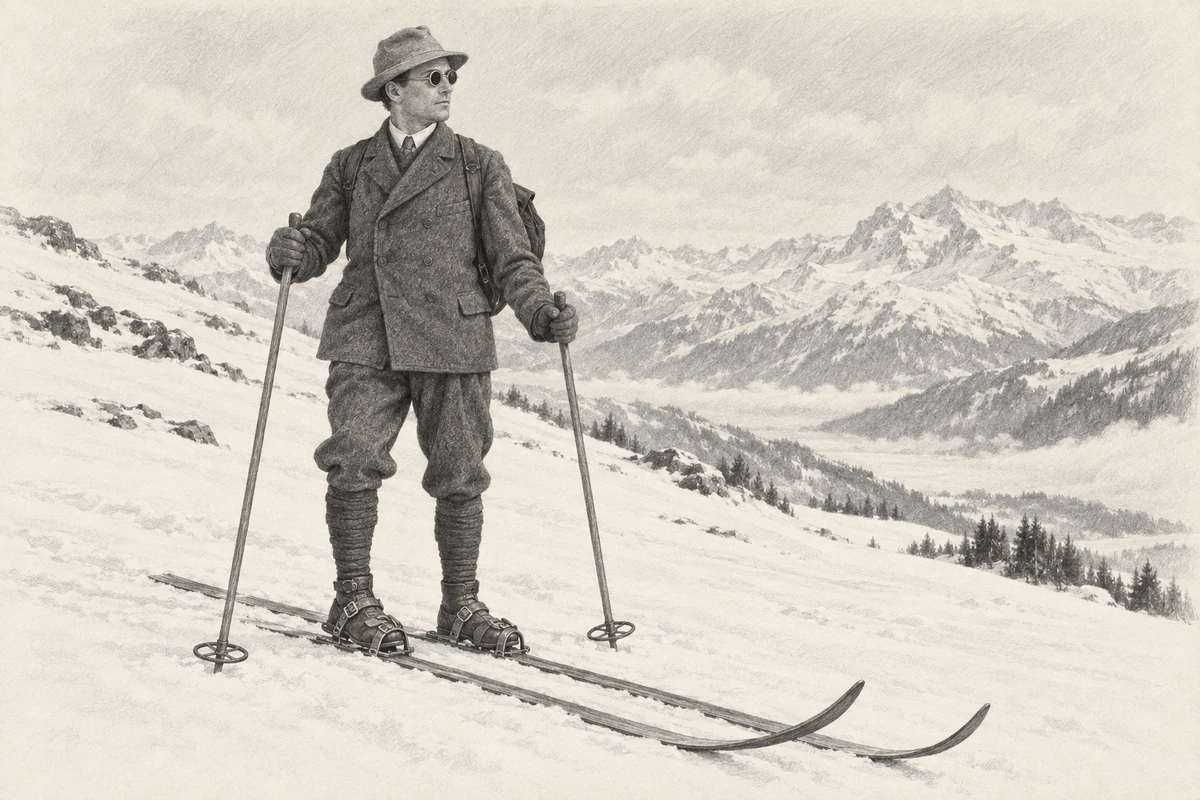
Today, a winter holiday in the Alps can mean walking through a snowy forest, skating, taking a sleigh or spending a week reading beside a fire. Yet skiing has acquired such authority over the season that the other pleasures often seem like alternatives to the main event. It is a remarkable position for an activity that requires specialist clothes, awkward boots, equipment, instruction and a mountain several hundred kilometres from home. Many beginners spend their first holiday learning how not to fall.
The man in the curling caricature helps explain the appeal. Sir Henry Simpson Lunn understood that a difficult activity becomes a fashion when someone builds the world around it. A hotel must remain open when it used to close. There must be people you want to meet when you arrive, and something to do together after the day’s exertions. The journey needs enough reassurance to cease looking eccentric, and enough exclusivity to make its inconvenience desirable.
Lunn became particularly good at arranging the company.
The missionary who discovered a travel business
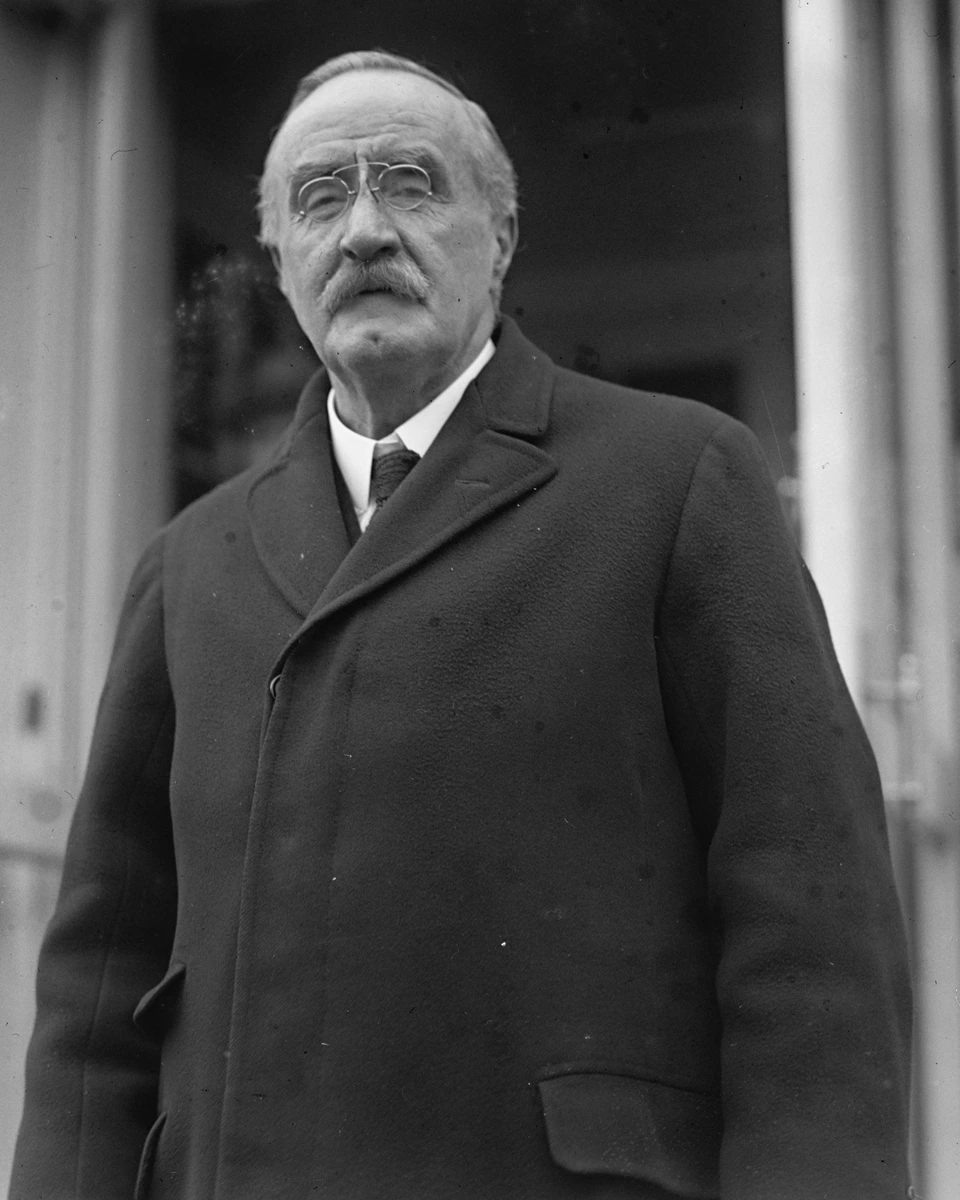
Born in Horncastle, Lincolnshire, in 1859, into a devout Wesleyan Methodist family, Lunn trained for the ministry and studied medicine at Trinity College Dublin. He went to India as a Methodist medical missionary in 1887; illness brought him home the following year. His criticism of missionary administration then drew him into a bruising controversy with his own church. He resigned from the Wesleyan ministry in 1893.
Yet the project that occupied him was the opposite of schism: Christian reunion. He edited the Review of the Churches and, from 1892, brought British churchmen together for conferences in Grindelwald, beneath the Eiger.
To organise a religious conference in Switzerland, Lunn had to solve the little problems that make tourism possible: fares, rooms, meals, schedules and expectations. Bring enough people to a hotel and the hotelier can quote a better rate. Guarantee enough beds and both sides gain certainty. Arrange the journey as one coherent purchase and a distant place becomes much easier to contemplate.
Lunn had gone to Grindelwald to reunite Christians. He came away with the beginnings of a travel business.
His Co-operative Educational Tours followed in 1893. The name was modest, but the principle had room to grow: gather people around a shared interest, negotiate collectively and arrange the difficult parts. Thomas Cook had already demonstrated the possibilities of organised travel on a much larger scale. Lunn developed a particular sensitivity to a question beyond the itinerary: who else was coming?
That would become his great instrument.
Winter society in the Alps
Switzerland already had winter visitors. St. Moritz cherishes the story of Johannes Badrutt persuading English summer guests to return in 1864, with an offer to cover their costs if they were disappointed. It is a fine founding legend, though documented winter visits elsewhere in the Swiss Alps predate it. By the time Lunn began bringing his parties, hoteliers had been experimenting with the cold season for decades.
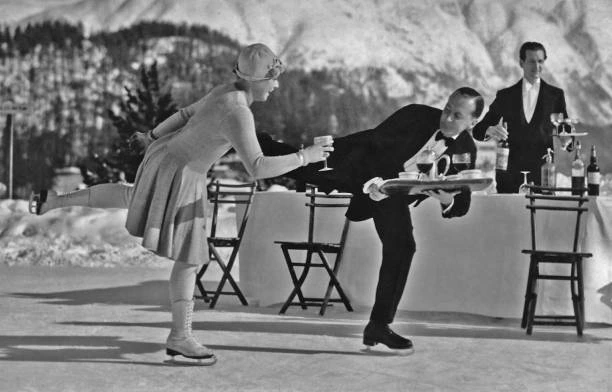
Nor was the winter guest necessarily a skier. Around 1900, skating, curling, hockey and tobogganing were central diversions. A visitor could spend days on the ice without regarding a ski descent as the purpose of the journey. The Alps offered a change of season as complete as a change of country, with a crowded social calendar to soften the unfamiliarity.
In 1905 Lunn founded the Public Schools Alpine Sports Club. Its stated purpose included securing a “congenial society of people interested in Winter Sports”. The word to notice is congenial.
Britain’s public schools were elite private schools, and the name advertised a recognisable social world before a prospective guest had examined a timetable. Former pupils of Eton, Harrow, Rugby and Winchester could travel abroad with the expectation of meeting people whose education and manners they understood. By 1914 the club had 5,432 members. It offered both an excursion and an introduction.
Organised tourism had a social problem. Its convenience was attractive; its associations with a conducted crowd could be embarrassing. Lunn gave the package the manners of a club. A client bought the railway ticket and the bed, but also the assurance that the hotel would contain a familiar extension of home.
Years later Arnold, his eldest son, described the calculation with devastating economy. His father knew that Englishmen travelling abroad wanted to be “protected from everyone except other Englishmen”. Lunn reproduced something of the atmosphere of London clubs in the Alps.
The assurance depended on exclusion. For those admitted, however, the social filter was part of what made the journey worth taking. The other guests were part of the hotel.
A destination is a temporary society. A dinner table, a skating rink or a curling match can turn a remote place into somewhere one belongs. Once the right company is assembled, the distance itself begins to acquire value: getting there distinguishes the people who have made the effort. Lunn’s accomplishment was to make that company available through a travel business without making the business the most conspicuous thing about it.
A hotel that would stay open
The difficulty was getting an entire resort to agree.
Mürren stood on a high terrace above the Lauterbrunnen valley. Before the railway opened in 1891, reaching it meant a steep ascent on foot taking more than two hours. Summer visitors had justified substantial hotels. Winter required another calculation: heating, access and a sufficient number of guests had to come together.
The local hotelier Wilhelm Gurtner had already tried. He equipped a building for winter use, but met resistance from a rival hotel director who also sat on the railway’s board. Gurtner opened his hotel in December 1903; the season ended in financial failure. Lunn entered an argument that Swiss hoteliers had been conducting before him.
In 1907 he asked the younger Gurtner to open for winter. Negotiations with the railway dragged on. At Christmas 1909 the hotel received guests without a winter train service; the railway followed the next year. The guests and hotelier had committed before the railway was ready.
Lunn bought the Hotel des Alpes from the Gurtner family in 1910 and expanded it the following year into the Palace. Its ballroom could accommodate 350 people. Outside were an ice rink, curling lanes and hockey grounds. The ballroom was as important as the mountain: it gave the guests another reason to remain, meet and return.
The practical elements supported one another. A hotel could heat its rooms because guests were coming. A railway could justify running because hotels would fill. The games and social life made the stay more attractive, which helped to fill the next train. Lunn’s business grew through this mutual dependence, with Swiss buildings, labour and transport making his promise possible.
The journey uphill
Downhill skiing had an awkward commercial limitation. The skier finished at the bottom.
Before mechanical uplift became familiar, a descent usually had to be earned by climbing. For a mountaineer the ascent was part of the point. For a visitor who wanted another run before lunch, it was a considerable obstacle.
Mountain railways offered a way to separate the pleasure from some of the labour. In 1906 the Jungfrau railway was already running special winter trains to Eismeer for ski descents towards Grindelwald. Wengen’s hoteliers secured winter railway operation in 1909; Mürren followed in the winter of 1910–11. Lunn belonged to this effort to make summer infrastructure serve a second season.
The Allmendhubel funicular opened above Mürren in December 1912. Its early business included carrying guests to a bobsleigh run built for the English clientele. Even the machinery that now seems inseparable from skiing served a wider winter playground.
Uphill transport changed what a day on a mountain could contain. A descent could become repeatable. Ride up, come down, try again; return to the hotel with enough time and energy left for company. Later ski lifts would make that rhythm commonplace. Lunn’s winter resorts helped establish the expectation that the mountain holiday should be arranged around the guest’s enjoyment, including the hours spent off the mountain.
The father and the son
Arnold Lunn grew up inside this Alpine world and gave skiing a different kind of order. He became a mountaineer, writer and determined advocate of racing in which the clock settled the result. In Mürren in 1922 he established the modern timed slalom, with competitors turning through gates. Speed counted more than an elegant performance of prescribed turns.
The hotel society his father cultivated now had a sport around which to form loyalties and rivalries. Arnold helped win international recognition for downhill and slalom; both were included in the combined Alpine event at the 1936 Winter Olympics. Henry had arranged the audience. Arnold gave it competitive drama.
Elsewhere, teaching was becoming more systematic. At St. Anton, Hannes Schneider’s ski school, founded in 1921, divided pupils by ability and taught them through trained instructors following established methods. Films made with Arnold Fanck carried the sport’s exhilaration far beyond the people who had tried it. Skiing was becoming something a visitor could learn, watch and aspire to do well.
These developments had different authors. Henry’s contribution lay in the journey and the society surrounding the sport. His genius was for convening: identifying people who might wish to gather, arranging a place and giving the gathering the feeling of a community rather than a crowd.
He never confined that talent to holidays. Christian reunion remained an active concern long after the travel business prospered. Following the 1920 Lambeth Conference, he organised further Anglican and Free Church discussions at Mürren. The missionary and the travel organiser continued to occupy the same man.
The inconvenience and the luxury
Skiing’s difficulties also helped give it social force. The equipment, the journey, the time away and the acquired technique made participation visible. You had to know where to go, afford to leave and learn what to do when you arrived. On Lunn’s tours, the club supplied an additional reassurance about where you stood.
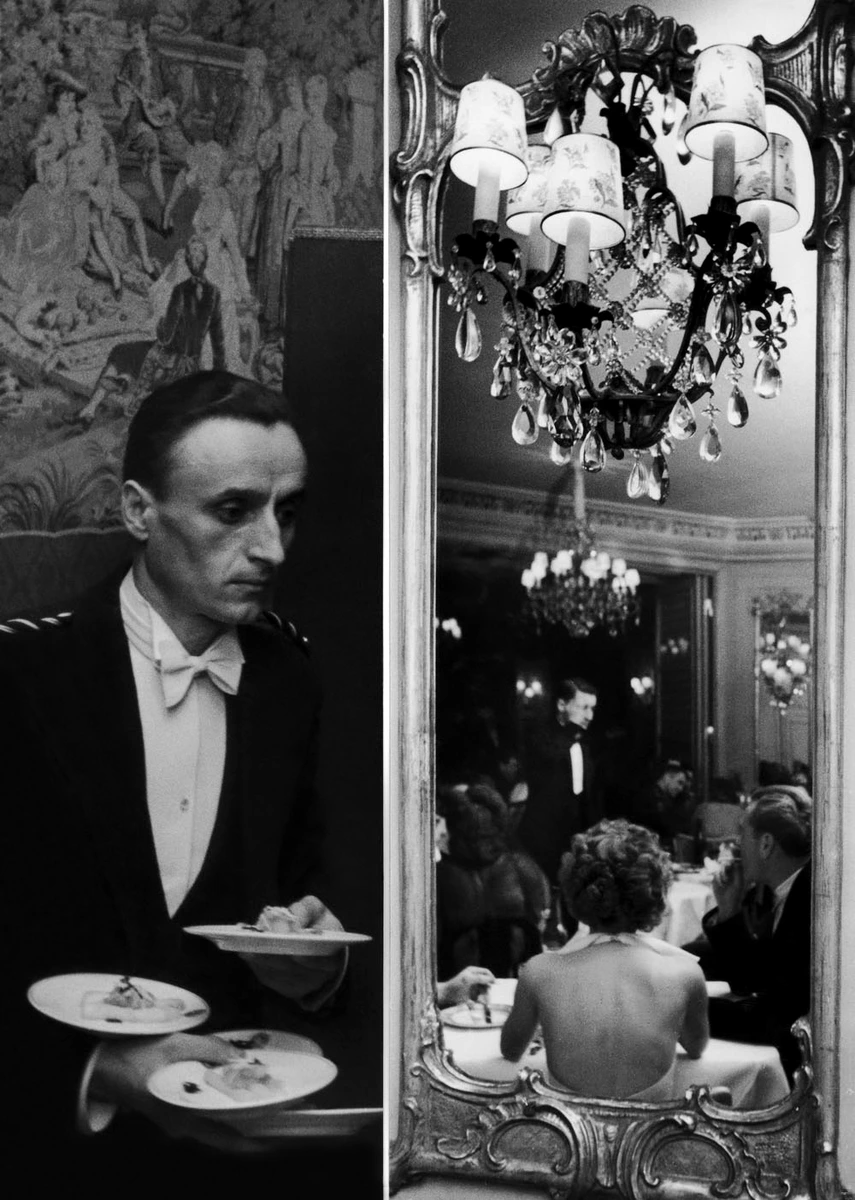
Such arrangements did not make everyone comfortable. They made a particular group comfortable enough to travel. Later generations would widen access to the sport, but the resort could still promise the pleasure of belonging as well as the pleasure of snow. The clothes, the hotel and the friends who returned each winter remained part of the experience.
There is a pleasing contradiction in the commercial afterlife. Sir Henry Lunn Travel survived its founder, who died in 1939. In the 1960s it was combined with the Polytechnic Touring Association; the Lunn Poly name became familiar on British high streets. A business that had cultivated exclusivity entered the history of mass package holidays.
The clients changed, but the practical arrangement was recognisable: collect enough travellers to negotiate transport and beds, remove the uncertainty and make the whole journey easier to buy. For an earlier clientele, the club had made that organisation socially acceptable. Eventually the package could stand in the shop window under its own name.
The curling caricature caught something enduring in Lunn. His distinction lay in bringing existing things into a relationship: hotels, railways, winter games and people who might otherwise have stayed at home. He made a distant season hospitable by arranging both the means of arrival and the company on arrival.
A skier today can cross borders, wake beneath a mountain, ride uphill and spend the day repeatedly descending slopes that earlier visitors would have climbed for hours. Afterwards come the hotel, a change of clothes, friends, dinner and plans for the morning.
We call it a ski holiday. Lunn would have recognised the more important part immediately.
It is a club with a mountain attached.