
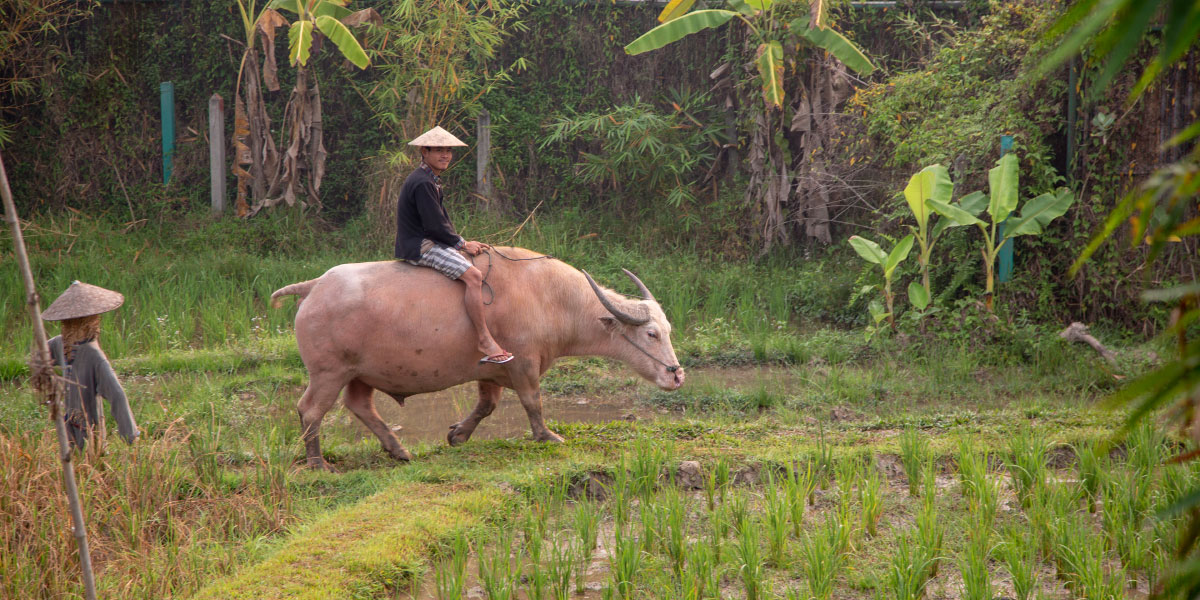
Photographs: The Living Land Farm.
A Lao meal is built around sticky rice. You take a little in your fingers, press it together and dip it into jeow, perhaps made with roasted aubergine and chilli. Again and again, the hand returns to the basket.
Khao niao belongs to breakfast as readily as to dinner. It also belongs to the life beyond the kitchen: to the fields a family cultivates, the labour neighbours share, and the food offered to Buddhist monks. “Rice is life” is a good place to begin understanding Laos.
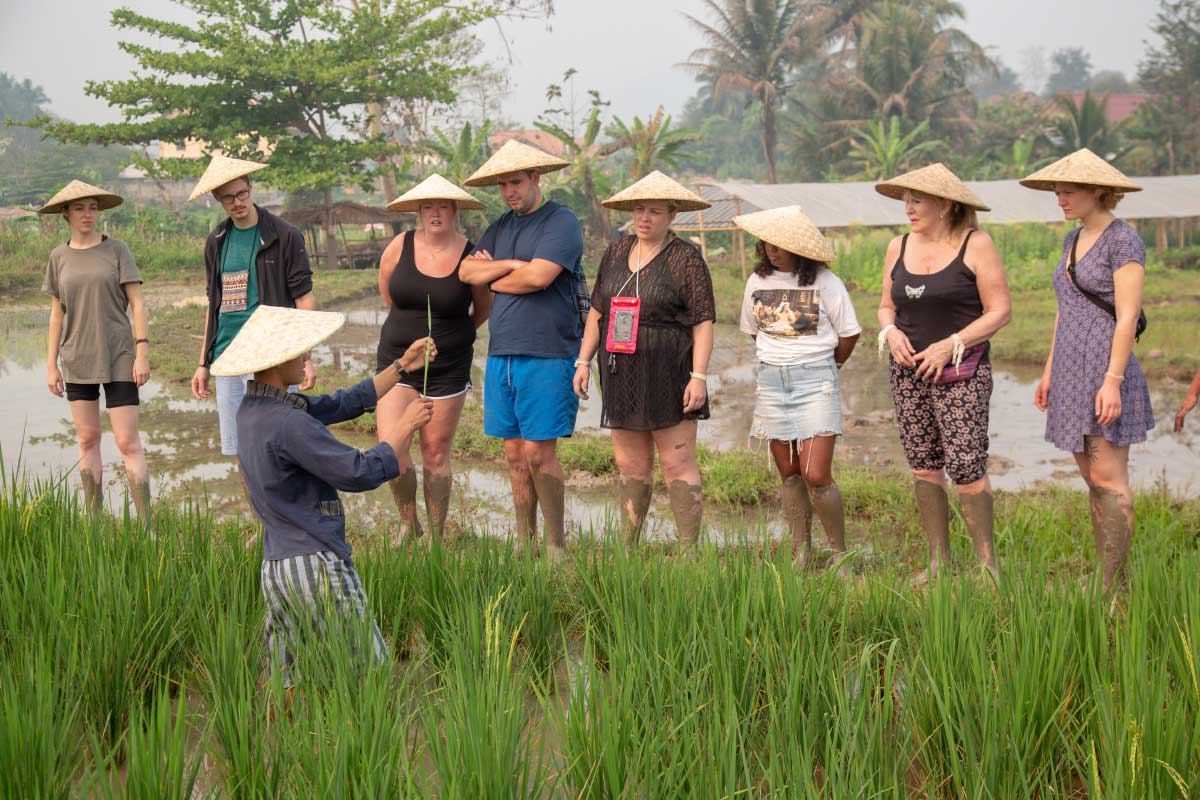
I visited while I was living in Thailand. At the Living Land Farm outside Luang Prabang, I followed rice through fourteen stages, from selecting the seed to eating it. Somewhere between those two came a buffalo called Suzuki, mud about thirty centimetres deep, and the business of getting a crop into the ground. The tasting would have to wait.
Children of sticky rice
Sticky rice is eaten across mainland Southeast Asia, particularly in northern and northeastern Thailand, but in Laos it has an unusually central place in everyday food. Lao people speak of themselves as luk khao niaow, “children of sticky rice”. The expression carries a sense of belonging that survives migration and the distance from home.
In Luang Prabang, sticky rice also passes from lay households into monks’ alms bowls each morning. People rise before dawn to prepare the offering. The familiar procession through town depends on work that begins in a kitchen and, long before that, in a field.
That connection is what makes Living Land worth a morning. The farm gives practical meaning to something a traveller encounters repeatedly in Laos, whether at a table or outside a temple.
Planting the next meal
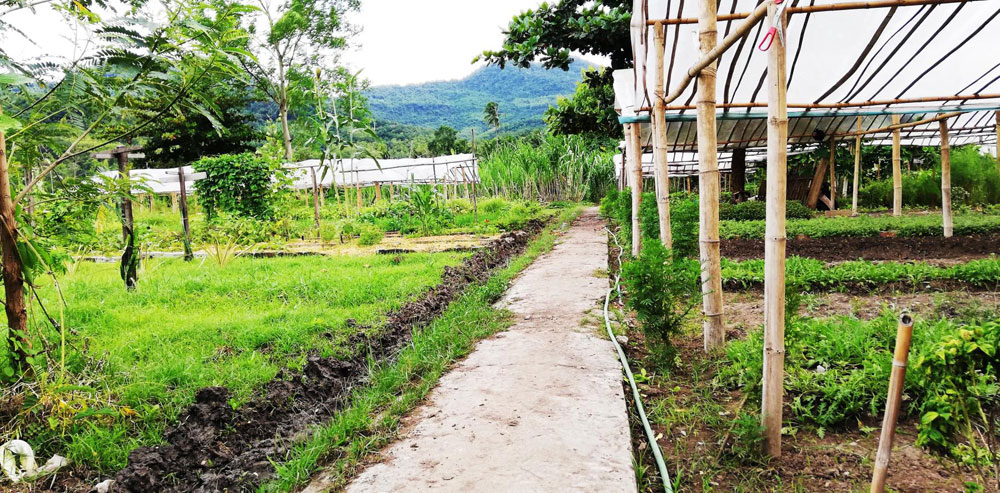
Laut Lee ran Living Land when I visited. It was a community enterprise, and the work began with a decision that reached beyond the immediate harvest: which grains should be saved for the next crop.
The seed rice went into salt water. The sound, heavy grains sank; the floaters went to the livestock. The selected seeds began in a nursery bed, where the plants could be tended while they were vulnerable. Meanwhile, the paddy had to be prepared.
Suzuki supplied the power for the plough. His thoroughly modern name suited a lesson in an older way of working. The buffalo drew it through the mud, turning the ground before the seedlings could be transplanted by hand.
Families traditionally shared the planting, with songs to accompany the work. Once the seedlings were in, there was still weeding to do and water to manage. At Living Land, canals fed the paddies; a channel could be stopped with a plug of mud. Control of the water was as much a part of growing rice as putting a plant into the earth.
This was wet-rice cultivation, one part of a much wider agricultural landscape. Rice also grows on the uplands of Laos, where fields on hillsides depend on rainfall. The familiar flooded paddy tells only part of the country’s story. Different ground demands different ways of securing the same everyday food.
The harvest cannot wait
A ripe crop imposes its own deadline. Leave it too long and the grains begin to fall into the paddy. The work cannot simply be put off until a more convenient day.
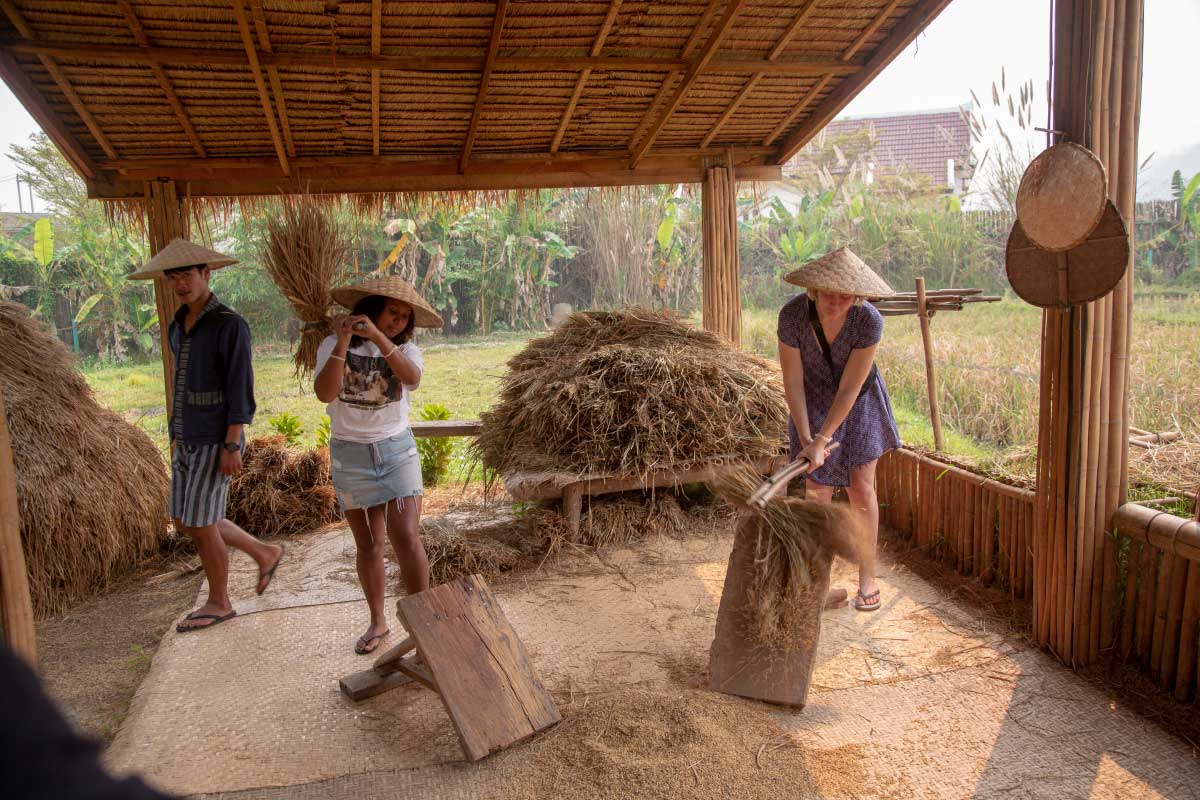
At the farm, we were shown how the water was cut off before harvesting, the stalks cut low with a sickle and left in the sun to dry for a few days. Threshing released the grain: bundles of dried stalks were beaten against a board. Then came winnowing, with air from a fan carrying away the lighter straw and chaff. The person working it moved with a hopping rhythm, almost a dance.
The farm showed us three styles of carrying basket, with loads of about eighteen kilograms. Carrying had a numbered place among the fourteen steps. Quite reasonably.
For a farming household, the harvest is also a measure of the food available in the months ahead. That helps explain why rice runs through the ceremonial calendar as well as the working one. Boun Khoun Khao, the harvest celebration, includes a ceremony of thanks to the land. After the urgency of cutting and gathering, there is a moment to acknowledge what has been brought in.
The work beyond the paddy
The harvested grain still had its husk. At Living Land, a foot-powered wooden device did the pounding, followed by another separation. Women tossed the rice on woven bamboo trays until the loosened husks flew away. This was a skill acquired through long practice. Knowing what the movement was meant to achieve did very little of the work for you.
The visit also included blacksmiths, bamboo weavers, the organic vegetable garden and pressing sugarcane for juice. The crafts belonged in the rice lesson. A sickle had to be made; so did the baskets used to carry, sift and cook the grain. The work in a paddy drew on knowledge held by several pairs of hands.
Living Land continues to put that knowledge to use while developing its methods. Local families pooled their land to establish the project in 2005. Today the farm grows rice for its families and supplies organic vegetables, herbs and salads to Luang Prabang’s hotels and restaurants. It works with the Department of Agriculture on seed selection and planting, and serves as a training site for students from the Northern College of Agriculture.
There is room here for a buffalo plough and an agricultural student. Showing visitors the old methods sits alongside the practical business of improving a working farm. The people who grow the rice have a future to provide for, as well as a tradition to teach.
Back to the basket
Before it could be cooked, the sticky rice needed a long soak. At the farm we were taught to allow at least six hours, ideally overnight. It was then steamed in a bamboo basket over simmering water, with the whole mass turned halfway through so it cooked evenly. No stirring.
The fourteenth step brought sticky rice, crackers, puffed rice, other rice snacks and rice wine. The crop we had followed through the paddy and the threshing shelter could take several forms at the table.
I think this is a particularly good way to approach Laos: through the food around which so much of its daily life is arranged. The planting, the shared labour and the skill of the women with their bamboo trays all belong to that small basket of rice. So does the obligation to keep it filled after the visitors have gone.
A little of each harvest has to remain uneaten. It is the seed for the next crop.
Visiting the Living Land Farm today
The Rice Experience still runs at Ban Phong Van, outside Luang Prabang on the road towards Kuang Si Waterfall. Allow half a day, including your transfer; lunch is an optional addition.
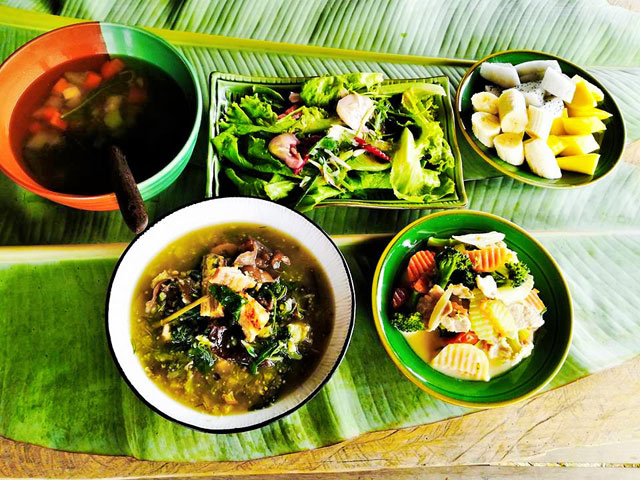
The farm’s published programme has two sessions: 8.30–11.30 a.m. and 1.30–4.30 p.m. It operates daily, including in wet weather. Hotel or guesthouse collection can be arranged, with the return journey afterwards. Confirm your pickup time when reserving.
As a guide, the farm’s published rates in October 2026 are US$36 for the experience, or US$48 with lunch. These are the farm’s own rates; the GetYourGuide package has its own price and inclusions.
You can book a Living Land Farm visit with transfers through GetYourGuide. Check the current package price, pickup arrangements and whether lunch is included before reserving.
Wear shorts or clothes that can be kept clear of the mud. You enter the paddy barefoot, and there are washing facilities afterwards. Participation is optional: you can watch any stage you would rather leave to someone else.