
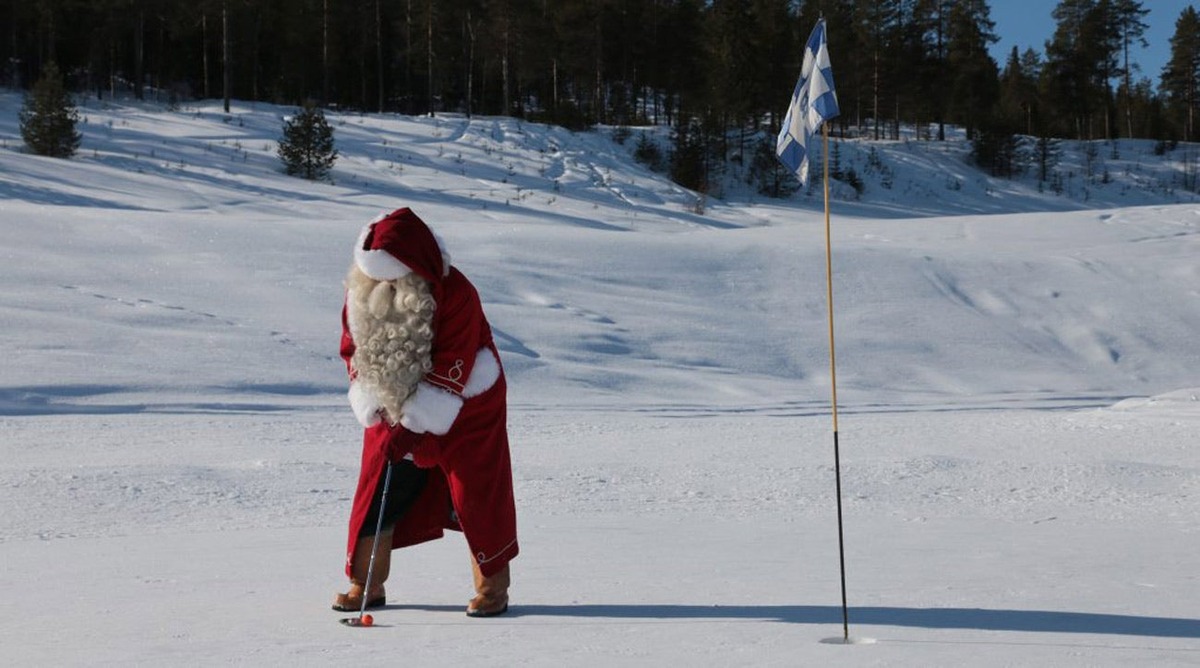
Photo: Santa Claus Golf.
When Mike Whan asked Mike Davis to name the most underrated golf course he had played, the answer was Santa Claus Golf Club. This was in a 2021 conversation published by GOLF, as Davis was handing over the leadership of the United States Golf Association. He was remembering a round on snow in northern Finland.
“It was the funnest thing I think I’ve ever done in golf,” he said.
That is the sort of recommendation that makes me reconsider a destination. Rovaniemi already has a firm place on the winter travel map, but a course capable of giving someone with Davis’s experience that much pleasure deserves a closer look. On Ounasvaara, golf offers two quite different reasons to come: a short winter game on prepared snow, and eighteen summer holes through the forest, with daylight to spare long after dinner.
A course that began on ice
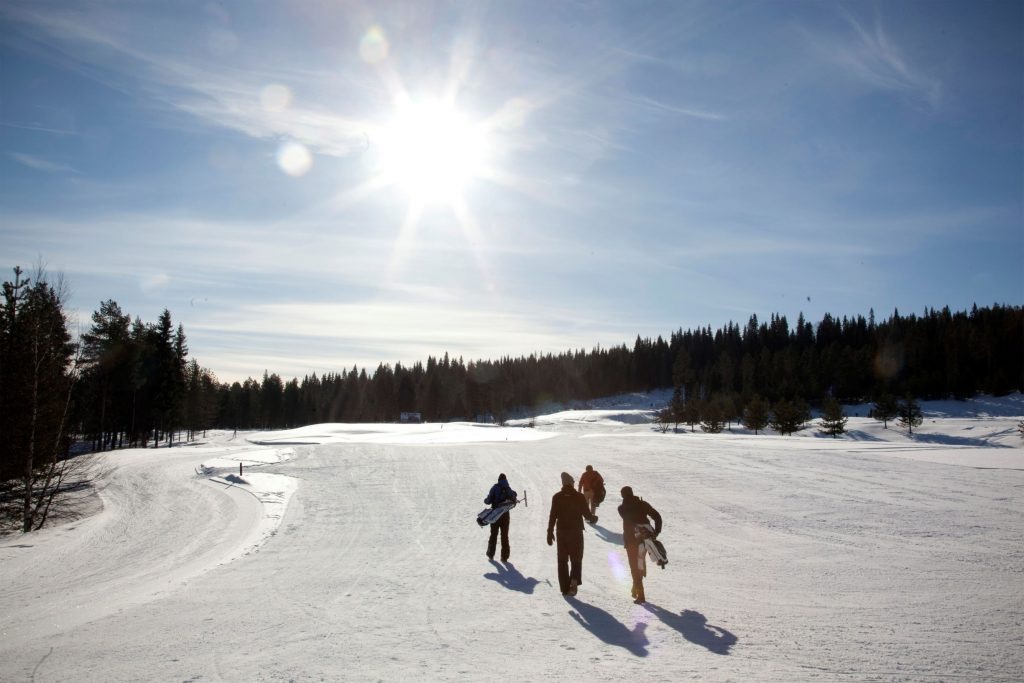
Golf arrived here in 1986, on the frozen Kemijoki River. Grass came later. The club’s first nine-hole summer layout opened in 1997, and the full eighteen followed in 2011. Pekka Sivula designed the original nine; Lassi Pekka Tilander designed the extension. The Santa Claus name was adopted in 2017.
I like that order of events. Winter golf was part of the club’s beginnings, long before the name made it sound like a seasonal attraction. It also helps explain why this is an interesting place to look at golf tourism. The same northern climate that restricts a conventional season has given the club another form of the game.
The setting belongs to Finnish Lapland: wooded slopes on the edge of Rovaniemi, with the Ounasjoki and Kemijoki rivers below. This is a members’ club that welcomes visiting golfers. A holiday here can combine a round with a city stay, or keep closer to the forest on Ounasvaara.
How snow golf changes the game
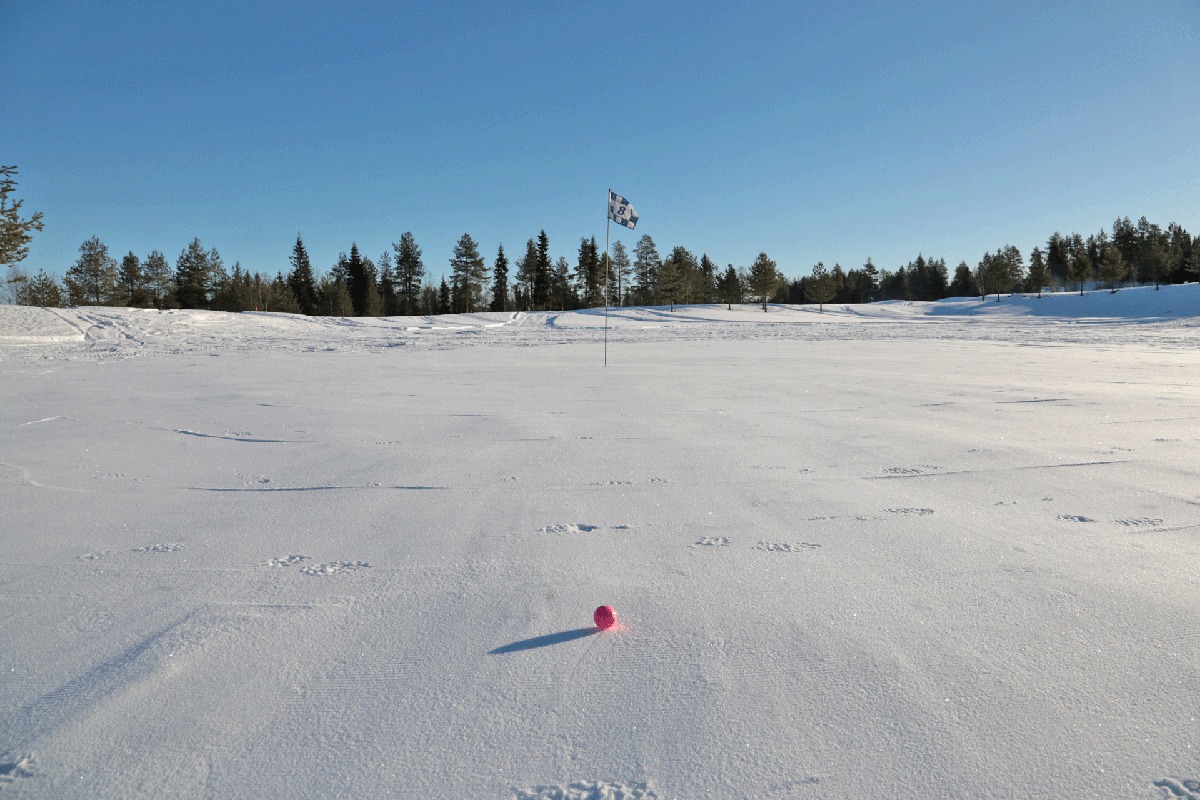
The winter layout has nine holes and its own routing. Parts follow the summer course; some putting surfaces have occupied the frozen water hazards. Greens become “whites”, the tees have mats, and bright balls take the place of white ones. A normal hazard can become the place you are trying to reach.
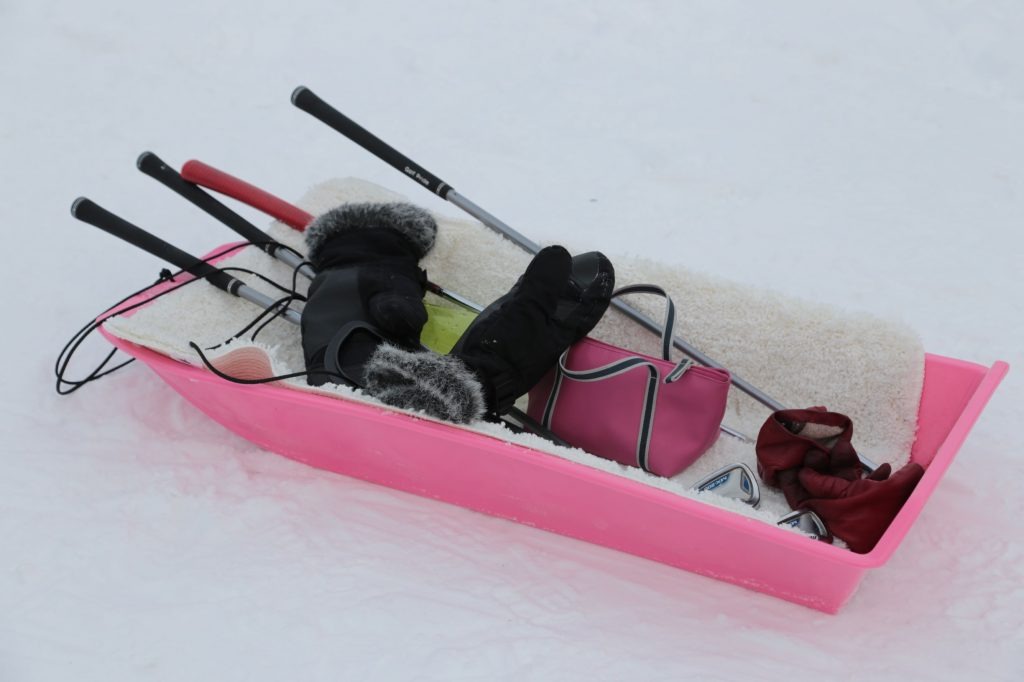
The published winter rules allow three irons and a putter, with a five-iron the longest permitted iron. They also allow teeing up on the prepared fairways. Clubs can travel in a small sledge. Nine holes have traditionally taken about an hour and a half to two hours—a manageable outing within a wider Lapland holiday.
Davis’s enthusiasm was unusually specific. In that GOLF conversation, he remembered whites rolling at perhaps ten or eleven on the Stimpmeter, the device used to measure putting speed. That was his recollection of the conditions he encountered. The temperature and a light glaze on the surface were part of what made the putting work.
Winter golf is both entertaining and demanding. The winter holes are shorter, but the ball also travels less far. Deep snow beyond the prepared fairways can swallow a wayward shot, and approaches still demand accuracy. Familiar summer distances need rethinking.
That combination is the attraction for me: enough of the game remains to interest an experienced golfer, while the ground changes almost everything about the occasion. Warm boots and mittens to wear over golf gloves belong in the equipment plan.
Snow golf is a late-winter plan
Around Christmas, the shortage of daylight leaves little room for golf. Rovaniemi averages about two and a half hours between sunrise and sunset in December, compared with roughly twelve in March. The traditional February-to-early-April season brings longer days while snow still covers the course. For a trip combining a round with Santa Claus Village, I would look towards the brighter end of winter.
There is a real question over the coming season. The club still describes winter golf on its English website, but has not announced opening dates for winter 2026–27. In his July 2025 GREENFEED report, golf writer Michael Althoff raised uncertainty about the winter course’s longer-term operation as changing weather increases maintenance costs. For a trip built around snow golf, establish the opening and equipment arrangements with the club before choosing the dates.
I would treat March as the month to investigate. It fits the course’s history, while leaving room for the rest of a winter stay. The work involved matters, too: a playable snow course has to be built and maintained. Snowfall alone does not create a putting surface.
The summer course beneath the snow
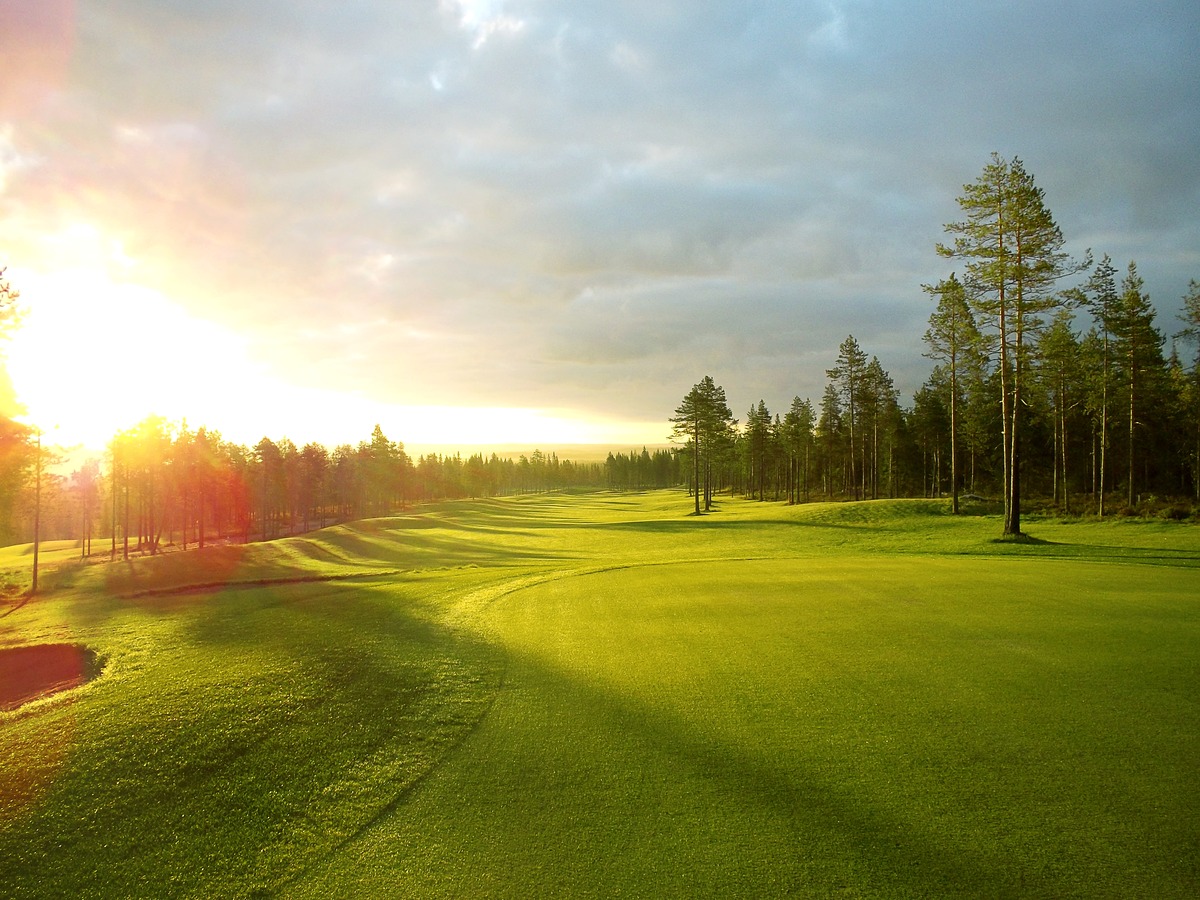
Summer reveals a par-71 course measuring 5,960 metres from the white tees, with shorter options down to 4,543 metres from the reds. Its architecture makes use of Ounasvaara’s changes of level. The second is an uphill par three with a hidden green; the third turns right and descends, with water influencing the route. At the sixth, a bunker guards the front of the green.
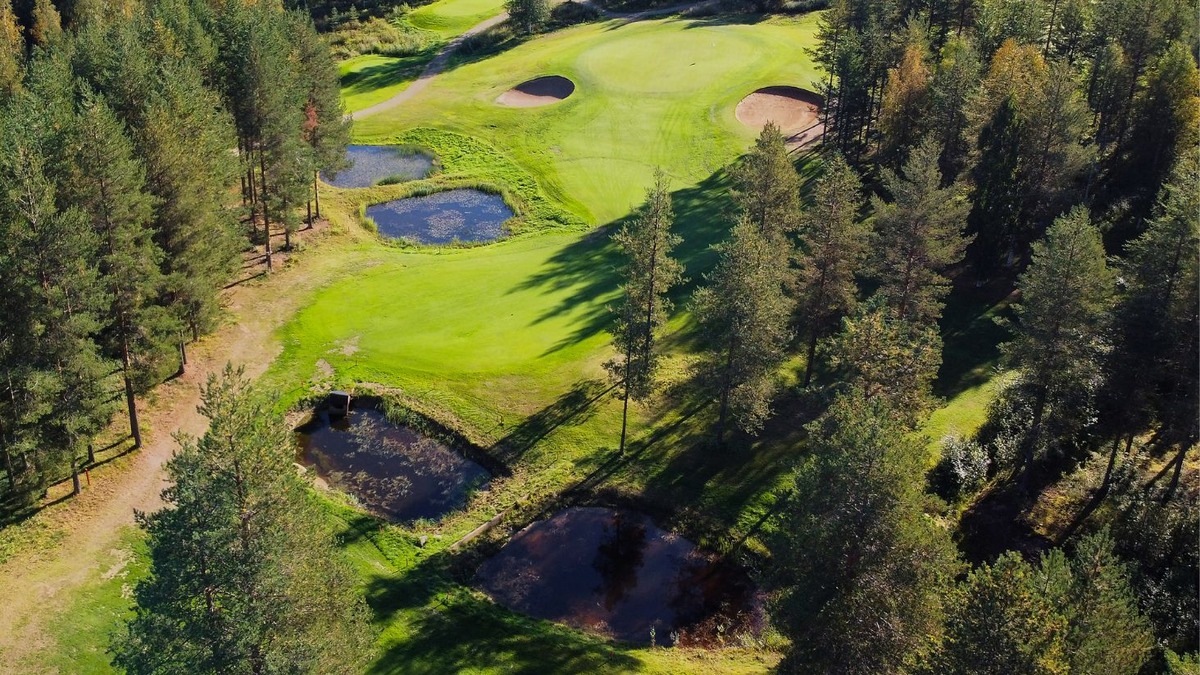
These are useful details when choosing a golf holiday. Elevation, sightlines and the position of hazards tell you more about the round than a total yardage. They also explain why the landscape deserves attention beyond the view from the clubhouse.
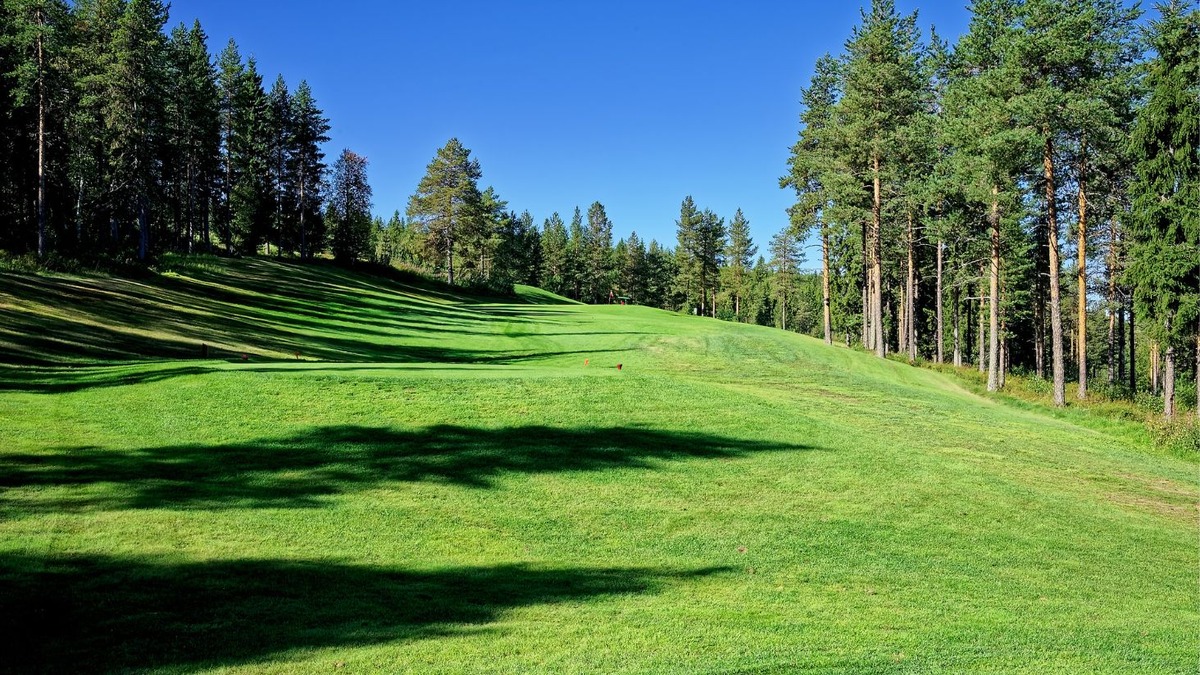
In his 2025 summer report for GREENFEED, Althoff found beauty and challenge together: an elevated second green with sloping sides, uphill blind shots later in the round, and downhill approaches requiring a change of club. His account rewards careful reading of the terrain. It gives the summer course a playing identity of its own.
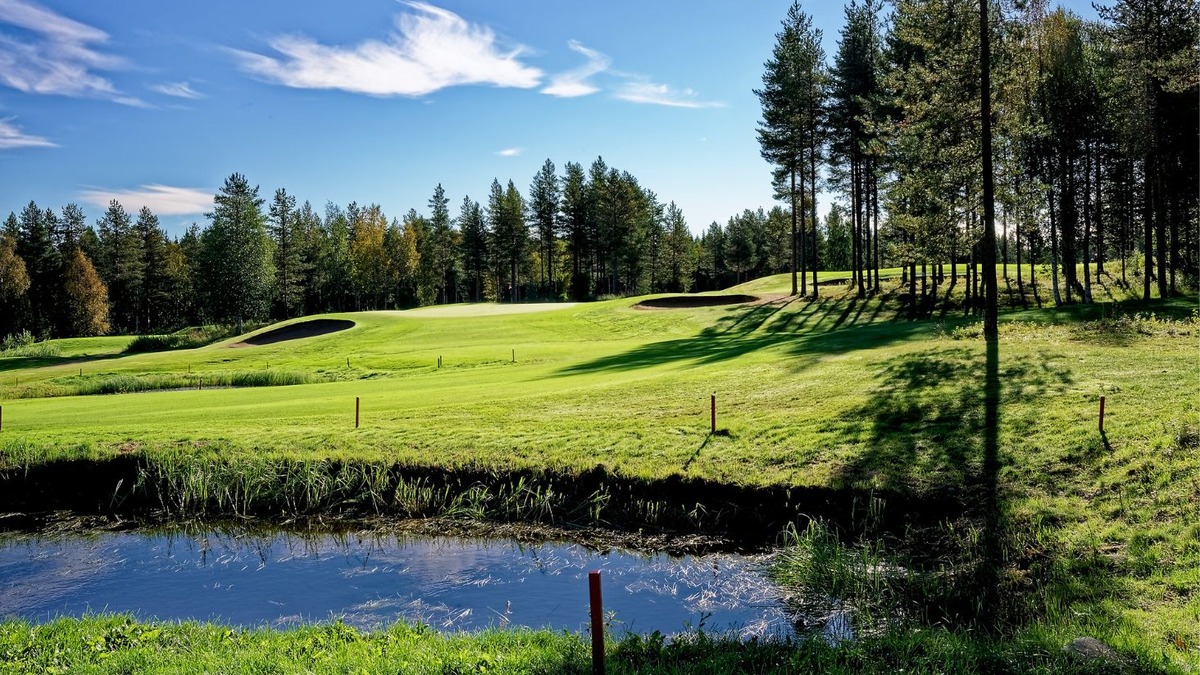
After the spring thaw, fairways can remain wet and turf damaged by frost needs time to recover. Buggy access may be restricted while the ground is soft.
For a first summer golf trip, I would favour the long days around midsummer. The appeal is having time to enjoy the course without making everyone else’s day revolve around an early tee time.
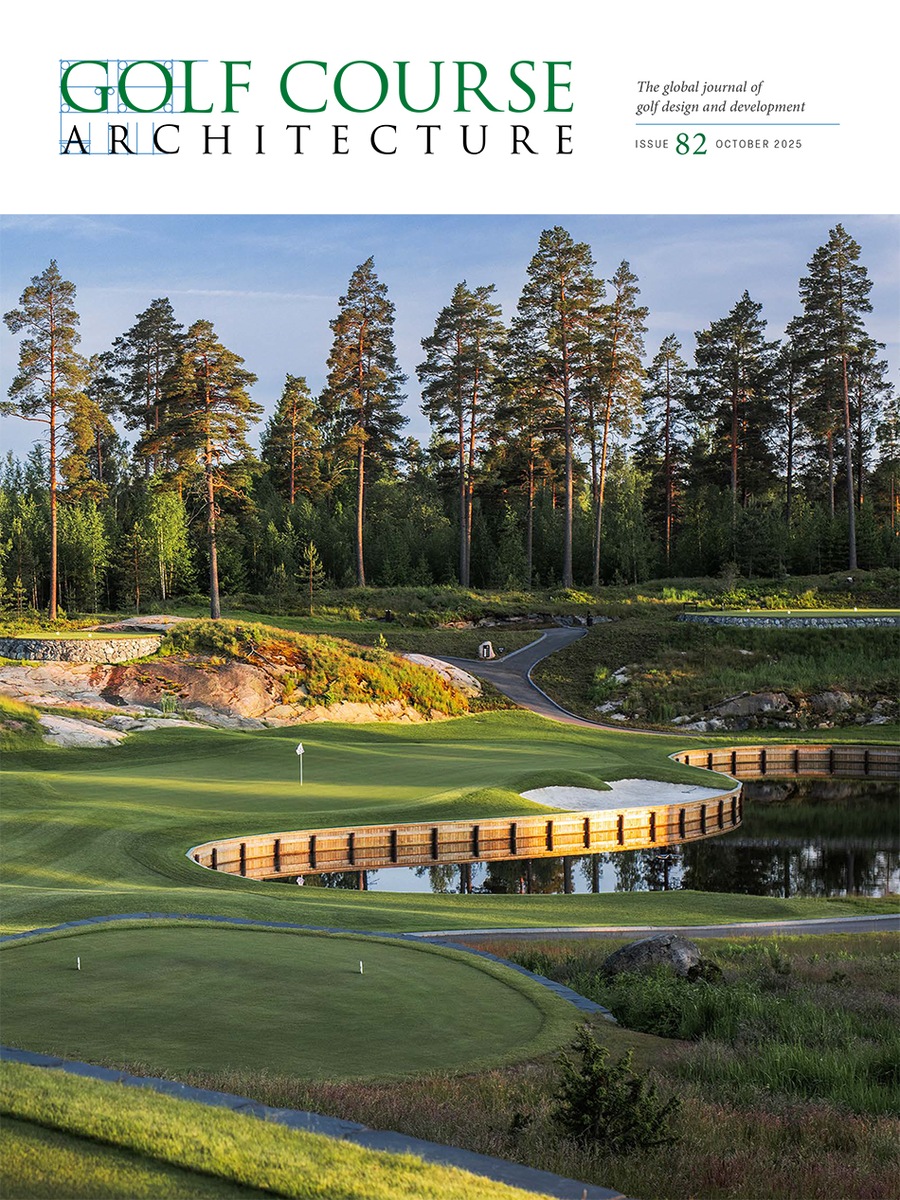
Tilander’s work offers another reason to look at Finland for golf. His nine-hole, par-three Rock Golf near Helsinki appeared on the October 2025 cover of Golf Course Architecture. Adam Lawrence’s accompanying feature examined its ambition to become the world’s best par-three course.
A round after dinner
From early June into early July, the club offers the possibility of playing around the clock in the midnight-sun period. Reindeer roam the course, and their hoofprints even have a place in its local rules. The light changes the timetable of a holiday as much as it changes the photographs.
Adam Stanley’s feature for LINKS picked out this summer opportunity alongside the club’s winter origins. It is an appealing inversion: a course named for Christmas also gives golfers a reason to visit when the night barely arrives.
From a travel perspective, that flexibility is valuable. Golf can occupy the late evening, leaving the daytime free for whoever has come along. There is no need to pretend that everyone in a travelling party wants eighteen holes. A destination becomes easier to choose when one person’s round fits comfortably into the others’ holiday.
Making a stay of it
For a stay centred on the landscape, I would look at Lapland Hotels Sky Ounasvaara, on the summit of the same wooded hill. Some rooms have private saunas, and its Sky Kitchen & View restaurant looks across the surrounding country. A room with a sauna and dinner overlooking the forest would be my starting point for putting the trip together.
There is also an established accommodation relationship behind the golf: the club lists Santasport and Sokos Hotels as package partners. Santasport’s 2026 summer offer combined accommodation, breakfast, a green fee and spa use. This is where golf contributes something tangible to a destination’s hospitality—a reason to choose a stay that joins the course to the rest of the holiday. A summer package should not be mistaken for a snow-golf booking.
The course is at Golfkentäntie 43 in Rovaniemi. For winter arrangements, use the club’s own contact details.
What puts Santa Claus Golf on my list is the possibility of experiencing the same place so differently. I would investigate March for the snow course, and June for a long summer evening. Either way, I would leave time afterwards for the sauna.