
Spend any time in Jamaica and you will hear Bob Marley. His songs are so much a part of the island that the two have become almost one name. A gifted songwriter, singer and performer, Marley carried reggae to the rest of the world, and he spent his life urging that world towards kindness and justice.
His music still moves people everywhere.
The house on Hope Road
In Kingston, on a street with the happy name of Hope Road, stands a two-storey wooden house built in the colonial style of the 19th century. It draws you in from the gate. Bob Marley bought it in 1975 and lived there for the last six years of his life.
After his death, his wife, Rita Marley, turned the house into a museum, which opened in 1986. So much has stayed as it was, so alive and unaltered, that it seems only yesterday a guitar sounded from these rooms while Marley worked on the songs that outlived him. Something of that charismatic man remains in every corner.
Red, gold and green
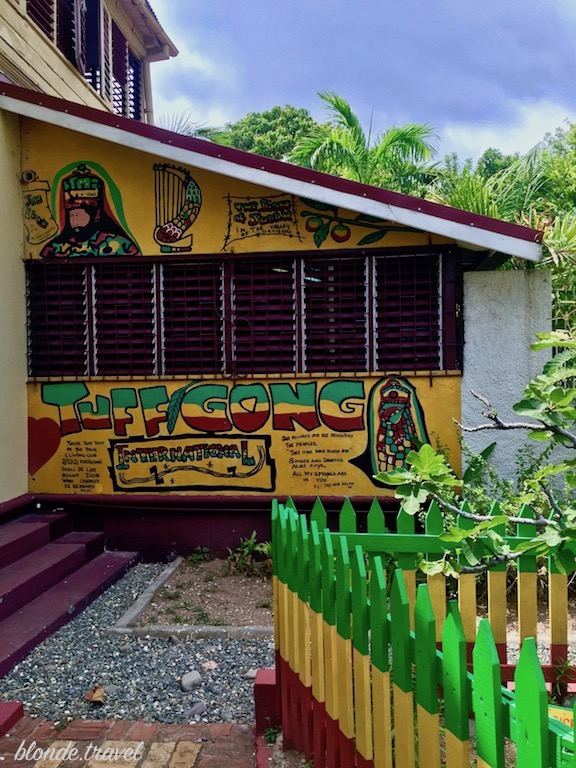
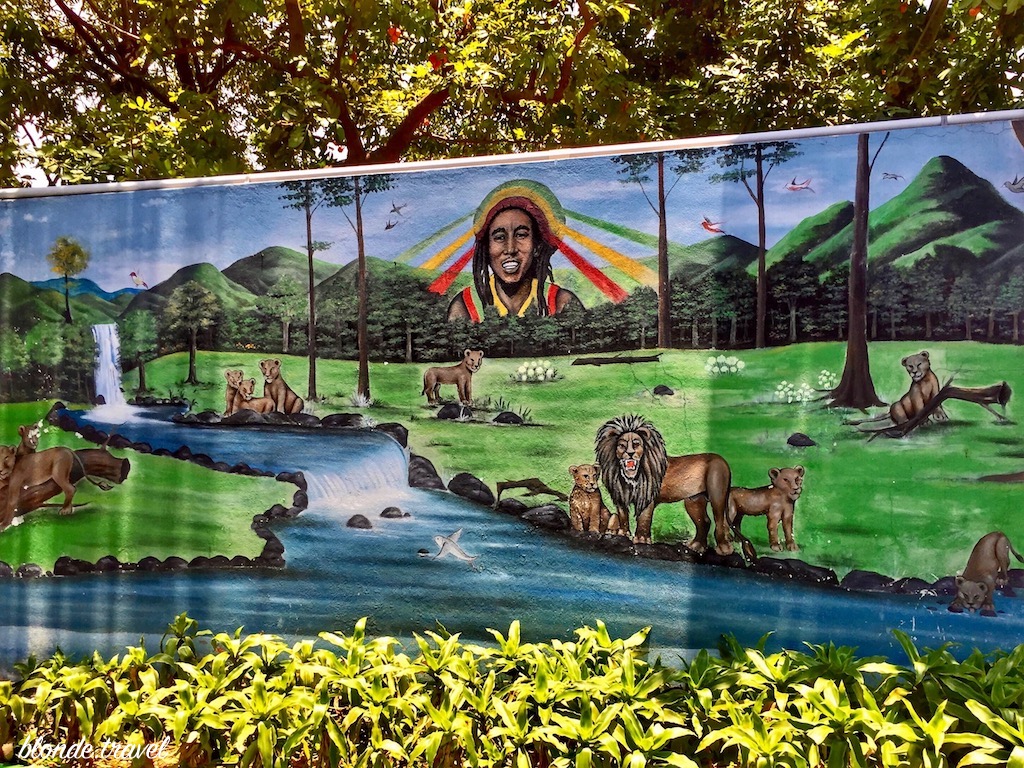
The walls are faced with brick and painted with quotations and with portraits of Marley, his friends and his children. Three colours run through everything: red, gold and green, the colours of the Ethiopian flag and of Rastafari.
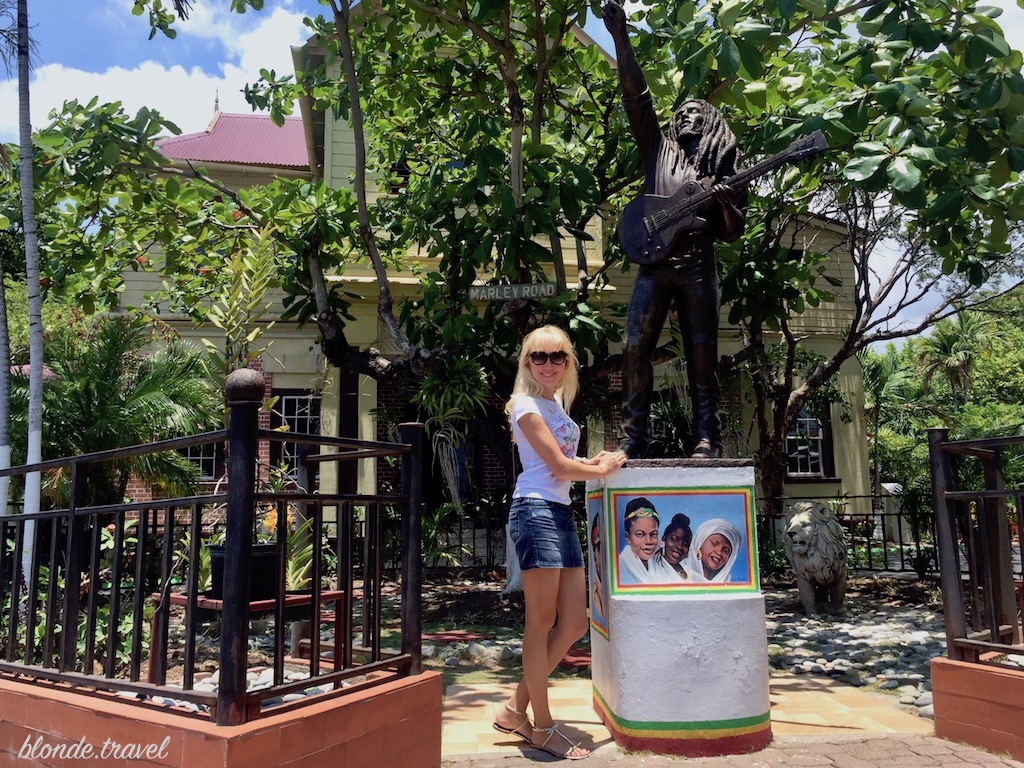
In front of the house, in the shade of the trees, Marley stands in sculpture with his beloved guitar.
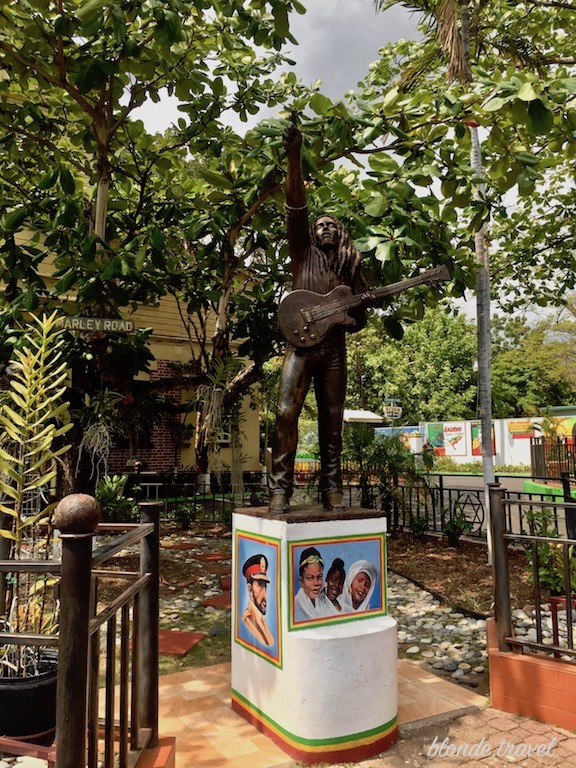
This statue had only recently replaced the one that stood here for many years. Many in Kingston, Marley’s admirers among them, felt the old figure suited the place better and caught more of his character and mood.
Inside Bob Marley’s house
Photography is not allowed inside, so I will try to put what I saw into words. Photographs could not have held the feeling anyway, the one that takes hold of you as you cross the wooden threshold and pass through the arched doorway.
What matters here is the atmosphere, made of every detail of the rooms, every object and every smell that keeps the memory of Marley’s life. Here the picture comes to life.
Inside, a moment seems to have stopped. In places like this I feel that time has been paused: anticipation hangs in the air, and whatever comes next will surely follow, only a little later. This is not the past but the present. A string still seems to be ringing, there is a smell of fresh paint, and the owner has stepped out for a minute and will be back at any moment.
There is none of the museum gloom in which labelled exhibits stare sullenly at visitors from behind glass. Everything is full of rich, living memory.
Downstairs, where the recording studio used to be, a library held books about Marley, his awards and his records.
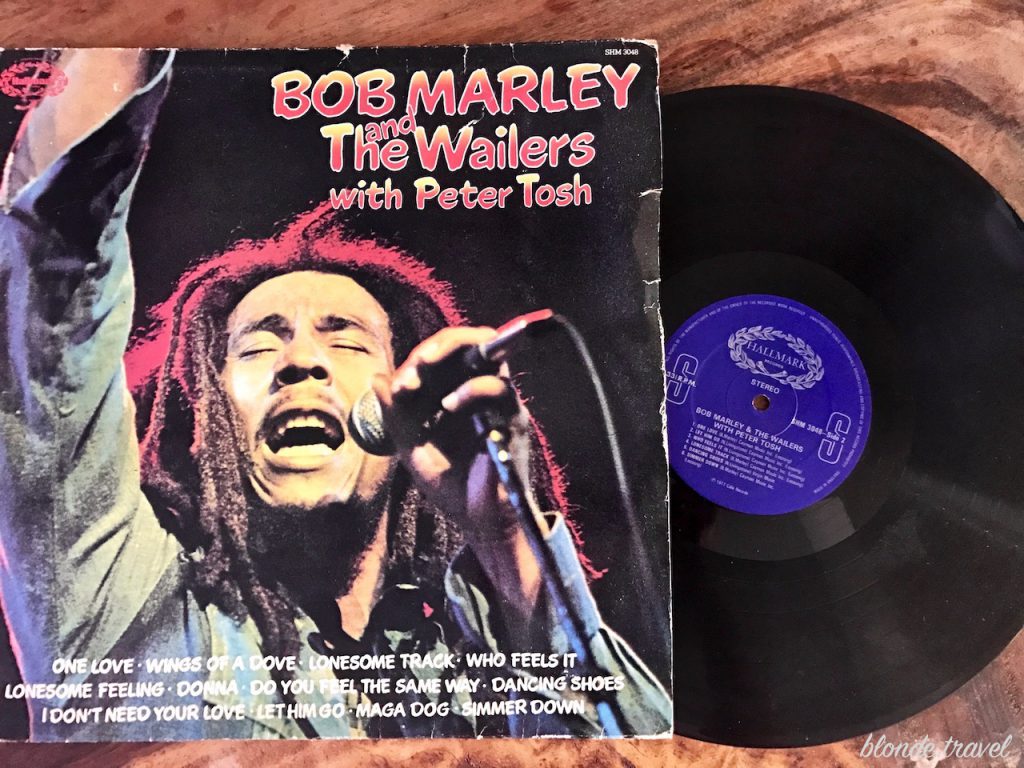
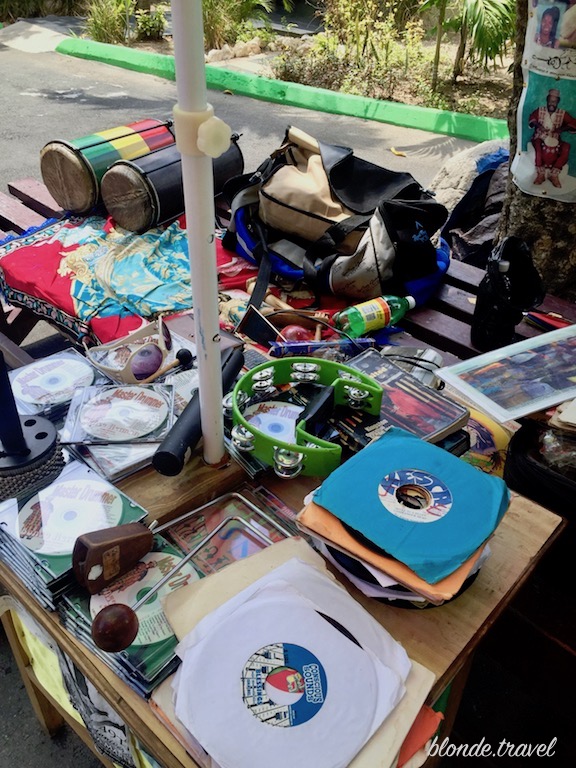
Out in the yard, a wonderfully colourful character was selling all sorts of odds and ends. What caught my eye were the worn cardboard sleeves of old records. Some were nearly new; others were scratched and old, and they carried such good energy that I could not leave without a couple.
Up the wooden staircase with its wide banisters, the first floor looks as though nothing has been touched since Marley lived here. Newspaper cuttings and concert posters hang wherever they seem to have landed. Records and drums are set out, along with a great many religious objects: Marley was a Rastafarian, and many Rastafari regard him as a prophet. He also loved football, and photographs of him in football kit, and the balls themselves, hold a place of honour.
The bullet holes left in the walls by the attempt on Marley’s life in December 1976 affect you most. Bob, Rita and his manager, Don Taylor, were all in the house that evening. He was wounded, recovered at Strawberry Hill in the Blue Mountains, and two days later went on stage anyway at the Smile Jamaica concert, which he hoped would ease the feud between Jamaica’s two warring political parties. There was too much evil in the world, he said, and he had no right to waste a single day.
In Jamaica he became a figure of near-religious standing, and his views on faith and politics were received as revelation.
In the middle of the bedroom stands a plain iron bed under a colourful bedspread. A star-shaped guitar lies there, with an old Bible, drums and other belongings, and a portrait of the Ethiopian emperor hangs on the wall. The house also keeps the shirt Marley loved to wear on stage.
The corner of family photographs moved me most. His father, an older white Jamaican, was about sixty when Bob was born; his mother, a young black Jamaican woman, was eighteen. And there are Bob and Rita in their wedding photograph.
The courtyard
In the inner courtyard, among the basil, lemongrass and other herbs, a happy little cannabis plant was sunning itself in a small bed under a tree.
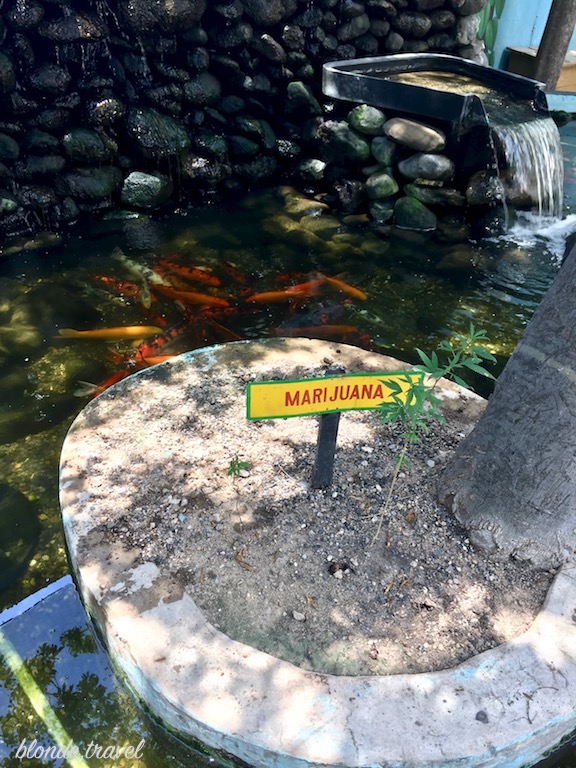
Marley’s favourite pastime was to sit under this tree, smoke a little and start up on the drums. The neighbours were not pleased, and he answered them in song: “I want to disturb my neighbour, ’cause I’m feeling so right.”
Lines from his songs and his sayings are written on walls all over the house and grounds.
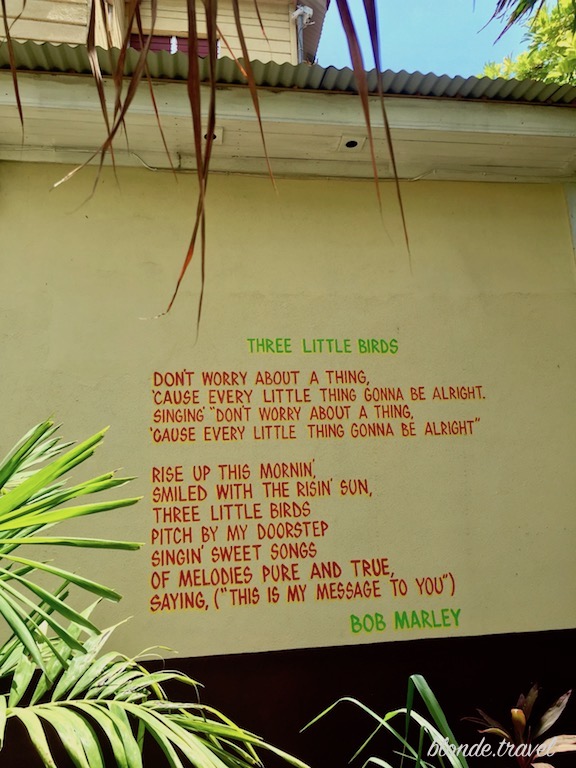
Hum them to yourself and you feel calm and light.
Under a casement window hangs a beehive; in Jamaica, bees are said to bring a house luck and money. Reggae drifted over from the One Love Café nearby. A noisy crowd of schoolchildren went past on a lesson about the museum’s history. Everything gave off warmth and goodwill.
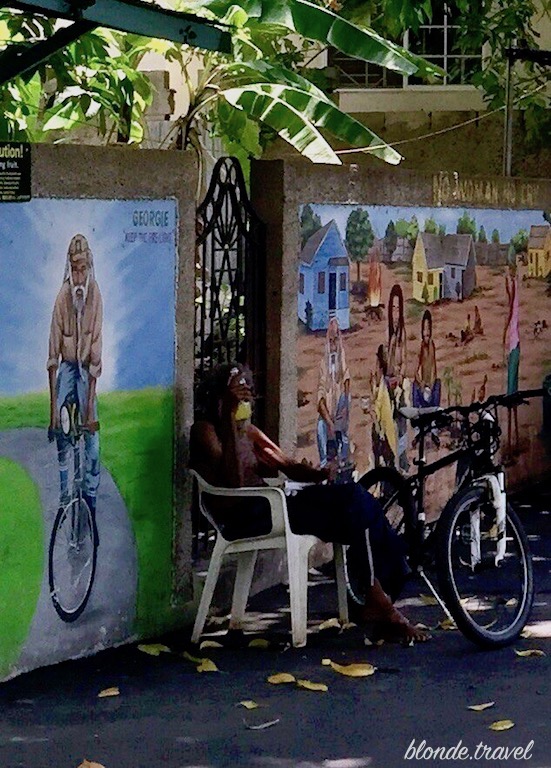
We walked past a wall where Marley is painted with his sons. Immediately to his right is his eldest son, David, better known as Ziggy, a well-known musician in his own right. Nearly all of Marley’s children have made their lives in music, one way or another.
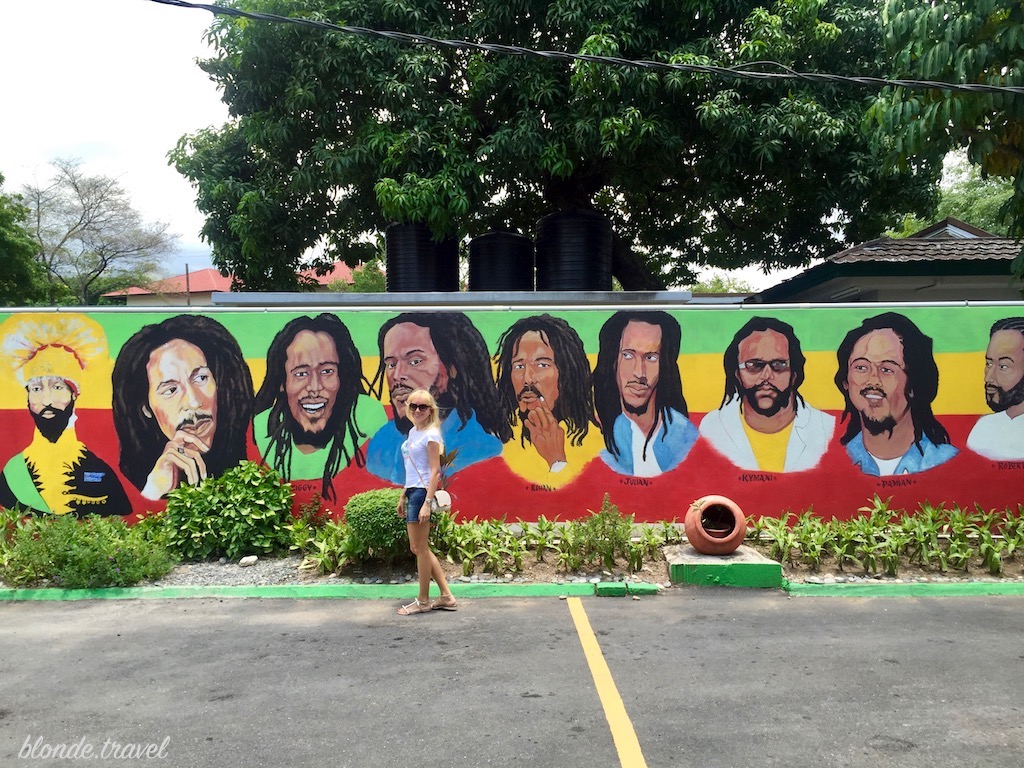
Besides seven sons, Bob had five daughters. So why are their portraits not on the wall? Then I remembered “No Woman, No Cry” and had my answer.
The museum also has an 80-seat theatre, where a documentary about Marley’s life is shown.
Rastafari
With their long dreadlocks, their devotion to music and their use of cannabis as part of their faith, Rastafari stand out among Jamaicans, yet they do not fit any single definition. Not everyone who wears dreadlocks or smokes marijuana is a Rasta.
Rastafari is a way of life: energy and a great vitality, found through coming to know the world and running through every living thing. Above all, it is love for one’s neighbour.
Its inspiration came from Ethiopia and from Haile Selassie I, emperor from 1930 to 1974. Rastafari believe that he was God made flesh, and they call God Jah.
Worth the visit
I spent three hours at 56 Hope Road. Even if you are not an admirer, and could barely name one of his many songs, his house in Kingston deserves a visit.
The museum is open Monday to Saturday, and the house is seen on a guided tour of about an hour and a quarter, including the film. Tickets are sold at the gate and on the museum’s website.
This house is a symbol of Jamaica, its soul and its atmosphere. If you are piecing Jamaica together from details, impressions and feelings, this is the place that helps you understand it and feel it.