
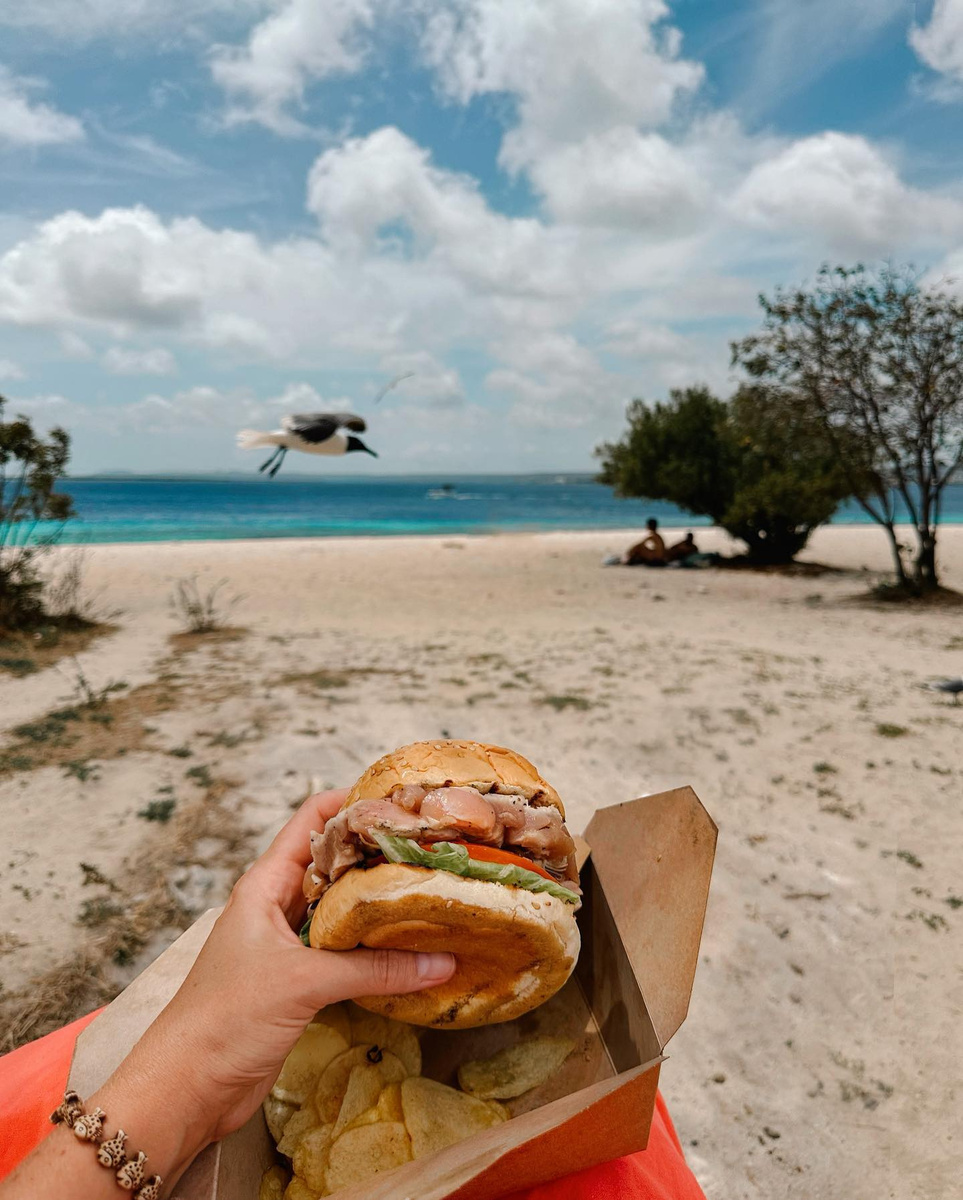
A beachside tuna burger, dinner at Brass Boer, and an island whose kitchens achieve far more than its dry ground would suggest.
I ate extraordinarily well on Bonaire. Before discussing its claim to be a culinary capital, I want to give the meals their due.
Brass Boer was a highlight. So was a much simpler pleasure: the fresh tuna burger at Kite City, eaten beside the beach. Between those two meals lies a good part of what I like about the island’s food. There is room for ambition, and room to enjoy lunch without turning it into a ceremony.
What makes this remarkable is the place itself. Bonaire is dry, its agriculture is small, and much of what its kitchens need has to arrive from elsewhere. It has built a serious appetite on a difficult foundation.
“Culinary capital” is a phrase I tend to meet with a raised eyebrow. A destination can announce almost anything about itself. In Bonaire’s case, there is a real designation behind it: the World Food Travel Association certified the island as a Culinary Capital in 2022. The assessment considered culture, strategy, promotion, community and sustainability.
That makes it a recognition of a destination’s food culture and its development, rather than a trophy for beating St Barth, Martinique or every other island at dinner. I find the distinction useful. It leaves me free to judge Bonaire by what I ate.
An island with little room to grow dinner
The idea that a great food destination must begin with abundant local produce is attractive. On Bonaire, it needs some revision.
There is fishing, livestock and small-scale cultivation. The island has food traditions of its own, and it would be careless to erase the people who still grow and raise things here. Yet its dependence on imports is substantial. A Wageningen food-system study identifies limited and irregular water supplies, difficult growing conditions and obstacles to viable farming as major constraints on increasing fruit and vegetable production.
This was not always an island that bought so much of its dinner elsewhere. Its kunukus, small rural holdings, supported household farming and livestock. Over time, better-paid work outside agriculture and easier access to imported food helped change that way of life. Tourism and migration also brought new appetites. Today’s food supply reflects that history as well as the dry climate.
A restaurant’s work begins well before the chef picks up a knife. Ingredients have to reach the island, arrive in good condition and be handled properly. The quality on the plate depends on that whole chain as well as on the kitchen. The standard I found would deserve praise in a place with an easier supply of ingredients.
It also keeps me from confusing a visitor’s excellent dinner with an island’s food security. Good restaurants and affordable everyday groceries are different achievements. The first does not solve the second. I can admire the cooking without pretending that imported food is an uncomplicated success story.
A tuna burger belongs in this story
My Kite City burger deserves its place beside the more elaborate dinners. I recommended it at the time, and it remains one of the meals I would build a return visit around.
Kite City is part of the food-truck life around Te Amo, near the airport. For me, that is an appealing way to eat on an island: a good lunch that fits into the day, without requiring the day to be organised around lunch. I enjoy a tasting menu, but I don’t want every meal to ask for several hours of devotion.
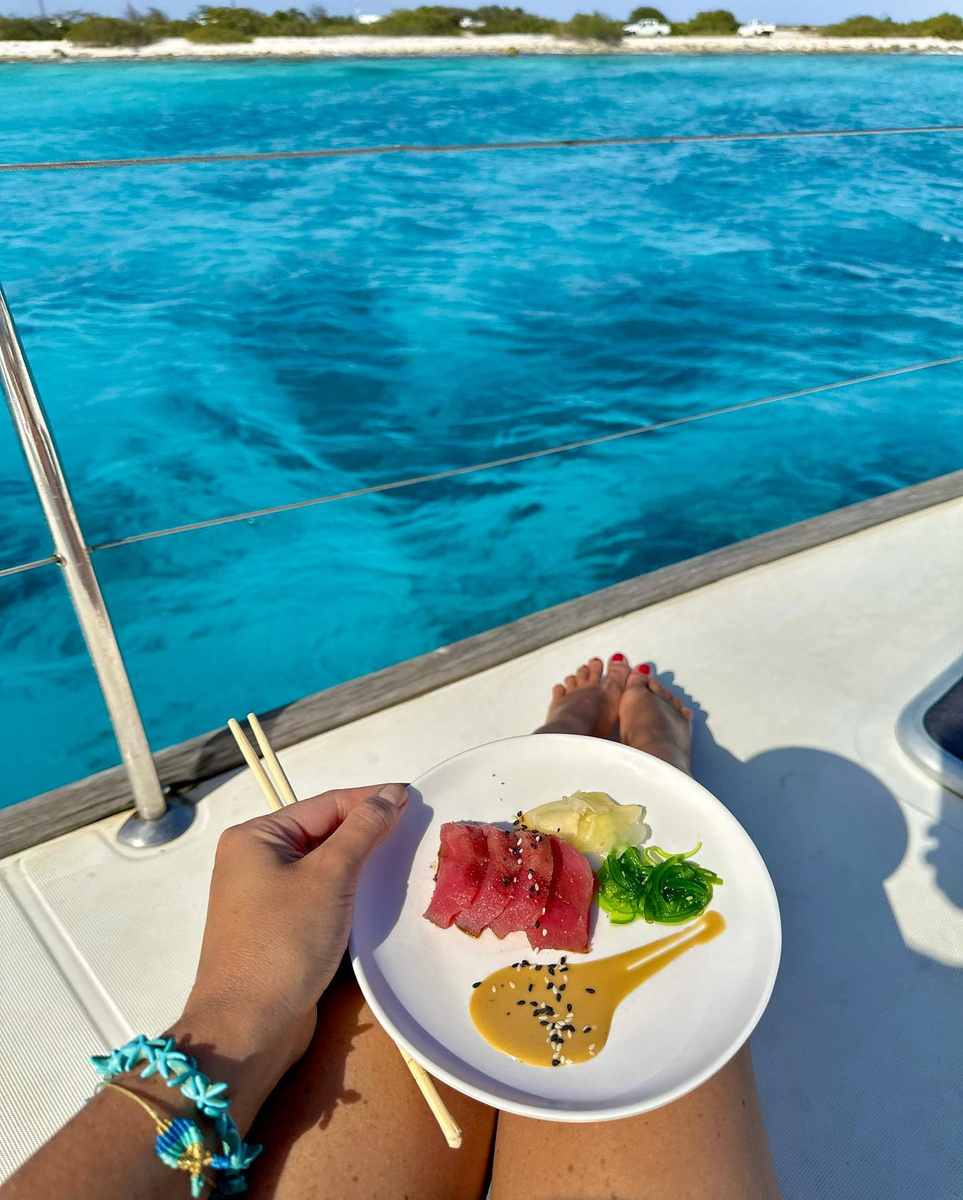
The tuna appeared again aboard my sailing and snorkelling outing with Epic Tours, where dinner was part of the experience. These are different ways of enjoying the sea. One means going into it; the other means sitting down to eat while it remains the setting for the evening.
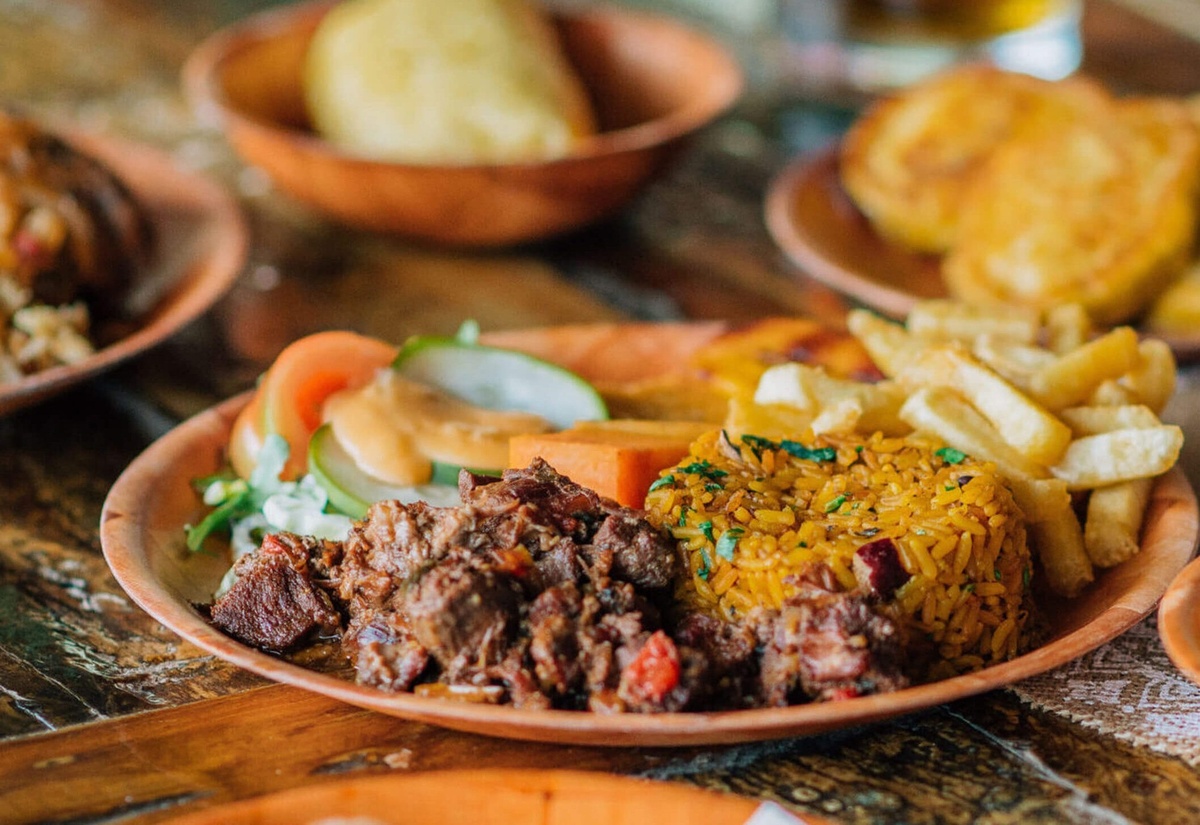
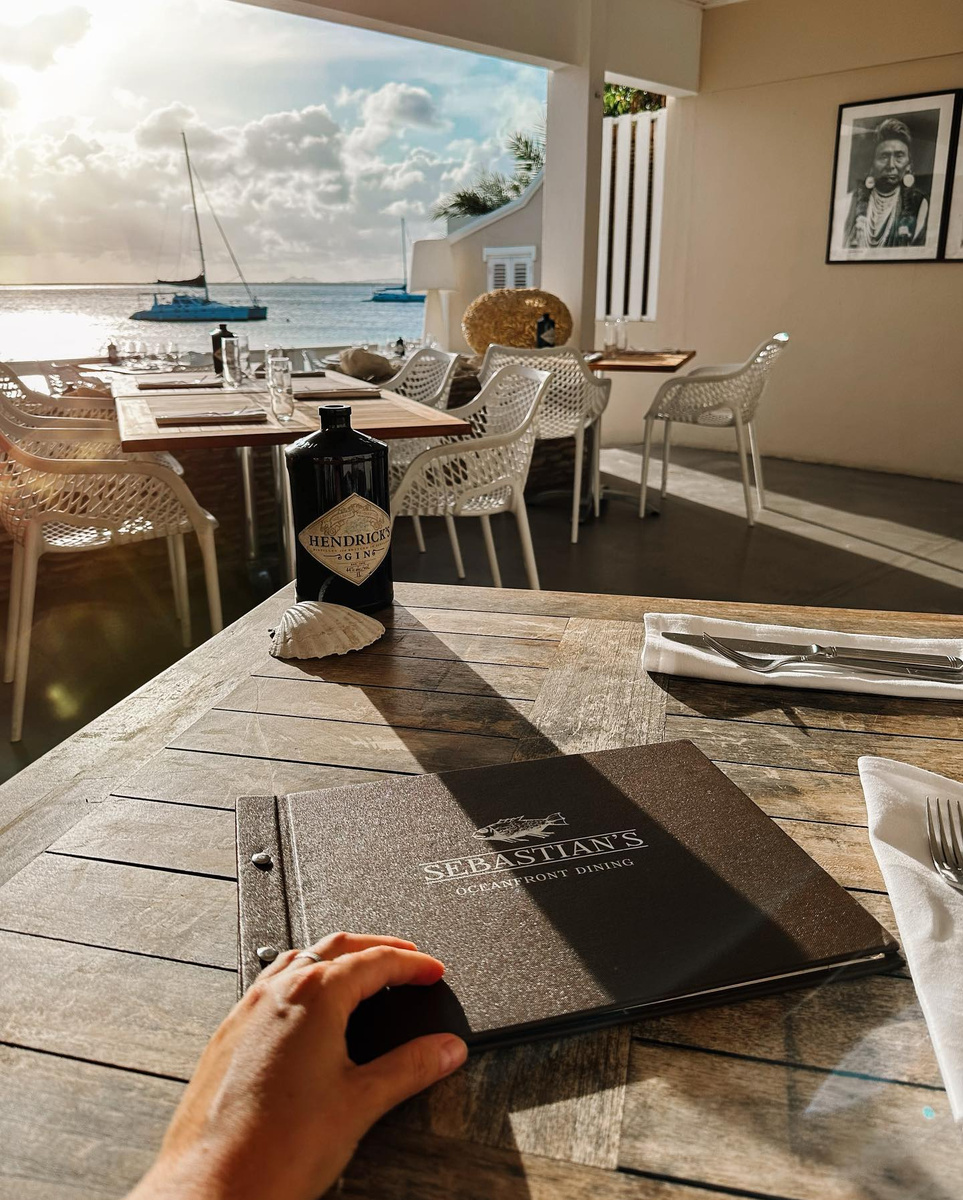
There was a Creole-style fish meal too, and Sebastian’s waterfront dining. I value that range. One great restaurant can redeem a disappointing food destination; on Bonaire, I had several quite different meals to look forward to.
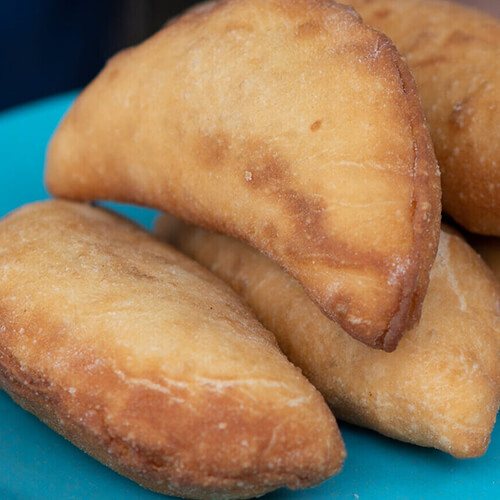
Its local food adds another register. Sopi kadushi, the traditional cactus soup, goat stew and keshi yena, stuffed cheese, belong to a culinary vocabulary quite different from the international restaurant menu. Pastechi, filled fried pastries, are part of that everyday food too. I would make room for that vocabulary when planning meals here. A destination’s cooking becomes more interesting when the polished dinner and the everyday dish can both have a place.
Brass Boer and the Dutch connection
Brass Boer is the clearest answer to any doubt about what Dutch culinary talent can bring to the Caribbean.
Jonnie and Thérèse Boer opened it in 2017. Their restaurant De Librije, in Zwolle, holds three Michelin stars, retained in the 2026 Netherlands selection. Jonnie died in 2025; the family’s restaurant work continues. Brass Boer’s menu draws on De Librije classics as well as Caribbean influences.
I would be wary of judging a country’s serious cooking by a few clichés about its everyday food. The Dutch connection here brings an established culinary lineage. What matters is how that knowledge works at an island table.
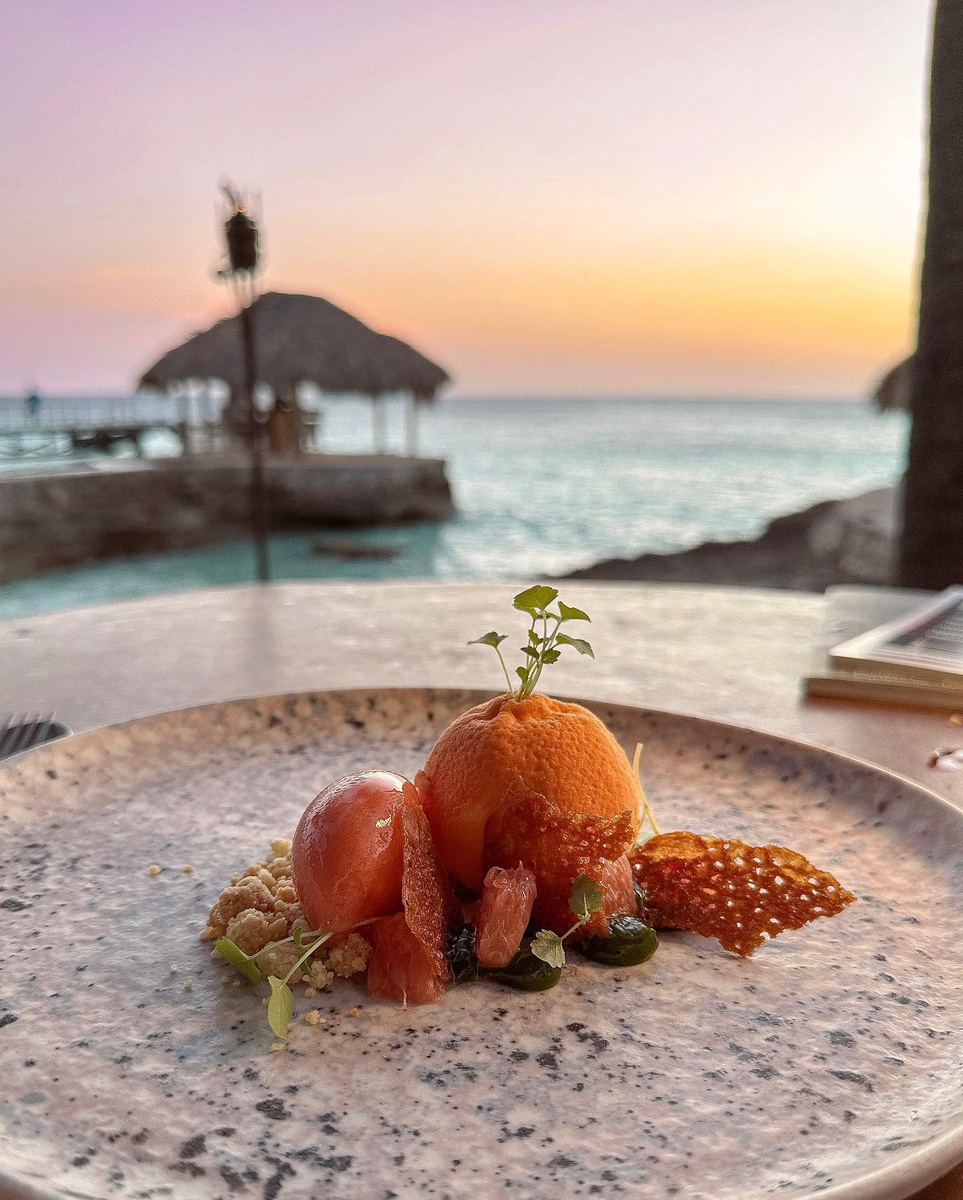
My dinner at Brass Boer was one of the highlights of Bonaire. I like the combination of a kitchen with something to say and a setting that lets me settle into the evening. The sea is a considerable advantage, of course. It is also possible to have a very ordinary meal beside a beautiful sea. Here, the food earned its share of my attention.
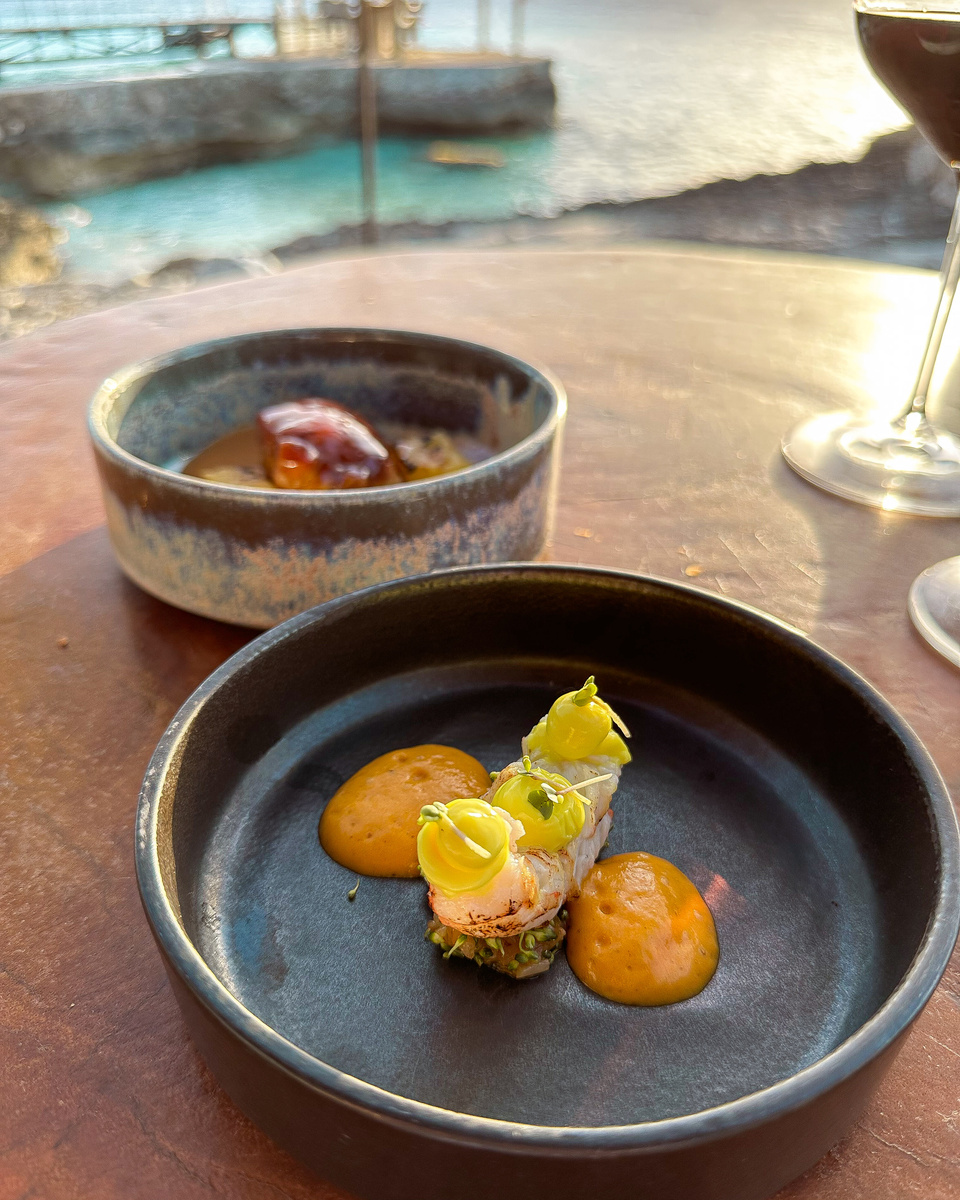
The restaurant sits at Delfins Beach Resort, with both a set menu and à la carte choices. I would reserve it as a proper occasion on a return trip, then leave other meals free for the beach, local cooking and whatever else caught my appetite.
What Michelin can tell us about the Caribbean
Michelin has no restaurant guide for Bonaire, St Barth, Martinique or Guadeloupe, so their restaurants have no Michelin star ratings.
The islands do have kitchens connected to celebrated chefs. Brass Boer was founded by Jonnie and Thérèse Boer of three-star De Librije; at Eden Rock on St Barth, Jean-Georges Vongerichten shapes the menus. Their experience gives me a reason to pay attention, though Michelin stars belong to the restaurant that earned them and do not transfer to another address. I still judge the meal in front of me.
Beside St Barth
St Barth is the obvious comparison when the conversation turns to ambitious Caribbean dining. Its hotel restaurants bring well-known culinary names into an exceptionally polished setting. At Eden Rock, Jean-Georges Vongerichten’s influence shapes the menus. The island’s Gourmet Festival also brings visiting chefs into its restaurant kitchens.
That is a compelling reason to go. I enjoy the prospect of a trip in which the hotel, the table and the evening are all given such attention. I would choose St Barth when I wanted that particular concentration of luxury and restaurant occasion.
But it would be a mistake to explain its food through a generous local harvest. St Barth has very limited agriculture too, working with tiny cultivated areas. Both islands remind me that an excellent food destination can depend heavily on what arrives by sea or air.
To my mind, Bonaire’s appeal is the ease with which a serious dinner can sit beside a food-truck lunch and a day in the water. Its dining ambitions fit into the island holiday I want to have. I don’t need it to imitate St Barth’s hotel world to take its cooking seriously.
I found the quality extraordinary. That is a reason to put Bonaire on a food-minded traveller’s map without turning the Caribbean into a competition with one winner.
The French islands offer another appetite
Martinique and Guadeloupe make a different kind of comparison. Their food interest reaches into Creole cooking, markets, farming and rum production. French influence is part of that story, alongside African, Indian and other Caribbean traditions. Reducing the attraction to “French food in the tropics” misses much of it.
Martinique’s accras, its sauces and its agricultural rum offer a particularly clear sense of that relationship between food and place. Rhum agricole is made from sugar-cane juice, and Martinique’s AOC gives its production a defined geographical and technical identity. In Guadeloupe, Creole dishes and the rum traditions of the archipelago give a food journey a similarly substantial subject beyond restaurant reservations.
That is the sort of trip I would plan around markets, producers and regional dishes. It asks a different question from choosing the most glamorous dinner of the holiday.
Even these islands depend on imported food. Guadeloupe’s agricultural statistics record the pressure of imports alongside local fruit and vegetable production. Fertile ground and a strong culinary tradition do not automatically make an island self-sufficient.
Bonaire has its own traditions, but the thing that most impressed me was the range and quality of its restaurant offering given its agricultural limitations. It suits my appetite for different kinds of meal, with the sea never far from the day. Martinique or Guadeloupe would draw me towards a trip more closely organised around Creole food and its producers. I would happily make room for both kinds of holiday.
More than a certificate
There is evidence of culinary ability here beyond the celebrated European connection. Bonaire’s Rhashindra Donge won Caribbean Chef of the Year at the Caribbean Hotel and Tourism Association’s 2024 Taste of the Caribbean competition. Barbados took the team title. That is a useful reminder that talent belongs to people and kitchens across the region, however enthusiastically destinations promote themselves.
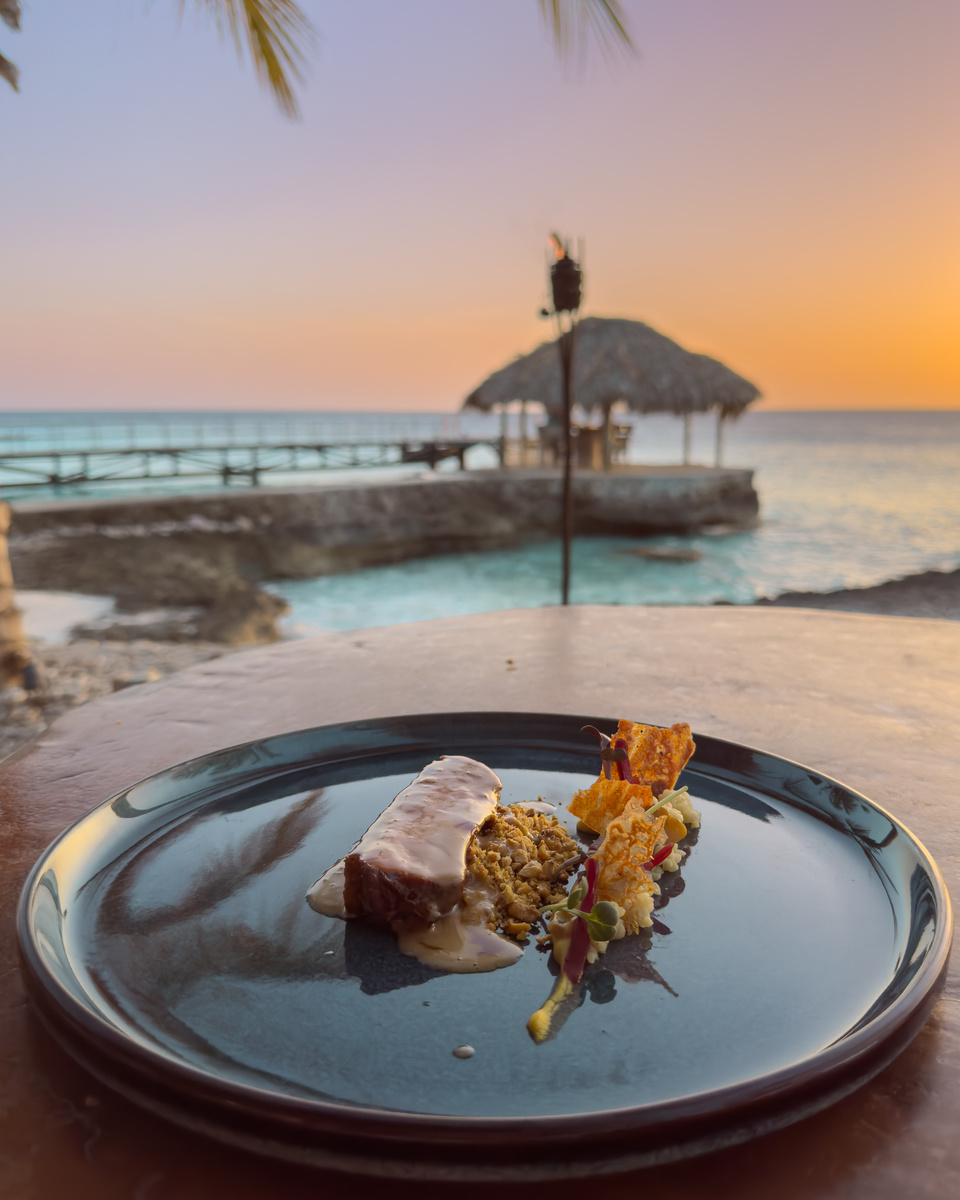
For my own purposes, Bonaire has already made its case. I would return with dinner at Brass Boer reserved, lunch at Kite City in mind, and plenty of room left for the rest of the island’s cooking.
For an island that has to bring so much to the table from elsewhere, it gave me a great deal to come back for.