
At Mae Sai, Myanmar begins on the far side of a bridge. Later that day, I crossed the Mekong to Laos. My Golden Triangle trip took me through both crossings, with markets, temples and an opium museum along the way.
It was November 2012. I was living and working in Thailand, so this was an excursion from home into its northern borderlands.
The route at a glance
Chiang Rai → Mae Sai → Tachilek → Sop Ruak → Don Sao → Chiang Rai.
Why it is called the Golden Triangle
The Golden Triangle has two scales. On a tour, it is the river junction at Sop Ruak, where Thailand, Myanmar and Laos meet. Historically, the name describes a much larger mountainous border region: parts of Burma, now Myanmar, northern Thailand and northern Laos linked by poppy cultivation, caravan routes and the opium trade.
The phrase entered the international drug-policy vocabulary in 1971, when the American diplomat Marshall Green used it at a press conference about opium. The triangle referred to the three countries; the gold referred to the business. Around Mae Sai and Tachilek, opium could be exchanged for gold bars.
At Sop Ruak, tourism gives that sprawling history a manageable shape. You can climb to a viewpoint, look across two rivers and take a boat to another bank. The excursion makes the geography easy to see. The reasons this borderland became so valuable take longer to untangle.
Before the border
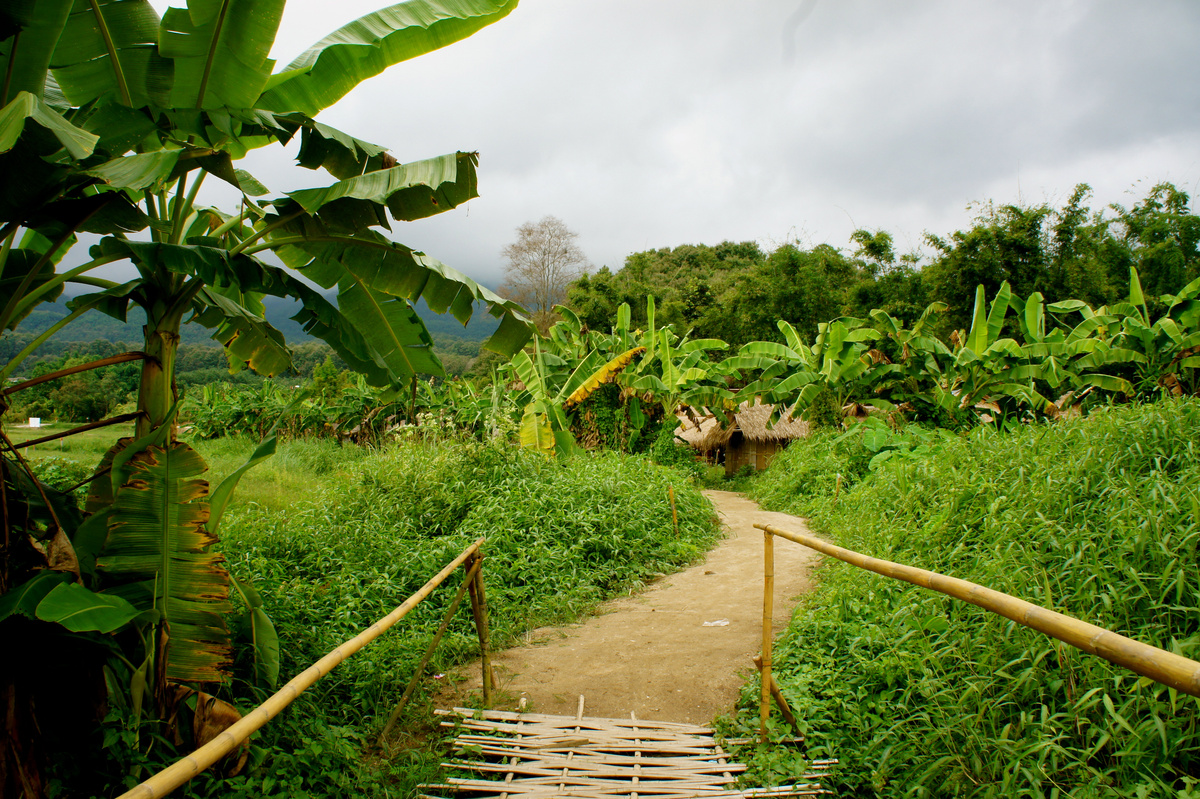
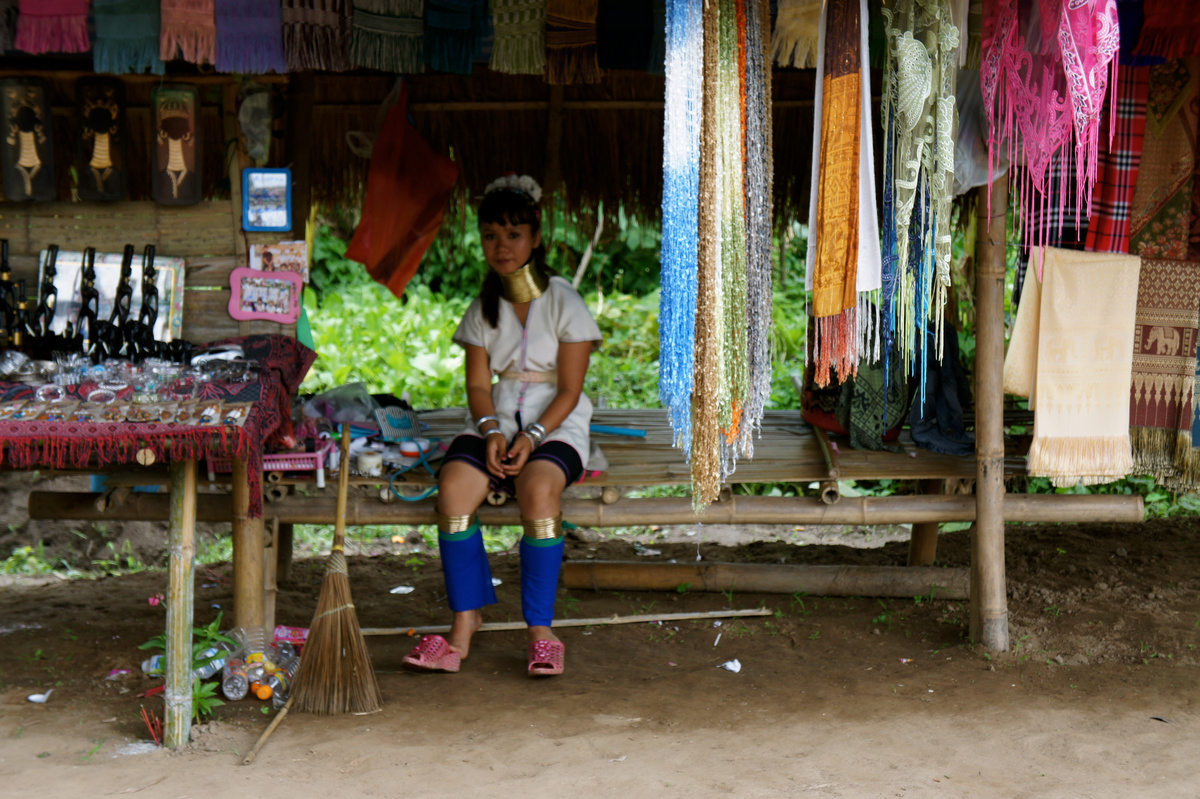
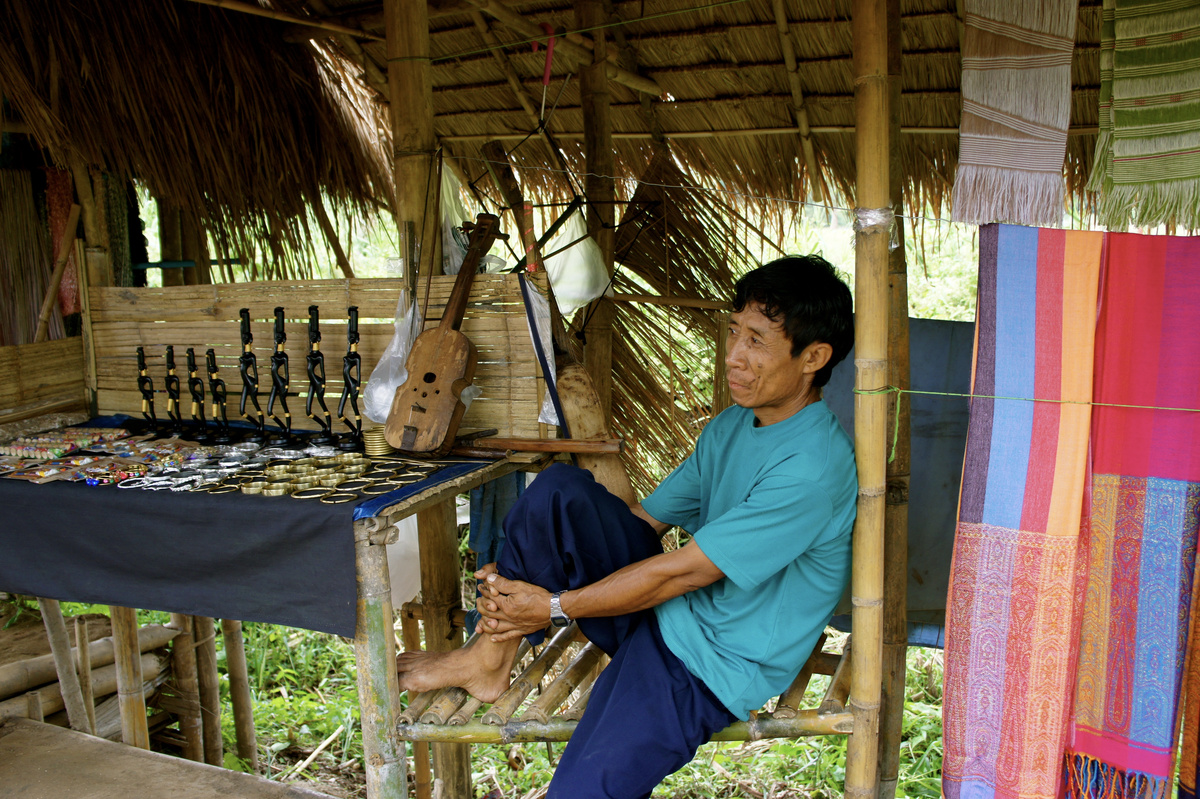
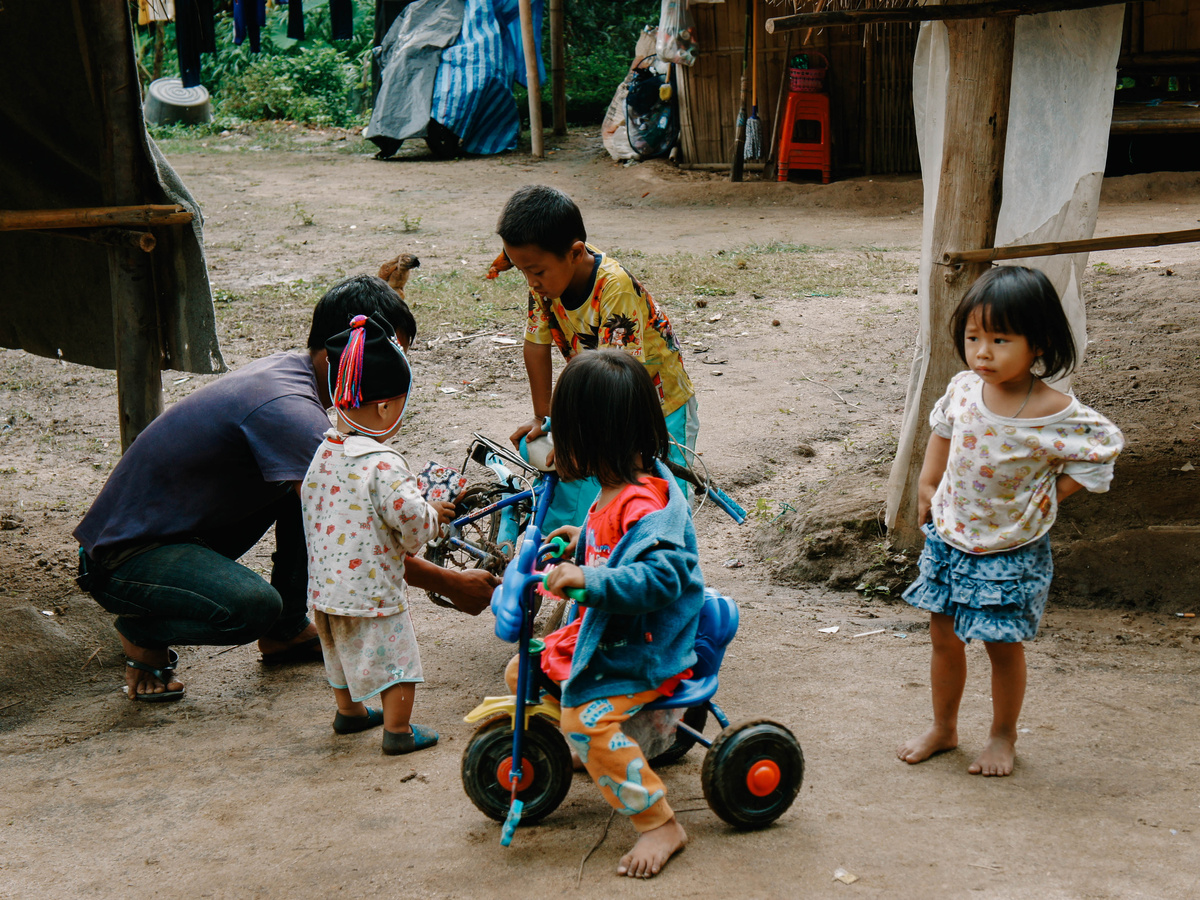
Before Mae Sai, I stopped at a village known for the brass neck rings worn by some of its women. These are a Kayan tradition, rooted in Myanmar. The tourist name, “long-neck village”, reduces a people to their most photographed custom. The tradition itself belongs to a culture that extends across the frontier.
From the village, I continued north towards Mae Sai and the crossing into Tachilek.
Across to Tachilek
Mae Sai and Tachilek face one another across a narrow river, with shopping streets on both sides. The bridge connects them, but the two countries keep different clocks and different rules of the road: Myanmar is half an hour behind Thailand and drives on the right; Thailand drives on the left.
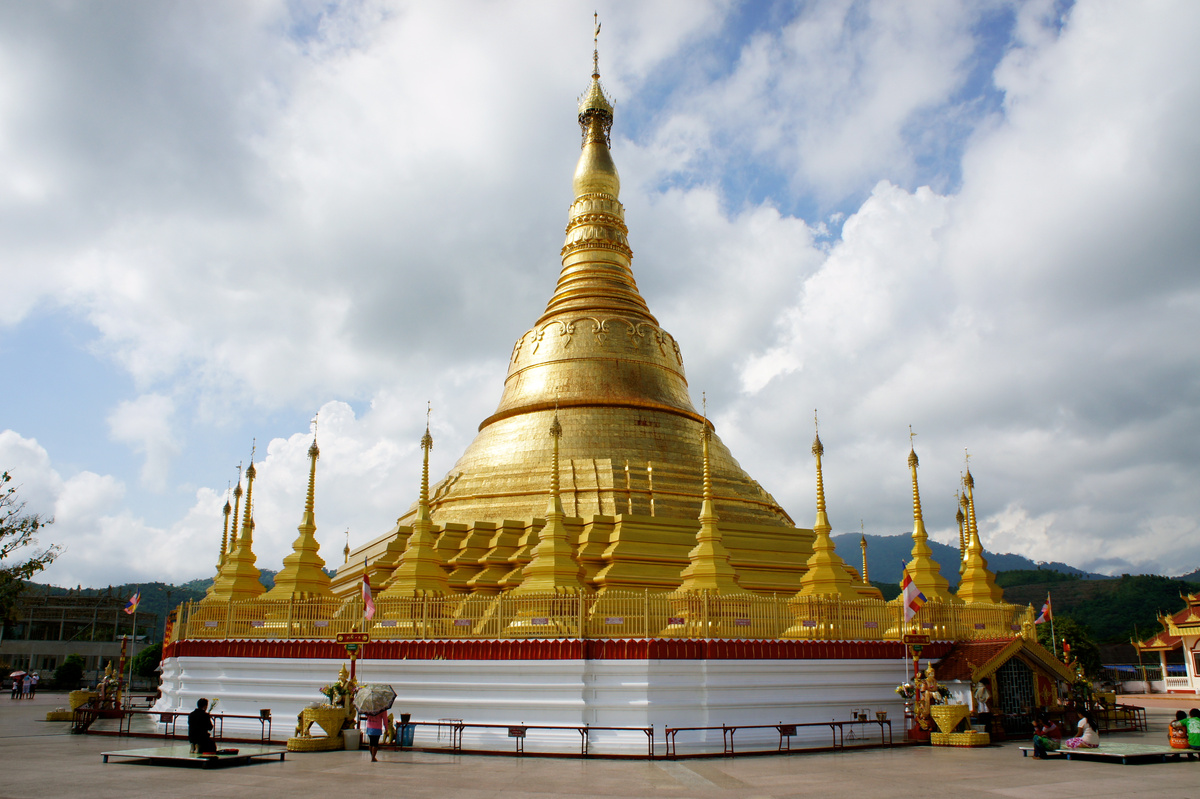
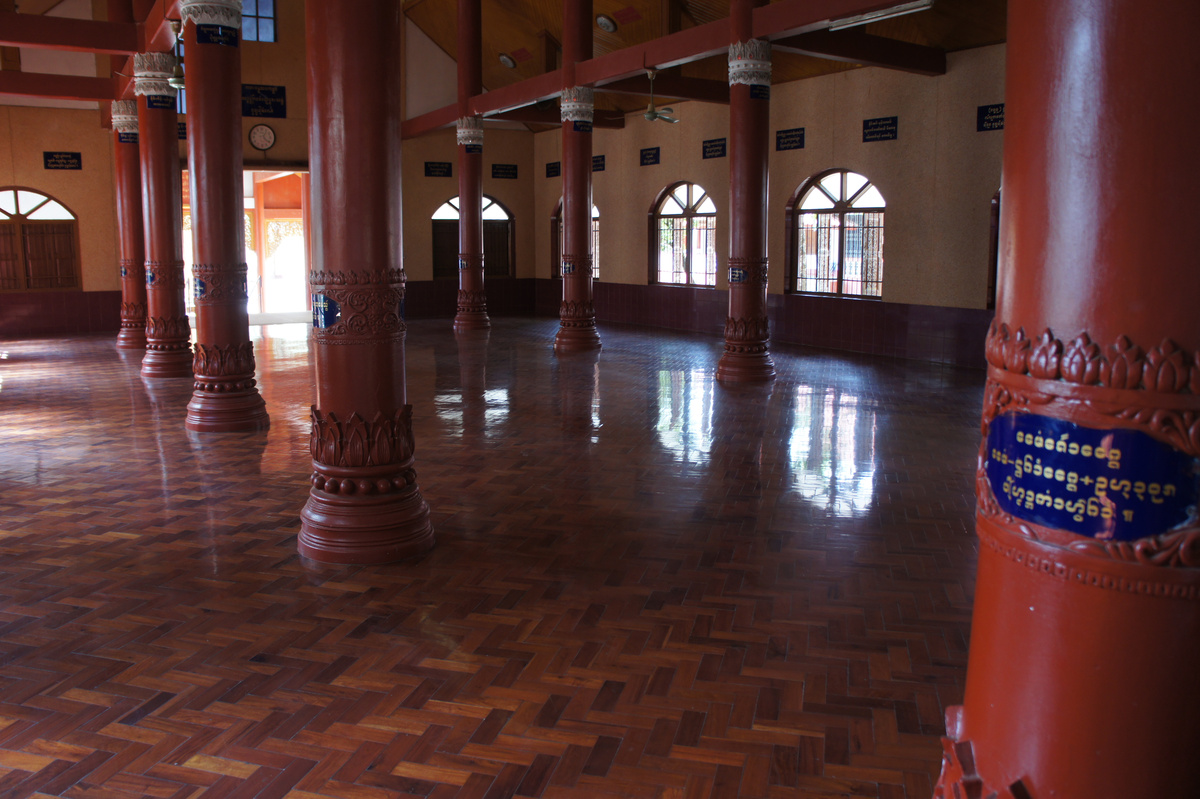
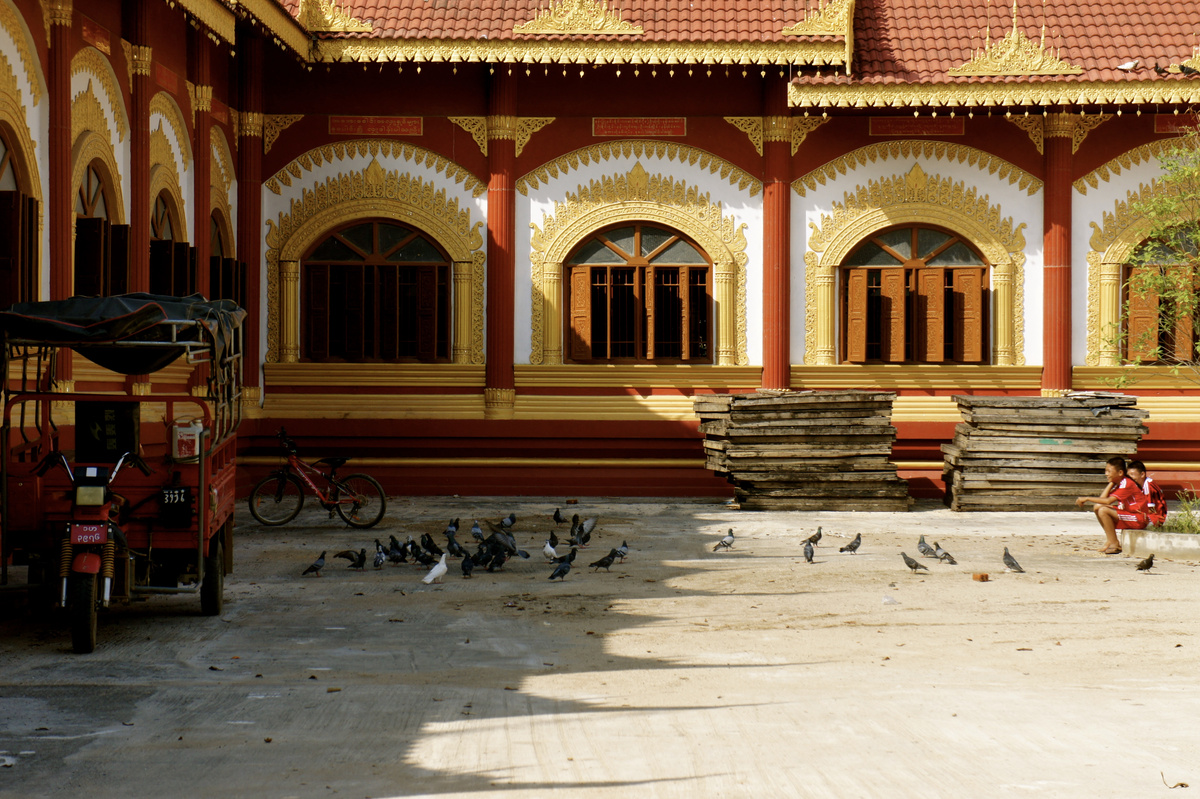
I crossed into Tachilek and visited its hilltop Shwedagon Pagoda, a replica of the one in Yangon, then another temple in town. The famous pagoda’s form has travelled to this provincial border town, where it is a shrine in its own right. From the hill I went back into the town and its bazaar.
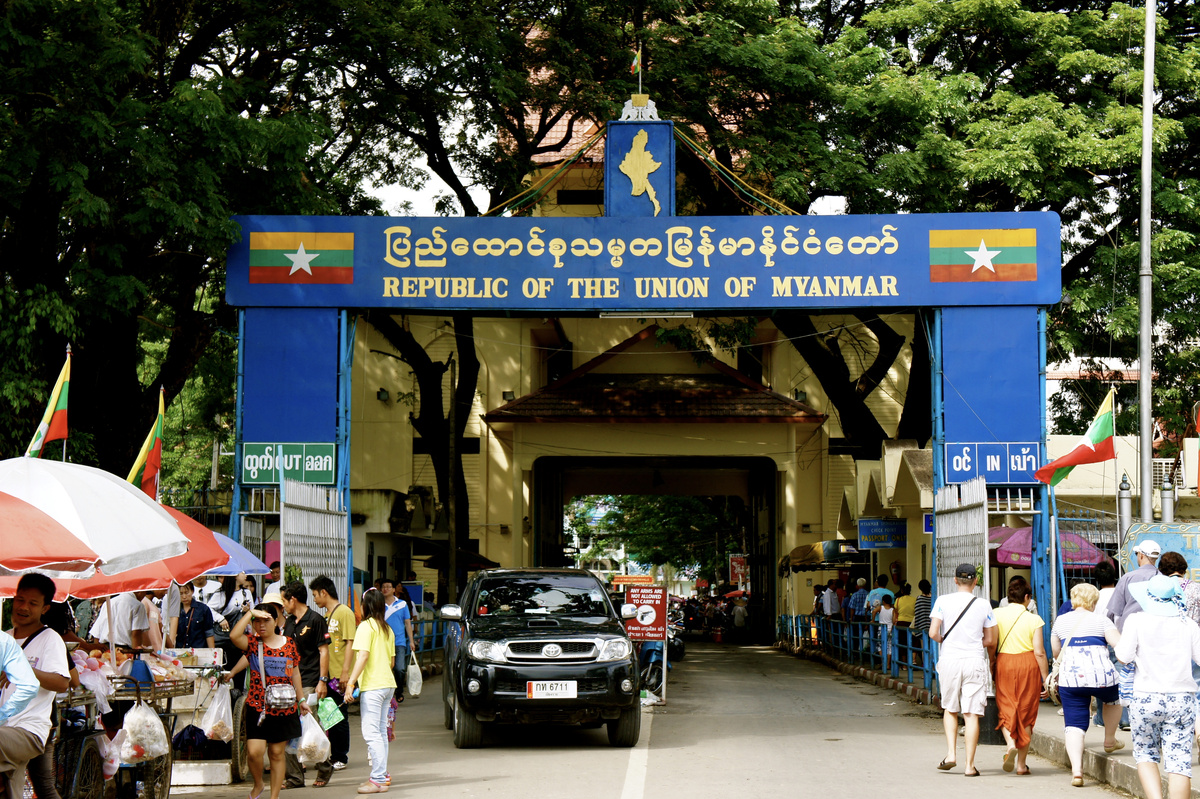
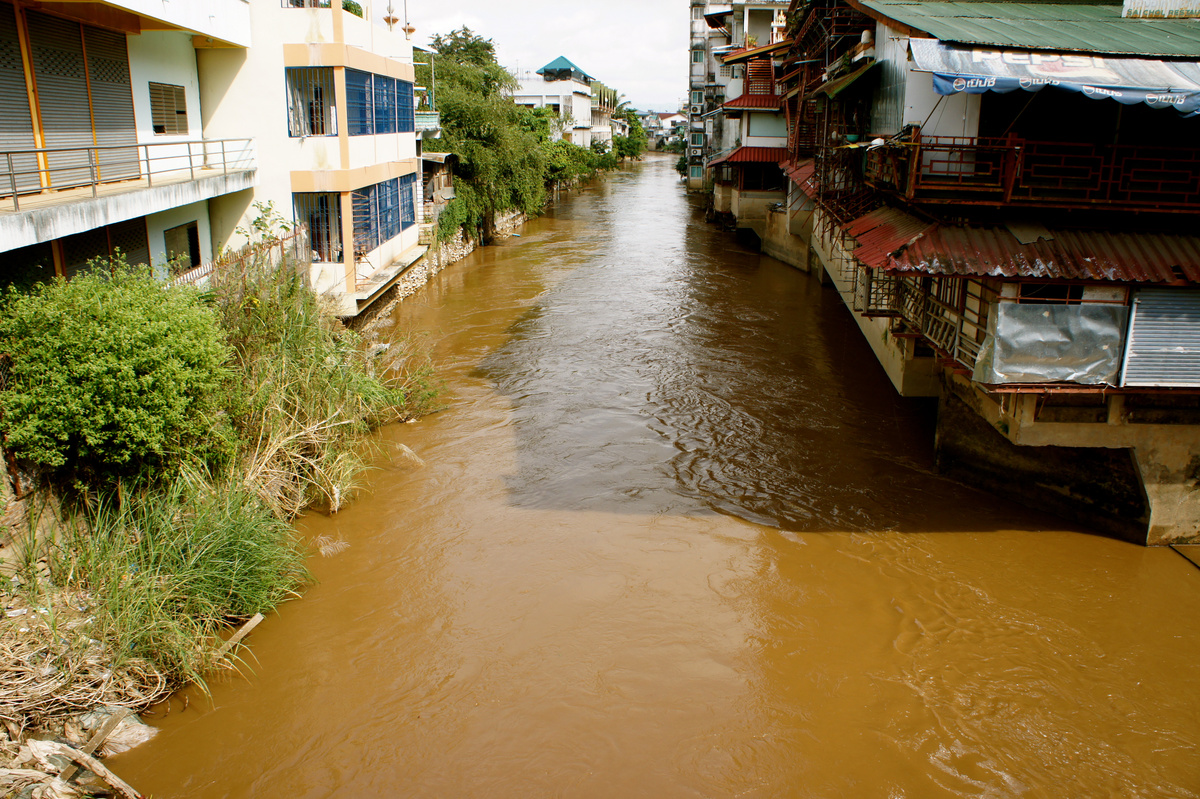
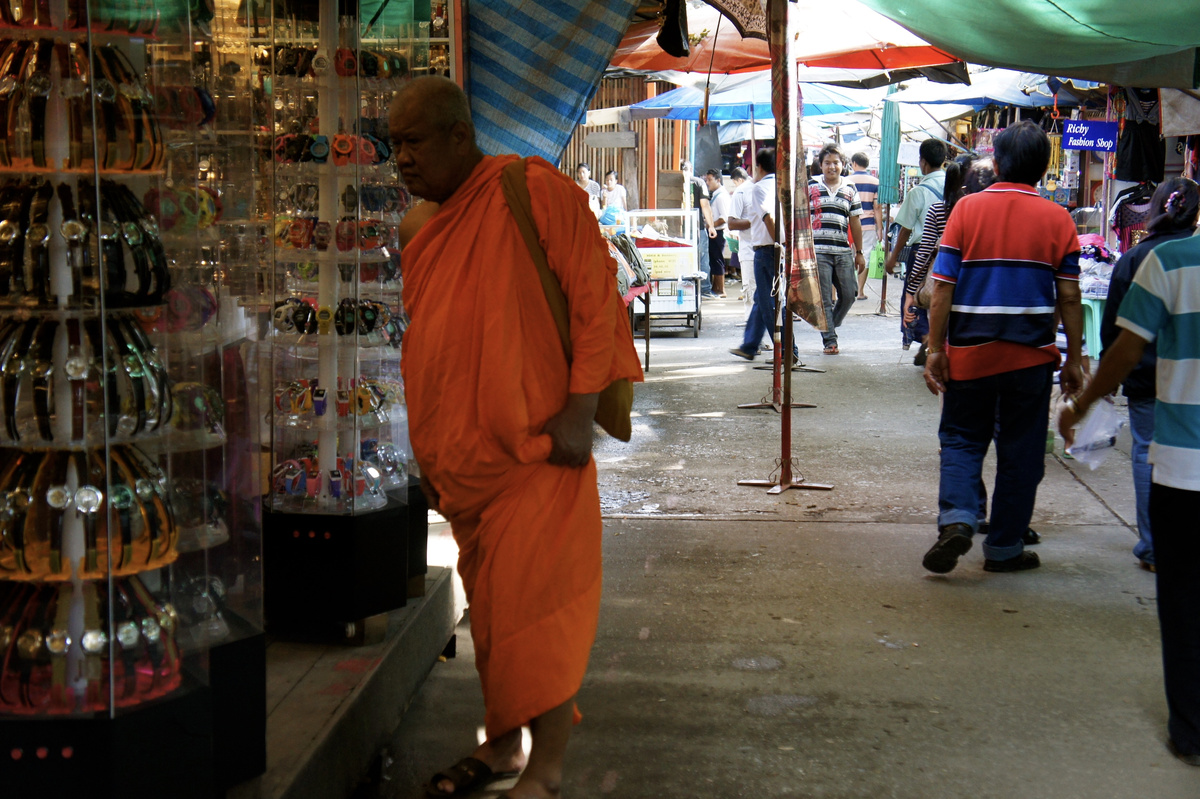
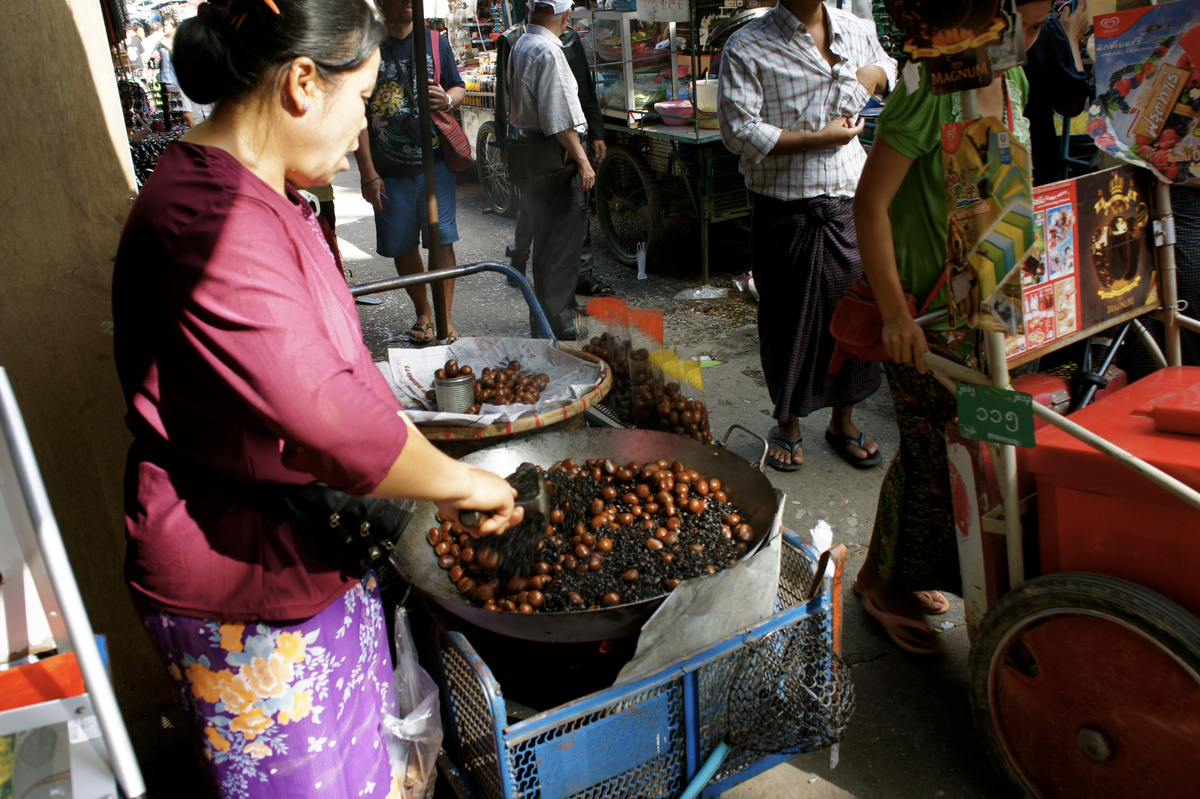
Mae Sai and Tachilek’s markets supply local shoppers as well as visitors, with goods coming from China and India as well as the surrounding region. That gives the bazaar a purpose beyond the tour. For the people who use it to stock their shops and homes, the frontier is part of an ordinary working day.
Tachilek’s road leads on towards Kengtung and the Shan plateau. Jade and opium once travelled along this corridor towards Thailand. The market is a good place to remember how much of a border’s life depends on movement through it.
I returned to Thailand before continuing towards Sop Ruak and the river junction that gives the Golden Triangle its shape.
Where the rivers meet
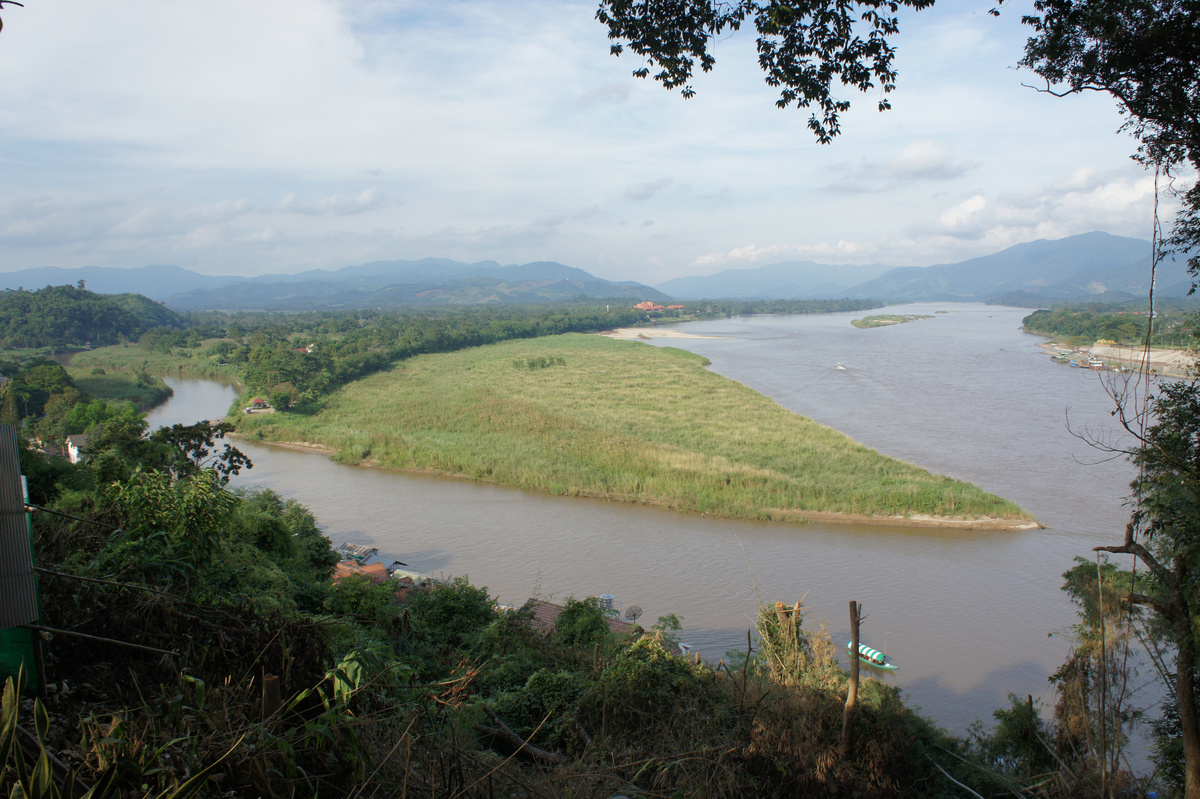
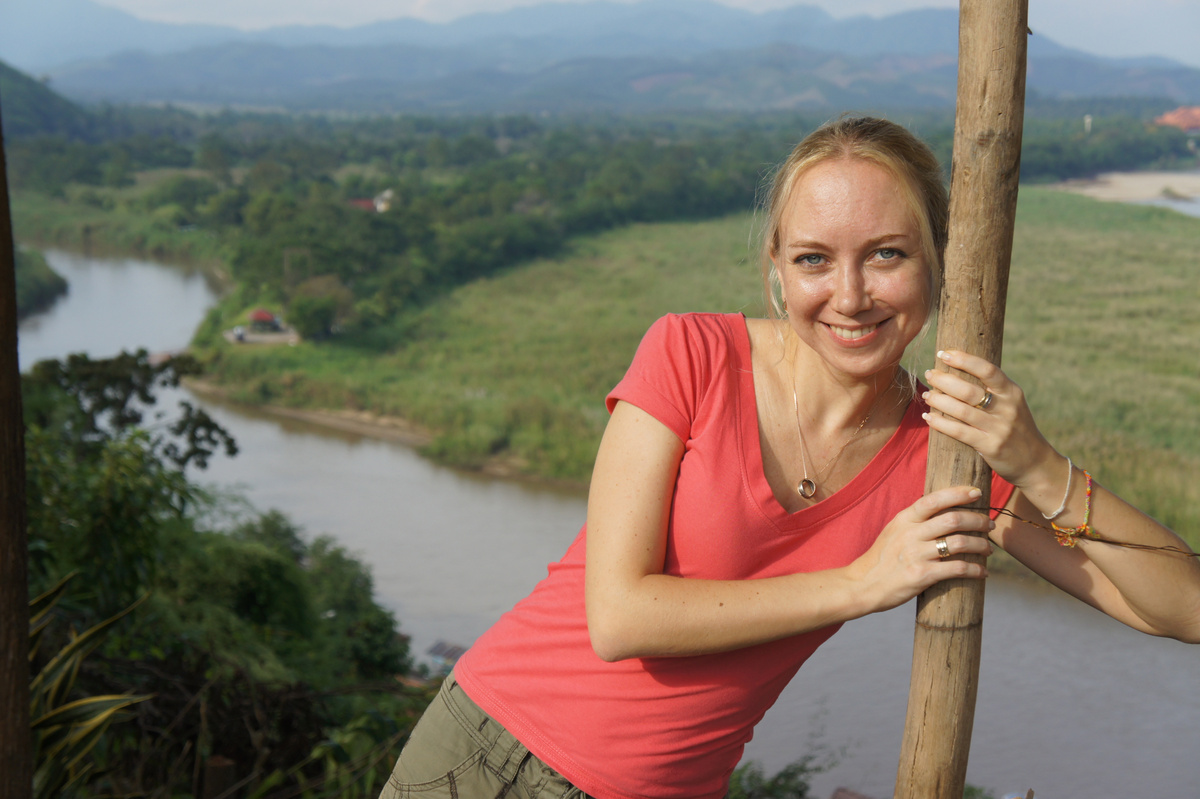
At Sop Ruak, the small Ruak River joins the much broader Mekong. The junction is compact enough to hold three countries in one view. Thailand occupies the bank where the tour boats gather, with Myanmar and Laos across the water.
I went up to Phra That Doi Pu Khao, the temple viewpoint above Sop Ruak. From the hill, the meeting of the rivers is easy to follow. It is a good place to pause before going down to the boats: the confluence explains the frontier more clearly than the flags and monuments below.
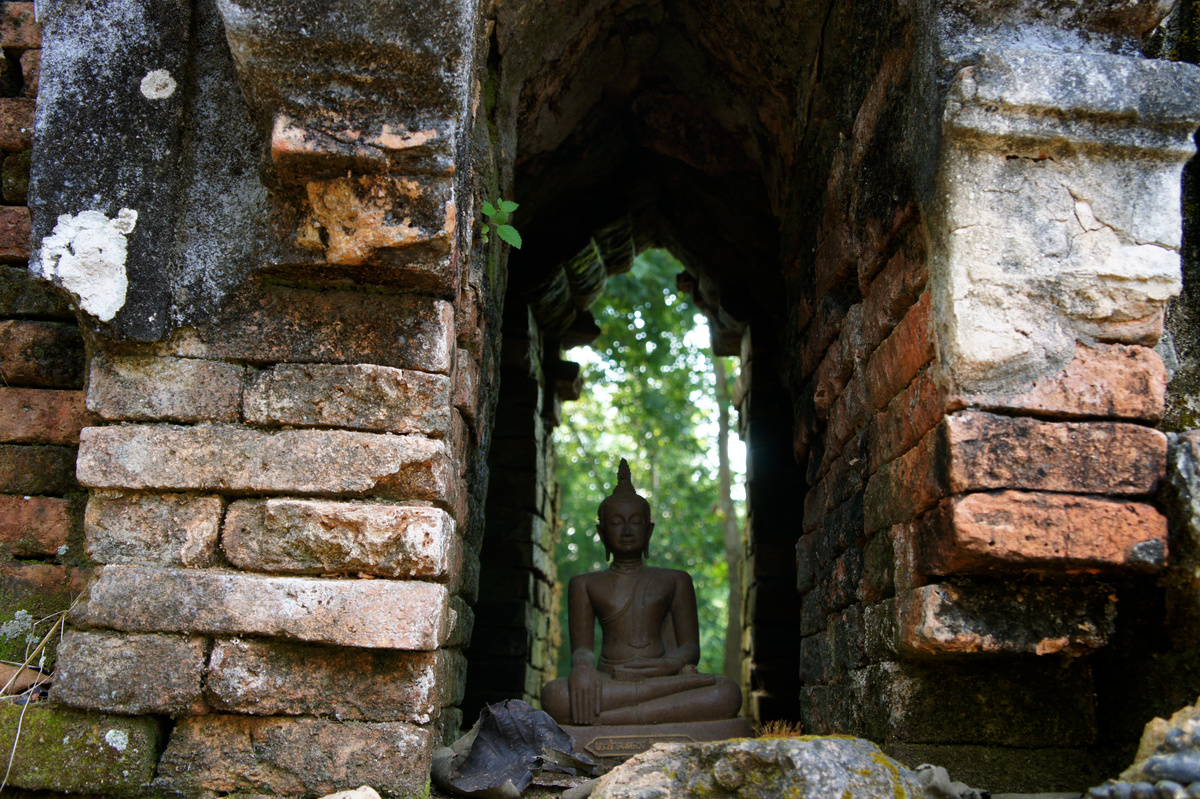
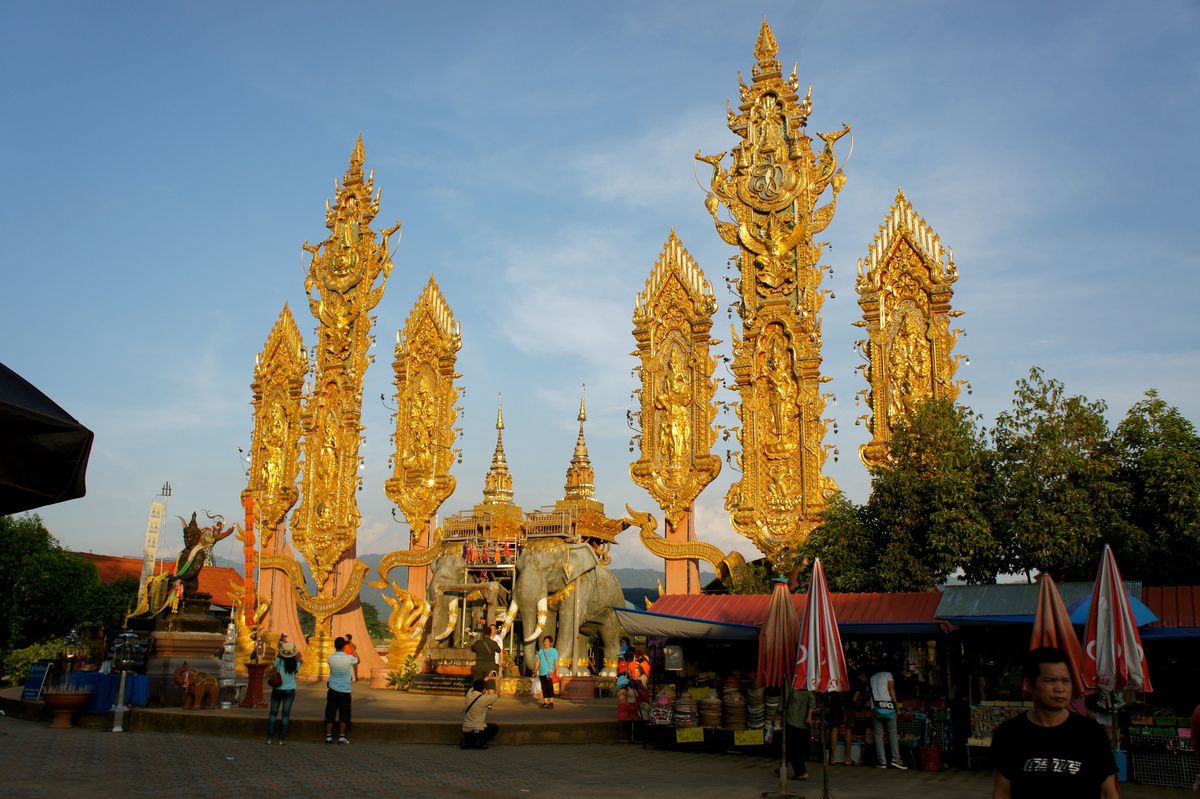
Down at the riverside, the junction becomes a visitor destination, with boats, souvenir stalls and a large golden Buddha. The hill and the landing offer different ways of seeing the same place. My next stop was an opium museum in Sop Ruak.
The history behind the name
Opium had been cultivated in these highlands long before the name Golden Triangle appeared. Its expansion into a major international trade was bound up with the upheavals of the twentieth century. After the Communist victory in China in 1949, remnants of the Chinese Nationalist Kuomintang forces withdrew into Burma. Their involvement in the opium trade became part of a wider economy in which armed groups used narcotics revenue to sustain their forces.
The terrain mattered. Mountain roads were difficult, central governments had limited control over parts of the borderlands, and established caravan networks linked growers to buyers. For farmers, opium was a cash crop; for the forces controlling its movement, it could finance a war.
The museum made the business less abstract. Opium had to be harvested, measured, traded and smoked. Behind the armies and fortunes were farmers and merchants handling a valuable crop, with tools made for each stage of its passage from field to buyer. Those modest implements supported a trade large enough to finance armed forces.
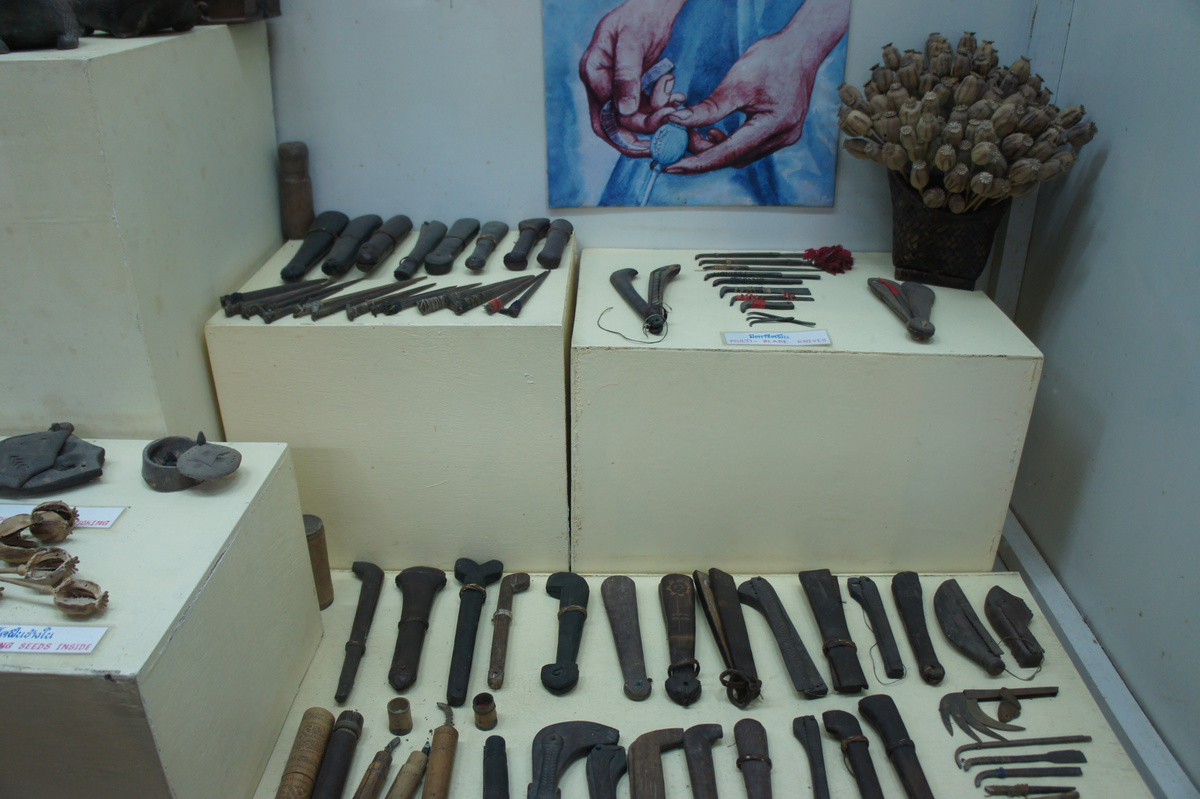
The small House of Opium nearby began with a collector’s concern that objects from the region would be sold and dispersed. Phatcharee Srimathayakun opened it in 1989 to keep them together. Its knives, scales, weights and pipes have value as records of how the trade worked, beyond their appeal as antiques.
The Golden Triangle of the tour
On the Thai side, development projects sought other ways for people in the hills to earn a living. At Doi Tung, elsewhere in Chiang Rai Province, a programme begun in 1988 under the Princess Mother’s initiative developed agriculture, handicrafts and tourism. Coffee became one of its recognisable products. Replacing an opium crop meant creating another livelihood.
Tourism has given Sop Ruak a public face that is easy to visit: the river junction, the hilltop temple, boats and museums. The small House of Opium preserves objects of the trade; the separate Hall of Opium, established by the Mae Fah Luang Foundation, sets it within a broader exhibition about drugs and their consequences.
The trade has not become history everywhere. UNODC’s 2025 survey recorded renewed growth in opium cultivation in Myanmar, including Shan State. Sop Ruak’s museums and day-trip boats occupy one small part of a much wider region, where conflict and poverty continue to draw farmers towards poppy cultivation.
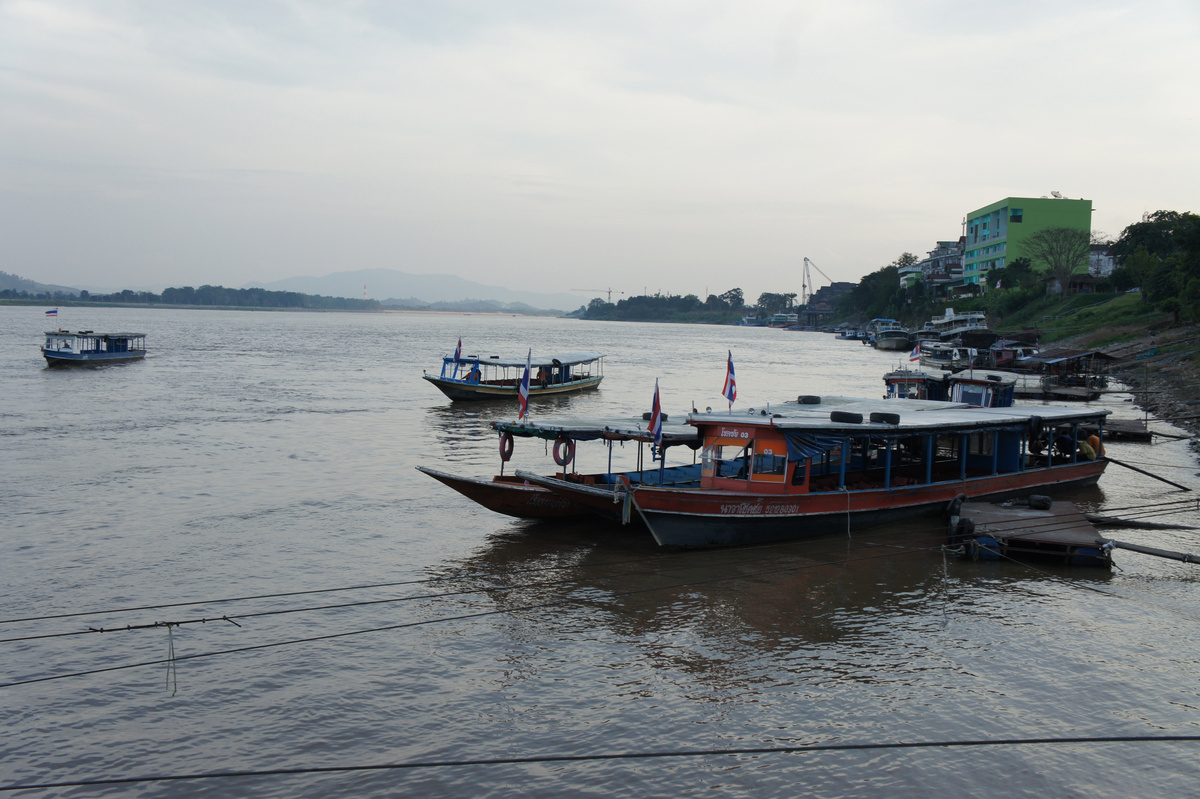
After the viewpoint and museum, I went down to the water and continued the trip by boat.
Across the Mekong to Laos
Don Sao was my stop on the Lao side: a market beside a boat landing, with a welcome sign spelling the name “Donsao”. The river trip brought visitors directly to the stalls. It was a very different kind of arrival from the bridge at Mae Sai, where the crossing leads into a town.
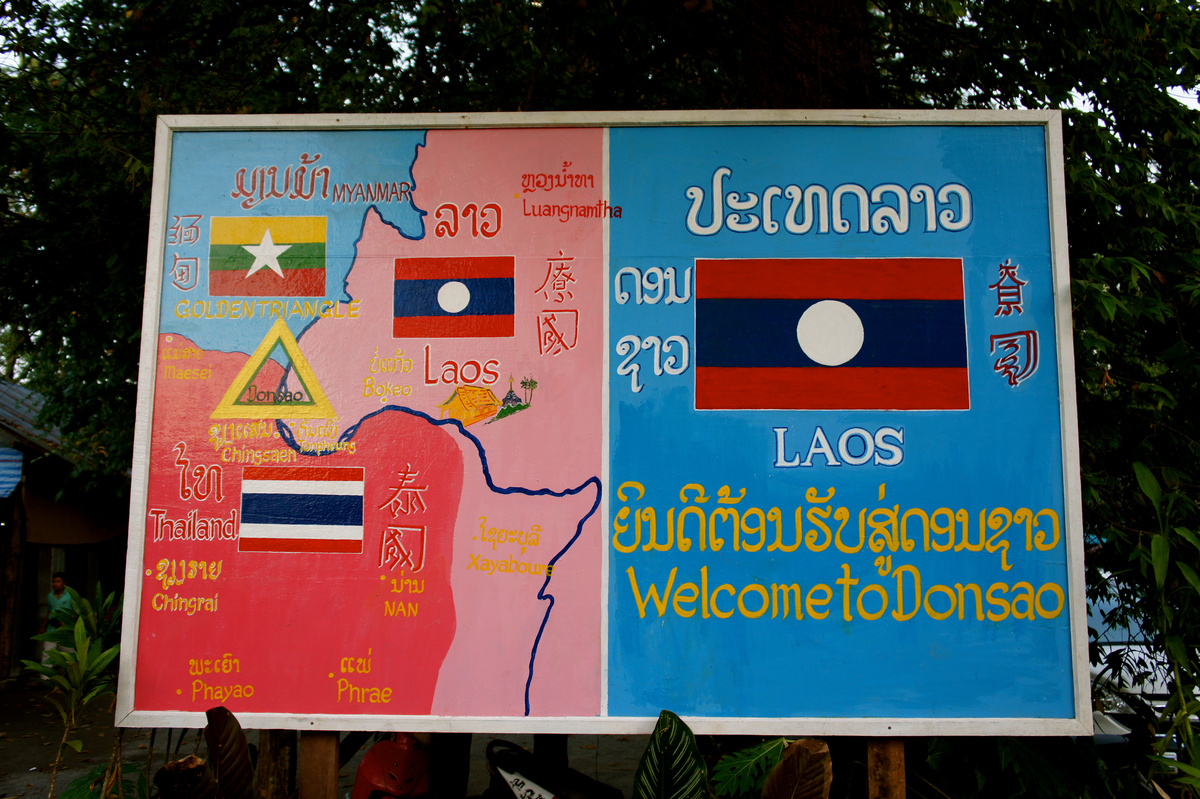
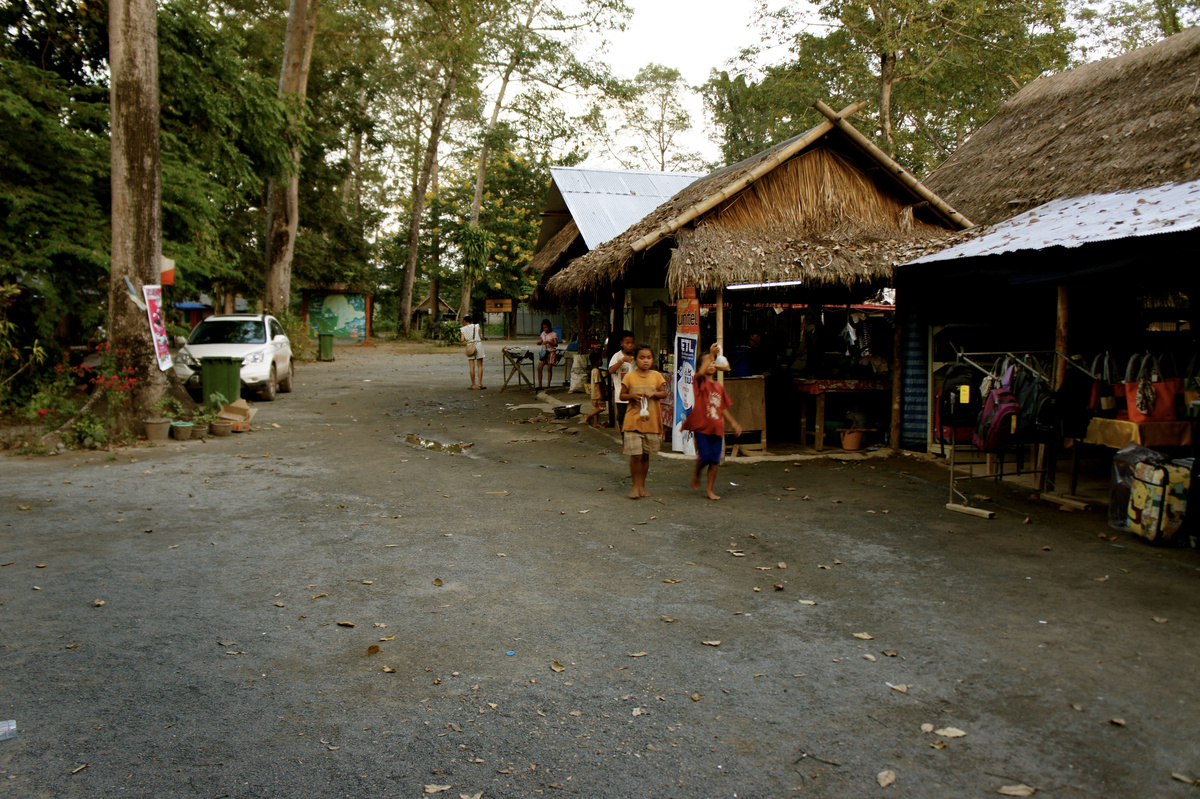
Earlier I had looked across these banks from the Thai viewpoint. Now I was arriving at one of them. Boats give this frontier a different shape: a bank that seems distant from the hill becomes a place to land. The Mekong has carried people and goods between its banks for centuries. Upstream it leads towards China; downstream it continues into Laos.
Don Sao’s market serves the boats and their passengers. It has its place in the excursion, but the river is the stronger reason to come. A Golden Triangle boat tour may show all three countries from the water while landing only in Laos. My day also included the separate crossing into Tachilek.
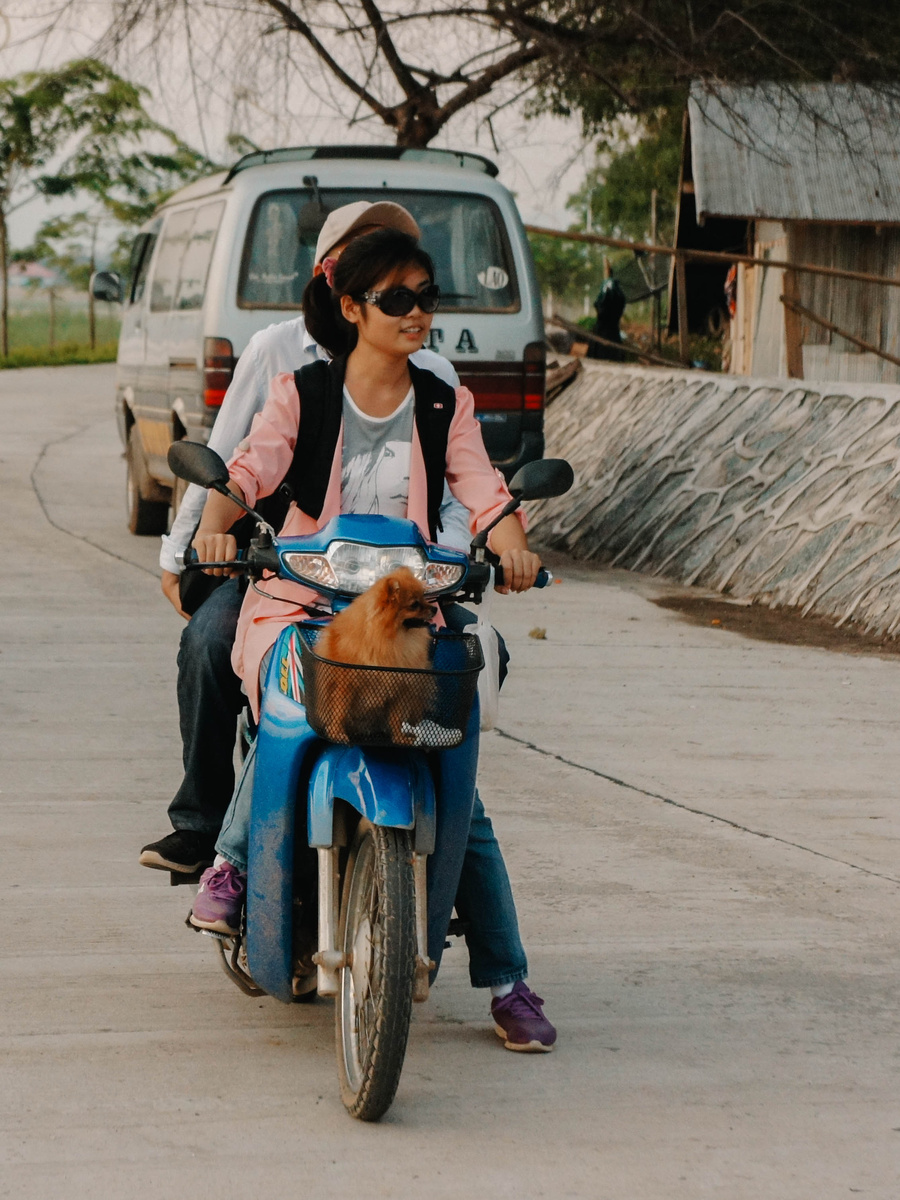
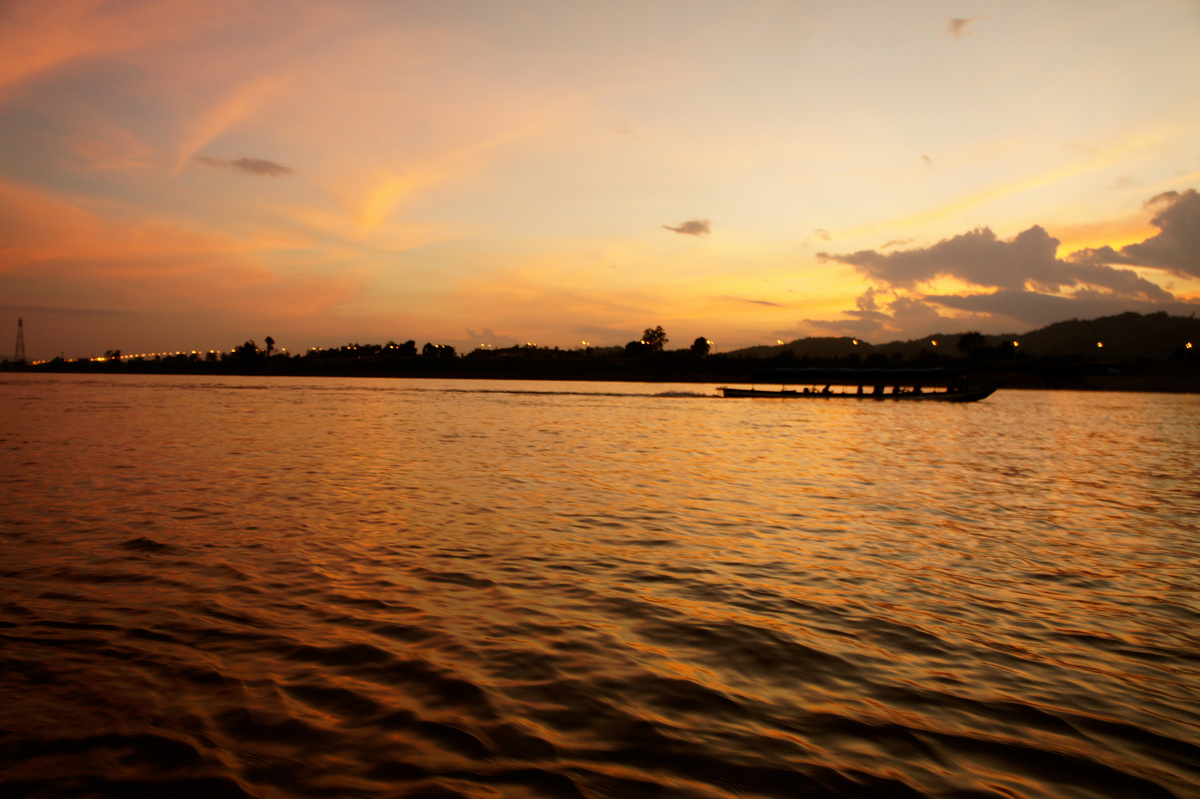
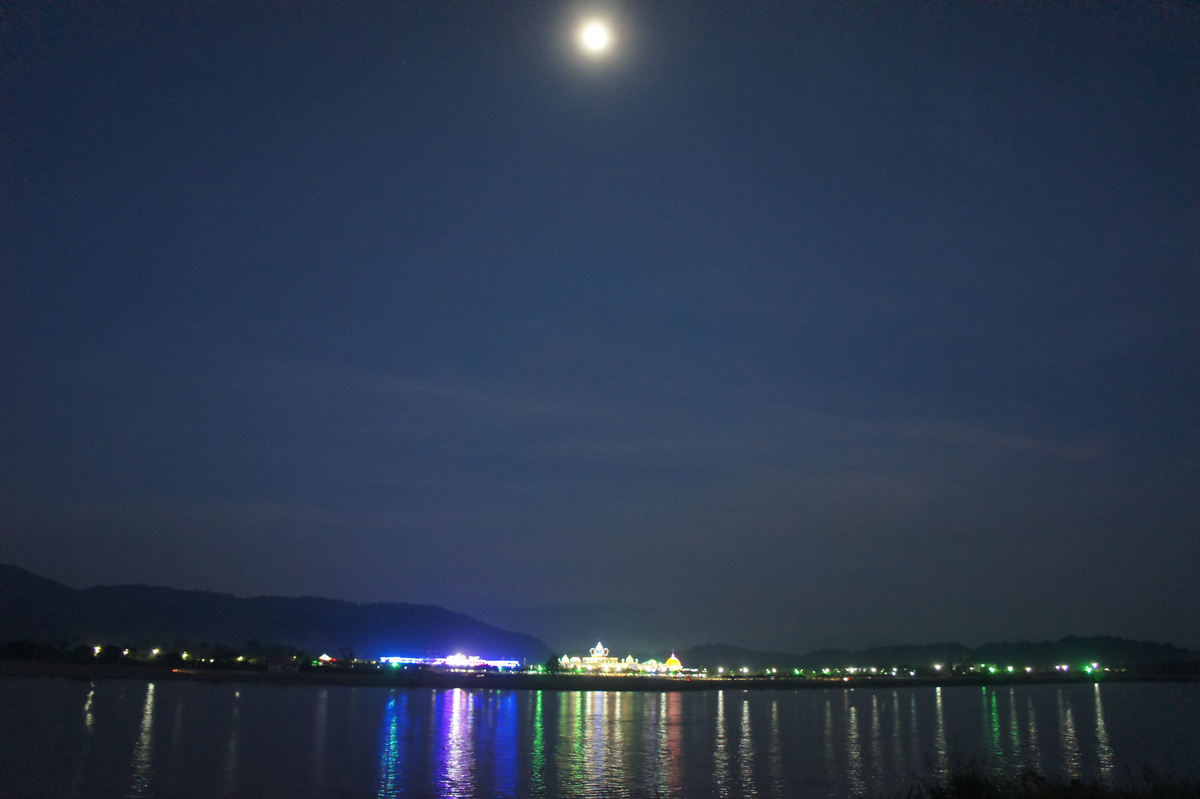
The river outing continued through sunset and into the evening, when lights began to appear along the banks. By then I was heading back towards Thailand.
Back in Chiang Rai
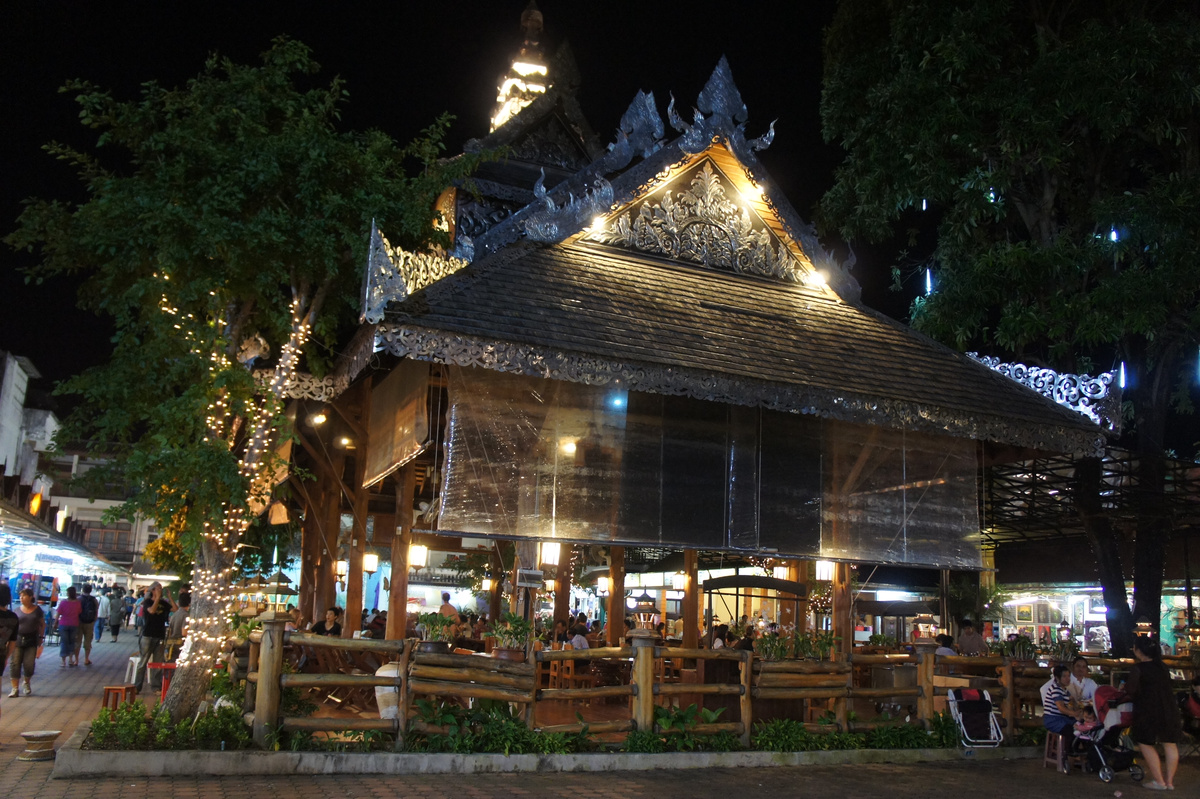
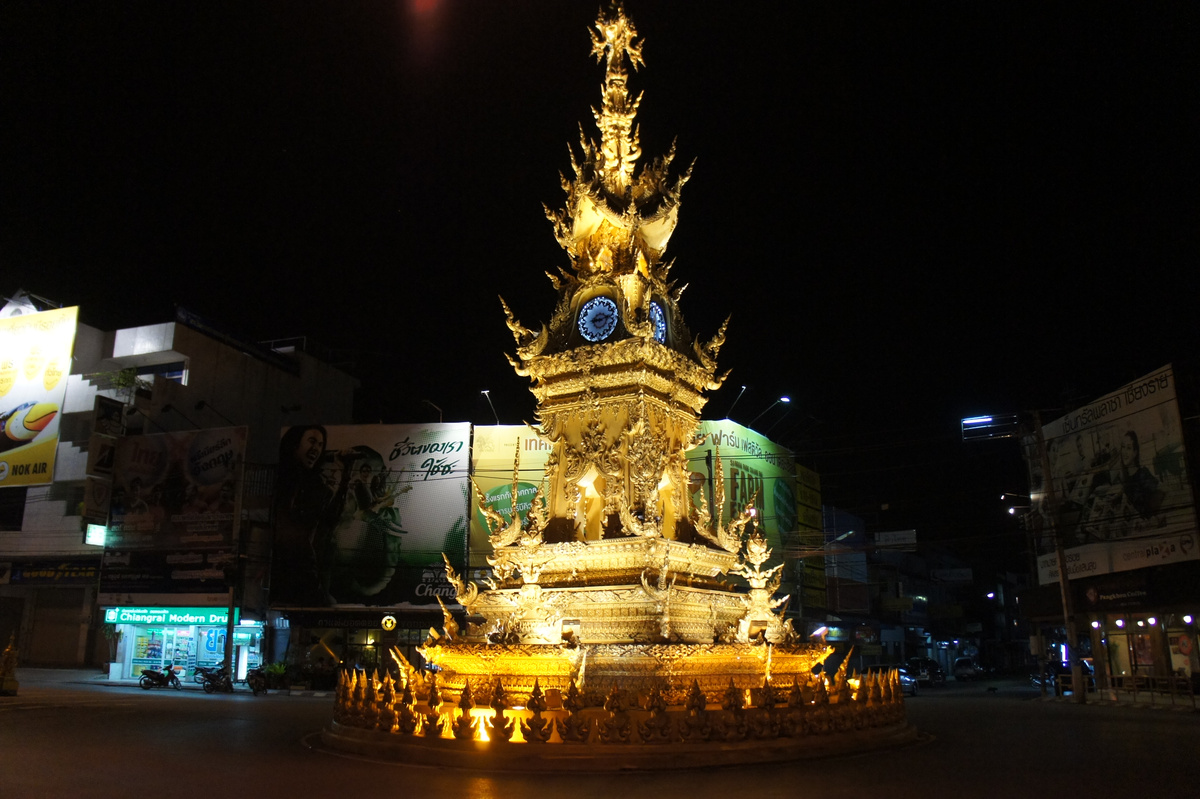
By night, I was back in Chiang Rai, at the night market. The golden clock tower was illuminated above the street. Thailand again.
Visiting the Golden Triangle today
The journey and photographs above are from November 2012.
I had a Thai work permit and was resident in Thailand when I made this trip. Your entry and Thai re-entry arrangements may be different, and border conditions have changed since then. Check the requirements for your passport and immigration status before arranging any crossing.
Chiang Rai makes a convenient base for a full day in the border region. A private driver allows time for the viewpoint, a museum and a river outing without adding all the city’s temples to the same excursion.
A customisable private car and driver from Chiang Rai is one option. The service includes the vehicle, fuel, parking and city pickup. Meals and attraction tickets are extra; the driver speaks basic English. Agree the museum and any boat outing beforehand, and arrange a guide separately if you want detailed interpretation.
There are two distinct opium museums. The small House of Opium beside the temple hill opens daily from 7 am to 7 pm. Admission is 50 baht, with children admitted free. The larger Hall of Opium, in Golden Triangle Park, has multimedia exhibitions covering the trade’s history and consequences. Confirm which museum is included when booking a tour.
For the border crossings, the current advice matters. The UK Foreign, Commonwealth & Development Office advises against all but essential travel to eastern Shan State in Myanmar, where Tachilek is located. It also urges particular caution in Bokeo Province and Laos’s Golden Triangle border area. Keep a leisure itinerary on the Thai side at present.
For a river excursion, establish exactly where the boat goes, whether it lands outside Thailand, and the whole fare before setting off. A boat trip and permission to enter another country are separate arrangements.