
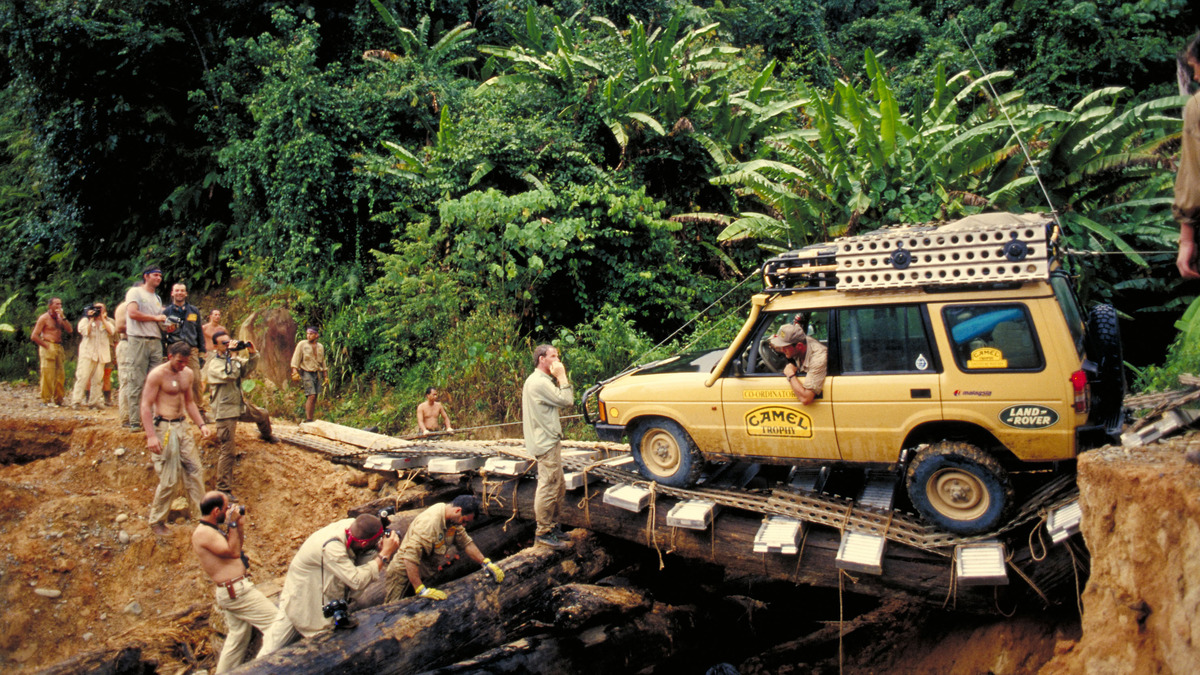
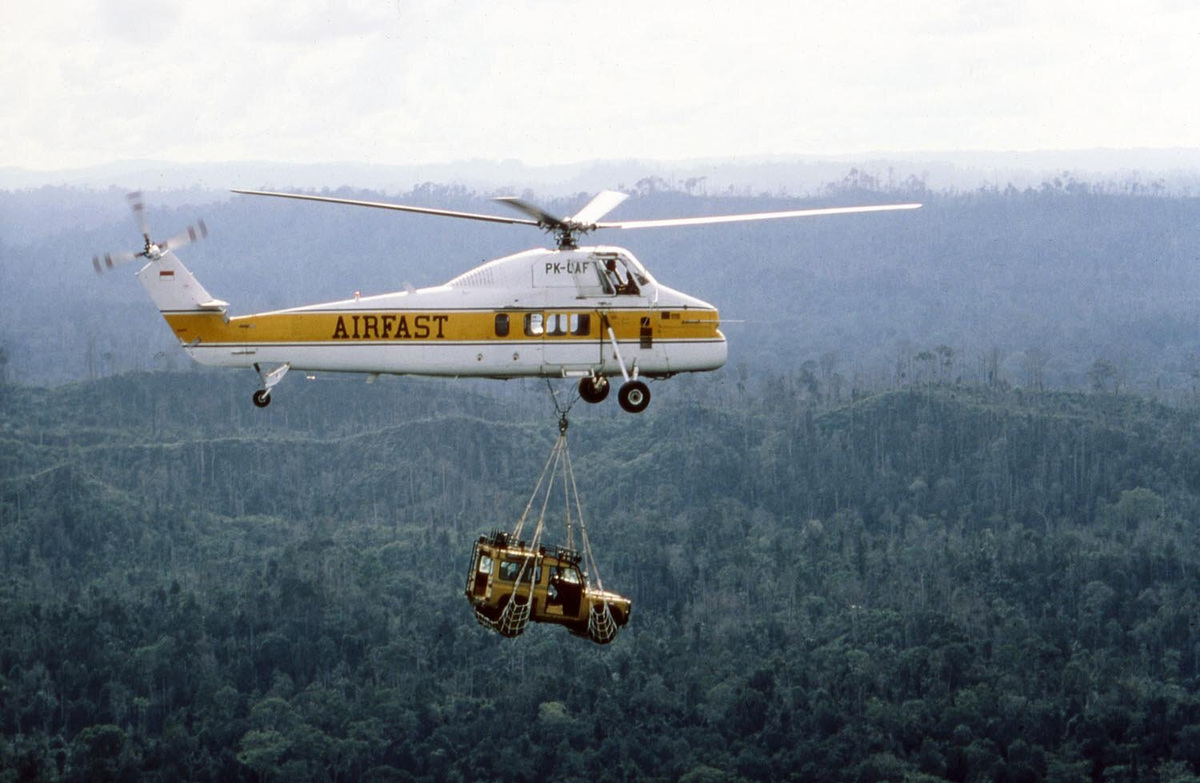
Opening photograph: Sabah, 1993. Land Rover archive, via BBC Top Gear.
The cigarette had a place of its own.
In the first-class seats of United’s new Boeing 747, introduced in 1970, the ashtray was built into the armrest, alongside the controls for reclining and listening to music. Comfort had been designed around the assumption that a passenger might wish to light up. The same small accommodation belonged to the hotel bar and the restaurant table. A cigarette could prolong a conversation, occupy a hand, offer a reason to linger. It was a familiar gesture of adult life, accommodated as readily as a drink.
On magazine pages, it offered something grander. Marlboro had a country.
Its cowboy rode through an American West so spacious that the reader’s own life could seem cramped by comparison. Photographers such as Norm Clasen took the campaign into Montana, working with real horsemen under those immense skies. Across the world, the Marlboro Man became an unofficial emblem of America: self-possessed, laconic, apparently answerable to no one. The city office, the timetable and the crowded train were somewhere beyond the edge of the photograph. A packet small enough for a shirt pocket carried the promise of all that room.
Ranching supplied the horseman, but advertising gave his work a different meaning. Skills learned for a livelihood became signs of a temperament: hard, capable, uncomplaining. Marlboro took an occupation and made it a personality that other men could imagine possessing. You could spend your working life behind a desk and still feel that this was the man you ought to have been.
The same name moved at quite another speed on the Grand Prix circuit. Marlboro was one of Formula One’s great patrons; its red and white dressed McLaren from 1974 to 1996. The association went so deep that the cigarette company’s chevron entered the team’s own logo. A spectator could learn those colours through racing long before taking any interest in tobacco. The brand belonged to the spectacle, to the machines and men capable of doing things almost nobody watching could do.
Camel’s traveller was farther from home.
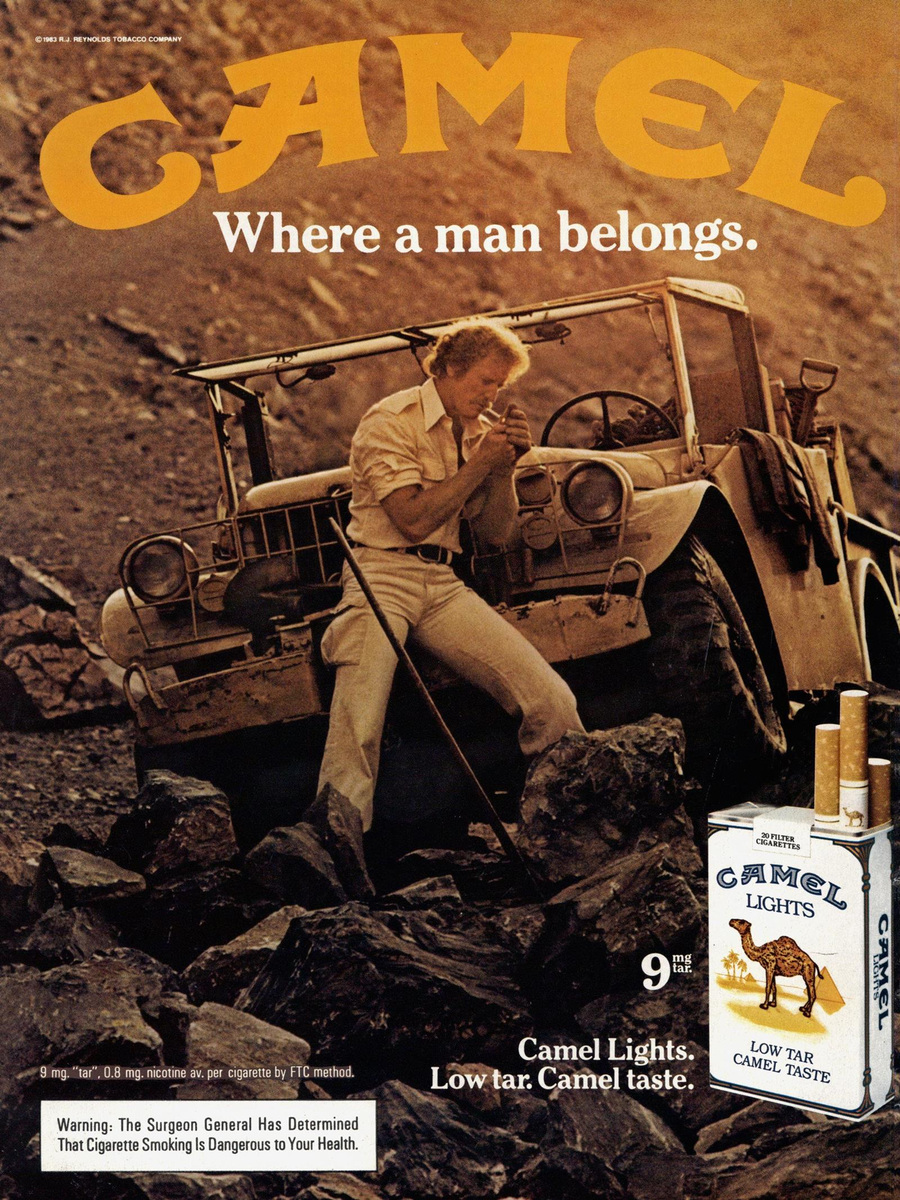
The dromedary and pyramids on the packet already suggested a departure. Its advertisements opened that small piece of Egypt into a larger world of desert journeys, river crossings and precarious paths. The man in them had the look of someone who could mend what broke and continue when a road gave out. Where Marlboro’s cowboy seemed to belong to his landscape, Camel’s adventurer had gone looking for one.
“Where a man belongs.” The advertisement offered more than a departure. It suggested that a man could find his proper life somewhere he had never been. Leaving could be a kind of homecoming.
Health warnings already occupied their small rectangles at the foot of the page. Above them, the world remained enormous.
In 1980, R.J. Reynolds gave that imagined departure a route. Three German teams drove Jeeps along Brazil’s Trans-Amazonian Highway in a promotional expedition called Camel Trophy. What began as a single journey grew into an international event, with Land Rovers taking over the following year. National teams of amateurs were selected, equipped and sent into difficult country. There were scored tasks and a trophy, but a convoy in trouble also needed people willing to put the competition aside and help it through.
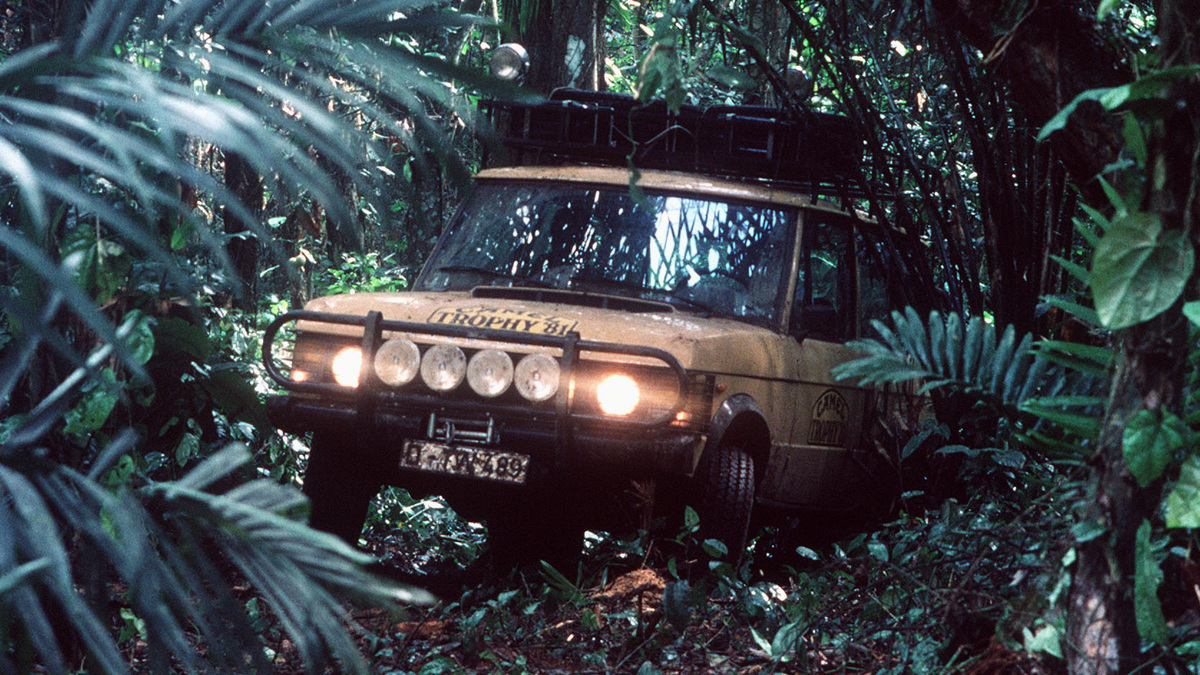
The campaign now had to contend with things a printed landscape could keep outside the frame: breakdowns, disputed decisions, exhausted participants and the stubborn refusal of the ground to cooperate. Photographers and film crews could make adventure desirable. Someone else had to make the journey possible.
For eight years, that responsibility would belong to Iain Chapman. He entered this elaborately manufactured dream almost by accident.
An application he did not send
In 1987, Chapman had no particular ambition to join the event.
An application form had appeared at the bottom of a lunch box during an outing with his local four-wheel-drive club in Scotland. His friends dismissed the whole thing as a publicity exercise—perhaps a fashion shoot, perhaps a fix. Chapman put the form in his coat pocket and forgot about it.
Months later, during a meeting at his office in Aberdeen, his personal assistant interrupted him. There had been an important telephone call. He was expected at the British selection trials for Camel Trophy.
Chapman had no idea what she was talking about. His assistant, Liz, had found the form, filled it in and sent it away.
That, at least, is how he remembered his accidental recruitment when he told the story to Land Rover Monthly. He arrived at the trials in a tweed jacket and plus-fours, considerably older than the other candidates. After the driving, mechanics, knots and lashings, he was selected for the British team. A few months later he was in Madagascar with George Bee, another man from the diving industry, driving a yellow Range Rover through an event whose glamorous international reputation concealed considerable disorder.
Teams disputed the rules and judging. There were accusations of favouritism; special tasks were abandoned before the programme was complete. Chapman came home believing that the event needed clearer rules and greater professionalism. It also needed a better understanding of what it was for.
He had joined a campaign that depended on compelling stories. What he had found was an expedition in need of better organisation.
The man who could make the convoy move
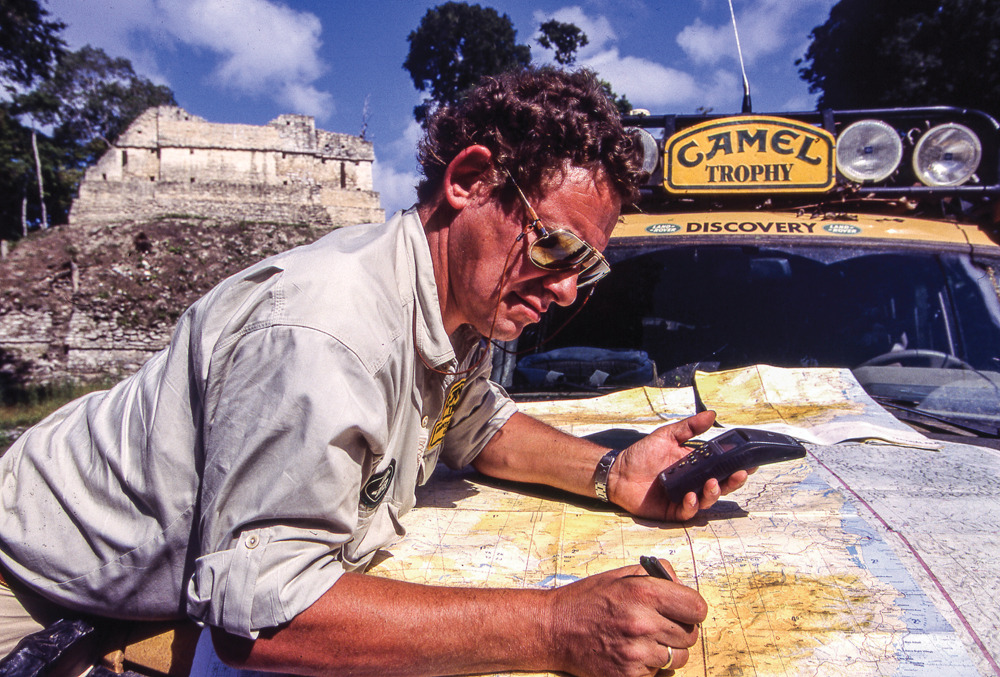
Chapman had been learning to organise difficult work long before anyone offered him an expedition to run. After leaving Perth High School in 1964, he became a trainee cartographic surveyor with the Ordnance Survey. A Series II Land Rover took him into the field. Maps were working instruments; terrain had to be measured and crossed.
He joined the Royal Engineers in 1968 and stayed for ten years, becoming a captain and a specialist diving officer. Civilian life took him through IBM sales, commercial diving and subsea engineering. There was even an attempt to recover supposed treasure from the wreck of the Russian cruiser Admiral Nakhimov. By the time Camel Trophy found him, he worked for Ferranti in Aberdeen.
The apparently wandering career had given him a useful education. Adventure required permissions, communications, equipment, competent people and somebody prepared to accept responsibility when the plan ceased to resemble the ground. The romantic image came later. First, somebody had to make the convoy move.
By the time Chapman arrived, Camel Trophy had already found its visual identity: difficult country, amateur participants and Land Rovers in an unmistakable yellow called Sandglow. He inherited an established campaign.
National teams competed for a trophy, but a vehicle buried in a swamp could become everyone’s problem. A broken bridge did not care who was ahead on points. In 1985, before Chapman’s involvement, the Team Spirit Award gave that cooperation formal recognition.
After the disputes in Madagascar, event manager Chris Drew changed the organisation. For 1988, scored tasks were placed at the beginning and end of the journey. Jardine PR handled publicity; World Championship Promotions brought competition expertise; the adventure-travel company Sobek worked on routes and logistics. Chapman returned as a marshal and saw the improvement.
When Drew moved to another role at R.J. Reynolds, he suggested Chapman as his successor. Four weeks after accepting the job, Chapman had left Ferranti and moved to London. He became Manager, Special Events at the company paying for Camel Trophy.
In his recollection, the new office contained a desk, a chair, a lamp, an empty bookshelf and a cardboard box holding a dozen files: the history of the event as it was handed to him.
He would have to build on what Drew and the others had begun.
Designed uncertainty
From 1989 through 1996, Chapman organised eight Camel Trophy expeditions. The Amazon was followed by Siberia, Tanzania and Burundi, Guyana, Sabah, a South American crossing, Mundo Maya in Central America, and Kalimantan. He became Event Director in 1992 and completed much of the planning for Mongolia in 1997 before leaving.
Behind that neat succession of names lay years of overlapping work. His team could be closing the accounts of one event, running another and investigating the next two. Promising countries sometimes failed the reconnaissance. Alaska, Vietnam and Côte d’Ivoire were considered and dropped. India reached an advanced stage before a pre-scout persuaded Chapman that the proposed event would not work there.
Knowing when to abandon a destination was part of knowing how to make an adventure.
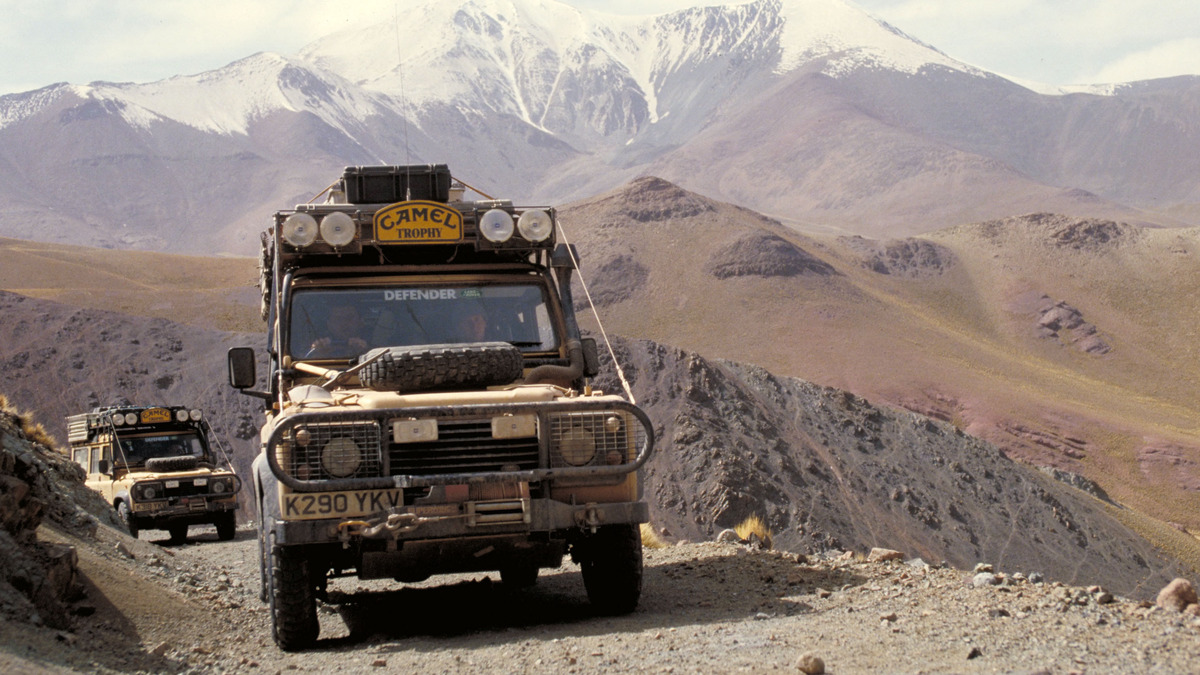
The participant had to confront uncertainty; the organiser had to understand as much of it as possible. Chapman’s military experience helped him establish contacts with politicians, police and armed forces. A remote route could depend on very unromantic relationships with people able to grant access or make something happen.
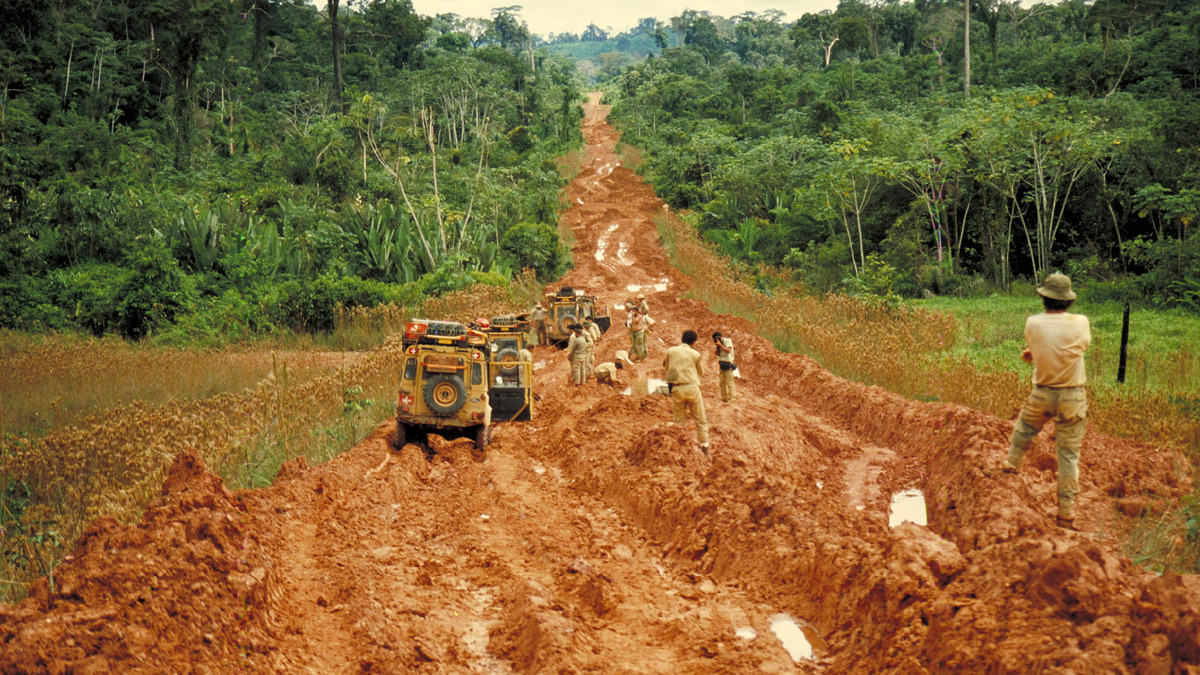
The resulting experience was real without being unplanned. Vehicles became stuck. Weather altered the ground. Progress might depend on a repair or a crossing nobody could complete alone. The support existed to make those difficulties survivable and the journey possible, not to remove every obstacle before the competitors arrived.
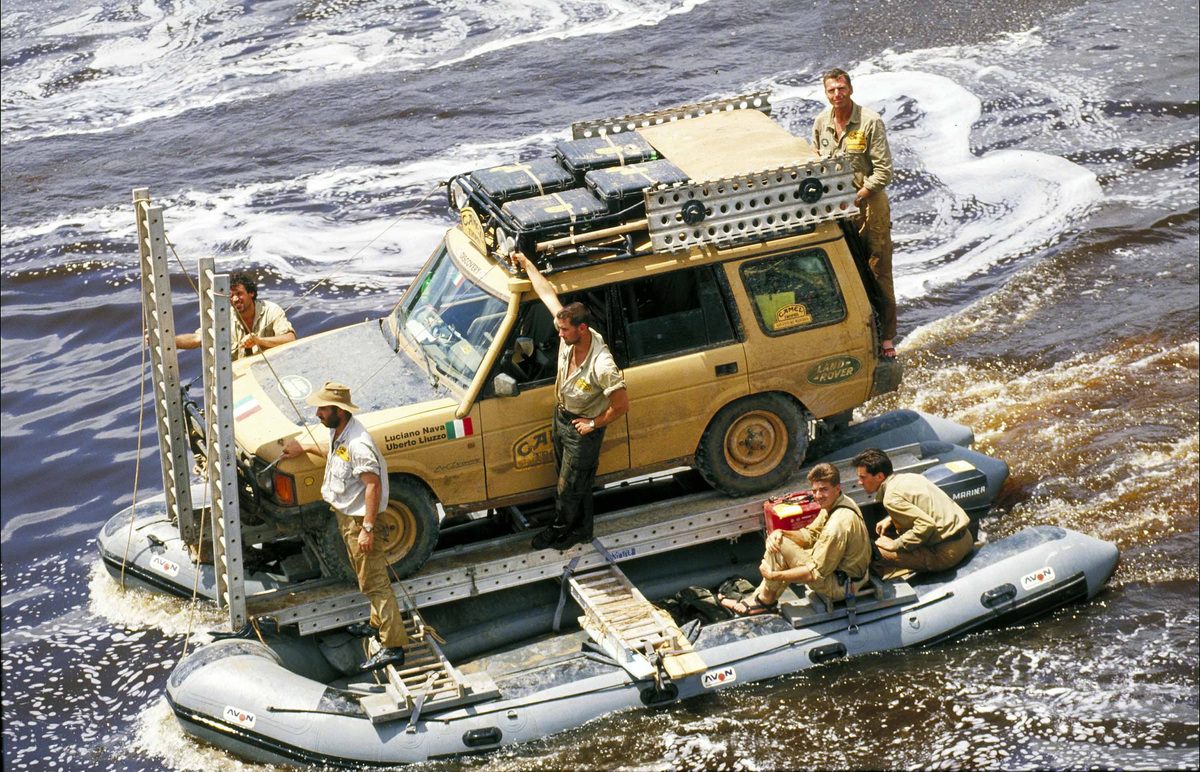
An expedition operator today faces a recognisable version of the same problem. The traveller wants to feel beyond ordinary routines, while somebody must still have thought about fuel, medicine and the way back. Camel Trophy gave that arrangement an unusually visible form. Its audience saw the struggle; the organiser’s work allowed the struggle to continue as a journey.
Competence made visible
The Camel Trophy Club’s history describes an event built around amateurs. National and international selections tested prospective participants before the final teams were chosen. Under the rules it records, competition driving licences and full-time military service disqualified applicants.
A Formula One driver is someone you watch. A Camel Trophy participant was someone you could imagine becoming.
An engineer, surveyor or salesman could exchange his ordinary work for a place in the convoy. Prepared vehicles and shared equipment made the transformation visible. The distinction that mattered on the route was what people could do with them.
This was a persuasive proposition because competence can be desired before it is acquired. A winch promises recovery; extra fuel promises distance. The equipment announces a future in which its owner may be useful. A roof rack can carry both luggage and an idea of the person beneath it.
The appeal was especially strong in a competition that repeatedly obliged rivals to help one another. Scoring could distinguish the teams during a task. On a blocked route, the people behind the obstruction inherited it together. The route produced society.
That gave the photographs something more engaging than mechanical endurance. They offered a temporary world in which strangers had work to share and a reason to trust one another. The ordinary spectator could want admission to that world without particularly wanting to win the trophy.
For the sponsor, that desire could travel much farther than the convoy.
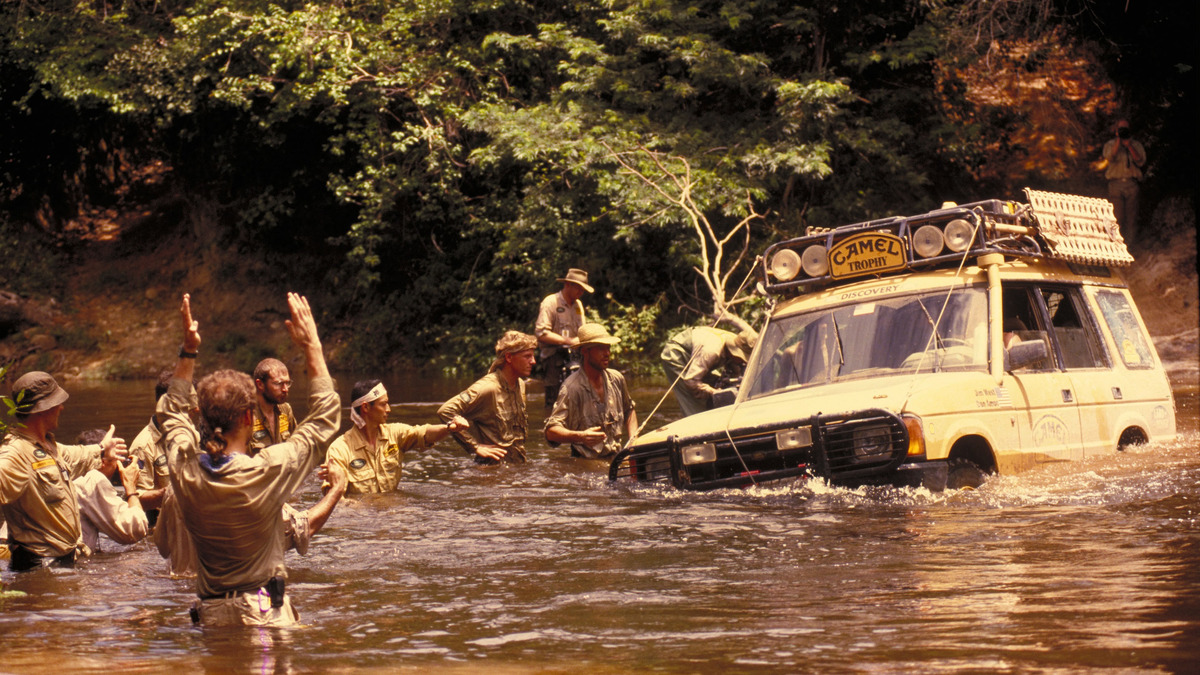
The yellow machine and the camera
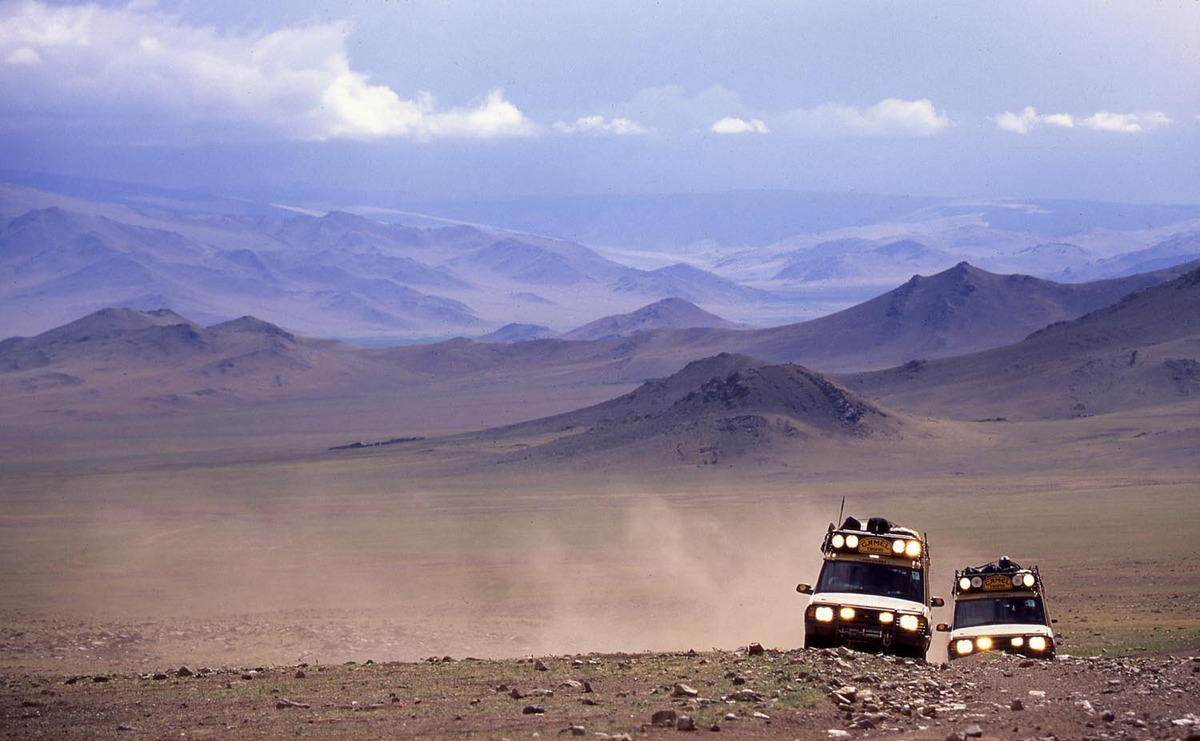
The Land Rover already had an expedition history. Camel Trophy gave it an exceptionally consistent public appearance. Sandglow, a loaded roof rack and the event badge could make the vehicle recognisable before a reader knew which country the picture showed.
Much of the equipment was functional. Repeated photography turned function into style.
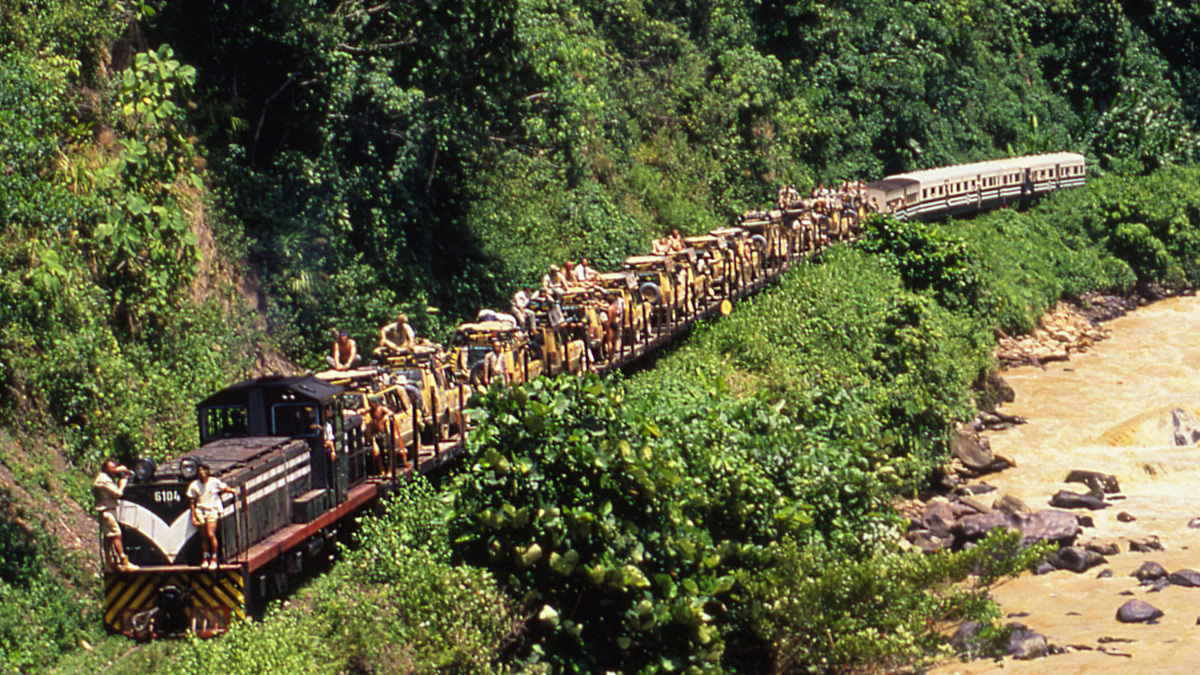
Chapman’s part was to organise the journeys that supplied the material. Photographers and film crews made that material intelligible and desirable. The surviving work of Andreas Bender, Lee Farrant and others deserves its own place in the story. Nick Dimbleby joined the photographic team for the later events, beginning in 1996, and eventually assembled its history in a book.
Their medium rewarded clarity. A photograph in a magazine had to hold the reader without the running explanation now supplied by an expedition’s social feed. The best pictures contained a difficulty, people answering it and enough of the surrounding country to suggest how far they had come.
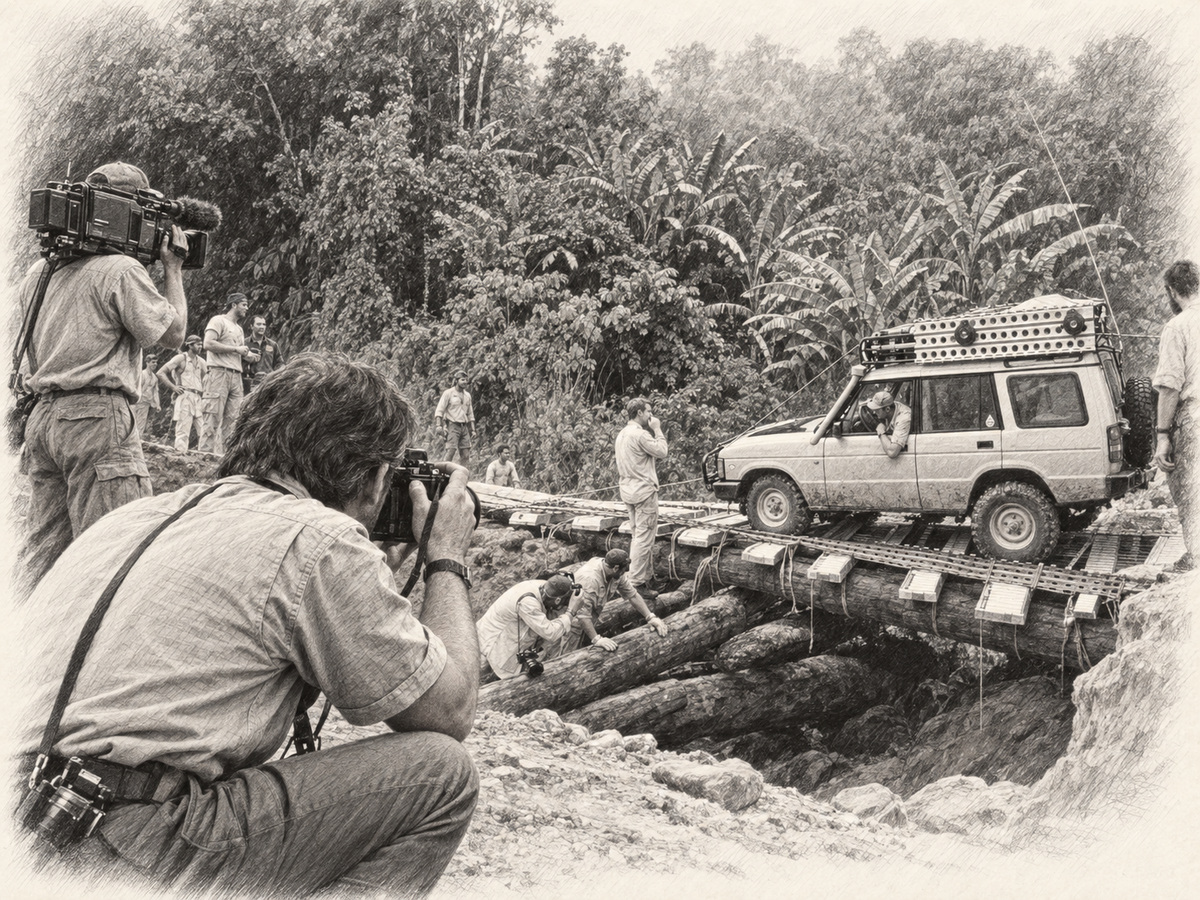
Sometimes the machine looked nearly defeated. That was part of its value. A clean car demonstrated possession; a battered one seemed to have a past. The spectator was invited to imagine acquiring the story along with the equipment.
There was pleasure here that conventional luxury travel often concealed. Porters took away luggage, chauffeurs attended to the machinery, hotels made arrival effortless. In the expedition image, the mechanics of travel came into view. You were supposed to know what the winch did. You were supposed to get out.
Hardship could become something to choose, provided the journey gave it purpose. Without that purpose, a day spent recovering a vehicle was merely a day lost in mud.
An adventure you could wear
Marlboro had already found a way to let the spectator put on the part. Its Country Store offered Western shirts and jackets; branded leisure wear carried the name into everyday wardrobes. The cowboy’s self-possession could be bought in a size that fitted.
On a T-shirt, the Marlboro name could work much as Mickey Mouse did: a whole recognisable world reduced to a sign. A nonsmoker could borrow the character without borrowing the habit. The affiliation was with the racing car, the horseman, the hard independence of the image. A cigarette company had made something that people wanted to wear against their own skin.
Camel Trophy gave that desire a more demanding destination. The shirt could be a souvenir of watching, or the beginning of an intention to go.
A surviving colour advertisement, dated around 1989 by the University of Alabama’s advertising archive, couples a Camel Trophy watch with the expedition image. The watch carries the proposition onto the wrist: some fraction of the journey might accompany its owner through an ordinary day.
An internal report from February 1991, preserved in the UCSF Industry Documents Library, makes the connection explicit. It discusses the watches as beneficiaries of the Trophy’s adventure identity and treats the familiar logo as essential to that association.
The wider Camel merchandise campaign extended the invitation through clothing and boots. Those products were not all Trophy issue, but their advertising drew on the same promise of outdoor capability. A buyer could dress for a departure that might never happen.
The expedition gave the objects a story; the objects carried that story into places the convoy would never reach. The vehicle and the wristwatch offered very different levels of commitment to much the same imagined life. But there was a consequence the sponsor could not wholly own. Once people had learned to recognise themselves in the image, they could carry it into journeys of their own.
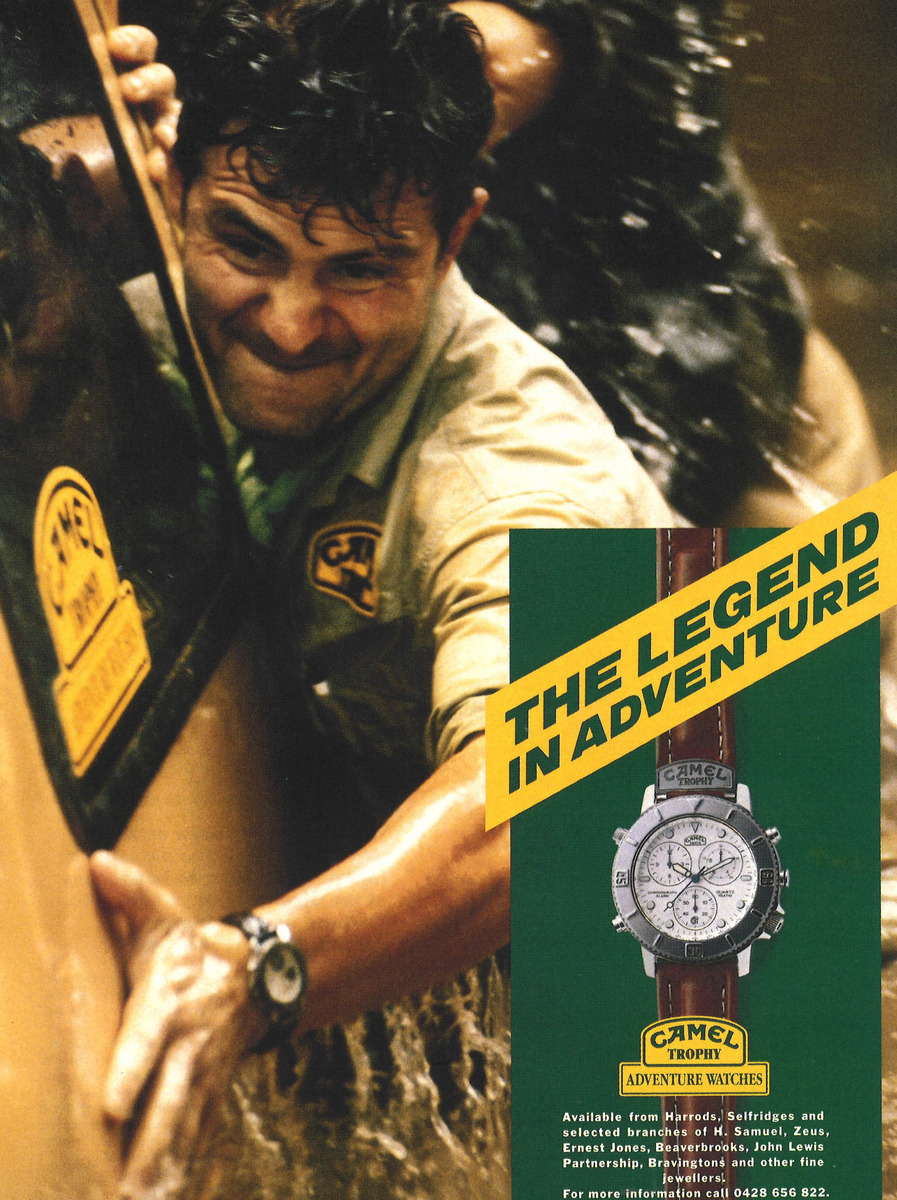
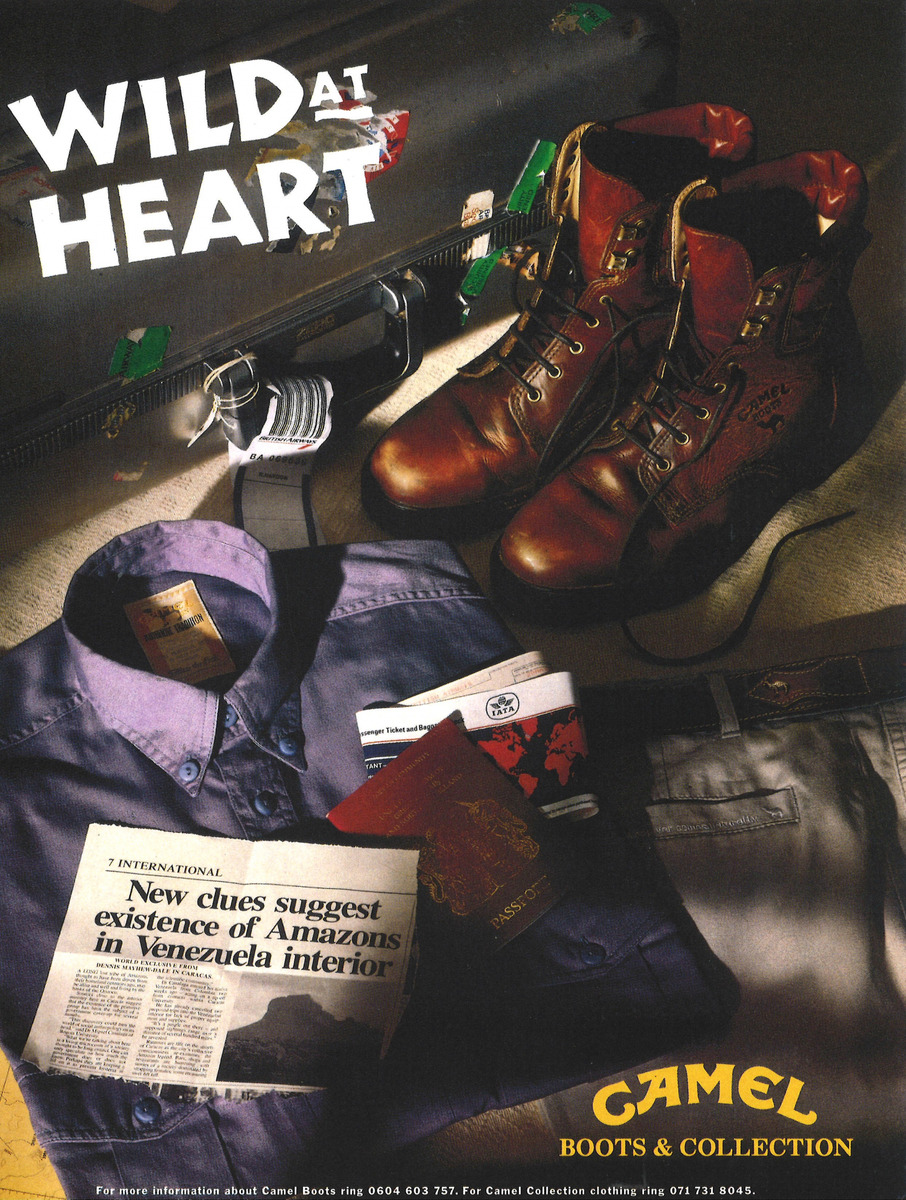
Chapman was candid about the arrangement: his employers expected to sell Camel products. Rebranding the event around Camel Trophy merchandise gave the campaign room to manoeuvre as tobacco advertising restrictions increased. The adventure brand could acquire a life of its own while its name continued to recall the cigarette.
The beauty of the images belonged to that purpose. So did the attraction of the community they depicted. Remembering the teamwork while forgetting what paid for the cameras would leave half the campaign unexplained.
The ground beneath the picture
An image of a machine overcoming the landscape could also become evidence against the event. In the early 1990s, environmental criticism put pressure on Camel Trophy and Land Rover. The manufacturer’s Fragile Earth policy and Tread Lightly principles made the question harder to evade: how did these convoys fit the responsibilities the company claimed?
Chapman recalled pointing to infrastructure repairs and money brought into host countries. Later events incorporated environmental or ecological projects. Those responses belong to the history of the campaign, including its need to be seen giving something back; they are not, by themselves, a measure of its environmental effects.
The organiser’s difficulty was larger than keeping vehicles moving. The same obstacle that made a compelling photograph might look different to someone who lived beside it. Adventure depended on access to actual places, with authorities, inhabitants and uses beyond the visitor’s story.
Chapman’s subsequent work makes his practical contribution easier to see. After leaving Camel Trophy, he established an expedition and events consultancy. With Land Rover’s Bill Baker, he organised the 1998 New Discovery Trek, a journey of more than 30,000 kilometres through 28 countries in 58 days.
For Robert Swan’s Mission Antarctica, he planned the removal of roughly 2,000 tons of waste from Bellingshausen on King George Island. His account runs through ships, a tug, tractors, a pontoon dock, skips and a crew. The waste went to a recycling plant in Uruguay. Here was the same appetite for complicated movement, applied to taking something away.
The advertising campaign had given his organisational skill a large public stage. The skill itself survived the campaign.
The road after the road
The cigarette could vanish from the picture without taking the adventure with it.
In a 2023 conversation with Scott Brady, the co-founder of Overland Journal and Expedition Portal, expedition leader Mac MacKenney called Camel Trophy “the ultimate”. He still tried to bring elements of it into his own projects. What he singled out was the shared identity: vehicles in the same colours, people dressed as one team, the immediate sense of belonging to something. Brady remembered how the event had inspired people in the overlanding world and how consistently its different editions had looked alike.
Here was the inheritance still being put to work. Camel Trophy had become a reference against which other vehicle adventures were imagined. An event could be harder, its machinery more capable, and still be measured against the old yellow convoy for the quality of the experience it promised. The photographs had established expectations about what an expedition should look like; the shared work had given those expectations substance.
The resemblance extends beyond organised competitions. A vehicle prepared for a long journey now announces something of its owner before it moves. Equipment promises resourcefulness, visible repairs suggest experience, and the decision to take the difficult track becomes part of the story. In the cowboy advertisement, the viewer had learned to read character through a hat, a horse and a way of standing. The expedition photograph taught another vocabulary of the same desire.
For a nonsmoking overlander, that inheritance need carry no attachment to cigarettes at all. The brand name can disappear while the idea of the journey survives. A winch and a loaded roof rack can say what a tobacco logo once helped to say: I belong out there; I can take care of myself; I will be useful when things become difficult. The equipment may be entirely practical, yet choosing it is also a way of choosing who to become.
Chapman helped make that identity credible. He organised journeys in which people actually had to exercise the competence the pictures promised. The campaign could outlive its original purpose because there was an experience worth inheriting beneath it.
Marlboro had invited the spectator to imagine himself as a solitary man on horseback. Camel Trophy offered a place in a convoy. Its lasting promise included the discovery that self-reliance could make you valuable to other people.
Adventure is not the same thing as speed. You do not have to win the road. You have to get through it.
And sometimes the finest proof that you travelled well is that the people you were supposed to beat are attached to the other end of your winch cable.