
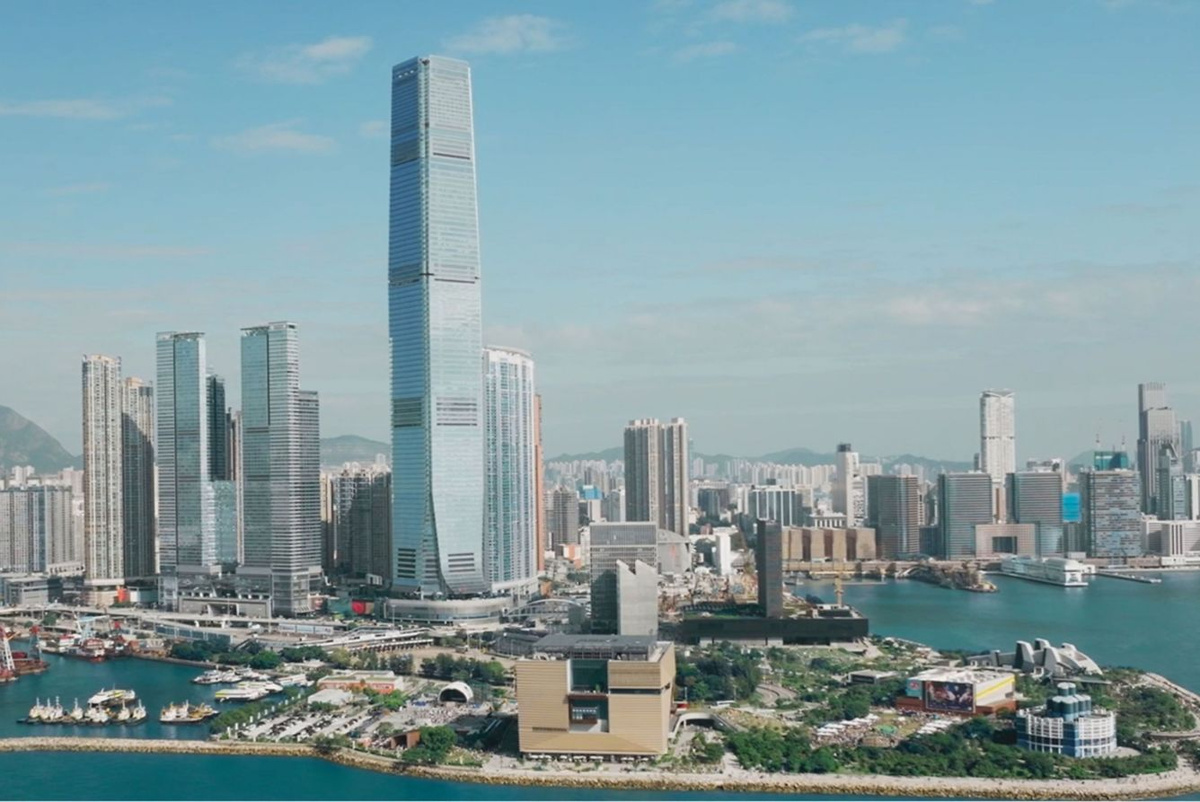
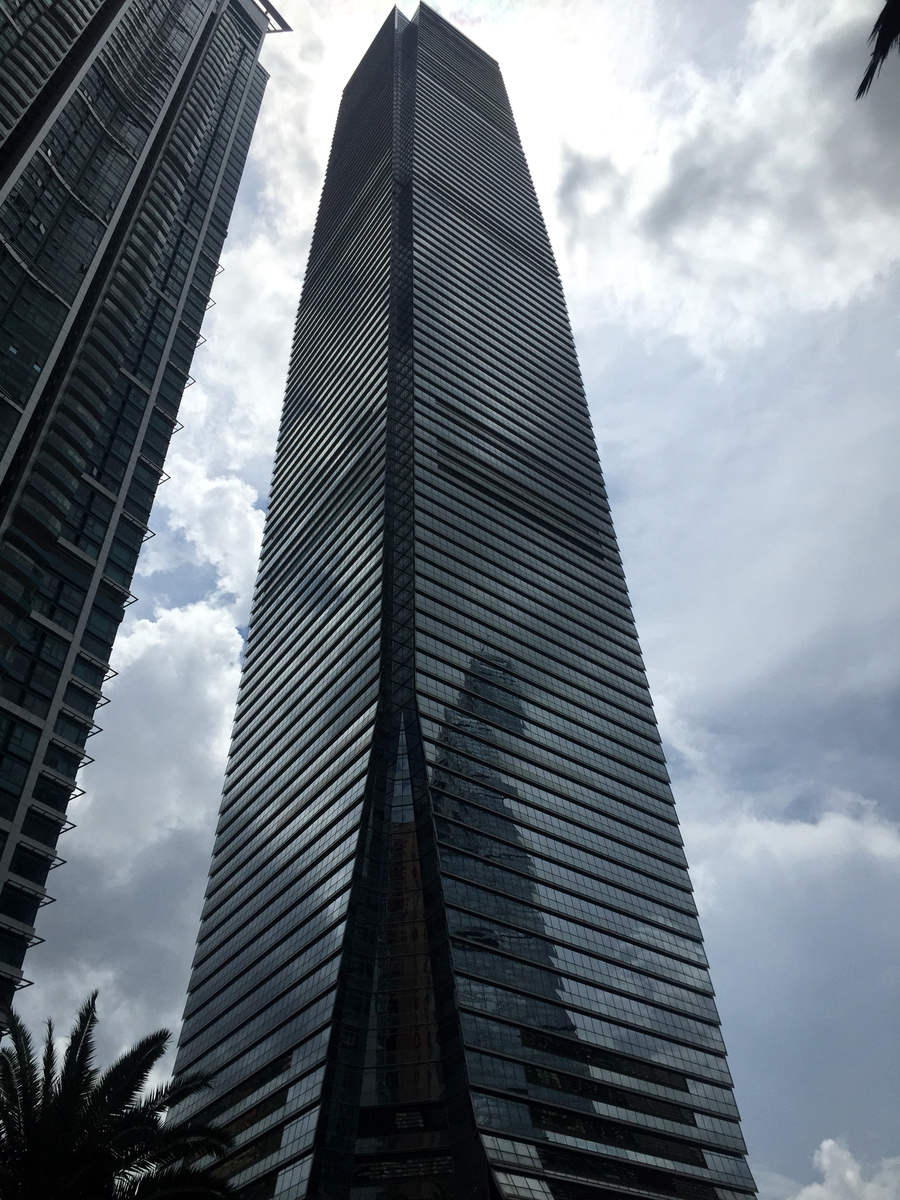
The International Commerce Centre and West Kowloon. Courtesy of The Ritz-Carlton, Hong Kong.
I almost always ask for the highest room a hotel can give me. At The Ritz-Carlton, Hong Kong, the request was redundant.
When we stayed in July 2015, the hotel was still the world’s highest. Its guest rooms began on 106/F and climbed to 117/F; I remember ours as somewhere around 110. Hong Kong occupied the whole wall, reduced to working boats, ranks of towers, and green hills beyond them. For a high-floor fanatic, this was the point of the hotel.
My husband was drawn to the city at the opposite scale. He is a serious aquarist, and down in Mong Kok, Goldfish Street placed his modern hobby beside roughly a thousand years of Chinese ornamental fishkeeping. I wanted Hong Kong as a panorama. He wanted to study it one tank at a time.
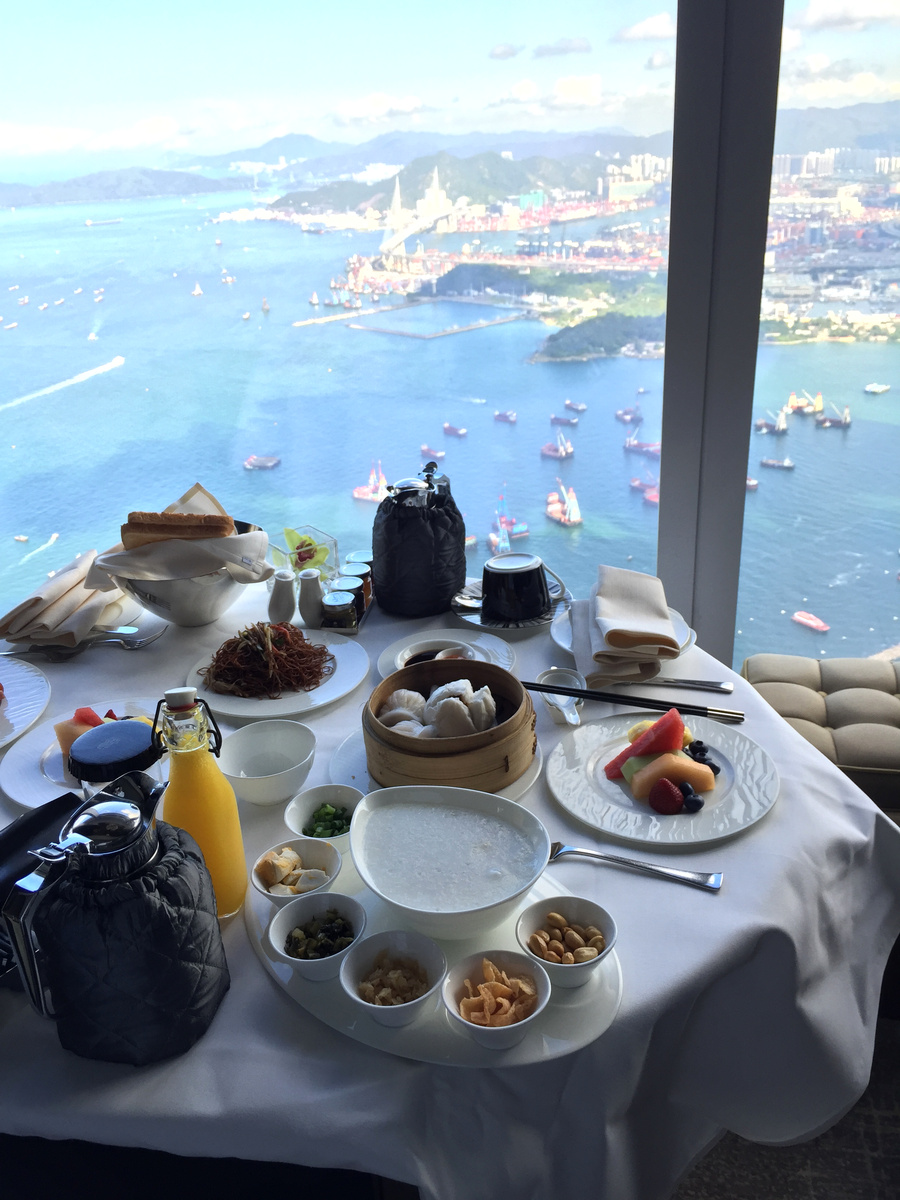
Breakfast brought the city upstairs. Fried eggs, grilled tomato, fruit, bread, coffee, and local specialities covered the table, with a bamboo steamer at one edge. Beyond them lay Victoria Harbour. Eating in the room did not feel like withdrawing from Hong Kong.
I later put The Ritz-Carlton, Hong Kong on my personal list of favorite hotels, among the places I would return to. The height drew me there. What stayed with me was how insistently Hong Kong entered the room: at breakfast, in daylight, and again after dark.
Getting to The Ritz-Carlton Hong Kong
We had flown in from Indonesia and used the hotel’s airport transfer. The Ritz-Carlton had a welcome counter in the arrivals hall; once we reached the hotel, the staff swept us upstairs, beyond the hundredth floor. The whole arrival was effortless.
The hotel still offers airport limousine transfers through its concierge. These are priced separately, so confirm the car, fare and airport meeting point when arranging a pickup. The address is the International Commerce Centre, 1 Austin Road West, with reception high above it on 103/F.
The Airport Express is a straightforward alternative. The train reaches Kowloon Station from the airport in about 22 minutes. From the station, follow the hotel signs through ELEMENTS to The Ritz-Carlton’s arrival area and take the lifts to reception. Allow additional time for the walk through the complex and the lifts to your room; 22 minutes is the train journey alone.
The high floor was the point
The Ritz-Carlton occupies floors 102 to 118 of the International Commerce Centre in West Kowloon. Today the arrival is a 90-second lift journey to the lobby on 103/F, where the panorama appears almost immediately.
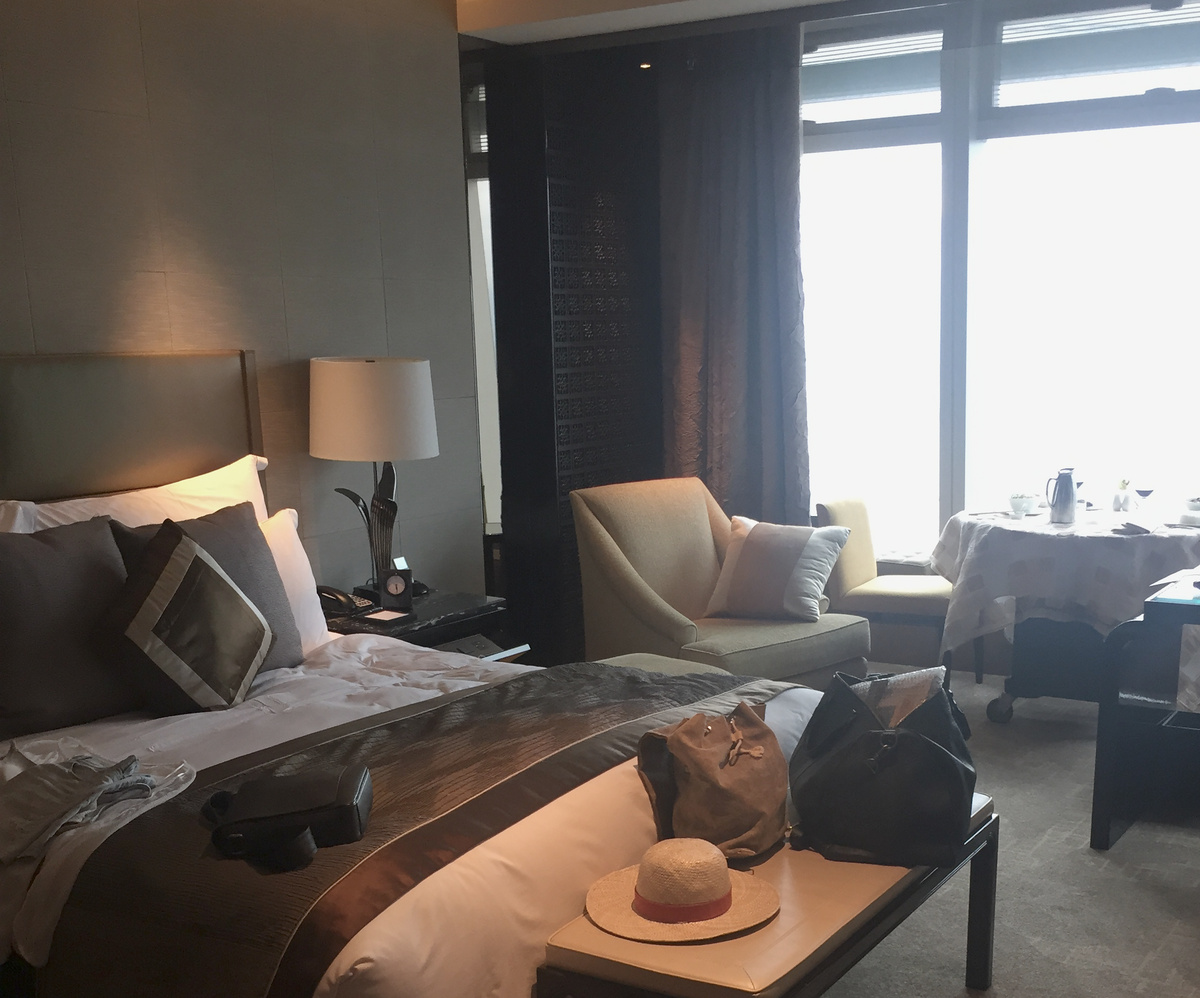
During our stay, the rooms and suites ran from 106/F to 117/F. I usually negotiate for height at check-in. Here it came with the address.
The height carried an official distinction then. Marriott had opened the property in 2011 as the world’s highest hotel, and Hong Kong’s government described it in the same terms. The record moved later; Guinness dates Rosewood Guangzhou’s mixed-use-building record to September 2019. In July 2015, however, the claim still belonged to The Ritz-Carlton.
Where the height record stands in 2026
Hotel height can mean several things. I care about the floor on which one can actually sleep, rather than the bar, spa, or observation deck. By that measure, The Ritz-Carlton remains first in 2026: its top suite is on 117/F. Park Hyatt Kuala Lumpur reaches 112/F, Rosewood Guangzhou 106/F, Signiel Seoul 101/F, and J Hotel Shanghai Tower 98/F. J Hotel shares its floor number with Four Seasons Guangzhou, but occupies the taller tower.
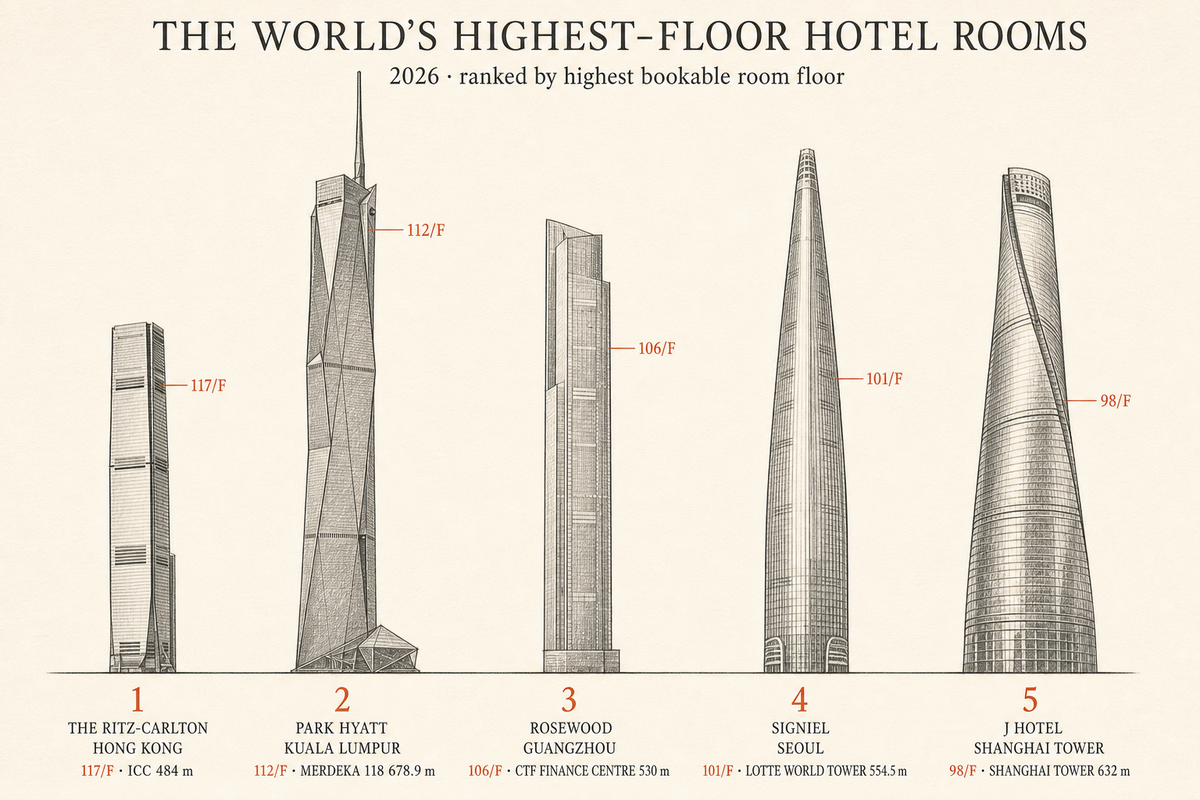
Floor numbers and physical elevation are different records. Guinness places Rosewood Guangzhou’s 106/F bedroom 484.3 meters above the street, making it the highest hotel guest room above ground. The Ritz-Carlton leads by named guest-room floor, not by audited height above the pavement.
It does retain a record one can use. Guinness lists the pool on 118/F, 468.8 meters above ground, as the highest swimming pool in a building.
In our room, a broad window and low upholstered seat made the harbor the main event. In daylight I could follow the boats. At night the glass held Hong Kong’s lights together with the room behind me and my own reflection.
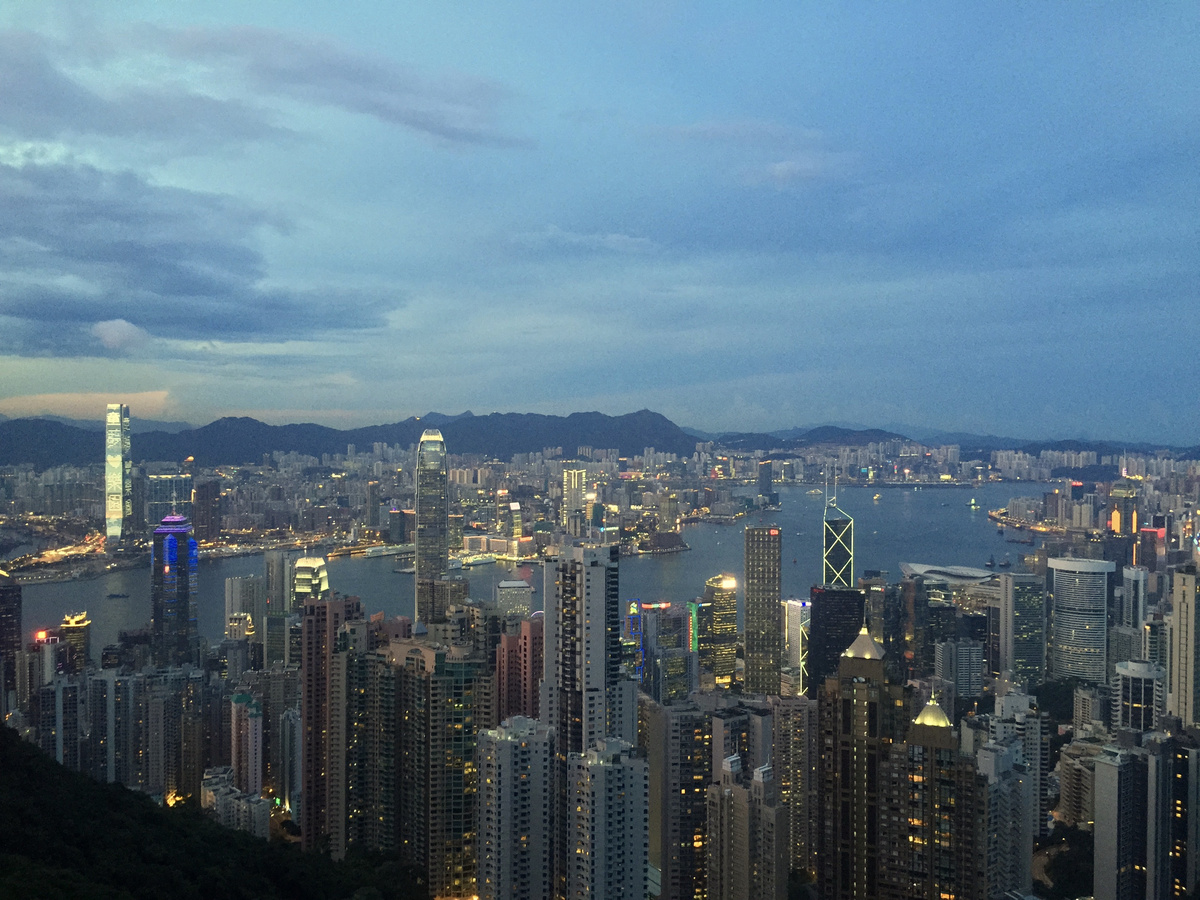
The view was not scenery reserved for arrival. It became part of the day. Noodles and a glass of red wine by the window had the same pull as breakfast: I kept looking past the table.
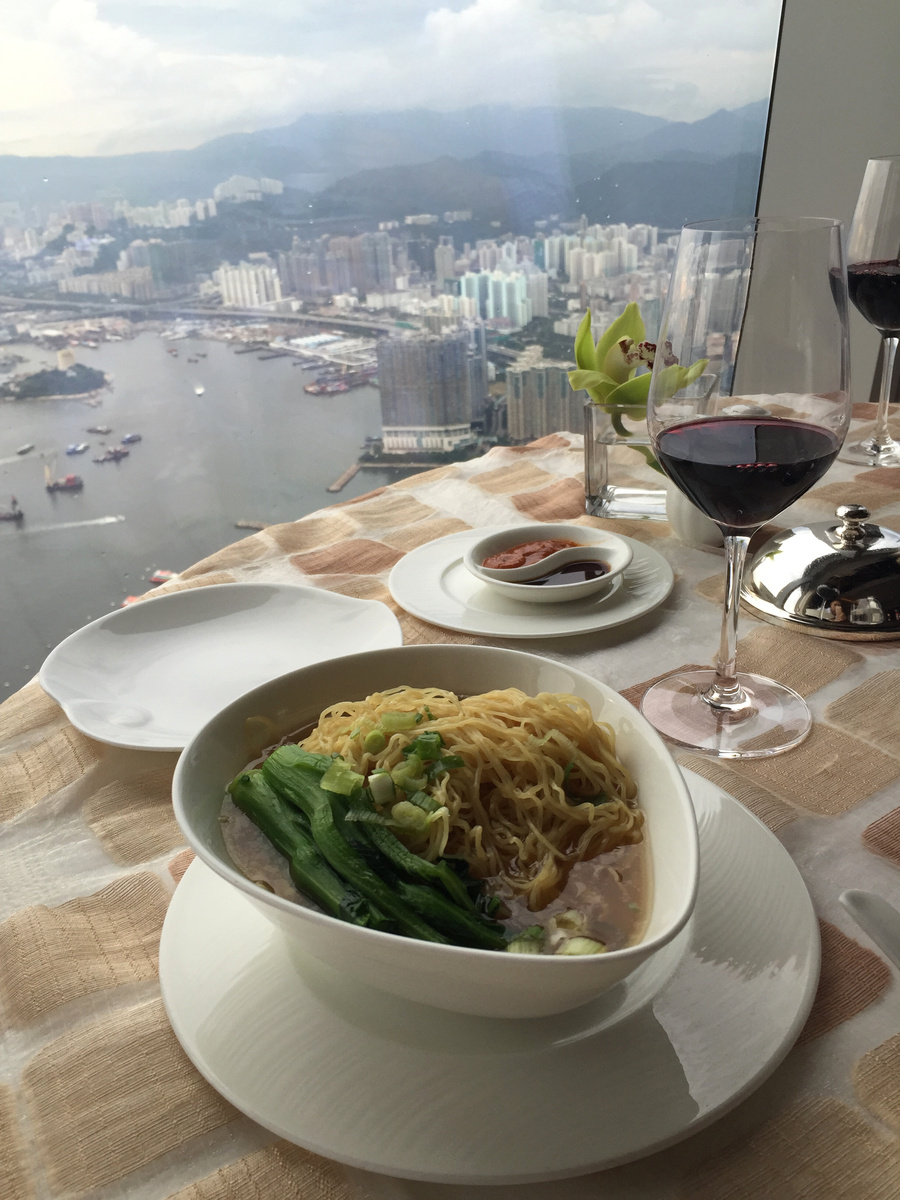
The same height creates the hotel’s principal compromise. Street-level Hong Kong is several elevators, the ICC, and often a route through ELEMENTS or Kowloon Station away. For a short stay centered on old Kowloon streets, that distance can feel awkward. For the airport train, the West Kowloon museums, or a room chosen expressly for the harbor, it makes sense.


What the location buys you
Hong Kong summer changes the value of an attached shopping center. May to August is hot and humid; during our July stay, there were hours when a long walk outside was simply unappealing.
The hotel sits directly above ELEMENTS. We could leave the room without stepping into the heat, with fashion houses, restaurants, a cinema, art, and even the artistic performance we happened upon below. In a cooler city I might call that convenience. In Hong Kong in July, the mall became usable hotel space.
West Kowloon is also a stronger destination now than it was during our stay. M+ opened in 2021, followed by the Hong Kong Palace Museum in 2022. Both stand on the waterfront near the ICC, connected with Kowloon Station through ELEMENTS and the Artist Square Bridge.
The Ritz-Carlton once looked down on a district still waiting for its cultural center. It now places two serious museums, the Art Park, and the harbor promenade close at hand. I put the hotel on my list before any of them opened. West Kowloon has caught up with the view.
Down to Goldfish Street
The outing that mattered most to us ran in the other direction, down from the ICC and into Mong Kok. My husband is a serious aquarist; the hobby combines biology, engineering, and living design. For him, Goldfish Street, the aquarium-shop stretch of Tung Choi Street North, was a place of pilgrimage.
From the pavement, the street can look like a row of low-key shops hanging clear bags of fish outside. That is only the threshold. Inside and upstairs are specialist equipment, cultivated aquatic plants, high-value arowana in large tanks, and displays of finalist work from the International Aquatic Plants Layout Contest. We moved slowly. Local enthusiasts did too, studying a fish, a planting, or the balance of stone and wood. The market has occupied this part of Mong Kok since the 1960s: roughly 300 meters of street lined with dozens of aquatic shops.
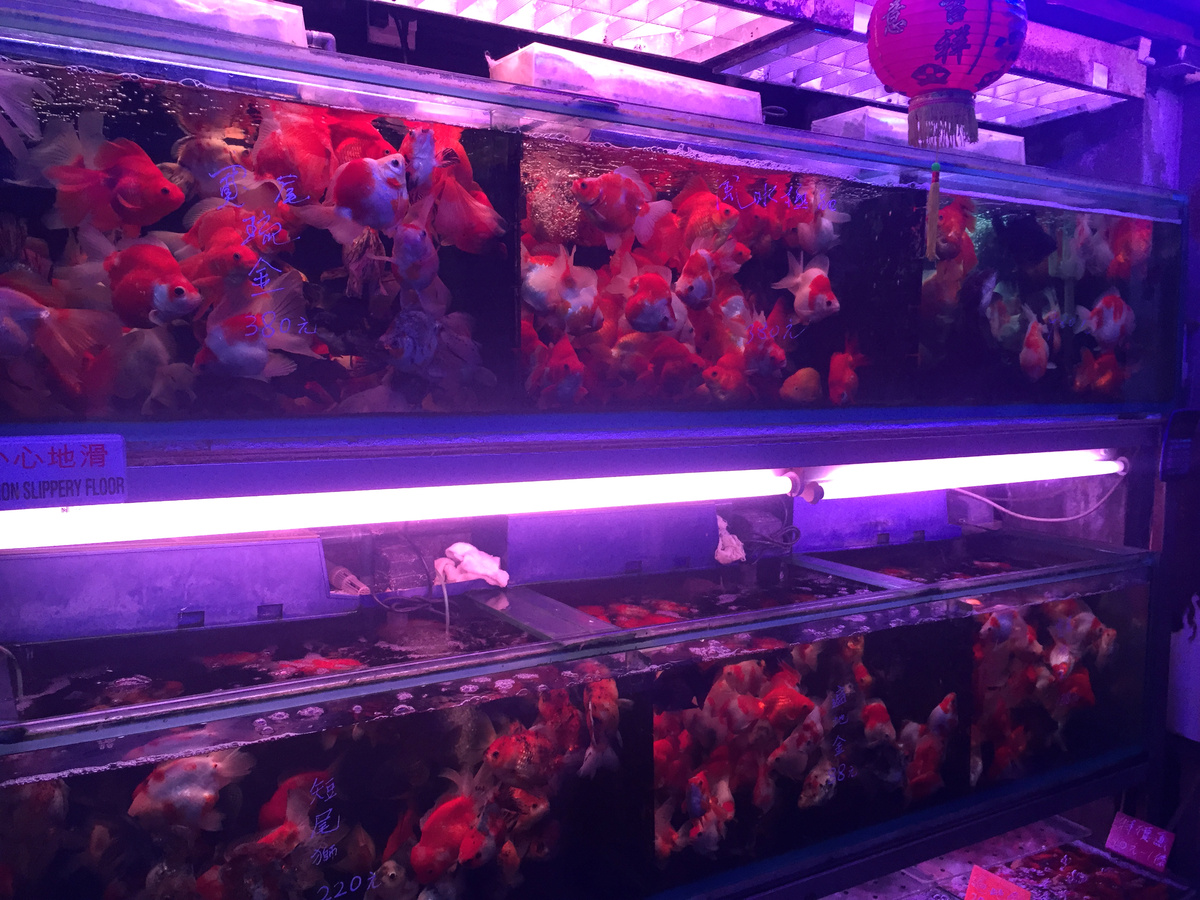
The trade reaches far beyond the modern market. Genetic and historical research traces colored fish in Chinese ornamental ponds to the Tang dynasty and describes about a thousand years of goldfish domestication. Goldfish had entered court culture by the Song dynasty; later imperial keepers developed increasingly elaborate varieties. The Palace Museum still presents them as living heritage and a recurring artistic motif, associated with abundance and prosperity.
Goldfish Street is no museum. Its heritage survives through breeding, selection, expensive specimens, specialist knowledge, and the patient looking that aquarists understand immediately. The hotel held Hong Kong at a magnificent distance. Mong Kok brought us close again.
Breakfast in a Cantonese city
Breakfast brought street-level Hong Kong back into the room. It was exceptional. Alongside the Western dishes were congee and its condiments, steamed buns, fried noodles, and fruit. The local food occupied the table on equal terms, rather than appearing as a token “Asian option.”
Cantonese cooking is one of China’s great regional cuisines, with its own discipline. It runs through dim sum, siu mei, double-boiled soups, steamed seafood, braises, and dishes carrying the breath of the wok. Freshness, texture, and control of heat matter more than heavy seasoning. Hong Kong chefs describe that apparent simplicity as the result of long technical experience; in nearby Shunde, often called the cradle of Cantonese cooking, seasonality, knife work, and wok hei remain central.
British rule added another layer. Western restaurant habits and tea with milk arrived, then Hong Kong cooks made them local. Hong Kong Baptist University researchers describe how restaurants adapted Western ingredients and methods to local taste and price. Hong Kong milk tea tells the story neatly: an elite British drink became stronger cloth-filtered tea enriched with condensed milk, then a popular local staple. Pineapple buns, egg tarts, Hong Kong French toast, and macaroni soup belong to the same hybrid city.
Upscale Hong Kong breakfasts keep local dishes at the center. When Hong Kong editors describe the hotel breakfasts they choose when feeling fancy, they mention dim sum, soup, vegetables, and noodles alongside pancakes and waffles. On less ceremonial mornings, the cravings turn to hot milk tea with French toast or a pineapple bun split around cold butter. A good luxury breakfast here must speak both languages.
The surprise for many Western visitors is how savory the morning can be: congee, rice rolls, steamed dumplings, turnip cake, and noodles. Many Hongkongers eat congee for breakfast, and har gow and cheung fun are the tests of a kitchen’s freshness and technique. The local measures of a good spread are the silkiness of the congee, the texture of the dim sum, and the wok hei in the noodles.
At our table, congee, eggs, steamed buns, and coffee shared the same white cloth. Hong Kong was on the plate and beyond the glass. That was abundance with a point.
Dining without coming down to earth
The hotel’s current restaurants carry the idea beyond breakfast. On 102/F, Tin Lung Heen serves Cantonese cooking and holds two Michelin stars in 2026. Tosca di Angelo, on the same floor, holds one for Italian cooking. Ozone is on 118/F; The Lounge & Bar now serves the breakfast buffet.
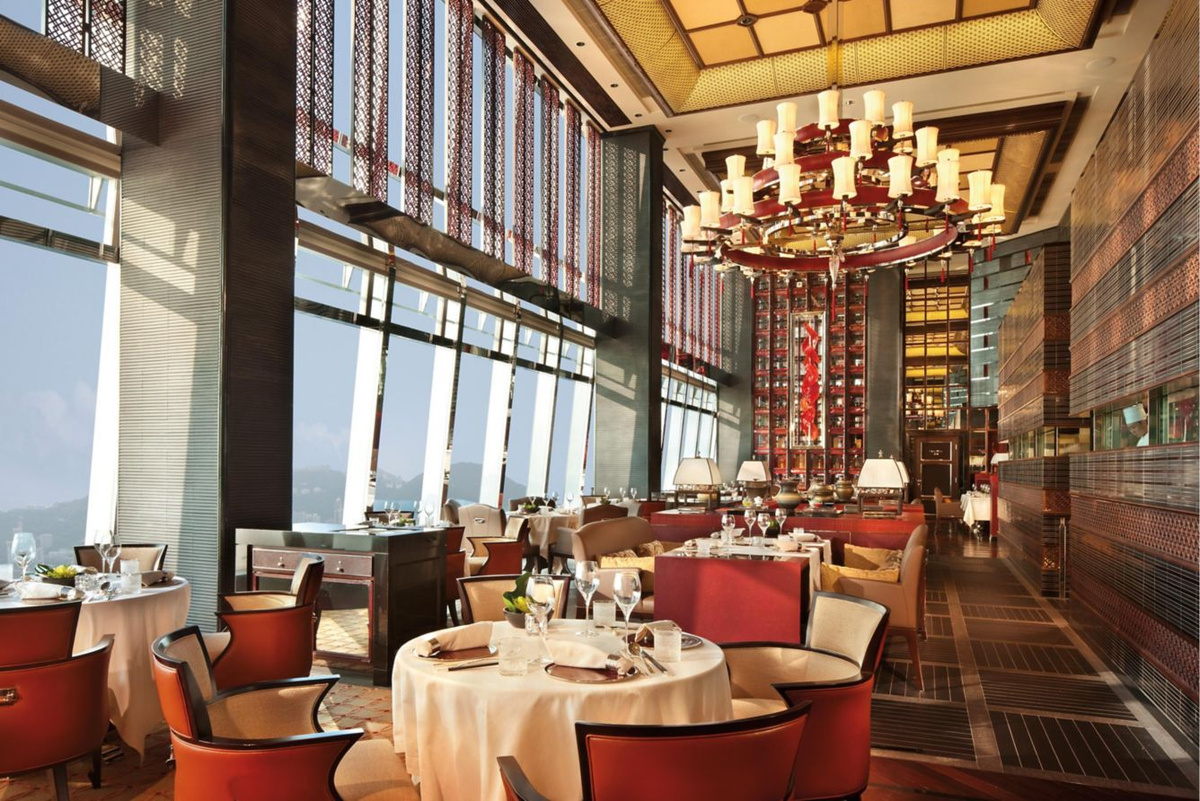
My 2015 dining memory is more intimate. The room kept drawing us back to the table by the window. In a city with Hong Kong’s appetite, staying in for a meal should have felt like a loss. It did not.
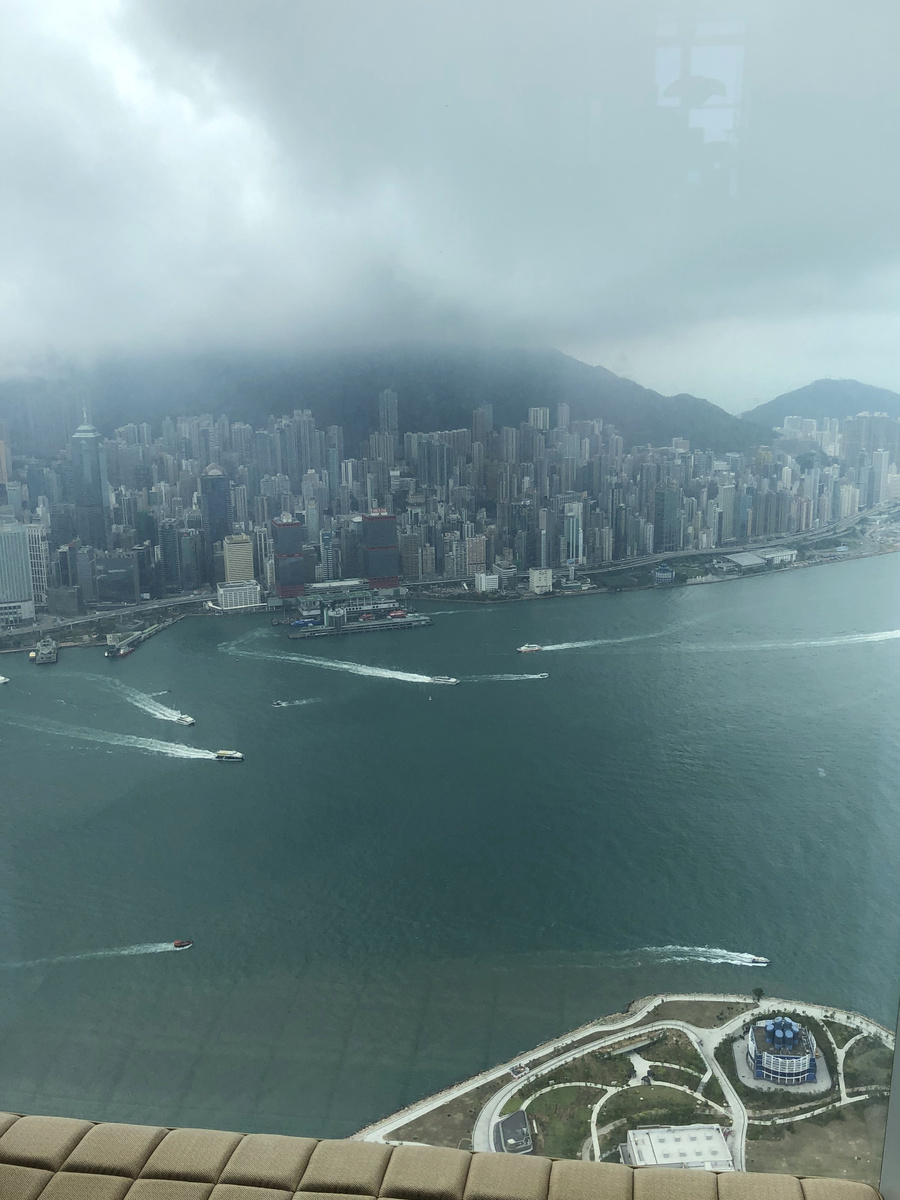
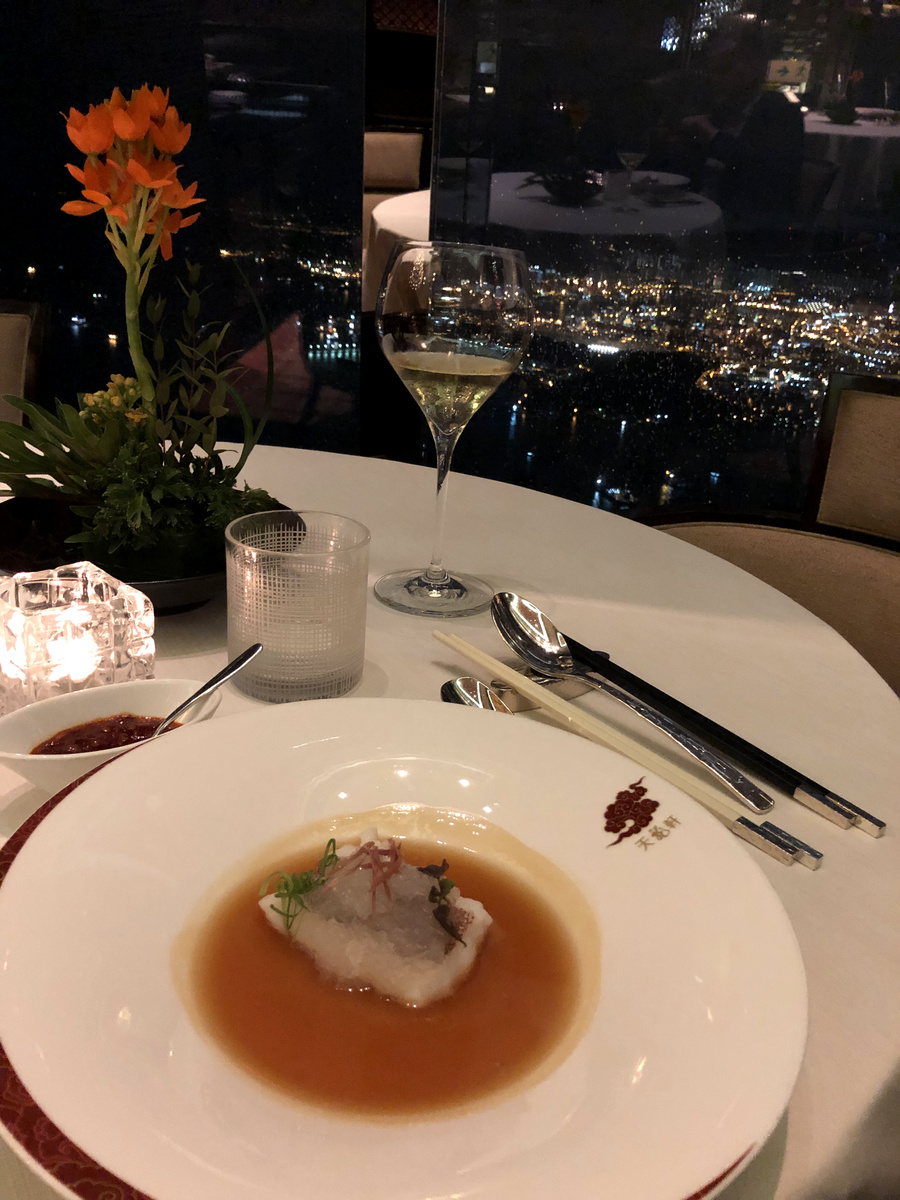
When my husband returned alone in April 2019, he photographed mist moving over the harbor by day, then a course at Tin Lung Heen against Kowloon’s lights. That later visit is his, but the view is immediately familiar.
Choosing the room
The view is the hotel’s strongest reason to stay and the part most vulnerable to variation. Orientation matters, as do haze, cloud, and the hour of arrival. Before paying a premium, I would compare the actual room aspect rather than the floor number alone. A harbor-facing room gave me the clearest version of this hotel; another direction could change it considerably.
Rates move with dates and room categories, so one current price would say little. The premium buys altitude, space around the window, direct access to Kowloon Station, and restaurants that continue the aerial idea. It does not buy immediate immersion in the older streets of Tsim Sha Tsui or Jordan.
I still ask hotels for their highest floor. At The Ritz-Carlton, I would ask first for the best harbor aspect; the altitude is already guaranteed. The hotel gave me Hong Kong at my favorite distance, very high. Goldfish Street gave my husband the opposite pleasure, close enough to study one fish at a time. That is how I remember the trip: breakfast above the boats, then Mong Kok at tank level.