
About an unusual breakfast, delicious chicken, a pirate’s drink, and the place where the world’s tastiest coffee grows.
Food is a particular passion in Jamaica. I love discovering a country’s culture through its tastes, so my journey around Jamaica was filled with all kinds of delicious diversions and opportunities to immerse myself in the country’s culinary traditions and distinctive character.
Now I am going to tell you about Jamaica’s most vivid and famous flavors.
Jamaican Breakfast
As in any other country, people in Jamaica begin their day with a wholesome and nourishing breakfast.
I had almost given up hope of finding an American-style breakfast anywhere in the Americas. Nevertheless, I still take great pleasure in discovering the peculiarities of the morning meal on my travels.
Caribbean breakfasts had already passed the stage of surprising me. I was used to seeing an unfamiliar local vegetable or fruit prepared on my plate—plantain purée called mangú in the Dominican Republic, for example, or bananas stewed in their own juices in Costa Rica. Yet Jamaica introduced me to a completely unexpected combination of flavors.
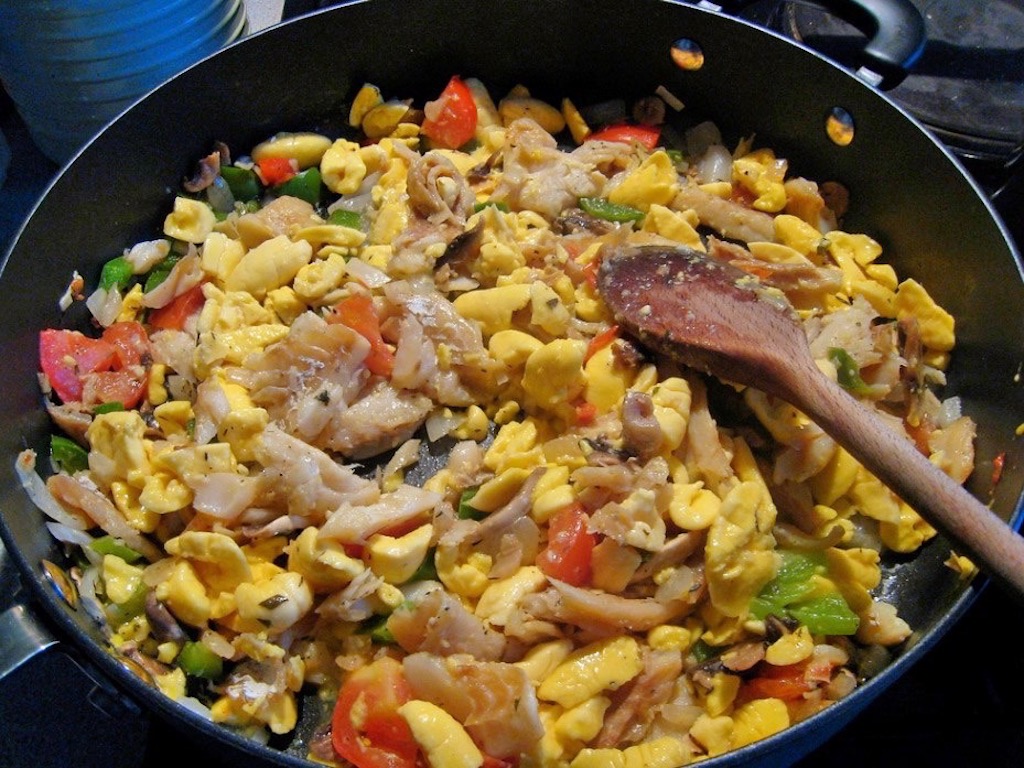
A traditional Jamaican breakfast consists of two main ingredients: ackee and salted fish, usually sardines or mackerel.
Ackee is a tropical fruit that grows on a tree.
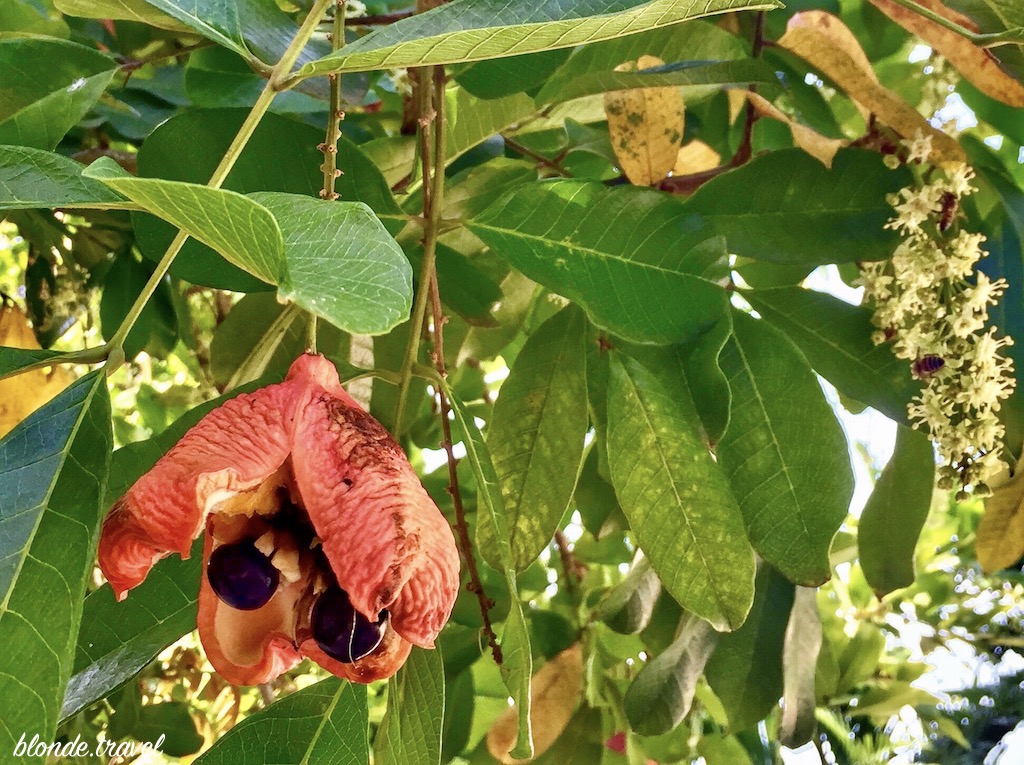
When it ripens, its skin splits and opens like petals. Inside are sections of yellow flesh with three shiny black seeds that look very much like eyes. The whole fruit looks rather amusing when it is ripe.
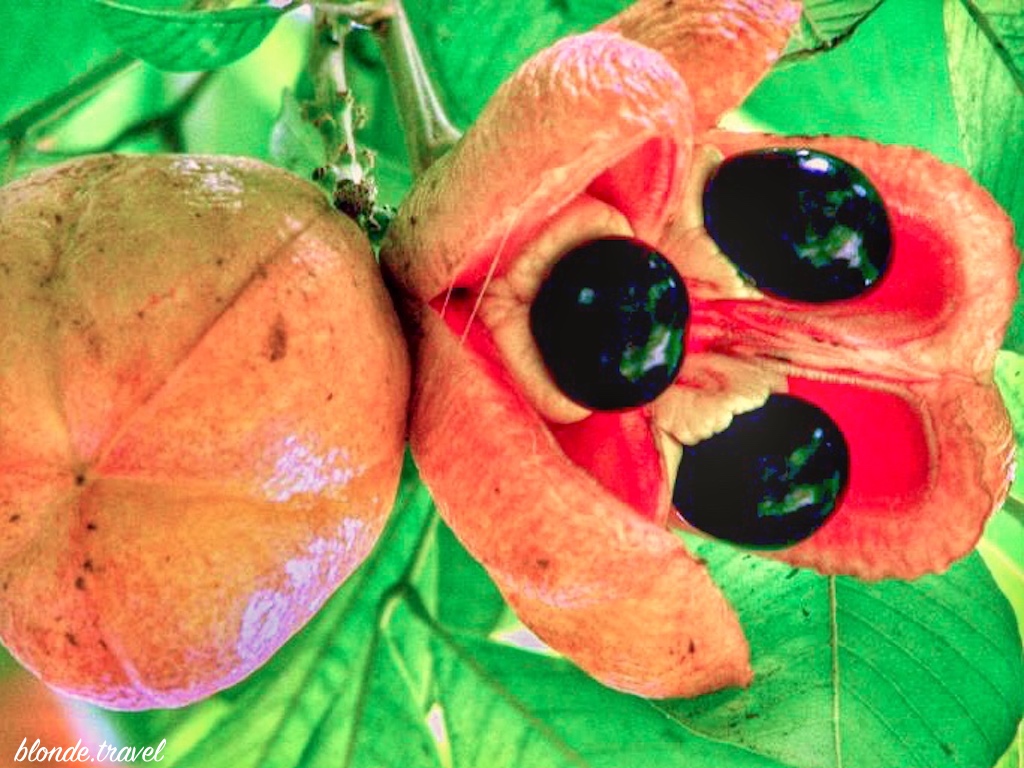
The yellow sections are eaten after the skin and “eyes” have been removed. They are rinsed in cold water and boiled.
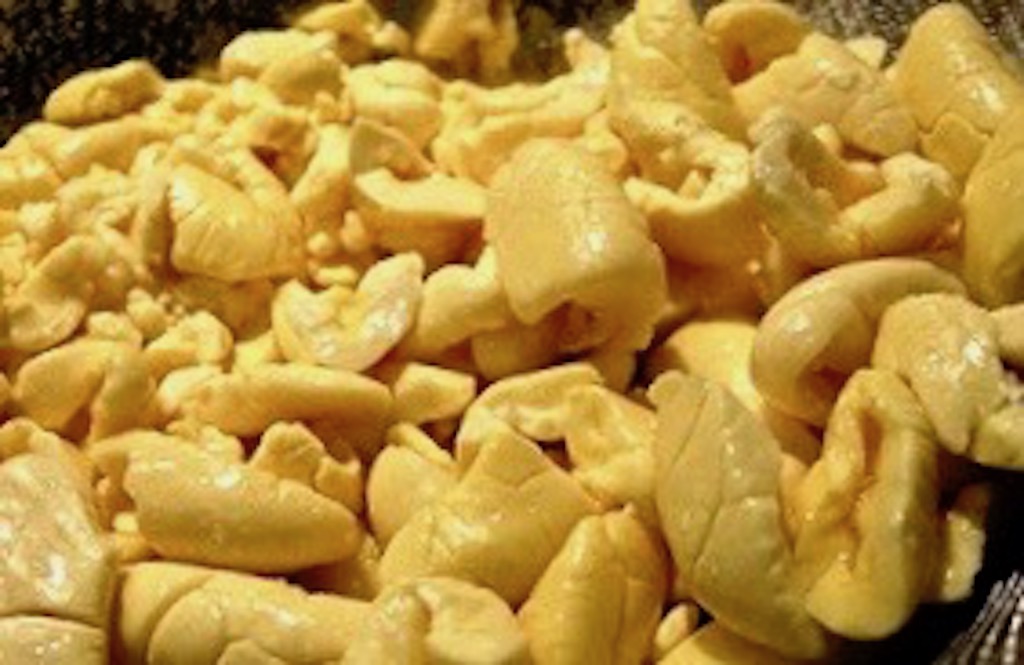
Ackee has a mild taste that reminds me of mashed potatoes with soap. But it pairs very well with intensely salty fish cooked with onions and peppers.
The ackee and fish are mixed together and stewed, producing a filling and nutritious breakfast.
Eating raw ackee is not recommended because it is commonly believed to contain poisonous substances. I have never heard of anyone becoming a victim of ackee poisoning, though I have not heard the opposite either. So, just in case, admire this funny fruit and then set it aside.
Most interestingly, once cooked, ackee looks and tastes remarkably like scrambled eggs.
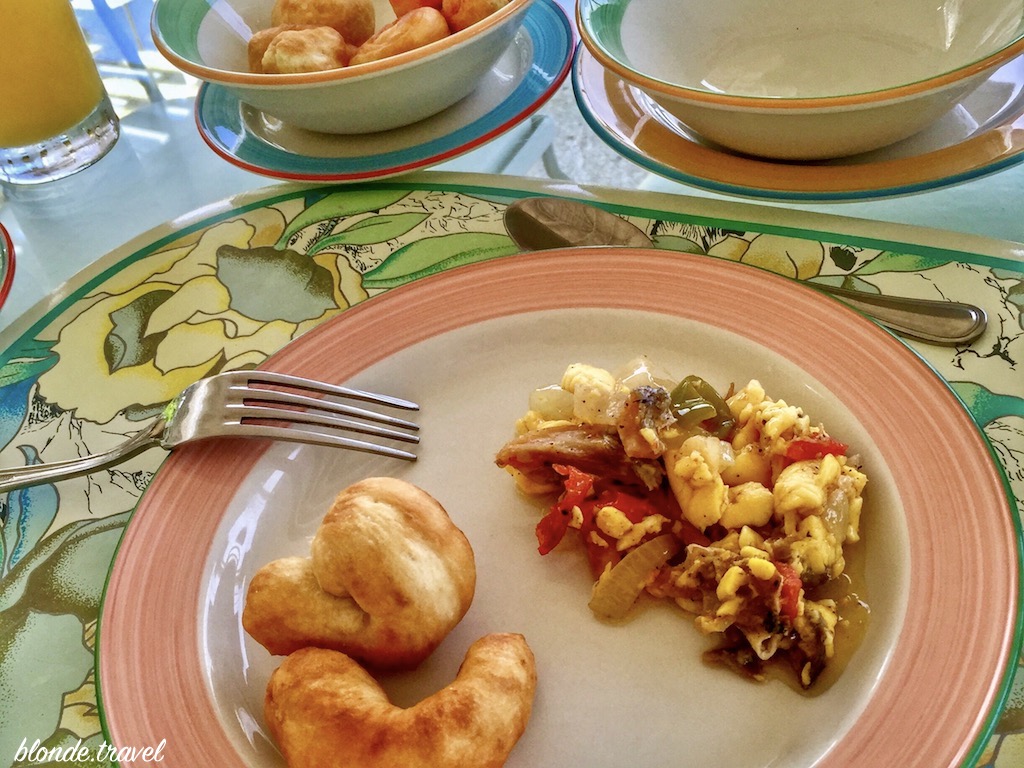
At first, this breakfast might not seem particularly tasty. But I assure you that after choosing it a few times, it will become one of your favorite dishes in Jamaica.
The plate may also include different fried vegetables and tree fruits: fried plantains, breadfruit, yam, and callaloo—all from the local pantry—along with cornmeal dumplings.
A Jamaican breakfast would be incomplete without a drink known as “tea.” Tea here falls into two categories. The first is purely herbal tea, such as mint, lemon, or cinnamon. The second includes practically anything that can be brewed, including coffee, cocoa, and all the other teas that do not belong to the first group. When ordering tea in Jamaica, it is therefore better to specify exactly what you want rather than leaving the choice to your host.
The tradition of drinking tea undoubtedly reached Jamaica through British colonial influence, although the island’s hot climate prevented it from taking quite such a firm hold.
Jerk
It is very difficult to visit Jamaica without trying its most popular traditional dish, jerk. The incredible smell of meat grilling in the streets makes you forget everything else in the world.
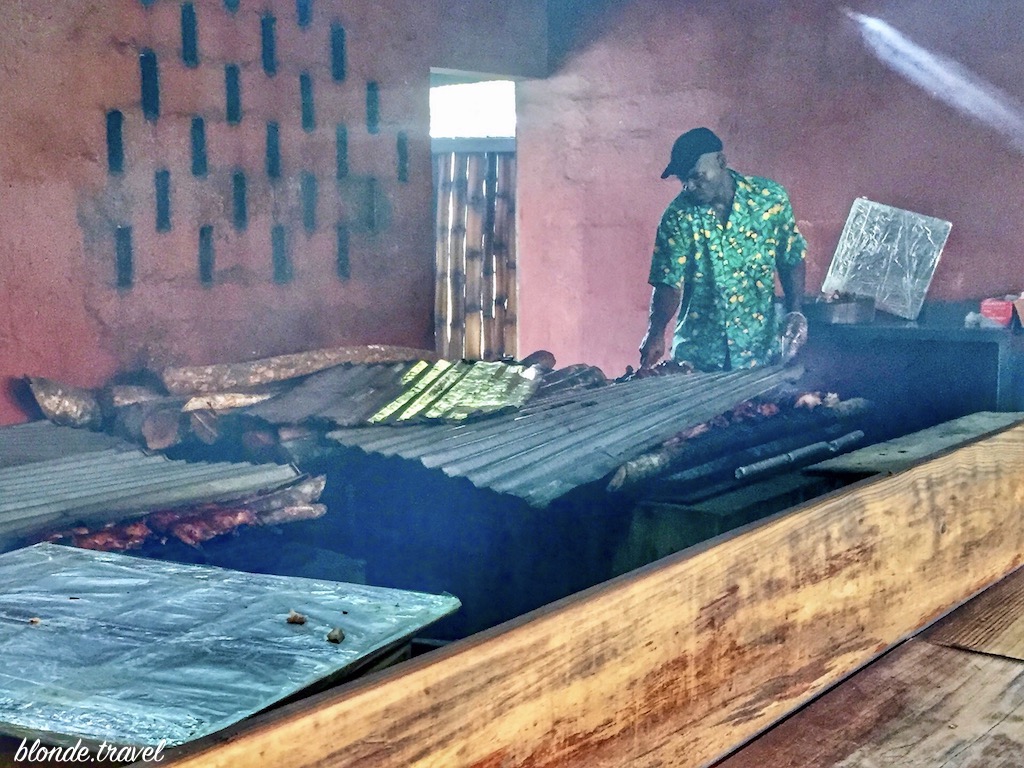
Jerk chicken is made from succulent pieces marinated in a special sauce and grilled over coals until they develop the most appetizing crust. Jamaica has its own secrets for preparing this delicacy. First, true jerk is cooked not simply over charcoal but with the green wood of the pimento tree, part of the allspice family and native to the Caribbean islands.
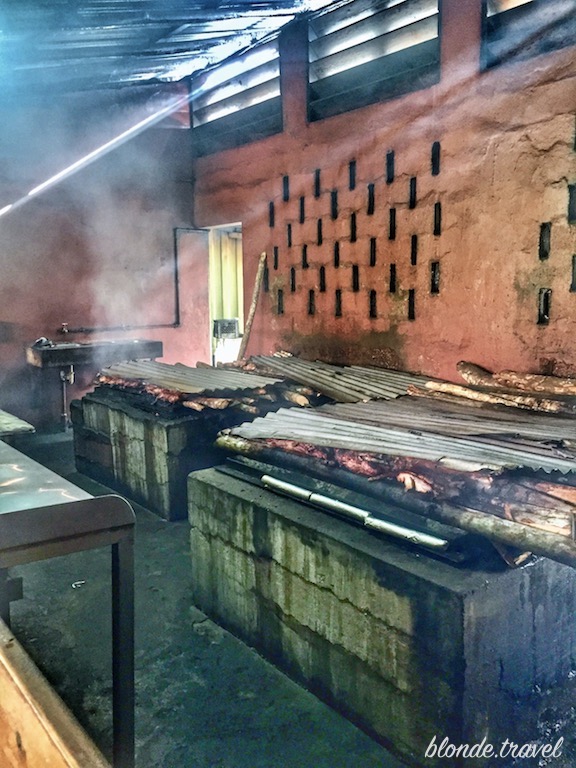
The tree’s wood has enormous importance in Jamaica. Charcoal made from it is laid beneath large metal grates and kept burning constantly to maintain the heat. Pimento logs are placed across the grates, the meat is arranged directly on top of them, and everything is covered with sheets of metal. As it cooks, the meat absorbs oils from the surface of the wood and takes on its aroma.
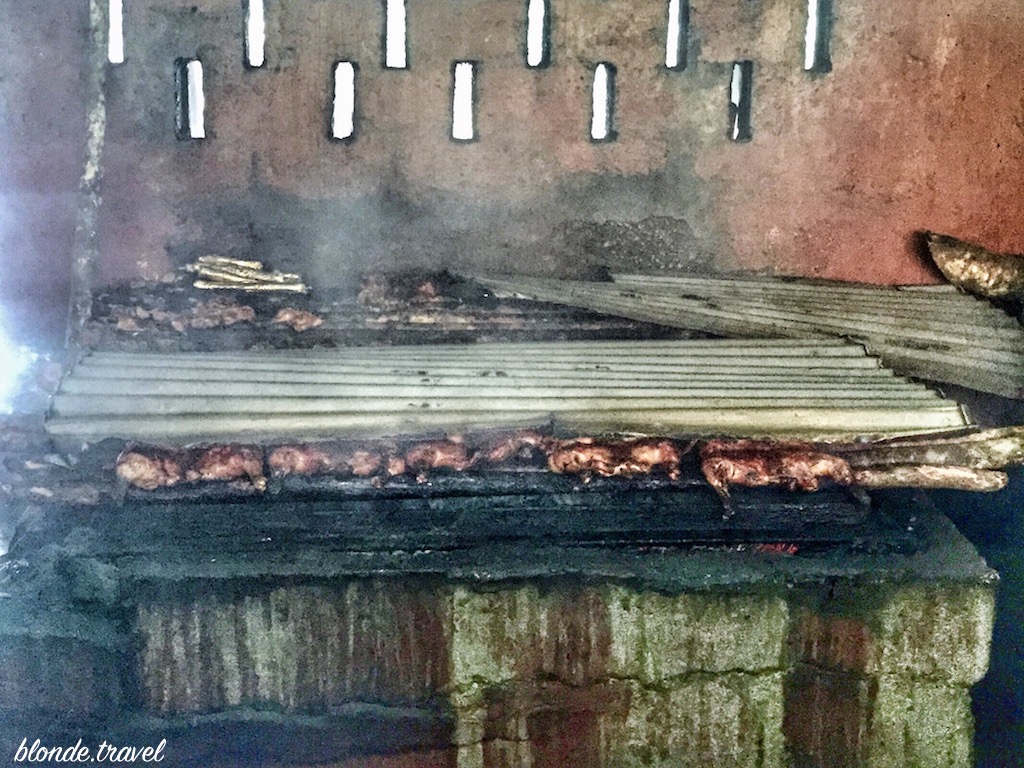
After two hours, the chicken is ready. It is removed, cut into pieces, and covered with a special sauce. Pimento berries are also used as one of the seasonings in the marinade. The greatest secret lies in this distinctive marinade, in which the meat rests before cooking. It gives the meat a complex sweet and spicy flavor. The ingredients are simple and can easily be found online, but Jamaica’s best-known “kings of jerk,” the Scotchies restaurant chain, would never reveal the secret of their unique marinade. It gives their jerk a flavor unlike any other on the island.
I did not taste jerk this extraordinarily delicious anywhere else.
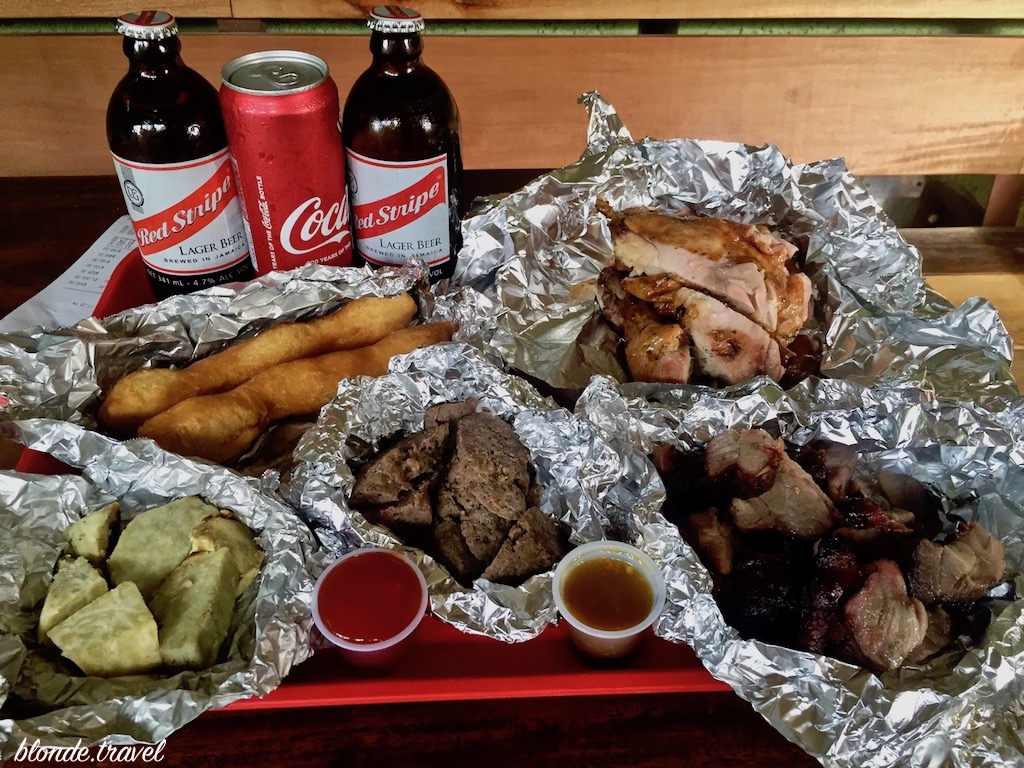
So, what did our lunch consist of? Jerk chicken, two kinds of jerk pork, baked sweet potato—which is, incidentally, a very popular side dish in Jamaica—and rich cornmeal dumplings. Jamaica’s most popular beer is Red Stripe.
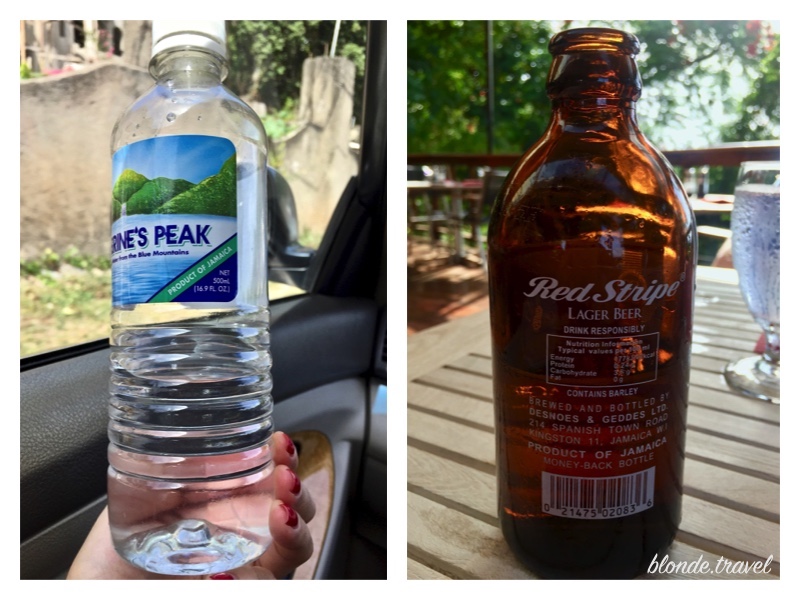
I also noticed something distinctive: Jamaicans drink local beverages and are so patriotic in their choices that bottles of beer or water carry the words “Product of Jamaica” in large letters.
Blue Mountain Coffee
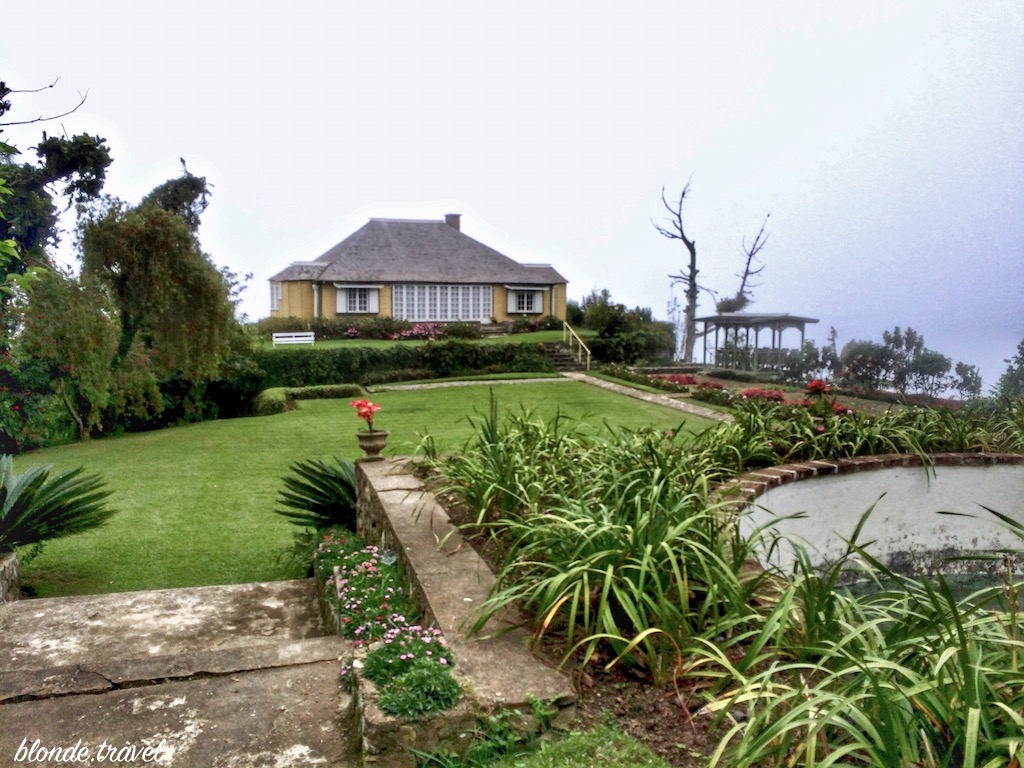
An hour’s drive from Kingston lie Jamaica’s astonishingly beautiful Blue Mountains. I shared my admiration for them while writing about the hotel Strawberry Hill.
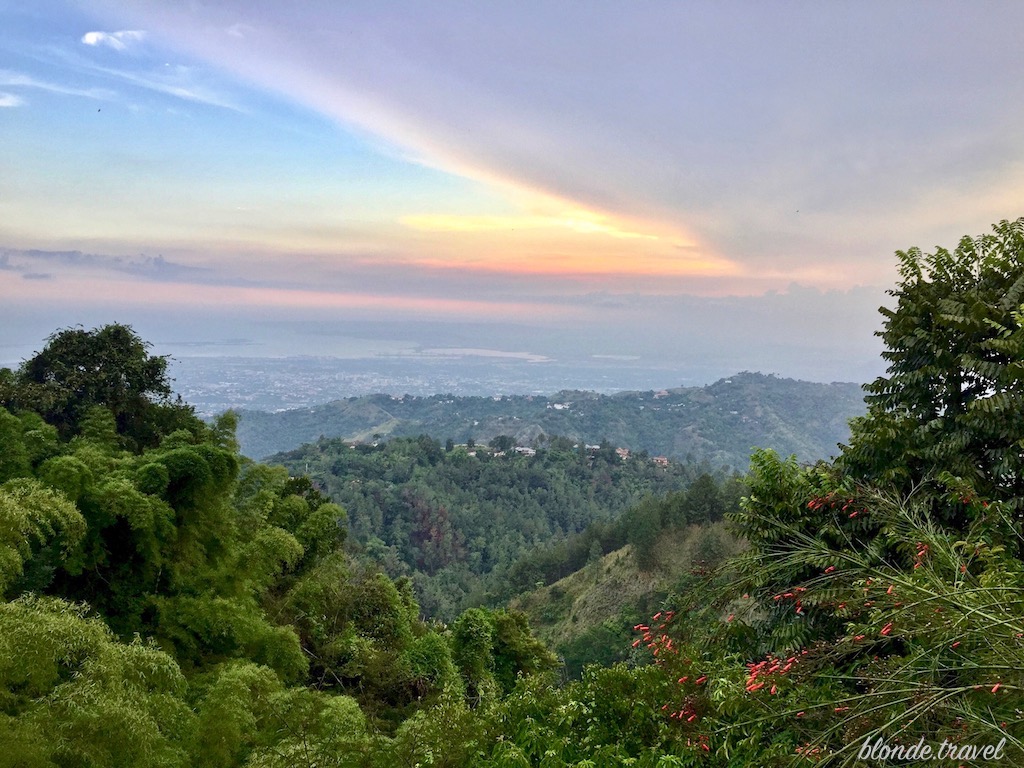
It is hardly surprising that such a beautiful place became the birthplace of the famous and very expensive coffee known around the world as Blue Mountain Coffee, named after the mountains themselves.
Blue Mountain Coffee owes its origins to the French king Louis XV, who sent three coffee-tree cuttings to his colony of Martinique—another beautiful Caribbean island near Jamaica—at the beginning of the eighteenth century. Five years later, Jamaica’s governor, Sir Nicholas, received one coffee plant as a gift from the governor of Martinique.
The story of Jamaican coffee begins with that single Arabica cutting. The plantation grew and developed, and nine years later coffee was exported for the first time. That was the beginning of Jamaica’s coffee industry.
Over the course of a century, the special climate of the Blue Mountains—regular rain and mist protecting the plantations from the blazing sun—combined with soil rich in the nitrogen and phosphorus that Arabica loves to create a unique variety with a beautiful flavor and aroma.
It is no secret that people have tried to grow this variety of Arabica elsewhere around the world, but the flavor of the beans unquestionably fell short.
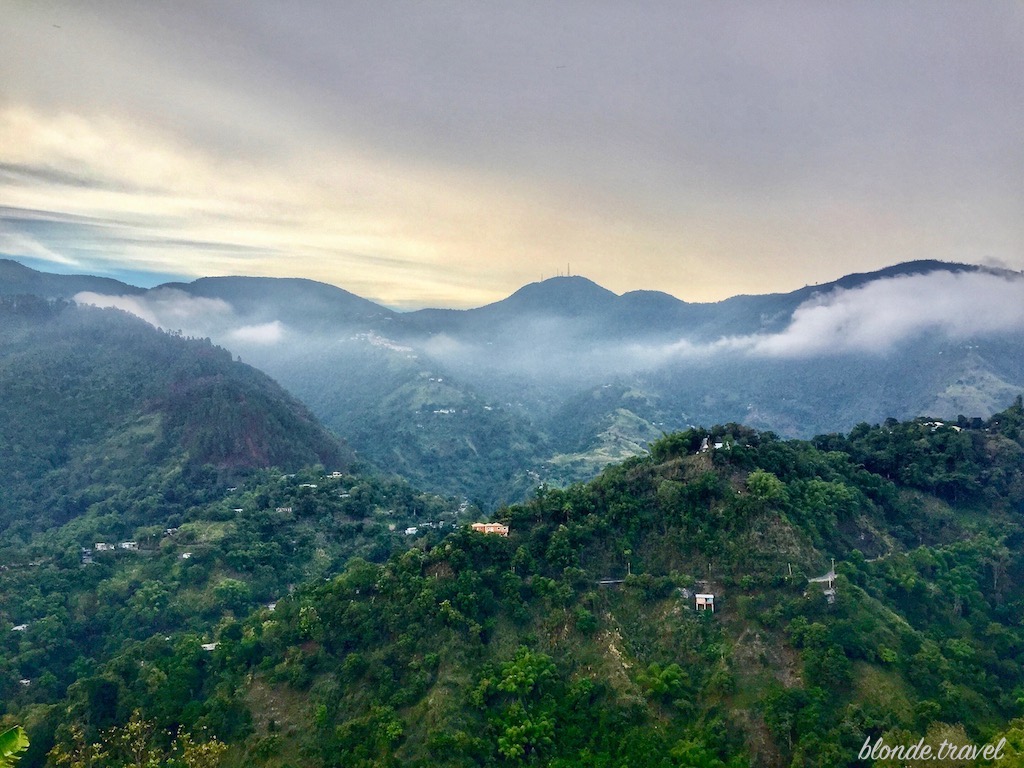
Blue Mountain is one of the world’s highest-grown coffee varieties. The Blue Mountains reach 2,250 meters, while the coffee plantations sit at 1,200 meters and above.
The coffee has a very rich and complex flavor with a pleasant hint of hazelnut, while the acidity so characteristic of coffee beans is almost imperceptible.
Many producers, of course, try to pass their coffee off as Blue Mountain. Many even give it similar names, but they have nothing in common with real coffee from the Blue Mountains.
Coffee is produced in fairly small quantities in the Blue Mountains, and about 90% of the green coffee is exported to Japan. Compared with the volume produced in Colombia, Jamaican Blue Mountain accounts for only 0.1%. It is a vivid example of quality being far more important than quantity. Today, experts recognize Blue Mountain as a luxurious, unique, and delicious coffee.
Its exclusivity and scarcity are underlined by the fact that Jamaican coffee is almost the only coffee in the world exported in special wooden barrels rather than sacks.
Jamaican Rum
The final subject in this chapter is the true drink of pirates and the principal symbol of this Caribbean island: Jamaican rum.
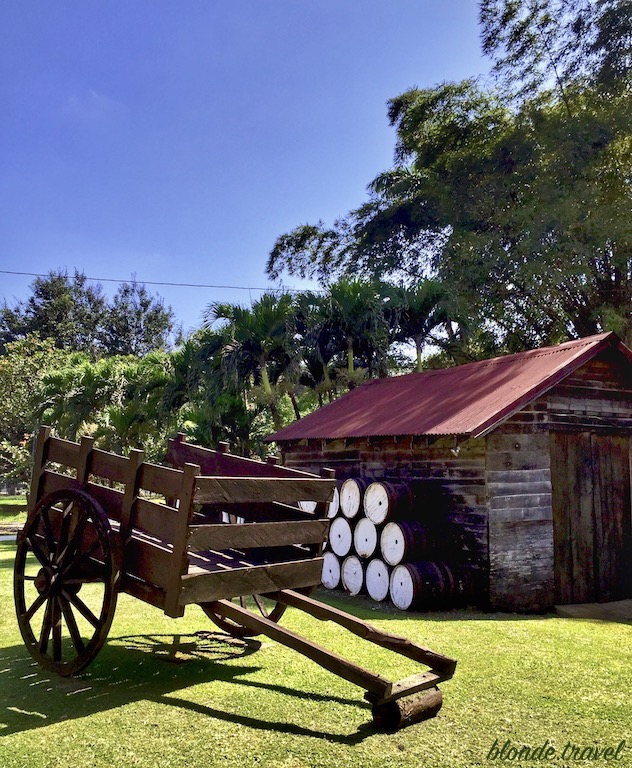
A Little Rum History
People have produced alcoholic drinks from natural ingredients such as corn, wheat, cane sugar, rye, and barley since time immemorial. England, however, was the first to make rum by fermenting sugarcane.
The word “rum” was first used in Barbados in the sixteenth century to describe a rough, intoxicating, unpleasant alcoholic drink made from cane juice. Its flavor later improved, and rum became increasingly popular.
The title of the world’s oldest rum producer therefore belongs to a distillery in Barbados. The second oldest is Jamaica’s most historic and famous estate, Appleton Estate.
Appleton Estate in Jamaica
Since 1749, Appleton rum—unique, steeped in Jamaica’s warmth and spirit, and a source of national pride—has been made with love and care according to traditions and recipes that have remained unchanged.
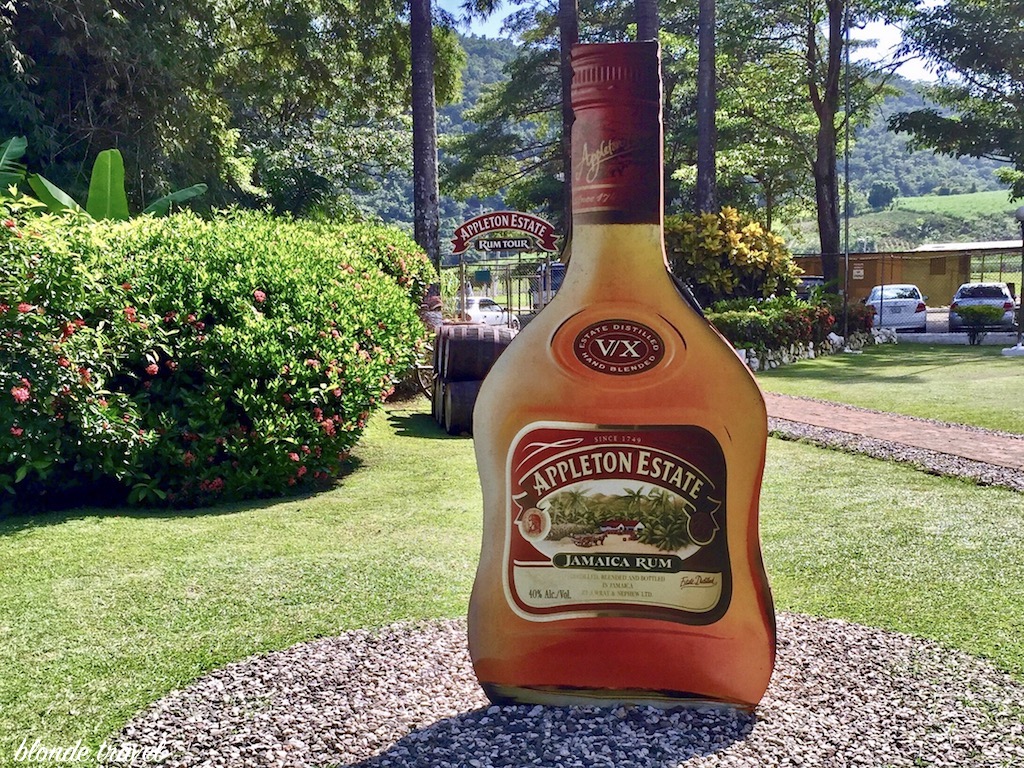
Connoisseurs of this strong drink will tell you with one voice that Jamaican rum cannot be confused with any other. Once again, this comes down to unique climatic conditions, the distinctive flavor of the sugarcane, and an ancient traditional production method.
Jamaican rum production can be divided into two categories:
- Industrial production of a relatively inexpensive drink. It is worth remembering that rum was historically widespread among poorer people; pirates drank it by the barrel, and it was considered one of the cheapest alcoholic beverages.
- Production using traditional techniques, resulting in an expensive drink intended to be enjoyed neat.
The production of quality rum naturally begins with growing sugarcane correctly, choosing particular varieties, and carefully selecting the finished crop.
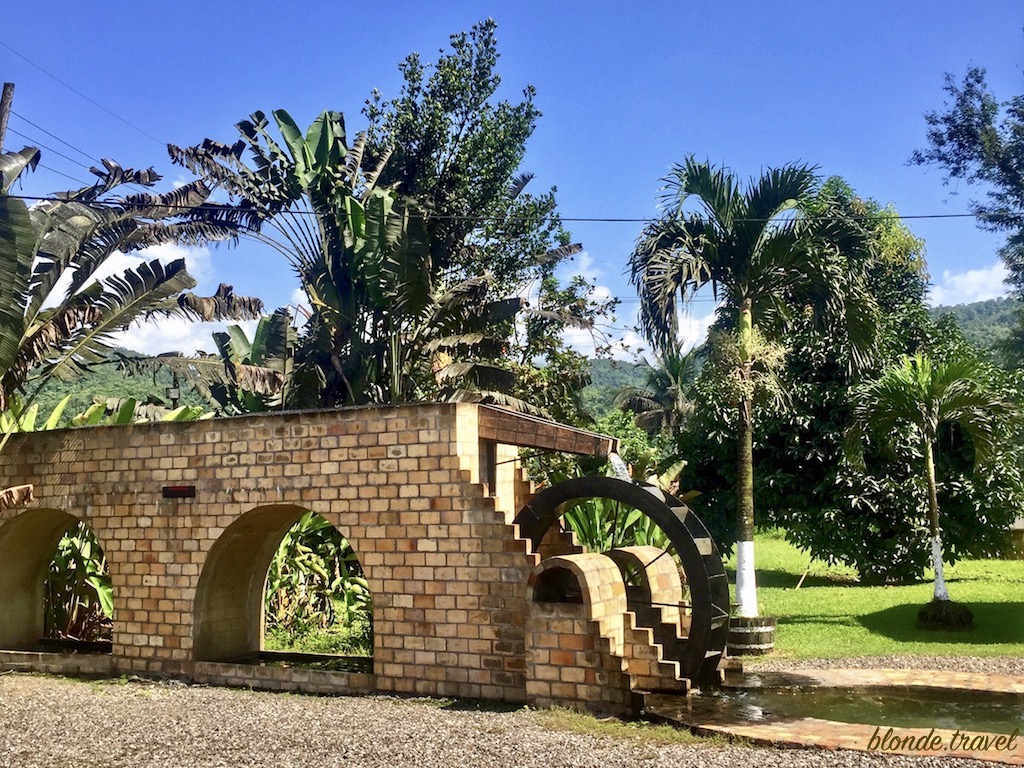
Appleton Estate lies in the picturesque Nassau Valley on both sides of the Black River, in Saint Elizabeth Parish in the southwest of the island.
The estate covers 4,500 hectares. It owns a 1,500-hectare sugarcane plantation as well as sugar-processing and rum-distilling facilities.
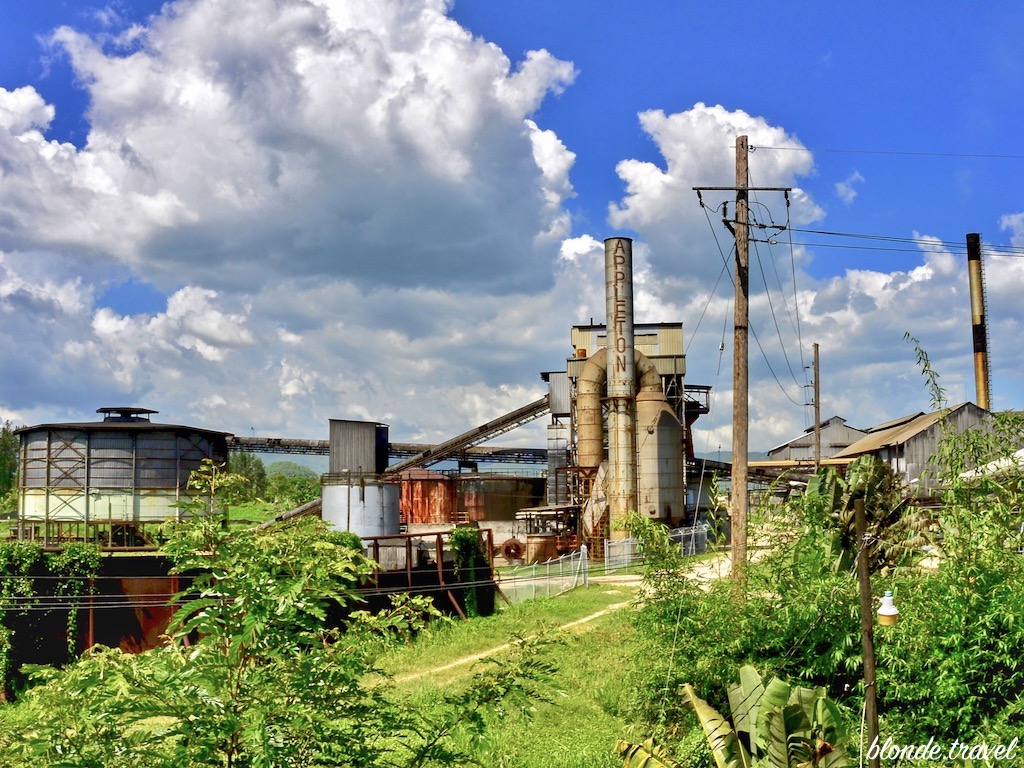
The facilities at Appleton Estate can produce up to 160 tonnes of sugar a day and as much as 10 million liters of rum a year.
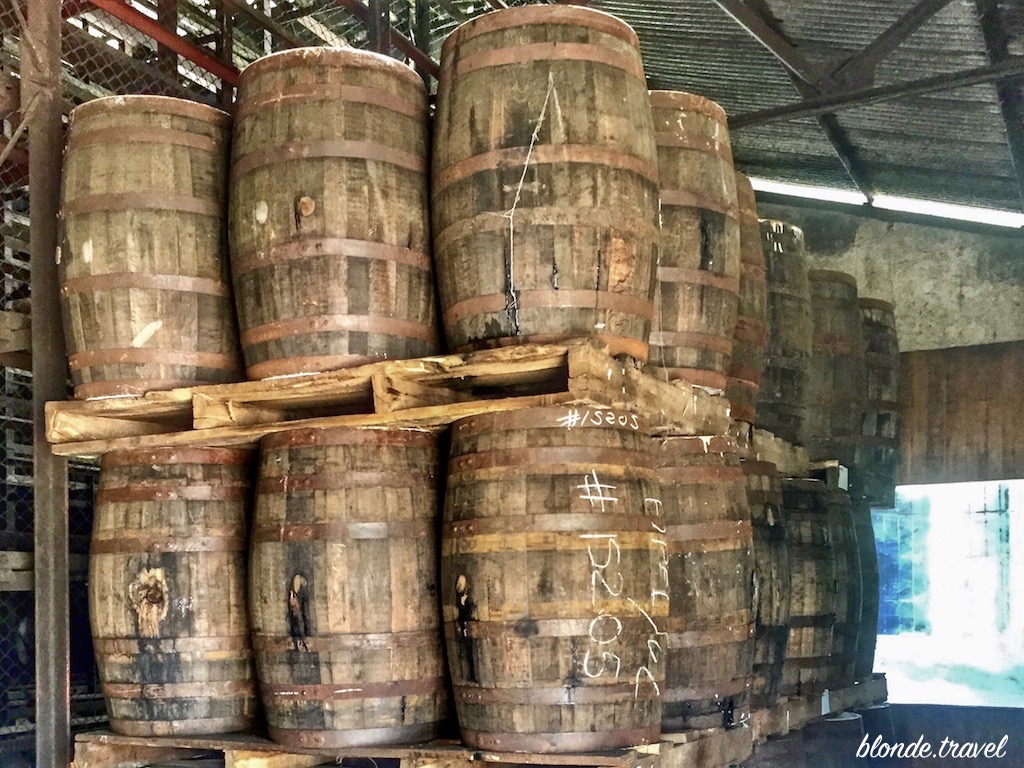
Appleton rum is aged in 151-liter American oak barrels. The wood gives the drink a beautiful bouquet of aromas.
During the Second World War, when whisky was difficult to find, a rum was needed that could replace it in both quality and flavor. Appleton Estate Special was created for that purpose. It fully met expectations and remains popular to this day.
Jamaica and Rum: Interesting Facts
- Today, Jamaica produces more varieties of rum than any other country in the world.
- Production volume is about 50 million liters a year.
- Jamaican rum is now sold in more than 70 countries around the world.
- The world’s most expensive rum was produced in Jamaica: a 750 ml bottle of 50-year-old Appleton Estate costs about $4,000.
- In the middle of the sixteenth century, the whisky ration issued to Royal Navy sailors was replaced with rum.