
The Inn at Dos Brisas seemed to have everything we wanted from a Texas ranch: horses, good food, a fireplace in the room and something interesting to learn between rides. There was a cooking class, an organic farm and more than enough countryside to lose ourselves in. Finding all of this at a Relais & Châteaux property made the decision easy.
Choosing a hotel is one of my favourite parts of planning a journey. Hotels belong to the history of cities: places of intrigue and encounters, where decisions have reached far beyond the room in which they were made. They can give you a view of a great monument, a hippopotamus coming ashore beside an African lodge, or the chance to be inside Machu Picchu at seven in the morning. At breakfast in a grand hotel, you may even glimpse the people who run the country.
The right hotel can convey the character of a place better than a succession of sights and museums. Its position, its food and its daily habits can bring a whole city or landscape into focus. I love the ones that seem to know the secrets of their surroundings.
Some hotel names have become familiar through experience, and I approach them with a fairly good idea of how much pleasure to expect. Usually, quite an unreasonable amount. Within a few rooms or a few hectares, they manage to gather the food, customs, beauty and small details of local life that I have travelled to discover.
Relais & Châteaux, the association of independent hotels and restaurants, had become a particular favourite. After stays that included Eolo in Patagonia, I had come to expect a close relationship between the hotel, its setting and its kitchen. Dos Brisas, on a ranch near Chappell Hill, looked like another happy discovery.
I would have given the setting the highest mark on any scale. How anyone finds a place like this in the vastness of Texas, I do not know. The hotel itself was a more complicated story.
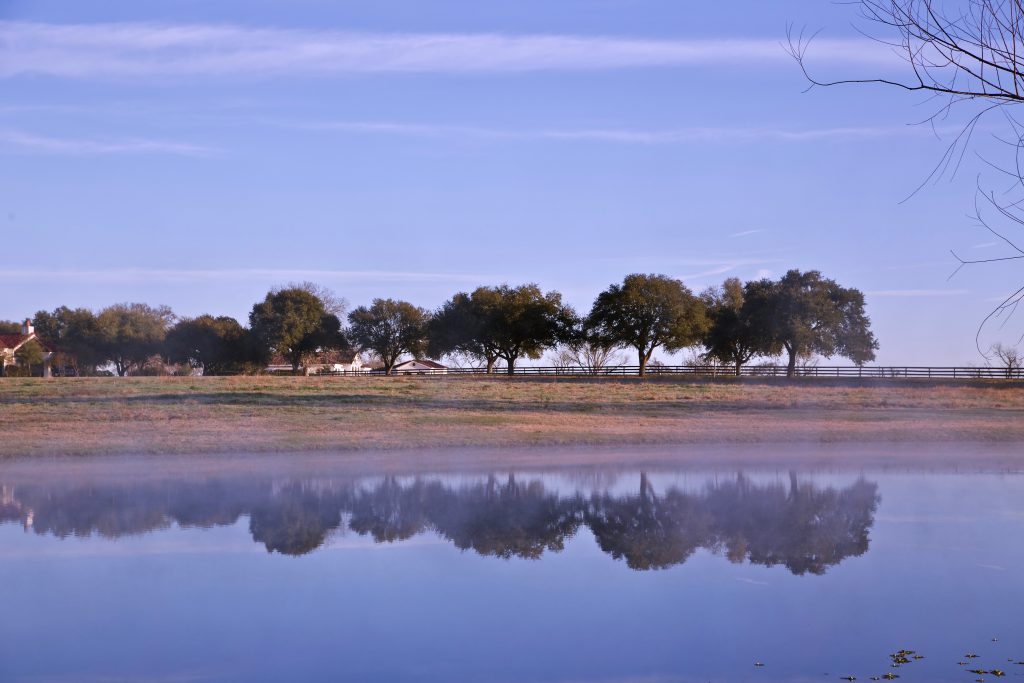
A ranch near Chappell Hill
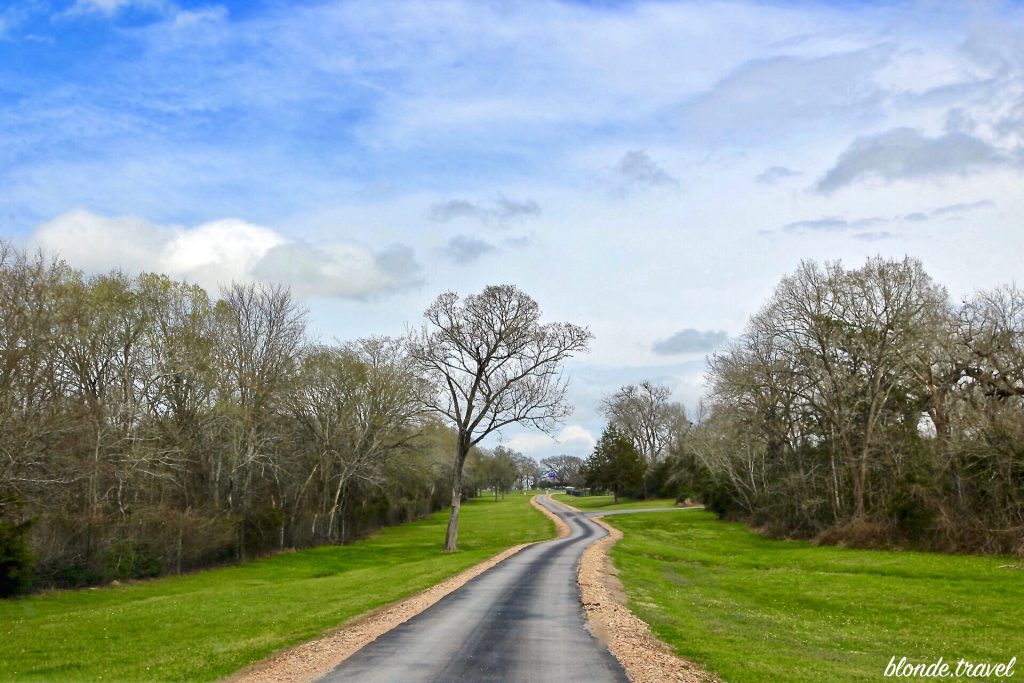
We drove out of central Houston and left the main highway about an hour later. The smaller road wound past village houses, green pastures and stretches of pine woodland, dipping out of sight and reappearing ahead. After another fifteen minutes, the ranch gates appeared on our left.
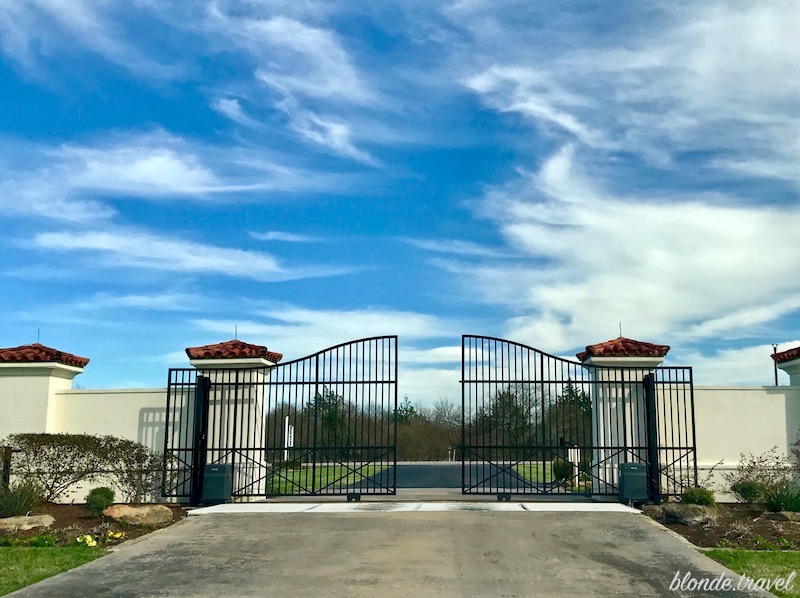
Dos Brisas occupied 313 acres north of Chappell Hill, in the countryside between Houston and Austin. Brenham was roughly fifteen minutes away by car. This was a place to explore with a car, then return to the quiet of the ranch.
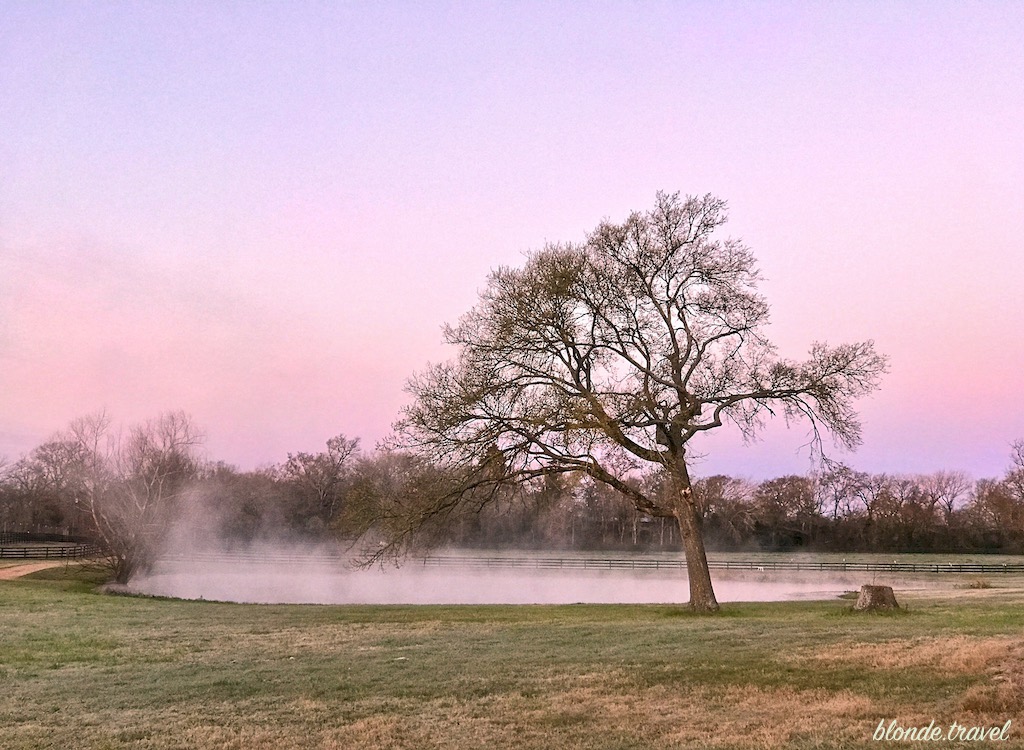
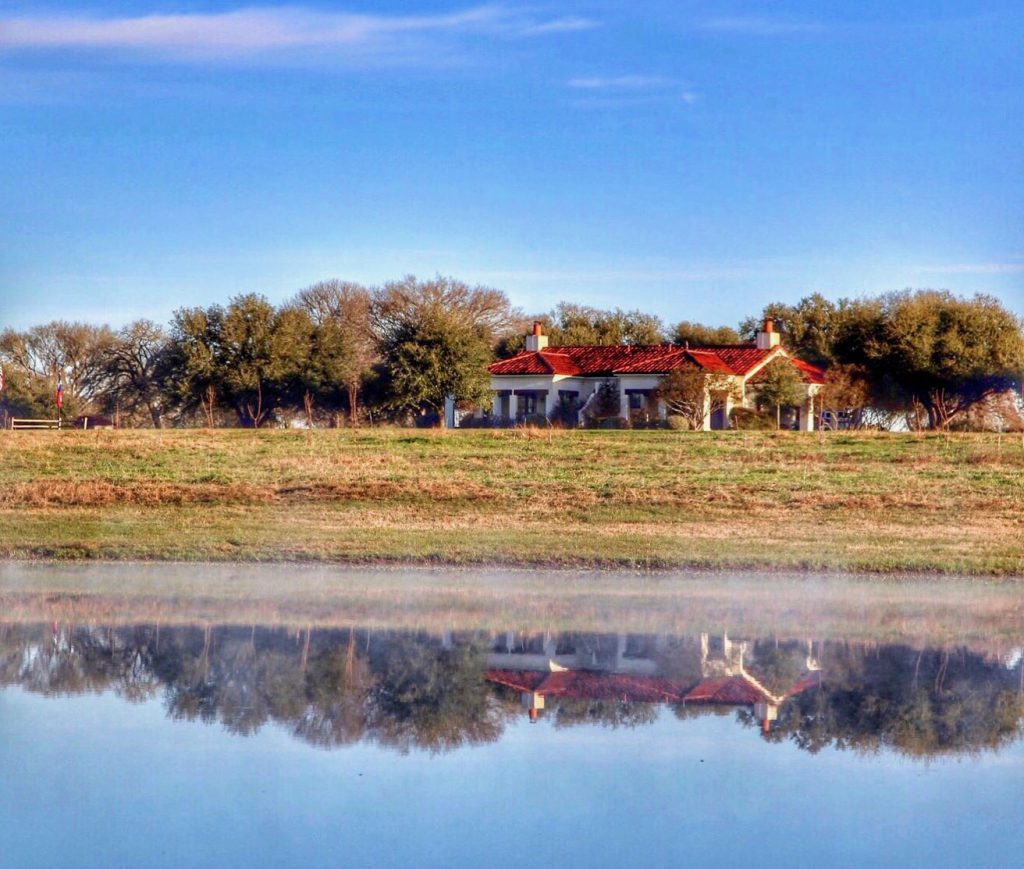
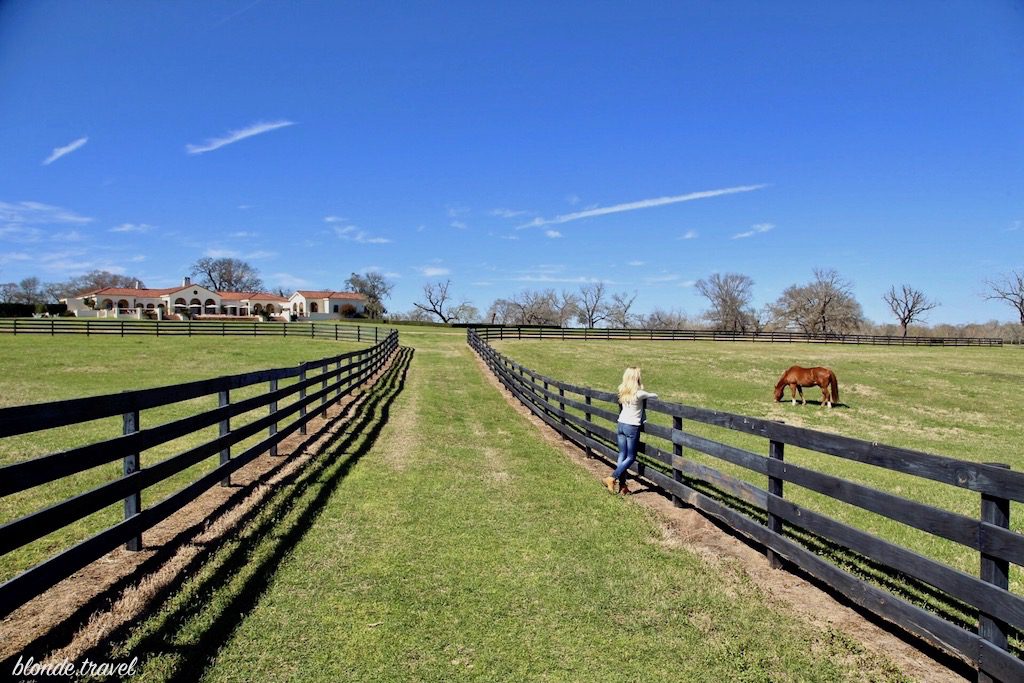
Beyond the gate, a narrow, well-kept drive led through the grounds. There were horses in the fields, ponds, picnic tables beneath spreading pecan trees and Adirondack chairs placed where I would have liked to set up an easel.
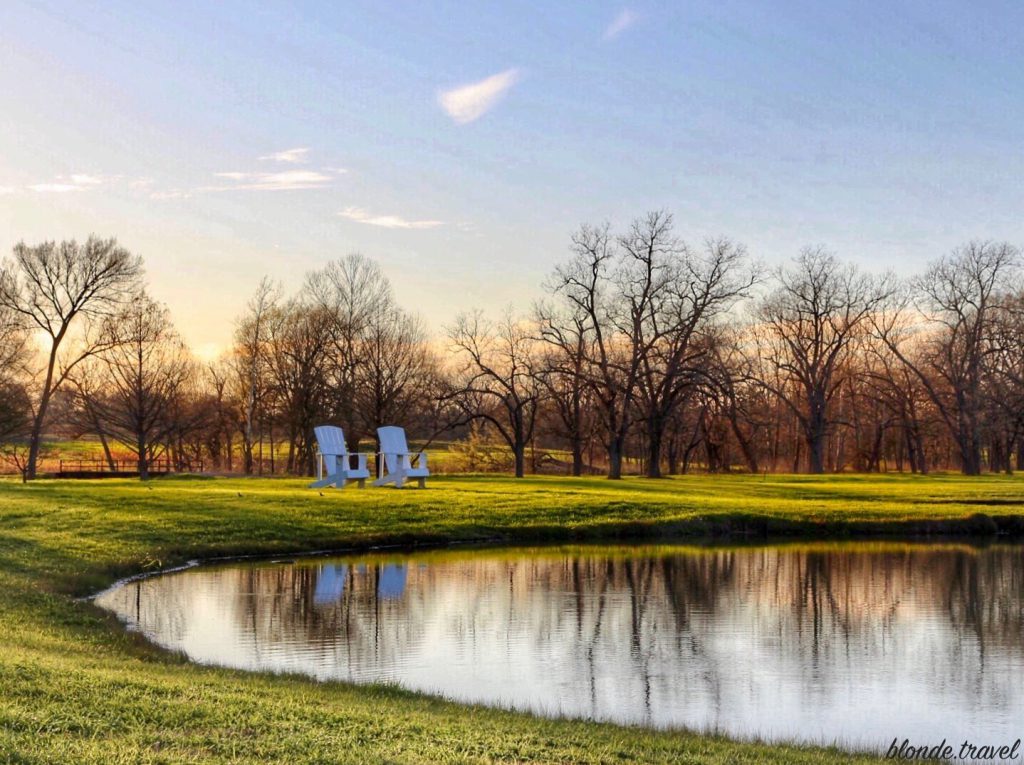
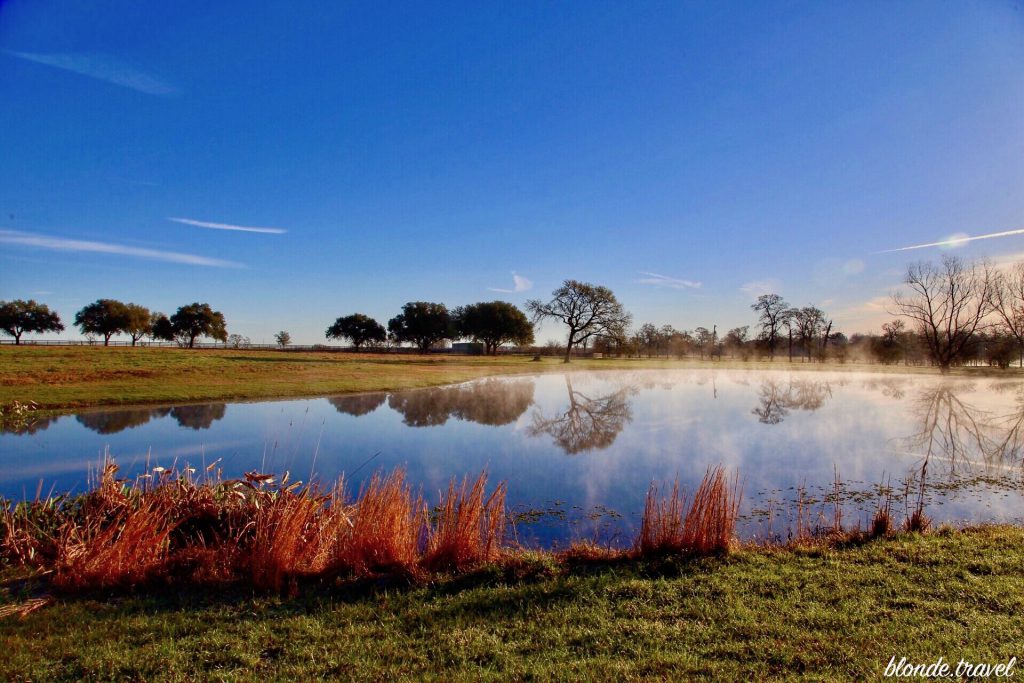
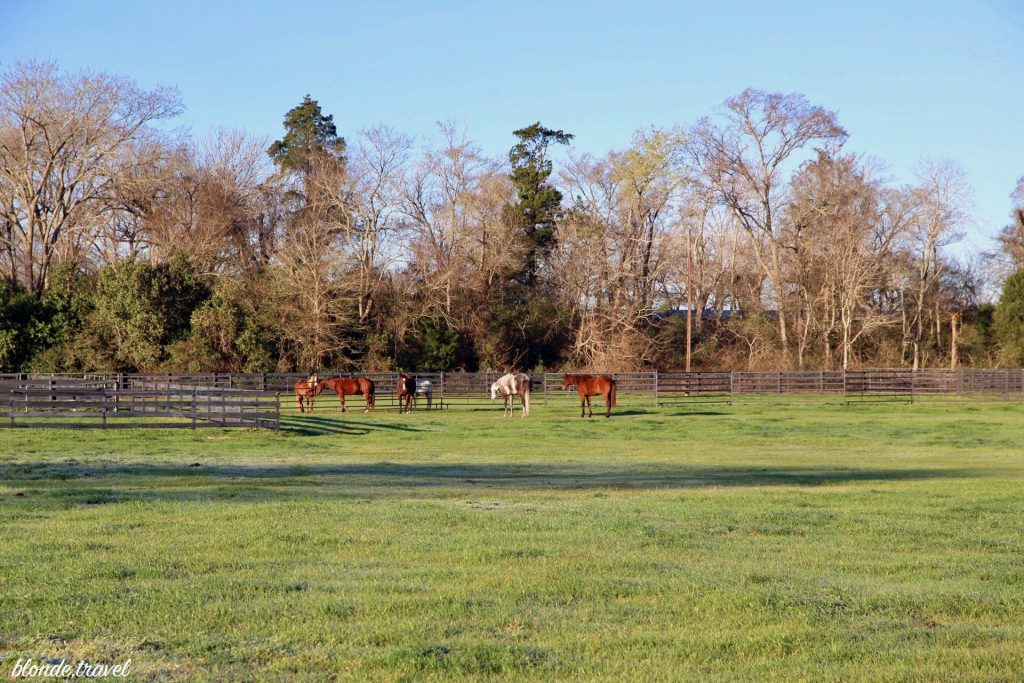
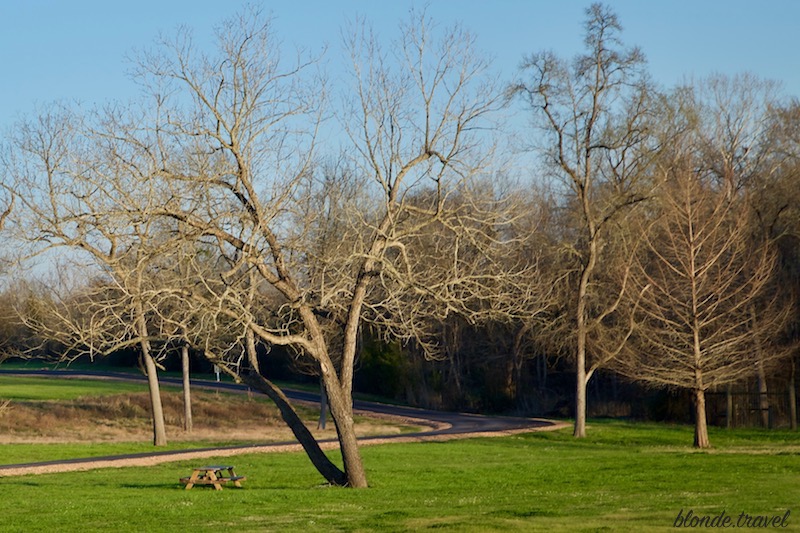
I wanted to put a warning at the entrance: you might leave part of your heart here, and acquire an incurable fondness for country life.
Our casita
The inn had four casitas, arranged in two single-storey houses with two units apiece, and five larger haciendas: single-storey villas. Nine couples, families or solo travellers could spread themselves across all that land. During our stay, only one other couple was there. Secluded? That hardly covered it.
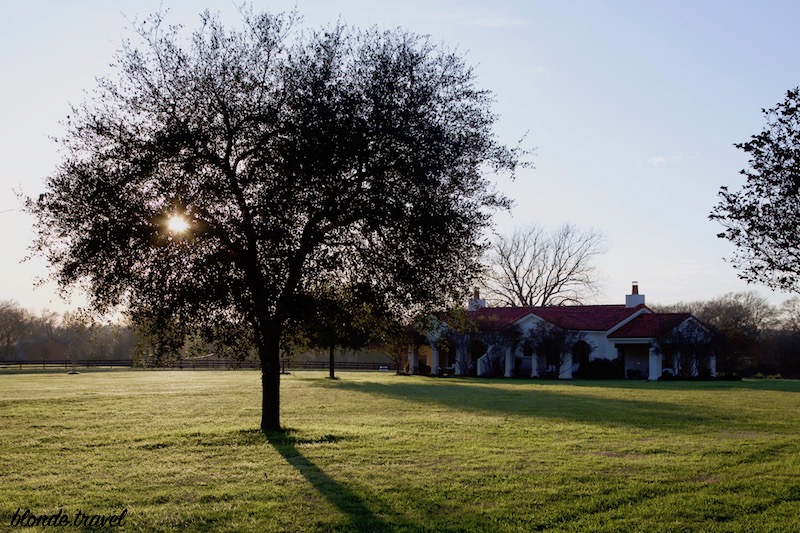
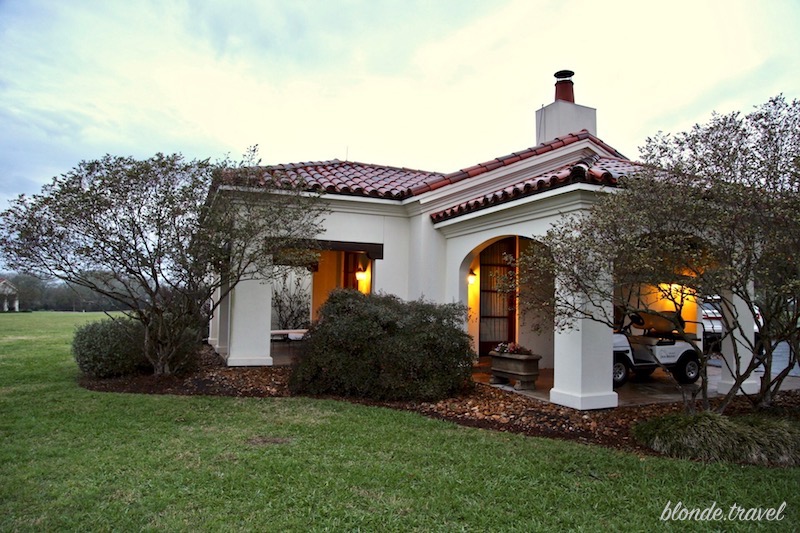
Our casita had the warmth of a Spanish Colonial country house. Arched doorways, French oak floors and a vaulted wooden ceiling gave it substance; copper tables, heavy curtains and a mahogany-framed leather sofa made it comfortable. There was room to settle in properly.
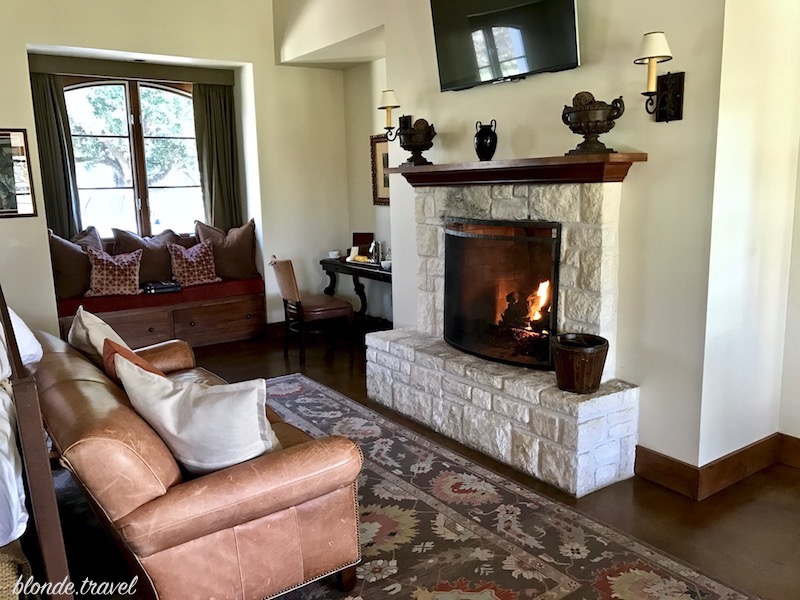
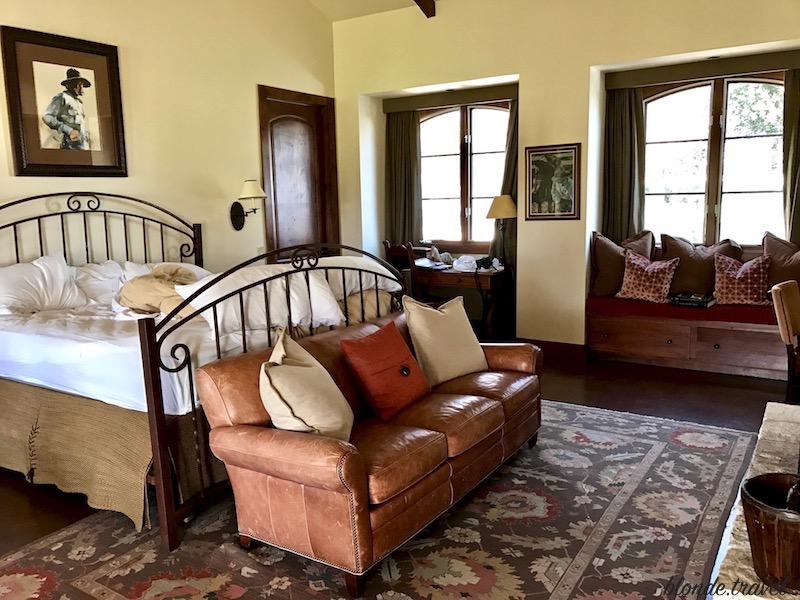
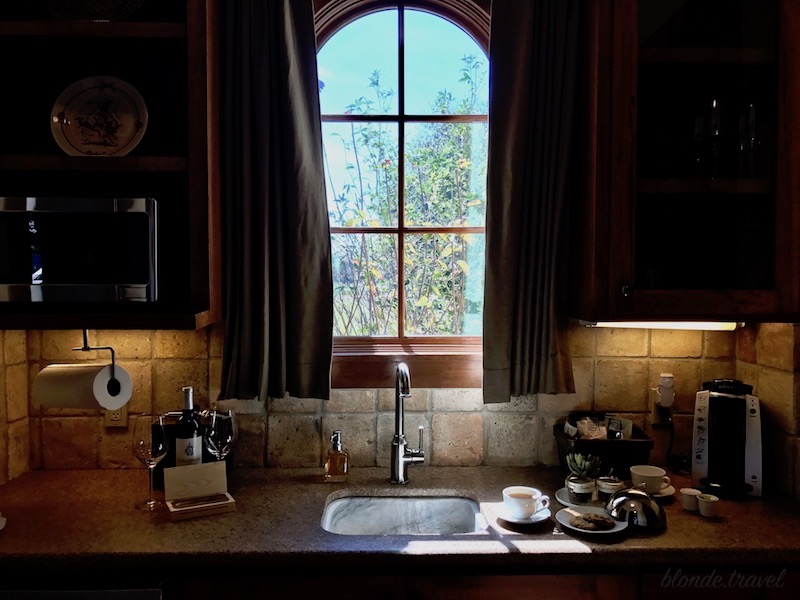
A fireplace faced the bed. The desk stood beside a window overlooking the courtyard and a broad pecan tree. A small kitchenette had what we needed for tea, coffee or a snack, including good crockery and Riedel glasses.
There was a generous walk-in wardrobe, a safe and a terrace with two loungers facing the pastures.
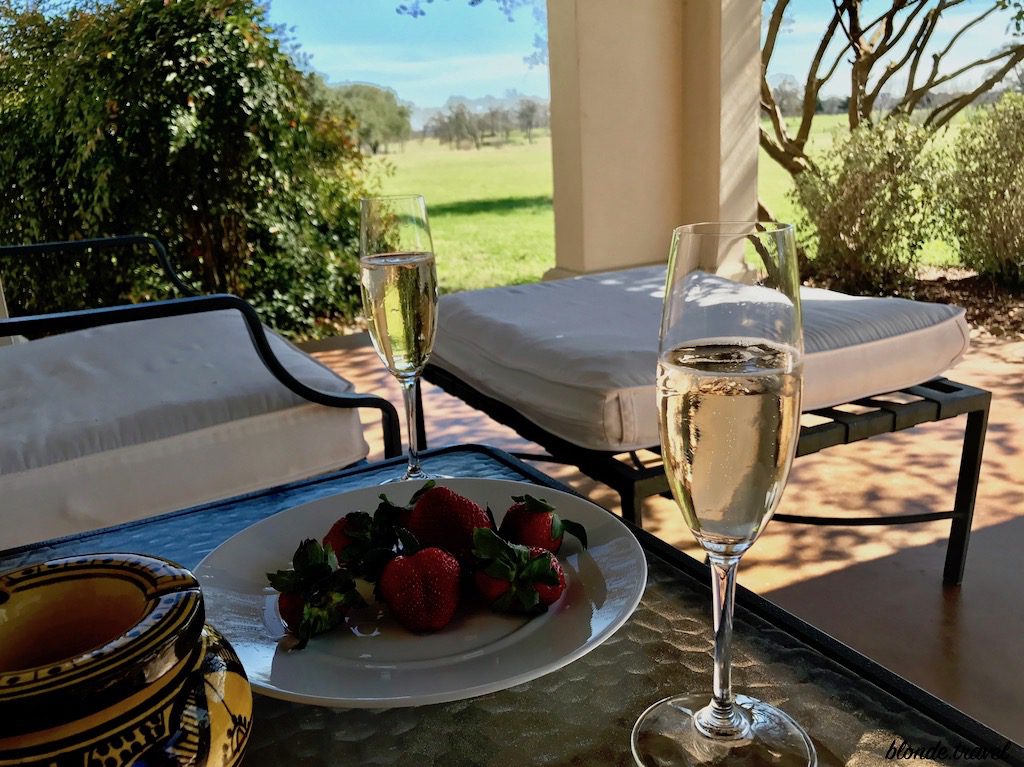
A golf cart waited outside for journeys that began to feel unnecessarily strenuous on foot, particularly after dinner.
Then I opened the bathroom door.
It seemed to belong to a different house. After the space and care of the main room, I had expected a light, generous bathroom with good fittings and perhaps a large window. Instead, everything had been squeezed into a small space, as though the bathroom had been remembered after the rest of the casita was finished.
There was neither a proper bathtub to sink into nor a separate shower. A fixed showerhead sat above a shallow tub, screened by a curtain that seemed determined to wrap itself around me. Avoiding the water overhead simply brought me closer to its damp embrace.
The toiletries were equally disappointing: soap, shampoo and body lotion in large refillable containers, with no reassuring sense of their quality. Refillable bottles can work perfectly well when their contents, scent and presentation inspire confidence. These did not. Beside the Riedel glasses in the kitchenette, they felt particularly out of place.
There was no shower cap, either. Keeping my hair dry under a showerhead that would not move became a small exercise in yoga. Eventually I asked the housekeeper for a cap; she promptly brought three.
And the fireplace, one of the reasons we had chosen the ranch, was gas, behind glass. In a country house with a chimney, surrounded by all that land. Gas. Behind glass. In a country house with a chimney, in the middle of a ranch.
Dinner, and the problem of eating there every day
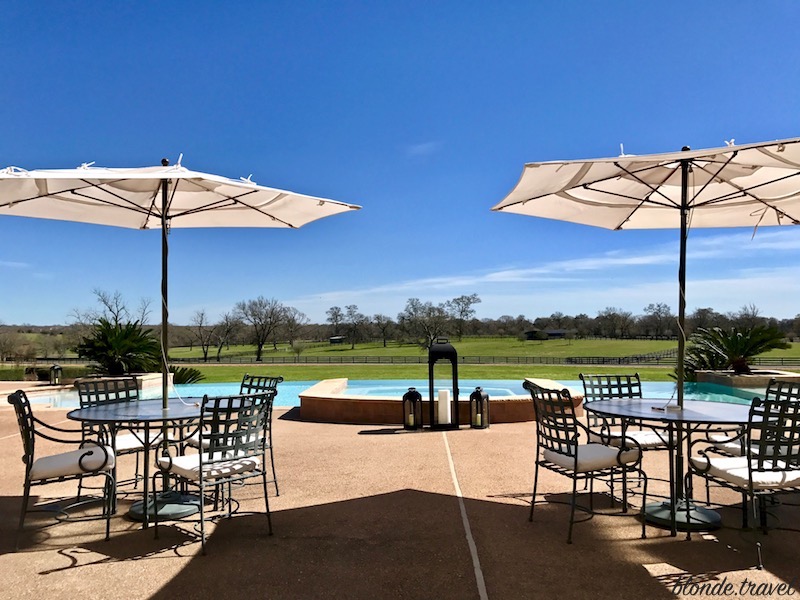
The restaurant occupied a separate building, about five minutes from our casita at an unhurried walk. Its dining room had around ten tables and an old French fireplace, described as dating from the 1760s. The terrace looked towards the swimming pool and pastures; a lounge offered large armchairs, books and board games.
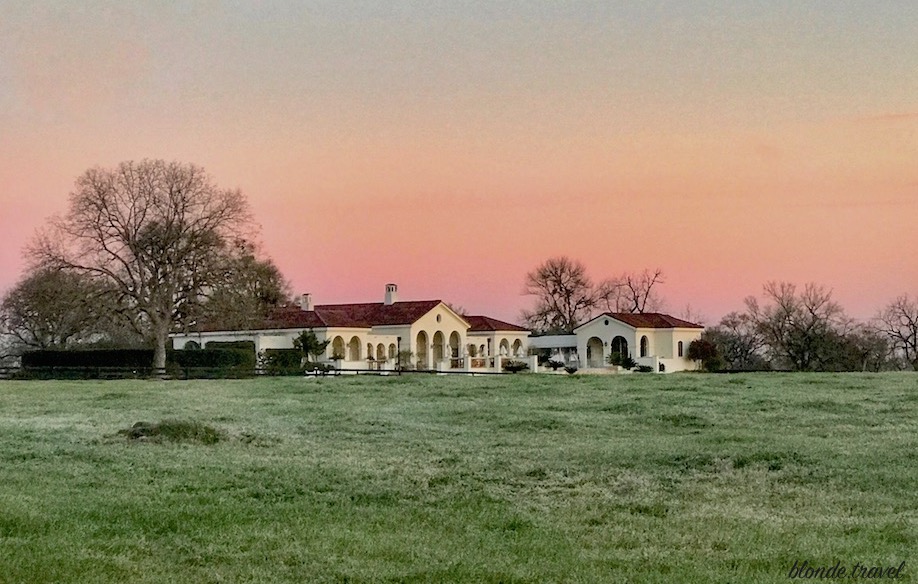
The restaurant had earned a Forbes Travel Guide Five-Star rating, an award for its dining rather than a classification of the hotel.
Our first dinner, on Valentine’s Day, was lovely. The room was welcoming, the food excellent, the wine list extensive and the service attentive. The occasion added its own pleasure.
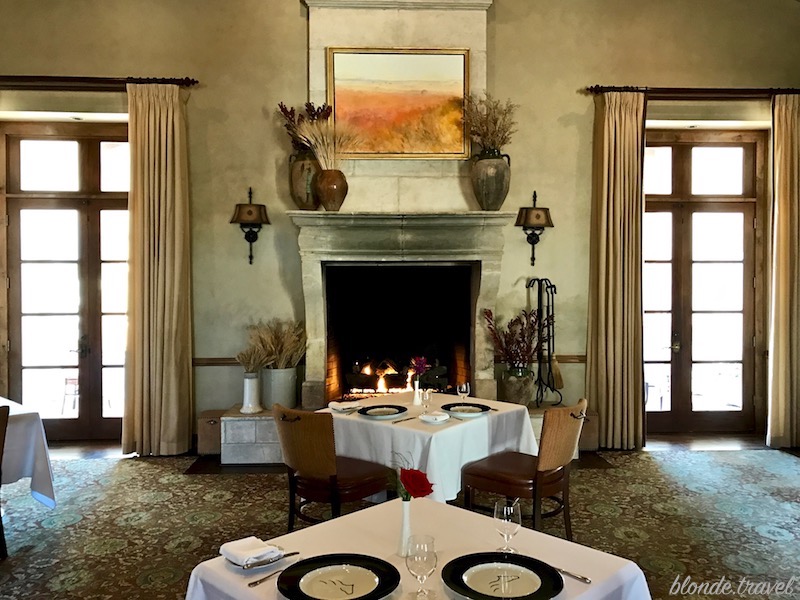
Dinner followed a fixed-price, four-course menu, with a choice within each course. Small extras from the chef brought the procession to six or eight dishes. The portions looked modest; by the end, getting up from the table required an effort.
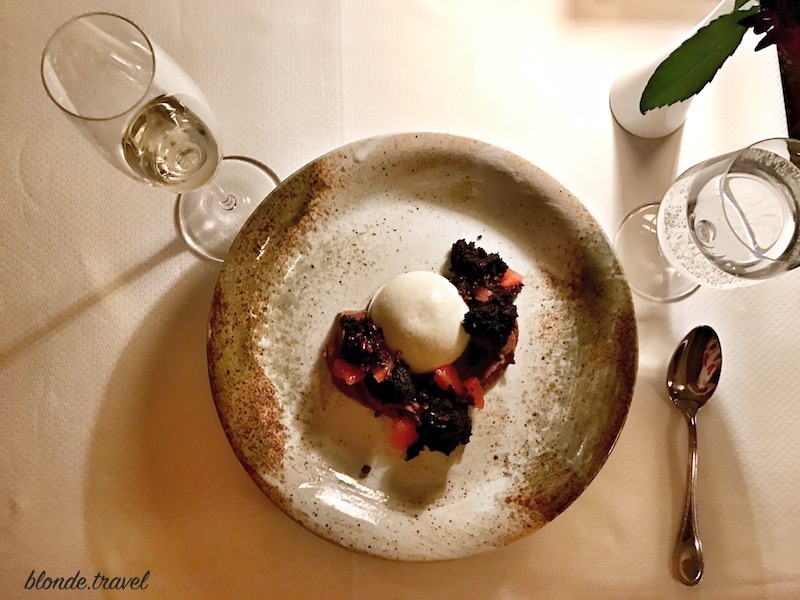
For a single evening, it worked beautifully. As a resident guest, I soon began to feel its limits.
By the third day, the same restricted choices at lunch and dinner had become tiresome. Ordering one dish did not solve the problem: it would still cost the price of the full set menu. Sometimes one good plate is all you want.
I also missed Texas. There was no barbecue or smoked brisket on the menus we were offered, despite a small smoker standing outside. From an association so closely linked to great restaurateurs, I had expected a gastronomic journey through the place we were visiting. Repeating familiar classics was a much less interesting proposition.
Even the chef’s little complimentary dishes repeated themselves. I had never encountered that before. I had always thought of those as a glimpse of the kitchen’s mood that day. Here, the mood remained Spanish gazpacho throughout our stay. It was an odd choice to keep repeating on an organic farm in Texas.
A cooking class in the restaurant kitchen
The cooking class had been an immediate choice when we looked through the activities. The chef himself would teach it in his own working kitchen. That prospect rather eclipsed everything else: a cooking class at a Relais & Châteaux property, in Texas. From the morning onwards, we were savouring the thought of how much we were going to learn.
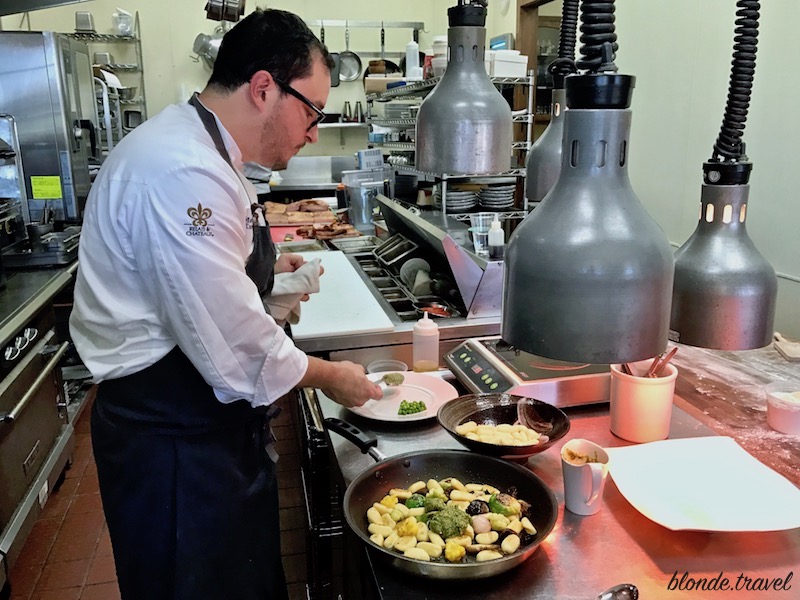
Being in that kitchen was a pleasure in itself. I loved the bustle, the enormous cooking ranges, preparation tables and refrigerators, the red lamps over the pass and, especially, the copper pans hanging overhead. Kitchens like this always draw me in.
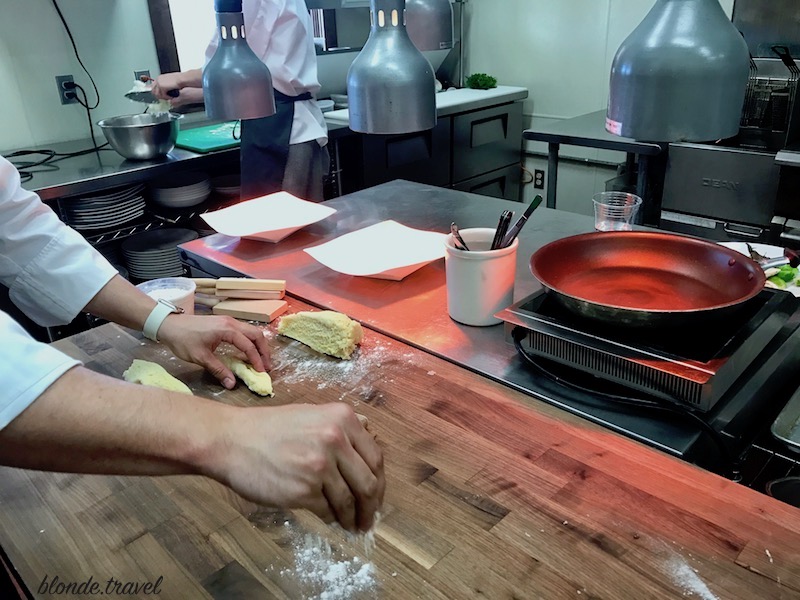
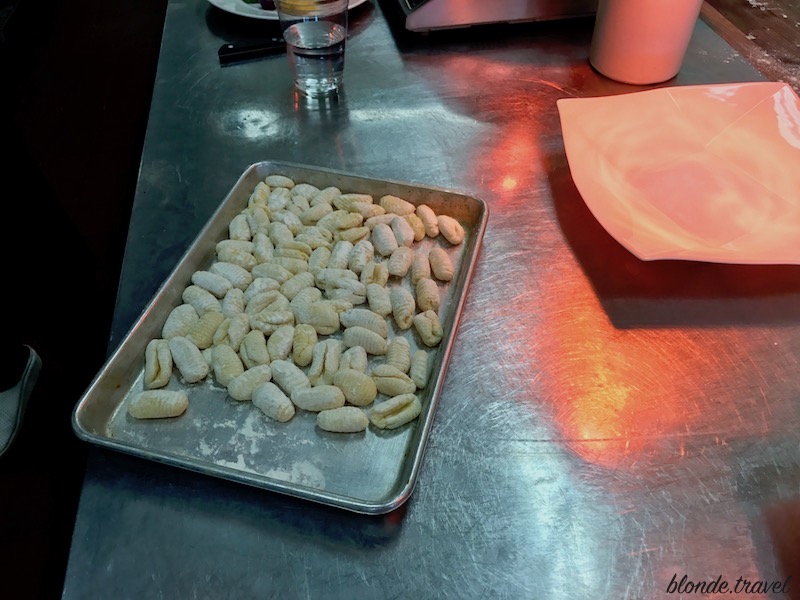
Our lesson began with a bowl containing three potatoes. We were going to make gnocchi.
Gnocchi?
I have nothing against learning to shape potatoes into a good Italian lunch. We made them, boiled them briefly—about three minutes—and finished them in a pan. They became our lunch. But I had come to Texas expecting to learn something about Texan cooking, and the large grill outside had done nothing to discourage the idea.
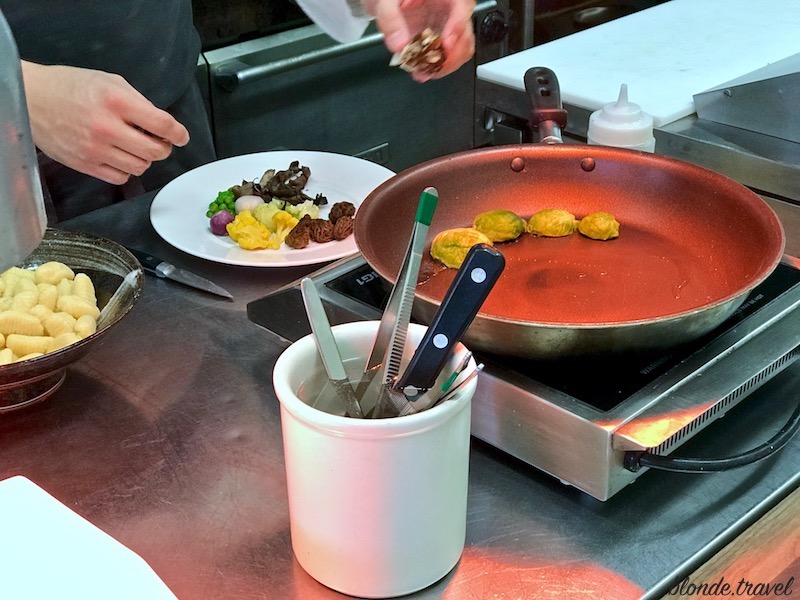
Barbecue, smoked brisket, sausages, chicken, meat cooked over a fire: there was so much I wanted to understand. The choice was so strange that I wondered whether the chef had only just learnt a class was scheduled, or had decided to show us something quickly and get it over with.
The pleasure of entering the kitchen was real. But as a cooking class, this was a resounding disappointment. Wanting to learn something about Texan food in Texas hardly seemed an unreasonable expectation, especially here.
Horses everywhere, but very little riding
We often travel for the pleasure of riding an unfamiliar horse through a beautiful place. Judging by the number of companies organising riding holidays around the world, we are not the only people with this particular madness.
Riding was one of our main reasons for choosing Dos Brisas. The standard outing was an hour-long circuit of the ranch, a fine way to see the grounds and the countryside. And what would Texas be without horses?
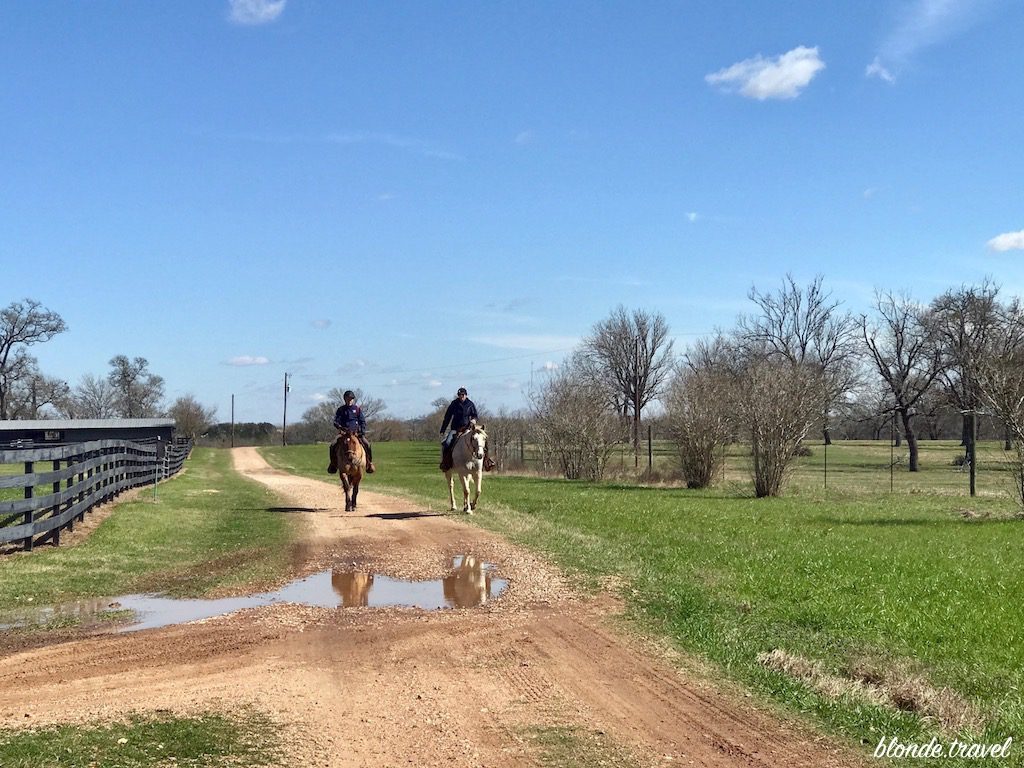
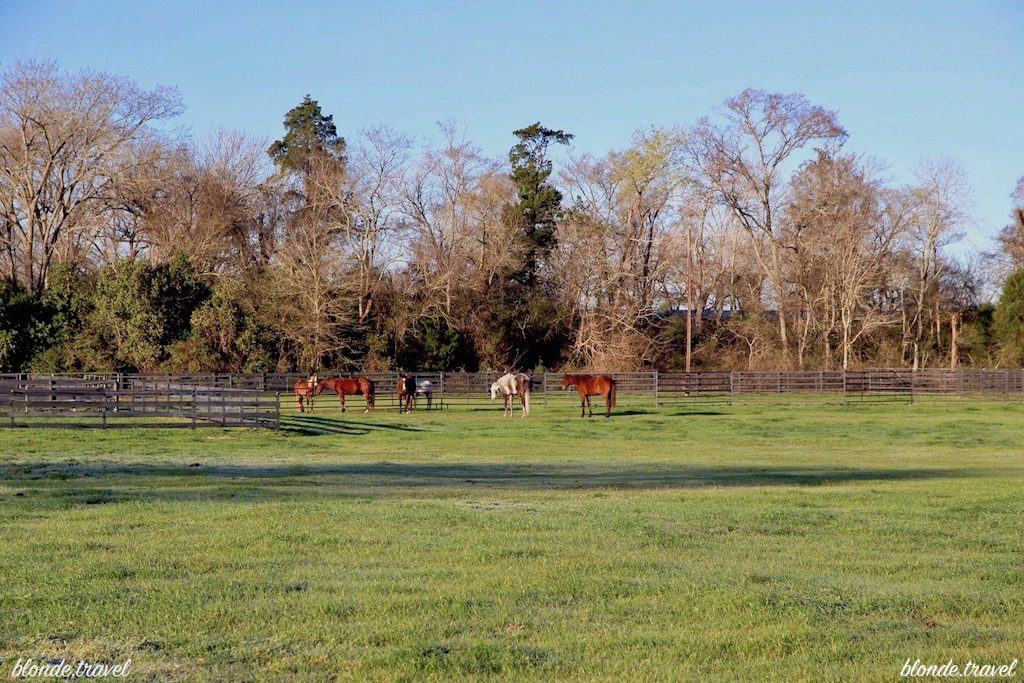
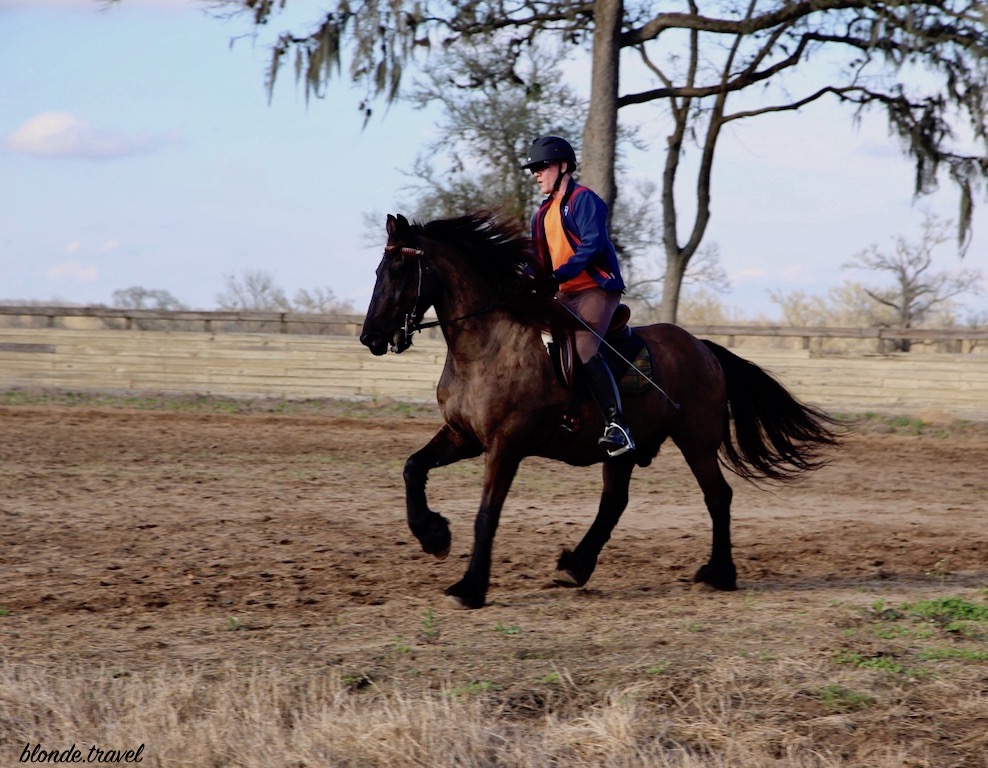
At first, the equestrian centre looked like everything we had hoped for. There were more than thirty handsome, beautifully cared-for horses, among them a Percheron gelding, a Belgian, amusing ponies and a black Friesian I could hardly take my eyes off. Twelve of the horses were described as prizewinners. Seeing such a collection made us very happy indeed.
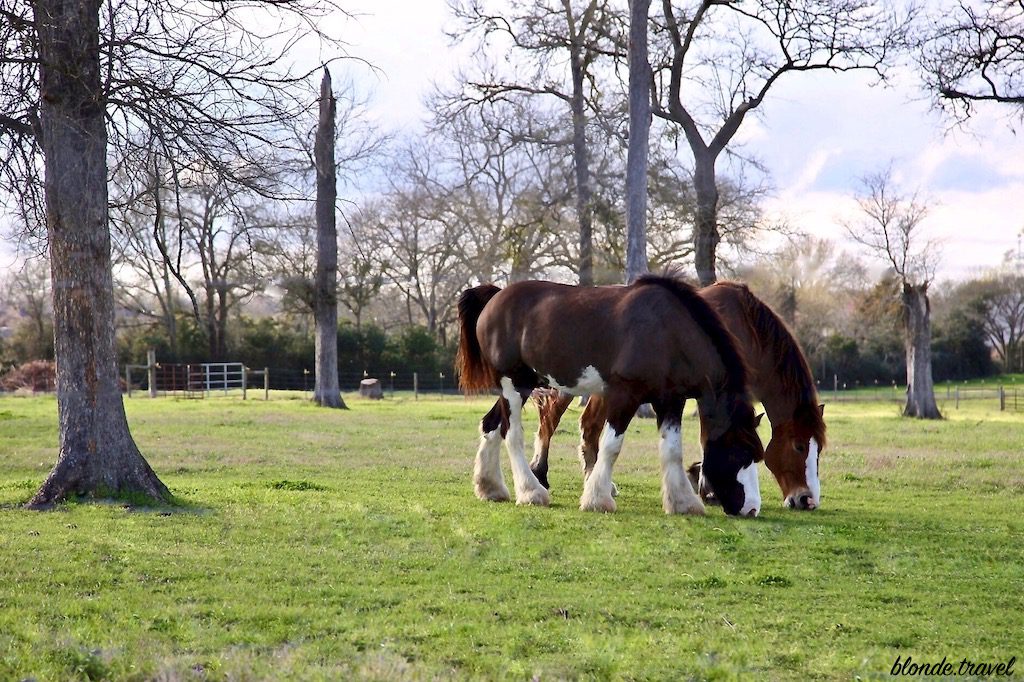
The ranch also had a vast covered arena, described by Equestrian Living as the second-largest privately owned indoor riding arena in Texas. Rain and bad weather need not have stopped the riding. There were carriage rides for those who preferred not to be in the saddle. It looked like a paradise for anyone who loved horses.
Perhaps endurance riding in Burgundy and a Big Five riding safari in South Africa had set our expectations rather high. But tell me what you picture when someone says Texas. I picture cowboys. Horses are inseparable from the place in my imagination.
Now add a hotel from one of my favourite associations, Relais & Châteaux, on a Texan ranch with champion horses, its own covered arena and someone whose actual job title was hotel equestrian director. The anticipation alone was almost enough to give a horse lover palpitations. I was going to have a wonderful time.
We packed our favourite helmets, boots, riding clothes, a crop, gloves and even spurs, just in case. We also wrote to the hotel straight away: one of us was an experienced rider, obsessed with horses, and wanted to ride as much as possible on every day of our stay.
The rather curt answer was, “Write to us two weeks before you arrive.” It did not cool our enthusiasm. Two weeks before arrival, we sent the same message again. This time I was told that everyone was expecting me and everything was fine.
The disappointment was brutal.
On the first morning, we were fastening our boots and looking towards the beautiful paddocks and smooth green pastures. It had never occurred to us that, in country seemingly made for a rider, the outing would amount to an hour of walking on horseback.
At a walk. For an hour.
That does rather take the edge off the excitement.
I tried to ask our guide whether the concierge had explained that this was far from my first encounter with a horse. Unfortunately, I had mentioned my interest in show jumping. Her endless questions about it left me no chance to get an answer to my own question.
We realised that our three planned outings would all be identical walking tours of this magnificent ranch. Surrounded by such horses and such country, yet unable to enjoy the riding I had come for, I felt rather like a eunuch in a sultan’s harem. Frustrating would be putting it mildly.
We did not go on one of the rides, and the money was not refunded. Their right. But why did a no-show also attract sales tax and the hotel’s “Inn Service Charge”? A service charge on a ride we had not taken. Seriously?
The farm and rose garden in February
The farm, close to the restaurant, supplied herbs and organic vegetables to the kitchen. The hotel offered a tour of the growing beds, which was just the sort of thing I wanted to do. That connection was one of the things I liked most about Dos Brisas. Freshly picked vegetables, fragrant herbs, edible flowers and crisp shoots can make a plate interesting before a chef does very much to it.
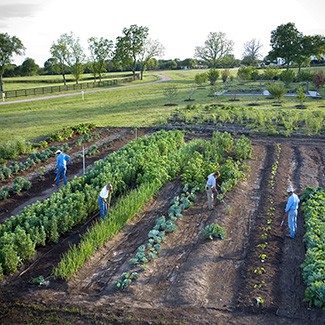
During our cooking class, I noticed unfamiliar greens with a flavour somewhere between rocket and watercress. At home I was always growing parsley, dill, basil and other herbs on the balcony, so the chance to look around the farm interested me enormously.
February revealed a quieter version of it. There were rows of lettuce, parsley and a few other greens, but much of the ground was resting. In summer it is a far more abundant garden. The difference was considerable.
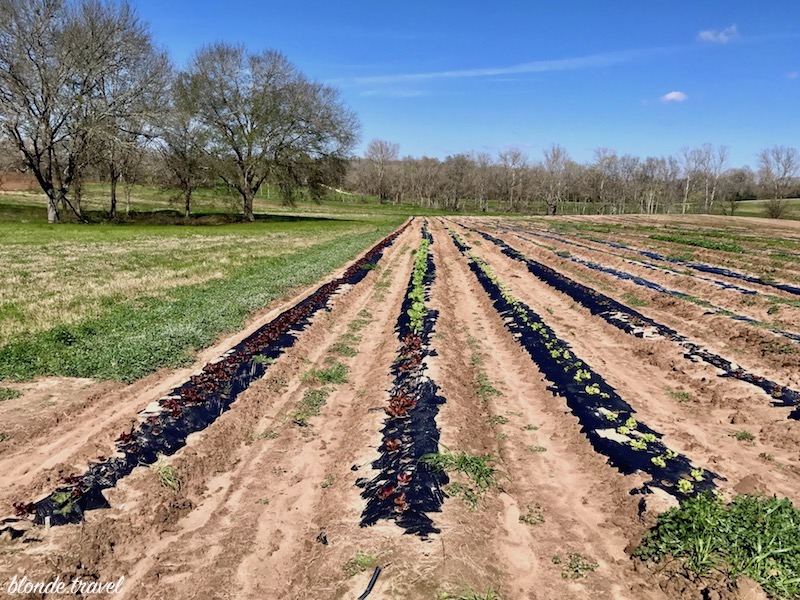
On our visit, the grass was frosted in the mornings and temperatures fell to about 6 °C. Texas was not quite the winter escape its sunshine might suggest.
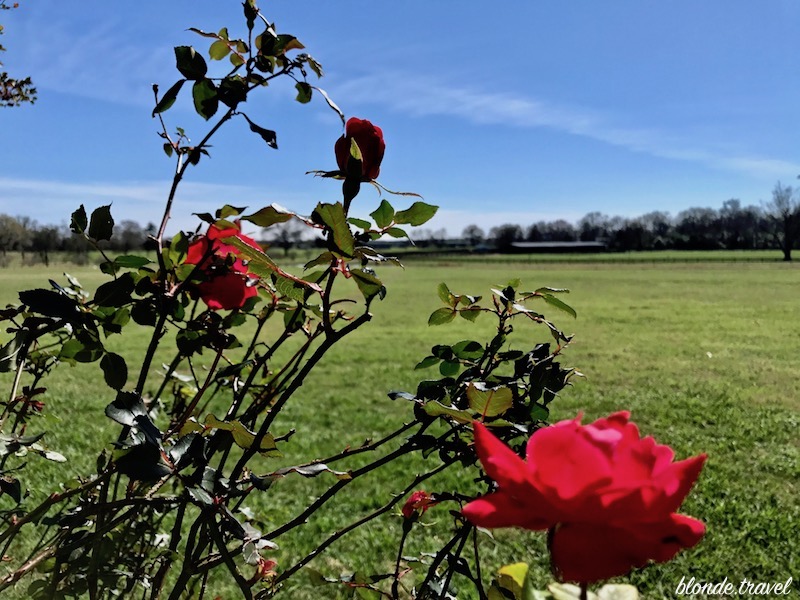
The rose garden, set a little aside behind the restaurant on the way towards the haciendas, was similarly out of season. There were already roses opening beside our casita, though. Even in February, the place gave small hints of what would follow.
The part of ranch life I loved
I most enjoyed Dos Brisas very early in the morning. In quiet countryside, there is a moment when the silence begins to fill with birds and other sounds, until what seemed completely still has become an orchestra. I love being awake for that.
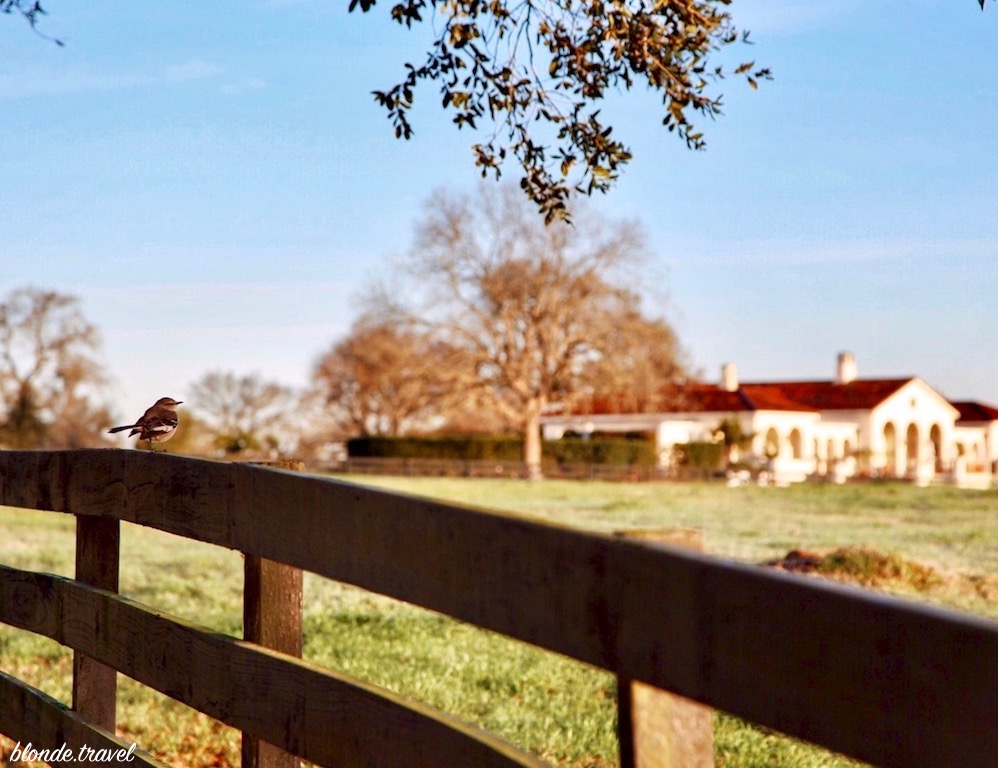
The sky changed in ways I could never quite capture in a photograph. Getting up before dawn felt like an indulgence rather than a sacrifice.
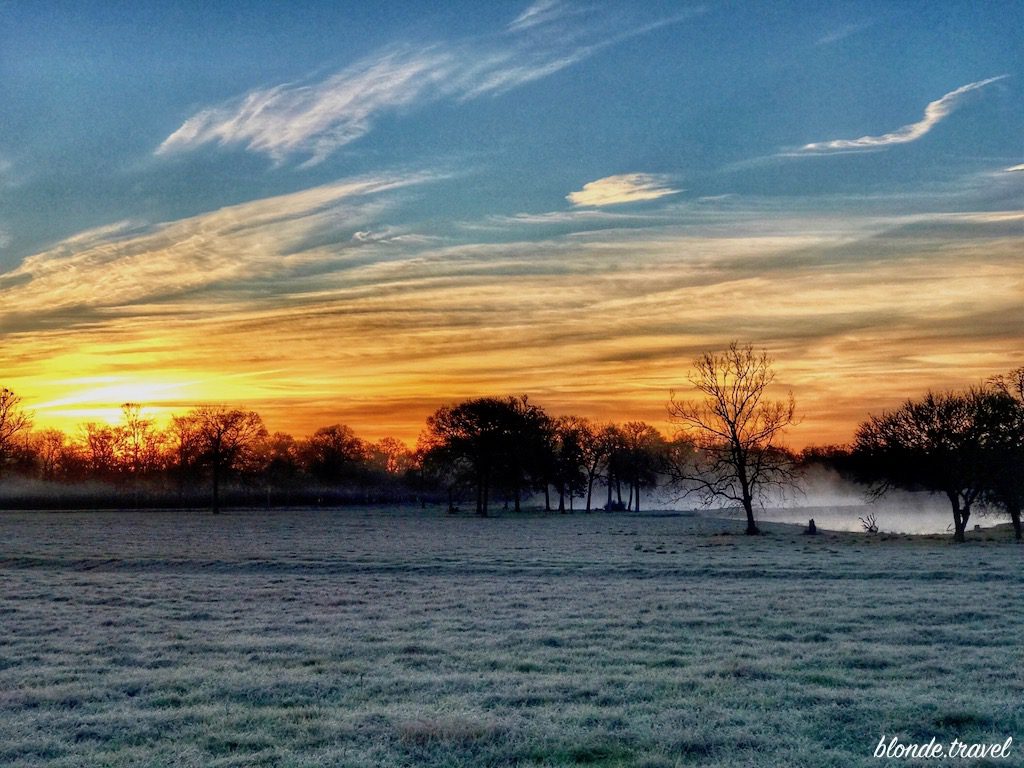
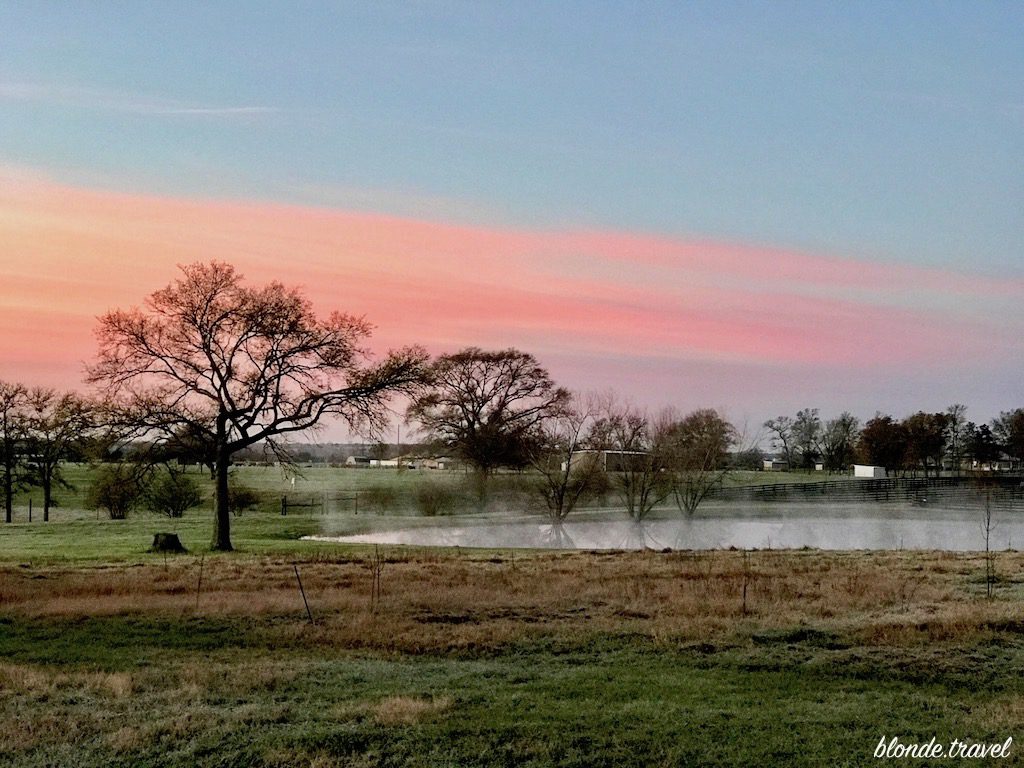
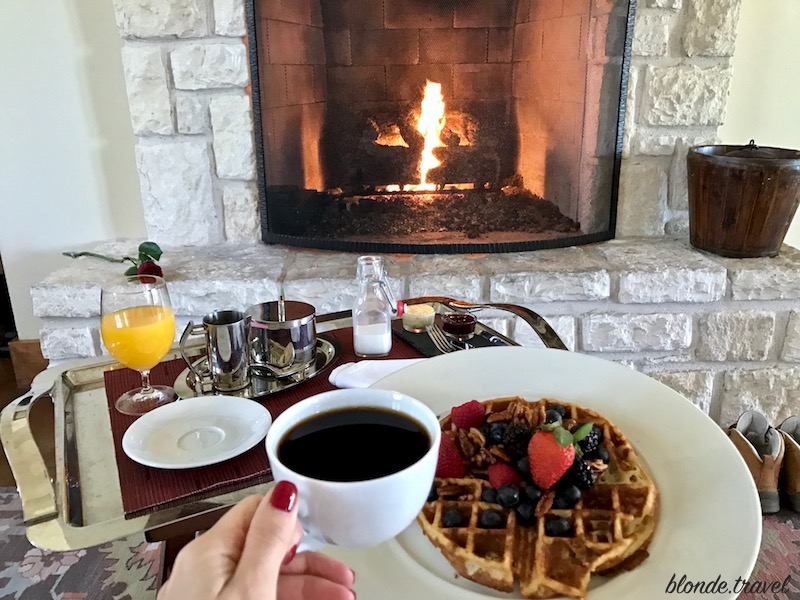
The riding, cooking class and farm were only the activities we had chosen from a longer list. There was enough to occupy every day, or we could do absolutely nothing. Reading by the fireplace with a glass of wine, or sitting on the terrace in the mild sunshine, required very little persuasion.
We could walk the ranch roads past enormous pecan trees and pastures, following the small creek.
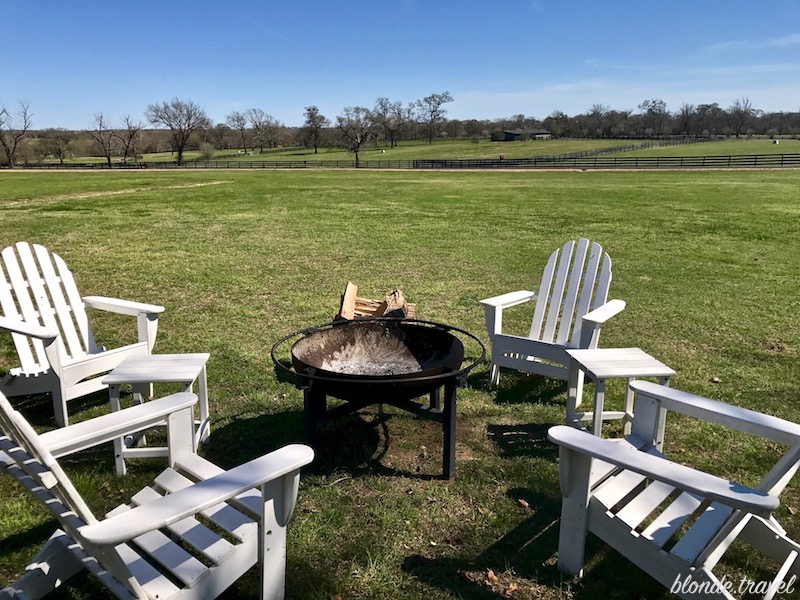
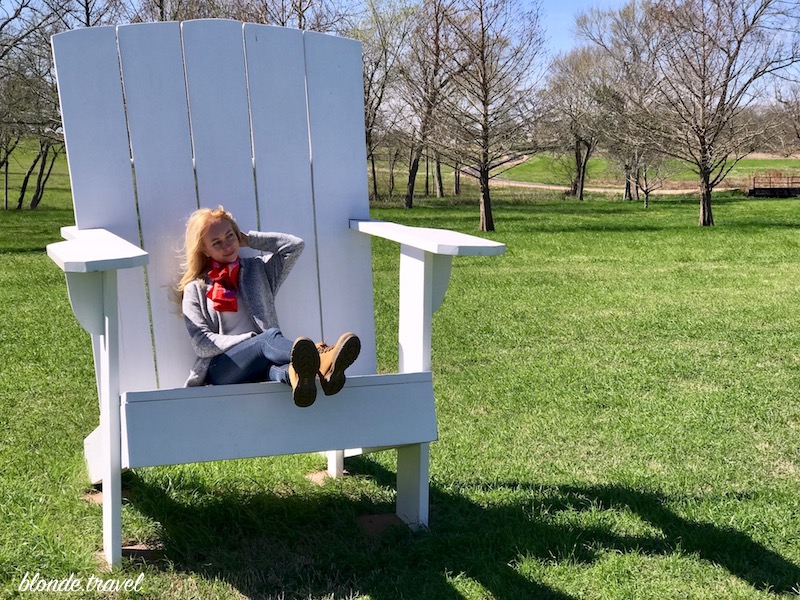
The white Adirondack chairs invited long pauses, doing nothing more ambitious than looking at the countryside. One was the largest I had ever sat in.
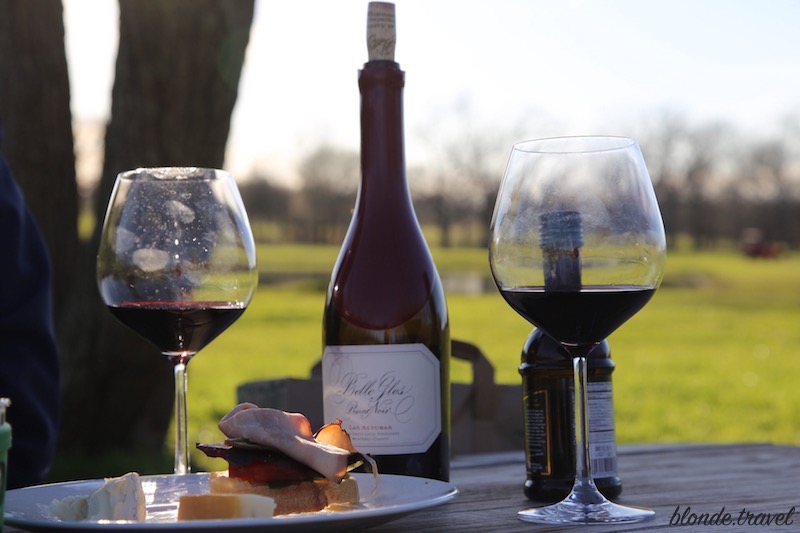
I counted three particularly lovely places with picnic tables. Country bread, cheese, ham, olives and a cool bottle of Pinot Noir made the best sort of ranch picnic.
The golf cart carried us further when our legs had adjusted a little too well to the pace of the place.
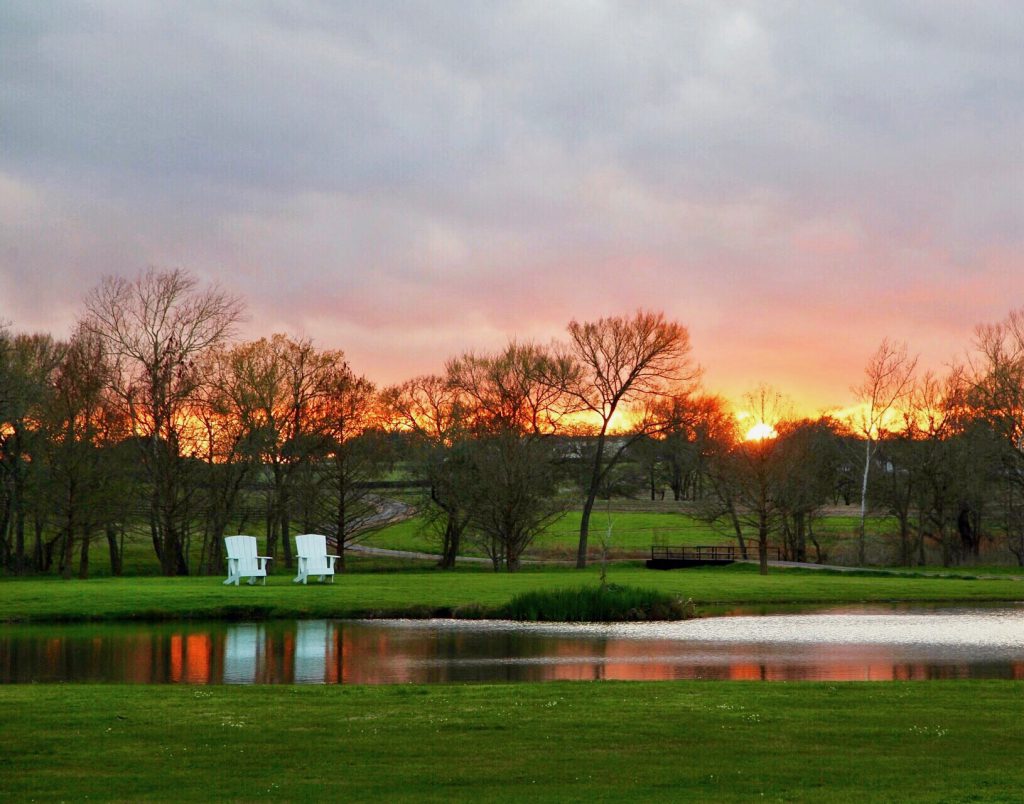
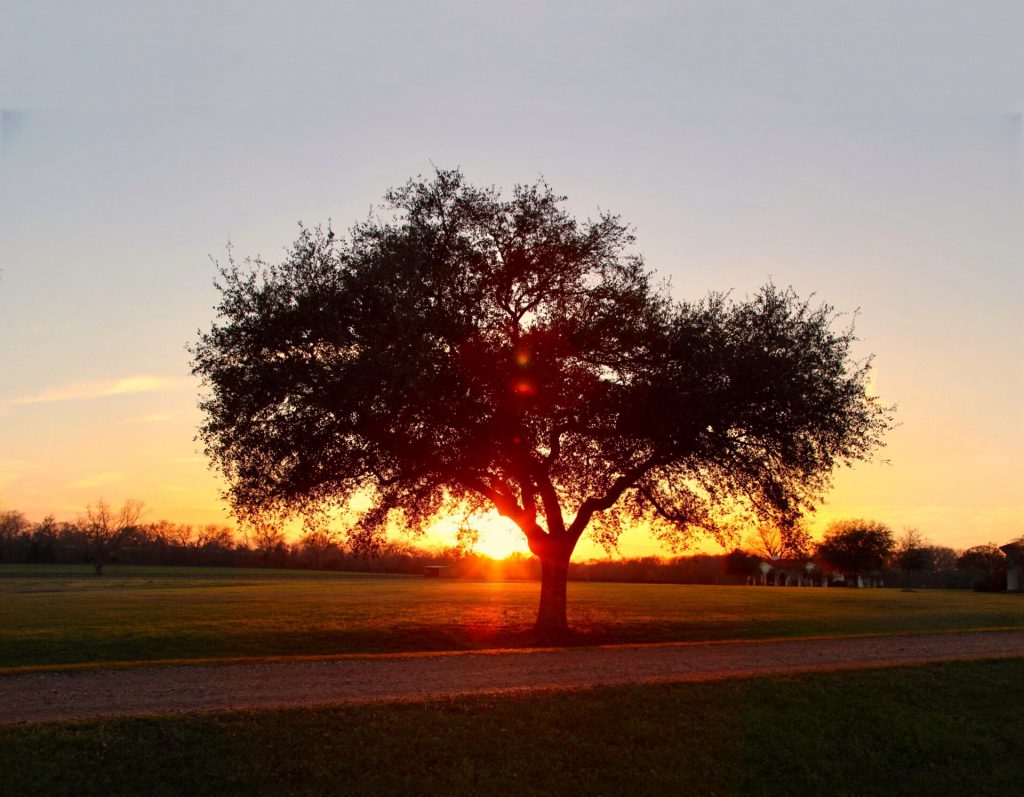
And the sunsets brought us back. Wherever we went during the day, we hurried to the ranch in the evening to watch the last colours spread across the sky.
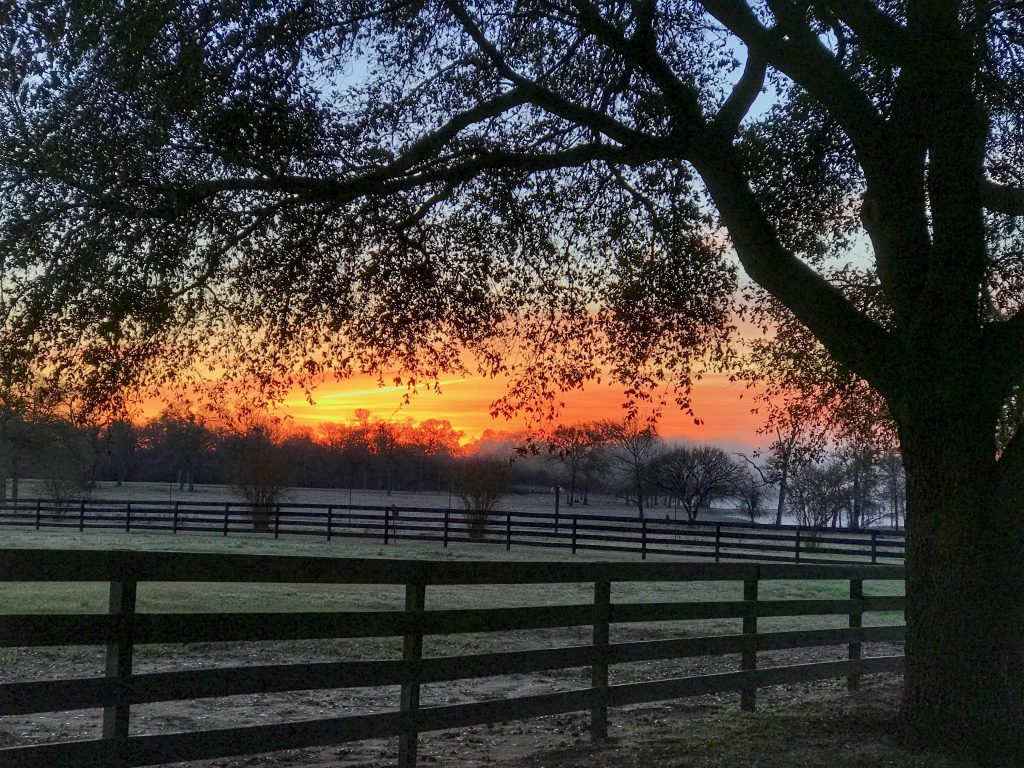
I would have liked to end the account there. We had enjoyed ourselves; I am quite capable of putting irritations aside while travelling. But the hotel’s failures were too substantial to leave out, and the last evening brought the worst of them.
The bill that changed the mood
There is one moment of restaurant service that even the grandest establishments seem unable to agree on: presenting the bill. For the guest, it can be the most awkward moment of the evening; for the restaurant, it is rather an important one.
Should the waiter wait to be asked, or discreetly bring the little folder once the digestif is finished and nothing more seems likely to be ordered? The industry can prescribe the position of a knife and the distance between pieces of cutlery, yet on this it appears to have reached no agreement.
At Royal Champagne, our first Relais & Châteaux stay, nobody asked for a credit card at check-in. “We trust you,” they said. We saw a single bill when we left. Other stays in France had followed the same agreeable pattern. Eolo in Argentina asked for a card, but still spared us the constant signing of restaurant checks.
At Dos Brisas, I felt a quite different attitude. My French stays had given me the impression of houses working for the generations to come, with the confidence to extend a little trust. Here, I could not shake the feeling that admission to the Relais & Châteaux circle had been an investment to recoup as quickly as possible.
Prices for simple things seemed deliberately inflated. The hotel service fee struck me as high even by American standards, and we were invited to add separate tips on top. Then there was the bluntness with which the bills arrived. It all felt very far from the ease of those earlier stays.
On our final evening, we shared a bottle of Californian Cabernet Sauvignon, then had limoncello in the lounge, where we were trying to play chess over dessert. The bill looked unusually large.
Dinner for two was already a substantial expense—at the time, we could not eat there for less than $250. This bill had charged the set menu for four people instead of two, adding roughly $300.
We asked why two people had been charged for four. I expected a thousand apologies, perhaps a little something from the chef or the bar, some suitably mortified response in the middle of the lounge. Instead, the waiter’s reaction was instantaneous: “Oops!” He snatched the bill from my hands and crumpled it.
That reaction was worse than the error. After the Cabernet and limoncello, we might reasonably have been expected to be rather drunk. I was left with a strong, unpleasant suspicion that someone had tried to take advantage of exactly that. The abrupt response did nothing to dispel it.
This was not what I expected from Relais & Châteaux. After that first “We trust you” at Royal Champagne, my own response now was rather different: I don’t trust you guys anymore.
Against that, the breakfast delivery forgotten on our departure morning and two missed evening turndowns almost seemed minor. They were still failures of the service we had come for.
Dos Brisas was supposed to be a luxury hotel, and its potential was enormous. I loved the countryside and we enjoyed our holiday, but the hotel did not live up to the promise. Instead of meeting the standard I associated with Relais & Châteaux, it diminished the name.