
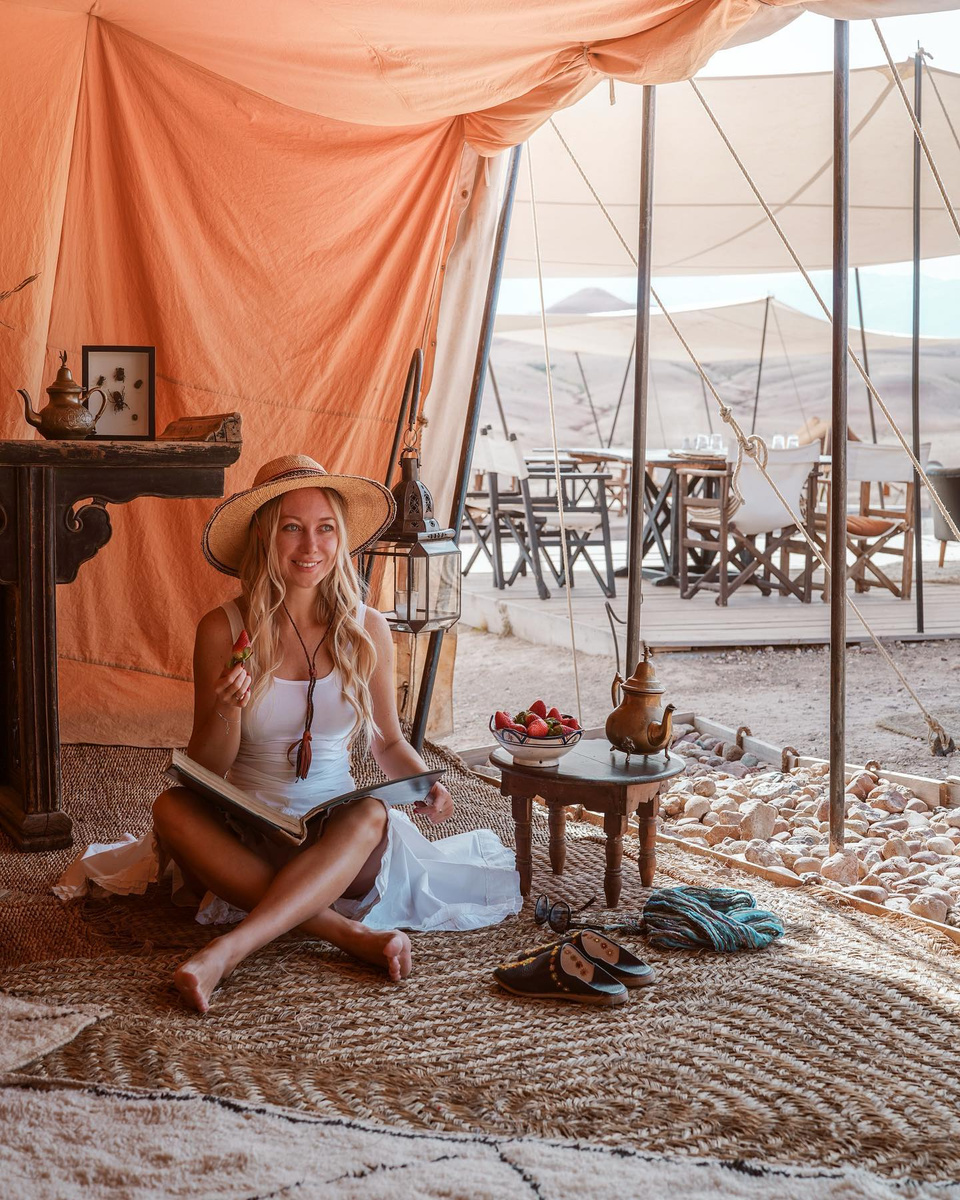
After four days in Marrakech, I was ready for silence. Scarabeo Camp was less than an hour away, yet by the time I arrived, the city seemed to have vanished. Around my tent there was only the rocky ground of Agafay and a view of the snow-covered Atlas Mountains.
I spent three nights at Scarabeo’s original camp, now called the Stone Camp, in February 2020. It gave me exactly the pause I wanted before the long drive toward the Sahara. Agafay has no great dunes. Its charm is different: stone, open space, and the Atlas on the horizon, all within easy reach of Marrakech.
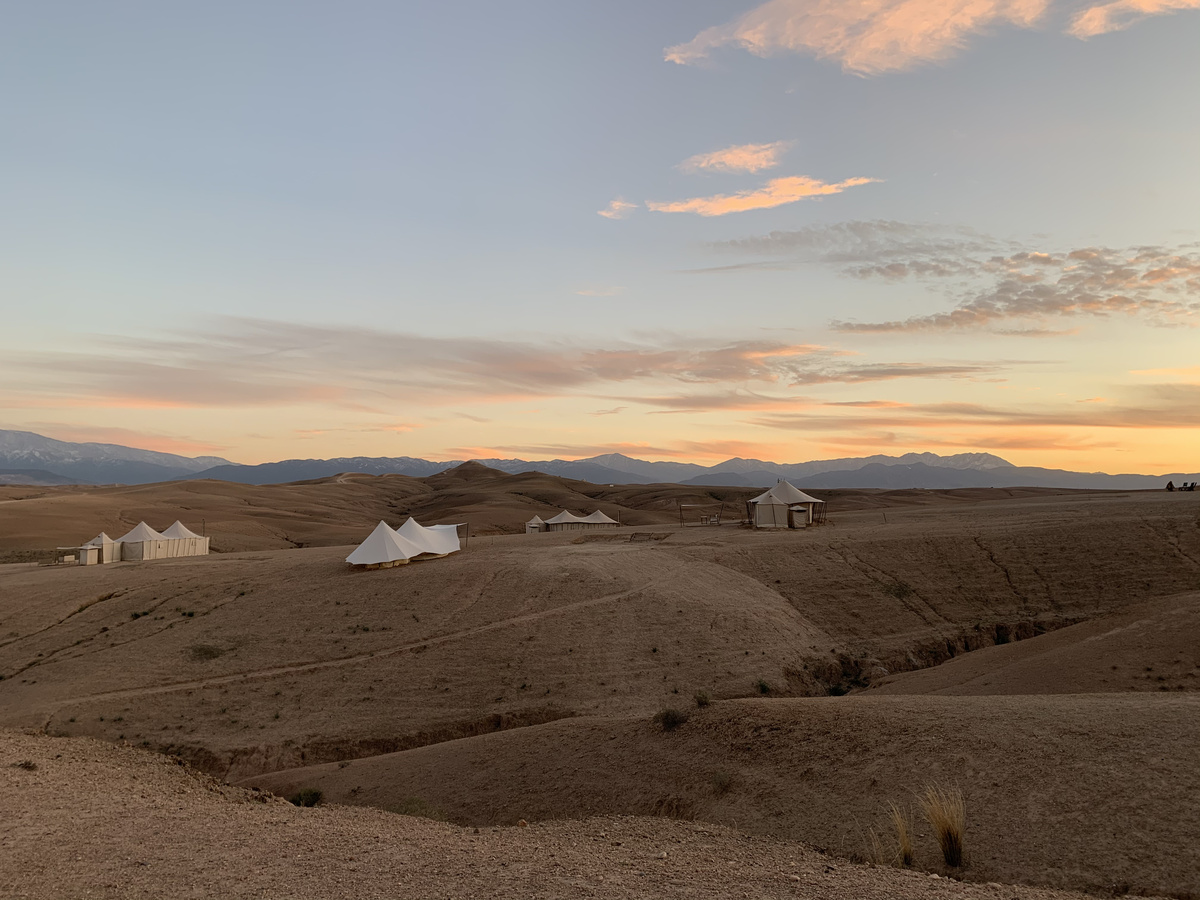
The silence after Marrakech
I had enjoyed Marrakech’s constant flow of people. Four days was enough.
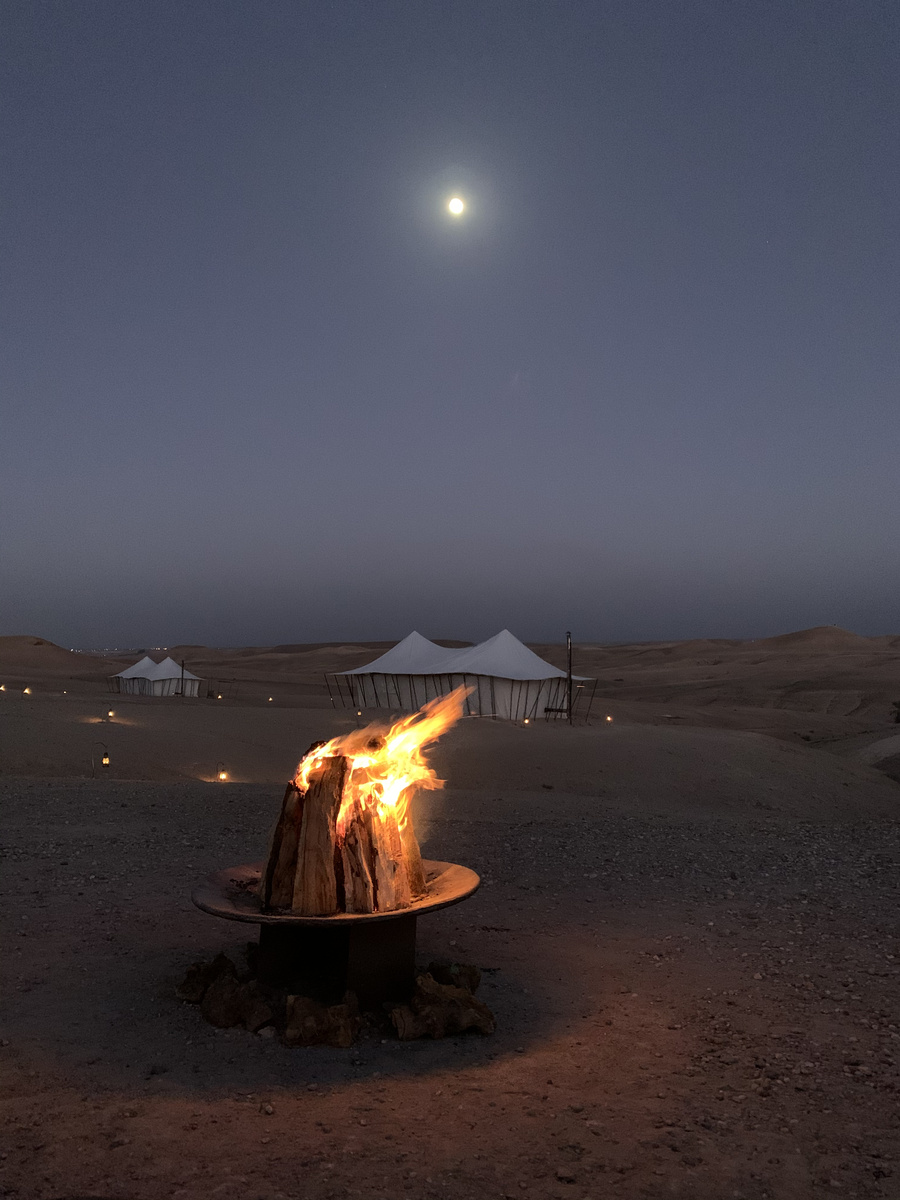
At Scarabeo, there was nowhere I urgently needed to be. Breakfast was outdoors, facing the bare shapes of the rocky landscape. At sunset, there was a glass of wine, then a fire and live music. After dark, the sky seemed to contain more stars than empty space.
The drive from Marrakech had taken less than an hour, yet the camp felt hundreds of kilometers from the city. I could step out of the tent, see the mountains, and hear almost nothing around me.
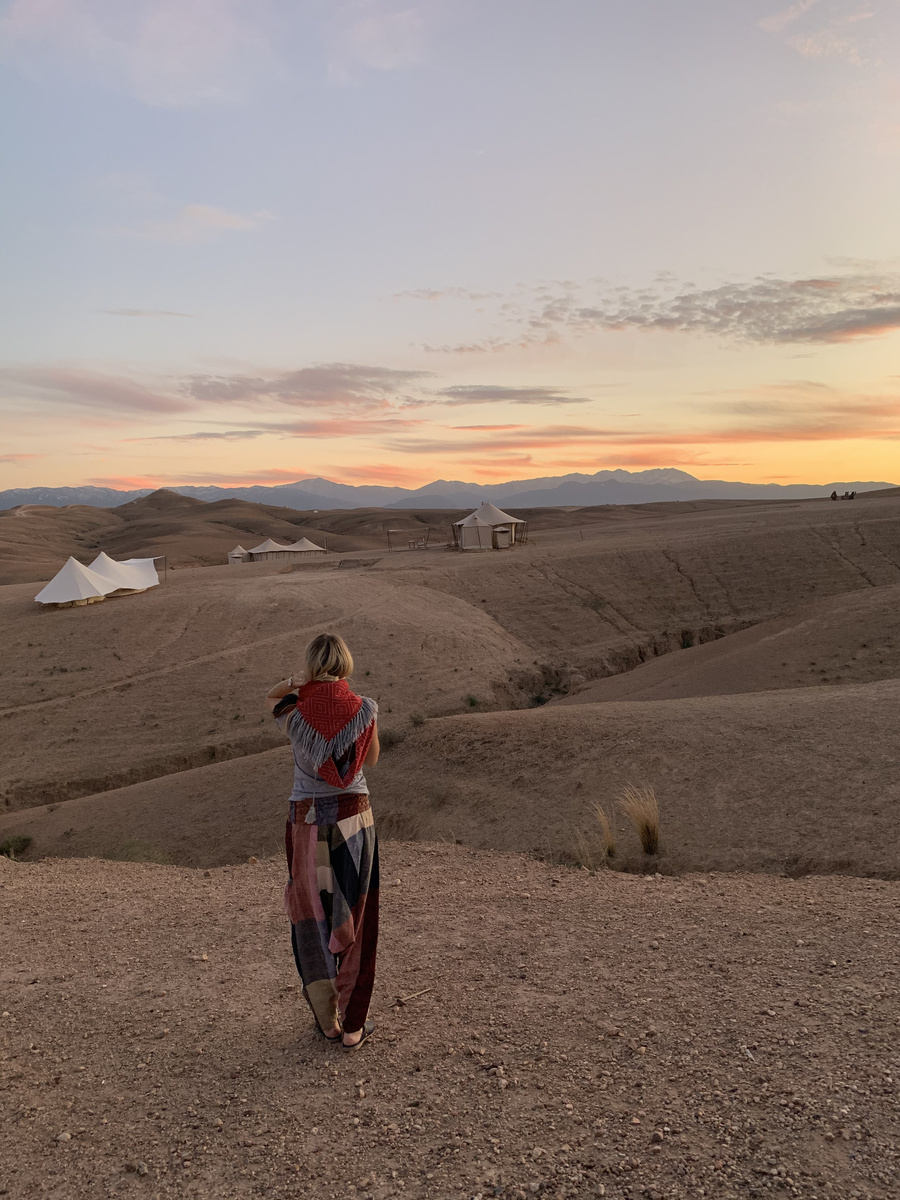
This was the balance I wanted. Marrakech had been energetic and crowded. The road toward the Sahara would be long and full of stops. Agafay sat between the two and allowed me to stop moving for a while.
A tent I kept examining
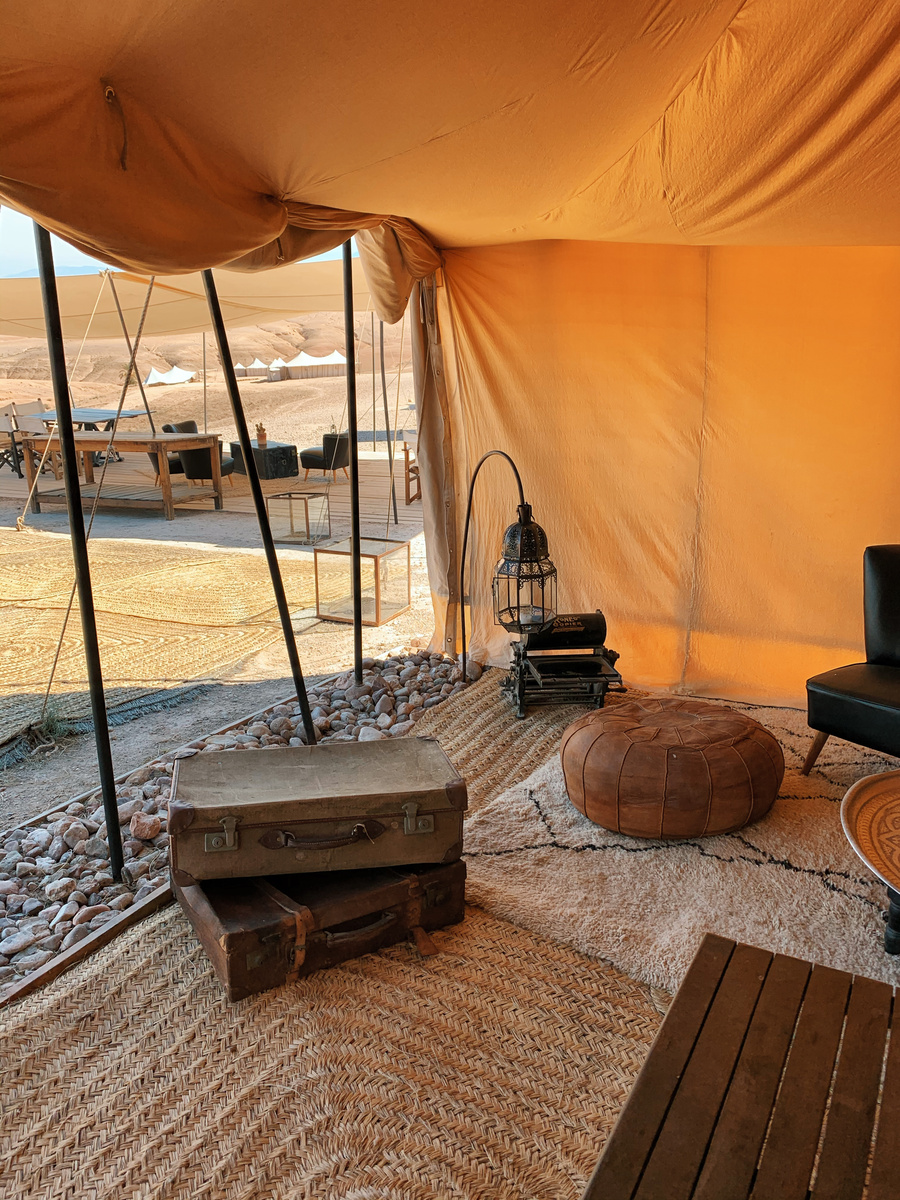
The tent was spacious, although the details quickly became more interesting than its size. I was still finding new ones on the third day.
Berber rugs covered the floor. Old trunks served as tables. There were handmade objects, a globe, a telescope, and Moroccan lanterns with candles inside. Nothing matched too neatly. I liked that.
February nights in Agafay were cold, so the wood-burning stove mattered once the sun went down. The shower, hot water, and private toilet mattered too. The tent worked as a place to live for three nights, not just somewhere to take photographs.
Elsewhere in the camp, open tents were arranged for tea and long periods of doing very little. They were filled with patterned cushions, woven rugs, and low tables. For once, inactivity felt like a perfectly respectable plan.
Breakfast outside, dinner by candlelight
My days settled into a simple rhythm. The sun rose from behind the Atlas Mountains, followed by breakfast outdoors. Dinner came by candlelight, with bread baked at the camp in a traditional clay oven.
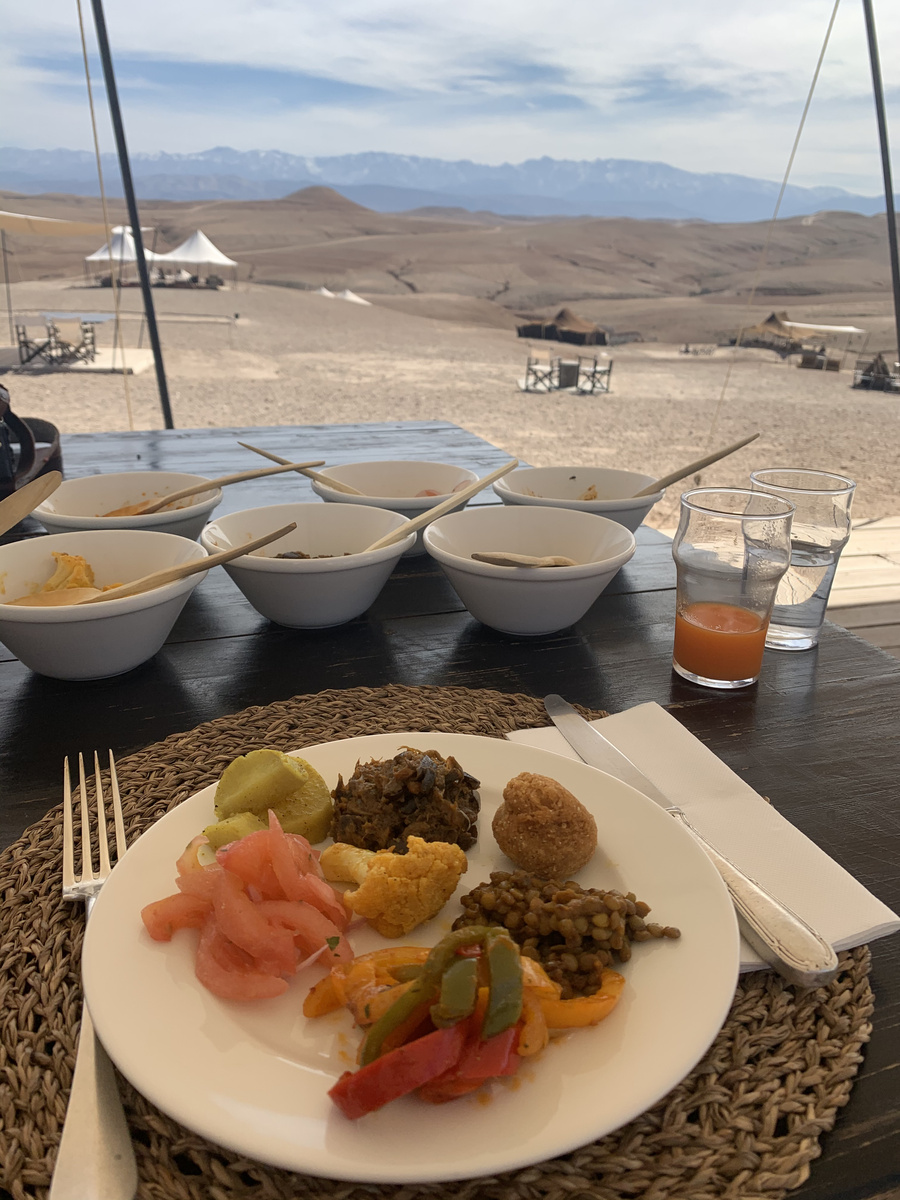
Breakfast and dinner were included during my stay; lunch cost extra. I did not mind. The empty hours between meals were exactly what I had come for.
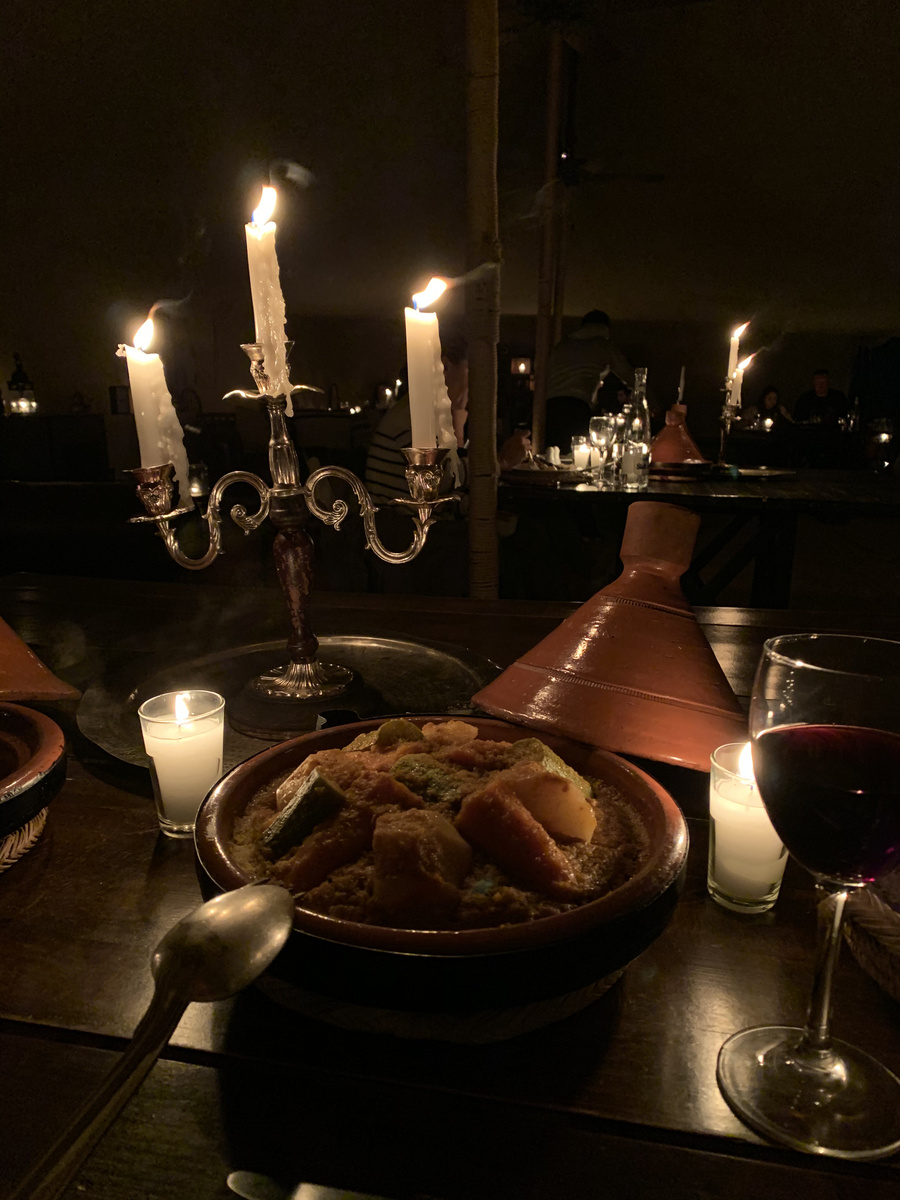
My evenings drifted from sunset to the fire, live music, and stars. I remember each one as a single long scene rather than a program of activities. This is the part of Scarabeo that stayed with me longest.
Stone in Agafay, sand near Merzouga
Agafay and the Sahara gave me two very different desert landscapes. Agafay is rocky and open, its pale hills rising and falling beneath the Atlas. Later, after a much longer drive south across the Tizi n’Tichka pass and on to Merzouga, the ground changed completely: sand and great dunes.
Neither replaced the other. For me, Agafay was the pause; the Sahara, the journey. Scarabeo changed the pace of the trip without requiring another long day on the road.
I also went ballooning while I was in Agafay, although I booked the flight separately from Scarabeo. If you want to do the same, check the operator and arrangements directly rather than assuming the camp includes it.
The Scarabeo Camp I stayed at
Scarabeo has opened a second camp since my visit. I stayed at the original Stone Camp. Today it is the livelier option, with a small pool.
The newer Les Roches Noires is a separate, more intimate camp. Check the name carefully when booking; everything I describe here happened at the Stone Camp.
Agafay has changed too. In 2025, Scarabeo co-founder Vincent T’sas told Wallonie-Bruxelles International that the number of camps and the amount of motor traffic had grown. I remember absolute silence in 2020. I would not book today expecting every evening to sound exactly the same.
What to know before you go
Prices and practical details below are current as of August 2026:
- Rates: a Stone Camp suite costs MAD 2,350 for one guest or MAD 2,650 for two. Dinner and breakfast are included; drinks are not.
- Getting there: Scarabeo estimates about 45 minutes from Marrakech airport and one hour from the medina, and says a regular car can manage the final track.
- Cold and heat: the tents have wood stoves, duvets, and blankets in winter, and fans in summer. The pool is small and unheated.
- Power and internet: phones can be charged, but the camp asks guests not to use high-draw appliances such as hair dryers. Wi-Fi is available mainly near the office.
- Choosing the camp: Stone Camp has the original Scarabeo setting and livelier evenings. Les Roches Noires is the more intimate option.
Scarabeo’s pleasures depended on its limits: stony hills rather than Saharan dunes, a camp rather than a full resort, and enough distance from Marrakech for the city to seem to vanish once dinner gave way to the fire.
I had lived for four years in Egypt’s Sinai Peninsula, so the desert felt less like a novelty than a return. At Scarabeo, I found the hospitality I had missed, now in a Moroccan Amazigh setting: rugs over hard ground, bread from the clay oven, and a fire at the center of the evening. On the third morning, as we packed for the Sahara, I had the peculiar feeling of leaving somewhere I had only just returned to.