
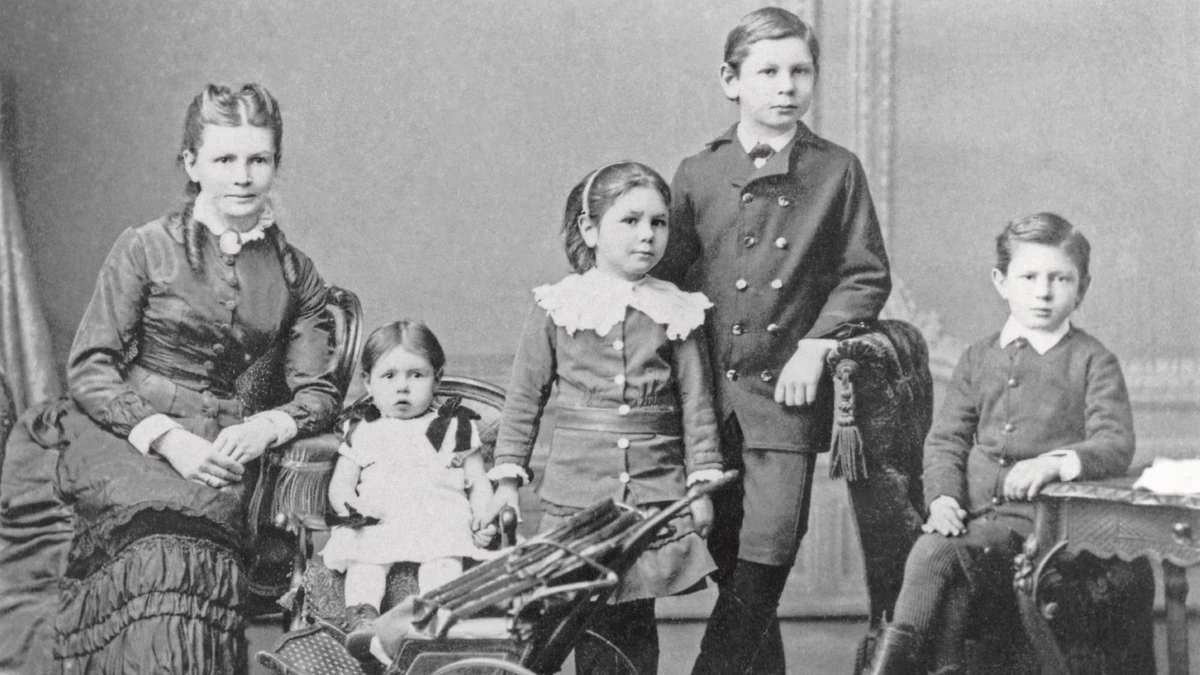
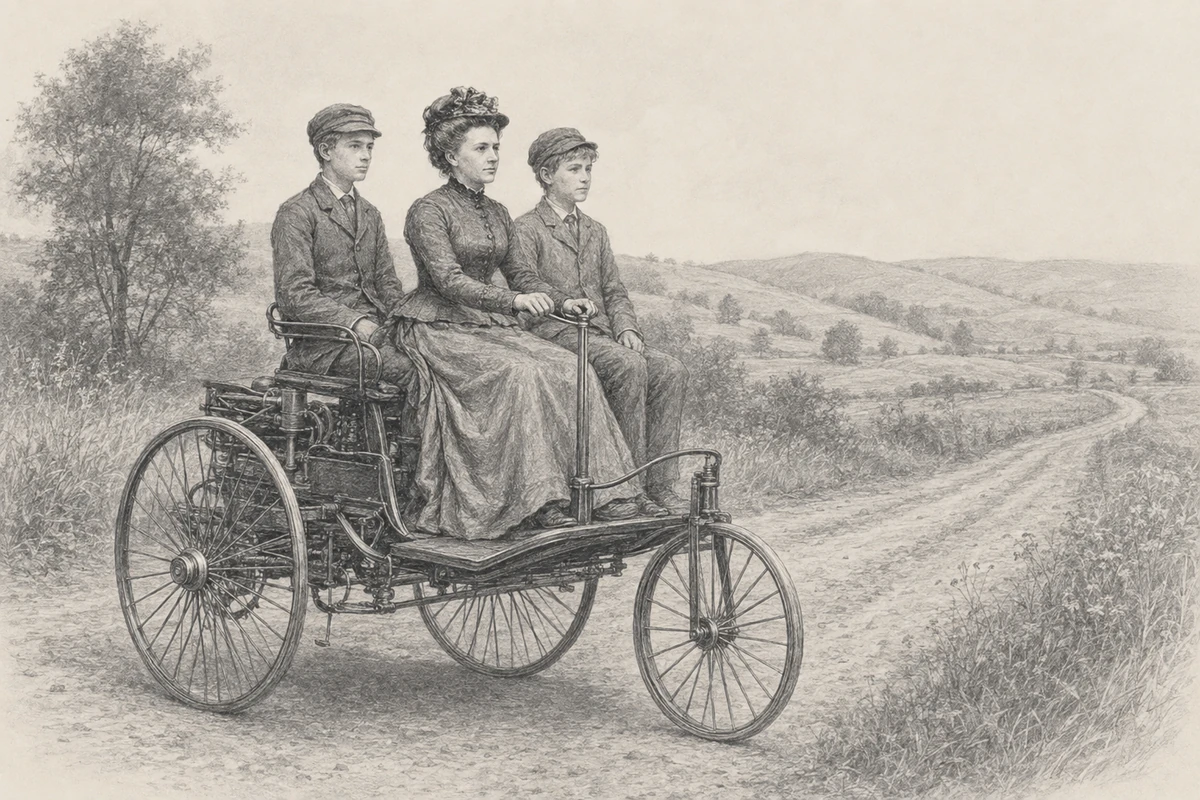
Bertha Benz with her children, 1883. Photograph: Mercedes-Benz Group.
There is something wonderfully inconvenient about the origin of the road trip.
We tend to imagine it as an essentially masculine invention. The open road, the machine, the map folded badly on the passenger seat, the pleasure of choosing a longer route simply because it is more beautiful. Kerouac. Route 66. Steve McQueen. Ferraris crossing the Alps. A Porsche disappearing toward the horizon. Men have spent more than a century turning the road trip into one of their great secular rituals.
And yet, if we are looking for the moment when the automobile ceased to be an engineering experiment and became a way of travelling, we arrive at a woman.
Not a racing driver. Not an adventurer sponsored by a newspaper. Not an aristocrat pursuing some eccentric amusement.
A 39-year-old mother of four called Bertha Benz.
On an August morning in 1888, she took her husband’s experimental motor car, put two of their sons aboard, and drove from Mannheim toward her mother’s home in Pforzheim, more than 100 kilometres away.
Her husband did not know she was going.
There were no petrol stations.
The roads had been made for horses and carts.
There were no mechanics trained to repair it.
There was no breakdown service, no network of garages, no motels awaiting the new species of human being that would eventually be called the motorist.
There wasn’t even much agreement that the automobile was useful.
Bertha Benz went anyway.
And as a woman who travels frequently alone, I find it difficult not to take a certain private satisfaction in this.
I have no particular desire to rewrite the history of travel as a competition between men and women. Most of the infrastructure through which I move was indeed built, financed, engineered or administered by men. The history is what it is.
But the road trip?
That most beloved male fantasy of machine and freedom?
I am very pleased to report that a woman appears to have taken that one first.
The machine that nobody needed
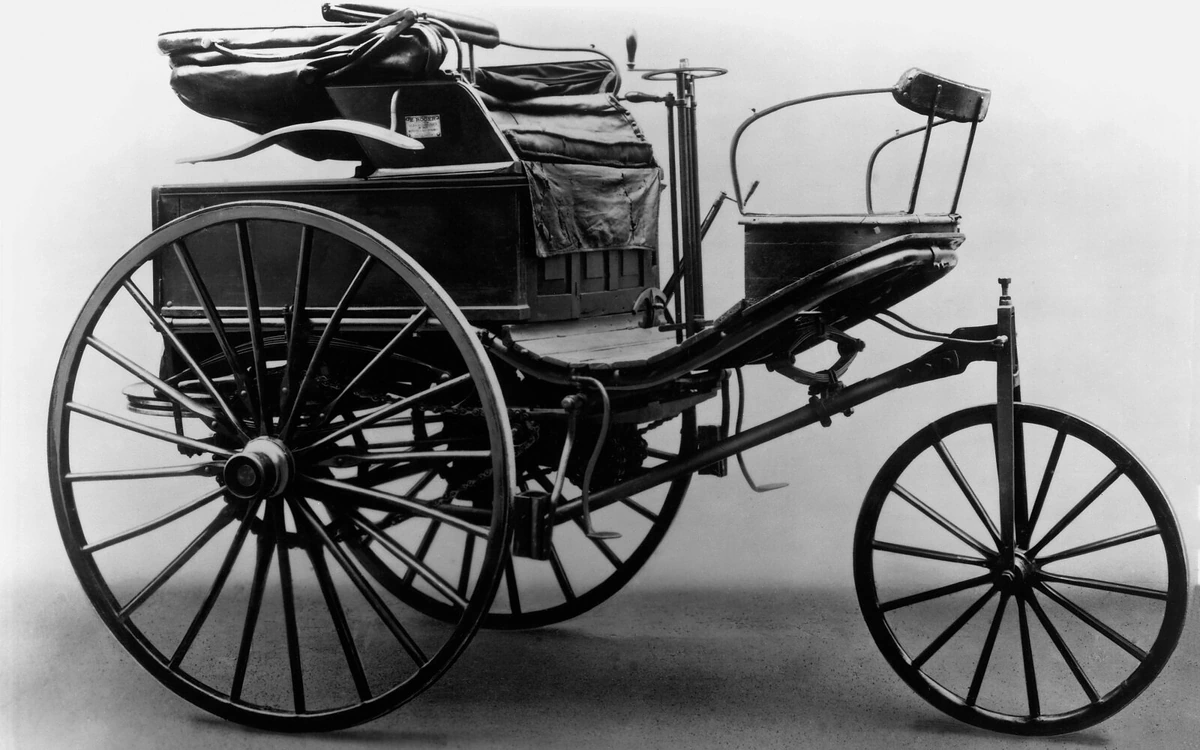
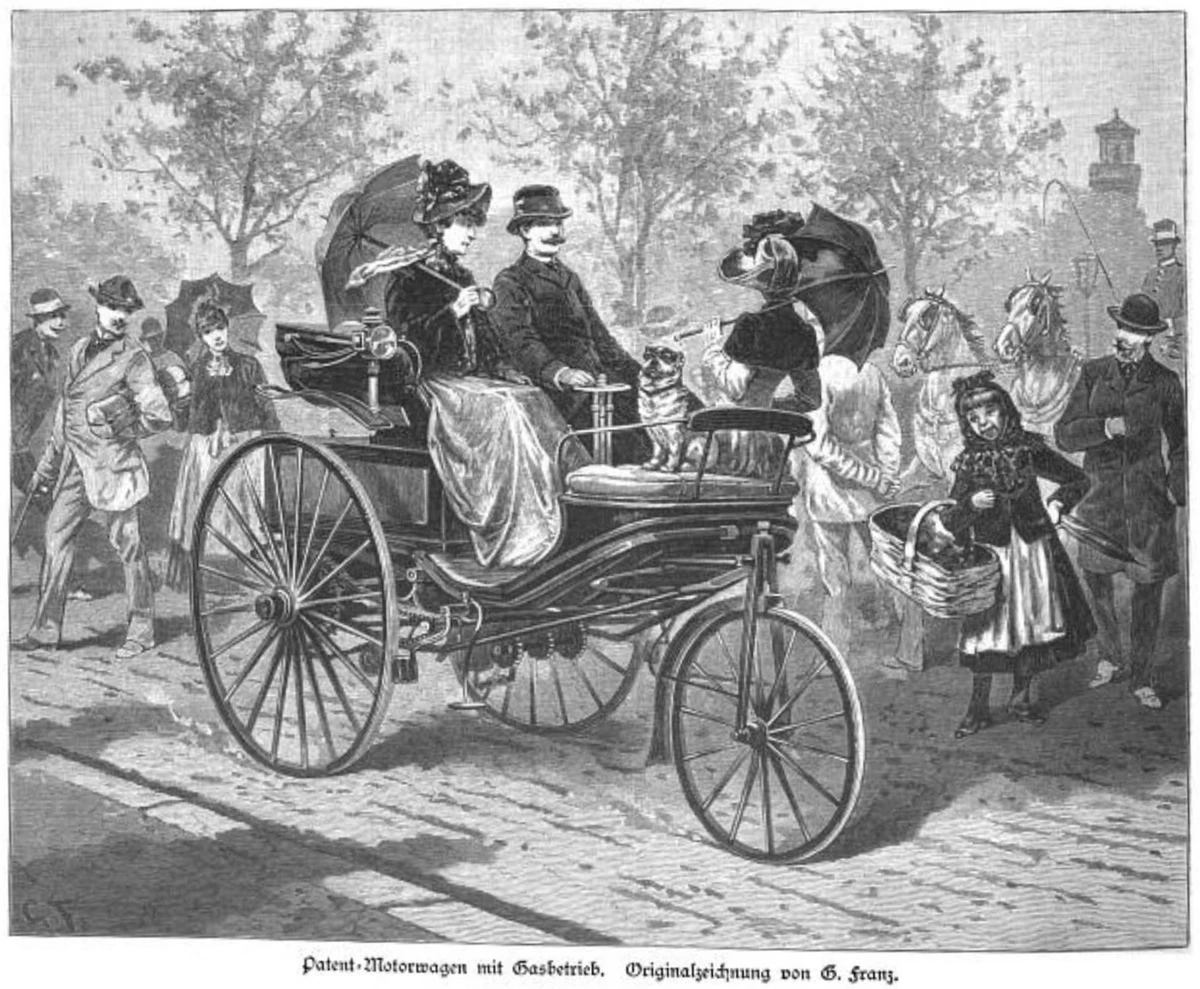
On 29 January 1886, Carl Benz applied for the patent that is often described as the birth certificate of the automobile: DRP 37435, for a Fahrzeug mit Gasmotorenbetrieb—a vehicle powered by a gas engine. His three-wheeled Patent-Motorwagen was not simply a carriage with an engine awkwardly attached. It had been conceived as a motor vehicle. Steam vehicles had travelled roads before it; the Benz made a practical petrol-powered car possible.
This was a tremendous engineering achievement.
It did not immediately look like a tremendous commercial idea.
People already possessed an exceptionally sophisticated transportation technology: the horse.
A horse could negotiate bad roads. It could climb hills. When something went wrong with it, an enormous distributed service network already existed—farriers, stables, inns, feed merchants, coachmen, veterinarians. It did not need a gas station.
The Benz machine was noisy, fragile and unfamiliar. Early public demonstrations attracted curiosity, but curiosity is not demand. Mercedes-Benz’s own history records the profound scepticism with which the new vehicle was received.
Carl Benz could prove that his automobile moved.
The more difficult question was why anybody should want one.
Bertha understood that problem unusually well.
Perhaps because the automobile was partly hers.
Before she became Bertha Benz, she was Cäcilie Bertha Ringer, born in Pforzheim in 1849 into a prosperous family. She met the young engineer Carl Benz in 1869 and married him three years later. But the neat Victorian formulation that she subsequently “supported her husband” understates the arrangement rather badly.
Before they were even married, Bertha had her dowry paid out and put money into Carl’s struggling business. During the precarious years that followed, she participated in practical technical work, including winding induction coils for the ignition system. On New Year’s Eve 1879, when the couple finally managed to get Carl’s two-stroke engine running properly, she was part of the effort.
This was not a wife admiring an inventor across the dinner table.
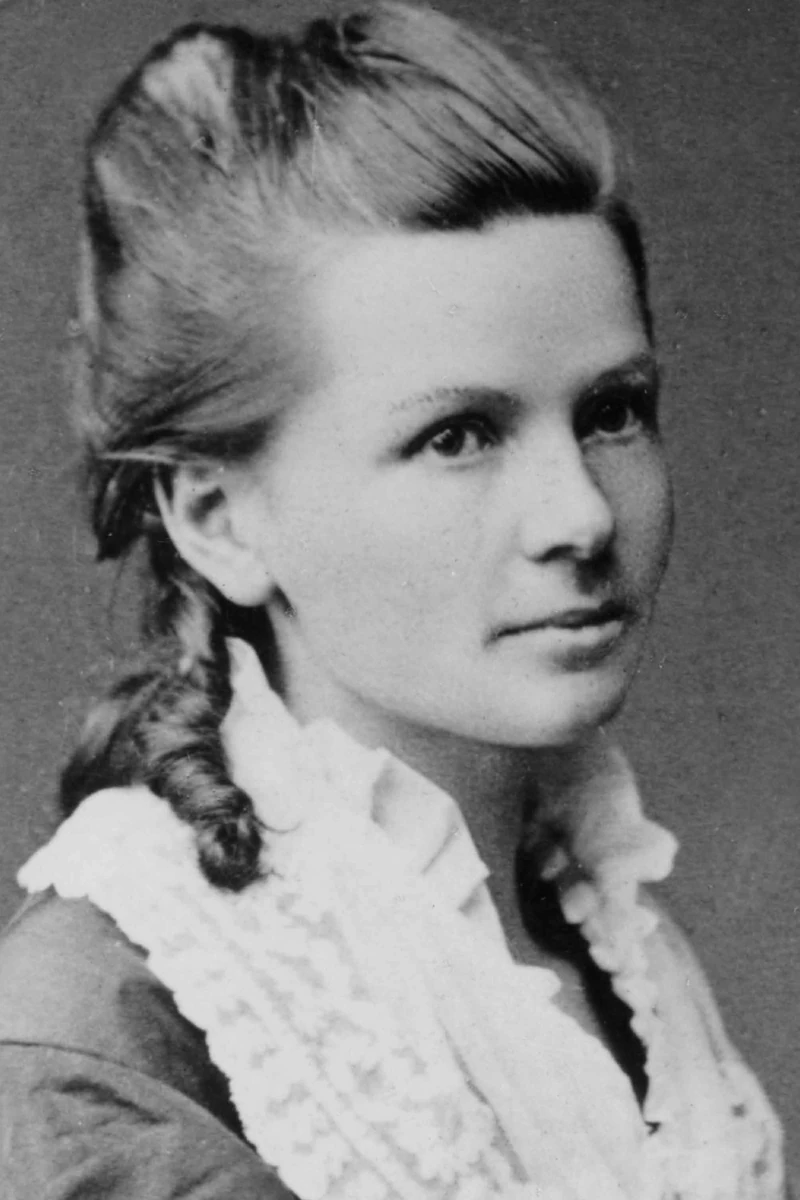
She had capital in the venture, labour in the machine and years of family life invested in whether Carl Benz was right.
And Carl Benz was beginning to doubt himself.
That matters.
Because the famous journey was not merely Bertha deciding that visiting Mother by automobile would be amusing. Public scepticism had left Carl discouraged. Bertha had money and years invested in the machine, and considerably less patience with the doubters.
Carl had invented a machine capable of changing the world.
Bertha seems to have understood that somebody now had to make the world notice.
So she did something that engineers have occasionally required from more impatient people ever since.
She took the prototype out of the laboratory.
Leaving Mannheim
On 5 August 1888, Bertha left Mannheim with Eugen and Richard, her teenage sons.
Eugen was fifteen, Richard thirteen. Their destination was Pforzheim, Bertha’s hometown, where her mother lived. Carl had not been told that they were taking the automobile.
There is a delightful modernity in her excuse.
She was going to visit her mother.
Today we invent entire categories for journeys like this. A weekend drive. A family road trip. A spontaneous escape.
In 1888, driving roughly 100 kilometres in an automobile was closer to conducting a field trial across an inhabited landscape.
The Motorwagen had less than three horsepower.
Most roads were unpaved.
There were no filling stations to measure your progress between.
Its cooling system consumed water voraciously.
Its transmission had not really been designed for the hills Bertha was about to encounter.
And the familiar difficulties of a journey—fuel, water, repairs, hills—were acquiring unfamiliar mechanical forms.
That is what makes her drive so important.
She was not merely testing the reliability of a car.
She was discovering the requirements of automobile travel.
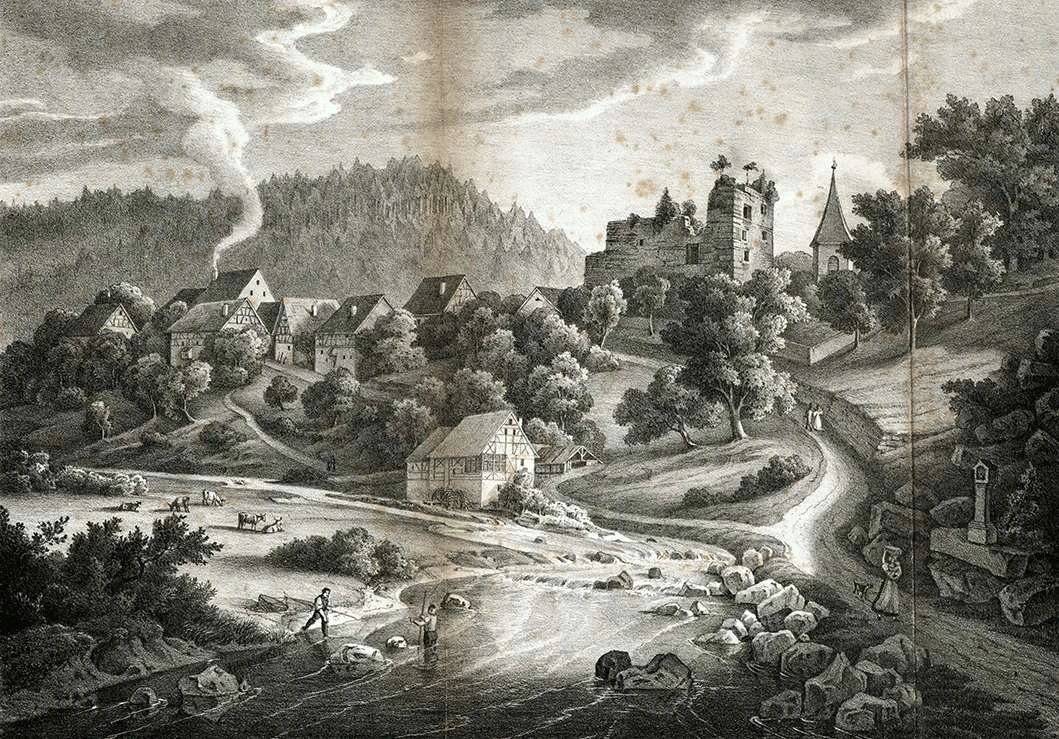
The first petrol station was a pharmacy
In Wiesloch, the Benz needed fuel.
There was no Shell sign.
No illuminated price board.
No shop selling coffee, sandwiches and windshield fluid.
There was the Stadt-Apotheke.
Bertha bought ligroin there, a petroleum solvent commonly sold as a cleaning product and usable by the Benz as fuel. The pharmacy is consequently celebrated as the world’s first filling station.
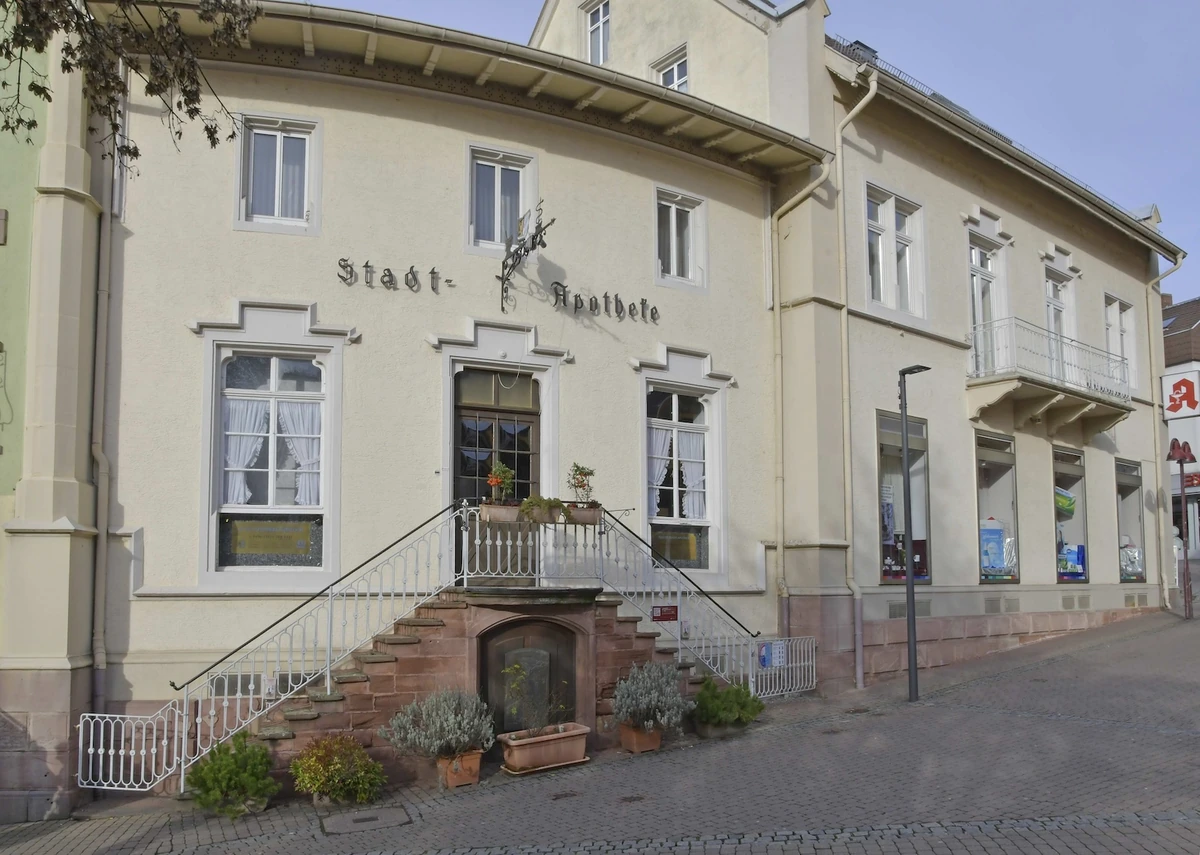
It is one of those historical details that sounds almost too perfectly written.
The petrol station was not invented first.
The journey created the petrol station.
This pattern repeats itself all along the road.
In the accounts of the journey, Bertha clears a clogged fuel line with her hatpin.
She uses her garter to insulate an ignition wire.
A blacksmith helps with the drive chain.
A cobbler attaches leather to the worn brake blocks.
Water had to be collected repeatedly from whatever sources were available along the route.
On steep gradients, Bertha and the boys sometimes had to get out and push.
Read those episodes not as charming anecdotes about an eccentric Victorian contraption but as the embryonic form of an entire travel economy.
The pharmacist is the petrol station.
The blacksmith is the roadside garage.
The cobbler is the brake specialist.
The well is the service stop.
And Bertha, moving from one improvised solution to another, is doing what travellers still do when they push beyond established infrastructure: converting whatever already exists into whatever the journey requires.
Anyone who has driven far enough from the polished motorway network knows the feeling.
A puncture repaired in a village where nobody speaks your language. Fuel purchased from a drum. A mechanic fabricating a part rather than ordering one. Directions acquired by pointing at a map.
Bertha had to find all this in a world that had scarcely begun to make provision for her machine.
She was not the passenger
There is another reason I love this story.
Bertha Benz occupies none of the conventional female positions available in nineteenth-century travel imagery.
She is not being transported.
She is not waiting at the destination.
She is not sitting elegantly beside the man operating the machine.
She is not the reason for the expedition.
She is running it.
That distinction may sound obvious now. It was not obvious then.
The automobile would eventually become one of the most powerful instruments of personal independence ever created. A railway takes you where the railway company has laid tracks. A steamship follows its route. A carriage requires animals and, for many wealthy travellers, servants.
A car gradually transferred an extraordinary amount of authority to the individual traveller.
Turn left.
Continue.
Stop.
Leave at dawn.
Leave at midnight.
Change the destination halfway there.
The itinerary can become an intention rather than a contract.
For women, that freedom would acquire particularly complicated social meaning over the following century. Bertha was there at the beginning of motoring’s part in that argument.
She did not issue a manifesto about female mobility.
She drove to Pforzheim.
There is something more convincing about that.
The first automotive product manager
Bertha’s journey also exposed a distinction that every technology company eventually learns.
An invention is not a product.
Carl knew how to make the Motorwagen function.
Bertha discovered what happened when a customer tried to use one.
The difference was immediate.
The hills were a problem. The gearing was inadequate. Bertha recommended an additional lower gear after the journey; Carl incorporated the improvement. The hills had made their case.
Braking had revealed another weakness.
Fuel availability was obvious.
Cooling was obvious.
Maintainability was obvious.
The automobile had been tested against physics in Mannheim.
Now it was being tested against geography.
That is an entirely different standard.
You can almost draw a line from Bertha Benz to every automotive development expedition that followed: cars frozen in Scandinavia, baked in Death Valley, driven through deserts, hammered over Belgian paving stones, sent around Nürburgring until something breaks.
But her test protocol was beautifully simple.
Could this machine take me to my mother?
That question ultimately mattered more than whether it could circle a workshop yard.
The telegram from Pforzheim
After more than twelve hours, Bertha and the boys reached Pforzheim. The news travelled home by telegram, which makes the whole episode suddenly domestic again.
Imagine his day.
Your wife and two sons have disappeared.
So has the automobile upon which you have wagered years of work and much of the family’s financial security.
Then comes the news from Pforzheim.
They have arrived.
The experimental automobile has become an intercity vehicle.
Carl Benz later conceded the essential difference between them with admirable economy: Bertha had been more daring than he was. He regarded the journey as decisive for the further development of the motor car.
The publicity mattered too.
The strange vehicle was no longer merely something spectators had watched perform a demonstration.
It had completed a journey.
That distinction is enormous.
A demonstration says: look what this machine can do.
A journey says: imagine where you could go.
Inventing destination before infrastructure
The great technologies of travel often require two inventions.
Someone must invent the means of transportation.
Then someone must invent the reason to use it.
Steamships required routes and ports.
Passenger aircraft required airports, timetables and destinations marketed as accessible rather than remote.
Ski lifts required someone to turn snowy mountains from seasonal obstacles into resorts.
The automobile would gather roads, fuel stations, maps, garages, hotels, restaurants and traffic laws into a system so enormous that eventually entire landscapes would be reconstructed around it.
Bertha had to borrow what she needed from the world already there.
But something more fundamental appeared on 5 August 1888.
Destination.
She was not driving because driving itself was technically interesting.
She wanted to arrive somewhere.
That is why I hesitate slightly when Bertha Benz is described simply as the world’s first long-distance driver or first female test driver.
Both belong to the familiar account.
Neither captures what happened.
A test driver evaluates the machine.
Bertha demonstrated a form of life.
Home in Mannheim.
Mother in Pforzheim.
Machine between the two.
Suddenly distance had acquired a new solution.
The road trip does not belong to America
America would later perfect the mythology.
Its enormous geography was almost unnaturally suitable for the automobile. The road became part of national culture: the Lincoln Highway, Route 66, diners, motels, roadside attractions, convertibles, national parks, the Pacific Coast Highway.
Hollywood completed the transformation.
By the twentieth century the road trip could mean escape, masculinity, youth, rebellion, courtship, family disaster, self-discovery or simply the pleasure of a sufficiently beautiful car on a sufficiently empty road.
Europe produced its own version: Alpine passes, Grand Touring automobiles, Mediterranean destinations, the Riviera reachable by machinery whose badges eventually became Ferrari, Bentley, Mercedes-Benz, Aston Martin.
And the road trip acquired a particular male theatricality.
The car mattered.
The engine mattered.
Knowing how the engine worked sometimes mattered even more.
Whole conversations could be constructed around torque, cylinders, tyres and whether one’s chosen route had enough bends.
Men became very good at claiming this territory.
Which is why Bertha Benz remains such an exquisite historical correction.
Before Route 66, before On the Road, before Steve McQueen, before the Mille Miglia and before anybody could spend an indecent amount of money discussing the correct specification of a Grand Tourer, there was a woman in a hat travelling through Baden with two boys and discovering that she could repair the fuel system with a pin.
Gentlemen, we are happy to share the road trip with you.
But the original receipt from the petrol station is ours.
Freedom on three wheels
The Motorwagen Bertha drove would look barely automotive to us.
Three narrow wheels. An exposed engine. A bench seat. No roof worth discussing. No luggage compartment, climate control, navigation, cupholder, stereo or windscreen between the traveller and the world.
Yet psychologically it already contained the essential architecture of every road trip I have taken.
There is a place you are.
There is a place you want to be.
Between them is a road.
And the decision about how to connect those points belongs to you.
That final element is what separates driving from most other forms of transportation.
A ticket is permission to join somebody else’s movement.
A car key is permission to create your own.
I think this may explain why solo driving can feel disproportionately liberating, especially as a woman.
It isn’t simply privacy.
It is authorship.
Nobody is waiting for you at Gate 23.
Nobody closes boarding thirty minutes before departure.
Nobody has decided that the train will stop for precisely four minutes in the town whose café you suddenly like.
You can turn around because the light behind you looks better.
You can continue another hundred kilometres.
You can stop.
You can leave.
The freedom is almost embarrassingly literal.
Bertha Benz could not have known what she was initiating. Historical pioneers rarely experience their own actions with the meanings posterity assigns to them.
She wanted to prove something about Carl’s machine.
She succeeded.
But what she proved was larger than the proposition.
Carl’s automobile, Bertha’s journey
It would be cheap history to diminish Carl Benz in order to enlarge Bertha.
There is no need.
Bertha’s achievement becomes more interesting precisely when we leave Carl’s intact.
He built the automobile.
She revealed the journey inside it.
And this distinction recurs throughout travel history.
The engineer creates capability.
The traveller discovers desire.
The locomotive exists before the railway holiday.
The aircraft exists before aviation becomes tourism.
The ship exists before the cruise.
Technology asks, Can we?
Travel asks, Where shall we go?
On that August morning, Bertha Benz supplied the second question.
The commercial consequences followed. The Patent-Motorwagen No. 3 was offered for sale; Benz & Cie. grew spectacularly and was, for a time, the world’s largest automobile manufacturer.
The automobile was going to transform industry, warfare, urban planning, courtship, suburbs, commerce and eventually the climate.
But before all of that, it transformed an ordinary family proposition.
I want to visit my mother.
She is a hundred kilometres away.
I can go.
Bertha lived long enough to see the answer spread across the planet.
She died in 1944, two days after her ninety-fifth birthday. By then the uncertain little machine she had taken from Mannheim had become one of the organising technologies of civilisation.
She had watched roads improve, filling stations appear, automobile companies multiply and private motoring become normal.
I wonder whether the most astonishing part was not the growth of the industry but the disappearance of astonishment.
A family getting into a car and travelling a hundred kilometres eventually ceased to qualify as an adventure at all.
That may be the ultimate success of a travel pioneer.
The impossible becomes luxurious.
Then fashionable.
Then affordable.
And finally so ordinary that nobody remembers anybody had to do it first.
Today I can get into a car alone, put a bag behind the seat, choose a destination and disappear down a road without considering the act historically significant.
I rather like knowing that somewhere behind this very ordinary freedom stands Bertha Benz.
Not because I need a female hero every time I travel.
Not because the road somehow belongs more properly to women.
Simply because history has a sense of humour.
Of all the forms of travel men would later romanticise as expressions of independence, machinery and masculine freedom, perhaps the most beloved begins with a wife borrowing her husband’s car without asking him.
And taking the boys to see her mother.
Carl Benz invented the automobile.
Bertha Benz took it somewhere.
And in doing so, she may have invented the road trip.