
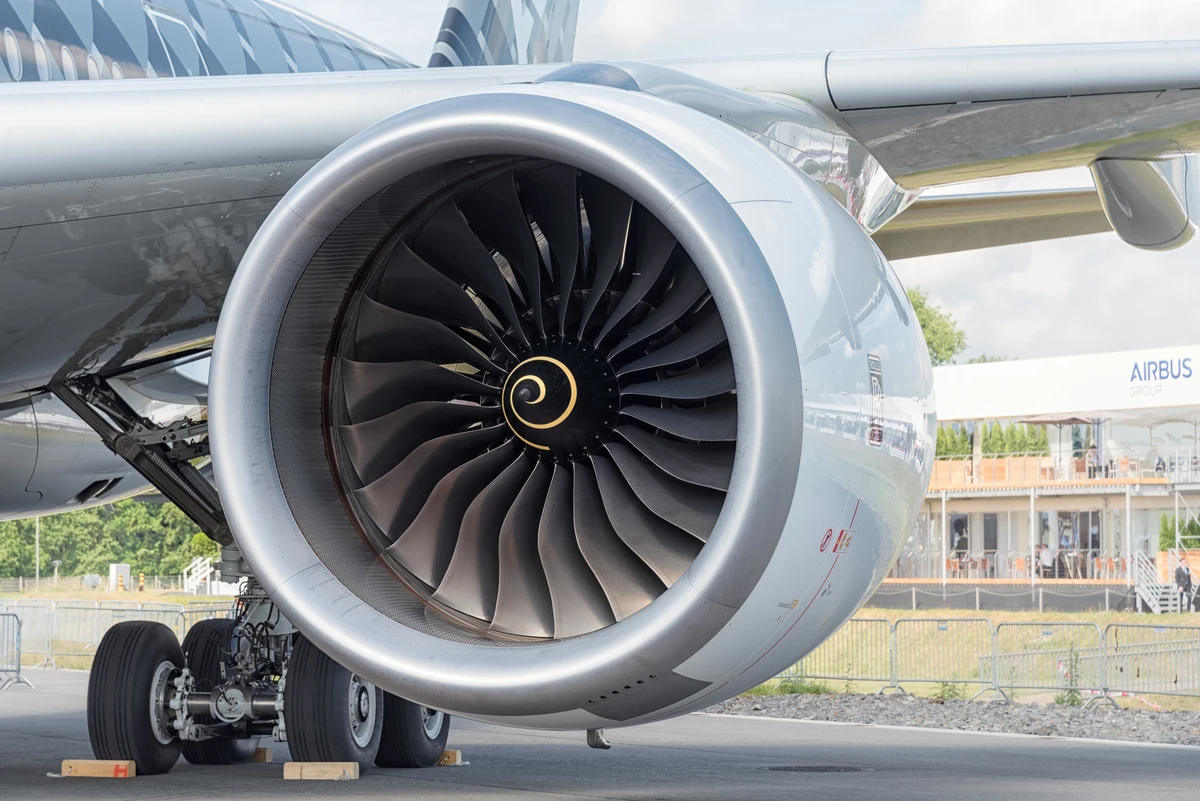
On an Airbus A350 at the gate, the name is visible before the machinery is understood.
ROLLS-ROYCE, written on the engine beneath the wing.
Inside is a Trent XWB, the engine family exclusive to the A350. The high-thrust XWB-97’s dispatch reliability is measured above 99.9 per cent. Passengers cross oceans behind it without needing to think about combustion, turbine blades or the thin cold air outside.
The first half of that name belonged to a man who never saw an airliner.
Charles Stewart Rolls died in 1910 when the tail structure of his primitive Wright biplane failed above an aviation meeting at Bournemouth. He was thirty-two, and the first Briton killed in a powered-aircraft accident.
So one of the great names attached today to the proposition that flying is safe, dependable and almost boring belongs to a man killed when flight was none of those things.
That alone would make Charles Rolls worth remembering.
But for the history of travel there is something more interesting about him.
Henry Royce was the engineer: an obsessive mind capable of noticing a vibration and refusing to stop until it had disappeared. Claude Johnson was the organiser and publicist, later known as the hyphen in Rolls-Royce. Charles Rolls did something different.
Again and again, when a technology was still an eccentric machine for engineers, sportsmen or lunatics, he recognised what it was about to become.
First the motor car.
Then the aeroplane.
He did not merely ask whether either machine worked. He asked the question that matters more to the history of travel:
Where could it take us?
A wire to the stables
The most revealing object in Charles Rolls’s childhood may have been an electric bell.
He grew up largely at The Hendre, his family’s house near Monmouth in Wales. His father was Lord Llangattock. This was the world of horses, servants, country houses and inherited privilege that the motor age was about to disrupt.
At nine, according to the company’s account of his life, Charles rigged an electric bell between his bedroom and the stables. A few years later he planned and supervised the installation of electricity in the house itself.
It is almost too perfect an image.
The old aristocratic world was down in the stables. The boy upstairs was already running a wire to it.
Rolls possessed all the advantages that usually make a young aristocrat historically uninteresting: money, connections, education and leisure. What made him interesting was what he did with them. He was fascinated not simply by possessing expensive things, but by taking them apart, driving them hard and discovering what they could do.
At Eton, and later at Trinity College, Cambridge, where he studied mechanism and applied science, his habit of getting physically involved with machinery earned him an unaristocratic nickname: Dirty Rolls.
In 1896, aged eighteen, he went to Paris and bought a 3¾-horsepower Peugeot Phaeton for £225.
This was not the equivalent of an affluent student buying an exotic sports car. Britain had barely decided what a motor car legally was. The Locomotives on Highways Act of that year ended the man-with-a-red-flag ritual for light vehicles and set a maximum speed of fourteen miles an hour.
Rolls’s Peugeot was among the earliest cars in Britain. The remarkable thing is not that a wealthy young man bought a toy.
It is that Rolls did not see a toy.
He saw a new species of transport.
A thousand miles in public
Modern Rolls-Royce has acquired a peculiar cultural meaning.
A Rolls is imagined arriving rather than racing. Its natural habitat is the porte-cochère of a great hotel, not the starting line. The owner occupies the rear seat while someone else drives. Everything about the car—mass, silence, carpets, umbrellas, whispering doors—suggests that haste would be slightly vulgar.
Charles Rolls would have found this version of his automobile incomplete.
He raced.
In 1899 he finished fourth in the tourist class in Paris–Boulogne. In 1903 he entered the Paris–Madrid race, a catastrophe stopped at Bordeaux after fatal accidents. That year he drove a Mors at nearly eighty-three miles an hour in an unofficial British record attempt. The performance went unrecognised because the timing equipment did not satisfy the authorities.
Racing then meant something more consequential than it does for an established automobile industry. Nobody yet knew whether the motor car was a useful long-distance machine.
Could it climb?
Would it overheat?
Could its tyres and transmission survive British roads?
A motoring trial was simultaneously sport, engineering experiment and public demonstration.
In April 1900, the Automobile Club sent cars from London through Bristol, Birmingham, Manchester and Edinburgh and back again. The Thousand Mile Trial lasted twenty days. Rolls drove a twelve-horsepower Panhard and won a gold medal.
The trophy was the least important part.
Thousands of people saw automobiles moving through British towns. Machines that had appeared to be rich men’s mechanical curiosities were travelling across a country.
This was early travel marketing in its purest form:
Do not tell people the machine is reliable. Drive it a thousand miles in front of them.
Rolls understood that instinctively.
The customer who found the engineer
There was something irritating about Rolls’s enthusiasm. The cars he admired were mostly French, Belgian or German. Britain—the country that had industrialised the world—was not producing the automobile he wanted.
So Rolls became a dealer.
With help from his father, he established C. S. Rolls & Co. in west London in 1902, selling Panhard, Peugeot, Mors and Minerva. Claude Johnson joined him.
This matters because it tells us what Rolls was before Rolls-Royce.
He was a sophisticated customer. He had driven Europe’s best cars, raced them, broken them, imported them and sold them to demanding clients. He knew what the machinery felt like, and he knew where it failed.
Then Henry Edmunds told him about an engineer in Manchester who had built a little two-cylinder car.
Rolls was sceptical. He preferred larger three- and four-cylinder automobiles. Edmunds insisted.
On 4 May 1904 they travelled north and met Frederick Henry Royce at Manchester’s Midland Hotel.
History tends to present the meeting as a perfectly symmetrical union: Rolls the salesman, Royce the engineer. It was not.
Royce was forty-one, from an impoverished background, extraordinarily serious and already an accomplished electrical and mechanical manufacturer. Rolls was twenty-six, aristocratic, exuberant and seemingly incapable of encountering a new form of propulsion without wanting to race it.
Royce showed him his ten-horsepower car.
Rolls drove it.
And understood almost immediately what he had found.
He returned to London declaring Royce the greatest motor engineer he had encountered and agreed to sell every car Royce could make. The vehicles would carry both names.
Rolls-Royce.
The shared name quickly acquired a mark of its own. The first overlapping double-R badges appeared on Rolls-Royce 10 H.P. cars in 1905, with red letters on a silver ground. The Spirit of Ecstasy came later: it was registered in 1911, after Rolls was dead.
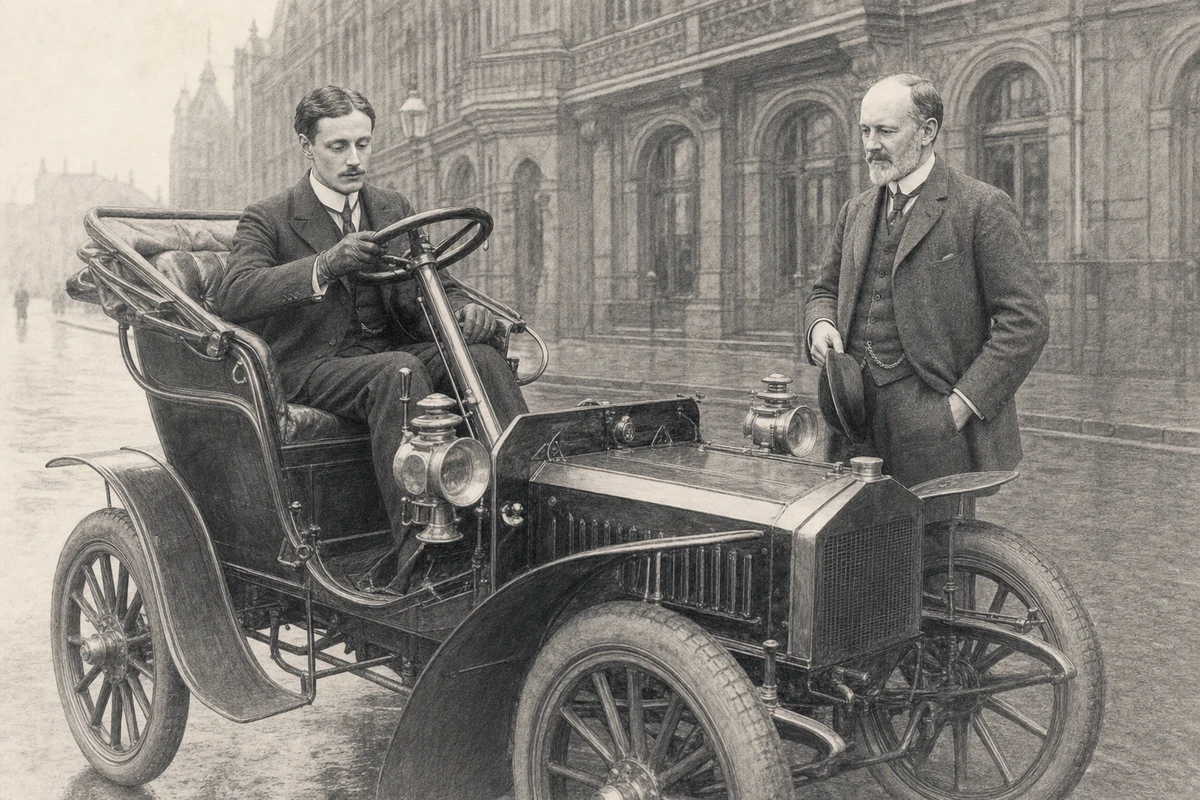
Royce could make an extraordinary machine. Rolls recognised that the machine could become an extraordinary idea.
Luxury at forty miles an hour
It is tempting to reduce Rolls’s contribution to social connections: naturally an aristocrat knew aristocrats who could afford expensive cars. That misses his more interesting insight.
He understood that an expensive automobile could not succeed merely by being ornate. It had to be objectively superior.
A Rolls-Royce was not supposed to ask for indulgence because it was luxurious. Its luxury was meant to emerge from technical supremacy: less vibration, less noise, greater reliability, flexibility and enormous reserves of performance.
When Johnson proposed rationalising the early model range around a single automobile, Rolls supported the idea but wanted that car placed uncompromisingly at the top of the market. Royce produced the six-cylinder 40/50 H.P. Johnson turned a particular silver-painted example into the Silver Ghost.
Before the Rolls-Royce limousine became shorthand for aristocratic serenity, however, Rolls took the company’s cars racing.
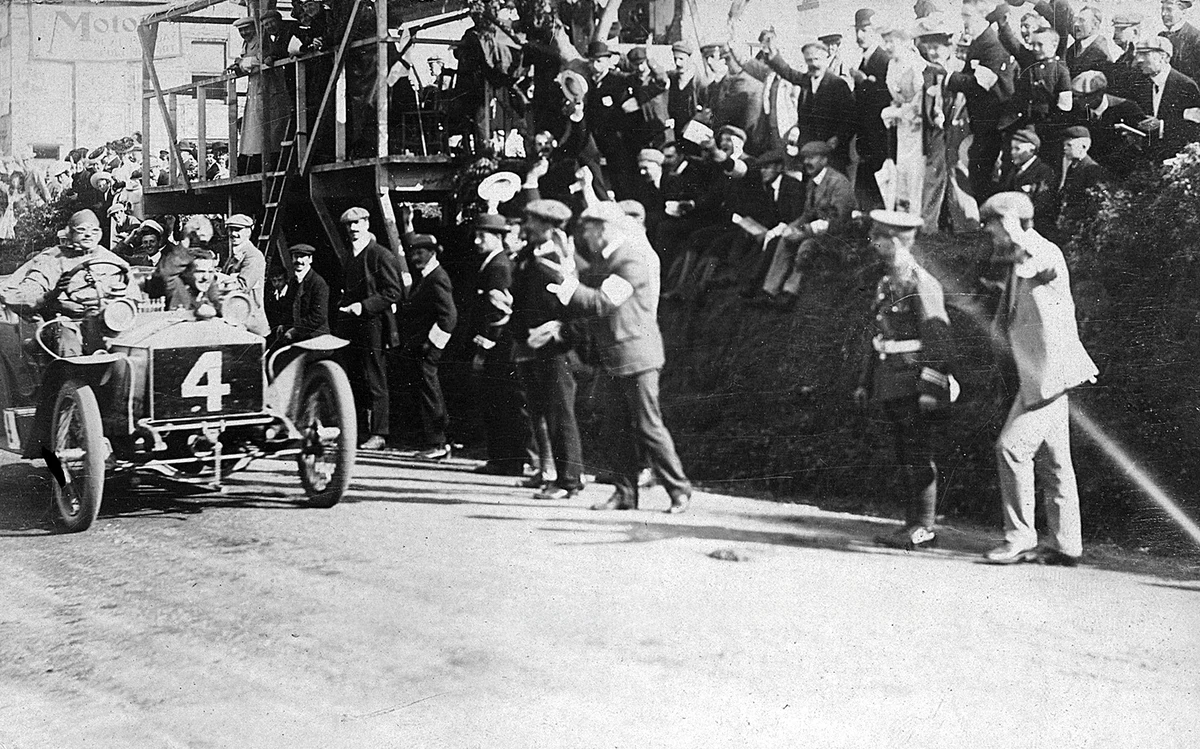
On 27 September 1906, Charles Rolls and Eric Platford set off in a light 20 H.P. Rolls-Royce on the Isle of Man. Platford had tested Royce’s engines and road-tested his chassis since 1903; this was their second Tourist Trophy together. The race tested speed, fuel consumption, endurance and the driver’s ability to preserve the machinery over four laps of more than forty miles each.
Rolls started fourth. By the end of the first lap he was leading. Four hours and six minutes later, he and Platford won at an average of 39.4 miles an hour. One pint and one ounce of fuel remained.
It is worth holding that image beside a modern Phantom.
The long bonnet is already there. The prestige is beginning to form. But the chauffeur has not yet arrived. Charles Rolls is at the wheel, covered in road grime, extracting every possible mile from the fuel allowance.
Luxury has not learned to sit still yet.
It is trying to win.
The Silver Ghost’s great demonstration followed in 1907. During the Scottish Reliability Trial it covered about two thousand miles with no mechanical breakdown; its only interruption was a closed fuel tap corrected in about a minute. Then it continued day and night, except Sundays, until it had run about fifteen thousand miles. When the car was dismantled, the wear was astonishingly small.
Its achievement was reliability rather than outright racing speed. Yet Rolls’s philosophy joined qualities that lesser machines forced a traveller to choose between. A great touring automobile should be fast, silent, durable and comfortable.
Not simply luxury.
Effortless distance.
That is a travel product.
The road becomes too small
The problem with people like Charles Rolls is that once they prove something possible, they tend to lose interest in proving it again.
Cars ceased to be sufficiently impossible.
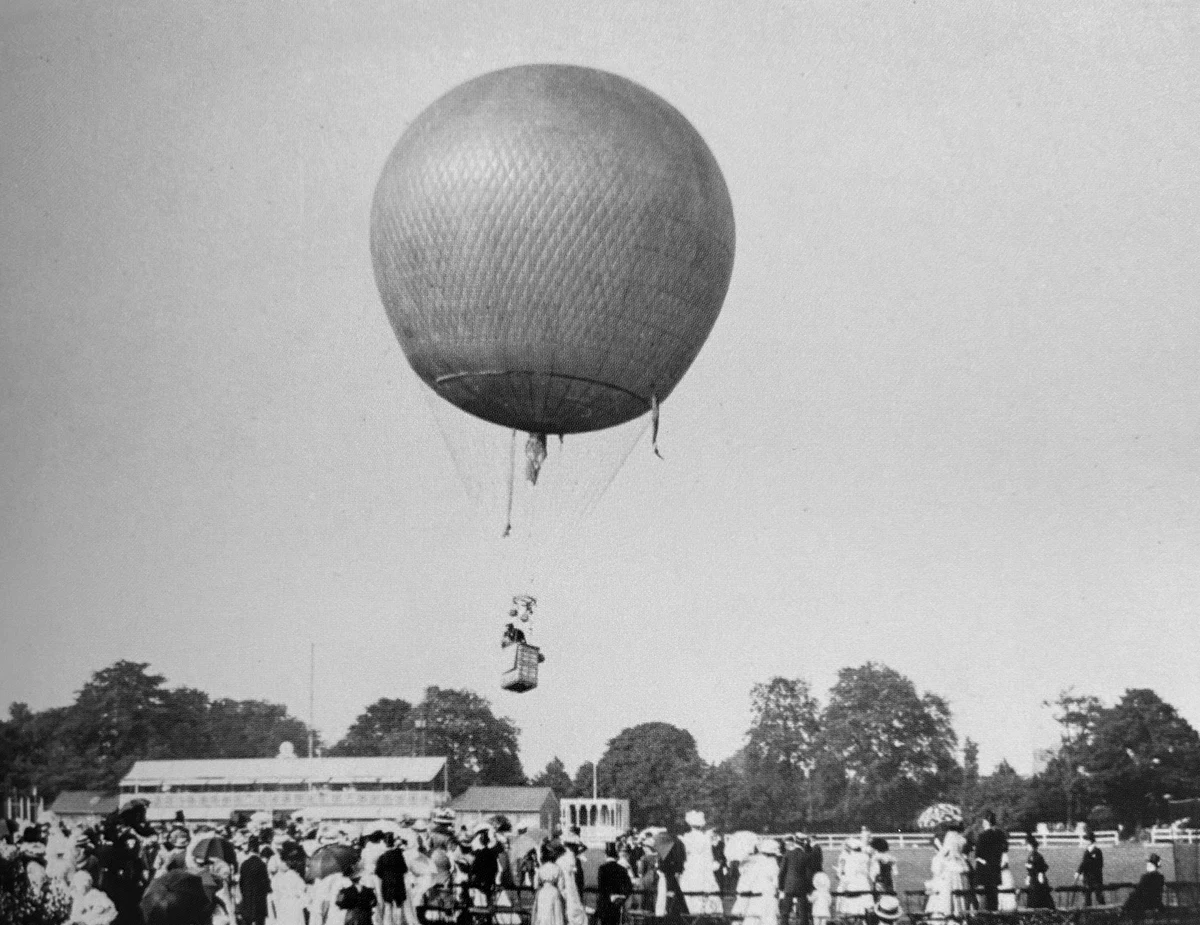
Rolls had been ballooning since the turn of the century and eventually made about 170 ascents. But balloons depended upon the wind. He wanted steering. Then engines. Then aeroplanes.
After partnering with Royce, he tried to draw the company into aviation. Accounts differ over whether the immediate proposal was an aeroplane or an aero engine; the important point is clear. Rolls wanted Royce to build for the air. Royce and the other directors were not persuaded.
Rolls did not wait.
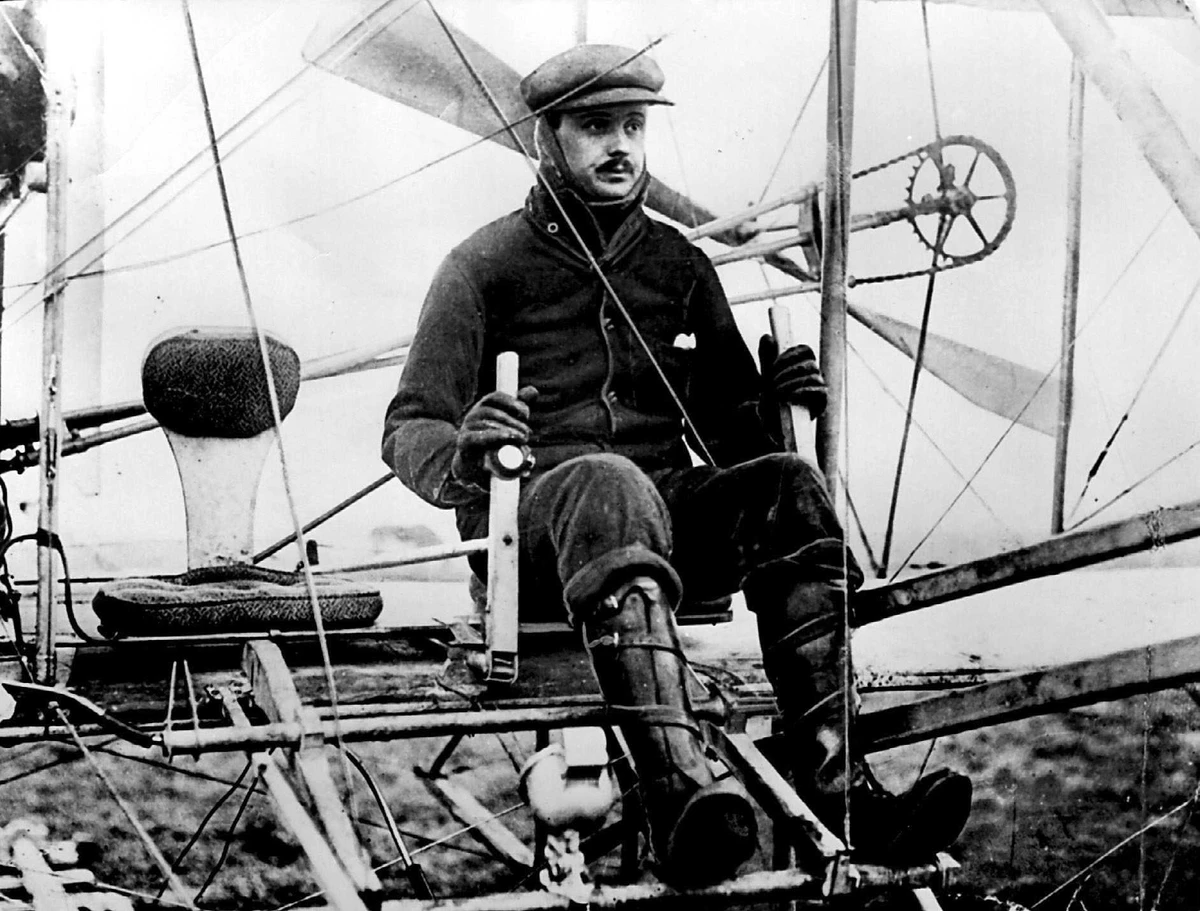
In 1908 he flew with Wilbur Wright in France. When the Wright brothers visited Britain the following year, Rolls acted as their official host. He acquired a Short-built Wright-type machine and learned to fly it himself. On 8 March 1910, the Royal Aero Club issued aviator certificate No. 2 to Charles Rolls.
By then the automobile company bearing his name was becoming one of Britain’s great industrial enterprises. Rolls was drifting away from it. At the end of 1909 he stepped down as technical managing director and remained on the board.
It seems almost irresponsible.
It was also completely consistent.
Charles Rolls was not fundamentally a custodian. His peculiar gift was recognising the moment when a dangerous experiment was about to become a form of travel.
The return
Louis Blériot crossed the English Channel from France to England on 25 July 1909.
It was one of those events after which geography feels slightly different. The Channel had protected Britain from armies for centuries. Steamships had turned it into a scheduled crossing. Now a man had simply flown over it.
Rolls wanted to do something more.
Not merely England to France.
England to France and back without landing.
On the evening of 2 June 1910, he took off from Swingate near Dover in his Wright biplane.
There was no enclosed cockpit. No radio. No weather radar. The structure surrounding him was wood, wire and fabric.
Rolls crossed the coast and headed over the water. At Sangatte he circled and dropped a message intended for the Aero Club de France.
He did not land.
He turned the aeroplane around and flew home.
About ninety-five minutes after leaving England, Rolls was back above Dover. He circled the castle and landed near his point of departure, completing the first non-stop double crossing of the Channel by aeroplane.
From our century, fifty miles of flying can sound almost comically small. That is the wrong way to see it.
The important part was the return.
Blériot had shown that an aeroplane could cross a sea. Rolls demonstrated something psychologically different: an aeroplane could go somewhere and come back.
That begins to resemble transportation.
It begins to resemble travel.
Forty days
On 12 July, Charles Rolls was flying again.
The venue was the Bournemouth International Aviation Meeting. Early flying meetings were part competition, part exhibition and part public experiment. Pilots flew astonishingly fragile machines before crowds, testing altitude, speed, landing accuracy and control.
Rolls was attempting a precision landing. He approached steeply, realised he was likely to undershoot and made a sharp pitch correction. The altered tail structure could not bear the load. The Wright plunged into the ground.
Rolls died immediately.
He was thirty-two.
The man who had spent his short adult life proving that mechanical transportation could become faster and more dependable was killed by the newest form of transportation before engineers had learned how to make it dependable.
There is a temptation, knowing the ending, to rewrite Rolls as a reckless rich man whose appetite for speed finally caught him. That would misunderstand the period.
Every transportation revolution requires a generation willing to use machinery before its risks have been engineered out. Rolls belonged to that generation. So did Blériot, the Wrights and the motorists attempting thousand-mile journeys when punctures, broken axles and failed ignitions were ordinary features of travel.
They were doing reliability engineering with their bodies inside the experiment.
The name on the wing
Charles Rolls died having failed to persuade Henry Royce to follow him seriously into aviation.
Four years later Europe went to war. Britain needed aircraft engines. Royce designed one.
It was called the Eagle, the first aero engine made by Rolls-Royce.
In June 1919, John Alcock and Arthur Whitten Brown left Newfoundland in a Vickers Vimy. The aeroplane had two engines, both Rolls-Royce Eagles. Sixteen hours later they reached Ireland, completing the first non-stop flight across the Atlantic.
Nine years after Charles Rolls died trying to control a fragile Wright machine above Bournemouth, Rolls-Royce engines had carried men across an ocean.
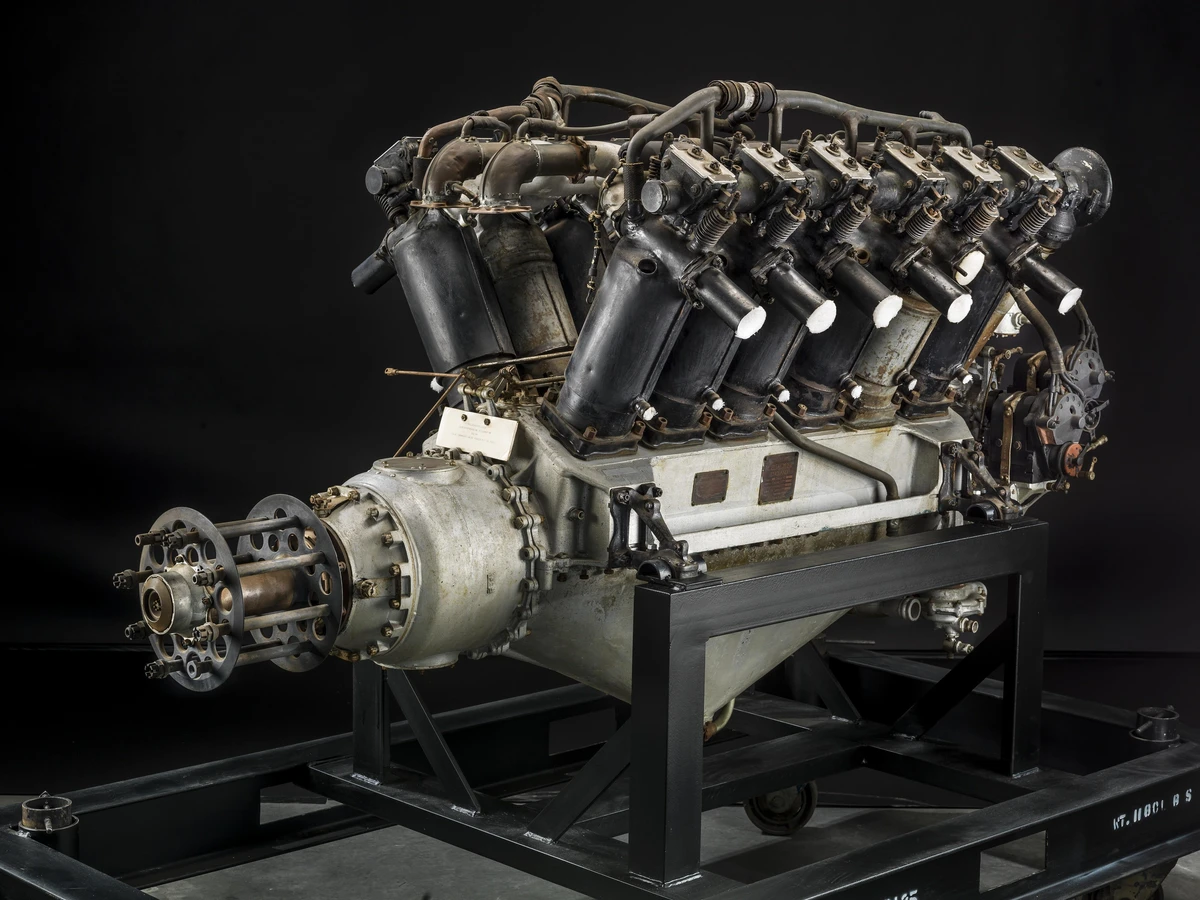
Then came the R racing engines, the Merlin, gas turbines, the Conway, the RB211 and Trent.
The motor-car and aero-engine businesses became separate companies in 1971. The name kept flying.
Charles Rolls designed none of them. Giving him technical credit would be absurd. Yet the continuity is difficult to ignore. When Rolls-Royce was learning how to make an automobile travel silently from London to Edinburgh, Rolls already believed the company’s future belonged partly in the sky.
He arrived there before his company did.
Perhaps this is why he matters more to the history of travel than the familiar shorthand—co-founder of Rolls-Royce—suggests.
Royce’s great obsession was perfection.
Rolls’s was possibility.
He understood that the decisive quality of a travelling machine is not maximum speed. It is confidence.
Confidence that the engine will start. That the machine will climb the hill. That London really can be connected to Edinburgh. That the Channel is not a boundary.
Confidence, eventually, that you can sit in seat 12A, close the window shade above Greenland and wake on another continent.
The extraordinary luxury of the Silver Ghost was not leather or polished wood. It was the ability to undertake a journey without expecting the machine to break. The extraordinary luxury of an A350 is the same thing, perfected to the point of invisibility.
Charles Rolls began life in a country house whose stables represented the old technology of travel. As a boy, he connected his bedroom to them with an electric wire.
At eighteen he brought home one of Britain’s earliest automobiles. At twenty-two he drove a car a thousand miles before the public. At twenty-six he went to Manchester and recognised in Henry Royce the engineer capable of building the British automobile he had been seeking. At twenty-nine he drove a Rolls-Royce to victory in the Tourist Trophy. At thirty-two he flew from England to France and back without landing.
Forty days later he was dead.
His working partnership with Henry Royce had lasted only six years. More than a century later, the name still appears on an engine built to carry hundreds of people farther in a single flight than Charles Rolls travelled in his flying career.
Henry Royce deserved the immortality of the engineer.
Charles Rolls deserves another kind.
He was one of those rare people who encounters a machine while everyone else is still looking at the machine—and sees the journey.
That was his genius.
And perhaps that is why his name did not remain only on the radiator of the world’s most famous limousine.
It ended up on the wing.