
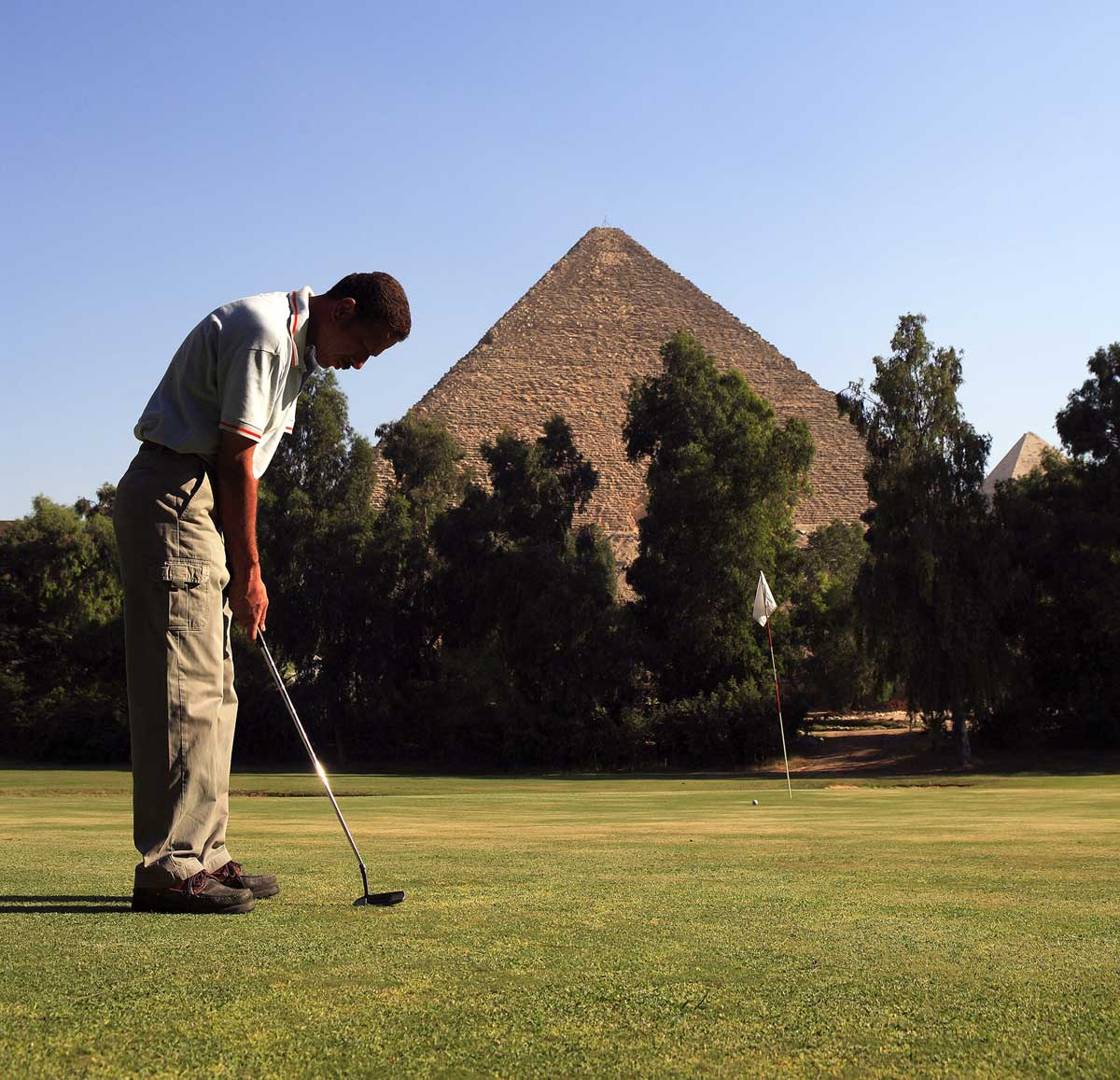
Mena House, an archival view. Photograph reproduced by Albrecht Golf Guide.
In December 2006, Mena House was promised a new life. The little golf course beside the Great Pyramid would receive lakes, evening lighting, modern irrigation and new grass. Work was expected to begin the following January and finish in October. Robert Trent Jones II was to undertake the redesign.
I was living in Egypt and working in travel at the time. From that side of the business, the attraction was obvious. Here was a course that could give a visitor a reason to linger at Giza, to book a better hotel and to return with someone who might prefer museums to golf. Egypt already had the antiquities and the winter sun. Mena House could put them into the same holiday as a round worth travelling for.
Nearly twenty years later, another announcement has arrived. In May 2026, Legacy Hotels and the Robert Trent Jones II practice agreed on a fresh redevelopment. The setting is still extraordinary. The promise, by now, is rather familiar.
Mena House: the view that cannot be built
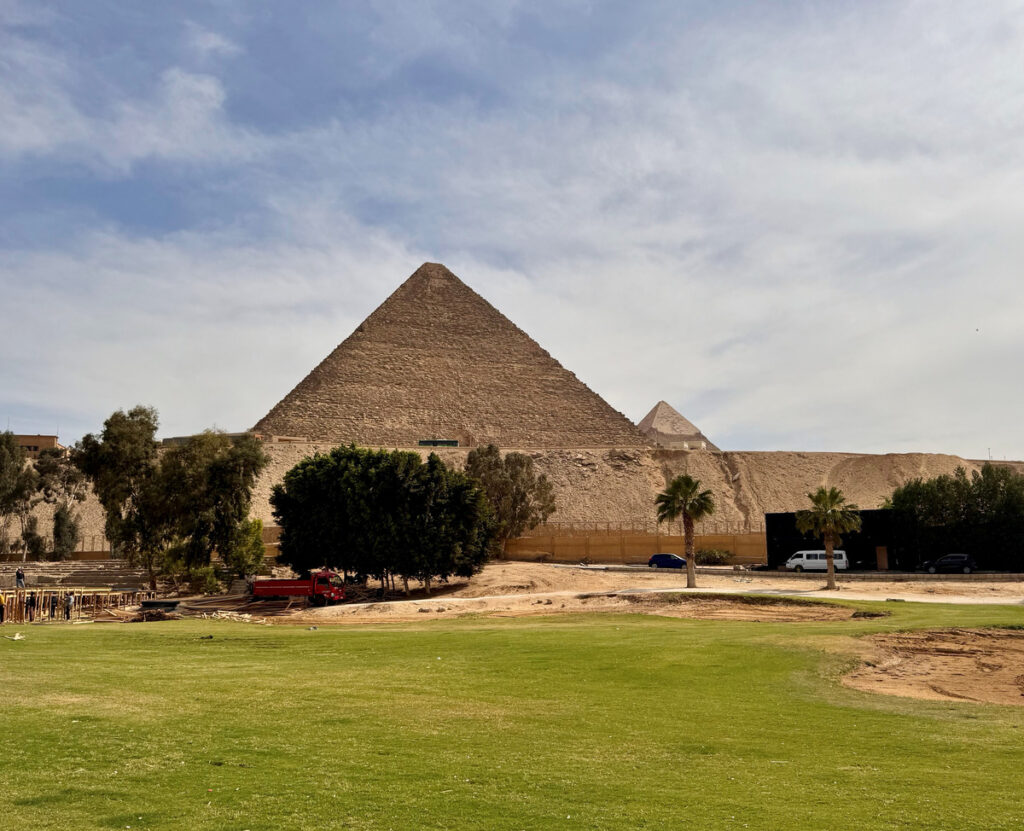
A championship course can be commissioned. The ground immediately beneath the Great Pyramid cannot. That is Mena House’s importance to golf travel: the setting gives a small historic course a reason to exist that no lengthening of the back tees could improve.
The distinction matters. A short course with an unforgettable view can contribute more to a particular holiday than a more demanding layout in anonymous surroundings. Mena House offers the possibility of golf woven into a visit to Cairo, with its hotel, the pyramids and the Grand Egyptian Museum forming a compelling reason to stay on this side of the city. The round need not consume the entire purpose of the trip.
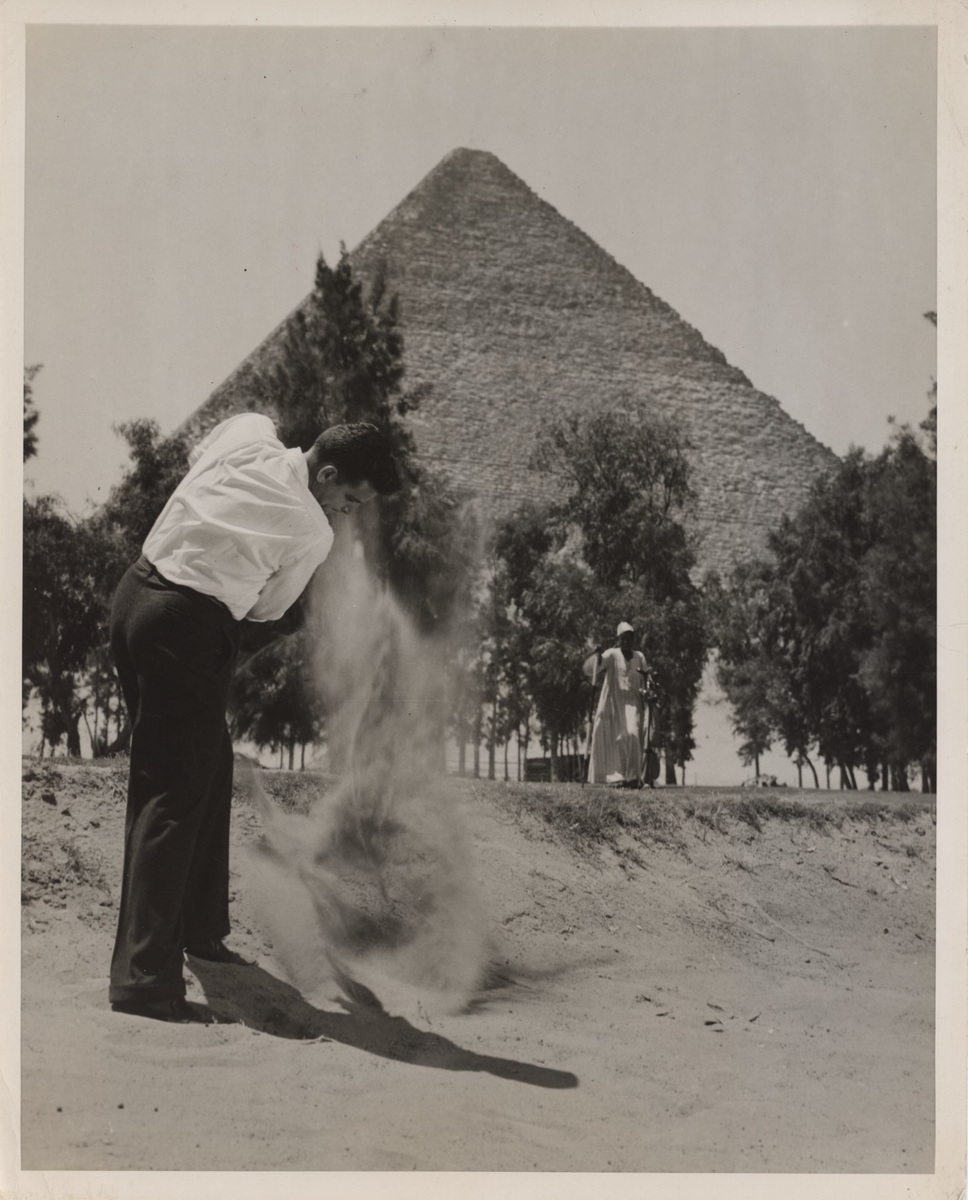
For a hotelier, that is a valuable relationship. The course lends the stay a character; the hotel gives the golf a setting in which to spend the rest of the day. A travelling companion has a holiday too. This is where I find golf most interesting as part of the travel business.
A longer Egyptian golf memory
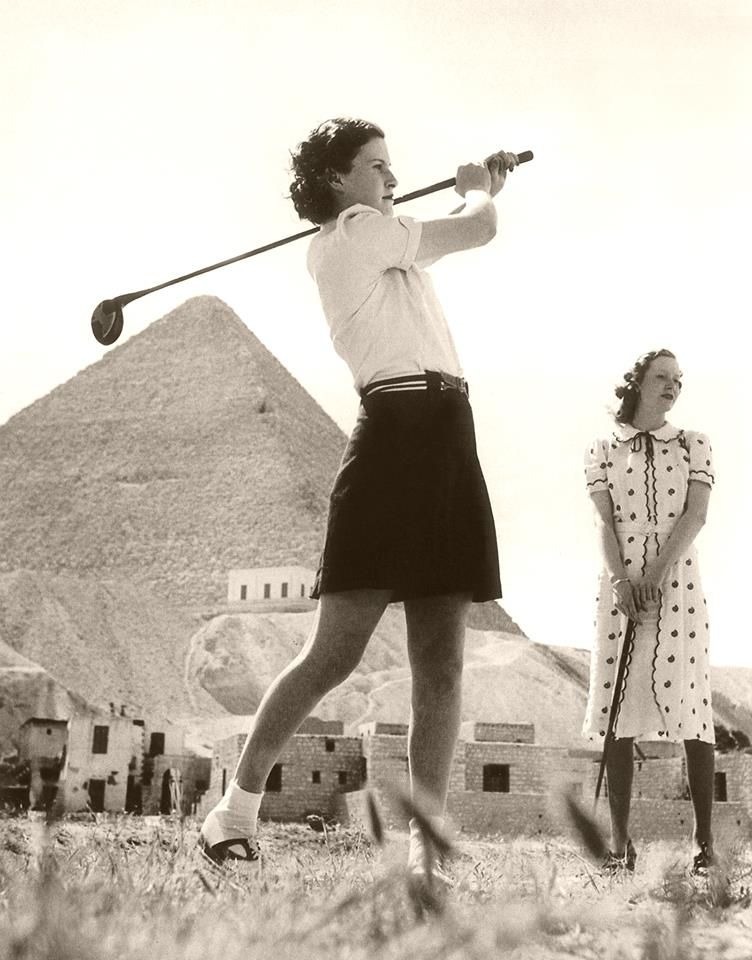
Golf in Egypt reaches back to the late nineteenth century, through British officers, expatriate clubs and winter visitors. Yet the dates deserve more care than they usually receive. Gezira Sporting Club’s foundation in 1882 is often treated as a golf-course opening date. The firmer evidence is a match on its links in August 1888, reported in The Field.
Mena House is older as a golf destination than its frequently repeated 1899 date suggests. The Golfing Annual for 1891–92 already described seven holes beside the hotel, with two more proposed. Its author understood the winter-travel proposition perfectly well: improve the course and English golfers escaping winter might stay. Even then, someone was waiting for improvements at Mena House.
This early golf belonged to the exclusive clubs of the British colonial era. It subsequently became part of an Egyptian sporting life. The national amateur championship dates to 1920; its silver trophy was still being contested a century later. The Egyptian Open followed in 1921. In the 1950s, Bobby Locke won the Open and Gary Player the Egyptian Match Play Championship.
Hassan Hassanein: Egypt’s international champion
Hassan Hassanein belongs at the centre of that history. Born in Cairo in 1916, he began as a barefoot caddie on Heliopolis’s sand course and became head professional at Gezira.
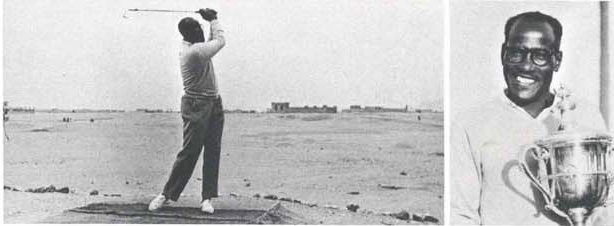
His reputation travelled well beyond Egypt. He won the Italian Open at Villa d’Este in 1949 and the French Open at Saint-Cloud in 1951. At home he took four consecutive Egyptian Opens, from 1949 to 1952, and dominated the Desert Open, winning ten editions between 1946 and 1956. He was as accomplished on sand as on grass.
At Carnoustie in 1953, in the Open won by Ben Hogan, he finished tied seventeenth. The 1975 Encyclopedia of Golf called him “the best ever produced in the Arab world,” while legendary golf writer Henry Longhurst described him as “unchallengeably the best Oriental golfer in the game’s history.” He died at forty in 1957. Egypt’s golf heritage includes a professional who could beat Europe’s established players on their own courses.
What the 2006 promise meant

By 2006, Mena House was competing with a different Egypt. New championship courses had appeared around Cairo, while the Red Sea resorts were making golf part of a longer beach holiday. A famous address could draw attention, but travellers bringing their clubs also wanted dependable conditions, good practice facilities and service that made a golfing holiday easy.
The proposed renovation had a budget of 7.5 million Egyptian pounds. Its irrigation and new turf addressed the daily work behind a good round; floodlighting could extend play beyond the heat of the day. Three lakes and a revised layout promised a fuller golfing experience. For those of us working in travel, it was an inviting prospect: an established name with something fresh to offer.
Egypt’s own Sports & Fitness devoted its May 2006 issue to golf, with Egypt among the destinations named on the cover. The annual golf issue was already an established part of its publishing calendar.
The contemporary reporting was hopeful without being entirely carefree. In Peter A. Carrigan’s Daily News Egypt account, club manager Raouf Gamal wanted the intimate atmosphere and mature trees to survive. He was also concerned about the caddies’ livelihoods during the closure and was trying to find them work with the construction company. That is a more useful measure of a golf resort than its opening ceremony: what happens to the people who make a day there run well?
The timetable proved less dependable than the idea. Later plans shifted the work into 2008–09. There were substantive improvements: in 2015, EGOTH’s chairman told Al Mal that the course had been developed at a cost of 34 million pounds. This was a more complicated history than a single renovation lasting nineteen years. But the long interruption in Mena House’s life as a bookable golf destination remained.
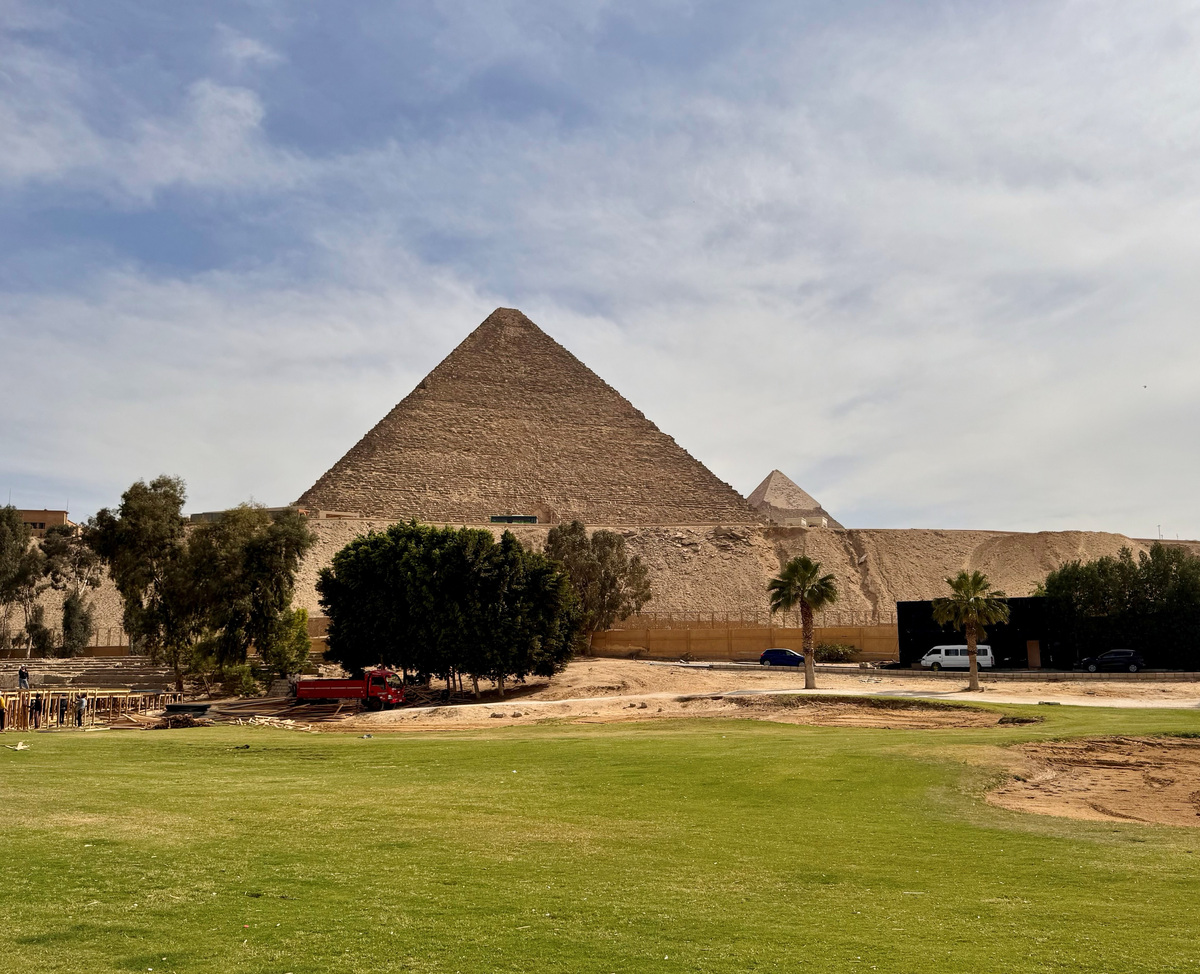
May 2026: another chance
The Egyptian Golf Federation had announced the intended redesign in September 2025. This May’s agreement gives it a developer and a defined programme: Legacy Hotels, whose majority shareholder is ICON, the hospitality arm of Talaat Moustafa Group, working with the RTJ II practice.
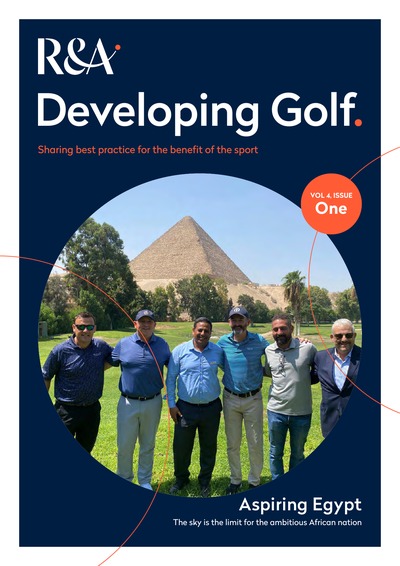
The R&A had put Egypt on the cover of its Developing Golf journal that March, under the heading “Aspiring Egypt”. Its feature links the country’s golf history with returning tournaments and the effort to attract more travelling golfers.
The new plans include a complete redesign, irrigation, new grasses and lighting for evening play. There is also a communal putting area, described as a social green, intended to draw families and hotel guests into the game. That last detail interests me. A historic resort course should be able to welcome someone who simply wants an enjoyable hour outdoors, as well as the traveller who arrives with a carefully packed golf bag.
Trent Jones III, the practice’s chief operating officer, puts the design ambition neatly: “Our focus is on designing a course that belongs in that place.” It is the right test for Mena House. The pyramids should remain the reason for being here; the new golf should make the experience worthy of them.
There is no announced reopening date. For now, this is a project to follow rather than a round to put into an itinerary. Fortunately, Egyptian golf has continued to develop while Mena House has waited.
Three courses, two kinds of journey
Mena House and NEWGIZA belong to a Cairo visit; Somabay belongs to a Red Sea stay. I would give them room in a holiday on their own terms, rather than treat them as neighbouring stops on one golfing circuit.
NEWGIZA: the quarry comes first
NEWGIZA’s strongest argument is the quarry itself. The course moves between exposed limestone faces and changes of level that give the round a physical relationship with the desert. This is landscape with substance, beyond a decorative fringe of sand around green grass.
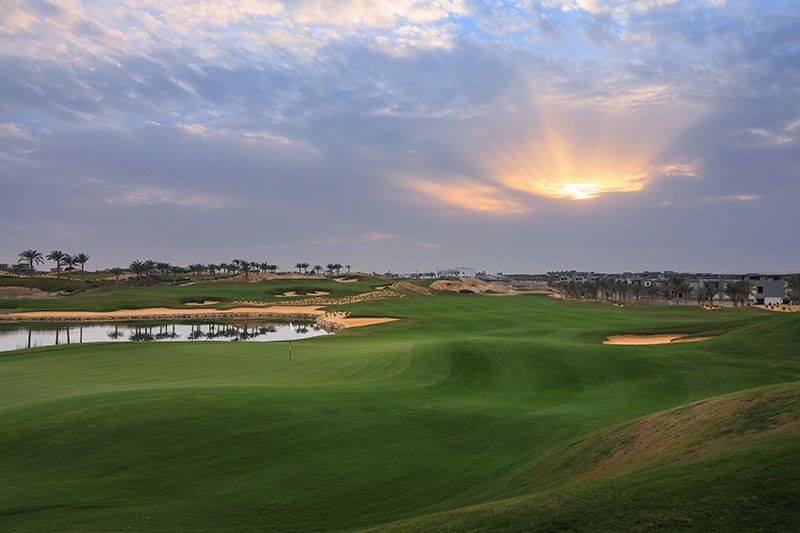
The Thomson Perrett & Lobb course opened in 2019. Tim Lobb explains that retaining the quarry’s vertical cuts was central to the design. He wanted the place to look dramatic while allowing golfers to get their tee shots away comfortably; the more exacting questions would come on the approaches to its large, moving greens.
Golf Digest Middle East editor Kent Gray singled out those elevation changes and strongly contoured putting surfaces in his opening appraisal. They offer something more lasting than novelty. The shape and variety of the holes give a golfer a reason to return after the first encounter with the setting.
The variety comes from the ground itself: generous landing areas give way to more exacting approaches, while the greens have strong contours of their own. The par threes make use of the changes in height. Water hazards add another decision to the line of play without disguising the desert setting.
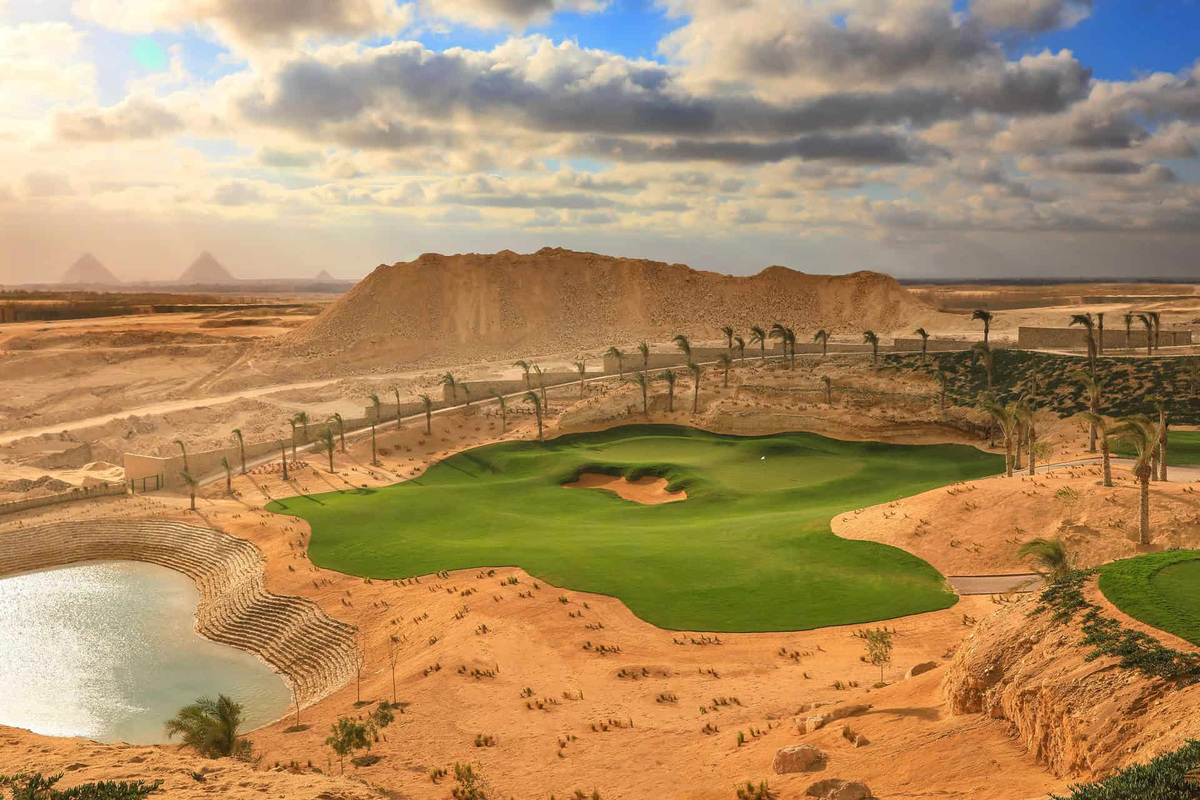
The fourth drops steeply into the quarry, with the pyramid sightline planned into the original design. Housing developments now form part of the wider landscape, bringing the edges of a growing city close to the fairways. The exposed limestone still gives the course its strongest sense of place.
I would choose NEWGIZA for its quarry architecture and make a separate, unhurried visit to the pyramids. Its relationship to Cairo gives a golf holiday cultural weight, while its setting distinguishes the round from a parkland course that could be almost anywhere. The photograph records the design’s original ambition; the quarry is the reason I would go now.
The Cascades: desert at the water’s edge
At Somabay, the course gives the sea a role in the game. Gary Player’s layout, opened in 1998 and long known as The Cascades, takes the round out to the Red Sea and back through the desert. Its appeal belongs to a different holiday: time on the coast, with golf as a substantial part of the stay.
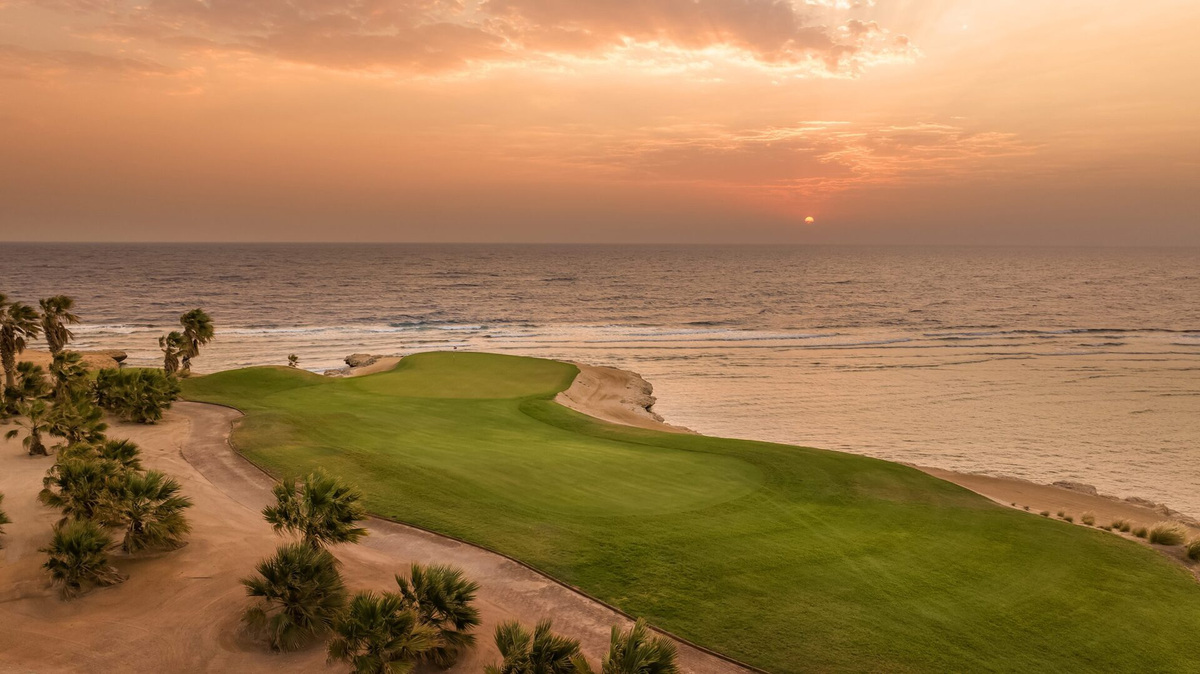
The fifth is the most immediately persuasive photograph, a par three with its green projecting towards the water. On the fourteenth, the shot crosses a desert ravine towards a narrow green with the sea beyond. These are views with consequences for a golfer. Exposure, the direction of the wind and the choice of a safer approach give the scenery something to do.
In his 2023 TripReporter review, Andy Mossack picked out the fifth and sixth beside the sea and the fourteenth as the outstanding hole on the inward half. His account makes the wind an active difficulty. The coast contributes to the round rather than merely providing a backdrop for the clubhouse terrace.
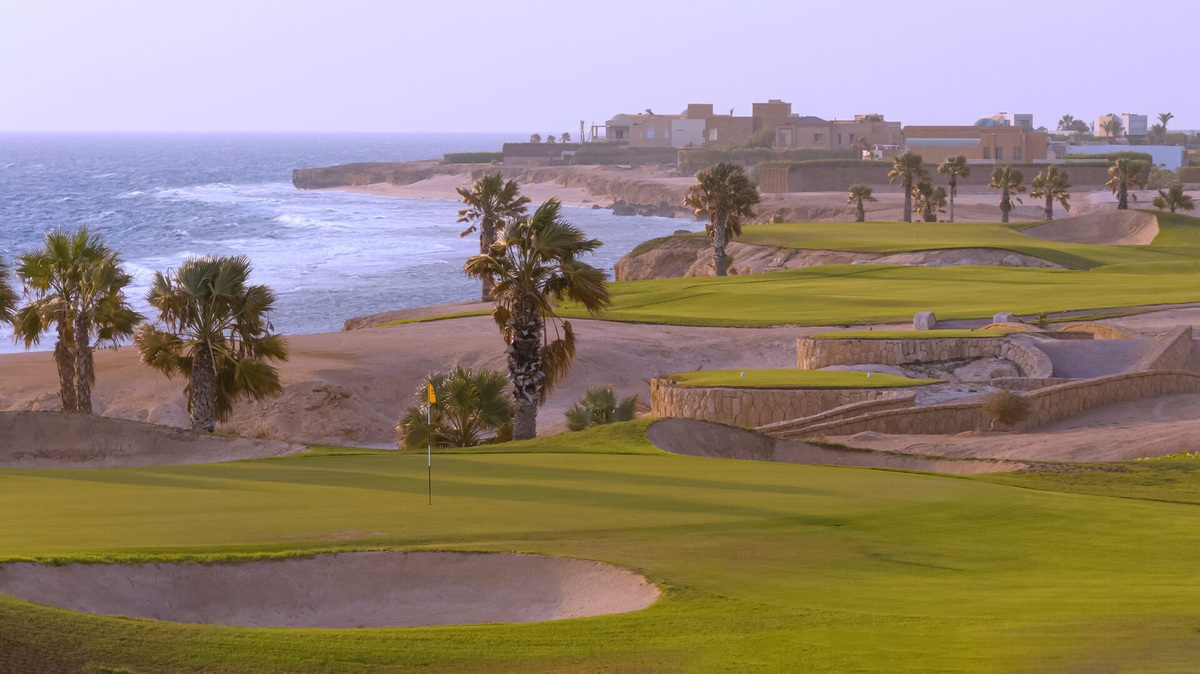
It is worth hearing the less contented voices too. In early 2026, Albrecht Golf Guide contributors reported construction affecting parts of the course’s surroundings. Their accounts differed in how much it spoiled the visit, and praise for the fairways and greens could sit beside objections to buildings or waiting. The sea holes remain the great attraction, but the resort is a developed peninsula, not untouched desert.
The accommodation choice changes the emphasis. The Cascades Golf Resort sits within the course and suits a stay arranged around golf. Kempinski Hotel Soma Bay is a separate beachfront option, with the course available as part of a broader Red Sea holiday. I would decide how the rest of the day should feel before choosing between them. A golfer may value being in the middle of the course; a companion may prefer to wake beside the beach.
That is the commercial strength of a place like Somabay when it works well. Golf, swimming and time by the sea can sustain the same holiday without requiring everyone to spend it in the same way. The course helps sell the stay, and the stay gives the course more than one kind of guest.
What would bring me back
My interest in golf destinations starts with the place. It is the question I also ask of golf in Dubai and Abu Dhabi: after the praise for conditioning and service, what makes the journey worth taking here?
Egypt has unusually good answers. NEWGIZA makes use of the cut limestone of a quarry. Somabay gives the Red Sea a part in the play. Mena House has the oldest and most intimate proposition of the three: time spent on a small course beside a monument that already draws people across the world.
I would like its return to be measured in the pleasure of that day. A course cared for properly, a welcome that extends beyond accomplished players, a hotel that understands why its guests have come. Egypt does not need to invent a golf tradition. It has one worth looking after.
The next date I want from Mena House is the day the first guests can play.
Shared on

The post and its conversation
The photographs as they appeared on Instagram, with what readers said there. Likes and replies open on Instagram.



 Join the conversation on Instagram