

What is it really like, the End of the World?
Ushuaia, el Fin del Mundo: the End of the World. The place where the roads run out and Antarctica begins, ringed by glaciers, mountains and forests, where the spirit of mystery and adventure lives.
From Buenos Aires to Ushuaia
As the plane cut smoothly through the sky, heading south from Buenos Aires, the Argentine capital, to mysterious, beckoning Tierra del Fuego, I dozed, opening my eyes now and then to peer through the window for anything beyond the thick white cloud below.
What would Tierra del Fuego be like? What does the end of the world look like, and the southernmost city on the planet? How do people live on land so cut off from everything and so little known? These questions intrigued me terribly, and I was wild with impatience to land and see it all for myself. At that point I knew absolutely nothing about the place beyond an intuition that it was a wild country of extraordinary beauty, secrets and experiences.
The flight from Buenos Aires to Ushuaia took three and a half hours.
Soon the captain announced our descent, and a little later we began sinking into the clouds before landing.

A summer morning in Ushuaia
The End of the World met us with a grey, overcast morning and wet snow. From the plane, Ushuaia looked tiny: a strip of land along the shore of a bay, with high, massive snow-capped mountains on one side and the cold waves of the Beagle Channel on the other. The weather made it feel like a place everyone had forgotten, sullen and gloomy. This was more or less how I had imagined the End of the World.
The plane landed on a spit running out into the sea, with the whole town laid out against the mountains.

The wet snow came down harder, and soon the whole town had dissolved into one flat grey. It was cold, too, with a wind that cut straight through you.
Mid-December is the height of summer in the Southern Hemisphere, yet the weather here was anything but summery. The calendar said firmly that dawn at the End of the World had come at exactly 4:50 a.m., but even now, at nearly nine, the light seemed to have arrived only modestly. The town could not shake off the twilight.

The airport is 15 minutes’ drive from the centre. Our hotel was further out—at the opposite end of town, to be exact.
We took a taxi, reached the hotel in under 30 minutes, checked in, changed and went into the centre for breakfast and a first look around.
Cold, gloom, lupins in bloom, and behind them the snowy peaks of the Andes. Such is the landscape at the End of the World.

A walk at the End of the World
Ushuaia is a small town. You can walk the whole centre in half an hour. There are only a few streets, and really only one of them matters: San Martín, where all the shops, restaurants and museums are.
A promenade runs along the shore, and it makes a good walk.
To the right lie the cold waters of the Beagle Channel; ahead and to the left, mountains hiding behind low cloud.
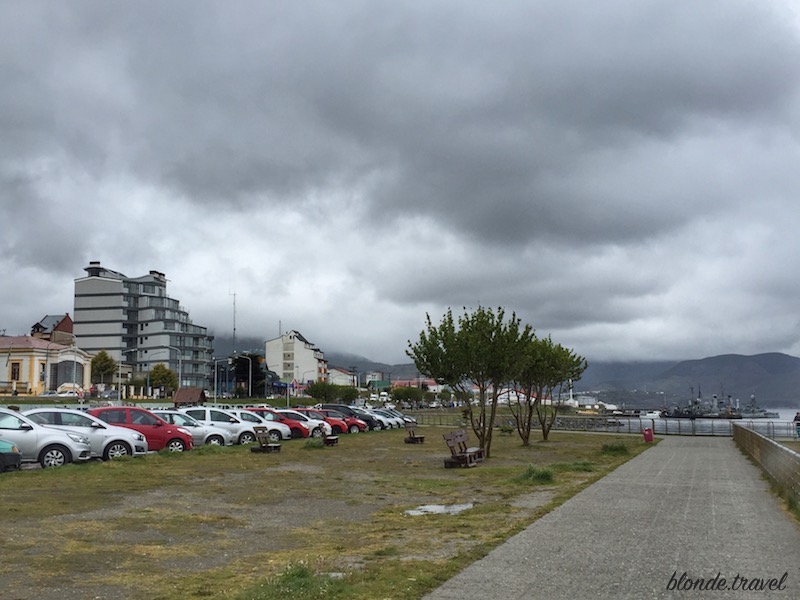
It is very hard to get lost in Ushuaia. One street follows the shore, and narrow lanes run off it at right angles, straight uphill. The climb starts almost at once, and the houses scramble up the slopes. The town lies at the foot of the Andes.
We were frozen, so we went into a cosy café with big windows that ran right down to the floor to warm up and have breakfast.
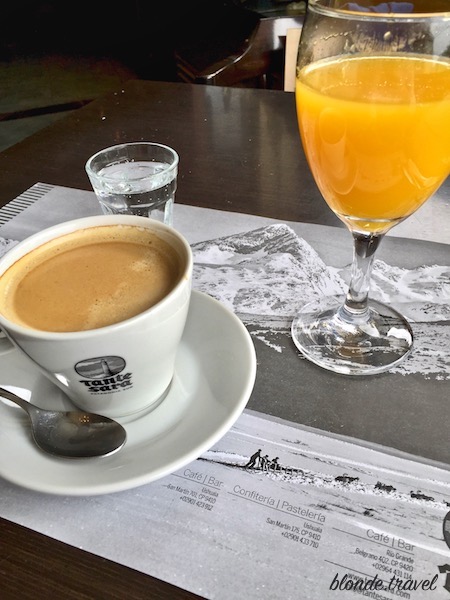
Hot coffee, a hearty breakfast and the warm, snug room lifted our spirits, while outside it stayed cold, overcast and grey, and passers-by wrapped in woollen scarves still hurried past. Only one question kept turning in my head: what do people actually do here? Everything about the place produced a single desire—to wrap up in a warm blanket and sleep.
Deep down I kept telling myself that this was quite the wrong impression of the town, the result of a sleepless night, an early arrival and the grey weather. Surely it was all far brighter and more colourful than this. Still, this picture of Ushuaia fitted my expectations rather well. A place partly mystical, partly baffling, somewhere beyond the ordinary—and it draws you in, and you begin to like it.
We soon learned that we had come to Ushuaia at the best time of year. It was summer, after all. In winter, in June and July, it is much colder here, and piercing winds blow up from Antarctica. The sun becomes an even rarer guest: it looks out for an hour or so towards midday, wishes everyone a good day and hides behind the mountains again.
Ushuaia, capital of Tierra del Fuego
Tierra del Fuego is a harsh, wild land at the very southern end of the Americas, and Ushuaia is the capital of its Argentine province. Snow can fall here even in December, at the height of summer, as it did the morning we arrived. This is the frontier of human life. Beyond it lie only the cold, lifeless expanses of Antarctica.
The fires of the Yámana
Judging by the weather, I would never have agreed with the name Land of Fire. Land of Ice would suit it far better. But the name has nothing to do with the temperature. It goes back to Ferdinand Magellan. In 1520, sailing through the strait that now bears his name, he saw a multitude of fires in the distance and at first took them for volcanoes. As the ships came closer to the shore, the fires turned out to be the night fires of the people who lived here, the Yámana among them, kept burning for warmth and to hold off wild animals.
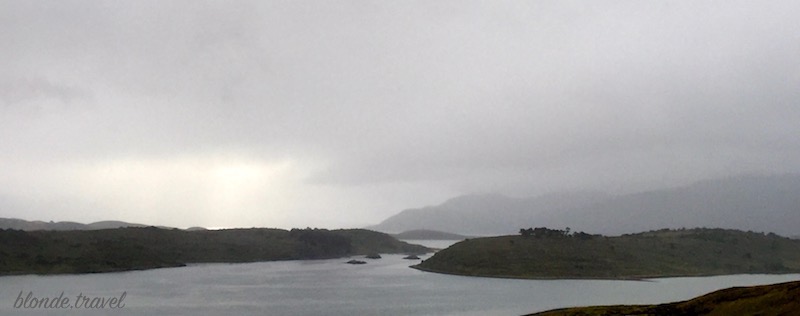
In fact, it was those fires that drew Magellan to this land at all.
So the southern tip of Argentina and Chile came to be called the Land of Fire, Tierra del Fuego in Spanish. It stretches for hundreds of kilometres, from Patagonia to the cold southern seas beyond which lies Antarctica.
A walk with the penguins
After breakfast things looked up (yes, I always say the world is a happier place on a full stomach). The sun came out, the snow melted into slush on the roads, and little by little the town came to life. Perhaps 11 in the morning is simply when Ushuaia wakes up.
Meanwhile we went down to the waterfront to arrange a trip to the penguins. They, after all, were the deciding reason for coming all this way.
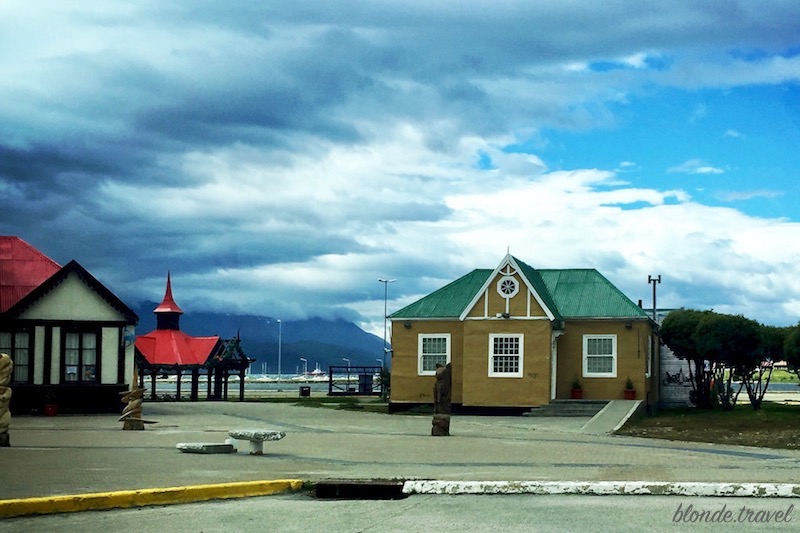
The tourist offices on Ushuaia’s waterfront were easy to find: colourful little houses like these, their windows plastered with eye-catching notices and pictures.
The excursion to the island where the penguins live had a cheerful name, Walking with Penguins, and ran twice a day, at 8 a.m. and 2 p.m. The afternoon departure suited us, and until then we decided to give ourselves to the town’s history—that is, its museums.
The penguins nest on Isla Martillo, a small island in the Beagle Channel. If I were going back today, I would book the walk among the penguins ahead; it now comes as a full day, with an hour on foot among the Magellanic and gentoo penguins and a cruise along the channel.
Ushuaia’s museums
Not far from the waterfront stands Ushuaia’s Maritime Museum, in the building of the former prison. It is large, on two floors, with several wings, and it falls into four themed parts:
- The Maritime Museum. Exhibits on the sea, among them models of naval ships, including the famous Beagle.
- The Museum of the Ushuaia Prison. Material on the convicts, their work, their punishments, the closing of the prison and the sad stories of some of its most notorious inmates.
- The Antarctic Museum. Stuffed penguins and other creatures of the frozen south, and exhibits on the history of the discovery of Antarctica. What held my attention was an exhibition on how Ushuaia grew, which included the first settlers of Tierra del Fuego.
- The Museum of Marine Art.
Tickets and opening hours are on the museum’s website.
The Yámana
The Yámana are the people who lived in Tierra del Fuego for thousands of years before Europeans arrived.
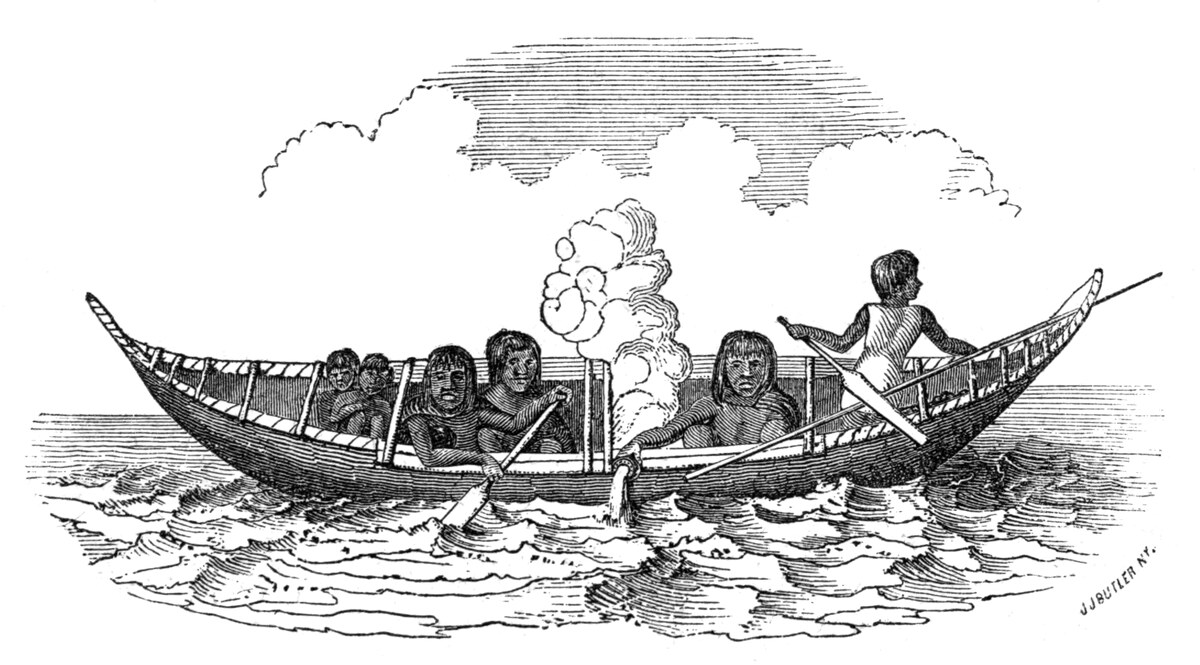
Despite the harsh climate, the Yámana did without clothes. Even at −5 °C, in a strong wind, they slept on the snow and dived into the sea for shellfish. Only a serious drop in temperature made them throw animal skins over their shoulders. To protect their skin from frostbite, they constantly rubbed it with seal fat.
The Yámana were sea nomads, or sea gypsies, as they were also called. They could spend weeks, even months, in their canoes, keeping a fire alight on the bottom of the boat to stay warm and to roast mussels.
From the exhibits in the museum, I gathered that the men looked after the fire and hunted seals, while the women paddled and dived for shellfish.
Facts about Ushuaia
The southernmost city in the world
Ushuaia has long been known as the southernmost city in Argentina, in South America and on the whole planet, and the city closest to the coldest continent, Antarctica.
To be more precise, there are two small settlements further south, on the Chilean side. The village of Puerto Williams laid claim to the title, but with about 2,000 people it had not been given the status of a city; the other, a tiny fishing settlement of some 30 families, was no rival at all. Ushuaia then had 57,000 inhabitants. In 2019 Chile changed its definition of a city and Puerto Williams became one, so on paper the title has crossed the channel. Ushuaia, now home to about 80,000 people, has kept its name as the End of the World.
Ushuaia lies on the southern shore of Tierra del Fuego’s main island. It began as a mission founded by British missionaries in 1870, some three and a half centuries after Magellan’s ships first passed these shores.
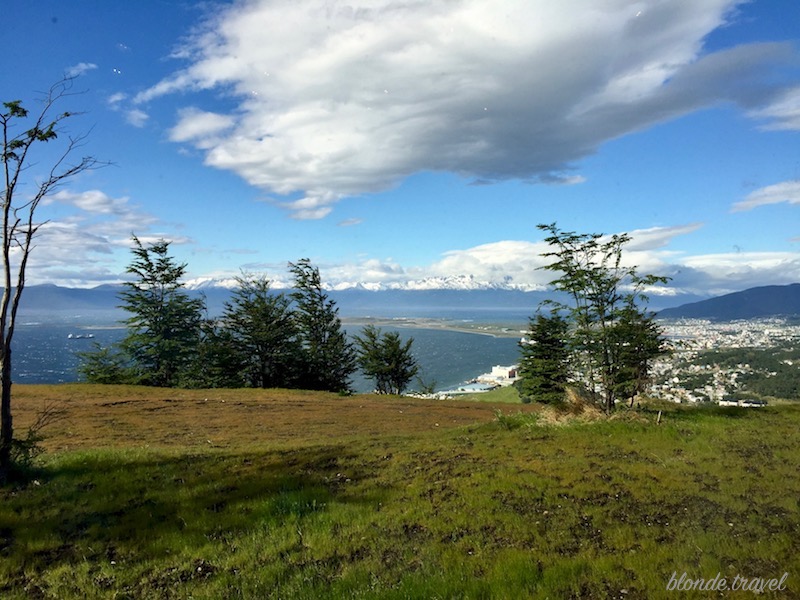
Cold as Ushuaia is, its nature is colourful and, above all, unusual. The bright landscapes that open up from the heights are glorious.

It is astonishing how much beauty fits into so small a place: a snug bay of dark-blue water with ships rocking slowly on the waves, seabirds soaring overhead, bright houses strung along the shore and climbing the slope, massive, heavy mountains with snow on their peaks, dark-green forest, and across the sky a whole palette from pale grey to deep blue. And such unshakeable calm…

Even when grey cloud hangs low over the land and everything is wrapped in gloom, bright flowers like these, which grow everywhere, lift Ushuaia’s grey landscape with sunny colour.
Lupins: the brightest colour in Ushuaia’s landscape.

Every morning in Tierra del Fuego something happens that, once seen, you remember all your life. For 15 minutes the sky explodes in unreal purples, pinks and crimsons.
A prison at the End of the World
Ushuaia grew up as an Argentine prison colony. From 1896, the state sent its most dangerous criminals here.
A clever idea: there is no running away from the End of the World. The convicts built the town’s infrastructure themselves, including a railway that is now one of its most interesting sights. The prison closed long ago, and in its place is the museum I have already described, with exhibits on the same themes.
The prisoners’ line still runs as the End of the World Train, through the forest into Tierra del Fuego National Park, and a half-day tour of the park can include a ride on it.
On the Beagle Channel
Ushuaia stands on the Beagle Channel, named after HMS Beagle, the ship on which the scientist and naturalist Charles Darwin later sailed, gathering material for On the Origin of Species.

The channel is easy to see from the water. From the town pier, a catamaran sails out past the sea lion and cormorant islands to the Les Éclaireurs lighthouse, stopping for a short walk on one of the Bridges Islands.
No road reaches Ushuaia from the rest of Argentina without leaving it. Overland, you come through Chile and cross the Strait of Magellan by ferry; from Argentina itself, you fly.

Ushuaia and the beavers
Ushuaia has a rather strained relationship with beavers.
They were brought here from Canada in 1946 to start a fur industry (an idea, incidentally, that never worked). Instead, the beavers caused an ecological disaster, doing serious harm to the surrounding islands.
The gateway to Antarctica
Ushuaia is the gateway to Antarctica. The coldest and least explored continent is only about 1,000 kilometres away.
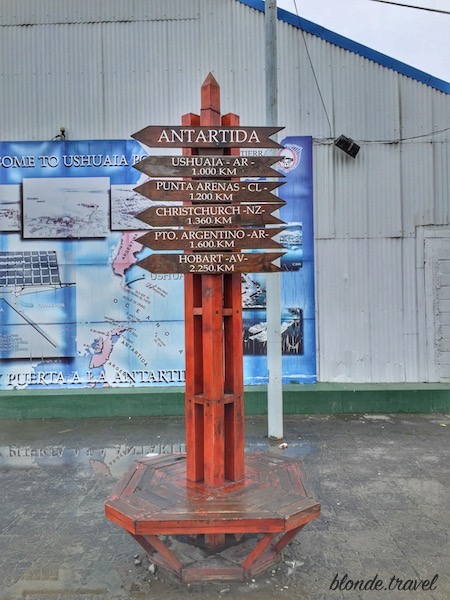
From the harbour you can set out on this remarkable, extreme journey aboard ships that reach the white continent in two or three days.
While we were there, a ship was being loaded in the port. Ships, especially big ones, have always drawn me with their mystery and romance. Just imagine: in a few hours this giant would leave for the least known continent on Earth, cross the restless waters of the Drake Passage, and by the day after tomorrow be among the Antarctic ice.

The trees in Ushuaia lean their crowns the way the wind blows. People here call them flag trees.
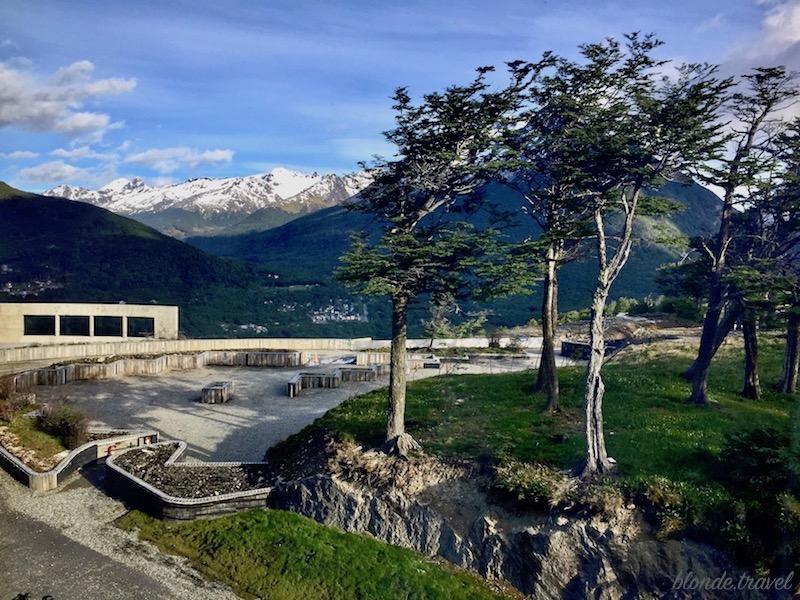
The beauty of Ushuaia, its solitude and its sullenness, casts a spell. You want simply to stop at the edge of a cliff and take in the magic—the extraordinary spirit of the End of the World.
Planning a trip to Argentina? You might like Mendoza, too: Atamisque Lodge: Where Tranquility Is Part of the Landscape.