
About Patagonia
“Exactly! The thirty-seventh parallel crosses Araucanía, runs through the pampas along Patagonia’s northern frontier, and disappears into the waters of the Atlantic Ocean.”
In Search of the Castaways
Ever since childhood, when I was captivated by the stories of Jules Verne, Patagonia has lived in my heart as something mysterious, beautiful, and fantastic.
It is also believed that Patagonia inspired the Little Prince’s planet in my favorite work by Antoine de Saint-Exupéry, and that the author was describing these very landscapes of untouched, almost unreal nature. The writer visited this place while serving as a pilot, and Patagonia’s incomparable scenery stayed with him.
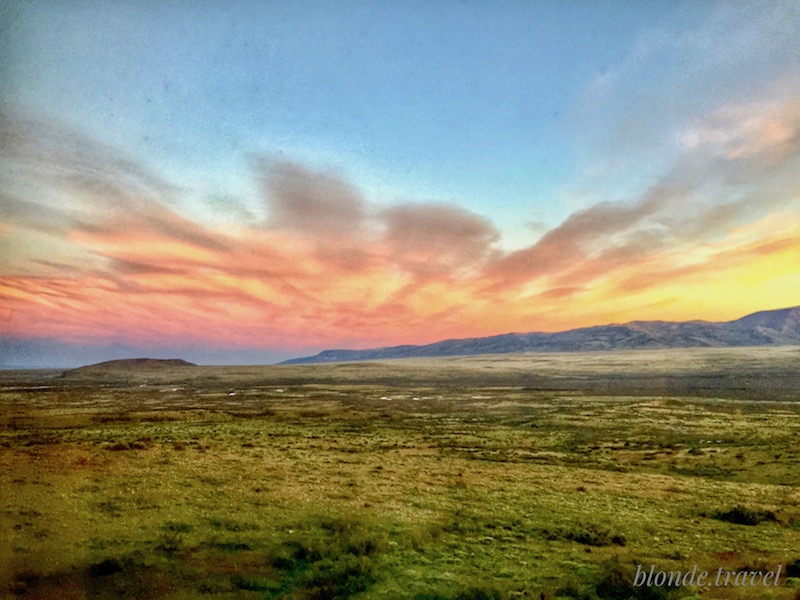
There are two ways to discover Patagonia.
The first is to turn to an encyclopedia, which will generously supply useful information about the region’s geography, nature, and climate. It will also share interesting facts about its sights and distinctive character.
From an encyclopedia, I learned that Patagonia occupies the southern reaches of two countries, Argentina and Chile. Apart from Antarctica, it was the last land on Earth to be settled by people. The extreme natural conditions of this harsh, wild region—with its steep cliffs, ice fields, windswept steppes, narrow rivers, and fjords—are a source of inspiration. They draw adventurers and travelers who long to explore it as irresistibly as a magnet.
Magellan gave the region the name “Patagonia” after its indigenous inhabitants, whom he called “Patagón” because of their large feet.
Patagonia therefore means “Land of the Big-Footed.”
Much has also been written about the region’s natural wonders, such as Los Glaciares National Park, home to more than 300 picturesque glaciers, emerald lakes, and rivers. The encyclopedia told me that 47 of these glaciers descend from Argentina’s Southern Patagonian Ice Field, and that Perito Moreno Glacier—which became a UNESCO World Heritage Site in 1981—is the most extraordinary of them all.
The second way to discover Patagonia has nothing to do with figures and facts. It is the chance to see Patagonia with your own eyes, hear it with your own ears, and feel its spirit.
Patagonia is a land of wonders. It cannot be described in the words of books or captured in photographs.
It is one thing to know the specifications of Perito Moreno Glacier and quite another to stand before its grandeur, listening to the ice grind as it moves and hearing the incredible roar when part of it crashes into the lake. No camera can capture the unimaginable shades of blue shimmering through the ice.
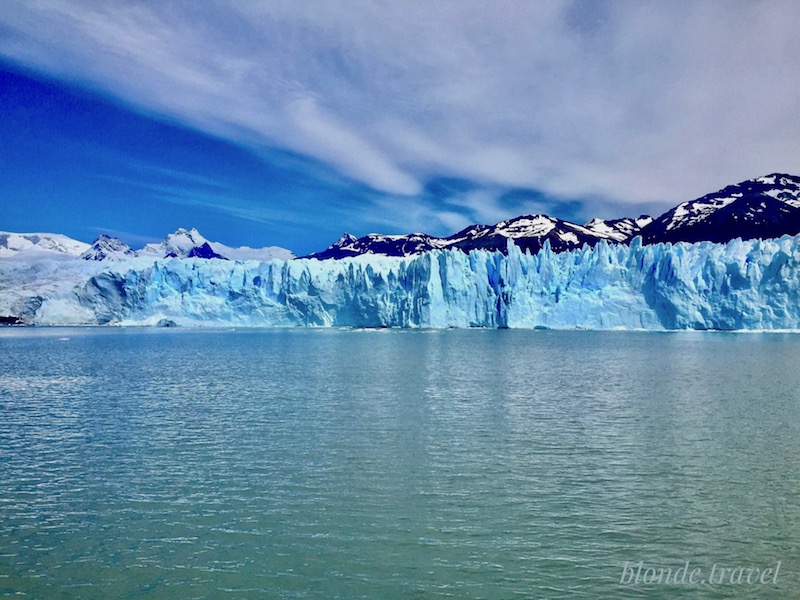
The glacier’s surroundings are equally full of unsurpassed beauty: hills and mountains, lakes and rivers, sculptures of ice, and endless expanses stretching beyond the blue horizon. And silence. Nature has truly outdone itself here.
EOLO—the Spirit of Patagonia
EOLO stands at the heart of this universe.
So far away, yet so close.
When you travel through Patagonia, you do not merely leave your own trace upon it. You also carry away a wealth of emotion, experience, and a transformed way of seeing the world.
EOLO embodies the true spirit of Patagonia and the personal experience of its first European and Creole settlers. Inspired by the old Patagonian ranches, EOLO perpetuates the heritage of the indigenous peoples.
Standing on this land, crossed by thousands of travelers before you, it is impossible not to feel its aura of adventure and mystery.

EOLO’s Location
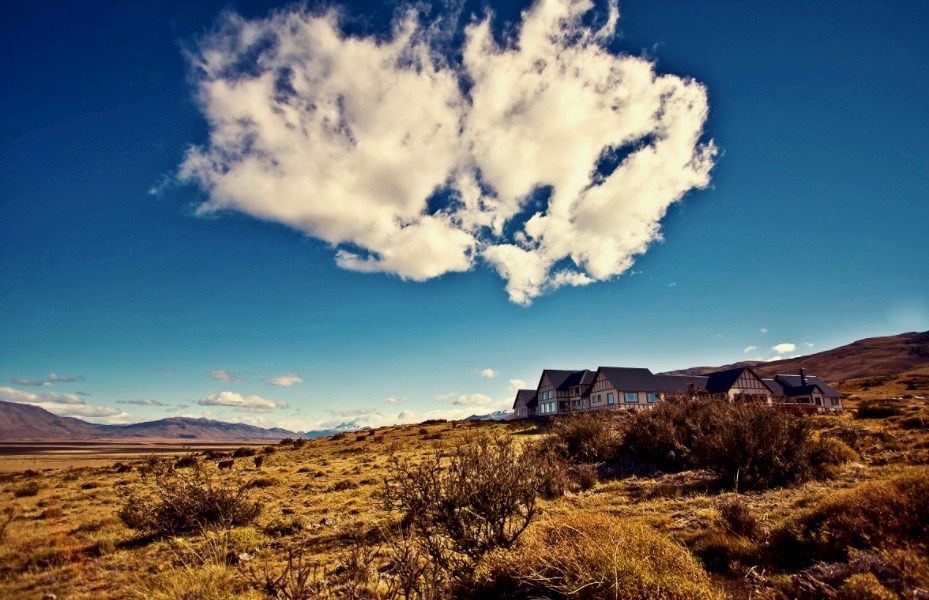
This magical lodge sits on a 4,000-hectare estate, just a few kilometers from the majestic Andes, between the town of El Calafate and Perito Moreno Glacier. Los Glaciares National Park is only a 45-minute drive away, yet EOLO is far removed from the bustle of the area’s tourist life.
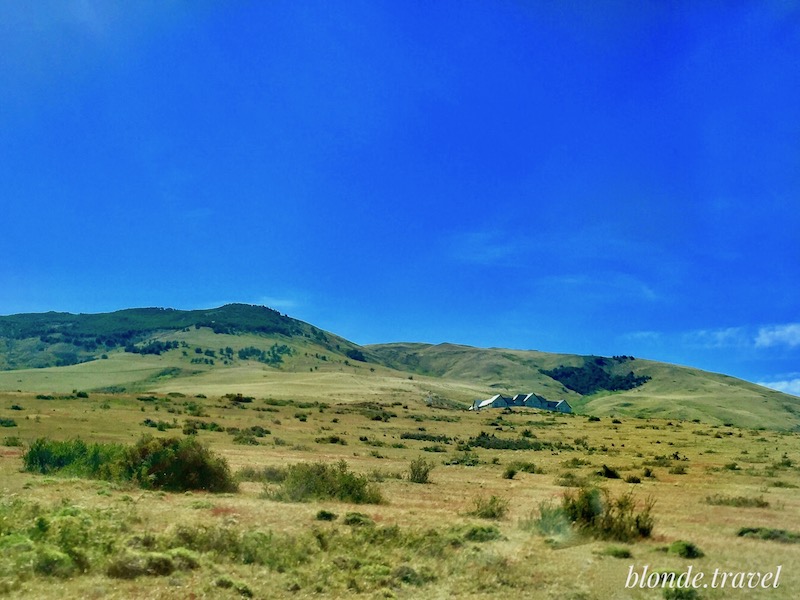
I did not even notice it at first. Only when we had come almost all the way up to EOLO did it appear from behind a hill. Here in the La Anita Valley, nothing can disturb the peace and quiet.
EOLO blends into nature so harmoniously that it seems an inseparable part of the landscape, as though it had always been here.
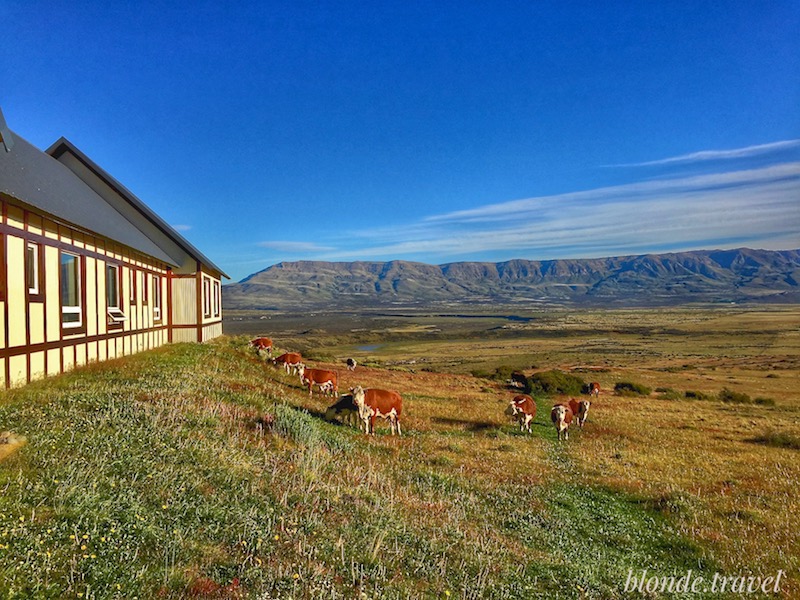
Everything about EOLO’s setting and atmosphere makes you feel as though you are standing at the center of the universe.
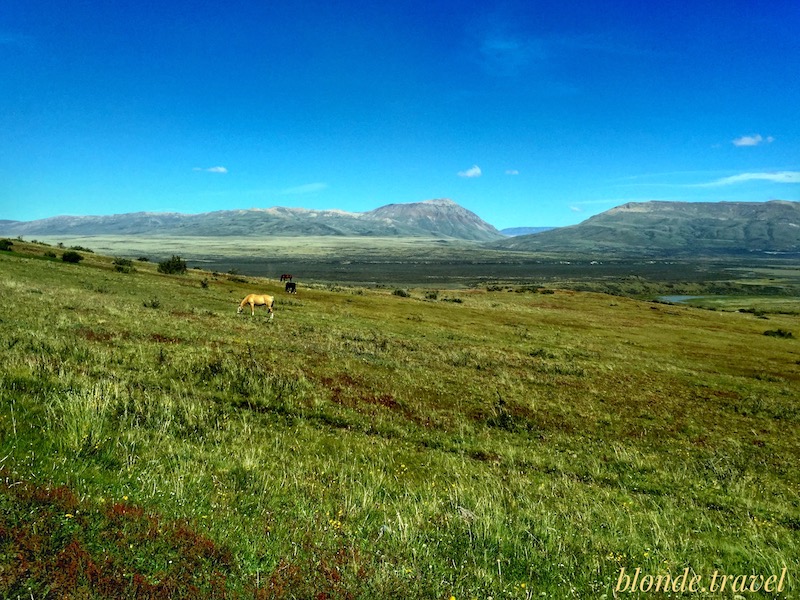
It is so secluded that it seems like a place of absolute solitude and silence. Yet life is everywhere—only it is a different, exceptional kind of life, belonging to the proud and beautiful wilderness of the steppe. Snow-capped mountains rise above horizons without end; horses and cows graze in green meadows; rabbits dart here and there, hiding from hawks that spread their enormous wings and circle slowly through the sky.
EOLO—the Luxury of Simple Things
EOLO has 17 rooms. Pastel shades, antique furniture, and simplicity envelop you in the atmosphere of southern Argentina.
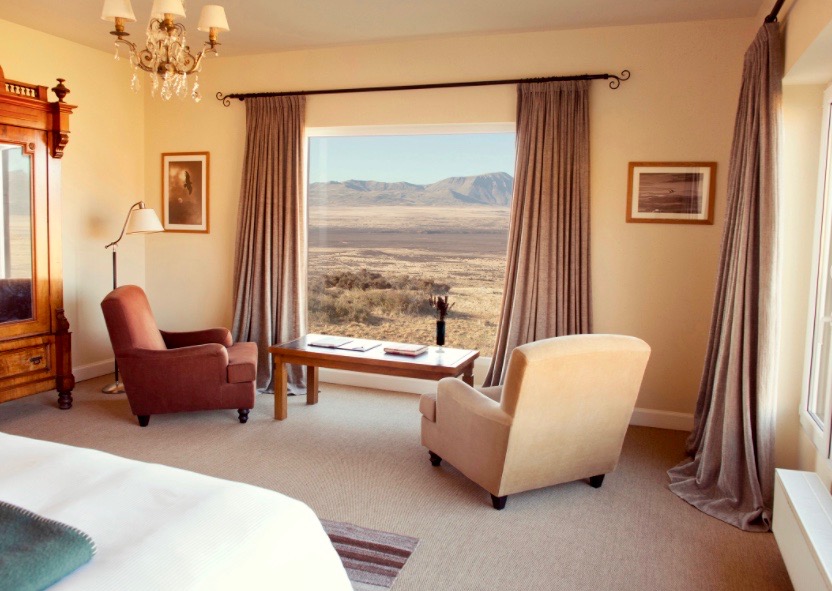
Our room had an enormous panoramic window covering an entire wall. From it—and from every other corner of EOLO, whether the restaurant, library, or living room with its inviting sofas—there are fantastic views of the surrounding landscape, sunrises, and sunsets. It is a true feast for the eyes.
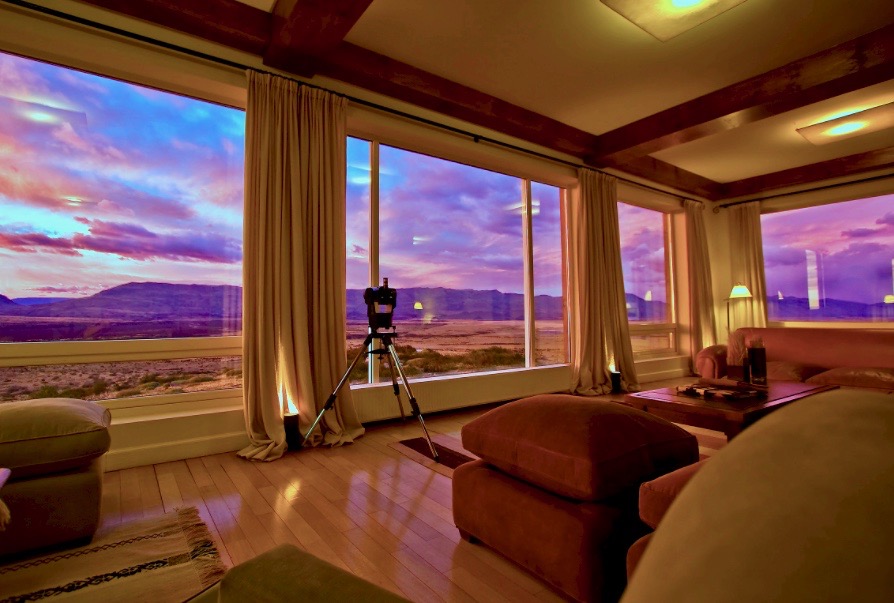
You can enjoy their beauty endlessly, contemplating the infinite horizon or the sky’s fantastic colors without ever leaving the comfort of the hotel.
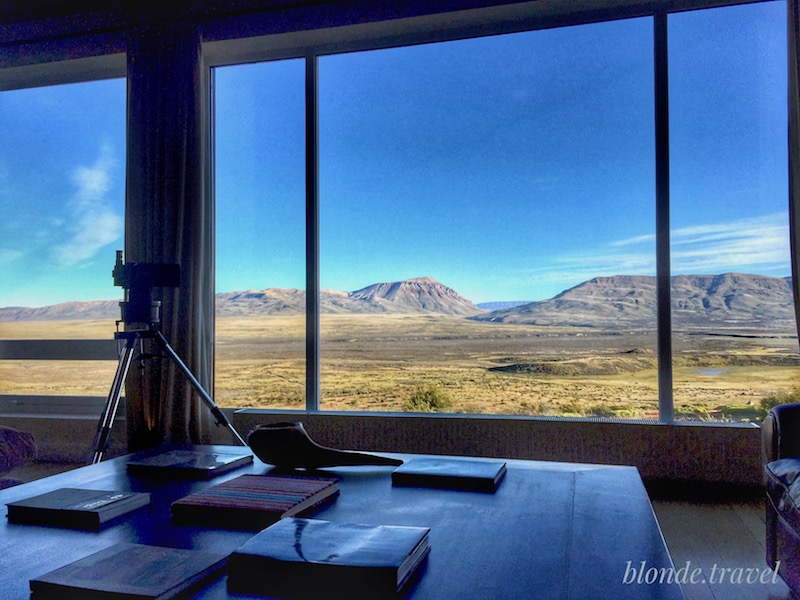
And the sleep here is so deep.
You can also set out to explore the surrounding wilderness. It is a paradise for horseback riding, mountain biking, hiking, birdwatching, and simply enjoying nature.
A ride on horseback has never left me unmoved—especially through such astonishing places, seemingly untouched by human footsteps, with pristine natural beauty and breathtaking views all around. It is a feeling of complete unity with the universe.
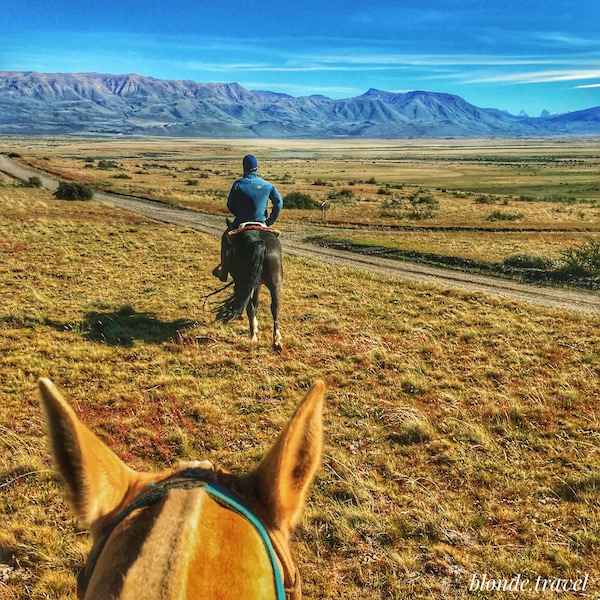
EOLO was conceived as a place of quiet charm, peace, and limitless communion with nature.
And do not go looking for a television 😉 There is not one. You do not need it here.
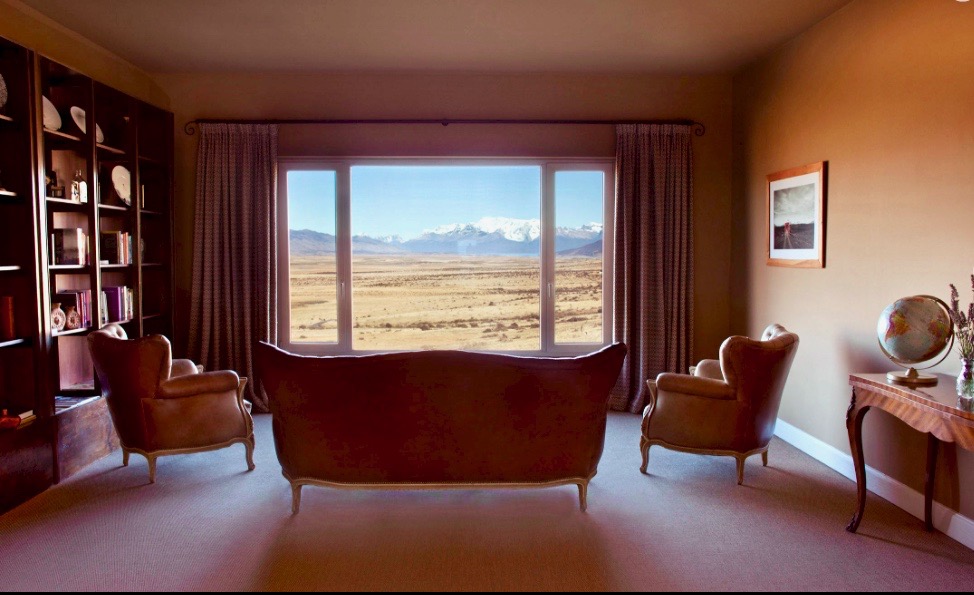
EOLO’s Design and Architecture
Inspired by Patagonia’s history, the entire hotel—from its furniture to its tableware—combines the simplicity of Creole homes with the avant-garde elements of modern architecture.
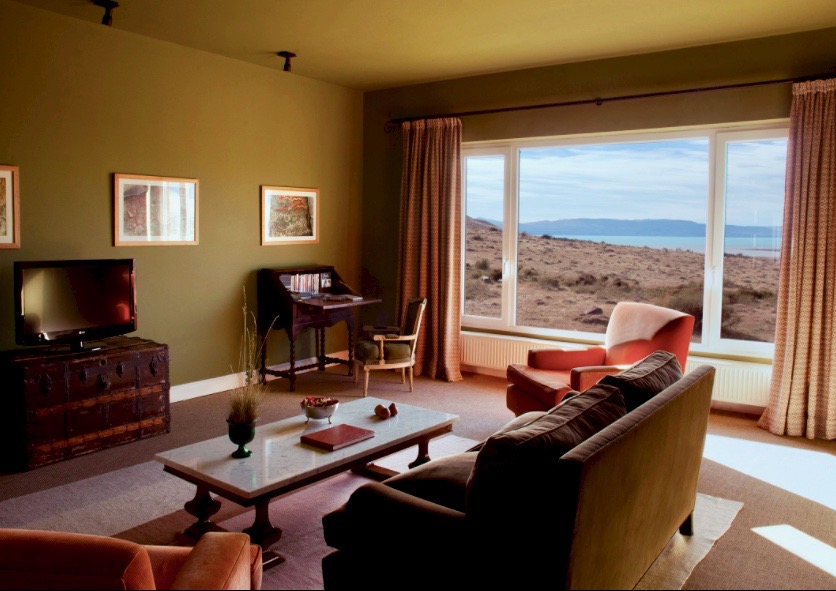
EOLO’s design works beautifully with the surrounding nature and atmosphere. Everything here was conceived as a conversation with this world: wherever you look, there is a beautiful view of the landscape or the central garden.
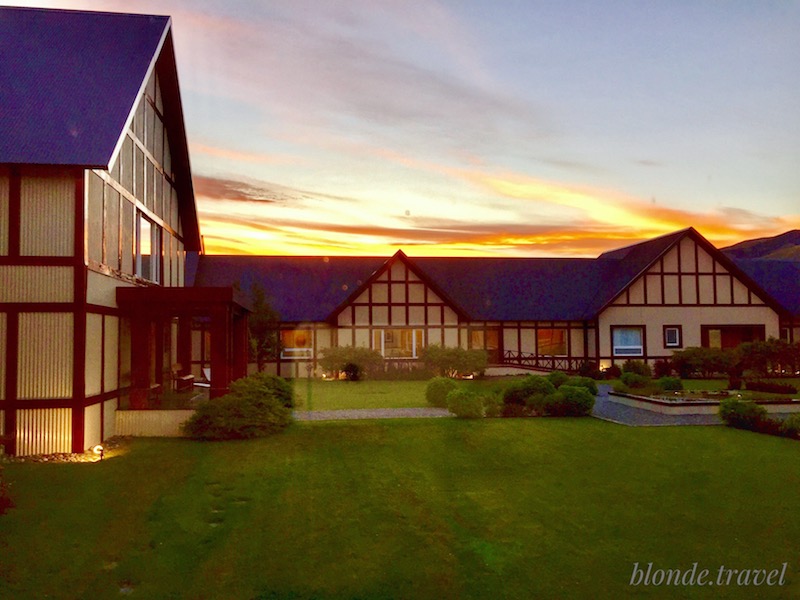
Architect Fernando Bustillo, grandson of the renowned Alejandro Bustillo, was responsible for giving the hotel its aesthetic charm. Juan José Drago oversaw the construction of EOLO.
Gastronomic Euphoria—the EOLO Way
The hotel’s cuisine deserves a story of its own—and a very rich one.
Every breakfast accompanied by the sunrise, every lunch against a backdrop of boundless scenery, and every dinner in peace and harmony became a celebration of flavor and emotion.
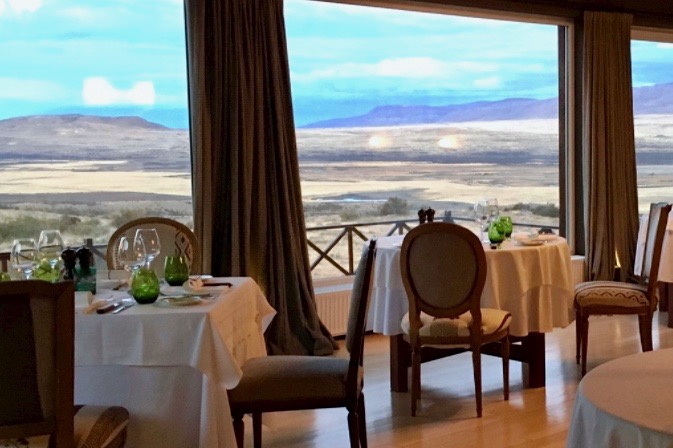
Chef Juan Pablo Bonaveri gained professional experience in Michelin-starred restaurants in Buenos Aires and Spain before returning to Argentina to immerse himself in the roots of local cuisine.
When he came to Patagonia, he fell in love with its open spaces and stayed. For three years now, he has delighted EOLO’s guests with his culinary masterpieces.
As the king of EOLO’s kitchen, the chef creates magnificent combinations of European immigrants’ culinary traditions and Patagonia’s native flavors.
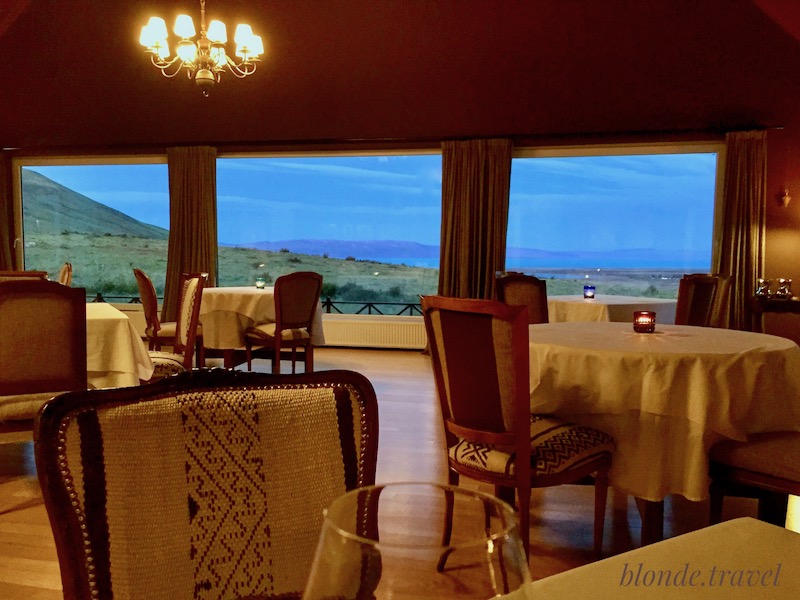
The wines come exclusively from Argentina’s finest wineries.
The welcoming atmosphere, attention to detail, refined taste, design, harmony within the restaurant, and magical views of nature turn every visit into a vivid and memorable occasion.
How to Get to EOLO
The hotel is a very convenient base for exploring Patagonia’s endless steppes and visiting Perito Moreno Glacier. Here is how to reach EOLO:
- Fly to El Calafate Airport, which is one hour by car from EOLO:
from Buenos Aires: 3 hours
from Bariloche: 1.5 hours
from Ushuaia, where we flew from: 1 hour - Travel overland—for example, the drive from El Chaltén takes 2.5 hours, while the journey from Torres del Paine in Chile takes 5 hours.
The comfort and hospitality of our stay at EOLO began at El Calafate Airport, where a driver was waiting to take us to the hotel.
And this is where our journey through Patagonia, surrounded by nature’s incomparable beauty, truly began.
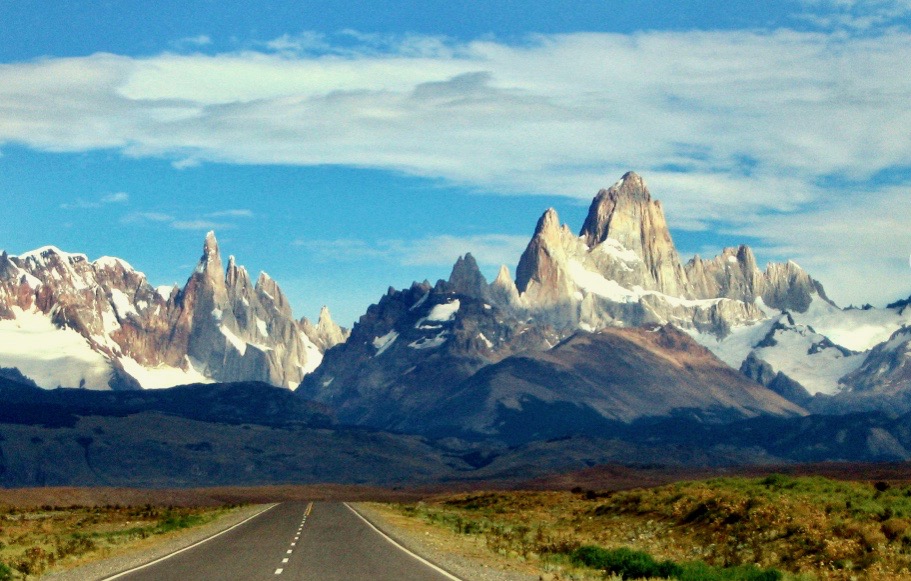
The horizon from EOLO
EOLO belonged to Relais & Châteaux. Its character, however, came from Patagonia: the panoramic window, the deep sleep, the quiet after a day on horseback, and the road leading away across the steppe.
The hotel made that immense landscape comfortable without shutting it out. EOLO is a place I still want to return to.