
The airline name on a ticket is not always the airline flying the aircraft. On a codeshare, one airline can sell a flight under its own code while another operates it.
I always give the small “operated by” line more attention than its typography suggests it deserves. It can explain where to check in, whose cabin you will sit in and why the seat map looks unfamiliar.
One flight can have several numbers
The glossary distinguishes the marketing carrier from the operating carrier. In an ordinary codeshare, the operator flies the service and a partner markets seats on it using its own flight number.
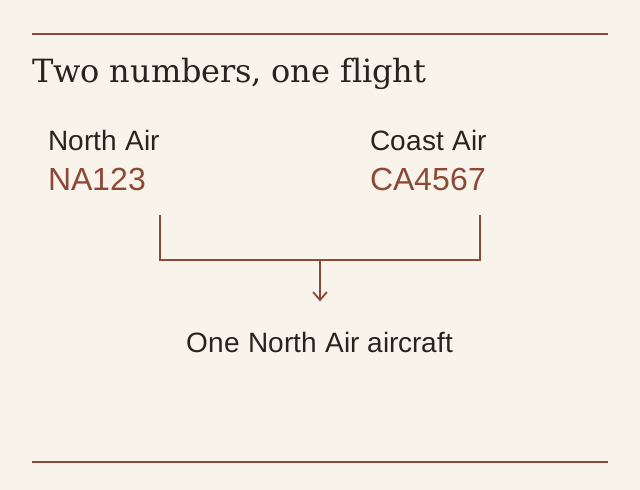
For a fictional example, North Air operates flight NA123. Its partner Coast Air sells the same departure as CA4567. Two flight numbers on the departures board need not mean two aircraft leaving for the same city at the same time.
The commercial arrangement lets an airline offer destinations beyond its own operated network. It can also make a journey involving partners easier to sell together. It does not make the airlines’ cabins, service or ticket conditions identical.
Start with the operator at the airport
For the first flight, check the operating airline’s check-in instructions, terminal and deadlines. The airport may use a handling company at the desk, but the operating carrier’s arrangements are the relevant starting point. Do not walk towards a desk solely because its logo matches the most prominent name on your email.
Seat selection may also happen in the operating airline’s system. If your reference is not recognised there, ask the seller for that airline’s locator. The difference between these codes is explained in booking references and ticket numbers.
For special assistance, make sure the request covers every relevant flight and is accepted where necessary. A note in one booking record is not a useful substitute for confirmed arrangements across the journey.
Baggage deserves its own check
On a connecting journey ticketed together, the airlines use agreed rules to determine whose checked-baggage policy applies. You do not receive an extra allowance simply because a second airline operates the next flight. Start with the baggage line on your itinerary receipt: if it specifies one bag up to 23 kg for that part of the journey, that is the allowance to work from.
The selected policy is not always the operating airline’s. International rules commonly identify the carrier responsible for the most significant part of the through-checked journey; US and Canadian itineraries have their own selection rules. A stopover or a different ticket can change the calculation. If the baggage line is missing or contradictory, ask the seller to specify the allowance for each part in writing, rather than trying to choose between two airlines’ general baggage pages.
Cabin-bag size and handling requirements also need to work on each operator’s aircraft. At check-in, look at the destination printed on the checked-bag tag and ask whether you must collect the bag at an intermediate point. Being tagged through does not remove a customs requirement to collect it.
Who handles a change or refund?
For a voluntary change before travel, the seller or ticketing agent is generally the sensible first contact. It made the sale and may control the ticket’s servicing. The operator handles the flight itself and airport operations. During disruption, both can become involved.
That division is why a partner airline may see your reservation but direct a requested ticket change back to the issuing agent. Access to a record is not necessarily authority to reissue it or return a payment.
Before buying a complicated itinerary, I would establish who offers support and how to reach them during the hours I will be travelling. A low fare is less attractive if resolving a change requires waiting for an office on another continent to reopen.
Codeshare, interline and alliance are different
An interline arrangement can allow carriers to combine services within a ticketed journey and related processes without putting one airline’s flight number on the other’s service. An alliance, such as Star Alliance, oneworld or SkyTeam, is a wider partnership that can extend status recognition and lounge benefits across members under their eligibility rules. It does not make their fares, baggage allowances or tickets interchangeable.
Nor does a codeshare tell you whether two flights bought together are on a through-ticket. A website can assemble separate tickets into one shopping experience. The through-ticket entry explains why that changes the missed-connection question.
Compare the actual journey
The same operated flight can appear at different prices through different marketing airlines and sellers. Compare baggage, changes, seat selection and loyalty eligibility as well as the total. A ticket’s booking class and the frequent-flyer programme’s rules can affect whether and how it earns points.
I would happily buy a suitable codeshare. I would simply buy it knowing whose aircraft I am boarding, what I have paid for and who is responsible for helping me change the booking. Those are more useful facts than the number of airline logos on the confirmation.