
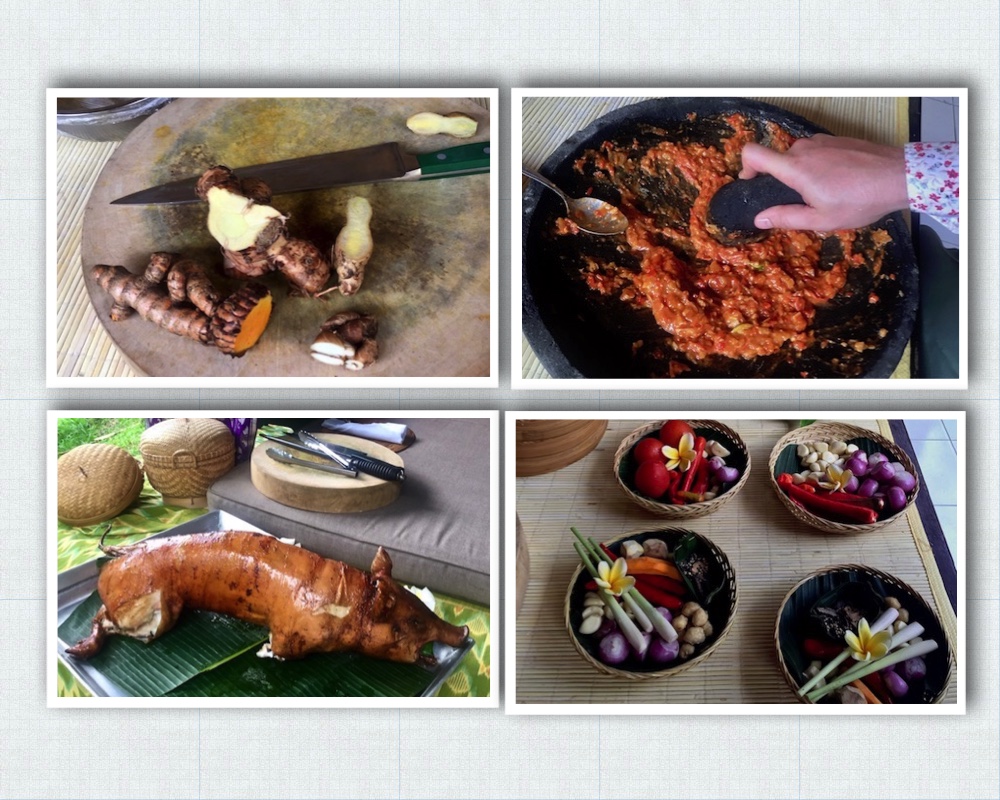
The most memorable experience of our stay in Ubud was a cooking class organized by Amandari, the hotel where we were staying. That day, we visited the authentic village home of a Balinese family, discovered how they lived and ran their household, shopped for ingredients at the local market, and helped prepare a traditional multi-course Balinese lunch—exotic to us and large enough for the whole family. But let me tell the story from the beginning.
Pasar Seni Market in Ubud
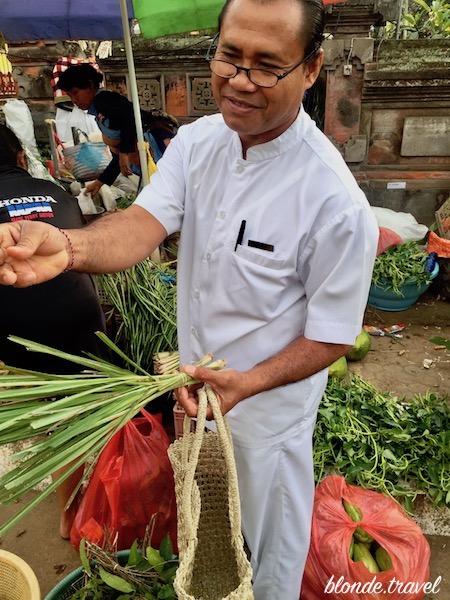
Our day, and our cooking class with it, began early in the morning. At sunrise, we set off for the colorful Pasar Seni market with our chef, who would later introduce us to the wonders of Balinese cuisine.
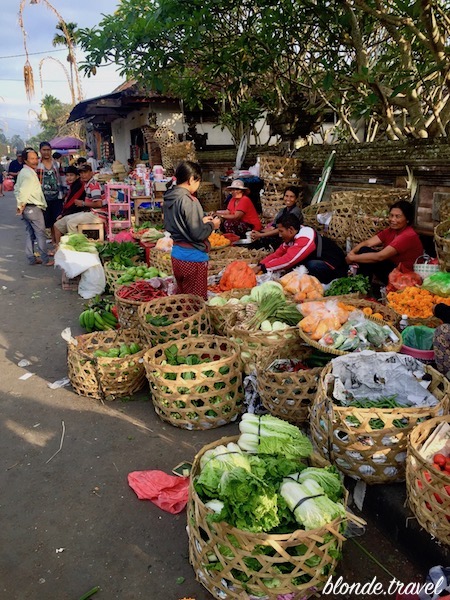
Ubud had been awake for hours. Everyone was already busy with the routines of daily life, and the morning market was buzzing.
I love visiting Asian markets. They capture the atmosphere of everyday life so vividly. You can immerse yourself in local traditions, taste something delicious, and, of course, fill your baskets with fresh vegetables, herbs, and fruit.
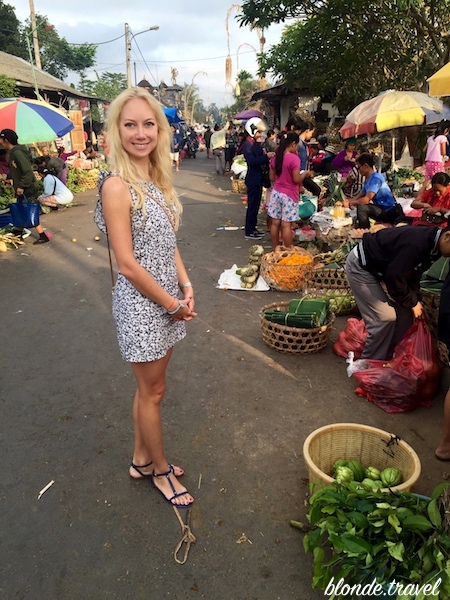
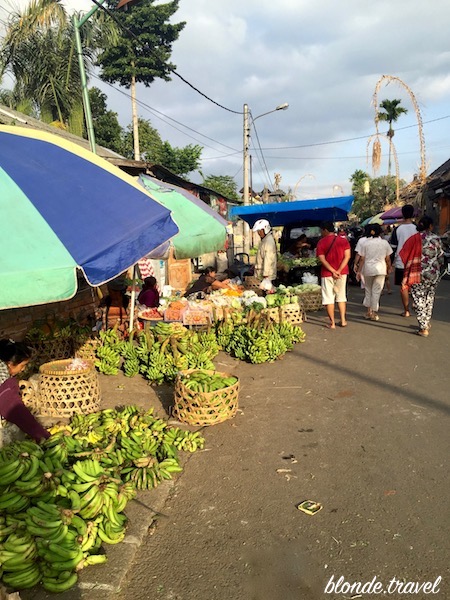
The colors make your eyes dance. Women in blouses with bright sashes tied at their waists talk loudly among themselves, sharing the latest news. Chickens cluck, and roosters crow sharply from cages, brought here to be sold for fighting. A low, unmistakable market hum hangs in the air.
Small trucks arrive at Ubud’s market loaded with vegetables and greens. In season, you can find baskets of fragrant strawberries, mangoes, and mandarins.
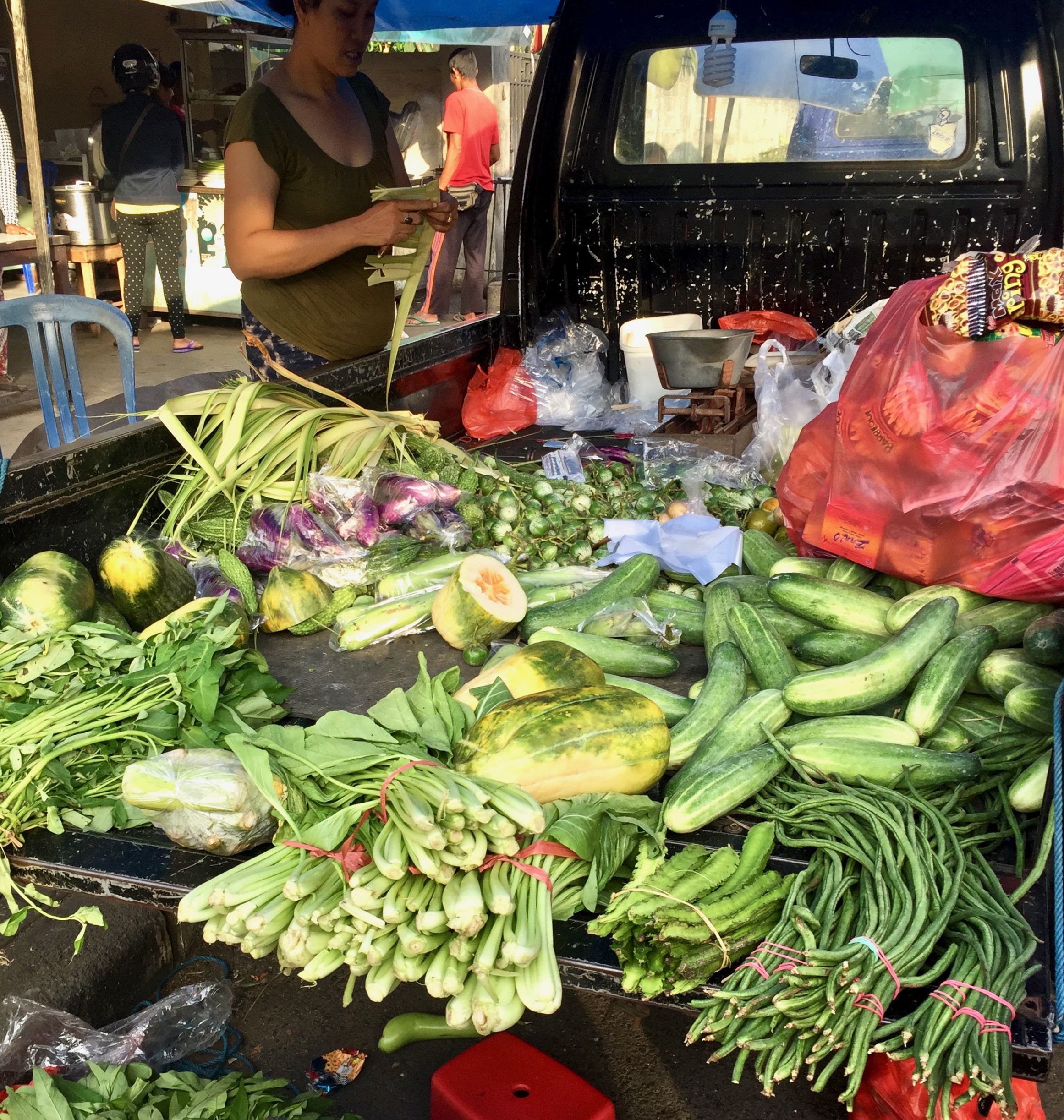
Everything imaginable is sold here, all jumbled together.
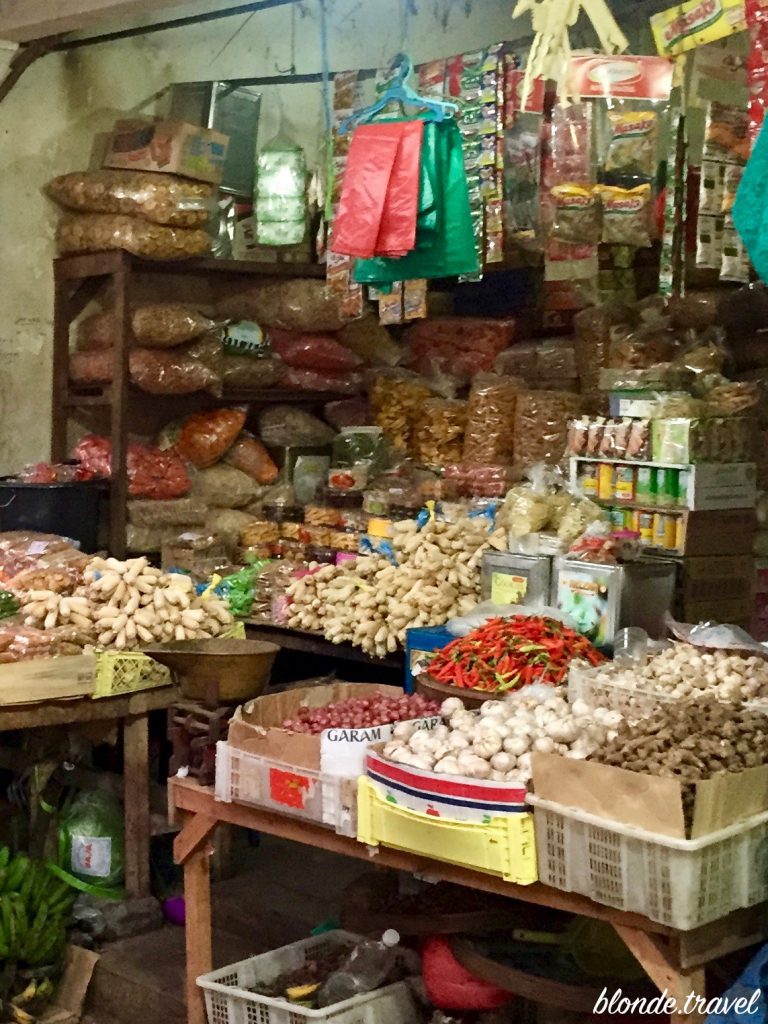
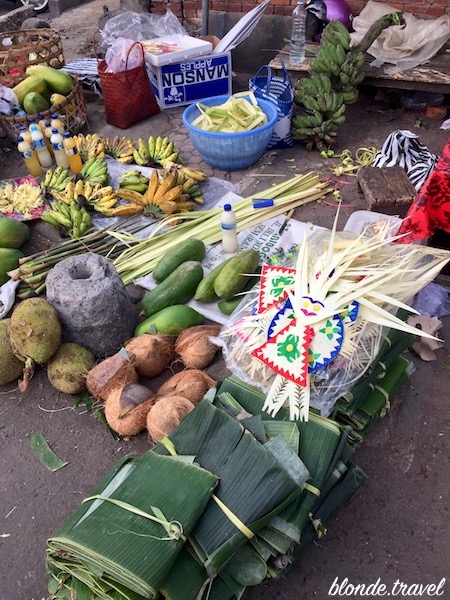
Greens, vegetables, and baskets of roots without which no dish is complete: the famous trio of ginger, turmeric, and galangal, along with bundles of lemongrass.
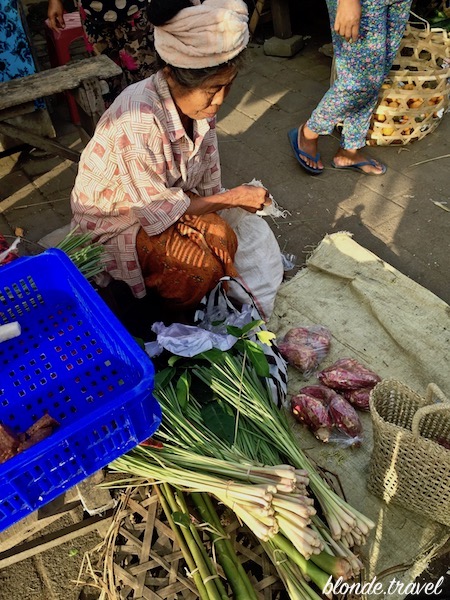
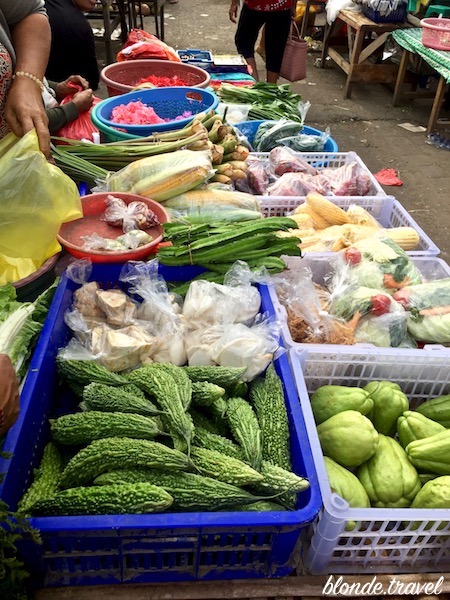
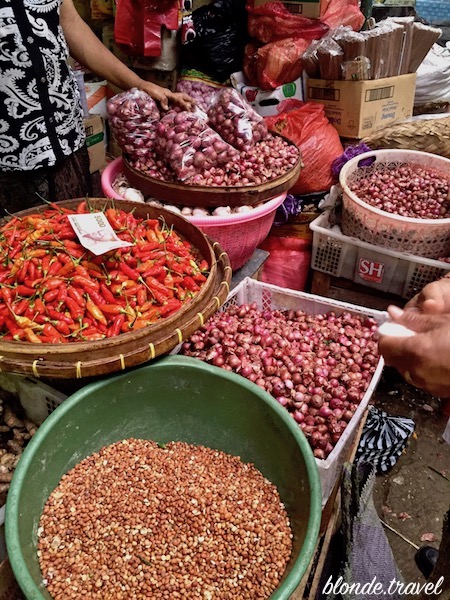
Spices, onions, garlic, and hot red chilies are used in many Balinese dishes.
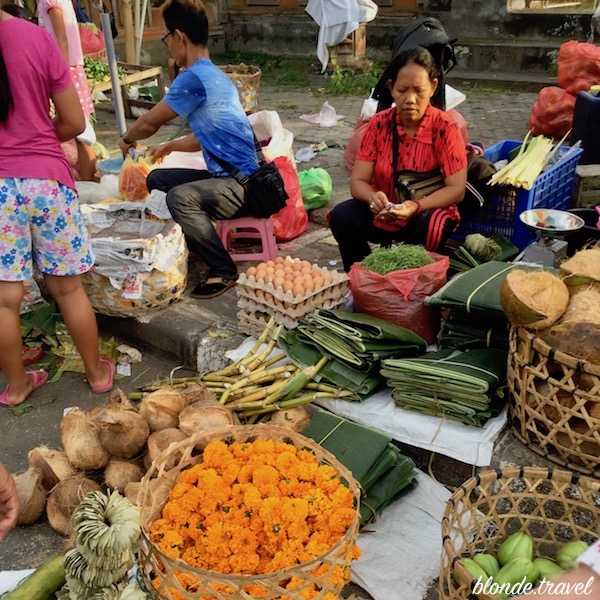
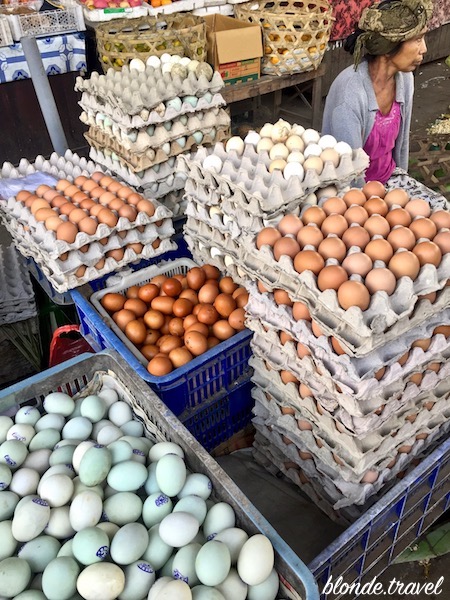
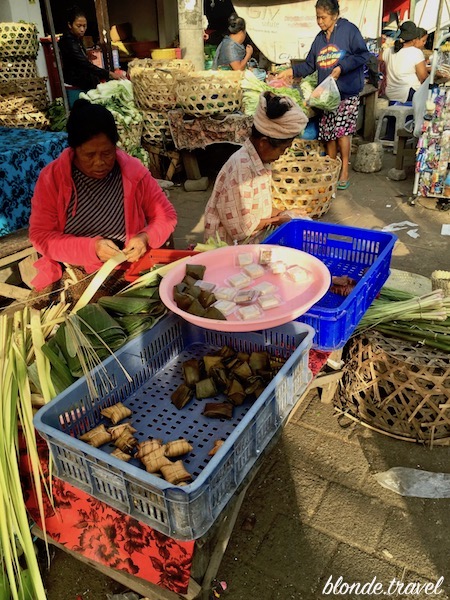
Eggs stacked neatly in piles, papayas, jackfruit, palm leaves, and coconuts. Palm leaves are wonderfully useful around the home: they become plates and offerings, and they are also used to wrap rice for baking.
There are whole plucked chickens—and unplucked ones too.
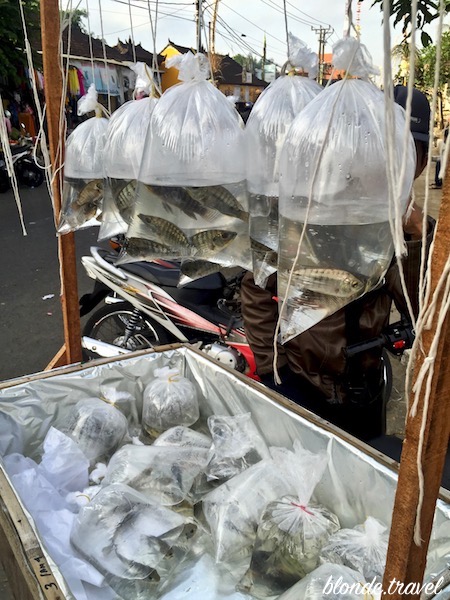
Fish for every taste: live fish in bags of water as well as dried fish.
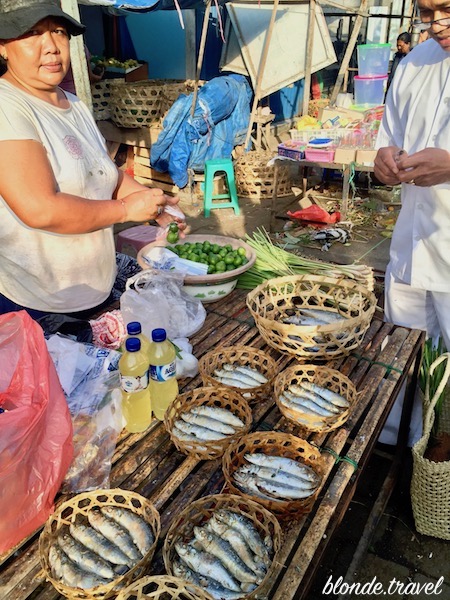
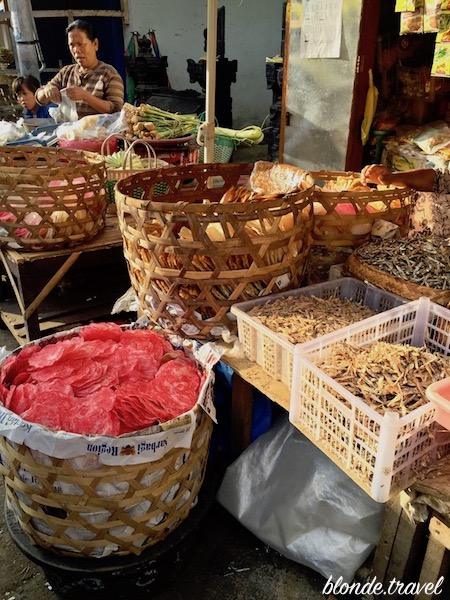
Enormous woven baskets filled with tiny dried fish, and cooked rice wrapped in bamboo leaves.
Huge orange baskets keep catching my eye. They are filled with marigolds destined for canang, the offerings made to gods and spirits. Nothing attracts my gaze quite like these bright baskets. And how beautiful the orange fields look, filled with so many of these vivid little flowers.
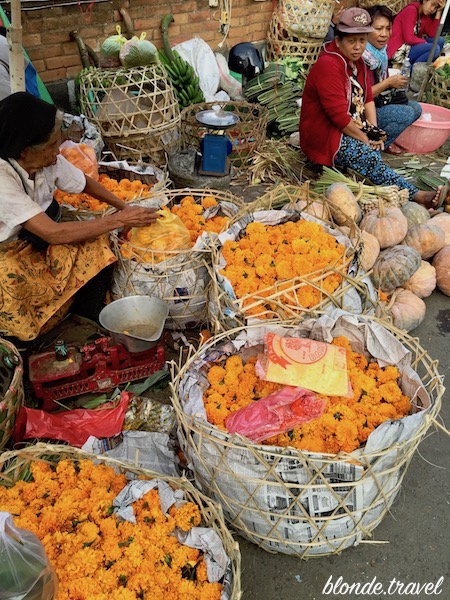
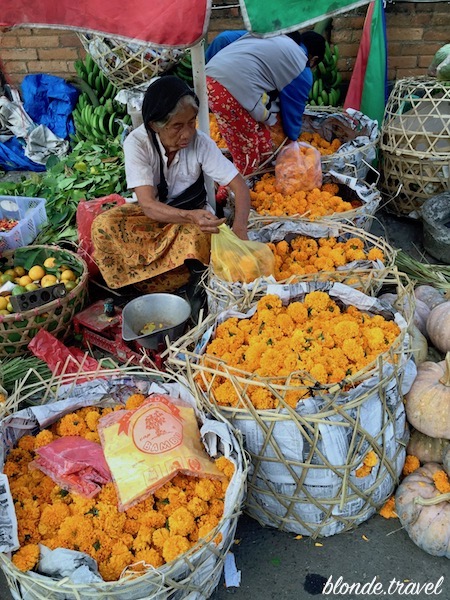
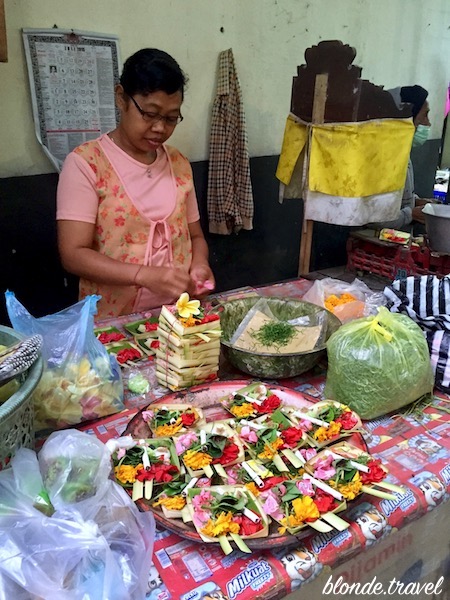
At Ubud market, you can buy the flowers and other components for offerings separately, or purchase ready-made canang. In Bali, it is generally considered every woman’s duty to make the canang for her home with her own hands, filling it with her energy and blessing. For offices, however, canang can be bought at the market.
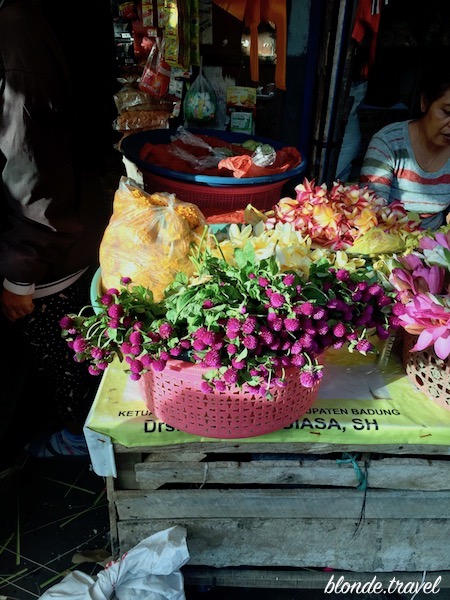
Pasar Seni opens very early, two or three hours before sunrise. The earlier you arrive, the lower the prices quoted by the vendors. By eight or nine in the morning, the prices have become almost entirely tourist prices.
And, of course, the universal market rule applies here too: if you want to bring those astonishing prices down, you have to bargain.
How do you weigh one or two kilograms? Easily!
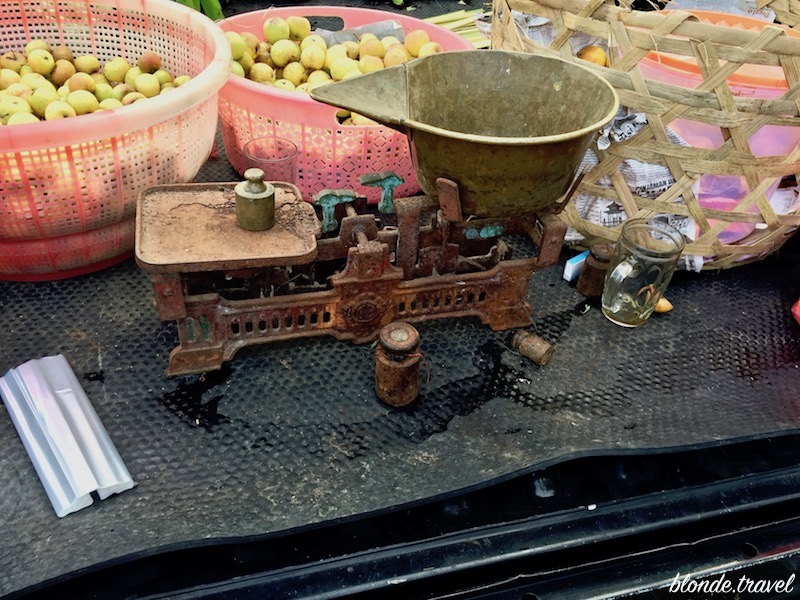
Once we had bought everything we needed, we drove to the home of a Balinese family just a few minutes from the market.
Pak Wayan Sutan Bawa’s family of 14 has lived here for five generations, and some of the buildings date to the late 1800s. Bawa is the youngest of four brothers, each of whom built separate living quarters behind the main house.
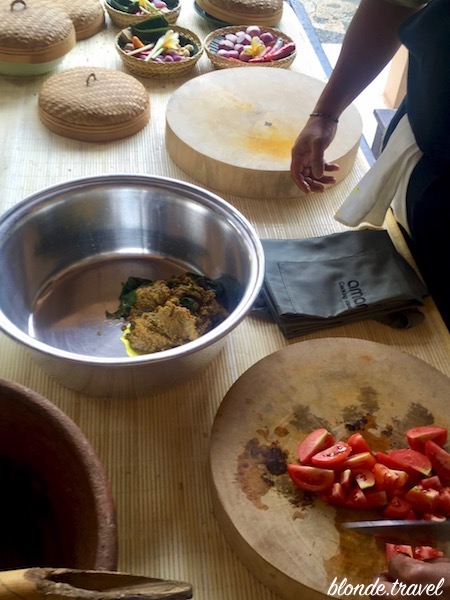
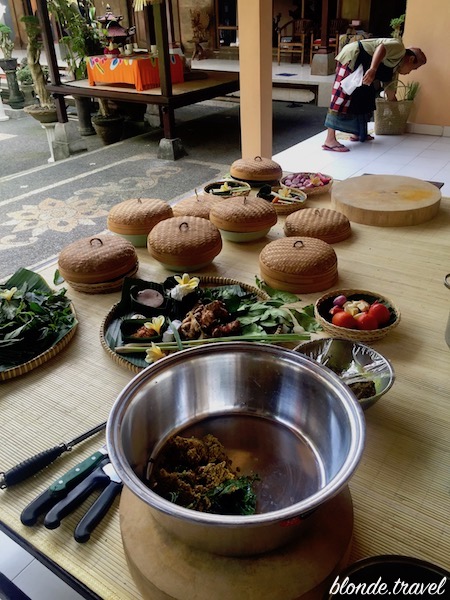
On the open-air kitchen table, a suckling pig was already waiting for us alongside wooden chopping boards and numerous woven baskets filled with ingredients.
A Traditional Balinese Home
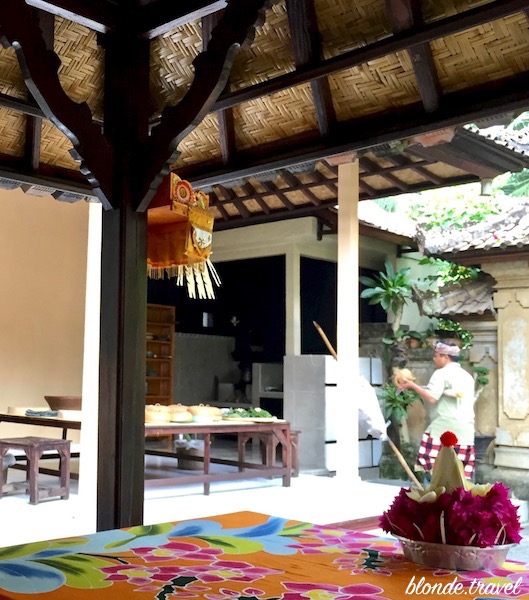
Let me briefly explain what local homes in Ubud are like. Indigenous Balinese families are generally large, and the compounds where they live are correspondingly spacious. Driving along Ubud’s narrow streets, you see tiered temples rising above gray stone walls covered in moss. They look profoundly ancient—and they are. You find yourself wondering where the people live. The answer is behind those imposing walls and their equally ancient, massive doors.
Several separate structures are arranged around the family compound: a rice barn, a kitchen, the parents’ bedroom, the children’s bedrooms, and the most important building of all—the family temple, enclosed by another wall and gate. This is where offerings are made to the spirits, deities are worshipped, and ceremonies and celebrations take place. The family temple is always built facing the sacred mountain, Mount Agung.
The Balinese see their home as a living being: the temple is its head, the kitchen and rice barn are its legs, and the bedrooms and living buildings are its arms.
Meanwhile, we made our way into the spacious open-air kitchen.
The Character of Balinese Cuisine
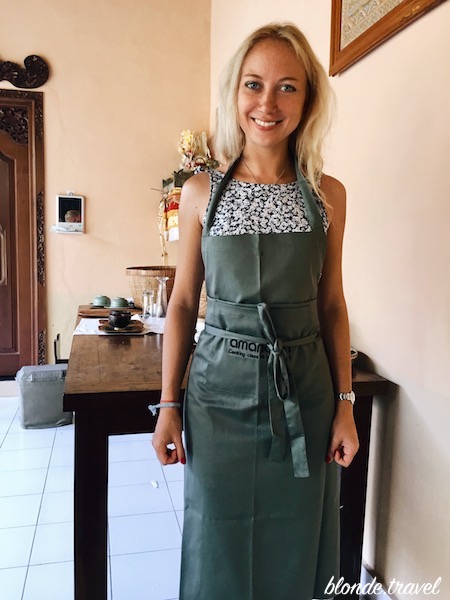
We were each given an apron—which later became a keepsake—helped to tie it, and then the work began in earnest.
Today’s lunch would consist of seven dishes:
- green papaya soup (jukut gedang mekuah)
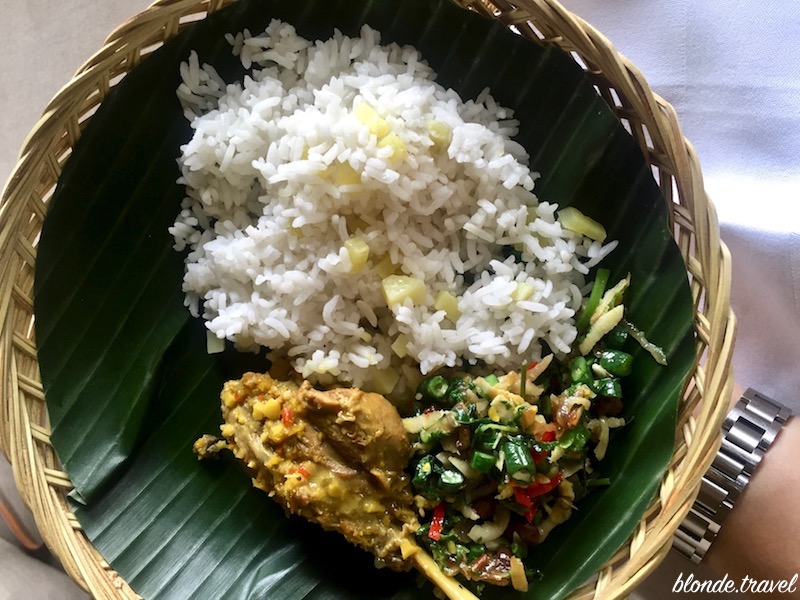
- traditional rice with sweet potato (nasi sela)
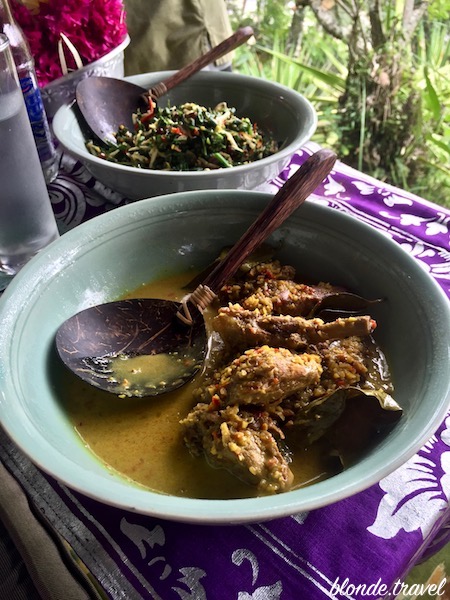
- Balinese duck curry (bebek gerang asem)
- tomato and chili sambal (sambal ulek)
- Balinese vegetable salad (urap campur)
- dessert—black rice pudding with coconut cream (bubur injin)
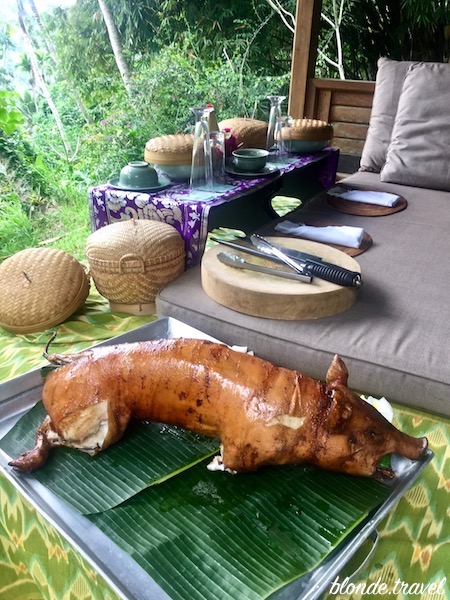
- and the king of the table: a spice-roasted suckling pig (babi guling)
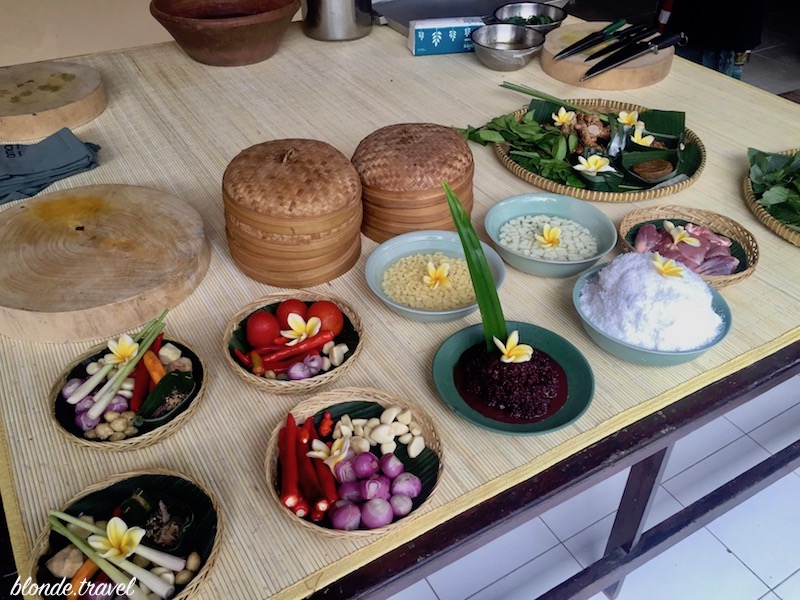
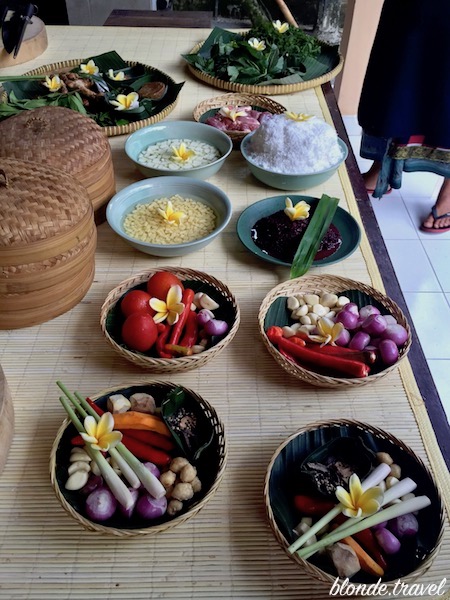
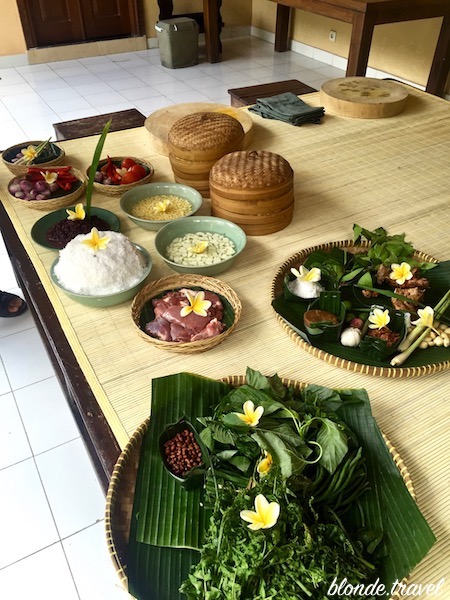
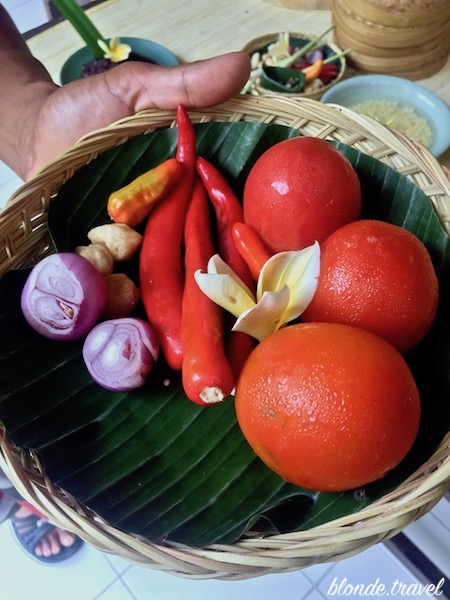
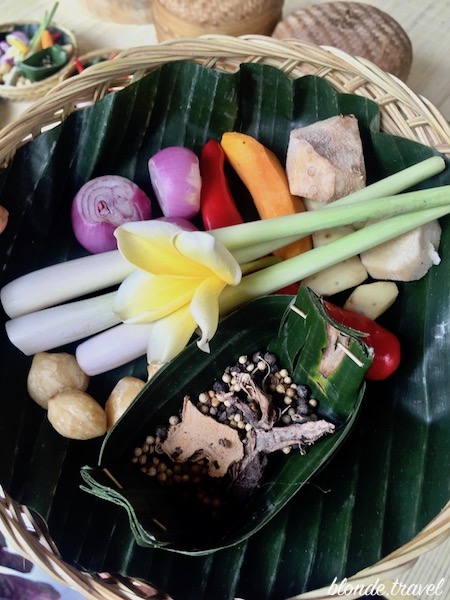
Here is what we had for ingredients: tomatoes, red chilies, Balinese pepper, ginger, turmeric, galangal, sweet potato, onions, garlic, lemongrass, lime, lime leaves, bay leaves, palm sugar, fresh coconut, macadamia nuts, shrimp paste, papaya, Balinese white rice soaked in water, black rice, a duck cut into small pieces, and herbs. Everything was neatly arranged in baskets and palm-leaf plates across the table, decorated with frangipani flowers. True feng shui.
Rice Is the Heart of Every Meal
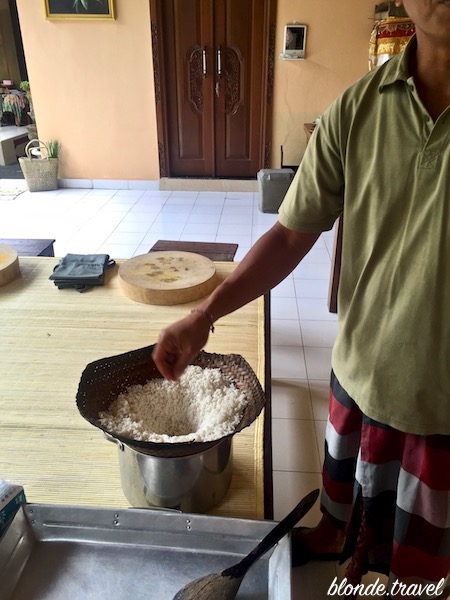
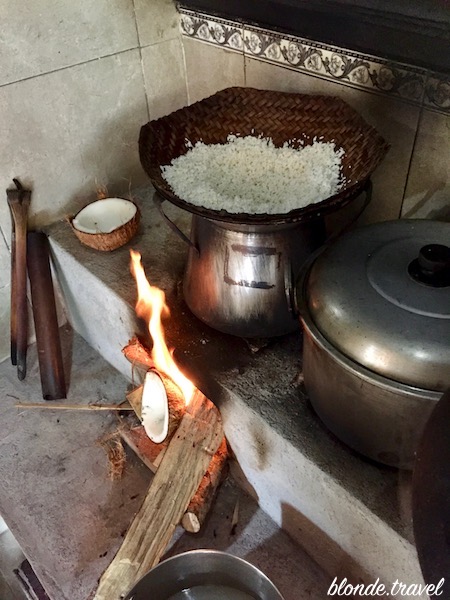
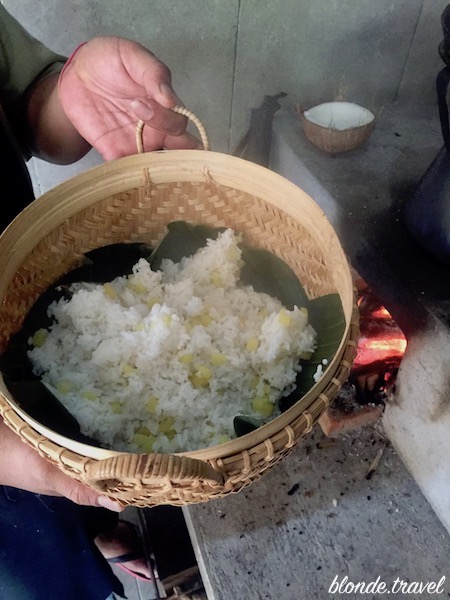
The first thing we needed to do was put the rice on the fire so that it would be ready by lunchtime. Rice is Bali’s staple food, served with practically every meal. Today we were making traditional steamed rice with sweet potato: Nasi Sela (nasi means rice).
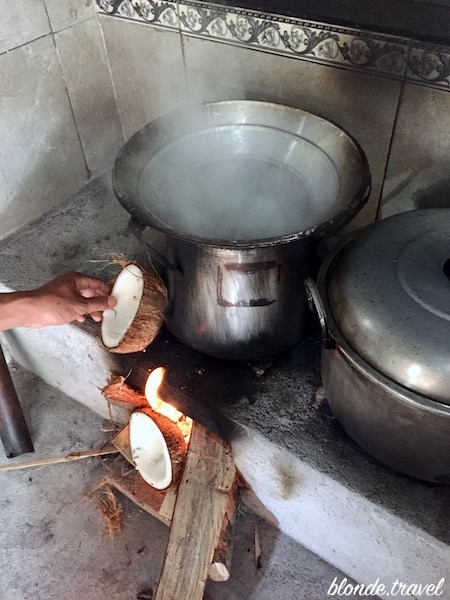
By the time we returned from the market, the stove had already been lit and the water heated. We roasted a coconut over the fire as well, which makes it taste even better.
We would need its grated flesh for several of today’s dishes. In Asia, coconut is also added to rice to give it a distinctive flavor.
Meanwhile, our helpers prepared a special mixture of shrimp paste and abundant spices to rub over the pig.
Babi Guling—the Balinese Favorite
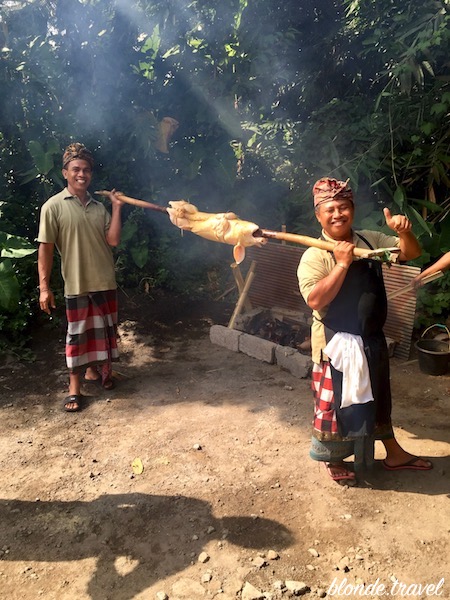
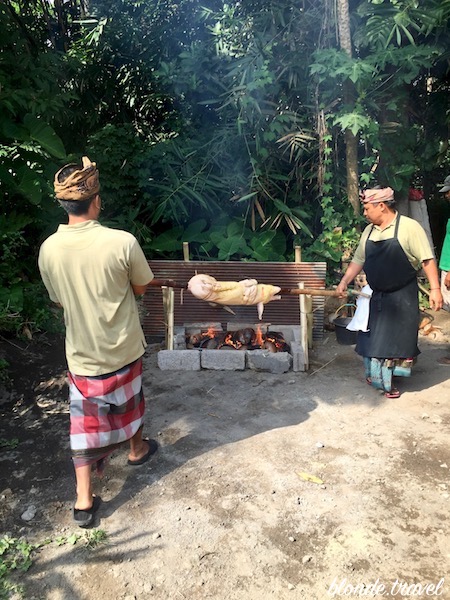
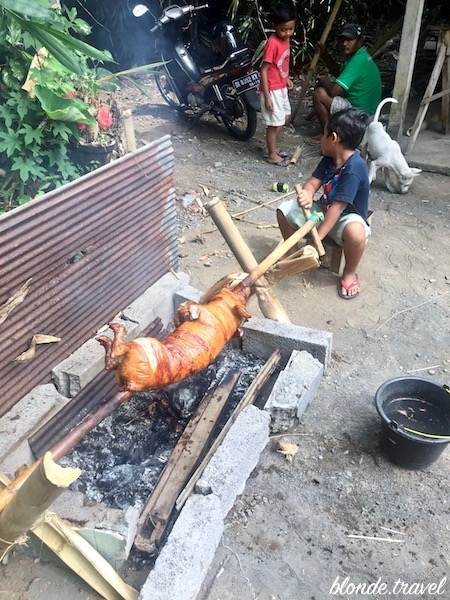
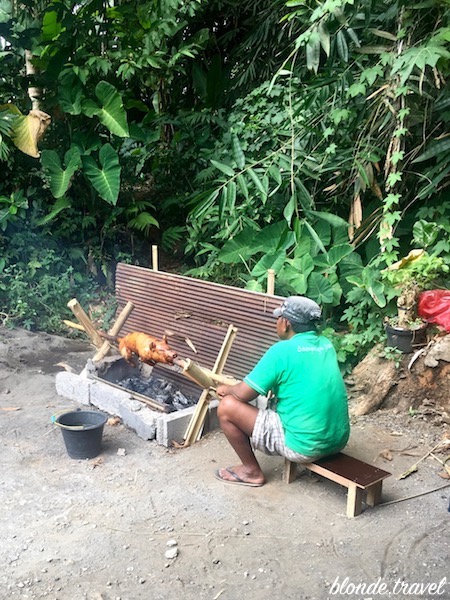
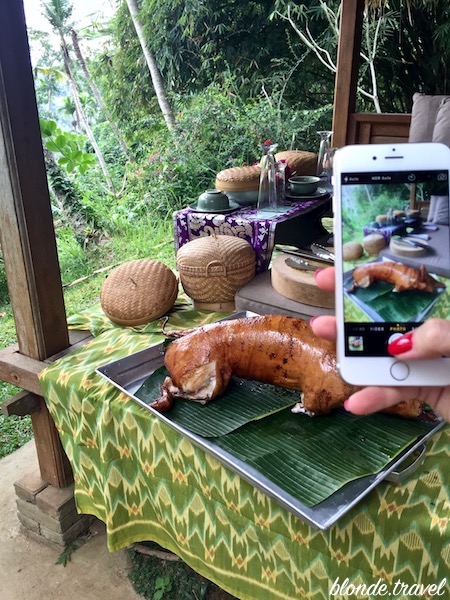
Babi Guling is a suckling pig seasoned with spices and roasted on a spit for one and a half hours. It is a fairly expensive delicacy prepared for major celebrations—ceremonies, Galungan and Kuningan, and New Year—and it remains an enduring favorite among the Balinese.
The delicious aroma drew children from neighboring homes, so we soon had plenty of helpers eager to watch the pig and turn it at just the right moment.
The defining feature of Balinese cuisine is the generous quantity of aromatic spices, seasonings, and varied sauces added to its dishes. We therefore spent the next couple of hours continuously chopping, pounding, and mixing roots, leaves, and stalks.
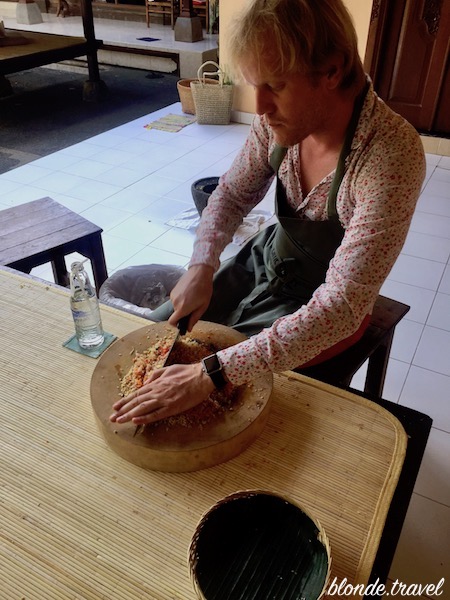
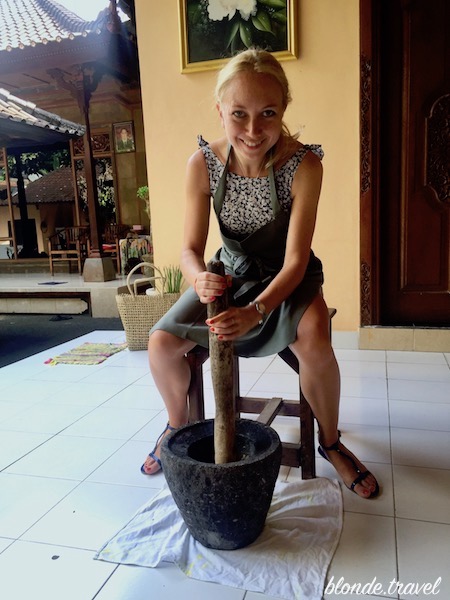
Huge roots of ginger, turmeric, and galangal, along with lemongrass stalks and chilies, were divided in the correct proportions among the salad, soup, duck, and sambal.
My knowledge of roots and spices grew considerably in the process.
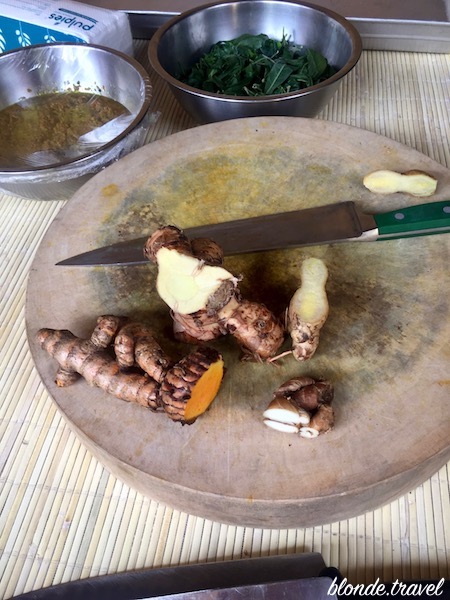
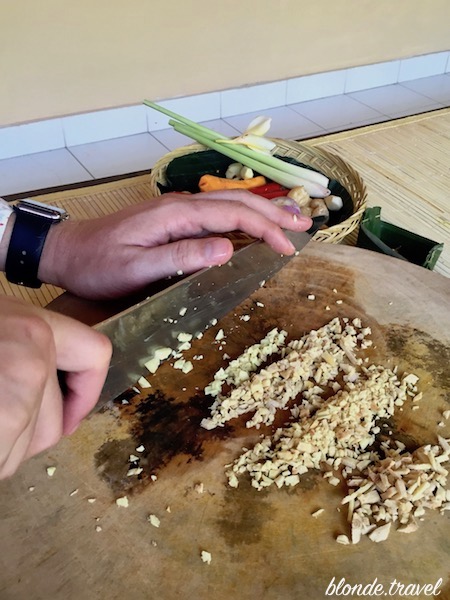
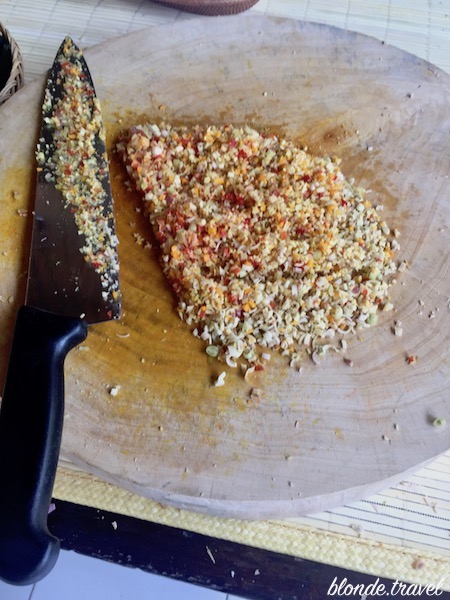
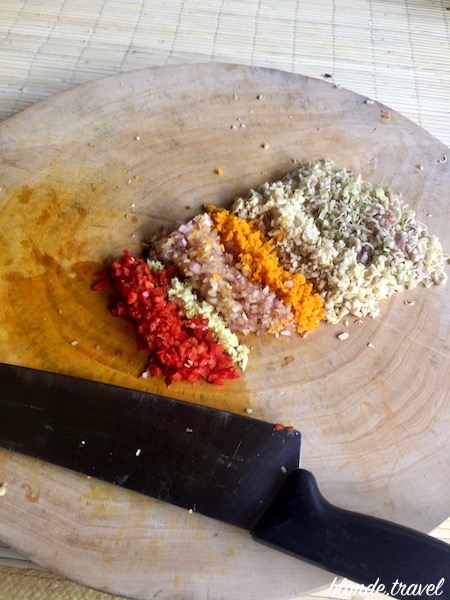
Once we had finished with the spices and seasonings, we all turned our attention to the soup and the duck.
Jukut Gedang Mekuah—Green Papaya Soup
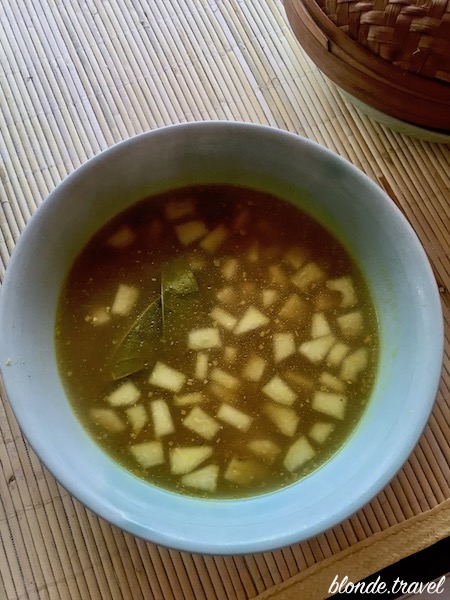
Green papaya soup is made with a broth of Balinese spices. Once the spice and seasoning base is ready, the soup itself takes very little time. The main secret is to soak the papaya, cut into large pieces, in water mixed with lime juice first. This gives it an interesting texture.
At the same time, we put a pot of broth on the stove and placed the pieces of duck in a frying pan. Another little secret: the duck is fried without oil.
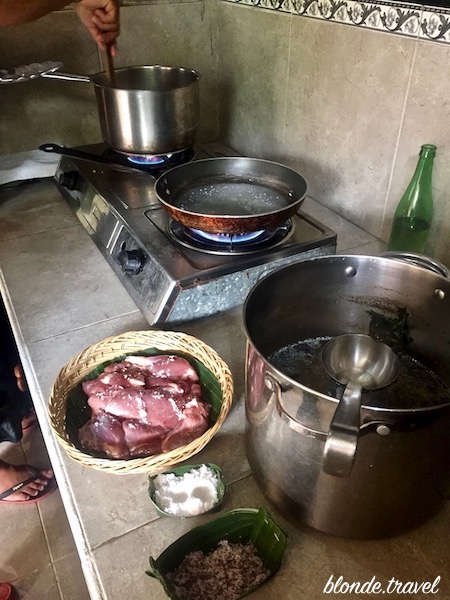
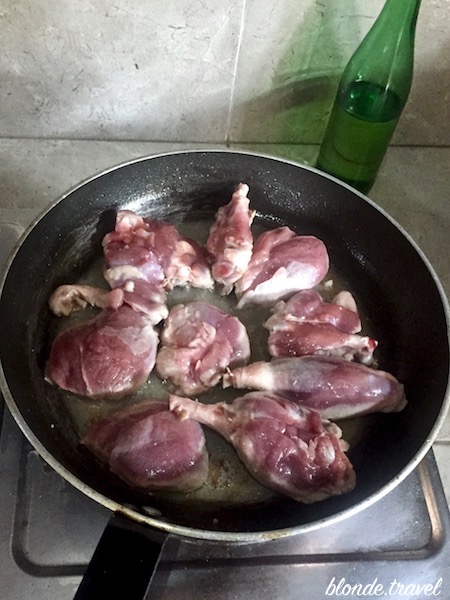
Every one of us took part in the process, to make everything taste even better 🙂
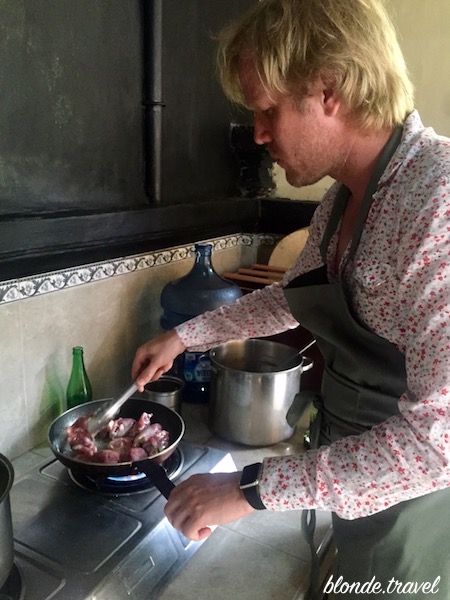
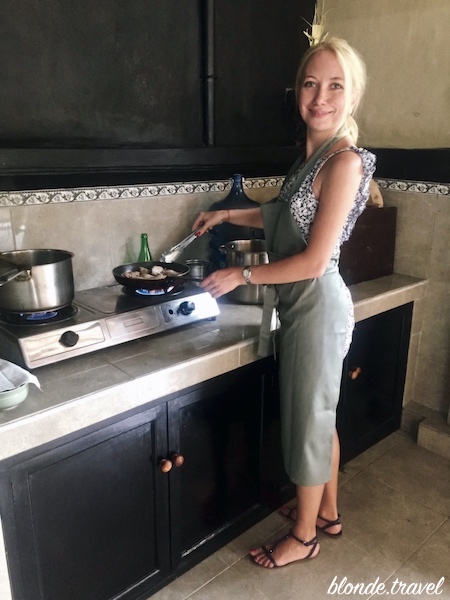
Sambal Ulek
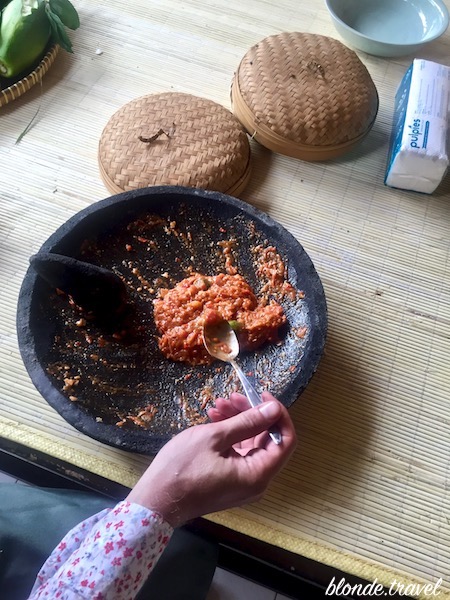
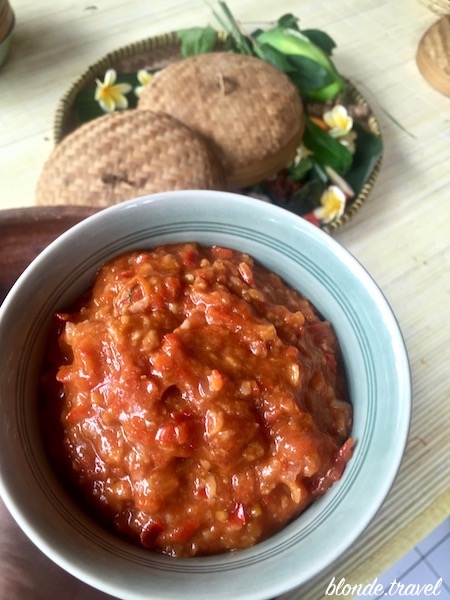
Sambal Ulek is a sauce made from several varieties of hot red chili with tomatoes, somewhat reminiscent of adjika.
This thermonuclear mixture of several kinds of hot chili, macadamia nuts, shrimp paste, and finely chopped tomatoes is first fried in oil until soft. It is then cooled and crushed in a mortar with a special stone. The important thing is not to overdo it, so that small pieces remain.
Add salt, lime juice, and a little sugar, and the fire-breathing sauce is ready.
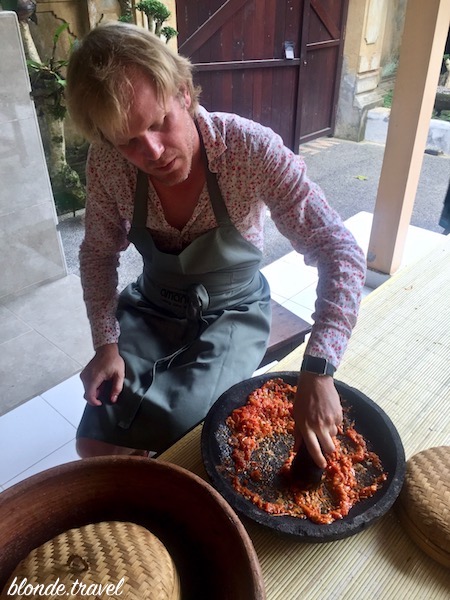
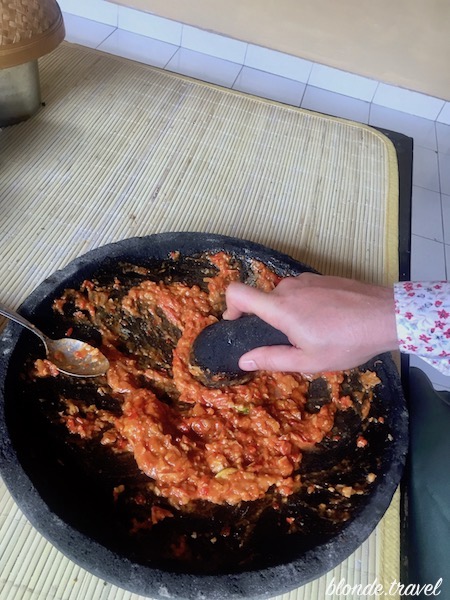
Urap Campur
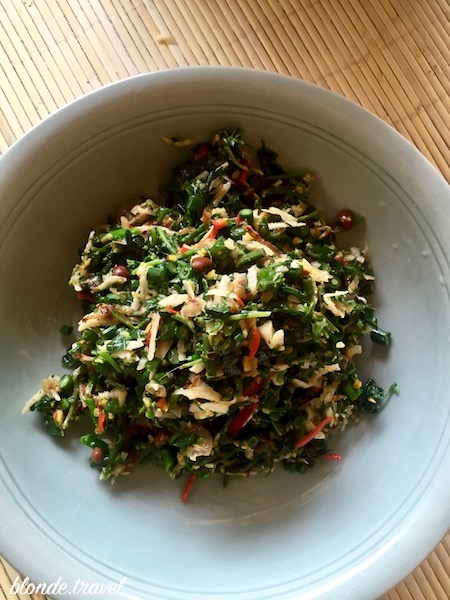
Urap Campur is a very popular Balinese dish: a vegetable salad served with rice that also makes an excellent accompaniment to meat. Urap itself is a vegetarian dish, rich with the flavors of herbs and spices.
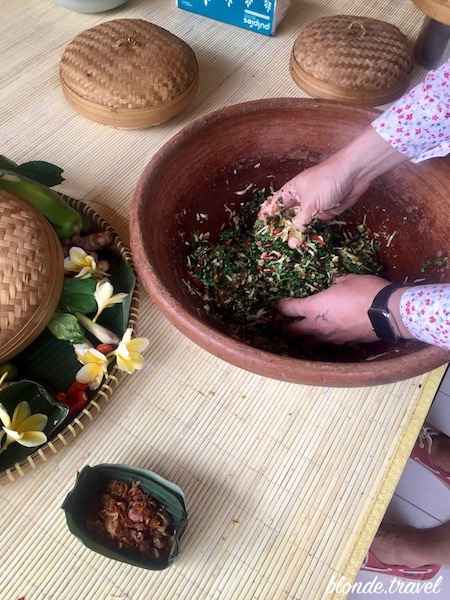
It is prepared in two stages. First, we make Sambal Goreng—a fried mixture of finely chopped shallots, garlic, and chili with shrimp paste. In the photograph, the finished mixture is in the small palm-leaf dish at the bottom left.
We combine almost half our ingredients—chili, lime leaves, shrimp paste, grated coconut, blanched spinach, lightly cooked green beans, cooked red beans, and macadamia nuts—in a clay bowl, add the sambal, and dress everything with lime juice.
While we were busy with the salad and sambal, the soup and rice became ready.
Meanwhile, the guard beside the pig changed several times. It seemed to have caused a sensation throughout the surrounding neighborhood.
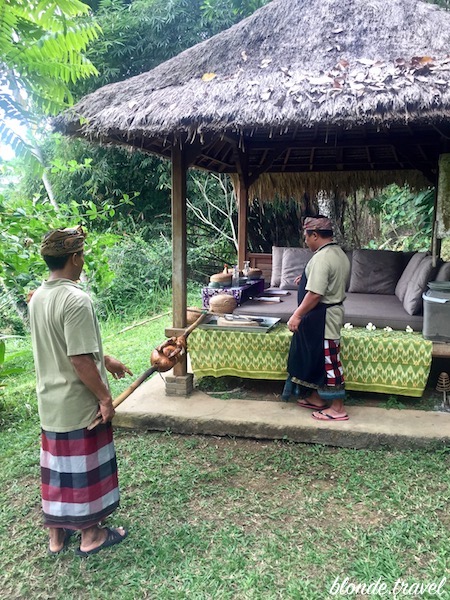
Our six-course lunch was a triumph. A table was set for us in a cozy pavilion overlooking the rice terraces. By then we were thoroughly hungry, our appetites sharpened by the walk and by watching so many delicious things being prepared, and we happily tucked in. The pig was astonishingly good—I had never tasted meat so soft and tender.
All in all, we accomplished two important things that day: we enriched our knowledge and experience, and we fed half the village.
When I gather enough energy, I will write detailed recipes for every dish so that you can try making them at home.