
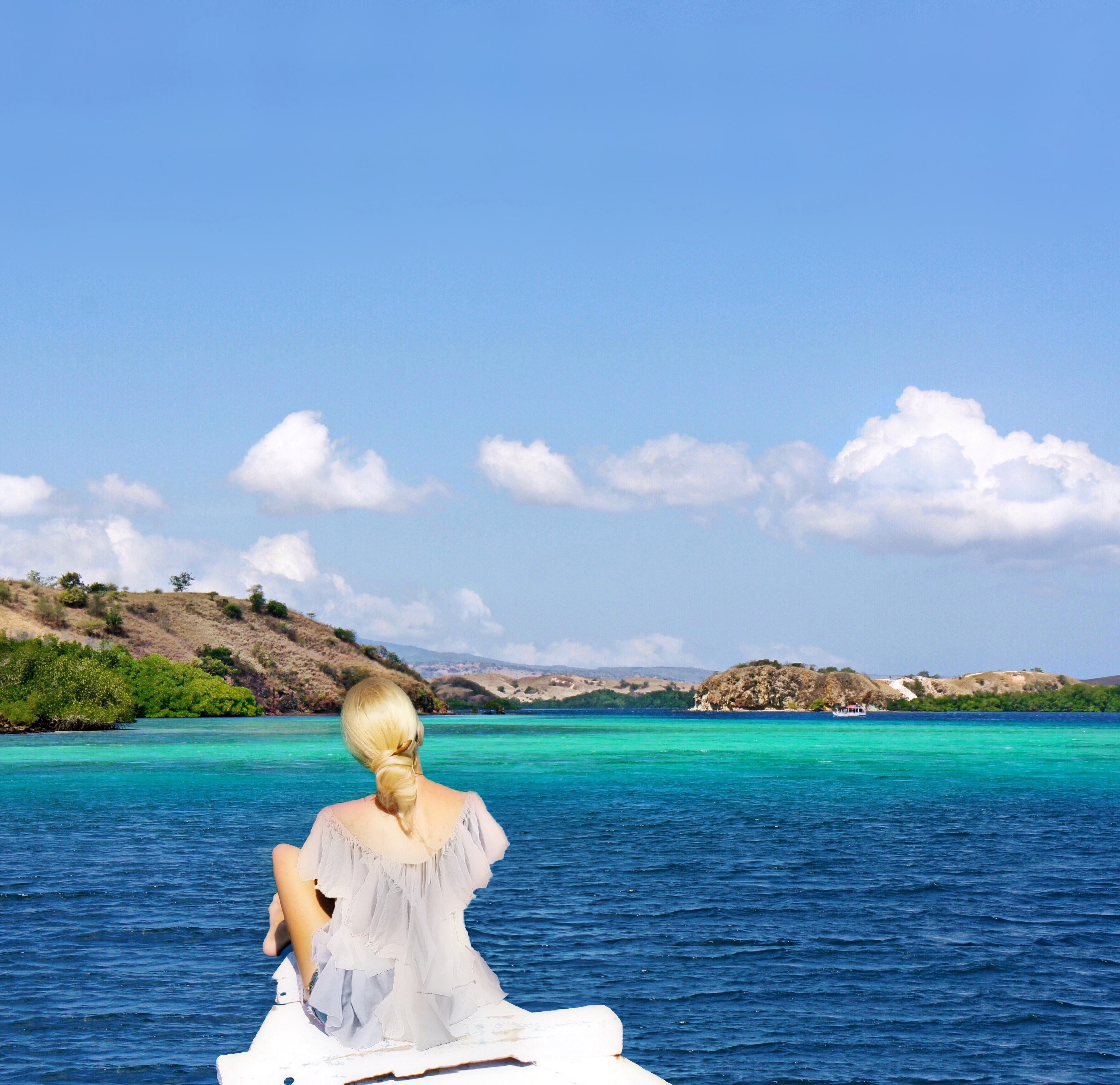
Komodo dragons need no advertising. They draw travellers from every corner of the globe all by themselves, and no wonder: what adventure-hunter could resist the bait of meeting such a beast with their own eyes, in the wild?
When I landed in Bali knowing I would stay at least half a year, a thought arrived almost at once: in that time four great adventures were waiting for me. I would finally see Java, an island that had turned up again and again in my childhood dreams. I would climb Rinjani, one of the highest volcanoes in Indonesia. I would tickle my nerves at arm’s length from a Komodo dragon. And, to finish, I would have dinner with the Papuans.
It was not even a plan, let alone a goal. The places were far apart, and I had no idea how or when I could manage all those journeys. It was simply a thought.
But thoughts, as we know, have a way of coming true. In time, and in the most inexplicable fashion, the journeys began to happen one after another, even in the order I had imagined them.
I always say that Bali is a magic world.
A journey to Jurassic Park
Komodo dragons live wild in one small corner of the world: the islands of Komodo National Park, between Sumbawa and Flores in Indonesia, and a few stretches of the neighbouring Flores coast.
The route
- Day 1: fly from Denpasar, on Bali, to Labuan Bajo, on Flores. In Labuan Bajo: the Mirror Cave, the harbour, the local market, and an evening’s fishing at sunset.
- Day 2: the start of a two-day expedition through the islands of Komodo National Park. Rinca, then the crossing from Rinca to Komodo and a night on the boat.
- Day 3: Komodo. Pink Beach and snorkelling, then back to Labuan Bajo.
- Day 4: a walk around Labuan Bajo and the flight back to Bali.
Who are the Komodo dragons?
Let me begin by explaining who they are, these Komodo monitors, better known to the world as Komodo dragons.
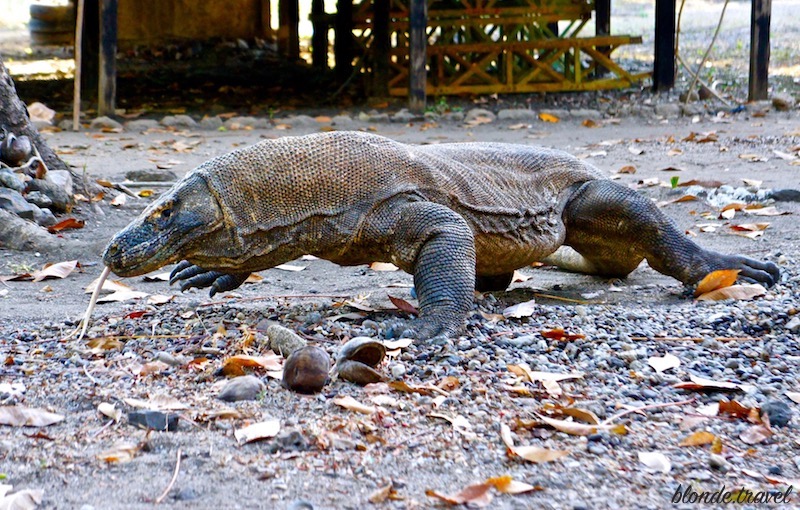
The Komodo dragon is the largest lizard alive today. It grows to 3 metres long and weighs 70 kilograms on average; the heaviest ever recorded weighed 166. Various studies suggest that it descends from ancient lizards that lived across Australia and Indonesia, and today it can be seen on Komodo and a few neighbouring islands.
In Australia, for example, fossils resembling the Komodo dragon have been found that are almost 4 million years old. Its size has not changed since, and that size has let it rule its ecosystem.
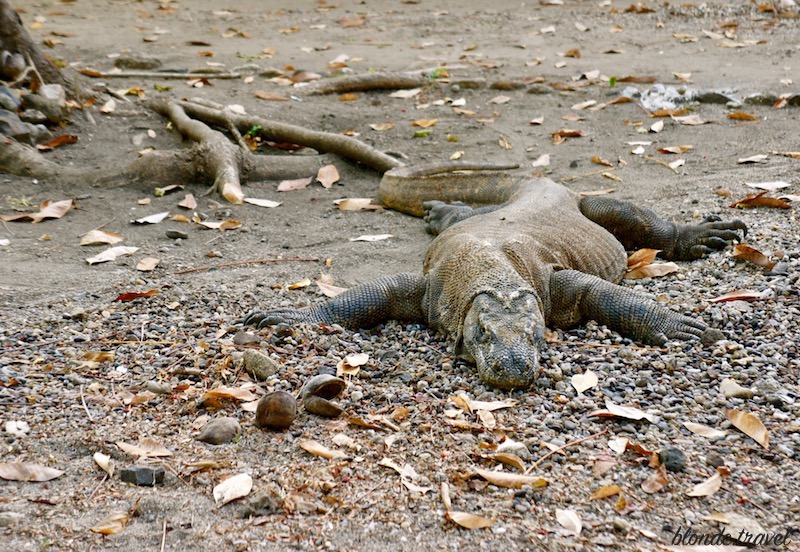
It is a predator with no natural enemies apart from its own kind, and Komodo dragons are very fond of a fight.
The bite is venomous: the dragon carries toxic proteins in glands in its lower jaw, and without proper help a bite can kill.
Where do the Komodo dragons live?
So where do these extraordinary creatures live?
If you want to meet a Komodo dragon at home, in the wild, Komodo National Park in Indonesia is the place.
The park takes in three large islands at its centre, Komodo, Rinca and Padar, and 26 small ones around them. All are volcanic, and their hills rise to just over 700 metres. This is one of the driest corners of Indonesia, where rain is rare and in the hottest months the thermometer can climb above 40 °C.
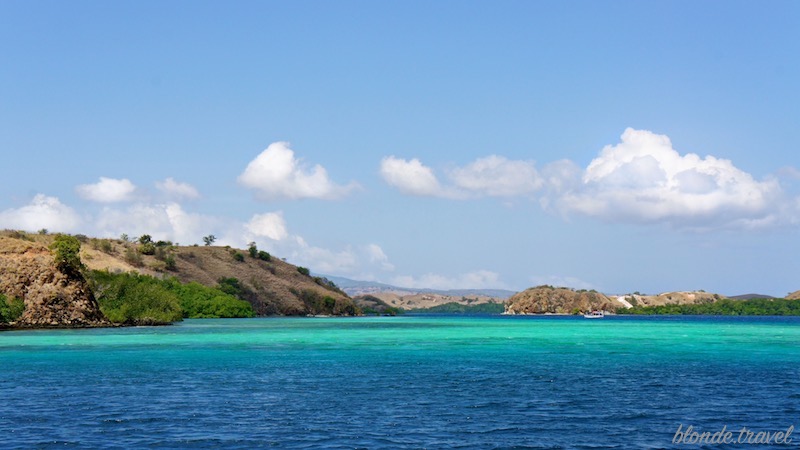
Most of the dragons live on Komodo and Rinca.
The population is small. When I went, the count stood at about 2,100 on Komodo, 2,300 on Rinca and around 1,000 more scattered over the small islands nearby. Komodo dragons are found nowhere else in the world, and they are protected. Fortunately, no one has designs on them: they have no natural enemies, and their skin is no use for handbags. Unless you count the zoos of the world, which have slowly been carrying them off from islands where a dragon can live for some thirty years.
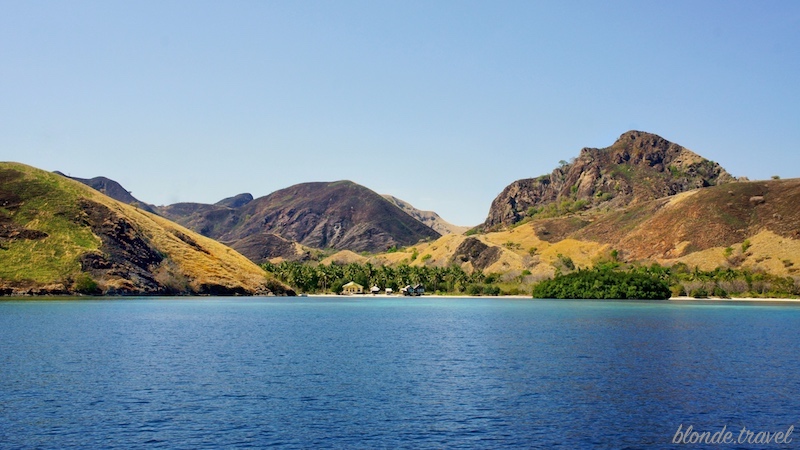
Western science first recorded the Komodo dragon in 1910. Komodo National Park was founded in 1980, at first to protect the dragons; later its work spread to protecting the marine life of the surrounding waters.
Today it is a large reserve of more than 1,700 square kilometres, nearly two-thirds of it sea, and in 1991 it was inscribed by UNESCO as a World Heritage Site.
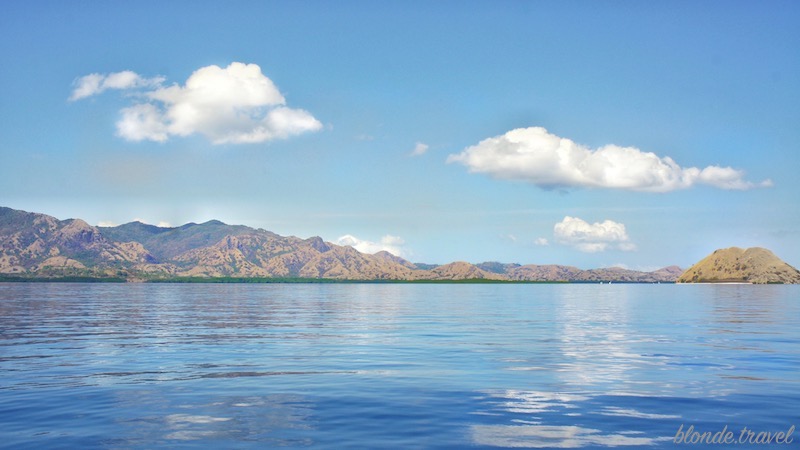
So Komodo National Park had become a comfortable home for giant lizards, the Komodo dragons.
And that is where my road led, to meet these ancient reptiles.
Flying to Flores
To reach the dragons I went to the island of Flores, to the coastal town of Labuan Bajo. Short of a sea cruise through the Komodo islands, from Lombok for example, it is the most sensible way to make such an expedition.
The flight from Denpasar, on Bali, to Labuan Bajo took only 1 hour and 15 minutes. As we drew near Flores, this appeared in the window.
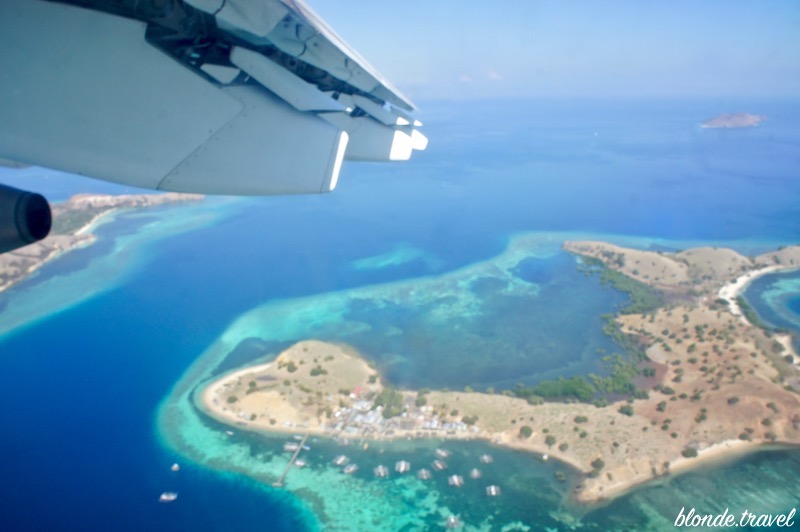
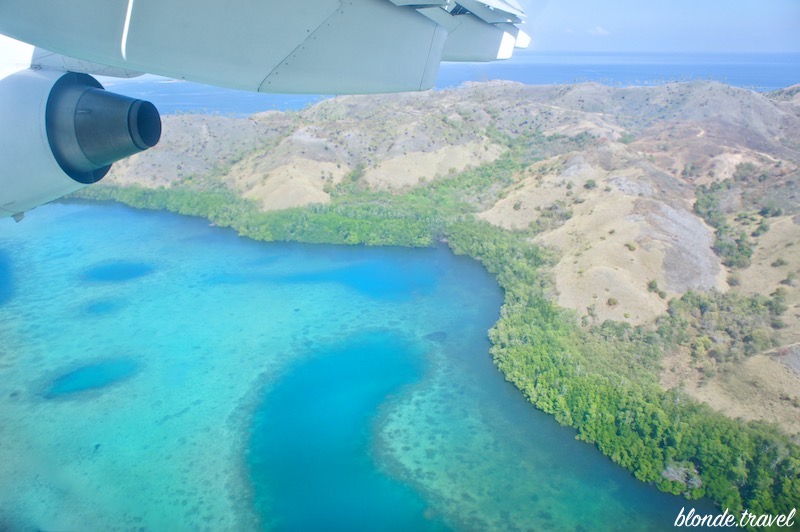
It is not for nothing that Komodo is counted among the most beautiful marine treasures of Indonesia, second only to Raja Ampat.
We landed before noon, and since the expedition was booked for the next day, we gave the rest of the day to exploring.
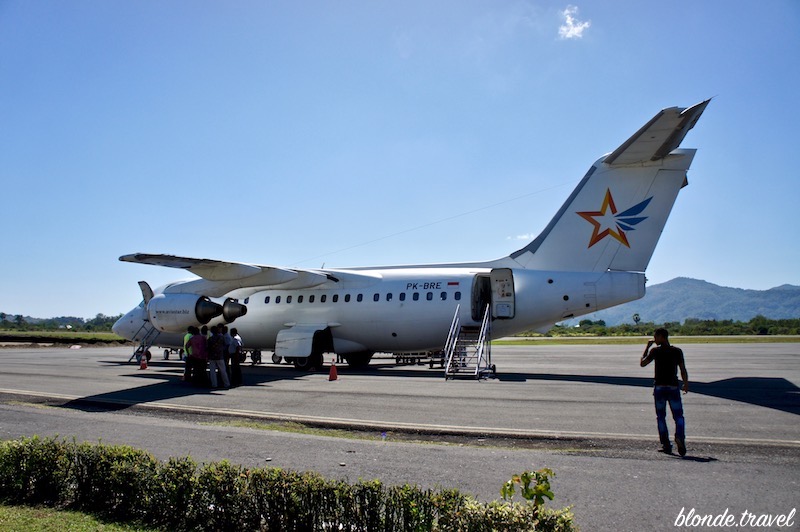
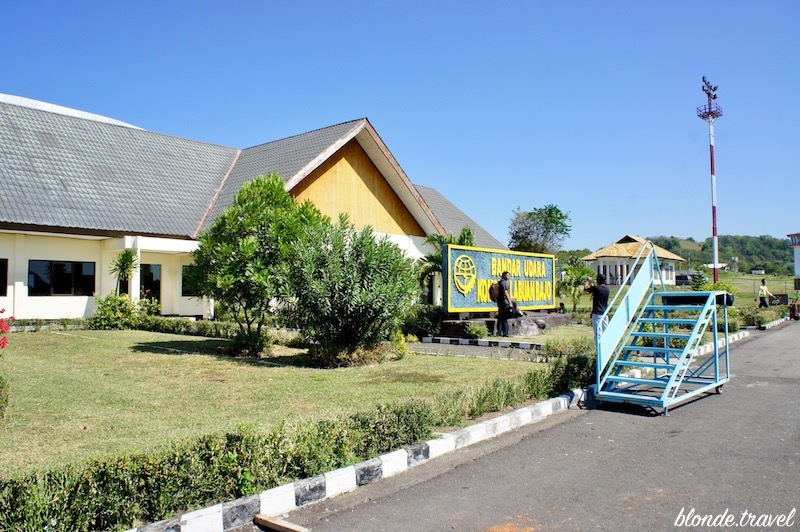
The story continues in Labuan Bajo, where we spent our first day on Flores.