
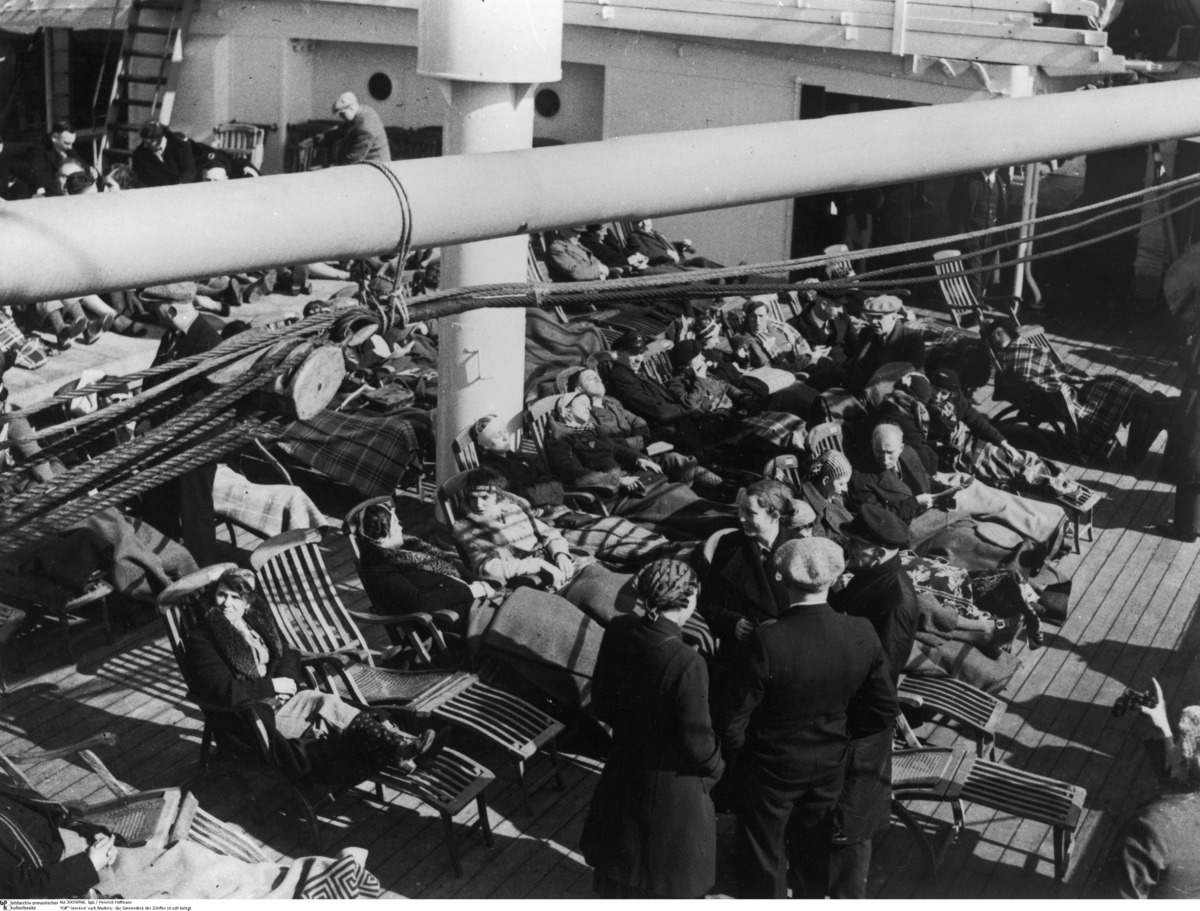
A KdF cruise to Madeira, 1938. Photograph © bpk / Heinrich Hoffmann, via German History in Documents and Images.
In December 1933, Bodo Lafferentz took charge of the new travel office at Kraft durch Freude. His buyers worked to a daily allowance that began at two reichsmarks per traveler and later rose to two and a half. The customary figure in the trade was four and a half. Finding someone to make up the difference would have been one answer. Lafferentz began with what he could offer a supplier in return for a lower price. On a Saturday morning at Harburg station, that amounted to a thousand people going to the same mountains.
The train drew up at platform two at 8:50 on 17 February 1934. Eight hundred holidaymakers were already aboard. Two hundred and fifty joined them for the Harz. The local paper printed a list of the firms that had given their staff leave to go. There was a button factory, a wool combing works, a brewery and the newspaper itself. A travel agent hoping to sell a thousand individual holidays would have envied Lafferentz that list. Through the workplace he could reach both the passenger and the person who decided when the passenger could leave.
Two years later, at the World Congress for Leisure and Recreation in Hamburg, Lafferentz explained why the Nazi Party cared how workers spent their holidays. “The holiday makers are especially prone to this community thinking and it is our main goal, to construct the holiday travels in such a way, that the thoughts of our comrades are made apparent.” That political use of pleasure is one reason a Nazi official appears in a history of travel. In Nazi Germany as in the Soviet Union, an affordable holiday brought factory workers together where the authorities could shape the conversation. At the far end of the railway line lies the question this Portrait follows. How did Lafferentz make a week in the mountains affordable for a trainload of factory workers? That way of organizing a holiday outlived the regime it served. We will meet it again at the end of this Portrait, in the work of a modern tour operator.
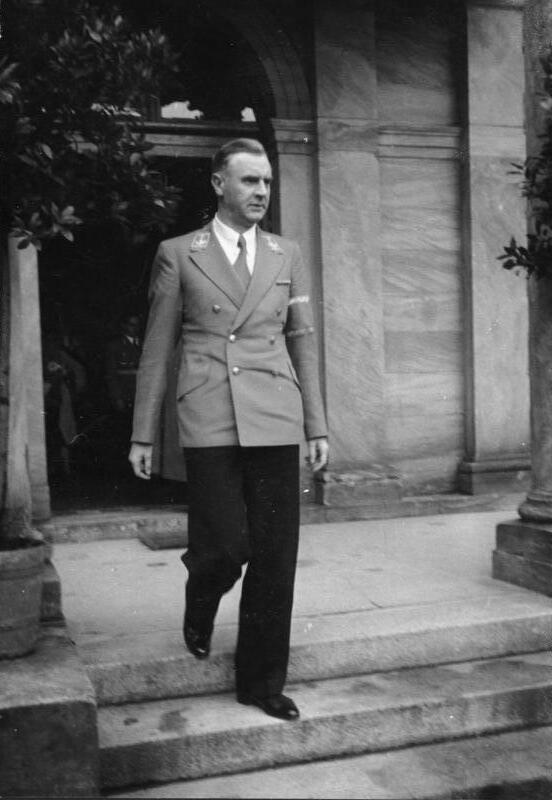
Lafferentz knew the employers’ side of that arrangement. He joined the management of the German employers’ federation in 1929, under the Weimar Republic, and stayed until November 1933. He was still there when Hitler became chancellor on 30 January 1933. On 1 May, Lafferentz joined the National Socialist Party.
On 2 May, acting on orders from Robert Ley’s committee, SA and SS units and party factory organizers seized the offices and assets of the free trade unions and arrested union officials. Ley became head of the German Labour Front, the National Socialist Party’s organization for employers and employees. The Labour Front founded its leisure branch, Kraft durch Freude (Strength Through Joy), on 27 November 1933. The founding notice named Dr. Brauweiler to head its Office for Travel, Hiking and Holidays. Lafferentz took charge within weeks of the branch’s creation.
Ley wanted workers to associate a benefit they valued with the regime that provided it. A holiday away from home offered a conspicuous improvement in working life while wages were being held down. The invitation came on the regime’s terms, and Jewish workers were excluded. Lafferentz’s office had to consider how much leisure a worker could spare as well as how much money. For someone with one free Sunday, the first question was where it would be a pleasure to spend it.
A Sunday on foot
In Darmstadt on Sunday, 27 October 1935, an early riser had a choice. At seven a KdF road excursion was due to leave for the Taunus hills, with a stop in Usingen for lunch. The fare was 3.80 reichsmarks, about €21 at 2025 German prices, and lunch was extra. Walkers were to meet an hour later at the filling station on Marienplatz and set out for the waterworks near Eschollbrücken, where a visit inside was part of the outing. The notice allowed about four hours of walking and told everyone to bring food. The outing was free. A works hiking leader named Reukauf would take them round.
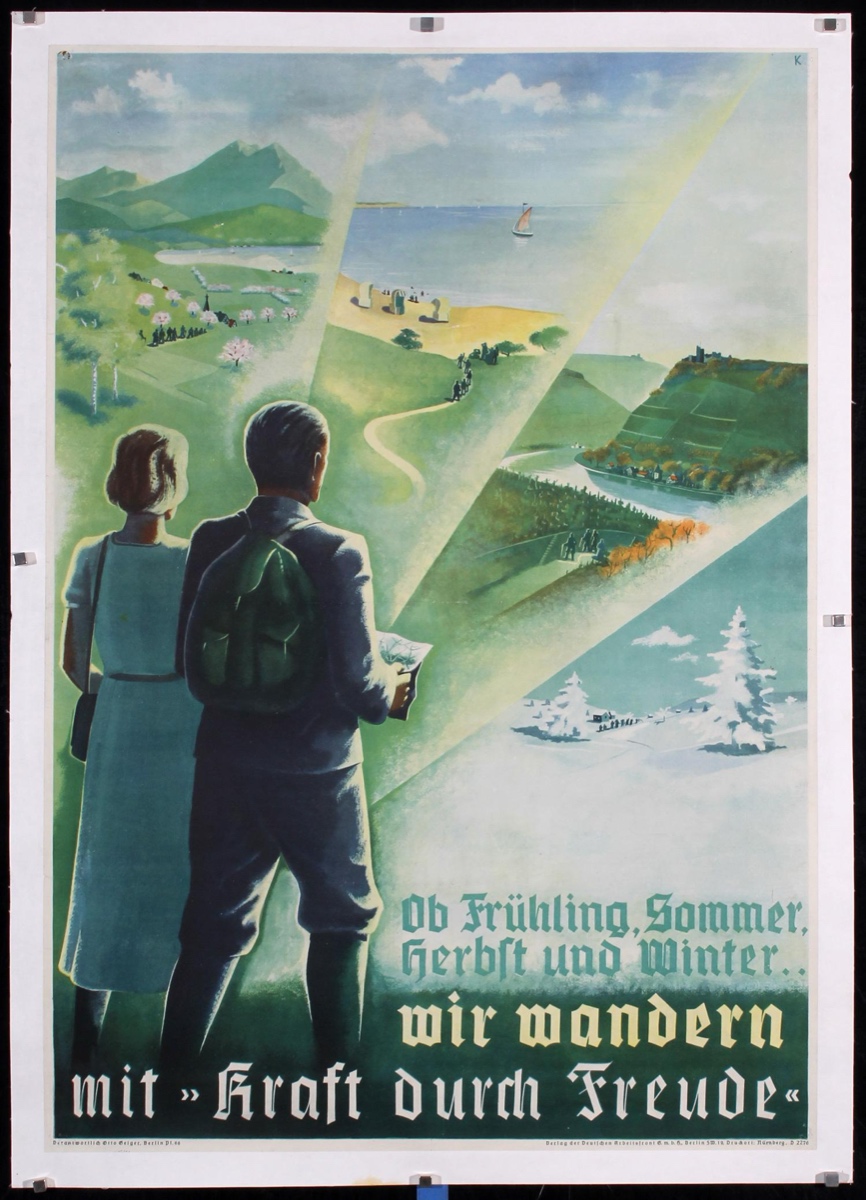
By 1933 many German factory workers had won a few days of paid leave. Going away for a holiday was still largely a middle-class custom. Lafferentz’s office encouraged workers the regime counted as “Aryan” to make a habit of travelling together on their days off. For someone curious to try it, the price of admission in Darmstadt was a packed lunch and a Sunday morning.
For a longer trip, the invitation to the Thuringian Forest that June began with a shrewd reminder. Its readers already knew the Rennsteig from school. Now they could walk the ridge themselves and visit Goethe’s hut on the Kickelhahn, carrying their food and sleeping in simple hikers’ quarters. Turning the Darmstadt waterworks into a Sunday excursion and finding a guide to lead it was the work of what we would now call a destination management company (DMC). KdF also acted as the tour operator, buying railway seats and hotel beds in bulk and selling the holidays through the factories.
Where the beds were
The headline over the Harburg departure promised holidays for 10,000. The timetable spread them across several routes and several days. Berlin had a train for Upper Bavaria, Essen and Dortmund one for Thuringia. Cologne and Aachen would send a party to the Black Forest later in the week. Each train gave Lafferentz’s buyers a definite number of beds to find for particular dates. They could take those numbers to places where a steady succession of guests was worth more to a host than the chance of an occasional visitor paying the full rate.
At a meeting in Breslau in November 1934, Lafferentz set out his plans for the following year. He wanted an early program, giving workers time to choose a trip and save for it. He intended to favor economically distressed districts and border regions. From 1935 the Eifel village of Weyer received holiday parties from as far away as Berlin and Silesia. Weyer had rooms to let. What a Berlin worker needed was a reason to spend a week there. Putting the village on the program with a departure date and a way to get there gave it a place among the destinations a family might consider.
The bargain looked different from behind the stove. In January 1935 the mayor’s office in Wangen, on Lake Constance, received word that KdF had selected the village for holiday parties. The letter also instructed the town to clear away old circus and cigarette posters. KdF kept costs down by arranging rooms in villagers’ homes for some of the party. Those guests came to the Gasthof zum Frieden only for lunch. A woman who remembered those seasons recalled that the innkeeper cooked separately for his house guests and the KdF parties. The extra trade gave him plenty of work. It brought in less money than he had hoped.
On a domestic KdF holiday a traveler could book a district and learn the address of the particular room on arrival. From the office’s point of view, a dozen households with spare bedrooms could do the work of a small hotel. The railway bargain was larger still. KdF obtained a 75 percent discount on special trains. Carl Degener, a private operator who also brought whole trains into Bavaria, obtained 50 percent. A full train spread the cost of a departure over more passengers. The Labour Front’s privileged rate gave Lafferentz a further advantage even over a competitor who filled his train just as well.
A week for thirty-nine marks
In Upper Bavaria Lafferentz’s office could sell a week with full board for 39 reichsmarks, about €205 at 2025 German consumer prices. Degener charged 69, about €365, for a comparable holiday. The thirty marks between them were a substantial sum in a household living on 150 reichsmarks a month. The 39-mark fare still took about a quarter of that month’s pay. Price mattered at the moment of booking as much as it had in the negotiations. A worker could buy 50-pfennig savings stamps through a KdF representative, then register for a holiday before the card was full. Eighty stamps would pay for the Bavarian week with a mark to spare.
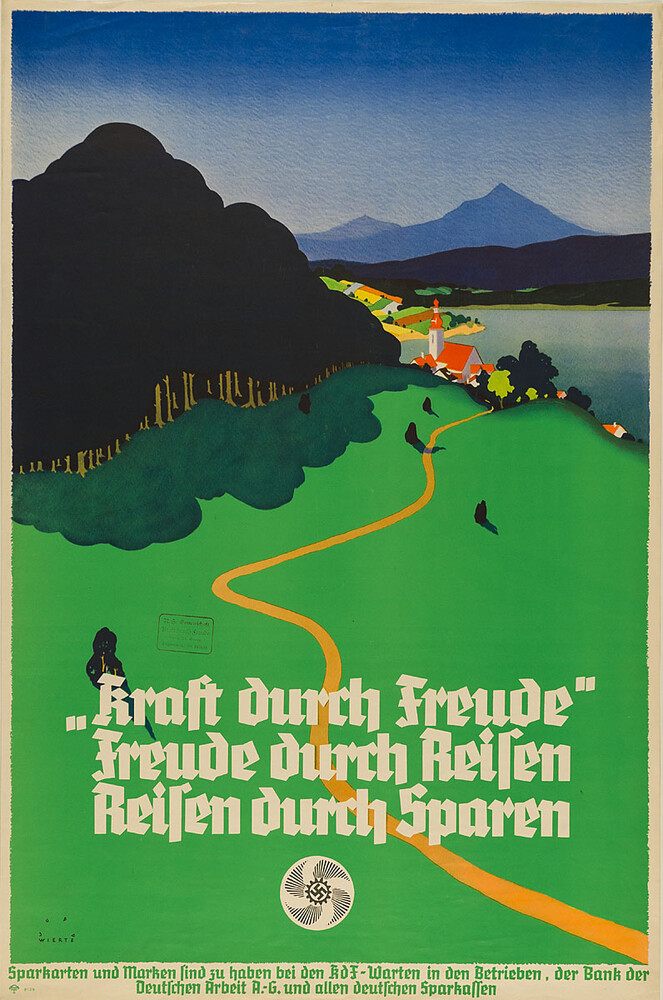
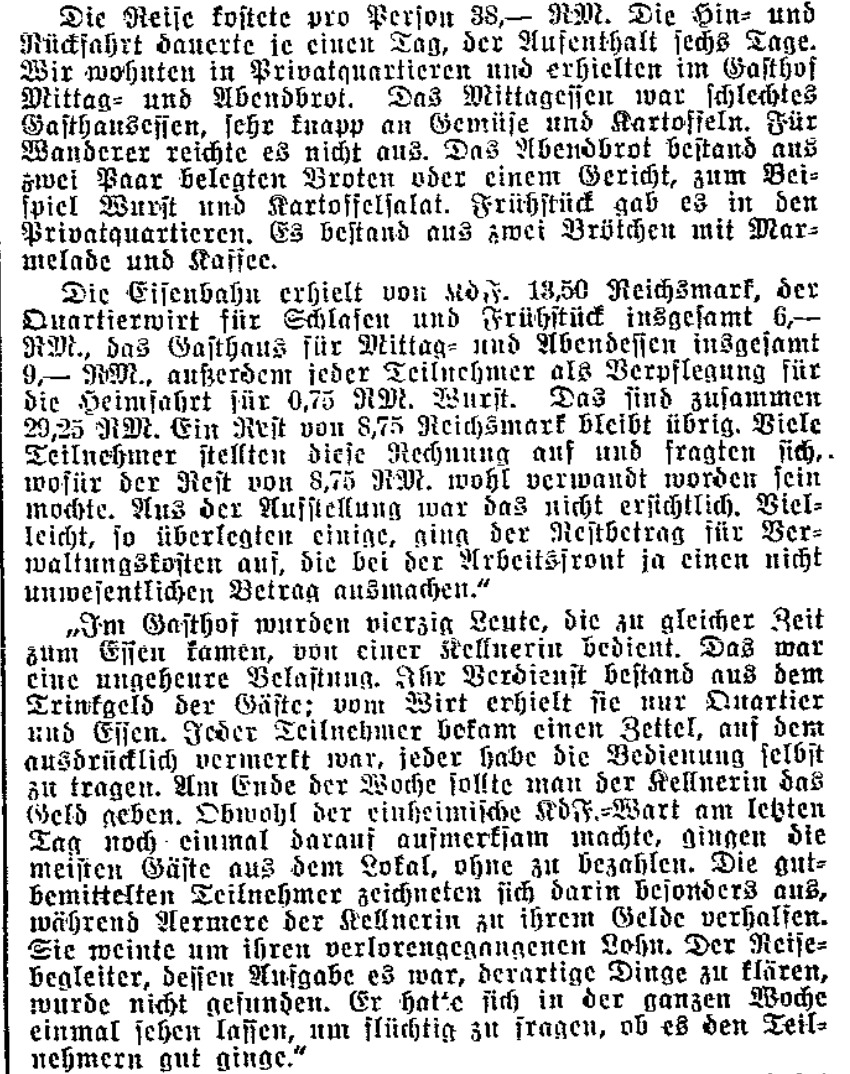
A passenger on another Upper Bavarian trip did the arithmetic from the other end. In January 1936 the Danziger Volksstimme printed an account of a holiday costing 38 reichsmarks, roughly €200. The railway received 13.50 per guest. The household providing a bed and breakfast got six. Lunches and suppers at the inn accounted for nine, and each guest received 75 pfennigs’ worth of sausage for the journey home. Several travelers wondered whether the remaining 8.75 went on administration. One expense they could identify was service. A slip reminded them to pay the waitress at the end of the week. She had served forty of them at one sitting. Most left without tipping her.
That summer the French newspaper L’Humanité offered a week in Nice for 480 francs, about 66 hours’ earnings for a Paris printer. Its package included transport, meals, lodging, taxes and tips. An organizer could make the printed fare lower by negotiating a better rate or by leaving something for the traveler to settle. The Bavarian waitress had good reason to know the difference.
Some workers also received help from their employers. A Berlin works journal recorded 746 KdF trips and 29,976 reichsmarks in sales in the first half of 1937. On the same page, in a separate welfare account, came 22 placements in holiday homes and five referrals for spa treatment. A place awarded through work and a holiday bought through work could be entered in quite different books.
By 1938 the travel office was turning over some 90 million reichsmarks a year. One figure from the following year gives a sense of how far ticket sales carried it. The historian Georg Fischer records a direct subsidy of 3.70 reichsmarks for every hundred reichsmarks of travel-office turnover in 1939. The corresponding figure for KdF’s sports office was twenty. The Labour Front paid administrative costs separately, and the favorable railway rate was already built into the price of a seat. Those advantages make it impossible to read a profit margin off the fares. The passenger buying the Bavarian week benefited twice. The group rate brought down what the office had to pay its suppliers, and the Labour Front took expenses off the office’s books.
From hiring a liner to ordering one
In Hamburg on 3 May 1934, Lafferentz spoke at the quay before the Monte Olivia sailed. The following morning’s Darmstädter Tagblatt put 2,400 holidaymakers aboard her. Chartering gave his office the use of a whole ship on a date it could sell through the factories. It gave an established shipping line a use for spare capacity. In the winter, ships that had carried summer holiday parties north moved into the Mediterranean. There was a limit to what the organizer could do with a calendar, however. Some of the winter voyages around Italy were hard to fill. Places were offered as wholly or partly paid rewards.
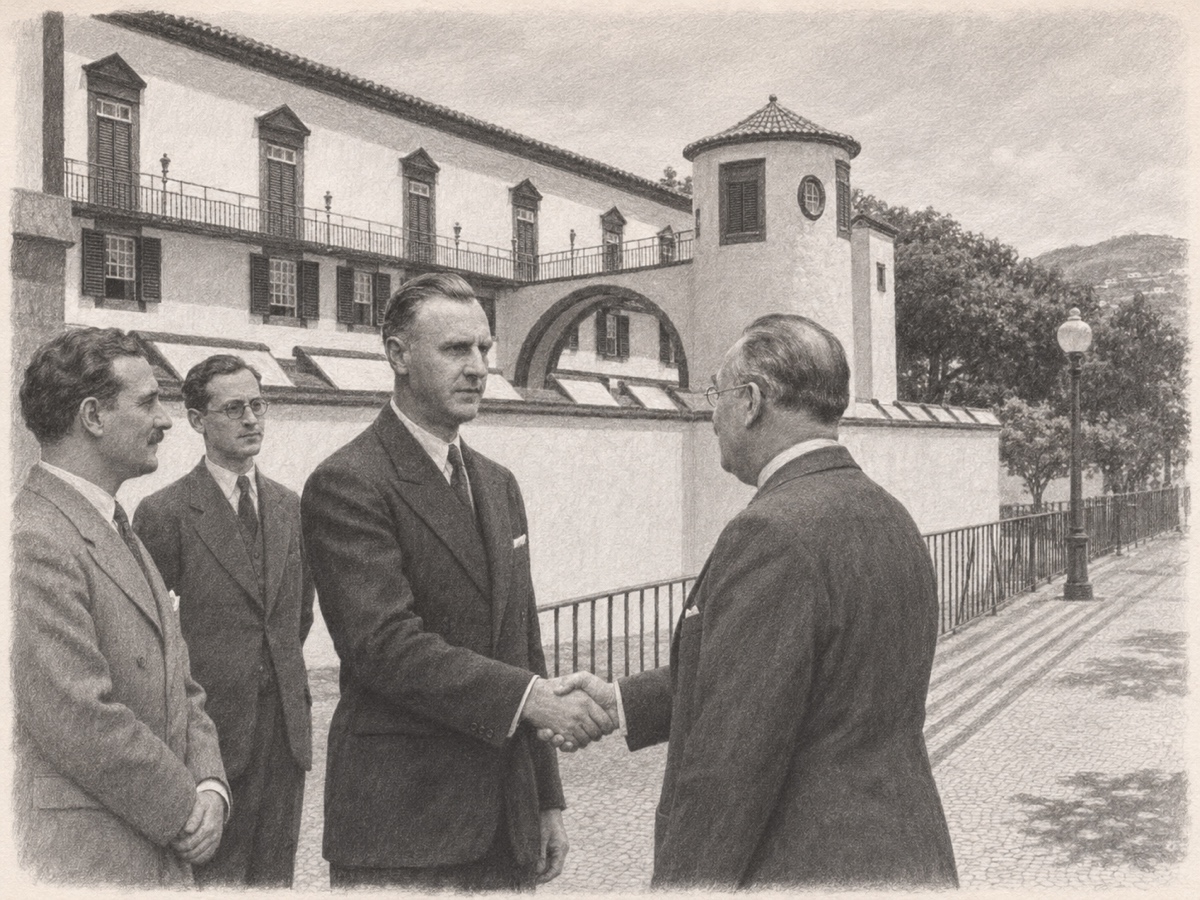
The first KdF cruises reached Madeira on 20 March 1935. Lafferentz and Robert Ley went ashore in Funchal, where the German consul, Emil Gesche, had arranged excursions and receptions. Madeira’s civil governor, Augusto Goulart de Medeiros, received them at the Palácio de São Lourenço. Many buildings in Funchal flew swastika flags to welcome the visitors.
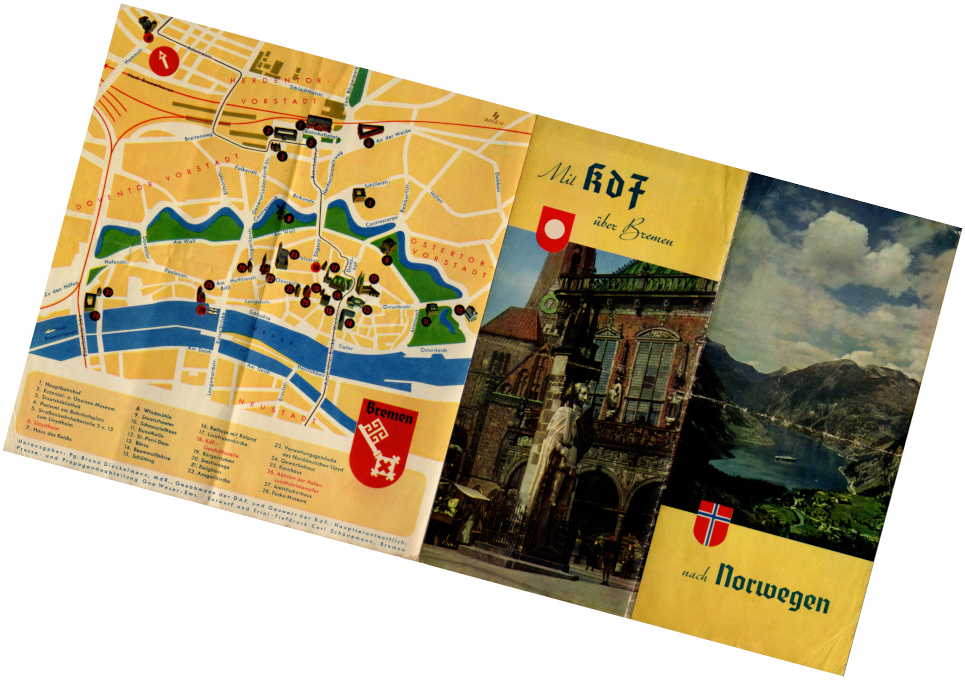
By 1935 Hamburg’s tourism association had printed 200,000 brochures for KdF visitors. A special department arranged their time in the city, including visits to the harbor and St. Pauli. Guests and shopkeepers both complained about how little time the parties had to wander.
After the charters came a decision that a shipping agent could never have made on his own. The Labour Front ordered ships for its holiday business. On a hired liner KdF took the cabins as it found them. On the Wilhelm Gustloff, launched in 1937, the accommodation was designed for a single passenger class with places for roughly 1,460 guests. The Robert Ley followed in 1939. By then the program had shown that it could send substantial parties to sea. A Madeira fare of about 120 reichsmarks, roughly €630, nevertheless took four-fifths of a worker’s 150-mark monthly wage. The German Historical Museum counts about 690,000 sea voyages among seven million longer holidays by 1939. Most of the 43 million trips sold were day outings. For a worker with four and a half marks to spend, KdF had offered a train from Darmstadt, a Rhine boat and lunch aboard before Koblenz, all for about €24 in modern purchasing power.
Buying the destination
In Upper Bavaria a host already owned the bed when Lafferentz’s people came to bargain. On the Baltic island of Rügen the Labour Front owned the ground. Robert Ley commissioned Prora on behalf of KdF and held out to working families the prospect of a seaside week for twenty reichsmarks, about €105. The proposed resort took the organizing principle of the special train all the way to the bedroom window. Ten thousand twin rooms were to face the Baltic. Guests would come through a central reception, with arrivals and departures planned together. The architect could settle in advance, for twenty thousand people, who would get a sea view. Everyone would.
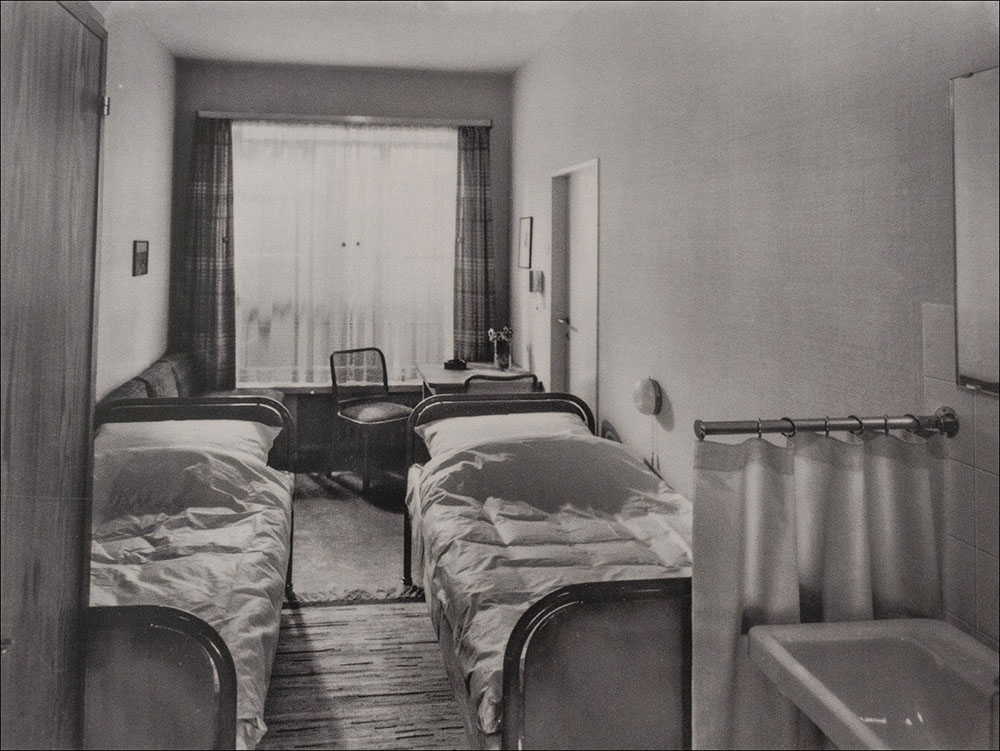
Building those rooms was an altogether different commitment from finding guests for rooms that stood empty. In 1938 KdF’s construction office put the projected cost at 237.5 million reichsmarks. For a commercial owner, the room rate would eventually have to pay for the buildings as well as the staff, food and linen. Ley could justify the undertaking to the Labour Front by what a twenty-mark holiday would mean to families priced out of a seaside resort. War stopped construction in 1939. The principal blocks stood unfinished, and no KdF holidaymaker checked in. Lafferentz’s office had demonstrated the passage from chartered ship to purpose-built ship. At Prora the equivalent step ashore never reached its first paying season.
The wartime audiences at Bayreuth
During the war Lafferentz put his experience of moving large parties to work for the Wagner festival at Bayreuth. From 1940 his office arranged for wounded soldiers and armaments workers to travel to the performances. In 1943 he married Verena Wagner, the composer’s granddaughter. The following April he wrote to his mother-in-law, Winifred, who ran the festival, to tell her that an advance of 250,000 reichsmarks for the coming season was on its way to her bank.
Lafferentz was also a director of Volkswagenwerk and an SS officer. In Bayreuth he founded the Institute for Physical Research. In 1944 prisoners from the Flossenbürg concentration camp system were forced to work there under the physicist Werner Rambauske.
In April 1945 Lafferentz and his brother-in-law Wieland Wagner left Bayreuth to join their families in Nußdorf on Lake Constance. In February 1949 a denazification appeals tribunal in Freiburg reduced Lafferentz’s classification to Minderbelasteter, or lesser offender. He worked as a businessman on Lake Constance, where he and Verena raised five children. He died in Nußdorf, a district of Überlingen, on 17 January 1975, aged 77.
What the commercial operators kept
Lafferentz built a low-cost tour operator for workers saving fifty pfennigs at a time for what might be their first holiday away. Bookings through the factories gave his office the numbers to fill special trains at reduced fares and bargain for blocks of rooms in little-known villages such as Weyer. At sea, KdF could commit to a whole liner for a sailing. The Labour Front later ordered its own ships and began building a resort for 20,000 guests.
Carl Degener, Lafferentz’s prewar competitor, showed how the same group buying could pay its way in the postwar holiday trade. Touropa, which he helped found in 1951, filled special trains by concentrating its bookings on a few inexpensive destinations. In 1956 an ordinary return ticket from Hamburg to the Bavarian village of Ruhpolding cost 124 Deutsche Marks. Touropa sold a nine-day holiday there for 141 marks, about €420. For seventeen marks more than the train fare, its guests had a room and all their meals.
Touropa helped form TUI, which today owns airlines, hotels and cruise lines. Lafferentz helped pioneer the same model of vertical integration. With predictable bookings, an operator can build and own the transport and accommodation it sells, spread the cost across thousands of guests and keep package prices low.