
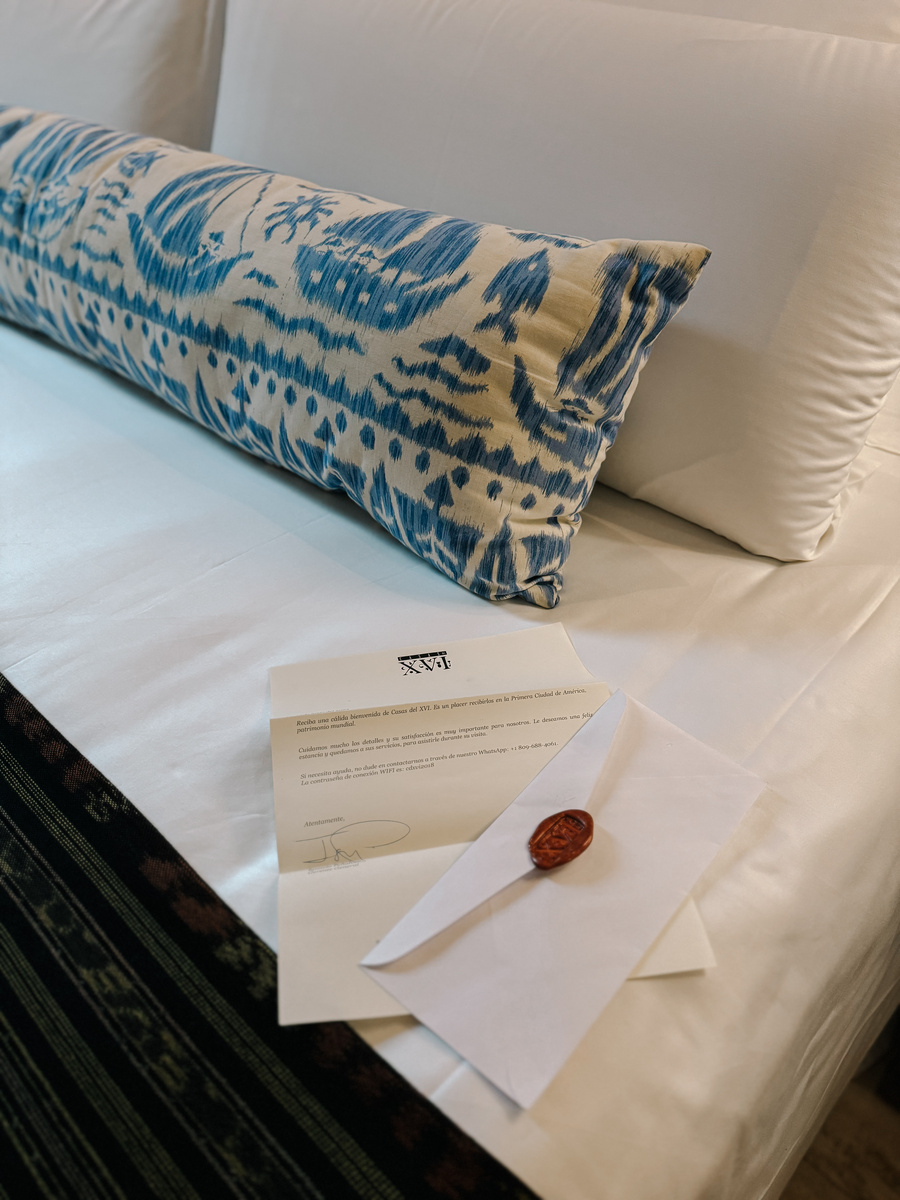
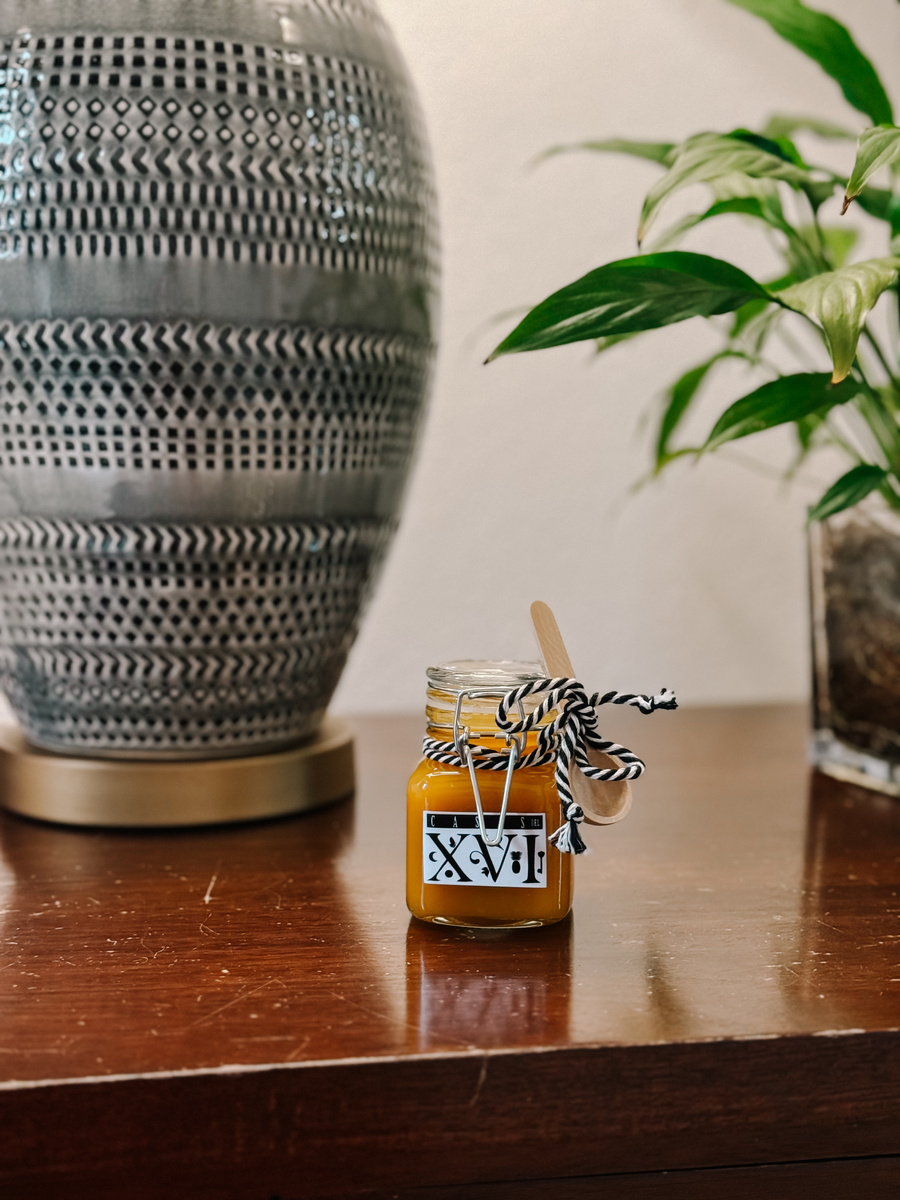
The first clue was a wax seal. A handwritten letter lay on the bed at Casa del Pozo, its envelope closed in dark red wax. Nearby, a tiny jar of marmalade wore a Casas del XVI label. It was a miniature welcome in a hotel that resists the scale of a hotel.
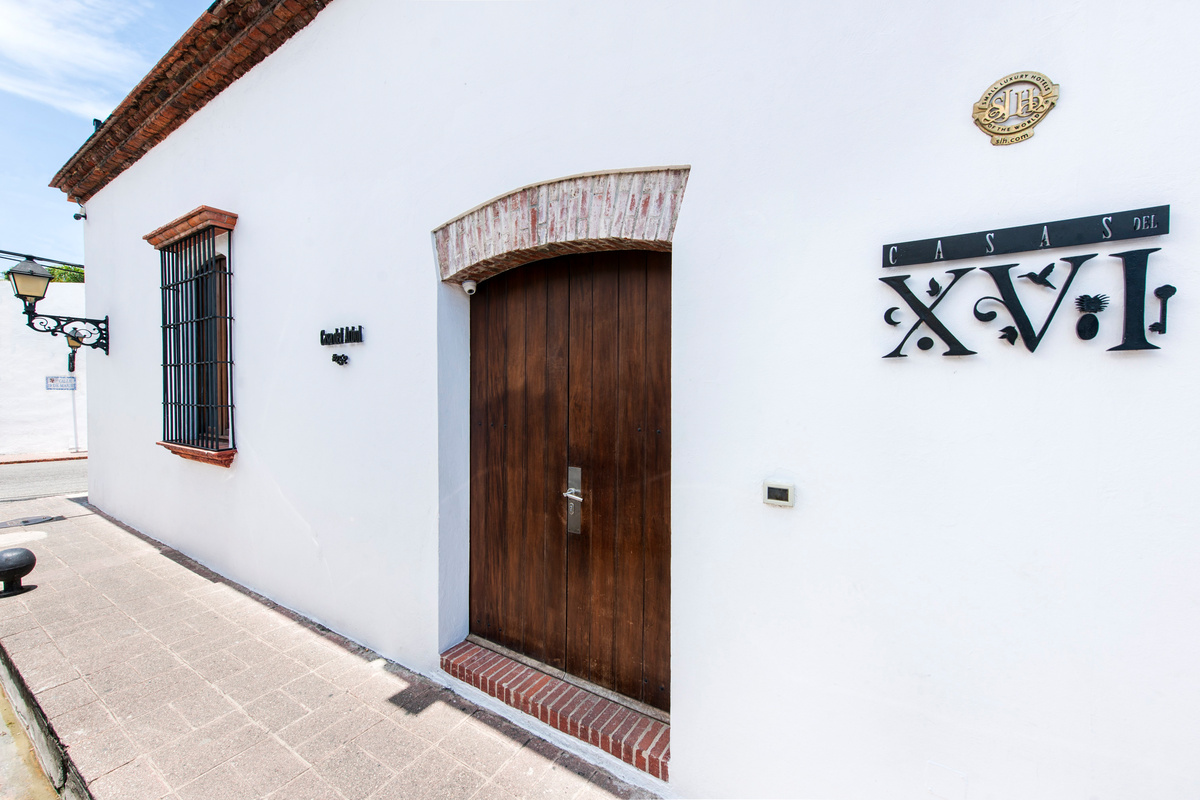
Casas del XVI is not one building. Its rooms are distributed among restored houses in Santo Domingo’s Colonial City, each with its own door, courtyard and collection of objects. I first stayed here in 2018 and returned for one night in June 2024. Six years later, the pleasure remained the same: passing from the street into a private world that still belonged to the old city around it.
A hotel made from houses
On my first visit, I was struck by the confidence of the interiors. A freestanding bath sat beneath nine exuberant pictures of palms. Elsewhere, old objects, Caribbean art and handmade furniture gave each room a character that was decorative without becoming theatrical. Nothing seemed to have been chosen by the metre.
That distinction matters in a historic hotel. Restoration can preserve walls and still leave a place feeling like a stage set. Casas del XVI felt assembled instead of themed. The houses had been made comfortable, but their scale and irregularity had not been tidied out of existence.
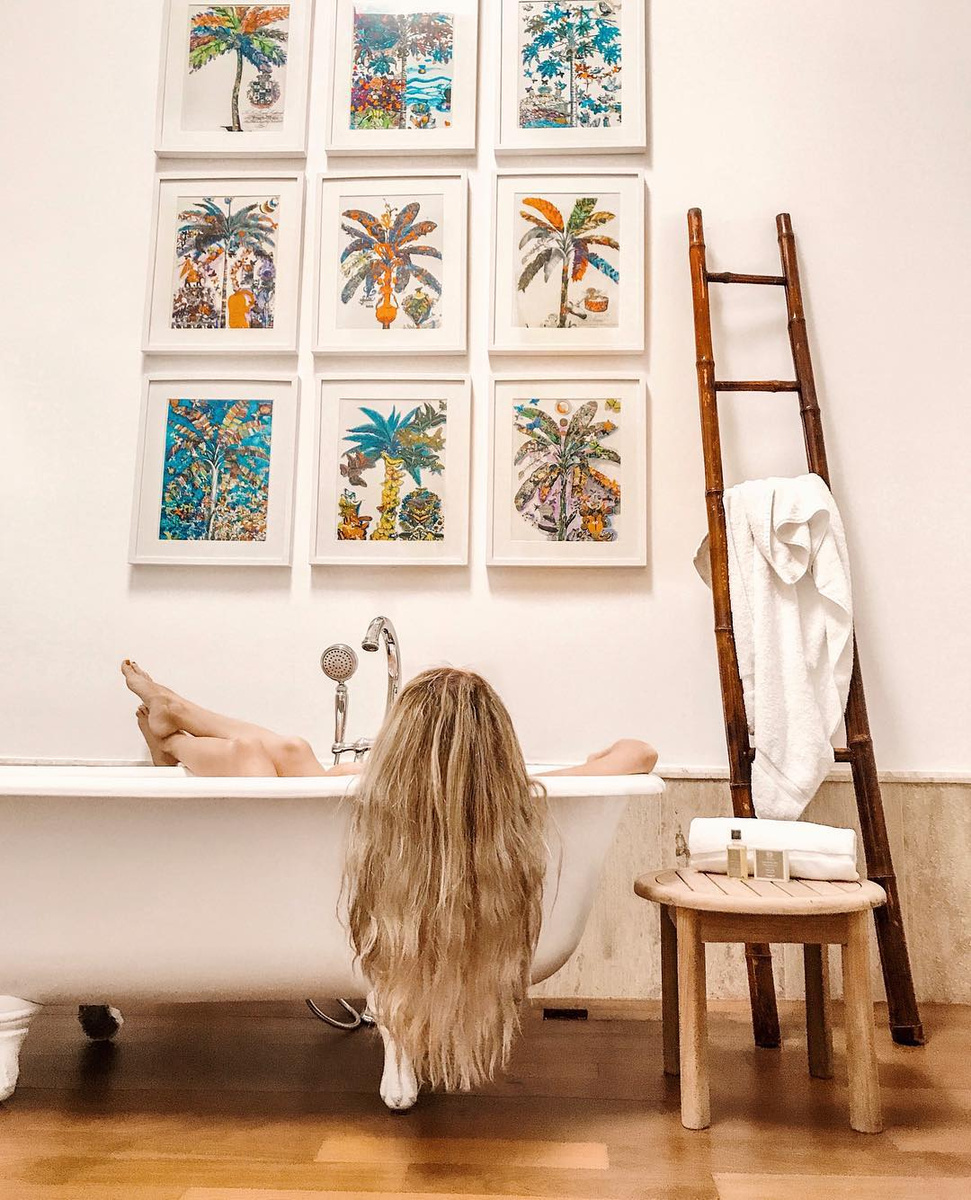
The same idea was still legible when I returned. Casas del XVI now appears as part of IHG’s Vignette Collection, but it continues to describe itself as rooms spread across restored houses rather than as a conventional hotel gathered behind one lobby. The particular house is therefore not a minor booking detail. It shapes the stay.
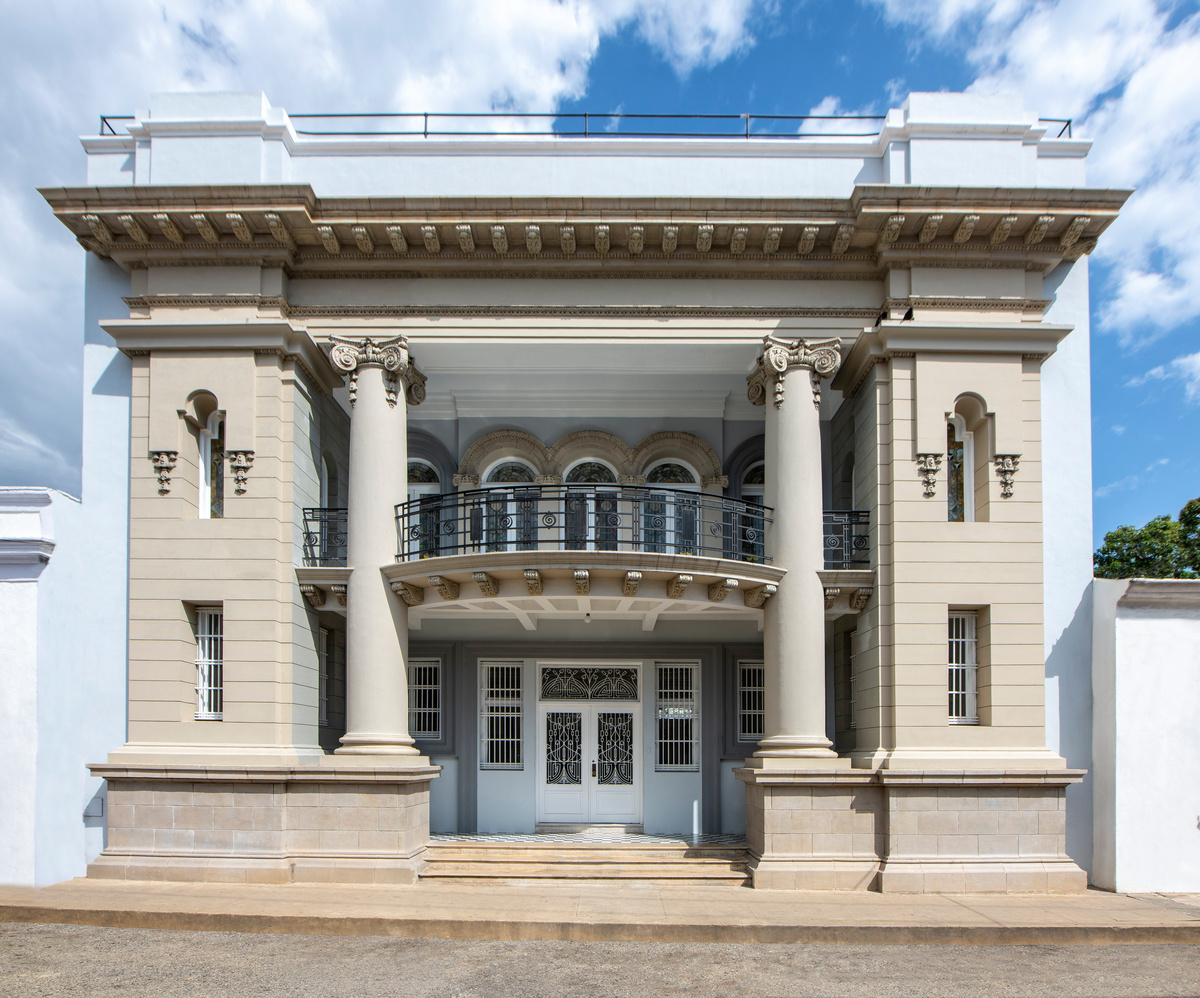
Casa del Pozo
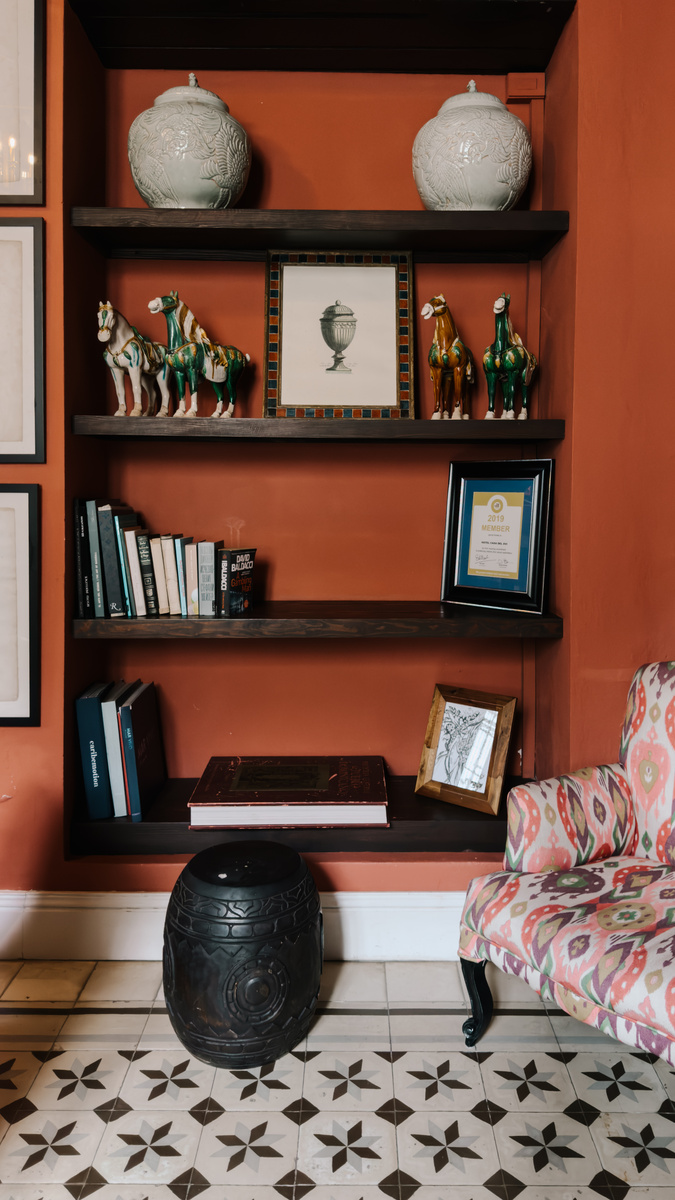
In 2024, I stayed in Casa del Pozo—the Well House. My room had a high, dark carved headboard, shuttered windows, blue-and-white textiles and ceramic lamps. A shelf across the house held books, pottery, little carved horses and Caribbean art. Even the patterns underfoot seemed to have their own histories.
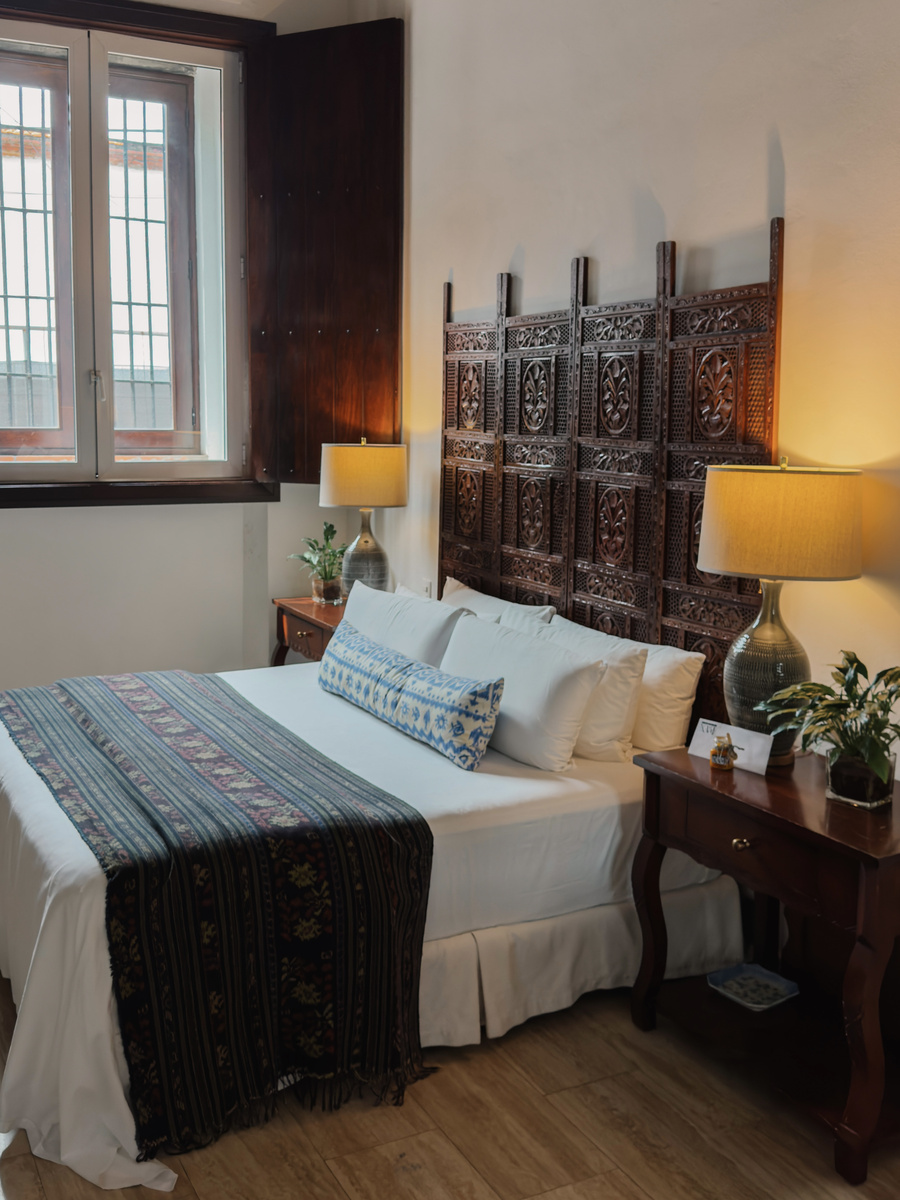
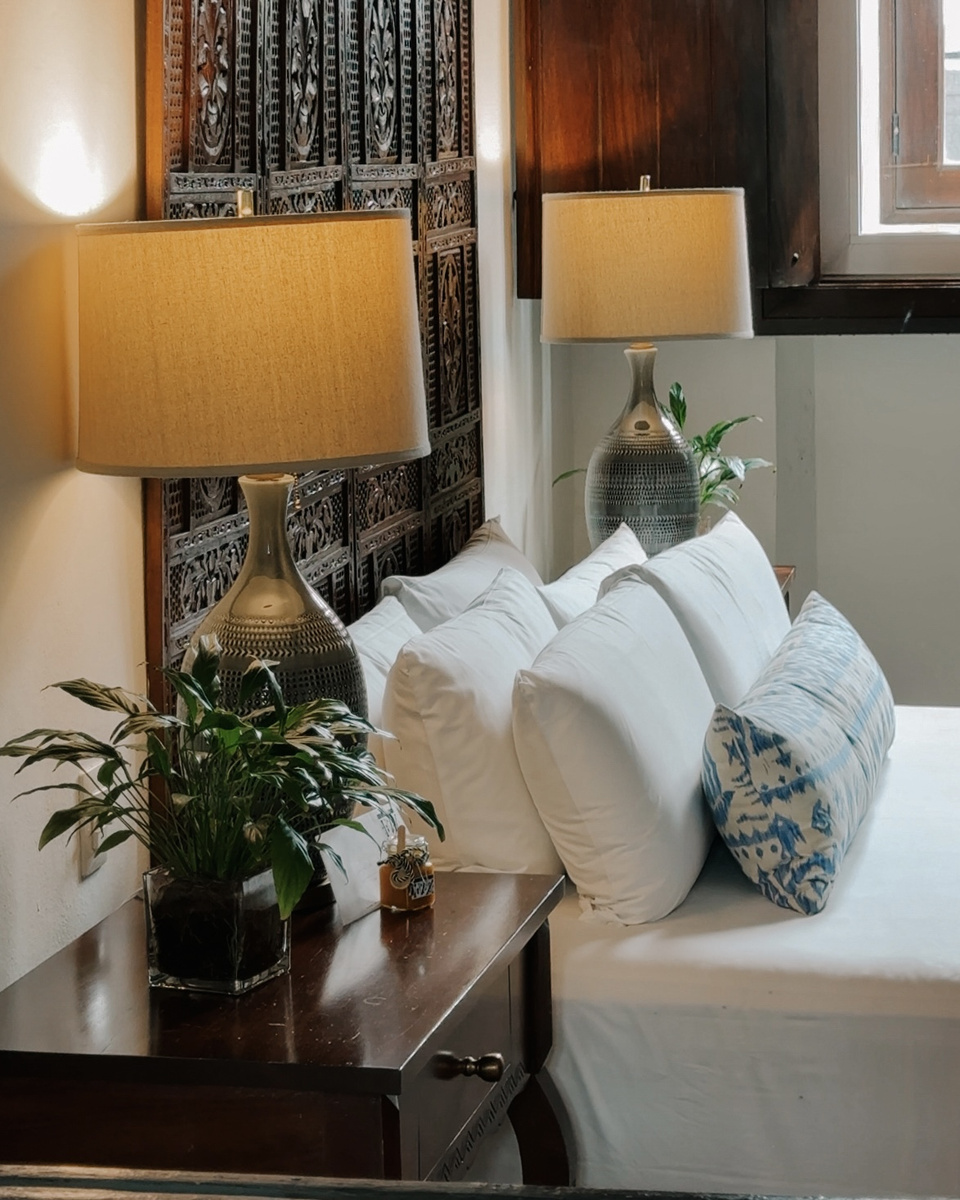
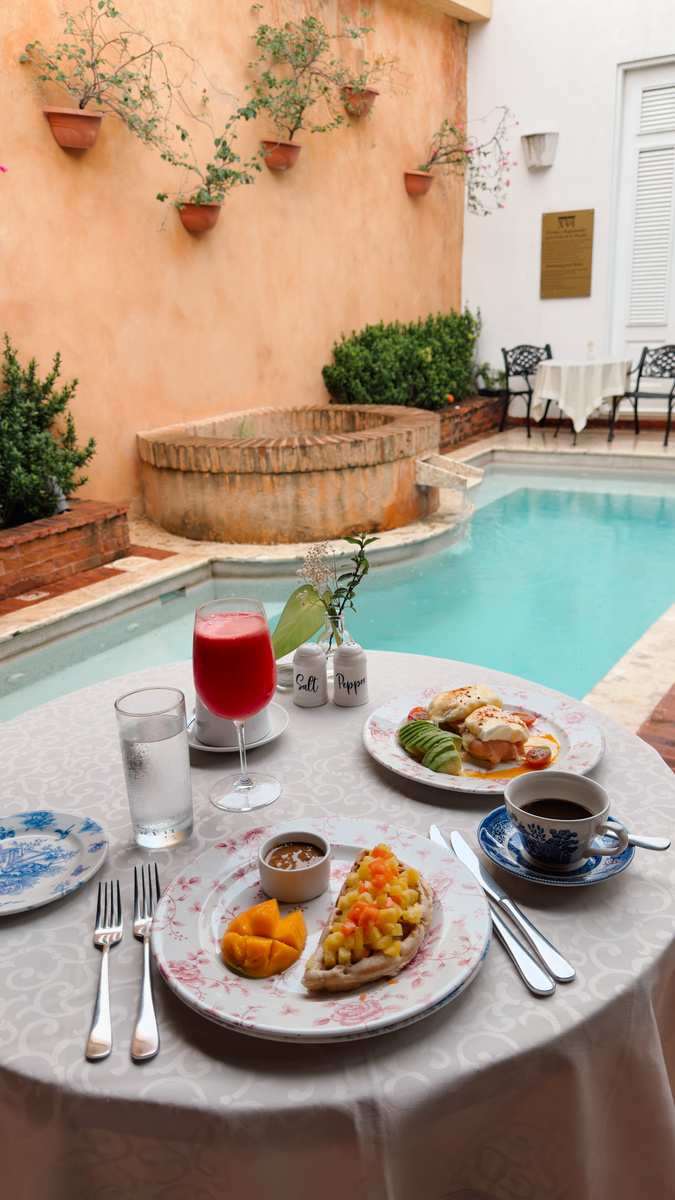
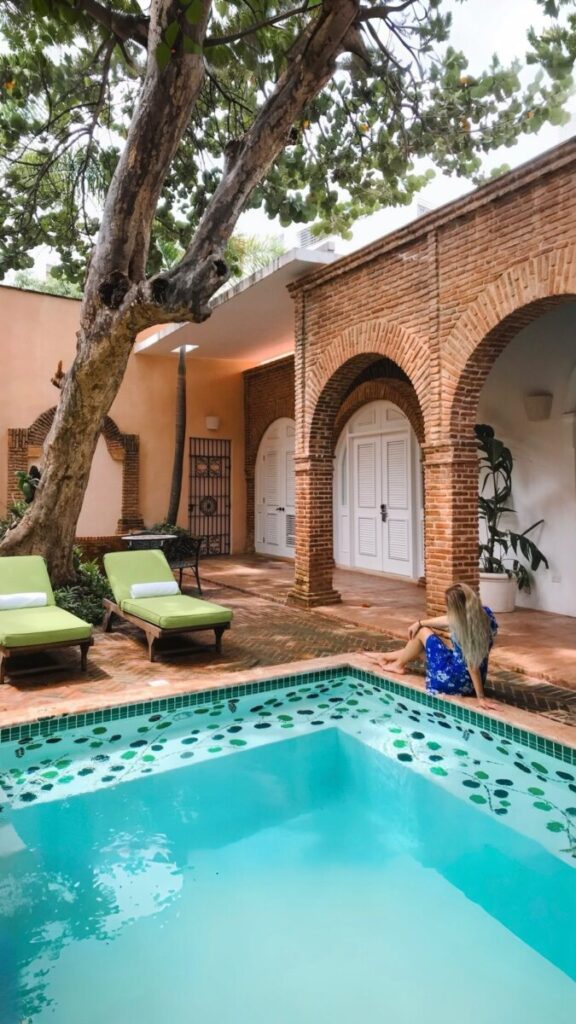
The house takes its name from the well found on the property. According to the hotel’s current account of its restoration, the old structure was preserved and incorporated into the plunge pool. It sits in the courtyard, where warm terracotta walls, plants and brick meet pale blue water. The pool does not feel imposed on the house; it explains why this particular courtyard is memorable.
This is also where the hotel’s arrangement asks for a little attention from the guest. A collection of different houses cannot offer the absolute predictability of a single purpose-built property. Room size alone tells only part of the story; I would want to know which house, courtyard and character came with it. Here, the individual setting is the point.
Breakfast, the Dominican way
In the morning, I had breakfast beside the pool: eggs, avocado, mango, juice and coffee on patterned china. There was no need to manufacture a grand occasion. The small table, the water and the enclosed courtyard did enough.
I lived in the Dominican Republic for ten years, so I do not measure a Dominican breakfast by its pastries. The country wakes up properly with mangú: green plantains boiled and mashed, then served hot. Queso frito brings the salty, crisp edge. Another plate I would ask for is yuca con cebolla marinada—boiled cassava under onions softened in vinegar, their sharpness cutting through the mild, starchy root.
These are simple foods, but timing matters. Mangú becomes heavy as it cools; fried cheese loses its crust. Eat them when they arrive. A hotel does not need to reproduce every Dominican breakfast combination, but it should understand that this is not a decorative local corner beside an international buffet. It is how the morning tastes here.
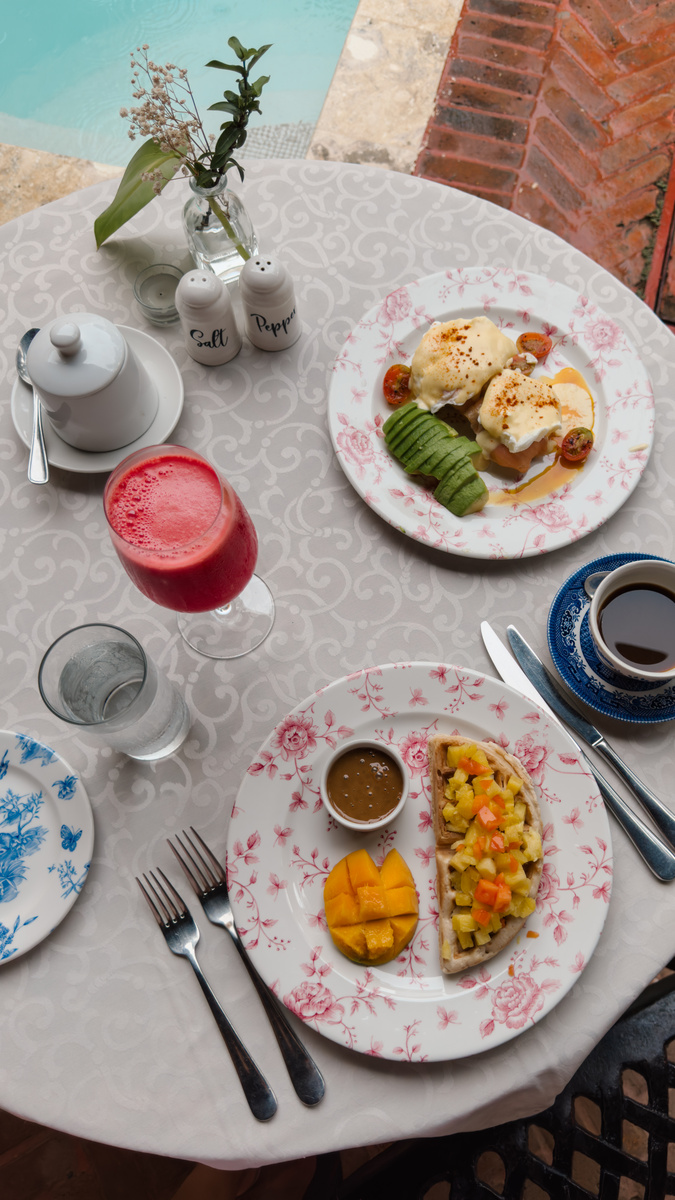
Casas del XVI has no conventional public restaurant into which one can wander. Its current arrangement is more private: food and drink are brought to the house and served in its dining room or patio, while a special dinner can be organised in advance. That suits breakfast beside the well. For an ordinary lunch or dinner, I would use the opportunity to go out.
Where I would eat in Santo Domingo
For a casual lunch without a plan, walk to Parque Colón beside the cathedral. Choose a table under the trees and watch the square rather than searching for a complicated menu. For dinner within the Colonial City, Pat’e Palo on Plaza de España is the deliberately touristic choice: historic setting, the Alcázar de Colón across the square and the old city performing at full volume.
The more revealing meal requires a taxi west to Piantini. For lunch, I would choose Laurel or one of the Level 1 restaurants at BlueMall. The food can be more polished, but the real extra is the people-watching: this is where Santo Domingo’s well-dressed local business and social life replaces the visitor traffic of the Colonial City.
For dinner, book La Cassina or Don Pepe on Calle Porfirio Herrera. I would reserve either on any day of the week. Santo Domingo eats out seriously, and the tables people want are not saved for the weekend.
Two less obvious cultural stops
The cathedral and Alcázar are the obvious first visits. After them, the Kahkow Experience on Calle Las Damas is a more particular introduction to the country: part cacao museum, part working chocolate experience, following Dominican cacao from pod to bar.
Quieter and more specialist is the Casa de la Moneda on Arzobispo Meriño. The sixteenth-century building houses the Dominican Numismatic Society, with exhibition, library and conference spaces devoted to the country’s coins and monetary history. Check access before walking over; it is a small institution with limited hours, not a museum organised around a constant tourist flow.
The Colonial City outside the door
The scattered form of Casas del XVI makes its location more than a line in a hotel description. The houses sit inside Santo Domingo’s Colonial City, a district on the UNESCO World Heritage List since 1990. Its early institutions—the first cathedral, hospital, customs house and university in the Americas—gave the city an influence far beyond the walls that remain.
From Casas del XVI, the old city is not an excursion planned for later. Streets, small galleries, restaurants, the cathedral, the Alcázar de Colón and the fortress are part of the walk outside. I had written after my first visit that Santo Domingo deserved at least one night, rather than a hurried look between beaches. The hotel made that argument naturally: it allowed the neighbourhood to resume as soon as I stepped out.
Years apart, my two stays have reduced themselves to a handful of private frames: the bath beneath painted palms, a wax seal on the bed, breakfast beside an old well. Grand hotels announce themselves. Casas del XVI reveals itself house by house, behind the doors of Santo Domingo.
Shared on

The post and its conversation
The photographs as they appeared on Instagram, with what readers said there. Likes and replies open on Instagram.



 Join the conversation on Instagram