
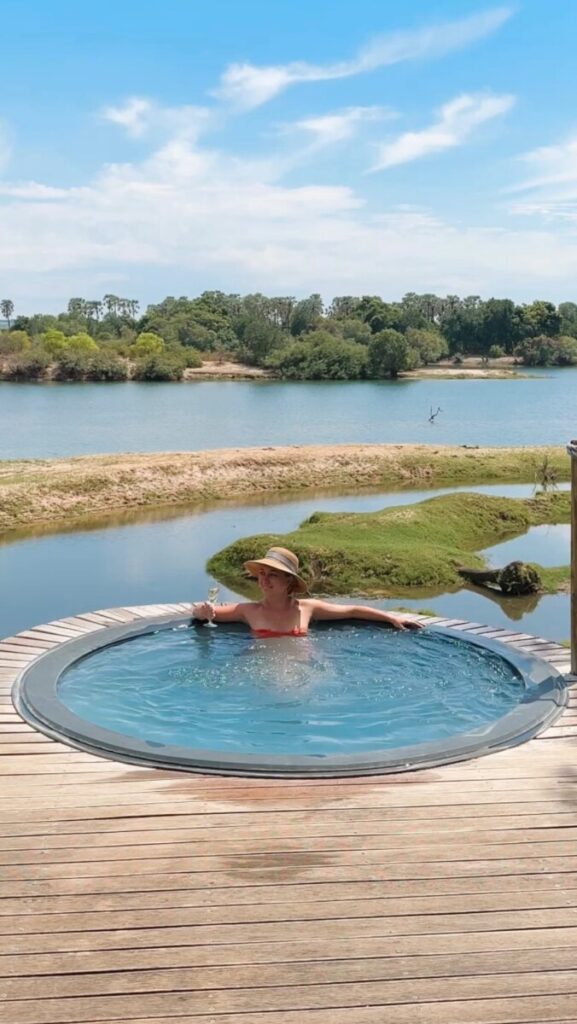
The best safari at Victoria Falls River Lodge can begin without a guide. Elephants use the unfenced camp as a passage to the Zambezi. They move between the tents, pause at the river and drink below the private decks. When the timing is yours, you can step from the room into the plunge pool, champagne in hand, and watch them from the water. No game-drive schedule could improve on that.
This is the lodge’s real proposition. The wilderness is not outside the accommodation, waiting for an excursion to begin. It passes through the grounds, appears beside the rooms and sometimes keeps moving just beyond the canvas after dark.
Two mornings, two versions of the Zambezi
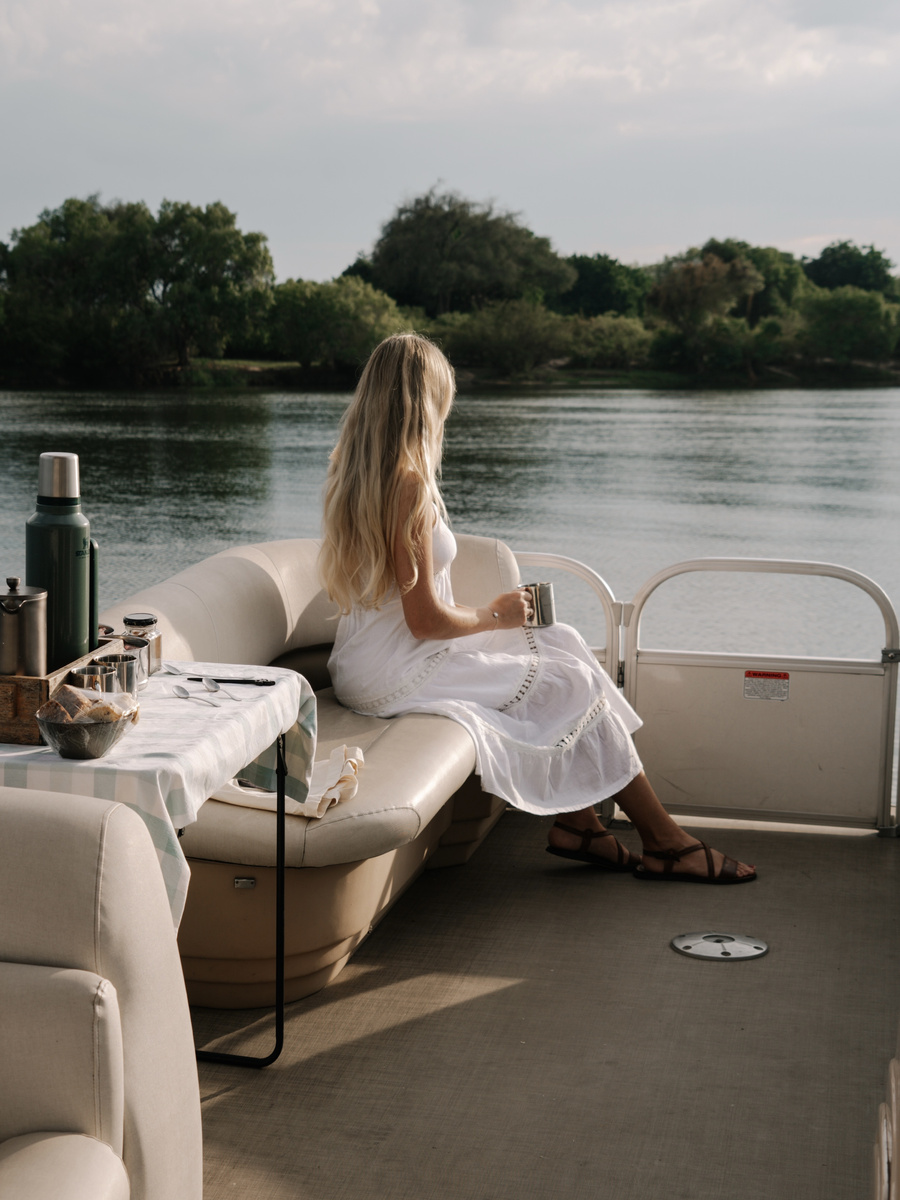
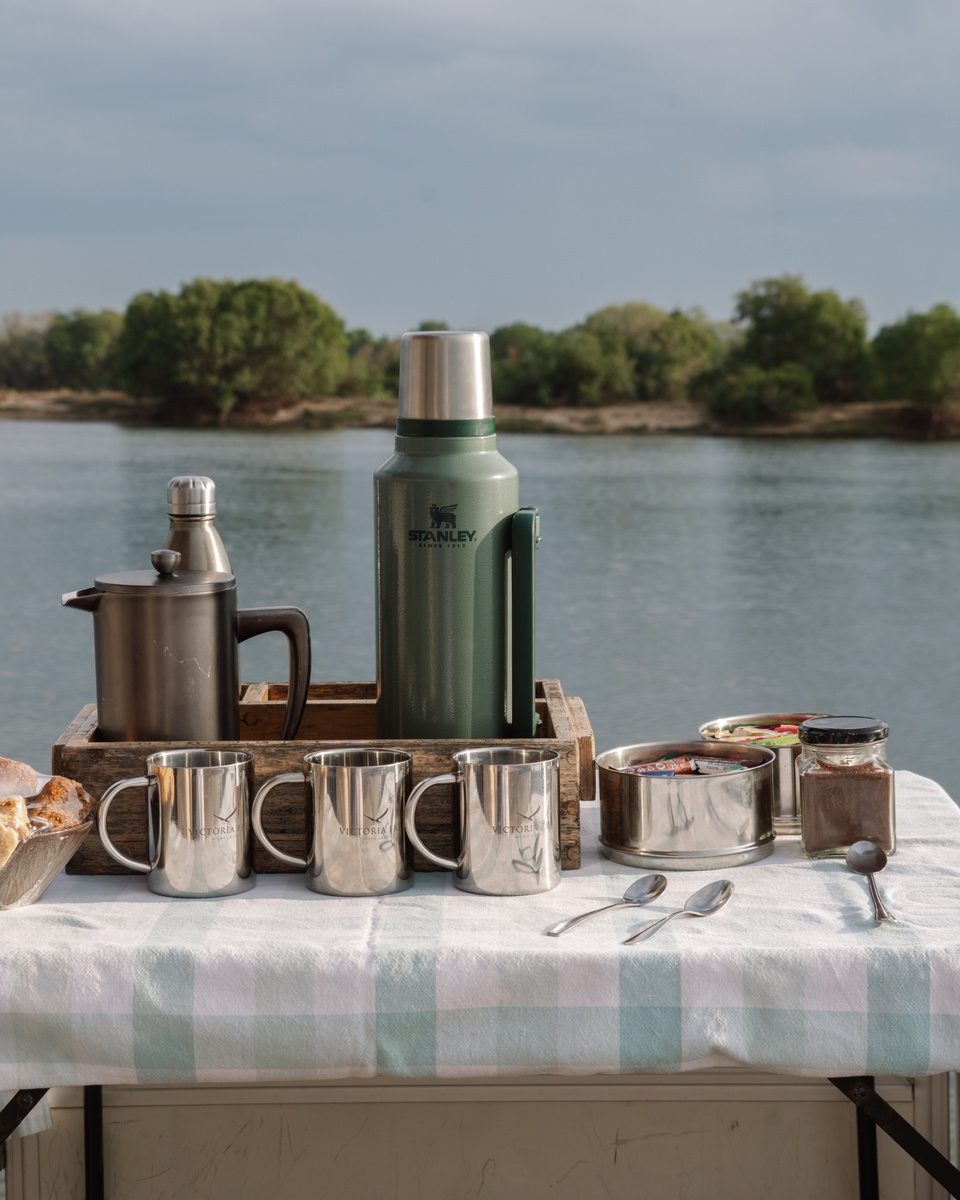
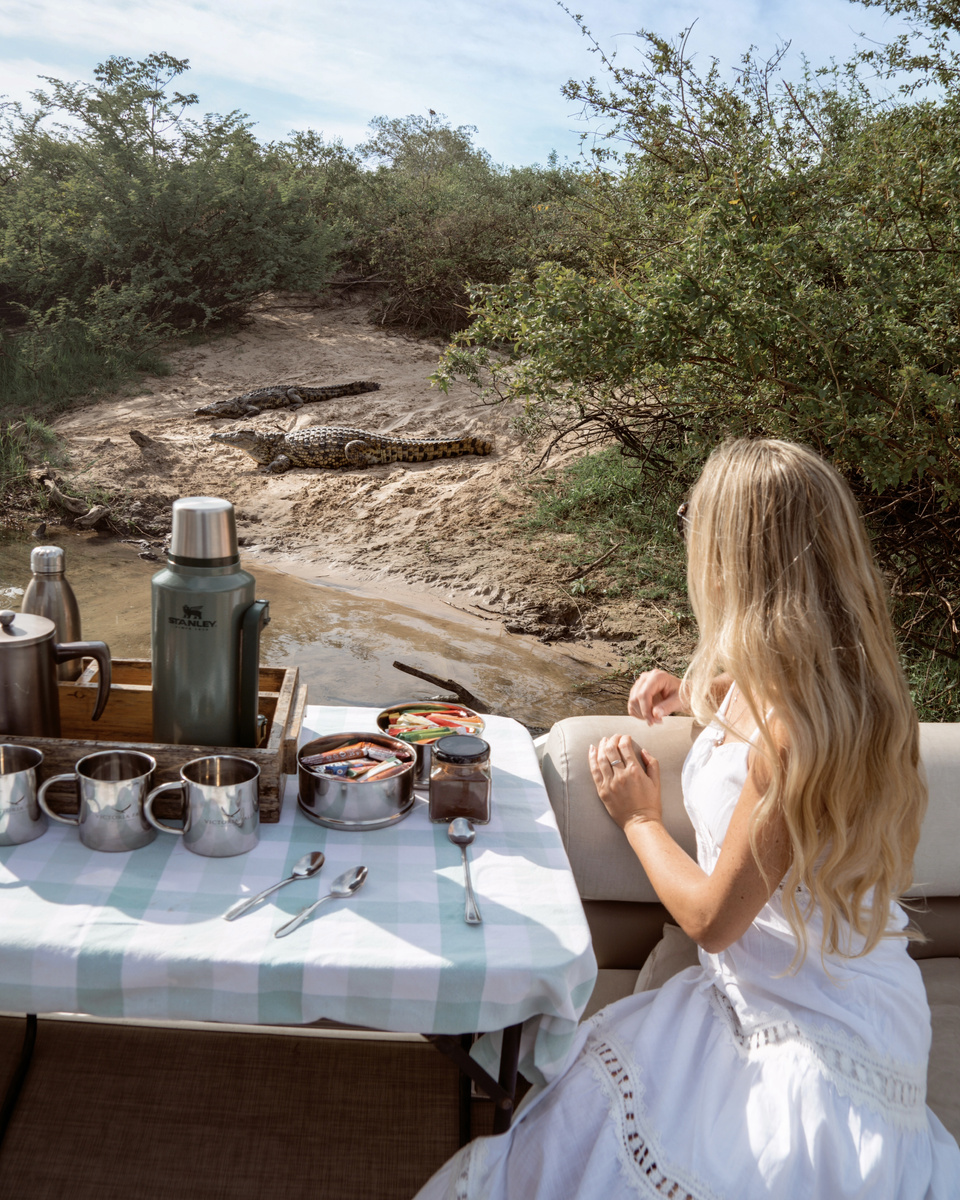
One morning began on the river. Hippos disappeared beneath the surface beside our boat, then emerged on the bank. The Zambezi was almost still, its palms and sandbars repeated in the water. Coffee came in a thermos; breakfast was laid out during the excursion, with small metal pots, jam and something sweet.
The breakfast setting belonged to the sunrise river safari, one of the game activities around which River Lodge builds the day. The boat, the hippos and the breakfast stop were all part of the same morning on the Zambezi.
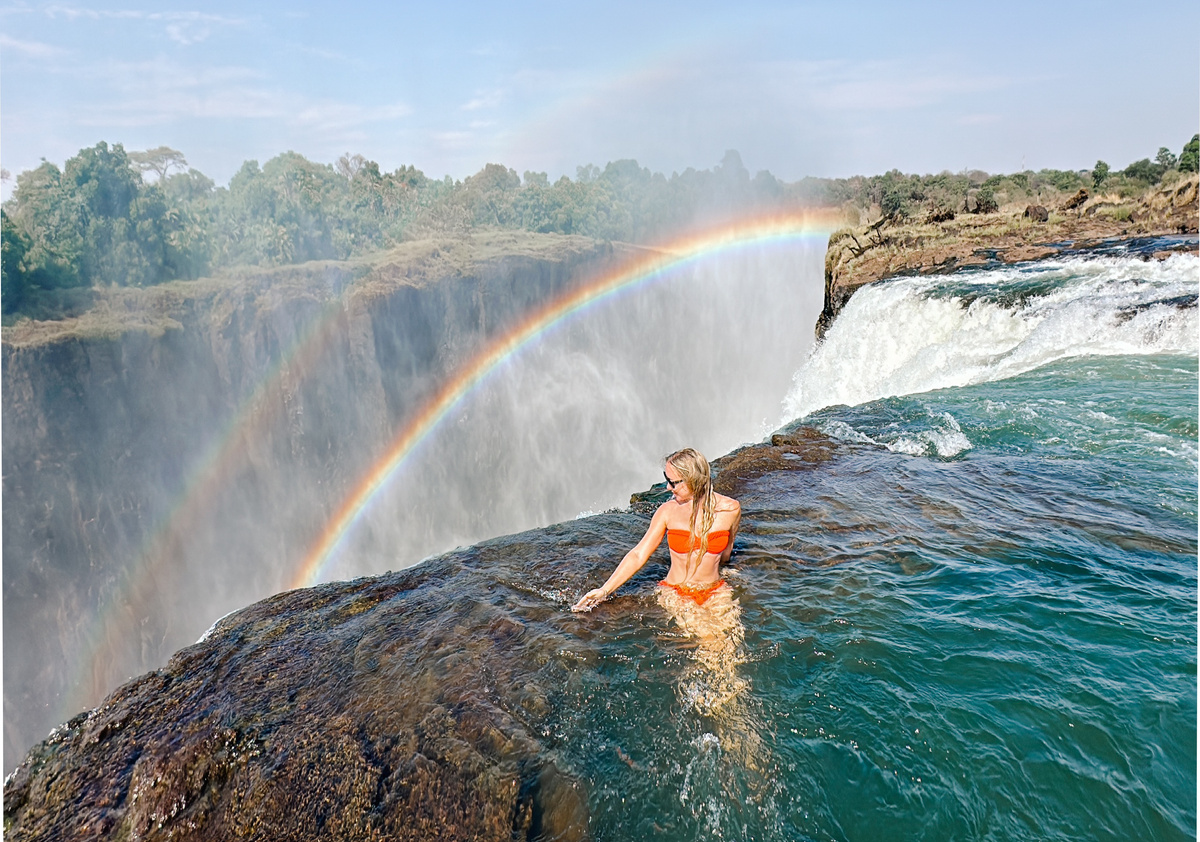
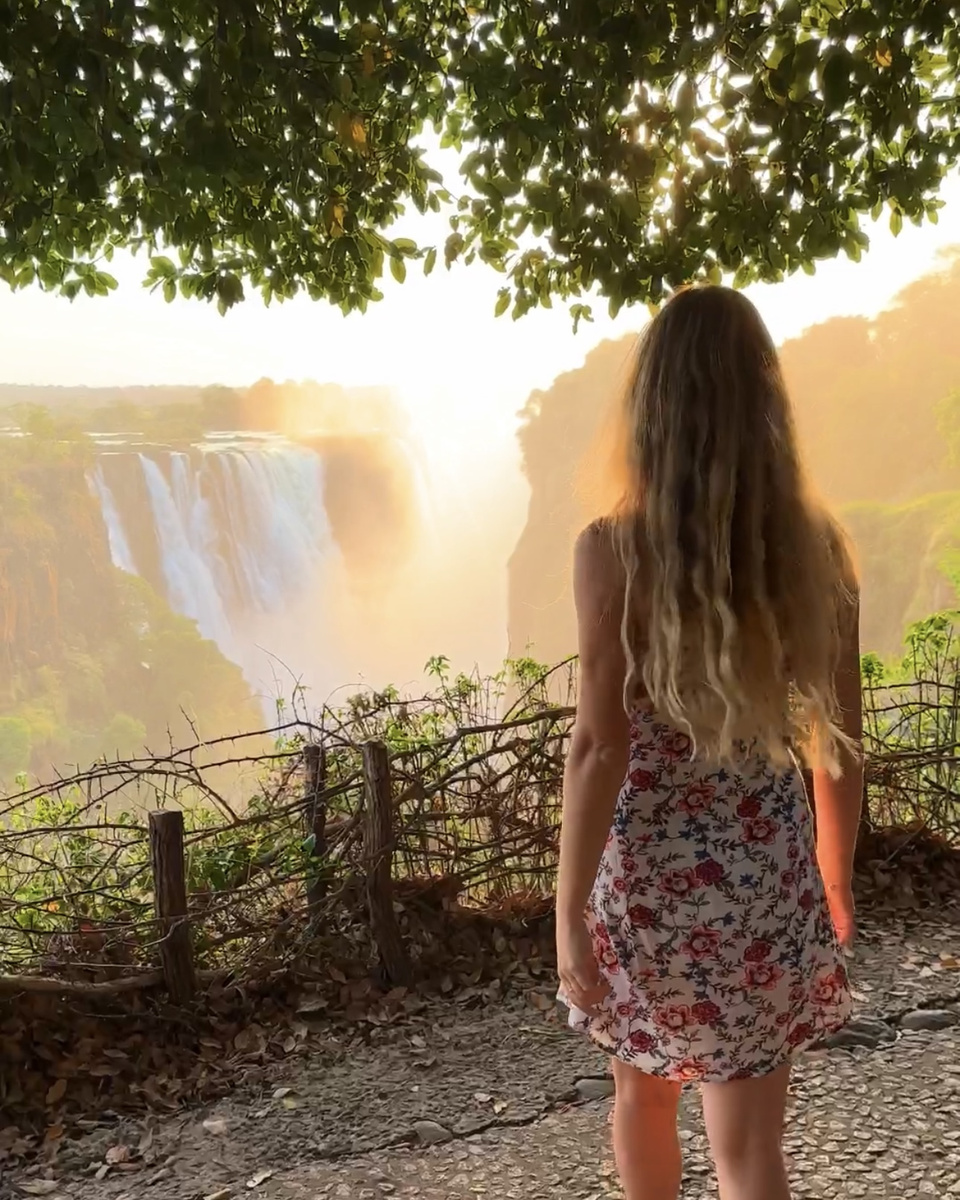
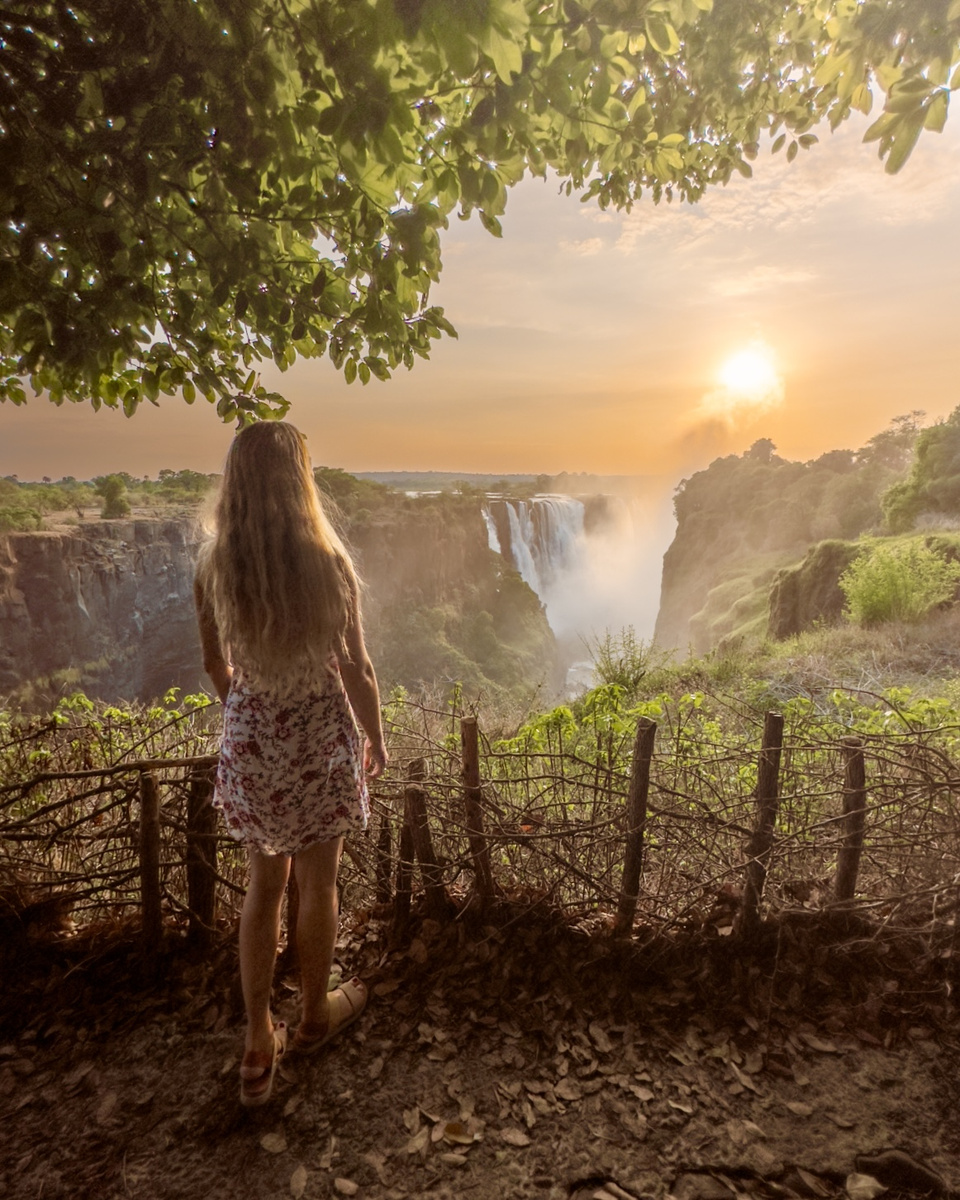
Another morning belonged to Victoria Falls itself. I reached the gorge for sunrise and watched the first light turn the mist gold. Earlier in the trip I had also stood in Devil’s Pool, in the water at the lip of the Falls beneath a rainbow. That photograph remains the image I associate most strongly with Zimbabwe: not merely seeing the waterfall, but entering it.
The Falls had been the reason to travel. River Lodge changed the scale of the journey. Downstream, the Zambezi announced itself by falling; upriver, I could inhabit its quieter life.
The river was part of the room
Victoria Falls River Lodge opened in 2012 as the first private game lodge inside Zambezi National Park. The original camp sits upriver from the Falls, among mopane woodland and riverine bush. It is close enough to reach town by vehicle, but far enough away for the view to belong to water, sandbanks and trees rather than streets.
My River Lodge tented suite placed the bed, sitting area and open bathroom beneath one high thatched roof. Canvas kept the character of a safari tent; timber floors, a freestanding bath and a proper indoor sitting area made it somewhere to inhabit rather than merely sleep. Glass doors opened onto a long deck and a small private plunge pool facing the Zambezi.
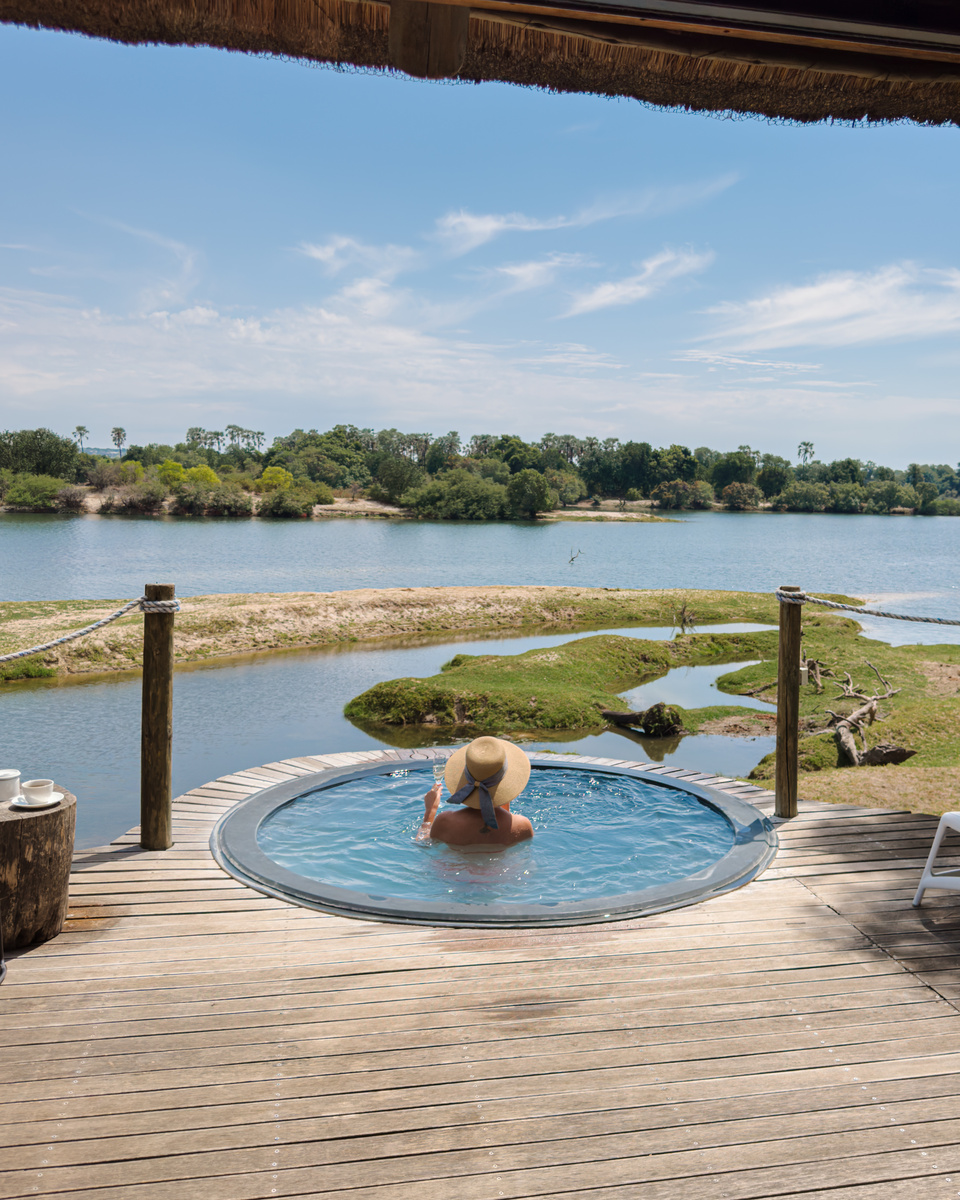
The pool was more than an amenity. It was a private viewing place for a river used by wildlife. Watching elephants come through camp to drink, while remaining on my own deck with a glass of champagne, was the experience no conventional hotel could reproduce.
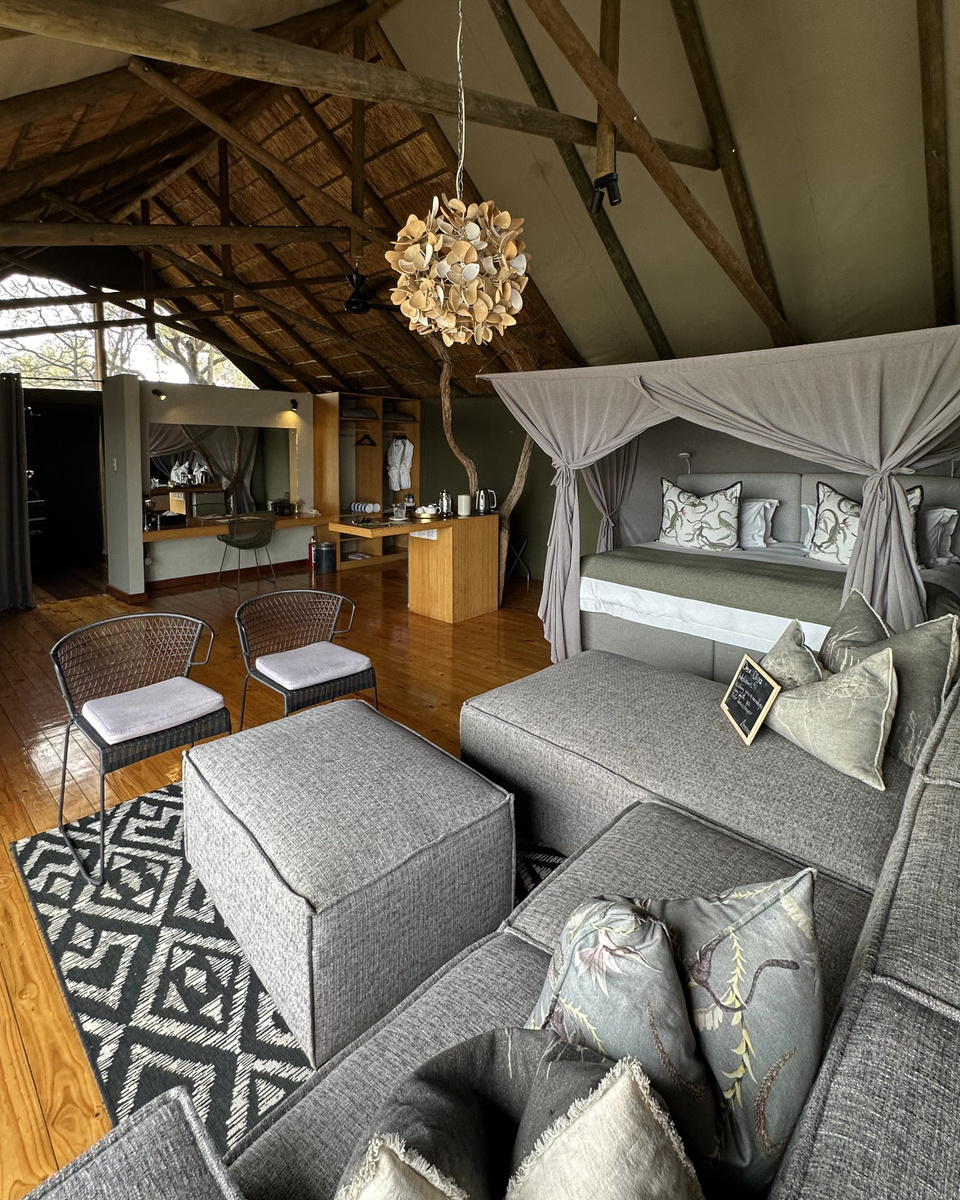
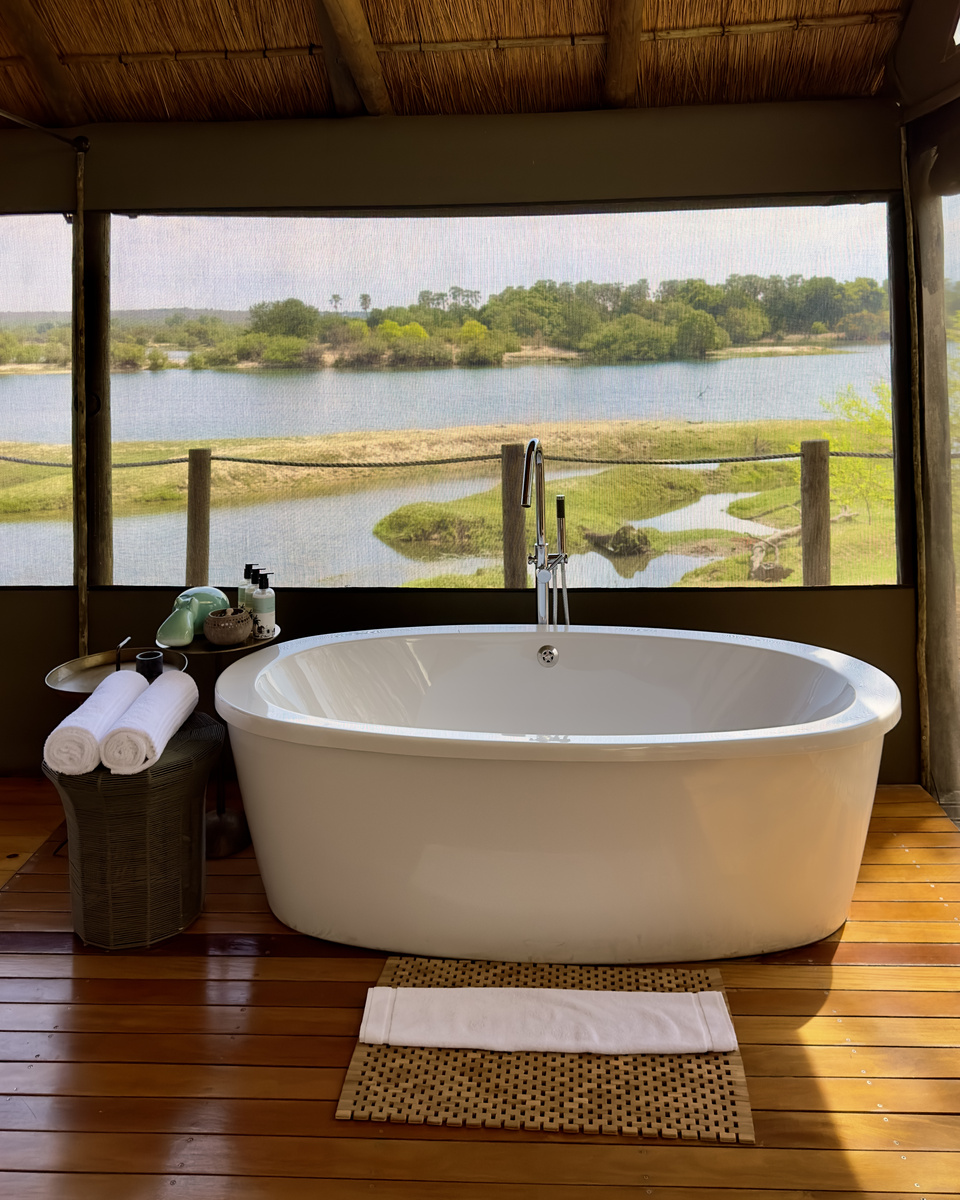
The room also had a sense of humor. A pale turquoise ceramic hippo waited beside the bath products, while a handwritten chalkboard welcomed me by name. Neither detail was grand. Both made the tent feel cared for rather than assembled from a safari-lodge catalog.
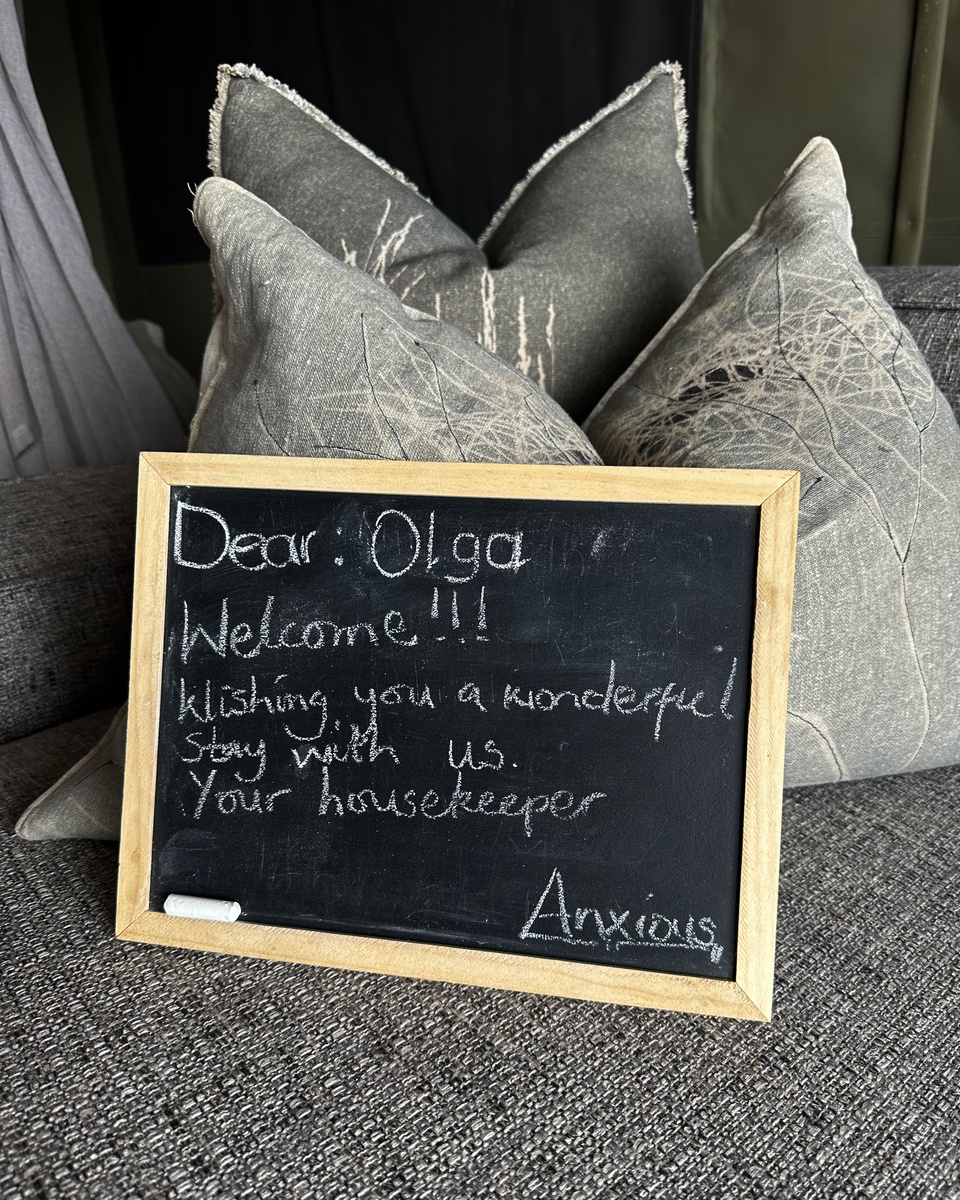
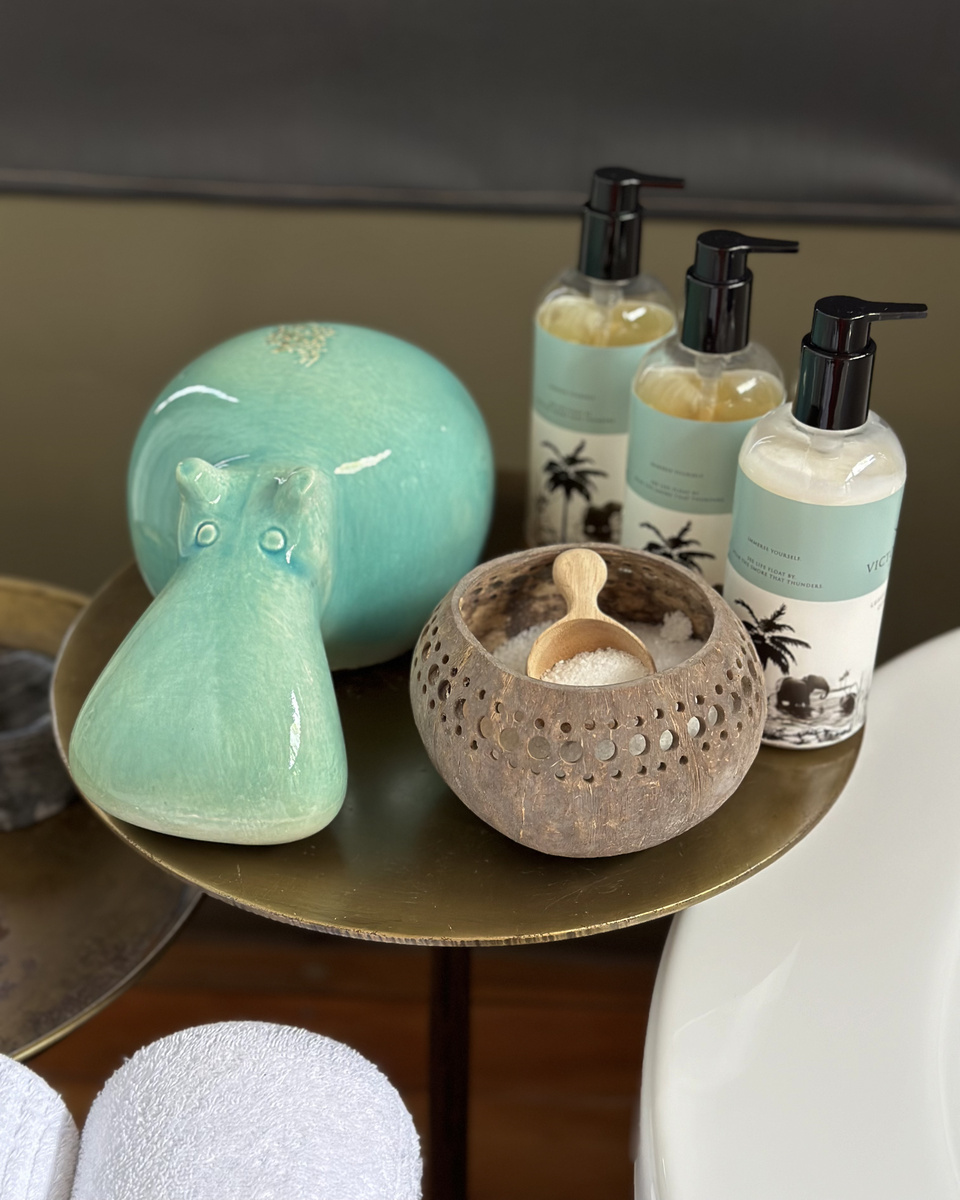
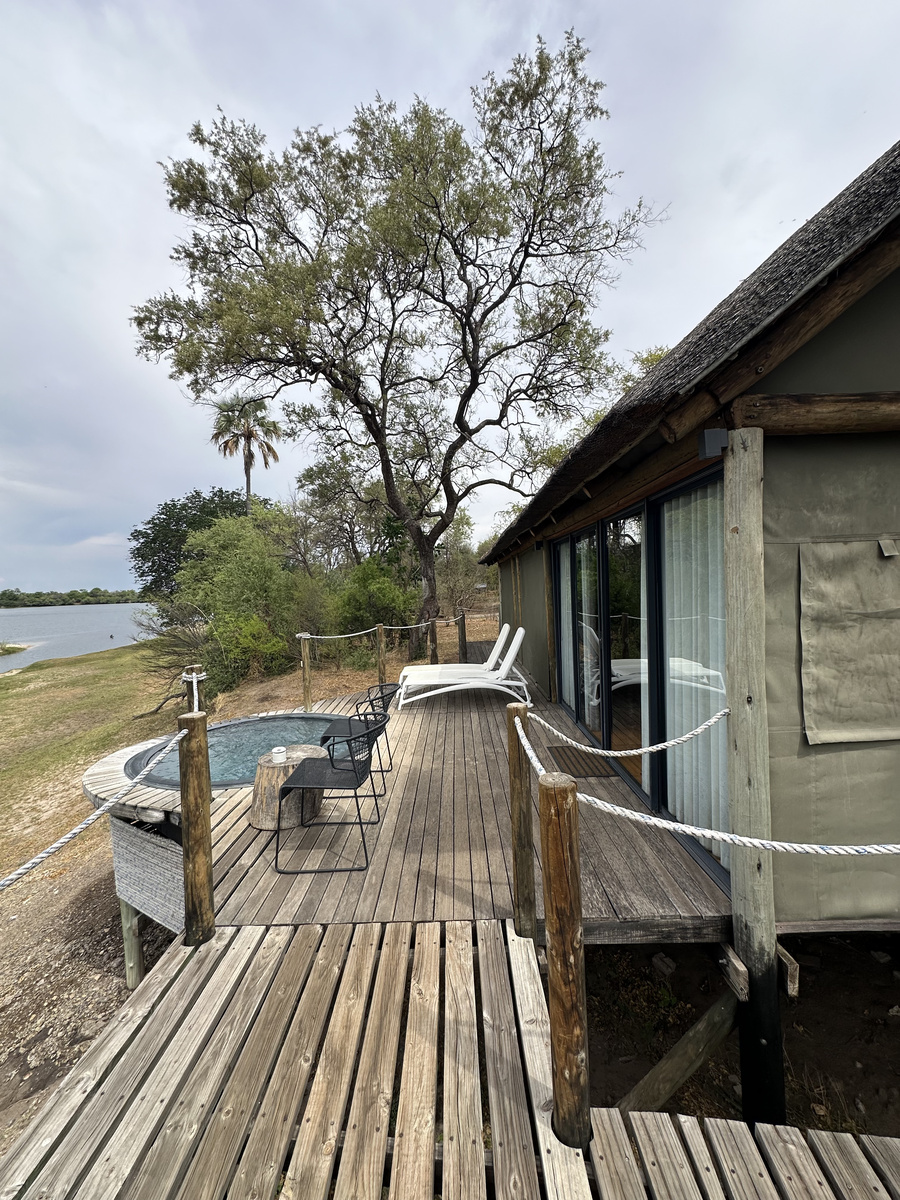
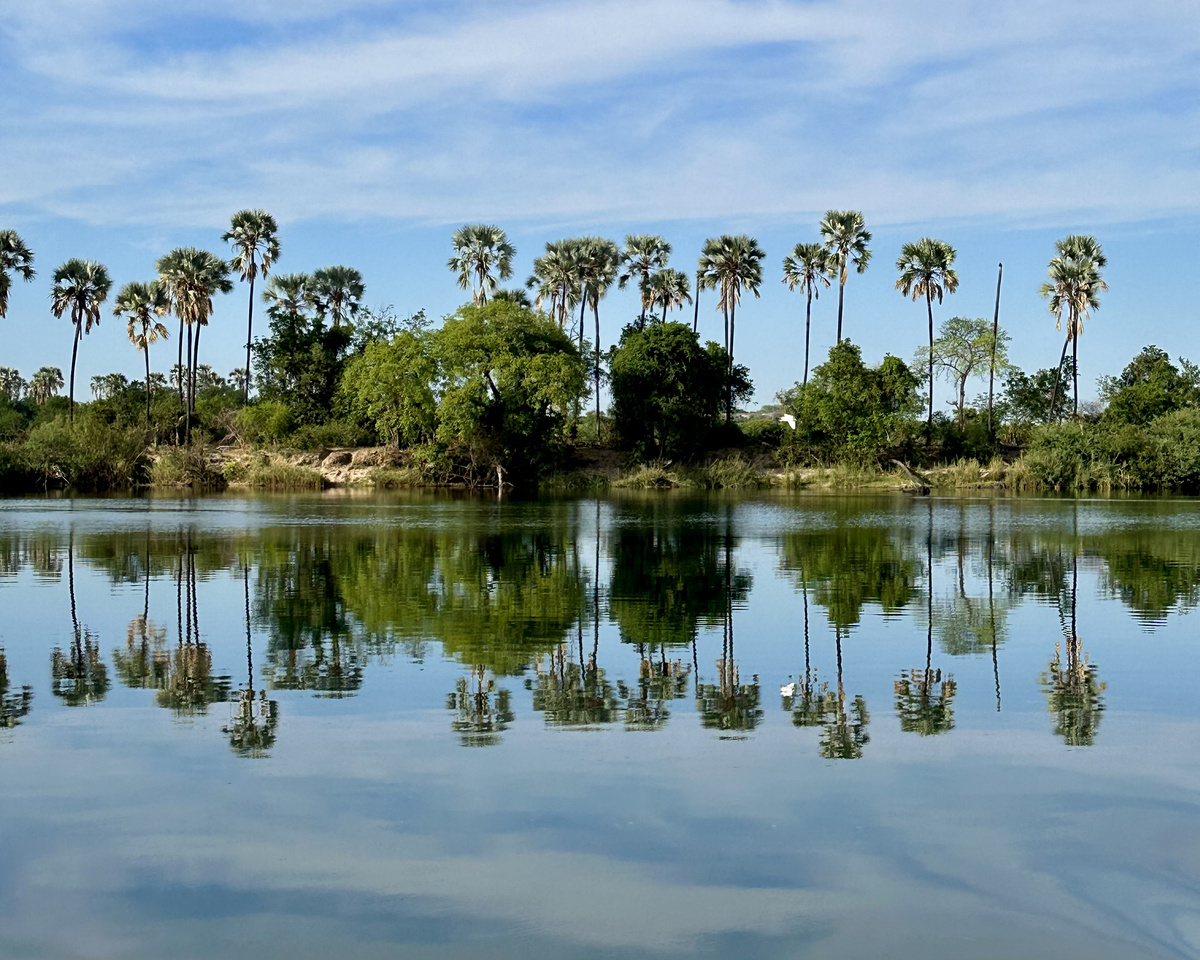
The property has expanded since then. Its current collection includes Malachite tents, island treehouses and private villas as well as the original riverside tents. This account is of the River Lodge Luxury Tented Suites, the canvas-under-thatch rooms at the main lodge, rather than those newer and materially different options.


A lodge open to the bush
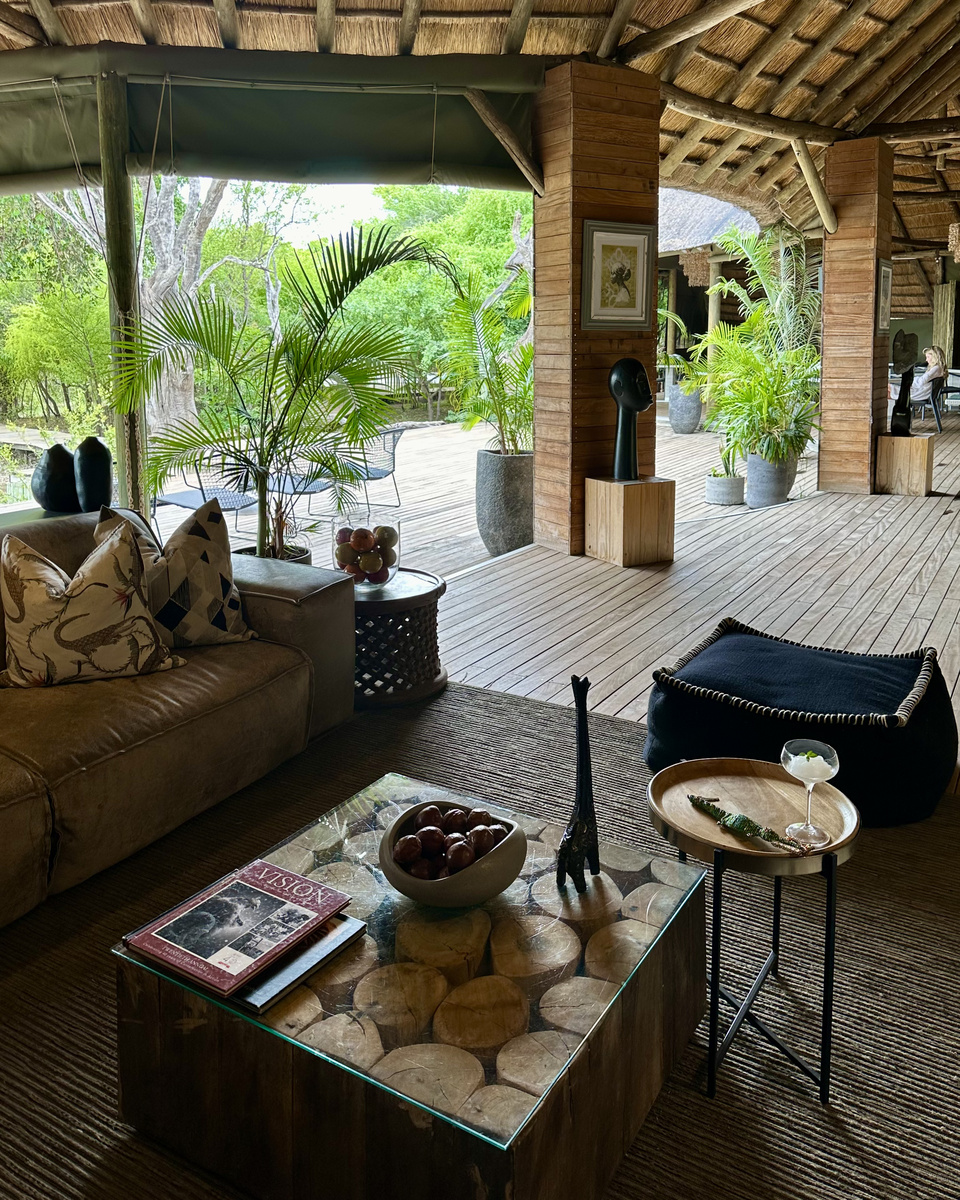
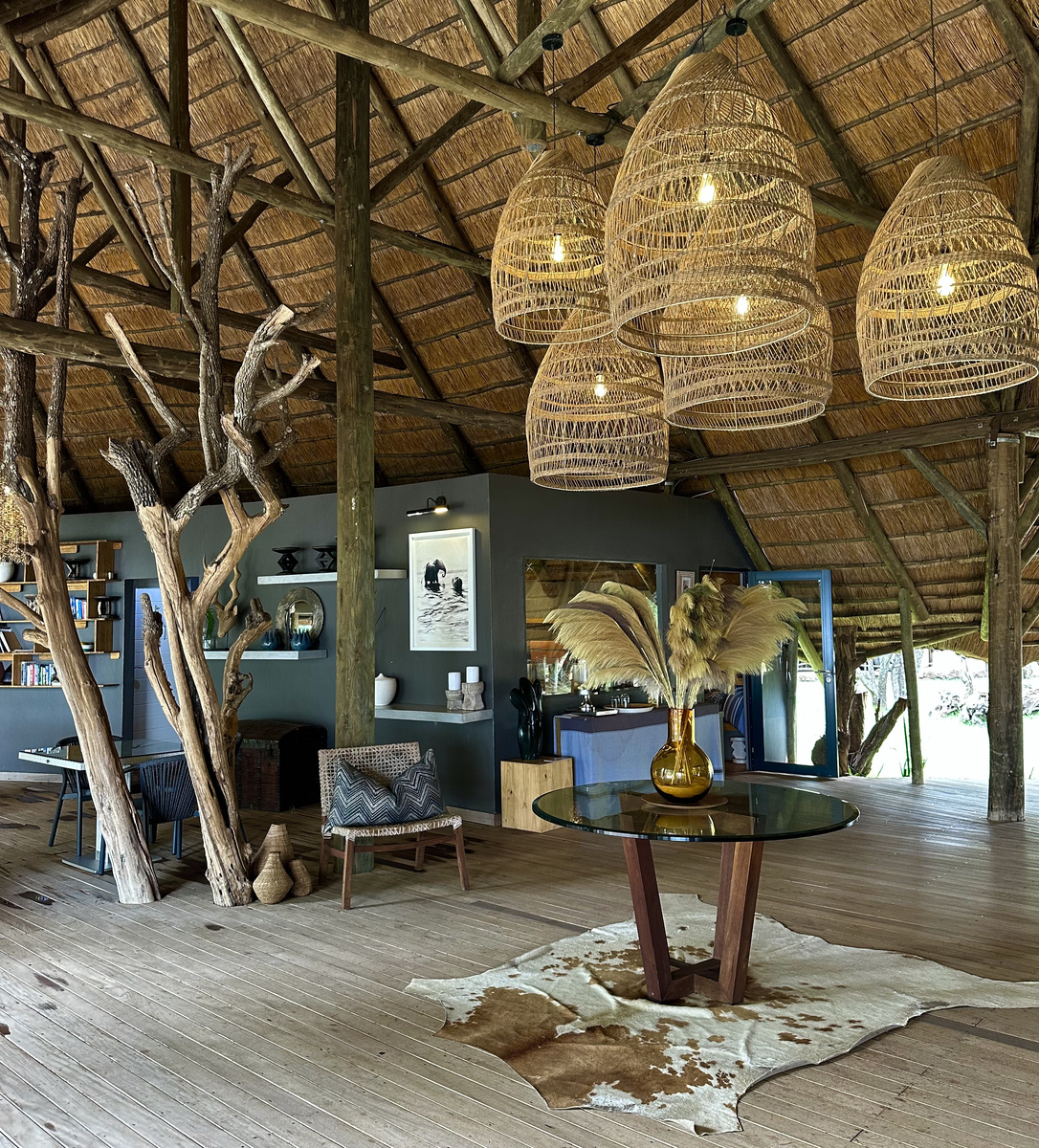
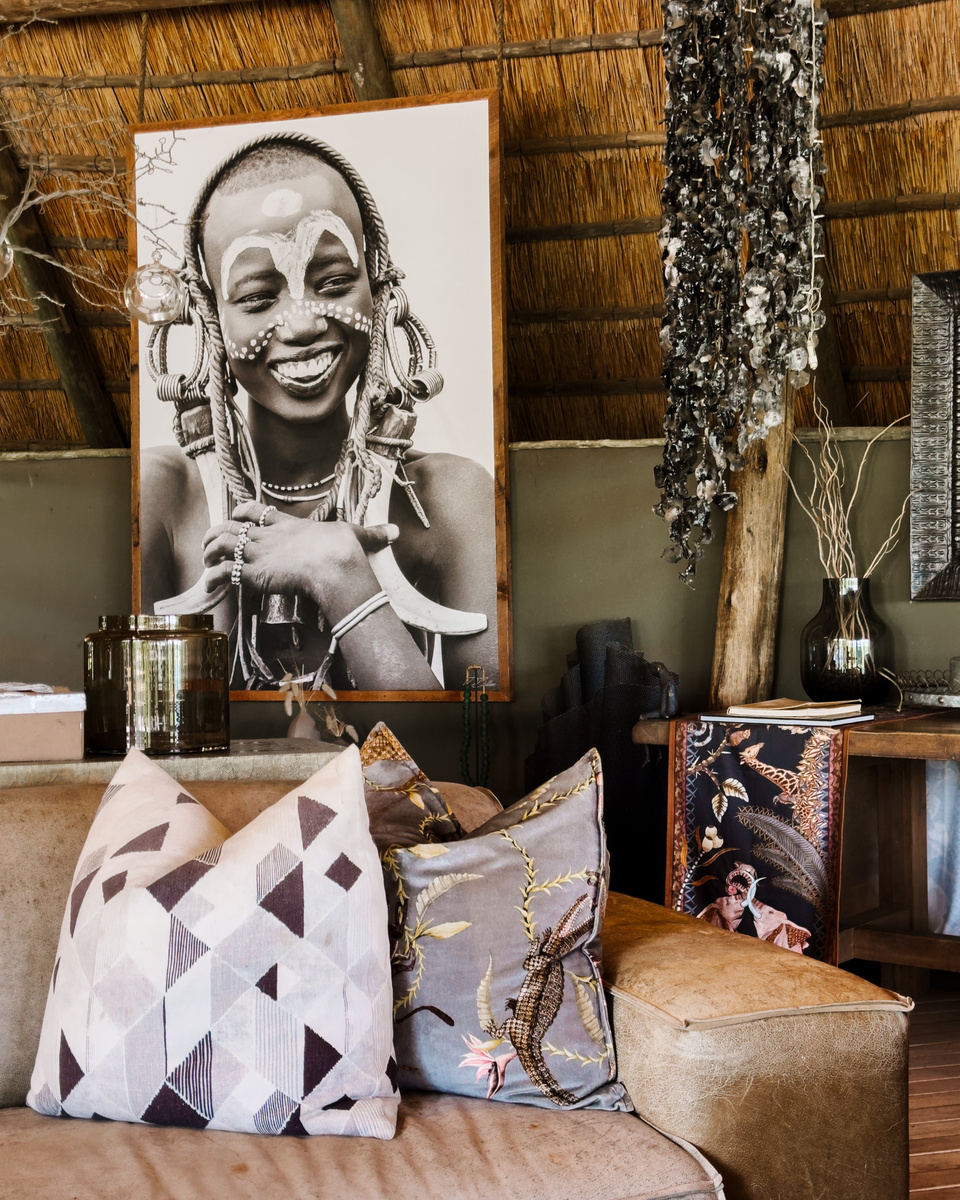
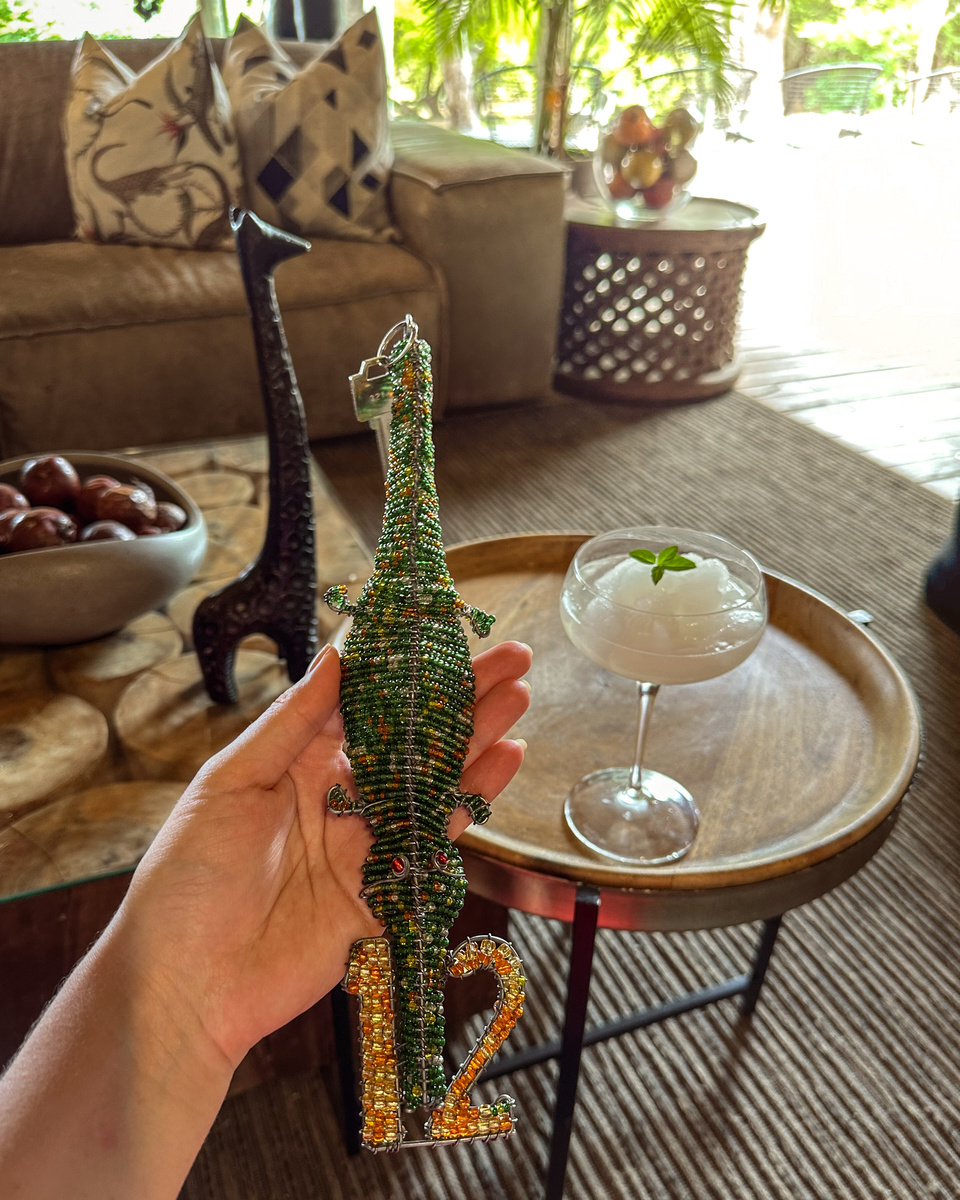
The common spaces followed the same logic as the rooms. Deep thatch provided shade, but the sides remained open to air and greenery. Timber posts retained the irregular forms of trees; woven lights dropped from the roof; black-and-white portraits, carved objects and patterned textiles supplied character without turning the lodge into safari theatre.
The lounge, bar and restaurant flowed into one another across the deck. You could sit with a drink and still feel the camp beyond the furniture. The architecture never sealed the experience away from the place that justified it.
The park began at the front door
River Lodge is unfenced. Warthogs—the inevitable Pumbas—trotted through the grounds, and mongooses and monkeys appeared as ordinary neighbors. The larger animals required more respect. Guests are advised not to walk through camp alone after dark, and a chauffeured golf cart carries them between the rooms and the main lodge at night.
That rule did not make the lodge feel threatening. It made the setting honest. In the darkness I kept thinking that wild animals were moving around my tent. Whether every sound came from an animal hardly mattered; this was the particular thrill of sleeping inside a national park rather than beside one.
The scheduled safaris extended that experience onto land. I climbed into the lodge’s open vehicle and we were already in Zambezi National Park. Giraffes moved between the trees, and an elephant crossed the scrub with the late sun behind it. There was no long transfer from hotel to wildlife: the drive began at the front door.
I would keep my own binoculars close for both the river and the game drives.
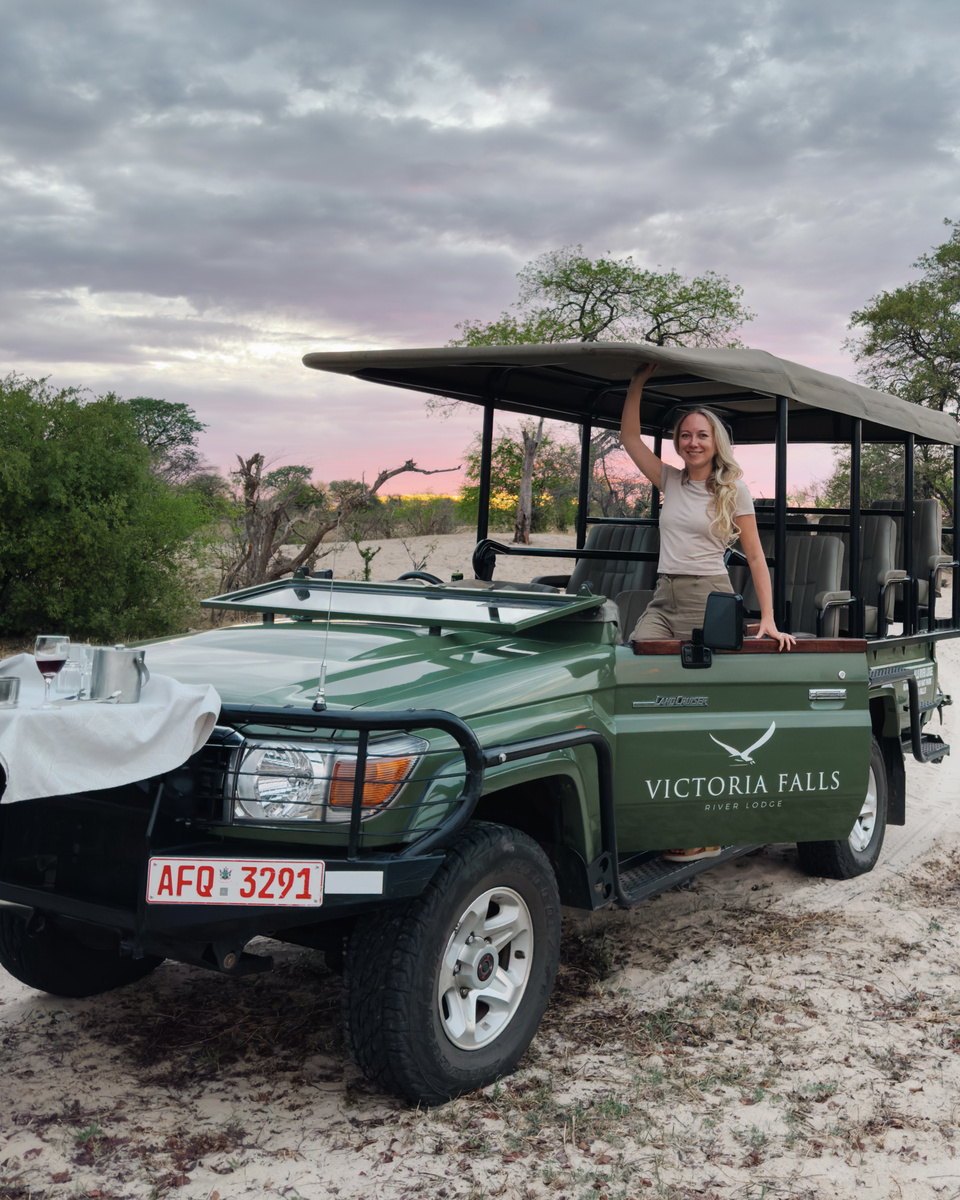
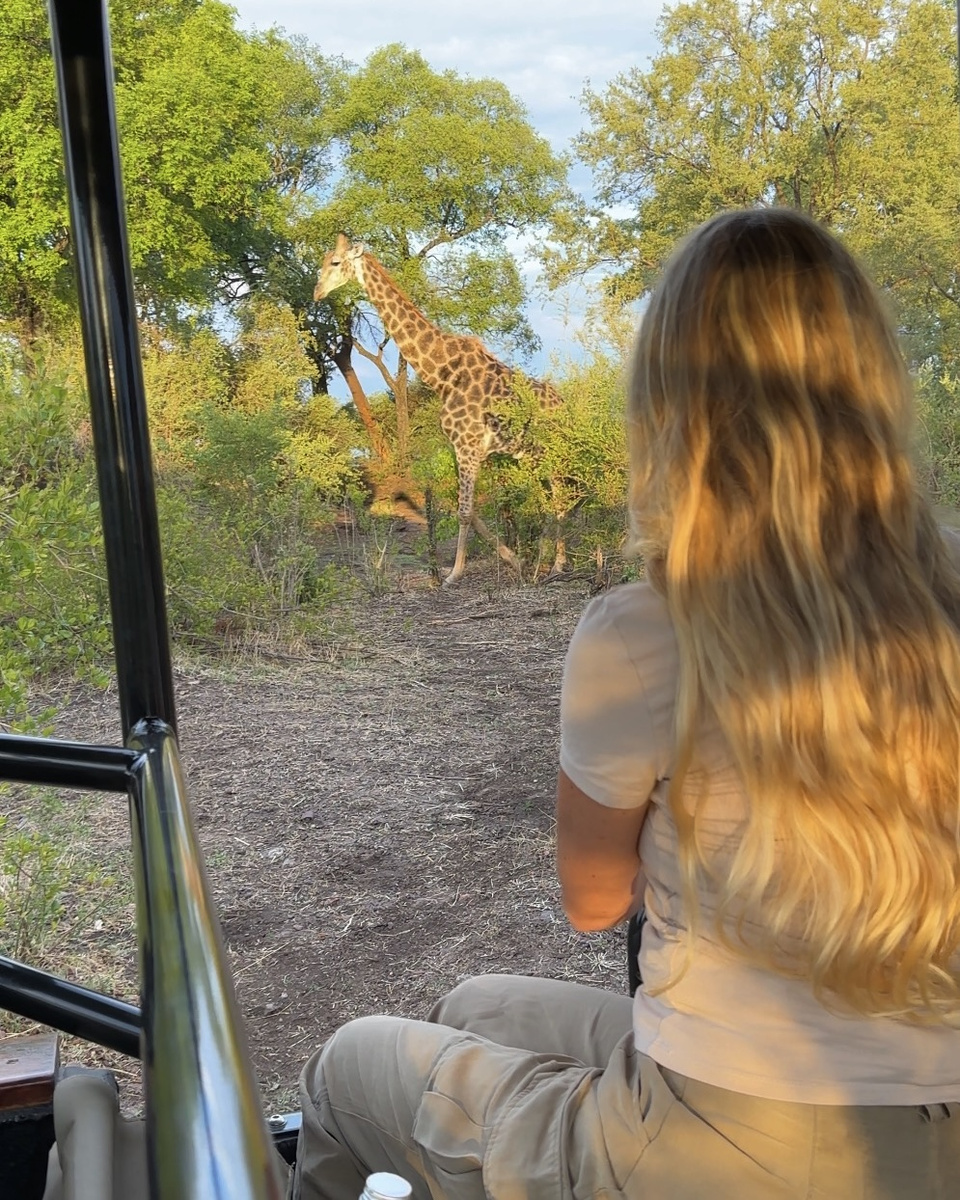
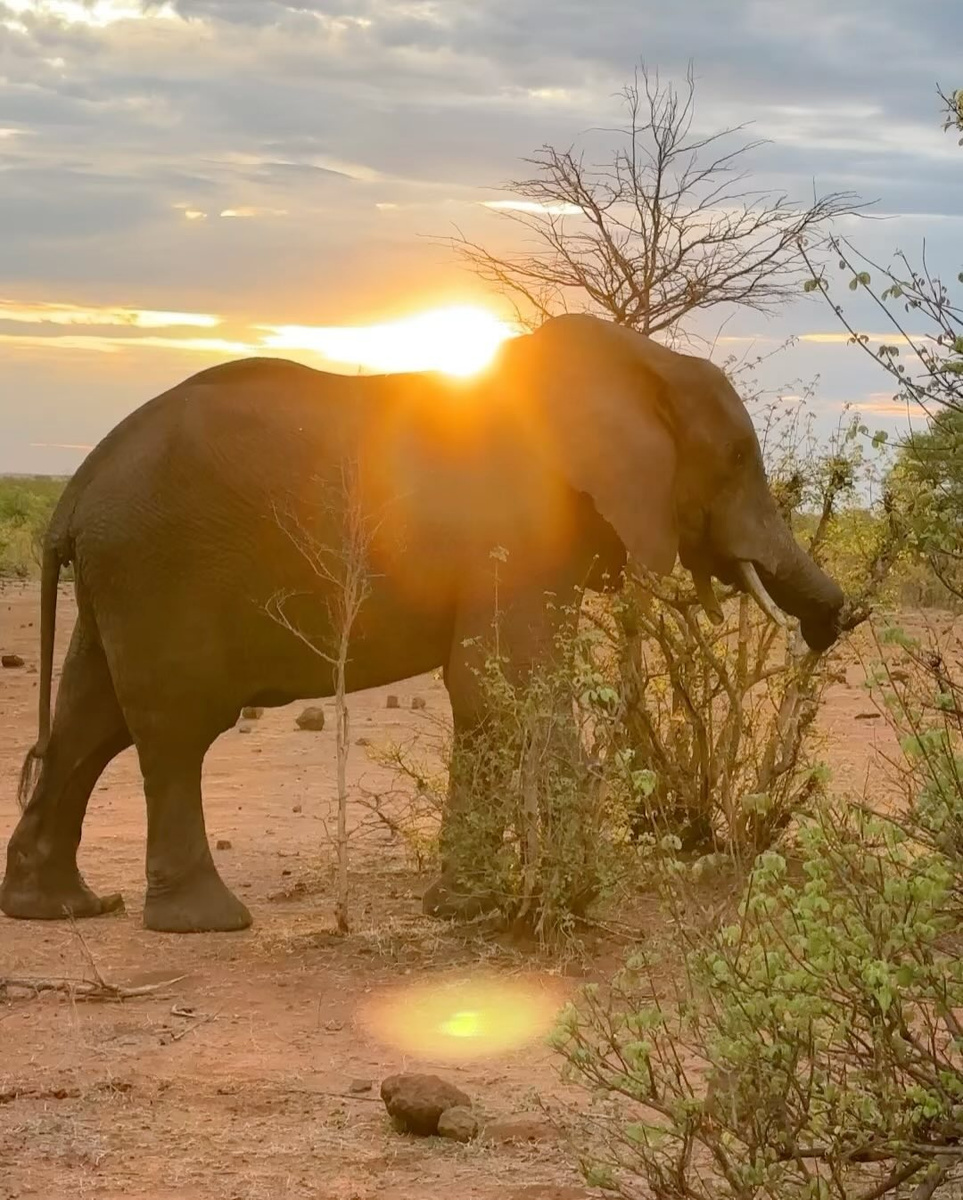
A River Lodge day is arranged around the cooler hours. Breakfast is served at the lodge, while game activities run in the morning and late afternoon: drives through the national park and river safaris at sunrise or sunset. The current rate includes two game activities per person per day, subject to availability. That structure matters because land and water reveal different animals, light and ways of seeing the same landscape.
Thirty minutes from the airport, inside the park
The exceptional thing about this location is not remoteness. It is how little expedition it takes to reach it. Many African safari stays begin with another light-aircraft sector or a long drive after the international flight. Here, the main camp is about 30 minutes from Victoria Falls International Airport and 10 minutes from Victoria Falls town. A direct road transfer can end beside the Zambezi, inside a national park, with elephants, warthogs and monkeys around the tents. Downstream is Victoria Falls, the world’s largest curtain of falling water.
The lodge itself is not a walking address. Between camp and town is wildlife country, not a pavement. The useful distinction is that, once dropped in Victoria Falls, the center is compact enough to combine the Falls with lunch, galleries, artist shops and curio markets on foot. River Lodge currently runs a scheduled daytime town transfer, normally from 10 a.m. to 3 p.m., together with a Tour of the Falls. It works for the waterfall, lunch and browsing; dinner in town needs a separate transfer.
I ate lunch at The Lookout Café above Batoka Gorge, went to The Boma for its dinner-and-drum evening, ordered from Three Monkeys and shopped for a drum and small souvenirs. If I were returning today, Dusty Road, with its open-fire Zimbabwean cooking in Chinotimba, would be on my list. Elephant’s Walk Shopping & Artist’s Village also gathers studios and specialist shops beside the town’s open-air curio markets. The transfer is therefore useful for more than the famous waterfall.
The original River Lodge tents currently include shared airport transfers, meals, local drinks, the scheduled town transfer and game activities. Park, conservation and Falls entrance fees remain separate. The exact inclusions matter more than an isolated nightly price: they turn an unusually easy arrival into a stay that still feels properly inside the bush.
Food that deserved attention
The food at River Lodge was excellent, not merely convenient between safaris. Dinner began with a smooth pale soup and moved through a generous grilled course to a small, carefully finished tart. Breakfast at the lodge brought eggs, bacon, mushrooms, fruit and juice to a table facing the river. Across the meals, the kitchen gave me the sense that food was part of the hospitality rather than a compulsory all-inclusive service.
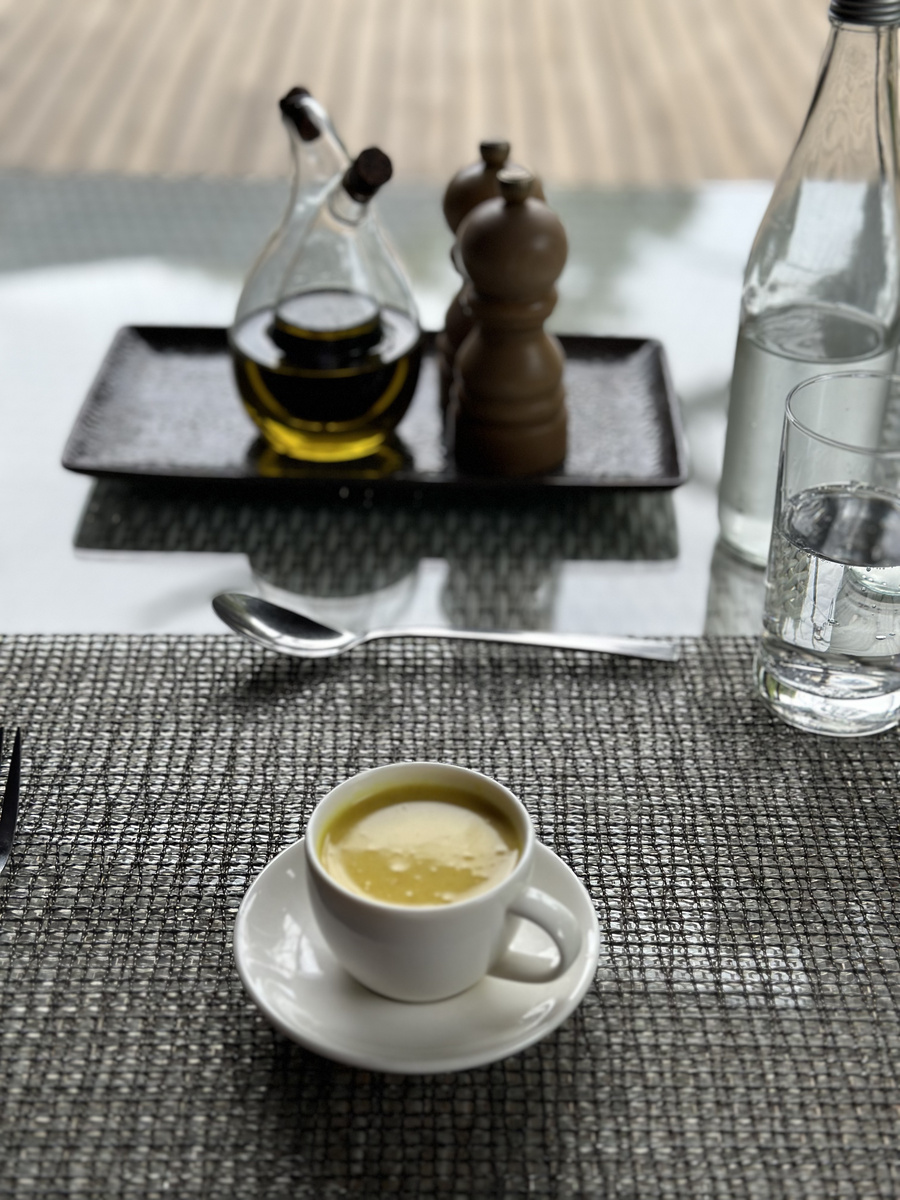
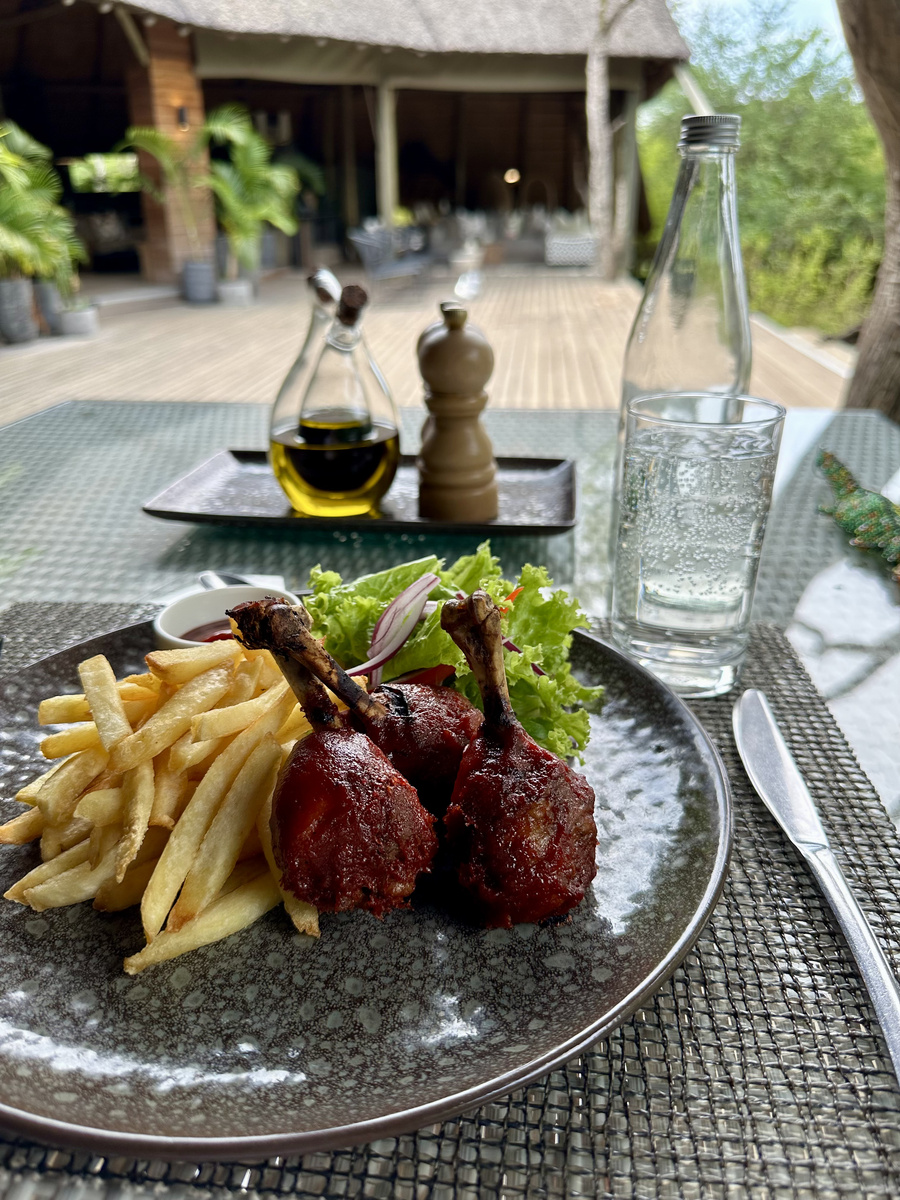
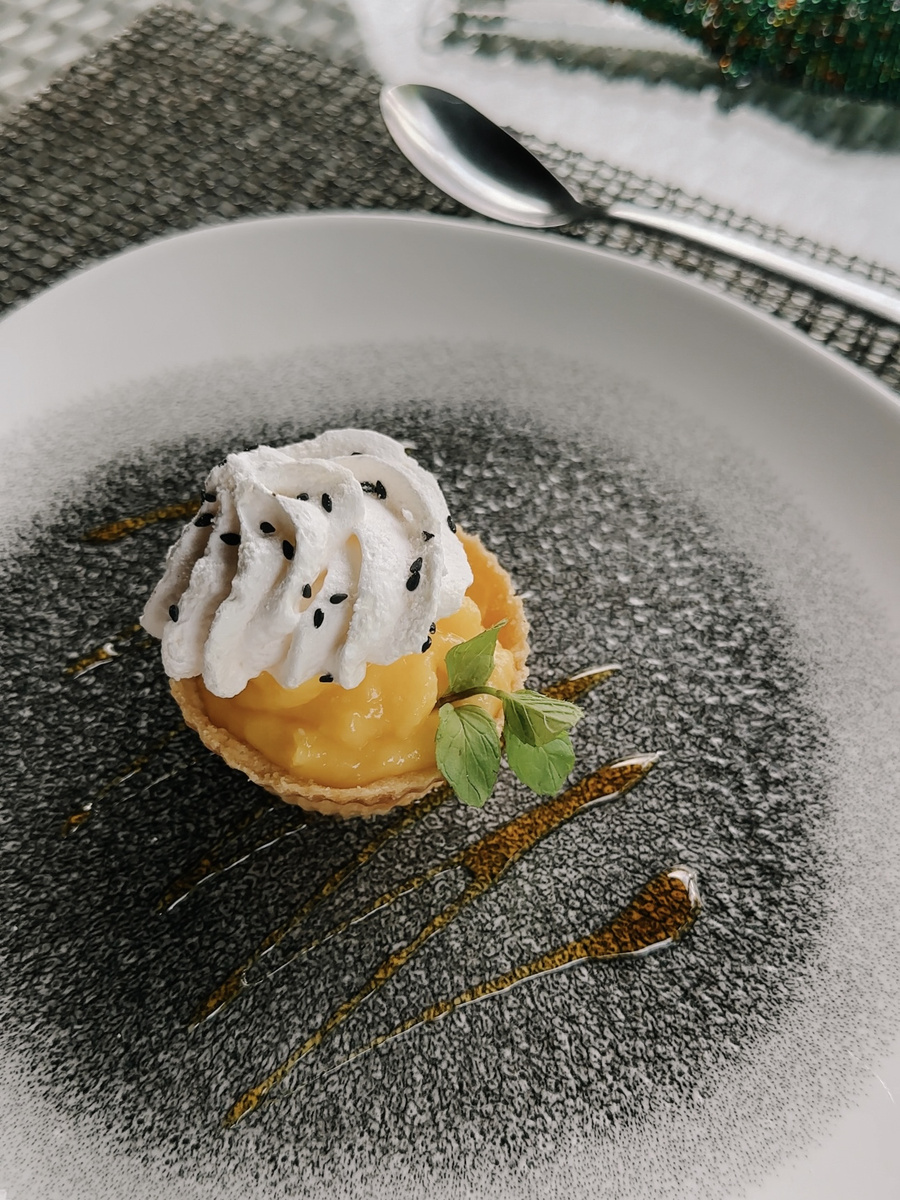
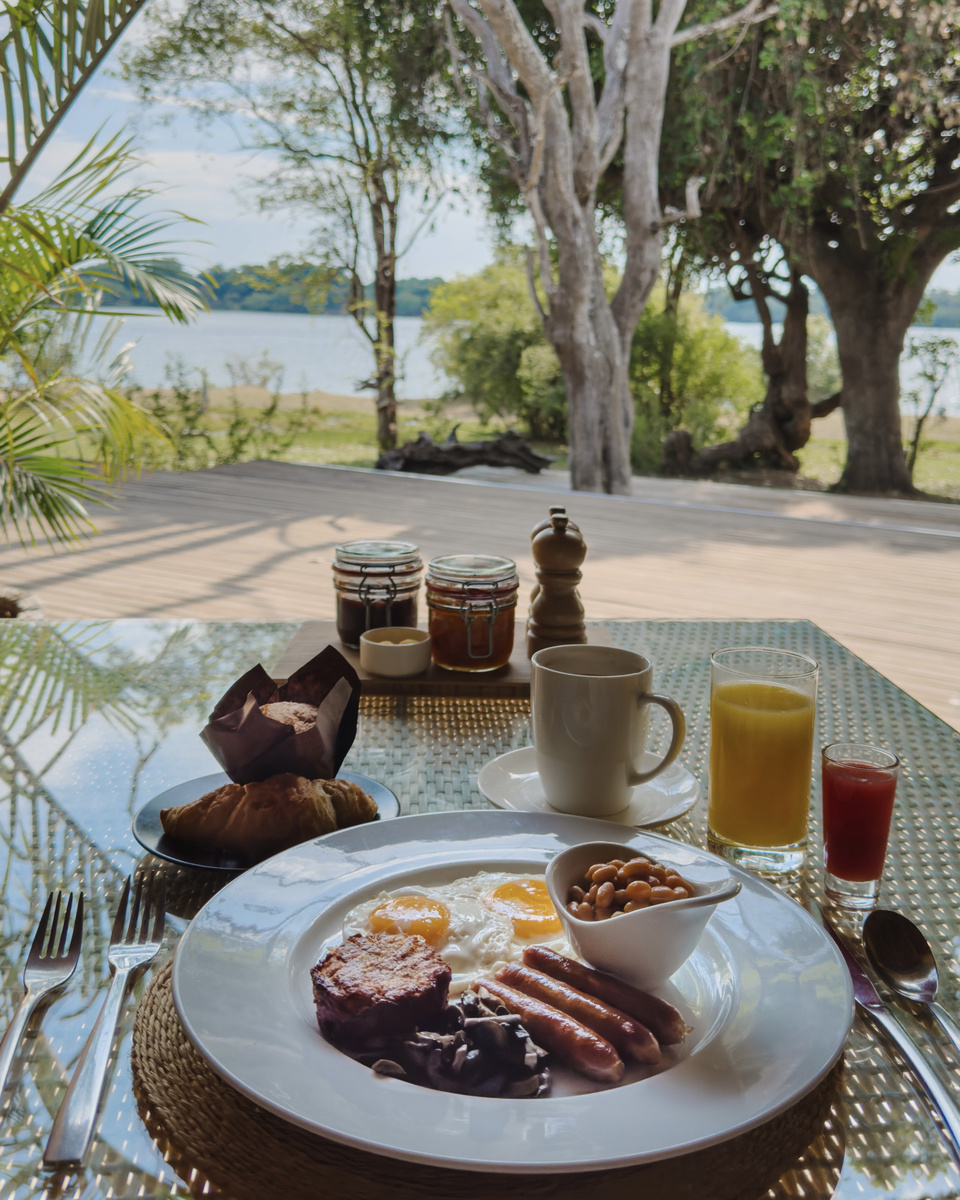
Game and grills appear at almost every African lodge. They can be excellent or forgettable depending on the kitchen, but an impala steak alone says little about Zimbabwe. River Lodge’s Zimbabwean chefs include traditional dishes in the set menus: sadza, baobab fruit, maas—a cultured milk—kapenta and mopane worms beside the more familiar ostrich steak. Those ingredients tell a more particular story of the country.
At The Boma, the menu makes the same distinction. Its grill includes game, but the accompaniments bring Zimbabwe closer: peanut-butter rice and sadza, the thick maize-meal staple; Zambezi bream and kapenta bring the river to the table. The evening is consciously theatrical, yet it gives a visitor a useful first vocabulary of Zimbabwean food.
Dusty Road takes that vocabulary further, from wood-oven maize bread and crispy sadza balls to beef stew with sadza, chicken in peanut-butter sauce and inkobe, a maize-and-bean salad. Baobab returns in a cream dessert with masau, a local jujube, and wild honey, or in a ginger drink. For a food-minded traveler, that menu tells a more interesting story than another plate of grilled game.
The breakfast during the sunrise river safari remained my most beautiful meal setting. We had already watched hippos submerge and return to the bank when the coffee and metal pots appeared. That quiet interval turned the safari into a long, unhurried morning on the Zambezi.
Victoria Falls is the spectacle, but River Lodge gives the Zambezi time to become something else: the view from the bath, the route taken by elephants, the dark water beside the boat and the river waiting beyond breakfast. By the last cup of coffee, it no longer felt like the approach to the main event. It was the place I had come to stay.
Shared on

The post and its conversation
The photographs as they appeared on Instagram, with what readers said there. Likes and replies open on Instagram.



 Join the conversation on Instagram