
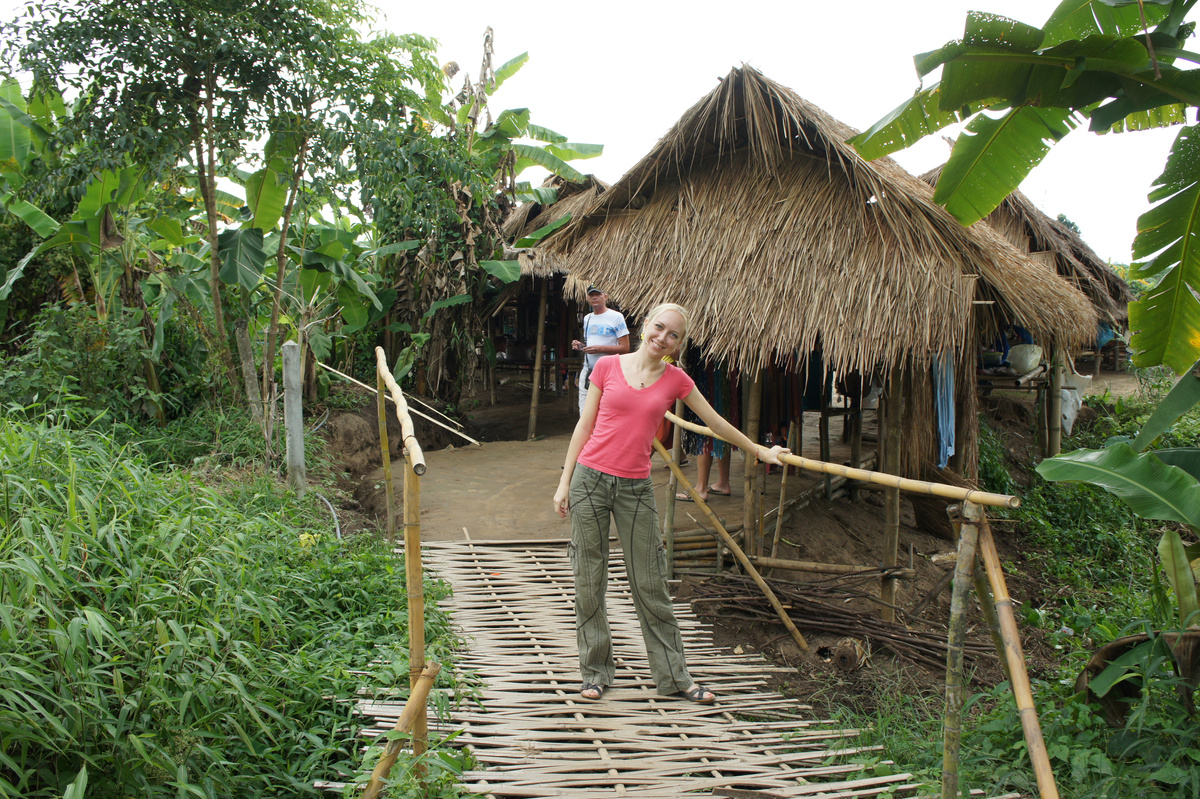
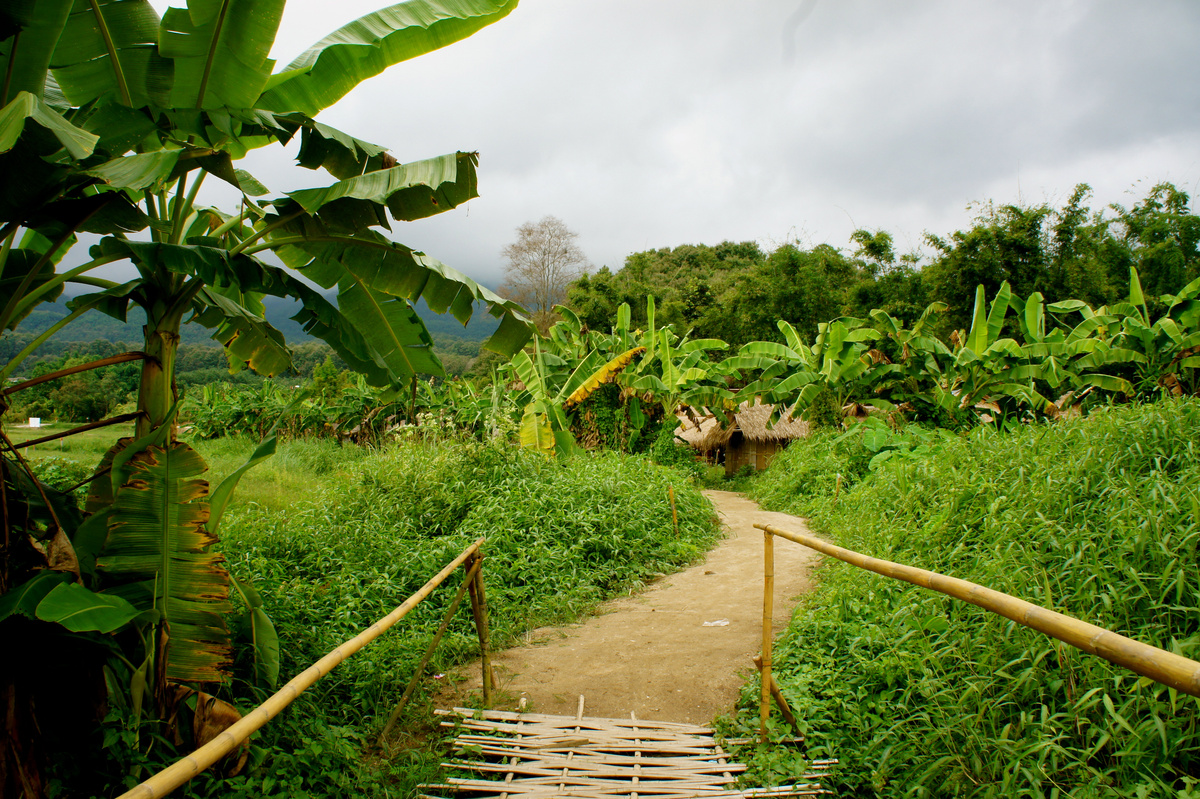
Before the crossing into Myanmar, there was a smaller bridge: a narrow bamboo footbridge between the village huts. I stopped at Union Hilltribe Villages in Baan Pa Oo, in Chiang Rai’s Nang Lae area, on my way north to Mae Sai. Later that day, I would cross the Mekong to Laos.
It was November 2012. I was living and working in Thailand, and this visit belonged to an excursion through its northern borderlands. On the tour circuit, the place had a simple name: the “long-neck village”.
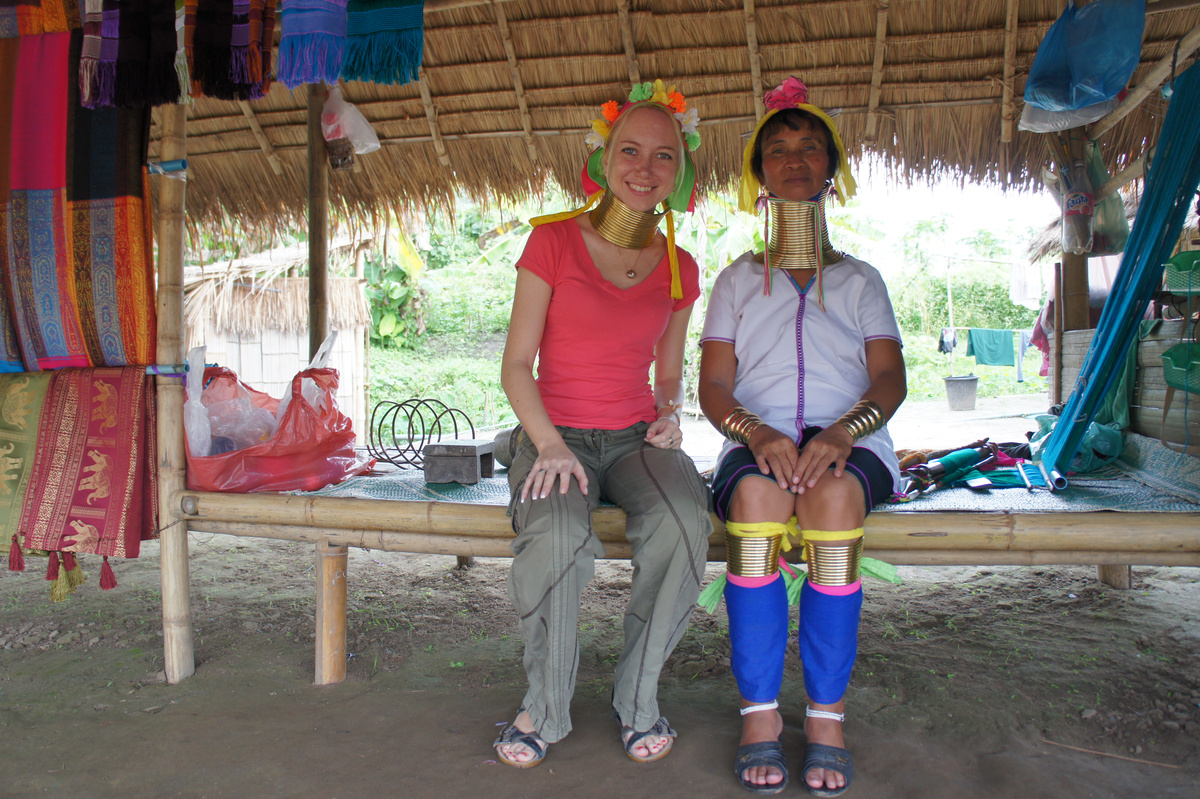
I walked through the stalls and posed beside a woman wearing brass coils. For the photograph, I wore a brass collar and a flowered headdress myself. It is the familiar picture from the excursion brochures. The women themselves are Kayan Lahwi.
The Kayan tradition
The neck-coil tradition belongs to the Kayan Lahwi, a people whose homeland is in Myanmar. In Thailand, tourist signs commonly describe them as “Long Neck Karen”. That label has become familiar enough to sound like the name of a single village, although it is used for several places across the north.
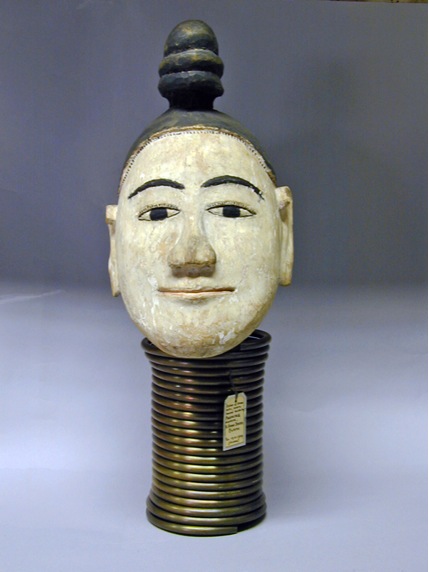
The tradition predates these visitor villages. Oxford’s Pitt Rivers Museum has an early twentieth-century carving of a woman wearing the same distinctive ornament; the Science Museum Group holds a brass coil made in Myanmar in the nineteenth century.
The broad name Karen covers communities with different languages and traditions. The brass coils identify a particular custom within that wider world.
The brass coils
The ornament looks like a tower of separate rings. It is formed from a length of metal wound into a spiral. A small coil may be fitted in childhood and replaced with a larger one as the wearer grows. Similar ornaments can be worn around the arms and legs.
A long, ornamented neck is an ideal of feminine beauty in Kayan Lahwi tradition. The coils make a woman immediately recognisable as a member of that community.
One origin story centres on the Dragon Mother, an ancestral female dragon. In one version, she takes human form and becomes the ancestor from whom the Kayan descend. The tall coil recalls her long neck and beauty; wearing it honours that ancestry. Other retellings associate the brass with her protective armour. The ornament thus carries a connection to an ancestral figure as well as an ideal of grace.
Another explanation is protection from tiger bites. In one retelling, angry spirits send tigers against women, and brass around the neck is meant to defend them. Other stories concern abduction during conflict: distinctive coils would make a Kayan woman recognisable in captivity, so that her people could identify and ransom her. A competing explanation says that the ornament discouraged outsiders by making women less attractive to them. These variations leave the custom’s exact beginnings unsettled.
One further legend remembers a young princess who escaped an invasion and wrapped a sacred plant around her neck, vowing to keep it there until her people regained their homeland. In this telling, the brass coils commemorate her vow.
For some women who wear the coils, the reason is still beauty and pride in being Kayan. Keeping the custom can carry a connection to home and to older generations, especially for families displaced from Myanmar. Women within the same community can make different choices about wearing them.
Weaving and the village market
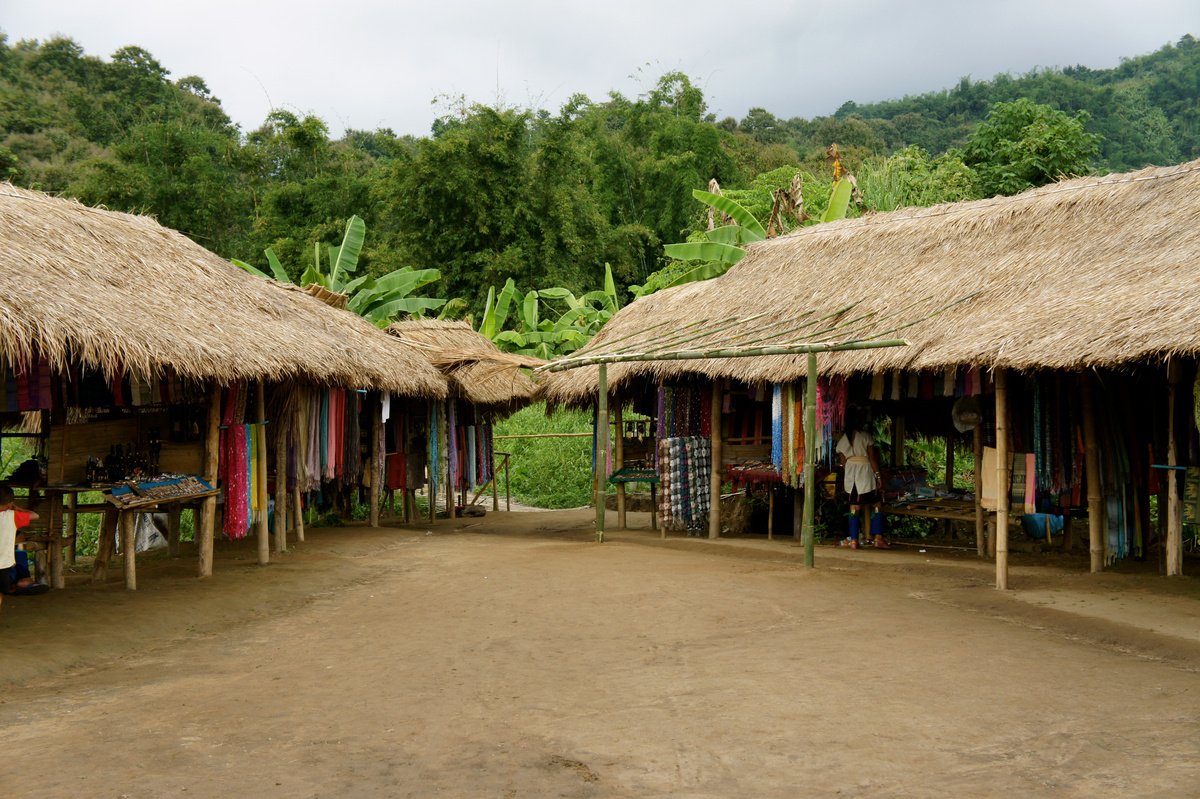
The visitor’s route passed between stalls. Textiles were hung within reach of the path, and weaving took place in the same spaces where finished goods were offered for sale. Work and the encounter with a visitor shared a small platform under the roof.
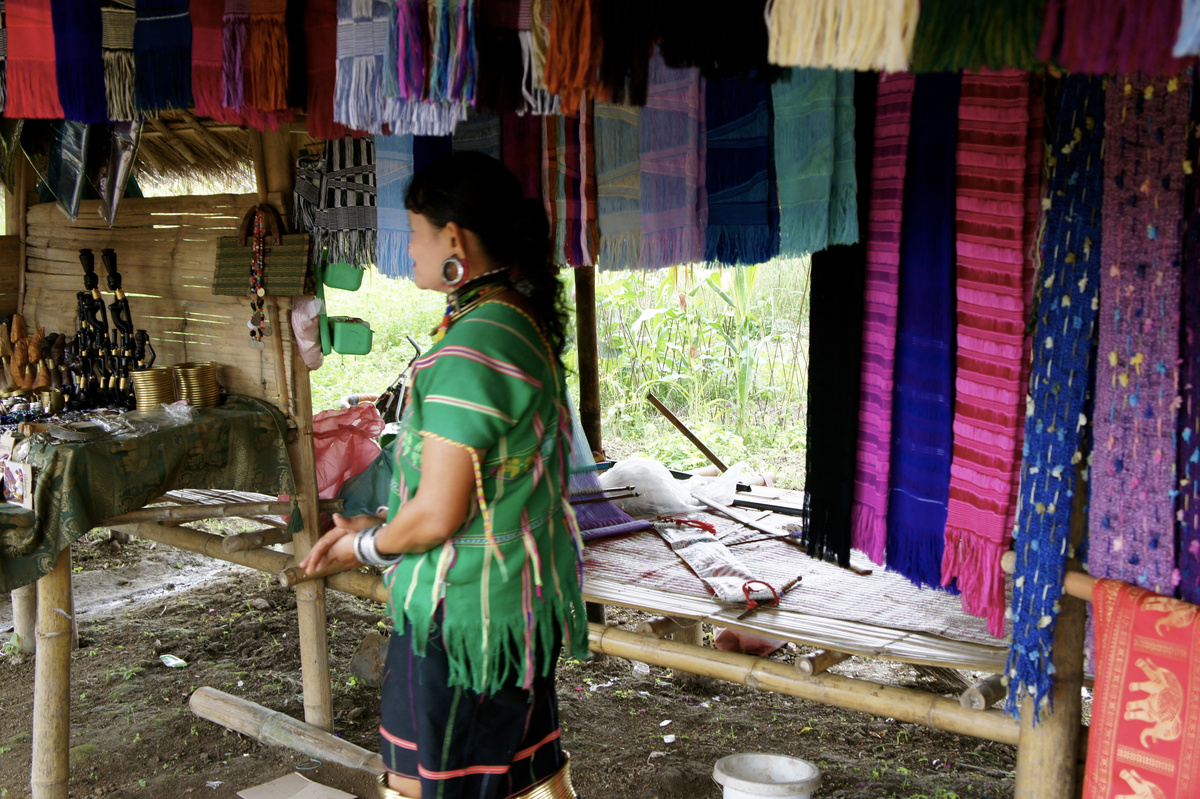
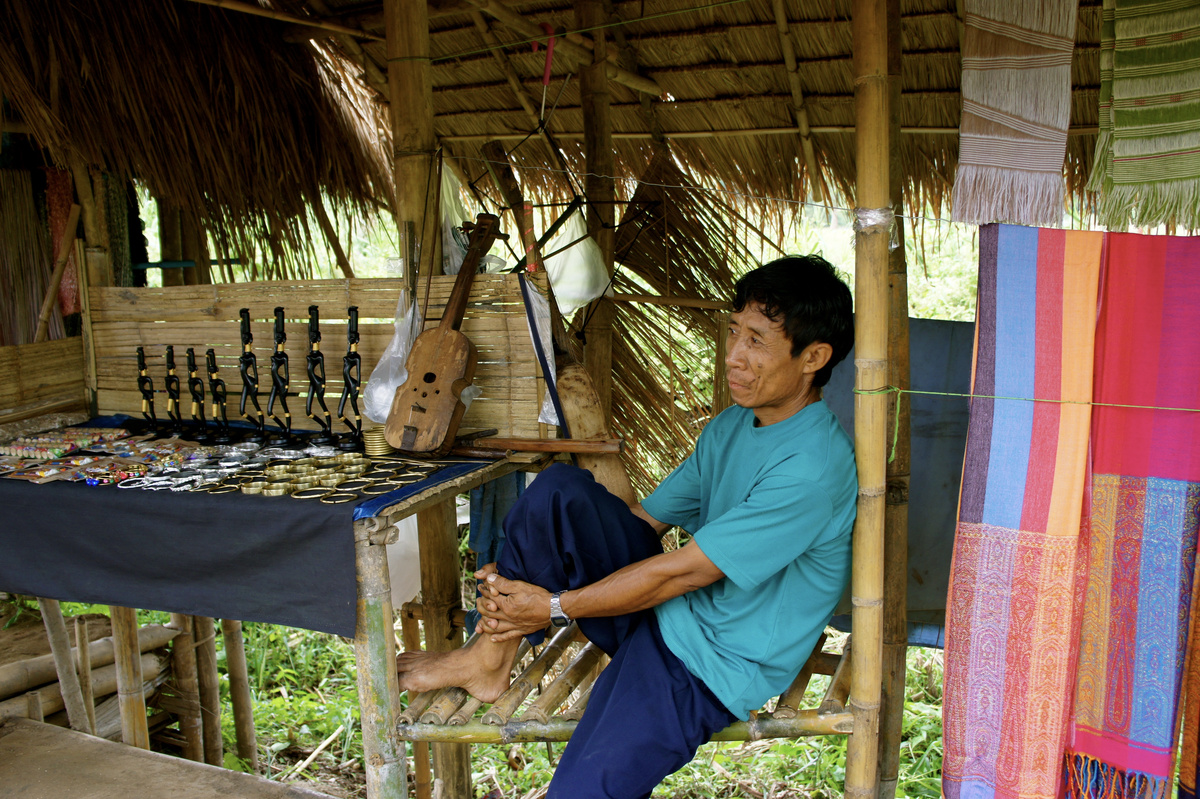
That arrangement gives a craft a ready market. It puts the maker close enough for a visitor to watch the work before choosing a finished shawl.
Union Hilltribe Villages brings Akha, Yao, Lahu, Kayaw and Kayan communities together in one complex. Paths connect separate areas, each with its own dress and crafts. The layout makes a short visit easy; understanding the people takes more than following the path.
If I were returning, I would spend more time at the weaving stalls and ask which pieces were made there. Watching the work would be a good way to choose something to take home.
A visit in the borderlands
The Kayan presence in Thailand also belongs to the history of displacement across the Myanmar border. Families have crossed into Thailand to escape conflict, and livelihoods have developed around the interest in their distinctive dress. The circumstances differ between communities; a tourist village cannot stand for all Kayan life.
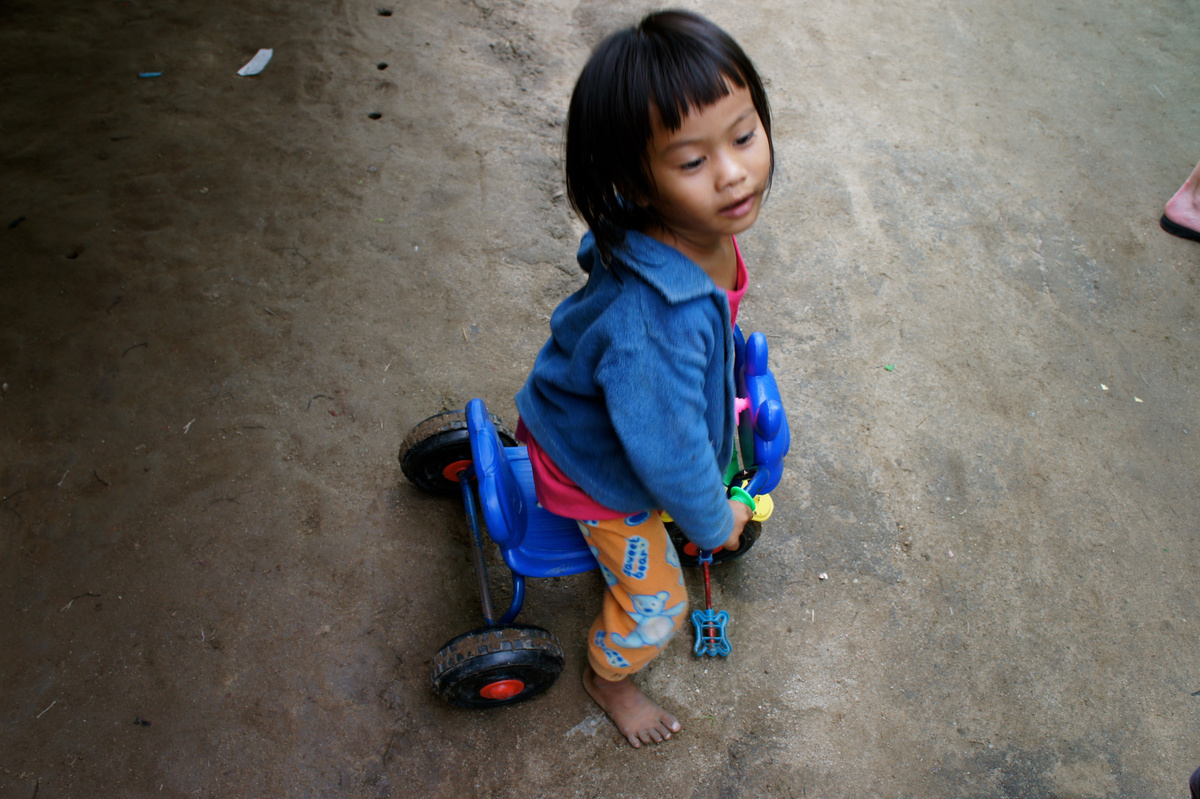
A visit offers a meeting, photographs and an opportunity to buy craftwork. I would give the conversation a little time, ask before taking a portrait, and look closely at the work offered for sale. A camera records an appearance very quickly; learning something about its wearer takes longer.
For a guided visit, GetYourGuide has a Chiang Rai day tour with a Long Neck Karen village stop, alongside the White and Blue Temples and the Golden Triangle. Village admission is paid separately. Confirm the village with the operator before booking if you want to visit Union Hilltribe Villages specifically.
From the village, I continued to Mae Sai and crossed the bridge into Tachilek. Later came the river journey, part of my Golden Triangle trip. The Kayan tradition reaches across the same frontier I crossed that day, with a history much longer than an excursion’s list of stops.