
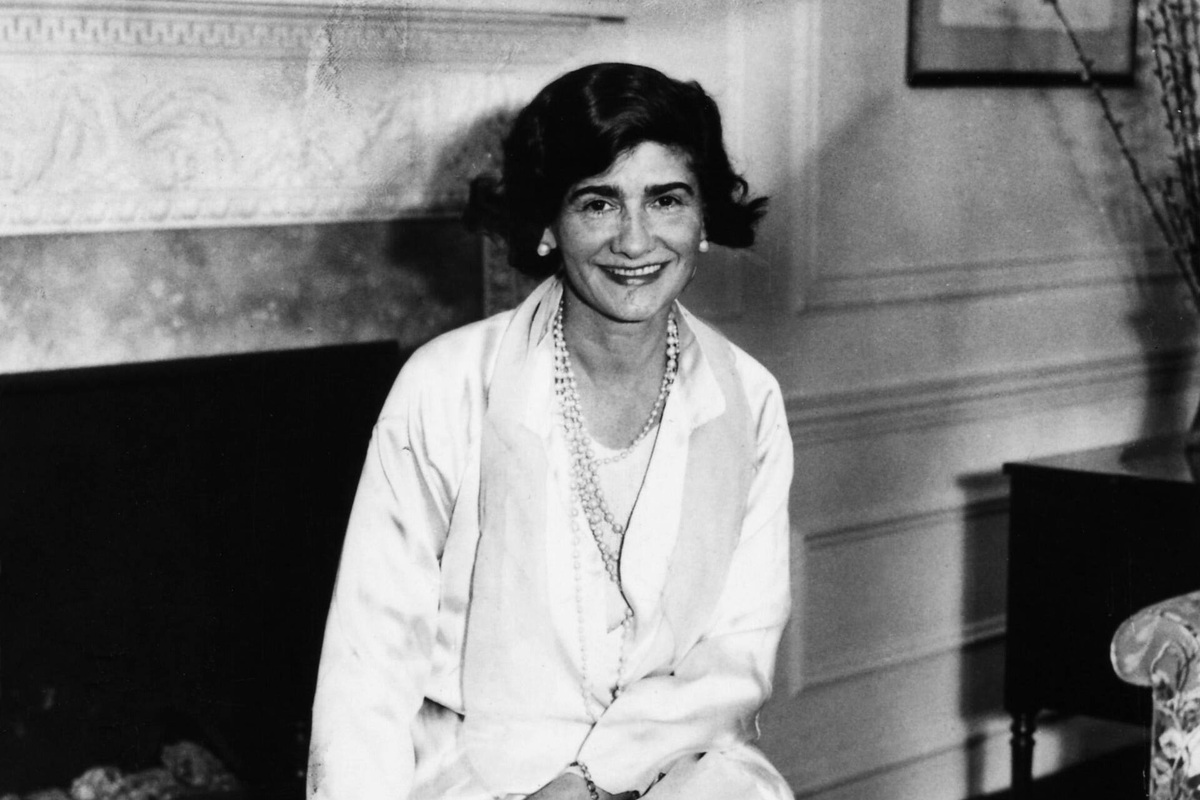
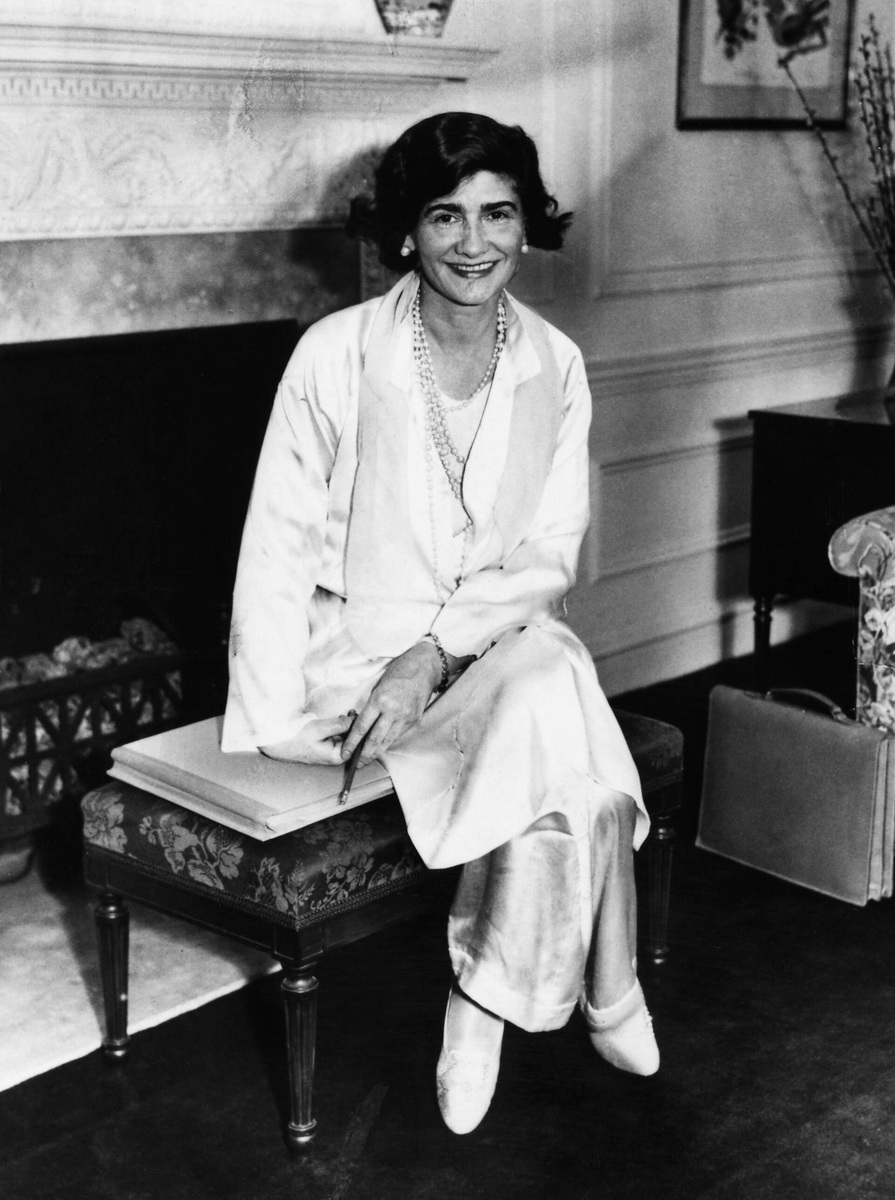
Chanel at the Hotel Pierre, New York, 1931. GRANGER Historical Picture Archive / Alamy; reproduced by the V&A. Landscape detail.
Lighter clothes, bare skin, a life outdoors. Coco Chanel made the sensible pleasures of a seaside holiday look like the way everyone wanted to live.
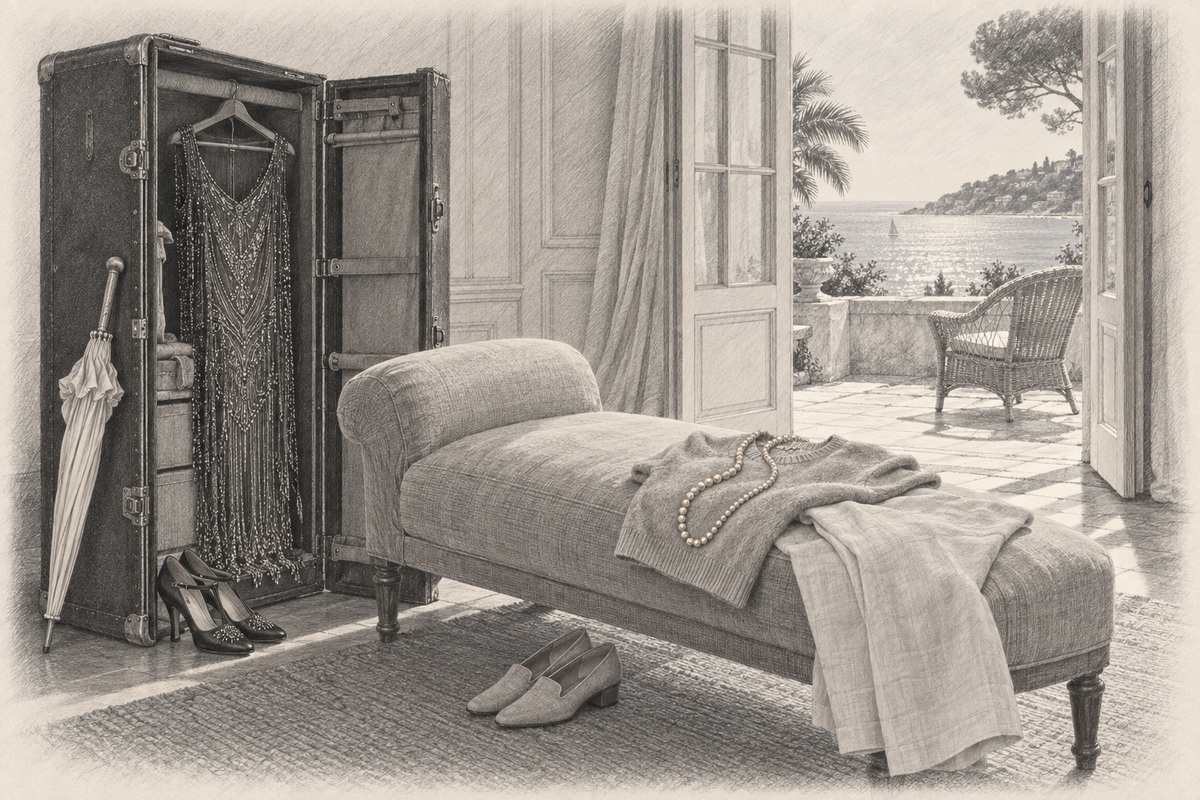
Ask someone to picture a beach holiday, and clothes begin to disappear.
There is a warm place, a street walked in something light, the sea at the end of it. Shoes become less substantial. Sleeves seem unnecessary. By the water, almost everything can be left on a towel. The body is allowed to enjoy the place it has travelled to.
It is such a sensible arrangement that we scarcely think of it as an arrangement at all. Heat calls for lighter clothing; swimming calls for freedom; a holiday ought to feel different from the life left at home. Yet the European seaside took generations to accept these simple propositions. People had learned to travel to the coast long before they learned to live comfortably there.
Coco Chanel helped close that distance. Her great gift was to make common sense socially persuasive. She wore the easier clothes, lived the active life and made the result so attractive that other women wanted her freedom for themselves. The modern beach holiday acquired one of its most influential models in a woman who understood how to turn a personal preference into a public desire.
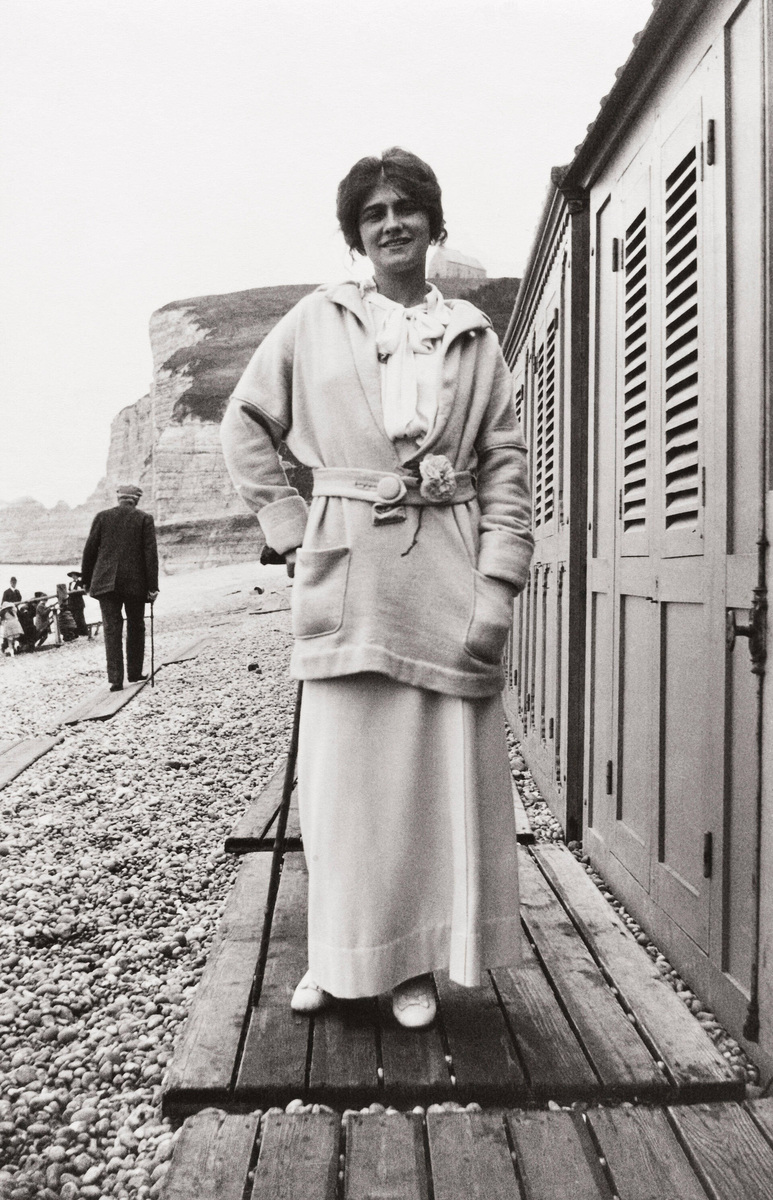
There is a photograph of her at Étretat in 1913. Nothing about it looks particularly revolutionary now. Chanel seems perfectly at home beside the sea. That is the difficulty with a successful change in manners: eventually, the sensible thing looks as though it must always have been obvious.
Before the beach became a beach
The first fashionable Europeans did not go to the seaside to become brown.
They went because doctors told them to.
From the eighteenth century, sea bathing acquired a medical seriousness that now sounds almost comic. Cold immersion was prescribed for a growing inventory of complaints. Seawater could be recommended not only for bathing but, in some regimes, for drinking. Brighton, Weymouth and other coastal towns developed around the premise that the sea was less a playground than an enormous pharmacy.
The social elite arrived, as elites tend to do, with architecture following behind them: assembly rooms, promenades, hotels, theatres, casinos, libraries. A coastal settlement could become fashionable long before anyone would have recognised its beach as a place for half-naked leisure.
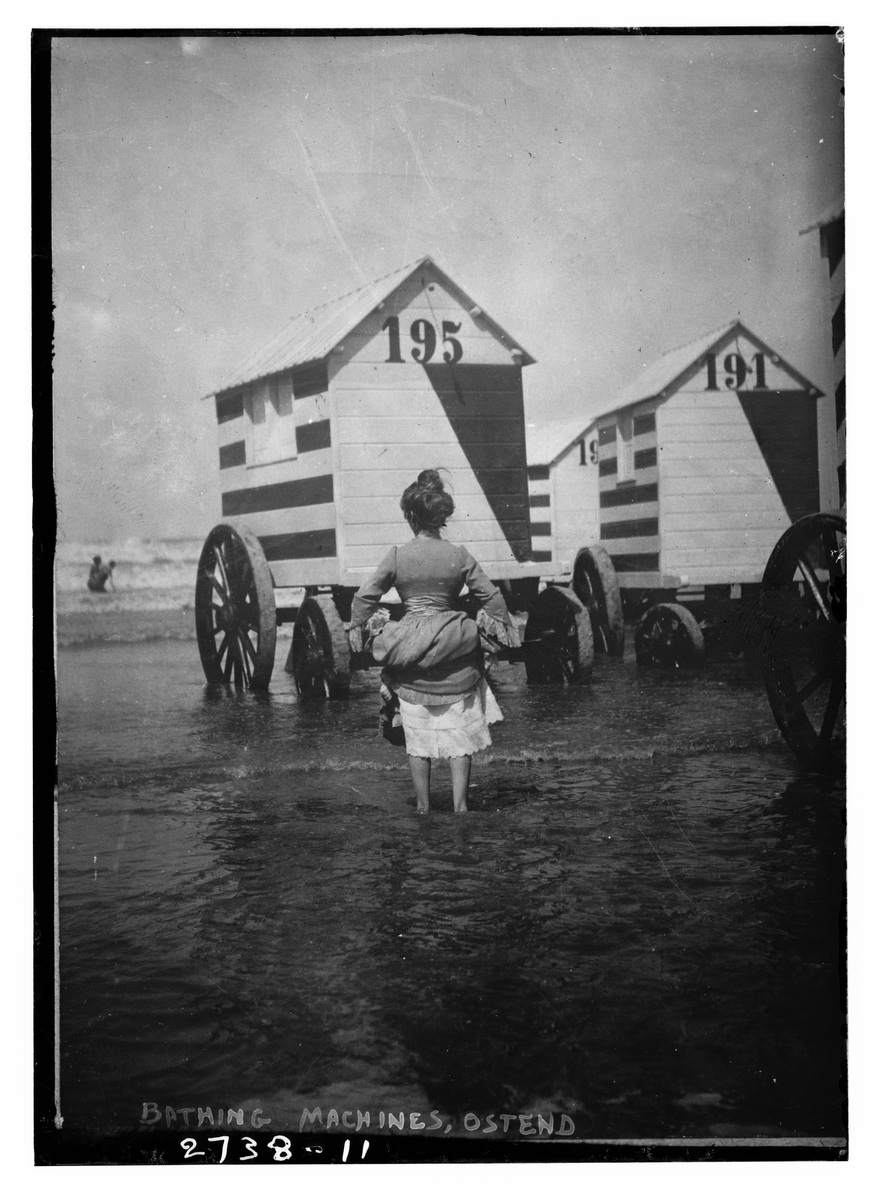
The bathing machine captured the compromise perfectly. A bather changed inside a wooden cabin on wheels, which could be drawn into the water. Steps and, in some versions, a modesty hood allowed entry to the sea concealed from the shore. Even undressing needed transport.
By the nineteenth century, the seaside resort was thriving. Yet its culture remained curiously detached from the modern idea of beach life. People travelled to the sea while defending themselves from the sun. Hats widened. Parasols opened. Sleeves remained. Bathing costumes covered much of the body and, when made from heavy wool, became absurd the moment the wearer tried to do anything more strenuous than enter the water and return.
Pale skin suggested a life protected from outdoor labour; carefully constructed clothes made a woman’s position legible. The seaside offered a change of air, but society still expected to recognise itself when it arrived.
The sea had become fashionable before the body had.
For a woman who wanted to walk, swim or simply feel the day around her, the difficulty was partly cloth and partly other people. An easier garment could solve the first problem. The second required someone sufficiently compelling to change what ease meant.
Deauville: the laboratory
Chanel had grown up poor and made her way into a world with very definite ideas about how a woman should look. Her early career passed through millinery. Her patrons supplied money and introductions; Arthur “Boy” Capel helped finance the shops. What she brought was an increasingly assured judgment about the clothes themselves.
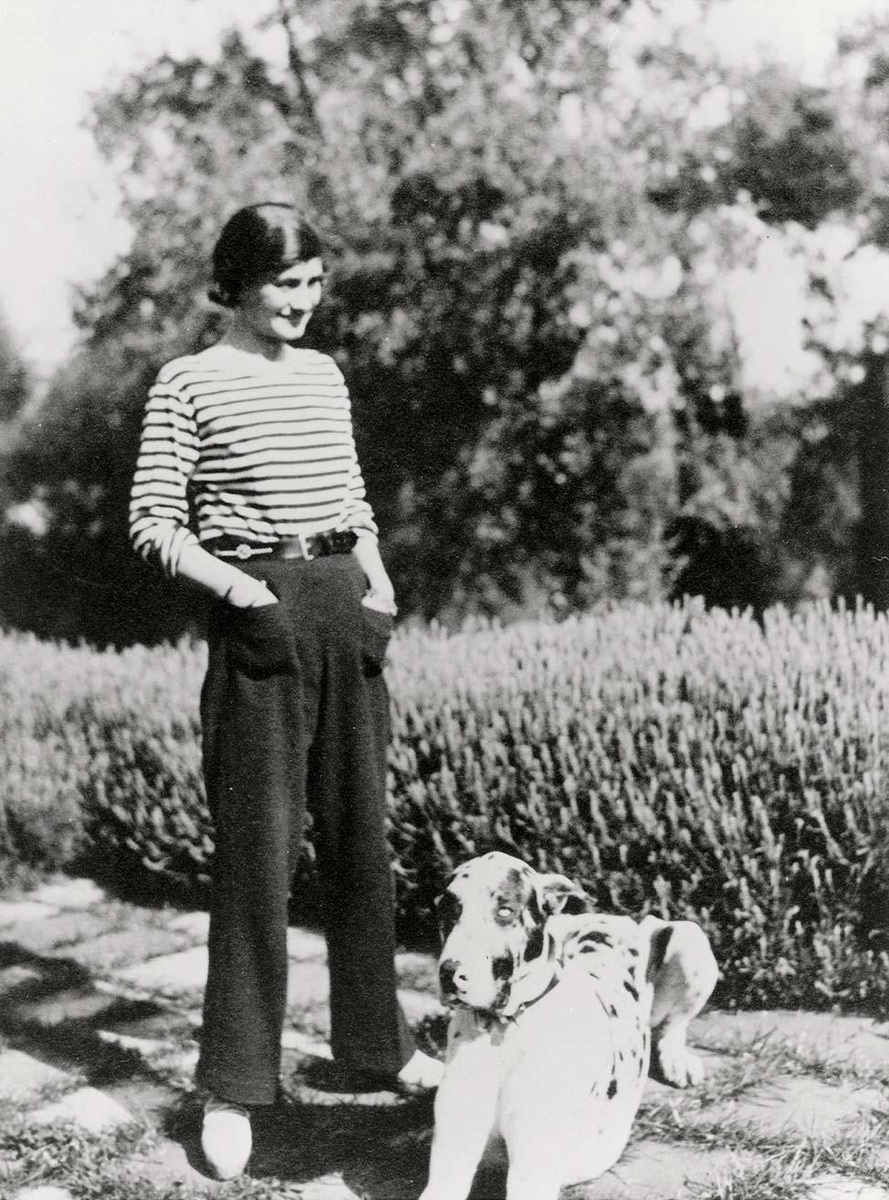
She designed for a life she wanted to lead, and wore the result. Riding, walking and the company of sporting men gave her a vocabulary of useful things. Male clothes allowed their wearers to do something. That seemed a sound principle to extend to women.
In 1910 she opened Chanel Modes, a hat shop at 21 rue Cambon in Paris. A boutique in Deauville followed in 1912. From 1913 she began selling jersey sportswear there, taking her business from hats into the clothes a woman could live in.
The Normandy resort of racehorses, casinos, grand hotels and wealthy visitors from Paris gave her an unusually good place to discover how far a convention would bend. Deauville allowed a new kind of woman to exist before society was entirely ready for her elsewhere.
A resort loosens rules. Chanel gave that looseness a form.
The woman who needed to be conventionally dressed in Paris could walk beside the sea, visit the races, sail, play sport or spend hours outdoors. Her day demanded motion. Her clothing still came from a culture that had treated motion as a secondary requirement.
Chanel saw the mismatch.
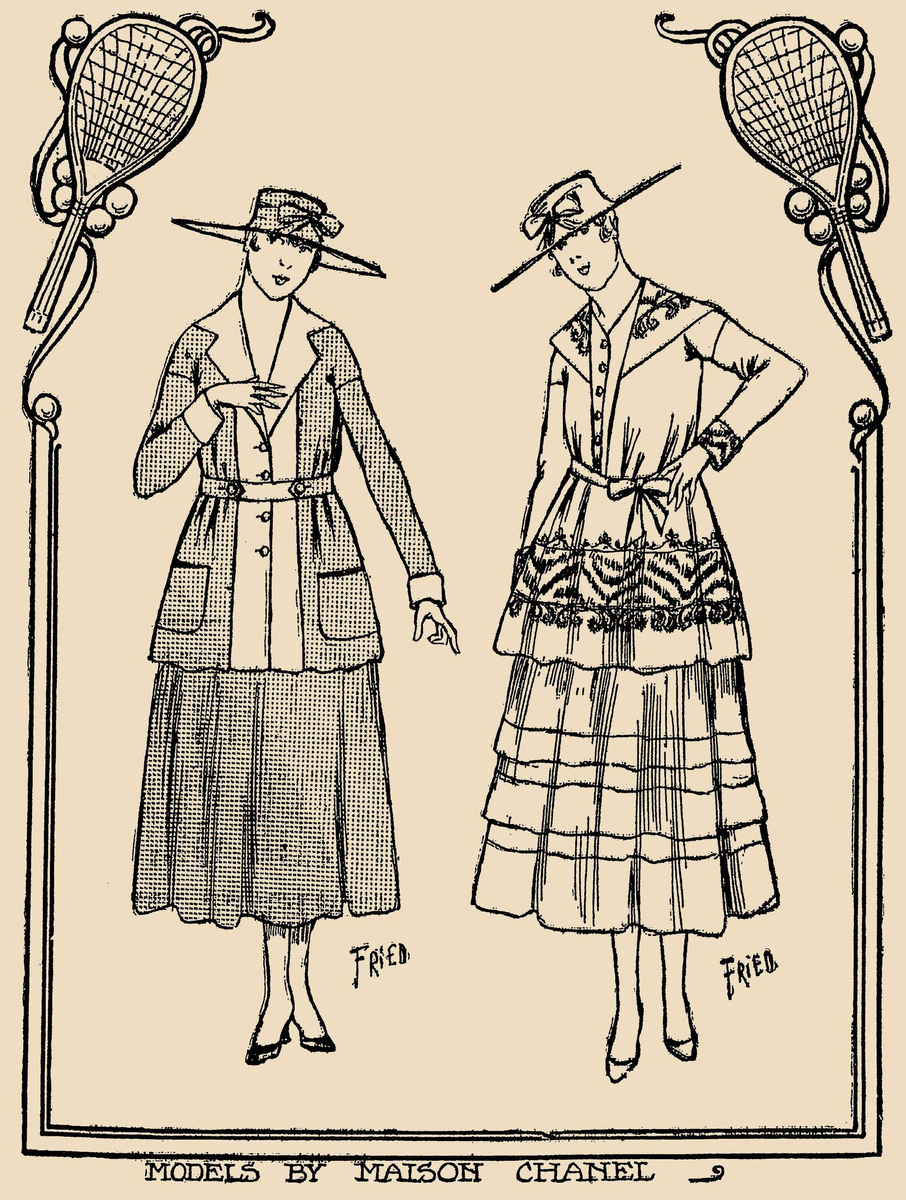
Her jersey ensembles borrowed from sailors’ sweaters and the male sporting wardrobe. Jersey was a knitted fabric with useful, humble associations, including underwear. It moved with the body. A loosely belted top and skirt could look composed without requiring the wearer to organise her whole day around the maintenance of a silhouette.
This was common sense applied with taste. The clothes answered the place: air, movement, informal hours, the possibility of going somewhere on foot. The woman remained elegant, and could get on with her holiday.
That combination mattered. Comfort offered as a retreat from fashion would have had a much smaller audience. Chanel made comfort something fashionable women could confidently choose.
In November 1915, contemporary reporting described Chanel’s silk jersey suits as almost a “Deauville uniform”, a phrase preserved by the Victoria and Albert Museum.
The important word is uniform. A woman choosing the easier clothes could now find herself in agreement with the people around her. What had looked unconventional was becoming the accepted thing to wear.
Here was Chanel’s particular power. Social habits often survive their practical usefulness because everyone is waiting for someone else to change first. She supplied a visible example; her customers gave it numbers; the fashionable resort made the numbers conspicuous. A personal solution became a social permission.
Biarritz: fashion walks onto the sand
In 1915, with Europe at war, Chanel opened her first couture house in Biarritz.
It was an audacious location. Biarritz was a resort before it was a fashion capital: Atlantic air, grand hotels, international money, casinos and a cosmopolitan clientele moving through a place where ordinary routines had already been suspended. The practical idea tested in Deauville was becoming a substantial fashion business.
The house employed 300 workers, and Chanel designed her first haute couture collection there. This was a decisive step in her own life as well as in the wardrobe of her customers: the milliner had become the head of a couture house, with a second coastal resort as her workshop and audience.
Those customers’ lives made the old opposition between formal and casual increasingly inadequate. They needed clothes for the hours between occasions—for walking through a warm town, sitting outside, going down to the water. We now call a whole category of clothing resort wear. The phrase sounds like a merchandising department. The idea is more fundamental: geography changes the rules of dress.
The same person may be underdressed in a city and perfectly dressed beside a pool. Sandals, white trousers, knitted tops, nautical stripes and open necklines belong to a temporary jurisdiction in which ease itself is appropriate. Chanel’s seaside work helped make that adjustment look natural. A woman could dress for where she was, and for what she wanted to do there.
Her customers had the money and leisure for this life. A prolonged stay at a fashionable resort belonged to a very different existence from a year spent working on a farm or in a factory. The people buying Chanel could travel, be seen and set an example that magazines carried elsewhere. Their income gave them access to the holiday; their visibility gave their habits influence.
Chanel understood the value of that audience. She could put a practical idea into circulation through women whose appearance other women studied. Deauville had given the idea a public; Biarritz gave it the scale of a couture house. As the look spread, its logic became easier to accept.
At the coast, a lighter wardrobe began to feel like good judgment.
The body comes outdoors
Once clothes allowed a woman to move, the movement itself could become beautiful.
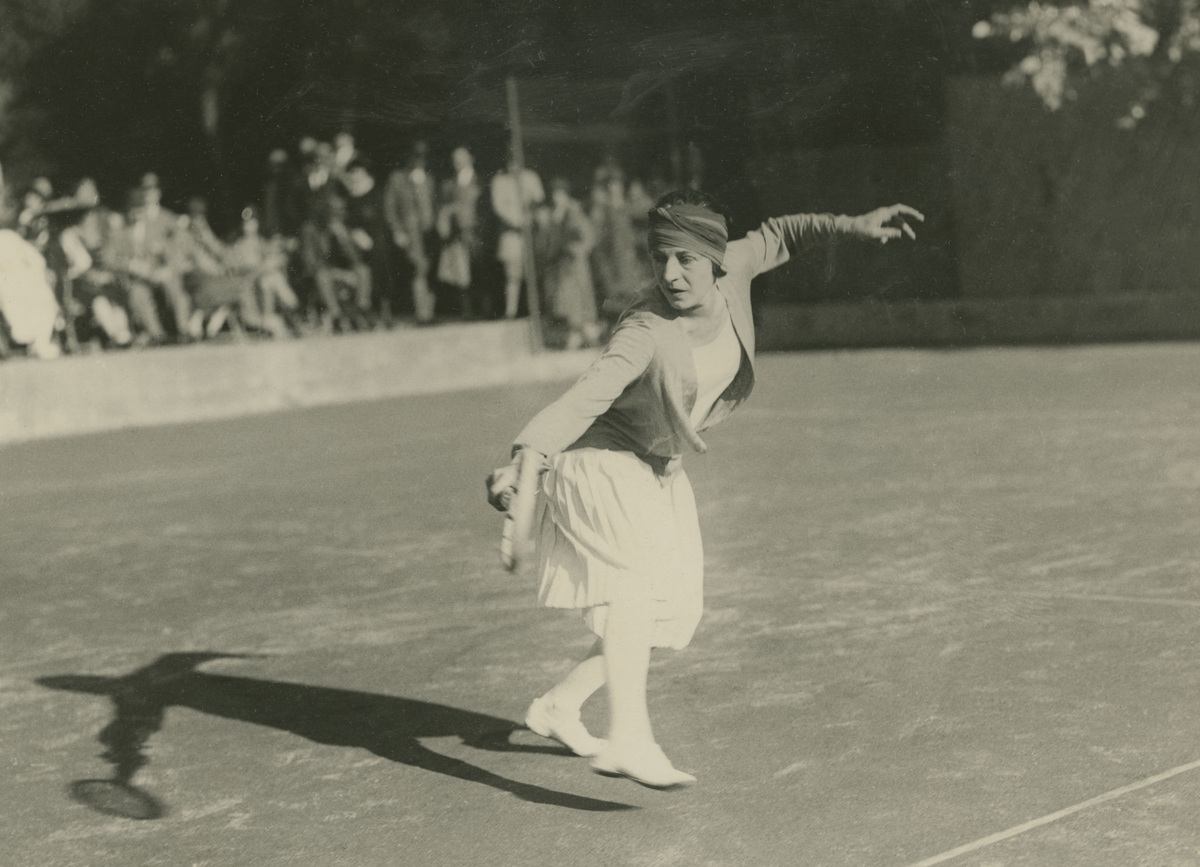
Sport made the argument in public. Jean Patou dressed Suzanne Lenglen, the French tennis champion whose speed and reach gave practical clothing a spectacular advocate. Her shortened skirts and freedom of movement belonged to the game. They also helped make the athletic woman an object of admiration.
Swimming put a still more direct question to the old bathing costume. What use was an outfit that made the water harder to enjoy? A body entering the sea needed a garment equal to the occasion. Bare arms and legs acquired a purpose beyond provocation.
Medicine gave outdoor life another kind of authority. Niels Finsen received the 1903 Nobel Prize for treating disease, especially lupus vulgaris, with concentrated light. In Switzerland, Auguste Rollier became associated with carefully managed exposure to sunlight. Light, air and exercise entered the language of health, reaching people far beyond the clinic.
The same body that convention had wrapped and supervised was being encouraged to come outside.
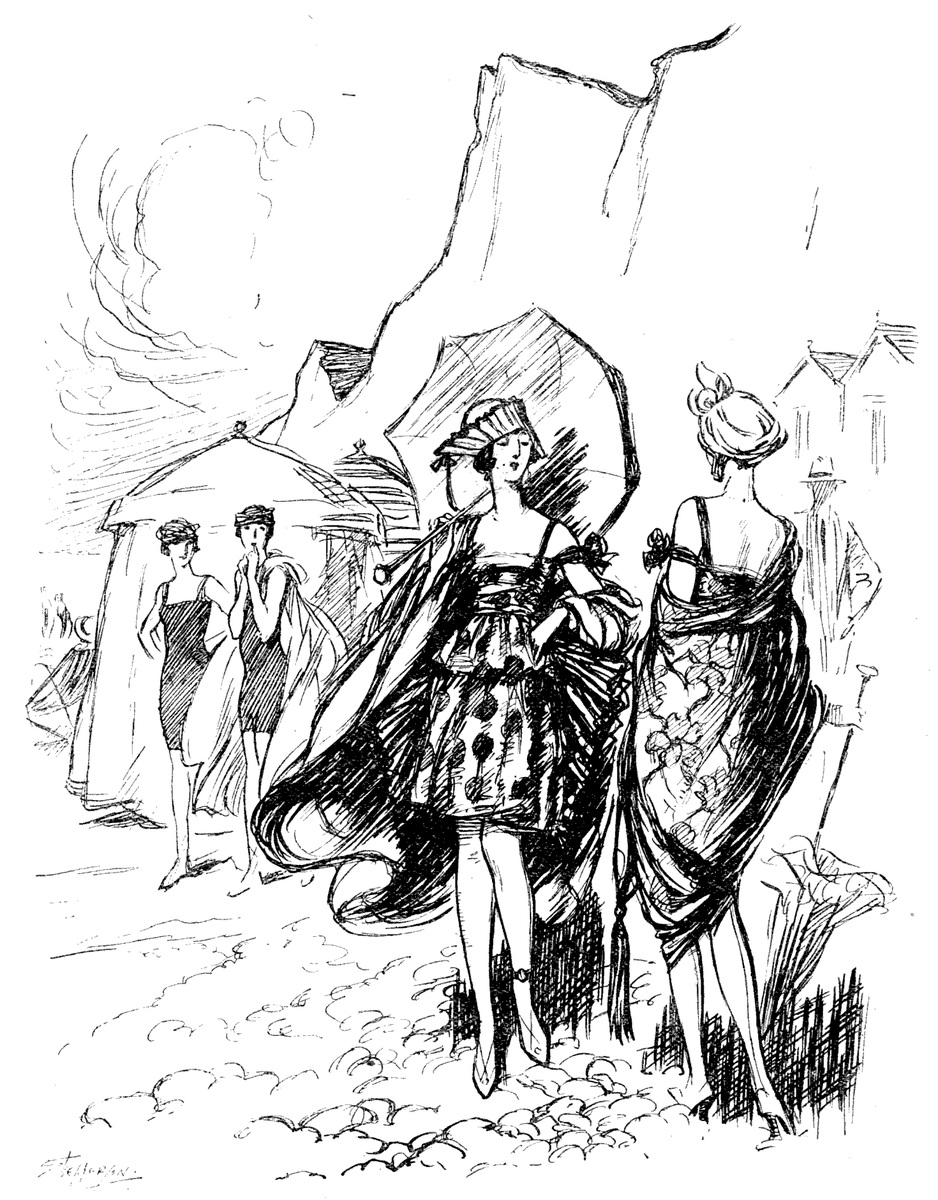
There was ample room for comedy in the transition. In July 1920, Punch published Claude A. Shepperson’s “Post-war simplicity in bathing-gear”. The irony of the title suggests how busily society could complicate even the simple business of going for a swim. New freedom still had to negotiate old vanity.
Chanel made the practical choice attractive enough to survive that negotiation. Her clothes worked within the social world her customers inhabited, and gradually altered its expectations. A woman could be well dressed because her clothes suited what she was doing. The beach was becoming one of the places where that idea felt most natural.
A holiday written on the skin
Sunlight changed the visible meaning of the holiday.
The old preference for pale skin had made sense within a hierarchy that associated exposure with labour. Industrialisation complicated the picture. Factories, workshops and offices kept millions indoors. Meanwhile, those with leisure could seek the open air through tennis, golf, sailing and travel.
A tan began to suggest somewhere a person had chosen to go.
Chanel’s famous tanning story gives the change a wonderfully economical plot: she returns from a Mediterranean holiday bronzed, and fashionable women begin to want her colour. The legend endures because her life made the idea so convincing. On her, sun-browned skin belonged to activity, travel and pleasure.
She was watched. Her clothes, cropped hair, sporting habits and the places where she spent her time appeared as parts of one attractive way of living. A tan fitted the picture. It made the holiday visible even after she had come home.
By the later 1920s, the fashion press was encouraging the taste. A study of summer issues of Vogue and Harper’s Bazaar found a marked shift towards approving tanned skin in 1928 and 1929. An appearance that had once invited avoidance was acquiring an audience.
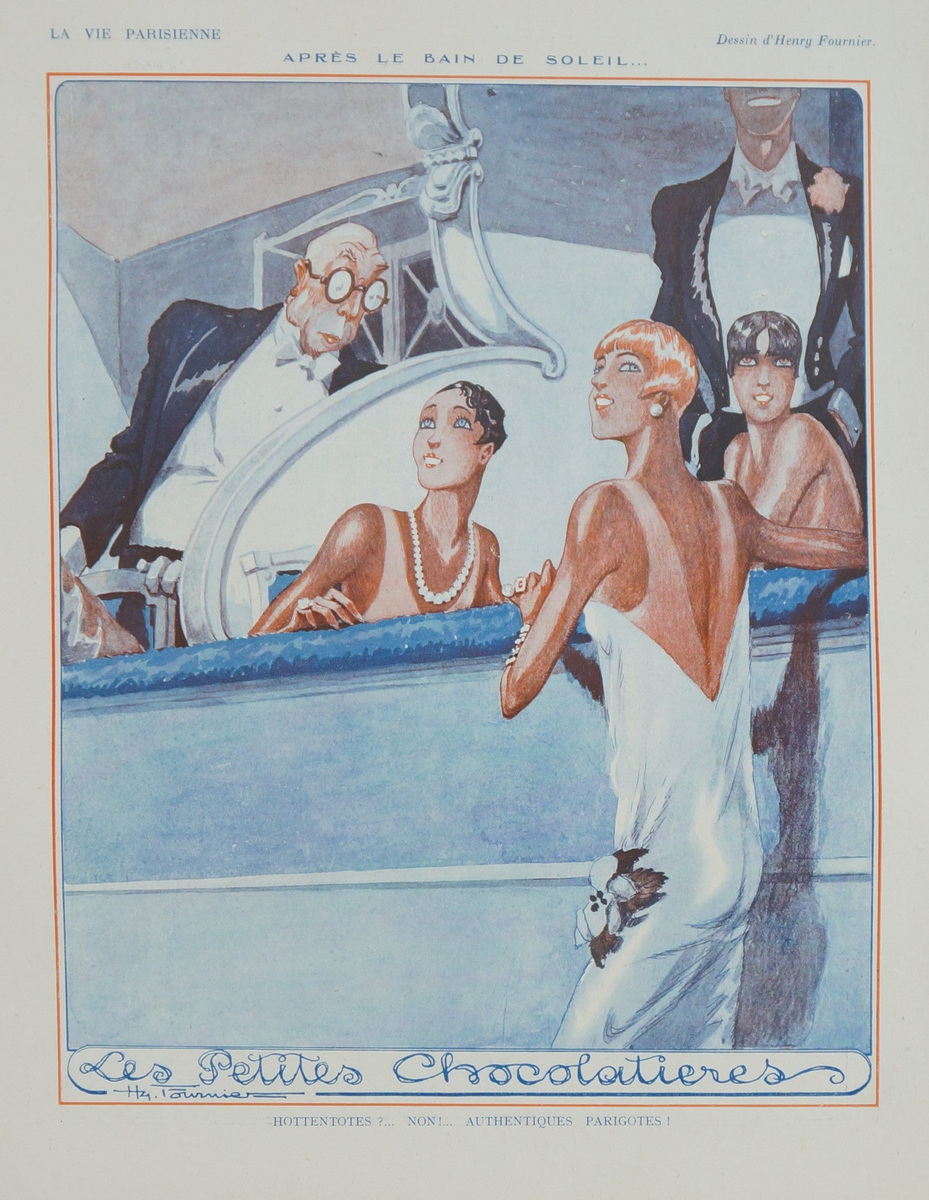
Henry Fournier’s 1926 drawing for La Vie Parisienne, “Après le bain de soleil…”, catches the new complexion arriving in polite company. The holiday had followed the women into the drawing room. Its joke depends on the surprise of seeing fashionable Parisiennes visibly altered by the sun; its racial language also exposes the prejudices that accompanied the new taste.
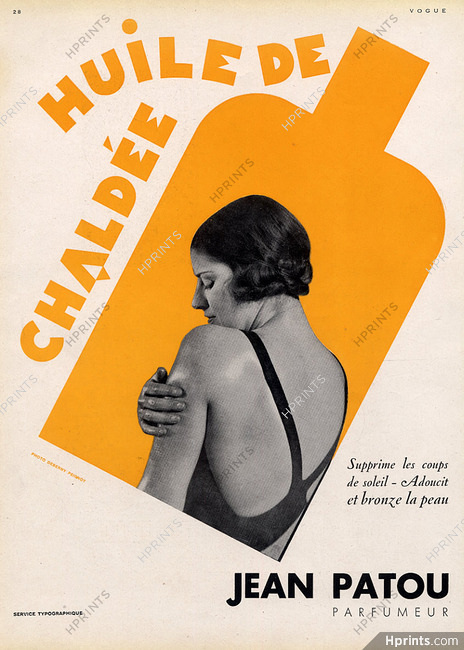
In 1927, Patou introduced Huile de Chaldée. His 1930 advertisement in Vogue promised to soften and bronze the skin. The cosmetics counter had recognised what the holidaymaker wanted to bring back.
Sunlight was becoming part of the attraction of going away. The sea offered something to do; the sun offered something to feel, and a sign that one had been there. Chanel’s image held those pleasures together with unusual clarity. She made a life outdoors look enviable.
Summer becomes the destination
The calendar changed with the appetite.
The old Riviera had been substantially a winter destination. Northern Europeans travelled south for gentler weather, promenades, society and relief from the cold. High summer needed people who positively wanted its heat, its water and the life they could lead between the two.
In 1923, Gerald and Sara Murphy, wealthy Americans moving among expatriate writers and artists, persuaded the Hôtel du Cap at Antibes to accommodate them through the summer. Their stay became part of the hotel’s founding story of the new season. The Murphys and their circle brought swimming, boats, beach picnics and company worth travelling to meet.
The resort began to turn towards the water. Terraces and a swimming pool gave the Eden-Roc pavilion a new role in the summer life of the hotel. The regional heritage inventory records this architectural adjustment. A place organised for taking the air was learning to accommodate people who wanted to spend the day in it.
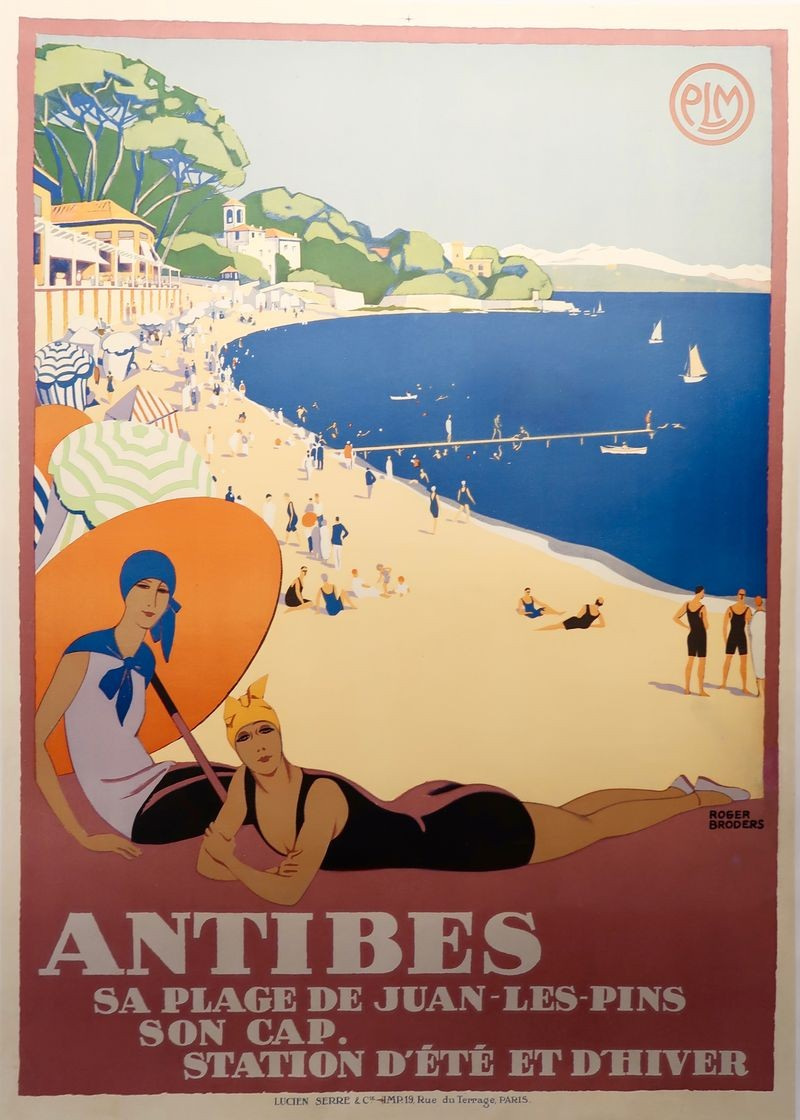
Roger Broders’s 1928 railway poster for Antibes advertises a summer and winter resort. By then, beach life could carry the invitation to travel. The destination was selling a whole day of pleasures around the water.
Chanel’s influence belongs inside this changing day. Her seaside wardrobe made sense on the journey from a hotel room to a café, from the café to a boat, from the boat to the shore. The climate could determine the clothes. The clothes could allow the activity. The activity could become the reason for being there.
This is the holiday we recognise: the town dressed more lightly than the city, the beach dressed more lightly still, with neither condition requiring an apology. The traveller has come to enjoy the place. Clothing should cooperate.
Chanel gave that proposition the force of a desirable example.
The example outgrows the wardrobe
By 1931 she could be photographed in white satin trousers at the Hotel Pierre in New York, wearing informality with the assurance of a woman whose judgment had acquired international authority. The freedom she had helped make fashionable at the coast travelled with her.
She was exceptionally effective as her own demonstration. An unfamiliar style becomes easier to imagine when someone wears it convincingly; it becomes easier to adopt when others follow. Chanel’s customers could borrow a little of her confidence along with the clothes. Her influence reached beyond the people who could afford to buy from her.
In time, more people acquired the means to take a holiday of their own. France’s 1936 paid-leave law extended two weeks’ annual paid holiday to workers. Cheaper travel and a growing leisure industry brought new visitors to the coast. A way of spending the summer that had been highly visible among the fortunate became an ambition shared far more widely.
The sensible part travelled particularly well. One could understand the appeal of a light shirt, easy shoes and a day beside the water without knowing who had made such choices fashionable. A designer’s example could become an ordinary person’s instinct.
The habits people absorbed from her passed into lives very different from her own. That is what makes her influence on travel so enduring. A fashion can carry a famous name for a season; a change in what people consider normal can lose the name altogether.
The picture we carry
Before a beach holiday has begun, most of us already know what it ought to look like.

We pack lighter clothes because the destination calls for them. A warm street, a shaded terrace and a shoreline suggest different degrees of undress, and moving between them seems an ordinary part of the day. The body can swim, walk, rest and feel the air. Being appropriately dressed means responding to the place.
For the society Chanel entered, each of those permissions had to become acceptable. Taste, modesty and class had to make room for a woman who wanted to enjoy being outdoors. Chanel wore that woman into public view and made her worth copying.
The result reaches us as common sense.
Picture the coast again: the light clothes in the street, almost nothing beside the water, the feeling that life has become pleasantly simpler. The scene is so familiar that its making has disappeared.
Chanel helped make it familiar. She persuaded people that a holiday by the sea should allow them to live as though they were by the sea.