
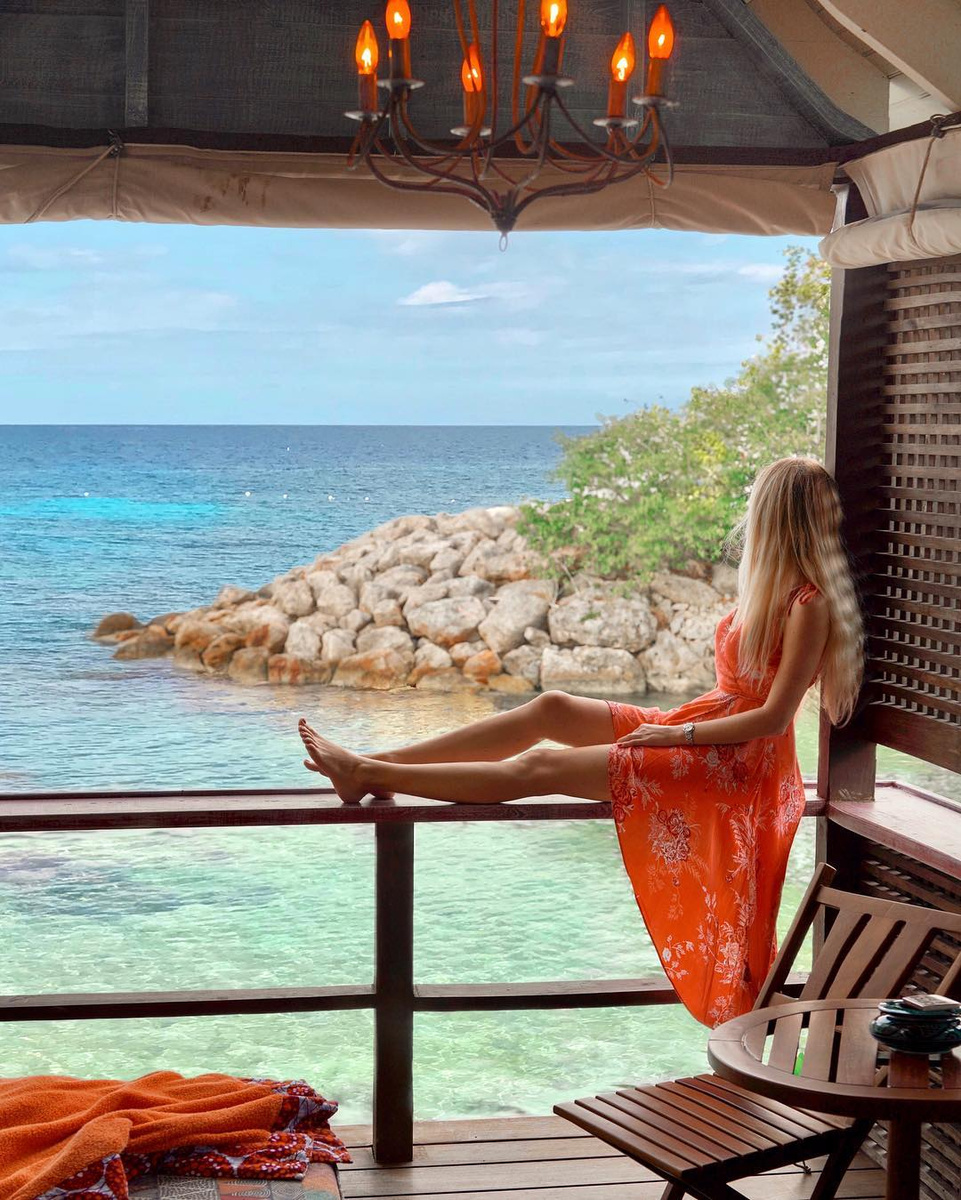
GoldenEye has given the world a remarkable amount of adventure for a place so devoted to taking life easily. Ian Fleming wrote his Bond stories here. Chris Blackwell, the founder of Island Records, later made the writer’s retreat into a hotel shaped by his own vision of Jamaican seaside hospitality: the easy intimacy of a house where friends come to stay, with the Caribbean just beyond the door.
Fleming called it “the gorgeous vacuum of a Jamaican holiday”. He put his to work creating James Bond. Blackwell’s guests are free to be rather less industrious.
Getting here takes rather more effort. Arrive through Kingston or Montego Bay and there is still a long drive to Oracabessa, on the north coast. You choose this place deliberately, for the pleasure of eventually having an afternoon that asks nothing of you. This is the Jamaica I wanted to return to.
Fleming’s house, Blackwell’s retreat
Fleming bought the land in 1946 and designed a house for his winters away from England. He began Casino Royale here in 1952; the novel appeared the following year. Oracabessa Bay, in the parish of St Mary, became the fixed point from which his imagination could travel. Bond’s adventures ranged far beyond Jamaica, but their author kept returning to this shore.
Blackwell bought GoldenEye in 1976 and first used it to entertain friends and family. He added houses as that circle grew, gradually opening his private Jamaica to guests. The man who helped carry Bob Marley’s music around the world understood the appeal of letting a place keep its own character. Music entered GoldenEye’s history, too: Sting wrote Every Breath You Take while staying here.
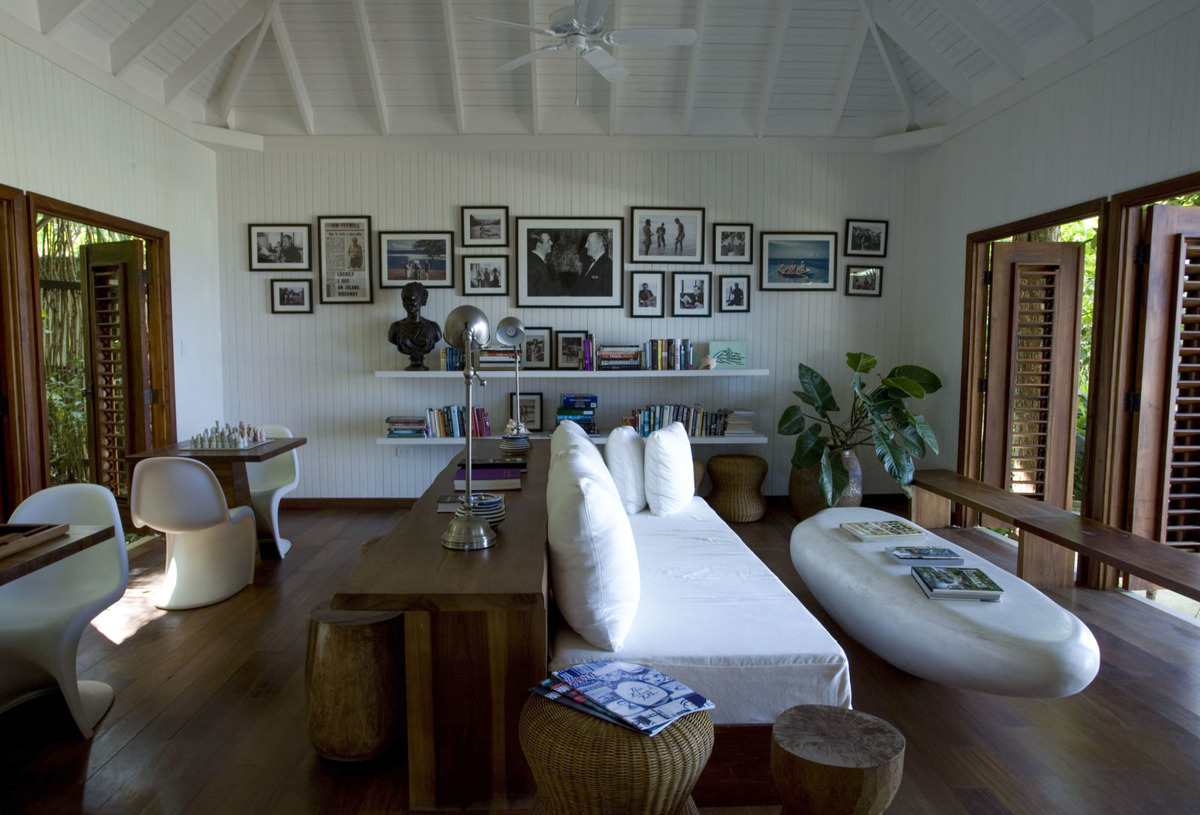
Island Outpost also includes Strawberry Hill in the Blue Mountains, where Blackwell’s connection with musicians is tangible in the photographs and records. I think of the two hotels as complementary parts of a Jamaican journey. At Strawberry Hill, the landscape draws the eye across the mountains towards Kingston. At GoldenEye, the water is close enough to step into.

There is an architectural connection, too. Ann Hodges, the Jamaican architect involved in rebuilding Strawberry Hill, designed GoldenEye’s beach and lagoon villas. Her work gives those villas generous verandas and a close relationship with the landscape. Fleming’s original house remains a separate accommodation choice within this much larger property.
A room beside the cove
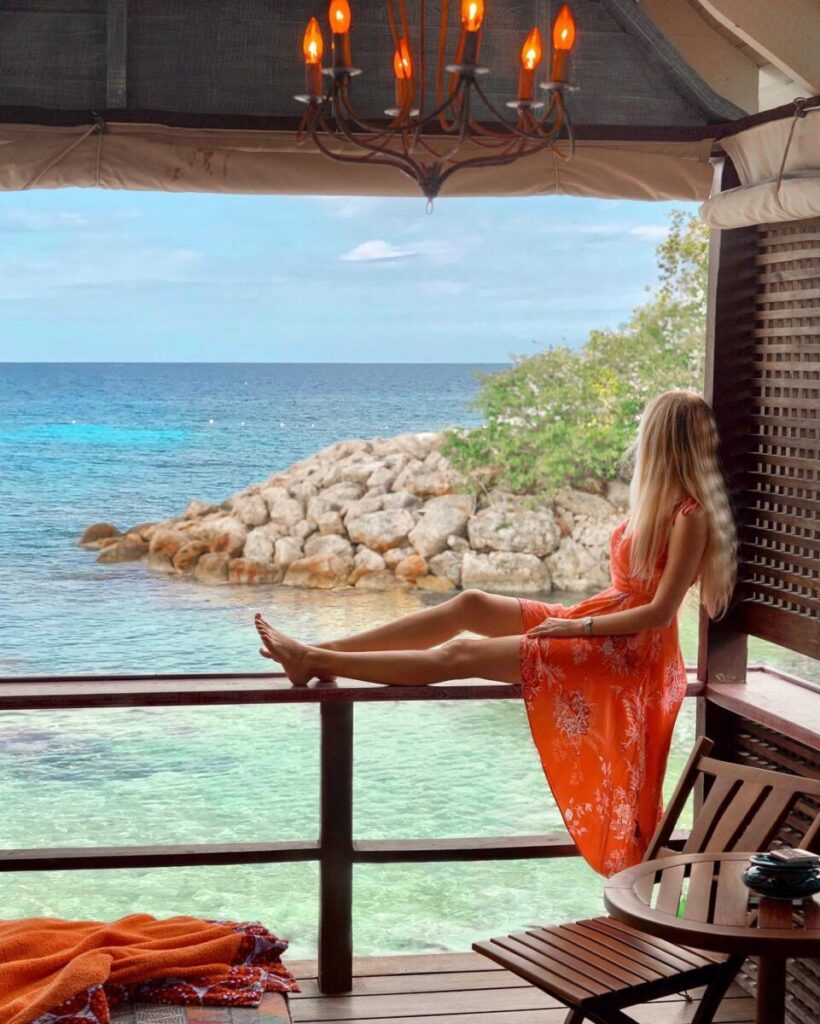
On the terrace above the cove, I had my morning coffee within sight of the open sea. A view like this makes a veranda feel as important as the space behind it.
GoldenEye’s accommodation is scattered through the grounds, so the choice of room changes how you inhabit the place. Some doors open towards the beach; others lead to a private deck on the lagoon. The beach huts occupy their own area around Snorkeler’s Cove and Button Beach. Their louvred windows and shaded outdoor spaces suit a life that moves between indoors and out.
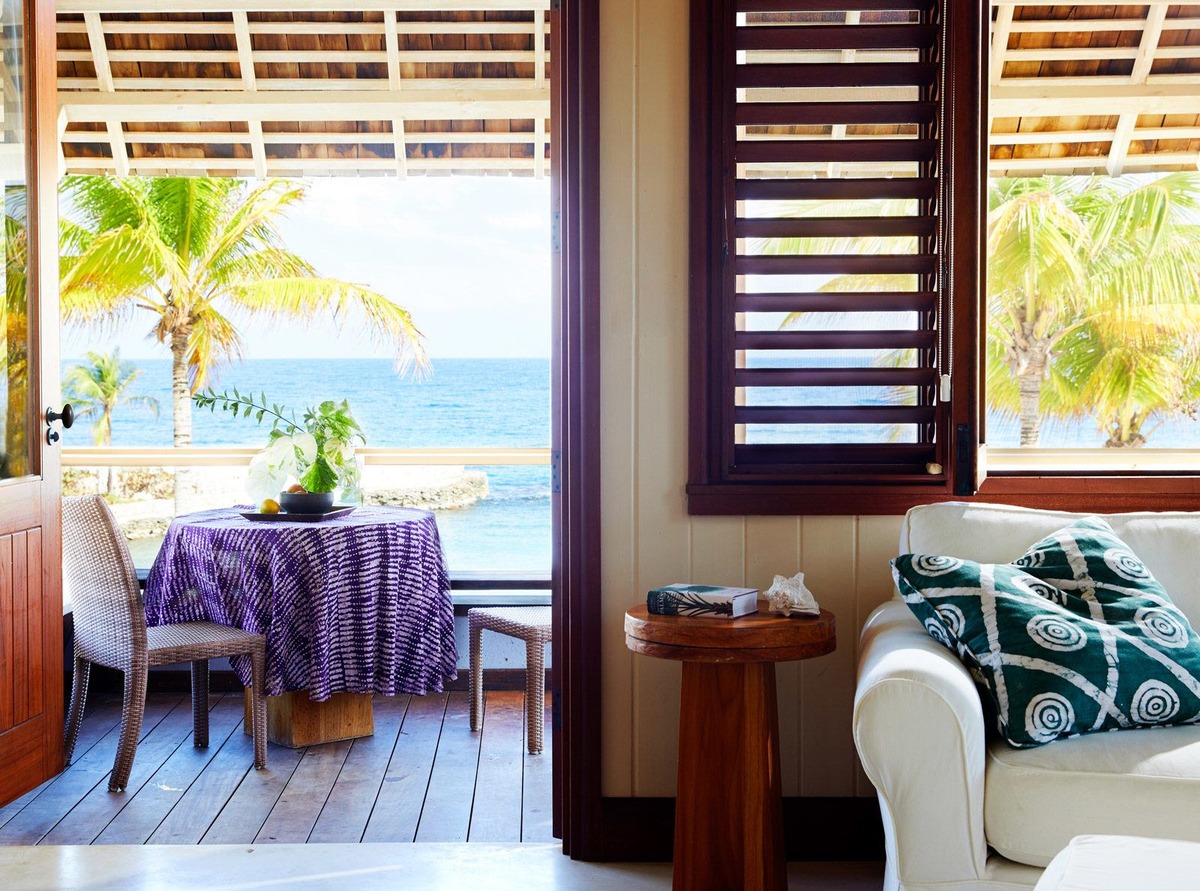
For a booking today, I would pay particular attention to the water access named in the category. A lagoon cottage has its own dock and kayak. A beach villa opens onto Low Cay Beach, while the beach and lagoon villas have kitchens. A standard beach hut may look onto gardens or hills; the cove-view hut is a separate category. The name makes a meaningful difference.
The hotel’s current room specifications list air-conditioning in the beach huts as well as the villas and cottages. Older descriptions of fan-cooled huts have therefore become misleading. Larger huts and villas also vary considerably: some have separate bedrooms or an open-air lounge below the sleeping space. I would choose the layout as carefully as the view.
The different waters of GoldenEye
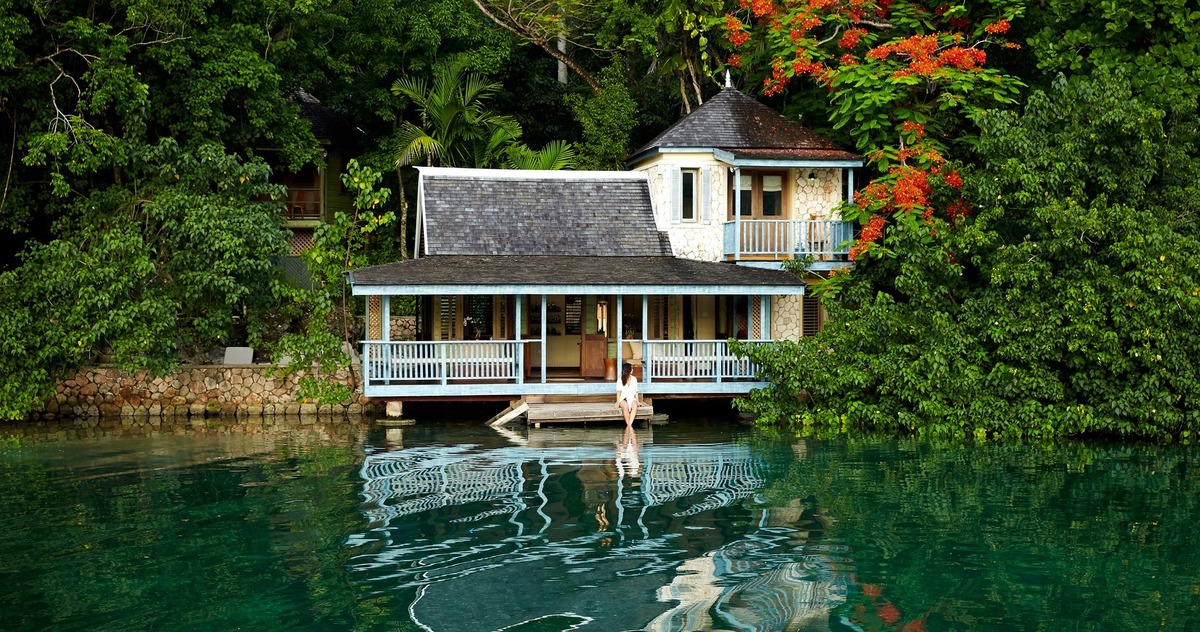
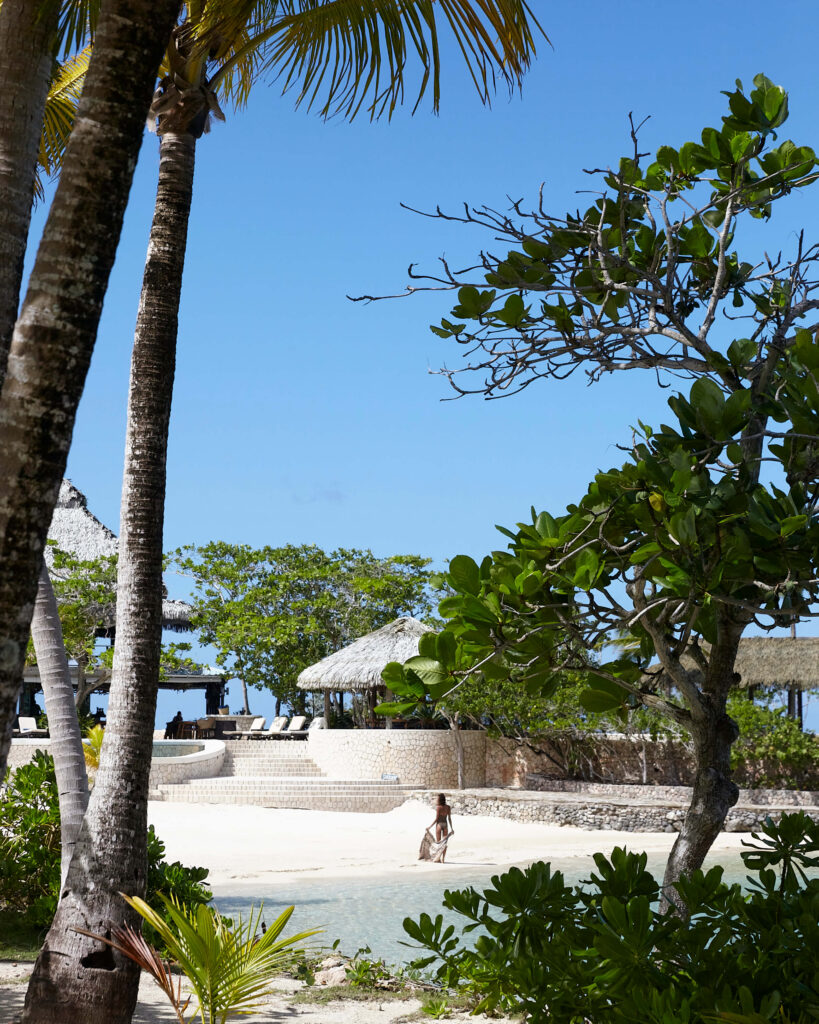
The lagoon, the coves and the open sea give GoldenEye several different places to spend a day. Low Cay is the main sandy beach. Button Beach has a more informal setting, with Bamboo Bar beside it, while Snorkeler’s Cove provides another way into the water. The lagoon mixes spring water with seawater and is used for swimming, kayaking and paddleboarding.
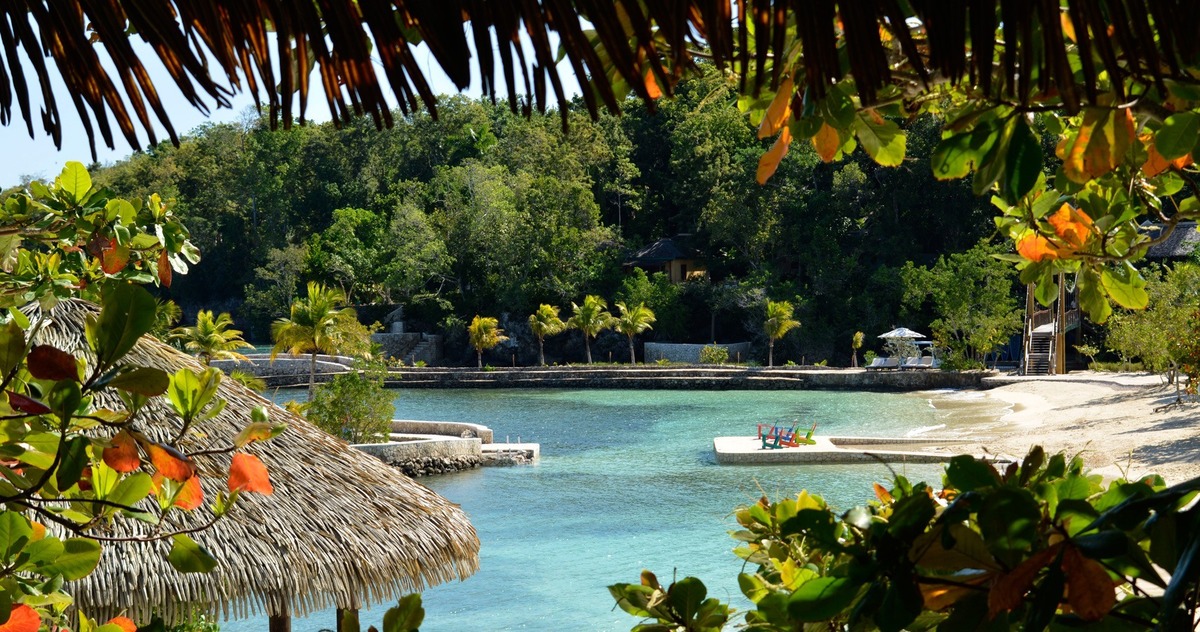
The current water-sports programme includes sailing and snorkelling; snorkel equipment is complimentary. There are freshwater pools as well, and the small saltwater Eye Pool at the end of Low Cay Beach. These different settings are worth considering when choosing accommodation: a private lagoon deck offers a different daily routine from a hut near the cove.
The spa occupies a cottage beside the lagoon, with treatments that draw on Jamaican ingredients, including coffee scrubs and herbal baths. Below the surface, the bay has another story. The GoldenEye Foundation works with local fishers on the Oracabessa Bay Fish Sanctuary, established in 2010, and on coral restoration. Its marine programme is worth reading about before exploring the bay.
Breakfast in Jamaica
Food has always been one of the ways I get to know Jamaica. At GoldenEye, I chose smoked marlin with callaloo, soft-boiled eggs, mushrooms and potatoes. Another morning brought ackee and saltfish with fried dumplings. Ackee can look disconcertingly like scrambled eggs, yet it is a fruit, and its mildness works with saltfish.
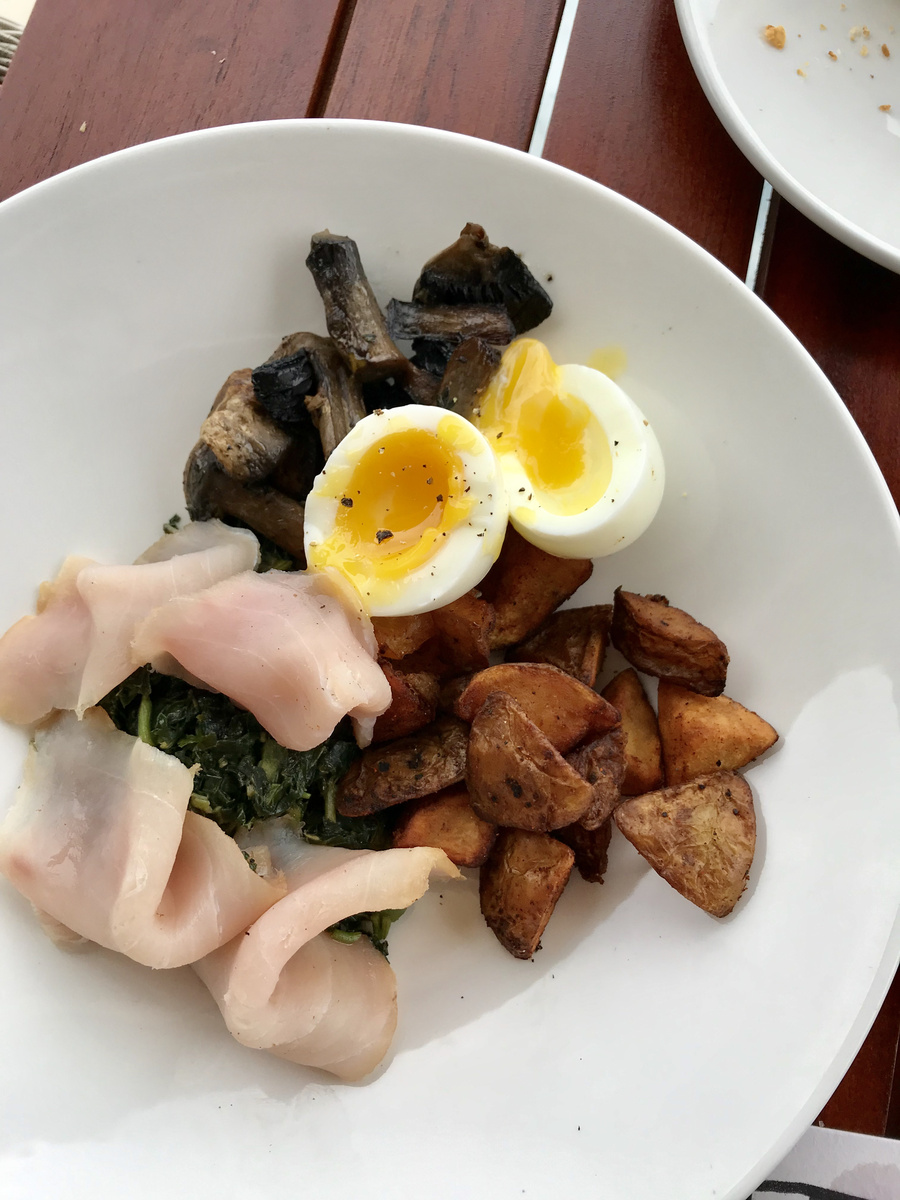
Today, Bizot Bar serves breakfast and lunch beside Low Cay Beach. Bamboo Bar on Button Beach is the place for jerk barbecue and grilled fish; Shabeen, near the beach huts, serves drinks. In-room dining offers the possibility of breakfast on the veranda. GoldenEye also draws on produce from Pantrepant, Blackwell’s Jamaican farm.
On our travels from Oracabessa, we had lunch at Scotchies and visited Dunn’s River Falls. Jerk is a good reason to leave the hotel for a meal. I have written more about it, ackee, coffee and rum in The Flavors of Jamaica.
Beyond Oracabessa
For a return visit, Firefly would be on my list. Noël Coward’s hilltop home adds another chapter to the literary history of this coast, and the hotel can help with an outing there. It makes sense to arrange a driver and check access before setting off. The appeal is the house and its setting, with a view across the north coast.
Our wider journey also took us east to Port Antonio, Frenchman’s Cove and the Rio Grande. That is a substantial outing, better given time than fitted between breakfast and an afternoon swim. GoldenEye works within a journey around Jamaica, but I would be selective about how much driving to put into a stay here.
Getting to GoldenEye
Ian Fleming International Airport at Boscobel is the closest arrival point, under ten minutes away by the hotel’s estimate. American Airlines markets flights between Miami and Ocho Rios, making it worth checking alongside the larger airports. GoldenEye estimates roughly two hours from Kingston Airport and around an hour and a half to an hour and three-quarters from Montego Bay. Road conditions and traffic can change those times; transfers can be arranged through the hotel.
Oracabessa is a living town, and local sound systems can carry music into the property. Room position matters here as much as the photograph that first attracts you. I would ask about the particular room’s setting, its access to the water and the route to the places I expected to use most.
For my next visit, I would leave more of the day unclaimed. There is a particular pleasure in travelling all this way and then needing to go nowhere: a swim, a return to the veranda, the sea still there. Blackwell has made room for that kind of life. I would gladly make the journey again.
Shared on

The post and its conversation
The photographs as they appeared on Instagram, with what readers said there. Likes and replies open on Instagram.



 Join the conversation on Instagram