
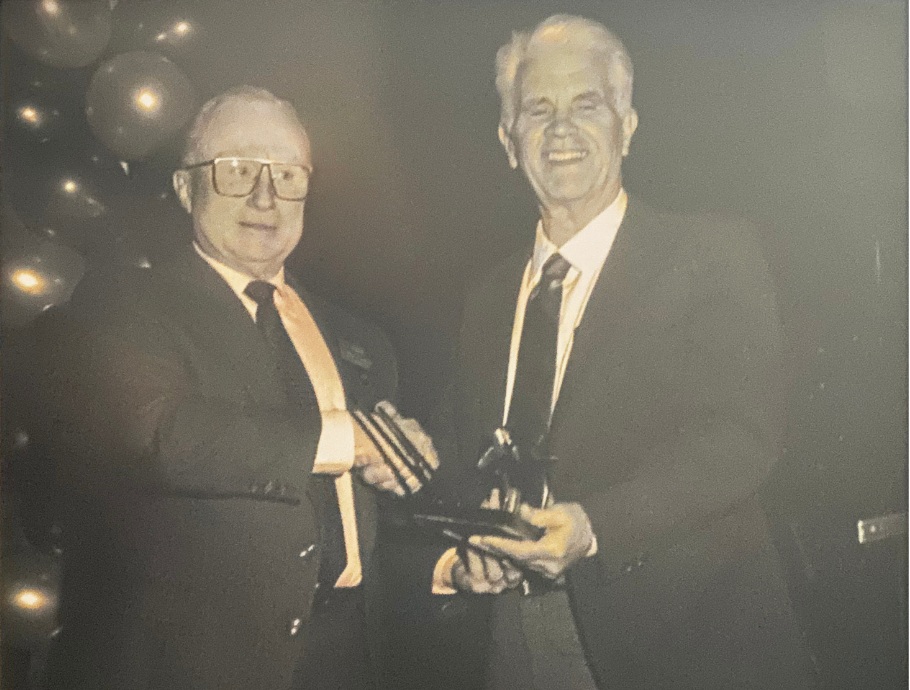
John Cronin, left, and Ralph Erickson. Photograph: PADI.
There is a particular flag that appears at the edges of the inhabited world.
You see it outside polished dive centres in the Maldives, beside swimming pools in enormous Caribbean resorts, on boats tied to tropical jetties, and above little shops on islands where the airport may be a strip of asphalt and the electricity an intermittent privilege. The building beneath it may be concrete, bamboo, timber or corrugated metal. The instructor may come from another continent or the village down the road.
But the flag is the same.
PADI.
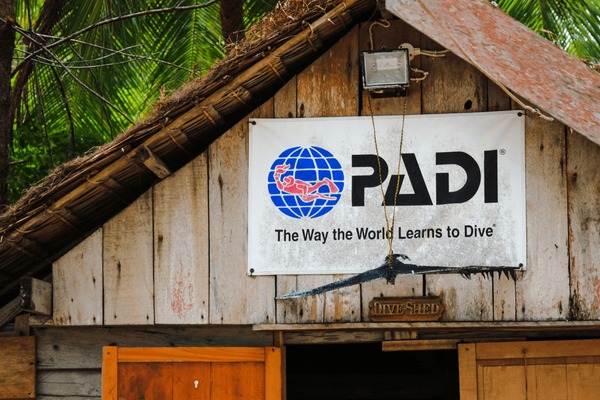
For a traveller, those four letters perform a small miracle. You may know nothing about the shop, never have met the instructor, barely speak the local language. Yet you can produce evidence that somewhere else—perhaps years earlier, on the other side of the planet—somebody taught you to clear a mask, recover a regulator and control your buoyancy.
The stranger behind the counter understands what that means.
This is so ordinary now that its strangeness has disappeared. A guest can arrive at a beach resort, learn to dive and leave with a qualification recognised in another ocean. An activity that depends on life-support equipment and a stranger’s judgment has become part of an ordinary holiday.
One of the men who helped make that possible was a salesman named John J. Cronin.
The ocean already had its hero
By the 1950s, Jacques-Yves Cousteau had given the underwater world a place in the popular imagination.
He and Émile Gagnan had developed the Aqua-Lung during the Second World War. With The Silent World, the 1956 film he made with Louis Malle, Cousteau carried colour images of that world into cinemas. The film won both the Palme d’Or and an Academy Award.
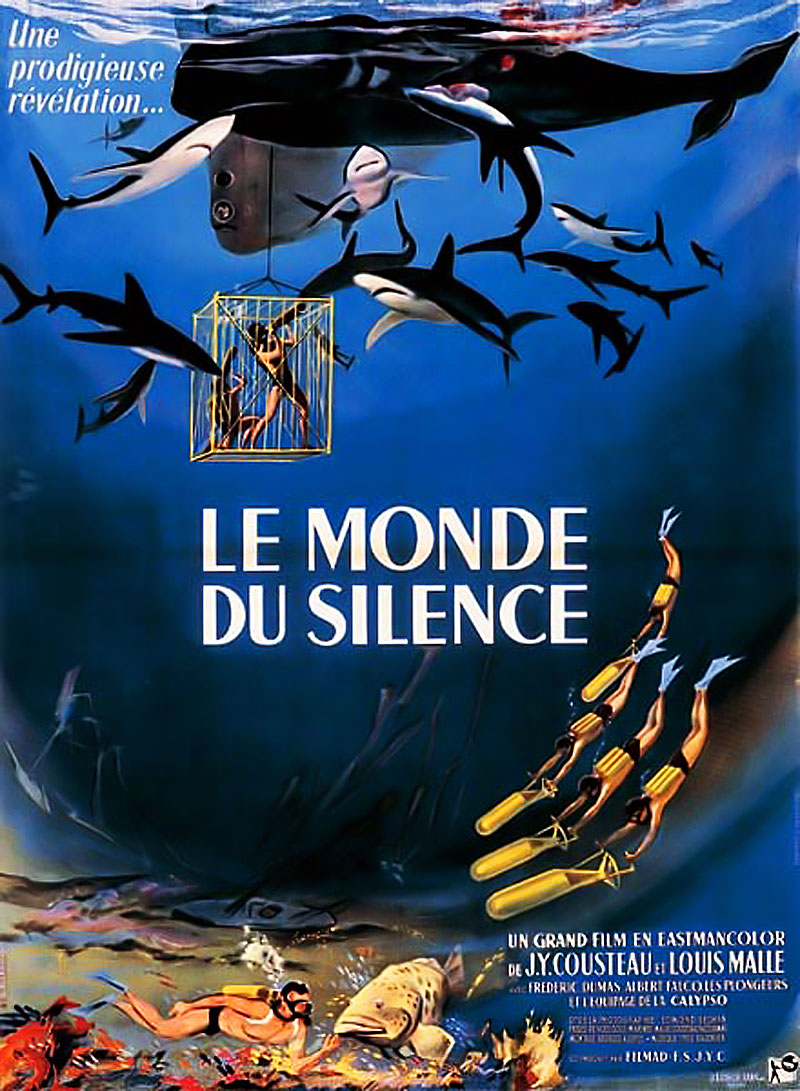
Cousteau made the sea desirable. Equipment companies made it physically accessible. Teaching people to use that equipment was less glamorous work.
Early recreational diving drew on navies, scientific diving and clubs, often with demanding training and small communities in which reputation travelled by word of mouth. The YMCA was training scuba instructors nationally in the United States by the end of the 1950s; the National Association of Underwater Instructors, or NAUI, held its first instructor course in 1960. There were already serious people at work on the problem.
Cronin approached it from the shop counter.
Born in Albany, New York, in 1928, he had served in the U.S. Marine Corps, begun diving in 1954 and started his own training programme two years later. He subsequently joined U.S. Divers, the American distributor of the equipment developed by Cousteau and Gagnan, and moved to the Midwest as a sales representative.
A salesman sees the moment when enthusiasm fails to become a purchase. Cronin worked among instructors, retailers and prospective customers, where the difficulties of learning a sport also became difficulties in selling its equipment.
Three hours on bad roads
In 1966, Cronin drove roughly three hours over poor roads to give a presentation at an instructor-certification course. When he arrived, the class had been cancelled. Nobody had told him.
Furious, he contacted his friend Ralph Erickson, a swimming coach, educator and diving instructor. Cronin brought a bottle of Johnnie Walker Black Label and $30 to Erickson’s apartment in Morton Grove, Illinois. The two began discussing what was wrong with diving instruction.
Erickson wanted an association of diving instructors. Cronin insisted on another word.
Professional.
They called it the Professional Association of Diving Instructors: PADI. After the wasted journey, the first word had a particular force. It promised that teaching diving would be treated as a profession.
The office occupied part of the basement of Cronin’s house in nearby Niles. His neighbour worked part-time as a secretary; his son helped stuff envelopes. Erickson put a diver carrying a torch before a globe in the logo.

The globe was ambitious company for a basement office. By the end of the 1960s, the association had about 400 members and was still struggling.
A passport with a photograph
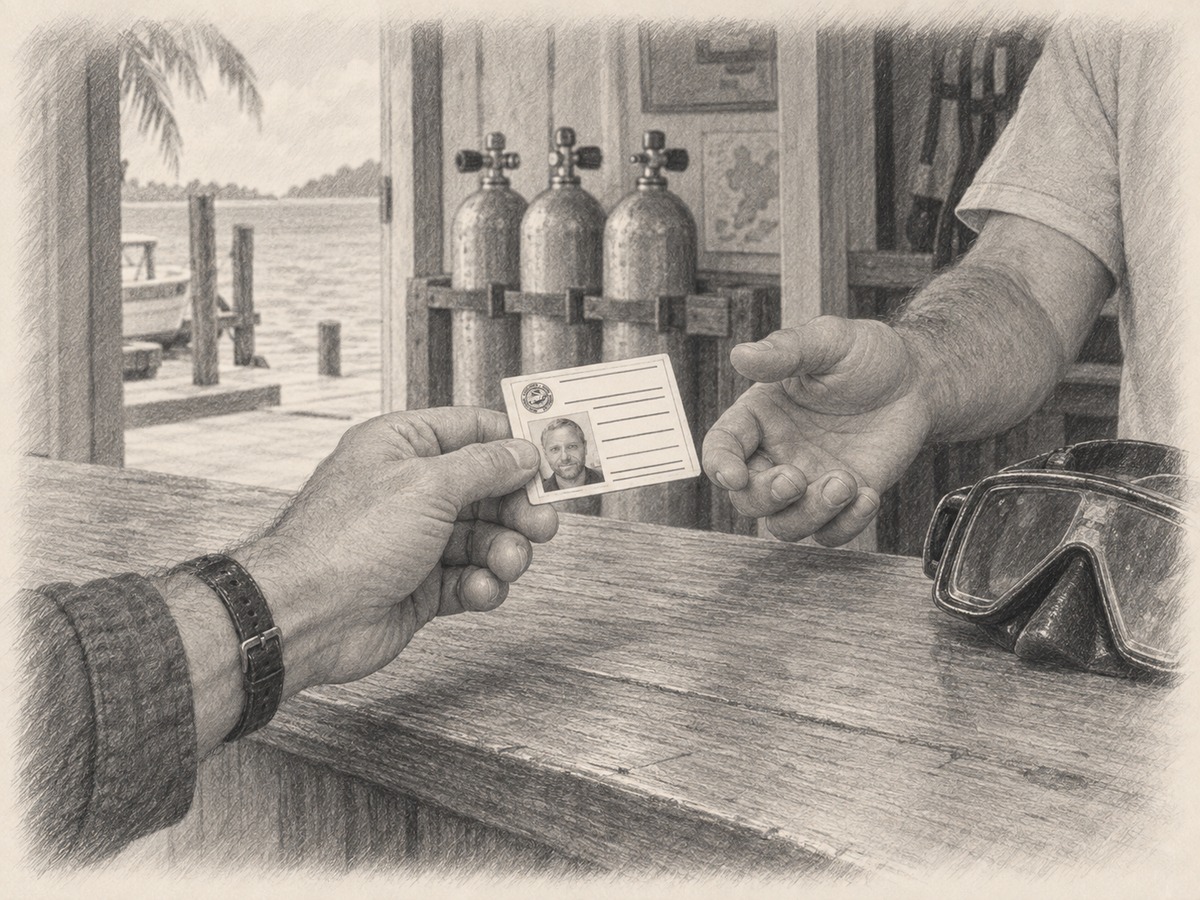
At a National Sporting Goods Association show in New York, Paul Tzimoulis of Skin Diver magazine suggested putting the diver’s photograph on the certification card. PADI adopted the idea in 1968.
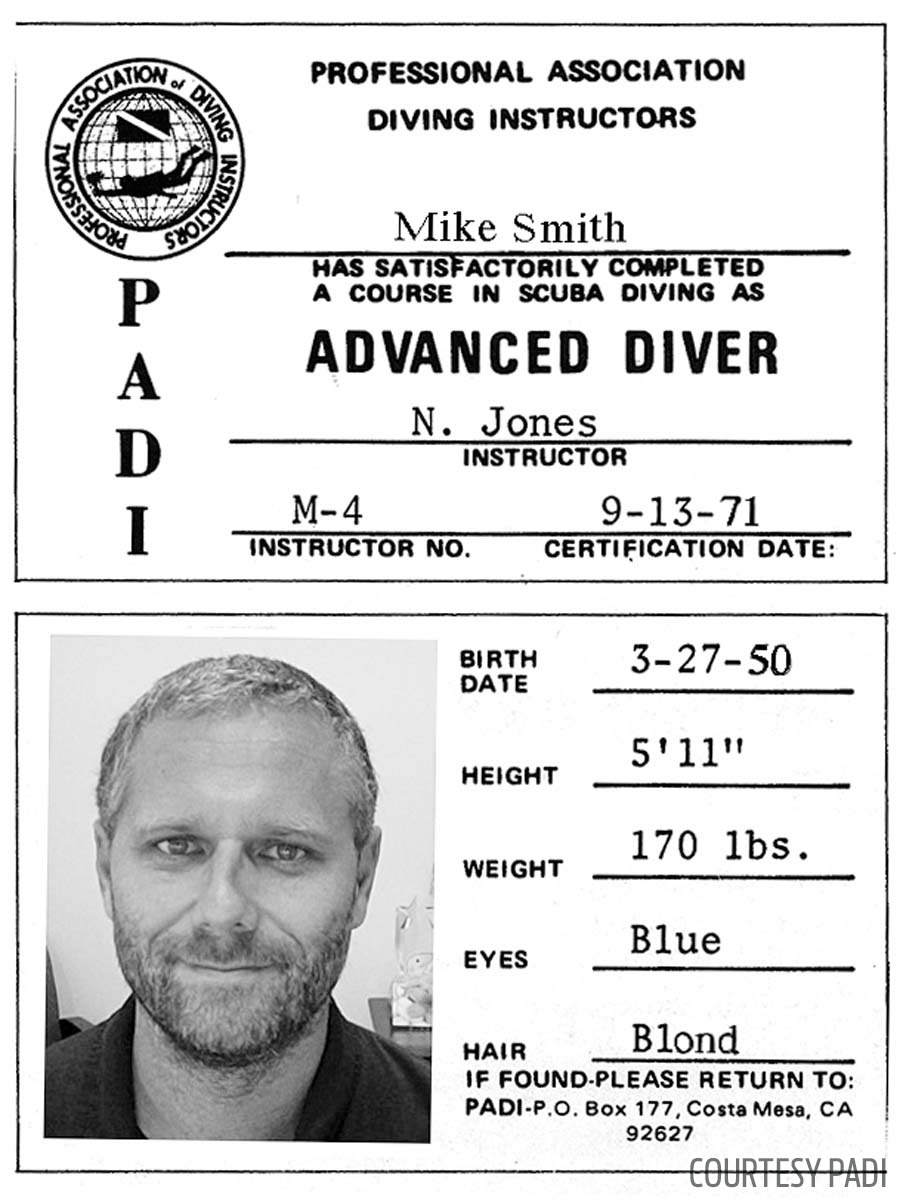
Within a local club, people could know both the diver and the instructor who had taught them. At a dive centre on another continent, neither might be familiar. The operator needed a way to connect the person at the counter with a record of training completed somewhere else.
The photograph helped make that connection. A diver could carry a training history away from the community that had provided it.
Travel depends on such recognitions. Money becomes useful abroad when strangers accept the instrument carrying its value. A hotel name can reduce uncertainty in an unfamiliar city. Here, a card attached a person to an educational standard.
It said, in effect: you do not know this diver, but you know the system that certified them.
The other founder
For that recognition to mean anything, the teaching behind the card had to be recognisable too. This was Erickson’s work.
He had studied physical education, earned a master’s degree in education, coached swimming and operated his own underwater swimming school. His early instructional guidelines set out what a student should be able to do. He defined certification levels and a progression from basic competence towards more advanced training.
A good instructor might know instinctively when a pupil was ready. An association of instructors needed requirements that another teacher could understand and apply. Which skills came first? What had to be demonstrated before a diver could progress? What could the next instructor reasonably expect the student to know?
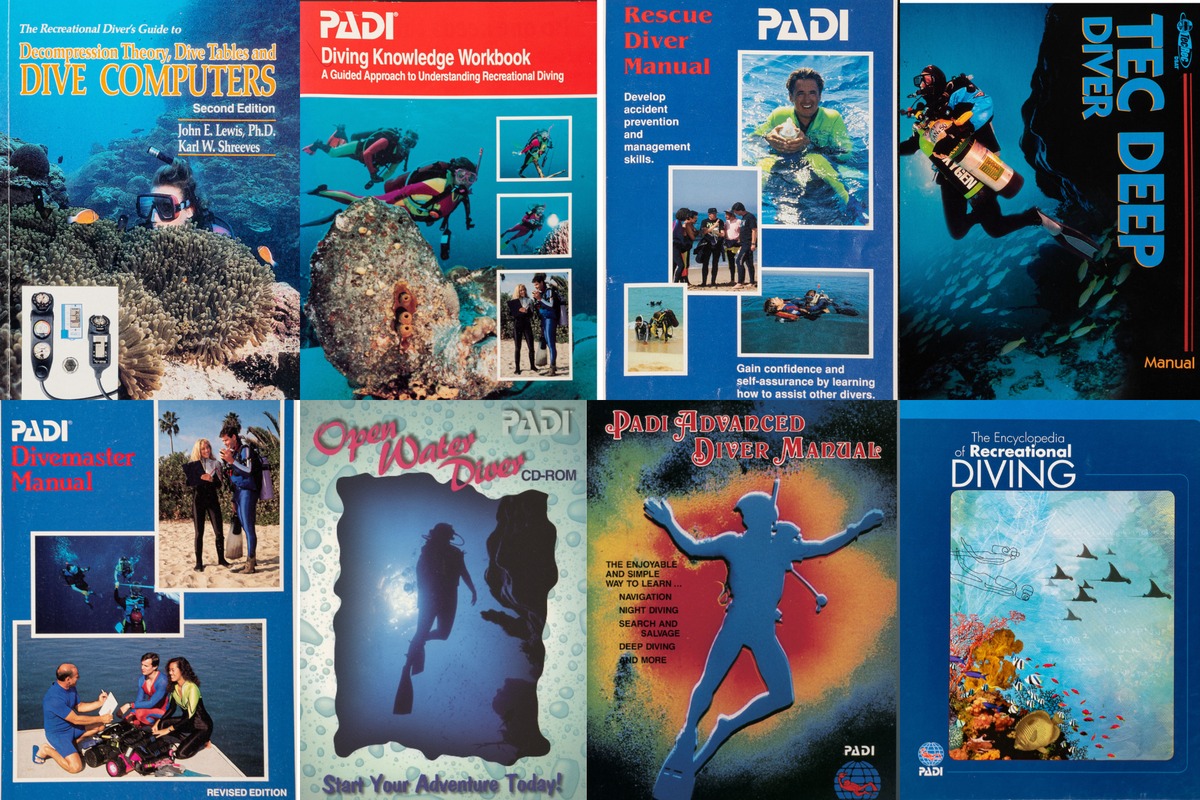
PADI introduced certification requirements, advanced training and specialty programmes in its early years. In 1972 it made Open Water Diver its preferred entry-level qualification. In 1978 it launched an integrated modular scuba programme, coordinating student materials, audiovisual instruction, tests and instructor guides.
The course had become something an instructor could work from, as well as something an instructor knew how to teach. Knowledge could move without its original teacher.
Tokyo
The next test was whether the course could move between languages.
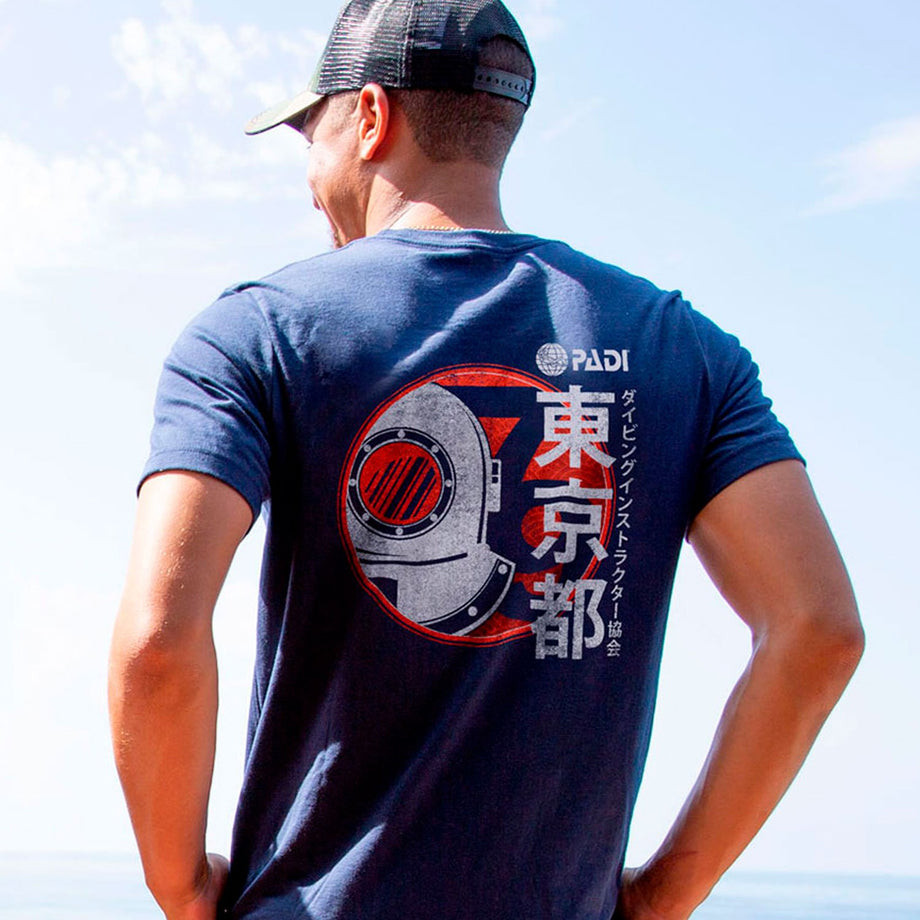
In 1979, PADI established its first overseas regional office in Tokyo. It grew out of work translating instructional materials and improving communication in Japan. The materials could change language while preserving the requirements behind the credential.
During the 1970s, annual certifications rose from roughly 25,000 to more than 100,000 by 1979.
The flag began travelling faster than Cronin ever could. People he would never meet were teaching people who had never heard his name. At the next destination, the course name on the card would still be familiar.
Dive today
For the prospective diver, however, the decisive distance was often much shorter: the distance between watching somebody dive and trying it.
Early equipment and an unforgiving environment had given diving instruction an understandable seriousness. Training often began with substantial swimming, breath-hold work and theory. A beginner could spend a considerable time preparing to do the thing that had drawn them to the course.
In 1981, PADI put new students into scuba equipment during their first confined-water or pool sessions. It called the approach “Dive Today”.
The significance is easiest to see from a hotel terrace. A beginner’s first encounter with scuba can take place in the resort pool, close enough to the sun loungers to attract somebody who has never thought of becoming a diver. There is an instructor, a cylinder, a regulator—and then the unlikely experience of breathing with one’s face beneath the water.
One of the great attractions of diving had been brought within walking distance of the breakfast buffet.
The ladder
A first holiday could lead to another. Open Water was not an ending.
Erickson had included continuing education in the association’s early structure. As the courses expanded, divers could move into advanced training, specialties, rescue skills and, eventually, professional qualifications.
A person who has tried diving may leave it behind with the holiday. A person who begins to think of themselves as a diver acquires another map of the world. The Red Sea, Cozumel, Bonaire, Palau and Sipadan become places to consider for their reefs, wrecks, currents, visibility and marine life. A destination can be chosen for what lies beneath its water.
Further training gives the next journey a purpose. One holiday might include wreck diving; another, a course in using enriched air. For some, the progression leads all the way to teaching—the traveller becomes the instructor beside somebody else’s resort pool.
Diving has become a reason to travel, and the next destination a reason to keep learning.
The shop beneath the flag
By the late 1980s, PADI had become the leading scuba-training agency. The businesses serving its divers could remain thoroughly local. A dive centre might belong to a large resort or to a family with two boats and a dog sleeping under the counter. Its owners remained independent. The geography remained local. The reef certainly did.
The shared course names, materials and credentials connected these otherwise different businesses. More trained divers gave another shop a reason to join; more shops gave a traveller more places to use the qualification. The card and the flag strengthened each other.
This arrangement suited a world of scattered beaches, islands and reefs. Cronin could help a business in one place find customers trained in another without needing to own either destination.
In a 1995 interview with aquaCORPS, Michael Menduno confronted him with the industry jibe that PADI stood for “Put Another Dollar In”. Cronin defended the price of his materials and the need for a retailer to earn a living. A diver who wanted a cylinder filled needed a shop that could afford to remain open. “And the instructor has to be paid,” he added.
Continuing education brought repeat custom as well as further learning. The ladder that gave a diver a reason for the next holiday also brought another customer back to the shop.
From the basement to the island
Cronin died in 2003. By PADI’s sixtieth-anniversary year, 2026, the association reported about 128,000 professionals and 6,600 dive centres and resorts.
At that scale, the founder disappears from the encounter. A traveller can step off a boat, find the familiar mark and produce a credential issued far away.
The flag is making a promise on behalf of people who are not there.
It reaches back to the instructor who signed off a set of skills and forward to another dive centre that can understand the same record. The card carries evidence of training; the dive itself still depends on the people present. Yet each journey need no longer begin at the beginning.
You can continue from here.
That is the quiet achievement behind the flag. Cronin helped make the underwater world continuous.