
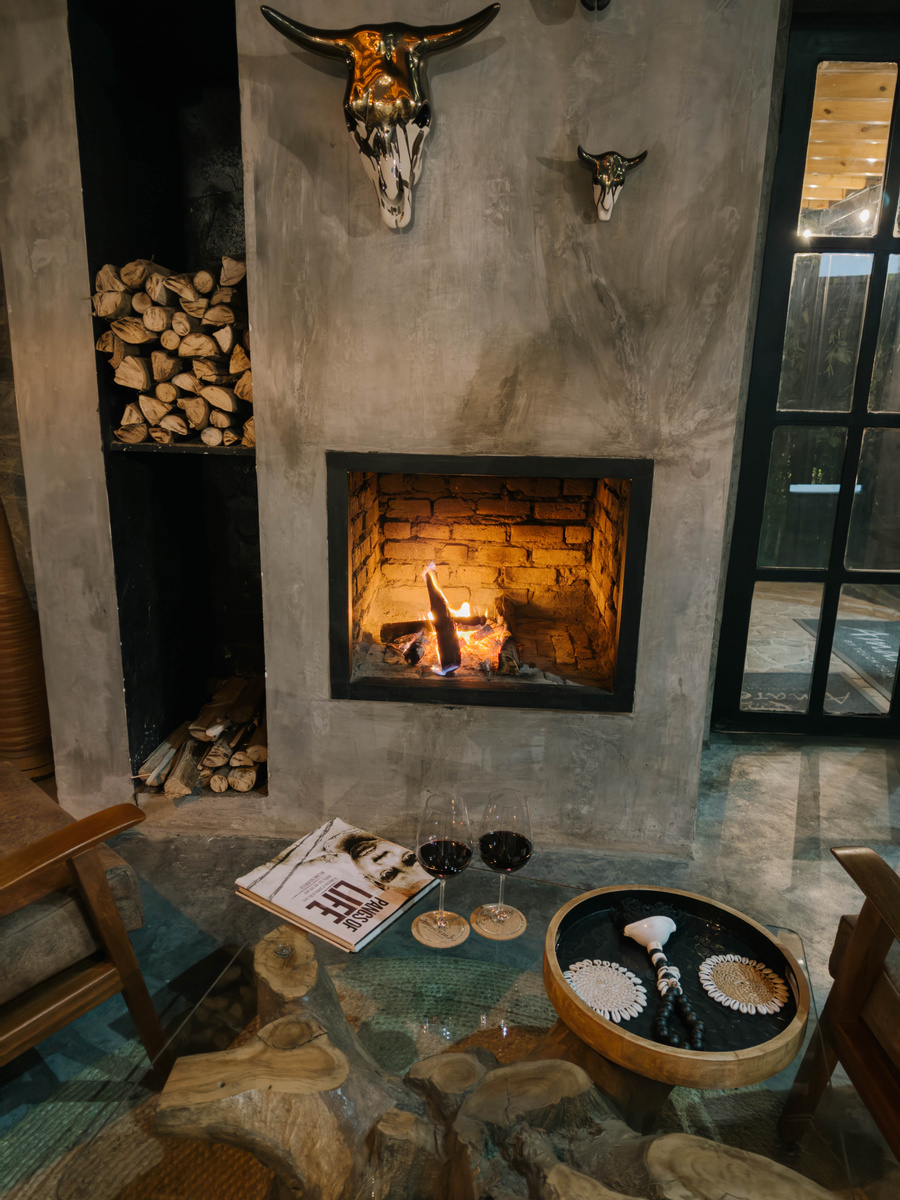
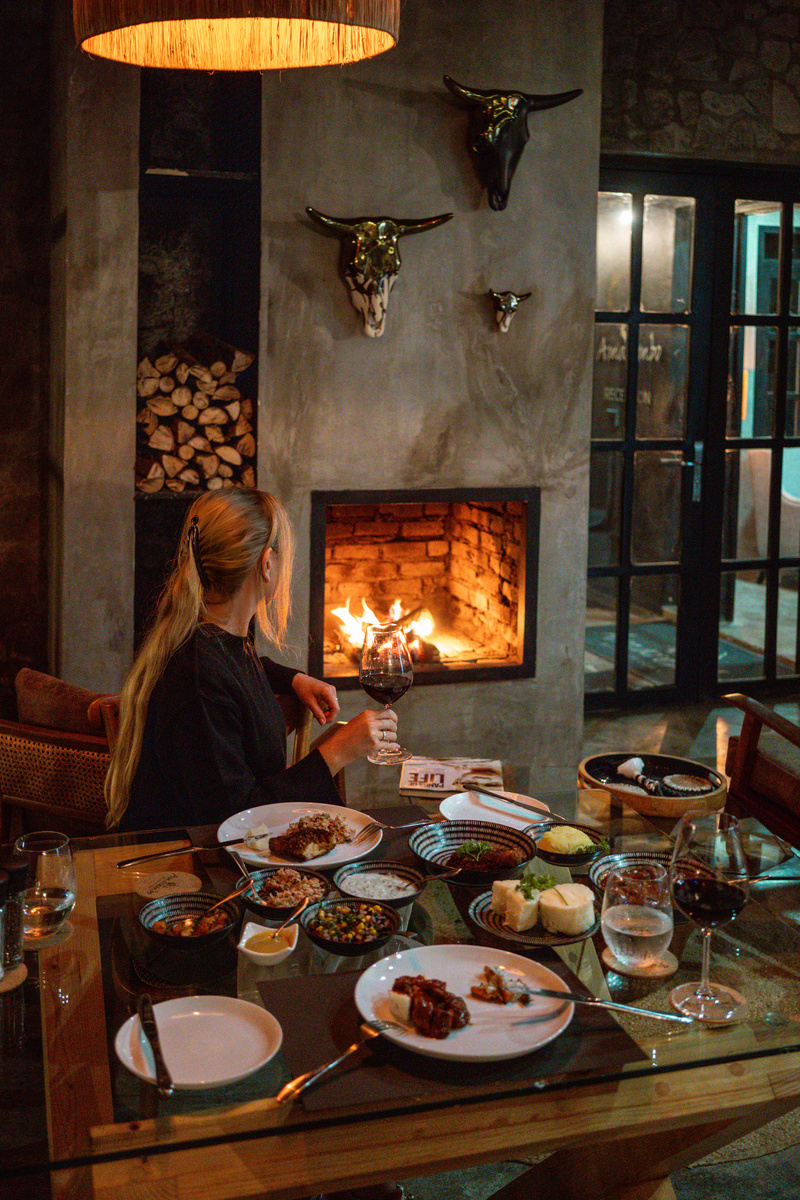
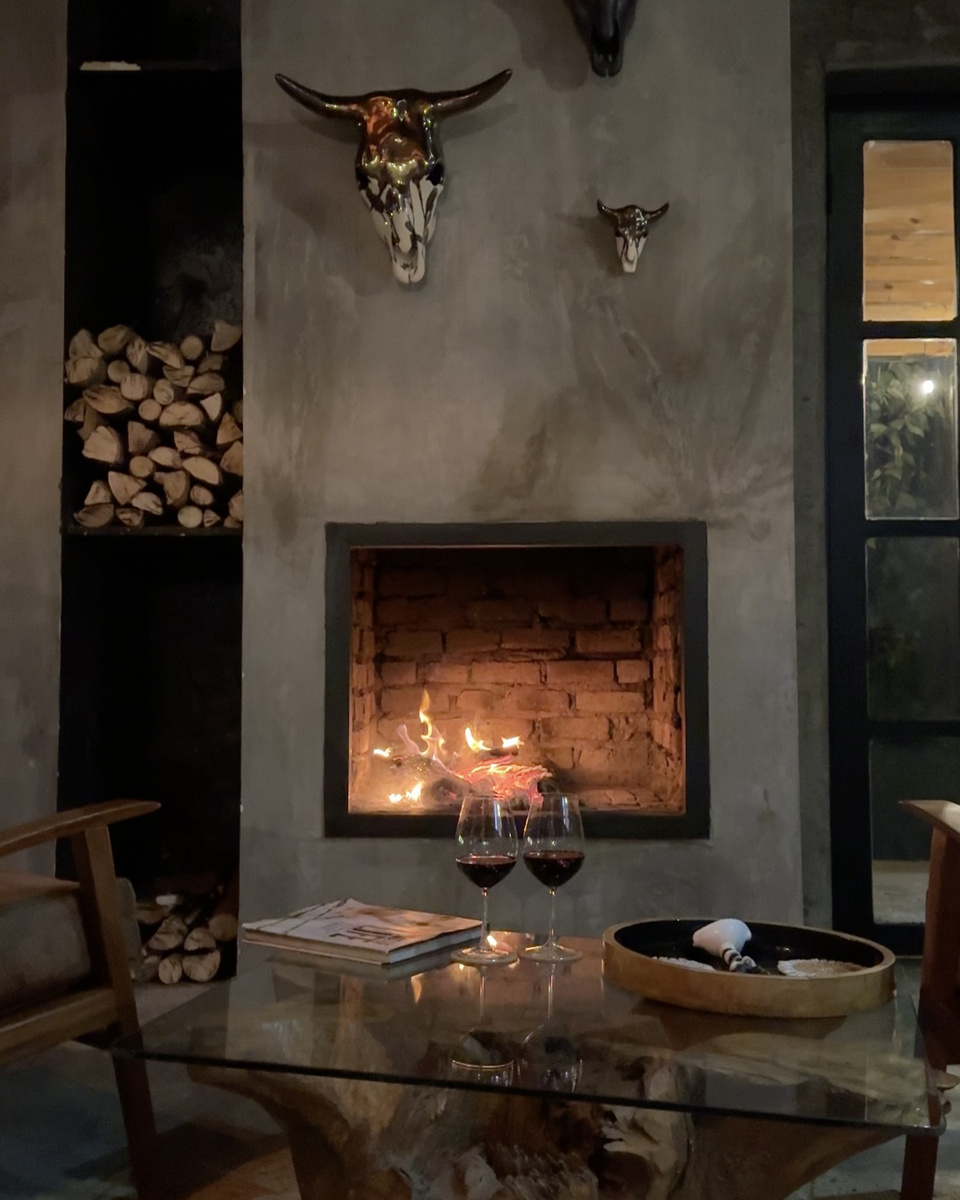
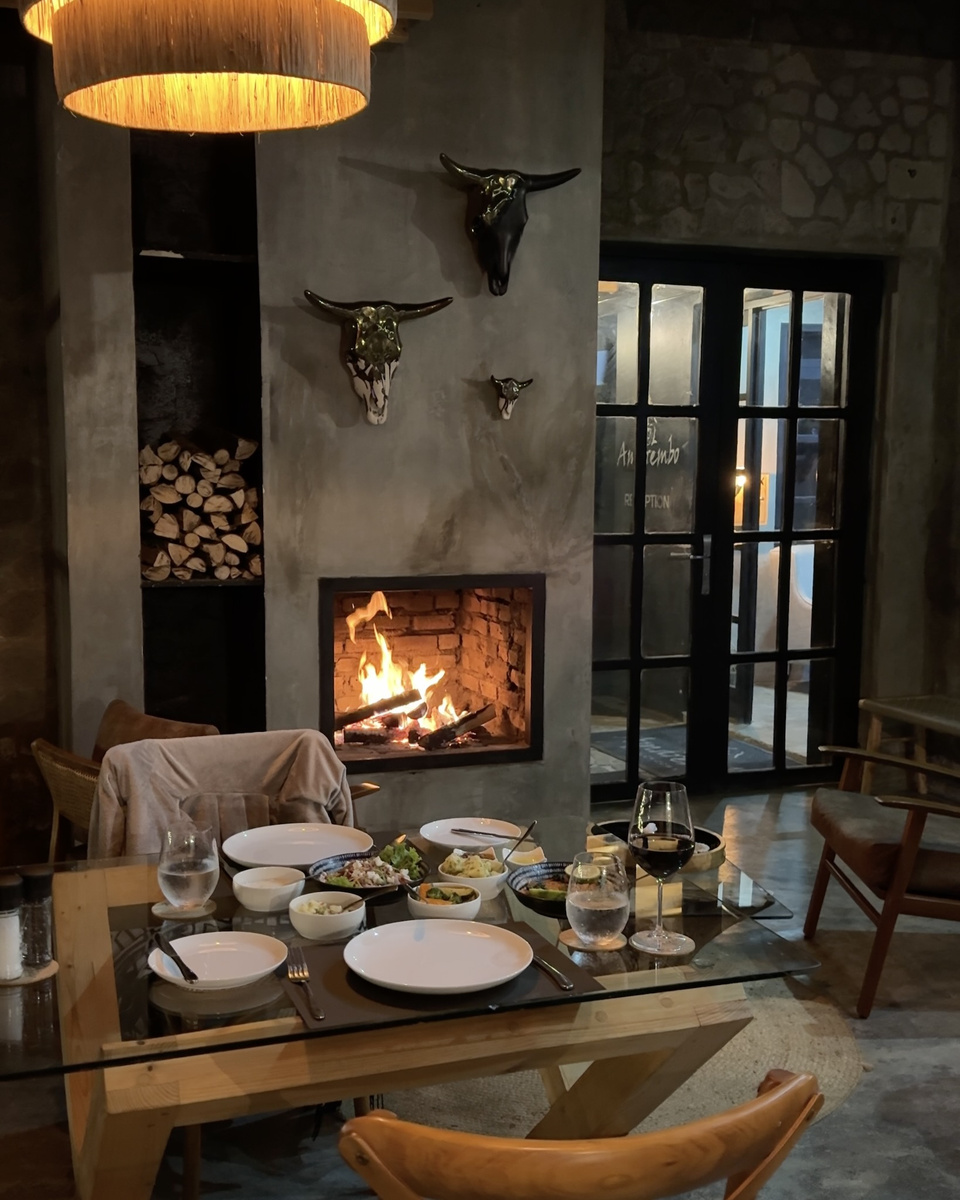
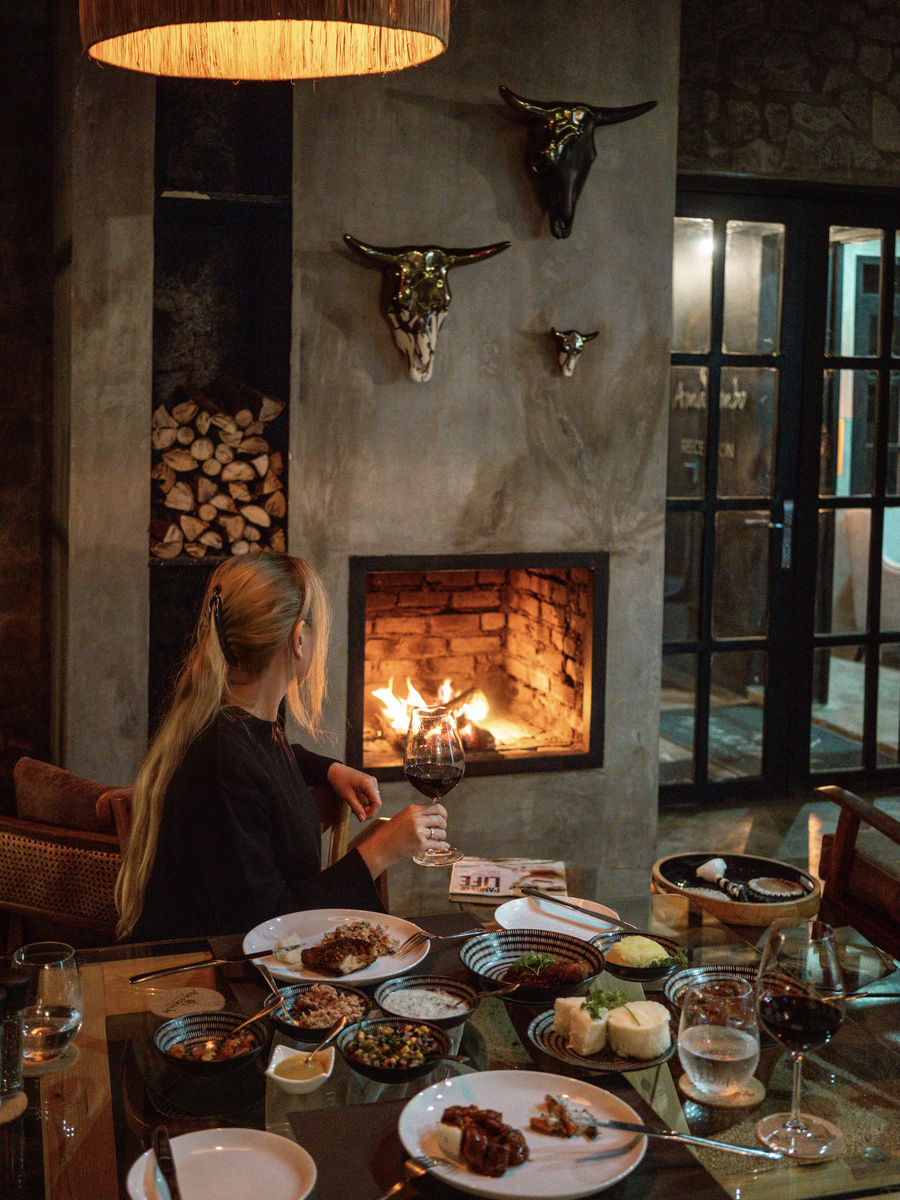
The part of Amarembo I remember best began after dark. During the day, its paths led between bamboo and flower beds, round thatched cottages and the straight glass walls of the main lodge. In the evening, everything drew back toward the fire. Dinner appeared on a low table. Red wine caught its light. Beyond the windows was Rwanda’s gorilla country, but the room made a small world of its own.
Konstantin and I stayed at Amarembo by Touch Down at the beginning of a journey that continued across the border into Uganda.
A cottage in the garden
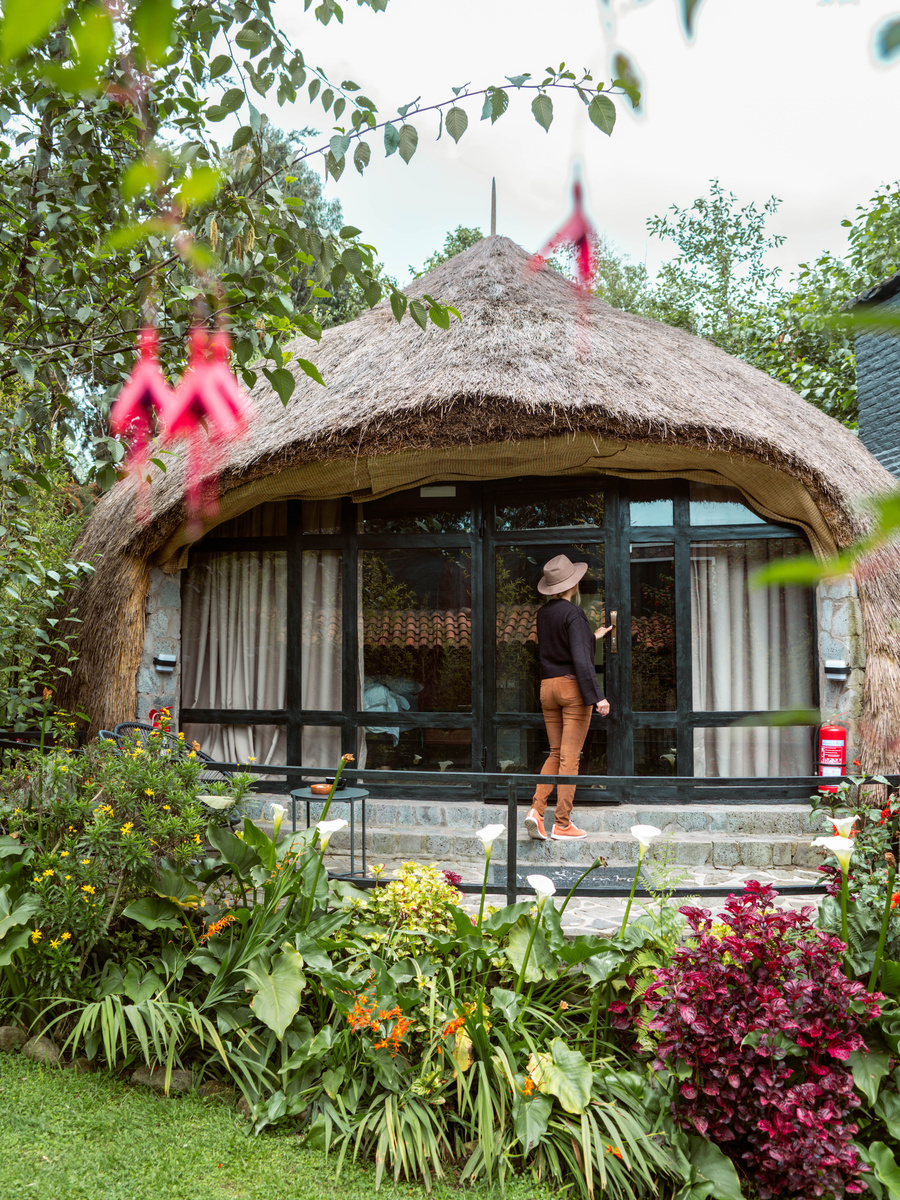
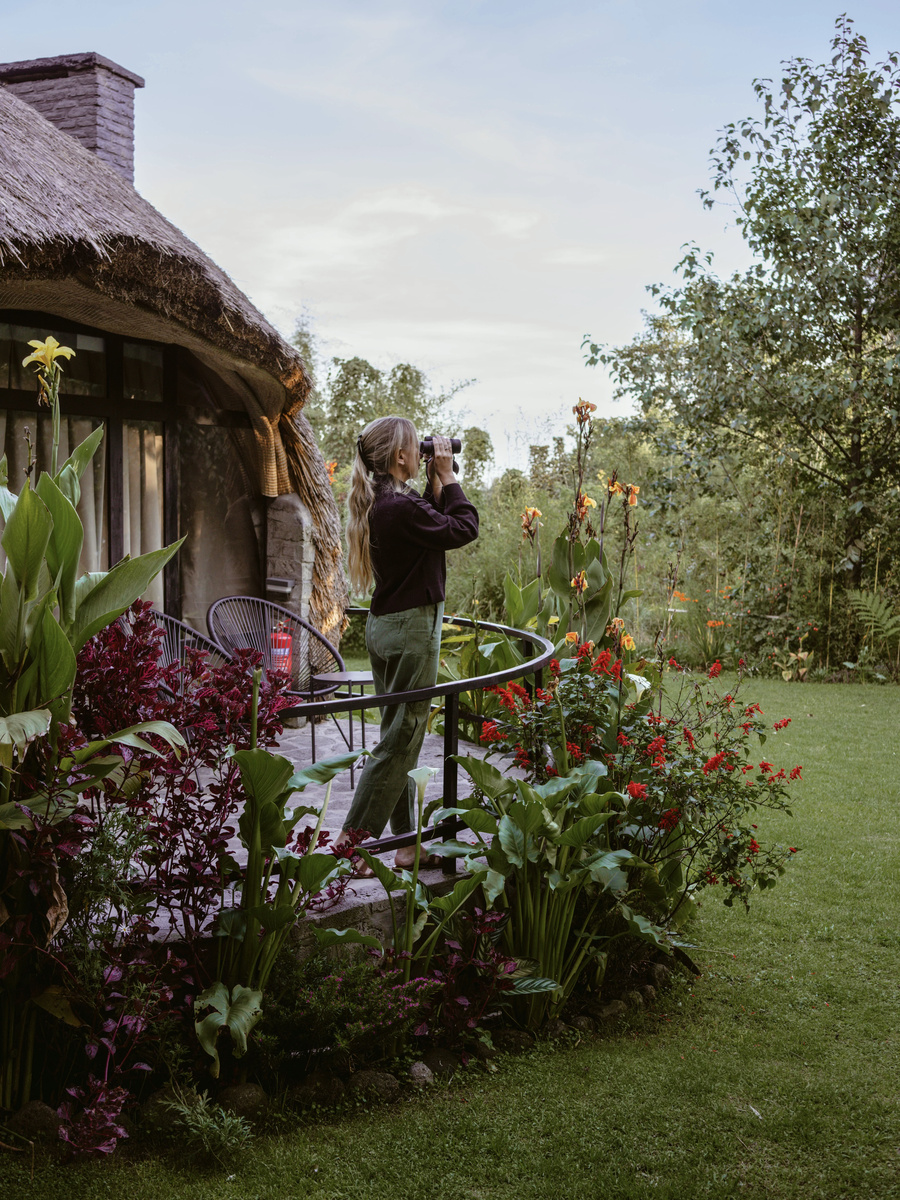
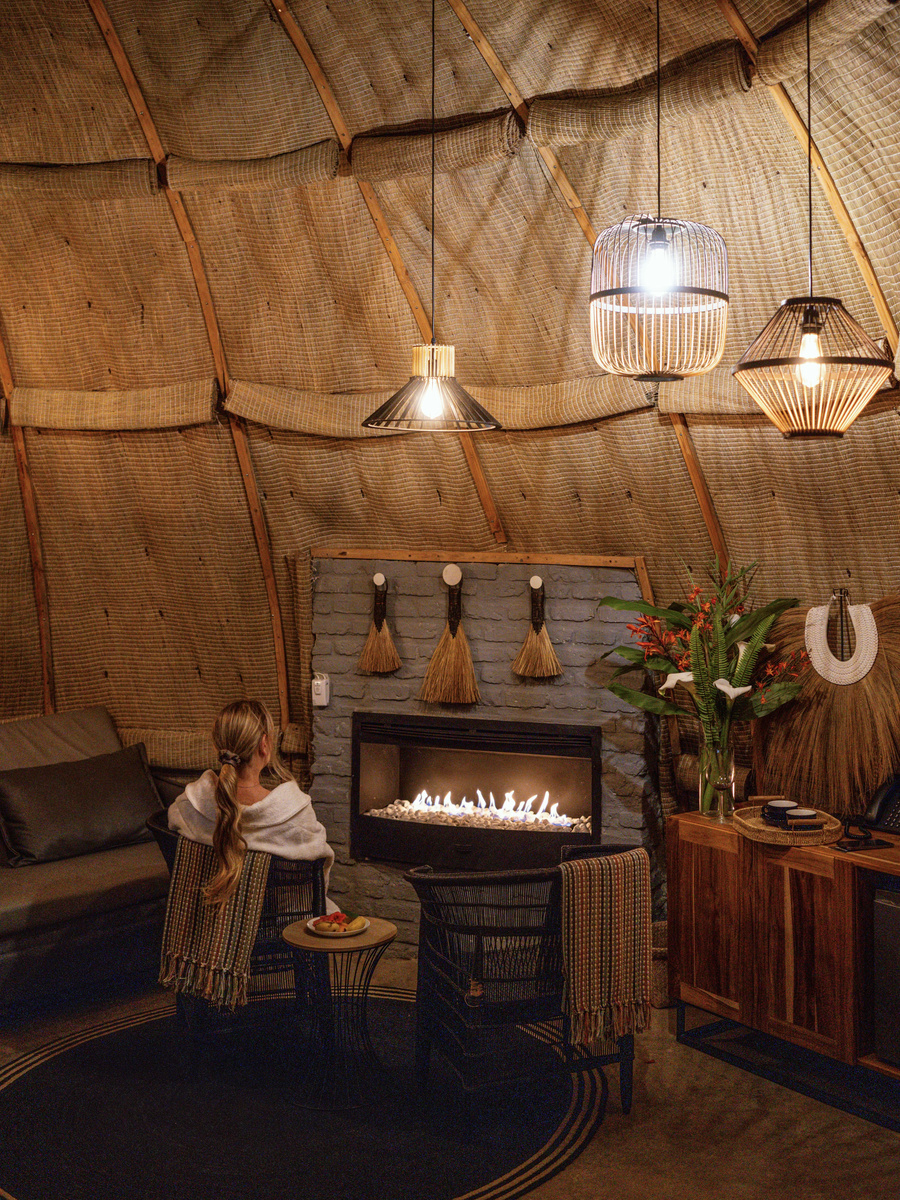
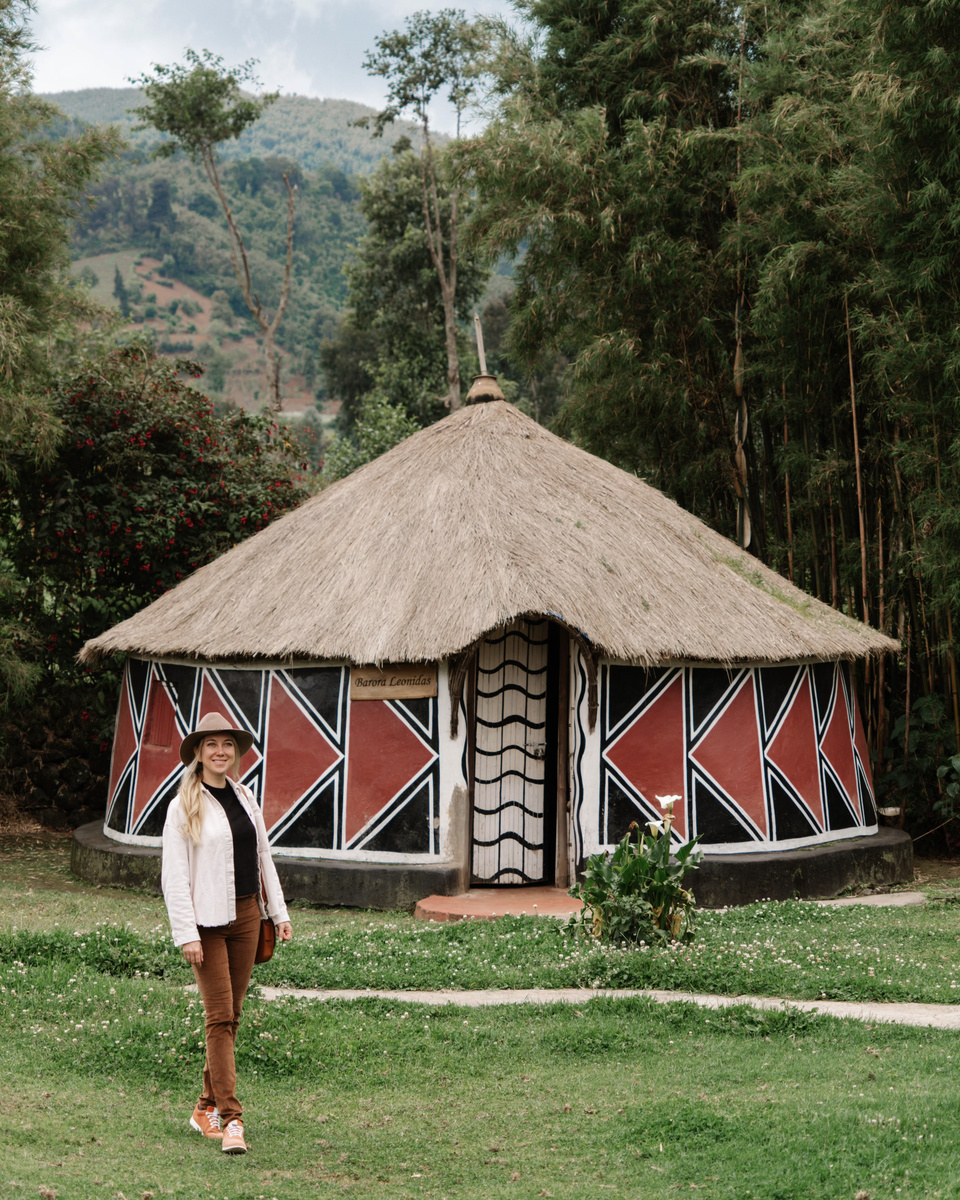
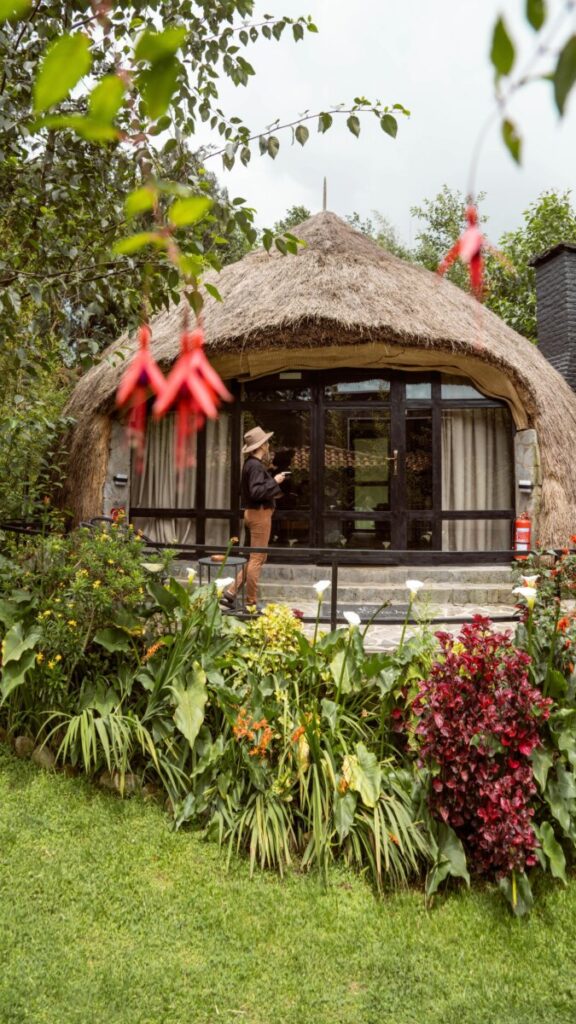
Amarembo sits in Kinigi, a few minutes from the entrance to Volcanoes National Park. It is a small property, and that scale matters. The guest cottages are dispersed through a garden rather than arranged along a hotel corridor. Their deep thatched roofs and curved fronts borrow an old form; broad panes of glass keep them from becoming a costume version of it.
Our cottage looked directly into the flowers. From the bed I could see the garden through the window; outside, a short terrace belonged to the morning. I did not need the lodge to manufacture wilderness inside the room. The bamboo, birdlife and volcanic landscape were already close enough.
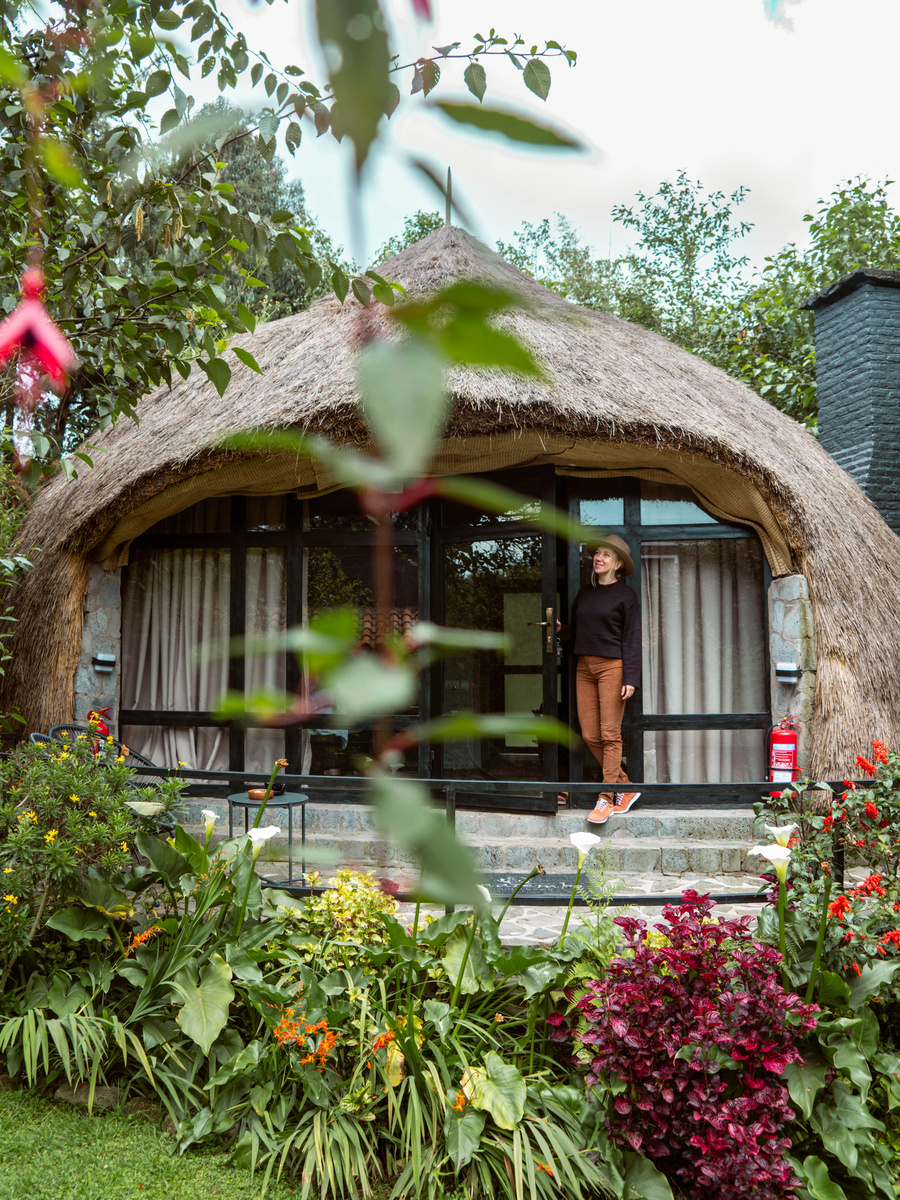
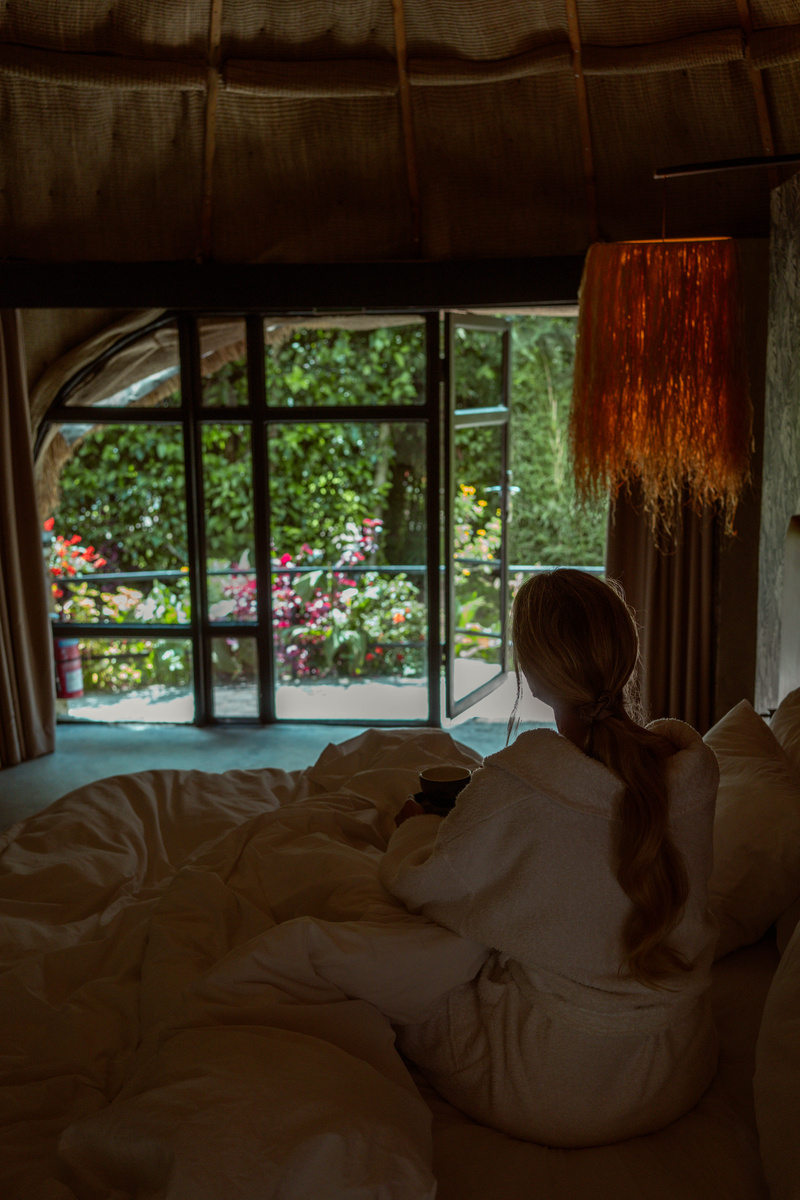
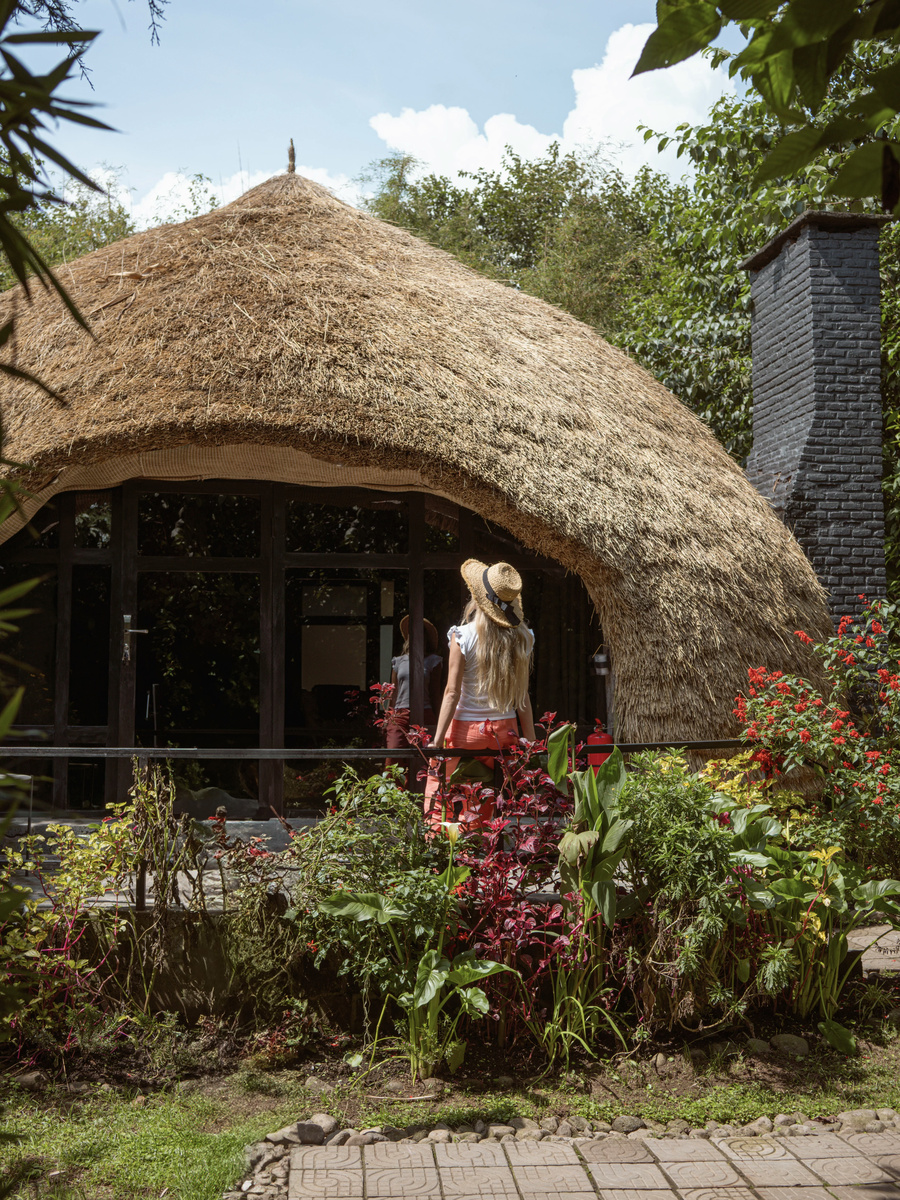
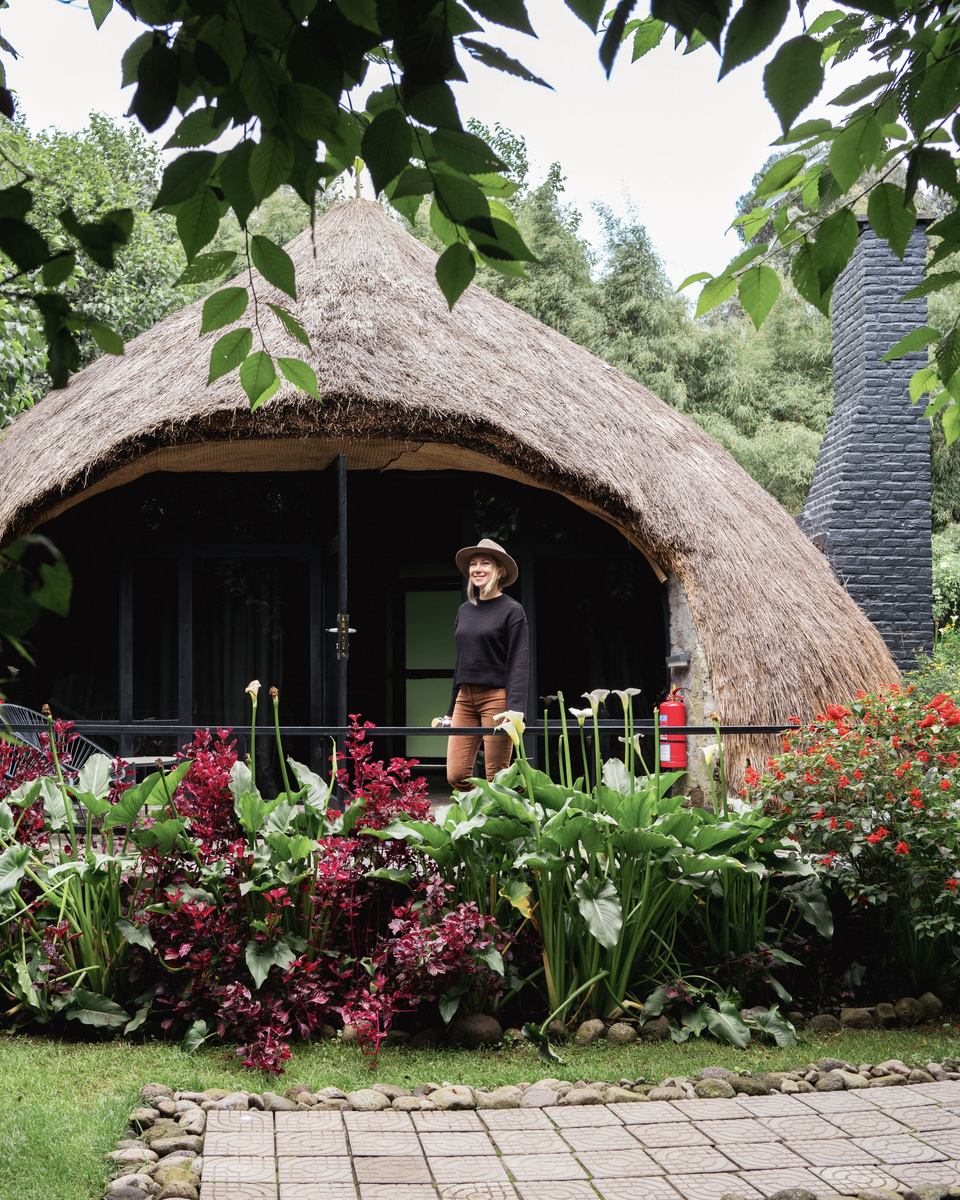
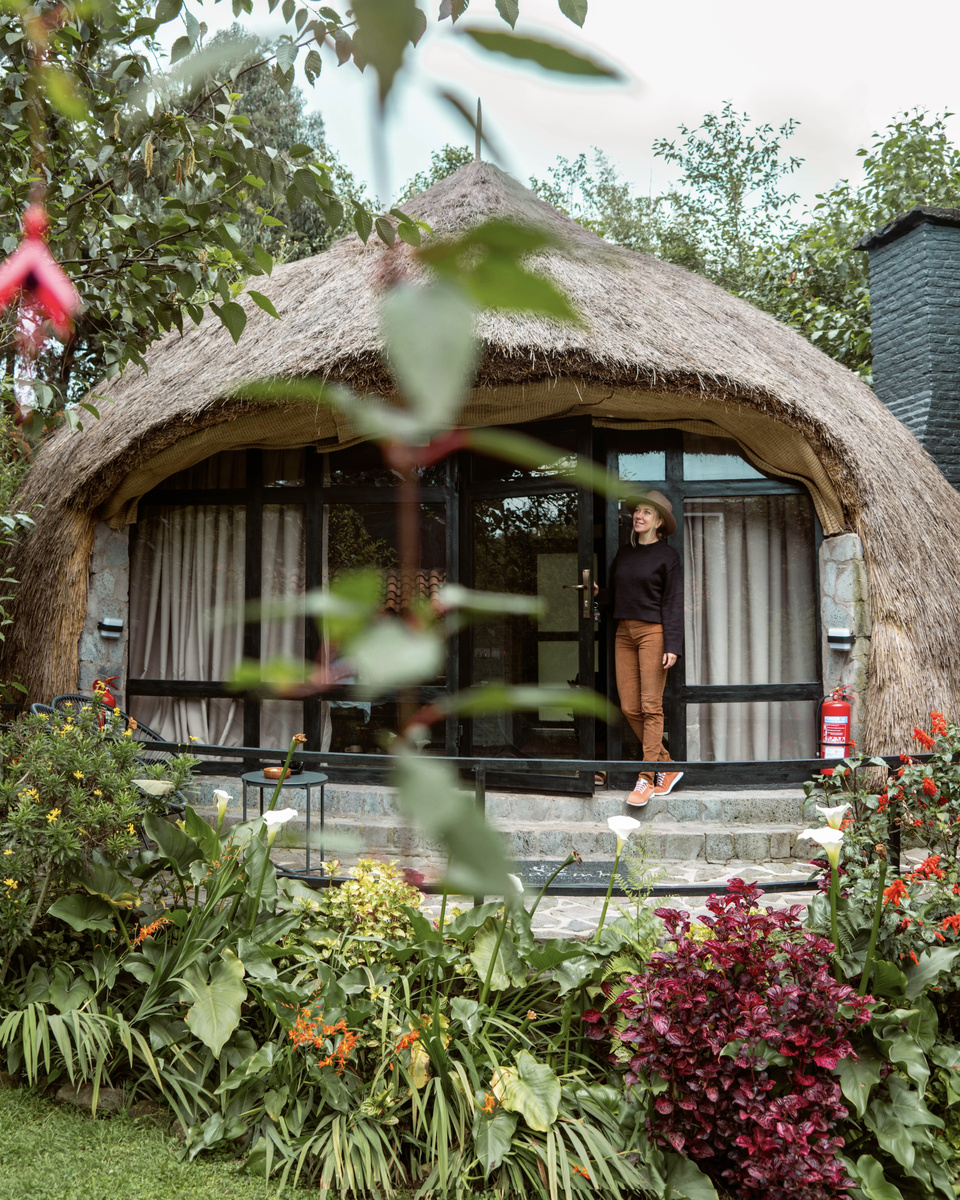
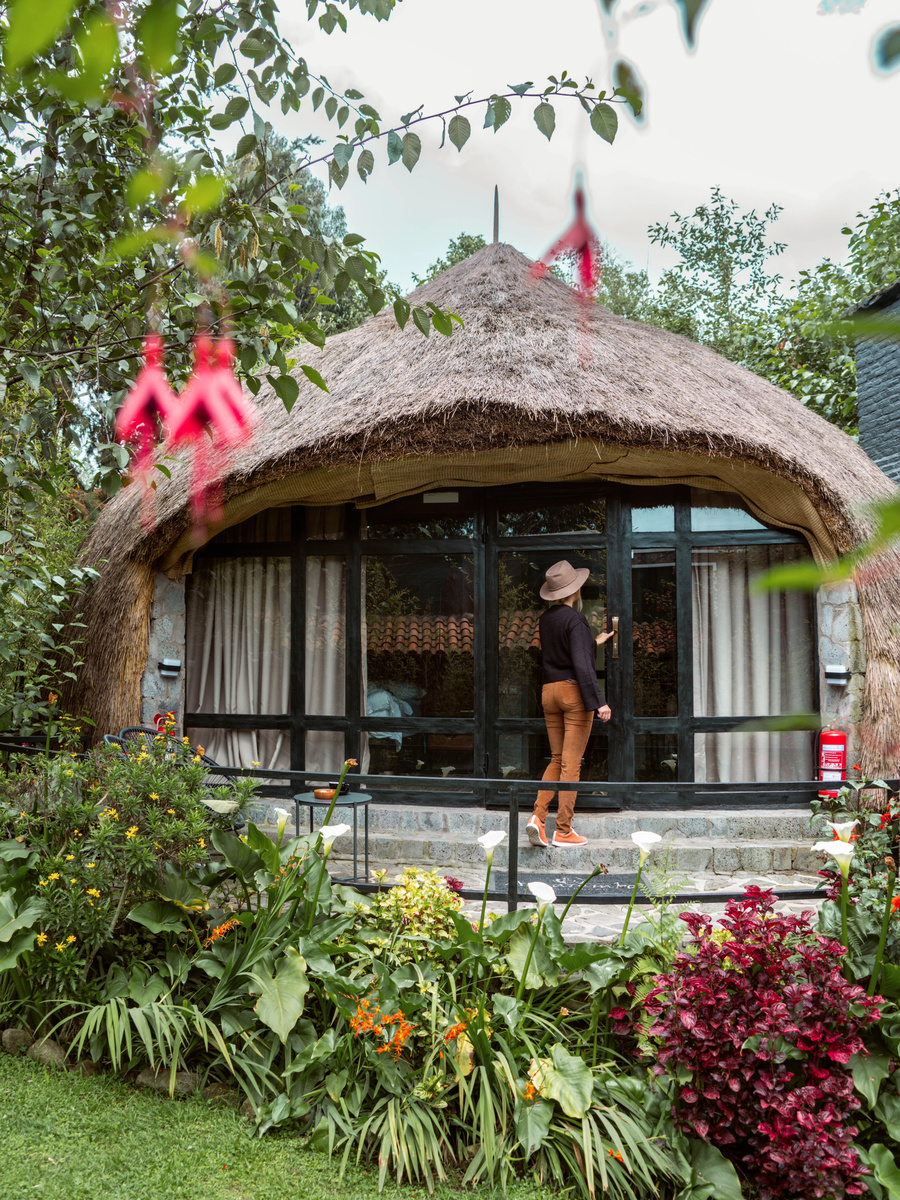
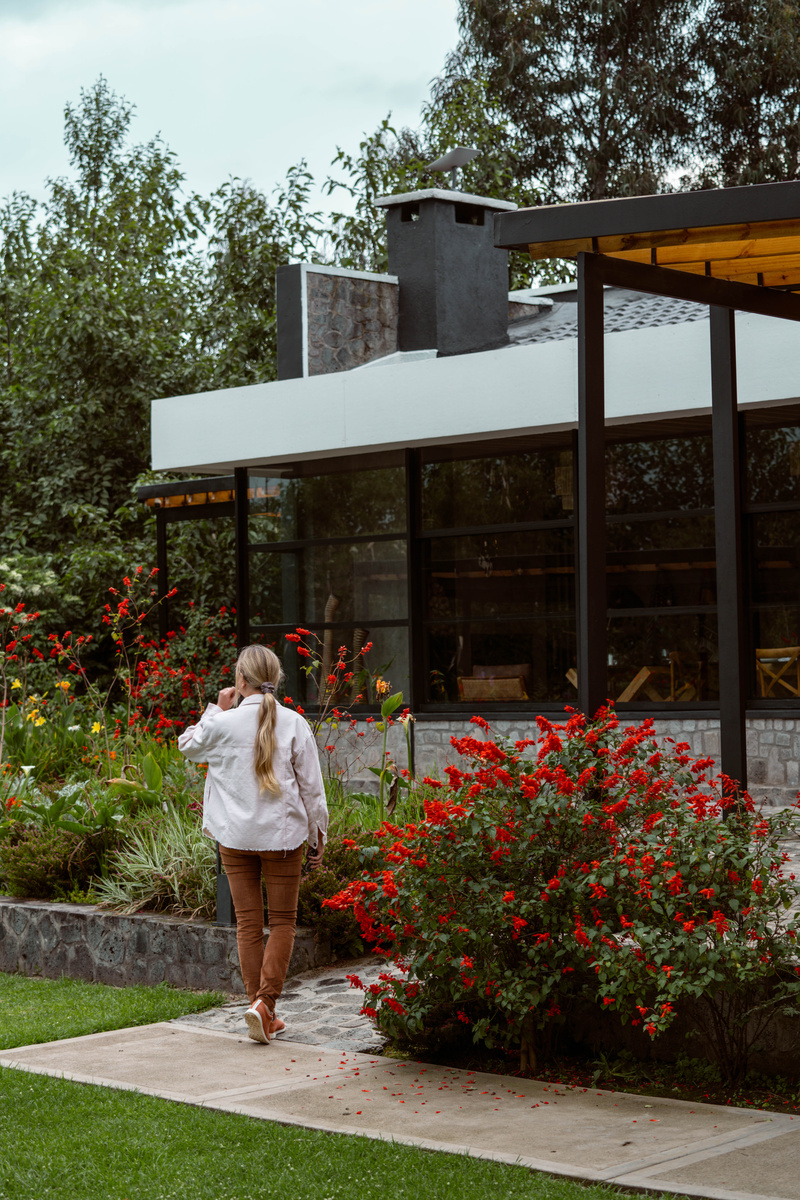
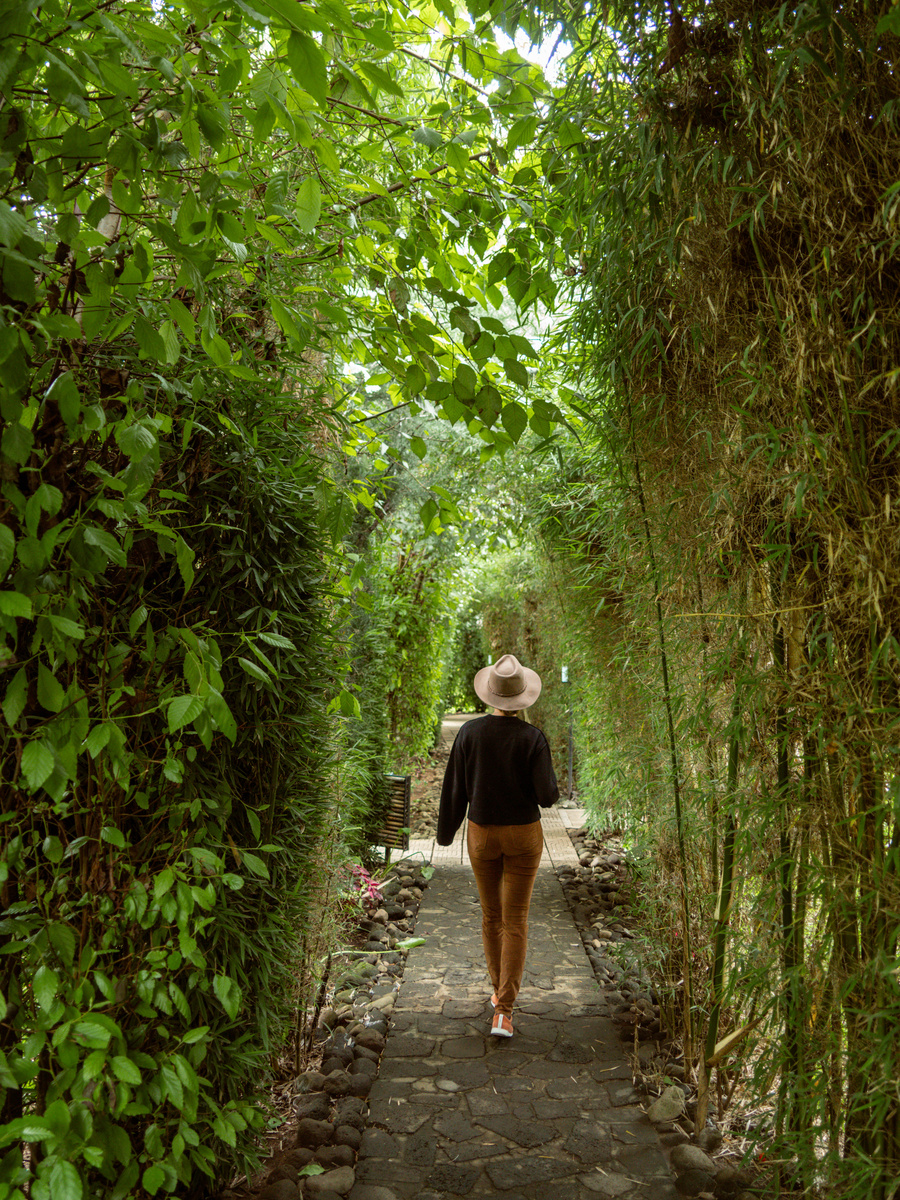
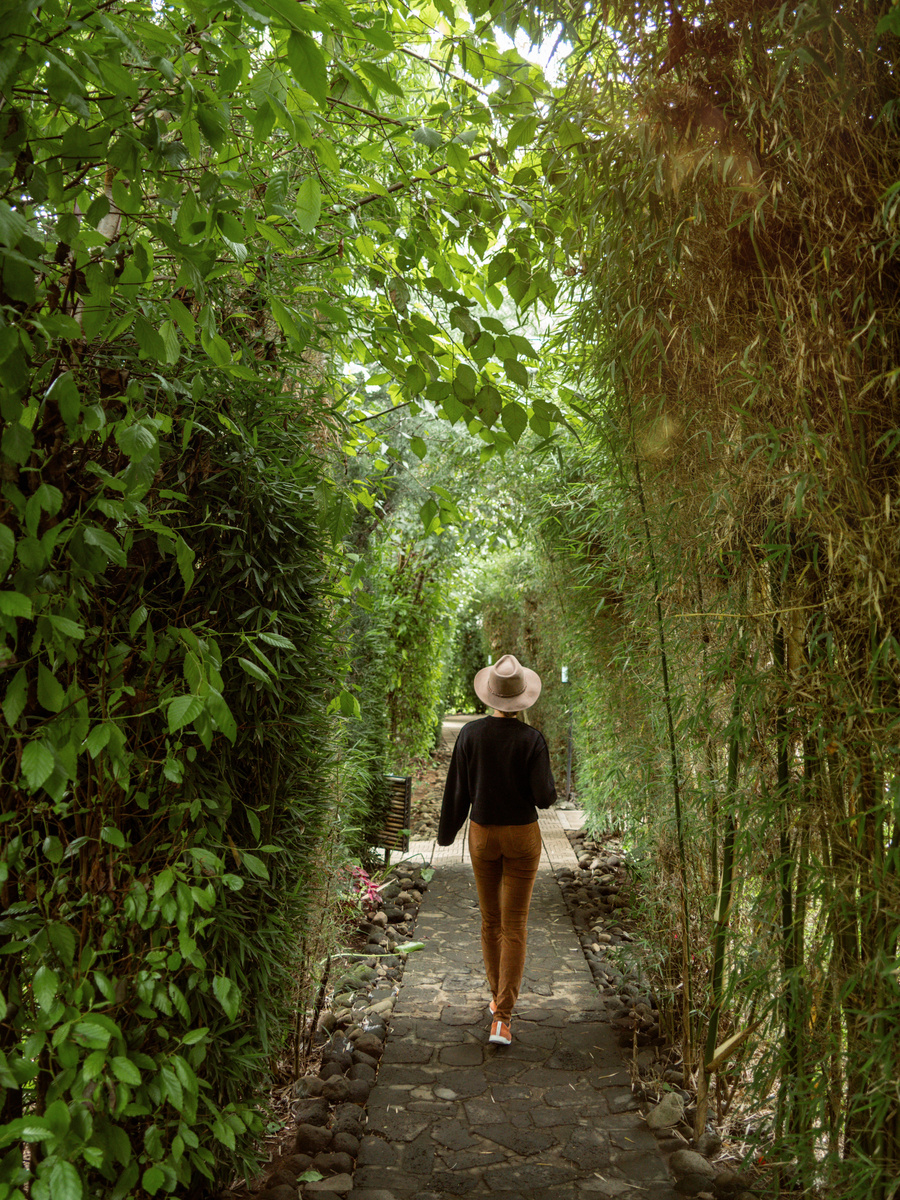
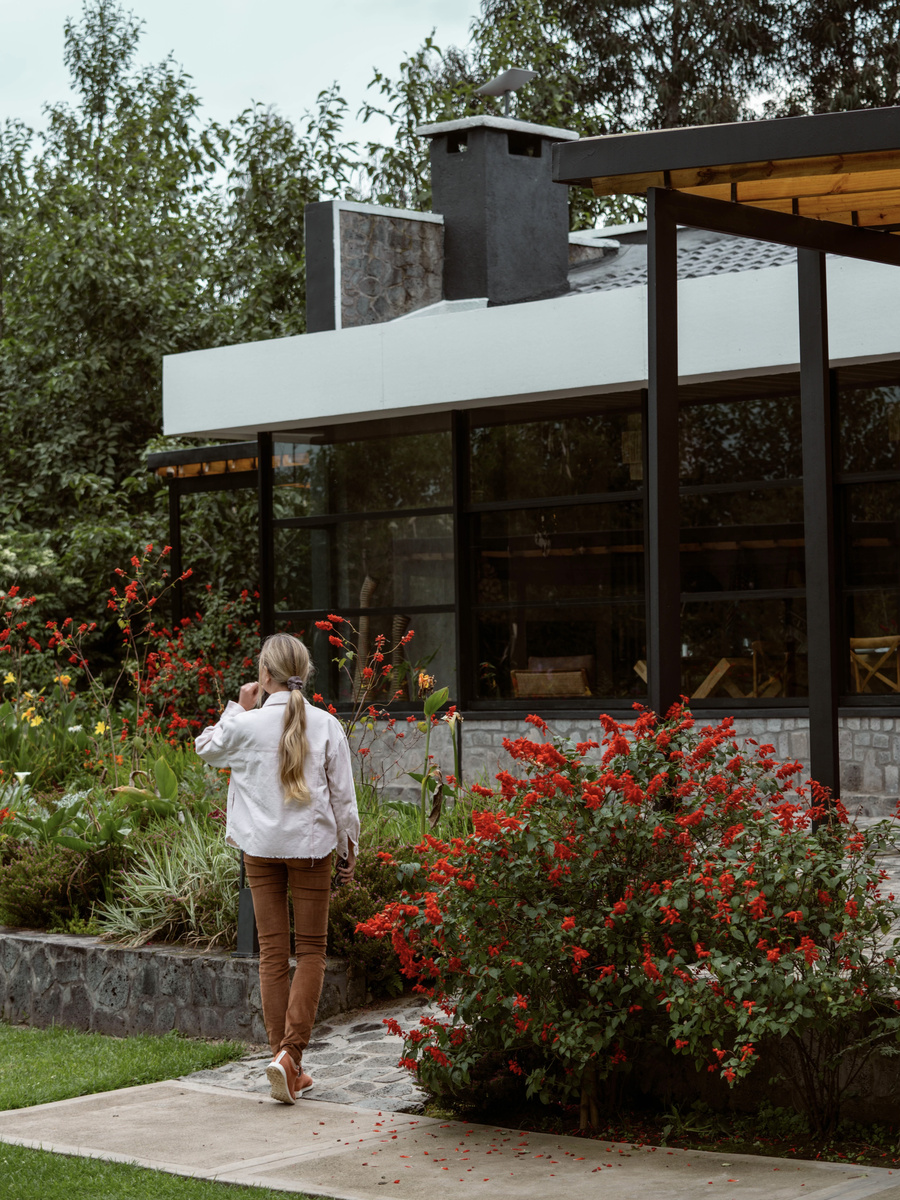
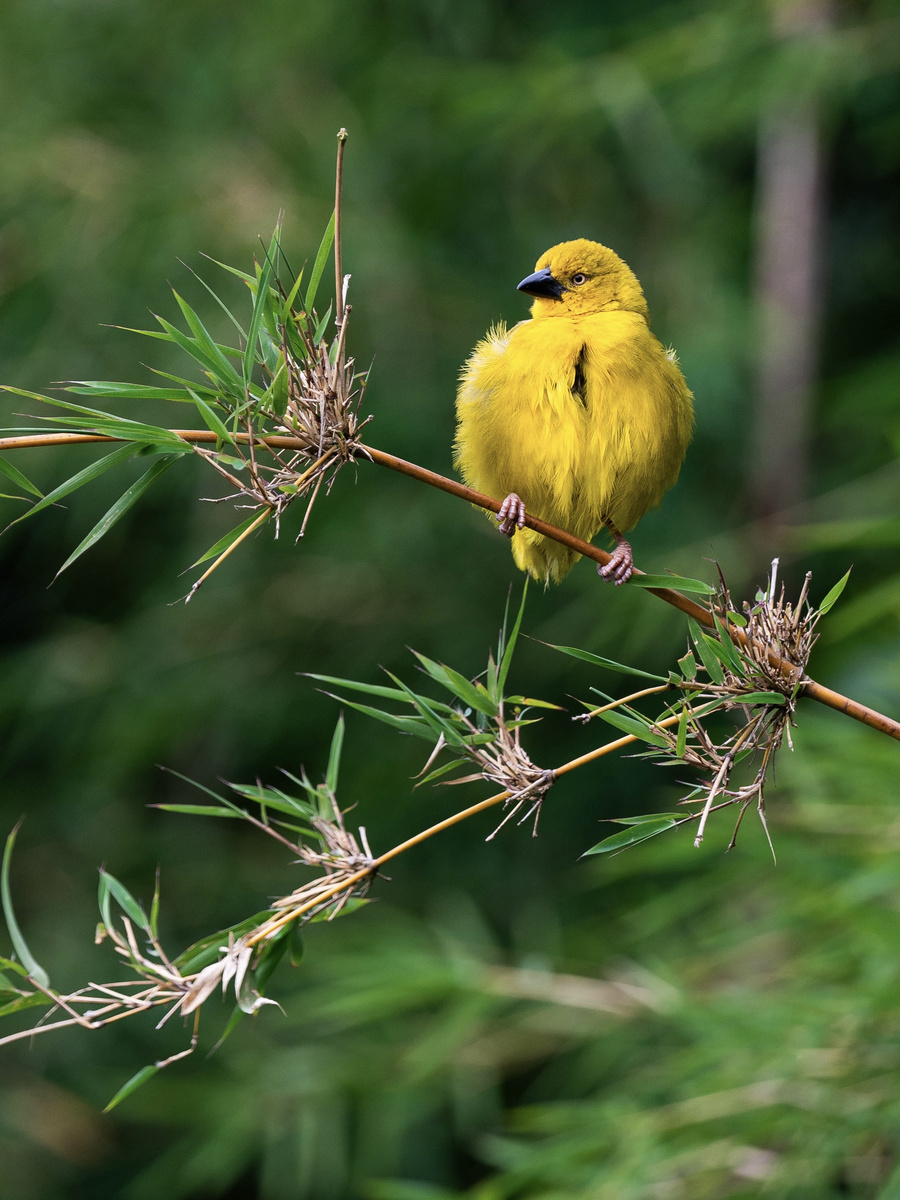
A narrow path disappeared beneath a green tunnel of bamboo. Another crossed the lawn towards the pool and the clean-lined main building. The contrast could have been awkward, with thatch on one side and modern glass on the other, but the planting held the pieces together. Red flowers softened the geometry. A small yellow bird was often a more convincing decoration than anything placed by a designer.
The fire at the center
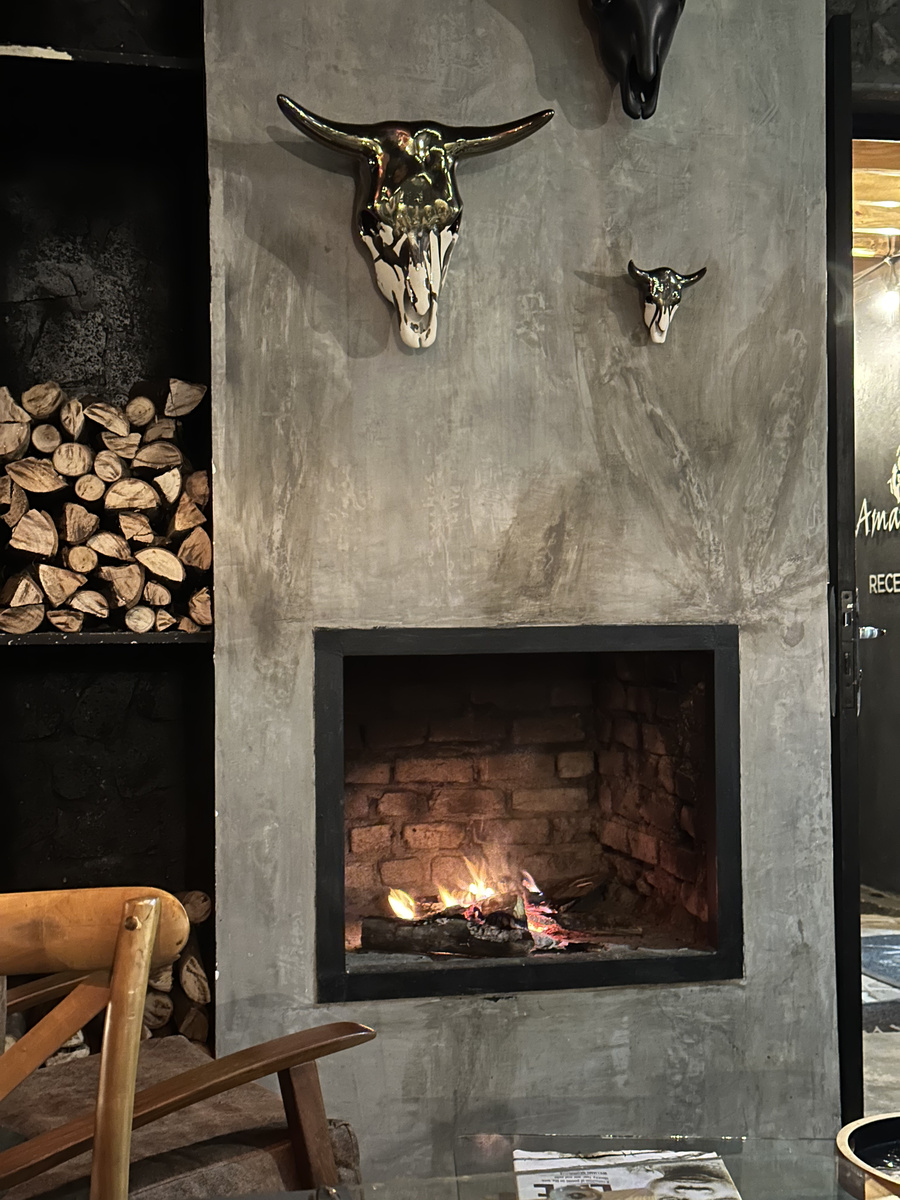
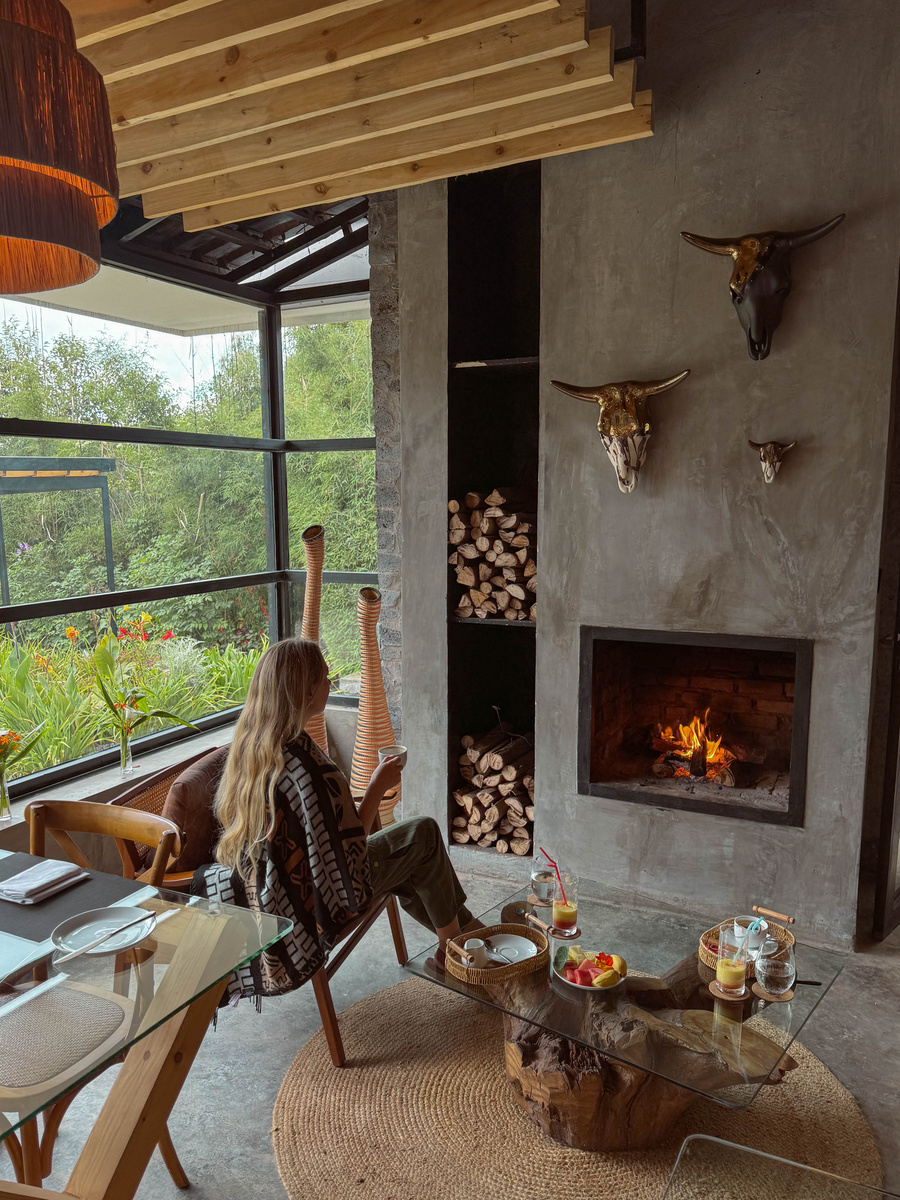
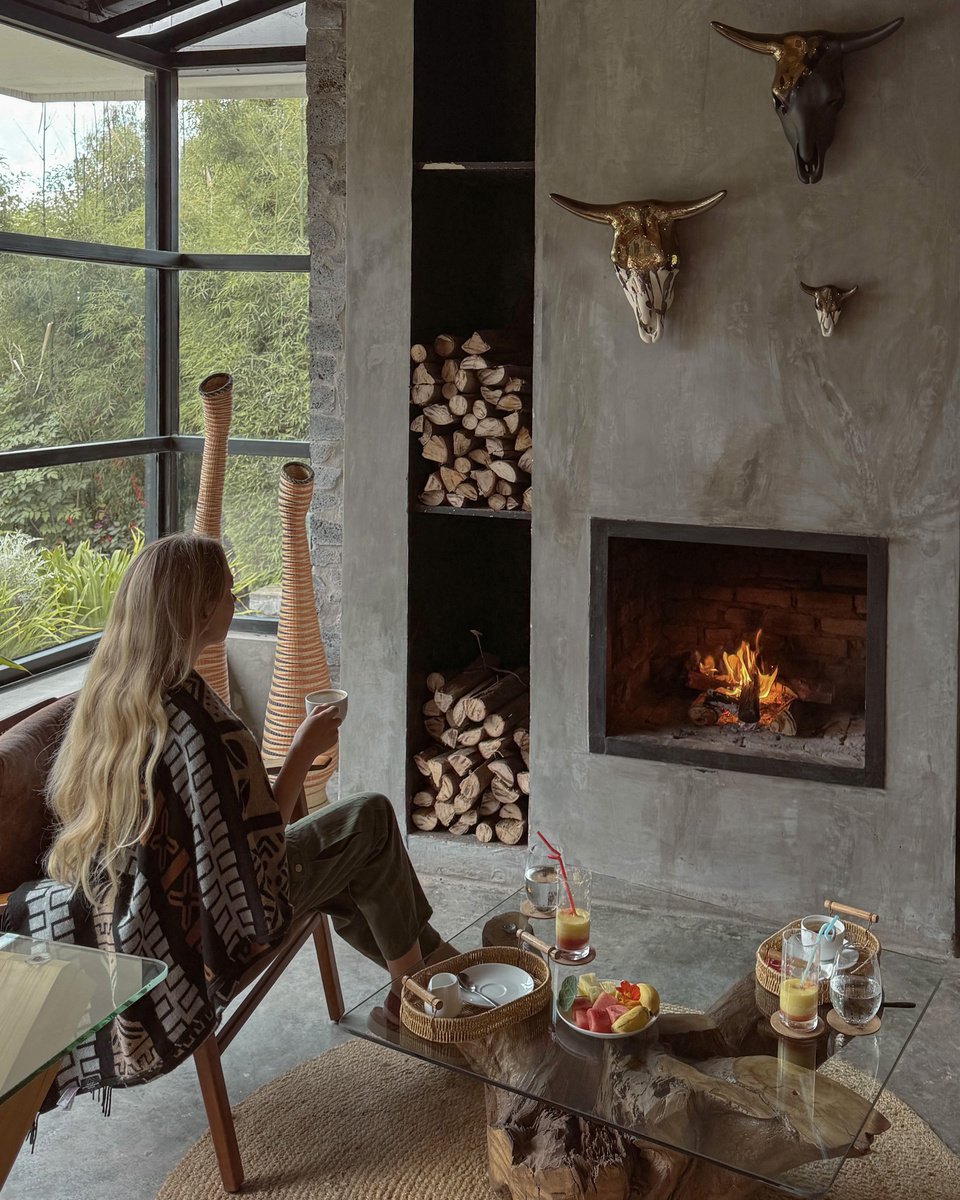
A lodge near Volcanoes National Park has two jobs. It must put the forest within reach, then make the return feel good. Amarembo understood the second part particularly well. The fireplace was not background scenery. Chairs, tables and meals were gathered around it, and the dark plaster, stacked logs, woven reeds and sculptural objects gave the room weight without making it heavy.
My days in Rwanda were full: the bamboo forest, golden monkeys, village workshops, drums. The evenings were the counterweight. I changed for dinner, sat close to the fire, and let the program end. This is the practical luxury I want from a forest lodge: not another performance after an already vivid day, but warmth, food, and a room in which nothing else is required.
Rwanda at breakfast
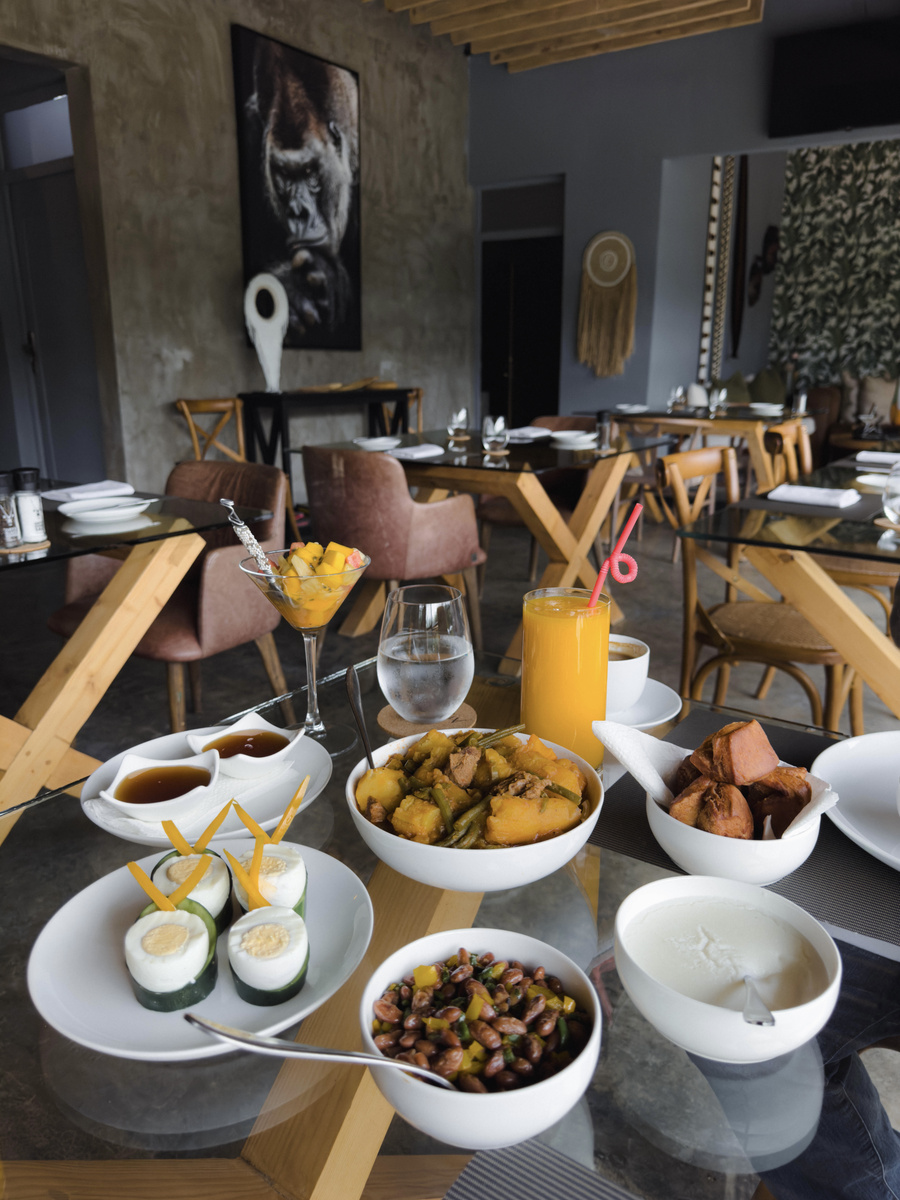
One breakfast gave me a better introduction to Rwanda than an international buffet could have done. There was agatogo, a substantial stew of potato, banana, goat and carrot; eggs; maize-flour porridge; and mandazi with honey. The combination was unfamiliar but not ceremonial. It was simply breakfast: warm, filling and suited to a morning that might begin early.
Lunch on another day spread across the table: chicken curry, boiled yam, couscous, corn salad and beef fillet. I remember the abundance, but also the setting. On a clear morning breakfast could move beside the pool; when the air turned cooler, the fireplace took over again.
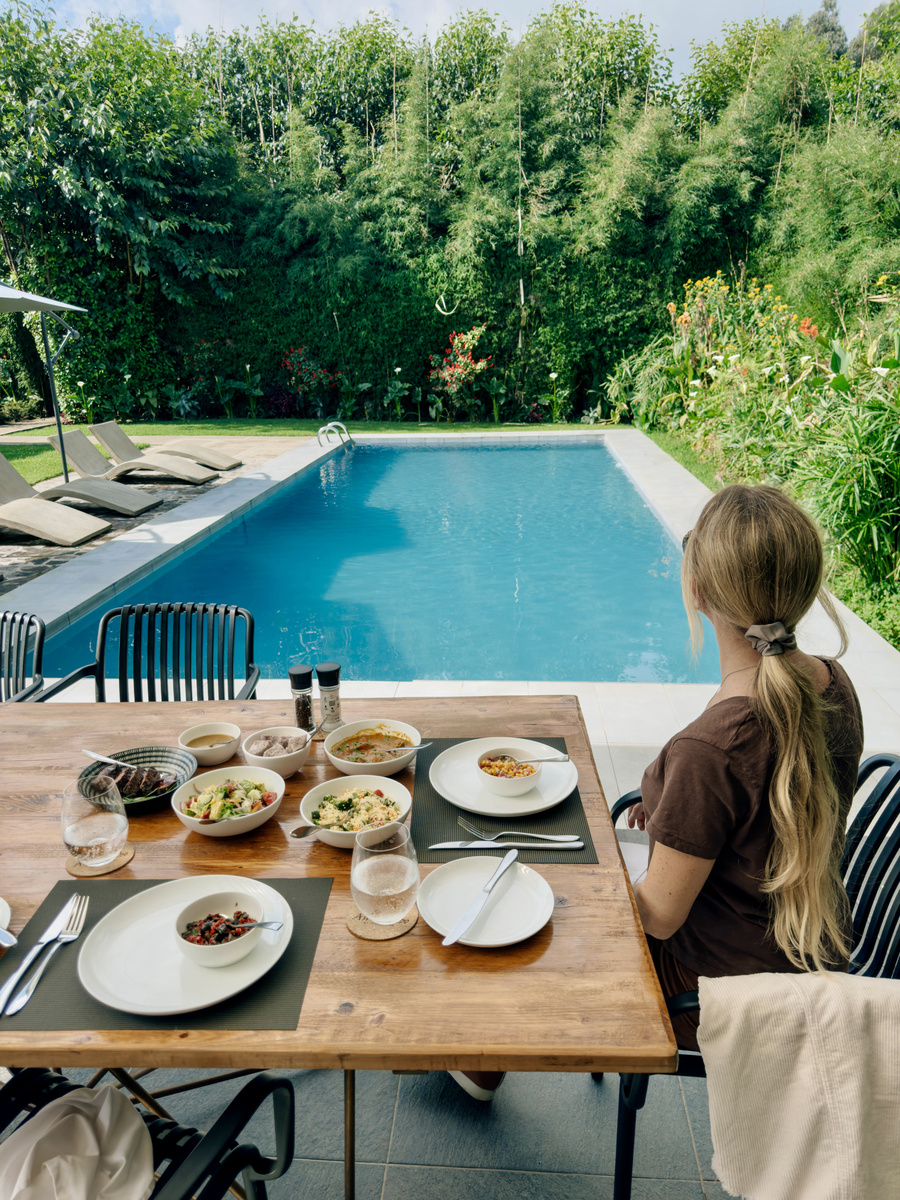
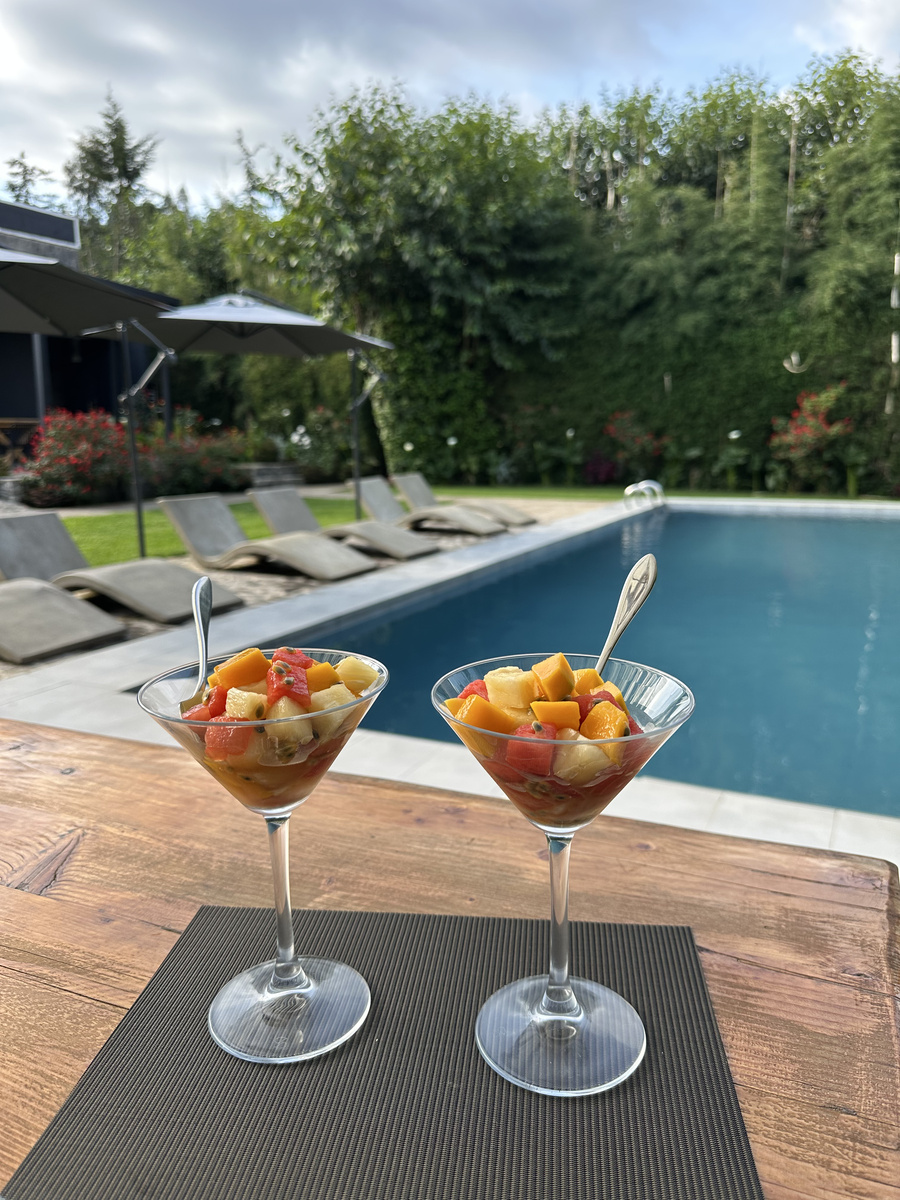
The lodge’s present arrangements are more inclusive than those of our visit. Its current room descriptions include breakfast, lunch, and dinner; house wine, local beer, and non-alcoholic drinks; trekking equipment; and cleaning for boots and outdoor clothing. There are now three room categories: Standard, Deluxe, and Executive. I would choose according to the room itself, not the label, and ask about the fire, bath, and outdoor space that matter to you.
Into the bamboo forest
Volcanoes National Park begins only a few minutes away. One morning I went into its bamboo forest for golden monkeys. They were smaller and much quicker than the great apes for which this landscape is famous. Orange flanks flashed through green stems; a face appeared, regarded us briefly, and moved on. The pleasure was in trying to follow their speed without asking the forest to become still.
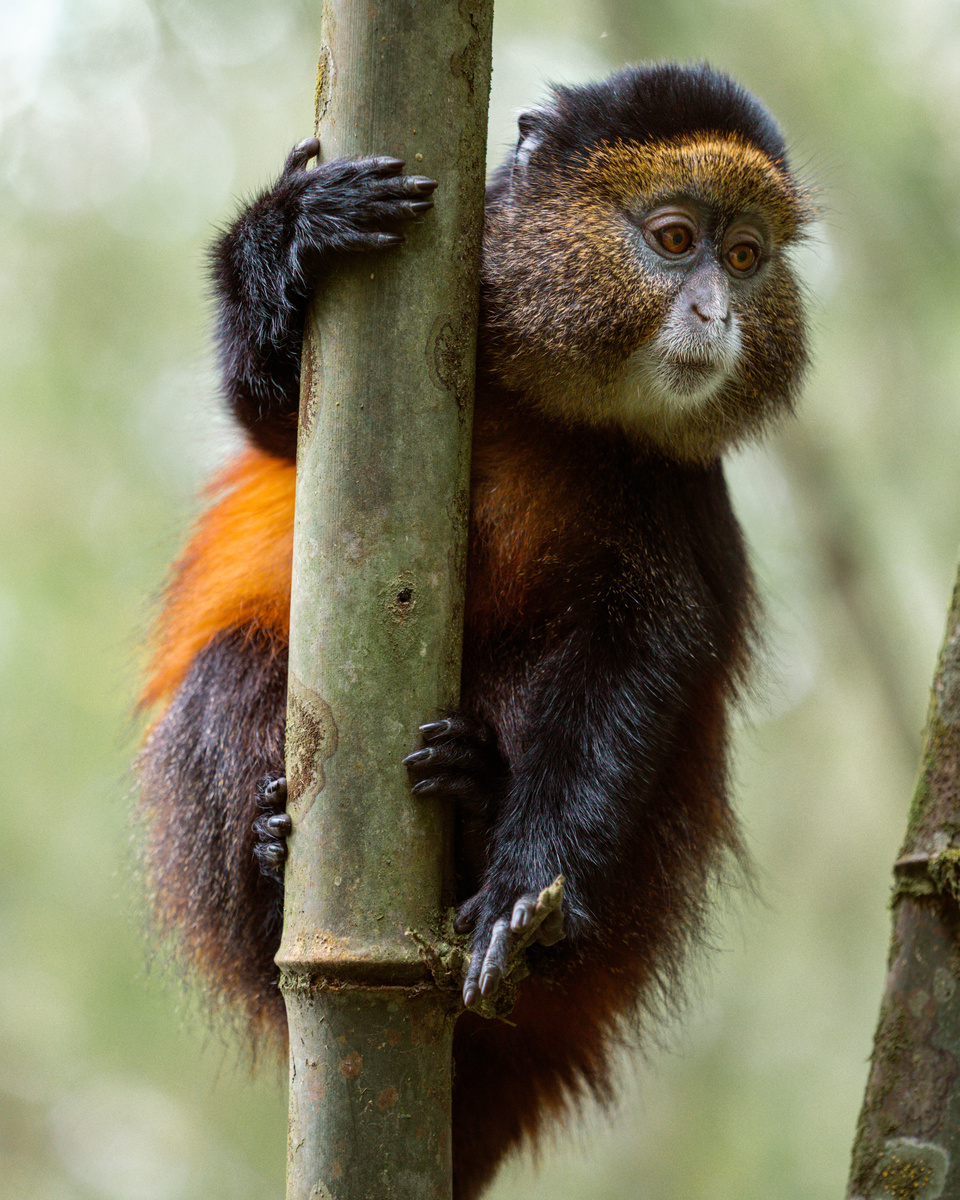
Amarembo is chiefly sold as a base for mountain-gorilla trekking in Rwanda.
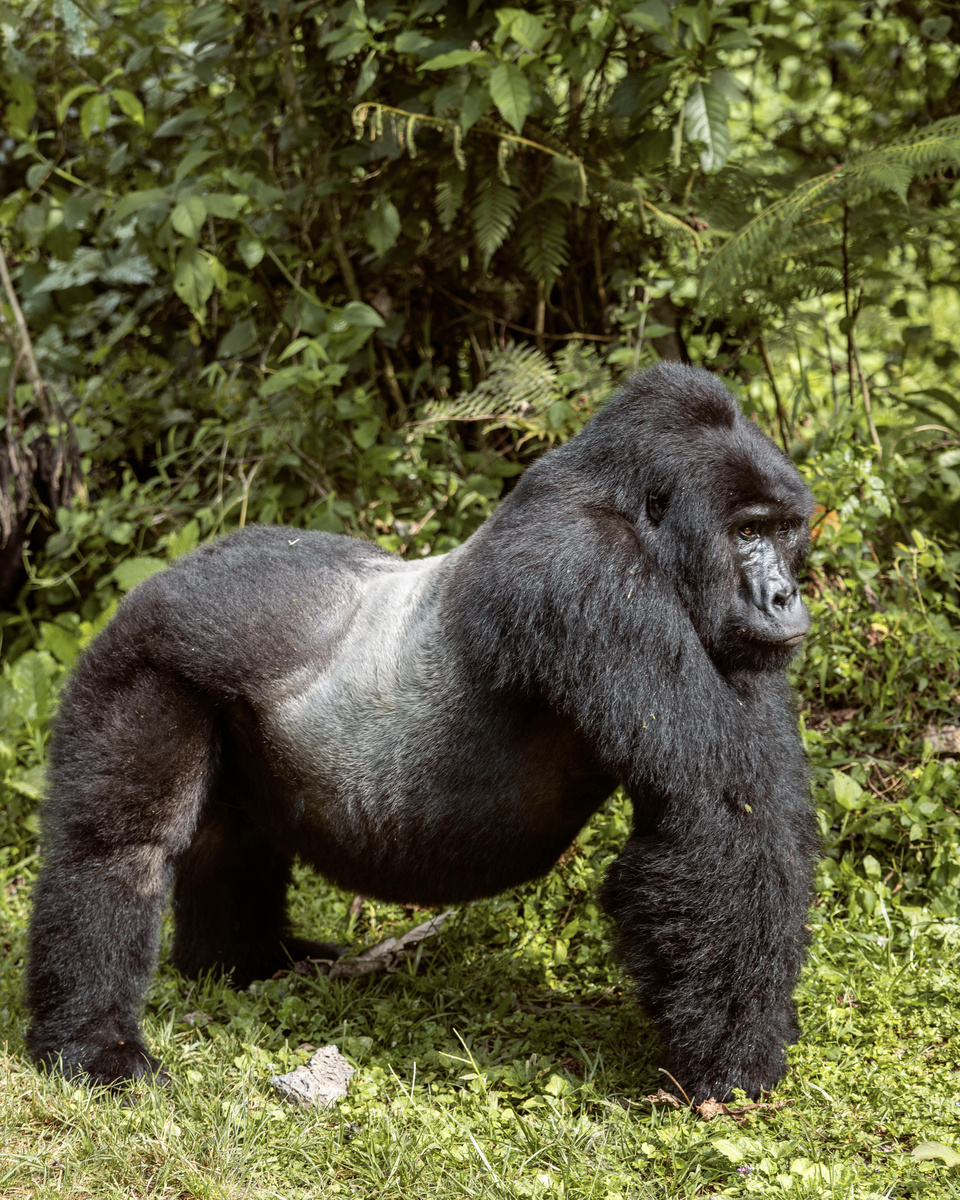
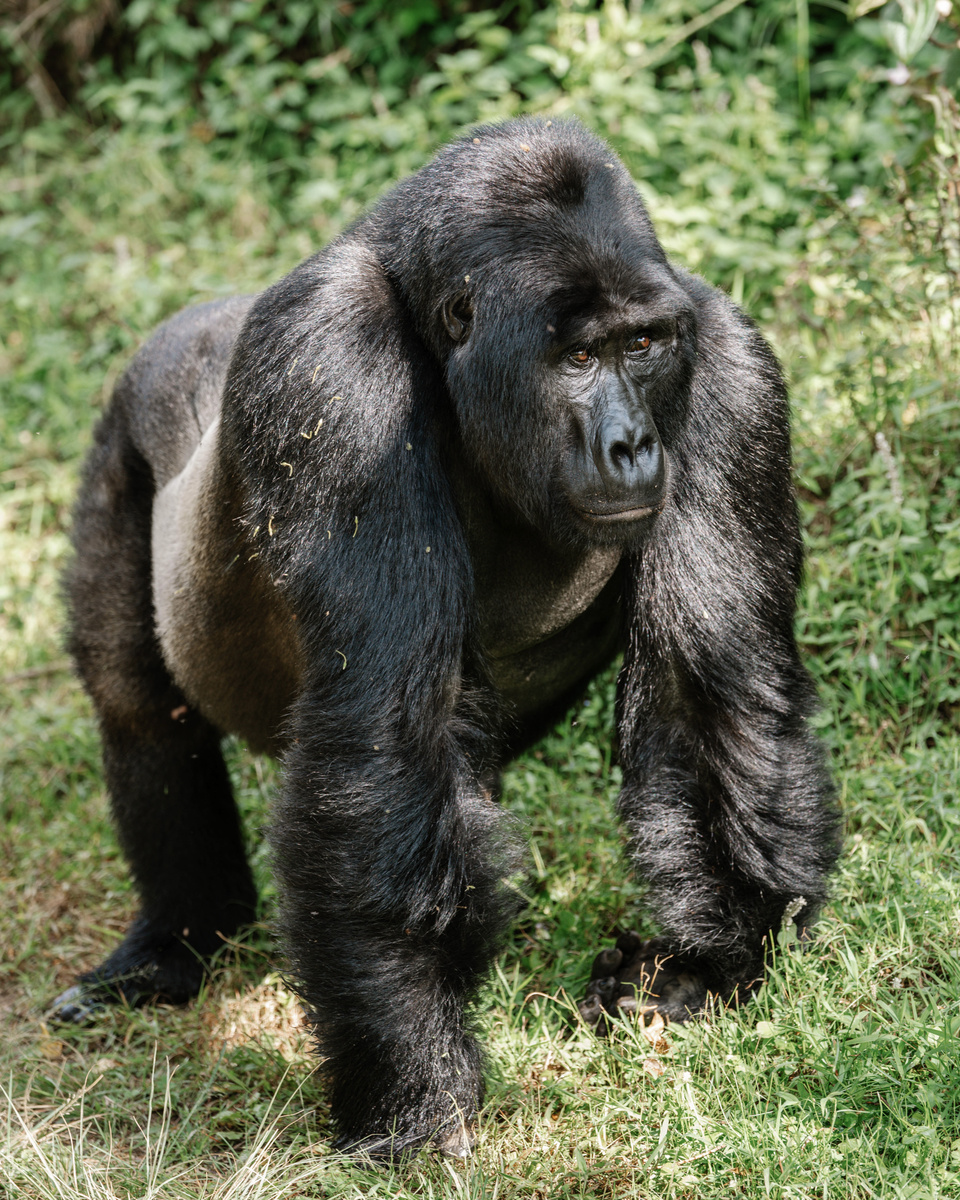
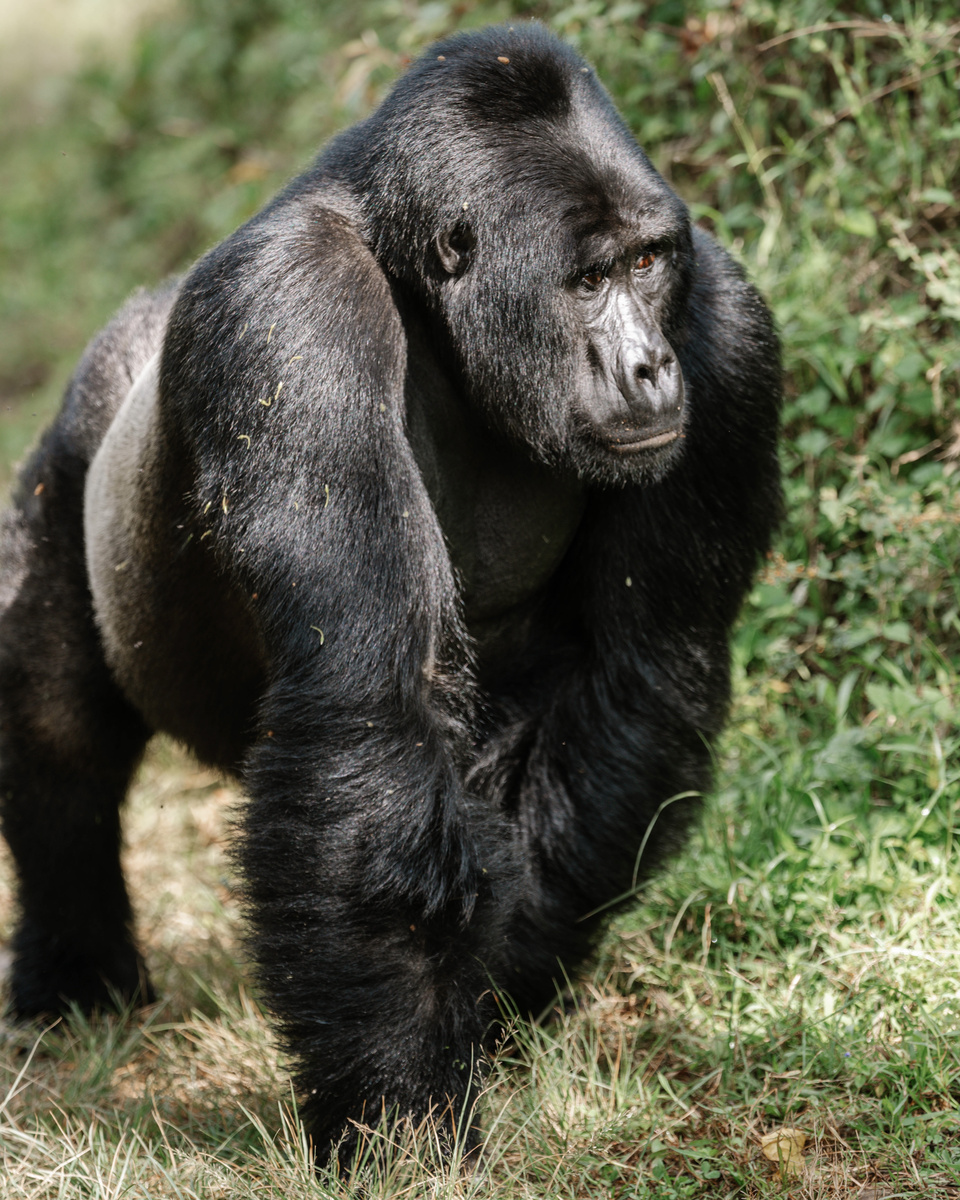
The Dian Fossey Gorilla Fund’s Ellen DeGeneres Campus is almost next door, with a public conservation gallery and trails. Rwanda’s present gorilla permit costs US$1,500 for an international visitor, with a minimum age of fifteen and one hour with the gorillas. Those rules and prices can change, so I would confirm them through the Rwanda Development Board before building a journey around them.
From poaching to protection
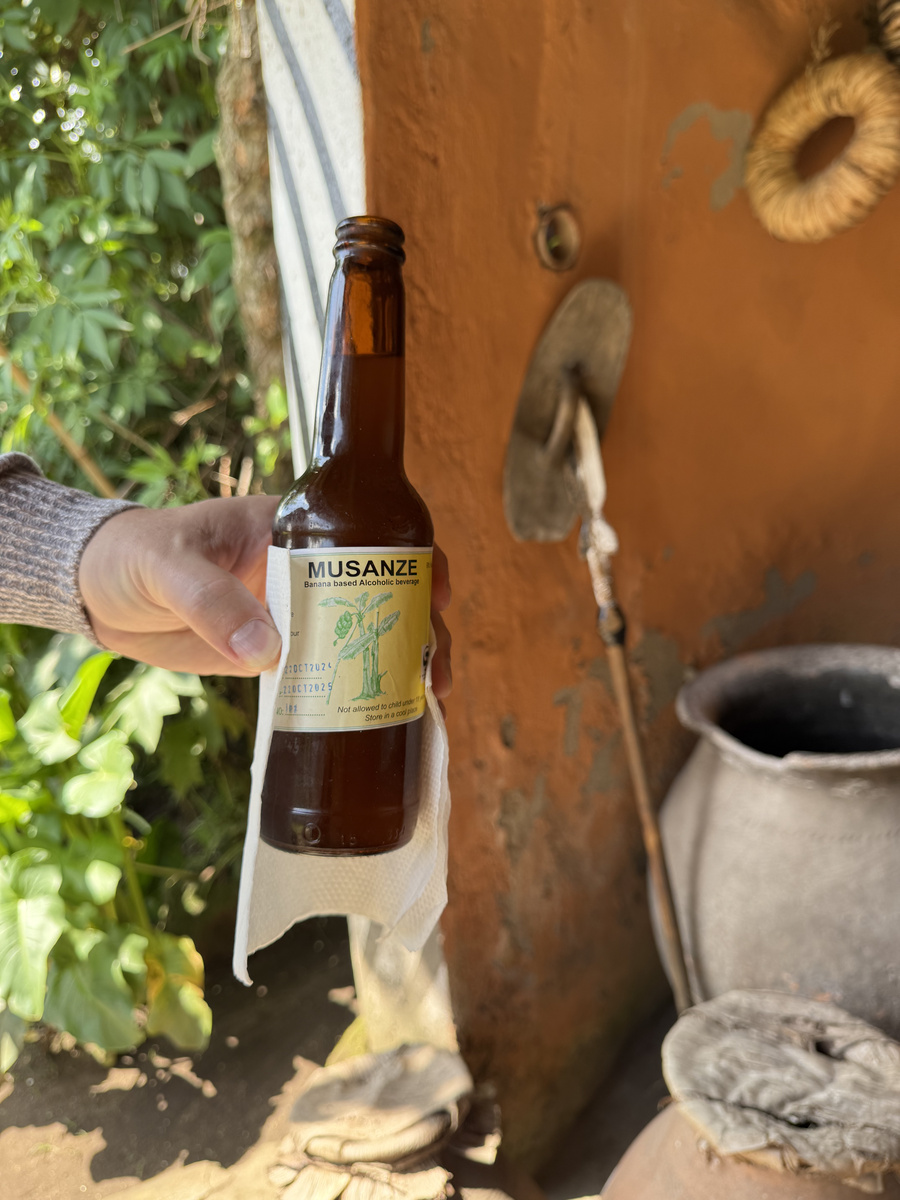
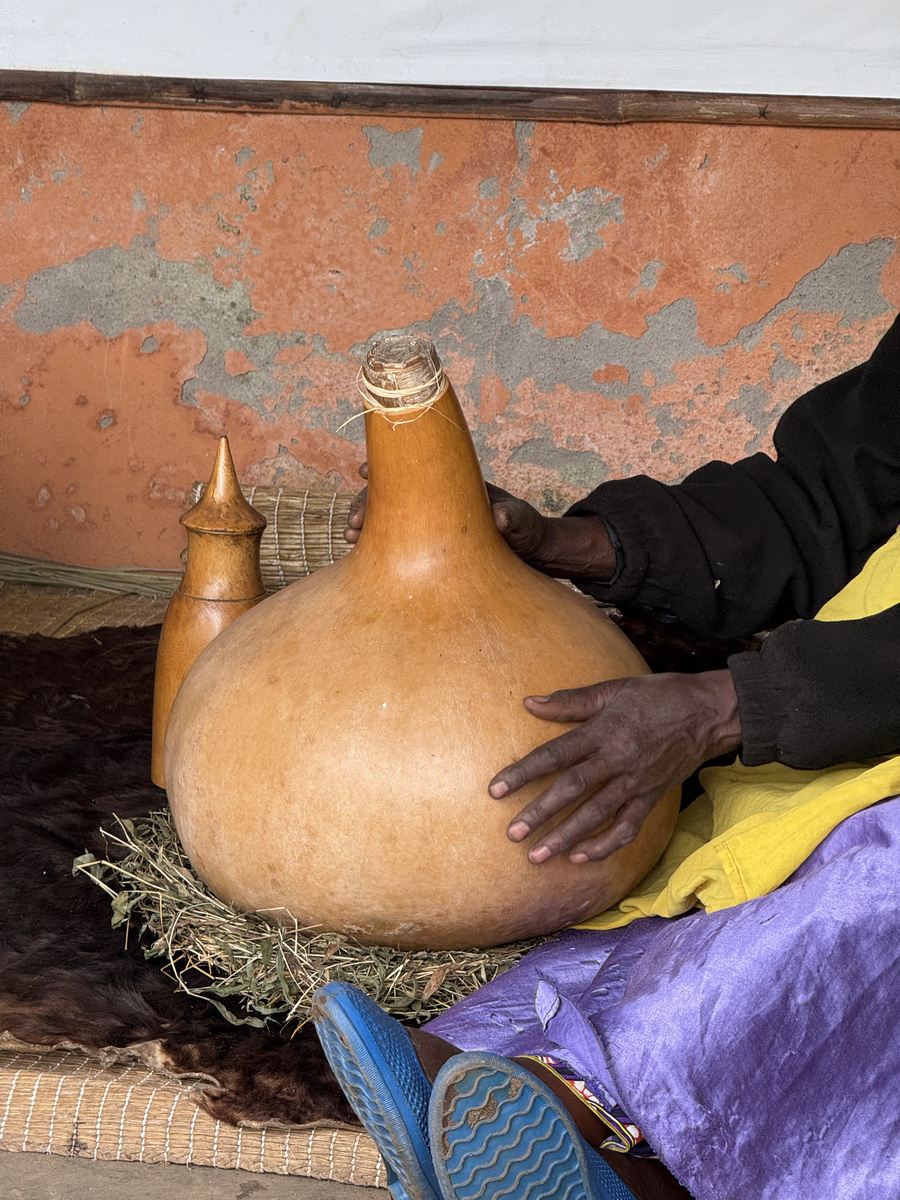
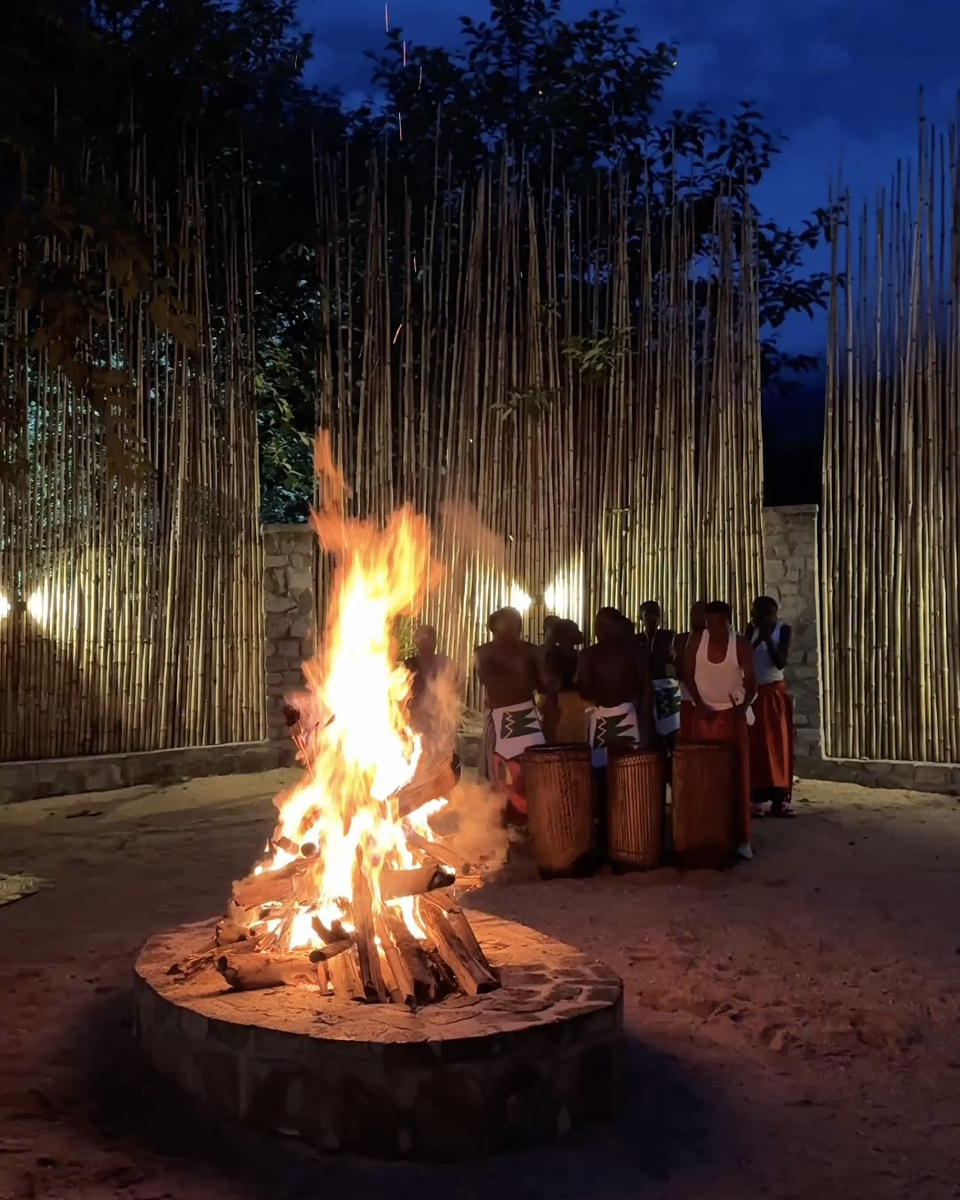
At Gorilla Guardians Village, the story of conservation was told through people rather than statistics. The performers danced and drummed, then showed us parts of ordinary work and village life: gourds, brewing, making, and carrying. Some of the guardians are former poachers who became protectors of the animals and forest on which this region’s future depends.
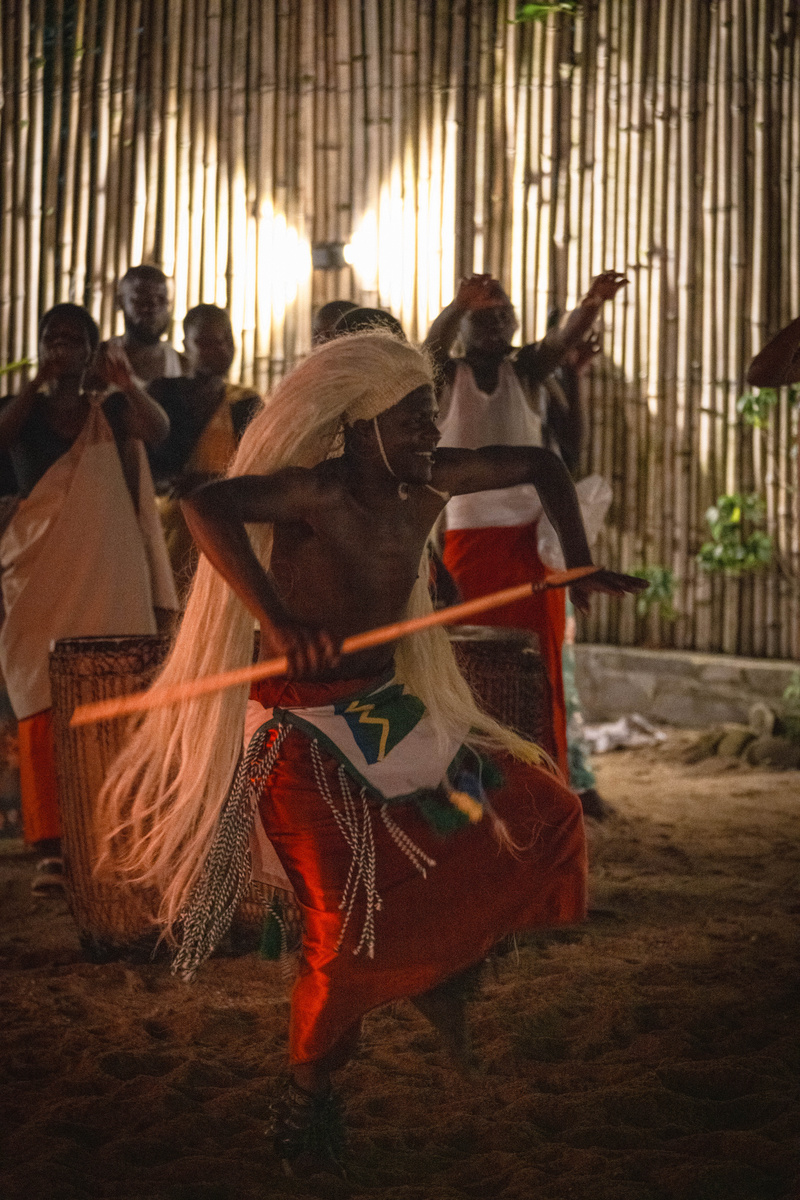
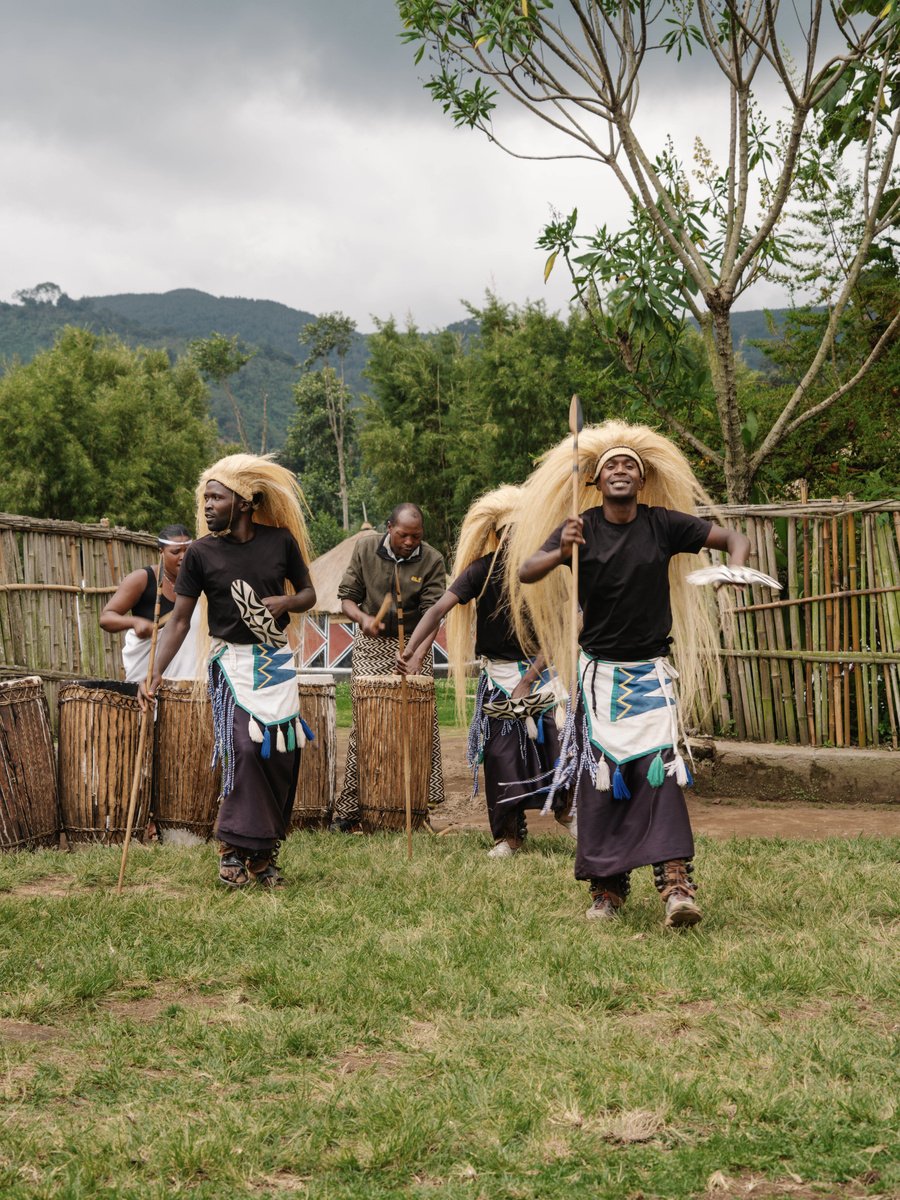
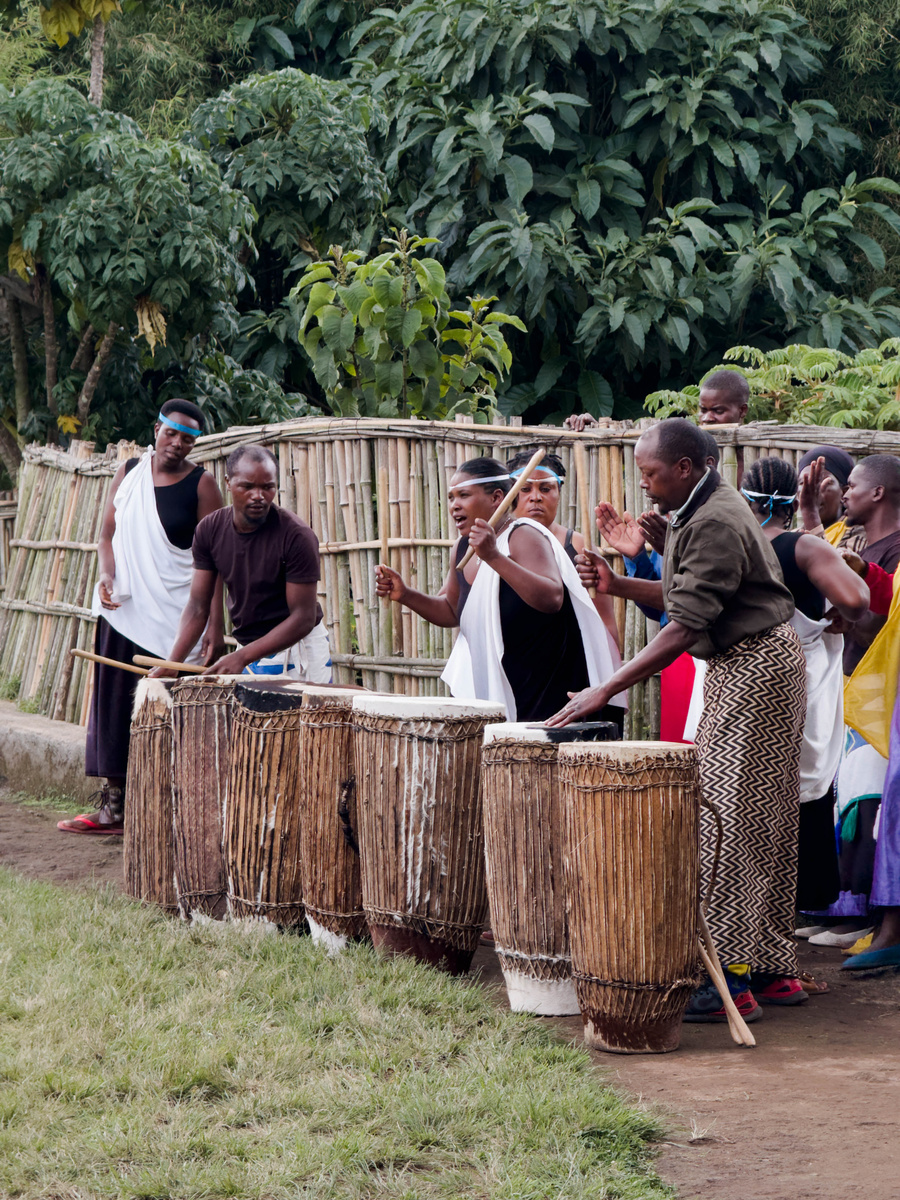
The village is part of a community enterprise that creates livelihoods around conservation. No lecture was needed. A line of drummers began; pale raffia headdresses swung through the air; visitors were drawn into the circle. What could look static in a display case stayed alive because people were using it.
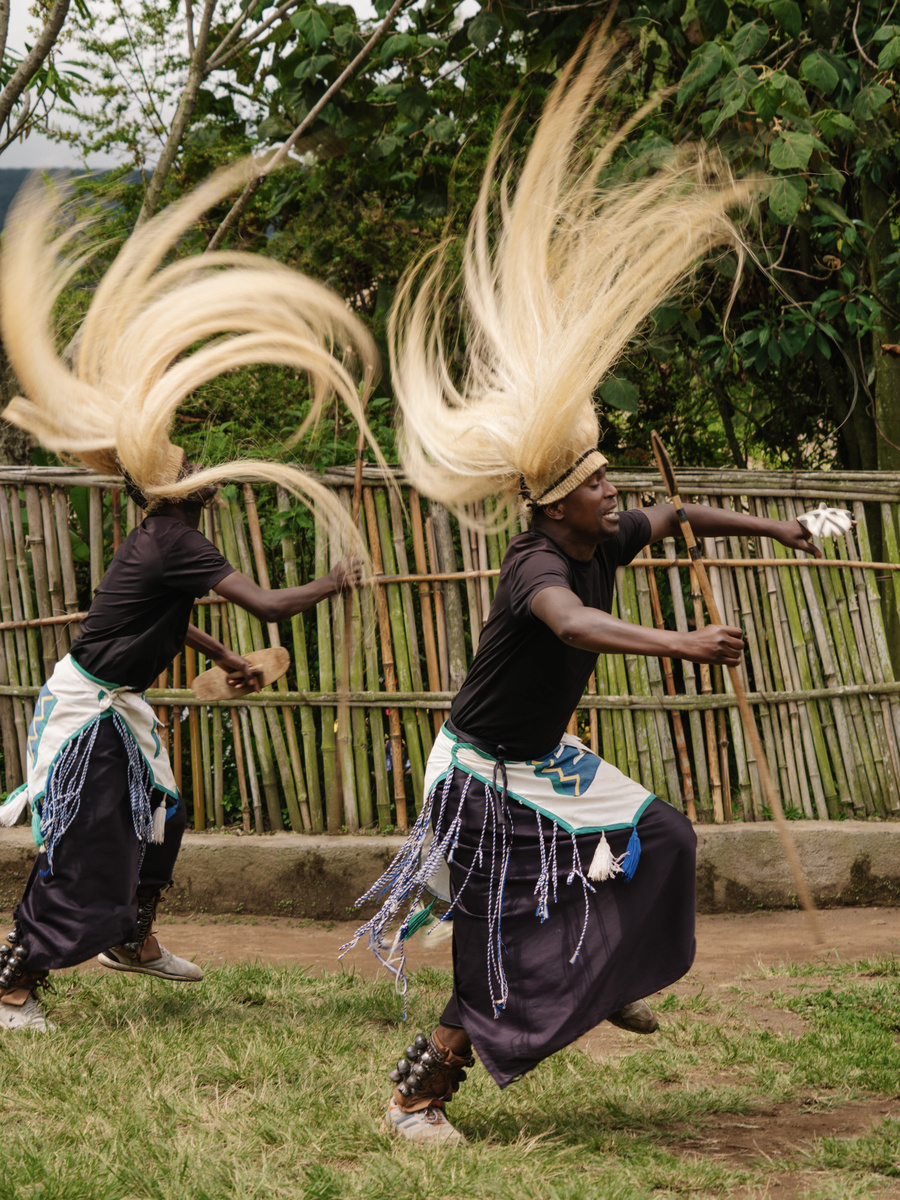
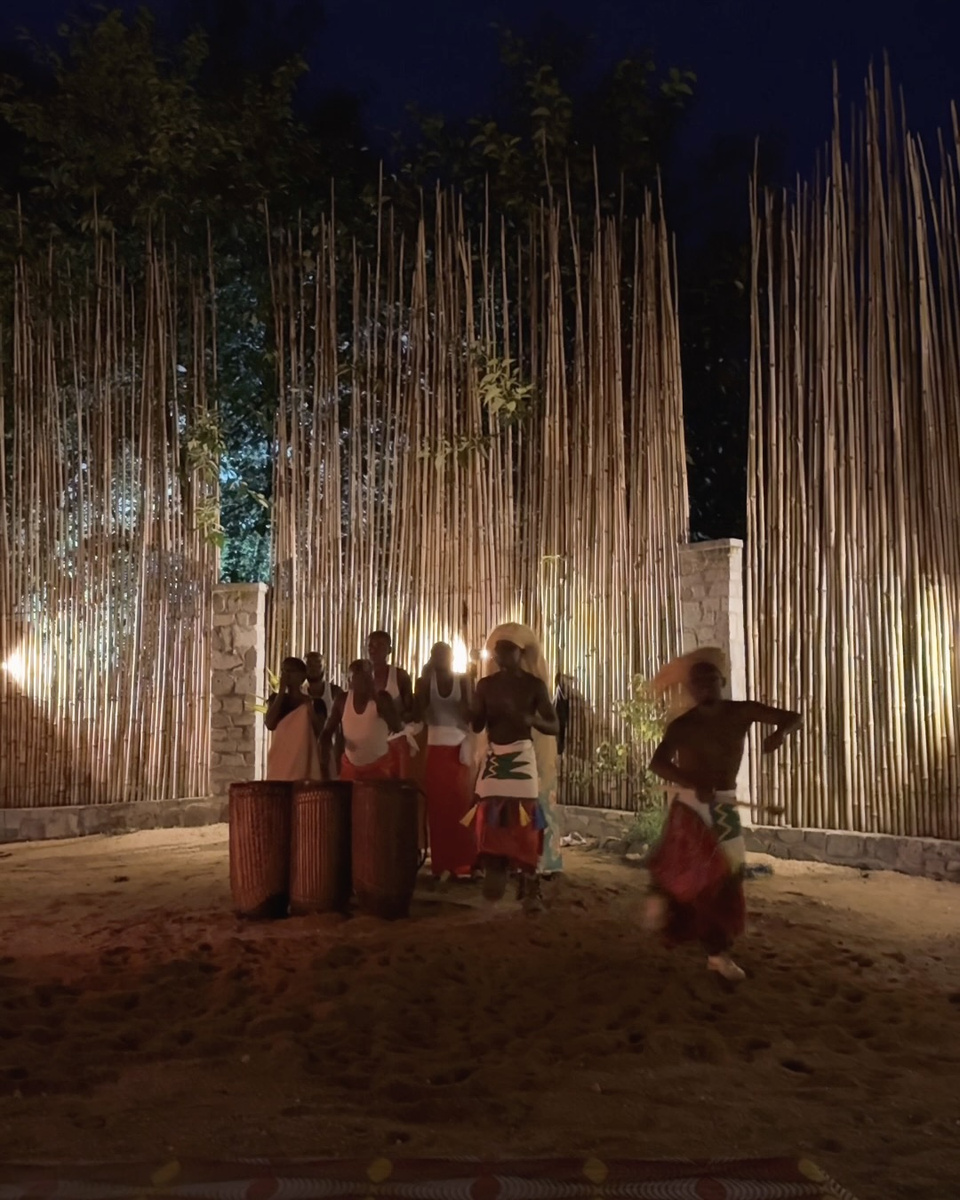
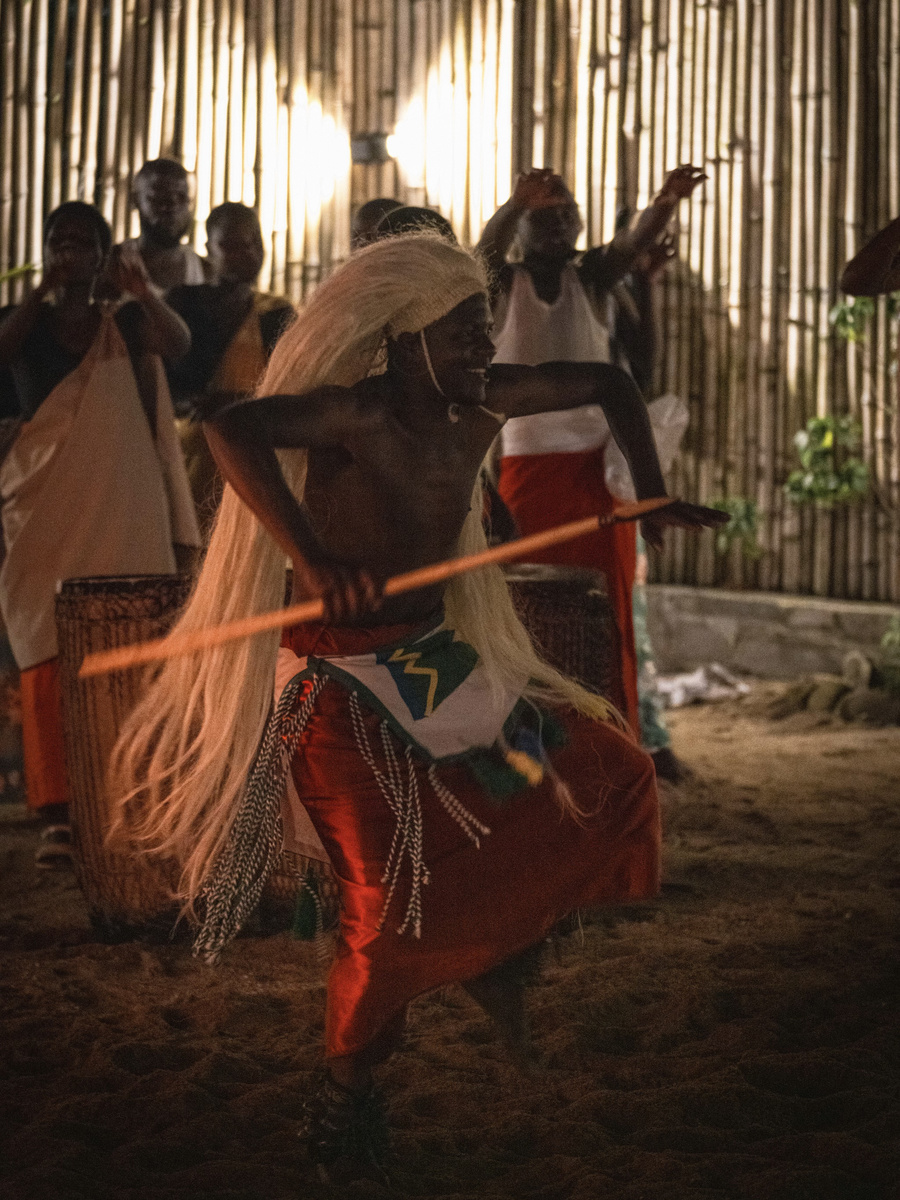
There is an uneasiness in every staged cultural visit: the guest arrives for an hour, while the host must make a life from being seen. Gorilla Guardians did not erase that tension. It gave it a useful direction. Here, tourism was one possible income after poaching. The exchange felt clearest in the workshops, where the emphasis moved from watching to understanding how things were made and used.
Between two forests
At seven on our final morning we left Rwanda for Uganda. The next day, in Bwindi, a silverback stepped into a clearing and seemed to alter the scale of everything around him. It was the encounter towards which the route had been moving. Yet my memory of Amarembo is not a rehearsal for the gorillas. It has its own shape: a thatched cottage among flowers, a bird on a thorn, breakfast beside blue water, bamboo closing over a path.
And, each evening, the return. The same fire, another table, the day becoming quiet around it.
Shared on

The post and its conversation
The photographs as they appeared on Instagram, with what readers said there. Likes and replies open on Instagram.



 Join the conversation on Instagram