
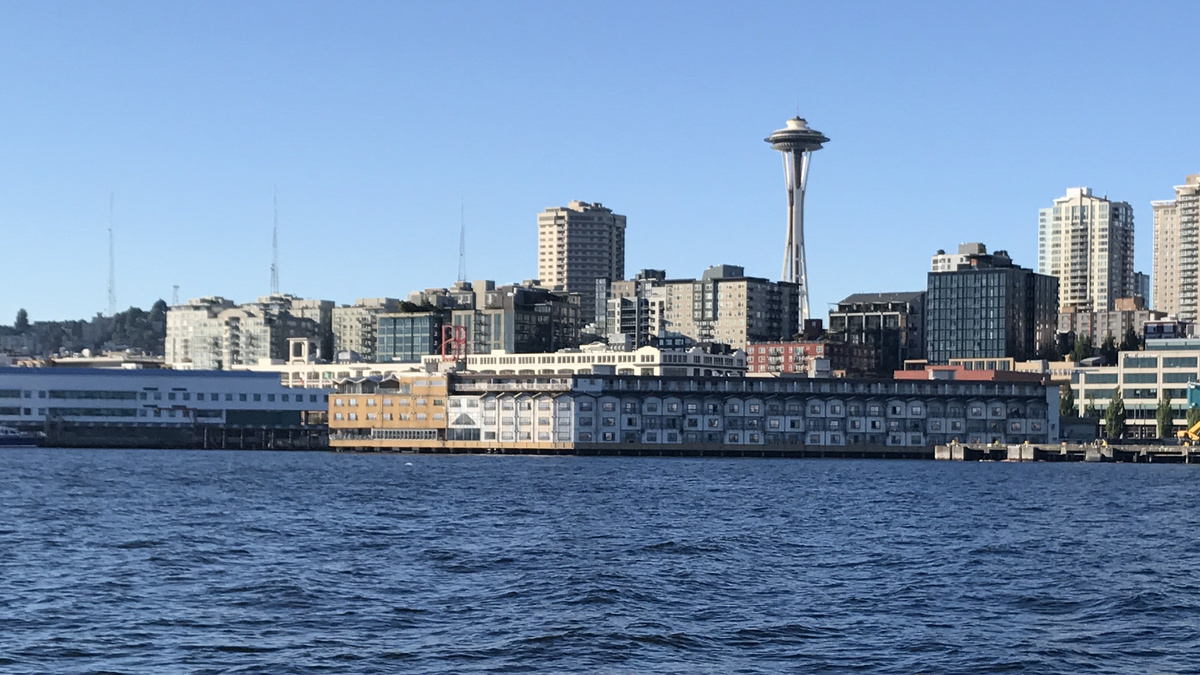
Before The Edgewater became Seattle’s rock-and-roll hotel, it was a hotel that had missed its moment. It had been built on Pier 67 for the 1962 World’s Fair but opened late. By 1964, the young property had too many salaries and too few guests, and its manager, Don Wright, was expected to be its last.
Then the Beatles needed a room. They were due to play Seattle Center Coliseum on 21 August, near the beginning of their first North American tour. Other Seattle hotels had read about the damage left by frantic fans in San Francisco and refused them; without somewhere secure to put the band, the Seattle appearance itself was in doubt. Wright heard about the problem and said he would take them. His reasoning was brisk: The Edgewater needed the publicity.
The gamble became literal almost at once. The hotel’s insurer dropped its coverage. A local company stepped in; the concert promoter tripled its liability insurance. Wright’s staff built a 350-foot plywood barricade topped with barbed wire, police guarded the landward approach, and the harbor patrol watched Elliott Bay. The pier did not make Beatlemania easy to contain, but at least it gave the chaos an edge. Fans still tried the water.
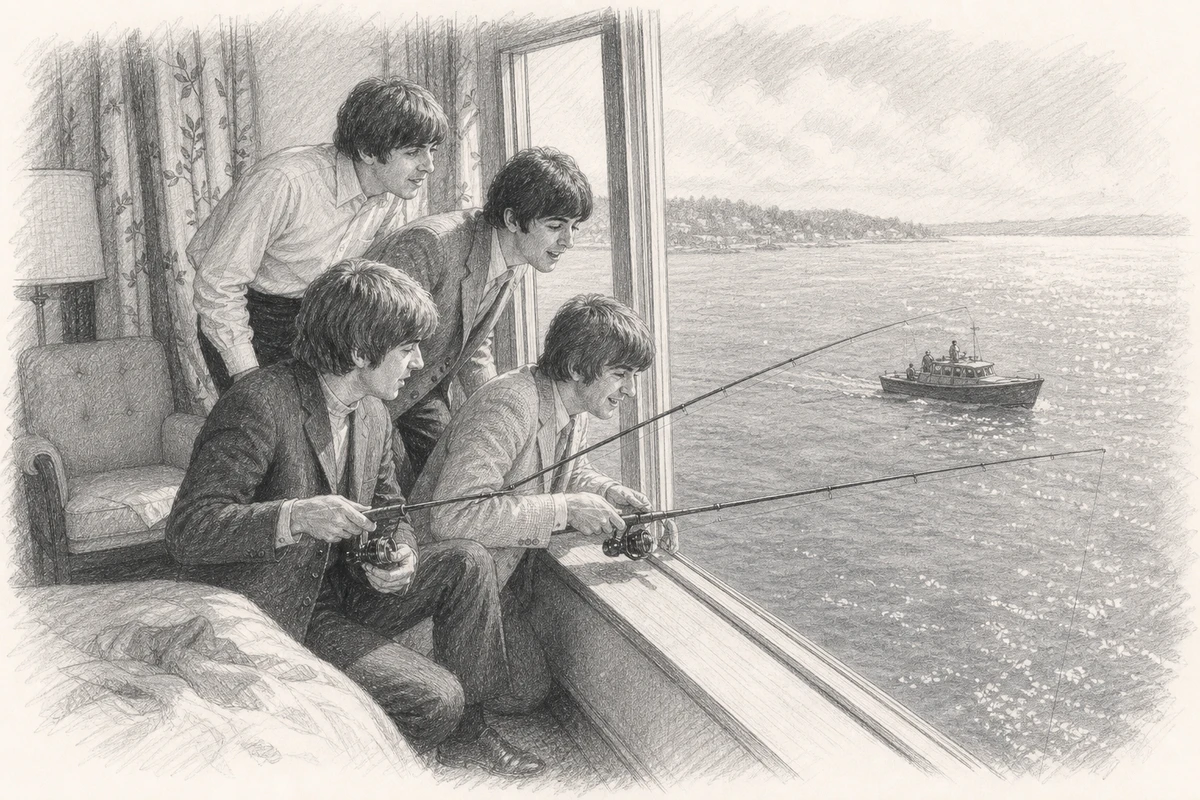
Inside room 272, the Beatles had nowhere sensible to go. Someone produced four fishing rods. They opened a window and lowered their lines into the bay while a police boat moved below. At the press conference that evening, Ringo reported that a voice across the water kept shouting that there were no fish. He pulled in his line. They caught nothing.
Wright had wanted publicity. He got a future. After the Beatles left, the carpet from their room was cut into squares and sold as souvenirs. More bands followed. His daughter later remembered the visit as the beginning of the whole trend. The Edgewater had found an identity no other Seattle hotel could borrow, because no other hotel had those windows.
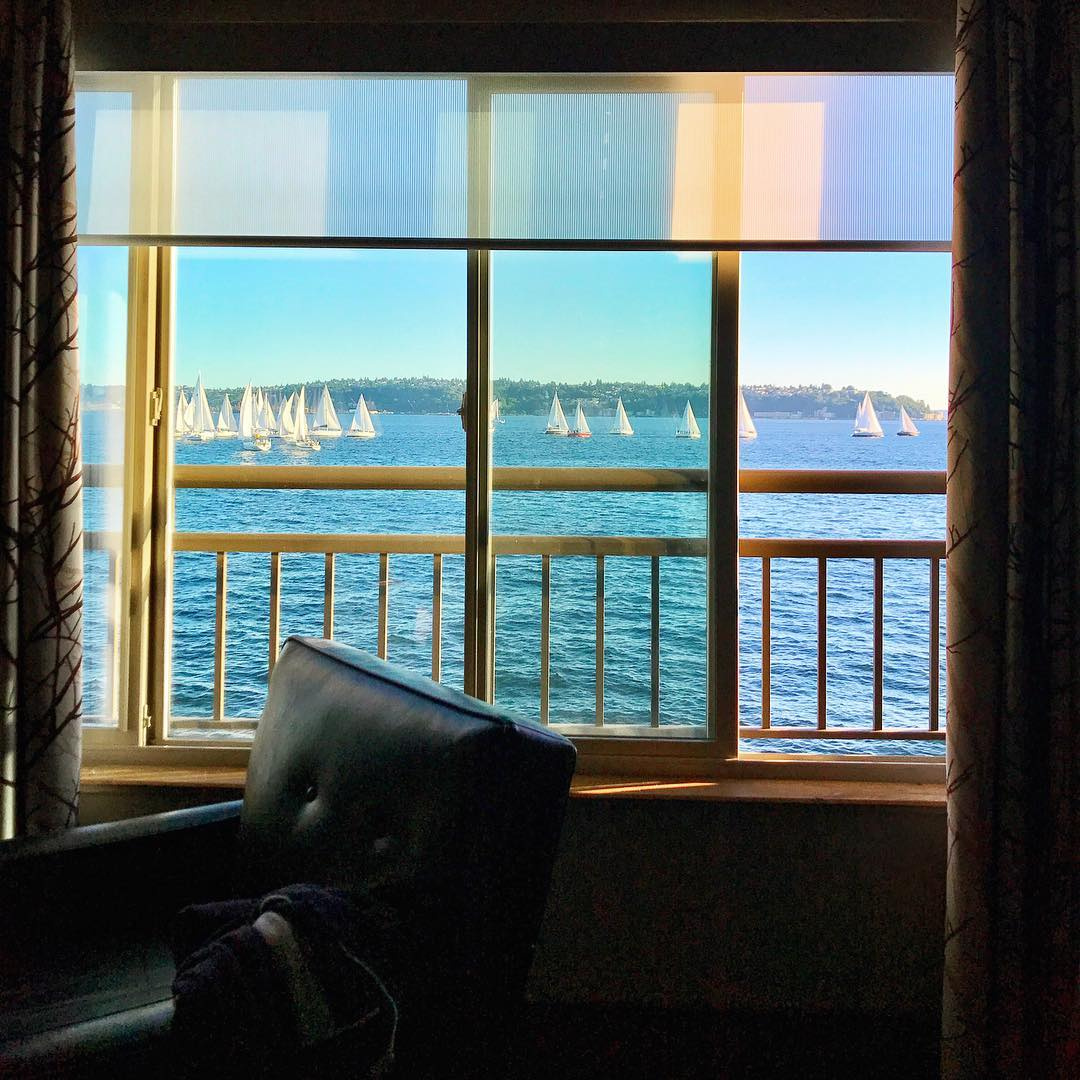
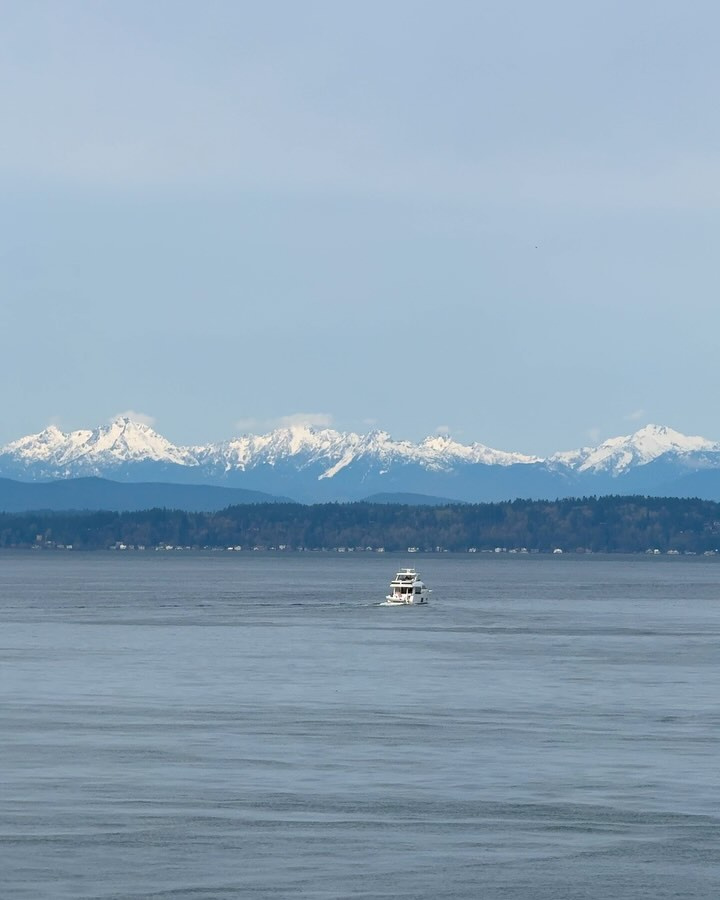
More than half a century later, I opened our own window and understood why the picture had endured. Elliott Bay seemed level with the room. Sailboats crossed the blue water. Gulls supplied the alarm clock. Beyond them, snow remained on the Olympic Mountains. The water was not scenery arranged beyond the glass. It came indoors as air, sound and constant movement.
Our first visit, in 2017, overlapped with a Microsoft conference. Eight years later, my husband’s work brought us back for an Amazon conference; he works there now. We stayed longer both times. A business date placed Seattle on the calendar, but The Edgewater changed what happened around it: mornings at Pike Place, walks along the piers, sailboats from the bay, a fireplace lit when we returned.
I studied computer science at university, and Seattle has always carried a small alternate-life question for me. Could a different turn have brought me here, into the city of Microsoft and Amazon? The Pacific Northwest had other pulls too: the misty screen world of Forks, a story for another time, and Mount Rainier. I have always loved places shaped by volcanoes.
A room at the waterline
The Edgewater is Seattle’s only hotel built directly over the water. Its rooms are not palatial, and that is beside the point. The room works through proximity. Open the window and boats, ferries and working ships keep changing the composition. Morning has gulls and sailboats; evening holds the last color of the sky.
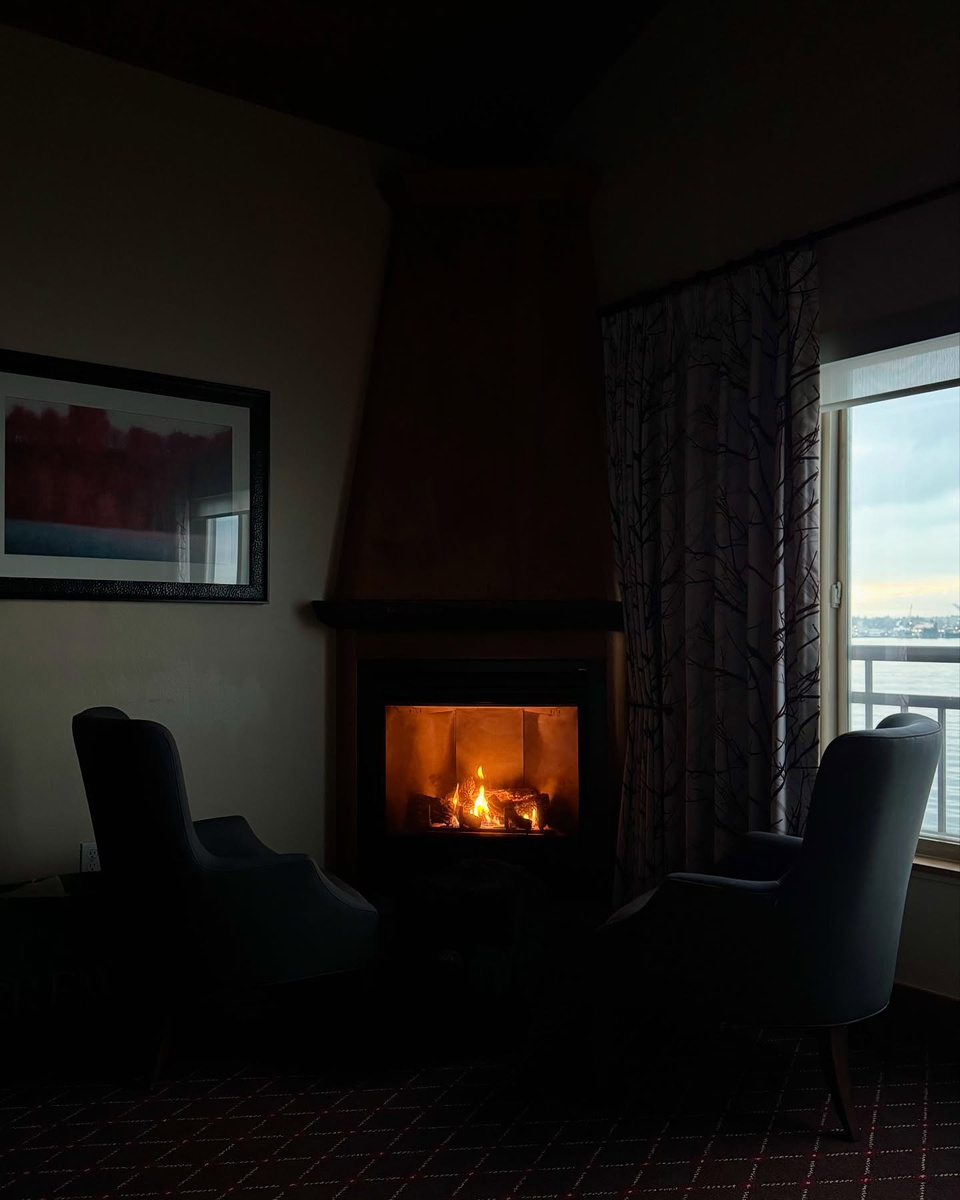
In our 2025 room, the gas fireplace faced two chairs beside the window. The arrangement was simple and rather perfect: fire on one side, Elliott Bay on the other. I cannot imagine choosing the city side here. Without the bay below the window, too much of The Edgewater disappears.
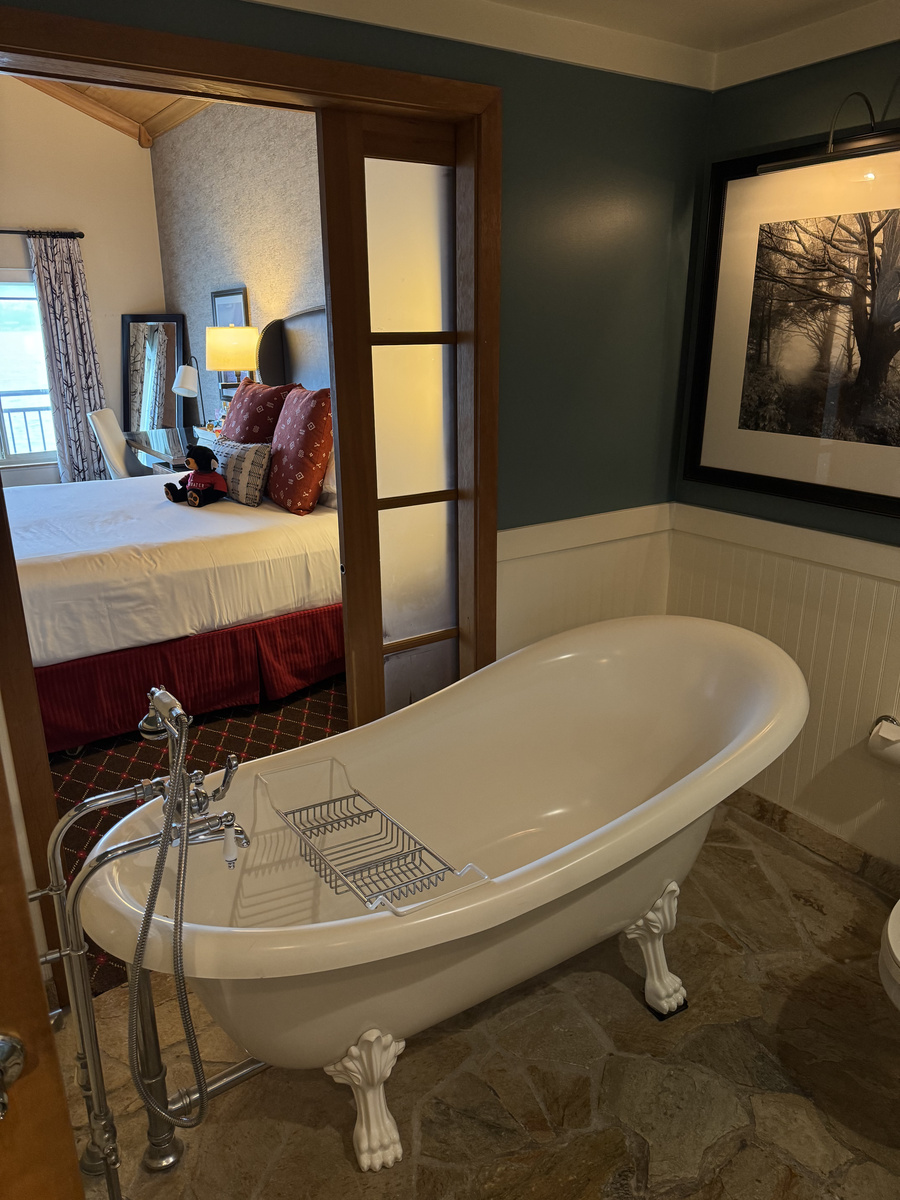
For booking, the useful distinction is between the Over-Water King, Over-Water King with Balcony and Over-Water Double. The Double has two double beds; a balcony is a separate choice from the water view. If the claw-foot bath matters to you, confirm the bathroom layout for the exact room before reserving.
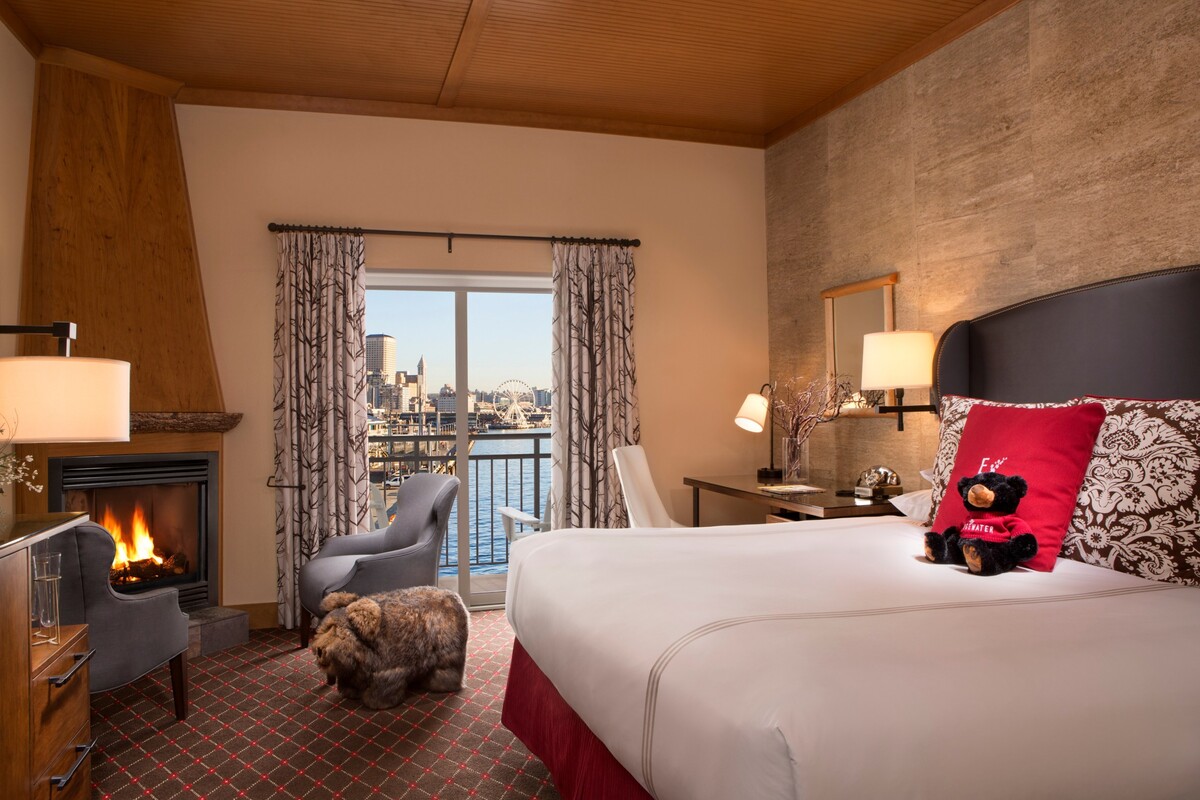
With children, I would settle the sleeping arrangements first. The hotel provides cribs and rollaway beds without an extra charge and accepts requests for connecting rooms, though these are not guaranteed. Confirm the occupancy and bed arrangement for the room you choose.
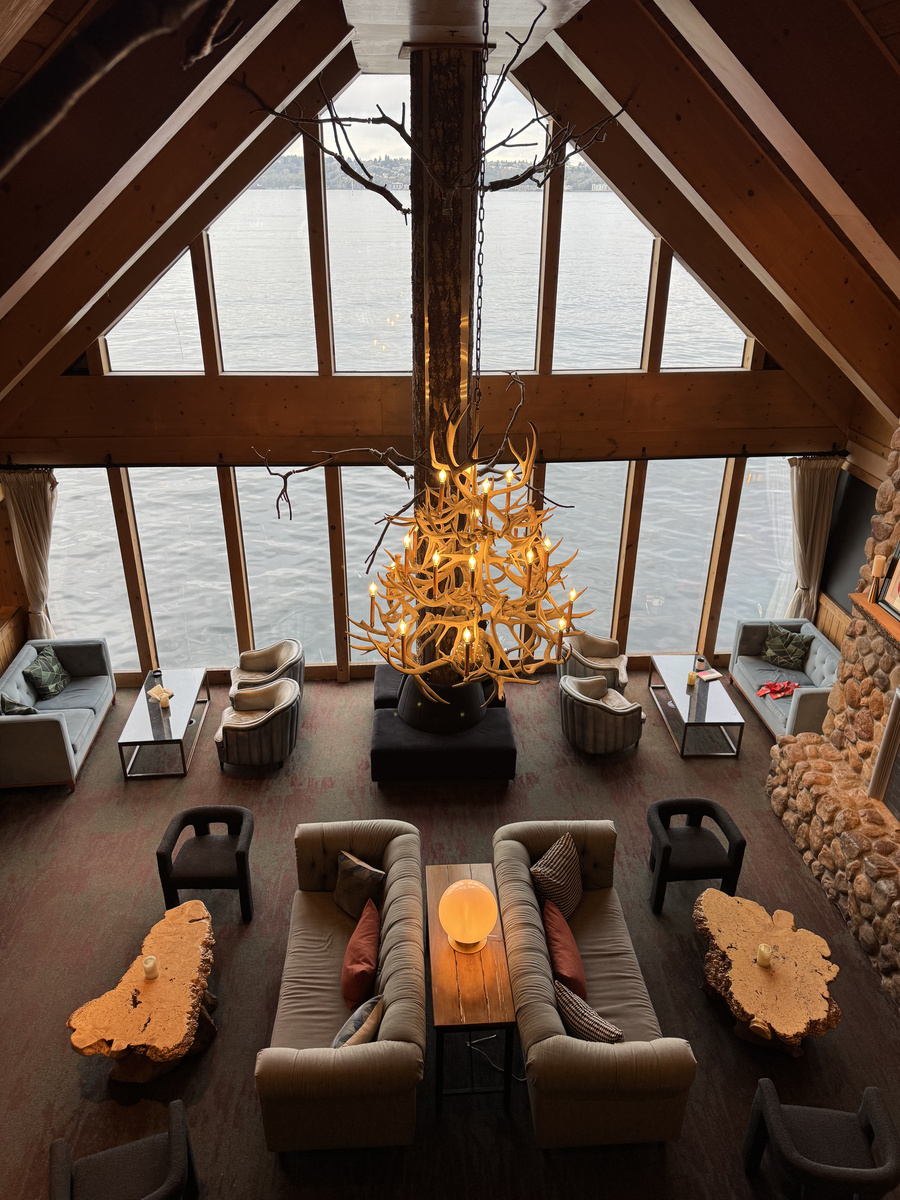
The public rooms carry the same idea inland. Timber, river stone, antler chandeliers, deep chairs and framed guitars give the hotel the air of a Pacific Northwest lodge that has drifted into the city. The look could feel theatrical somewhere else. On this pier, with mountains across the water and Seattle rising behind it, it belongs.
Breakfast at Six Seven
American hotel breakfast has a reputation for weight: eggs, bacon, potatoes, pancakes, enough food to settle the day before it has begun. Six Seven can provide the familiar comforts, but its better idea is to let Seattle onto the plate. We could begin the morning with salmon or with Dungeness crab, two ingredients that make sense when breakfast is served at the edge of Elliott Bay.
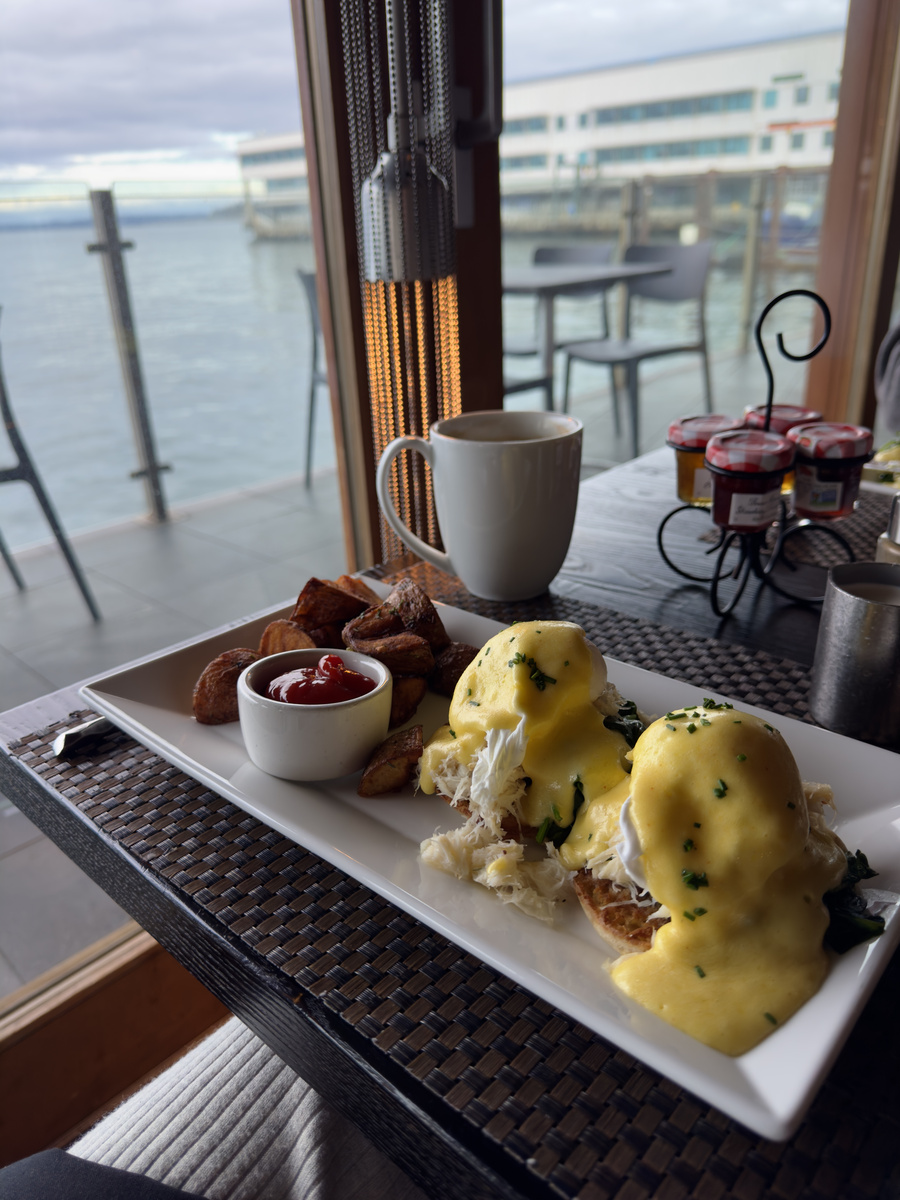
My crab Benedict came with two poached eggs, hollandaise and a remarkable amount of sweet white crab. It was still a generous American breakfast, with roasted potatoes alongside, but it belonged to this particular coast. The bay was behind the plate and, in a small but satisfying way, on it too.
Walking from The Edgewater
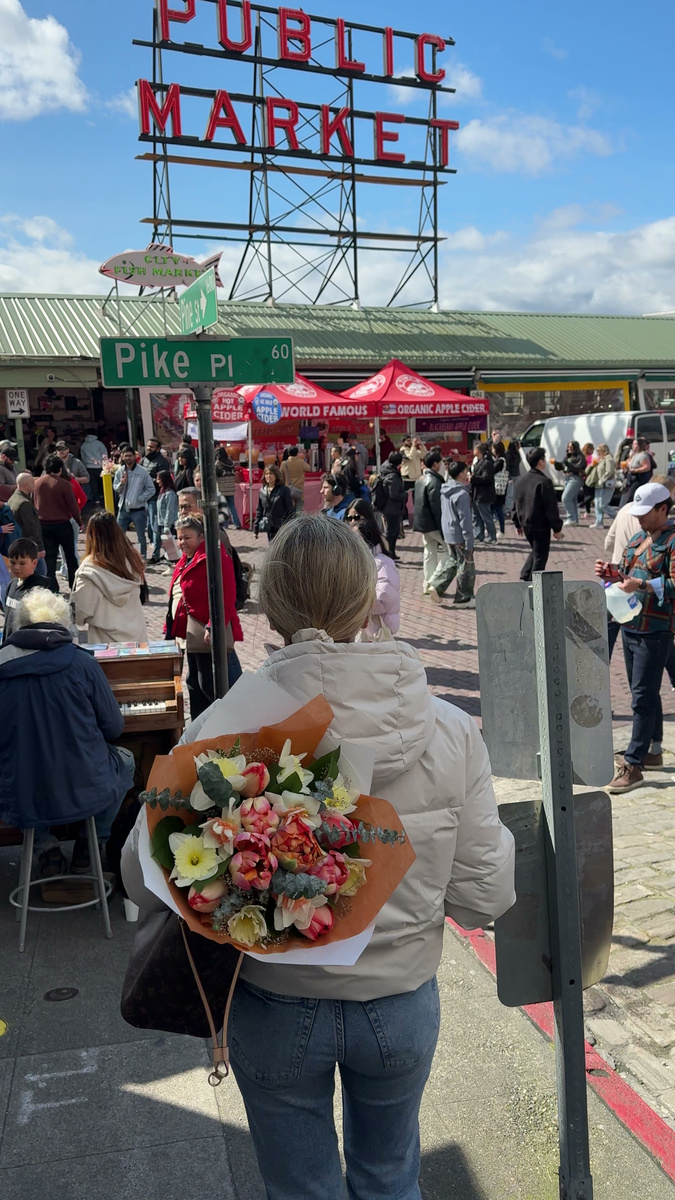
The room gives The Edgewater its romance; the walks make it work as a Seattle address. After five days on foot, the distances became mine. Pike Place Market was ten minutes away at my pace.
Food is often missing from an American city story, as though a country with so many borrowed traditions cannot possess a cuisine of place. Seattle makes that argument difficult to sustain. Its character kept returning through four things: Dungeness crab and wild salmon, Washington wine and coffee. The first two come from the cold waters that define the city’s geography. Washington is America’s second-largest producer of premium wine. Coffee is the urban inheritance, inseparable from the company that began at Pike Place.
For a short stay, the market condensed most of that story into a few blocks. There was smoked salmon to taste without committing to another formal meal, and very good food meant to be eaten while walking. Piroshky Piroshky, opened by the Kotelnikov family in 1992, still sent warm hand pies straight from its small bakery window. DownUnder, Northwest Tastings poured wine from its family vineyard in central Washington and paired it with local smoked salmon and shellfish. If I wanted to sit rather than graze, Maximilien offered French-inspired cooking and a patio above the market with Elliott Bay and the Olympic Mountains spread below.
In 2025, Seattle mornings seemed to organize themselves around coffee lines. At Pike Place, one ran along the cobblestones outside the first Starbucks. Flowers, fish and breakfast moved around it. In the city where the company began, coffee still had a sense of ceremony.
Four minutes from the hotel, the public rooftop terrace at Bell Street Pier 66 gave me my clearest view across Elliott Bay to the Olympic Mountains. They rose beyond the cruise pier and the working harbor. I repeated the walk whenever the sky allowed it.
We also visited the Seattle Aquarium farther along the waterfront and the Museum of Pop Culture at Seattle Center. The aquarium brings the marine life beneath those views closer; the museum takes the hotel’s musical thread into the city, with a Sound Lab where visitors can try instruments and mixing consoles.
From Pier 67, I could reach the market before the day crowded in, join Seattle for coffee, look for the Olympics beyond the port, then return when the light changed over Elliott Bay. A conference could occupy the middle of the day. The edges still belonged to Seattle.
Six Seven after work
The Beatles Suite, Pearl Jam Suite and framed guitars keep the old gamble visible. I prefer this music history with a little humour. A hotel that once had the Beatles fishing from a bedroom window is allowed a guitar or two on the walls.
The music need not stay on the walls. The hotel now offers two-hour guitar loans and access to record players and vinyl as part of its amenities programme. A record beside the fire would suit an evening above the bay.
By evening, Six Seven changed its population. Breakfast belonged largely to hotel guests; on an ordinary evening, we saw far more diners arrive from outside than familiar faces from the morning. That is an important distinction. Six Seven is not simply a dining room made convenient by the lift upstairs. It remains one of Seattle’s well-regarded seafood restaurants, with the rare advantage of tables at the literal water’s edge.
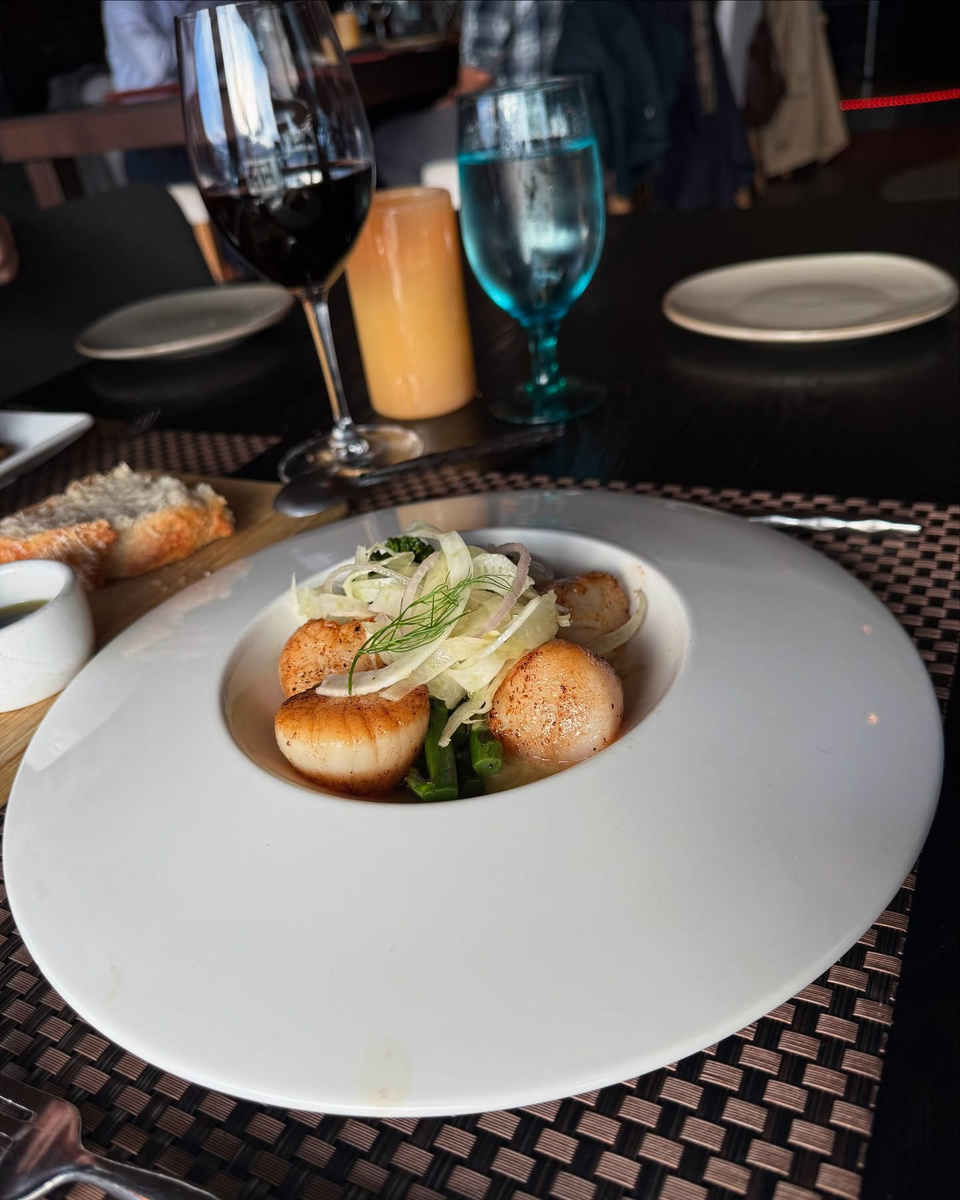
A restaurant in such a position could let the view do the work. Six Seven did not. My seared scallops were precise and beautifully served, with fennel and green vegetables, while boats moved beyond the glass. The water made the evening memorable, but it did not have to excuse the cooking.
The wine list continues the regional thread, with Washington represented alongside Oregon and Northern California. Six Seven now serves daily brunch and dinner; its current menus and table reservations are worth checking when planning the evening.
The hours Seattle kept
Seattle often enters an itinerary through something larger: a conference, an Alaska cruise, a road into Washington’s mountains. The Edgewater gave our two work trips a center of their own. We could walk to the market in the morning, look for the Olympic Mountains from the cruise pier, and come back to a fire above the bay.
Work explained why Seattle appeared on our calendar. Five days later, the calendar had become less important. Pike Place was ten minutes away, the Olympic Mountains from Pier 66 four, and the water was still moving below the open window.