
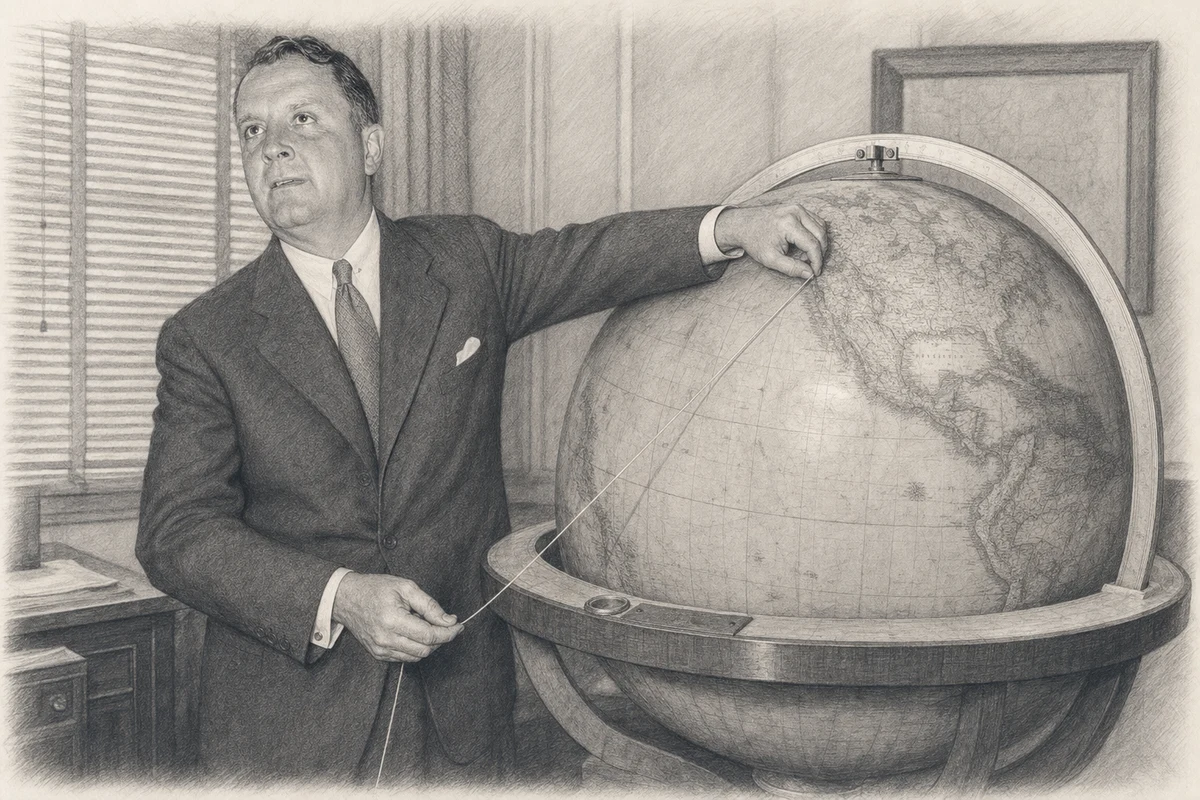
At the National Air and Space Museum in Washington there is an old globe that once stood in Juan Trippe’s office.
It is large, handsome and slightly theatrical—the sort of object that looks inevitable beside the chairman of Pan American Airways. In publicity photographs Trippe appears with it often: dark suit, pipe, the world conveniently reduced to arm’s reach. But the globe was not merely scenery. Trippe would stretch a piece of string between two points on its surface, measure the distance and calculate how long one of his aircraft might take to fly it.
There may be no better object with which to understand him.
Trippe did not invent the airplane. He did not invent the airline. By the time Pan American began flying in 1927, Europeans had already been buying tickets on KLM, Imperial Airways and other scheduled carriers for years. Even the short route with which Pan Am began—Florida to Cuba—had been flown commercially before.
What Trippe understood unusually early was that the important unit in commercial aviation was not the airplane.
It was the route.
An airplane could be bought. A route had to be assembled out of permissions, fuel, radio stations, weather reports, landing places, maintenance, hotels, mail contracts, diplomatic agreements and, eventually, passengers willing to believe that a line drawn across an ocean represented something as dependable as a railway timetable.
Trippe’s talent was to look at blank space on a map and see not distance but missing infrastructure.
Then he built it.
Seven surplus airplanes
Juan Terry Trippe was born in 1899 into a prosperous East Coast family. His father worked in finance. He entered Yale in 1917, left for U.S. Navy flight training during the First World War, qualified as a naval aviator, and returned when the war ended before he could be sent overseas. At Yale he helped establish the flying club; after graduation he briefly became a bond salesman.
It was a sensible career for a young man with his background.
He abandoned it.
In 1923 Trippe and former Yale flying companions bought seven surplus Navy aircraft and formed Long Island Airways. They offered charter flights, sightseeing and air-taxi work to the sort of New Yorker who could afford to treat an airplane as a novelty.
The venture taught Trippe something more useful than success might have.
There were not yet enough passengers.
Civil aviation in the 1920s had a technology before it had a market. Aircraft existed. Pilots existed in abundance after the war. What did not yet exist was a sufficiently large population willing to pay enough, often enough, to support an airline.
The customer that could be relied upon was the government.
And the cargo governments needed moved quickly was mail.
Trippe moved into Colonial Air Transport, which won an air-mail contract on the Boston–New York route. Mail revenue made the machine work; passengers could ride on top of a system whose economics did not depend entirely upon them. But Trippe wanted to extend the logic south—to Miami, Havana and beyond. His more conservative associates did not share the appetite. He left Colonial in 1926.
This is the first recurring pattern in his life.
Trippe was rarely the person who invented a technology. He was the person who became impatient with the scale at which everyone else was using it.
Boston to New York was an airline.
He wanted a hemisphere.
The airline that almost missed its first flight
Pan Am’s founding story is better when the mythology is removed.
The company called Pan American Airways was incorporated in March 1927 by a group separate from Trippe’s. Its backers included men concerned about American strategic interests in Latin America and the Panama Canal. In July it won a U.S. Post Office contract to carry foreign air mail between Key West and Havana.
There was a problem.
It did not have the Cuban landing rights necessary to use it.
Trippe did.
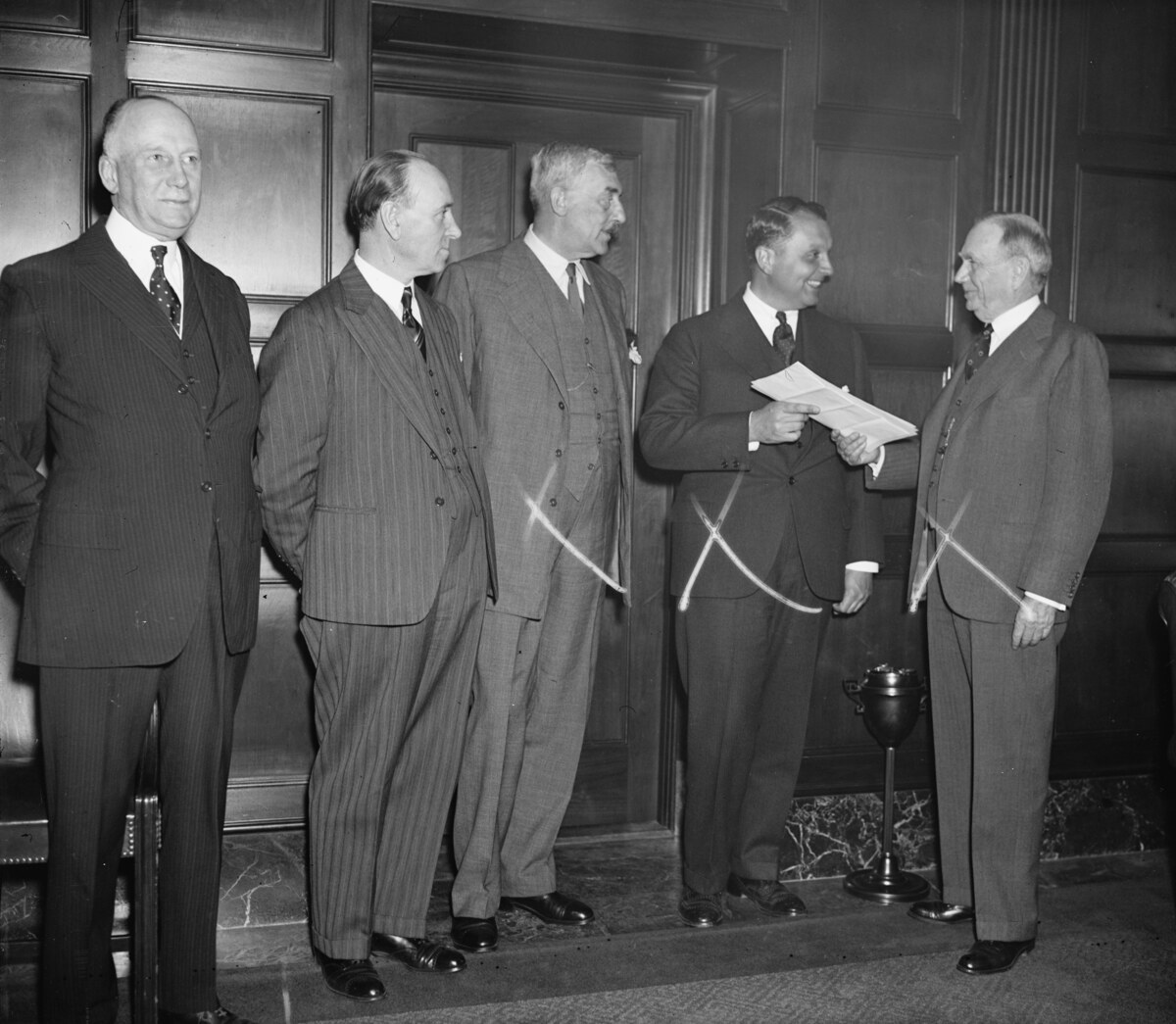
Months earlier, while building his own aviation venture, he had gone to Havana and secured permission from the Cuban government. A third group, associated with Eddie Rickenbacker’s Florida Airways interests, was also maneuvering for the same emerging market. The rivals ultimately combined their useful pieces. On 11 October 1927, the corporate structure was reorganized with the 28-year-old Trippe as president and general manager.
Eight days remained before the Post Office deadline.
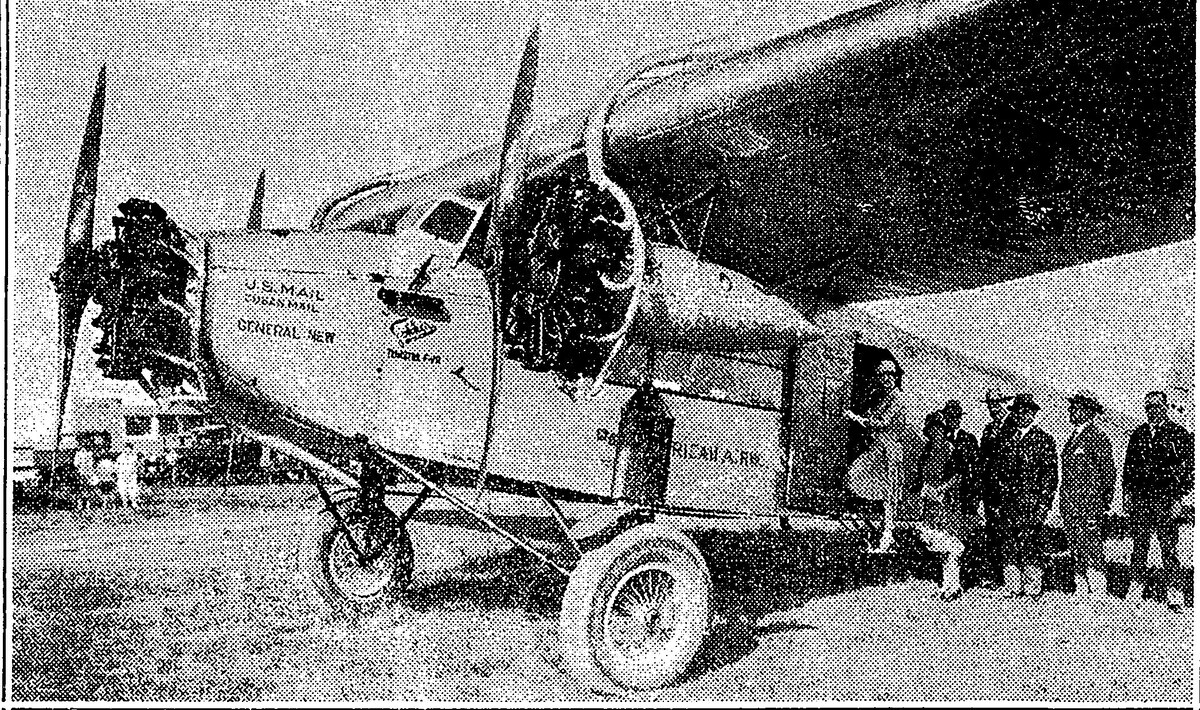
Pan Am’s own Fokker trimotors were not ready to perform the required flight. Its Key West airfield was not properly ready either. So the inaugural Pan American flight on 19 October 1927 was made in a chartered Fairchild floatplane belonging to another airline, West Indian Aerial Express, flown by a Canadian pilot, Cy Caldwell. It carried roughly 30,000 letters to Havana and preserved the mail contract.
This is a wonderfully unglamorous beginning for the airline that would later become shorthand for glamorous flying.
Before the Clipper lounges, the china and the blue globe logo, Pan Am’s most valuable assets were a government contract, a foreign permission and the ability to improvise before a deadline.
The first fare-paying flight followed on 16 January 1928. It could take seven passengers. A seat to Havana cost $50.
Trippe was not yet selling the world.
He had made the first small section of it bookable.
The useful thing about governments
It is tempting to tell Pan Am as the triumph of one private entrepreneur over geography. That would make a good advertisement and poor history.
Trippe’s expansion worked because his commercial ambition repeatedly aligned with American state interest.
The United States wanted reliable communications with Latin America. It worried about European—particularly German—aviation influence in the hemisphere. The Post Office could finance routes through mail contracts; the State Department could help an American carrier negotiate access abroad. Before the Second World War, Pan Am became effectively the United States’ principal international airline while being restricted from the domestic network.
Trippe understood this arrangement exceptionally well.
He did not simply ask, Where do passengers want to go?
He asked where mail revenue, diplomacy, national strategy and future passenger demand overlapped.
That made Pan Am something peculiar: not a flag carrier in the European sense, because the American government did not own it, but for years something close to a private national instrument.
It also made Trippe’s conquests less solitary than later legend suggests. Latin America already had airlines. Colombia’s SCADTA had been operating since 1919. Aeromarine had flown between Florida and Cuba earlier in the decade. New York, Rio & Buenos Aires Line—NYRBA—became a formidable rival down the east coast of South America.
Trippe did not discover an empty continent.
He built a system by winning contracts, negotiating traffic rights, partnering where useful, purchasing competitors where possible and using Washington with considerable skill.
The innovation was not the existence of an airplane over the Caribbean.
It was that all these fragments began to behave like one network.
To fly somewhere, first build somewhere to arrive
The Pacific exposed the full scale of Trippe’s thinking.
A conventional airline expands by adding a destination with an airport.
Pan Am wanted to cross an ocean in which some of the places it needed did not yet possess an airfield, a hotel, a weather station—or, in the case of Wake Island, much human infrastructure at all.
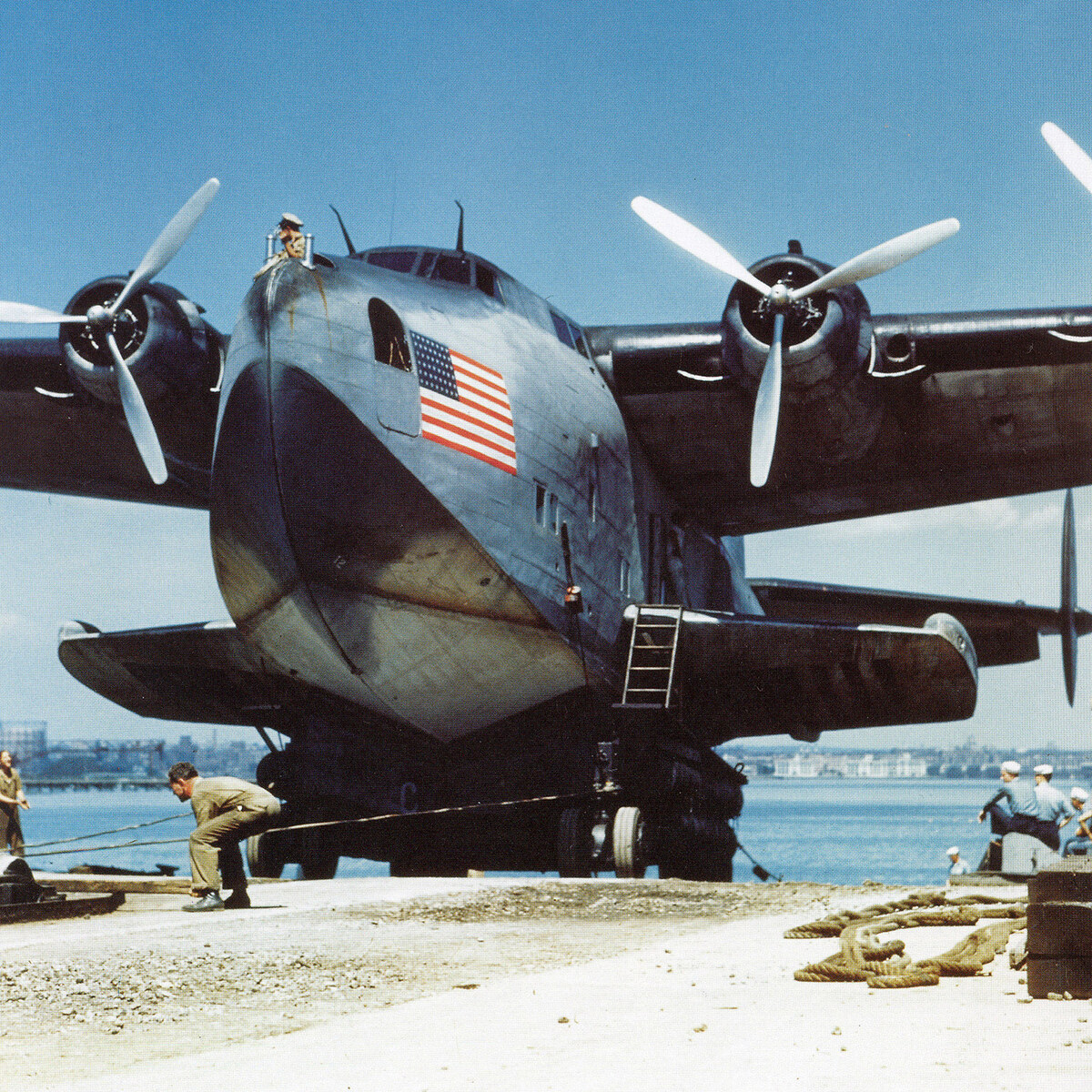
The technical answer was the flying boat.
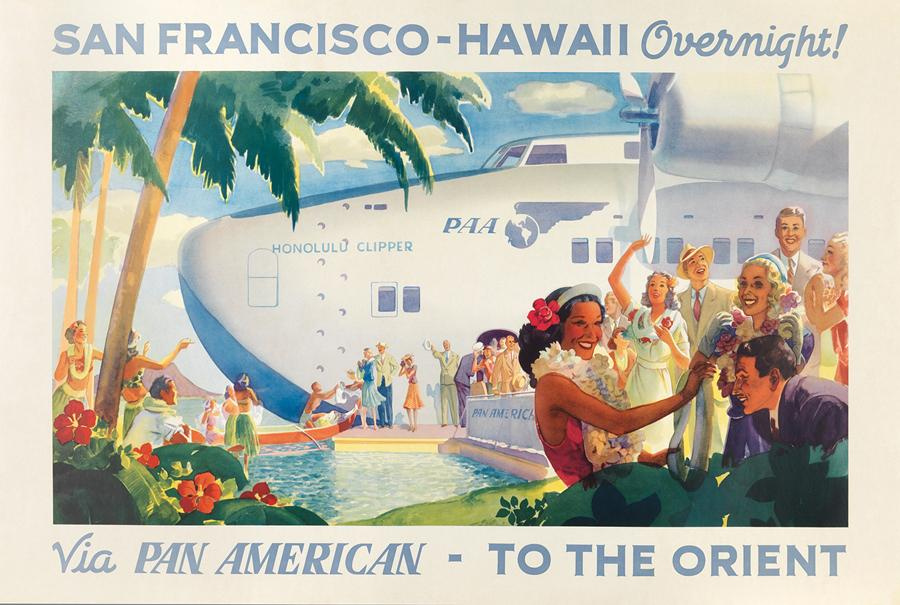
Large landplanes required long prepared runways. Water covered most of the route already. Trippe pushed manufacturers toward increasingly capable seaplanes: Sikorsky, then Martin, then Boeing. Pan Am borrowed the maritime language deliberately. These were not merely aircraft. They were Clippers, heirs in name to the fast sailing ships that had once connected distant ports.
But even a flying boat needed somewhere to refuel.
For the route from California to Asia, Pan Am surveyed the Pacific, established bases and built passenger facilities at Midway, Wake and Guam. On remote islands it installed docks, radio and direction-finding equipment, weather facilities, power generation, workshops and accommodation. Pan Am constructed hotels at Midway and Wake for passengers and crews.
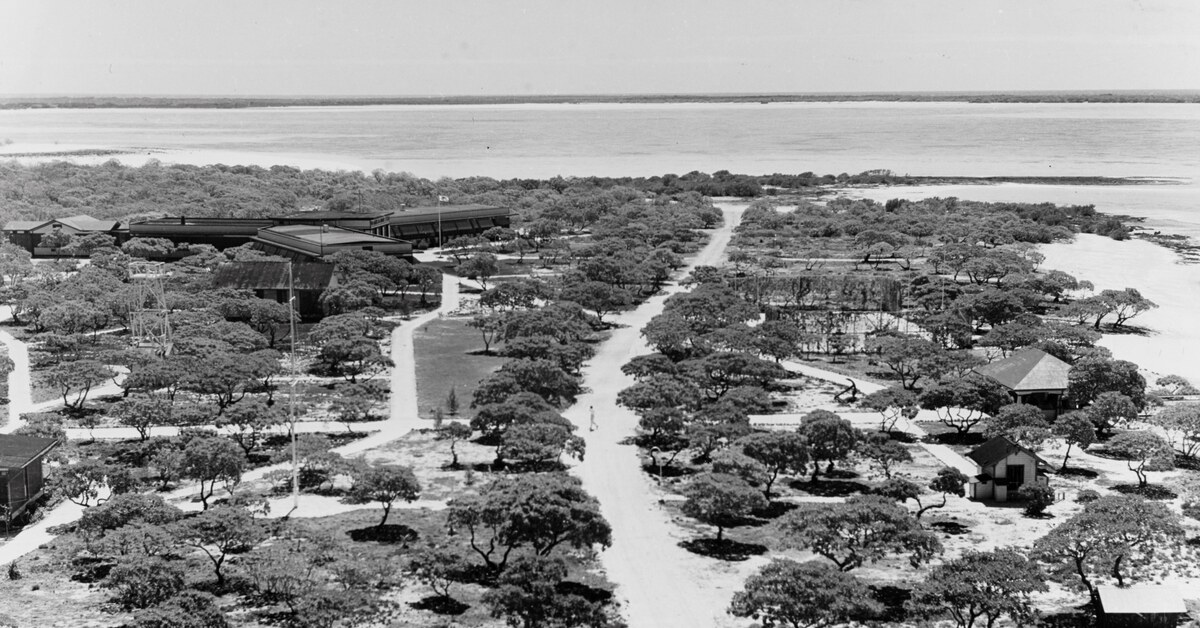
This may be the purest example of Trippe’s method.
He wanted an airline route.
The route required hotels on tiny Pacific islands.
So the airline built hotels on tiny Pacific islands.
In November 1935 the China Clipper, a Martin M-130, left San Francisco Bay on the first scheduled transpacific mail service to Manila. Passenger service followed in October 1936. The journey took about six days and roughly sixty hours in the air, stopping through Hawaii, Midway, Wake and Guam. A one-way ticket cost $799—an extraordinary sum at the time—and the aircraft often carried only a handful of passengers.
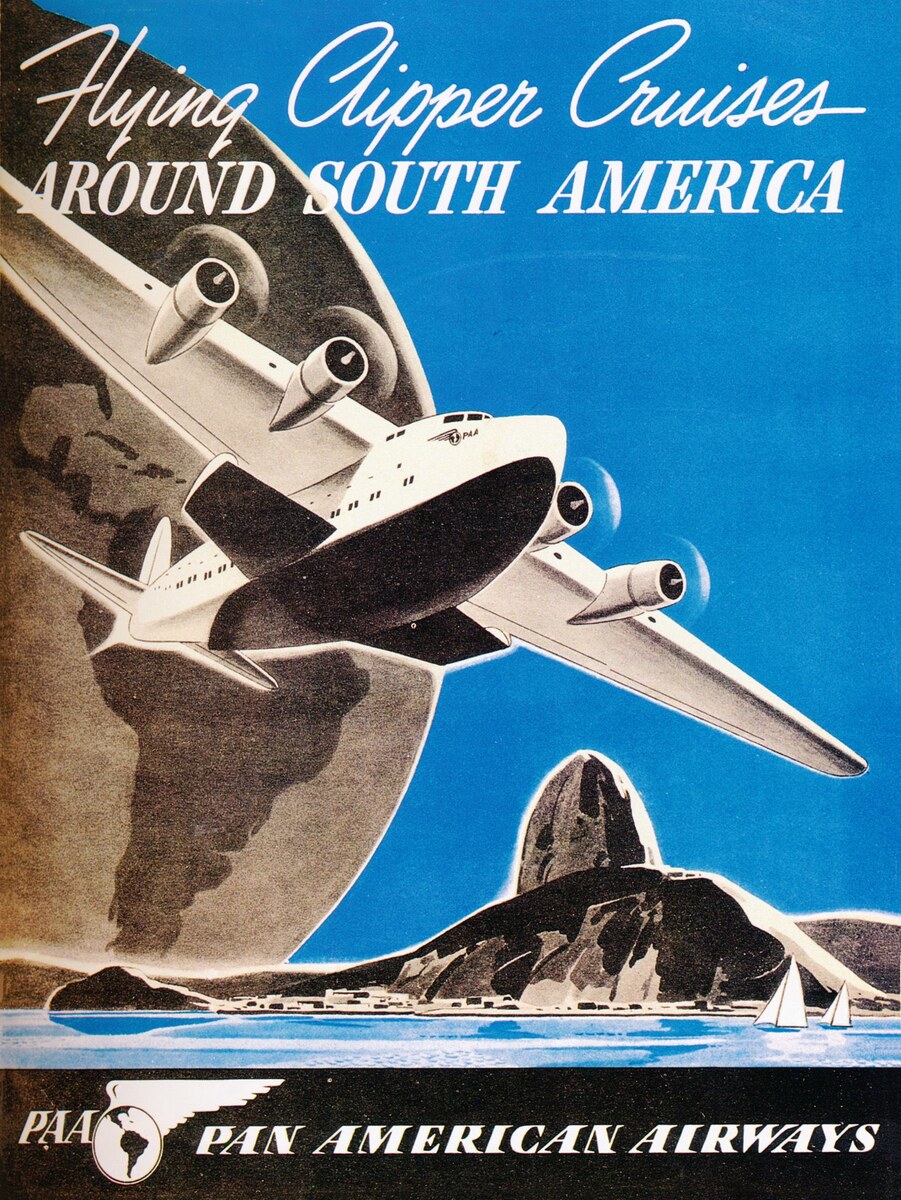
The trip was luxurious because it had to be.
On a journey measured in days, with long hours inside a noisy machine over an ocean from which there was no diversion airport, space, meals, beds and civilized overnight stops were not simply decorative indulgences. They were part of making an implausible journey psychologically acceptable.
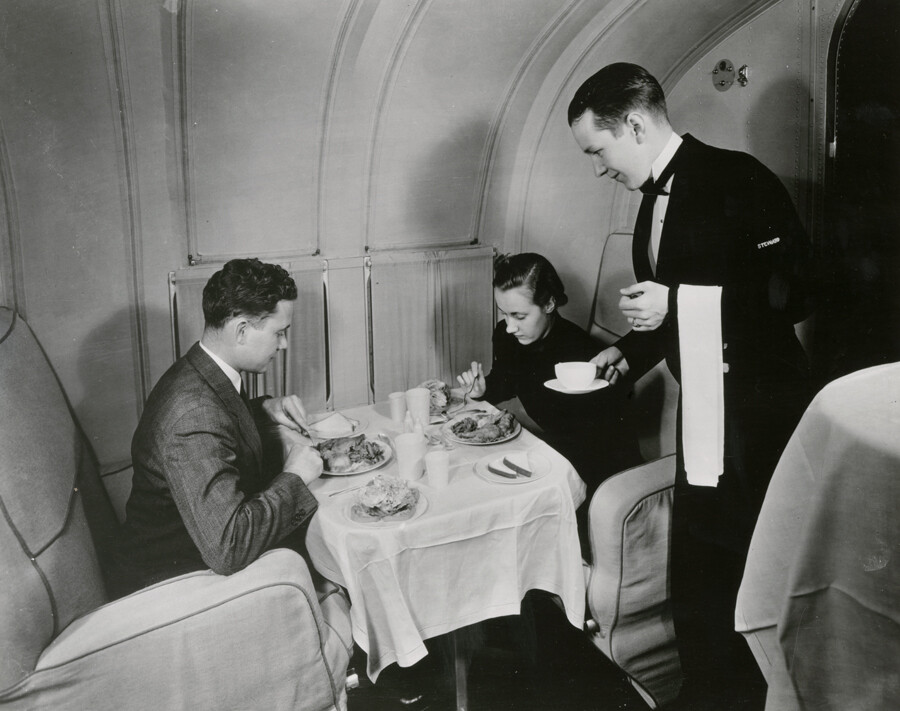
Pan Am’s famous glamour was therefore not initially a marketing garnish applied to transportation.
It was part of the engineering of trust.
The world’s most useful celebrity pilot
Trippe also understood that infrastructure could be human.
In 1929 Pan Am hired Charles Lindbergh as a technical adviser. No aviator on earth carried more symbolic authority. Only two years earlier Lindbergh had flown alone from New York to Paris and become one of the most famous people in the world.
Putting him beside a young airline was excellent publicity.
But Trippe did not waste him as a mascot.
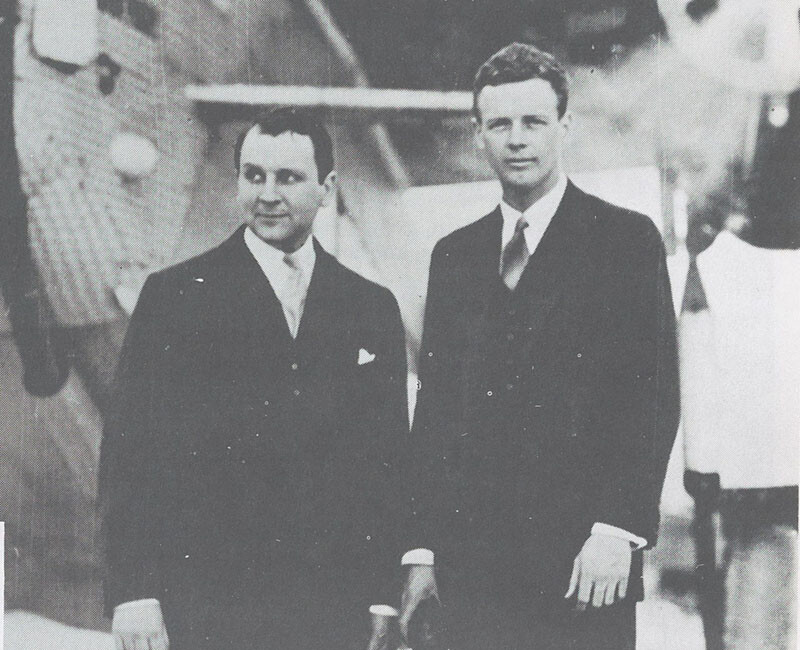
Lindbergh participated in surveying possible routes and, with Anne Morrow Lindbergh, investigated long-distance paths across the North Atlantic and toward Asia. In 1933, Pan Am, Imperial Airways, Lufthansa, KLM and Air France were already cooperating on studies of possible transatlantic routes; Lindbergh surveyed Greenland and the northern approaches for Pan Am.
Again, the achievement was not a heroic pilot crossing an ocean once.
That had already happened.
The harder commercial problem was making the crossing happen next Tuesday, and the Tuesday after that.
A record flight proves that a machine can arrive.
An airline has to prove that a system can.
The dining room was not the point
The climax of the Clipper era came with the Boeing 314.
It is difficult to look at its cabins now without romanticizing them. There were lounges, sleeping berths, separate dressing rooms, proper meals and a dining salon. Pan Am presented the ocean crossing in the language of the great liners it was beginning to replace.
In June 1939 the Dixie Clipper carried Pan Am’s first transatlantic passenger service from the New York area to Marseille, with 22 passengers and 11 crew. The trip included stops in the Azores and Lisbon.
This is the Pan Am that survives in cultural memory.
It is also the Pan Am that can obscure Trippe.
Because the man responsible for one of aviation’s most exclusive travel experiences was already trying to make exclusivity obsolete.
As early as 1943, Trippe publicly framed the choice starkly: air transport could remain a luxury for the wealthy or “carry the average man at what he can afford to pay.” Pan Am, he said, had chosen the latter.
That statement is more important to his legacy than the Clipper dining room.
After the war he pushed for lower transatlantic fares and a separate tourist class. The international fare system resisted him. Airlines and governments had spent years treating high prices as a way to protect fragile economics and divide traffic predictably. Trippe wanted density.
His first postwar attempts did not immediately prevail. Pan Am was proposing a genuine two-class Atlantic service by 1948, but broad international agreement took years. In May 1952 tourist-class service finally began on the North Atlantic, with more seats and fewer frills at a substantially lower fare than first class.
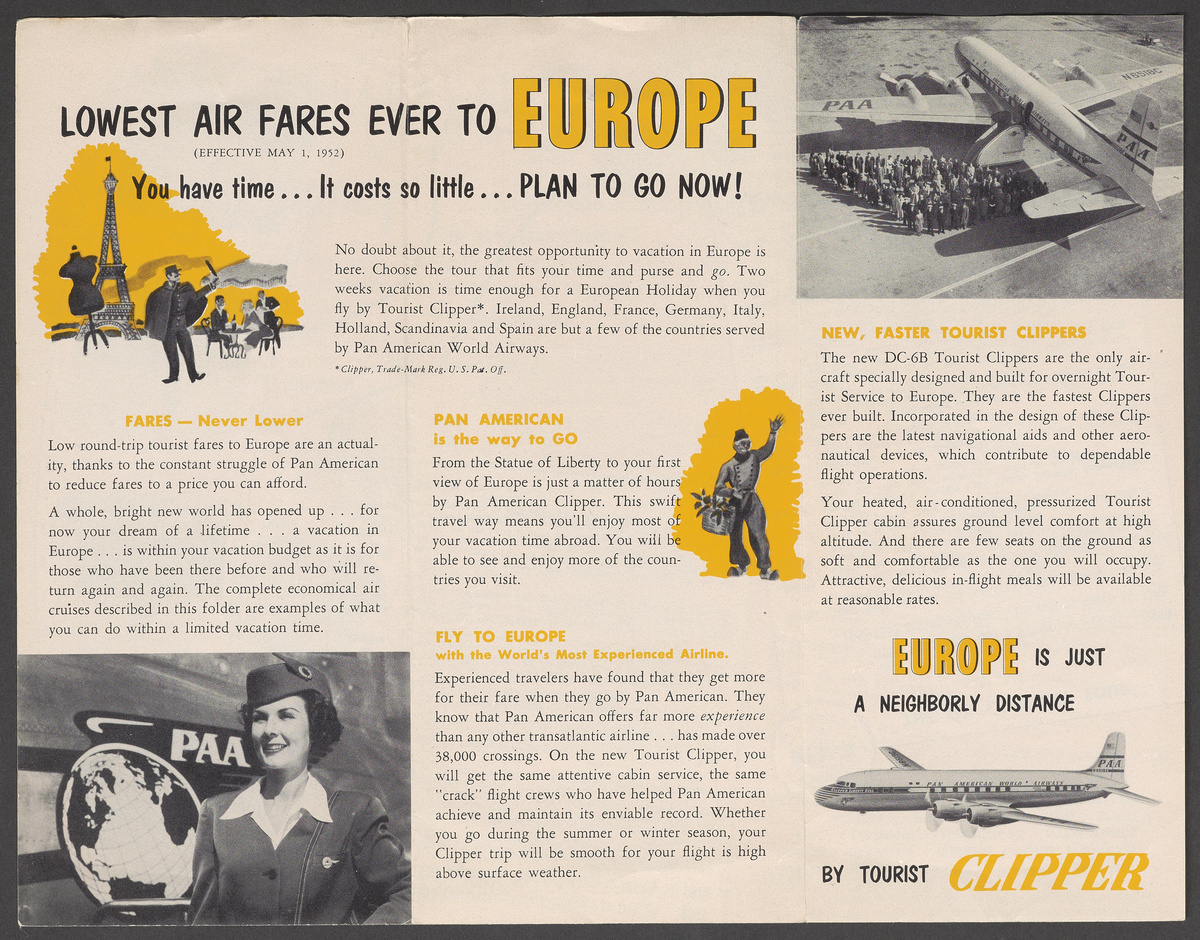
This was not charity.
Trippe’s insight was commercial: the profitable future of aviation would not come from extracting extraordinary prices from a tiny number of people. It would come from reducing the unit cost of transportation until the market became enormous.
Luxury Pan Am and mass-market Pan Am were not contradictory businesses.
The first financed and legitimized the route.
The second filled it.
He ordered airplanes that did not yet exist
Once Trippe understood the economics of scale, aircraft manufacturers became part of his distribution system.
His relationship with them was unusually aggressive. Rather than asking what airplanes happened to be available and designing routes around them, Pan Am repeatedly specified the transportation problem it wanted solved and pushed manufacturers toward a machine large enough, fast enough or long-legged enough to solve it.
In the 1930s that pressure helped produce the great flying boats.
In 1955 Pan Am committed heavily to the coming jet age, ordering Boeing 707s as well as Douglas DC-8s. The first Pan Am 707 scheduled service left New York for Paris in October 1958. Jets nearly halved crossing times, flew above much bad weather and, crucially, could work harder: more speed meant more journeys per aircraft.
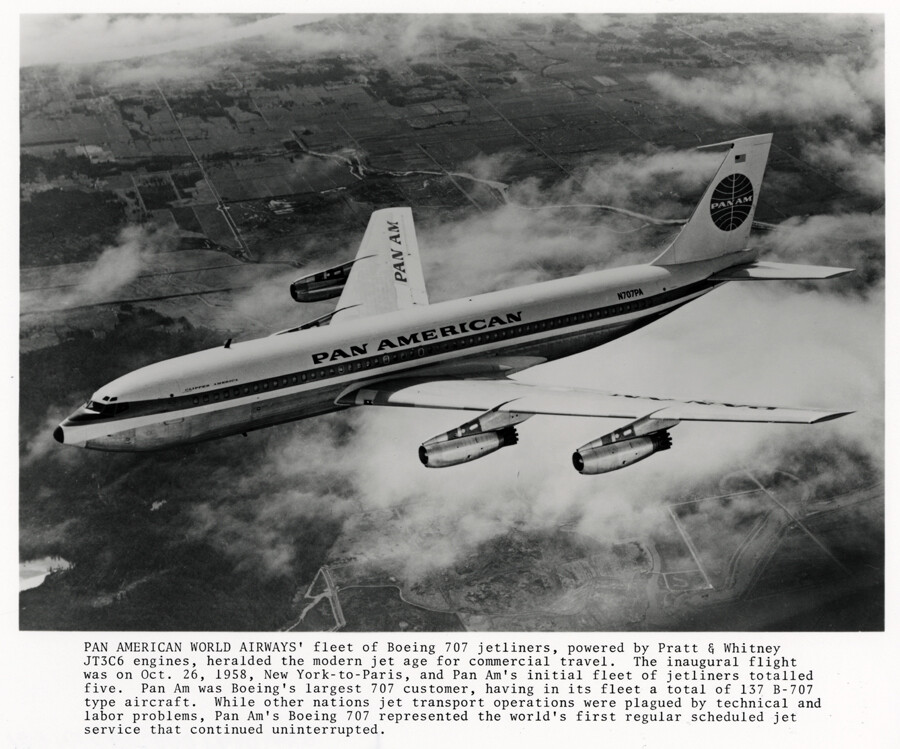
Trippe understood what speed meant to tourism better than the stopwatch suggests.
A ship crossing the Atlantic required a traveler to allocate a meaningful portion of a holiday simply to transportation. A piston airliner reduced that cost in time. A jet reduced it again until Europe from New York could cease to be an expedition and become a vacation.
Distance was not becoming shorter.
It was becoming cheaper in units of human life.
And then Trippe asked Boeing for something much bigger.
By the mid-1960s airports and airways were filling, passenger demand was rising and Trippe wanted an aircraft roughly twice the scale of the 707. Boeing had technology and design work that could be redirected toward a huge civil transport. In April 1966 Pan Am committed to 25 Boeing 747s for $525 million, an order large enough to launch the program.
Boeing still had to design much of the aircraft.
It also had to build the factory in which to build it.
This is perhaps the most Trippe-like transaction of his career: he did not purchase a mature product. His order helped create an industrial reality that neither company could sensibly undertake alone.
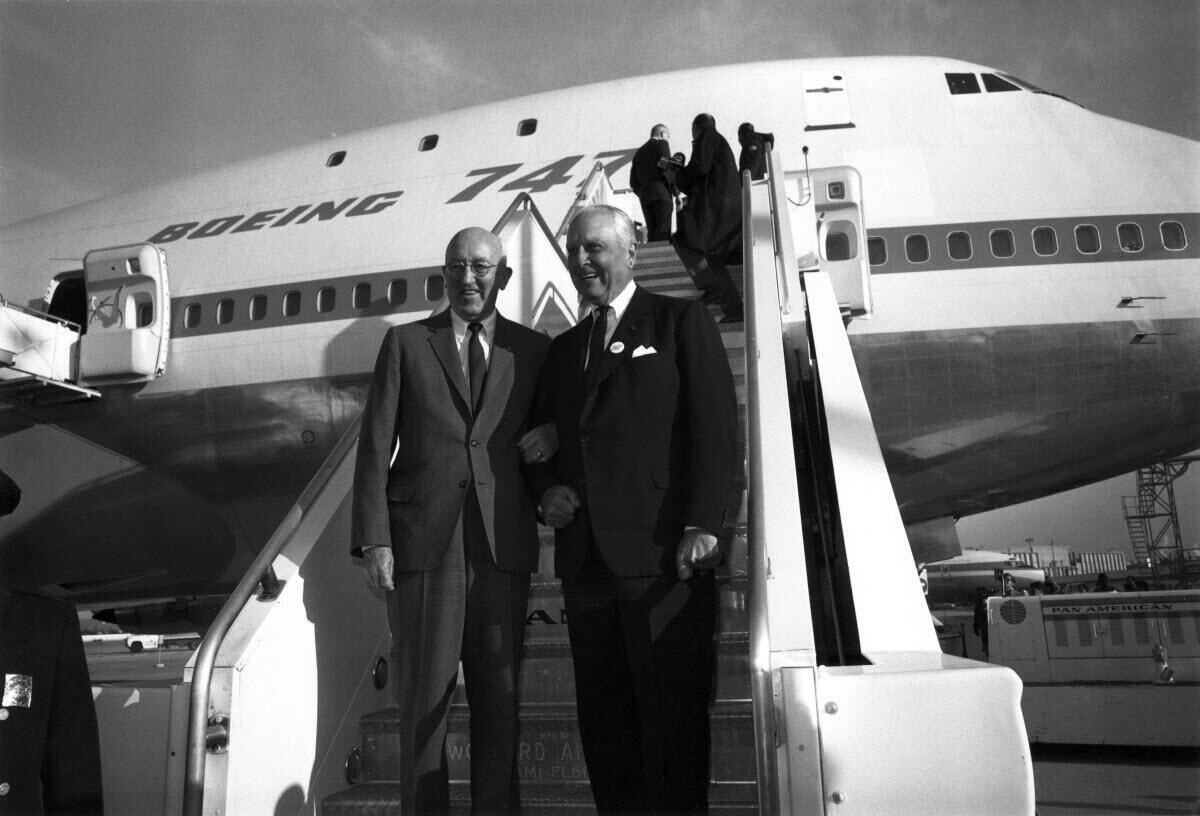
The 747 entered Pan Am service in January 1970, after Trippe had stepped down from day-to-day leadership.
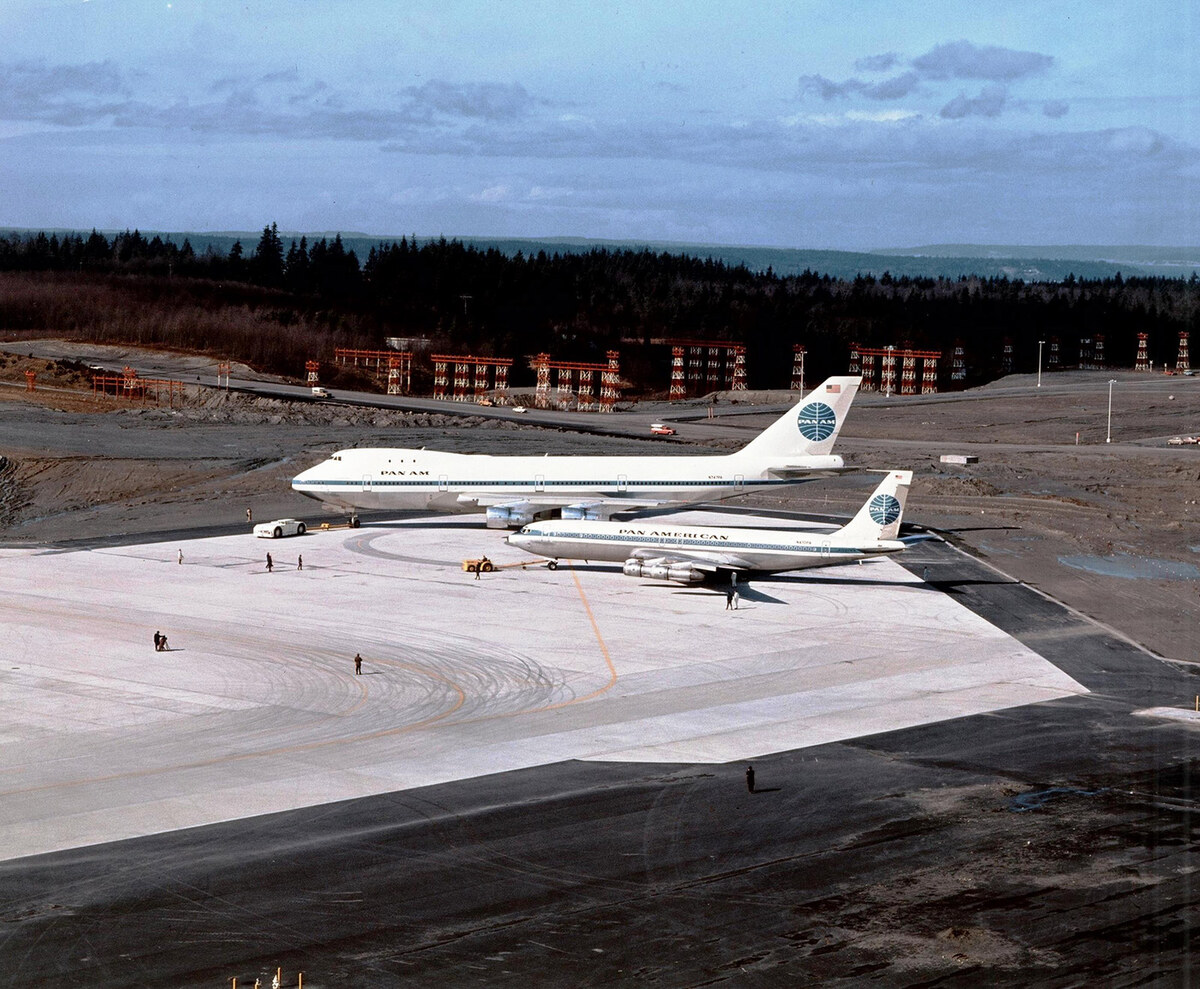
Its popular image inherited the old Pan Am glamour—staircase, upper-deck lounge, improbable acreage inside an airplane—but its economic meaning belonged to the philosophy Trippe had articulated decades earlier.
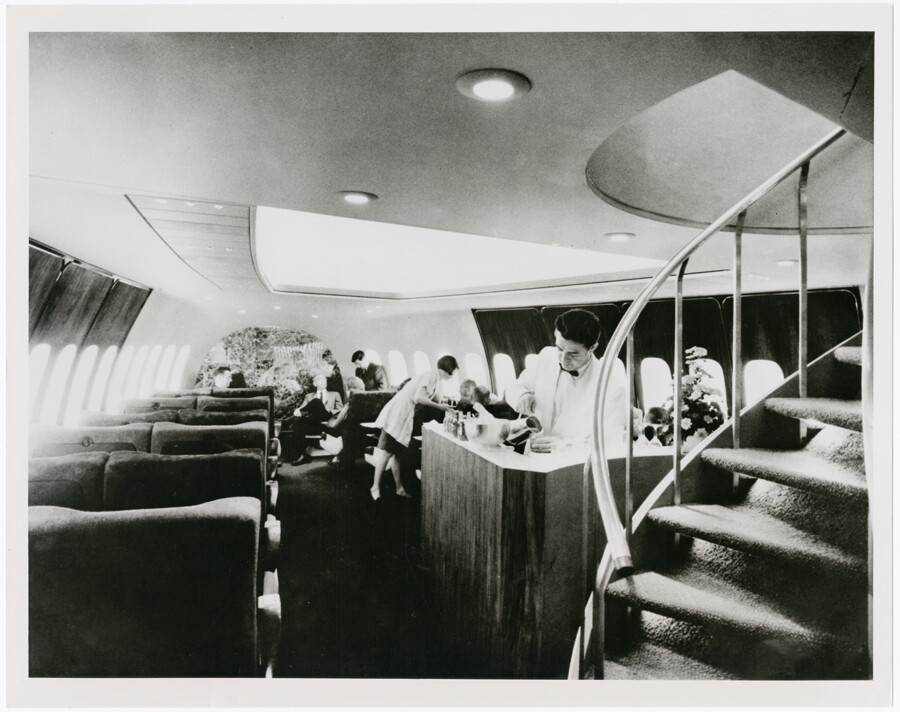
More passengers per departure.
Lower cost per seat.
Lower fares.
More people able to cross oceans.
The Clipper had made the world glamorous.
The jumbo jet made it crowded.
Trippe would probably have considered that progress.
What Juan Trippe actually invented
There is a tendency in founder stories to grant one person everything that happened around him.
Trippe does not need that treatment.
Igor Sikorsky, Glenn Martin, Boeing’s engineers and Joe Sutter’s 747 team built the airplanes. Edwin Musick and generations of Pan Am crews made the routes work. Charles and Anne Lindbergh surveyed them. The U.S. Post Office financed early aviation through mail. American diplomats helped secure the international permissions. Governments created the regulatory system. Thousands of Pan Am employees built bases, interpreted weather, repaired engines, cooked meals and turned schedules into operations.
Nor was Pan Am first at every milestone. European civil aviation was mature before the company existed. Latin American airlines preceded it. Competitors repeatedly forced it to move faster.
Trippe’s contribution is more specific—and more useful to the history of travel.
He understood that travel is not created when transportation becomes technically possible. Travel is created when possibility is turned into a repeatable product.
A traveler does not buy aerodynamics.
The traveler buys the confidence that there will be an aircraft, a seat, permission to cross the border, somewhere to land, fuel at the next stop, a bed if the journey takes several days, baggage at the other end, and another service returning home.
Trippe assembled those dependencies at planetary scale.
Then, having spent the 1930s making an impossibly expensive form of travel desirable, he spent the postwar decades trying to make it ordinary.
That is the paradox at the center of his Portrait.
The white tablecloth was never the final objective.
The full airplane was.
The line on the globe
Pan Am itself did not survive the world it helped create.
Its international specialization, once protected and valuable, became a weakness as American aviation deregulated. It struggled with changing economics, competition, fuel shocks and the lack of the sort of domestic feeder network its rivals possessed. The airline ceased operations in 1991, ten years after Trippe’s death.
But judging Trippe by the survival of Pan Am misses the more interesting inheritance.
Today an airline route appears on a booking screen as something almost abstract: three letters for an airport, a departure time, an arrival time, a fare. A traveler can cross an ocean without knowing who negotiated the traffic rights, where the aircraft will be serviced, which weather systems are being watched, how the airport obtained its fuel, or how many bilateral agreements make the ticket legally possible.
The enormous machine has become invisible.
That invisibility is one of modern travel’s greatest luxuries.
Trippe spent his life constructing an earlier version of it.
The old globe from his office is now in a museum. The string is no longer required. Software calculates the distance instantly, aircraft cross it routinely, and millions of travelers buy journeys that would have belonged to movie stars and industrialists when Pan Am’s first Clippers flew.
Which makes the globe more interesting, not less.
Juan Trippe looked at it when much of its surface was still operationally blank. He ran a string between two places and asked what would have to exist between them before somebody could buy a ticket.
Then he spent four decades filling in the answer.