
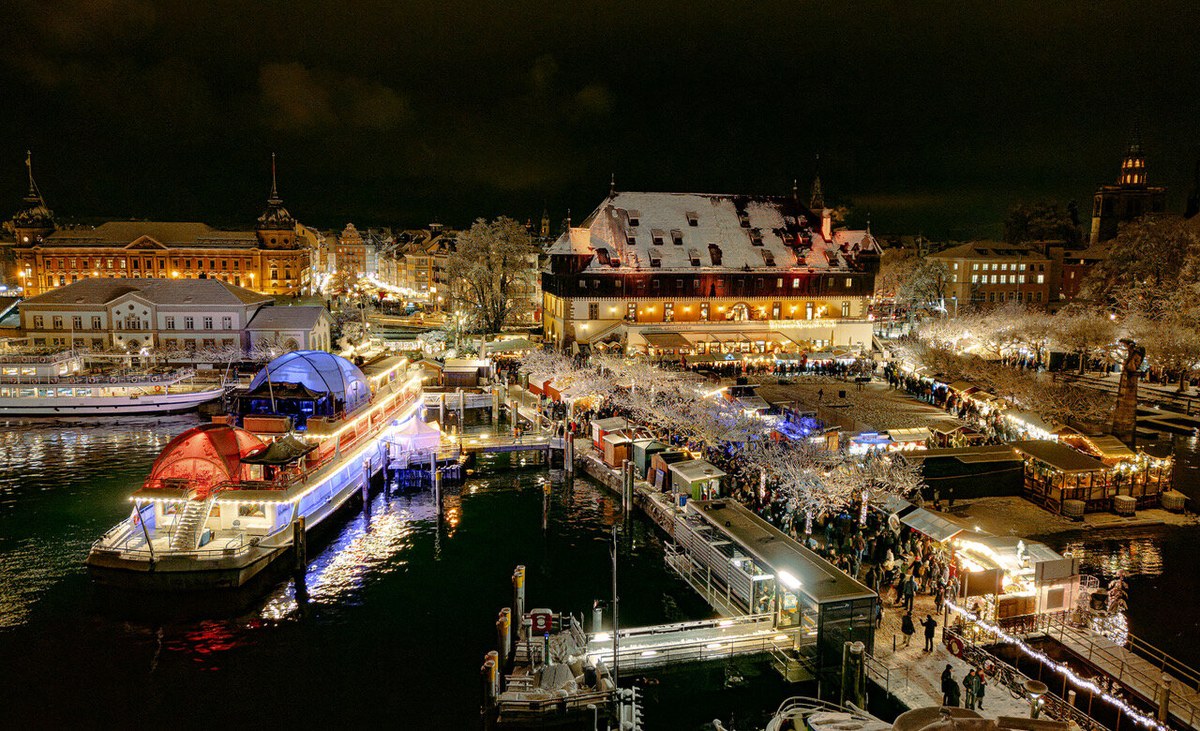
I’ve been to Lake Constance, which everyone around the water calls the Bodensee, on several occasions in summer and autumn. Ferries crisscrossed bright blue water between vineyard hills, while the Alps stood sharply along the horizon. Yet across all those warm-season visits, I missed what happens here once November turns dark.
What had I missed? I learned about it only this autumn. Every Advent, the lake carries on through winter. Germany, Austria, and Switzerland stage a shared Christmas celebration at the water’s edge and on it. Illuminated Christmas ships and cross-border ferries link harbor markets where mulled wine steams against the Alps.
The image that settled my December 2026 calendar involved boarding a decorated ship in Austria. Thirty-five minutes later, I would step off beside a historic Bavarian lighthouse. By then, the Bodensee had moved straight to the top of my list.
After putting together my Alsace Christmas markets guide and writing about daily life inside the Luxembourg Christmas markets, I wanted a holiday trip with a different geography. This route offers less flat cobblestone plaza and more water, mountain air, and border-hopping romance.
Lake Constance also has serious historical weight behind the scenery. Konstanz held a 15th-century papal conclave, while Lindau has an island harbor guarded by a stone lion. Stein am Rhein supplies frescoed Swiss façades, and Friedrichshafen is the birthplace of the rigid airship.
My own visits so far belong to summer and autumn, so what follows is openly a 2026 plan. It’s rooted in those earlier visits, alongside the official schedules, ferry timetables, and local tourism records across all three shores.
Two big questions shaped every choice I made. Can the Bodensee deliver real December snow? Could I fold my dream of a Zeppelin flight into a holiday outing? Both produced answers that changed how I’m structuring the trip, and I’ll return to each below. The itinerary near the end also shows how those answers affect the practical order of the four days.
Why the Bodensee Works for a Three-Country Christmas
Why does winter feel different here from almost anywhere else in Central Europe? Well, the map supplies the first answer. The lake stretches roughly 63 kilometers, or 39 miles, from west to east, yet Germany, Austria, and Switzerland never drew formal national borders across the broad water of the main upper basin.
In practice, the shoreline behaves like one shared neighborhood with three accents. It uses two currencies, the euro and the Swiss franc, while a network of ferryboats keeps running after owners haul the summer yachts indoors.
Timing is everything, though. Unlike Luxembourg’s Winterlights, which stays open past New Year’s Day, the Bodensee’s shore markets keep staggered Advent calendars. Two of the highlights, Lindau’s harbor market and the Vorarlberg Lines Christmas Ship, operate only from Thursday through Sunday.
When does everything align? My target window for 2026 is a four-day stretch between 3 and 20 December, anchored on a Thursday-to-Sunday run. If I can lock in 10–13 December, every major piece falls into place. Konstanz, Lindau, Bregenz, Friedrichshafen, Überlingen, and St. Gallen all fit, as do Bregenz’s medieval Upper Town craft market and Stein am Rhein’s three-day Medieval Market inside a historic cloister.
A week later, 17–20 December, offers a different bargain. That window trades Stein am Rhein’s medieval weekend for the scheduled reopening of the newly modernized Säntis cable car high in the Swiss Alps.
Lake Constance Christmas markets and ships at a glance, 2026
Switch between the major shore markets across Germany, Austria, and Switzerland and the Christmas ships and year-round ferries linking them over the water.
Shore markets (DE · AT · CH)
| Market & country | 2026 dates & days | Hours & signature highlight |
|---|---|---|
| Konstanz — Weihnachtsmarkt am See (DE) | 26 Nov–23 Dec (daily) | 11am–9:30pm food (8pm Sun–Thu stalls) · ~170 huts from Marktstätte to moored Weihnachtsschiff |
| Insel Mainau — Christmas Garden (DE) | 19 Nov–9 Jan (closed 24 & 31 Dec) | 5pm–9:30pm timed entry · ~2 km illuminated winter trail across Baroque palace gardens |
| Lindau — Lindauer Hafenweihnacht (DE) | 26 Nov–20 Dec (Thu–Sun only) | 11am–9pm · Island harbor promenade facing the Bavarian Lion, New Lighthouse, and Märchenwald |
| Friedrichshafen — Bodensee-Weihnacht (DE) | 27 Nov–20 Dec (daily) | Buchhornplatz lakeside huts, live nativity, Zeppelin Museum nearby, curling rink to 6 Jan |
| Überlingen — Hofstatt & WinterZauber (DE) | 10–20 Dec (ice rink 1 Dec–6 Jan) | 11am–8pm daily · Intimate old-town market plus lakeside ice skating |
| Bregenz — Bregenzer Weihnacht & Oberstadt (AT) | 15 Nov–23 Dec (Oberstadt 5–6, 12–13, 19–20 Dec) | 11am–8pm stalls / 9pm food (Oberstadt 2pm–8pm) · Kornmarktplatz plus medieval Upper Town crafts |
| St. Gallen — Sternenstadt (CH) | 26 Nov–24 Dec (stars to 6 Jan) | ~700 hanging AllerStern stars over UNESCO Abbey District, Gallusplatz chalets, higher snow odds |
| Stein am Rhein — Märlistadt (CH) | 2 Dec–3 Jan (Medieval Market 11–13 Dec) | Wed–Fri 2pm–8pm, Sat 11am–10pm, Sun 11am–7pm · 25th edition amid frescoed medieval facades |
Christmas ships & winter ferries
| Ship or ferry route | 2026 schedule | Crossing & onboard experience |
|---|---|---|
| Vorarlberg Lines Weihnachtsschiff (MS Austria) | 26 Nov–20 Dec (Thu–Sun, 4× daily) | Bregenz ↔ Lindau (~35 min, ~€19 return incl. Vorarlberg transit) · winter forest, 10 m model train, deck bar |
| Konstanz Moored Weihnachtsschiff | 26 Nov–23 Dec (daily) | Stationary in Konstanz harbor beside Konzil · free entry, stalls, 360° panorama Ice Bar |
| MS Oesterreich — Magic Christmas | Select Advent evenings (Nov–Dec) | From Hard, Lindau/Wasserburg & Arbon (~3 hrs, ~€128) · 1928 Art Deco ship, 4-course dinner, live music |
| SBS Advent Boat (Rorschach ↔ Lindau) | 28 Nov–20 Dec (Sat–Sun) | Direct Swiss-to-Bavarian market cruise (~CHF 45 return); plus Fri–Sat Fondue Ship from Romanshorn (CHF 89) |
| BSB Advent & Breakfast Cruises | 27 Nov–20 Dec (Fri–Sun) | Weekend scenic cruises from Konstanz and Lindau, plus Sunday Weisswurst breakfast sailings |
| Year-round Winter Ferries | Daily all December | Konstanz–Meersburg car ferry (24/7, 15 min) · Katamaran Konstanz–Friedrichshafen (52 min) · Friedrichshafen–Romanshorn (41 min) |
Christmas on the Water: The Ships and Winter Ferries
Why begin with the ships? This is the tradition that pulled me back to the lake in winter. On the Bodensee, a boat does more than connect two car parks. In December, several vessels become floating extensions of the markets themselves.
The Cross-Border Christmas Ship (MS Austria)
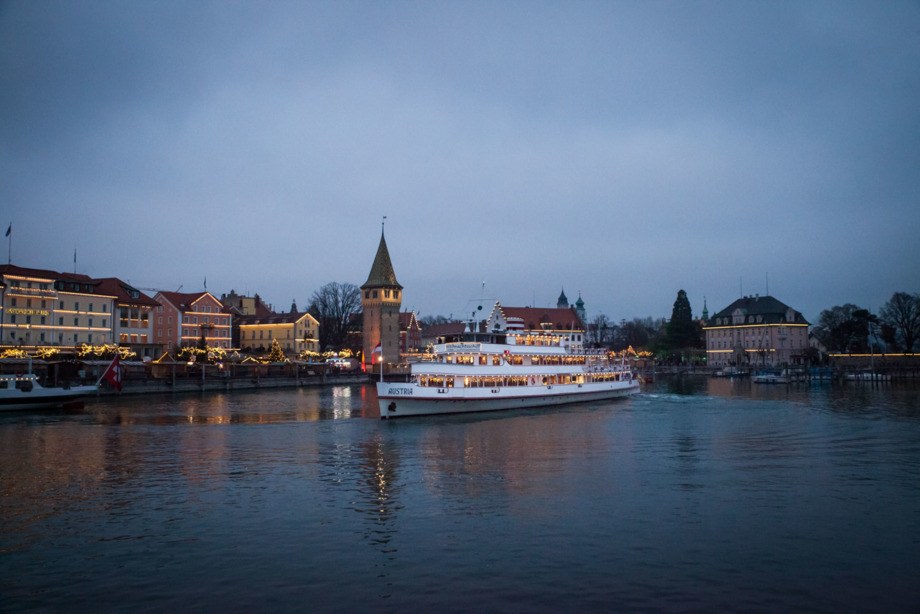
The headline experience on my list is the Vorarlberg Lines Weihnachtsschiff aboard the MS Austria, running Thursday through Sunday from 26 November to 20 December 2026. It links Bregenz Harbor in Austria with Lindau Harbor in Germany. The 35-minute crossing turns a border hop into an event. What a way to arrive beneath a lighthouse!
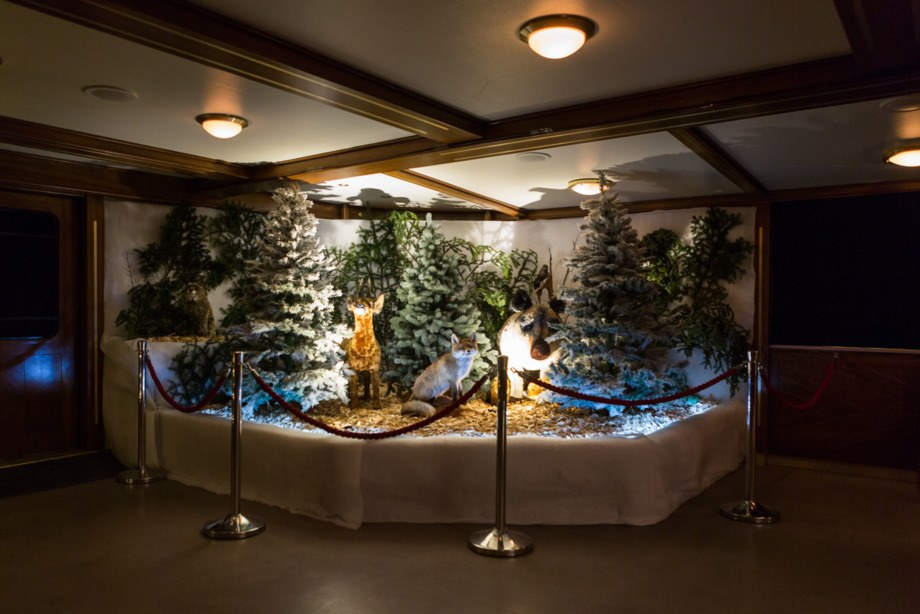
Inside, the ship creates its own miniature winter world. An illuminated indoor forest stands beside a model railway over ten meters long, which the Bregenz model-train club built. The Rankweil crib-makers supply the nativity displays, while a heated panoramic deck bar serves hot spiced drinks and seasonal plates.
Four round-trip sailings operate on each day the market runs. Departures leave Bregenz at 12:30 p.m., 2:10 p.m., 3:50 p.m., and 5:30 p.m. Returns leave Lindau at 1:20 p.m., 3:00 p.m., 4:40 p.m., and 6:20 p.m.
What does the fare cover? Your return sailing on the same day remains flexible. The roughly €19 adult round-trip ticket also covers public transit within Vorarlberg to and from Bregenz harbor. Yes, that means the boat and the journey to its pier can belong to the same ticket.
I’ll cross in late afternoon, watch dusk settle over Lindau’s lighthouse, and sail back once the shoreline lights reflect across the dark basin. If the weather turns sharp, the heated deck bar should make the wait part of the evening rather than something to endure.
The Moored Christmas Ship in Konstanz and the 1928 MS Oesterreich
Do you need a cruise ticket for Konstanz’s floating market? No, because its Weihnachtsschiff stays moored directly beside the harbor market. You can come aboard without buying admission to a cruise, which makes it an easy place to pause between the stalls. Upper and lower decks hold market stands, cozy dining cabins, and a 360-degree panorama bar looking straight across the harbor toward the Alps. Admission to the moored ship comes without a cruise fare!
For one dressed-up evening on the water, I’m eyeing Magic Christmas aboard the MS Oesterreich, a restored 1928 Art Deco motor ship run by Historische Schifffahrt Bodensee. The evening starts with a lakeside aperitif. A three-hour winter cruise follows, with a four-course dinner and live music inside heated wood-paneled salons. Expect to pay around €128 per adult, and reserve well ahead.
Alongside departures from Hard in Austria and Lindau/Wasserburg in Germany, 2026 adds departures from Arbon on the Swiss shore. That Swiss option could be especially useful if your route already includes Rorschach or St. Gallen.
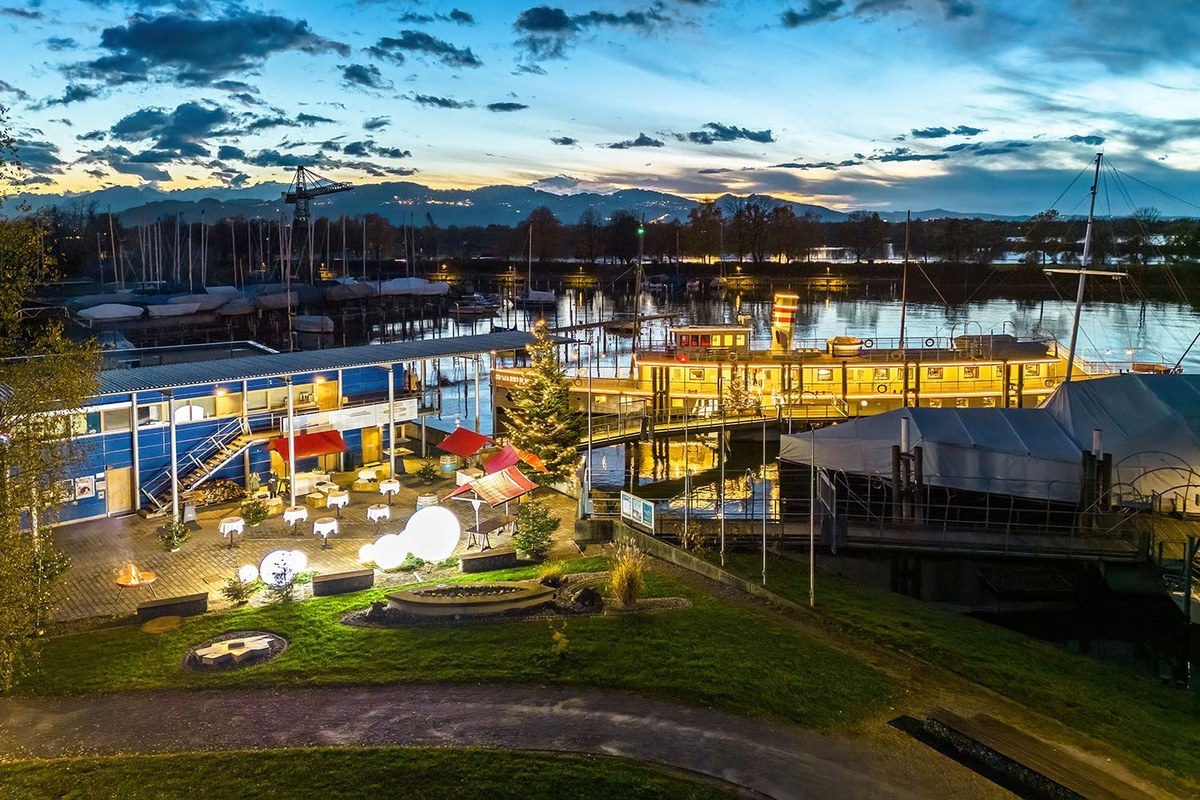
Swiss Advent Cruises and Year-Round Ferries
Three more winter sailings make it easy to move around the lake without living behind the wheel.
- Swiss Advent Boats, or SBS. On Saturdays and Sundays from 28 November to 20 December 2026, Schweizerische Bodensee-Schifffahrt runs direct round-trip sailings from Rorschach to Lindau for around CHF 45. On Friday and Saturday evenings all winter, its Fondue and Raclette Ship sails out of Romanshorn. The three-hour excursion combines melted Swiss cheese with the dark lake and starts from CHF 89.
- BSB Weekend Cruises. From 27 November to 20 December, Bodensee-Schiffsbetriebe schedules weekend afternoon cruises from Konstanz and Lindau. It also offers a cheerful Sunday-morning Adventsfrühstück cruise out of Lindau, with Bavarian Weisswurst and pretzels.
- Everyday Crossings. Three scheduled links keep the lake knitted together all winter. The 24/7 Konstanz–Meersburg car ferry takes 15 minutes. The sleek Katamaran between Konstanz and Friedrichshafen takes 52 minutes and runs hourly Monday–Saturday, then every two hours on Sundays. The Friedrichshafen–Romanshorn ferry takes about 41 minutes, with cars carried every two hours and an hourly foot-passenger boat.
Eight Places Around the Lake for December 2026
From west to east across Germany, Austria, and Switzerland, these are the eight lakeside towns and islands I’m stitching into my route. Each earns its place for a different reason, so the route should feel varied rather than like eight versions of the same row of chalets.
Konstanz: Weihnachtsmarkt am See
Konstanz is the largest city on the lake and the natural anchor for the western half of the trip. Its border runs straight into Swiss Kreuzlingen; that geography explains why Allied bombers spared Konstanz during the Second World War and left its medieval alleys intact. Down by the water stands the Konzilgebäude, a merchant warehouse dating to 1388. Between 1414 and 1418, the Council of Constance elected Pope Martin V there, which remains the only papal conclave ever held north of the Alps. Out on the harbor pier, Peter Lenk’s rotating nine-meter statue Imperia pokes sharp satire at both emperor and pope.
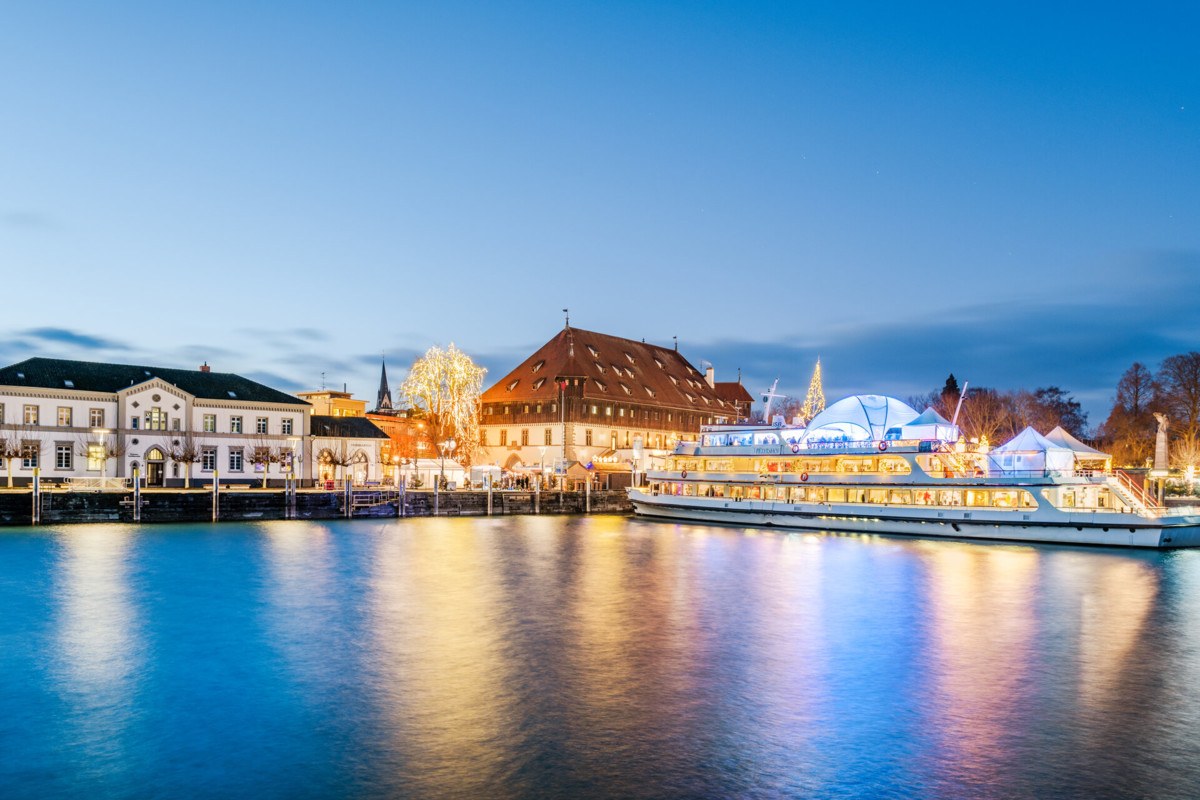
From 26 November to 23 December 2026, the Weihnachtsmarkt am See stretches roughly 170 timber huts from historic Marktstätte through the lakeside Stadtgarten to the harbor and moored Weihnachtsschiff. Food and drink stalls pour daily from 11 a.m. to 9:30 p.m. Craft stalls close around 8 p.m. Sunday through Thursday, so an evening devoted entirely to shopping could end earlier than you expect.
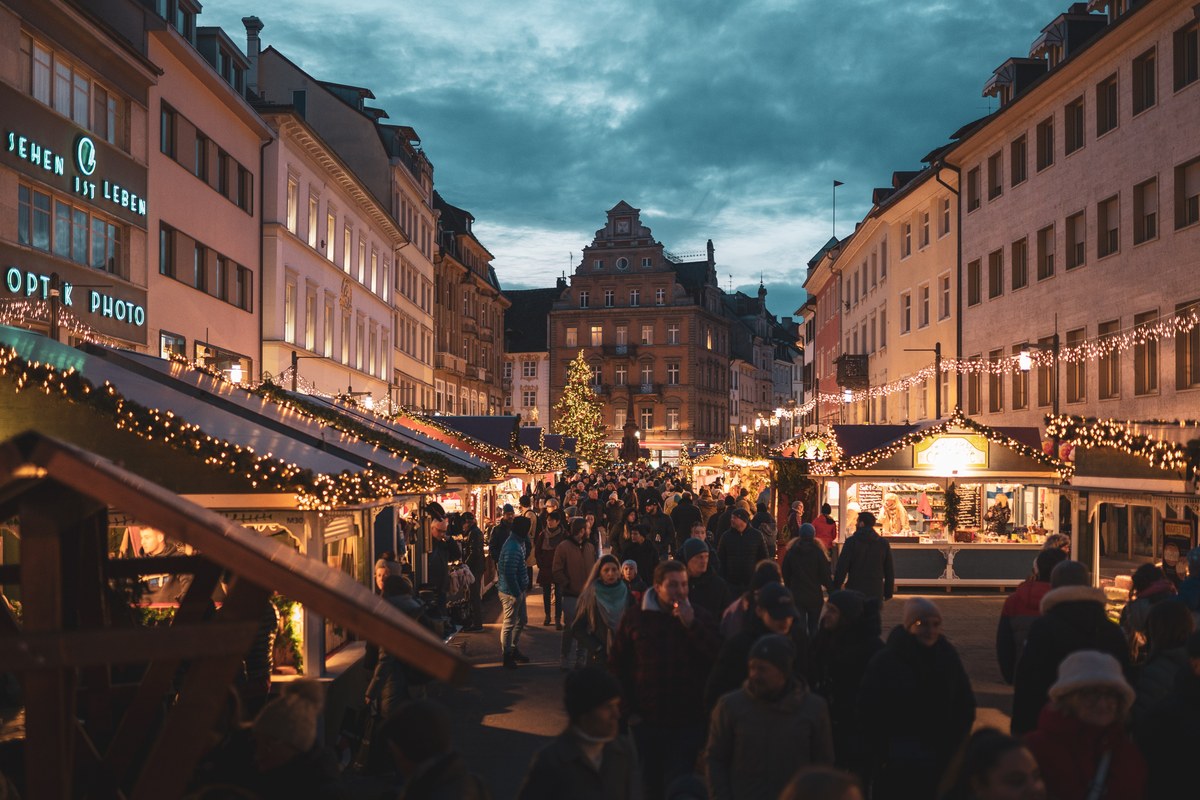
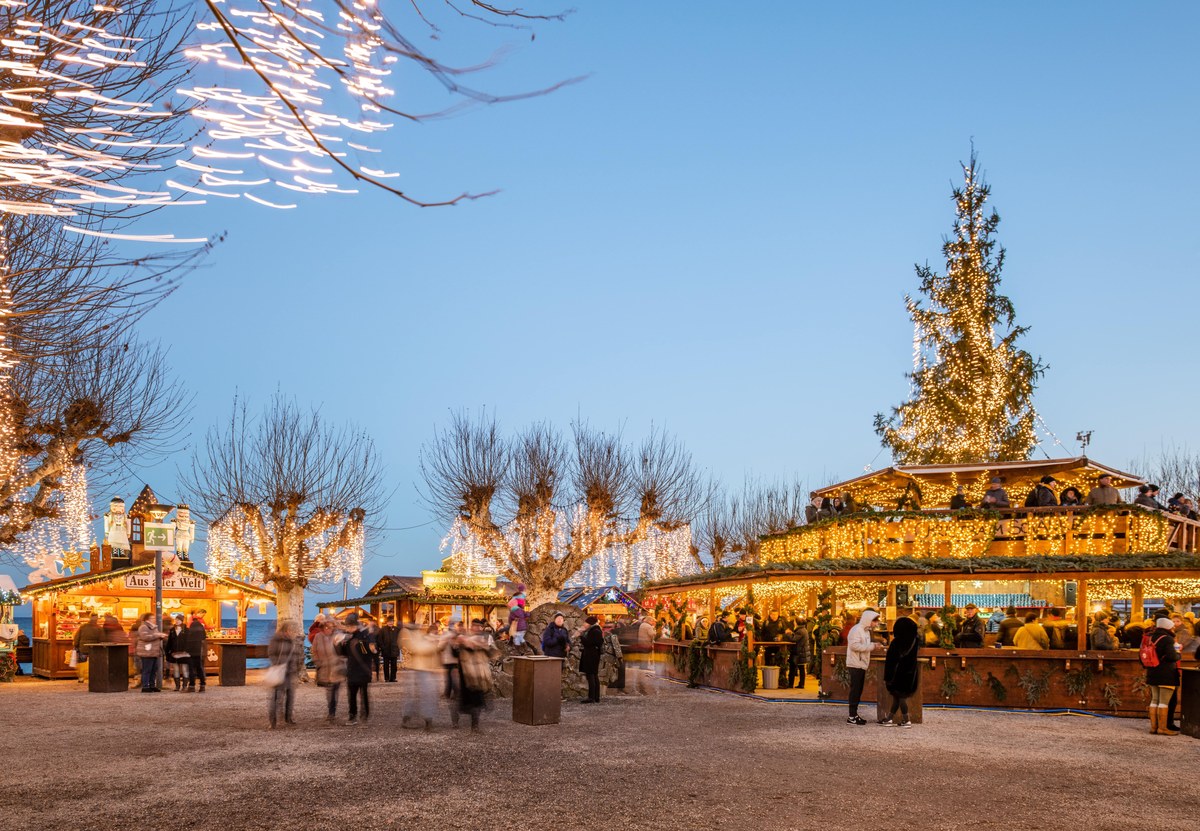
My plan here is simple. I’ll cross Marktstätte on foot in late afternoon, when I can browse handmade ornaments and regional ceramics. As the lights switch on, I’ll duck under the towering multistory Christbaum-Schänke in Stadtgarten. The night should end on the upper deck of the harbor ship with a mug of local Winzerglühwein.
Insel Mainau: Christmas Garden on the Flower Island
Insel Mainau lies fifteen minutes by car or bus north of central Konstanz, and select winter excursions also reach it by boat. It’s famous in summer for its botanical gardens and Baroque palace. After dark from 19 November 2026 to 9 January 2027, the island transforms into Christmas Garden Insel Mainau. It closes on 24 and 31 December.
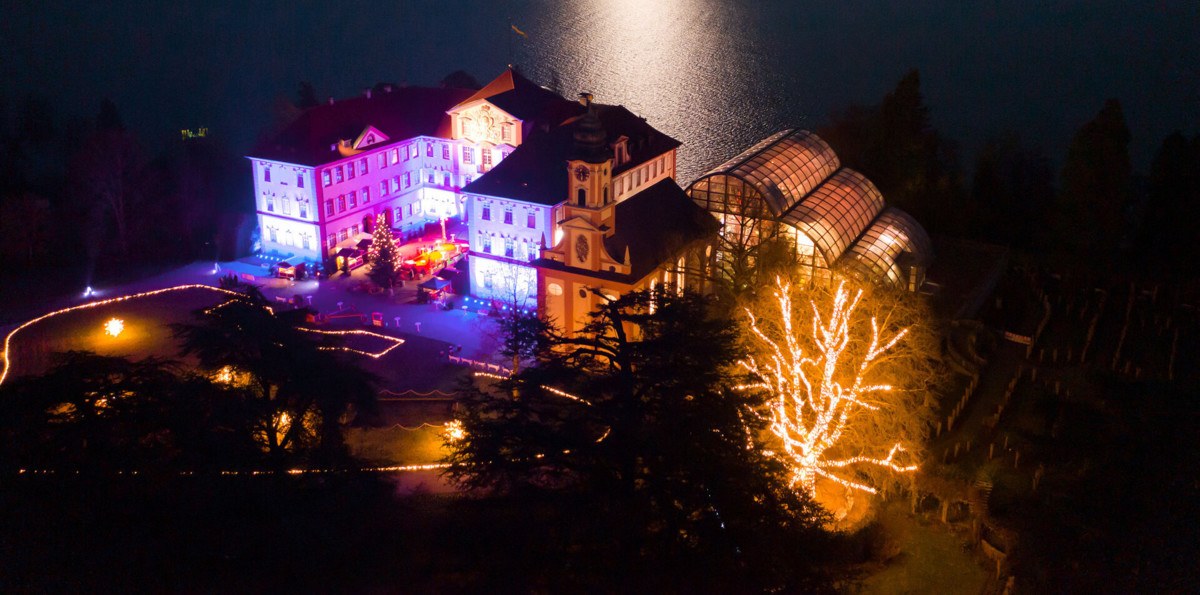
Is Mainau another chalet market? Rather than chalet shopping, it offers an illuminated evening walking trail that extends for roughly two kilometers. The route leads past the lit Baroque castle, the Palm House, and the castle church. Light sculptures reflect across the dark trees and water, so the island’s landscape becomes the main exhibit.
Timed entry runs from 5 p.m. to 9:30 p.m., and popular weekend slots sell out online. I’ll book my evening window ahead and pair it with a daytime stroll in Konstanz. That sequence should leave enough time to enjoy the city before the island lights come on.
Meersburg: Across the Water by Night Ferry
Board the Konstanz–Meersburg car ferry on a crisp December evening. Fifteen minutes later, you step below Germany’s oldest inhabited castle, the medieval Alte Burg. Above it, the rose-tinted Baroque Neues Schloss surveys steep lakeside vineyards.
Meersburg’s own Schlossplatz Christmas market is fleeting, with just two days in 2026, Friday 27 and Saturday 28 November. Unless you catch opening weekend, rows of booths won’t be waiting for you.
Is Meersburg still worth the crossing? Yes, the ferry ride alone earns the detour! Market or no market, I’m keeping it on the route for late afternoon. Climb the steep Steigstraße between timbered houses, then stop at the historic Staatsweingut wine cellar for a glass of Lake Constance Pinot Noir. Afterward, ride the boat back to Konstanz as the shoreline lights come up.
If you have an extra afternoon between 10 and 20 December, Überlingen sits twenty minutes further northwest along the shore. Its daily old-town market fills Hofstatt from 11 a.m. to 8 p.m. An open-air lakeside ice rink runs through 6 January, which gives the town a second reason to linger.
Friedrichshafen: Bodensee-Weihnacht and My Zeppelin Reality Check
Friedrichshafen is a 52-minute catamaran crossing from Konstanz, and for me it holds a precise pull. I love hot-air balloons, yet an airship flight remains new territory. After writing my Portrait of Hugo Eckener, the man who turned Count Zeppelin’s airships into passenger liners, I imagined capping my December trip with a Zeppelin NT flight over the winter lake.
Can you fly the Zeppelin NT in December? No, and that settles the opening airship question. December belongs to the fleet’s maintenance season. Deutsche Zeppelin-Reederei operates its Lake Constance flight season from 1 April to 1 November, then pulls the aircraft into winter maintenance. Even public visits to the shipyard inside the massive hangar wind down by mid-November.
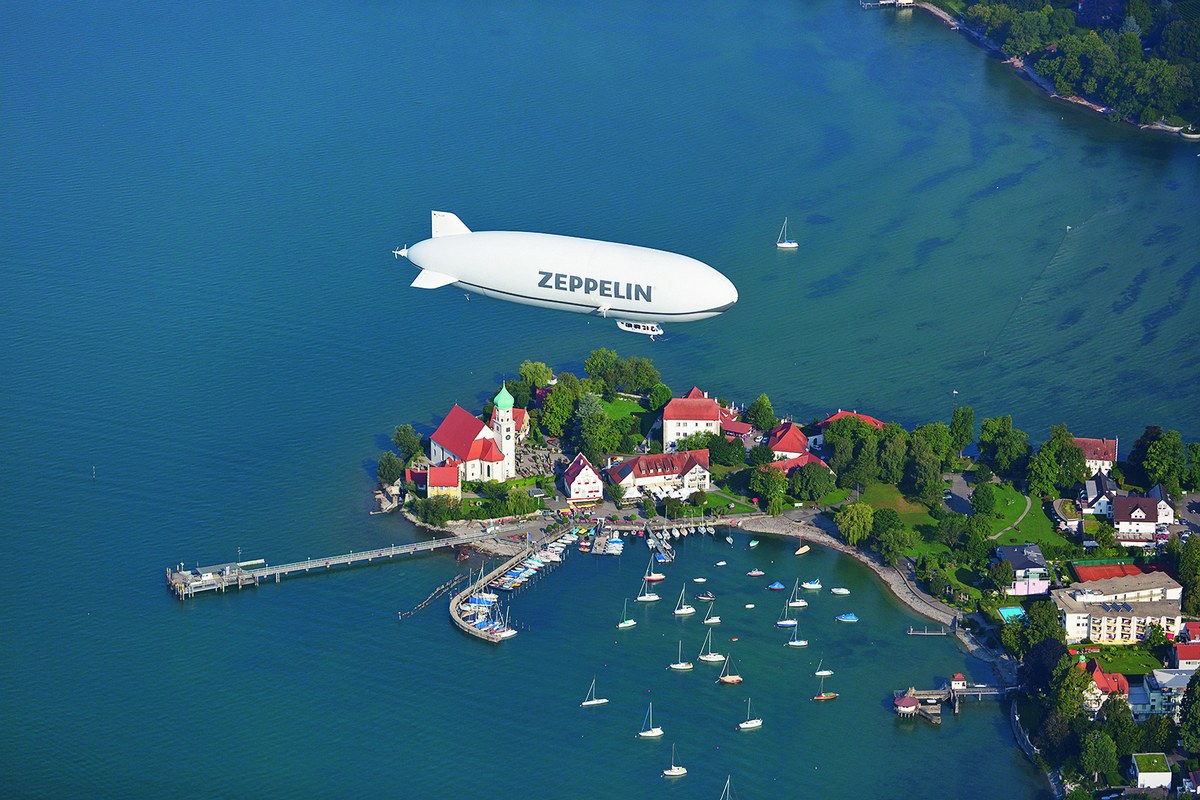
That discovery saved me from building an entire day around a closed runway. It also produced a better winter plan. Right on Friedrichshafen’s harbor promenade stands the Zeppelin Museum, open all winter Tuesday through Sunday from 10 a.m. to 5 p.m. and closed on 24 and 25 December.
Inside, a full-scale walk-through reconstruction of part of the Hindenburg passenger deck shows how closely intercontinental airship travel once resembled a hotel. You can walk through that space even when the aircraft outside are grounded.
How do you salvage the dream of going airborne? If I still want to float above the snow-dusted Alps and lake this December, I can trade the airship for what I already love. Winter hot-air balloon flights operate throughout December from launch fields around the Bodensee, the Appenzell hills, and the Allgäu. They favor clear, calm mornings, when cold dense air delivers the clearest visibility of the year. That possibility remains weather-dependent, of course, but it keeps the idea aloft without pretending the Zeppelin season continues.
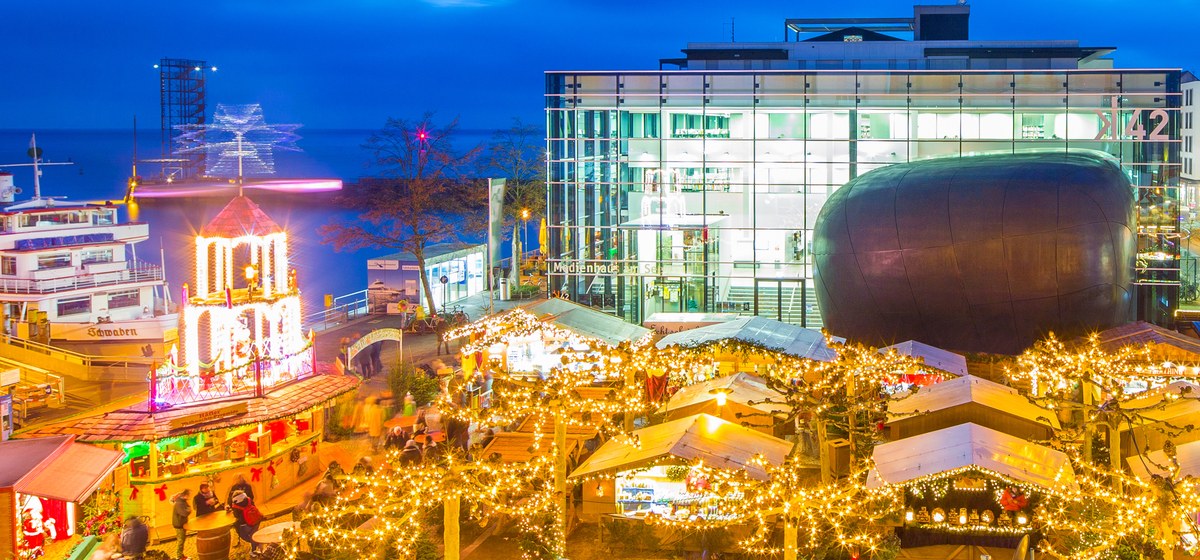
Outside the museum doors, Friedrichshafen’s own Bodensee-Weihnacht runs on Buchhornplatz from 27 November to 20 December 2026. A glowing Christmas pyramid and a live nativity scene anchor the market. On neighboring Romanshorner Platz, an open-air Bavarian curling, or Eisstock, rink stays open until 6 January.
Lindau: Bavaria’s Island Harbor Market
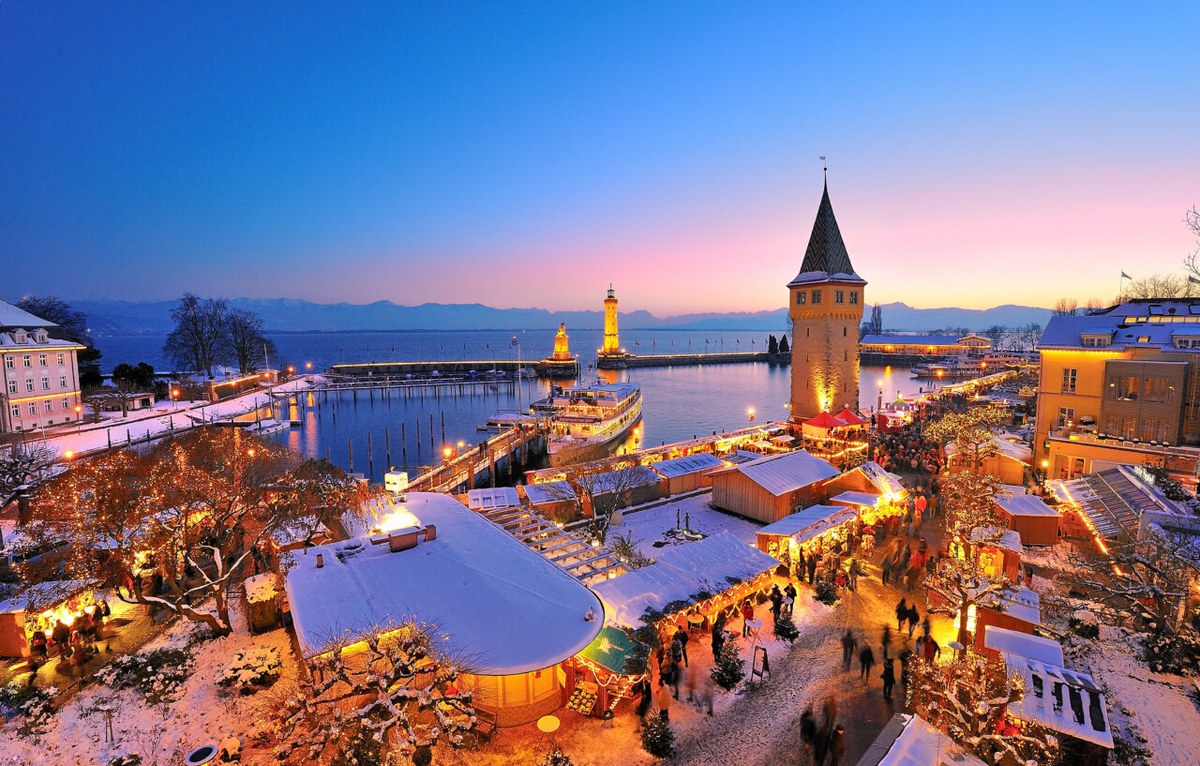
Why make Lindau the centerpiece? If one town captures why Lake Constance at Christmas looks unlike anywhere else in Europe, it’s Lindau. The historic old town occupies an island, with a bridge and rail causeway tying it to the Bavarian side of the lake. Its port entrance stages an unusually theatrical arrival. The 1856 Bavarian Lion stands on one pier, while the 33-meter New Lighthouse faces it from the other. What an entrance those two landmarks make!
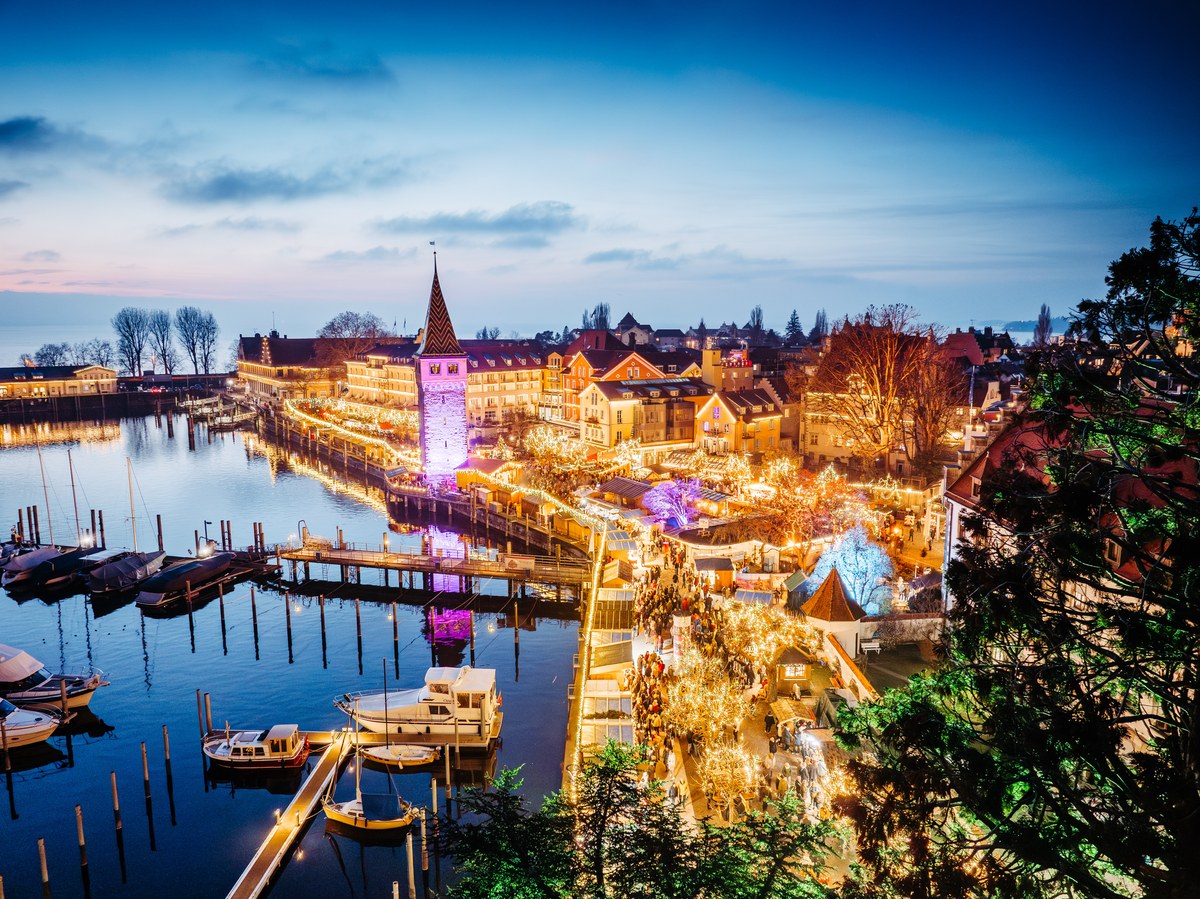
The Lindauer Hafenweihnacht runs Thursday through Sunday from 26 November to 20 December 2026, from 11 a.m. to 9 p.m. Wooden stalls line the harbor promenade beside the medieval Mangturm tower. Along the quay, an enchanted Märchenwald, a fairy-tale forest of lit fir trees, draws families away from the busiest stalls. Night watchmen also lead lantern walks through the cobbles of Maximilianstraße.
Because the market operates only four days a week, I’m making Lindau my Friday or Saturday centerpiece. I’ll arrive from Bregenz aboard the MS Austria Christmas Ship. That way, the island appears across the water as it should, with the harbor rather than a car park providing the first view.
Bregenz: Austrian Markets from the Lakefront to the Medieval Upper Town
Ten kilometers around the eastern bay from Lindau lies Bregenz, capital of Austria’s Vorarlberg province. The journey takes twenty minutes by car, fifteen by train, or thirty-five minutes on the MS Austria. Known worldwide for its summer floating opera stage, Bregenz turns pleasantly intimate once winter arrives.
The main Bregenzer Weihnacht opens earlier than its German neighbors. It runs daily from 15 November to 23 December 2026 across Kornmarktplatz, Rathausstraße, and Leutbühel. Stalls open from 11 a.m. to 8 p.m., while food and drink continue from 11 a.m. to 9 p.m. Expect an ice rink, a miniature children’s train, and light projections across the Town Hall façade.
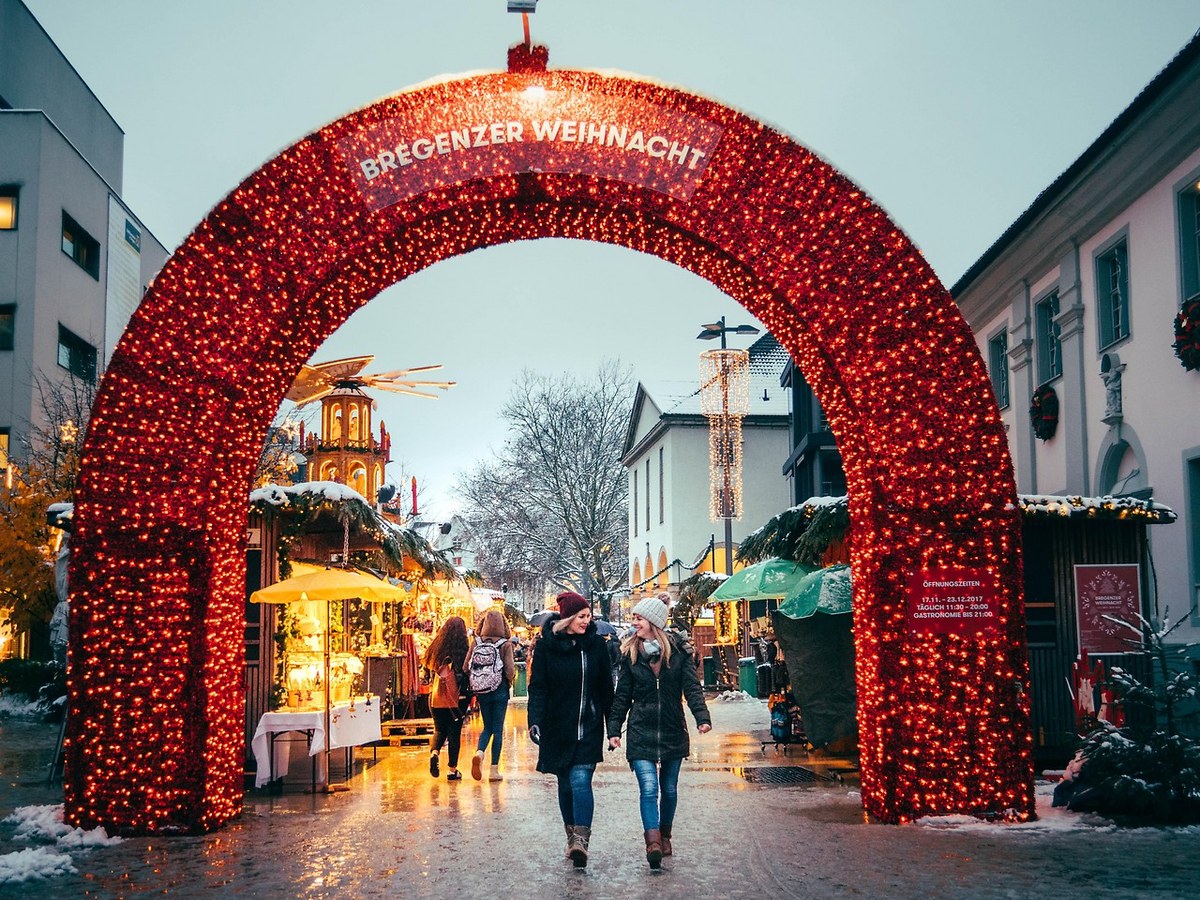
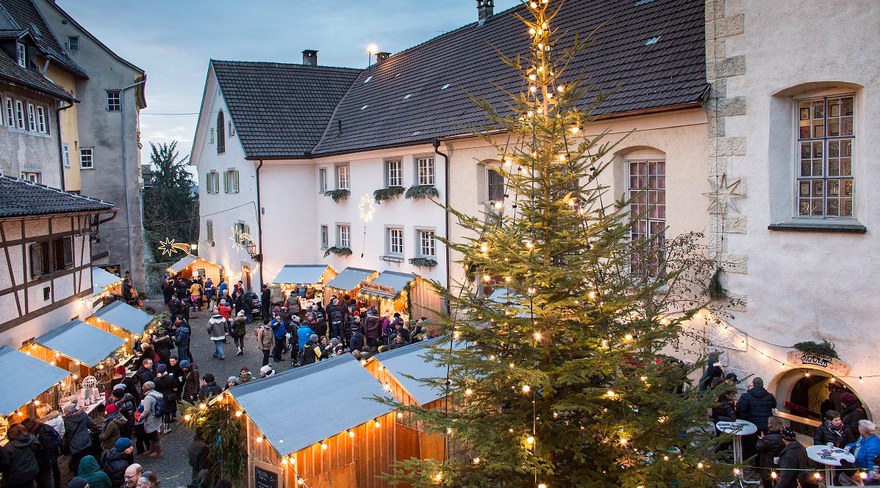
Which Bregenz market deserves the careful timing? For me, it’s the Artisan Crafts Market in the medieval Oberstadt, or Upper Town. You’ll find it an eight-minute uphill walk behind Kornmarktplatz. It takes place on just three December weekends, 5 and 6, 12 and 13, and 19 and 20 December, from 2 p.m. to 8 p.m.
Handmade ceramics, metalwork, wool, and regional treats gather beneath the bulbous onion dome of the Baroque Martinsturm. Medieval stone walls enclose the scene and screen out the commercial glare of a big-city square. That contrast is precisely why I’d climb the hill rather than spend the whole afternoon below.
St. Gallen: Seven Hundred Stars Above the Swiss Shore
Cross into Switzerland along the southern shore, then climb seventeen minutes inland from Rorschach. If you’re coming from Bregenz, allow forty minutes by train or car. You’ll reach St. Gallen, which becomes Sternenstadt, the City of Stars, every Advent from 26 November to 24 December 2026. The sky illuminations continue glowing through 6 January.
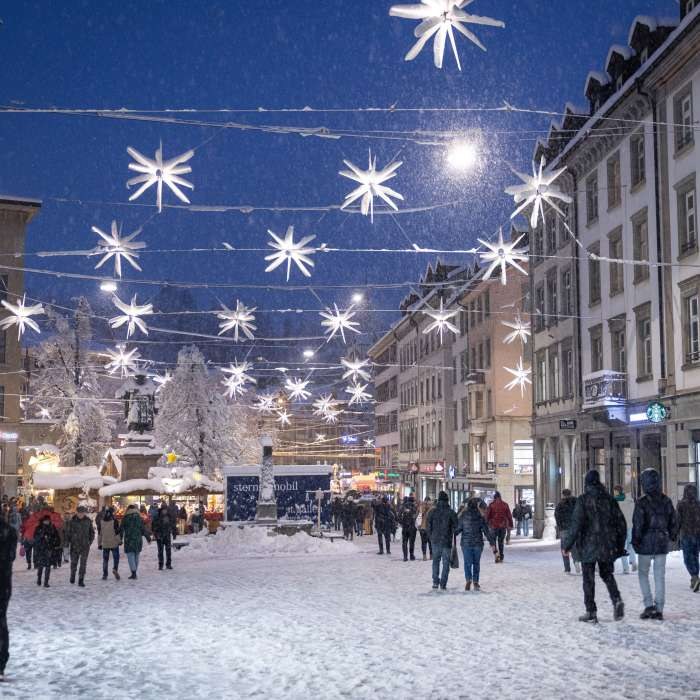
Nearly 700 giant fourteen-pointed stars, called AllerStern, hang across the pedestrian lanes and the UNESCO-listed Abbey District. What a ceiling they make! Their warm gold light falls over ornate carved oriel windows and the twin Baroque towers of the Abbey Cathedral. Below them, the Sternenmarkt gathers wooden craft chalets on Gallusplatz and steaming mulled-wine stands around the Vadian Monument.
Even before night falls, step inside the Abbey Library, or Stiftsbibliothek, one of the oldest and finest Rococo monastic libraries in the world. Remember that you slip giant felt overshoes over your winter boots to protect the inlaid floors. It’s a small ritual that makes the visit feel pleasingly unlike another dash between market stalls.
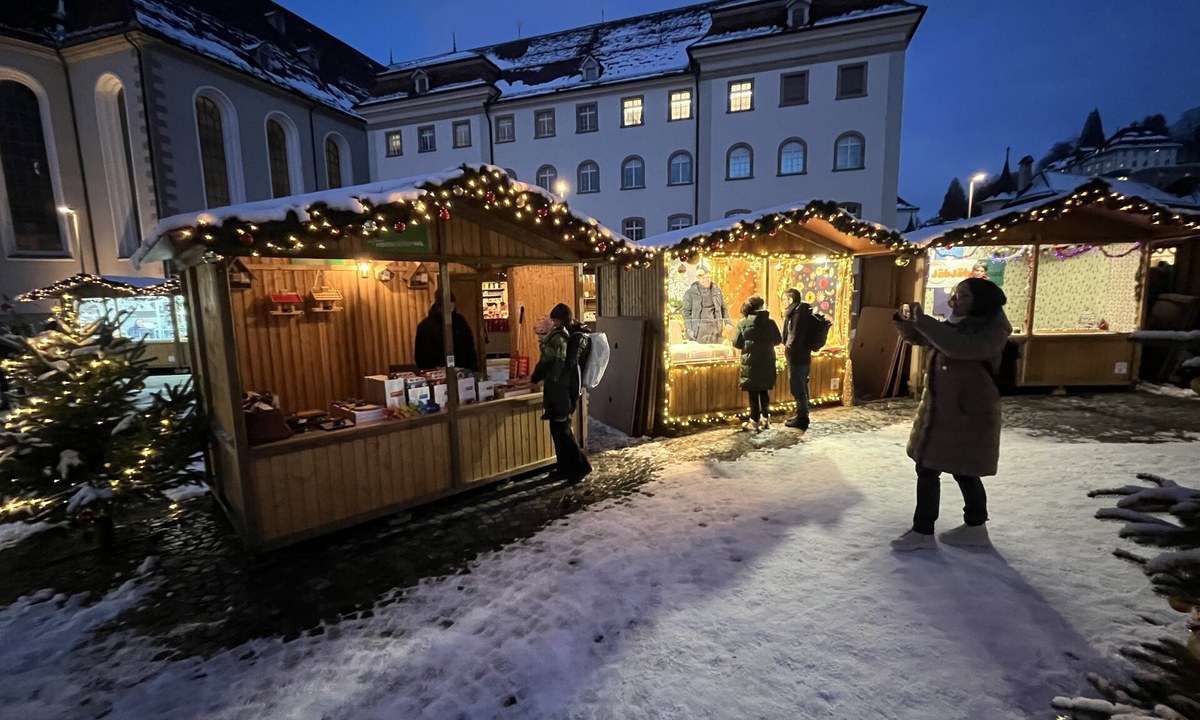
St. Gallen sits at 776 meters, or 2,546 feet, above sea level, nearly 400 meters higher than the water. That elevation gives it a much better chance of fresh December snow than the lakeshore. It also returns to the opening snow question with a useful consequence, because the stars and the best market-level snow odds can occupy the same evening.
Stein am Rhein: Märlistadt Where the Rhine Leaves the Lake
At the lower lake’s far western edge, the water narrows back into the Rhine. This part of the lake is called the Untersee. Here lies Stein am Rhein, a jewel box of frescoed medieval townhouses whose painted Renaissance façades look theatrical even in July.
From 2 December 2026 to 3 January 2027, the town celebrates the 25th edition of Märlistadt, or Fairy-Tale Town. It opens Wednesday through Friday from 2 to 8 p.m., Saturday from 11 a.m. to 10 p.m., and Sunday from 11 a.m. to 7 p.m.
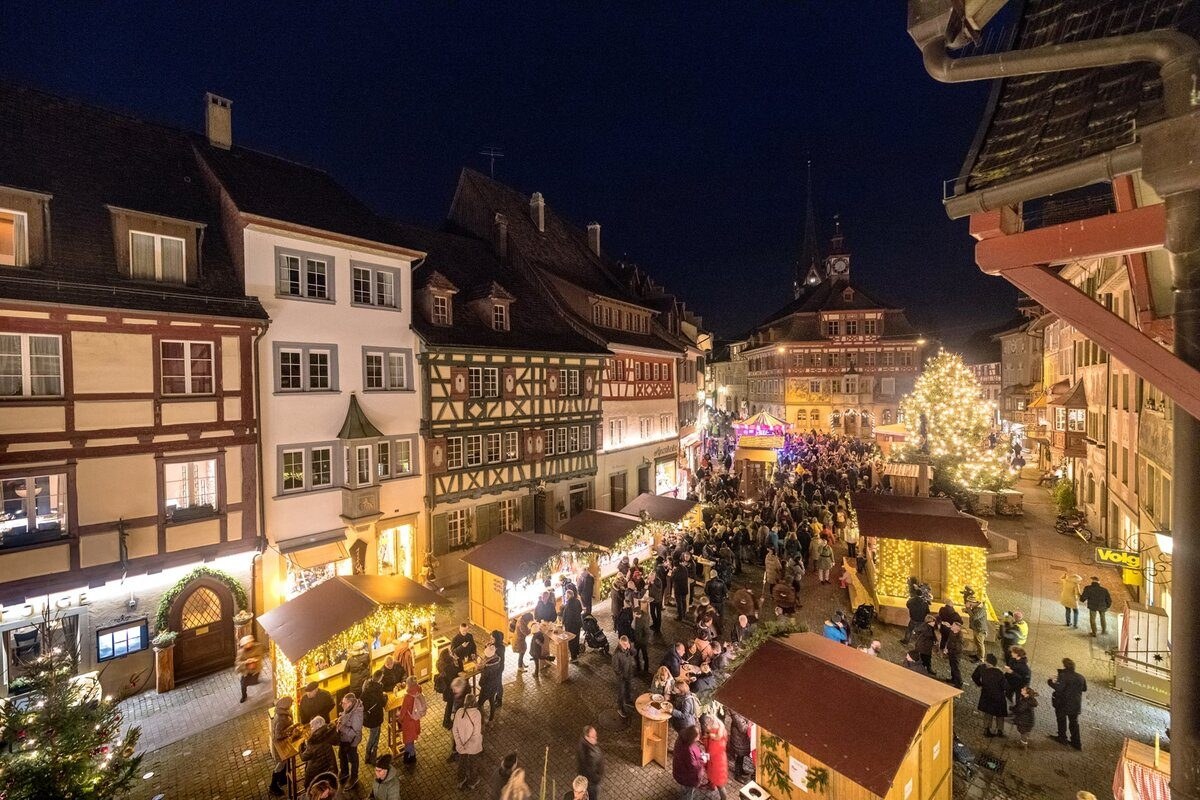
Instead of staging a sprawling commercial fair, Stein am Rhein leans into storytelling. A curated fairy-tale walking trail winds through alleys closed to motor traffic. Night watchmen carry halberds through the square, while wooden stalls sit beneath the towering illuminated fir on Rathausplatz. Because it runs right through New Year’s weekend, it also works as a quiet post-Christmas excursion thirty-five minutes west of Konstanz.
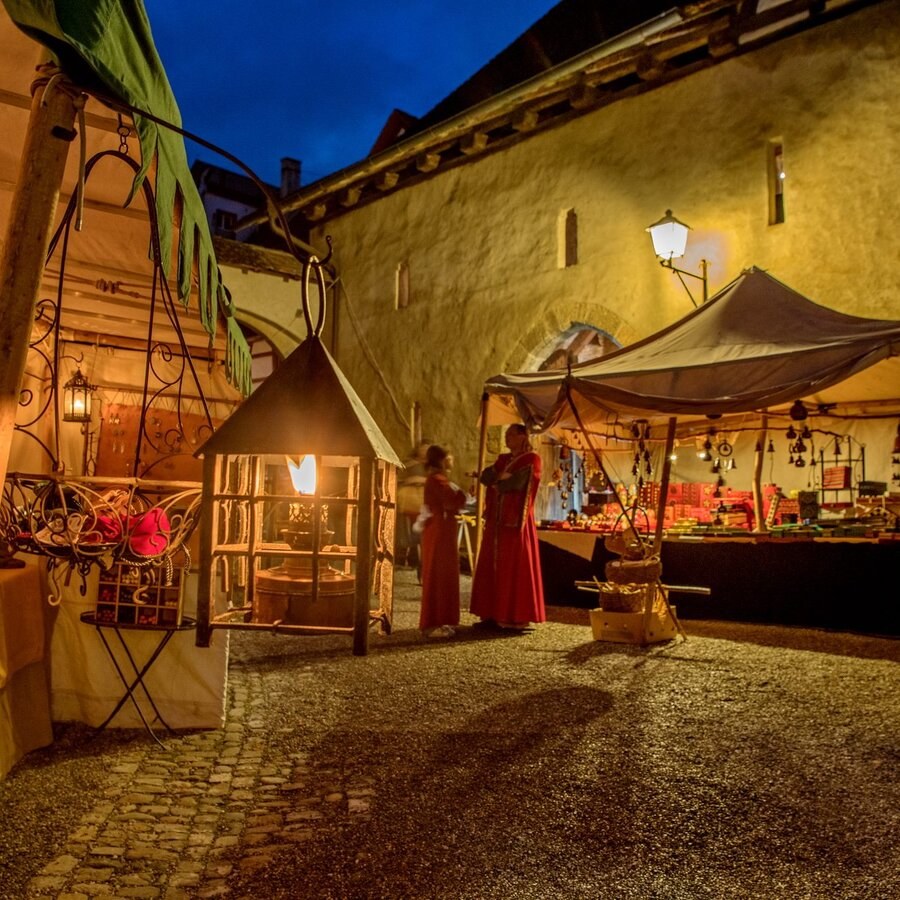
If you can match the middle weekend of December, 11–13 December 2026, the town adds another layer. Its candlelit Medieval Market, or Mittelaltermarkt, fills the cloister courtyard of Kloster St. Georgen. Jugglers perform beside open braziers, artisans wear period costume, and spiced hot wine is poured between medieval stone arcades.
Smaller Swiss lakeshore towns keep brief, deeply local Advent dates that are worth folding in if your calendar matches. Arbon holds its one-day old-town market on 28 November, while Romanshorn celebrates its Chlausmarkt on 29 November. Rorschach marks the 40th anniversary of its waterfront Bummelsunntig on 6 December.
Two later dates may fit the main route more easily. Kreuzlingen sets up a cozy harbor village directly across the border from Konstanz on 11–13 December. On 12–13 December, Schaffhausen fills Switzerland’s largest medieval cloister at Allerheiligen.
The Snow Question: The Bodensee’s Alpine Advantage
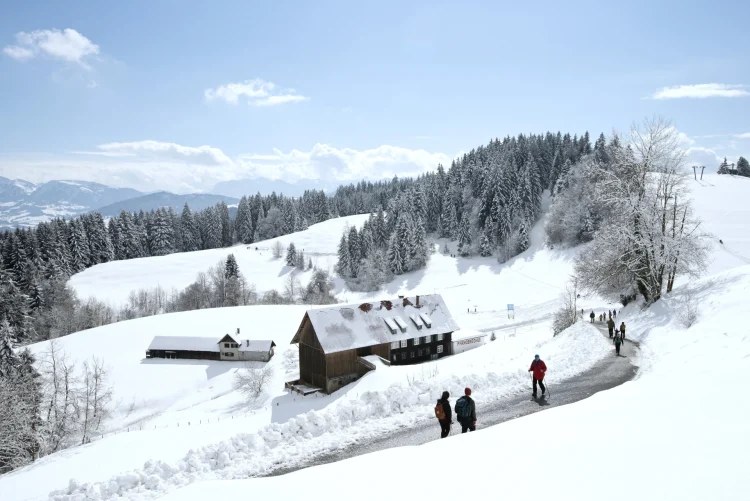
Will there actually be snow? That question mattered most to me when I started sketching this 2026 plan, and the honest answer changes with altitude.
In my Luxembourg Christmas markets guide, I was blunt about lowland European December weather. Mild Atlantic air means wet cobbles much more often than powder. If guaranteed deep snow at market level is nonnegotiable, you fly north to somewhere like Rovaniemi in Finnish Lapland.
Lake Constance plays a trickier, far more rewarding game. Down at shoreline level, between 395 and 440 meters, the enormous mass of unfrozen water acts like a giant radiator. Thirty years of German Weather Service, or DWD, records from Konstanz, covering 1991 to 2020, show a December mean of 2.0 °C, or 36 °F. Daily highs average around 4.5 °C, or 40 °F, while lows hover right at −0.1 °C, or 32 °F.
Konstanz averages 5.3 days with measurable snow cover of at least 1 centimeter across December. It records just 2.0 days with 5 centimeters or more, and a white Christmas Eve appeared in only five of thirty years. I’d therefore pack for crisp damp air, occasional high lake mist, or Hochnebel, and cold rain mixed with fleeting flurries along the promenades. Snow remains possible; a dependable white market is another claim entirely.
December snow and temperature from the lakeshore to the Alps
Lake Constance moderates December temperatures along the water, leaving Konstanz with about five snow-cover days per month—while climbing 350 to 2,100 meters into the surrounding foothills and Alps multiplies snow odds dramatically.
December snow-cover days
View the numbers
| Measure | Value (days) |
|---|---|
| Konstanz (428 m) — Snow cover ≥ 1 cm | 5.3 |
| Konstanz (428 m) — Snow cover ≥ 5 cm | 2 |
| Kempten (705 m) — Snow cover ≥ 1 cm | 13.7 |
| Kempten (705 m) — Snow cover ≥ 5 cm | 8.6 |
| St. Gallen (776 m) — Snow cover ≥ 1 cm | 13.6 |
| St. Gallen (776 m) — Snow cover ≥ 5 cm | 9.2 |
| Oberstdorf (806 m) — Snow cover ≥ 1 cm | 21.4 |
| Oberstdorf (806 m) — Snow cover ≥ 5 cm | 17.8 |
December average temperatures (°C)
View the numbers
| Measure | Value (°C) |
|---|---|
| Konstanz (428 m) — Mean daily high | 4.5 |
| Konstanz (428 m) — Monthly mean | 2 |
| Konstanz (428 m) — Mean daily low | -0.1 |
| Kempten (705 m) — Mean daily high | 4.2 |
| Kempten (705 m) — Monthly mean | 0.1 |
| Kempten (705 m) — Mean daily low | -3.6 |
| St. Gallen (776 m) — Mean daily high | 3.9 |
| St. Gallen (776 m) — Monthly mean | 1.2 |
| St. Gallen (776 m) — Mean daily low | -1.6 |
| Oberstdorf (806 m) — Mean daily high | 3.3 |
| Oberstdorf (806 m) — Monthly mean | -1.4 |
| Oberstdorf (806 m) — Mean daily low | -5.9 |
| Säntis (2,502 m) — Mean daily high | -3.2 |
| Säntis (2,502 m) — Monthly mean | -5.8 |
| Säntis (2,502 m) — Mean daily low | -8.4 |
Here is the Bodensee’s edge over Alsace and Luxembourg. You can leave rain-slicked streets below rather than accepting them as the whole forecast. Climb twenty minutes inland or step into a cable car straight from the lakeshore, and winter switches on almost instantly.
- Pfänder, 1,064 m or 3,491 ft. A ten-minute walk from Bregenz Harbor puts you at the valley station of the Pfänderbahn. Six minutes later, you step out above the fog layer into snowy fir woods and winter walking trails. Panoramic views look back down over all three countries. In December 2026, the cable car runs daily from 8 a.m. to 7 p.m., and annual maintenance waits until January.
- St. Gallen, 776 m or 2,546 ft. The city lies just seventeen minutes inland from Rorschach. Its MeteoSwiss record averages nearly 14 snow-cover days in December, more than double the lakeshore figure. The average more than doubles! St. Gallen’s stars now come with a second recommendation, since their old town offers your best bet for snow right inside a Christmas market.
- Karren, 976 m or 3,202 ft. Above Dornbirn in Vorarlberg, the cable car stays open late, until 11 p.m. Monday through Saturday. You can stand on the glass-floor Karren-Kante platform and look down over the winter lights of the Rhine Valley and Lake Constance.
- Hoher Kasten, 1,794 m or 5,886 ft, and Säntis, 2,502 m or 8,209 ft. For full high-Alpine snowpack, Hoher Kasten’s 8-minute cable car leaves from Brülisau, about fifty minutes from Bregenz. It runs daily all December and climbs to a 360-degree revolving restaurant. Higher still, December mean temperatures around the Säntis summit sit near −5.8 °C, or 22 °F, and snow lies deep all month. Its modernized cableway is scheduled to reopen on 17–18 December 2026. At the Schwägalp base, a romantic lantern-lit winter walk, the Laternliweg, runs on Thursday through Saturday evenings.
Warming Up in the Lake’s Thermal Waters
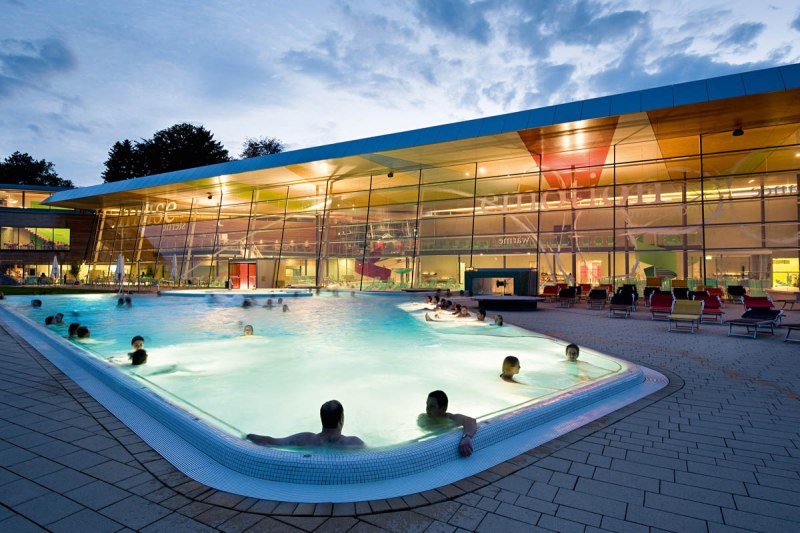
One winter pleasure pairs so naturally with damp Lake Constance air that it almost changes how you pick your base. That pleasure is a session in the thermal baths, or Thermen. The open-air pools make quite an antidote to a damp promenade!
Why are true lakeside thermal waters specifically a German-shore phenomenon? The answer lies in geology. Beneath the northern and western shore lies the Upper Jurassic limestone aquifer of the Molasse Basin. Warm water with abundant minerals sits at reachable drilling depths there. Farther toward the Austrian and Swiss coasts, it plunges much deeper under thicker sediment.
The three-country geography introduced earlier therefore acquires a practical limit. A shared lake does not mean an identical bathing culture on every shore. This geology places three genuine natural mineral-thermal baths directly on the German waterfront, plus a sleek fourth bathhouse in Lindau.
- Bodensee-Therme Konstanz. An artesian mineral-thermal spring feeds the baths from roughly 660 meters below ground. Indoor and steaming open-air pools hold temperatures of 33 to 36 °C, or 91 to 97 °F, and face the Alps alongside a lakefront sauna deck. The baths open daily from 10 a.m. to 10 p.m.
- Meersburg Therme. It draws state-recognized natural mineral thermal water directly below Meersburg’s castle hill. Open-air pools overlook the promenade. In the lakeside sauna garden, bold swimmers can plunge straight into the winter Bodensee before warming up again. It opens daily from 10 a.m. to 10 p.m.
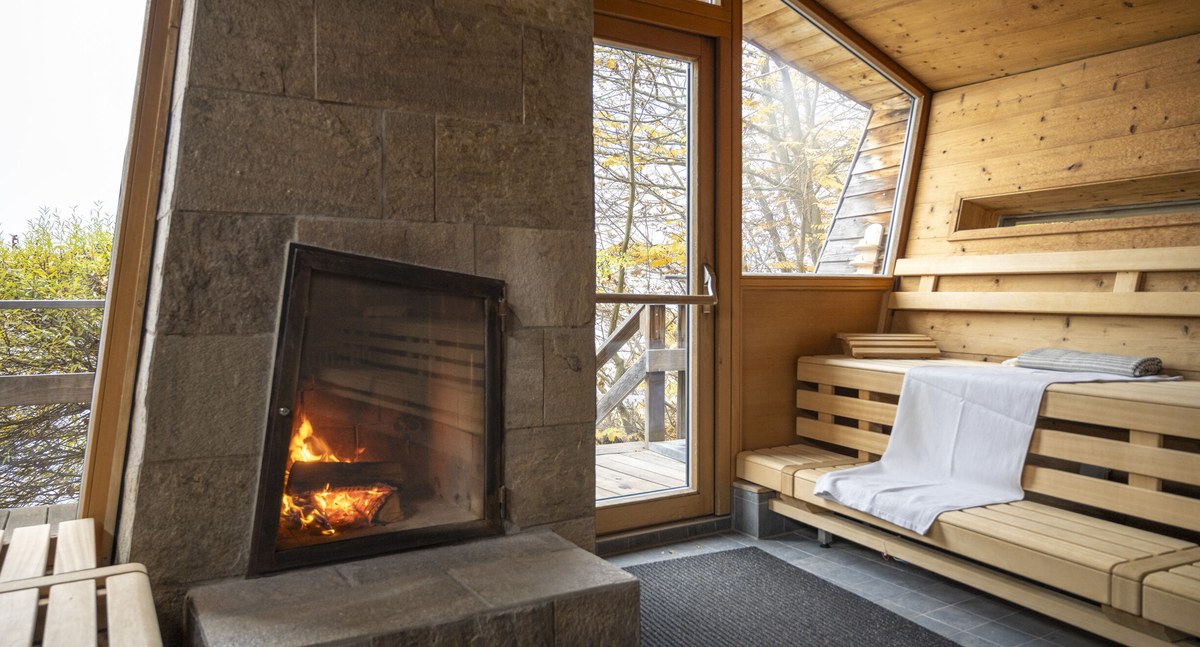
- Bodensee-Therme Überlingen. Water is pumped from over 1,000 meters below ground. The bathhouse is celebrated for its panoramic open-fire lakeside sauna and direct winter lake access. It opens daily from 10 a.m. to 10 p.m., stays open until 11 p.m. on Fridays and Saturdays, and closes on 24 and 25 December.
- Therme Lindau. Opened in 2021 right on the shore, it offers dramatic glass-walled Alpine views, a darkened saltwater floating pool called the Sole-Schwebebecken, and a large lakeside sauna world. One honest caveat matters here. Rather than drawing on a natural thermal spring, Lindau heats water enriched with minerals and salt.
Across the other two shores, the balance shifts. In Austria, Seebad Bregenz pairs its indoor pool with a panoramic rooftop sauna and whirlpool over Lake Constance. Its distinction is the setting rather than a natural thermal source.
Switzerland places its mineral spas inland rather than on the lakefront itself. Mineralheilbad St. Margrethen lies ten minutes south of Bregenz/Rorschach and uses warmed Appenzell spring water. Traditional Heilbad Unterrechstein sits up in the Appenzell hills, where a sulfur-mineral bath has been documented since 1463. The architectural Tamina Therme in Bad Ragaz uses 36.5 °C, or 98 °F, natural gorge water. It lies about fifty minutes up the Rhine Valley near Liechtenstein.
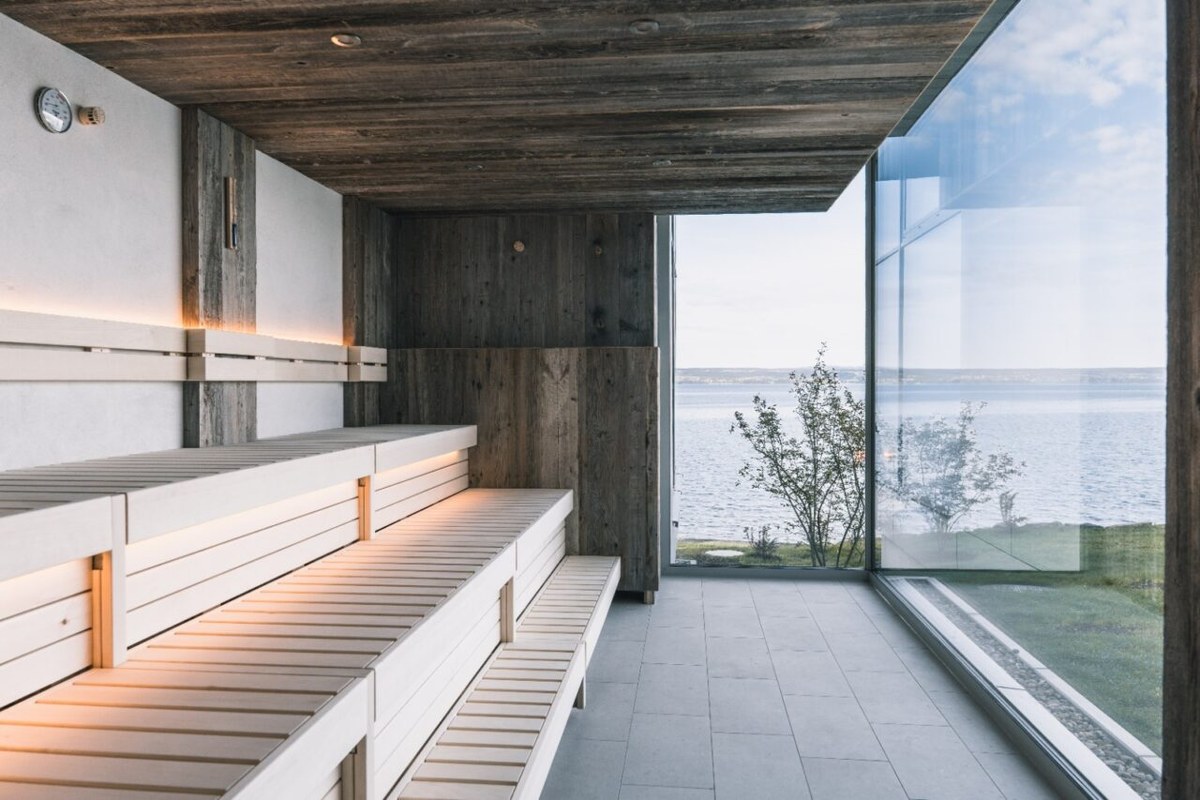
One practical heads-up comes before you pack. Across Germany, Austria, and Switzerland’s German-language regions, the thermal pools are swimwear-on. The lakeside sauna worlds are traditionally textile-free, so it’s worth knowing which side of that line you’re crossing.
For me, the thermal baths alone make a strong case for the German shore as my primary winter base. There’s also a practical advantage. The drive down from Luxembourg naturally arrives on the German side of the Bodensee first anyway.
What to Eat and Drink: One Alemannic Table Across Three Borders
Does the food divide cleanly along national lines? Before I started digging into the winter menus around Lake Constance, I half-expected exactly that. Germany would mean sausages and Glühwein, Austria would supply Viennese pastries and coffee, and Switzerland would bring expensive raclette and beer. The reality turned out to be far more intriguing, and it overturns two of those assumptions immediately.
The three shores of the Bodensee share an Alemannic culinary heritage older than their modern borders. The shared shoreline described at the outset helps explain why national labels prove so unreliable at the table. Rather than presenting three unrelated styles of national cookery, the winter menu follows geography. Vineyards occupy sunny northern slopes, fruit orchards spread across Thurgau and the Rhine Valley, and dairy pastures climb the lower Alpine slopes. Here, the Austrian shore is about mountain cheese and hot spiced cider rather than Vienna. Eastern Switzerland, meanwhile, holds the lake’s earliest documented sausage tradition.
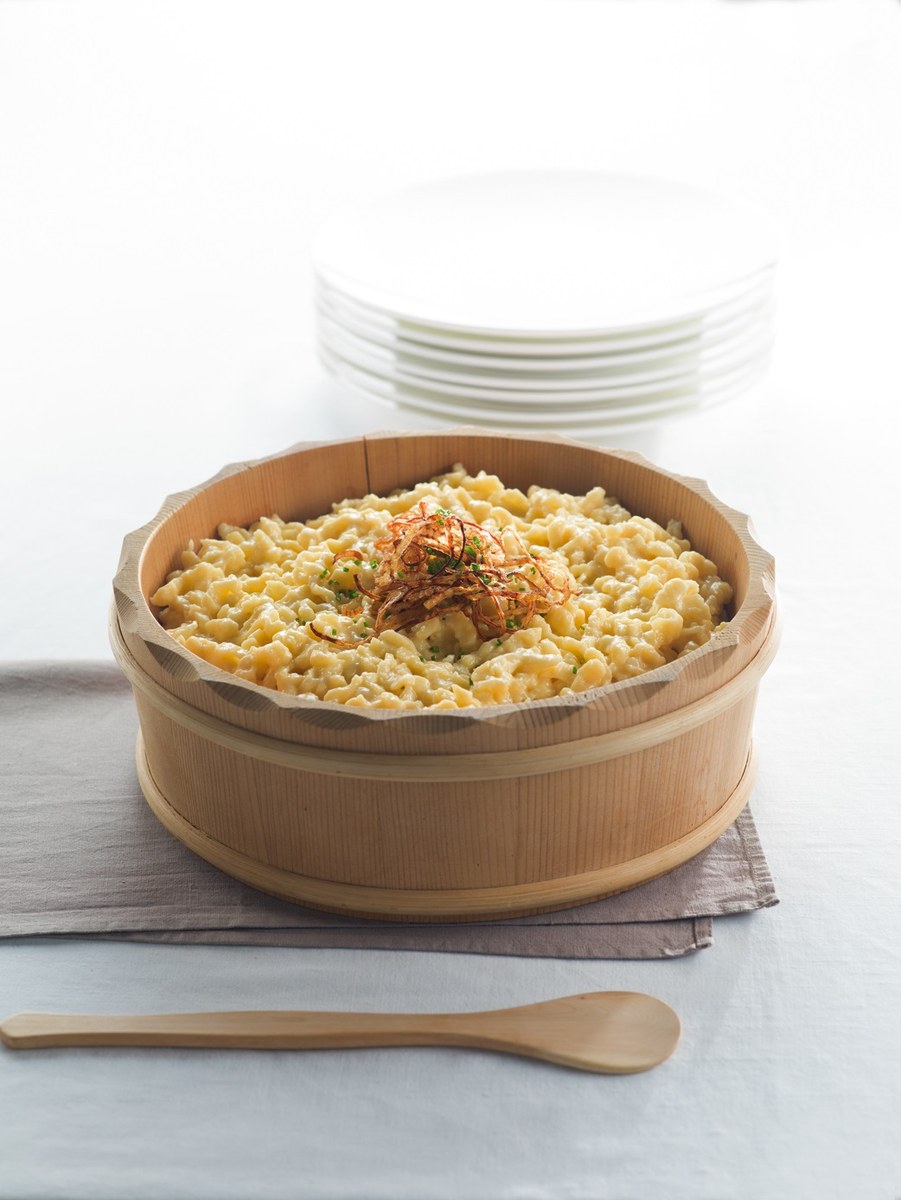
What single dish ties the basin together? One steaming answer is cheese spätzle. Circle the water and you encounter Käsespätzle in Baden-Württemberg, Kässpatzn in Bavaria, Käsknöpfle in Vorarlberg, and Chäschnöpfli in eastern Switzerland and Liechtenstein. The names change, but the foundation remains soft egg dumplings layered with local mountain cheeses and buried under crisp fried onions. Every shore stays fiercely loyal to its own blend and name.
Germany: Swabian Comfort Food and Lake-Slope Wine
Around Konstanz, Friedrichshafen, and Lindau, sausages are everywhere, yet they’re hardly the most distinctive thing on the stalls. Start instead with Dünnele, also spelled Dinnele. This crisp, blistered Swabian flatbread comes fresh from a wood-fired oven. Savory versions carry tangy Schmand, the local sour cream, with smoky bacon and onions, while sweet ones use apple and cinnamon. Add pan-fried Schupfnudeln, rolled potato noodles served with sauerkraut, and hearty bowls of Käsespätzle if you want lunch to carry you through a cold evening.

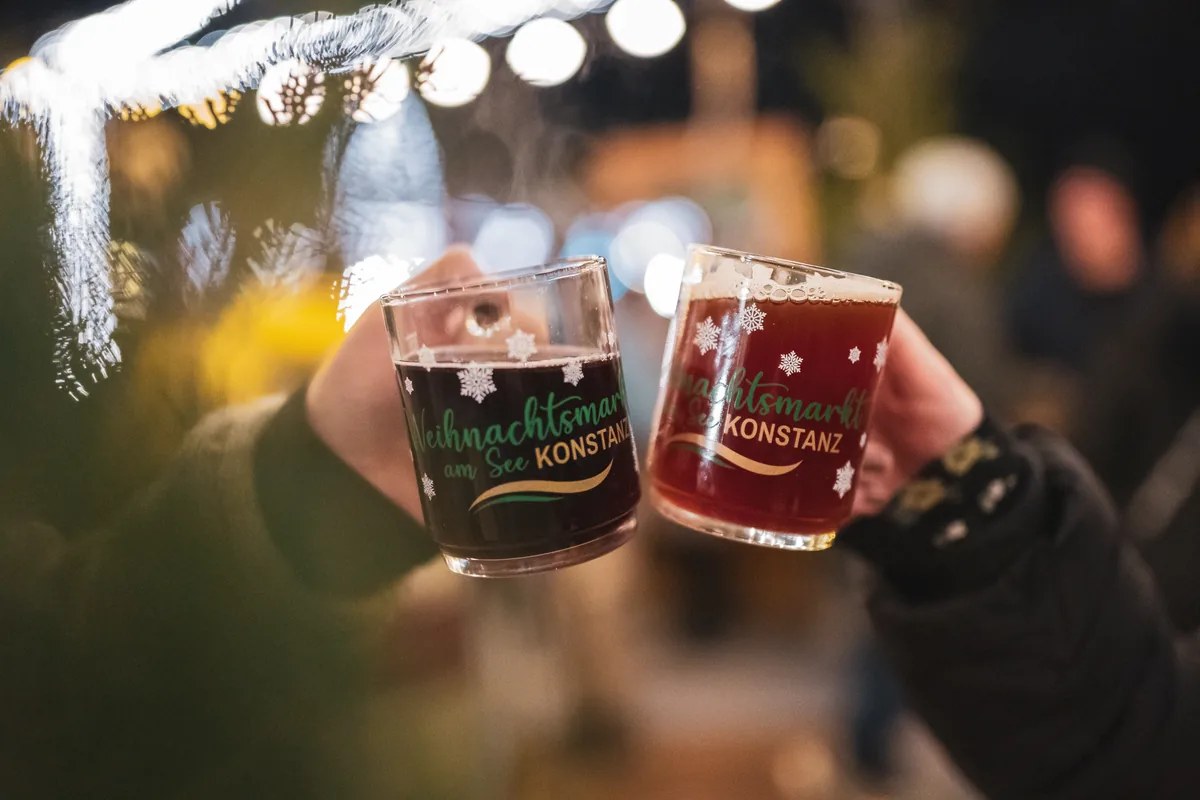
In the mug, I’d skip generic industrial mulled wine. Hunt out Winzerglühwein poured directly by vintners from the surrounding slopes instead. They make it from spiced Müller-Thurgau for a white version or Spätburgunder for a red one. Both grapes grow on the slopes above Meersburg and Hagnau.
Austria: Vorarlberg Mountain Cheese, Orchards, and Glühmost
Step off the ferry in Bregenz and leave Viennese coffeehouse stereotypes behind. Vorarlberg belongs to the Alemannic cultural and language community. In appetite, it stands far closer to Appenzell, St. Gallen, and Upper Swabia than to imperial Vienna.
On the plates, look for Vorarlberger Käsknöpfle. Cooks layer the dumplings with aged Bergkäse and pungent Räßkäse, then traditionally serve them from a wooden bowl alongside potato salad. Savory Käseknödel, or cheese dumplings, offer another filling option. Paper cones of roasted chestnuts make an easier snack while you walk.
Then there’s Riebel, the old Rhine Valley and Bregenzerwald cornmeal dish. It’s pan-fried into golden crumbs and served either savory or sweet with applesauce. To warm your hands, trade red mulled wine for Glühmost. This steaming fermented apple and pear cider comes steeped with cinnamon and cloves, and it tastes straight of the region’s orchards.
Switzerland: Medieval Sausages Without Mustard, Gingerbread, and Hot Beer
Eastern Switzerland delivers the trip’s best culinary plot twist. It would be ironic to assign sausages to Germany and cheese to Switzerland here. St. Galler Bratwurst appears in the city’s butchers’ guild statutes as early as 1438, and it holds Swiss IGP protection today.
Veal, pork, fresh milk, and delicate spices go into the sausage. It’s grilled until golden and eaten plain with a crisp Bürli roll. Mustard stays off the plate because locals treat it as an insult to the butcher’s seasoning. Should you ask for it anyway? No, not if you want to taste the seasoning as its makers intended.
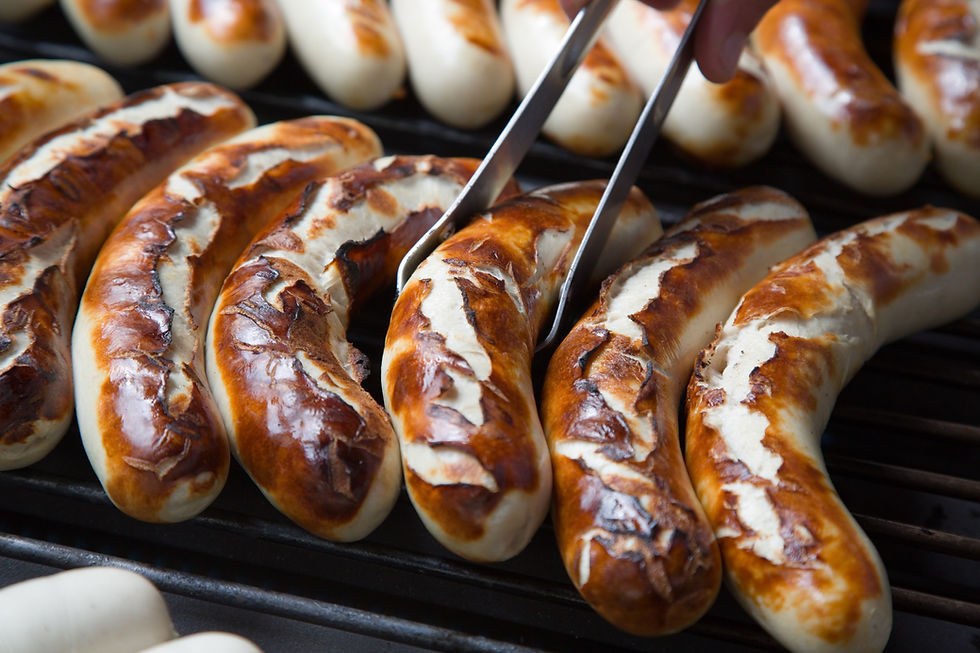
For something sweet with genuine local roots, seek out St. Galler Biber. This dense, honey-spiced gingerbread is filled with almond paste and embossed with historic abbey or bear motifs. The recipe comes down from St. Gallen’s medieval baking guilds, so it offers more than a decorative market sweet.
Bubbling raclette and cheese fondue also fill Swiss stalls, including Romanshorn’s Fondue Ship. Raclette, however, originally traveled east from Valais at the far side of the country before reaching the Bodensee. Its presence on the stalls is entirely compatible with a history that began elsewhere.
Alongside standard Glühwein, St. Gallen brings a centuries-old brewing tradition to the holiday mug. Brauerei Schützengarten, founded in 1779, is Switzerland’s oldest operating brewery. Winter stalls pour its seasonal Heisser Schütz, a warming hot spiced beer called Glühbier. Yes, that really is hot beer! It’s worth trying at least once to discover how well Eastern Switzerland’s beer heritage translates to December.
Where I Would Stay Around the Bodensee
Where should you base yourself? Because the lake stretches 63 kilometers, staying in one corner can mean spending half your short winter daylight driving around the water. My 2026 plan therefore splits the stay into two hubs. It leans toward the German shore for its lakeside thermal baths and straightforward arrival from Luxembourg. Two nights in the west and two in the east should connect cleanly by ferry or lakeside train.
The German-shore geology described above now becomes a lodging decision rather than a footnote. If an outdoor pool and sauna matter after dark, the distance between your room and the baths deserves as much attention as the view from breakfast.
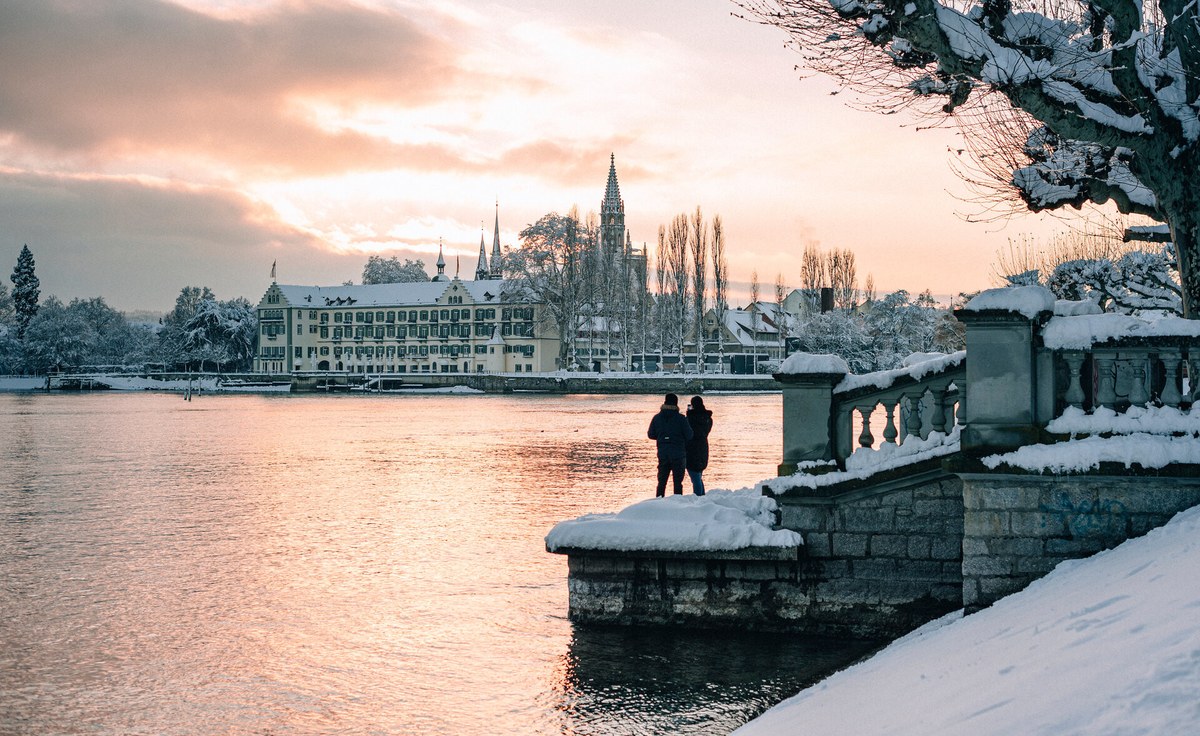
- Steigenberger Inselhotel and Riva – Das Hotel am Bodensee, Konstanz, Germany. Steigenberger Inselhotel is hard to beat for romance and history. The former 13th-century Dominican monastery occupies its own private island, with a footbridge leading to Konstanz’s old town. You can walk to the Weihnachtsmarkt am See in minutes. If thermal soaking is your evening priority, Riva sits further along the Seestraße promenade. It has its own heated rooftop lake-view pool and stands a six-minute drive from Bodensee-Therme Konstanz. You could also take the scenic 25-minute lakefront walk.
- Strandhotel Wilder Mann, Meersburg, Germany. This hotel stands right on the lake’s first line, rather than behind the coastal road near the thermal bath, where that end of town goes quiet after dark. You look straight out over the passing ships and step directly into the lower old town’s restaurants. The castle square is a six-minute walk up the hill. You can reach the 24/7 Konstanz ferry in five minutes on foot. Meersburg Therme remains an easy eleven-minute waterfront stroll away, or a four-minute drive.
- Bad Hotel Überlingen, Überlingen, Germany. This is another standout German-shore thermal pairing. The historic waterfront hotel stays open all December and offers winter packages. A six-minute walk along the lakeside park leads to Bodensee-Therme Überlingen. Überlingen’s WinterZauber market and ice rink are also close.
- Hotel Bayerischer Hof, Lindau, Germany. This classic grand hotel stands directly on Lindau’s island harbor promenade. Its outlook takes in the Hafenweihnacht stalls, the Bavarian Lion, and the departing MS Austria Christmas Ship. It remains open all winter, with a year-round heated indoor lake-view pool and Maximilian SPA. Therme Lindau is twelve minutes by car.
- Grand Hotel Bregenz – MGallery, Bregenz, Austria. The hotel sits beside the lake park and Bregenz Festival House. From there, you can easily walk to Kornmarktplatz, the MS Austria pier, and the Pfänderbahn. A rooftop relaxation area and indoor pool provide somewhere to recover when the markets close.
- Hotel Bad Horn and Schloss Wartegg, Swiss Shore. Both stand on the quieter southern shore between Rorschach and Arbon. Hotel Bad Horn leans into yacht-club warmth, with its own spa and jetty. Schloss Wartegg offers a different atmosphere altogether. The historic organic castle dates to 1557 and stands in a 13-hectare English park, giving you a serene base within twenty minutes of St. Gallen’s stars. Farther west, Hotel Chlosterhof sits directly on the Rhine riverbank in Stein am Rhein.
If you feel like turning three countries into four, Vaduz in Liechtenstein is only a 45-minute drive south of Bregenz up the Rhine Valley. There, Park Hotel Sonnenhof makes a serene alpine nightcap above the valley floor. It would add another border and another drive, so I’d treat it as an extension rather than squeezing it into the core four days.
How I’m Structuring Four Days and Getting There
How do four days fit together without frantic zigzags? Here is the relaxed Thursday–Sunday rhythm I’ve sketched for mid-December 2026. Every evening should land on water or under stars. The two opening questions now set the order, with the Zeppelin museum replacing a flight and the highest snowy excursions left flexible enough to follow the weather.
- Day 1, Thursday, Konstanz and Insel Mainau. Arrive in Konstanz and walk Marktstätte and the harbor market before dusk. Board the moored Weihnachtsschiff for a twilight drink. Then head north for an evening timed entry at Christmas Garden Insel Mainau, which you should have booked ahead.
- Day 2, Friday, Stein am Rhein and the ferry east. Drive or take the train west to Märlistadt in Stein am Rhein during the morning. Add the cloister Medieval Market if you hit 11–13 December. In the afternoon, cross on the 52-minute Katamaran from Konstanz to Friedrichshafen for the Zeppelin Museum and Bodensee-Weihnacht. Then continue along the shore to check into Lindau or Bregenz.
- Day 3, Saturday, the Christmas Ship, Lindau, and Bregenz Oberstadt. Take the morning cable car up the Pfänder for winter snow and lake views. Stroll through Bregenz’s Kornmarktplatz around midday, then climb to the medieval Oberstadt crafts market at 2 p.m. Catch the afternoon MS Austria Christmas Ship across the water into Lindau as dusk turns the lighthouse and Mangturm gold. You can sail back after dinner or linger overnight on the island.
- Day 4, Sunday, St. Gallen’s stars and Alpine snow. Cross into Switzerland for St. Gallen’s Abbey Library and snowy Sternenmarkt beneath the 700 hanging stars. If conditions favor it, add an afternoon ascent up Hoher Kasten. From 17–18 December, the newly reopened Säntis becomes the alternative before the journey back.
Getting there. Zurich Airport is the easiest gateway, at roughly 50 minutes by car or a direct 1-hour-10-minute SBB train straight into Konstanz. Munich sits about two hours east of Lindau by car or direct EuroCity train.
Driving down from my home base in Luxembourg takes just under five hours, covering about 400 kilometers via Strasbourg and the Black Forest. That route even leaves room to link Lake Constance with Alsace’s Christmas markets on the way down. Whether you should add them depends on how much market hopping you want before the ferries begin.
Remember one small border detail if you drive. Both Switzerland and Austria require motorway vignettes. Digital e-vignettes are easy to buy online before setting off. Austria now offers a convenient 1-day or 10-day digital pass, while Switzerland sells only the annual vignette.
Pack waterproof boots with real tread, wool socks, and warm windproof mittens. I’ll be bringing my Hestra Wakayama leather mittens because the damp breeze off the water cuts far deeper than the thermometer suggests. You’ll want your hands warm when the MS Austria pulls out of Bregenz harbor. That return to the opening ship-and-lighthouse image has one final practical consequence, since the glowing Bavarian lion across the bay is best watched with your fingers still working.
Official Lake Constance winter guide (Internationale Bodensee Tourismus)