
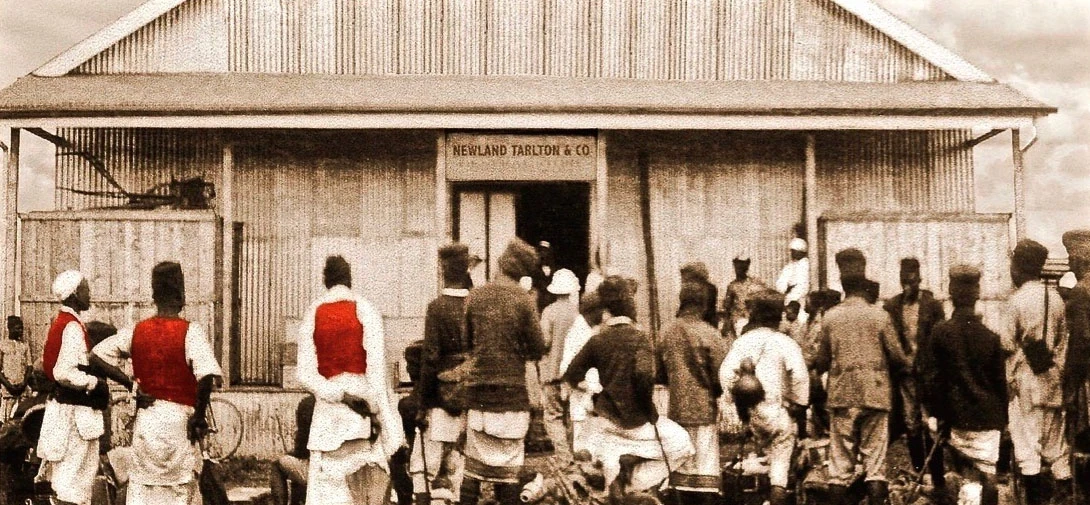
Newland & Tarlton’s Nairobi headquarters, about 1906. Colourised photograph from Newland Tarlton Safaris.
When Theodore Roosevelt stepped off the Uganda Railway at Kapiti Plains in 1909, his African adventure was already waiting for him.
Tents had been ordered. Porters hired. Rifles, food, beds, baths, medicines and camp equipment had been assembled. Routes had been considered, loads divided, staff assigned. Among the people who would accompany the former president were Smithsonian naturalists, professional hunters, gun bearers, cooks, tent men and hundreds of African workers. Roosevelt had crossed the Atlantic in search of an adventure. The adventure had been professionally prepared before he arrived.
Among the men responsible was a small, wiry, red-haired Australian named Leslie Jefferis Tarlton.
History remembers Roosevelt because he was Roosevelt. It remembers Hemingway because Hemingway wrote himself into Africa so effectively that generations came to confuse his prose with the origin of the safari itself. Karen Blixen supplied romance; Hollywood supplied light; luxury hotels later supplied plunge pools.
Tarlton’s contribution was quieter. He helped teach safari how to receive a guest.
That sounds almost trivial until one notices how much of modern African luxury tourism still takes place inside the world he and his contemporaries made desirable: canvas walls, campaign furniture, trunks, guides, meals in the bush, a fire after dark, immaculate service where comfort ought logically to be difficult. The animal may now be photographed instead of shot. The ritual around it has proved astonishingly resistant to change.
A business behind a tin door
Tarlton arrived in Nairobi in 1903, when the place was barely old enough to possess a mythology. The Uganda Railway had pushed inland from Mombasa and created a rough highland settlement of corrugated iron, railway offices, traders, speculators and men looking for opportunity. It was a railway town with mud, tin roofs and ambitions.
He had come by an equally restless route. Born in South Australia in 1877, Tarlton had spent part of his youth in Tasmania and then southern Africa. He rode well, shot exceptionally well and served during the Second Boer War. After the war, East Africa attracted men of his kind: veterans, settlers, adventurers and sportsmen who understood that wealthy Europeans and Americans were beginning to arrive for something that required more than a railway ticket.
They wanted Africa, but they needed someone to arrange it.
In 1904, Tarlton, his brother Henry and their Australian friend Victor Newland assembled about £200 to start a business. The safari operation that grew from it recruited local hunters, put a sign over a tin shed and sought clients in the clubs of London’s West End. It was an almost comically modest headquarters for Newland & Tarlton, one of the defining firms of the safari age.
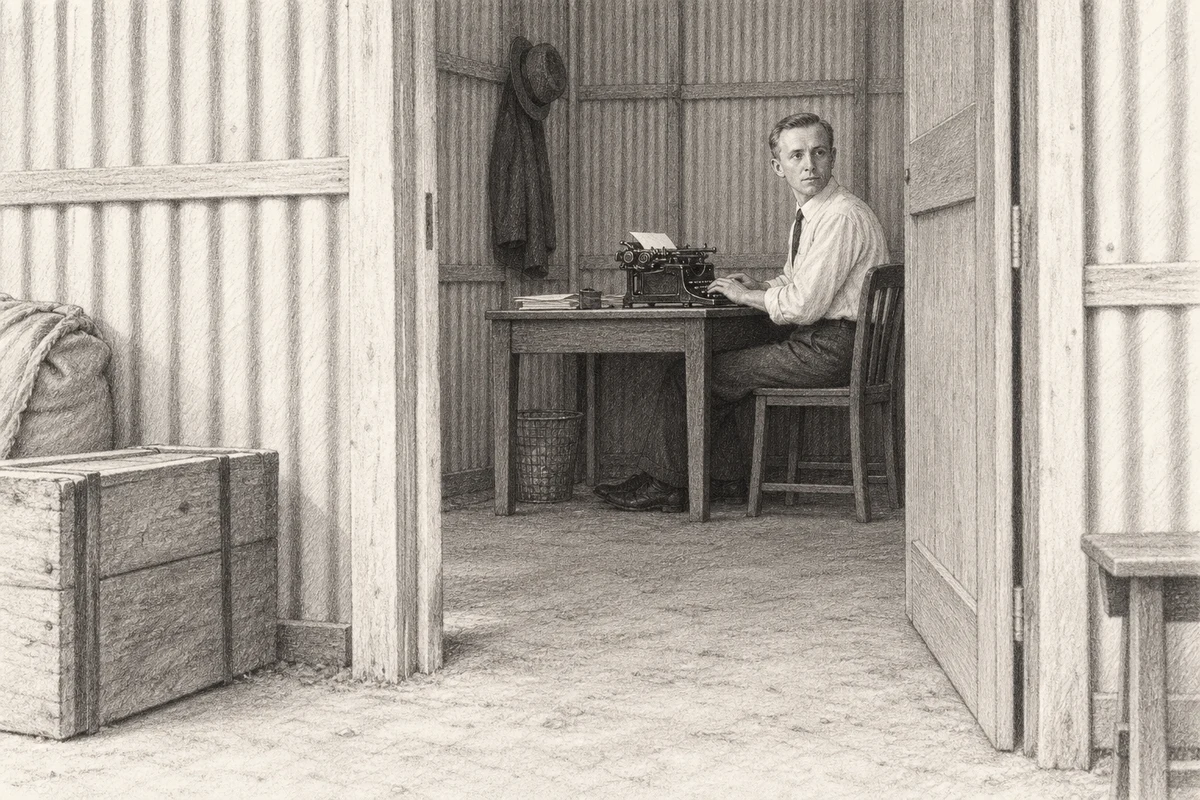
Carl Akeley, the American taxidermist, found Tarlton there in 1905. He was looking for somewhere to store specimens when he heard a typewriter clattering inside a corrugated-iron building. Tarlton emerged from an inner office looking busy and annoyed at the interruption. The annoyance disappeared when he discovered that Akeley wanted to rent space.
Only later did Tarlton admit that the typewriter could not write. It existed to make a noise when a prospective client approached.
The performance brought Akeley through the door; usefulness kept him. Tarlton watched him preparing specimens, offered to learn the work and proposed sending supplies into the field so that Akeley would not have to keep returning to Nairobi. He had found the part of the journey that a client would gladly pay someone else to undertake.
A moving household
Victor Newland handled much of the financial side. Leslie Tarlton mastered logistics.
A safari in those years was a moving household. A single client could require roughly thirty porters, each carrying a load of around sixty pounds, for journeys lasting months. Tents moved. Beds moved. Chairs, mosquito nets, baths, food, ammunition and medicine moved.
Champagne moved.
That last item sounds like a joke told about imperial decadence. In travel history, it is closer to a business principle. Luxury acquires force through contrast.
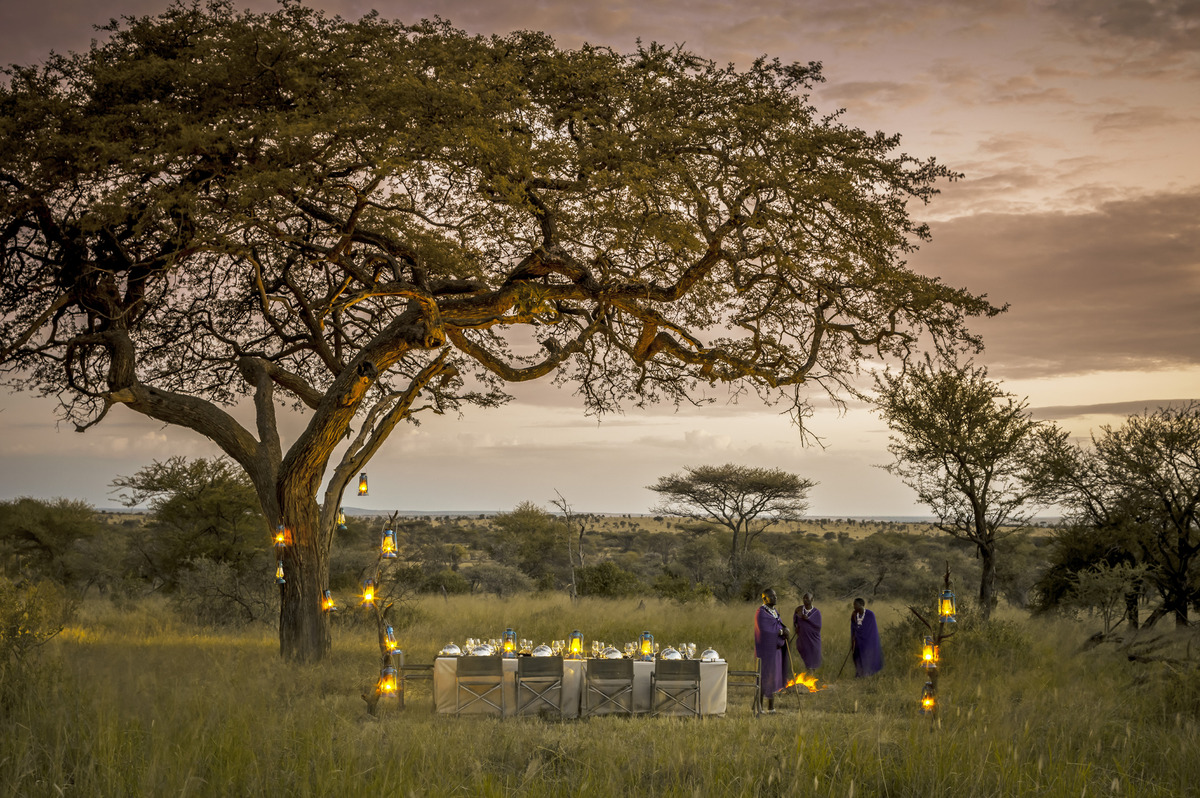
A glass of champagne in a London dining room is merely champagne. The same bottle, carried for days into country where the guest has been watching lions, becomes proof that somebody has mastered distance on his behalf. A hot wash becomes luxurious when there is no plumbing. A proper bed becomes extravagant when the walls around it are canvas. A white tablecloth acquires theatrical power when darkness beyond the lamps contains animals.
The great safari companies learned to manipulate that contrast with extraordinary sophistication. Newland & Tarlton belonged to the generation that gave it a commercial form: the sensation of travelling far beyond ordinary life while an invisible machinery of competence kept ordinary discomfort under control.
The furniture helped tell the story. Officers serving across India and Africa had spent the nineteenth century using furniture that could be dismantled, packed and reassembled: brass-bound chests, folding desks, canvas-and-leather chairs, portable beds. East Africa supplied another inheritance—the caravan. Long before foreign sportsmen arrived, African and Swahili trading networks had accumulated generations of knowledge about routes, water, food and movement across the interior.
The camp brought these traditions together: European campaign equipment carried and made useful by people who knew the country. Its apparent ease concealed both expertise and exhausting labour. African porters, trackers, cooks and attendants made the expedition possible, while colonial society reserved the most flattering part of the story for the visitor.
The fantasy of individual adventure was produced collectively.
That division of work was also the foundation of the service. Someone else worried about water, counted the loads and decided where the next camp should stand. A difficult journey became tourism when difficulty could be transferred from the traveller to an organization.
The traveller retained uncertainty. The operator absorbed chaos.
The man between the guest and the wilderness
Tarlton supplied another piece of the model: the professional guide.
He was celebrated as a formidable shot and lion hunter, but descriptions of him also dwell on his quiet authority. He could deal with the President of the United States without becoming either servile or grandiose. He belonged in the bush and could move easily among the people who paid to go there.
The guide in luxury adventure travel occupies a peculiar social position. He must know infinitely more than the guest without making the guest feel foolish. He must create safety without draining the experience of danger. He must be capable of command without appearing to stage-manage every moment. He must know when to explain and when silence is worth more.
He sells competence, but the guest should feel adventure.
Tarlton’s generation helped establish the figure later famous as the professional hunter: marksman, expedition manager and social companion. The colonial title “white hunter” advertised the hierarchy. African trackers and gun bearers could possess knowledge on which the hunt depended and still disappear behind the name of the man employed to accompany the client.
Yet the relationship between guide and guest proved durable. The visitor would encounter an unfamiliar landscape through a human intermediary who made it readable. The modern photographic-safari guide places the vehicle, reads tracks, listens to alarm calls and knows when an elephant is relaxed and when it is time to reverse. The rifle has gone from this encounter; the need for judgment has grown no less exacting.
Roosevelt gave Newland & Tarlton the client who makes a product famous simply by using it.
The former president sailed from New York in March 1909 with his son Kermit. Their expedition would collect thousands of specimens for scientific institutions. Newland & Tarlton were the Nairobi outfitters; R. J. Cuninghame led the safari, with Leslie Tarlton as adjutant.
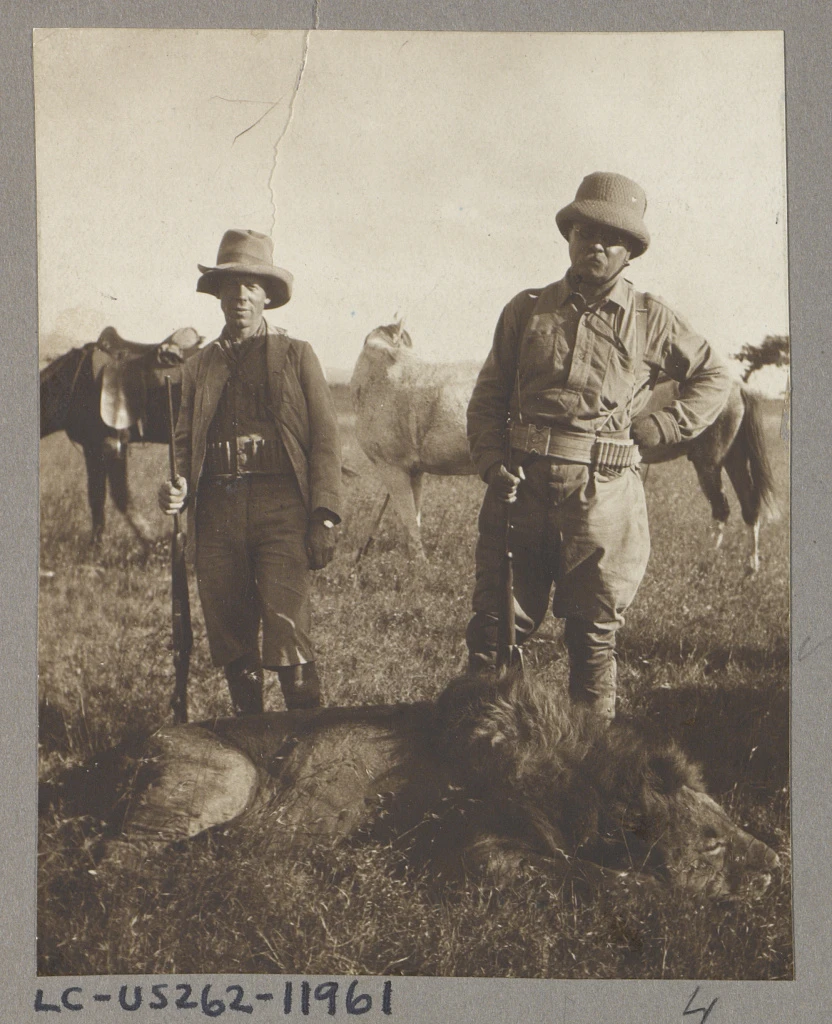
Roosevelt wrote about the journey for Scribner’s Magazine. Kermit photographed it. Readers far from East Africa could follow the departure from settled life into a world of tents, porters, camp tables and long marches. There was danger during the day and order in camp at night. The traveller could be dirty, tired and sunburned and still sit down to dinner.
The publicity gave this way of travelling an immense audience. The arrangements made to serve a guest were becoming an image that could travel without him.
Portable privilege
A successful travel experience eventually develops props.
Ocean liners had steamer trunks and deck chairs. Alpine hotels had terraces, blankets and afternoon tea. Pullman trains had brass, upholstery and dining cars. Safari acquired canvas, khaki, leather, campfires and the silhouette of a folding chair.
Once those objects became associated with adventure, they could outlive their practical necessity. A safari lodge with permanent foundations could still wrap its rooms in canvas. A cupboard could resemble a steamer trunk; an electric lamp could take the shape of a lantern. An architect with access to reinforced concrete, satellite internet and photovoltaic panels could deliberately construct a room that whispered expedition.
The style survives because safari luxury draws so much of its appeal from portable privilege: the suggestion that everything around you could be packed tomorrow morning and the wilderness would close behind it.
Tarlton’s camps were actually mobile. Modern lodges spend considerable money pretending they might be.
By the time Ernest Hemingway reached East Africa in the 1930s, the stage had been standing for a generation. He understood the psychological material embedded in safari and turned it into literature: fear, courage, rivalry, marriage, masculinity, death, the strange intimacy between client and professional hunter, the addictive clarity of mornings organized around animals rather than appointments.
Hemingway gave the safari an interior life.
Karen Blixen gave another version of East Africa emotional elegance: books, conversation, landscape, loss. Later writers added their own layers. Hollywood carried the imagery further still. Sydney Pollack’s Out of Africa made it possible to long for a world of linen, leather and canvas without ever having set foot in a camp.
Hollywood had its own outfitting to do. Production designer Stephen B. Grimes studied photographs and plans of Blixen’s house; set decorator Josie MacAvin searched Kenya for belongings Blixen had sold. Their reconstructed world had room for Limoges porcelain and a cuckoo clock. The romance had a packing list.
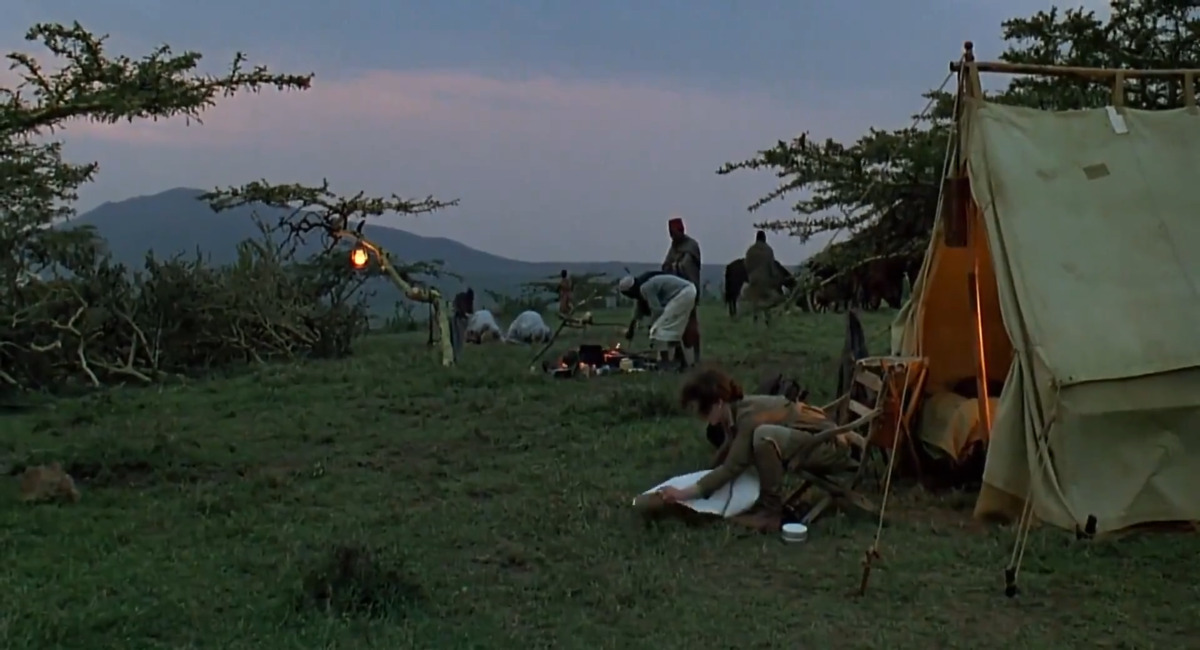
The film then helped carry safari style into fashion and interiors in the 1980s and ’90s, from Ralph Lauren to Banana Republic and Bombay Company. What Tarlton’s generation had packed for a journey could now be bought for atmosphere. The expedition had acquired a retail department.
The camp stayed
The most remarkable change came when the camera began to displace the rifle.
Photographic wildlife tourism expanded after the Second World War. Cars, better cameras and wider transport connections brought the safari within reach of a larger audience. The old champagne safari had served a tiny elite, but its imagery proved remarkably useful to the new industry.
The quarry remained. So did the excitement of searching, the guide, the early departure and the return to camp. The trophy moved from the wall to the memory card.
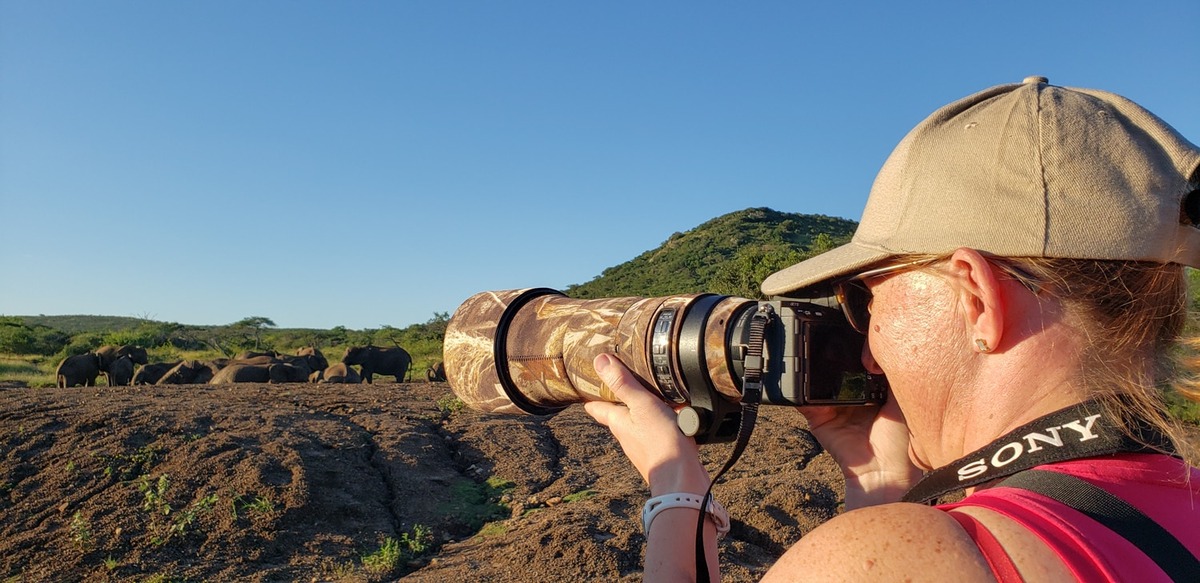
An expensive photographic safari today can feel strangely old even when every operational system behind it is modern. Much of its emotional structure was developed during the hunting era: leave camp before dawn, follow signs in the landscape, wait, search, and feel several quiet hours become worthwhile when an animal appears.
Back at camp, somebody asks what you saw. Dinner begins. Stories improve in the retelling. The fire takes over once the sun disappears.
The arrangements work beautifully without the kill.
They work because the camp offers a particular pleasure: departure from ordinary life followed by a return to its most welcome comforts. The bed matters because of the day outside it. The evening drink belongs to the search that preceded it. Even the fire gathers people around what happened elsewhere.
The modern company trading under the Newland Tarlton name makes that inheritance explicit. Revived by Don Young, it draws on the old firm’s Edwardian history and designs campaign furniture, steamer trunks and leather drinks cases to accompany its camps. A century after Tarlton helped work out how to carry a comfortable world into the bush, the world he carried has itself become an attraction.
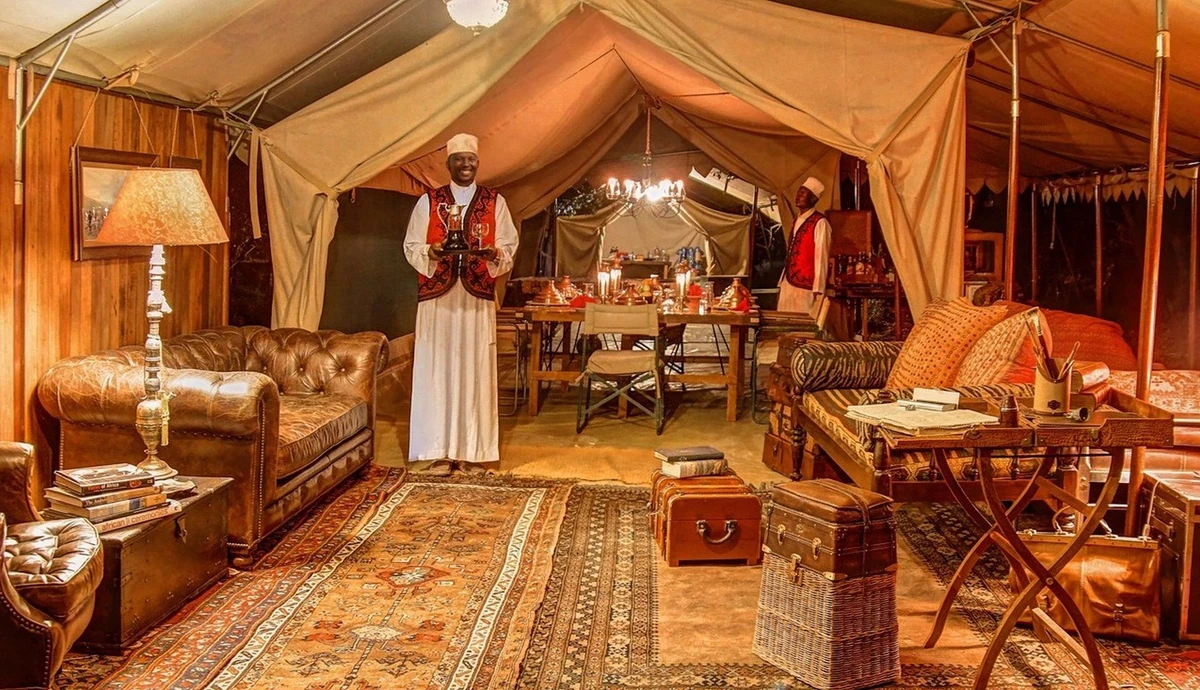
The camp began as infrastructure. It became atmosphere.
Somewhere in that transformation sits Leslie Tarlton, an operator with a tin office, a useless typewriter and a considerable gift for making himself useful. The clatter brought the customer in. The work persuaded him to stay.
More than a hundred years later, travellers still cross half the world to sleep under canvas in Africa. They wake before dawn, follow a guide into the bush and return to a fire and a well-laid table.
The lion has come off the wall.
The camp stayed.