
Travelling around Singapore is a pleasure. It is easy, comfortable, and endlessly interesting. This many-sided city is filled with attractions, astonishing views, and ultra-modern technology. It carries echoes of many ethnic cultures, takes great pride in its food, and has wonderfully convenient transport.
I spent five days in Singapore altogether, filling them with cultural and culinary experiences.
For anyone planning to stay for a few days, here is my own itinerary.
A 3-Day Singapore Itinerary
Day One
Morning: A Walk Around Marina Bay
It is no secret that Singapore is one of the world’s wealthiest and most stylish cities. To see this for myself—and glimpse the life of modern luxury—I set out for a walk around Marina Bay. It is difficult to believe that, in only 45 years, an unremarkable stretch of land became a showcase for breathtaking architectural masterpieces.

My Top 7 Marina Bay Sights
-
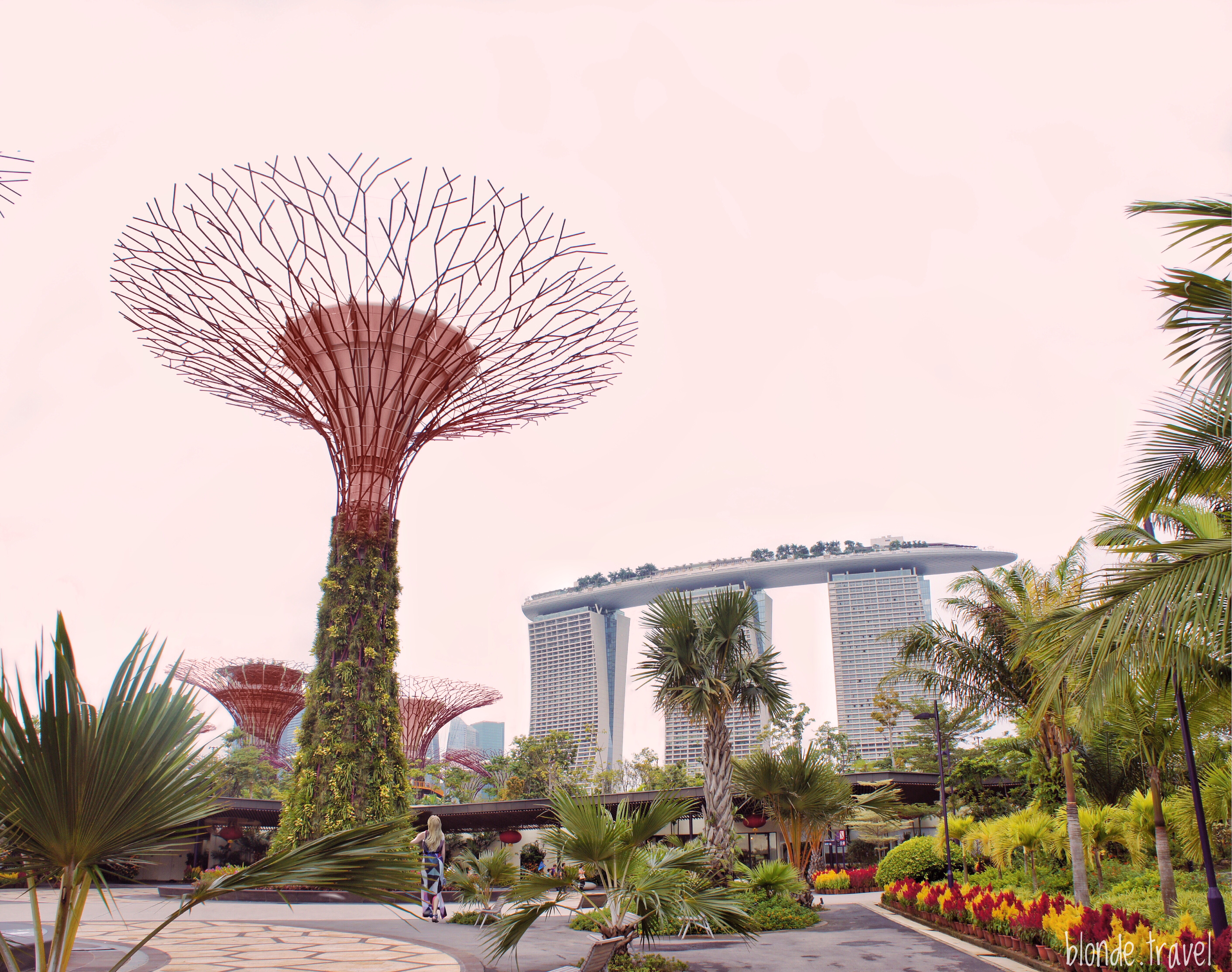
Marina Bay Sands. You simply cannot miss this hotel. Designed like an enormous ship resting on three 55-storey towers, it catches your eye the moment you reach the bay and impresses with both its beauty and its scale. Marina Bay Sands cost $8 billion to build, making it the most expensive building in the world at the time.

Marina Bay Sands in Singapore - Esplanade. Another Singapore icon, this theatre and international arts centre looks remarkably like a durian.
- ArtScience Museum. The museum was designed in the shape of a huge lotus flower.
- Helix Bridge. Singapore’s longest pedestrian bridge is shaped like the double helix of a DNA molecule, symbolising “life and continuity, renewal and growth.” It connects the Marina Centre with Bayfront.
-
The Merlion. Singapore’s majestic symbol is a mythical creature, half fish and half lion. Its fish body represents the fishing villages of Singapore’s past, while the lion’s head stands for Singapura—the “Lion City” in Malay.

The Merlion statue in Singapore - Raffles Hotel. One of the colonial era’s most distinctive buildings, it was created by the famous Armenian businessman brothers, survived the war, and was declared a national monument. Its façade and architecture are stunning.
-
Singapore Flyer. Once the world’s tallest observation wheel, the Singapore Flyer surrendered that title to Las Vegas in March 2014—by only 2.5 metres.

A sightseeing boat in Marina Bay
All these remarkable works of architecture stand close to one another. Starting at Marina Bay Sands and walking anticlockwise around the bay, I met each of them in the same order as the list above. Then I returned to the observation wheel to admire Marina Bay from a height of 165 metres.
Evening: The Singapore Flyer and a Boat Ride on the Singapore River

Taking a ride on the Singapore Flyer turned out to be an excellent decision. Darkness fell, and the city revealed the dazzling beauty of its evening life, glowing with bright, multicoloured lights.
The colourful boats darting across the bay tempted me to take a ride of my own. After leaving the observation wheel, I walked straight to a landing, bought a ticket, and was on deck after a fifteen-minute wait. There are several piers around the bay where you can buy a ticket and begin the trip: one near the Merlion, another close to Esplanade, and a third beside Marina Bay Sands.
As we set off, the laser show began. Hundreds of coloured beams streamed from the top of Marina Bay Sands and danced merrily across the dark sky, cutting through the air above the bay and reflecting every colour of the rainbow in the mirror-like water.

The trip lasted 45 minutes. We sailed past the hotel, passed a procession of skyscrapers, slipped into the darkness beneath a bridge, and began winding through the city along a narrow river. On both banks were picturesque little houses, restaurants, and cafés that looked almost like toys. I enjoyed the ride so much that I repeated it in daylight on the day before I left.
Evening Spectra Light Show at Marina Bay
At 20:00 and 21:00, Marina Bay hosts a spectacular laser-and-water show that makes you forget to breathe and sends shivers over your skin. It is called Spectra, replacing the earlier Wonder Full show that featured a Louis Armstrong song. The best place to watch is the promenade outside the entrance to Marina Bay Sands.
Day Two
Morning: The Cable Car to Sentosa Island
In the morning, I caught a taxi to Mount Faber and took the cable car to Sentosa. You can also reach the island by taxi, monorail, or even on foot—Sentosa lies only 500 metres off Singapore’s southern shore.

I chose the most scenic route: the 1,650-metre cable car, travelling 60–70 metres above the sea, with wonderful views of Singapore.
Sentosa is an island of leisure and entertainment, popular with visitors and locals alike and attracting more than 20 million people each year. It has 14 hotels, a two-kilometre beach, golf courses, and enormous attractions, including the world’s largest oceanarium, Universal Studios—the first Universal theme park in Asia—and a water park.

I was full of anticipation for a bright and fascinating day on this island of calm, away from the overloaded city.
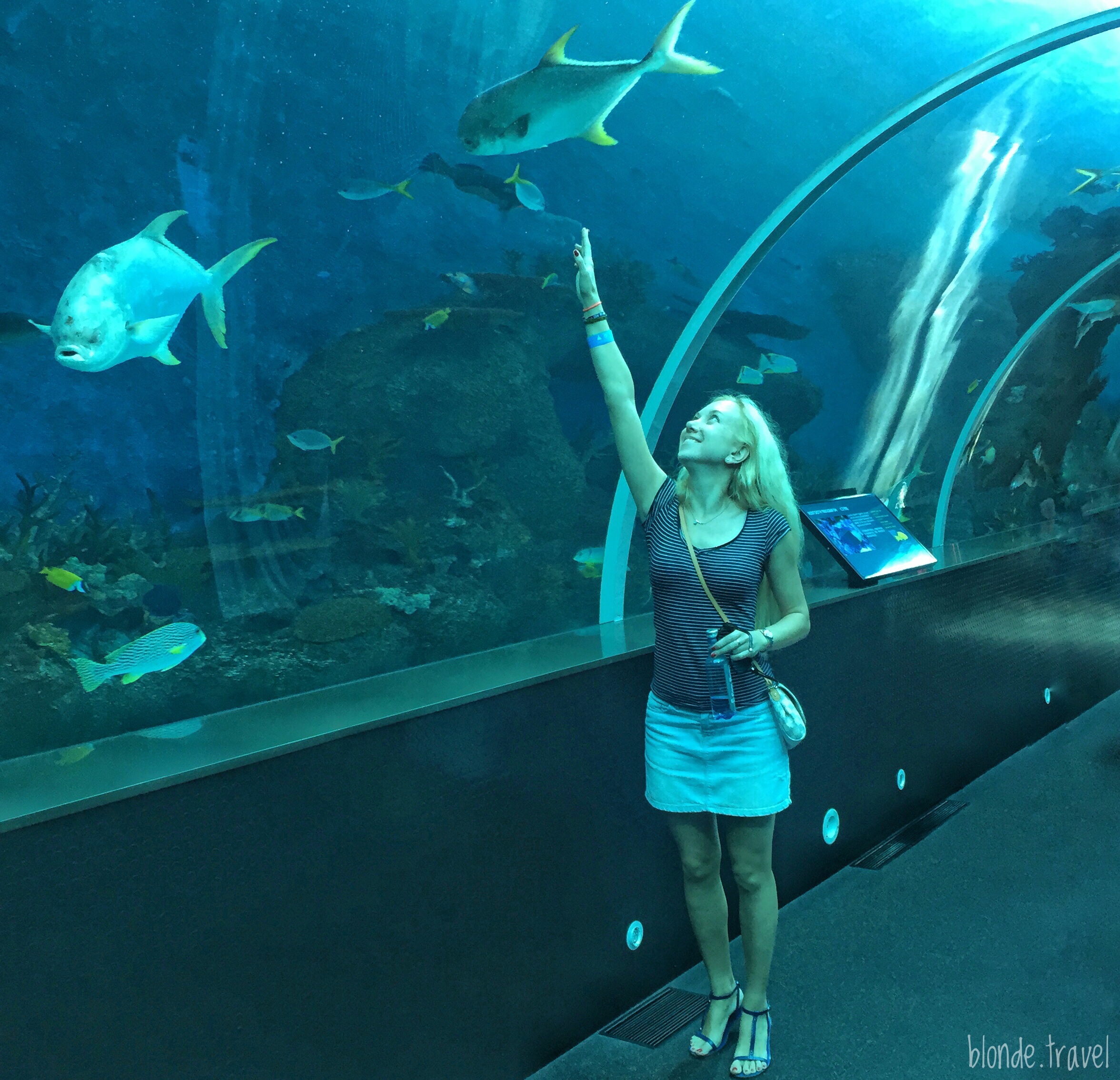
My first stop was S.E.A. Aquarium. It feels as though you are walking across the ocean floor, marvelling at the variety of marine life and the scale of the building. Giant manta rays, sharks, hammerheads, countless coral fish, seahorses, and corals are only a small part of this underwater world.
I walked through the park past the Merlion statue, rode a bicycle along the promenade past the beach, hotels, and cafés—bikes are easy to rent by the hour—and popped into the butterfly park for five minutes. I did not enjoy it, especially after discovering an entire collection of preserved butterflies in its museum, so I moved on to Universal Studios.
Daytime: Universal Studios
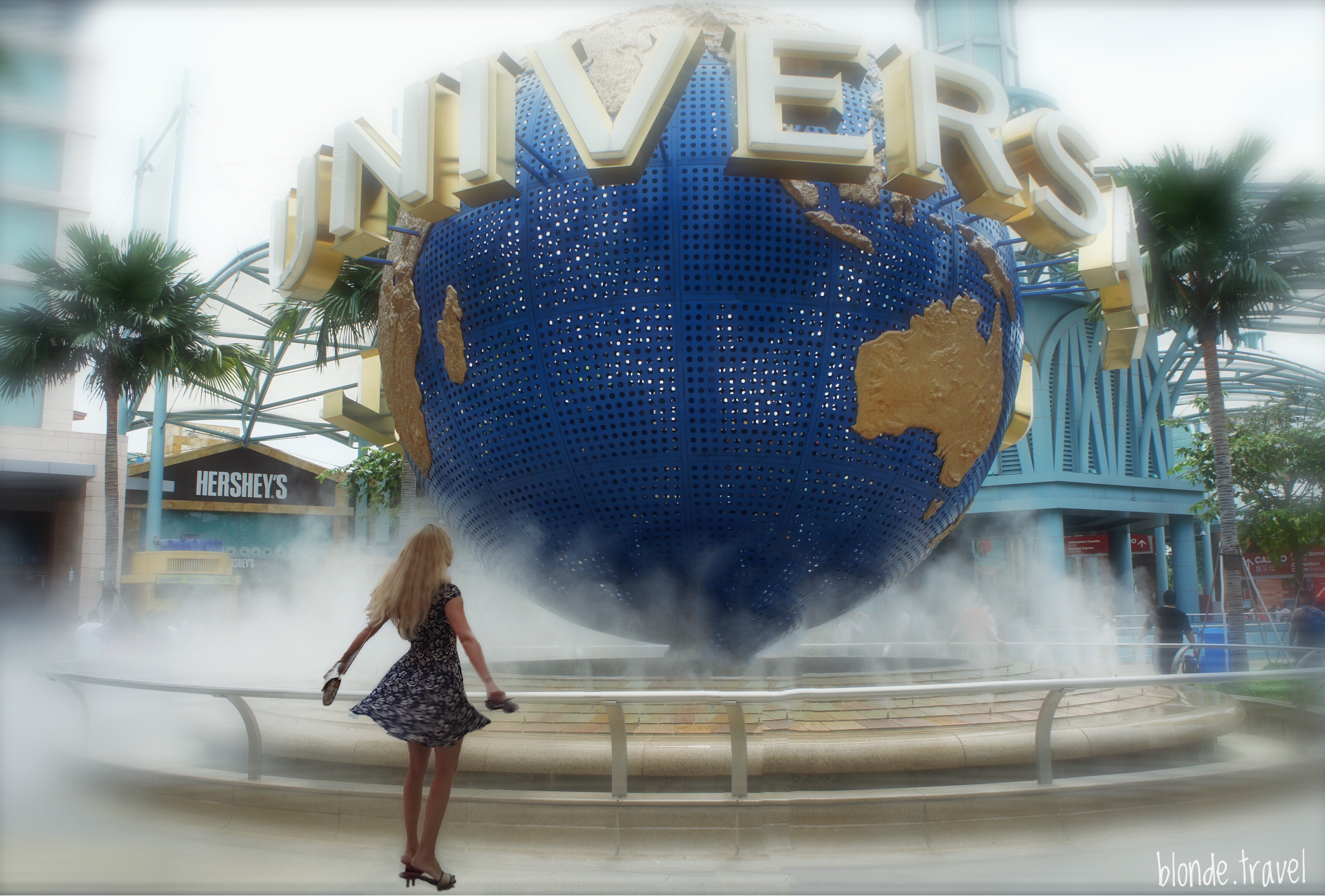
If you love rides, Universal Studios is one place you should certainly visit on Sentosa.
I had already visited Universal Studios in Orlando and loved it. The Sentosa park is much smaller, but it delivers just as many bright emotions and impressions. An Express Pass, which lets you move through queues faster, also saves a great deal of precious time.
Late Evening: Orchard Road, Singapore’s Paradise for Night Walks and Shopping
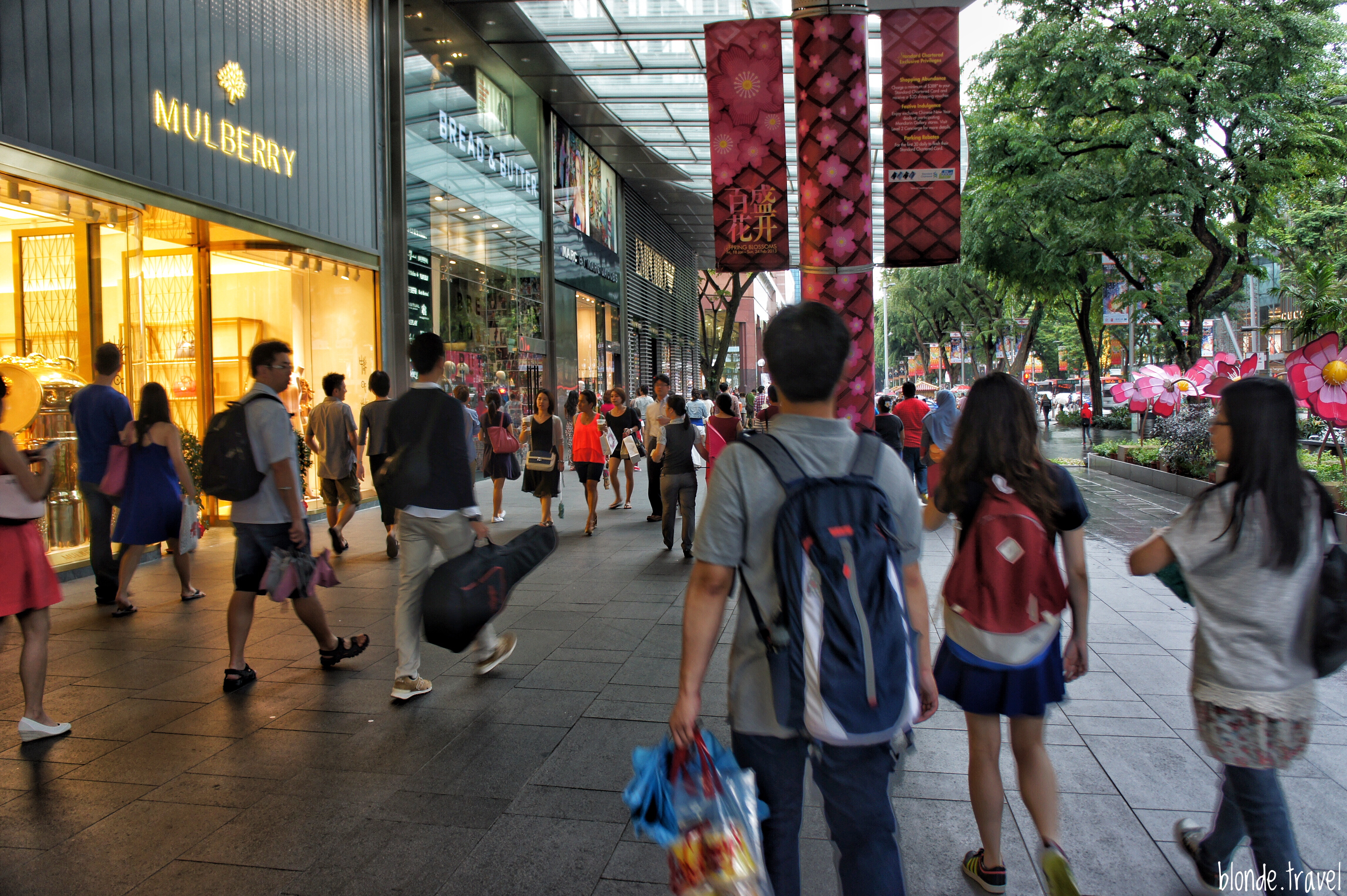
I decided to return from Sentosa by monorail. A train leaves HarbourFront every five minutes; with a change at Dhoby Ghaut, the journey to Orchard takes about fifteen minutes. From the station it is only a short walk to Orchard Road. There I found shopping centres on both sides of the busy road, a huge choice of restaurants, and all the lights and movement of the city at night.
Day Three
Morning: Kaya Toast for Breakfast
Today I decided to indulge my taste buds and explore Singaporean food. Food is one of the best ways to understand a country’s traditions and character—especially when the country is as full of contrasts as many-sided Singapore.
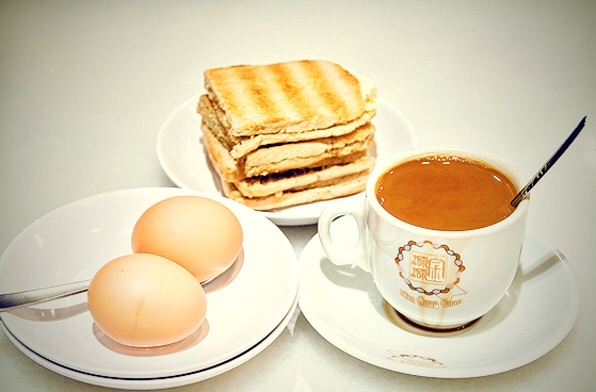
Kaya Toast Breakfast
I began with Singapore’s most popular breakfast: kaya toast. Kaya is a jam made from coconut milk and sugar, spread on bread with a generous slice of butter. The super-sweet toast comes with soft-boiled eggs and very sweet coffee. After that breakfast, I think I replenished my body’s sugar reserves for a month.
Daytime: A Cooking Class in Chinatown
Chinatown is Singapore’s most vivid district. It creates such a powerful contrast with the rest of the city that it is impossible not to visit.

This mecca of the country’s flavours was exactly where I went for a cooking class, hoping to learn the skills and secrets of Singaporean cuisine.
After discovering a cooking class in Bali, I made this kind of culinary lesson an essential part of the educational programme on every trip.
For several hours, I listened to stories about Singapore’s food traditions and learned that its cuisine grew from a mixture of Chinese, Indian, and Malay influences. Then I tried to cook several dishes myself. The result was a very respectable lunch.
A Walk Through Singapore’s Chinatown
Over the next few hours, I explored Chinatown, weaving through its narrow, noisy streets between market stalls and Chinese tea shops, admiring temples and decorations, and breathing in the appetising aromas from street vendors.
My Top 5 Places to Visit in Chinatown
-
Maxwell Food Centre. The aromas and distinctive energy drew me inside. Here I tried laksa noodles, Tian Tian chicken rice, and pancakes with shredded coconut.
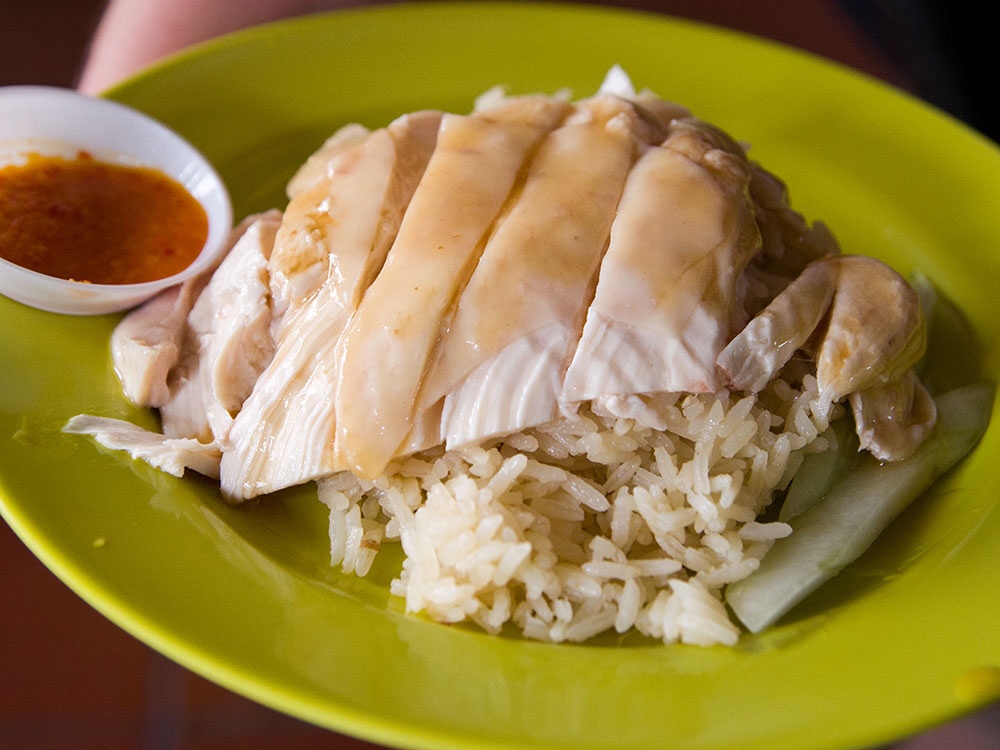
- Hong Kong Soya Sauce Chicken Rice & Noodle. Do not forget to visit Mr Chan, whose street stall received a Michelin star. It was the world’s least expensive Michelin-starred restaurant, where you could taste its famous chicken and rice for only $2.
- Pagoda Street. I managed to buy an entire bag of souvenirs and gifts here. It is touristy, but the choice is huge and interesting.
-
Two temples. The Buddha Tooth Relic Temple has a two-metre golden stupa containing a sacred relic—you have probably already guessed which one. Sri Mariamman Temple is Singapore’s oldest Hindu shrine, built in honour of the goddess Mariamman.

Sri Mariamman Temple in Singapore’s Chinatown

The Buddha Tooth Relic Temple - Pinnacle@Duxton Skybridge. This observation deck connects several residential skyscrapers and offers a wonderful—and unusually different—view over the city, including Chinatown.
Kampong Glam and Sultan Mosque
It took me about 40 minutes to walk from Chinatown to the Arab Quarter. I did not spend long there, but I saw Singapore’s oldest mosque, Sultan Mosque. Little India is about a fifteen-minute walk from the mosque.

Evening: Gardens by the Bay
At last it was time for Singapore’s most popular tourist attraction. From Chinatown, I travelled to Gardens by the Bay—an extraordinary place where you can escape the city’s concrete jungle and spend time surrounded by astonishing natural beauty.
Gardens by the Bay has indoor and outdoor sections. The enclosed conservatories recreate the climates of different parts of the world:
- Flower Dome: beautiful flower gardens and enormous baobab trees
- Cloud Forest: humid forest, a 35-metre waterfall, and an incredible collection of tropical plants, including orchids and ferns
Admission to both indoor gardens cost me $20, while entry to the outdoor park was free.
My favourite outdoor part was Supertree Grove. The giant trees combine metal frameworks with a multitude of living flowers.

There is a restaurant inside the largest tree.
The trees come alive in the evening when their lights switch on. At that moment, I felt as though I had stepped into Avatar. At 19:45 and 20:45, the “Garden Rhapsody” light-and-sound show begins. It is an astonishing event. Because the show happens twice, I watched it once from inside the garden, then walked across the bridge connecting the gardens with Marina Bay Sands and enjoyed it again from another angle. Both views were magnificent.
The trees are joined by the OCBC Skyway, an observation walkway 50 metres above the ground. The view of the city from it is breathtaking.
We could also see Gardens by the Bay directly from our window at Marina Bay Sands.
