
From my 2017 stay; accommodation, dining and travel information updated on 6 September 2026.
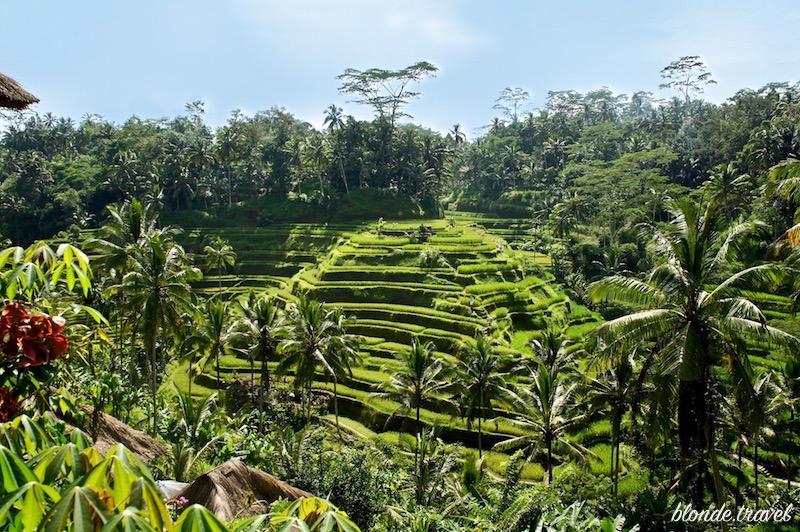
Bali had been my home for a year, and Ubud still drew me back. I loved the island’s ceremonies, its craftsmanship and the small courtesies of daily life.
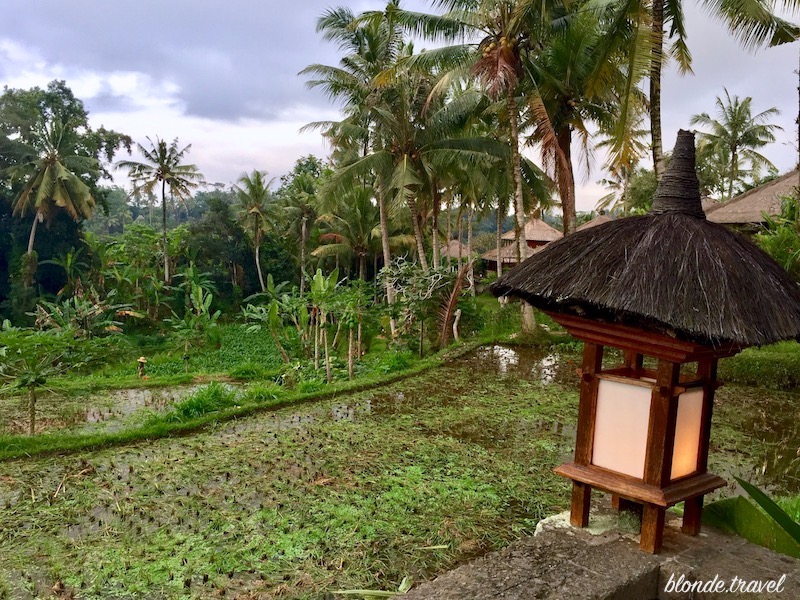
This was my second return since leaving Bali four years earlier. At Amandari, I found a hotel that seemed to share my affection for the island.
The name “Aman” evokes peace, and I cannot imagine a better description of the feeling that came over me when I entered these hotels.
Of all the hotels I had stayed in around Ubud, Amandari’s welcome felt the most personal.
From the moment we arrived, I could not shake the feeling that I had entered the luxurious home of a prosperous, impossibly hospitable Balinese family. They welcomed guests with warmth and joy, doing everything they could to create unforgettable impressions not only of the stay itself, but also of the island’s culture and traditions—its customs, food, and pastimes—so that guests could understand and feel the spirit of this place.
Here, women are addressed as “Ibu” and men as “Bapak,” rather than being called by name. I had often heard these respectful forms of address during my year in Bali, but this was the first time they were used for me. It brought a surprising amount of pleasure and emotion.
You might assume that staff do this because it is easier, or because they do not know your name. Not at all. The truth is quite the opposite. One of the most remarkable things about Aman was how much the team seemed to know about you while you were staying with them.
Amandari’s Location in Kedewatan, Ubud
Amandari stands in Kedewatan, above the Ayung River Gorge on the outskirts of Ubud. It was no longer a young hotel when we visited, but its age only deepened Ubud’s unusual atmosphere.
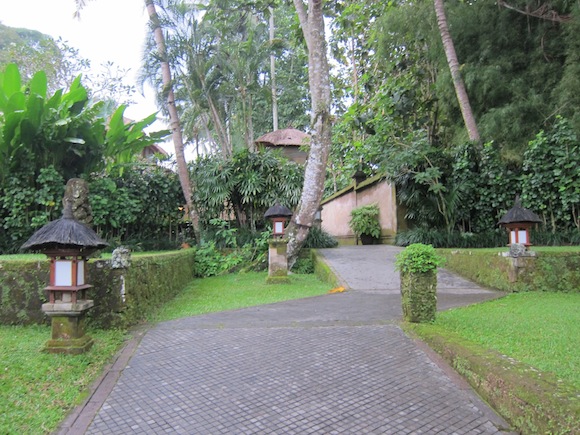
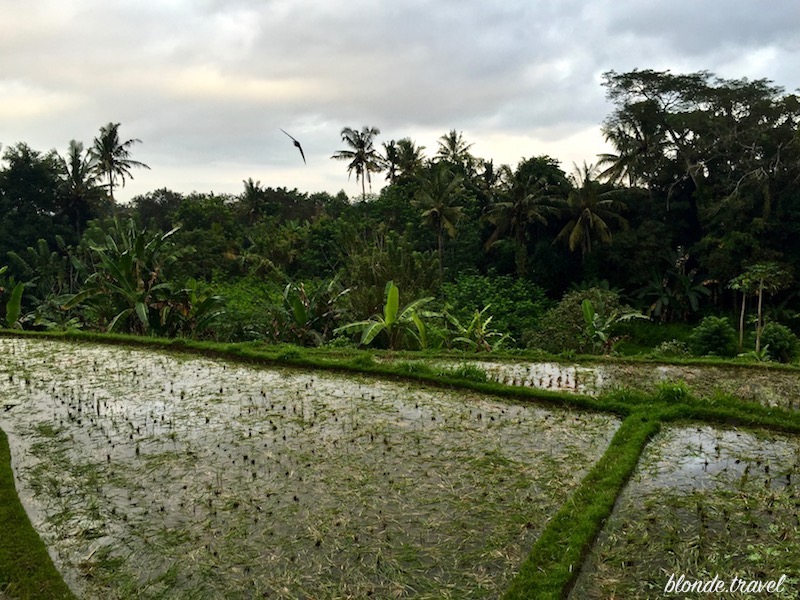
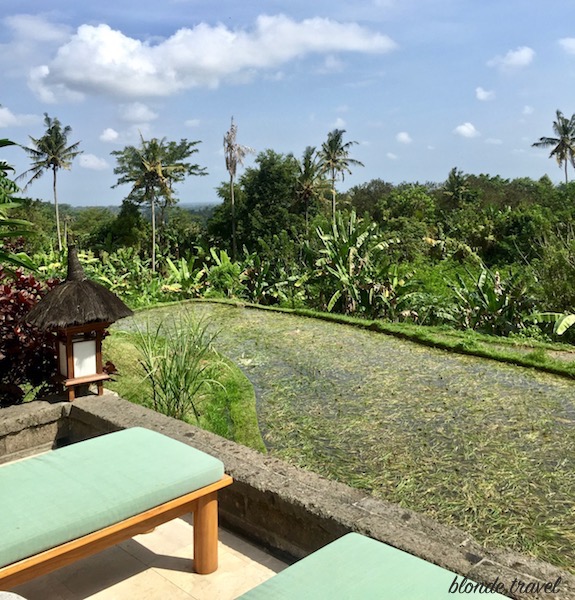
It was built on sacred ground above the Ayung River valley, 129 steps above a Hindu shrine guarded by a stone statue said to date to the seventh century. It looks out across the rice terraces and wild landscape of the gorge.
For an afternoon among Ubud’s museums and galleries, the hotel now provides a car to Museum Puri Lukisan in the centre and collects you there afterwards.
Ubud and the many villages around it have been known for centuries as one of Bali’s artistic centres. Visiting local workshops is a wonderful way to spend time here, and you can take an art lesson from a Balinese painter in Ubud or from an international artist living nearby.
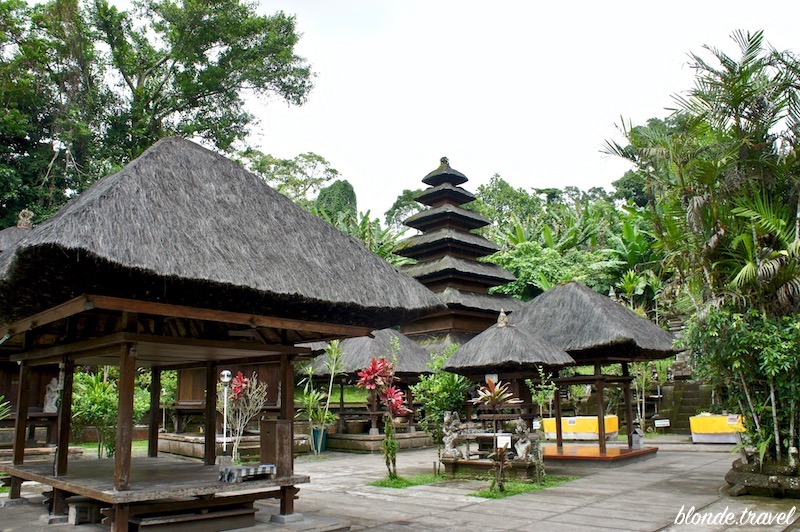
There are many temples in the wider area, including Pura Agung Gunung Raung and Gunung Kawi. Some of the region’s sacred sites date back many centuries.
Peter Muller’s Balinese Village
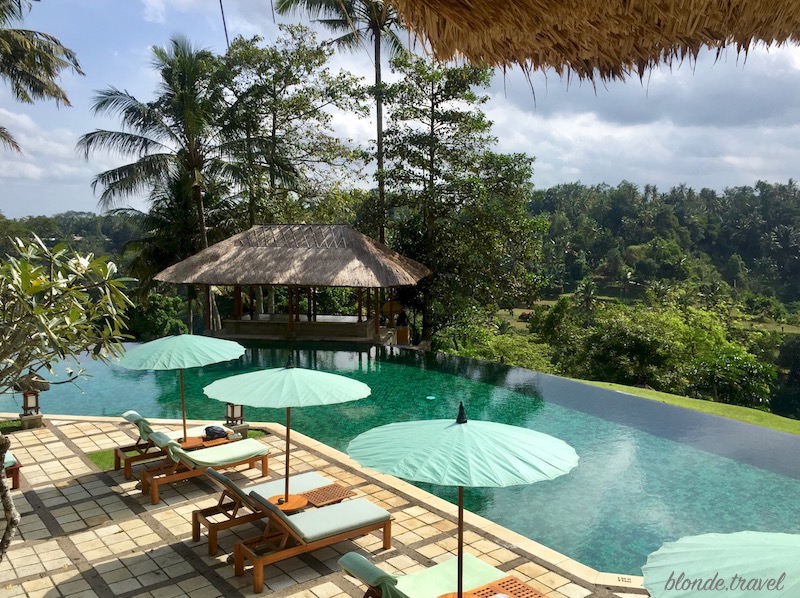
Architect Peter Muller conceived Amandari as a Balinese village; it opened in 1989. Aman’s history of the property also explains the curved pool: its shape follows the rice paddies below.
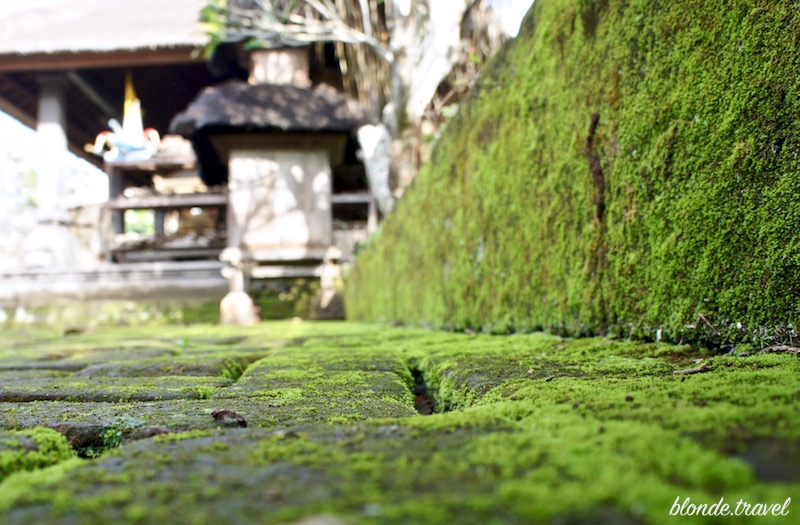
Many details were crafted by skilled local artisans, while nature supplied others: the rain-darkened grey-brown stone walls and green moss across steps and balustrades added mystery to an experience that already seemed unreal, lifting us away from the everyday world.
The open-air reception was filled with the scent of incense and the hypnotic sound of gamelan drifting through the air. Our visit fell during the week of Galungan and Kuningan, so the authentic Balinese atmosphere was enriched by rows of beautifully decorated penjor.
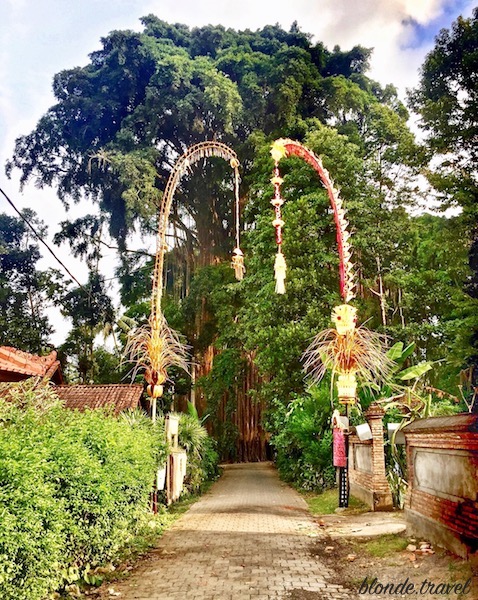
That connection to Kedewatan continues beyond the architecture. Local children learn traditional dance on the grounds, while villagers pass through on their way to the shrine below. The paths belong to the life of the village as well as to the hotel.
Our Village Suite at Amandari
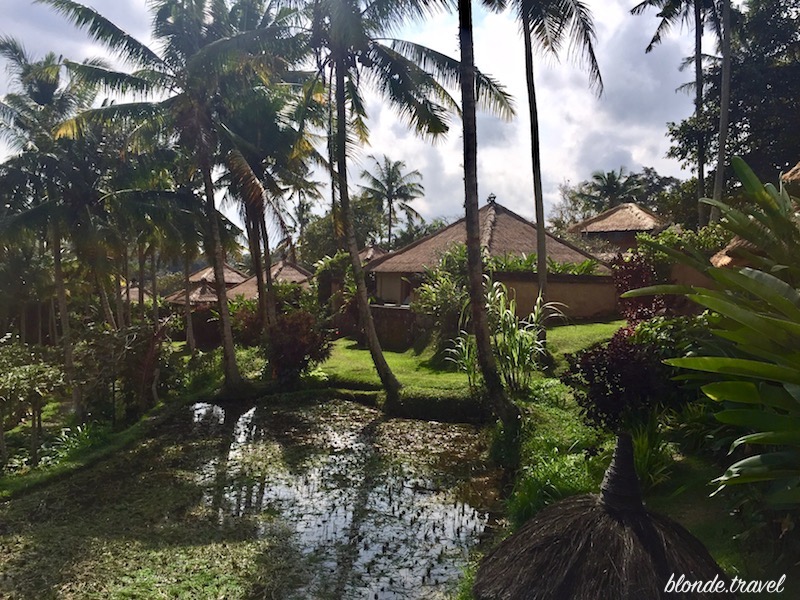
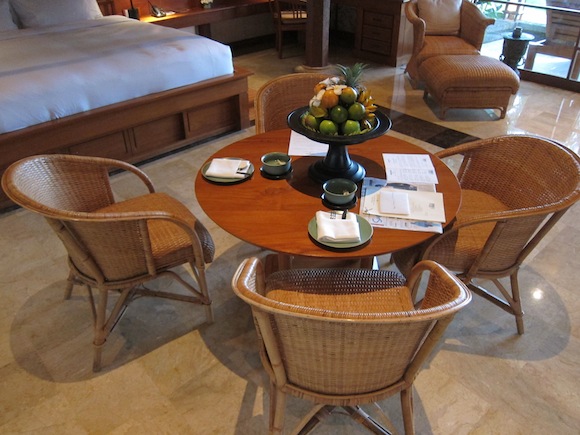
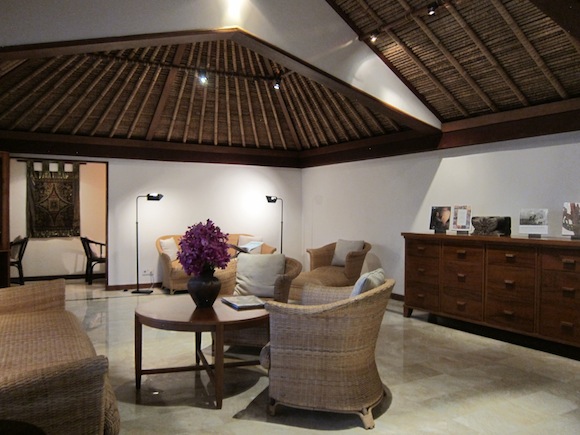
A narrow pebble path wound through the green grounds to our Village Suite. The suite was a private house surrounded by tropical plants, with a palm-thatched roof and an elegant traditional interior. Inside, the warm atmosphere was shaped by artisan-made details: remarkable teak artwork on the walls, woven chairs, and carved furniture.
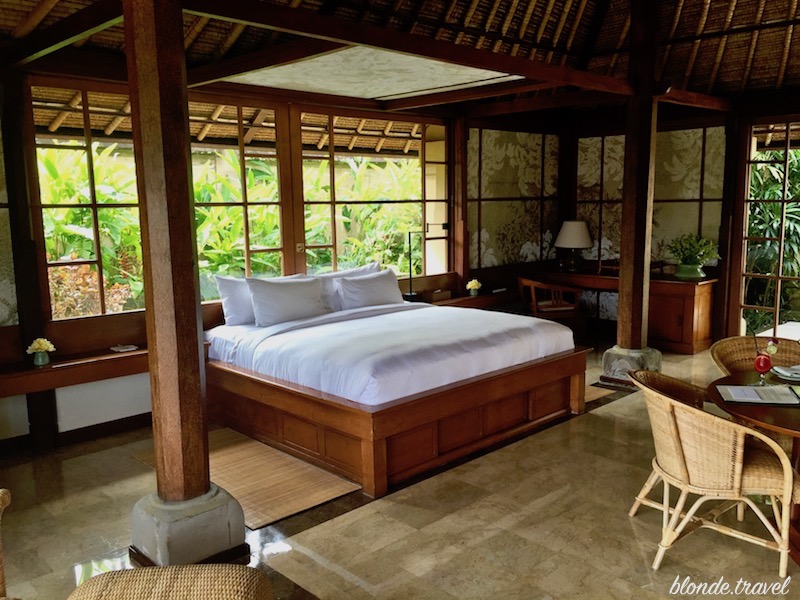
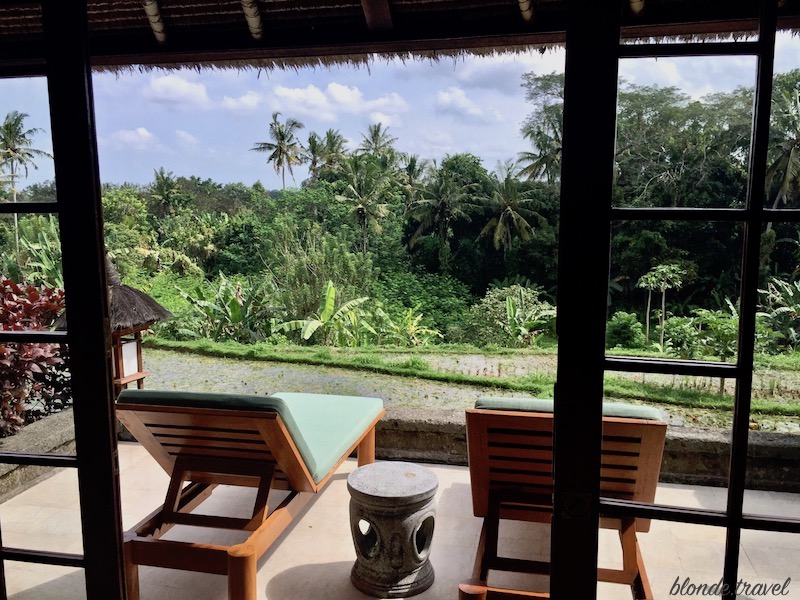
There was an enormous four-poster bed scattered with frangipani flowers, and a balcony looking over the rice terraces—a place where you could easily spend the whole holiday if you did not remind yourself of the plans ahead. I especially loved the soaking tub on the secluded terrace.
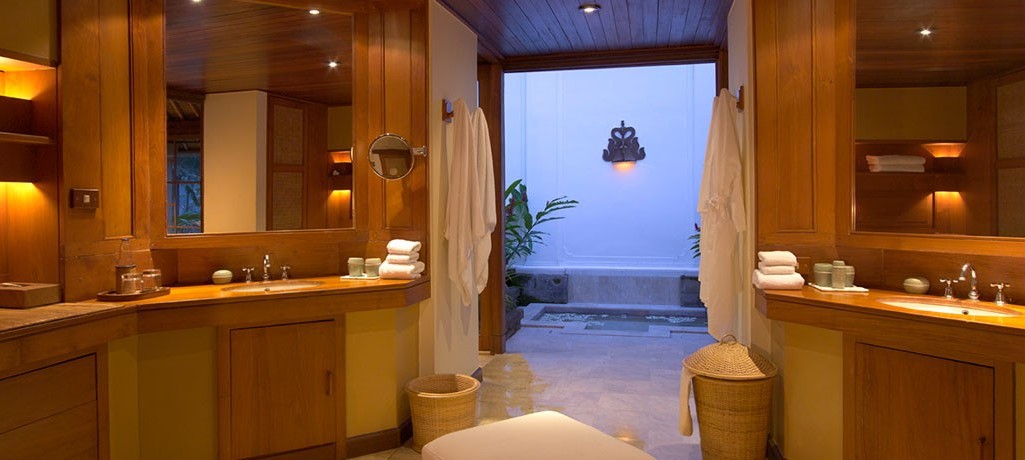
As someone who loves interior details, I could not stop admiring the woven baskets, boxes, and little containers for bath amenities.
Even our enormous bag found its proper place here 🙂
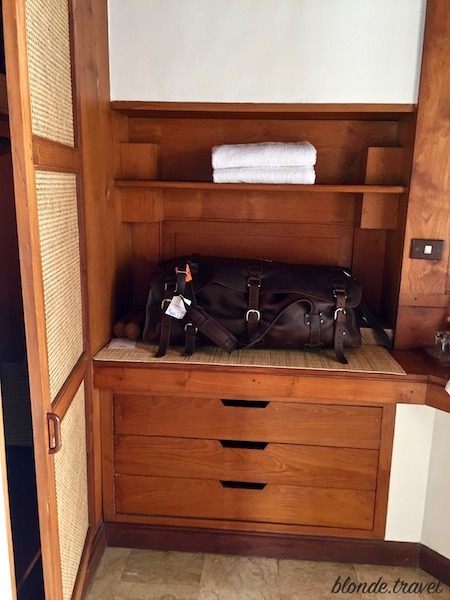
Two sarongs presented in woven tubes were ours to keep. A huge vase filled with every kind of tropical fruit waited on the table and was replenished each day.
The view over the rice terraces of the Ayung Valley was part of Amandari’s magic. This felt like the most astonishing place in the world for more than the beauty surrounding it. Invisible life was everywhere. The air carried flowers and incense, while echoes rose from what sounded like an orchestra of a thousand musicians hidden in the dense greenery.
Choosing a Pavilion or Villa Today
Village Suite was the name used for our room when we stayed. The current accommodation choices are listed as pavilions and villas. Garden Pavilions have private courtyards; Valley Pavilions look towards the valleys or rice terraces. For a private swim, Garden Pool Pavilions have their own pools, as do the villas.
The Infinity Pool and Gardens
The hotel’s centrepiece was its infinity pool, set against Ubud’s intoxicating rice-field landscape and perfectly at home within the surrounding idyll of peace and quiet.
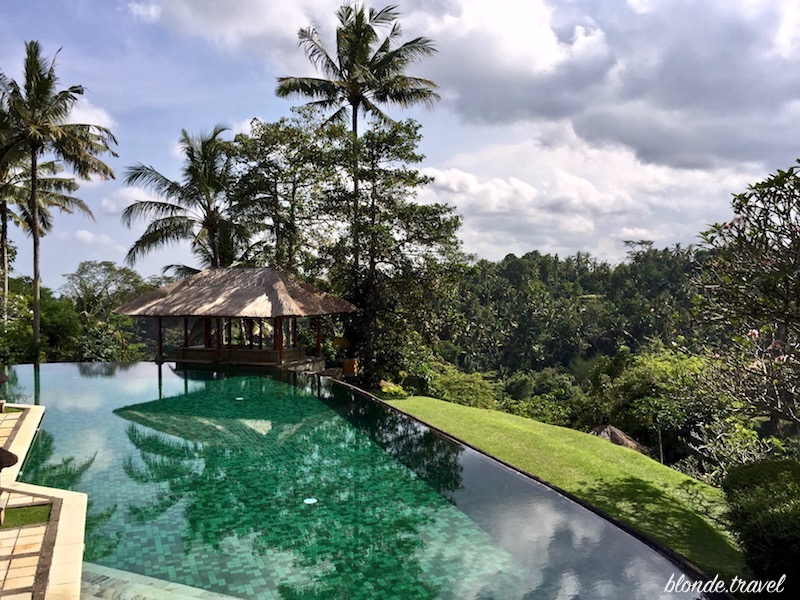
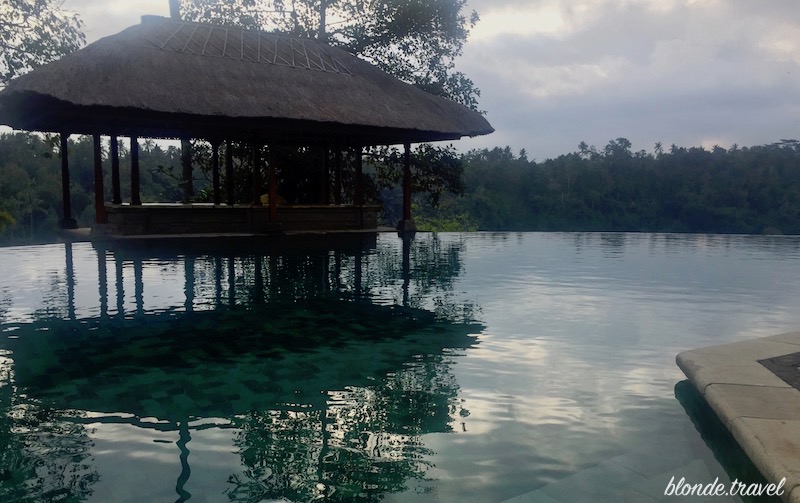
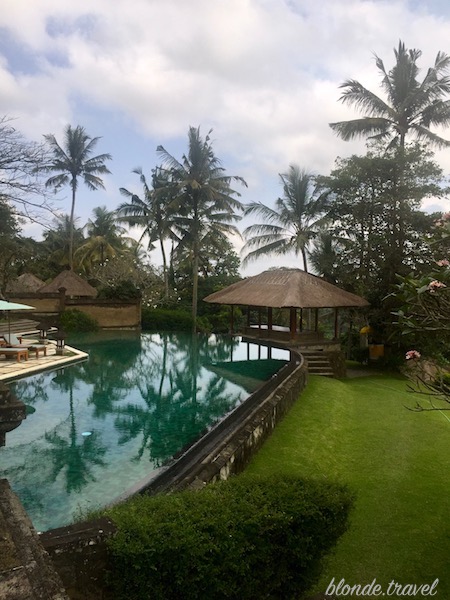
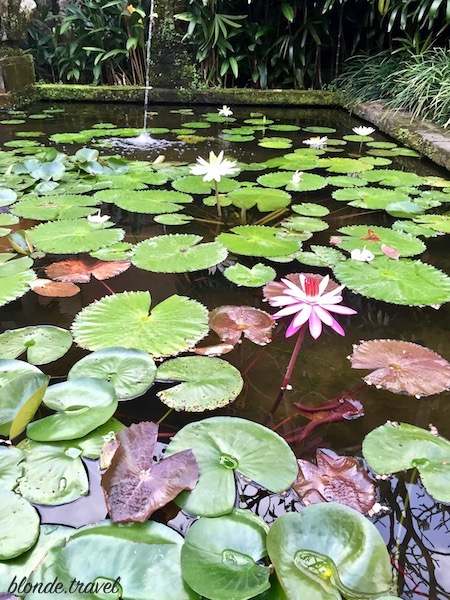
Sit down for a few minutes anywhere in the grounds and several hours could pass without you noticing. Winding paths crossed the property and emerged into open spaces with views of green plantations or a small lotus pond.
Dining at Amandari
The restaurant overlooked the pool and the soft green cascades of the Ayung Valley. It served wonderful local and international dishes prepared with wonderfully fresh ingredients. At the time, I especially wanted visitors to try the traditional smoked duck and rice rich with turmeric, or fish satay and grilled prawns. In the evening, gamelan mingled with every sound of nature and wrapped the tropical atmosphere in calm.
If I were returning today, I would make room for the Ngejot Balinese Feast. It draws on the Balinese tradition of sharing food with neighbours during celebrations. Amandari serves the feast at dinner in the restaurant; a private version in the dining balé, with a dance performance, requires 24 hours’ notice.
Amandari’s Hospitality
Impeccable service, exceptional conditions, and the entire team’s care for each guest were hallmarks of the Aman hotels I knew, and Amandari was no exception.
I find it difficult to explain exactly what made Aman incomparable to any other hotel in the world. Perhaps there is no formula; if there were, it could simply be reproduced.
As the photographs show, it was not merely about the hotel’s physical appearance. Other places might look more polished. The difference was the people.
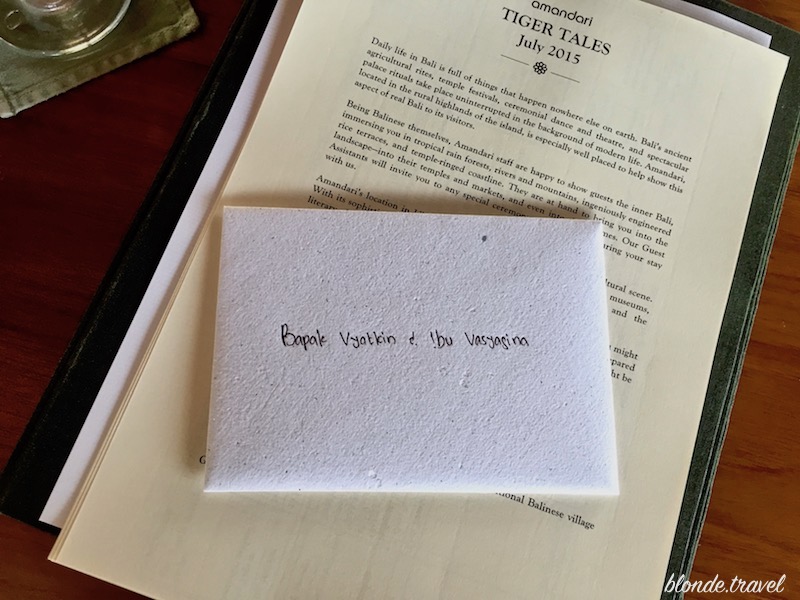
The quiet, meaningful, and simply lovely details of Amandari’s service lived up to its name.
A wonderful symbolic creation by an Ubud artisan stood in our room: a colourful wooden rooster who “promised not to wake us in the morning if we took him home,” while apologising for his living relatives, who had indeed interrupted our sleep.
Before departure, our suitcase received a gift too: a beautiful leather luggage tag engraved with the hotel’s name.
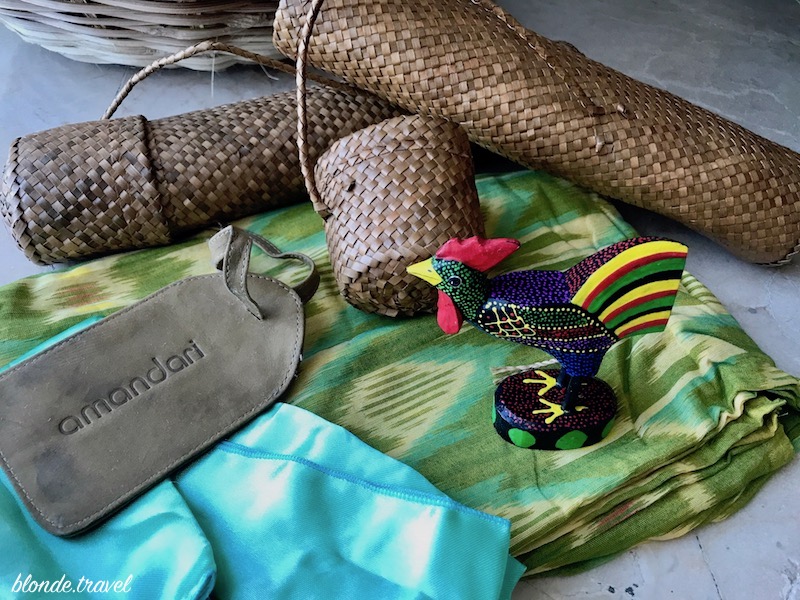
The staff seemed almost invisible; I could barely remember whether I had actually seen anyone. Nobody knocked at the door before cleaning because they always seemed to know whether we were in the room. The suite was invariably immaculate, the robes neatly folded, the bed turned down before sleep, and the fruit bowl full.
In the restaurant or bar, nobody asked for our room number as if it were a password. You simply ordered what you wanted, and the waiter already knew who you were.
Getting to Amandari
The hotel provided transfers. Because we had been staying in Sanur beforehand, a comfortable minivan collected us there with a friendly driver in traditional dress. Two bottles of water had thoughtfully been placed inside. On our return journey, we were driven to the airport and escorted to the check-in desk, with the necessary paperwork completed for us.
Our flight departed at night, so the hotel extended our room until six in the evening without charge 🙂
Ngurah Rai International Airport (DPS) is roughly an hour and a half away by road, longer when traffic is heavy. Aman currently includes return airport transfers and daily breakfast with a stay.
Exploring Bali with Amandari
Our days were arranged with sincere care around a rather long list of wishes.
A Walk Through the Rice Terraces
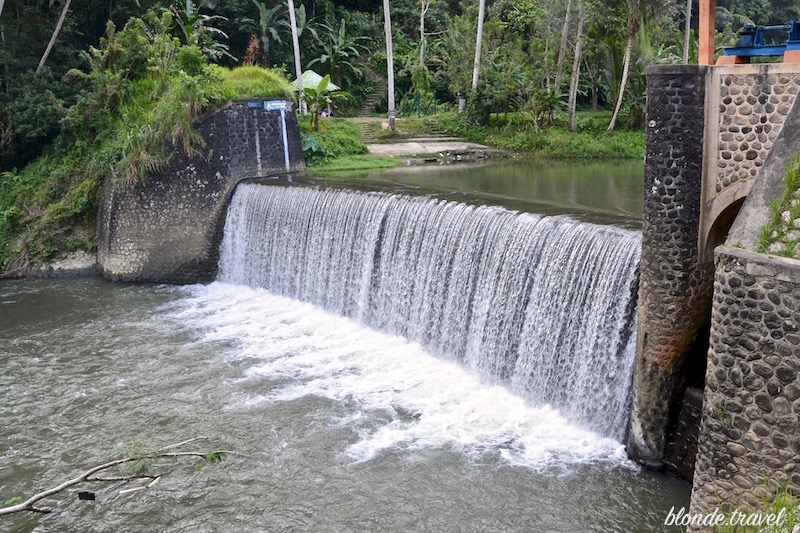
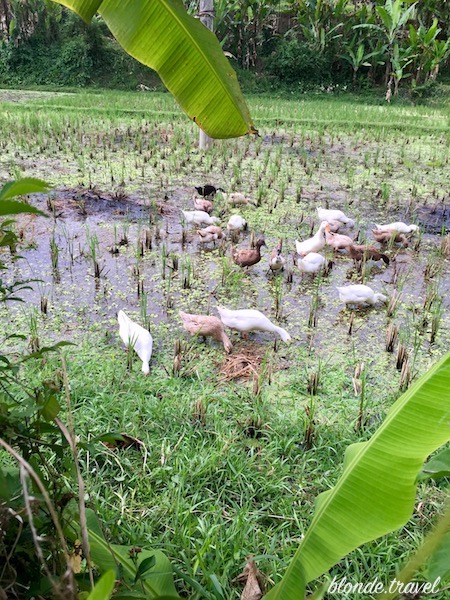
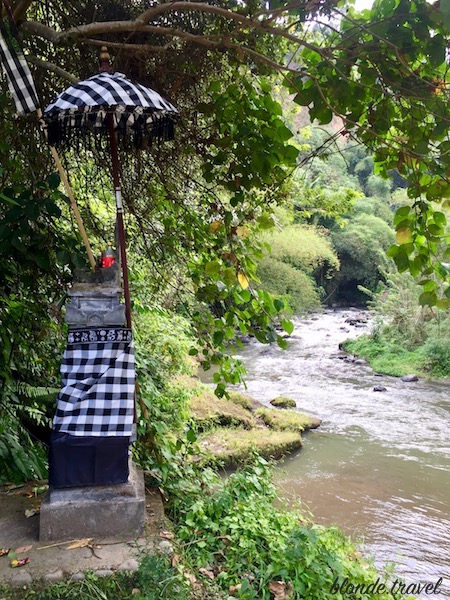
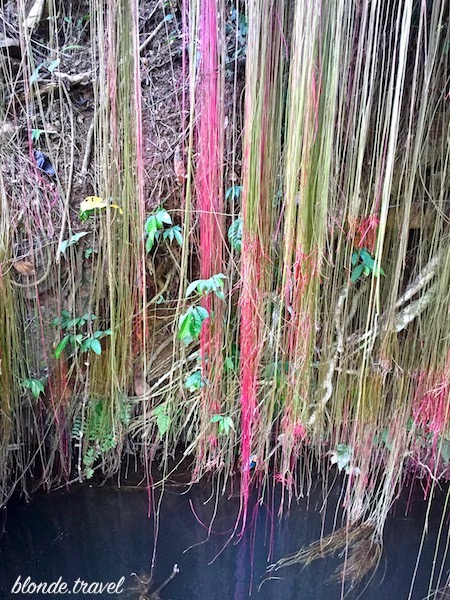
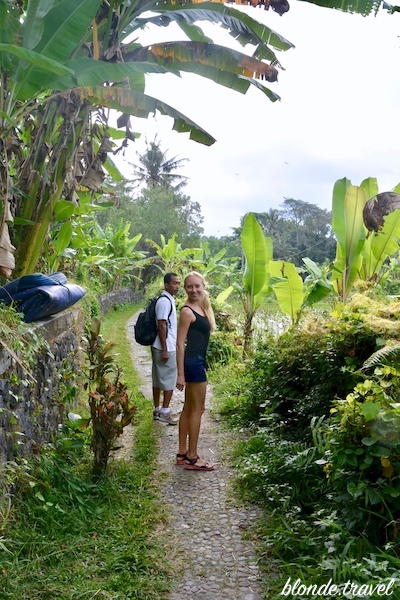
We enjoyed a two-hour hike through beautiful rice fields and jungle while our guide told us about the island’s culture and the traditions of local life.
A Temple Visit for a Return to Bali
For a return to Bali, I would also consider Amandari’s Melukat water blessing at Tirta Empul. The hotel arranges access before the usual opening hours, with a village storyteller and a priest guiding the ritual. Return transport is included in the experience.
The Spa at Amandari
One of the paths led through green gardens to a lotus pond. There, we found a portal to another world :)—the spa.
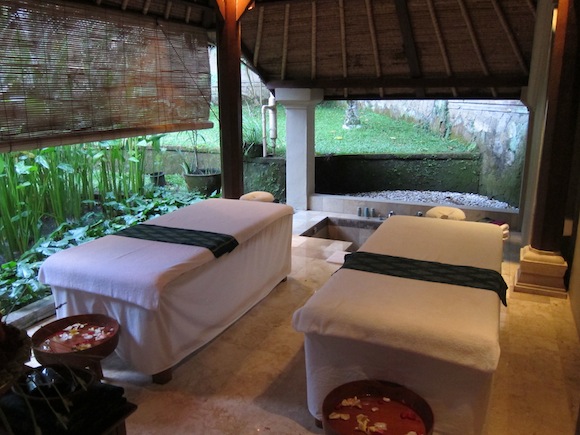
I had heard so much about the magical spas at Aman hotels that I was impatiently anticipating a portion of otherworldly bliss. The result exceeded even those expectations. Of all the spa experiences I had enjoyed, this was the best I had found in Ubud and one of my favourites anywhere in Asia.
The harmonious interior, wonderful incense mingling with the faint scent of frangipani, soft robes and towels, barely audible relaxing music that created extraordinary warmth—and the hands of Balinese massage masters—worked wonders. At the time, I was told that fragrant oils, scrubs, and other spa products were made at the hotel from natural, skin-friendly ingredients and supplied to Aman resorts in other countries. An Aman hotel manager I knew in Turks and Caicos shared that detail with me in confidence.
A Cooking Class with Amandari
Most importantly, we joined a magnificent cooking class. We visited the village home of a Balinese family, learned about their daily life, and took part in preparing a delicious traditional Balinese lunch of several dishes—wonderfully exotic to us.
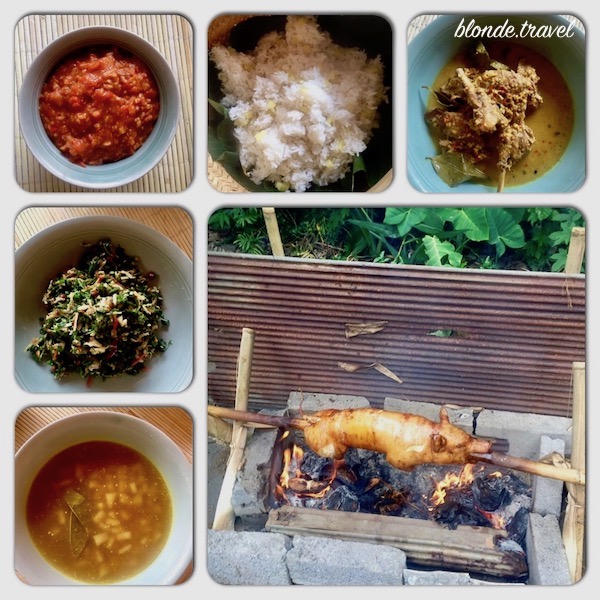
Our tradition of joining authentic cooking classes in different countries reached an emotional peak here. The day was so vivid that I gave it a story of its own:
A Balinese Cooking Class with Amandari.
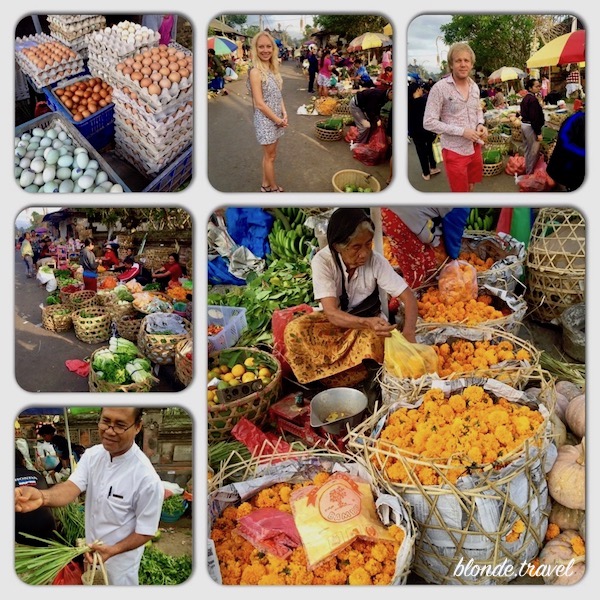
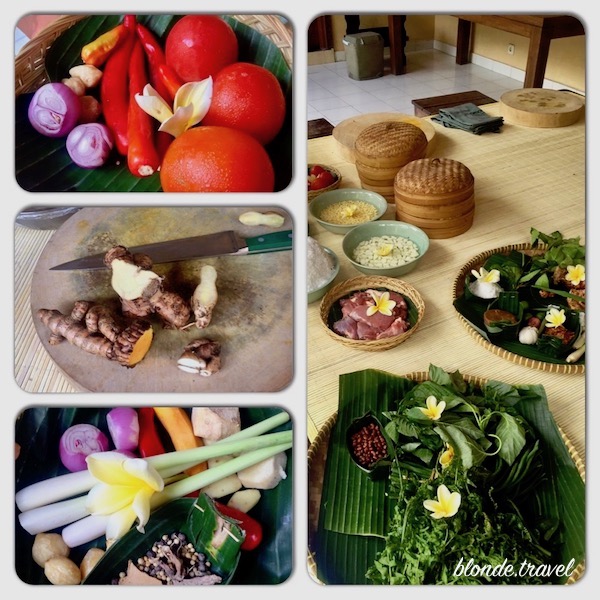
Our days in this Ubud paradise were truly full. We reached such a state of euphoria that, for the first time, I did not want to leave at all. Only the long-awaited flight to Papua New Guinea that we had already booked finally persuaded us to go.