
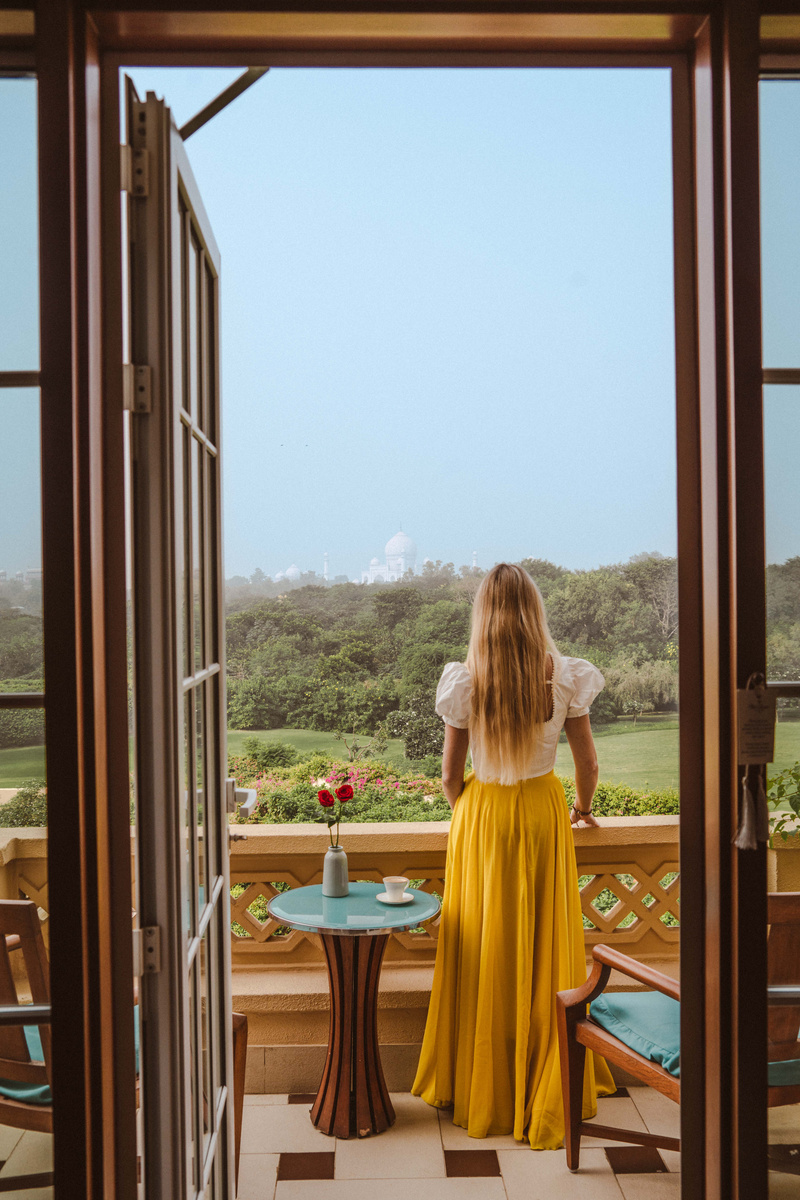
Before sunrise on my birthday, a hotel buggy was waiting outside The Oberoi Amarvilas to take me to the Taj Mahal.
The East Gate is close enough to reach on foot. At that hour, however, the buggy was not really about distance. It removed the last small delay between waking and reaching the gates among the day’s first visitors.
That gesture contained the whole idea of Amarvilas. The Taj Mahal begins outside the bedroom window; the short journey to its gates feels like a continuation rather than an excursion.
Arriving at Amarvilas
I arrived in Agra by an early train from Delhi. A guide met us before we checked in at Amarvilas. Agra Fort and Mehtab Bagh were on the day’s itinerary, but first I spent close to two hours exploring and photographing the hotel.
Amarvilas stands on Taj East Gate Road, about 600 meters from the Taj Mahal. The same road leads toward the monument’s eastern entrance. The hotel opens toward its gardens, with the Taj beyond the trees. Its address belongs to the city; its rooms look across this green expanse.
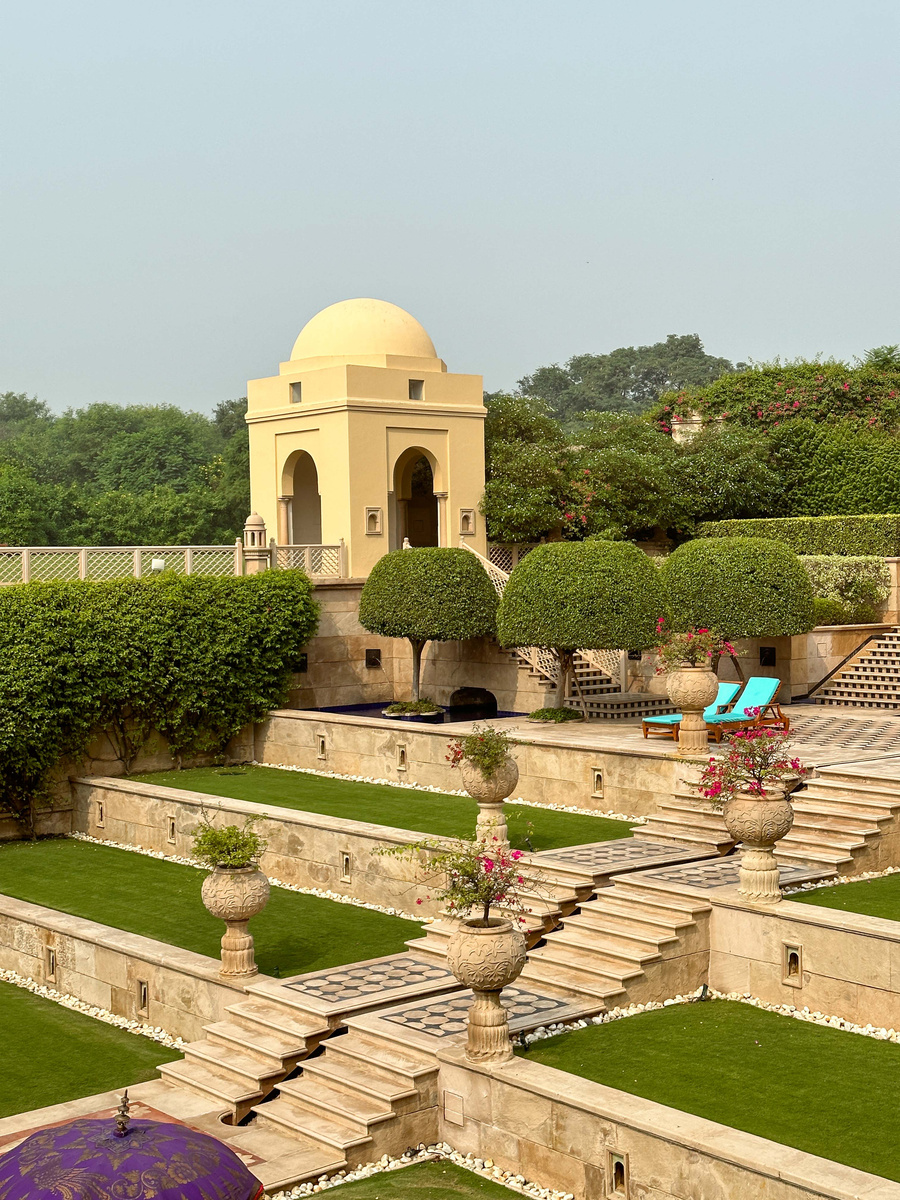
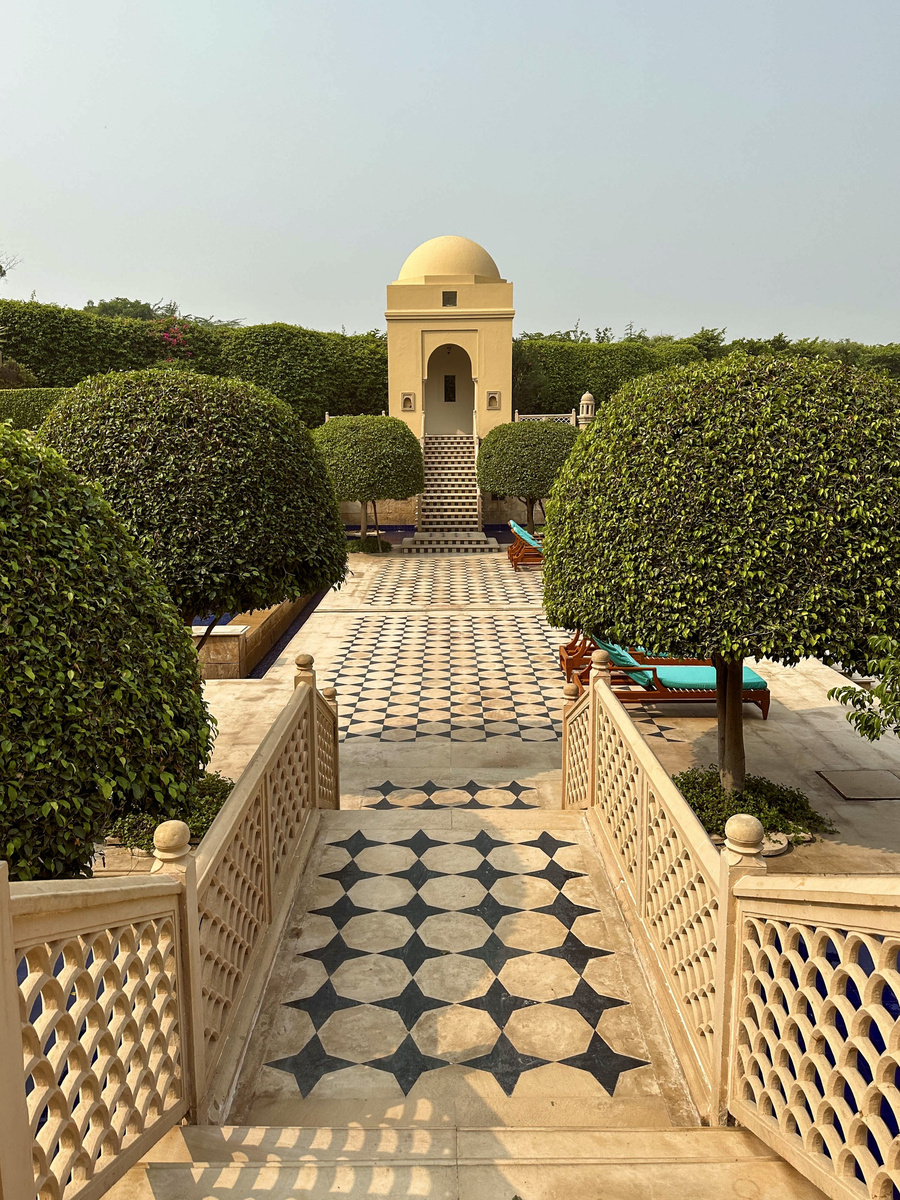
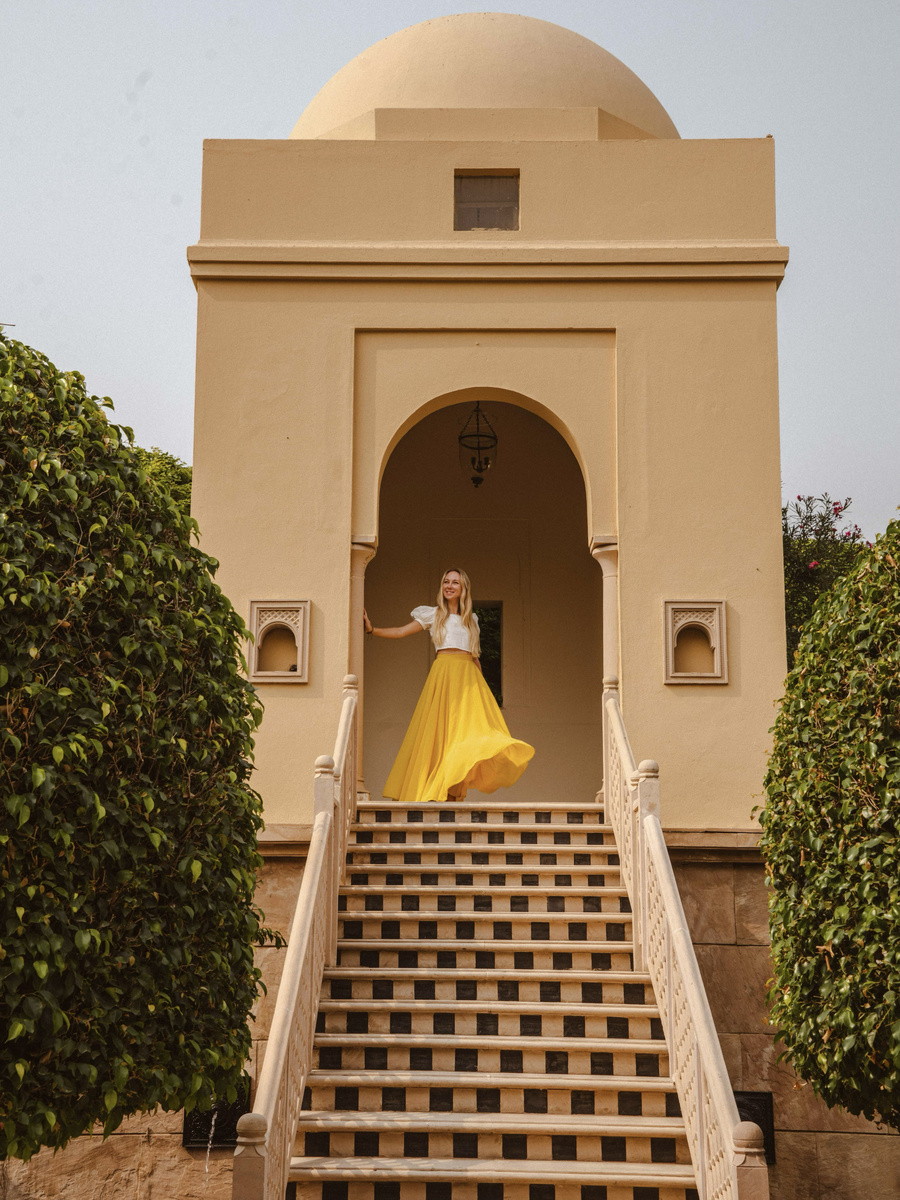
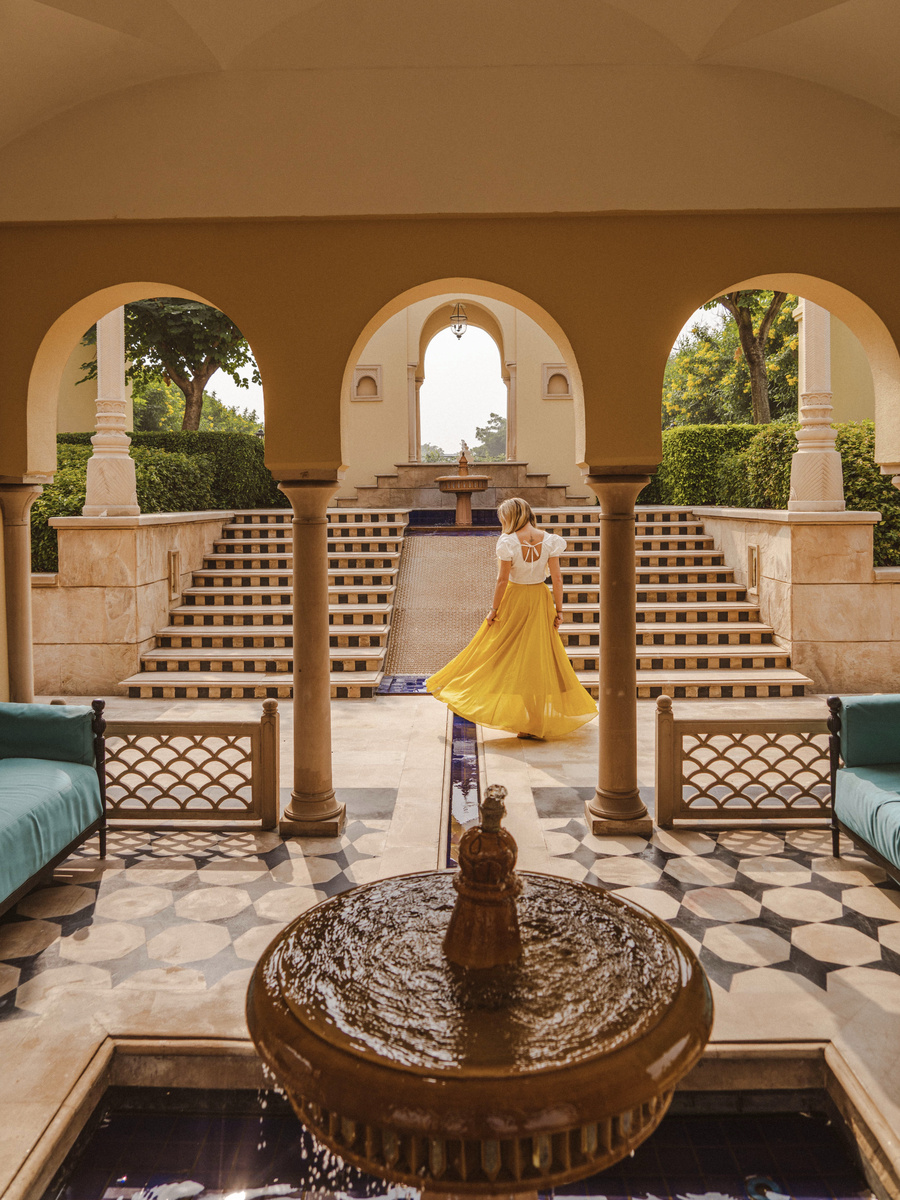
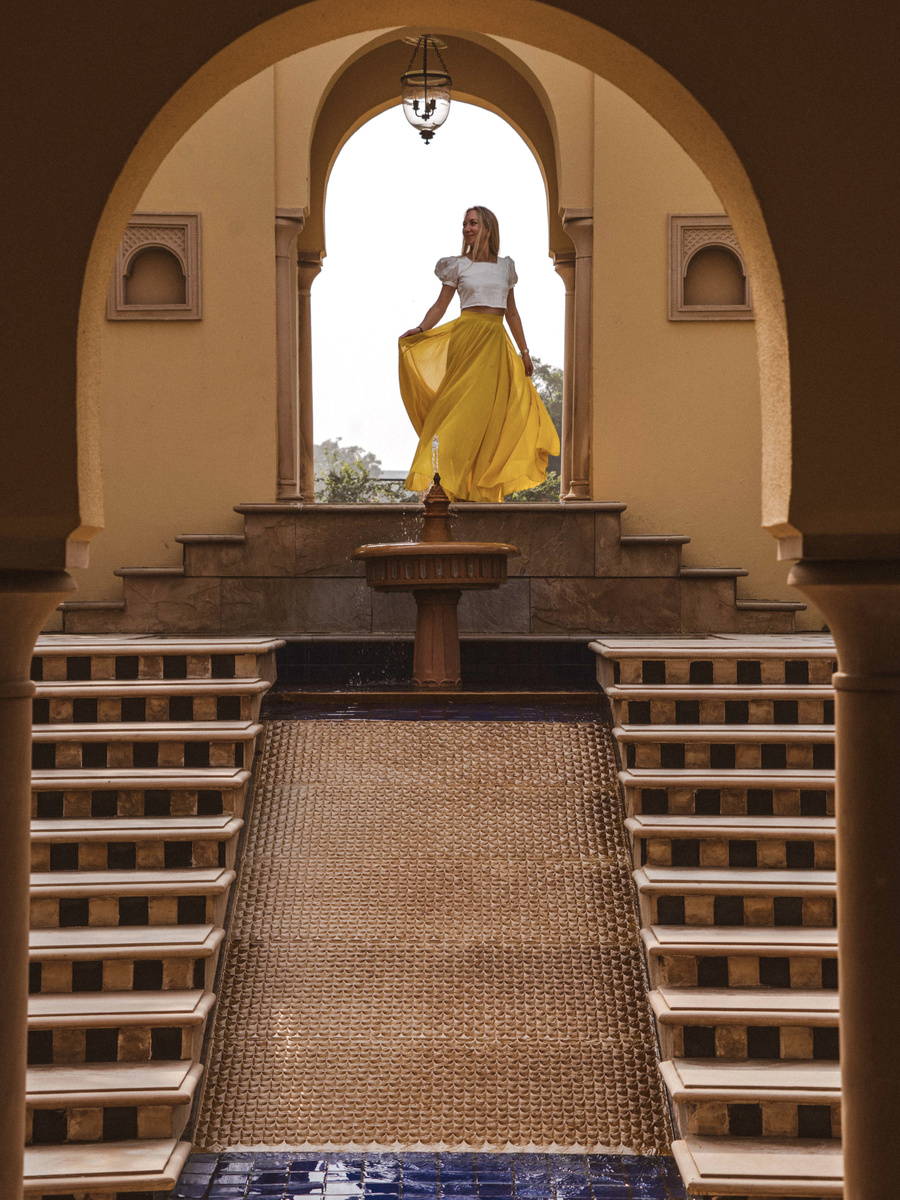
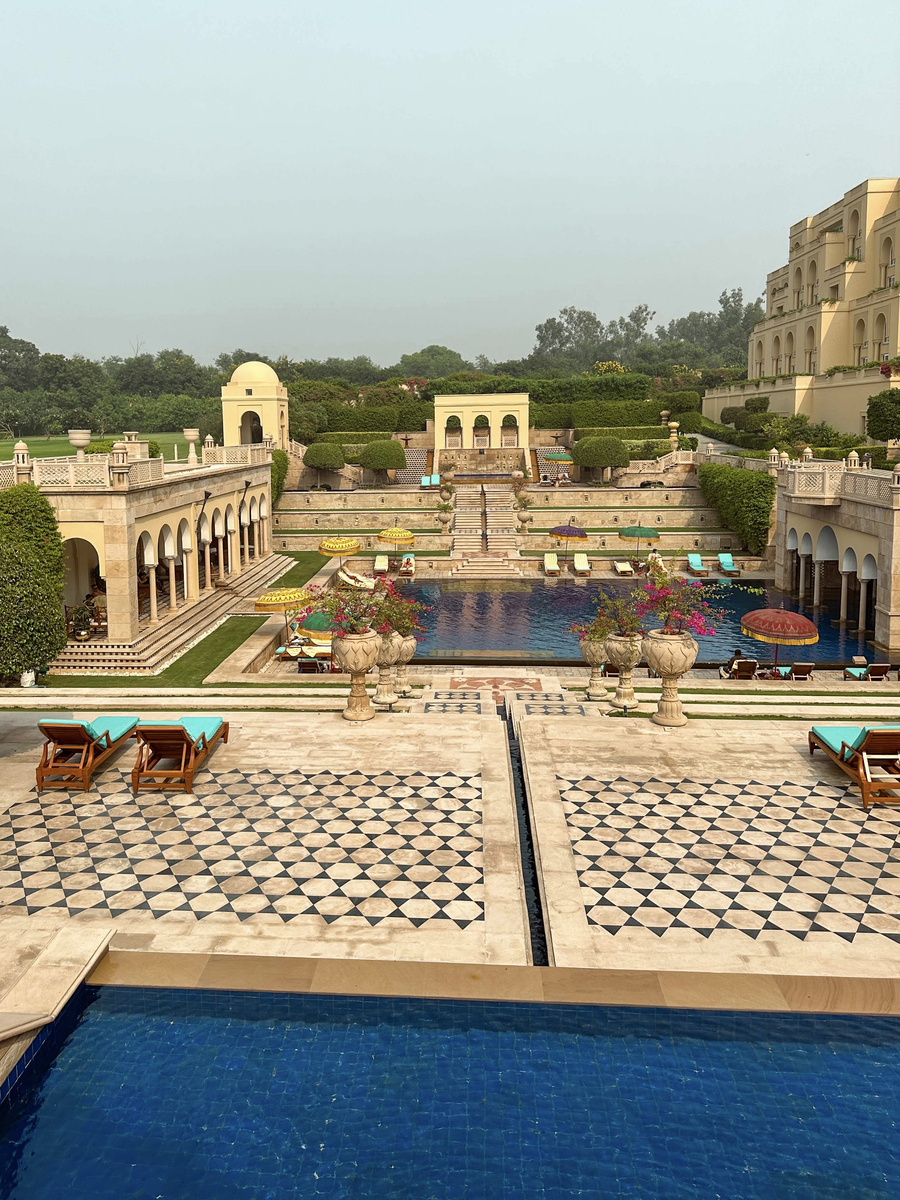
I walked among the pavilions and down the garden steps, photographing the pool and the room as well as the Taj. There was enough here to hold my attention before I had entered any of Agra’s monuments.
The gardens, always in the frame
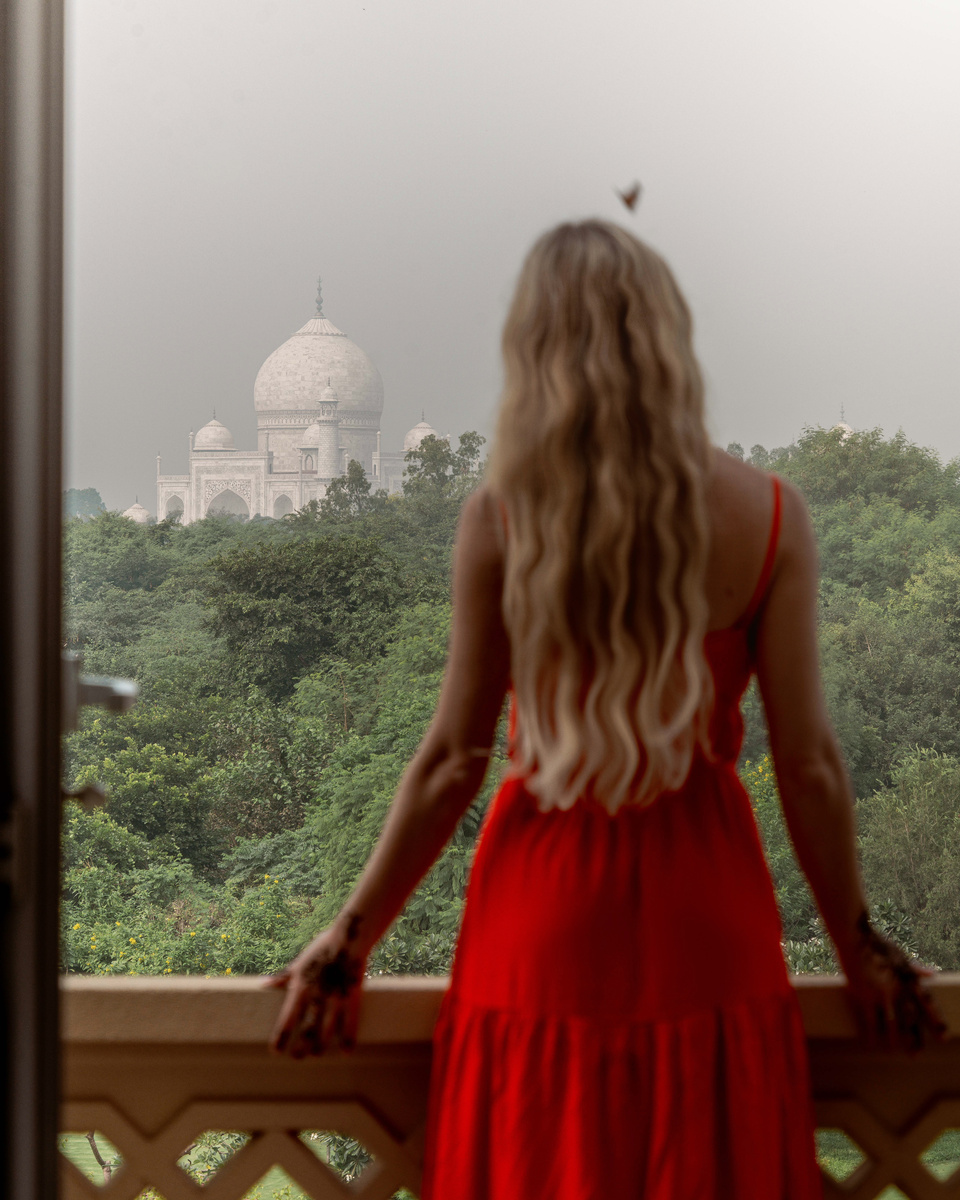
Every current room and suite category faces the Taj Mahal. The view is not confined to one photogenic corner of the lobby. It governs the building.
That repetition is deliberate. An Architectural Digest account published when Amarvilas opened describes how architects Prabhat Patki and Lim, Teo + Wilkes stretched and staggered the hotel across the site. Height restrictions and the protected setting around the Taj shaped the plan; the long wings kept the monument in sight.
Some of the most revealing decisions involved removing obstacles. Landscape architect Bill Bensley’s project history records that the swimming pool was lowered by roughly eight meters, while the original arrival structure was removed after it interrupted the view from the lobby.
The result is a hotel that defers to a building beyond its walls. Mughal-inspired arches, stone screens, water, and garden geometry compose frame after frame, but the most important architecture is always in the distance.
My room and the Taj Mahal balcony
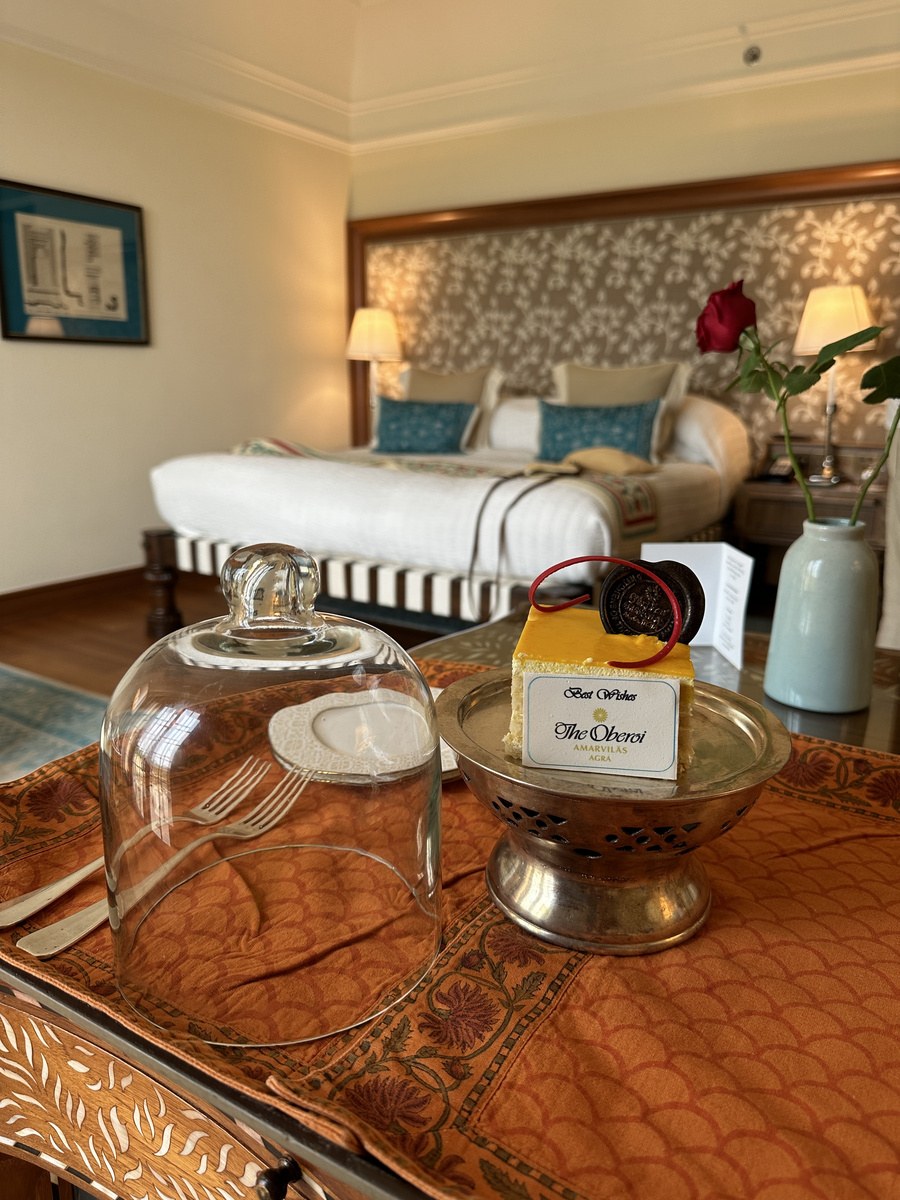
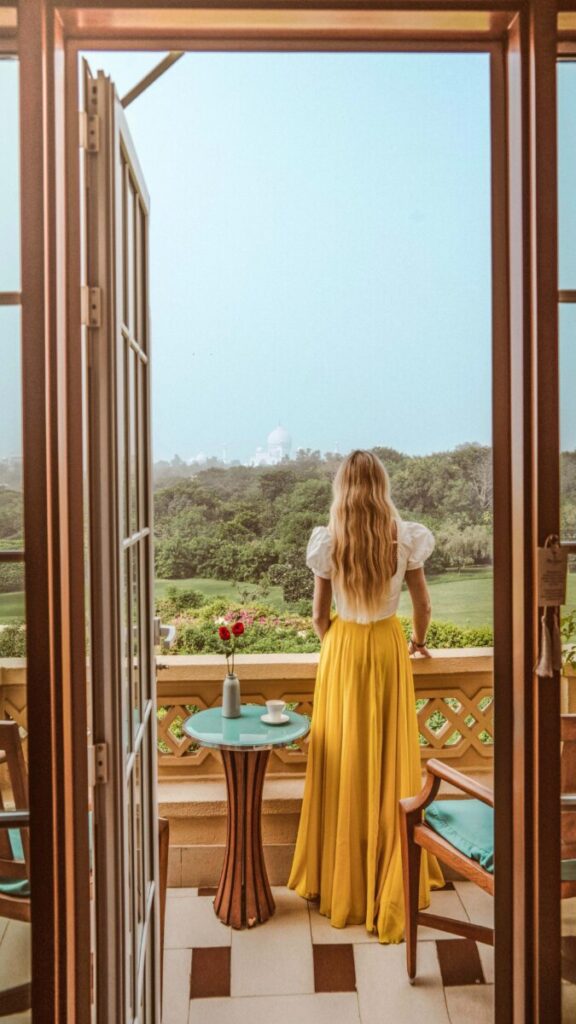
My room had a king-size bed and a sitting area beside the balcony doors. A deep armchair with a footstool made the window end somewhere to settle. The wooden floor and furniture gave the room warmth; floral textiles carried the garden’s motifs indoors.
Outside, two chairs and a small table made the balcony a place to spend time. I could sit with a coffee and look toward the Taj Mahal across the gardens. The room opened onto a view I could return to throughout the stay, in my own time.
That is the arrangement I would choose again: a room with a private balcony, with space to sit beside the view. The monument may draw the eye first, but the room needs to make staying there a pleasure.
The Oberoi inheritance
Oberoi’s Indian roots reach beyond Amarvilas’s Mughal arches. Mohan Singh Oberoi founded the group in 1934 after beginning his hotel career as a front-desk clerk at The Cecil in Shimla and later acquiring Clarkes Hotel. In 1943, he took control of Associated Hotels of India, becoming the first Indian to run what was then the country’s largest hotel chain.
At Amarvilas, that inheritance is tangible: in the garden geometry, marble inlay and textiles, Indian cooking, and the ease with which a mehendi artist was arranged for my room. The small gestures carried as much weight as the architecture.
Dinner and music at Amarvilas
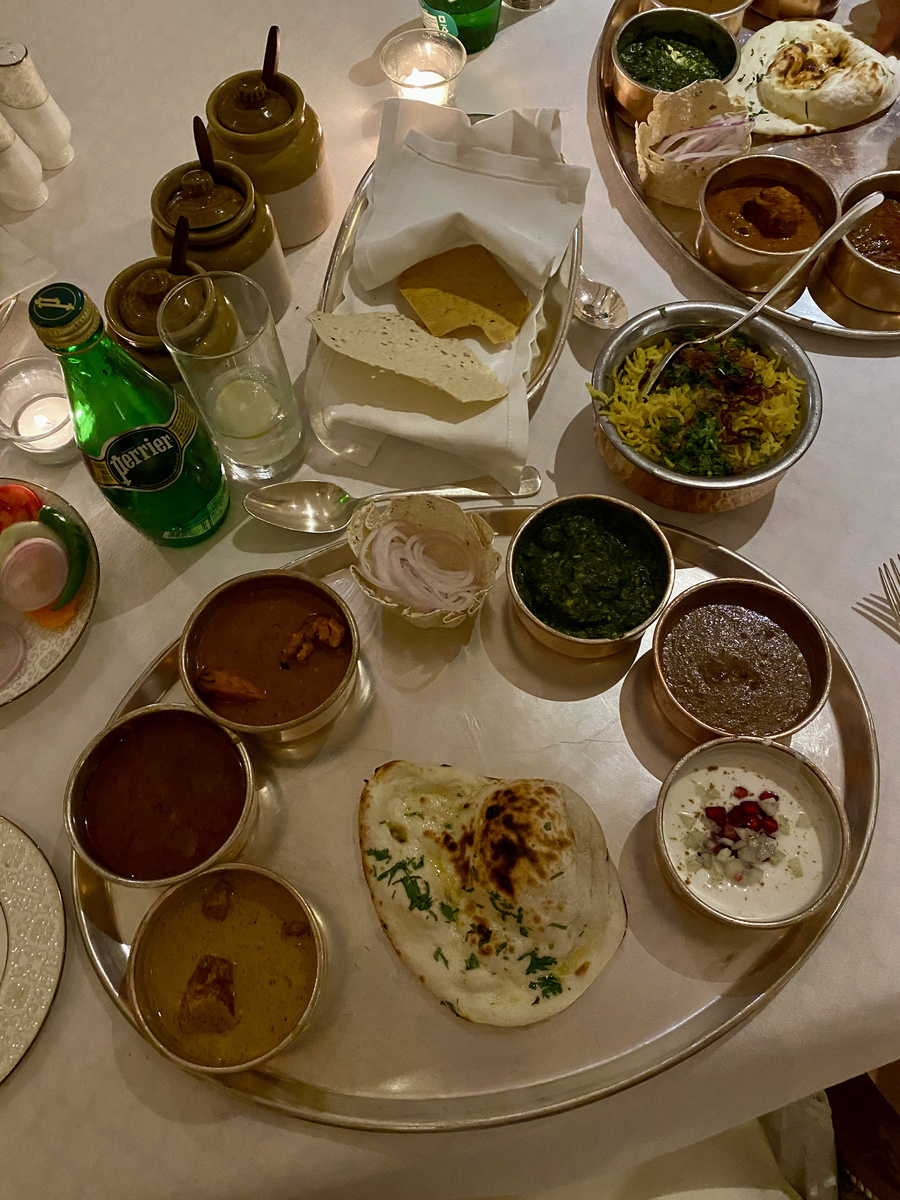
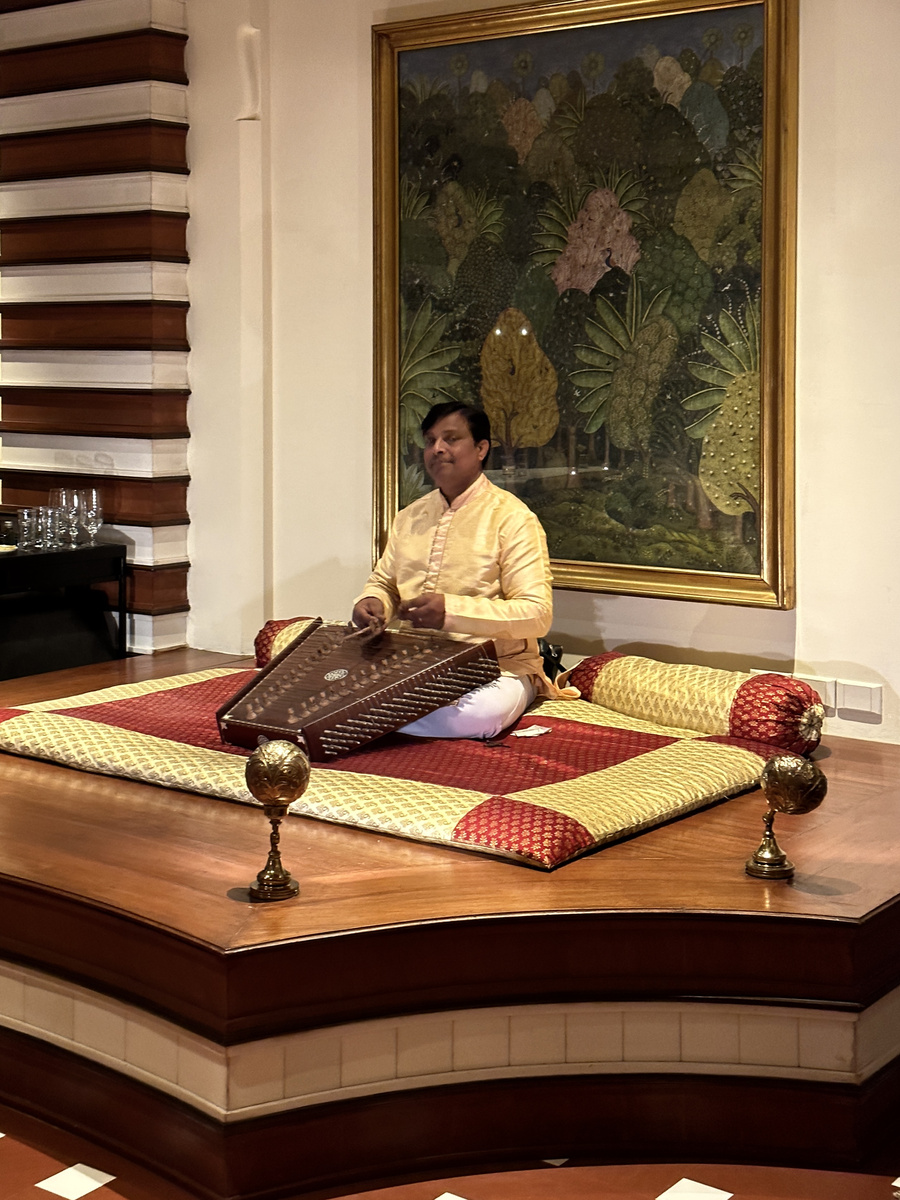
Dinner was excellent, and a santoor player performed in the dining room. Indian cooking and traditional music gave the evening its character after a day spent exploring Agra and the hotel.
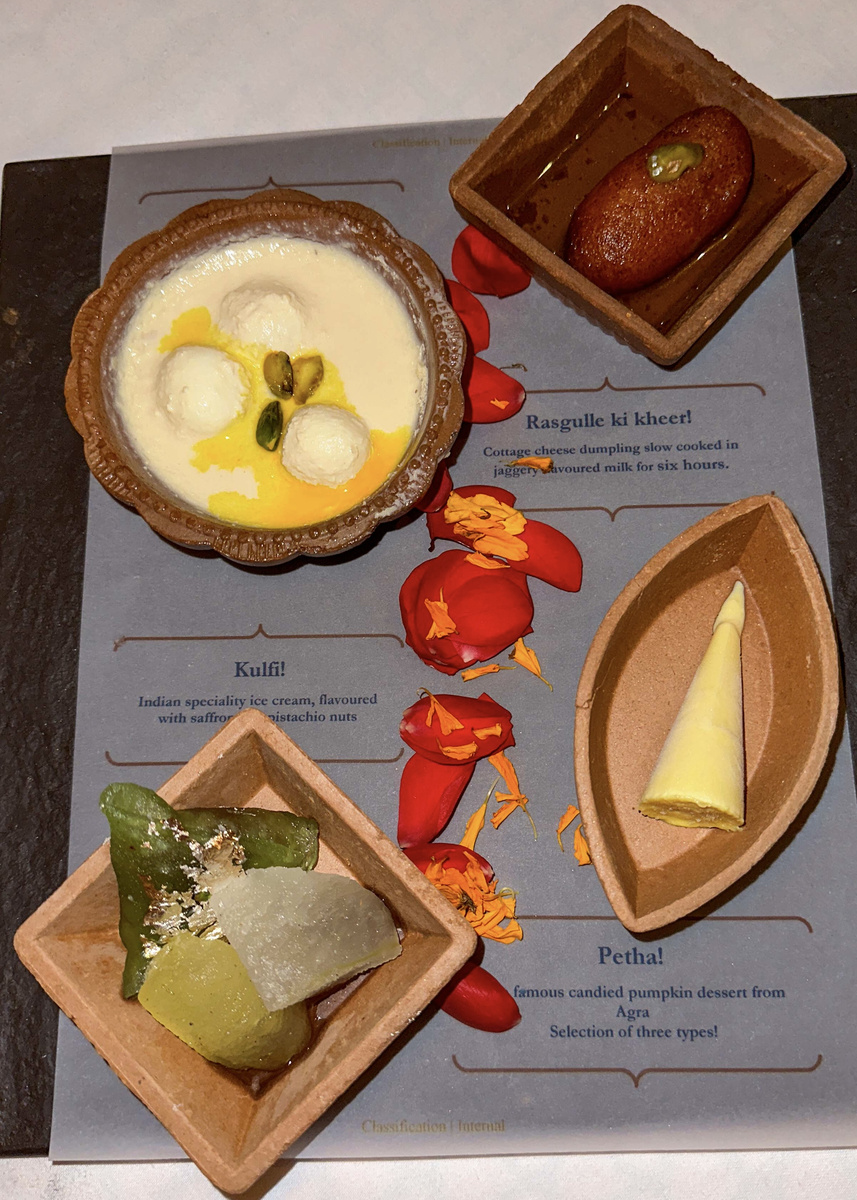
The dessert tasting made that sense of place particularly clear. It included kulfi flavored with saffron and pistachio, rasgulle ki kheer, and three kinds of petha. The notes served with the tasting described the rasgulle as fresh cheese dumplings slow-cooked for six hours in milk flavored with jaggery.
Petha is Agra’s candied ash-gourd sweet; here it appeared alongside milk-based desserts with quite different methods of preparation. Dinner ended with a small introduction to the city’s confectionery tradition.
Today, Esphahan is the hotel’s evening Indian restaurant, with tandoor cooking, traditional music, and recipes Oberoi connects to the Mughal court. Bellevue serves Indian and international food throughout the day.
Amarvilas after dark
On a return, I would also leave an evening for the gardens. Oberoi now arranges private dinners in its poolside pavilions, beside the cascading water, with a musician. The terraces I spent so long photographing can become the setting for dinner.
Private balcony dining offers another way to spend the evening: a candlelit table above the gardens, with the Taj Mahal in silhouette beyond them. I would be drawn to the privacy of eating just outside the room, then having nowhere else to go.
Mehendi and birthday flowers
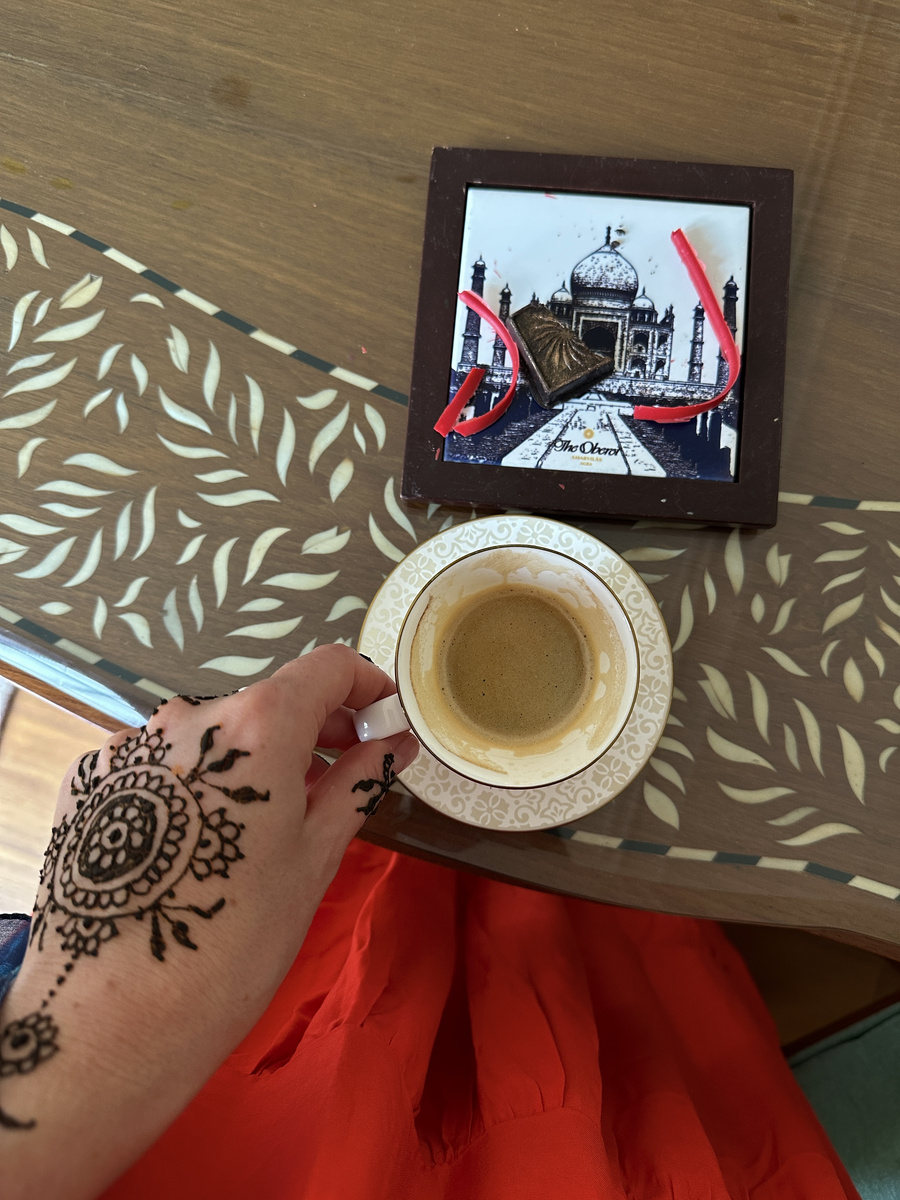
I asked the hotel to arrange a mehendi artist in my room. The artist decorated my left hand, and I photographed the fresh henna with the gardens and the Taj Mahal beyond it. Mehendi is part of celebrations across India; having it done privately brought that tradition into my own birthday stay. The pattern stayed with me after I left.
I expected a hotel at this level to notice my birthday. The pleasure was in the execution: flowers and a small cake waiting in the room, thoughtful without becoming a production.
What I appreciated was the ease of it. A request for an artist, a birthday acknowledged in the room, a buggy ready for the early departure: each fitted around something I wanted to do. Together, those gestures gave the service a personal character. I could get on with enjoying Agra.
The pool and a slower afternoon
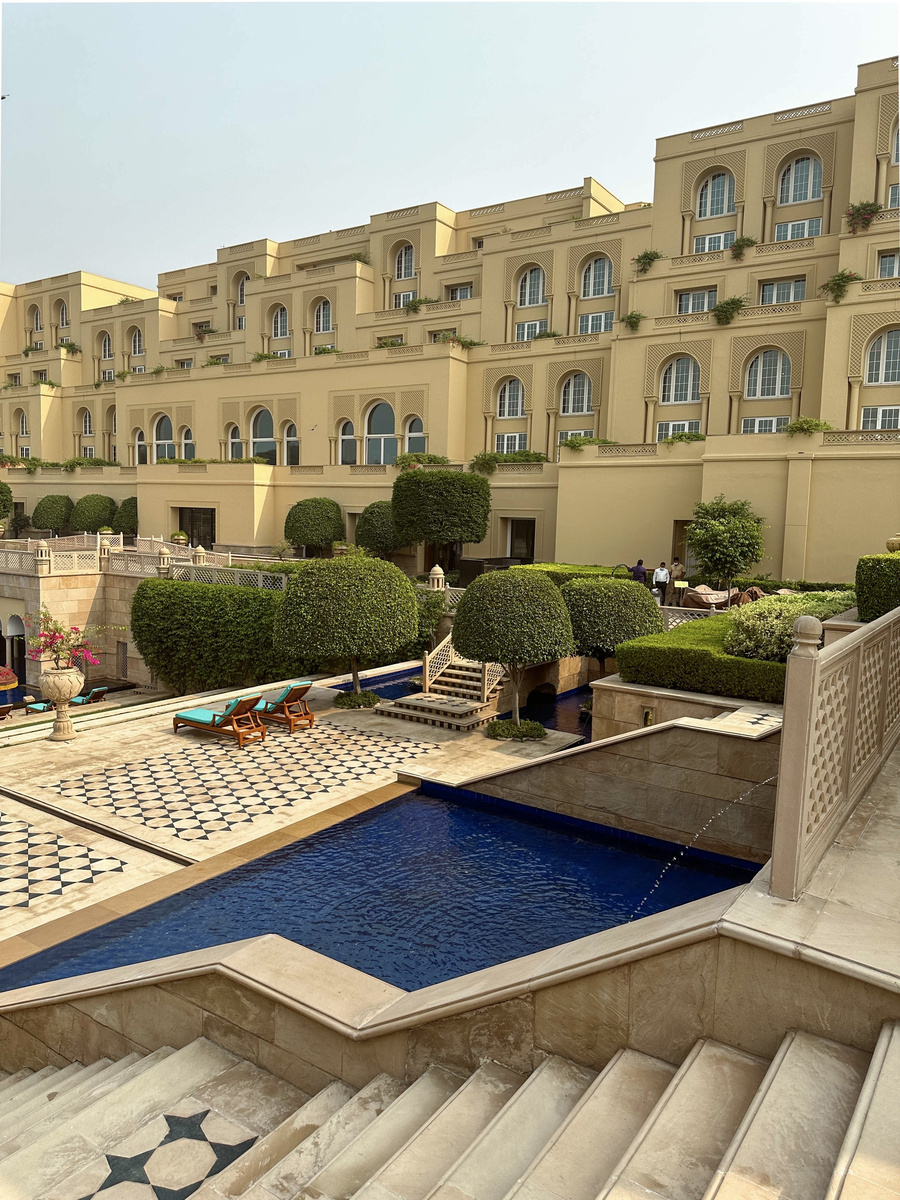
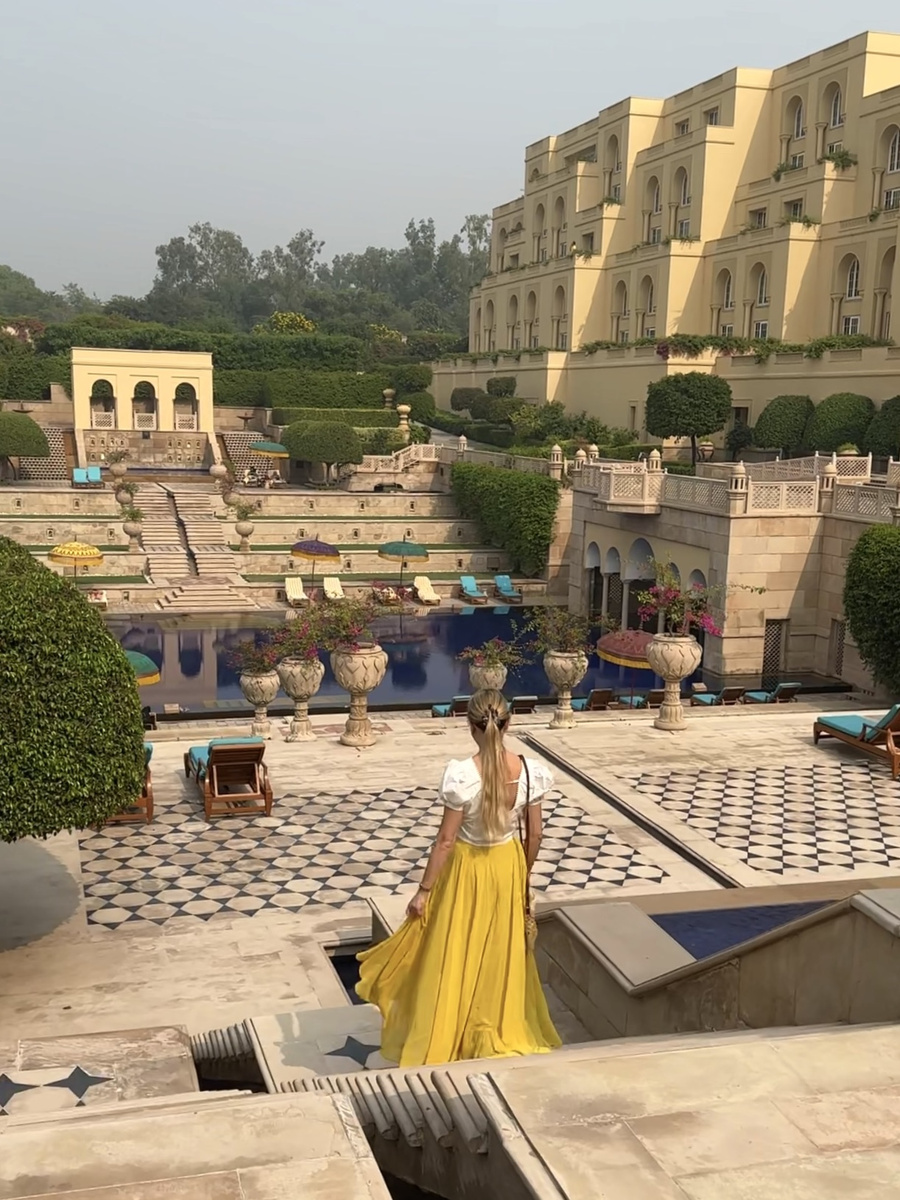
Walking through Amarvilas’s gardens brings the pool into a different relationship with the hotel. From the upper terraces, it belongs to the formal plan; down the steps, the surrounding pavilions and shaded places to sit give the garden a more intimate scale. My walk with the camera took me through both.
After the Taj Mahal or Agra Fort, I would leave an afternoon unscheduled here. The 24-meter pool is temperature-controlled, with loungers, parasols, and a relaxation area. Its current hours are 7 a.m. to 7 p.m. in summer and 8 a.m. to 6 p.m. in winter.
For a spa afternoon, I would reserve before arriving. The resident-only spa offers Eastern and Western treatments, facials, and private yoga; its couples’ therapy suite faces the Taj Mahal. It currently opens from 8 a.m. to 7:30 p.m. and asks for appointment requests 24 hours ahead. The fitness center is open around the clock.
A second day on foot
A second day need not mean another circuit of viewpoints. Two nearby places explain the monument from different angles.
The Taj Museum is reached by the same East Gate route and sits inside the Taj Mahal complex. Its collection includes old plans and drawings, royal orders, calligraphy, Mughal miniatures, stone samples, and tools used for inlay work. These objects give substance to what you have just seen outside: evidence of how the monument was conceived and made. The museum is free once inside the ticketed complex and is closed on Fridays.
For a separate walk, the Taj Nature Walk begins on Taj East Gate Road, 500 meters from the gate. A green belt follows the Yamuna, with six grass mounds and a nine-kilometer trail offering less familiar views of the monument through trees and grassland. The official Agra ticket portal currently marks online booking as closed, so I would ask the concierge to confirm access and ticketing before setting out.
The best service took only a few minutes
Amarvilas’s location removes the need for a long pre-dawn drive. The Taj Mahal is within walking distance, and the hotel currently offers a private golf-buggy transfer to the entrance.
Official guidance puts opening 30 minutes before sunrise and closing 30 minutes before sunset; the monument is closed to general visitors on Fridays. Arrangements can change, so I would confirm them through the official visitor information and the hotel shortly before traveling.
For me, the early ride was one of the best touches of the stay. At that hour, the real luxury was timing. I wanted to be at the gates for opening, before the day’s crowds changed the experience, and the buggy made the departure feel calm and exact.
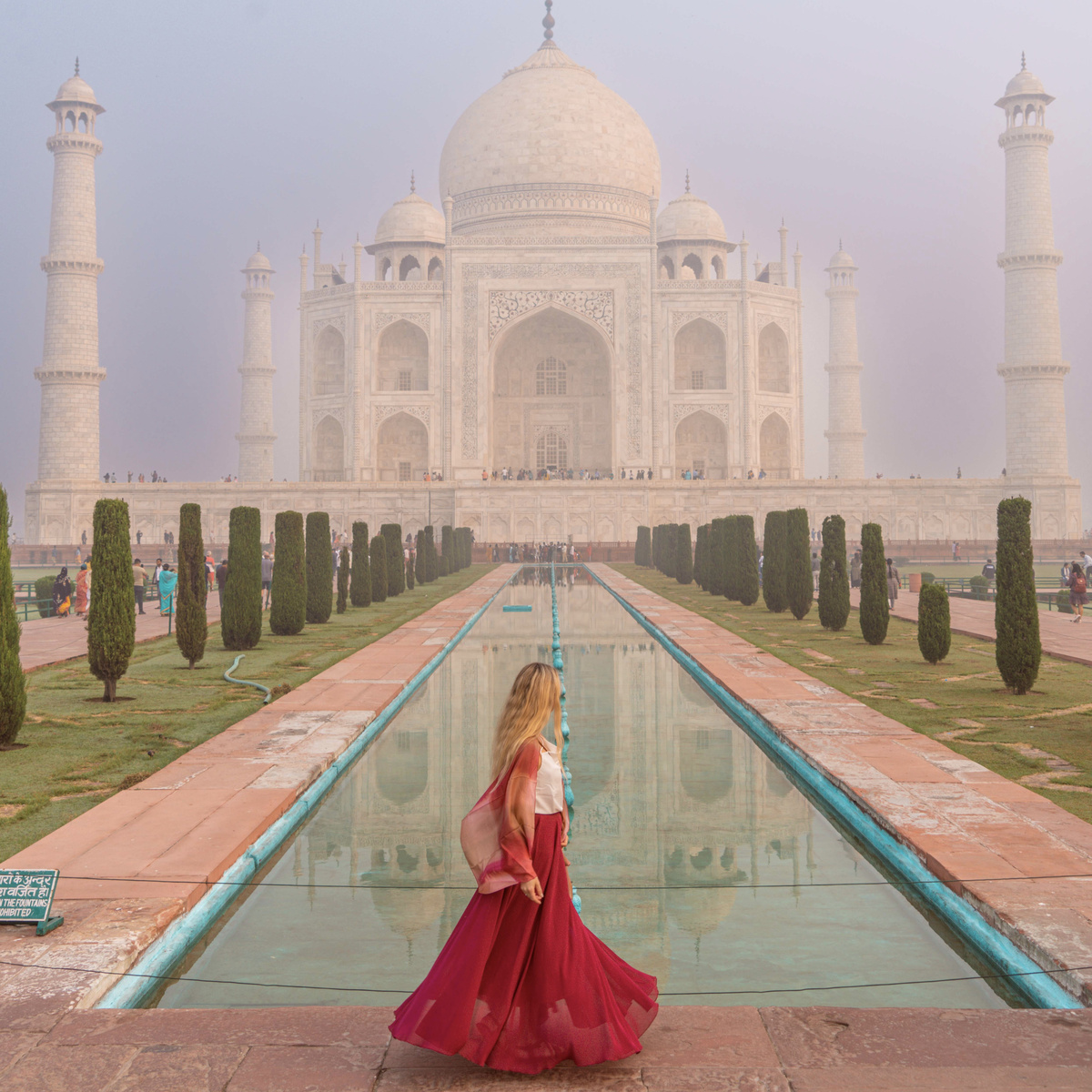
When the buggy reached the gates, the monument I had been watching across the trees became a place I could enter. I walked toward it as my birthday morning began.
Breakfast after sunrise
I returned to Amarvilas for breakfast before leaving Agra for Ranthambore, with Fatehpur Sikri on the route. After the marble and scale of the Taj, sitting down to eat brought the morning back to human proportions.
Breakfast was excellent. The plate I photographed was the familiar side of the menu: scrambled eggs, sausage, ham, and a potato cake. On a return visit, I would ask Bellevue for Agra’s bedai with potato curry and jalebi. Condé Nast Traveller reports that the restaurant serves this local combination.
Bedai is a small, puffed fried bread with a crisp exterior and, often, a spiced lentil filling. It comes beside a loose potato curry. Jalebi brings the sweetness: orange coils of fermented batter, fried and soaked in syrup, often served with yogurt. The official Agra visitor guide describes bedai with spicy potato sabzi and curd as a typical local breakfast. It is what I would order next time.

I also stayed at The Oberoi, Mumbai later in the journey; that city hotel belongs to a separate story. Amarvilas belongs unmistakably to Agra.
By the time I left for Ranthambore, the Taj Mahal had moved from a white form above the hotel gardens to a birthday morning at its gates, and back again to the view over breakfast.
My stay was wonderful. What I remember most is still the smallest thing: a buggy waiting in the dark to carry me a distance I could easily have walked. The Taj Mahal had been outside my window. Minutes later, my birthday began at its gates.
Shared on

The post and its conversation
The photographs as they appeared on Instagram, with what readers said there. Likes and replies open on Instagram.



 Join the conversation on Instagram