
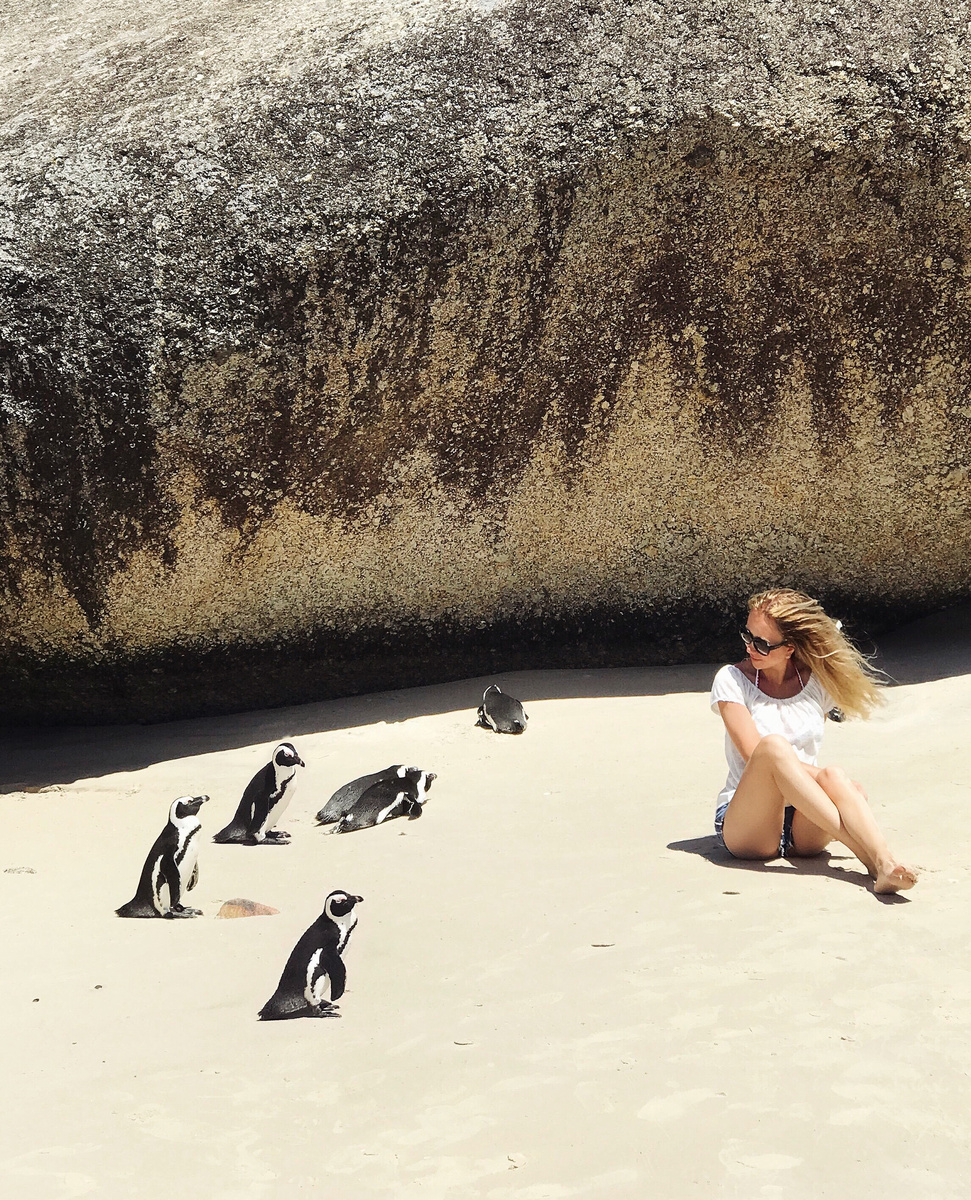
In January 2018, I came to Boulders Beach with one clear ambition: to swim near African penguins.
I had met penguins in Argentina before, but this felt different. At Boulders, they were part of the beach rather than a distant spectacle. I could sit on the sand and watch them for hours. In the water, one particularly bold bird tried to dive into my arms. It was a small, absurd moment, and I was completely delighted.
I had got what I came for. Yet one of the photographs I chose to publish later contained no penguins at all.
The other reason I remember Boulders
Boulders Beach is named with unusual honesty. Huge rounded granite rocks divide the shoreline into little coves, interrupting the sand and sheltering shallow pools of green-blue water. They don’t sit politely at the edge of the view; they make the view.
The penguins had brought me there, yet the rocks fascinated me almost as much. I even published a photograph of the cove without a single penguin in it. I wanted the boulders to have the frame to themselves.
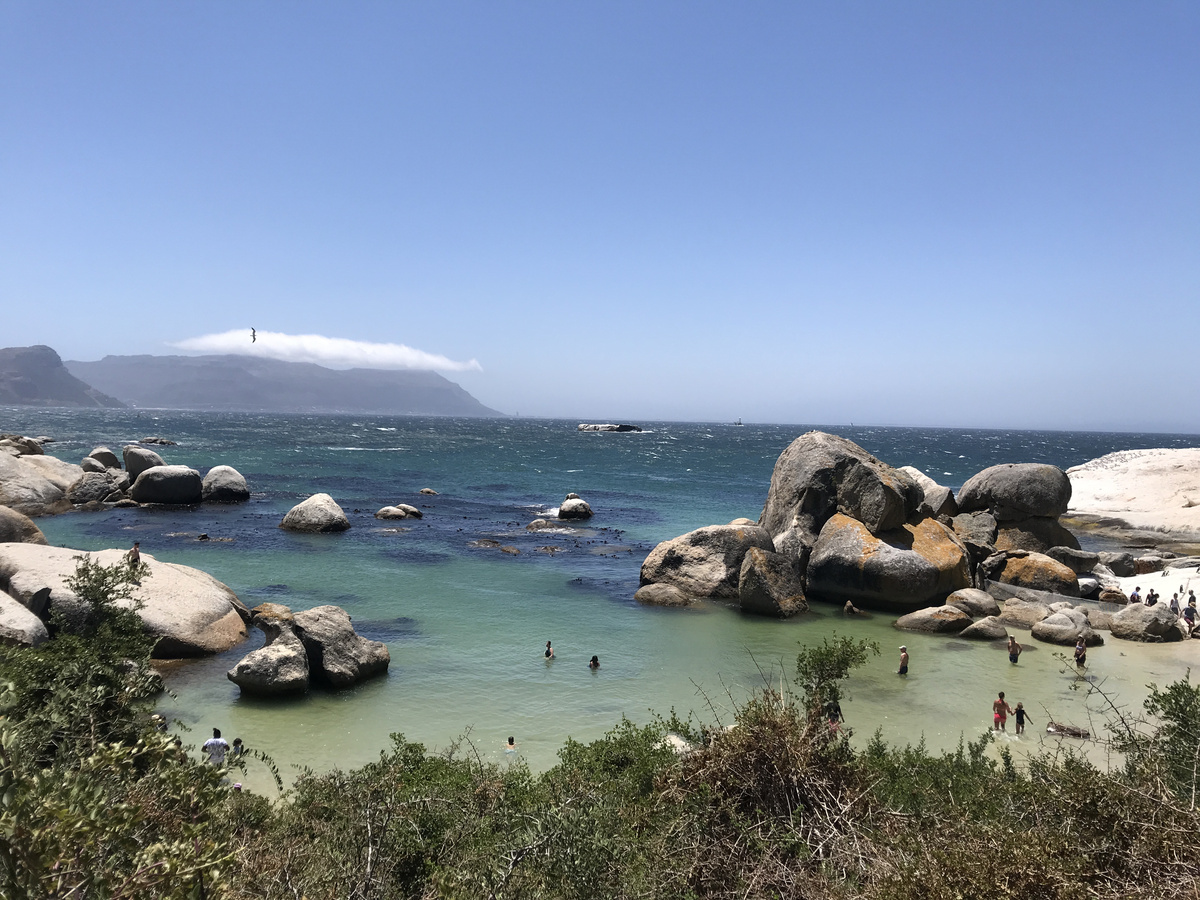
That is why I would not treat Boulders as a quick wildlife stop. It is a beach with a strong physical character, and the penguins live inside that landscape. A photograph from the viewing platform records the colony. The cove needs a little more time.
There are two Boulders experiences
The Boulders section of Table Mountain National Park includes three beaches, a dedicated penguin viewing area, and three boardwalks. The SANParks Boulders guide asks visitors to remain on the boardwalks within the viewing area. This is the most dependable way to see a large number of birds without entering their space.
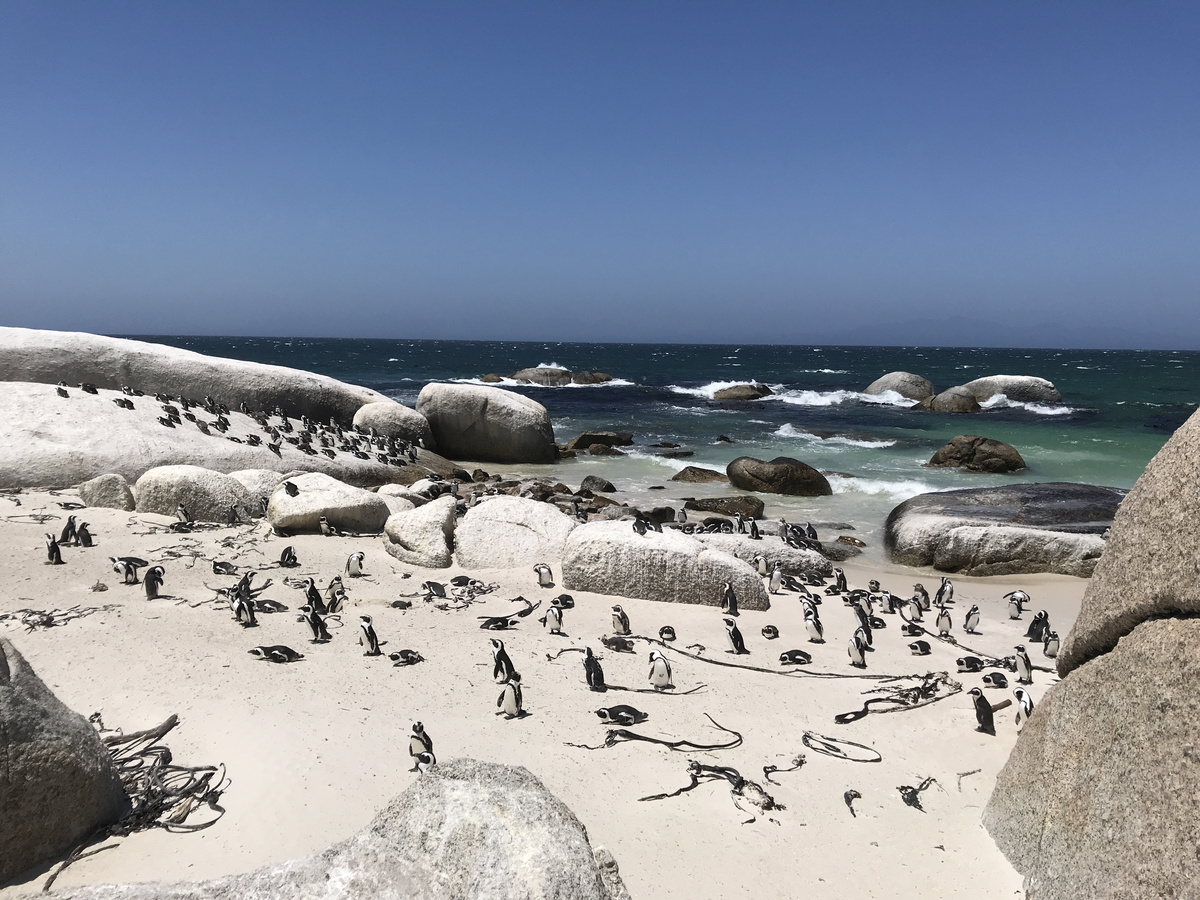
The bathing beach is a different experience. The granite breaks the wind and larger waves, and swimming is permitted. Penguins may appear on the sand or in the water, but they are wild animals, not part of a scheduled encounter. Go for the cove as well as the possibility of sharing it with them.
Tide matters. SANParks warns that beach space shrinks at high tide and recommends visiting at low tide. I would plan around the tide before choosing a time, especially if swimming is part of the day.
Close, with limits
My 2018 photograph shows how close the penguins sometimes came. It is also a reminder that proximity has to be on their terms.
African penguins were moved from Endangered to Critically Endangered on the IUCN Red List in 2024. BirdLife International reported that the species had lost 97 percent of its historical population. A busy colony can look reassuring while the species is in serious decline.
The rules are simple: don’t touch, feed, chase, or block a penguin. Keep selfie sticks away from the birds and stay out of nesting areas. The wider bay is a no-take zone, so shells, sand, plants, and marine life stay where they are. The official Boulders code of behavior also prohibits fishing, smoking, alcohol, fires, and vessels approaching the beach.
The best encounter is the one the animal controls. I would rather wait and let a penguin decide whether there will be a close moment at all.
How I would plan a Boulders Beach visit now
Boulders lies in Simon’s Town on the Cape Peninsula, in South Africa’s Western Cape. It fits naturally into a day around the southern peninsula, but I would resist treating it as a ten-minute stop between photographs.
- Arrive early. Parking is limited, particularly in the busy summer period, and the beach can reach capacity.
- Check the tide and gate hours. Both affect how much time and sand you will have. Opening times can change without notice, so confirm them shortly before the visit.
- Bring a card and identification. Boulders is cash-free, and proof of nationality or residency is required for a reduced local or SADC rate.
- Budget for the conservation fee. Through October 31, 2026, the daily Boulders rates are R245 for an international adult and R120 for an international child aged 2 to 11. Separate rates apply to South African residents and SADC nationals. Prices can change, so check again when booking.
- Treat swimming as open-water swimming. There is no lifeguard. The boulders shelter parts of the cove, but the sea still deserves judgment.
- Know the accessibility tradeoff. The viewing boardwalk to Foxy Beach and the information center have ramped access. The route toward the bathing beach is steep in places, and some visitors may need help on the concrete beach ramp.
Bring a swimsuit if the weather invites it, but do not build the visit around a promised swim with penguins. Leave room in the day to wait.
Where to eat near Boulders Beach
I remember a good meal only a few minutes from Boulders, but the name did not survive in my notes. My route from that day points south towards Miller’s Point, which makes Black Marlin the strongest match, although I cannot call the identification certain. It is a seafood restaurant with a garden terrace and a wide view across False Bay.
I checked the current listings rather than turning a half-memory into a recommendation. On August 21, 2026, Black Marlin had a 4.1 Google rating from 1,986 reviews. The ocean view is one of the most repeated themes in those reviews.
- For the closest convenient lunch: Seaforth Restaurant sits beside Seaforth Beach and had a 4.2 rating from 1,298 reviews.
- For the strongest current Google score: The Lighthouse Cafe in central Simon’s Town had a 4.6 rating from 1,466 reviews.
Google ratings and opening hours change, so check the listings again before setting out.
Is Boulders Beach worth it?
Yes, if you allow it to be more than a penguin photograph.
The colony is the reason to make the journey. The beach is the reason not to rush away. I remember the bird that tried to join me in the water, of course, and the hours spent sitting among those serious little black-and-white figures. I also remember a photograph with no penguins at all: granite, clear water, and the large quiet shapes that gave the beach its name.