
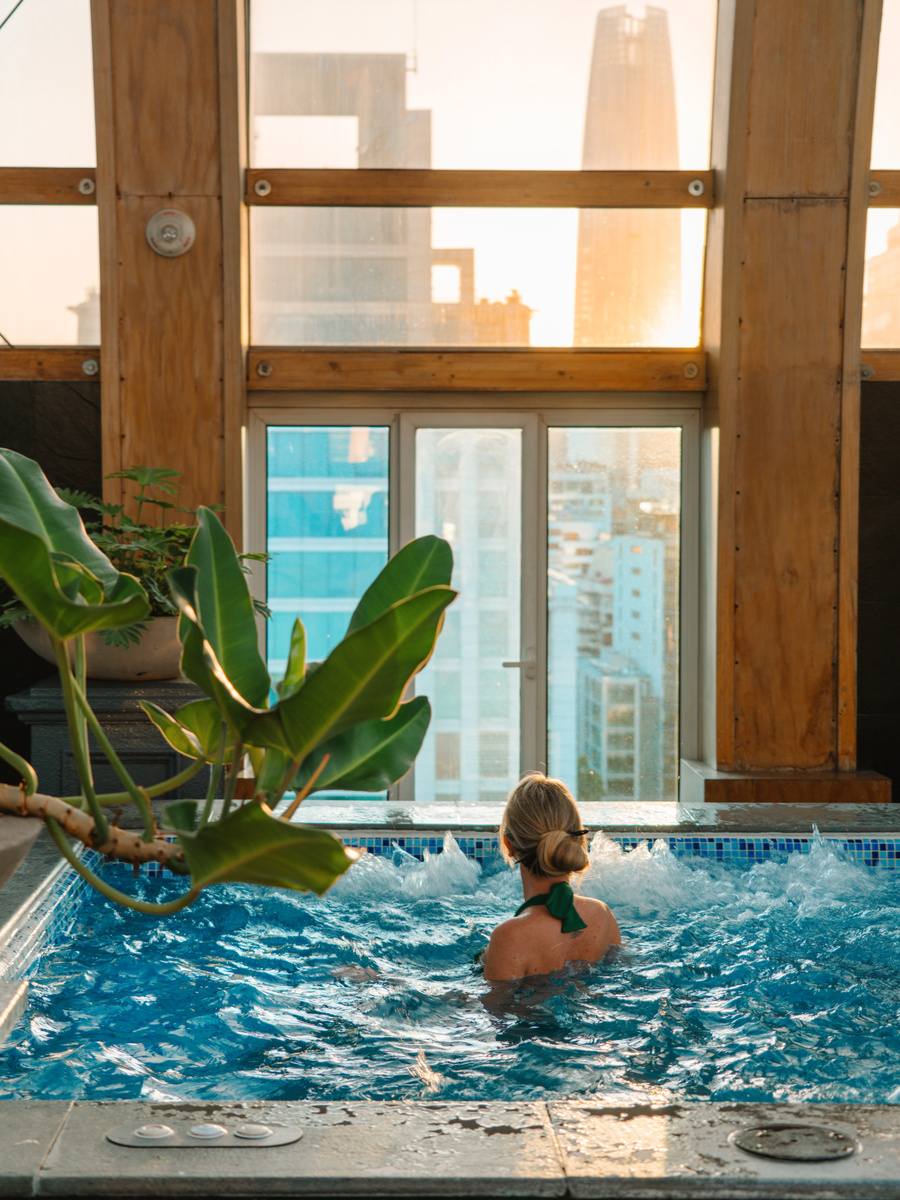
At sunset, the curved glass above The Ritz-Carlton Santiago’s pool held the last light longer than the streets below. The water was indoors, yet the towers of El Golf remained part of the room. As the sky changed, the pale stone and the surface of the pool changed with it.
This was the hotel at its most convincing. Its calm did not come from shutting Santiago out. It came from choosing which version of the city to frame.
El Golf changes the city outside the door
In almost every Latin American capital I know, the neighbourhood changes the stay. A hotel can share a city name with another address and give you a completely different city outside the door. The Ritz-Carlton sits in El Golf, in the eastern district of Las Condes, among offices, apartment towers, restaurants and small landscaped squares.
El Golf’s character has a history. Santiago’s affluent families began moving east from the centre in the mid-twentieth century. Today, the Isidora Goyenechea dining district runs for about 1.2 kilometres through El Golf, and its restaurants keep the business quarter alive after office hours. Plaza Perú, Teatro Municipal de Las Condes and El Golf metro station are all close to the hotel. Mercado Urbano Tobalaba, a modern mix of food, shops, work and culture, is a short walk away.
What the location does not give you is old Santiago at the doorstep. There is no traditional food market or major museum within an easy walk. The historic centre lies several kilometres west, and the sensible connection is Metro Line 1 rather than treating the whole distance as a promenade.
I had arrived with the practical ease I often feel in Chile, one of the Latin American countries where I am usually least tense about walking with a camera. El Golf reinforced that impression. When we decided to walk towards the historic centre, however, Santiago changed as we moved west. A police officer approached us and recommended putting the camera away because displaying it could attract street theft. Nothing happened to us, but the warning made the contrast impossible to ignore. Current official advice likewise urges particular care in central tourist areas including Plaza de Armas, Lastarria and Santa Lucía.
This is the real value of the address. El Golf gives the guest an orderly radius for dinner, an easy metro connection and a composed place to return to. It also shows only one Santiago. To understand the city, we had to leave it.
The room held modern Santiago at the window
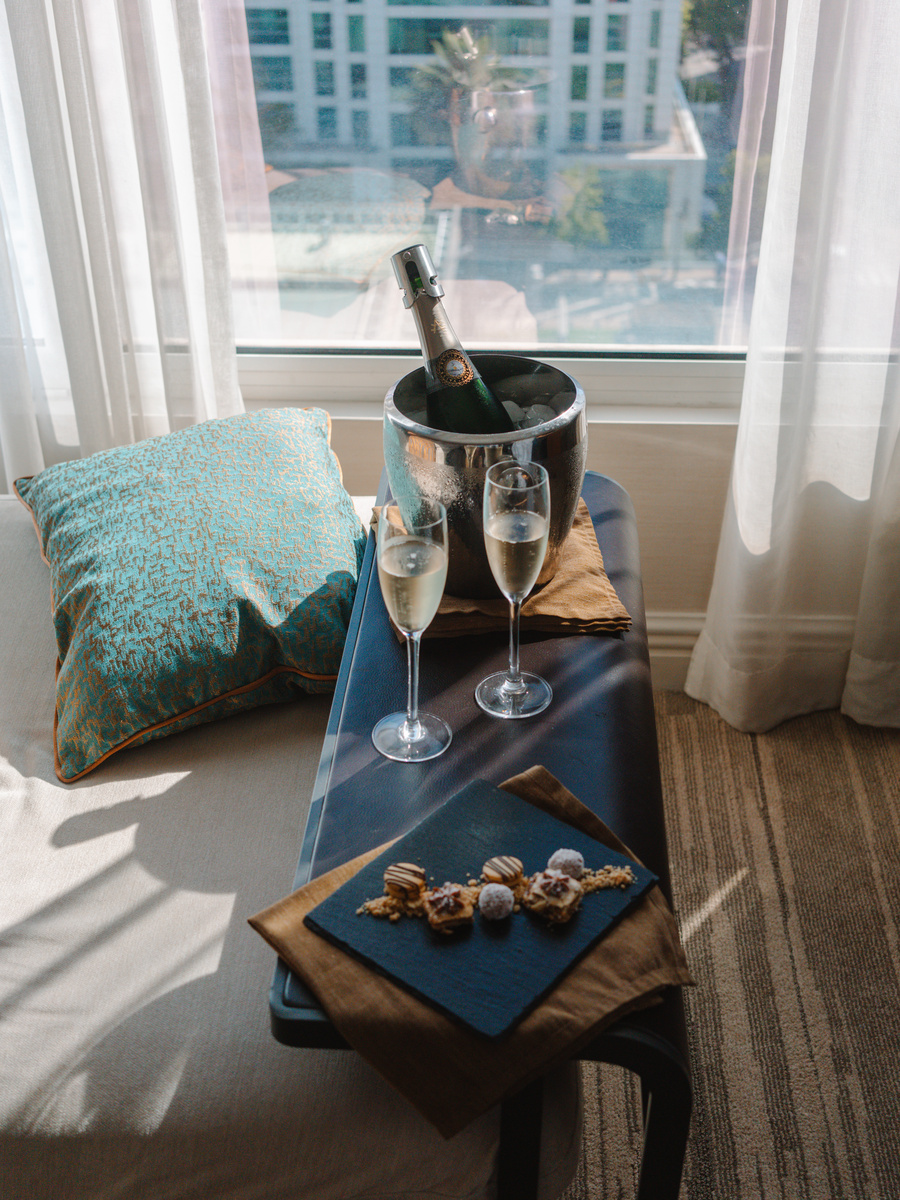
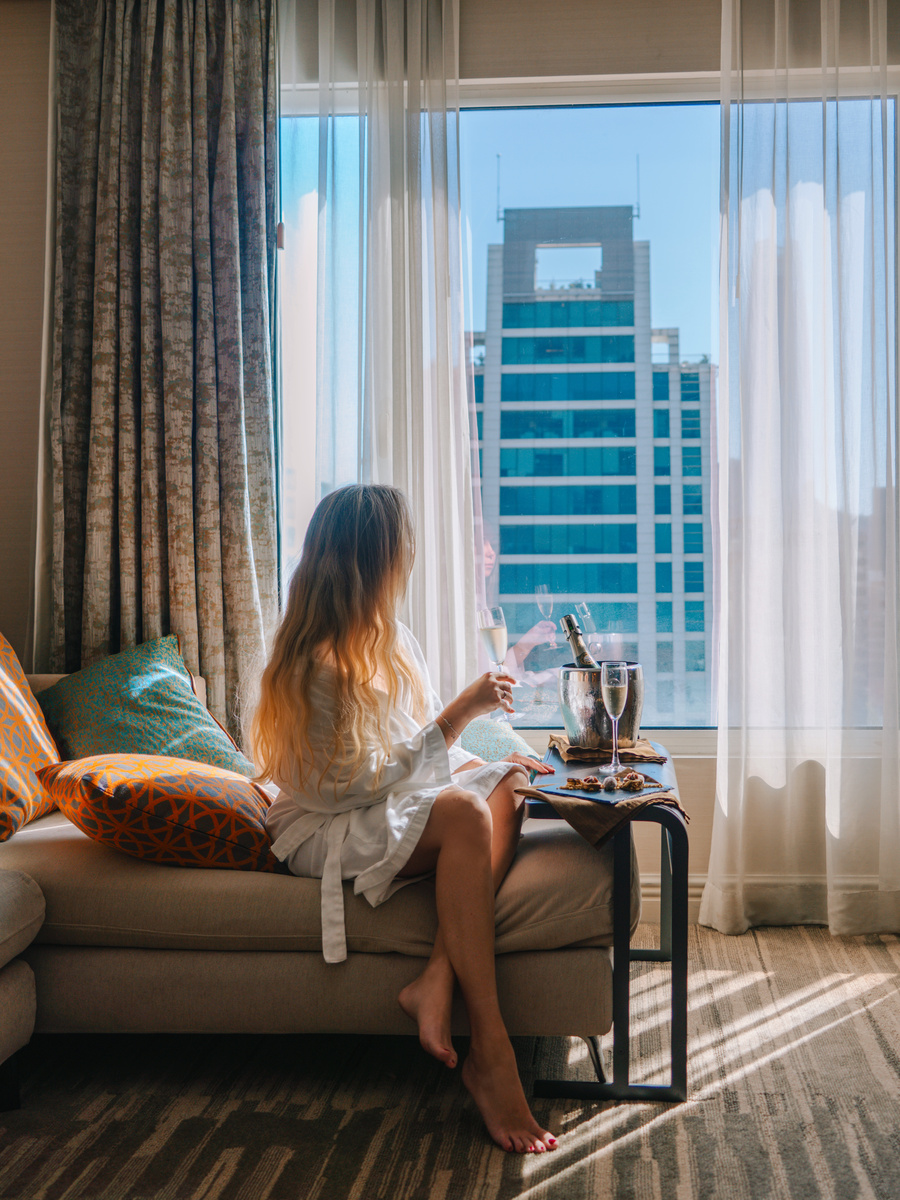
A sofa ran beneath the broad window, with turquoise and burnt-orange cushions against the otherwise restrained room. The city filled the glass. Champagne, two glasses and small welcome treats waited on the table.
The view did more for the room than decorative excess could have done. Modern Santiago was not scenery in the distance; it pressed close to the window, placing the hotel firmly inside the financial district.


The Club Lounge made the hotel more inhabitable
During my stay, Club access became part of the daily rhythm rather than an upgrade used once. The lounge offered small plates, fruit, cheese, charcuterie, wine and other drinks, and we returned more than once. It gave the hotel another lived space beyond the room and pool.
The Chilean corner inside an international breakfast
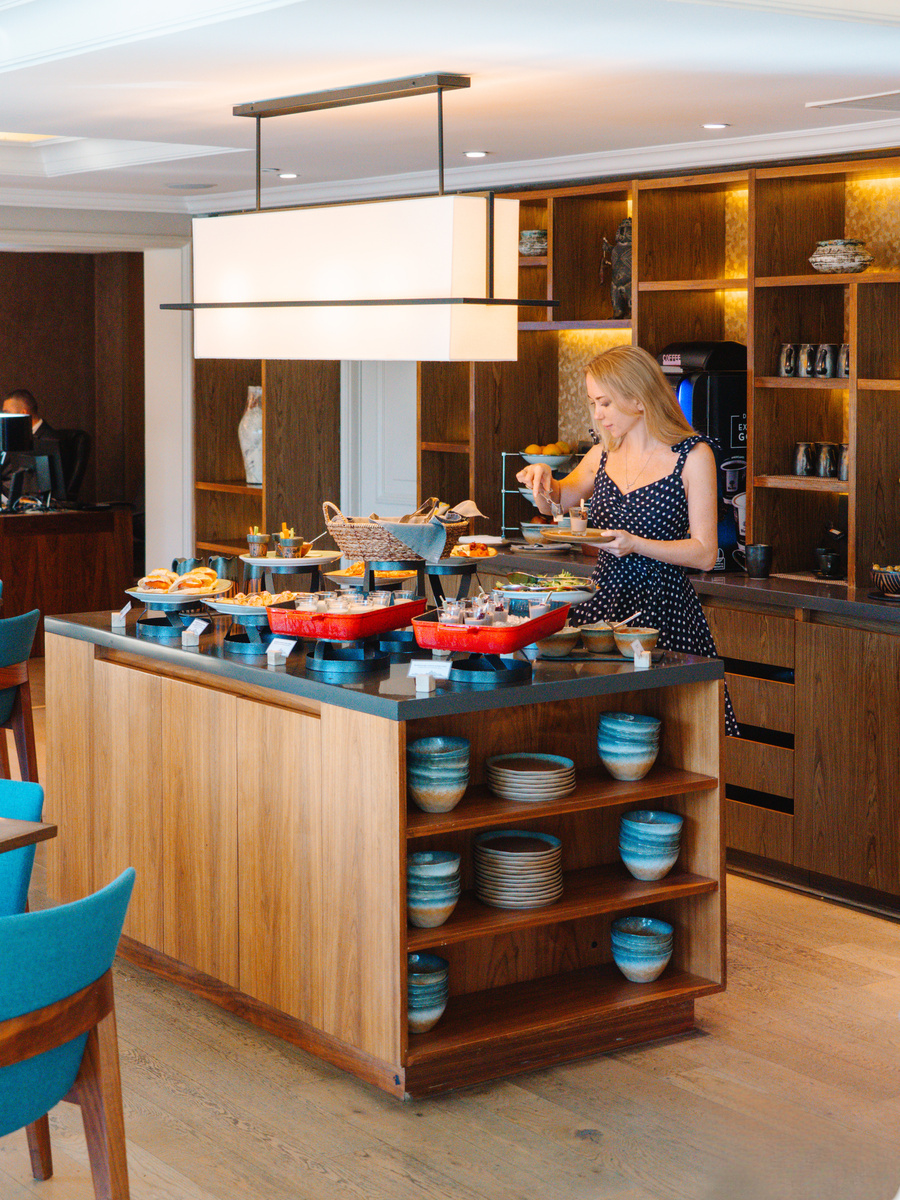
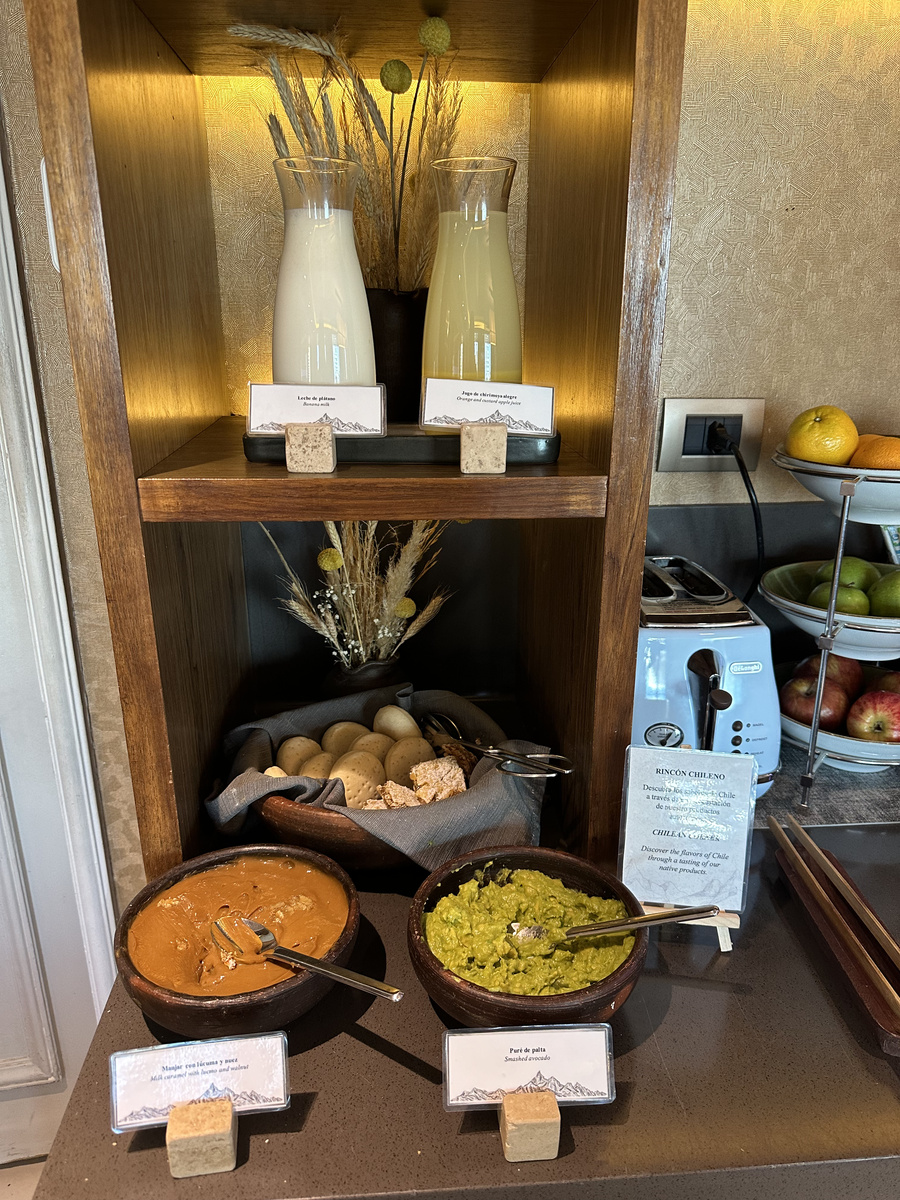
At first glance, breakfast followed the familiar language of an international luxury hotel: eggs, smoked salmon, charcuterie, cheese, pastries and fruit. At one end of the buffet, however, a small sign announced the Rincón Chileno. Beside a basket of pan amasado, Chilean country bread, were banana milk; chirimoya alegre, a juice of orange and custard apple; puré de palta; and manjar—milk caramel—with lúcuma and walnut.
This was a better introduction to Chilean food than a ceremonial plate would have been. None of it had been isolated as folklore. The local flavours sat inside an ordinary upscale breakfast, ready to be chosen as casually as the croissants or smoked salmon. It suggested the modern Santiago table in miniature: international in its frame, distinctly Chilean in the habits it keeps.
Santiago often feels more European-facing than many Latin American capitals I know. El Golf, especially, strengthens that impression. Breakfast made the distinction finer. Chile’s attachment to bread runs through the day; the same sweet-and-savoury grammar returns at once, the Chilean tea table, where cakes and sandwiches can share a cloth with pan con palta. The Club had polished those habits without erasing them. The city may lean towards Europe, but the breakfast had not left Chile.
The hotel’s current Club offer still centres on a private tenth-floor lounge with culinary presentations through the day. The important point is not the count of presentations. Club access changes how much of this Ritz-Carlton one can actually inhabit.
Estró earned the evening
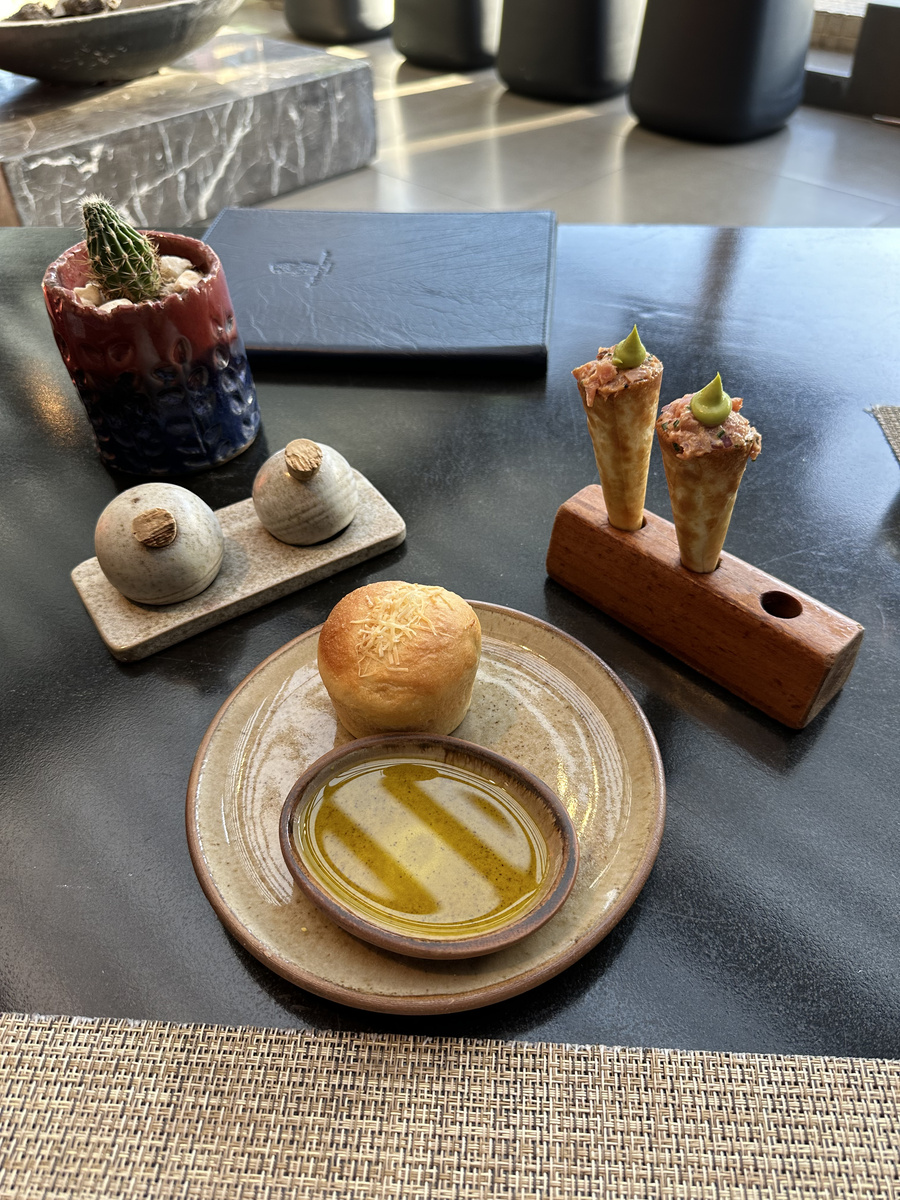
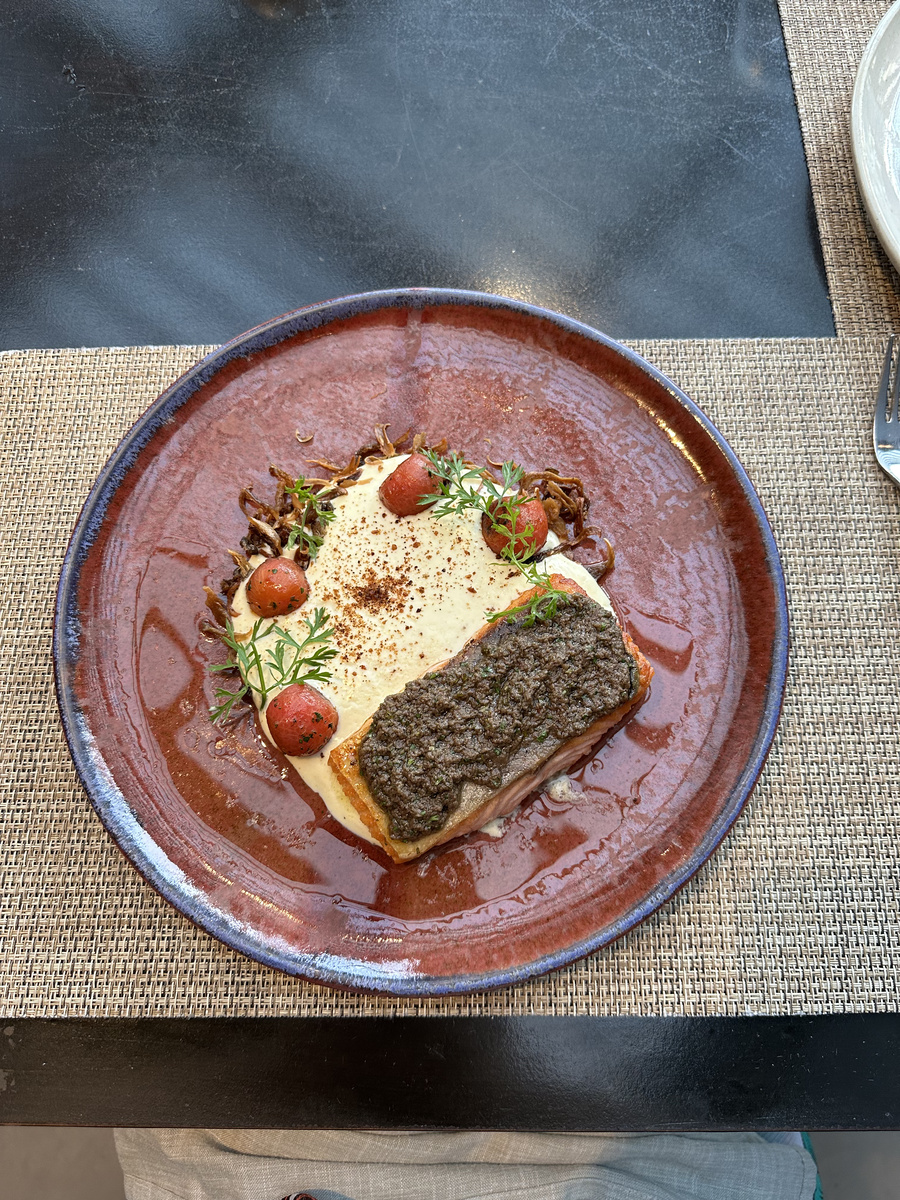
Our Noche Gourmet dinner at Estró began with warm bread, olive oil, little savoury cones and two bites hidden beneath stone-grey covers. Two cold seafood starters followed. The mains brought the Chilean coast into clearer focus: crisp-skinned salmon with creamy chuchoca and tomatoes, and seared tuna with avocado and quinoa. A red-fruit dessert layered with cream finished the sequence.
We drank Casa Silva Cool Coast wine. The meal had progression and a sense of place; it was not simply the convenient restaurant downstairs. Estró was one of the reasons the hotel held our attention after we had returned from the city.
The pool beneath glass
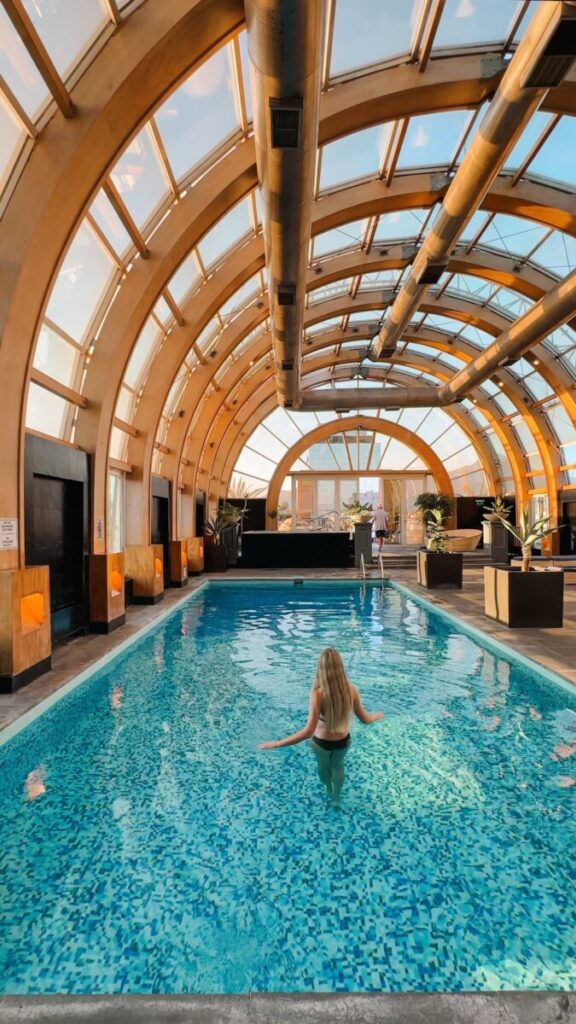
The spa and pool were the hotel’s defining spaces. The indoor pool sits high in the building beneath a great curved roof. In daylight, the ribs and panes give it the scale of a conservatory. Near sunset, the architecture recedes and the sky takes over.
I could swim beneath glass while the city remained visible, then step towards the terrace and watch the towers darken. The hotel calls this its rooftop Health and Fitness Center, a practical name for the most atmospheric part of the property.
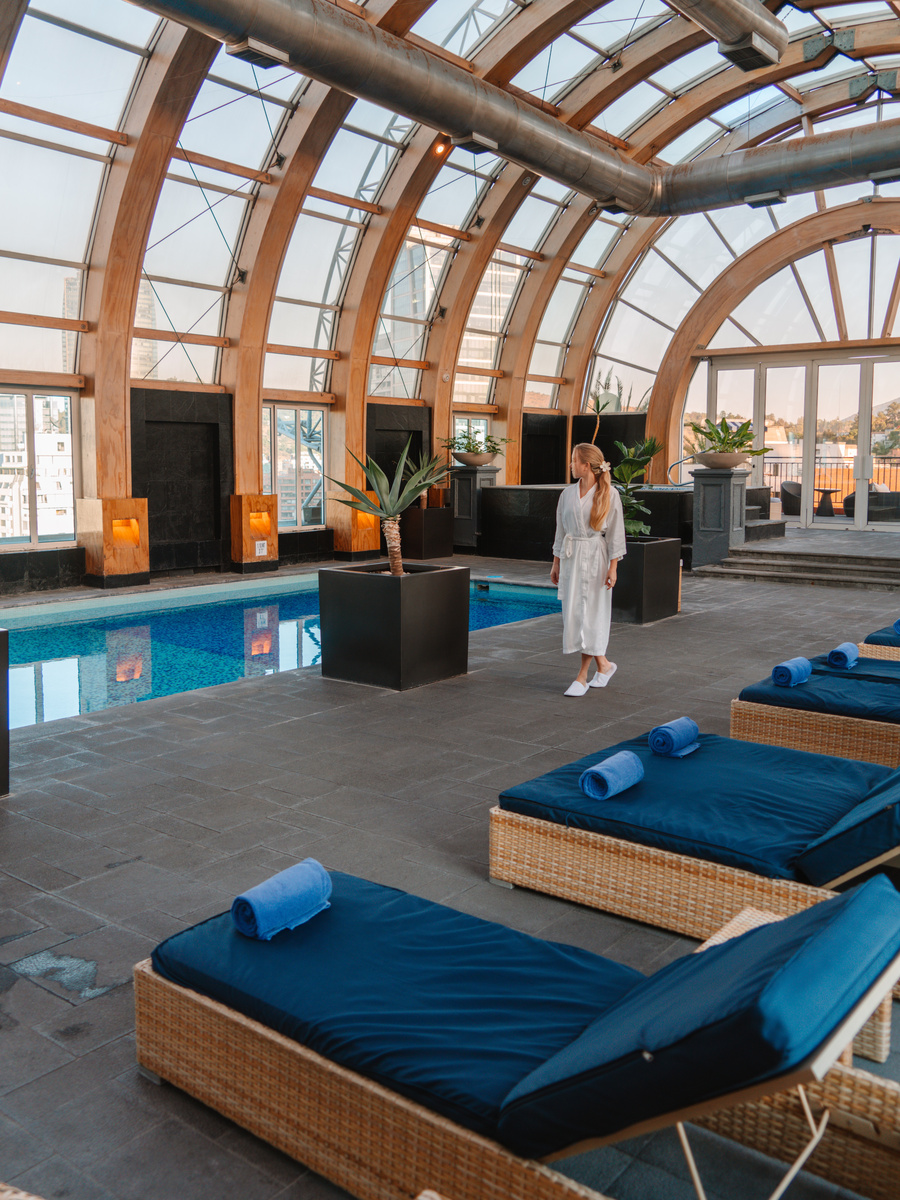
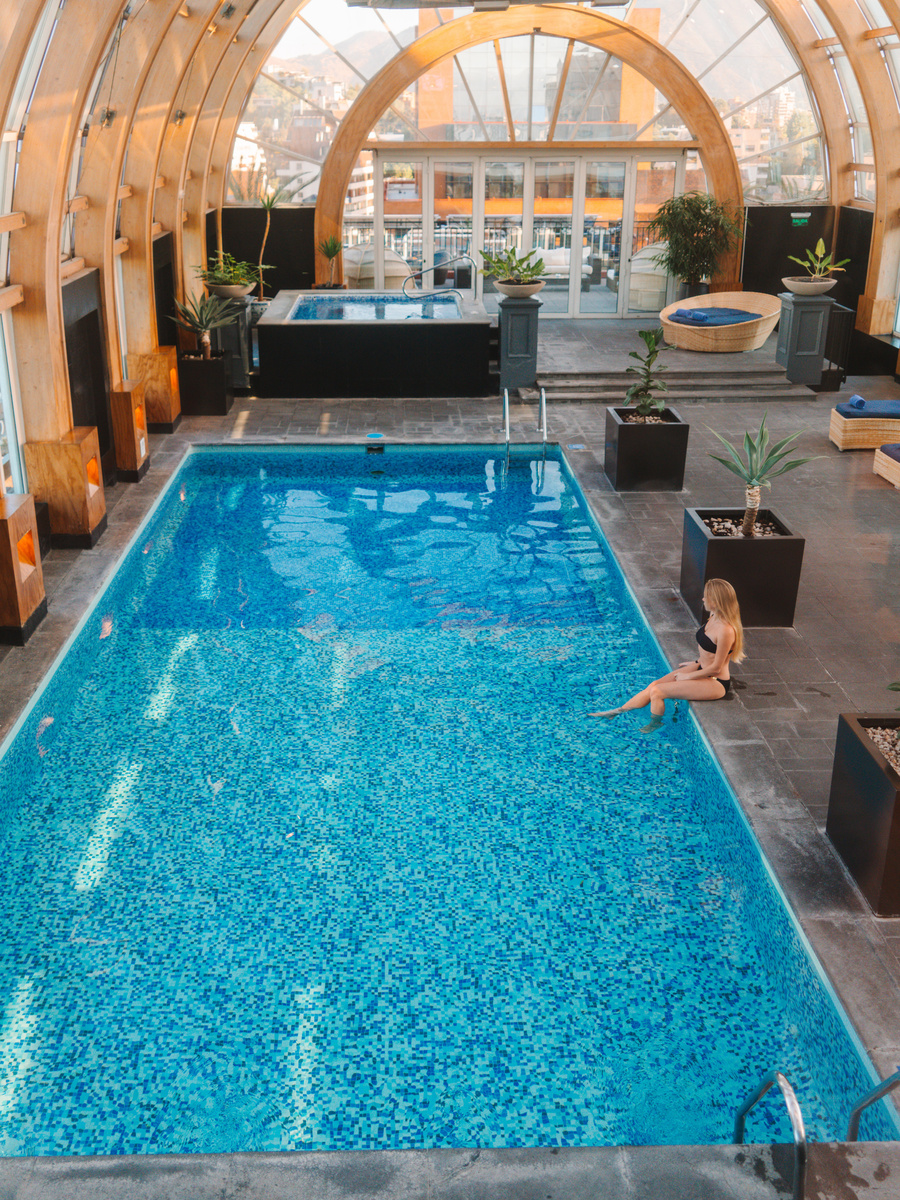
The pool remains central to the current hotel: its official spa information describes the heated indoor water, glass cupola and outdoor terrace. I would protect an hour here near sunset. That is when the facility becomes the hotel’s strongest argument.
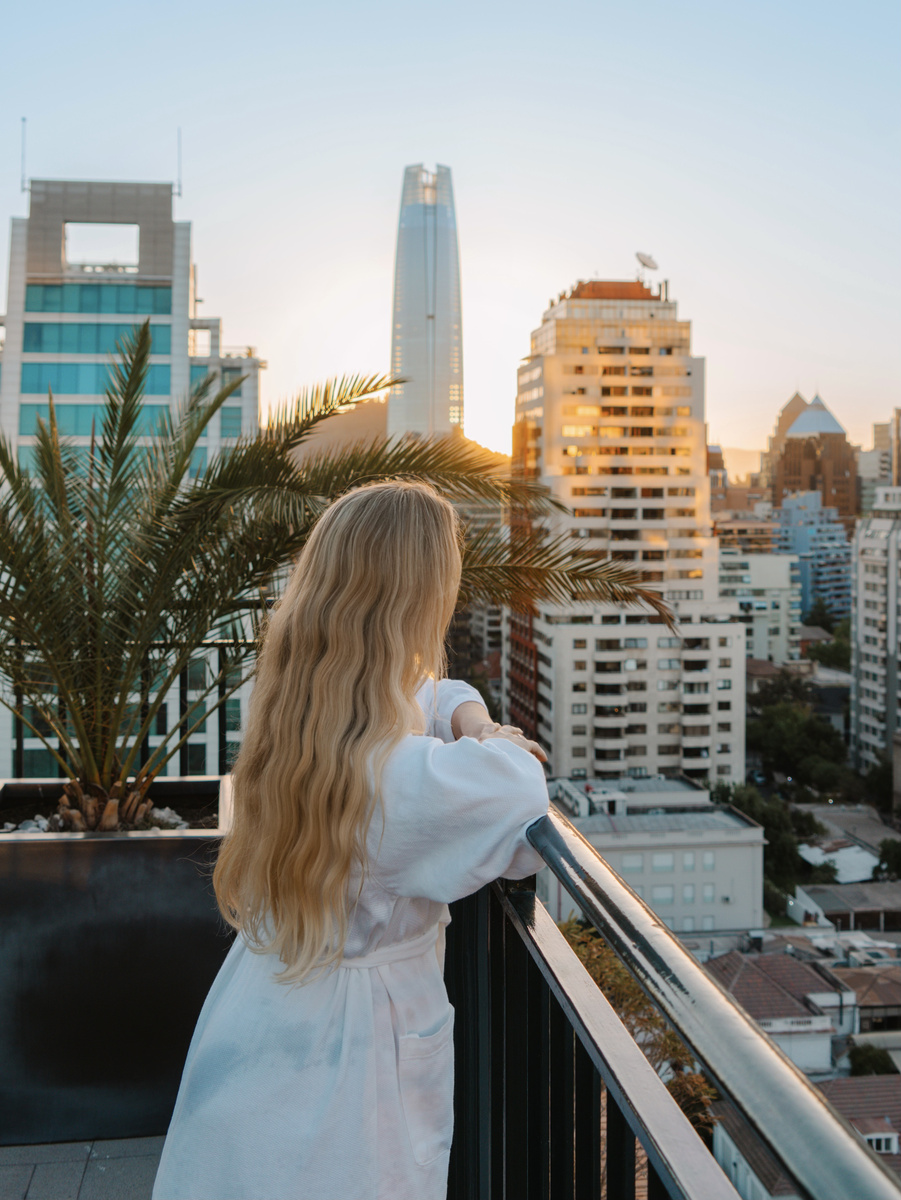
From the rooftop, El Golf looked calm enough to be mistaken for the whole city. It was not. Back beneath the glass roof, the skyline returned to stillness. The difference was precisely the value of returning to this address.
Shared on

The post and its conversation
The photographs as they appeared on Instagram, with what readers said there. Likes and replies open on Instagram.



 Join the conversation on Instagram