
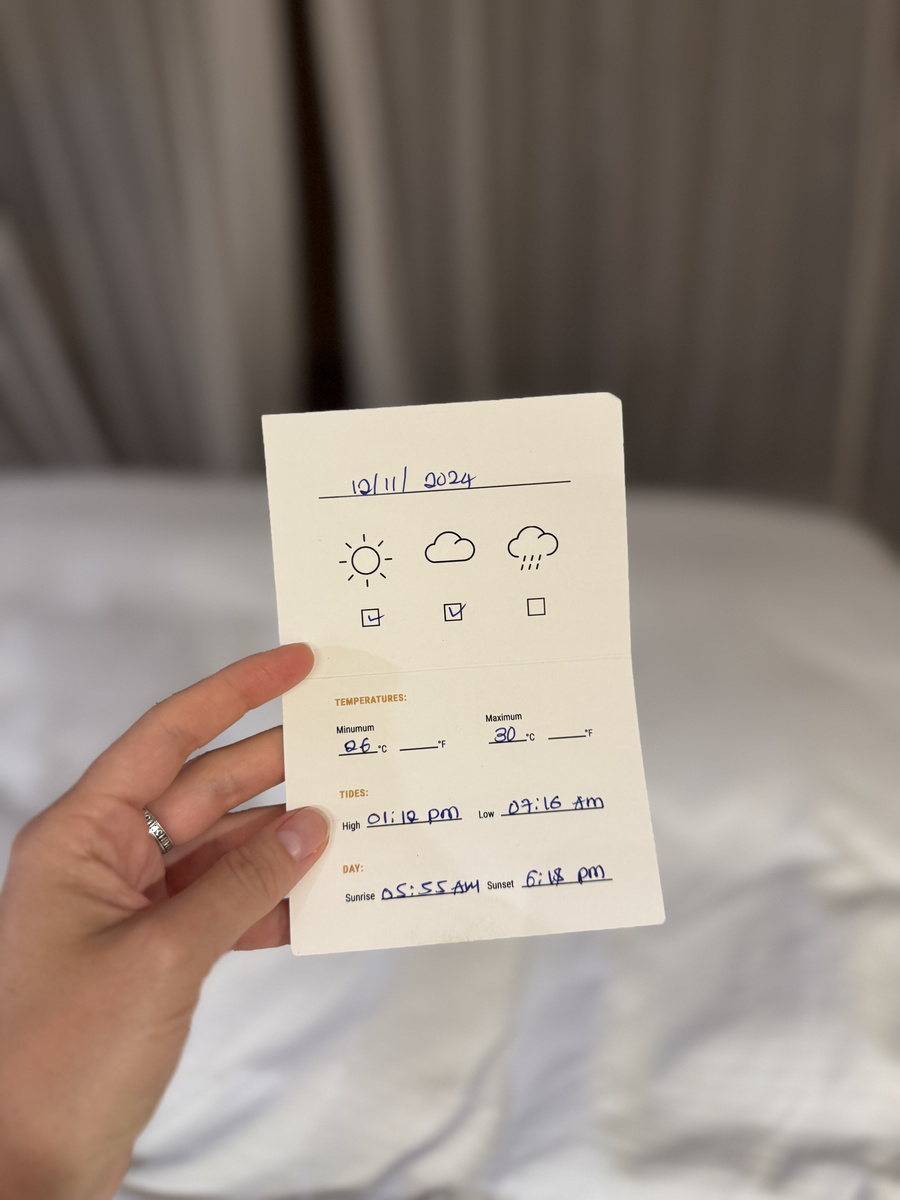
The card left on our bed gave the next day in blue ink: 26 degrees, low tide at 7:16, sunrise at 5:55. These details set the order of a morning on Paje Beach. By breakfast, the Indian Ocean would have changed the shape of the shore.
I took coffee up to the roof terrace and watched the light come over Zanzibar’s east coast. Below me were our private pool and a thick garden of palms and flowering shrubs. Beyond them, the beach ran towards a sea so pale at the edge that water and wet sand almost disappeared into each other.
We had two nights at Zanzibar White Sand Luxury Villas & Spa in November 2024. A member of Relais & Châteaux, it sits at the quieter southern end of Paje, about a kilometre from the village. It is close enough for the kites on the horizon to belong to the view, but sufficiently removed from the busy centre for the villas to keep their silence.
A villa in two parts
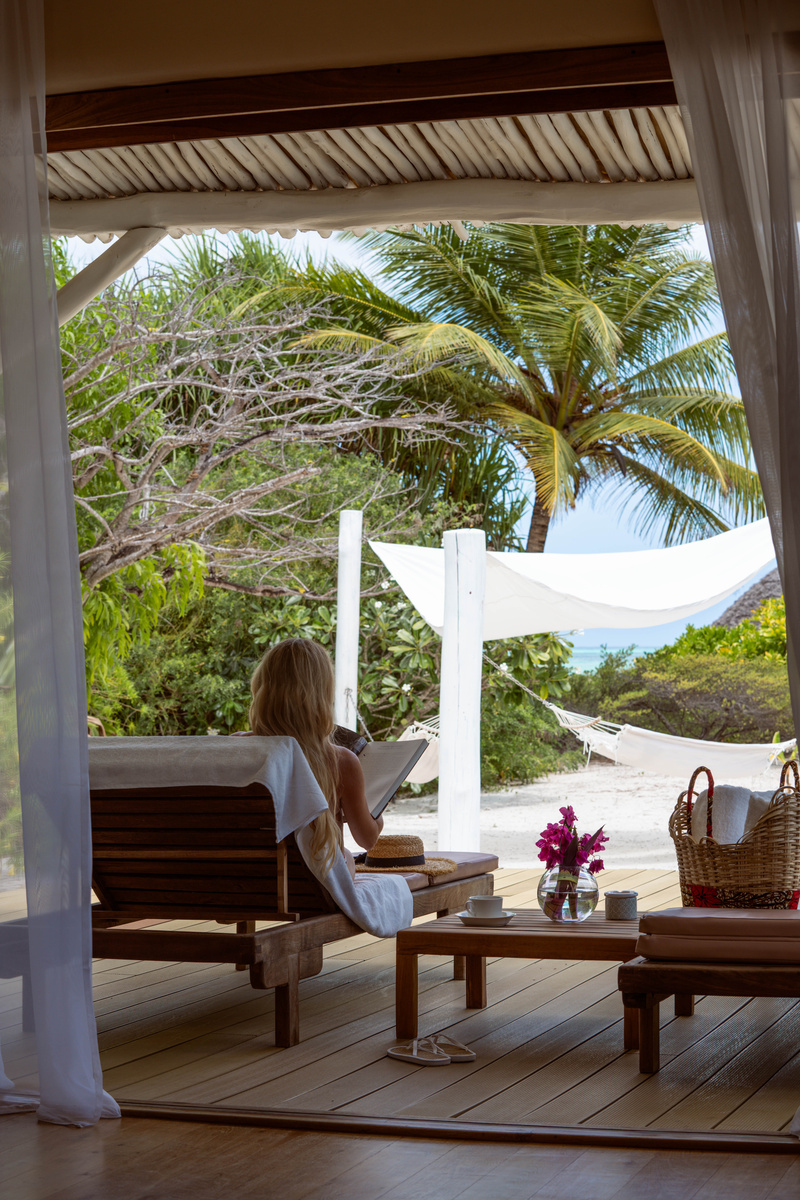
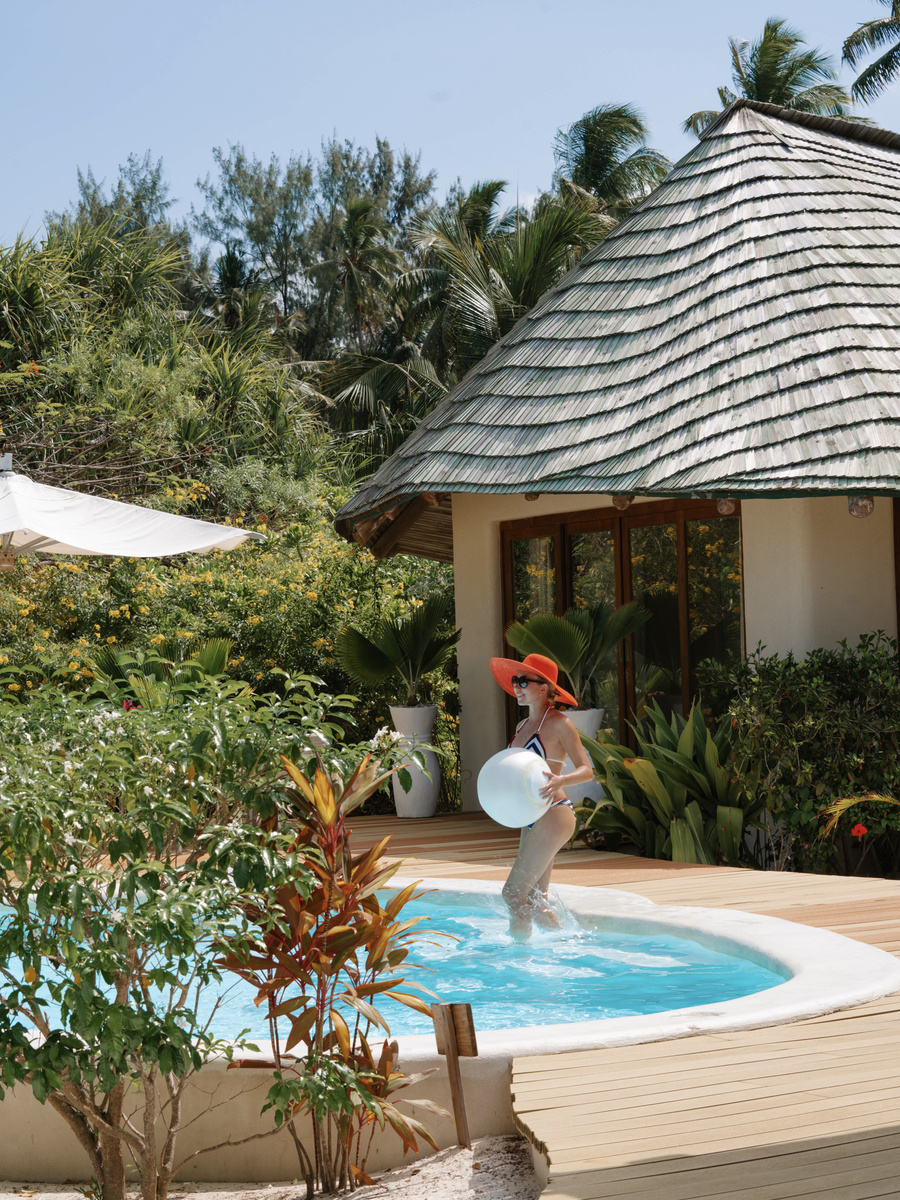
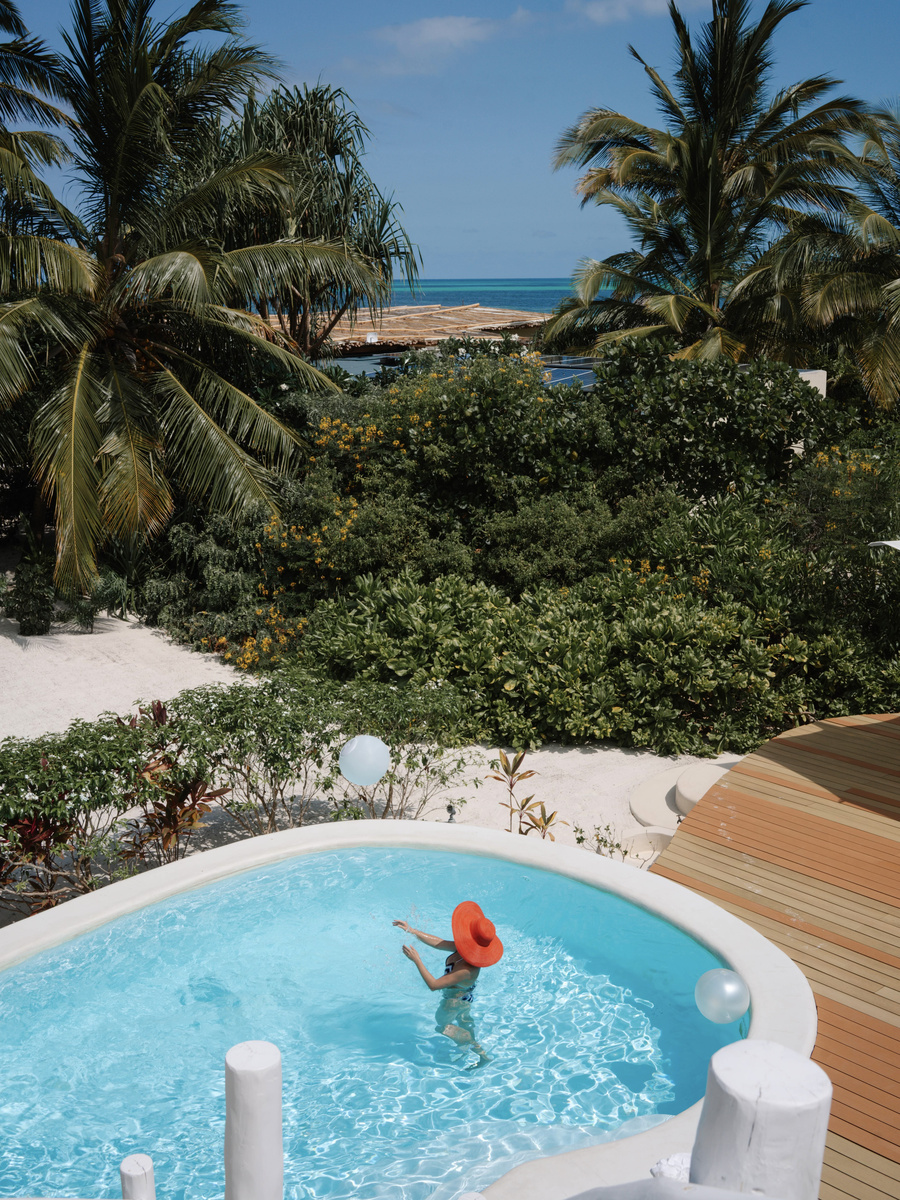
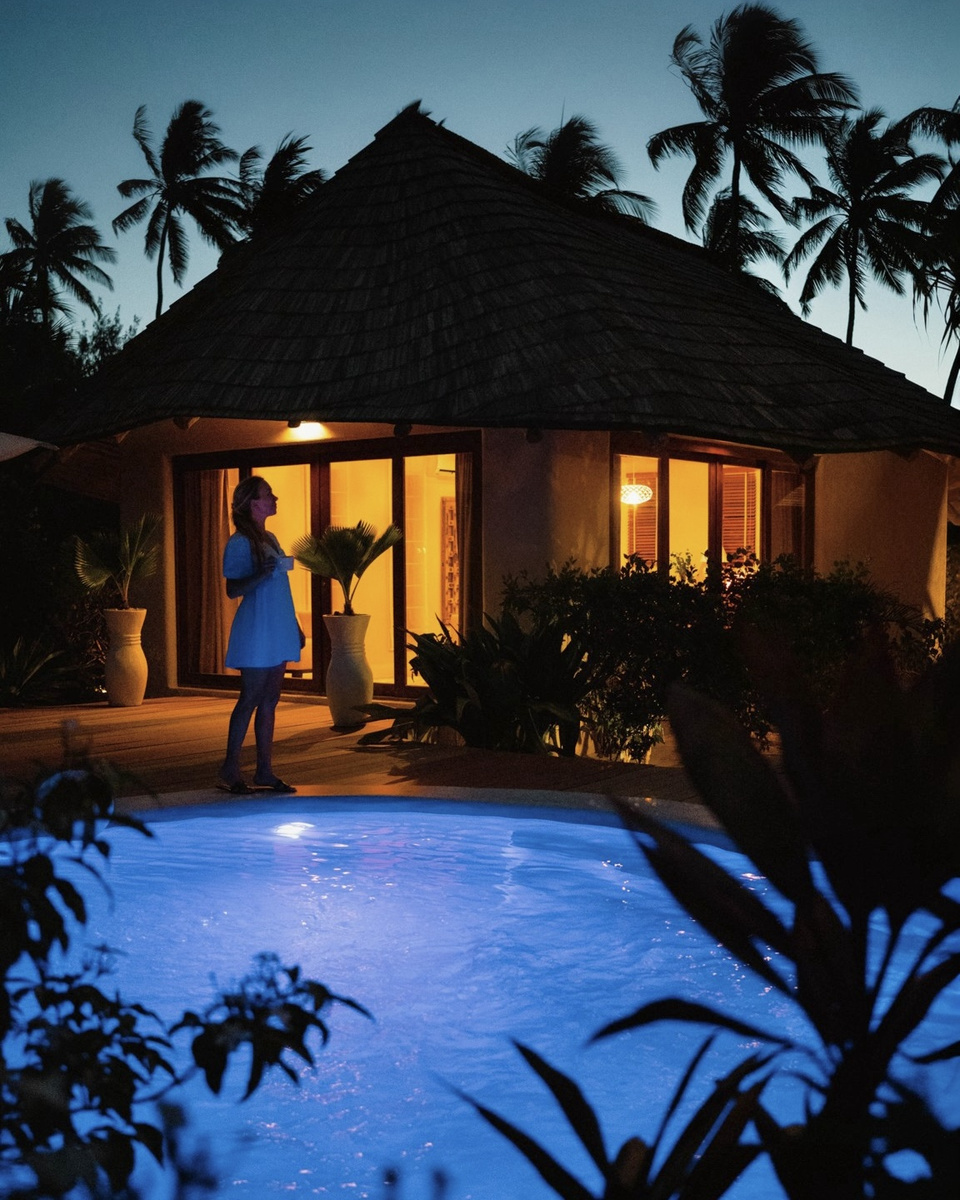
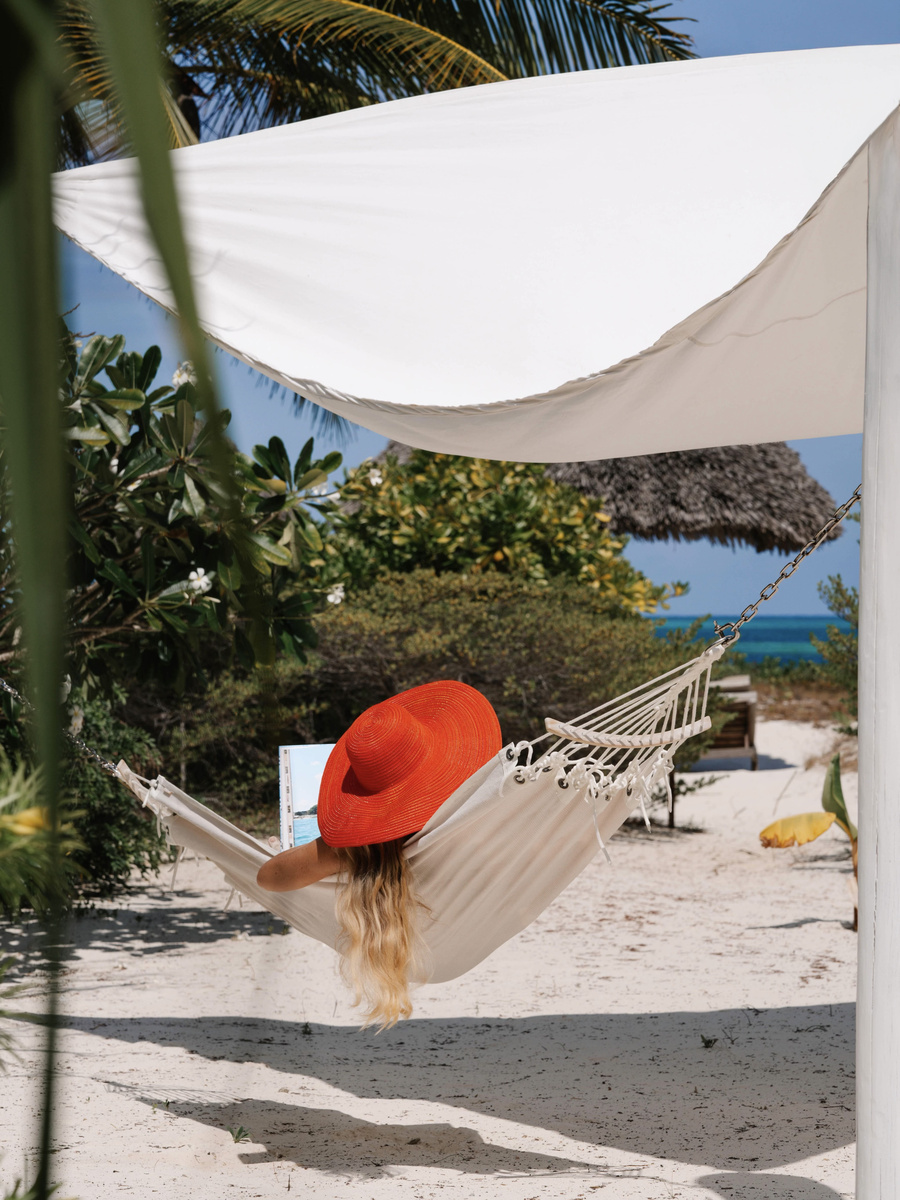
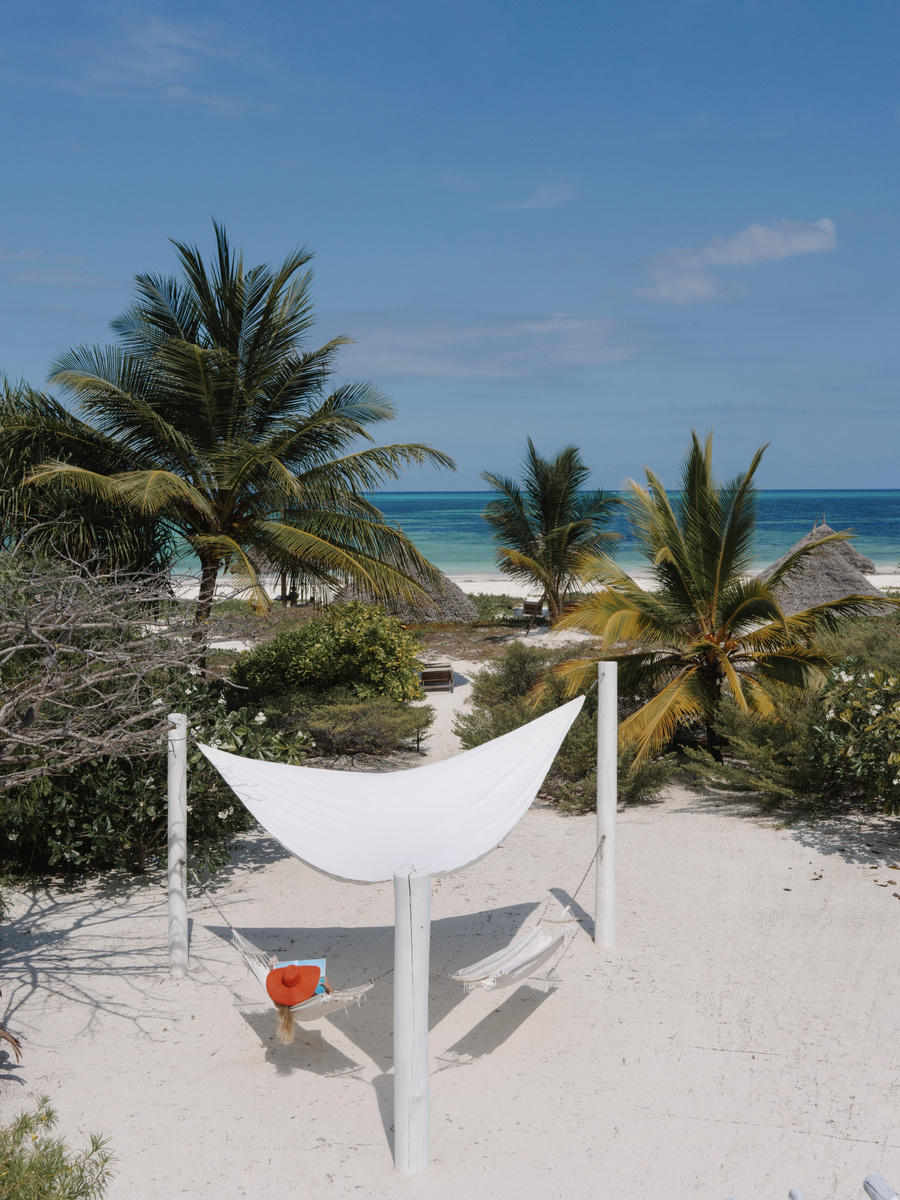
Our Beachfront One-Bedroom Villa was arranged as two separate thatched buildings. The bedroom and bathroom occupied one; the living room occupied the other, with a roof terrace above it. Between the buildings sat a private pool. Around everything was a garden large enough to hold sandy paths, palms, flowers, a hammock and a direct way to the beach.
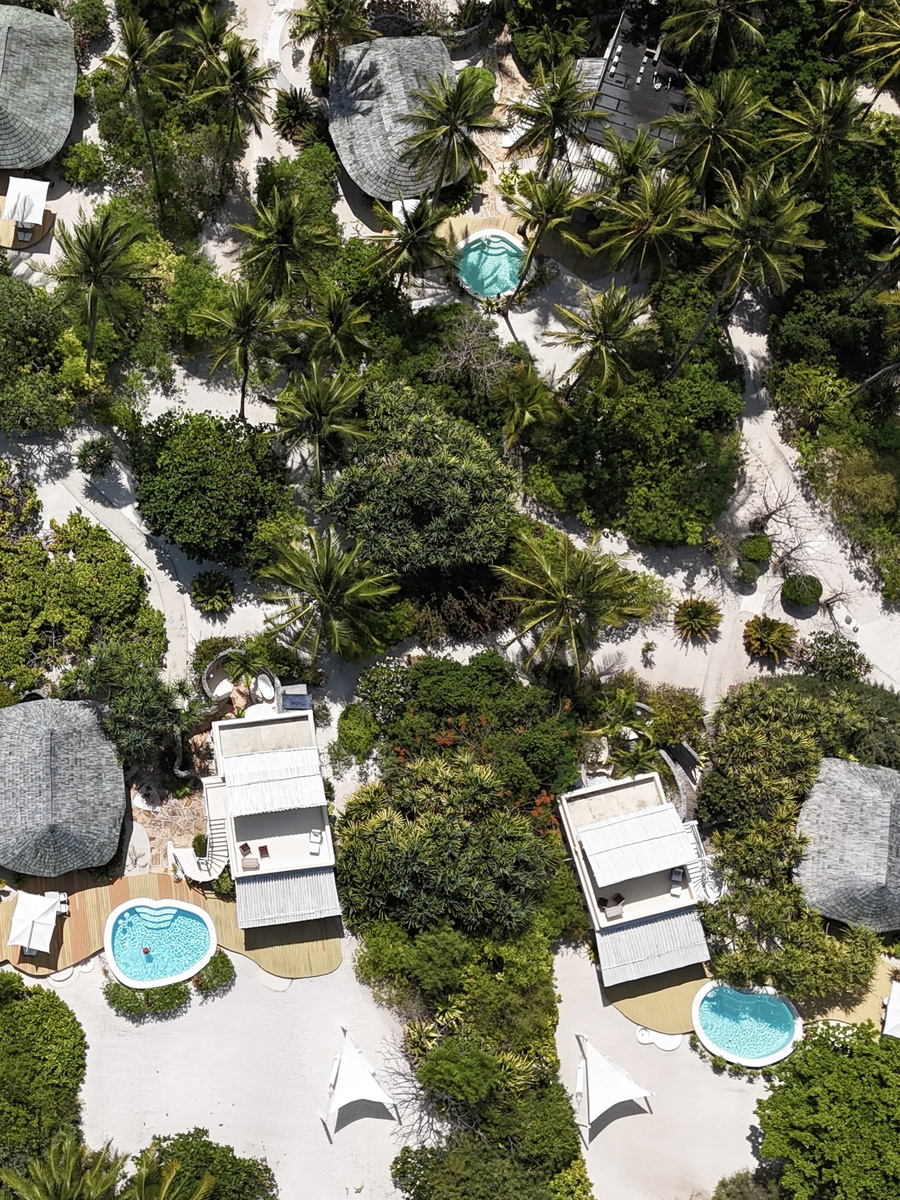
This separation changed the rhythm of the room. I crossed open air to move from bed to breakfast, from the pool to a book on the living-room terrace. The villa kept its privacy while sea, wind and birds entered the day.
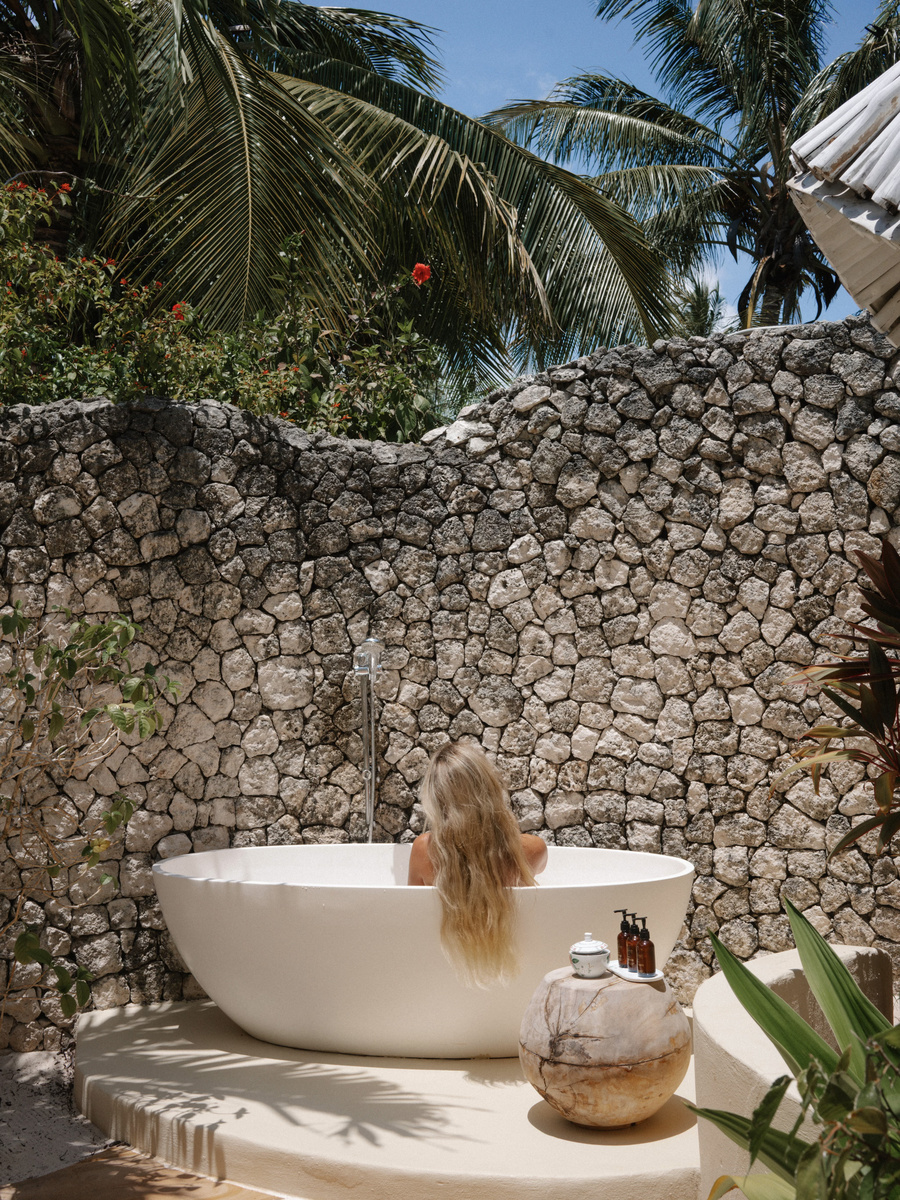
The bathroom continued outside. A freestanding bath and shower stood within high coral-stone walls, open to palms and sky. It was theatrical enough for a photograph, yet it did not feel like a prop. In this climate, bathing outdoors made ordinary sense.
The scale could have felt excessive for two people. Instead, the garden absorbed it. The pool and terrace remained within sight of each other, but each had its own quiet corner. At night, the bedroom glowed amber behind the blue water, and the villa seemed smaller again.
The moving shore
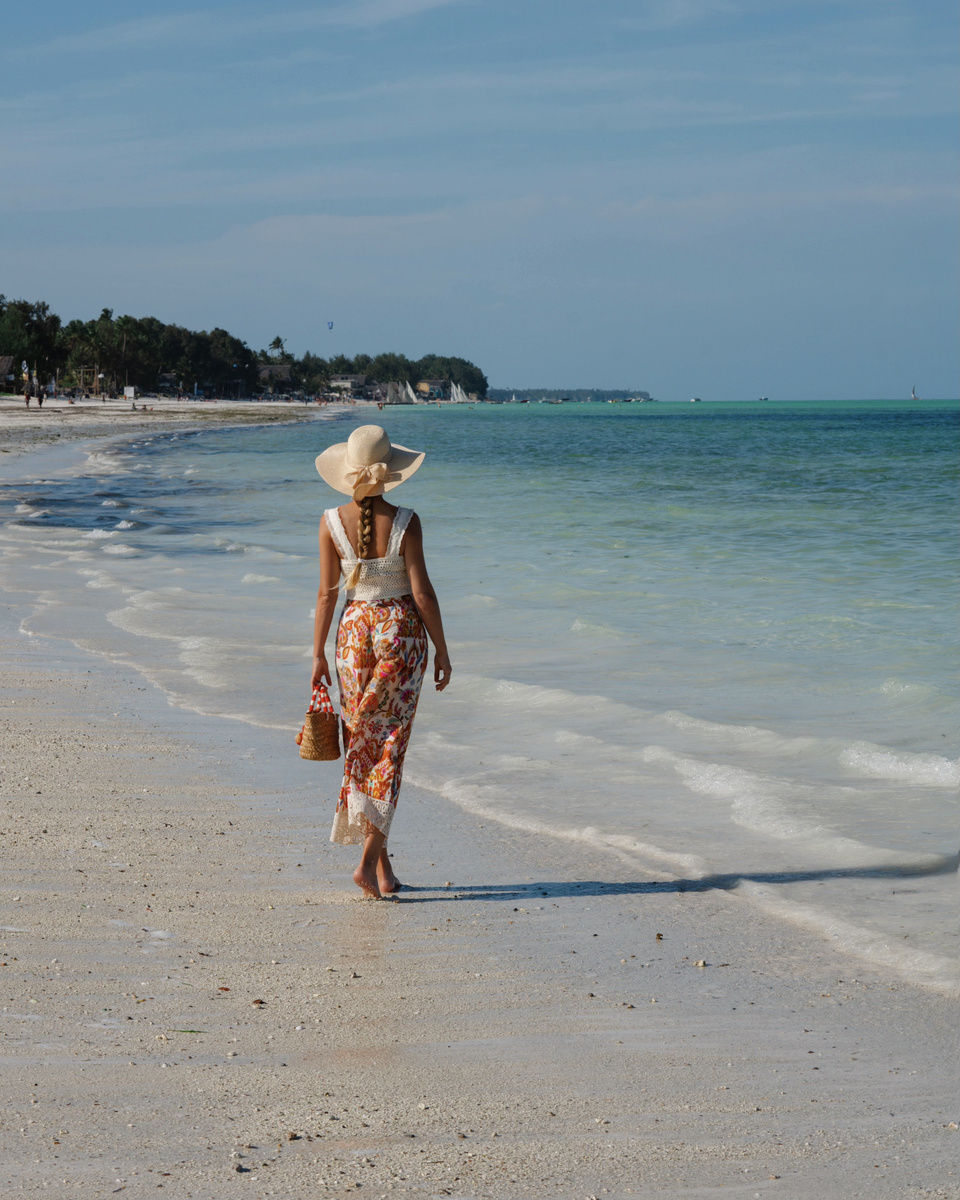
Paje is a tide beach. At low water, the ocean withdraws so far that people walk out towards the reef. A few hours later, the same ground is under clear blue water. The handwritten card in our room was therefore more useful than a generic forecast. It told us when the beach would be broad, when the lagoon would return and how early the sun would appear.
Stone Town belongs to another part of the island and another kind of stay. White Sand’s advantage is more concentrated. The beach, the wind and the changing lagoon are immediately present, while Paje village and its kites are visible farther along the curve of the shore.
Days that filled themselves
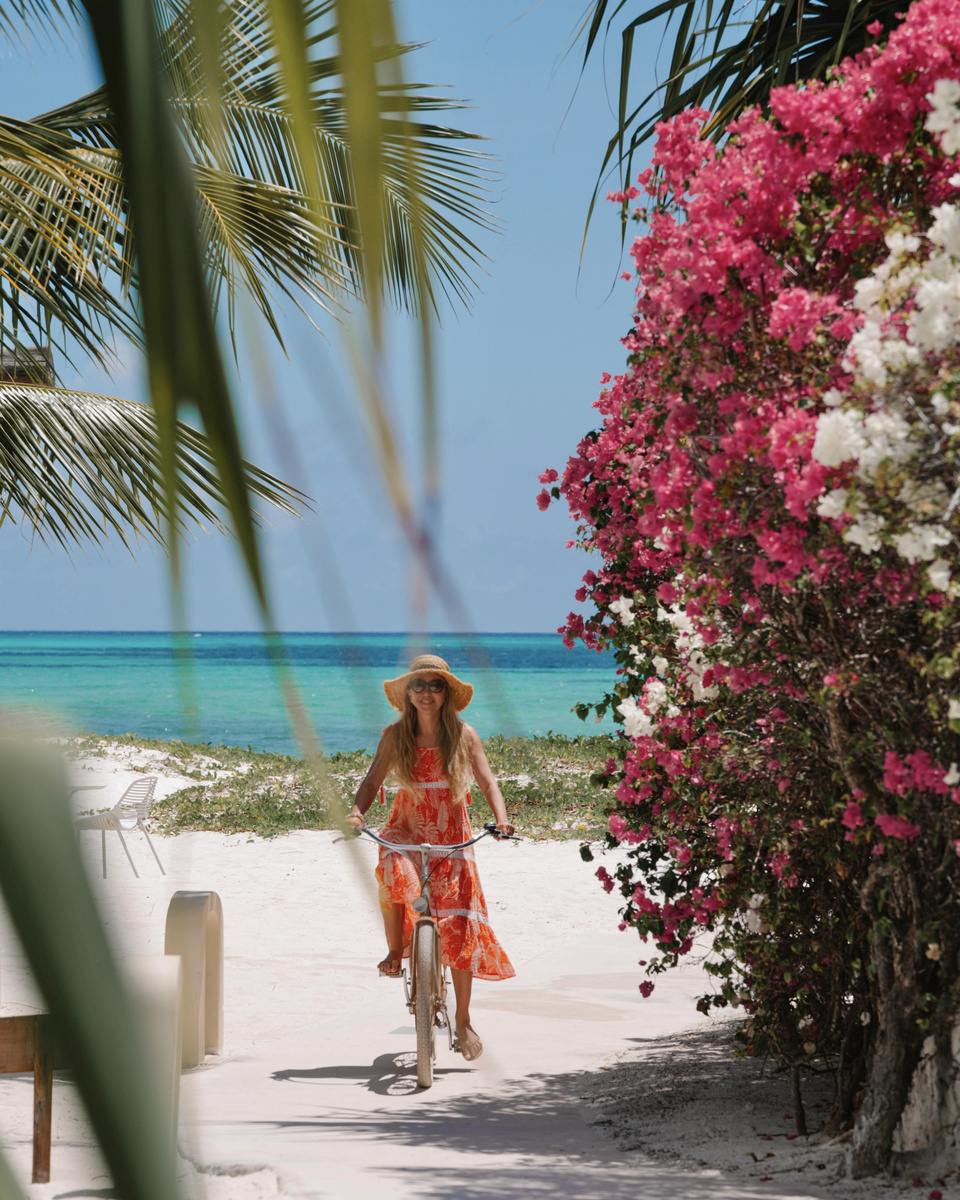
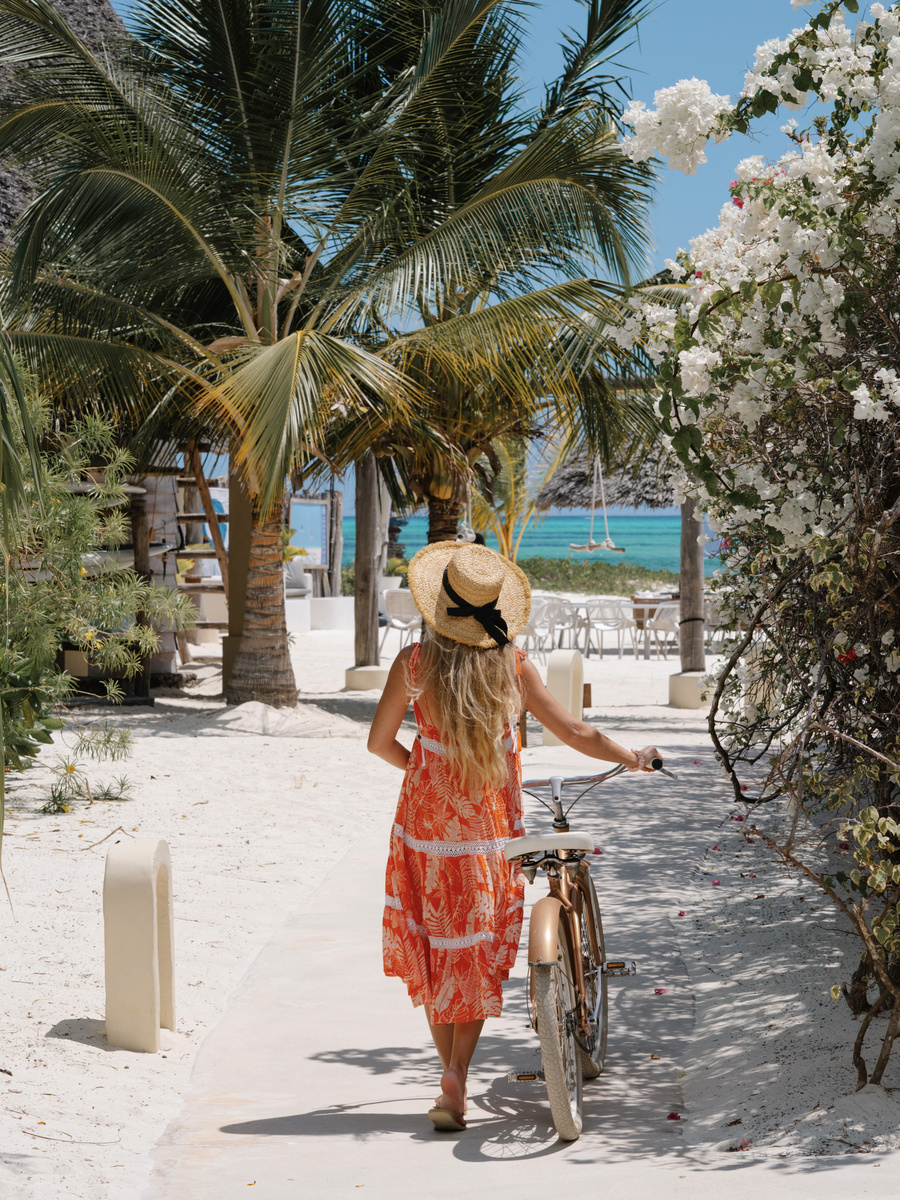
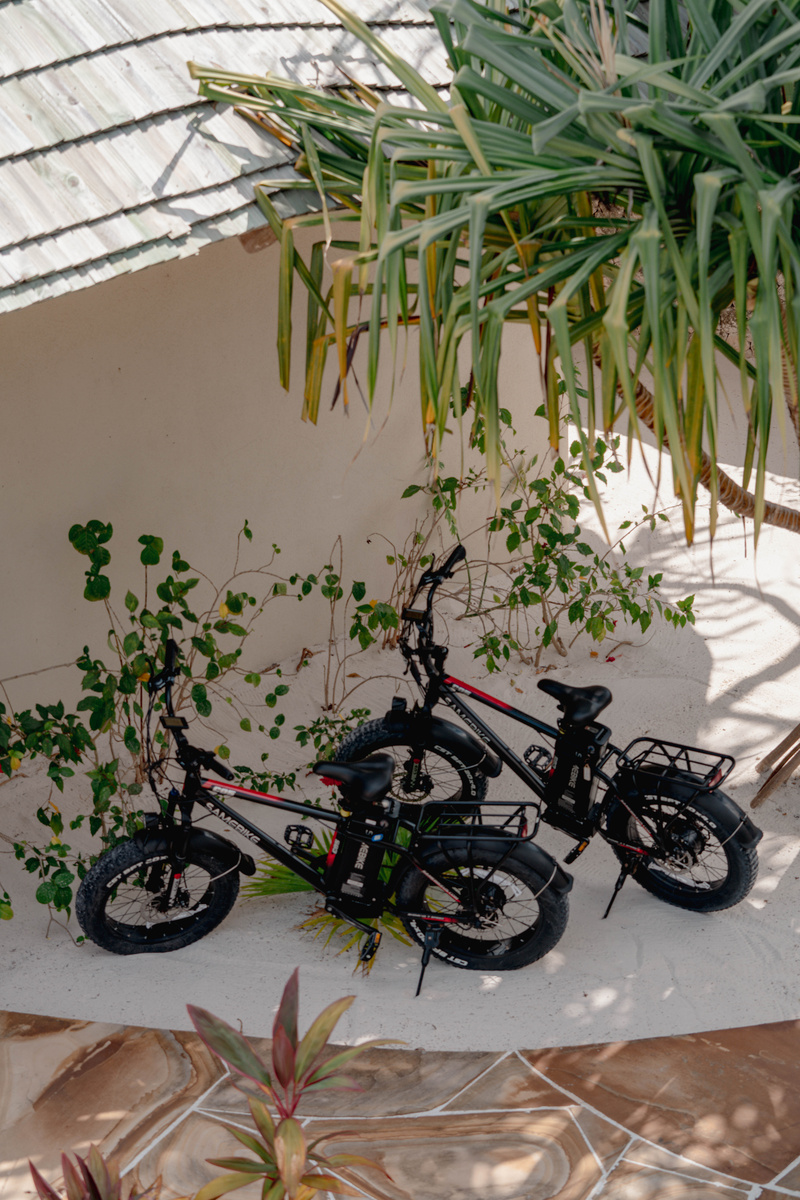
Two nights leave little room for an ambitious programme. White Sand solved that by making small movements enjoyable. We took the ordinary bicycles through the gardens and down the sandy path to the beach. Electric bicycles waited under the palms too, useful beyond the hotel paths, but the simple beach bikes suited the short distances inside.
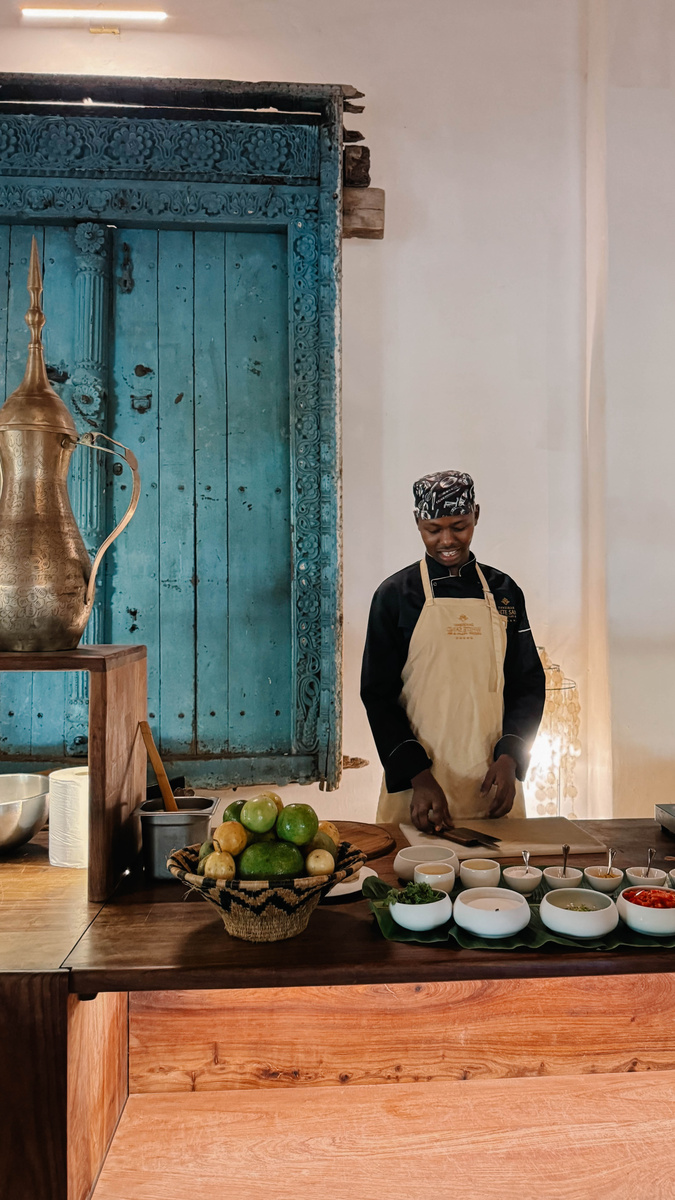
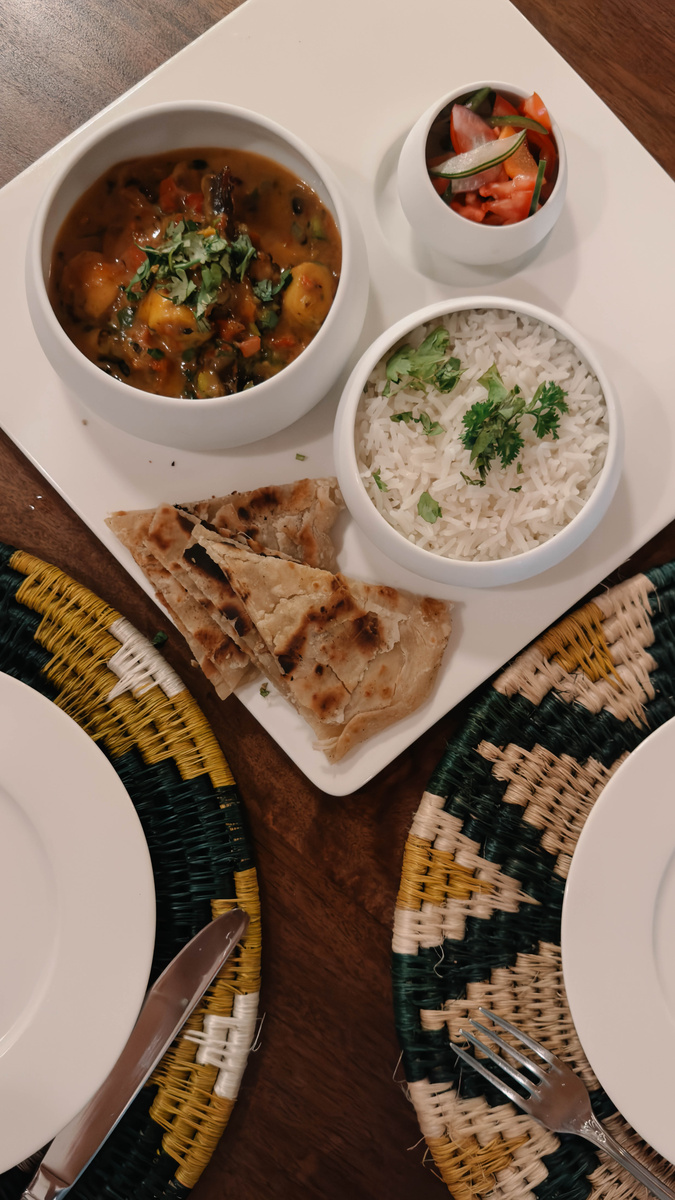
The hotel’s activity list was longer: yoga, paddleboarding and kitesurfing were among the possibilities. I chose the cooking class. Zanzibar is called the Spice Island so often that the words can begin to feel decorative. Making coconut octopus curry with rice and chapati put the nickname to work. The lesson gave the day a centre without taking us away from the hotel.
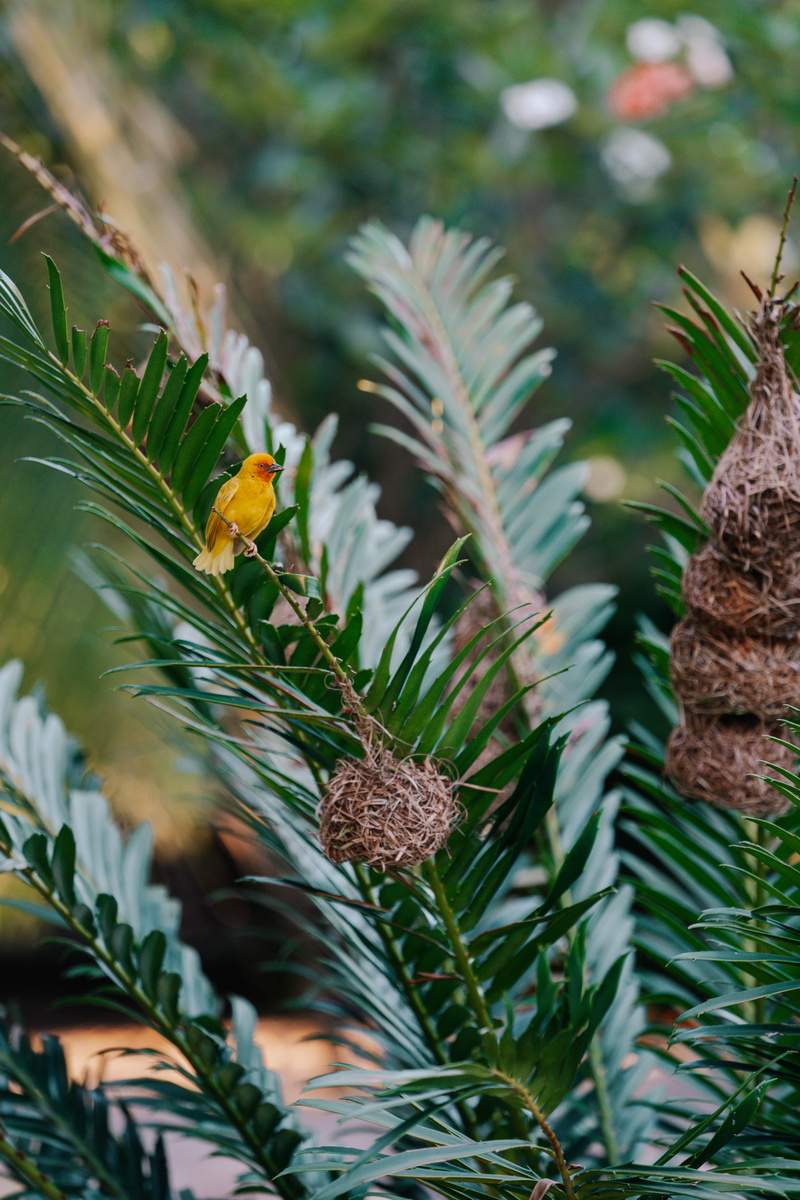
The gardens formed a dense little habitat between the villas: baobabs, mango trees, palms and bougainvillea. Small yellow birds moved around their woven nests. Monkeys appeared in the branches. I remember the flowers first, then the number of small lives among them.
Breakfast at the beach, dinner by the pool
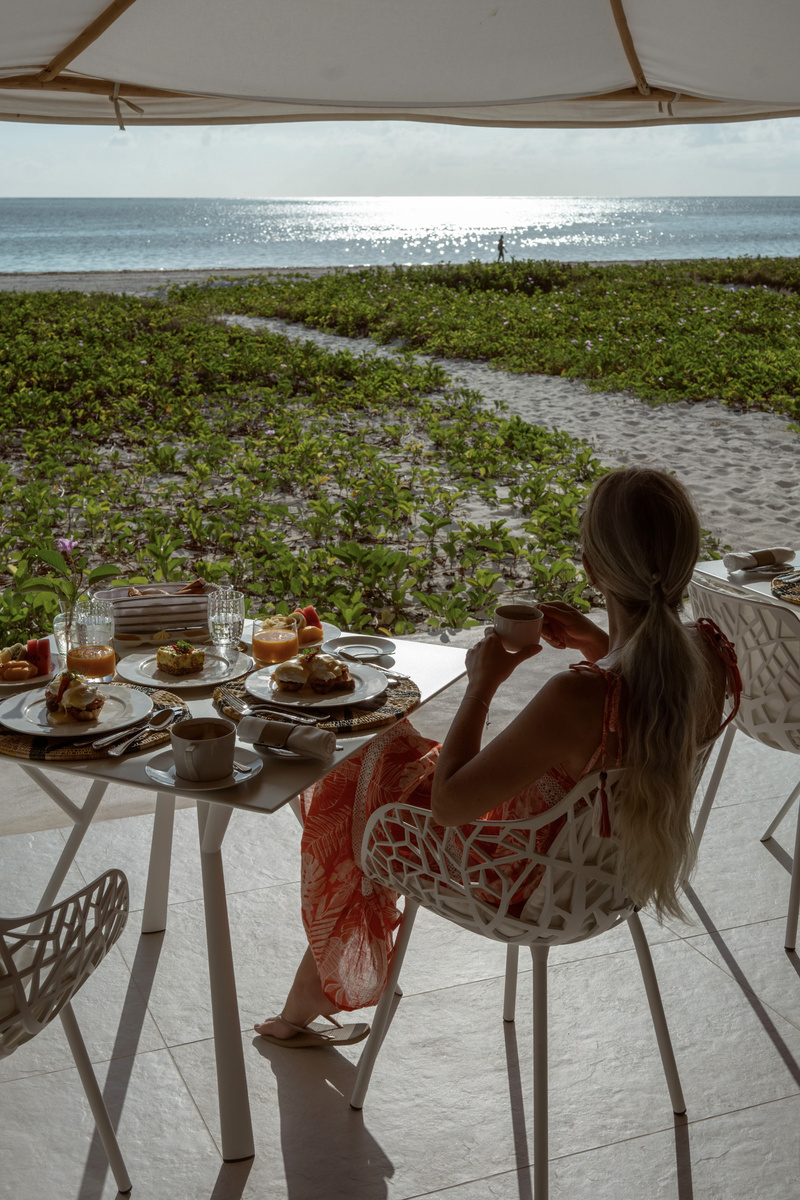
Breakfast faced the Indian Ocean. Fruit, eggs, bread, coffee and juice arrived at a table near the beach, with the morning glare already silver on the water. The view carried the drama; breakfast could remain breakfast.
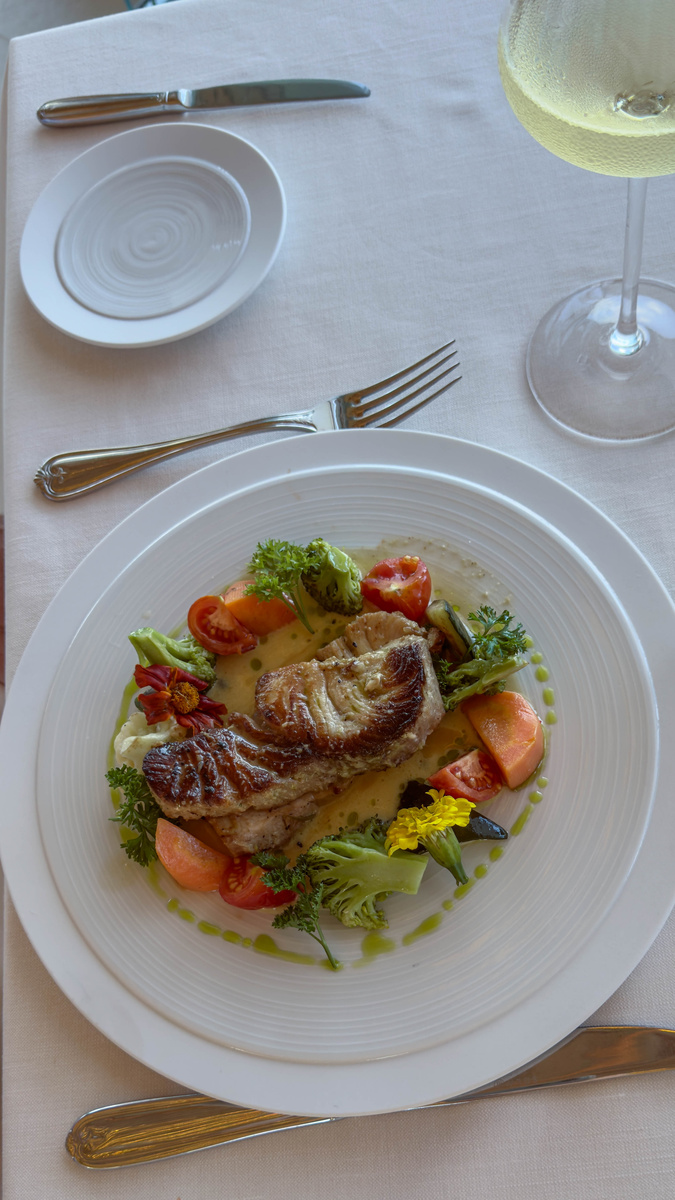
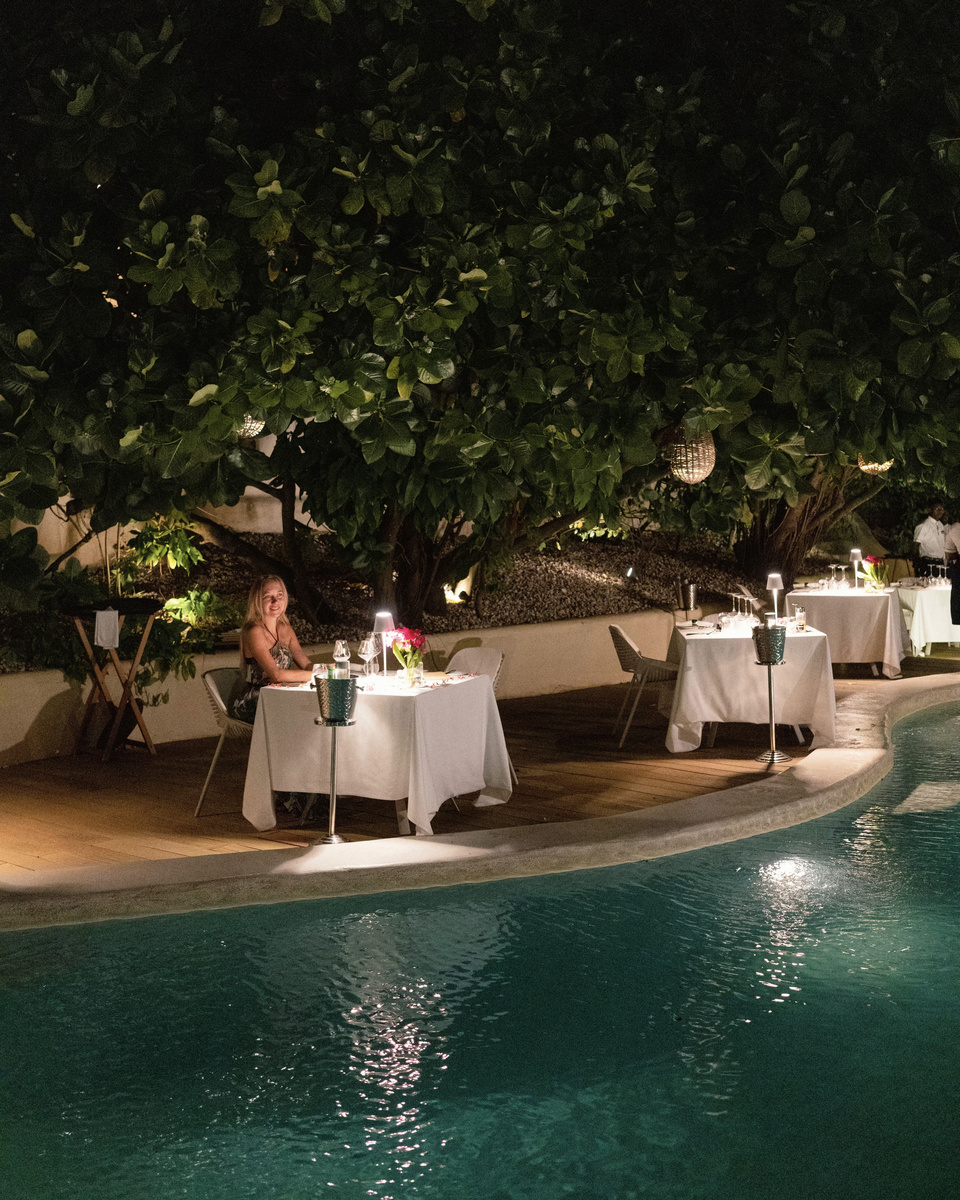
The plate that made most sense here was the catch of the day, simply grilled and served with vegetables. In the evening, dinner moved to Doors to Zanzibar. Tables stood beneath a broad tree beside the pool, far enough apart to keep their own pools of light. The arrangement had ceremony, but no ballroom stiffness.
The machinery behind the garden
From ground level, White Sand appeared to be all flowers, pale paths and thatched roofs. From above, another layer became visible: solar panels, service roofs and the practical machinery required to run private pools and large villas on an island.
The hotel’s current account of its operations says it now runs on solar power stored in batteries, produces its own water, avoids single-use plastics and supplements the system with a wind turbine. I had photographed the panels and batteries because the physical evidence interested me. The programme had visible infrastructure behind it.
Two mornings on Paje
On our last morning, the sun came up across a calm strip of water and caught the edges of the beach plants. Later, I took the bicycle along the white path one more time. My memory of two nights is quiet: coffee on the roof, the tide written by hand, a bird beside its nest, a hammock facing the sea.

The card had said 5:55. Outside, nothing stayed still: not the light, not the water, not the long pale edge of Paje.