
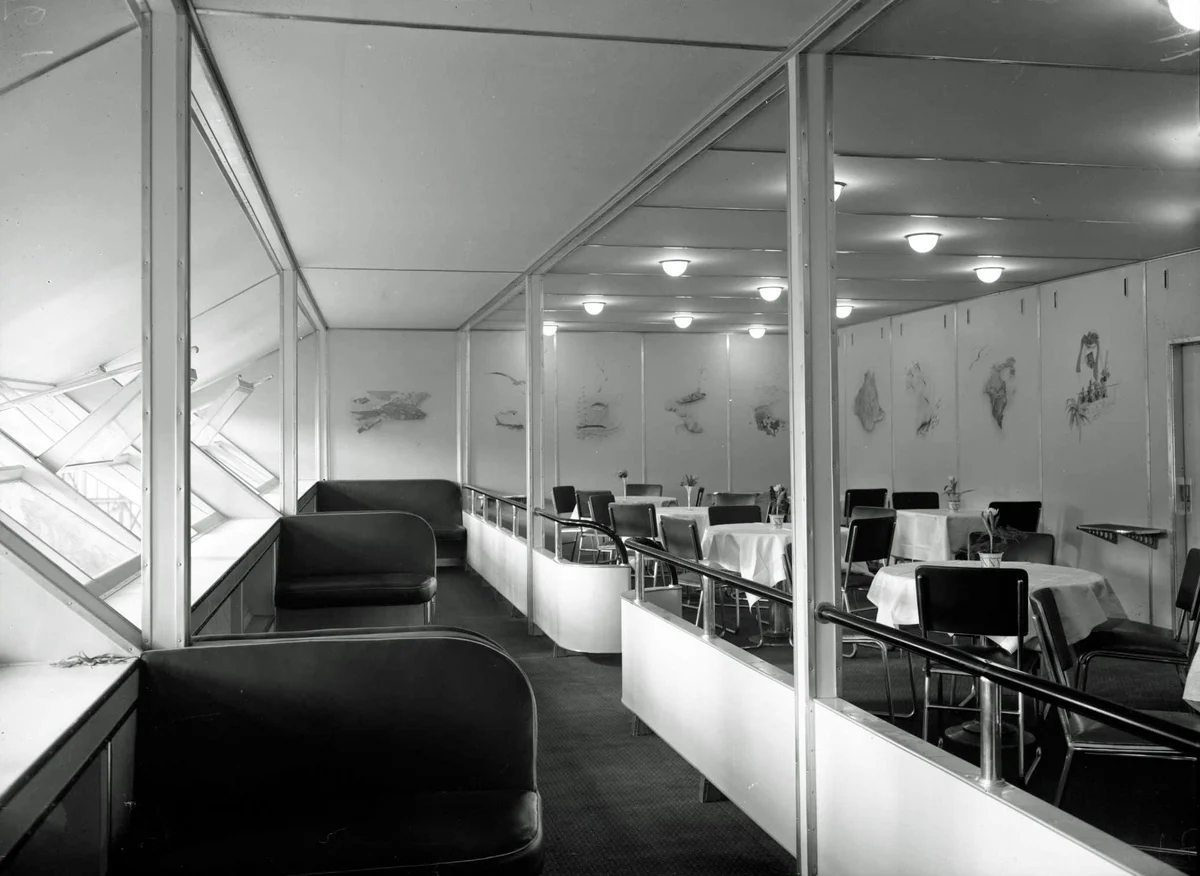
On a Hindenburg crossing in 1936, a passenger could leave a sleeping cabin, walk into a dining room where every passenger could sit down for dinner, move to a writing room, stand beside enormous promenade windows and later order a Manhattan at the bar.
There was even a smoking room.
That last detail sounds like a joke written after the fact: a smoking salon kept at higher pressure than the surrounding spaces inside an aircraft held aloft by hydrogen. Matches and lighters were surrendered to the crew. A steward provided the flame. The absurdity is useful because it reveals how completely the Zeppelin people thought of their machine not merely as an aircraft, but as a place.
Modern aviation eventually learned to sell luxury by abolishing the journey. Concorde was the purest expression of it: London to New York before the body had properly understood that it had left Europe. First class followed the same logic more gently. Lie flat, close the door, sleep through the inconvenience, wake up somewhere else.
Hugo Eckener imagined almost the reverse.
If crossing an ocean was going to take days, those days should be worth inhabiting.
The airship would not merely transport a traveller through the sky. It would make the sky somewhere to be.
That is why Eckener deserves a place in the history of travel separate from Ferdinand von Zeppelin. Zeppelin was the inventor, patriarch and symbol. Eckener turned the invention into an operating culture: captains, weather discipline, public trust, passenger service, international routes and, finally, something close to an intercontinental airline.
He attempted it during perhaps the worst thirty years in which to invent a new form of civilian transportation. The First World War interrupted passenger flying as it began to look plausible. Versailles then prevented the German industry from continuing normally. Eckener rebuilt it. Graf Zeppelin demonstrated scheduled intercontinental travel. Hindenburg opened the North Atlantic. Lakehurst destroyed public confidence, American helium did not arrive, and a second war cut the surviving ships into scrap.
Airships are usually presented as an evolutionary mistake, a magnificent technological branch correctly pruned by the aeroplane. Eckener’s life suggests a more interesting possibility. History repeatedly stopped the experiment before the industry discovered what kind of travel it was best at.
And the man at the centre of that experiment began not as an engineer, but as a psychologist.
A student of attention
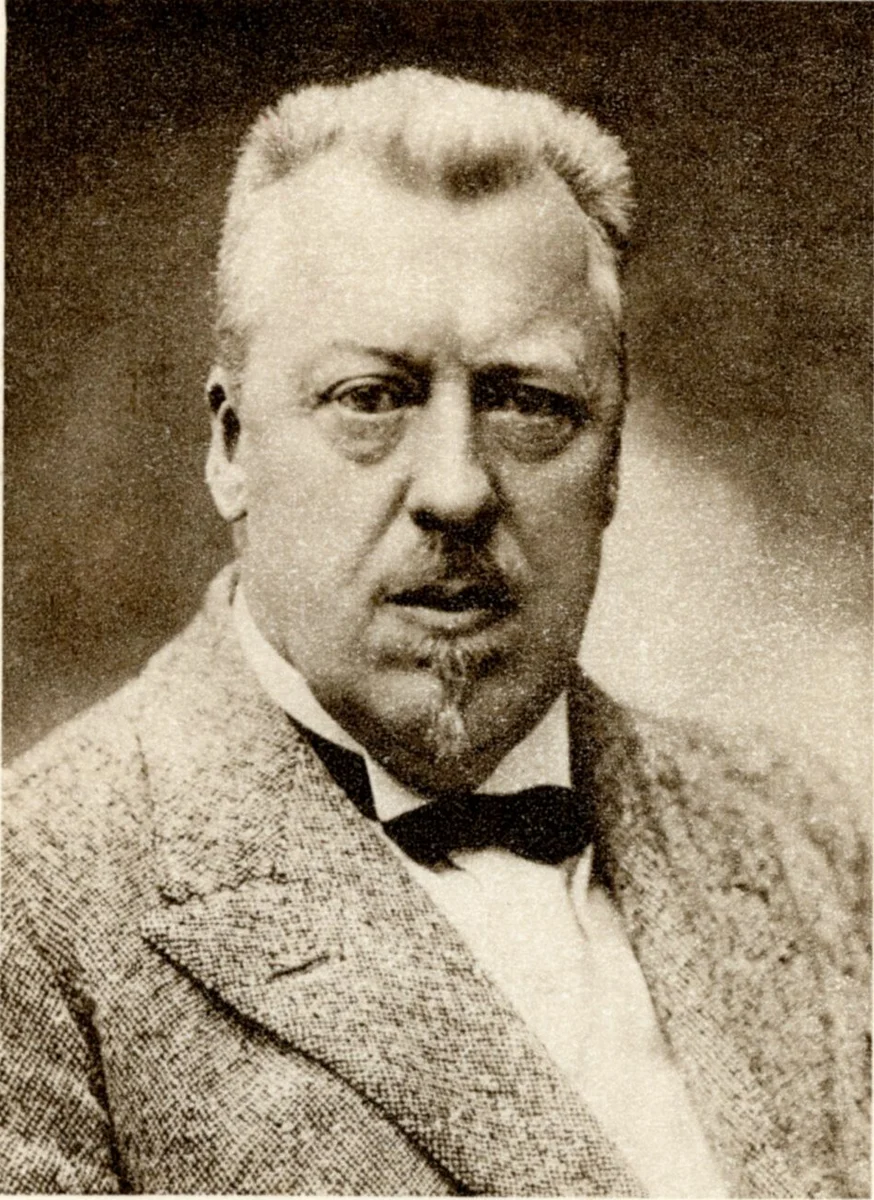
Hugo Eckener was born in Flensburg in 1868 and studied philosophy, psychology, history and political economy. At Leipzig he worked in the intellectual world of Wilhelm Wundt, one of the founders of experimental psychology. His doctoral dissertation examined fluctuations in the perception of minimal sensory stimuli: attention at the edge of perception.
It is tempting to make too much of that coincidence. A psychology dissertation did not secretly contain the blueprint of Graf Zeppelin. Yet it remains an unusually fitting education for a man who would spend his life judging wind, cloud, pressure and the behaviour of enormous machines in an atmosphere that could change almost invisibly.
More important, Eckener was not trained to worship machinery.
He became a writer and journalist. After moving to Lake Constance, he reported on Ferdinand von Zeppelin’s experiments for the Frankfurter Zeitung. His first reaction was scepticism. The early ships were expensive, fragile and capable of humiliating their creator in public. Eckener nevertheless became fascinated by the Count and by the scale of the idea.
By 1908 he was working for Zeppelin. Soon he was no longer merely explaining the ships; he was learning to command them. He obtained his airship licence in 1911 and became one of the central operating figures of DELAG, the Deutsche Luftschiffahrts-Aktiengesellschaft.
This transition matters. Many technological revolutions have an inventor and then, somewhat later, a person who understands what the invention is for.
Ferdinand von Zeppelin could imagine the great rigid airship. Ludwig Dürr and the engineers could make it structurally possible. Alfred Colsman could organise an industrial concern around it. Eckener understood the missing layer between all of them and the passenger: how the machine had to behave, how its crews had to think, how the public might trust it and what sort of experience could persuade a human being to buy a ticket.
Before the First World War, DELAG was already carrying passengers and building the first recognisable culture of commercial air travel. Guides were published. Places could be reserved through Hamburg-Amerika offices. Passengers received rules. There were crews, catering, terminals and the beginnings of a route network.
The aeroplane was still discovering what sort of machine it was. The Zeppelin was already discovering what sort of service it could become.
Then Europe went to war.
The first destruction
The First World War did not merely interrupt passenger airships. It changed what the word Zeppelin meant.
Civilian machines became military assets. Airships performed reconnaissance and bombing missions. Eckener trained naval commanders and became one of Germany’s leading authorities on operating the ships. War accelerated parts of the technology, as wars often do. It did nothing for the civilian ecosystem that had begun to grow around it.
When peace returned, the Zeppelin organisation tried almost immediately to resume the interrupted idea. In 1919, LZ 120 Bodensee operated scheduled domestic service between Friedrichshafen and Berlin. For a brief moment, a German traveller could choose an airship as transportation between cities rather than as an excursion.
Then the postwar restrictions stopped it.
Inside the Zeppelin concern, the interruption produced a revealing argument. Alfred Colsman believed that the organisation had to diversify and preserve its assets. Eckener believed that the airship was the purpose of the enterprise and that everything available should be risked to restore it.
He won.
In retrospect, the decision looks close to irrational. Germany had lost the war. The legal environment was hostile. The company lacked the capital for a passenger fleet. Aeroplanes were improving. A sober manager could have concluded that Zeppelin’s great invention belonged to the previous era and converted its formidable engineering organisation into something safer.
Eckener instead found his opportunity in the country that had recently been Germany’s enemy.
The United States was due reparations. A special arrangement allowed the Zeppelin works to construct a large airship for the US Navy: LZ 126, later commissioned in America as ZR-3 Los Angeles.
Eckener did something more audacious than building it. He promised to deliver it by flying it across the Atlantic.
As chairman of the Zeppelin Foundation, he pledged the Zeppelin concern as security to the German state. If the delivery failed, the organisation itself could fall into government hands. On 12 October 1924, LZ 126 left Friedrichshafen. After eighty-one hours it reached Lakehurst, New Jersey.
Images of a German Zeppelin above the American landscape travelled around the world. President Calvin Coolidge received Eckener and his crew at the White House. Los Angeles became not a bomber but an improbable ambassador: a German machine delivered as a consequence of war and transformed, in public imagination, into evidence that the two countries might again cooperate.
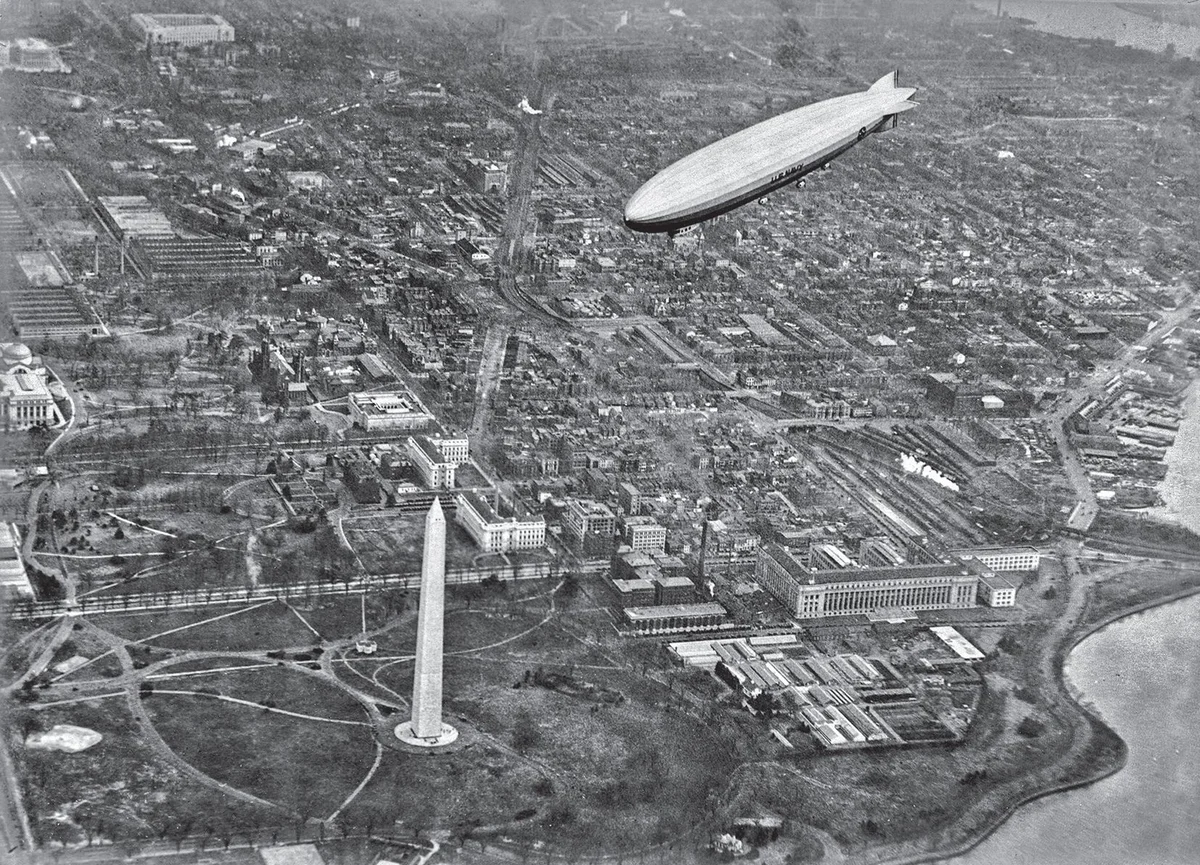
This was classic Eckener. The flight was simultaneously engineering, transport, diplomacy, finance and theatre. Before people would trust a new form of travel, they had to see it accomplish the impossible in public.
A public bet
The success of LZ 126 solved one problem and exposed another. Eckener had demonstrated that a Zeppelin could cross an ocean. Germany still did not have the money to build the ship with which he wanted to do it commercially.
So in 1925 he went to the public.
The Zeppelin–Eckener donation was a national subscription campaign to continue large-airship construction. Newspapers carried the appeal. Banks, companies, civic organisations and cultural figures supported it. Eckener and his captains toured Germany and German communities abroad, giving lectures in support of a ship that did not yet exist.
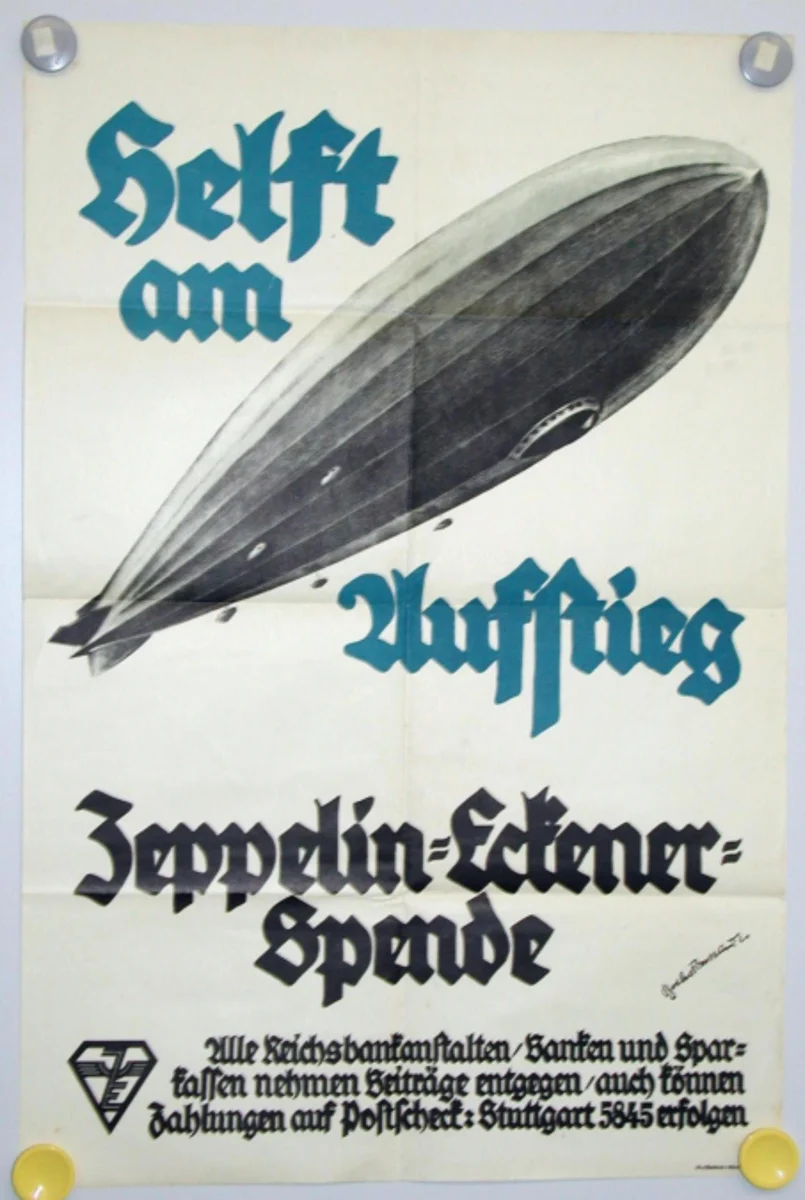
The language was larger than an investment prospectus. Eckener presented the airship as a national technical inheritance and, crucially, as something capable of connecting nations.
He was creating a constituency for a future.
The result was LZ 127 Graf Zeppelin, first flown in 1928. It became the most successful commercial rigid airship ever operated.
There is a danger in remembering it only through the spectacular journeys: the Atlantic crossing, the 1929 flight around the world, the Arctic expedition, the silver hull above Tokyo and American cities. These feats can make the ship look like an explorer’s toy, the aerial equivalent of a record-setting yacht.
Eckener used them more deliberately. They were demonstrations of a product.
The world flight, backed in part by William Randolph Hearst’s media empire, turned an experimental transport technology into global news. The Zeppelin crossed continents while newspapers made millions of readers follow it. Every photograph above a recognisable city answered the same question without asking it: could this machine really connect the world?
Then Eckener stopped merely demonstrating the answer and began publishing a timetable.
Rio on the schedule
The great achievement of Graf Zeppelin was not flying around the world. It was becoming repetitive.
By the early 1930s, the Zeppelin organisation was developing scheduled service between Europe and South America. The ship carried passengers, mail and freight to Brazil. In the 1935 and 1936 seasons it was moving between Germany and Brazil roughly every fortnight.
The trip from Germany to Rio took four or five days. An ocean liner from Hamburg needed two or three weeks.
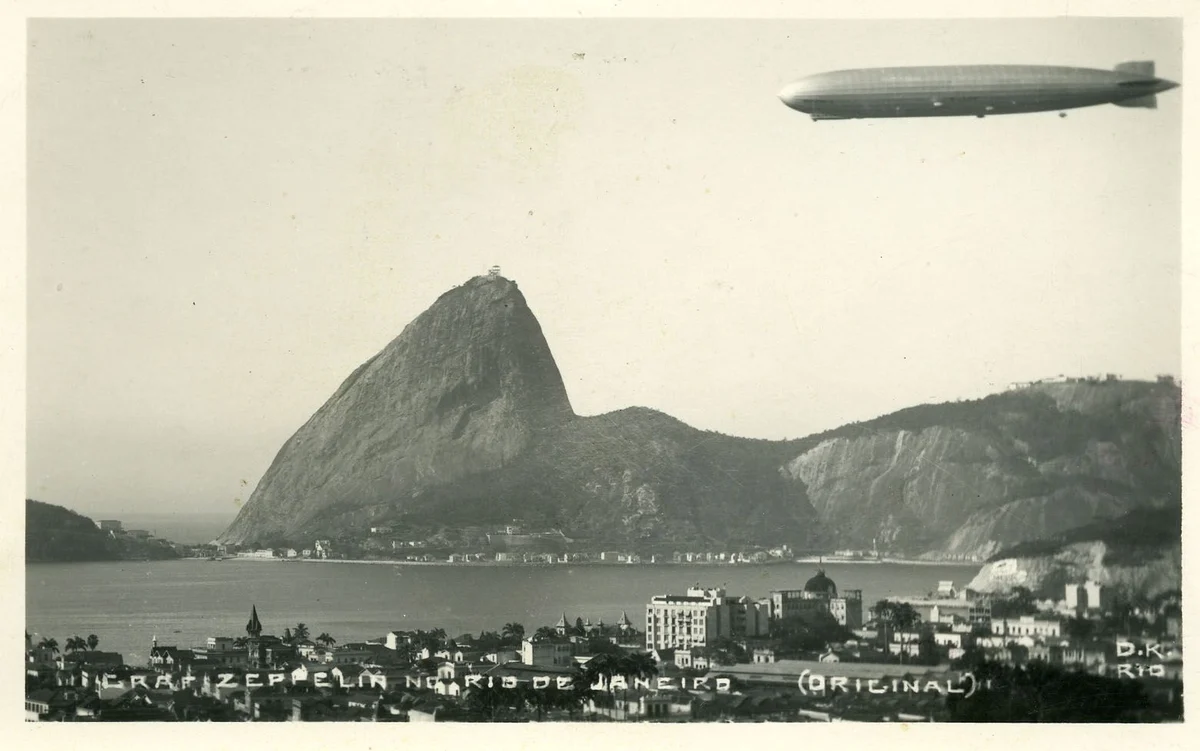
This is the point at which Zeppelin travel ceased to be only a technological spectacle and became a transportation proposition. The passenger did not have to be an explorer. A businessman with reason to reach Brazil sooner could buy a berth on a published programme.
The fare made such travellers rare. In the 1937 schedule, Frankfurt to Rio cost RM 1,500 for a berth in a shared room and RM 2,200 for a room alone. Graf Zeppelin carried only about twenty passengers. This was not mass aviation in rehearsal. It was a small, expensive service whose mail and freight mattered as much to the economics as the people aboard.
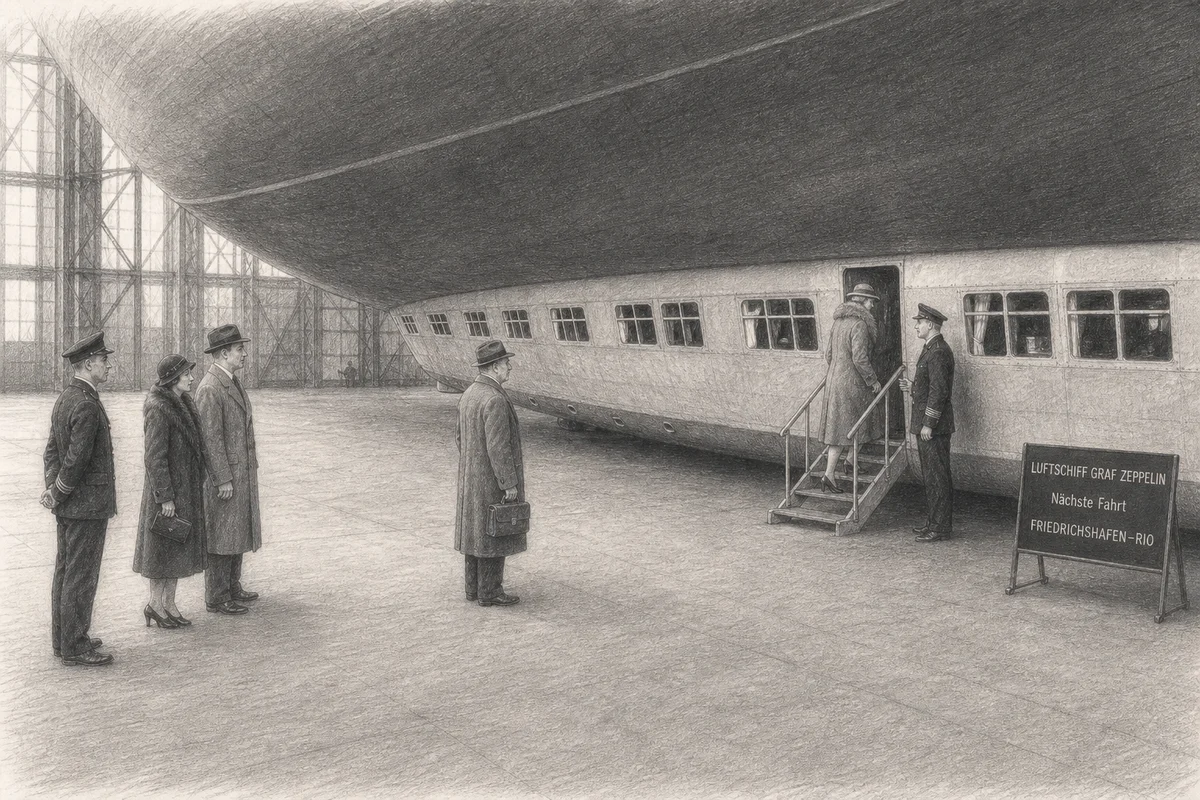
Yet the experience was unlike the aeroplane that would eventually replace it.
An airship’s economics had a peculiar asymmetry: cubic metres were comparatively cheap; kilograms were expensive. That encouraged a different architecture of travel.
An aeroplane is punished for creating volume. Every additional square metre of cabin must be dragged through the atmosphere at high speed and supported by a structure that repeatedly climbs against gravity. Airlines therefore became experts in compressing humans.
A rigid airship was already an enormous volume because its lifting gas required it to be one. Designers cared obsessively about weight, but they could place people inside a machine of extraordinary scale. Graf Zeppelin itself remained compact in its external passenger gondola. The trajectory, however, was clear.
By Hindenburg, the passenger spaces occupied about 400 square metres over two internal decks. There were sleeping cabins, a dining room, writing and reading rooms, lounges, promenades with great windows, an electric galley, a bar and the smoking room. Several chefs and a pastry chef prepared the meals. All fifty passengers in the original complement could dine together.
The machine had become a hotel that happened to move through the atmosphere.
That was Eckener’s travel insight. His real competitor was not the aeroplane but the ocean liner. The Zeppelin offered something neither category could quite provide: dramatically faster passage than a ship, with spatial freedom and hospitality that an aeroplane could not approach.
If Concorde would later make luxury out of the disappearance of travel time, Eckener’s Zeppelin made luxury out of travel time becoming inhabitable.
The captain in the control car
Eckener’s authority came from an unusual combination of roles. He could raise money for a ship and then command it through Atlantic weather.
The person shaping the public promise had direct exposure to the physical reality behind it. He knew what happened when a huge airship entered a pressure system. He understood the conservatism required around weather and landing operations. He knew what passengers noticed because he crossed oceans beside them. The machine’s limits reached him not as figures in a board paper but as decisions made in a control car.
This helped create the operating culture around the German passenger Zeppelins. Graf Zeppelin completed 590 flights, travelled nearly 1.7 million kilometres and made 144 ocean crossings. It carried 13,110 paying passengers without injuring a passenger or crew member.
That record does not prove that rigid airships were safer than aeroplanes. The sample is too small, the missions differ and the technologies were changing too quickly for a clean comparison.
It proves something more modest and more important. Passenger airships were not ridiculous machines waiting for the first spark to expose the folly. A mature Zeppelin, operated with discipline, could accumulate years of long-distance service.
Eckener knew this because he had done it. What he needed next was scale.
The North Atlantic
LZ 129 Hindenburg was the machine in which the commercial logic finally came together.
It was 245 metres long, with a gas volume of 200,000 cubic metres. It had been conceived as the first of a new generation of transport airships. Its accommodations were no longer squeezed into an external gondola like those of Graf Zeppelin; they occupied two decks inside the hull.
In May 1936 it began North Atlantic passenger, mail and freight service between Frankfurt Rhein-Main and Lakehurst.
This was the route that mattered. South America had shown that scheduled long-distance airship travel worked. The North Atlantic connected two of the richest commercial regions in the world. If a fleet of Hindenburg-class ships could operate it reliably, Eckener’s project would cease to depend on one heroic aircraft.
It might become an industry.
That possibility is why reducing the entire history to Lakehurst is misleading.
On 6 May 1937, Hindenburg burned during its landing approach. Thirty-five people aboard and one member of the ground crew died. The images and Herbert Morrison’s radio report became some of the most powerful disaster media of the twentieth century. Public confidence collapsed.
The German designers wanted helium for the next ship, removing hydrogen’s central flammability risk at the cost of some lift. The United States controlled the necessary supply. Eckener went to America seeking access to it. In the political climate of the late 1930s, the supply did not materialise.
Even then, the Zeppelin story did not end at once. LZ 130 Graf Zeppelin II was completed and flew test, promotional, propaganda and military surveillance missions, although never with commercial passengers. Inside the organisation, schemes for future routes survived into the first months of war.
Then the state did more than cancel the timetable.
The man and the regime
For decades, Eckener was remembered as the respectable cosmopolitan German who stood apart from Hitler. There is real evidence behind that reputation.
In 1932, while Paul von Hindenburg’s decision to seek another presidential term remained uncertain, Eckener was approached about standing against Adolf Hitler. He indicated willingness under the right circumstances. Hindenburg ultimately ran, and the possibility disappeared.
Eckener later resented the Nazis’ use of the airships as party theatre. International connection was not merely a sales line for him. He had spent the 1920s turning a former German war technology into a vehicle welcomed in America, Brazil, Japan and the Soviet Union. Nazi appropriation of that symbol offended him.
It would be comforting to end the political portrait there. Research presented by the Zeppelin Museum in 2026 does not allow it.
As chairman of the Zeppelin Foundation and managing director of Luftschiffbau Zeppelin, Eckener was directly involved in converting the industrial group into an armaments concern. He received the title Wehrwirtschaftsführer in 1939. The wartime business used foreign and forced labourers and concentration-camp prisoners. The group and Eckener profited from the war economy and worked closely with the armaments system.
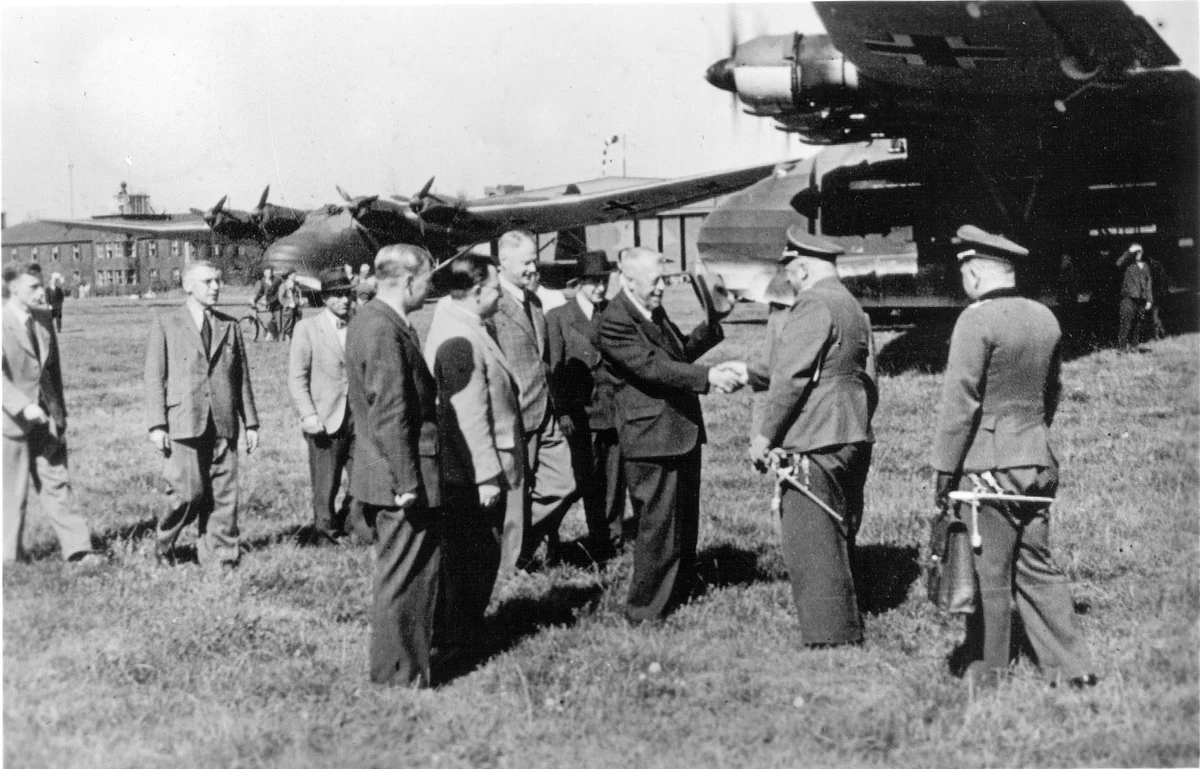
This does not make his earlier conflict with National Socialism imaginary. It makes the life harder and more historically serious.
A man can despise a political movement and still accommodate himself to the economy it creates. He can resent propaganda and run factories essential to a regime’s war. He can believe he is preserving an institution and cross moral boundaries in its preservation.
The same stubbornness that had once made Eckener risk the Zeppelin concern to save passenger airship travel made institutional survival one of his governing instincts. In the 1920s, that obsession produced Graf Zeppelin. Under dictatorship and war, it led somewhere darker.
There is no need to erase one Eckener to see the other. Both belonged to the same life.
The cutting torch
In March 1940, the Reich Air Ministry ordered LZ 127 Graf Zeppelin and LZ 130 Graf Zeppelin II dismantled. Material prepared for the projected LZ 131 was also to be taken for the Luftwaffe. The ships were stripped, cut apart and redistributed. LZ 127 was gone by 1 April. The dismantling of LZ 130 ended on 25 April.
This was not the market looking at an airship beside a Boeing and calmly choosing the superior product. It was the state cutting the aircraft into metal during a world war.
The war simultaneously performed the opposite operation on the airship’s competitor. While the Zeppelin infrastructure was being dismantled, governments poured unprecedented resources into heavier-than-air aviation: engines, aerodynamics, navigation, pressurisation, manufacturing, airports, radar, fuel systems and pilot training.
When peace returned, the contest could not resume where it had stopped. The aeroplane had received six years of ferocious, state-funded evolution. The passenger airship had received a cutting torch.
By the time anyone could contemplate rebuilding an international Zeppelin network, aircraft such as the Constellation and DC-6 were transforming long-distance travel. The jet age was little more than a decade away. Eckener’s technology had lost continuity at precisely the moment continuity mattered most.
The journey inside the machine
Eckener died in Friedrichshafen in 1954. By then the victory of the aeroplane looked complete.
That makes it easy to read his career backwards and call the Zeppelin a magnificent dead end. Technology history loves survivors. Once one architecture wins, the losers begin to look as though defeat had been encoded into physics.
But Eckener’s ships had crossed oceans repeatedly. They had operated scheduled passenger services, carried mail and freight, and offered cabins, dining and social spaces that contemporary aeroplanes could not approach. They flew low enough for geography to remain part of the journey. Graf Zeppelin did this across hundreds of flights with a passenger record far removed from the shorthand of a hydrogen airship.
Their weakness was speed. It became fatal because twentieth-century transportation made speed the dominant measure of progress.
Aeroplanes moved from fragile machines to pressurised piston airliners and then to jets with extraordinary rapidity. Once a passenger could cross the Atlantic in hours, spending days aboard an airship looked irrational if the purpose was simply to arrive.
Travel contains another category of irrationality.
People still cross oceans on ships. They pay to take trains through landscapes an aircraft could cross before lunch. They sleep on expedition vessels whose slowness is not tolerated but purchased. The luxury yacht is not a failed speedboat. The Venice Simplon-Orient-Express is not a defective low-cost airline.
These products sell possession of the journey.
Seen from that part of travel, the airship looks different. Its low speed allowed sightseeing. Its volume allowed hospitality. Its endurance let an itinerary unfold continuously beneath the passenger.
This does not mean Eckener was secretly building the perfect aircraft for the twenty-first century. Modern materials, helium, forecasting, propulsion and certification would produce a very different vehicle; the economics and ground operations remain formidable. Yet passenger Zeppelin flights over Lake Constance exist again, modest in scale and sold for the view rather than the quickest arrival.
That is close to the market Eckener never received peaceful decades to discover.
Ferdinand von Zeppelin deserves the monument. Without his stubborn aristocratic obsession there is no rigid-airship story for Eckener to inherit.
But invention is not the same thing as travel. A traveller encounters a technology only after someone has solved a second set of problems: how to trust it, buy it and board it; where it goes; how the crew behaves; what happens during the hours inside it; whether those hours are valuable enough to become normal.
Those were Eckener’s problems.
He turned spectacular flights into timetables. He made the public finance the next ship. He understood that a new vehicle needed a mythology, but also that mythology without operational discipline would eventually kill the product.
For a brief period in the 1930s, he reached the point every transport visionary seeks: the impossible became repetitive.
Almost every fortnight, a Zeppelin for Brazil.
That sentence may be his greatest achievement. Not around the world. Not over the Arctic. Not photographed above Manhattan. Brazil again, according to schedule.
There was never a normal second generation. Perhaps jets would have killed intercontinental Zeppelin transport anyway. Almost certainly they would have won Frankfurt–New York for anyone whose first priority was time.
But that is not the same as saying the airship had no future. It may simply have had the wrong comparison.
The descendant of Hindenburg did not need to become the Boeing 747. It might have become the aerial equivalent of an expedition ship: expensive, spacious and slow enough to see the world.
That possibility is why Hugo Eckener belongs in the history of travel rather than only the history of aviation.
He understood something our fastest machines taught us to forget.
Getting somewhere and travelling are not always the same product.
Zeppelin built a machine that could remain in the air.
Eckener’s achievement was to make people want to remain there.