
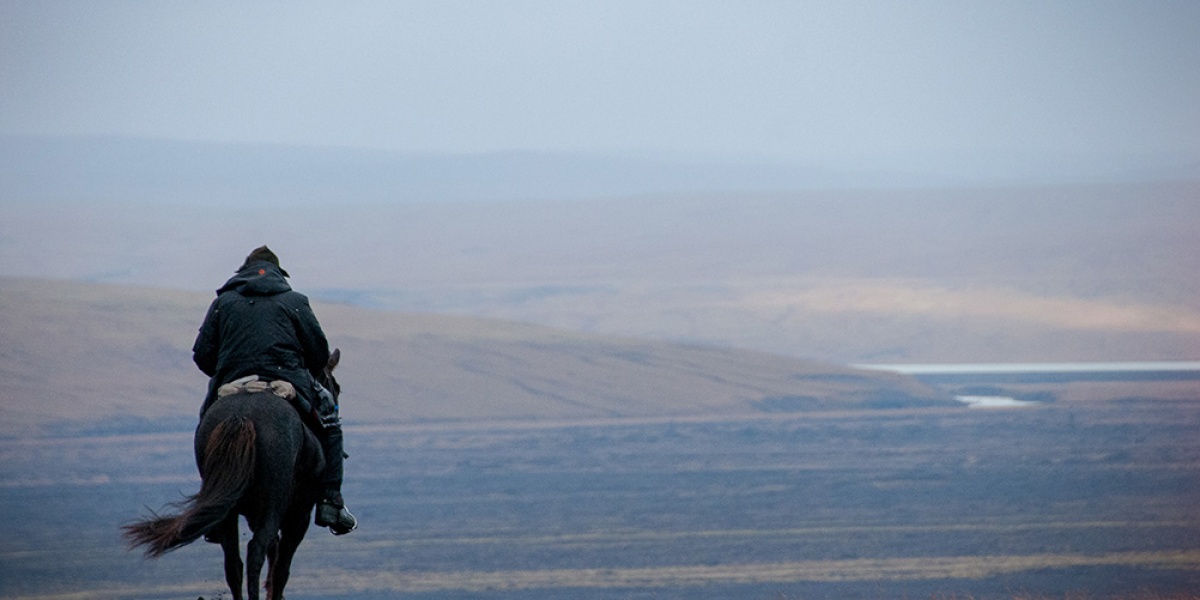
For a rider who has grown restless with circuits of an arena, the attraction of a riding journey is quite specific. There is room to go on: a sustained canter across open country, a gallop that ends somewhere beyond the next corner. There is also the question of endurance. Riding well for an hour is one thing; how will the seat, legs and concentration hold up over several days?
Around a familiar European yard, the opportunity to find out may be harder to arrange than another lesson. A journey can offer both the space and the time. The landscape matters partly because it allows a different kind of riding—and asks more of the rider.
Anne Mariage understood that appetite from inside it. With Cheval d’Aventure, she spent decades turning her own desire to ride elsewhere into journeys that other people could buy. As she opened routes, she was also establishing the terms of the experience: what she would organise, what the riders must be able and willing to do, and what would have to change once they met the country itself.
The product took shape in the saddle.
Beyond the riding-school wall
Mariage grew up near Tournai in Belgium, studied literature and became a teacher. A year in America as an au pair had taken her travelling by Greyhound and left her with a lasting attachment to Yellowstone. Back home, she taught in Leuze and took serious riding lessons from an instructor of the mounted gendarmerie.
But the arena ended at the wall. The Yellowstone memory did not.
In July 1964, a friend’s recommendation brought her to Louis Chardon at l’Habitarelle in Lozère for four days on horseback, with nights outdoors and meals cooked over a fire. Chardon belonged to the French equestrian-tourism movement already taking riding beyond the school. In 1971 she accompanied him on the pilgrimage to Santiago de Compostela.
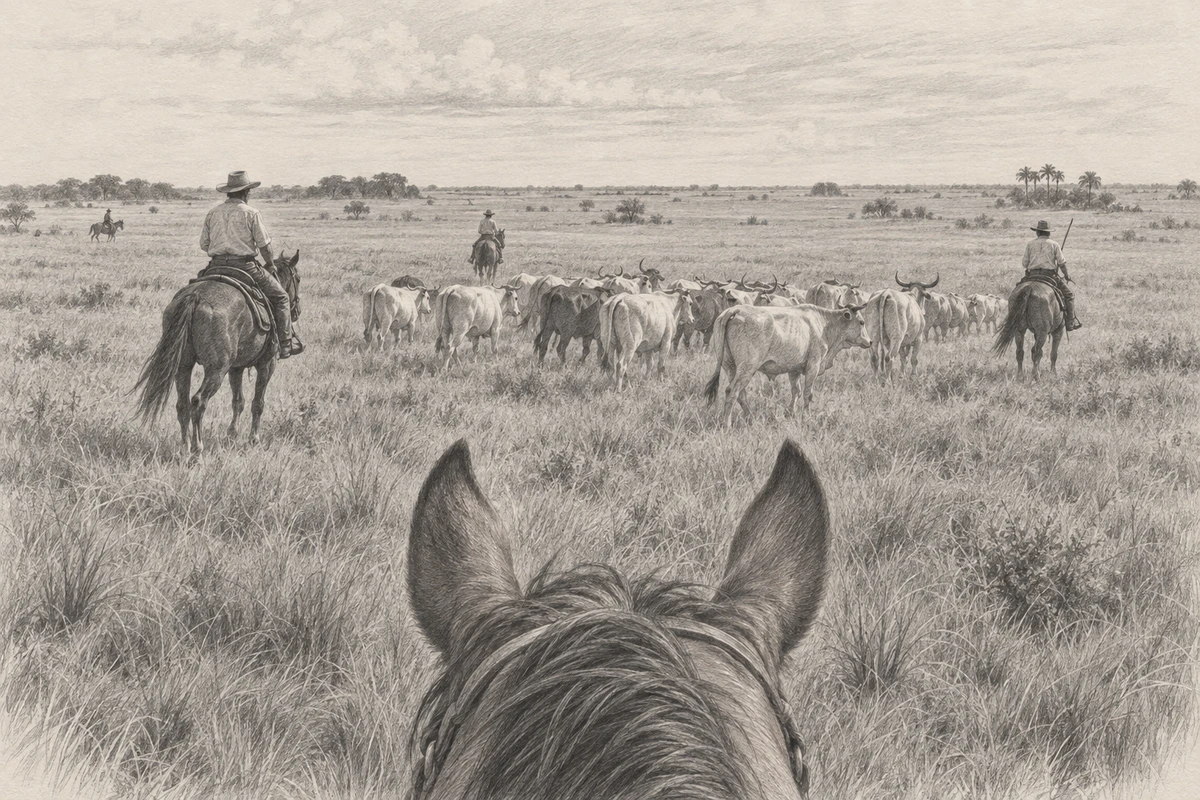
A year later came the Colombian Llanos. Her small European group joined the world of the vaqueros during the great cattle gatherings. The horses, skills and work were already there. Mariage made a journey around the possibility of taking part.
A cattle gathering could supply movement, purpose and a test of horsemanship together. It also required visitors to fit into somebody else’s working day. The attraction and the conditions of entry were inseparable.
What was the rider buying?
A place on one of these journeys needed a more complicated description than a bed and a hired horse. How demanding would the riding be? Who decided the pace? How much discomfort belonged to the adventure, and what work would the customer be expected to do?
Mariage’s account of building the company describes brochures and technical sheets that stated the conditions before registration: bivouacs, altitude, uncertain weather, river washing, distance from medical help, horse care and camp duties. Riders accepted the guide’s choice of pace and obligations towards the group.
Those descriptions helped define the bargain. She would prepare the expedition as thoroughly as she could. They would arrive ready to participate, including when the journey became uncomfortable or inconvenient. The skill was to organise enough for people to commit their money and holiday, while leaving room for the very experience that had drawn them there.
Her own enthusiasm mattered. She chose journeys she wanted to make and invited riders who shared the appetite. Prices covered the costs and supported her living. For more than a decade she accompanied every expedition herself; for roughly thirty-five years she opened most new routes personally.
That kept the person making the promise close to its fulfilment. She was there when the ground was difficult, when the group tired, and when a day became something worth returning for. Her stated measure of success was whether the riders had been happier. Many came again and brought riding friends; experienced participants helped the next group find its feet.
Their willingness to take part allowed her to keep exploring. Her attention to the experience gave them a reason to trust her again. A community of enthusiasts was becoming a durable business.
A journey that could improve
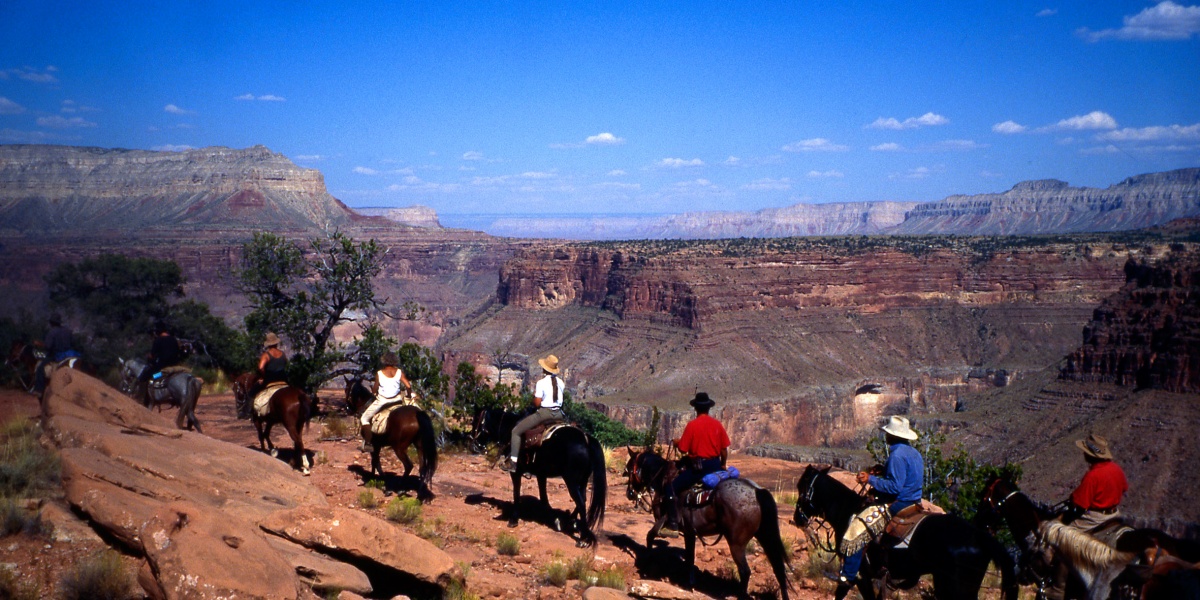
The process is visible in a published extract from her memoir. Through the French cowboy Lionel de Franchessin, Mariage found outfitters in the American West. Her work with Mel Heaton produced a new itinerary in 1981.
Supply trucks initially met the party every two or three days where access allowed, reducing the loads on pack animals. Later, trucks supplied every overnight stop. On suitable stretches, family wagons carried provisions. The route’s support arrangements developed with experience.
The riding required translation too. Doug Bauer explained the light hands needed with unfamiliar hackamore equipment. Mariage’s request for a controlled canter produced the memorable reply that these horses knew walk, trot and a flat-out gallop. At Red Canyon, a steep sandy ascent could not be ridden: some travellers climbed ahead to receive the horses, which were sent up individually.
Here were the pleasures and limits that a description had to convey. A rider could want long gallops and still need to understand when the day would involve getting off and climbing on foot.
Permission could determine whether a departure existed at all. According to the company chronology, Jean-Louis Gouraud helped Mariage obtain authorisation in autumn 1989 to organise riding journeys in Mongolia; the first followed in 1990.
Each opening added more than a destination to a catalogue. It added knowledge of what could be offered there, to whom, and under what conditions. Repeating the journey meant putting that knowledge to work again and improving the parts that needed it.
Kenya and Chile
Local partners gave each journey its particular possibilities. In her account of riding in Kenya, which opens in October 1976, Mariage describes horses accustomed to wildlife and a guide, Tony Church, who required riders to stay behind him and remain together. She rode a small gelding called Bunduki, a mount she came to know on return visits.
The rewards included encounters with elephants and lionesses; the restrictions included a firm geographical boundary. Horses could not enter the Maasai Mara reserve itself, so excursions inside it used vehicles. Mariage returned three or four times a year. The company could offer the experience again because it had a relationship with someone who knew both the country and the horses.
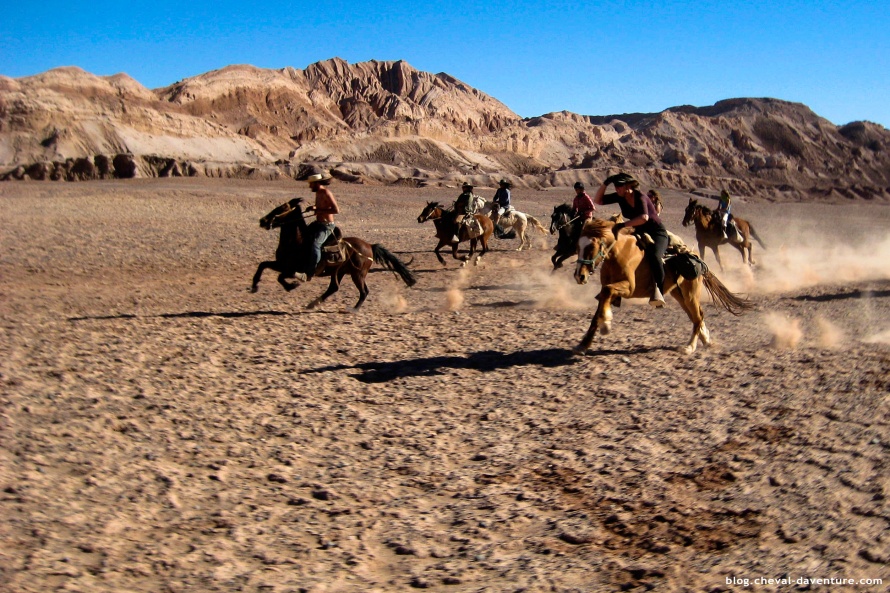
The Atacama crossing offered another kind of partnership. When Mariage took Christophe Leservoisier through the Chilean desert to celebrate the company’s 2005 handover, three brothers and their wives supplied the horses and logistics. His account of that journey describes Criollos, including mares, stallions and geldings, travelling together, and a route through villages, canyons and stretches of Inca road towards San Pedro de Atacama. Mariage had brought together experienced riders for it.
The family supplied the means of travelling through its country. She shaped those means into a journey for her group: the route, the company, the sequence of riding and stopping. The promised experience depended on both sides understanding what the other could provide.
Even the celebration required agreement about how to ride. Mariage remembered that she and her successor agreed on almost everything; the remaining question was how to manage the gallops.
Standards between people
Such relationships could become better with repetition. Mariage recalled refusing injured or lame horses when they were offered. On the following year’s visit, the mounts supplied were sound. The return of the group gave a local supplier a reason to understand and meet her expectations.
She was more adaptable about local saddling, feeding and watering conventions. Where an adjustment was needed, it could be modest: thicker felt beneath a saddle in Mongolia, longer stirrup leathers in Tibet. The aim was to make the journey work for horse and rider in the conditions they had come to experience.
Leservoisier later described the reciprocal judgment. In a 2016 account of selecting horses, he recalled owners offering their best animals on the second visit, after seeing how the customers rode and cared for them. Good riders could earn access to better horses. Their ability and conduct were part of what the agency brought to the partnership.
A familiar riding qualification could not settle every question. Horses trained elsewhere might respond to different cues; the rider had to listen to their owner and adjust. Sustained riding also exposed the difference between confidence and fitness. An itinerary had to suit the actual people who turned up.
Keeping the promise of the ride
Matching the group protected the pleasure people had travelled for. A rider seeking vigorous days would be disappointed by a pace continually reduced for someone out of their depth. The less experienced rider would spend the same holiday struggling to keep up. Selecting people for the journey was part of delivering it.
That judgment has become more explicit in the company’s later programmes. Its current booking guidance asks about outdoor experience, unfamiliar or lively horses, fitness and the ability to spend successive days in the saddle.
On its South African Waterberg programme, an assessment examines seat, lightness and control through the three gaits. A rider who falls short joins a group of similar ability, with specified outings and polocrosse replaced by a conventional safari. On the Mashatu and Okavango itinerary, the requirements include a secure seat and control during a sudden spook or rapid withdrawal from wildlife. These are present-day procedures; the test can change the holiday that is delivered.
The company’s published 2024 conditions of sale make declared riding level, height and weight contractual information. They also explain that weather, safety or events such as flooded rivers can require a change of route. The documents now give formal expression to the problem that runs through Mariage’s accounts: a demanding riding journey needs an understood scope, room for judgment and honest commitments from its participants.
Support is part of that scope. A current Kilimanjaro-area expedition specifies guides at the front and rear, radios, a satellite telephone and a vehicle carrying first-aid equipment. The vehicle can also take a tired rider. For somebody testing their endurance, the possibility of stopping is a meaningful part of the offer.
A promise that could be passed on
By the time Mariage handed the company to Atalante in 2005, the journeys were more than personal adventures that ended when she came home. They had routes, partners, returning customers and ways of working that another organiser could carry forward.
Her memoir, Chevaux d’aventure: rencontres autour du monde, appeared in 2014. She died in 2018. Cheval d’Aventure continued.
The parallel with John Cronin and PADI concerns what makes a specialised experience repeatable. PADI gave instructors and travellers shared training requirements and recognisable credentials. Mariage’s work joined the promise made to a rider to the capabilities of a local operation. It relied on accumulated experience and relationships, and on a clear understanding of what the rider was buying and agreeing to do.
She helped give the international riding holiday a recognisable form: choose a journey for its riding, arrive prepared for its demands, and entrust the arrangements to people who have done the work. Its success could be judged by the experience of the whole group, the condition of the horses, and the desire to return.
The ambition behind it remained personal. Somewhere there was country enough to let the horse go on, and a longer day than the rider had yet asked of themselves. Mariage made a business out of taking that desire seriously—and learning, journey by journey, how to fulfil it.