
Labuan Bajo is a small fishing village, settled snugly on the western tip of the island of Flores. Thanks to the people who come to see the beauty of its coastal waters and, above all, the extraordinary residents of the national park, the Komodo dragons, the village has taken up tourism, yet it remains fairly wild and unspoiled. I saw the proof at once, on the drive from the airport to the hotel. Here and there along the road stood a travel office or an advertising hoarding, but on the whole the country around looked simple and rural.
The harbour

The romance of Labuan Bajo comes from its lovely harbour, scattered with islets, fishing boats, sailing ships and motor launches.
The flow of visitors has brought new roads and services, and pleasant little restaurants and hotels at every price have appeared on the slopes of the hilly shore. The view over the idyllic bay, thatched roofs sunk in thick greenery, unhurried conversation in the evenings, the quiet and the calm all around: together they can make a holiday here wonderfully warm and memorable.
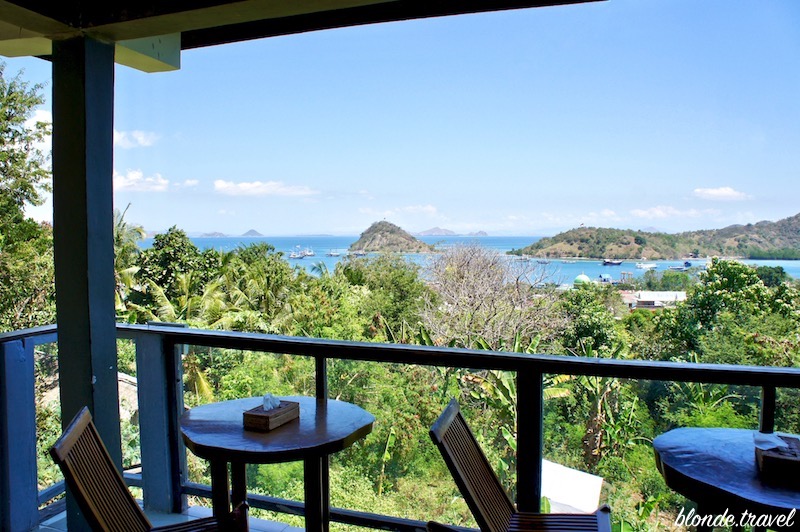
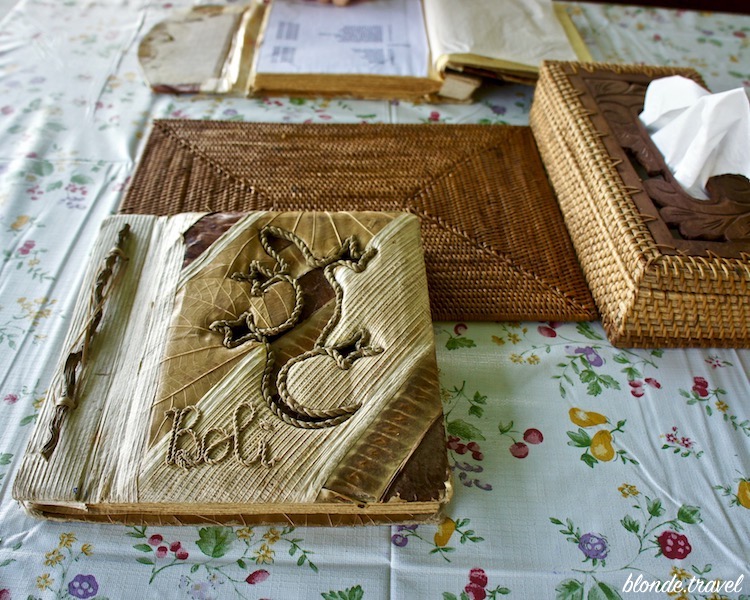
And what a magical sunset it has!
My advice: climb to a high point with a view of the sea and the sun going down below the horizon. Nature here uses its most outspoken colours.
Labuan Bajo is so small that you can walk around it in a couple of hours, and the drive from the airport to our hotel, The Jayakarta Suites Komodo Flores, took only ten minutes. But while the sun is high, let’s go and see one of the main sights, the Cermin cave.
Batu Cermin, the Mirror Cave
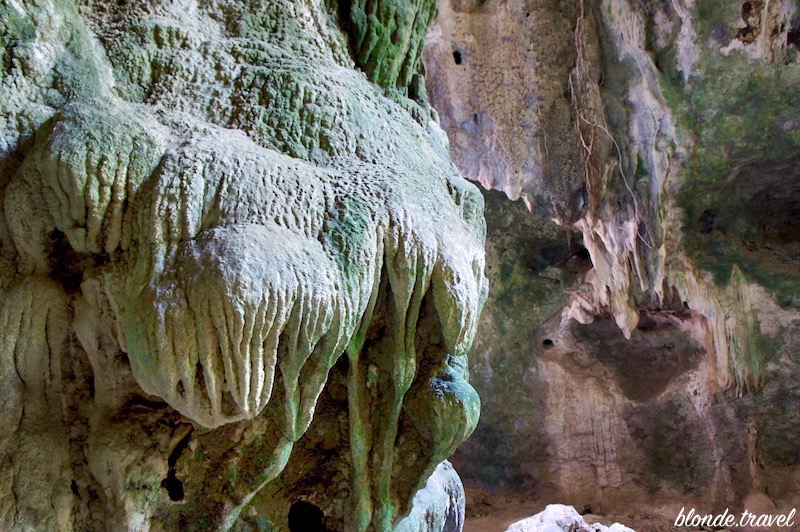
Batu Cermin lies 4 kilometres from the centre of Labuan Bajo. It is less a cave than a tunnel. Archaeologists found it in 1951, and it owes its name, Mirror Stone, to the peculiar way the sun’s rays get inside through many openings and bounce off the rock onto other parts of the walls.
You can go about 200 metres in, descending some 20 metres as you clamber over obstacles in the form of strangely shaped stalactites and stalagmites. Helmets are handed out at the entrance. I took mine with undeserved scepticism, and five minutes later it saved me: deciding to look up, I unexpectedly met the ceiling, and a ringing blow put an end to the silence hanging in the air.
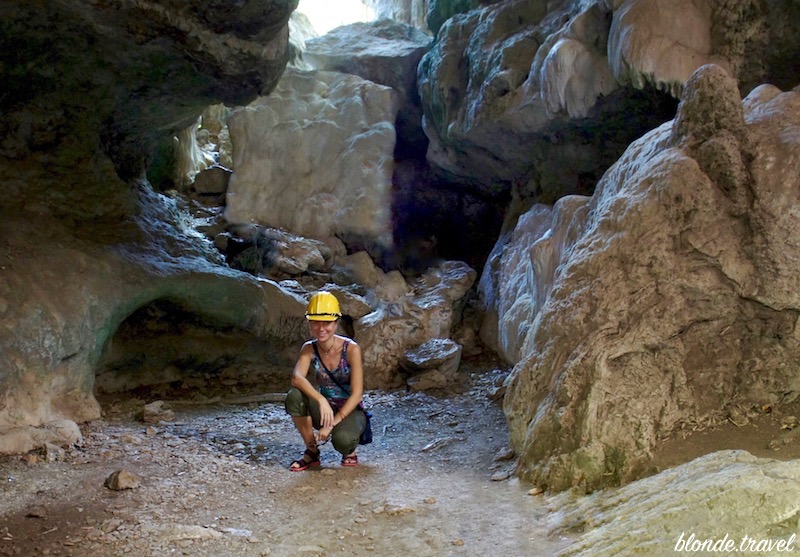
The rock in the cave holds particles of salt and sparkles beautifully in the sunlight. On the walls you can clearly make out the outlines of corals and turtles. As a cave should, it has its residents: bats, spiders and crickets. In the forest around it we met a few long-tailed macaques. Wild boar live here too, the locals told us, but they did not show themselves.
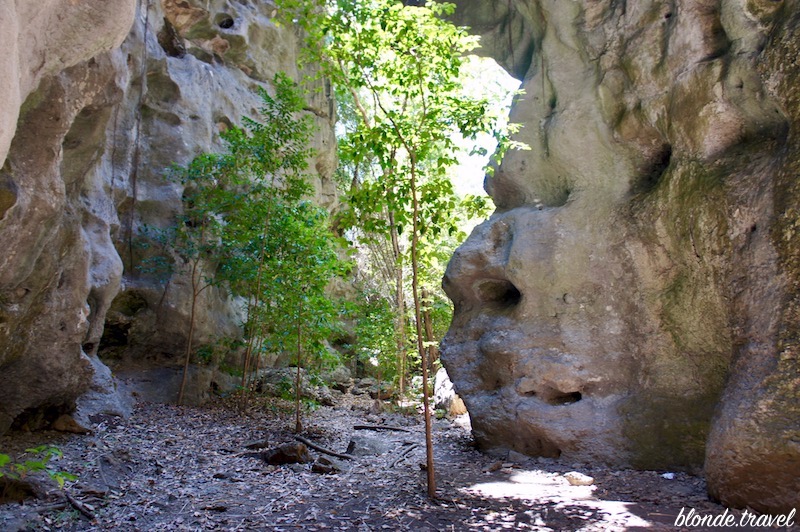
If I were going today, I would pair the cave with the hills for sunset, as this caves, beach and sunset tour does: Batu Cermin, a swim in the seawater pool of Rangko Cave, Wae Cicu beach, and the evening on Sylvia Hill.
The market
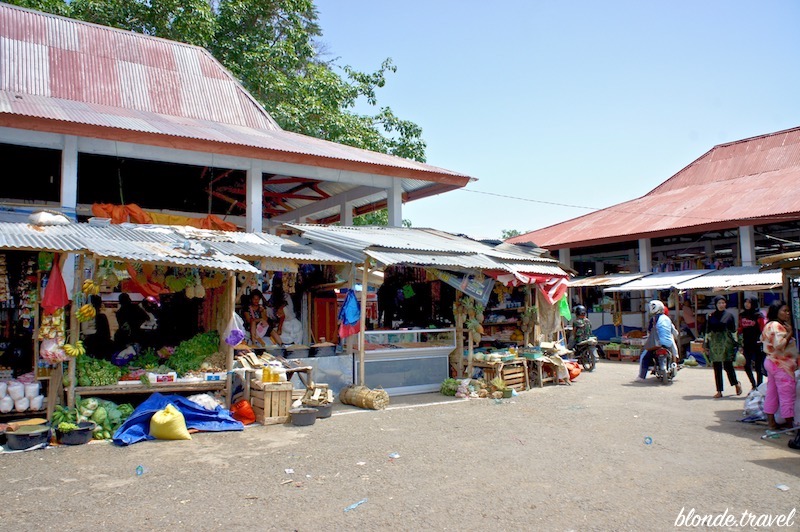
On the way back from the cave we stopped at the market, which was no different from the average Asian market: bright rows crammed with all sorts of things, noise and bustle. I simply wanted my share of local smiles.


The islands across the harbour
Many of the most beautiful places to swim and snorkel near Labuan Bajo are on the islands across from the harbour:
- Bidadari Island is known for a lovely beach and a coral reef, so you can both sunbathe and dive.
- Kanawa Island is also good for diving and snorkelling.
- Serayu Island is known for its white sand and corals.
A day or half-day trip to these islands is easy to arrange at any of the local travel offices. Today one of the simplest is this half-day boat to Kelor, Manjarite and Kalong: a climb and a swim on Kelor, snorkelling at Manjarite, and the flying foxes of Kalong at dusk.
Fishing at sunset
Back at the hotel, we meant to rest and get ready for the next day’s early start. We never managed it: we were invited to go fishing, which is how the close-knit hotel staff spend a Friday evening.
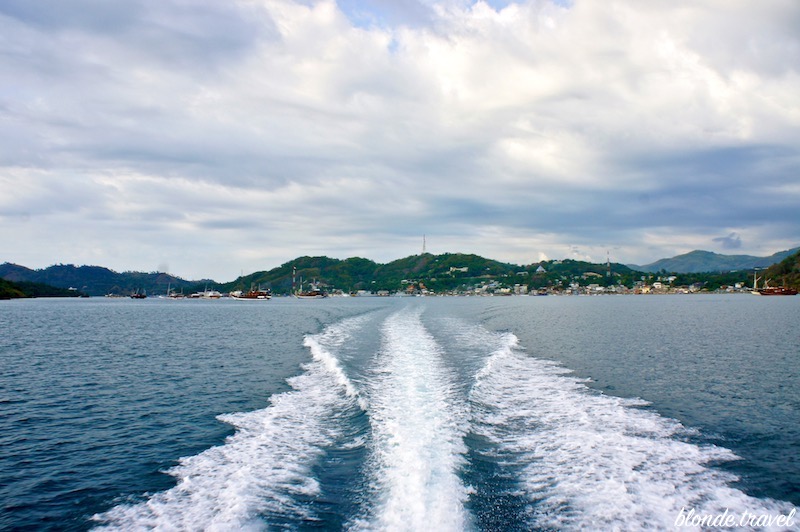
Fishing is one of the chief livelihoods here. The picturesque bay, closed in on every side by green hills, is dotted with fishing boats. We went further out, into a nature blazing with unimaginable colour.
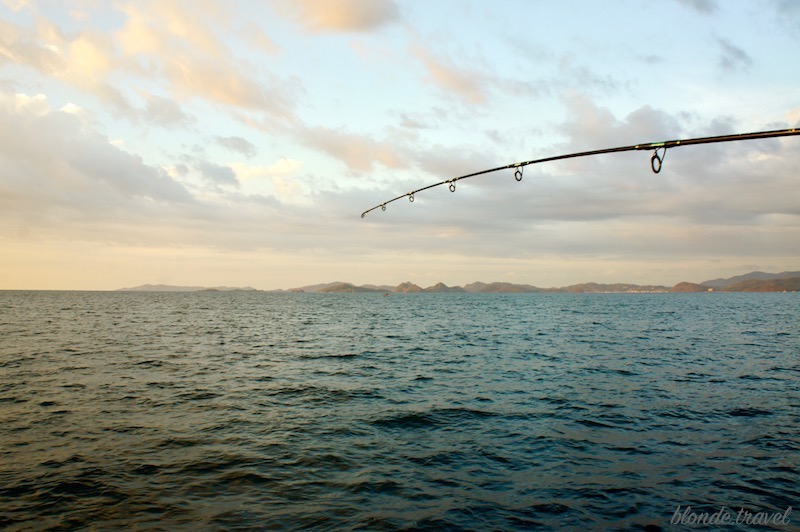
And caught a little something for dinner along the way.
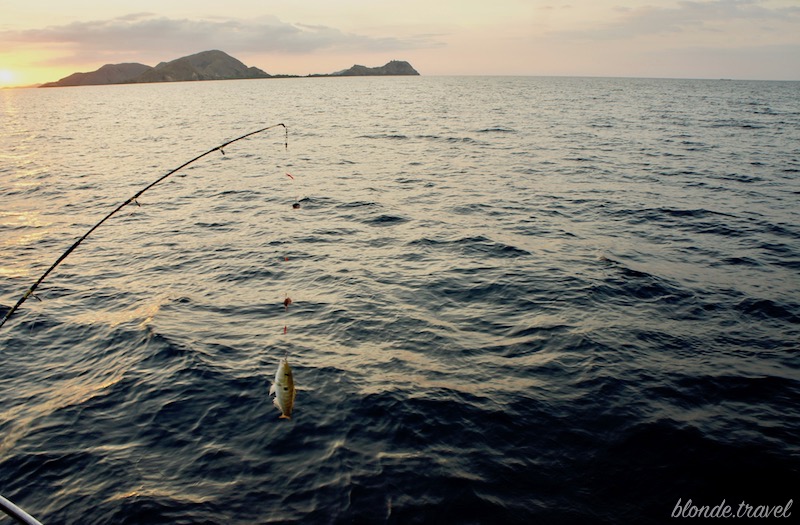
The sunsets here are beyond compare. Every minute the sky takes on a new shade, from orange to red, then deep violet. Before it slips below the horizon, the sun draws impossible patterns across the sky, playing with the clouds and throwing bright rays back off the surface of the sea.
An idyll beyond words.
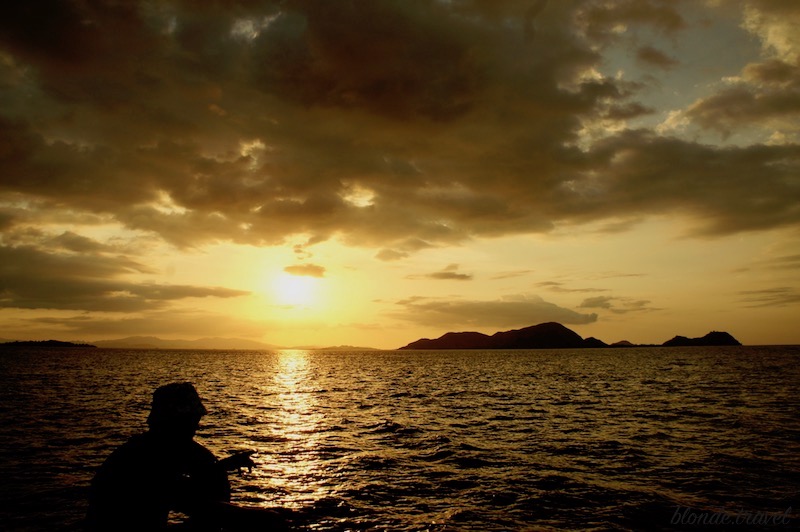
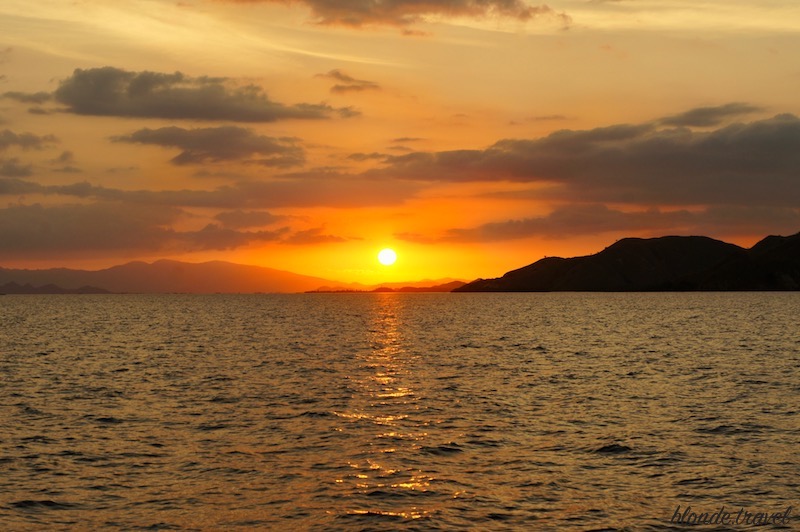
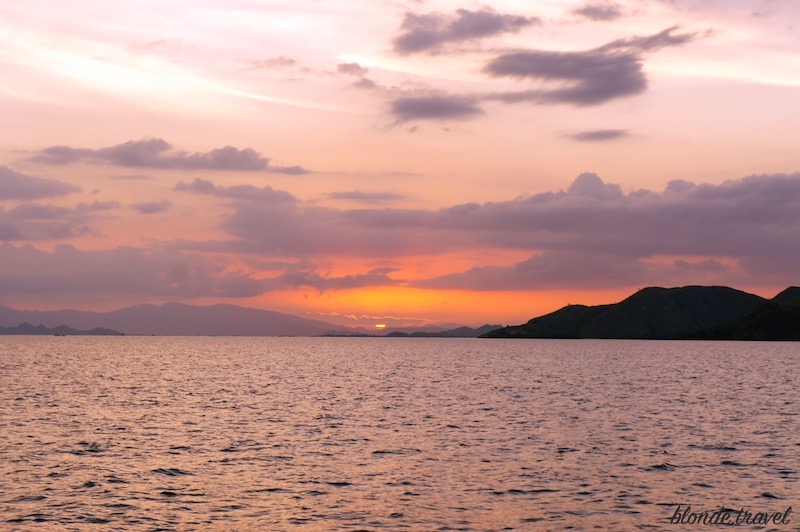
On the whole, Labuan Bajo stayed with me as a bright, simple, lazy town on the coast, the starting point of a breathtaking journey into Komodo National Park.
The story continues on Rinca, the first of the dragons’ islands.