
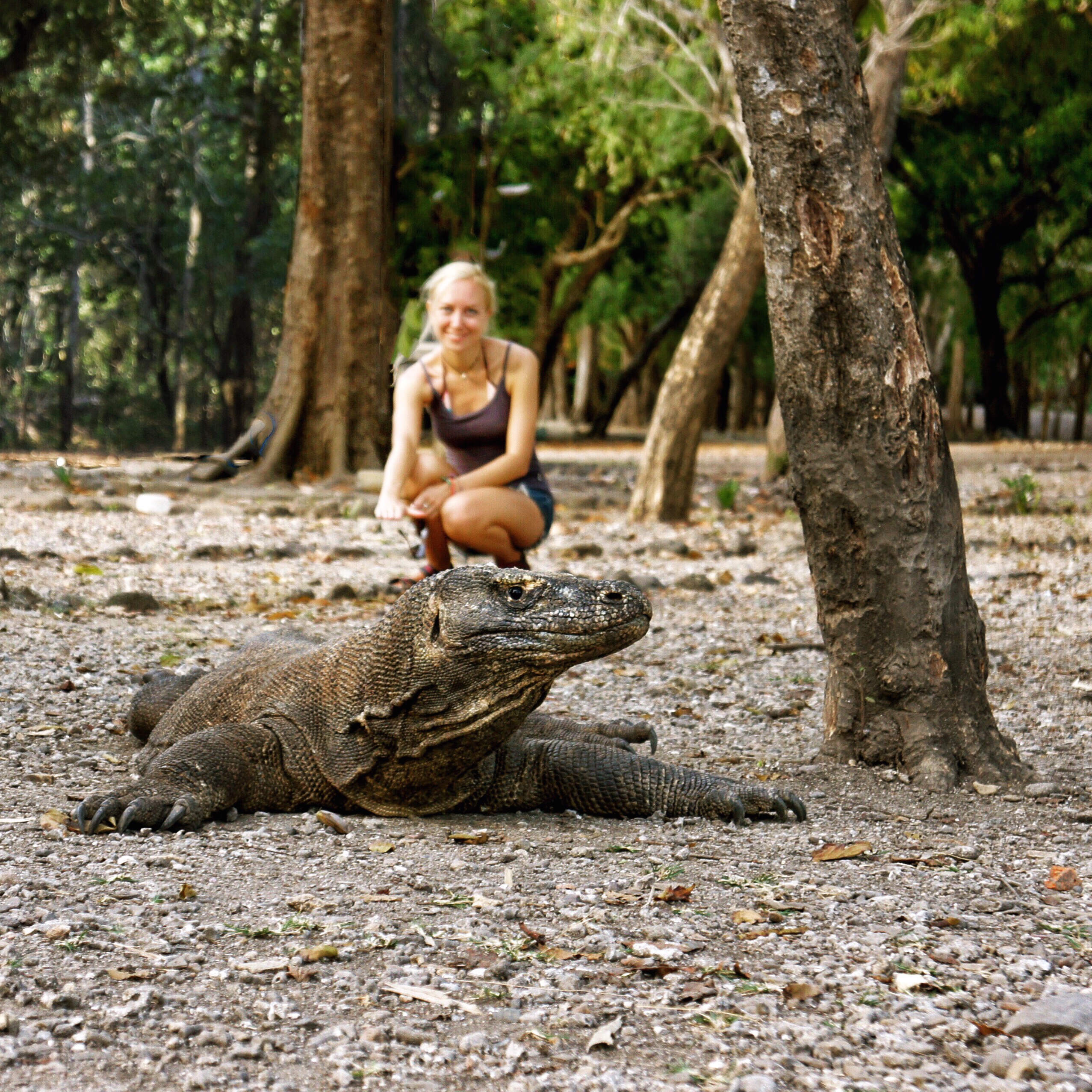
“Jurassic Park”, or an expedition to Rinca
Yesterday we flew to Flores and had time for a walk around Labuan Bajo. The village is so pretty and cosy that I gave it a chapter of its own, “Labuan Bajo: Where the Road to the Dragons Begins”.
Early this morning, after breakfast, we set off for the port. The sun had not yet climbed high, and a morning haze hung over the water. The day promised to be windless and hot. There was a serene calm in the air, for all the bustle of the boatmen getting ready to put to sea.
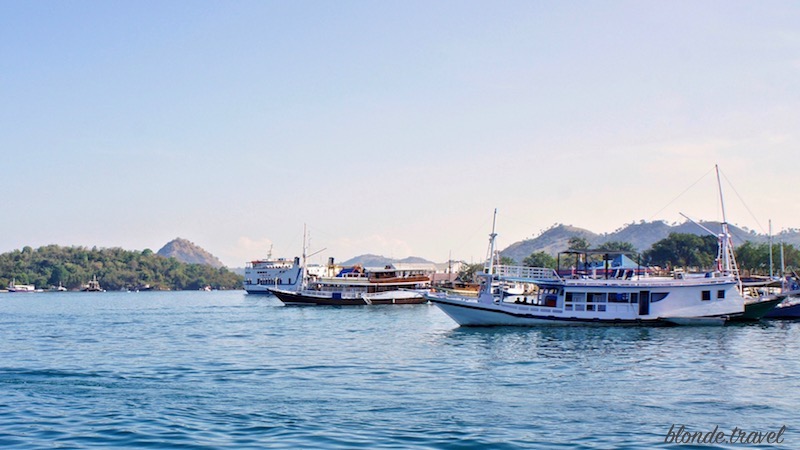
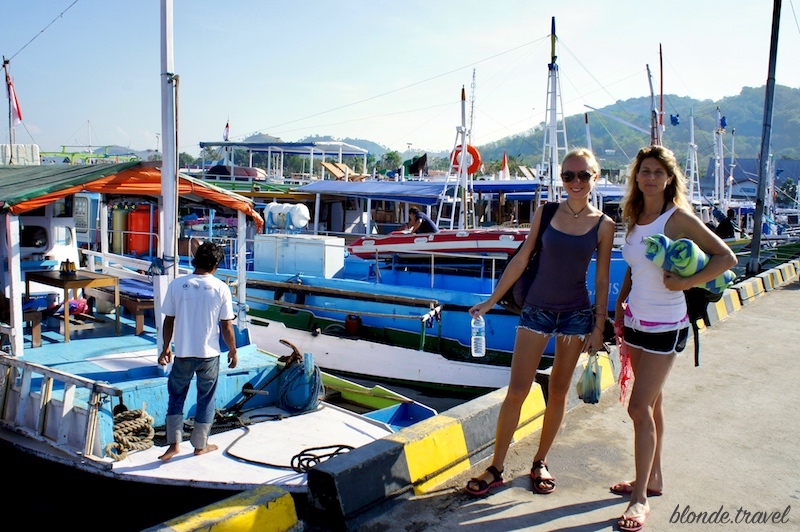
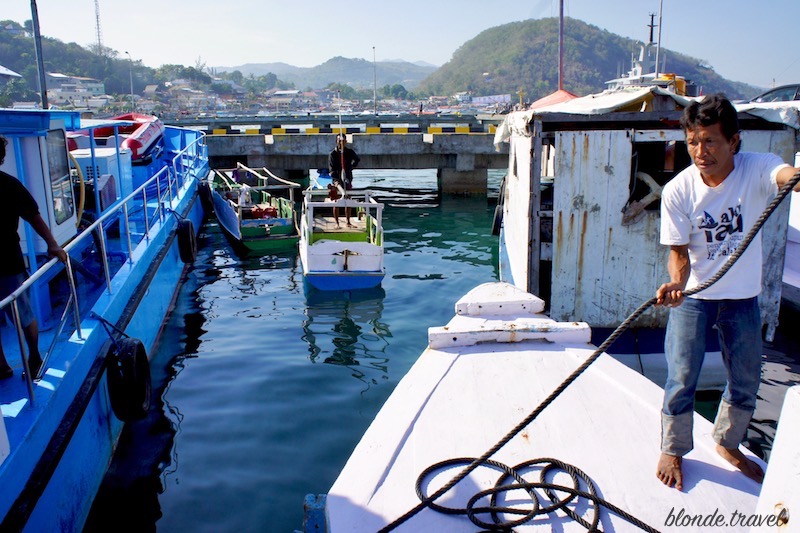
The piers were packed with moored boats of every size and design. We quickly found ours, where the crew who were waiting for us, a captain, a cook and a boatswain, were getting ready to cast off.
How to get to Rinca
The first question most people face when they set off for the Komodo islands is which boat to choose. A great many companies offer every possible option, from small launches that take two to four passengers, not counting the crew, to roomy double-decked ferries.
I can’t say how many people travel in the big groups, because that option did not interest me at all, but during the trip I saw about 20 tourists come ashore on an island from one of those ferries.
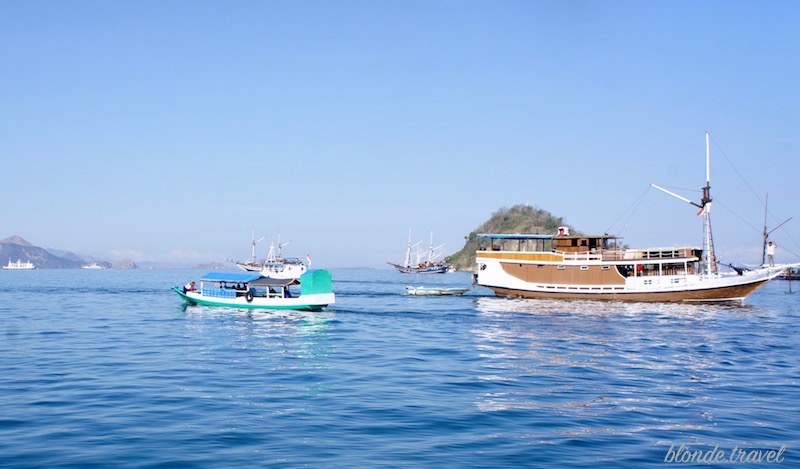
This photograph happens to have caught several kinds of vessel in one frame; every one of them was bound for the national park that day.
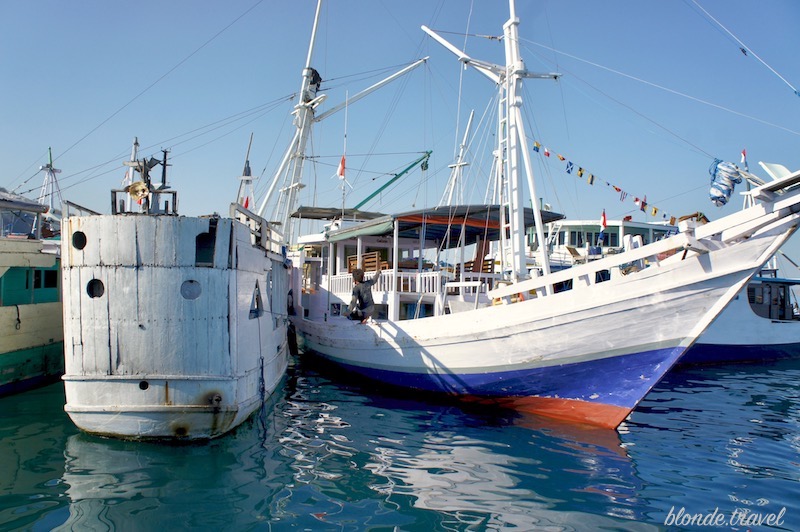
We did not hesitate for a moment and chose a small boat with two cabins, one for us and one for the crew, and a little deck.
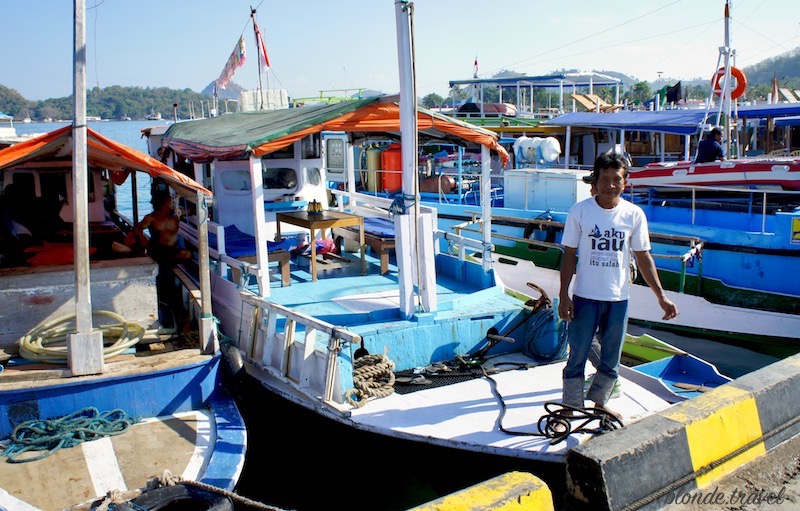
It looks rather basic, but it has everything you need for several days afloat: a cabin with a bunk bed, a deck with a table and two broad benches along the sides, a galley where the cook reigns, a toilet, and even a free stretch of bow where you can sunbathe, should the thought ever cross your mind.
A quarter of an hour later, the last preparations done, we set out for the Komodo dragons. Ahead of us lay a two-day voyage around Komodo and Rinca.
Little by little the lovely harbour of Labuan Bajo slipped away and soon vanished over the horizon. We found ourselves surrounded by a hundred islands peering up out of the water.
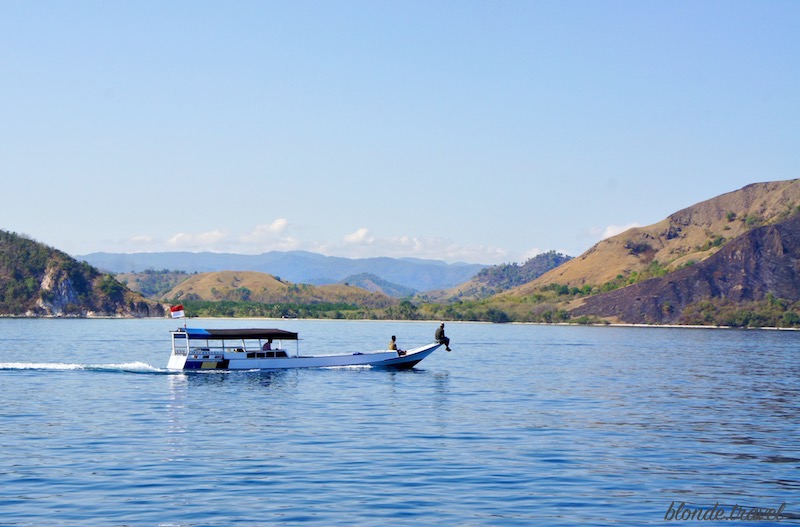
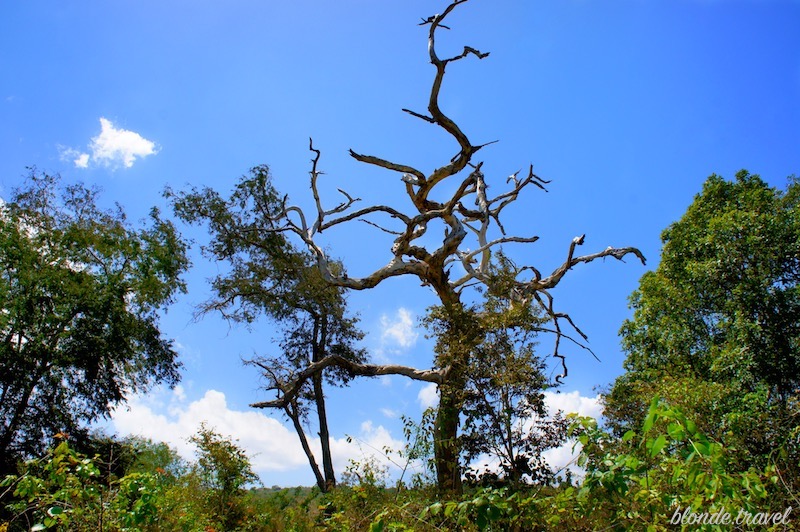
The dry climate gives itself away in the scorched vegetation of the islands, with only a few bushes of a dusty, muddy green.

But that takes nothing from the colour of the landscape. The scenery here is glorious, and you cannot take your eyes off it.
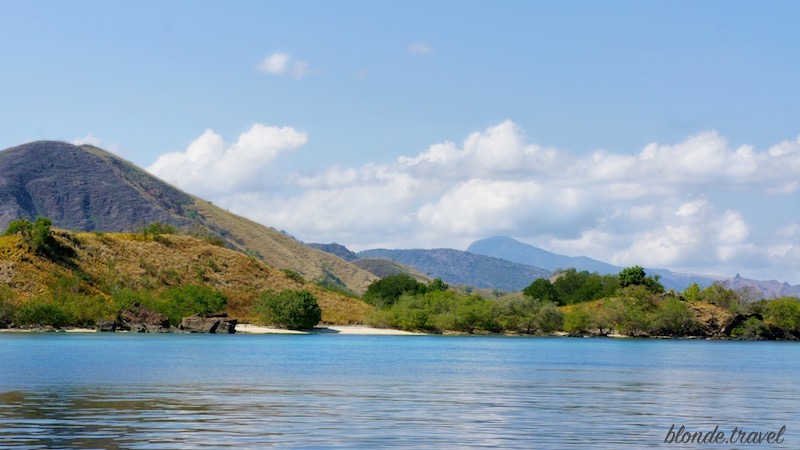
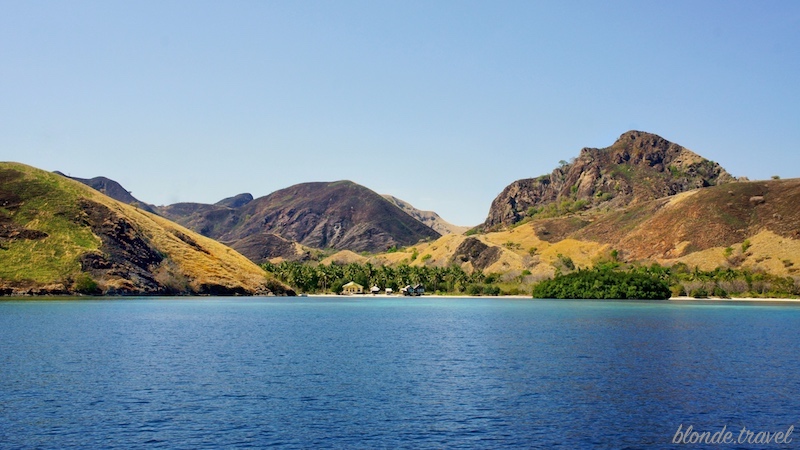
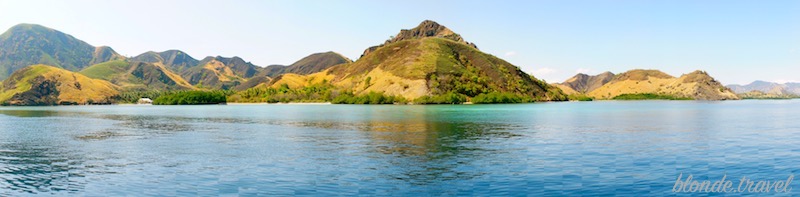
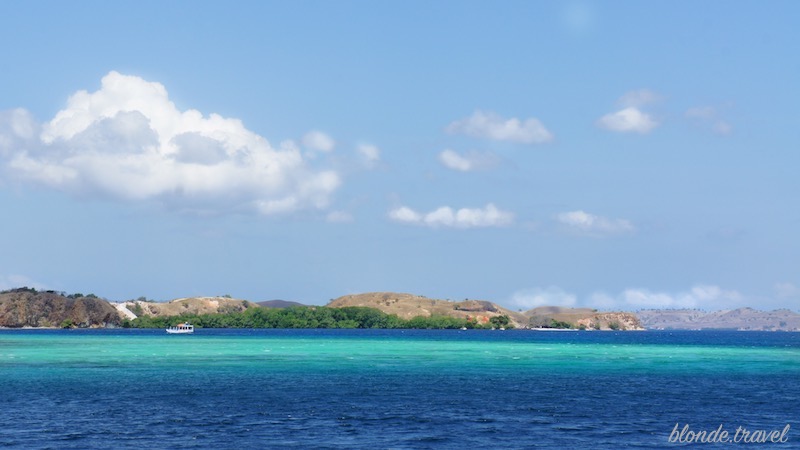
After a while the islands disappeared, and an extraordinary blue closed around us. Hundreds of shades of blue passed into one another. The pale sky, bleached by the high sun, flowed smoothly into the dark blue line of the sea on the horizon, which grew richer and deeper in colour as it came closer.
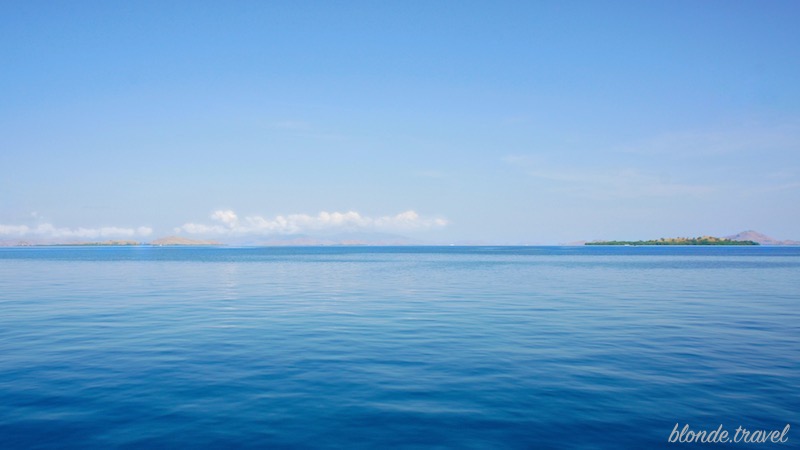
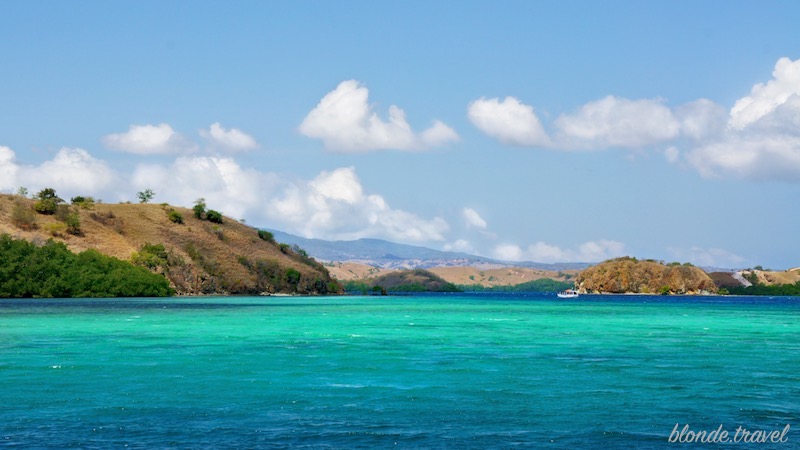
Two and a half hours later the shore of Rinca appeared on the horizon. The captain announced it, but my eyes were fixed on a band of sea of the most unbelievable turquoise. Had I not seen it myself, I would never have believed such colours exist in nature.
The Komodo dragons of Rinca
Rinca is the island closest to Labuan Bajo. It is smaller than Komodo, the main island, yet when I went it had more dragons: about 2,300, against 2,100 on Komodo.
For all their formidable neighbours, about 3,500 people lived on the park’s islands then, around 1,000 of them on Rinca.
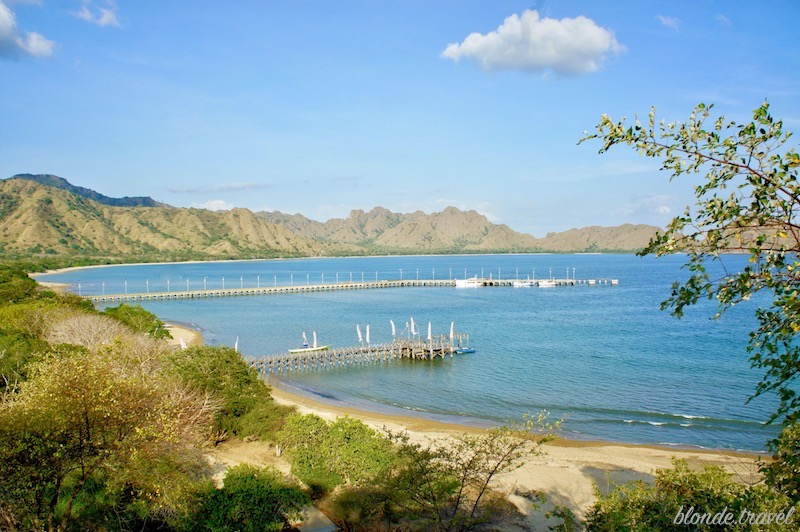
We sailed into a pretty bay, headed for a small jetty crowded with moored boats, and stepped ashore.
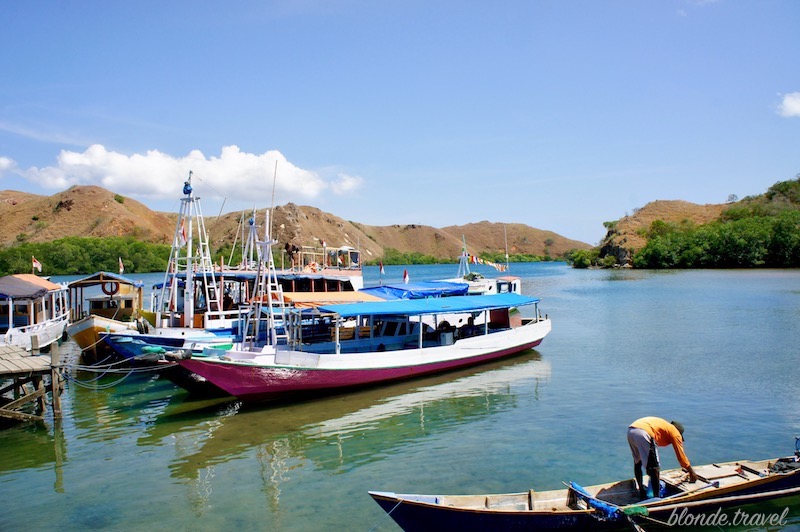
This place is called Loh Buaya: loh means bay, and buaya means crocodile, a name owed to the crocodiles found here.
It is the only landing on Rinca where boats tie up for visitors, and anyone who wants to walk on the island is signed in and given a ranger as escort.
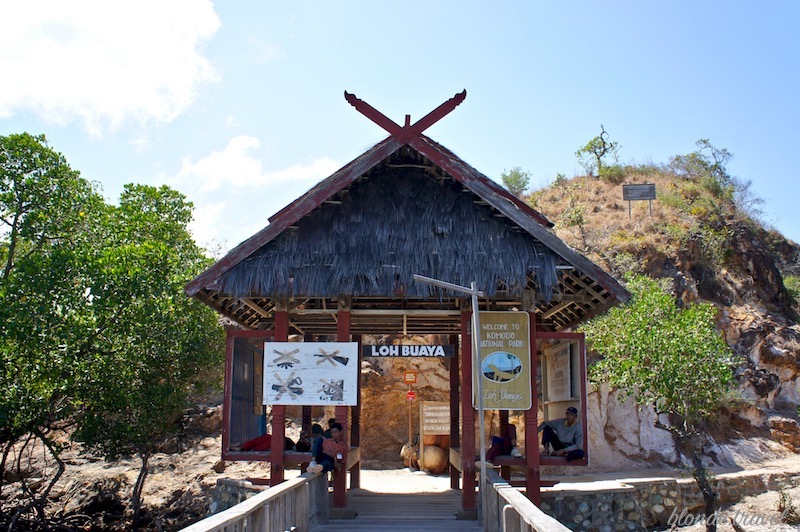
Loh Buaya is where every walk on Rinca begins. It sits in a quiet bay with a wooden pier, surrounded by hills whose vegetation has been burnt by the sun, and a few trees. A little way inland from the shore, a gate rises in your path: the entrance to Komodo National Park.
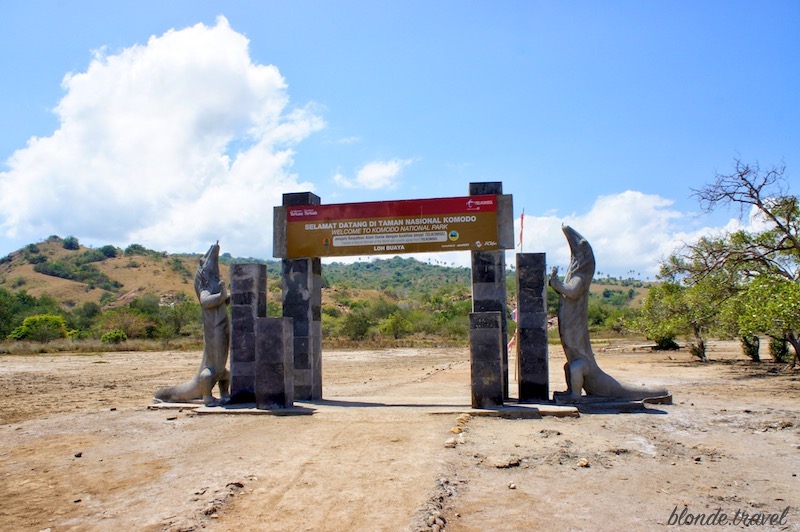
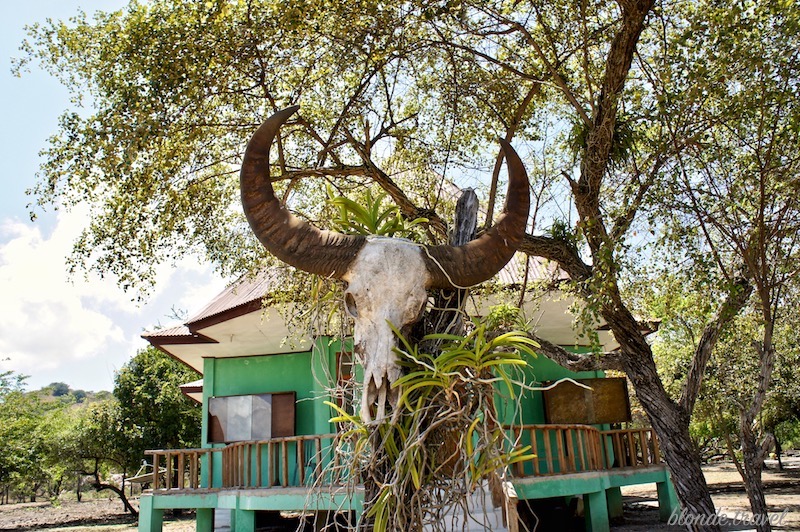
A little further on I saw the simple facilities: thatched buildings where you can even arrange to spend the night, a kitchen, a café, and a “tourist office” for the briefing.
We were given a briefing on how to behave on the island. Do not go closer than 5 metres to a Komodo dragon: they have a keen sense of smell, and the scent of blood draws them from a mile away. Do not feed the dragons (I wonder, has that ever occurred to anyone?). And make no sudden movements.
And here I smiled, seeing yet again an enormous ledger in which every visitor’s name and country is written down.
A ranger’s most important attribute is a stick forked at the end. As he explained to us later, the dragons are very afraid of it.
The ranger showed us the map of the area and invited us to choose a route.
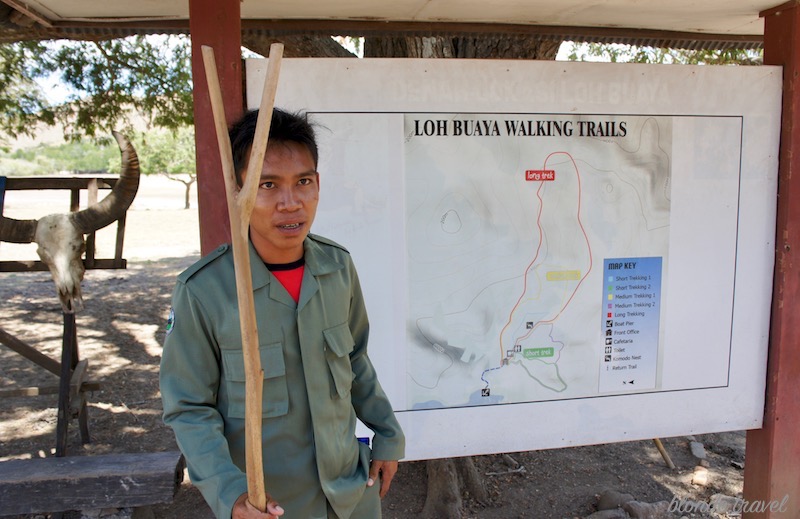
There were five routes, differing in length: the shortest took 45 minutes, and the longest meant more than four hours of tramping.
We asked our ranger where, in his opinion, the dragons liked to spend their time. He only smiled and shrugged. Evidently he did not want the responsibility of advising us.
We chose the green route. We decided we would walk it quickly and then, if need be, set off along another.
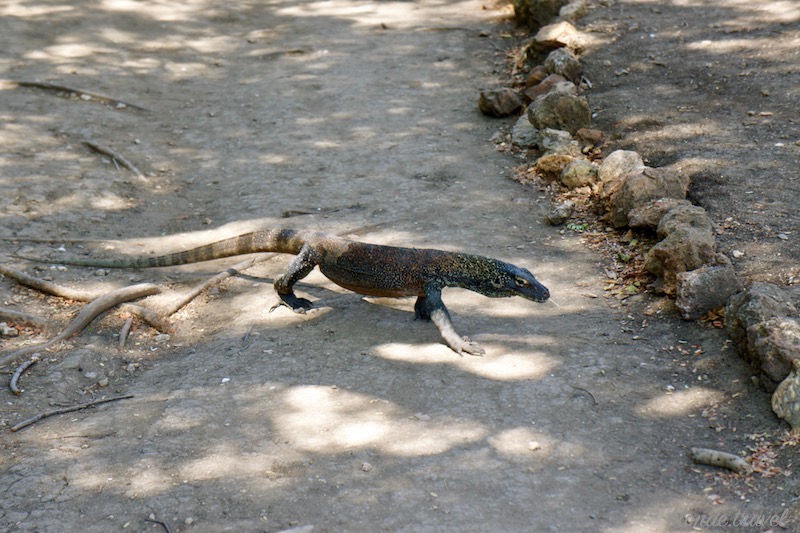
We had taken only a few steps when a dragon, strolling lazily along, cut across our path.
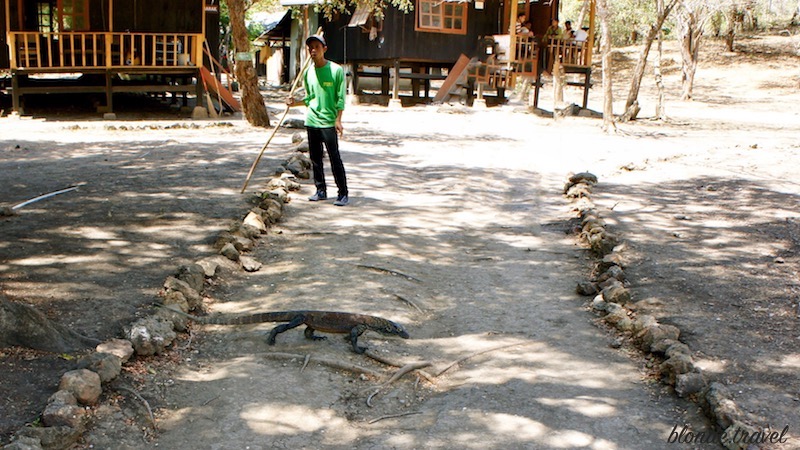
I looked around. The scene was somewhat epic. Under the wooden buildings, or simply in the shade of the trees, great hulking bodies lay almost on top of one another, now and then opening an eye. The kitchen attracts the lazier dragons, and they have become permanent residents here.

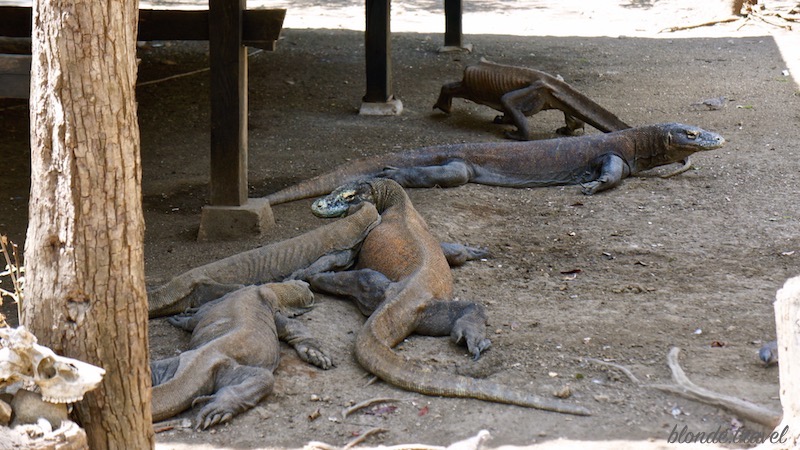
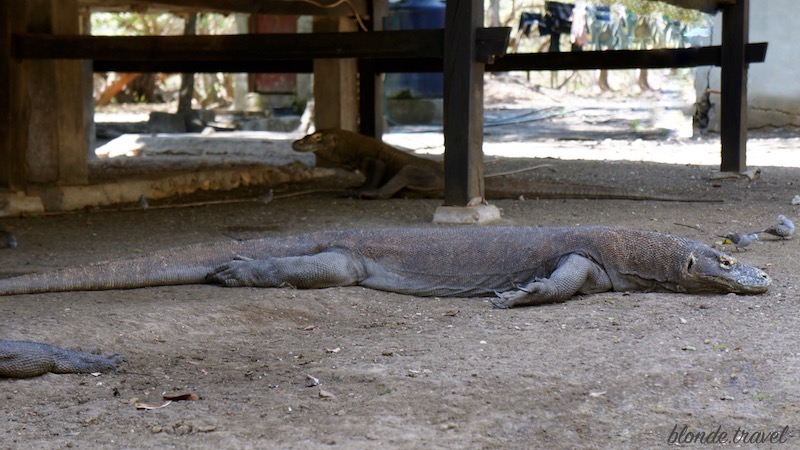
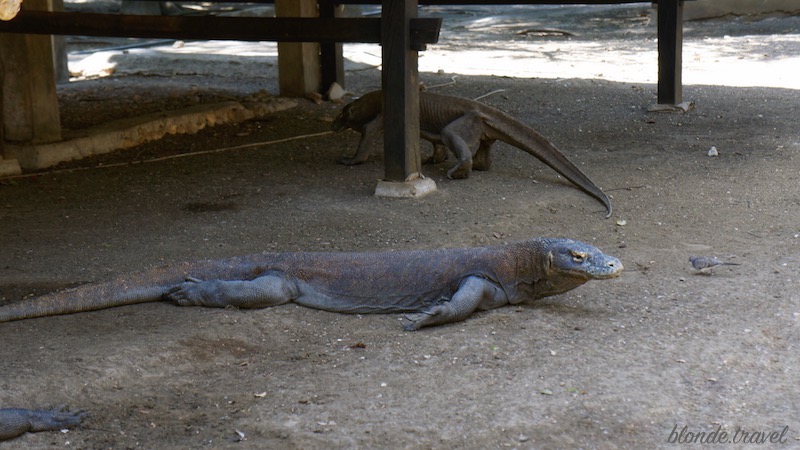
But this is not the interesting part. True, you can look at the Komodo dragons here from very close quarters, but for real emotion we set off further, into their natural habitat.
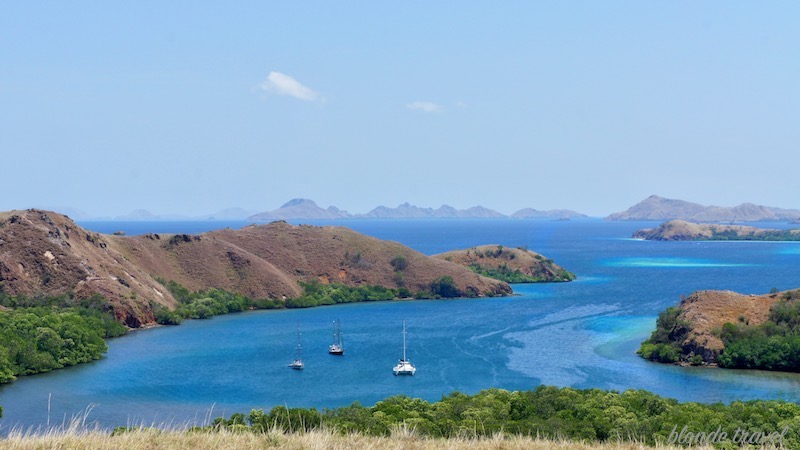
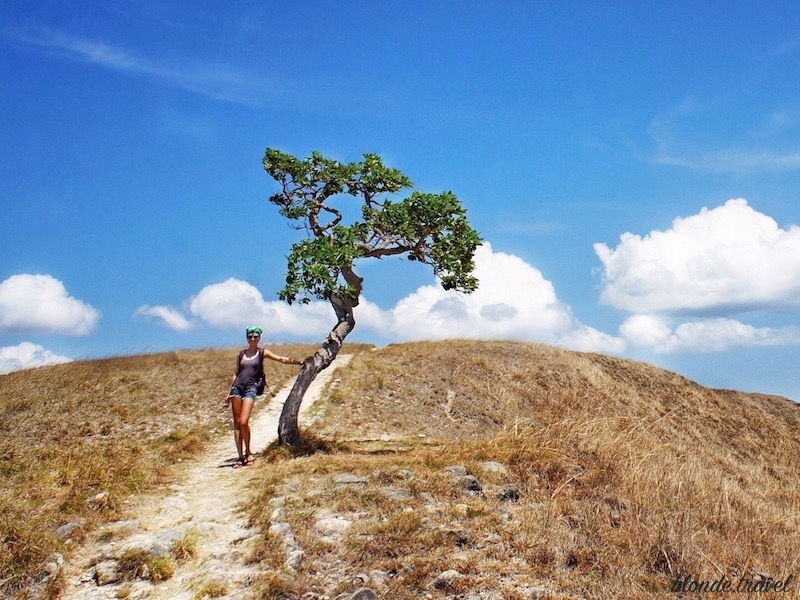
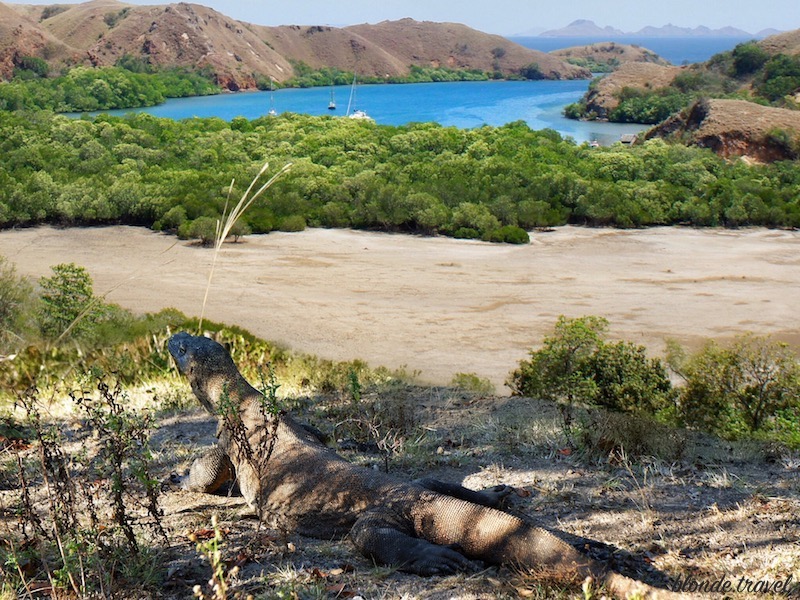
We climbed a hill with an astonishing view over the bay of Loh Buaya and the country around it. The weather was hot, and the sun beat down without mercy. But the colour of the water made us forget every discomfort along the way.

We crossed a little more open ground and then plunged into the forest. From there, a narrow path covered with fallen yellow leaves led us on towards adventure.
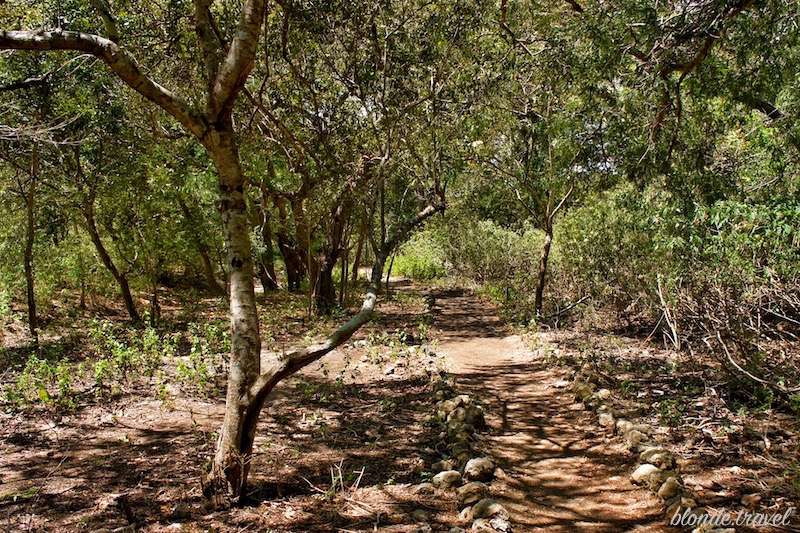
The Komodo dragon’s home is tropical forest with tall grasses and shrubs, but it is also found in the lowlands, on beaches and along the mountain ridges.
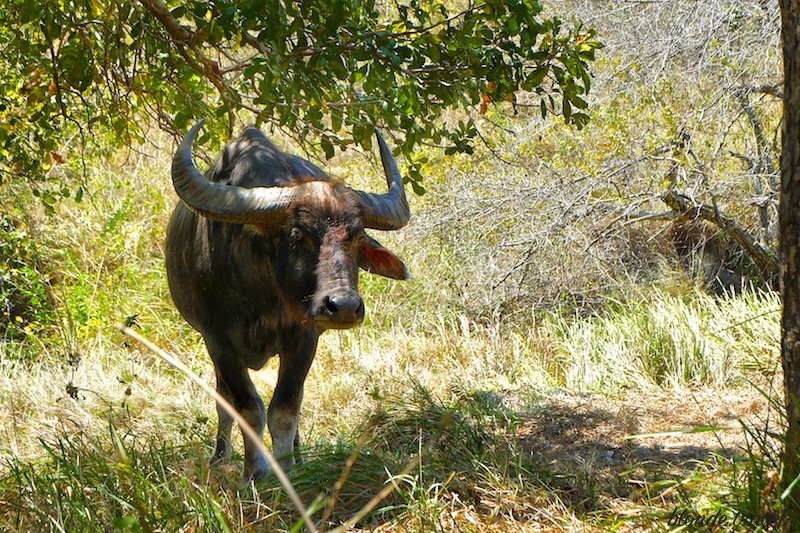
Besides the dragons, Rinca has plenty of other wild animals, all closely connected to the dragons, being their immediate source of calories.
Komodo dragons sit at the top of the food chain, since there are no other large predators on these islands, no tigers, no lions, nothing of the kind. They are predators, scavengers and man-eaters.
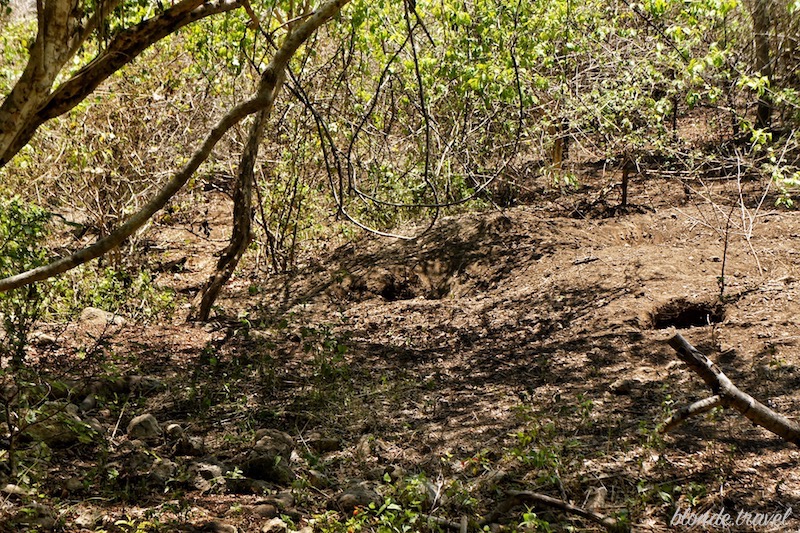
The Komodo dragons mate between May and August, and this is when the males fight seriously for supremacy. In September the females lay their eggs in hollows they have prepared in the ground, hiding them from their own kin and from anyone else who fancies a delicacy.
The young hatch seven or eight months later. Young dragons spend most of their time in the trees, where they are safer from predators and from their own elders.
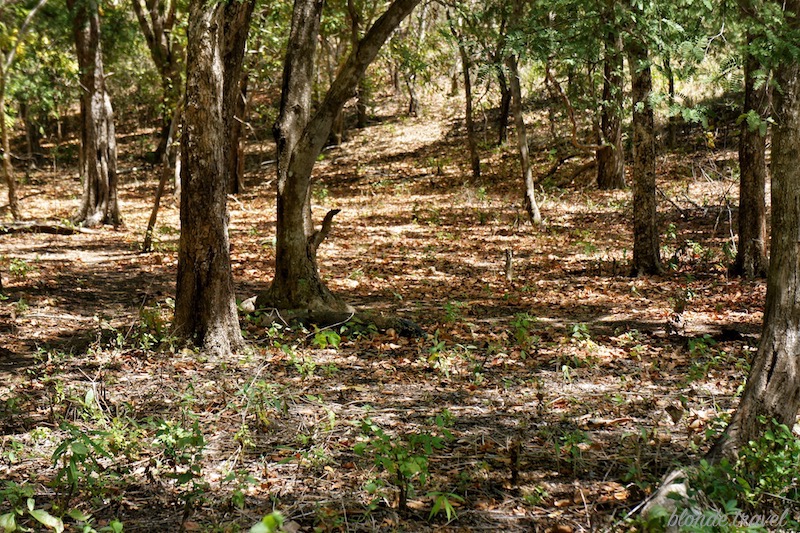
And we had arrived at exactly this interesting time. We missed the dragons’ battles, but the nesting grounds, which the rangers fence off to be on the safe side, look like this:

Walking on Rinca: a debrief
As far as I could establish, collecting information and statistics along the way, the route you choose makes little difference to the number of Komodo dragons you see. Most of them gather at the very start of every trail, around the kitchen, where they are fed. Further on, it is all down to luck. So choose by how much you want to walk and how long you can manage, and by how much you want to see of the island’s scenery: with its climbs and its distance, the long route has the most colourful views.
The ranger himself has a far greater effect on how strong the emotions are. In this respect, we were unlucky. Barely 100 metres from the camp, I realised that he was evidently terrified of the dragons himself. He gave them the widest possible berth, merely pointing out that, waaay over there in the bushes, there had been a dragon, which naturally we could no longer see. We pointed out one dragon to him ourselves: he had simply walked straight past an enormous beast barely 3 metres from the path. My dismay knew no bounds.
In the end, our tally on Rinca was two Komodo dragons in their natural habitat, not counting the dozen by the kitchen (those don’t count).
We decided to try our luck on a second island and set off for the largest in the national park, Komodo itself.
Three hours later I was standing on high ground on Komodo, looking out over a fairy-tale view of the sea.
The story continues on Komodo Island.