
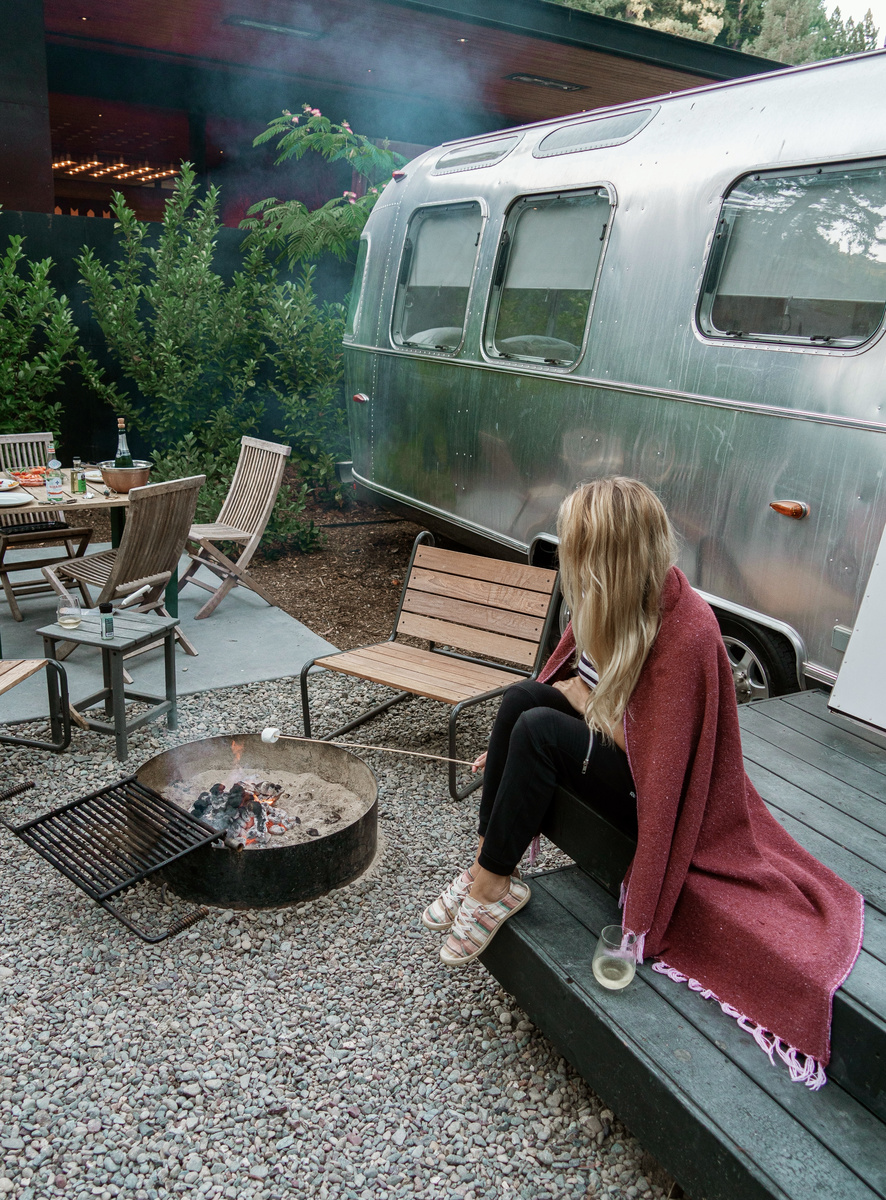
The most absurd passenger on our California road trip was a bundle of firewood. We bought it at Whole Foods, carried it in the car for a week and arrived at AutoCamp Russian River certain it had finally found its purpose.
At check-in, we learnt that ordinary firewood was not permitted. AutoCamp sold an approved manufactured log that was far less romantic; meanwhile, proper fires crackled cheerfully at the other trailers. It was a faintly comic beginning to a stay that otherwise worked almost perfectly.
I had wanted to live in a trailer for years. Not to glance inside one for a photograph, but to cook, shower, sleep and see whether a curved silver shell could feel like a real house. AutoCamp made that experiment easy enough to be luxurious and strange enough to remain an adventure.
A small house, properly considered
The first surprise was how little we had needed to bring. Our Airstream had a refrigerator, sink, microwave, kettle, French press and a proper collection of plates, glasses, knives and cutlery. There was even a cast-iron skillet. The boxes of cooking equipment in our car had become dead weight before we unpacked them.
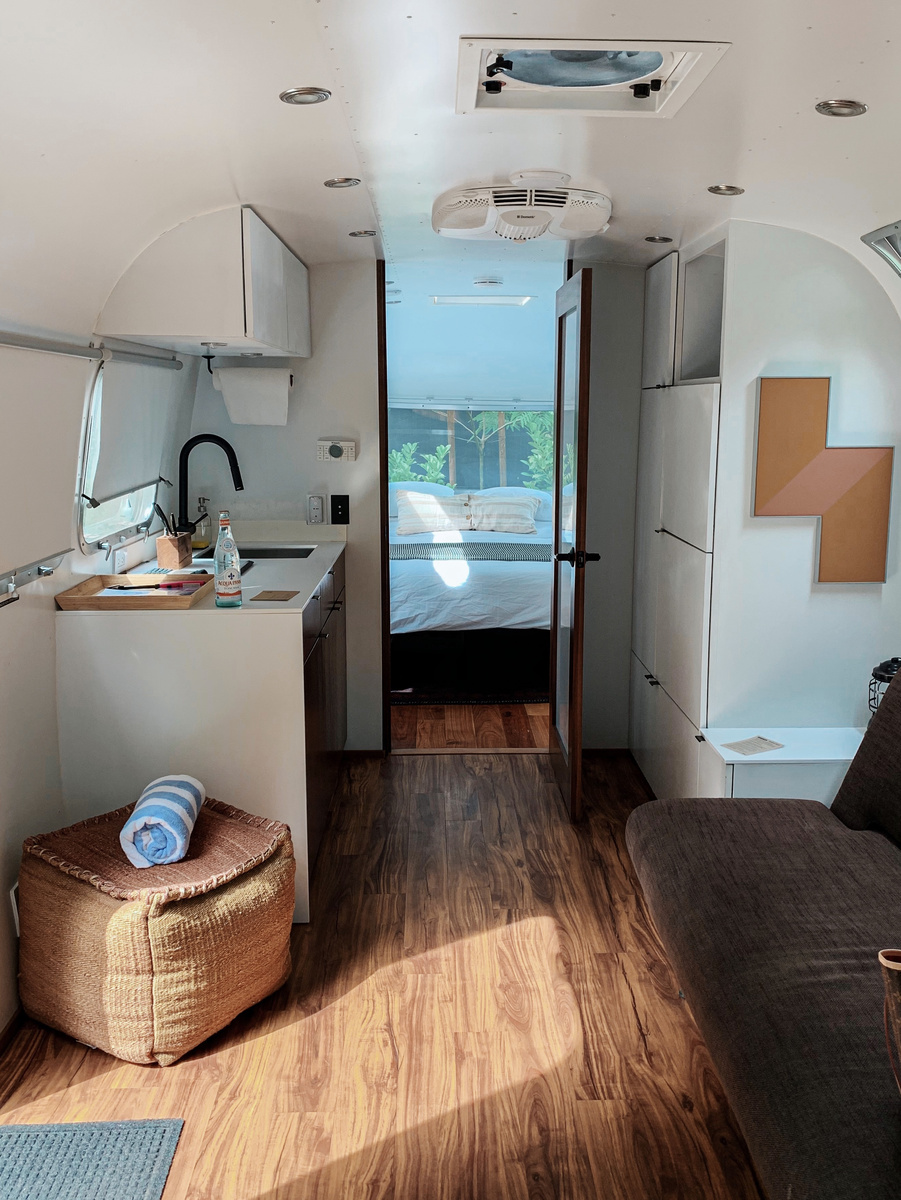
The sitting area, kitchenette and storage occupied the middle of the trailer. At one end was a separate bedroom with an excellent bed; at the other, a toilet, sink and shower. We were warned that the hot water lasted about six minutes and that the communal showers were available if our timing failed. It did not. Six minutes proved sufficient.
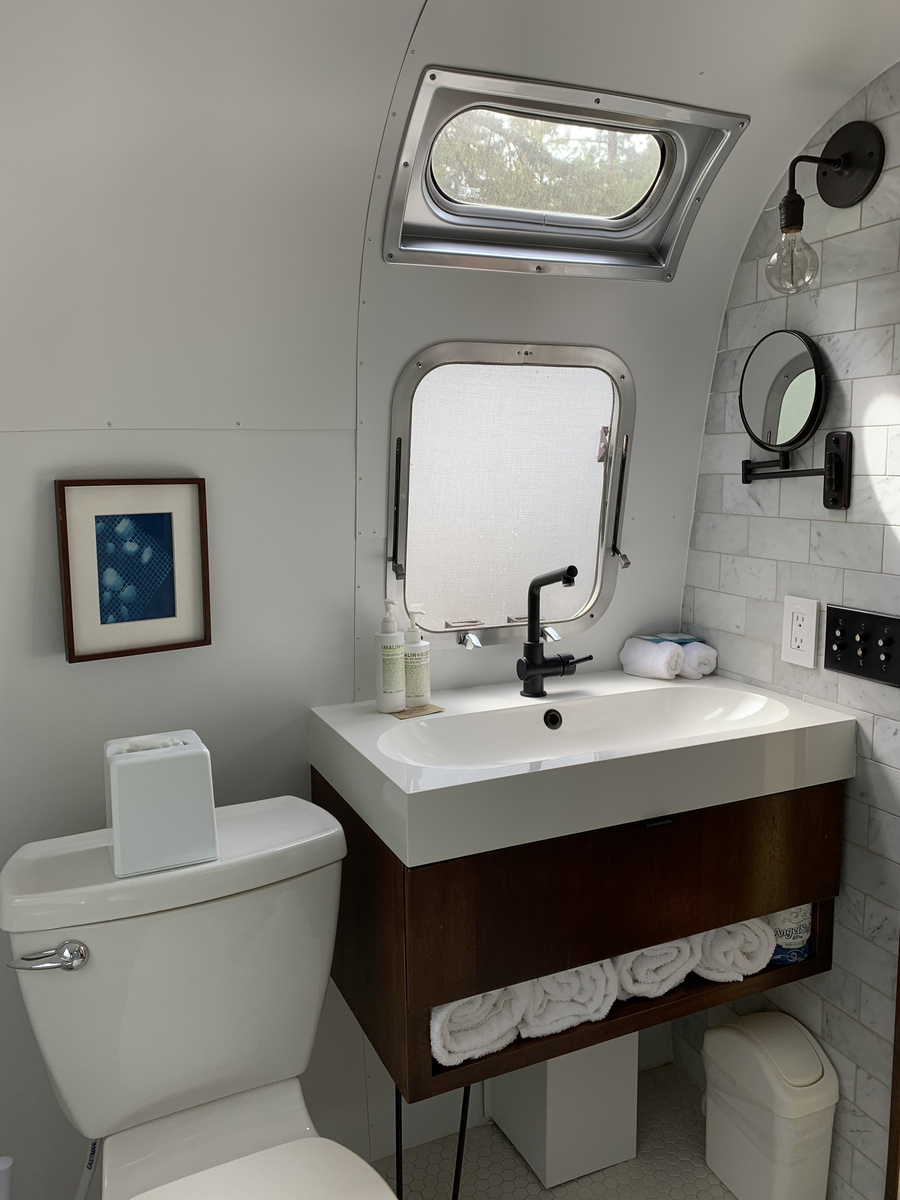
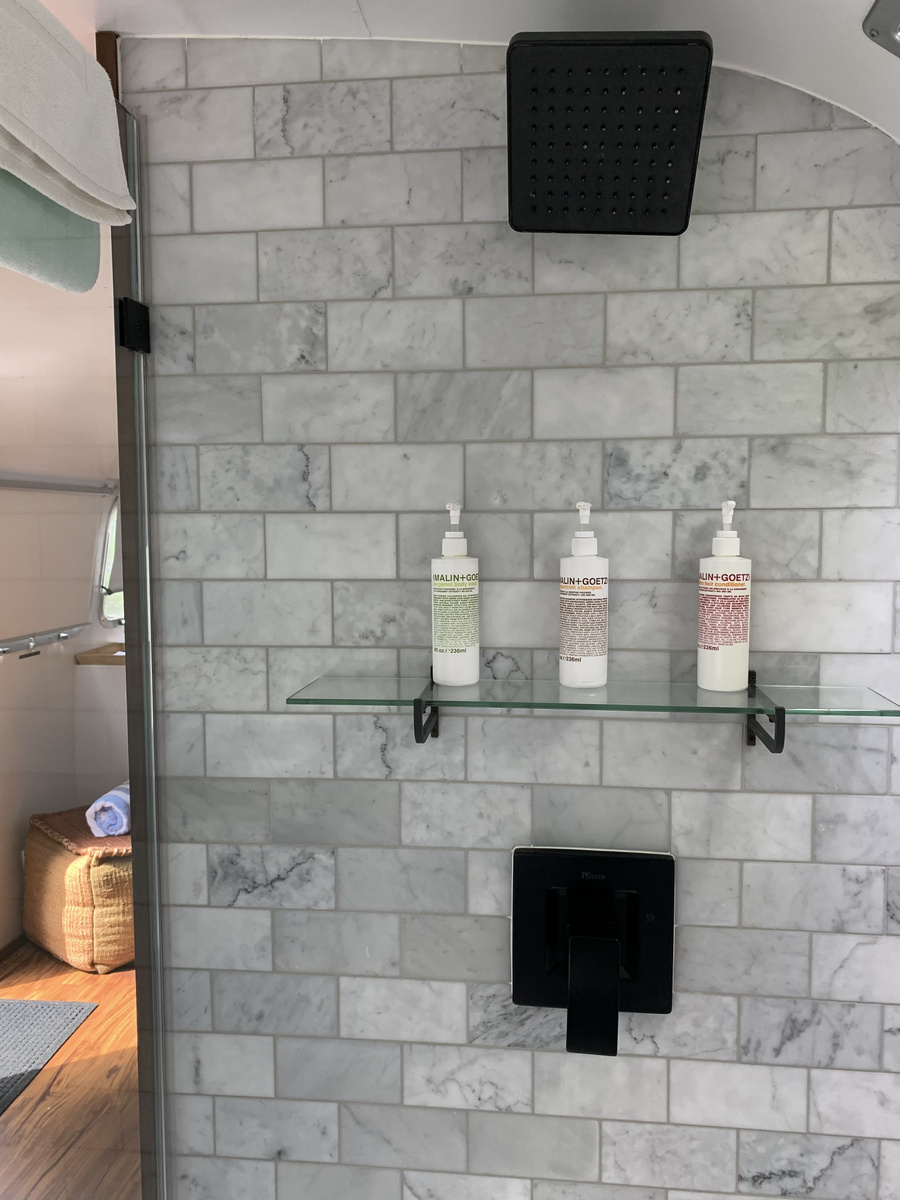
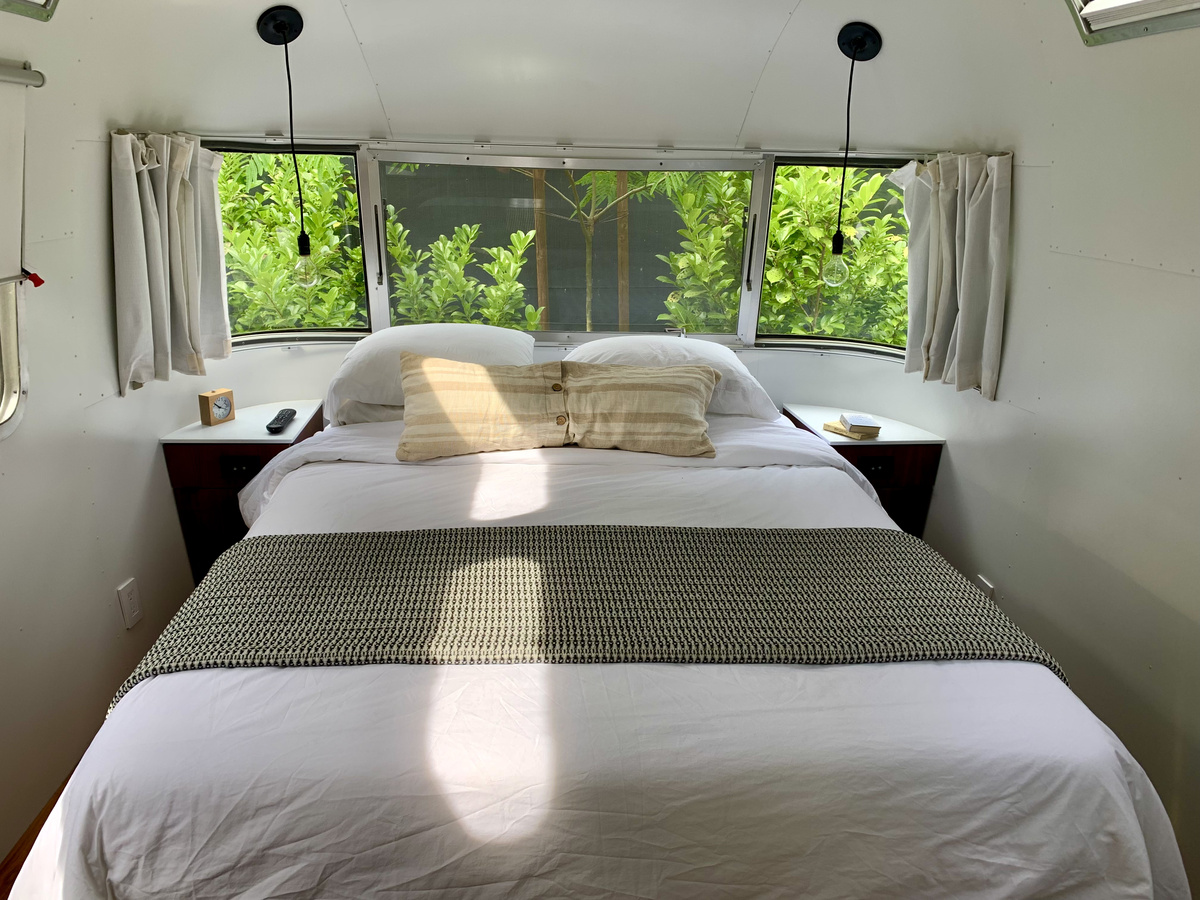
The plan was clever rather than merely photogenic. A sofa could be used without blocking the kitchen; the bedroom could remain a bedroom; wet towels had somewhere to go. Wally Byam built Airstream around the promise of a complete small house that could travel. Living in one made the intelligence of that promise physical. Comfort had not been miniaturised into novelty. It had been arranged.
The camp beyond the trailer
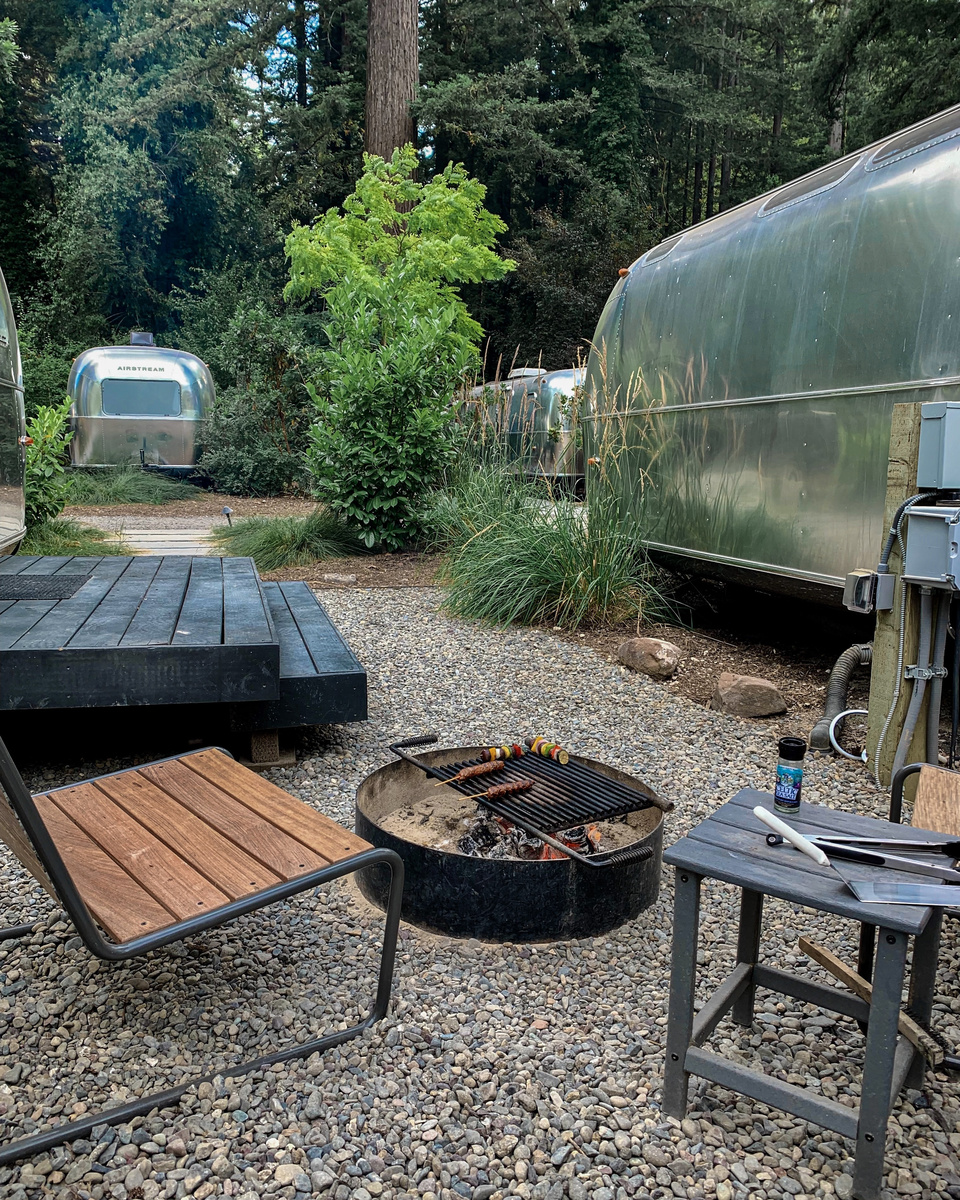
AutoCamp was set among immense redwoods, but the grounds were not pretending to be wilderness. Gravel paths linked the trailers. Each site had wooden chairs and its own firepit; farther into the trees, a communal fire circle gathered white chairs around a larger flame. The clubhouse added a lounge, shop and another fireplace. There were luxury tents for those who wanted canvas rather than aluminium, and bicycles for exploring beyond the property.
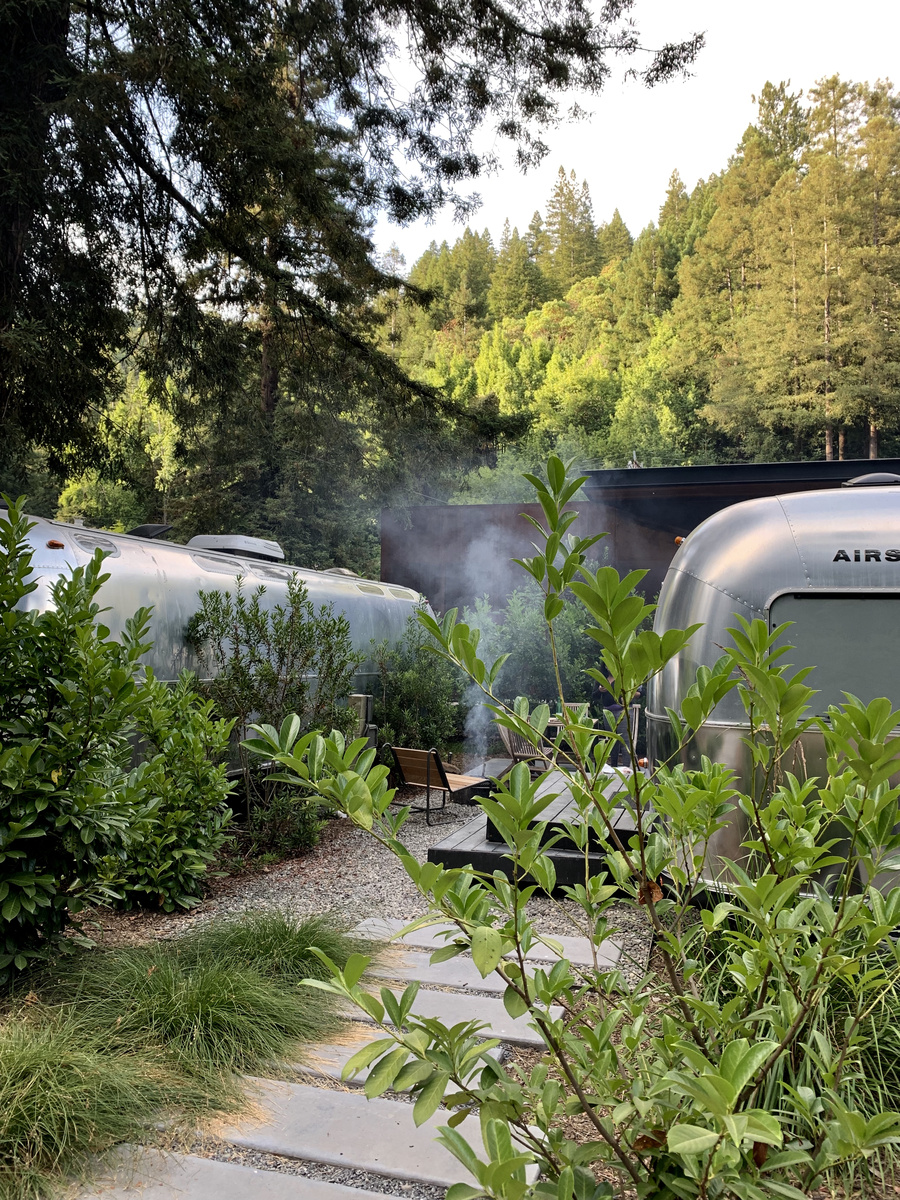
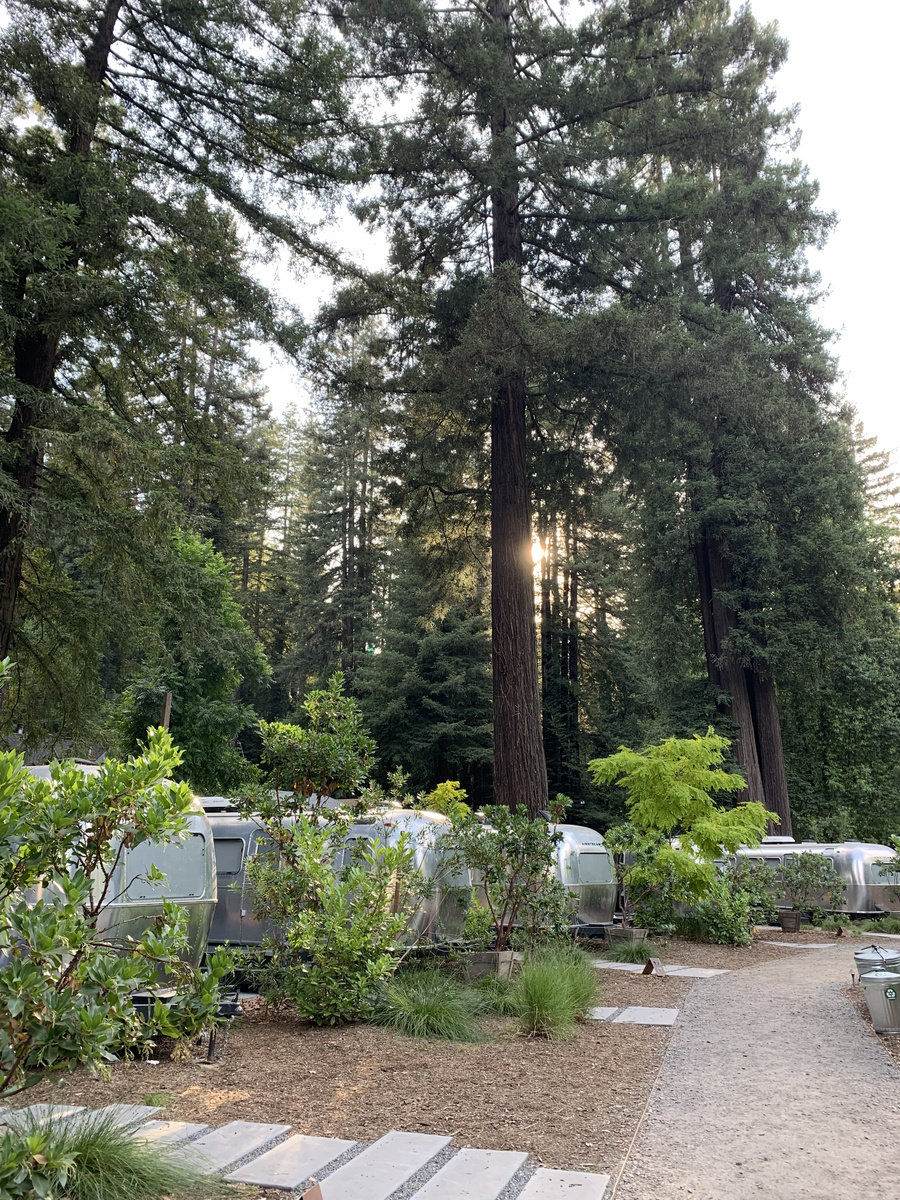
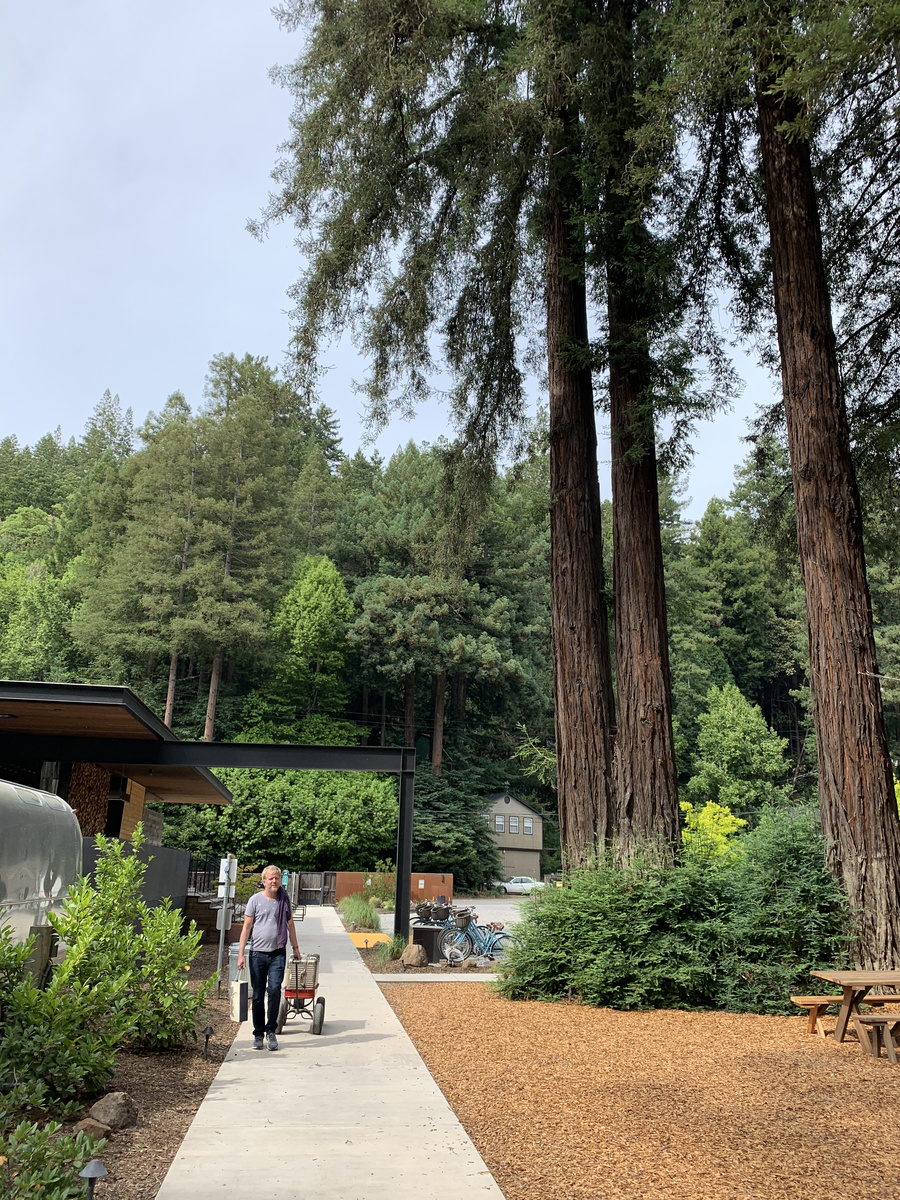
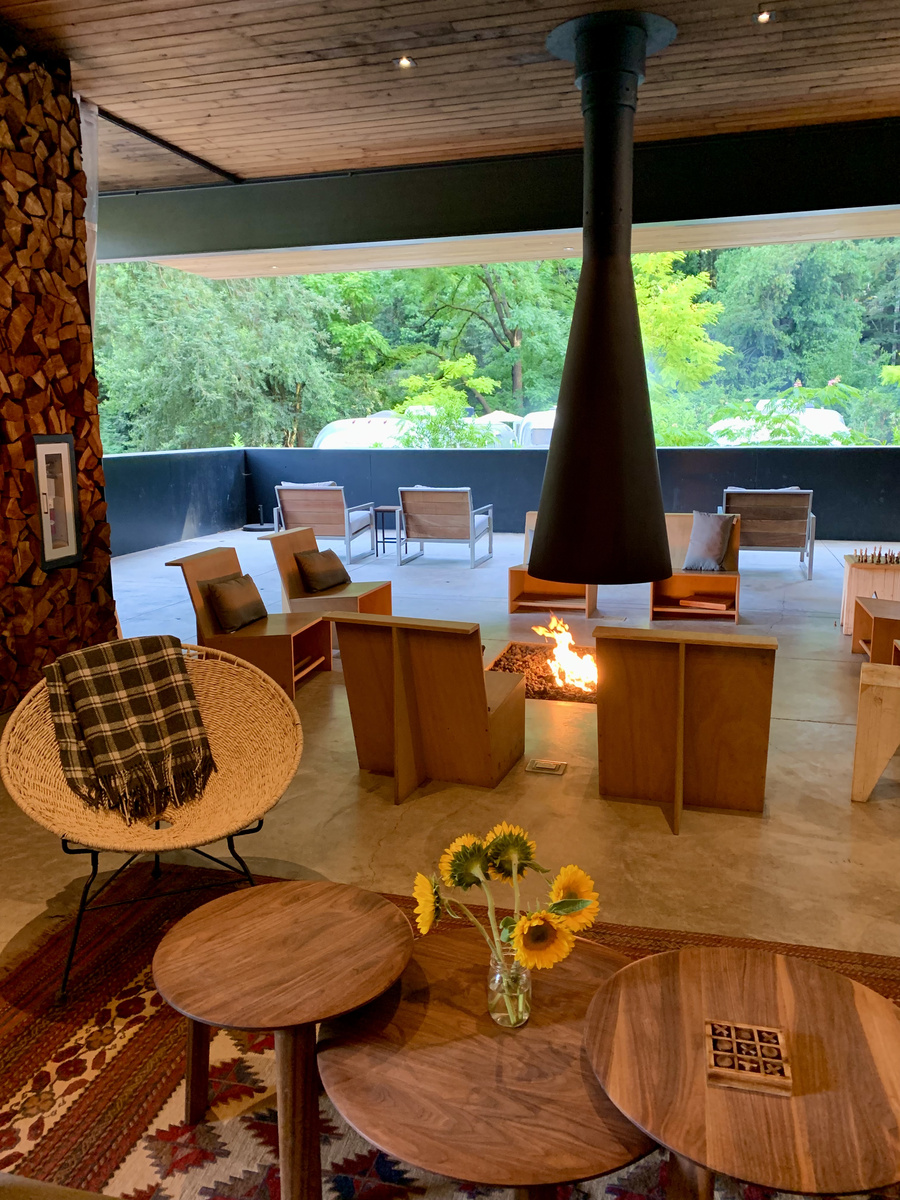
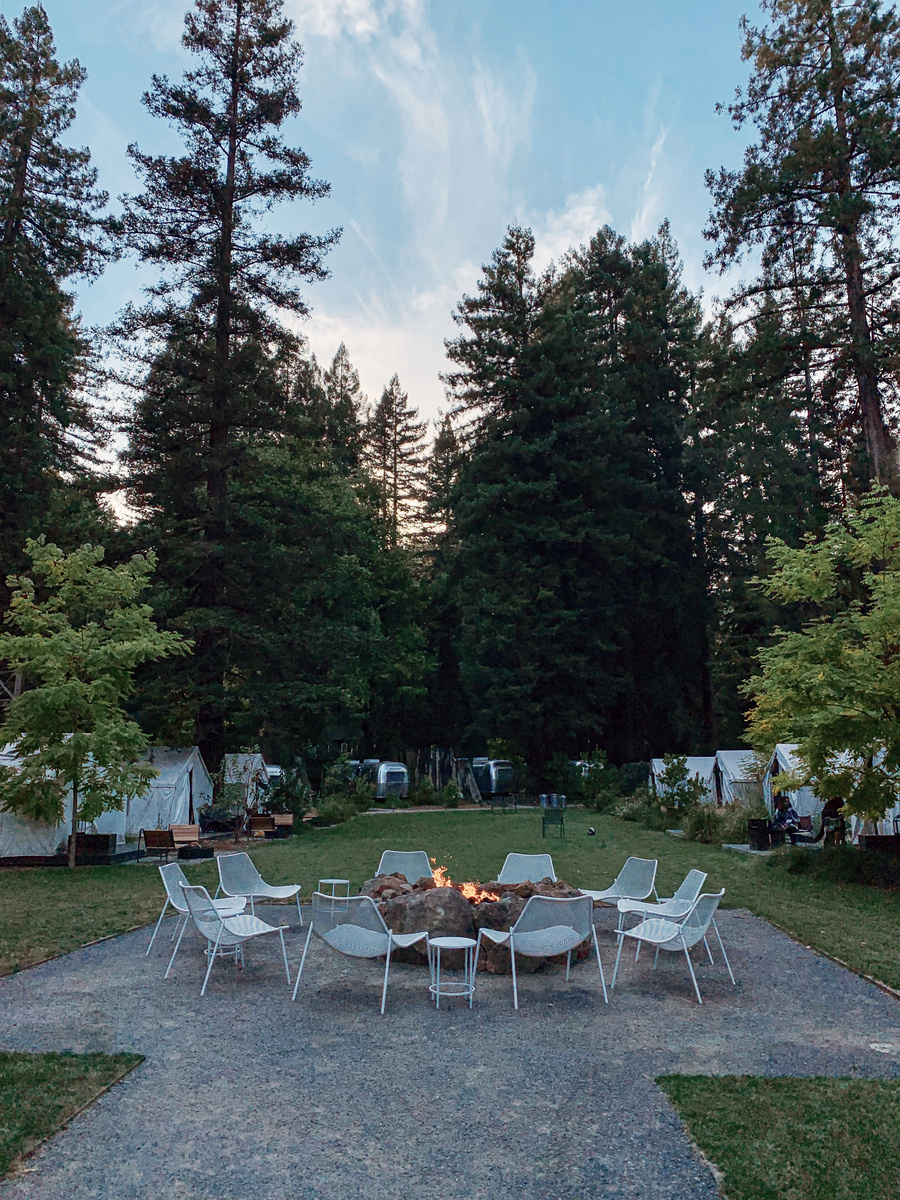
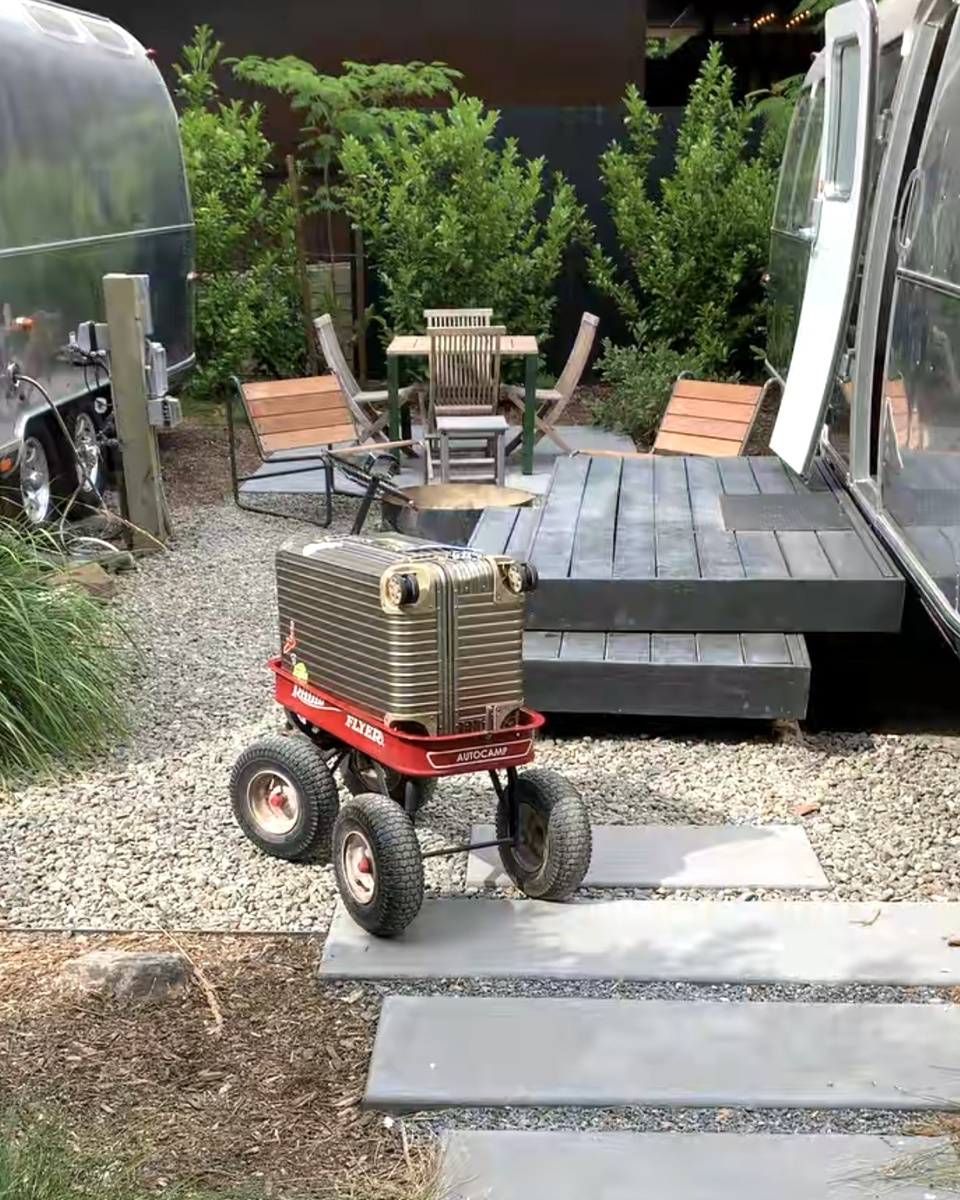
The little red wagons were a practical touch: they moved luggage from the parking area to the trailers without introducing a procession of cars. Our RIMOWA trunk fitted into one exactly—as though the wagon had been designed around it. AutoCamp understood that a campground feels different when the sound of doors and engines recedes.
Cooking outside
The firepit became the centre of the stay. We had bought meat, vegetables and marshmallows, imagining the meals before we arrived. Skewers went over the grate at dinner. In the morning, eggs cooked in the cast-iron skillet over the remains of the fire.
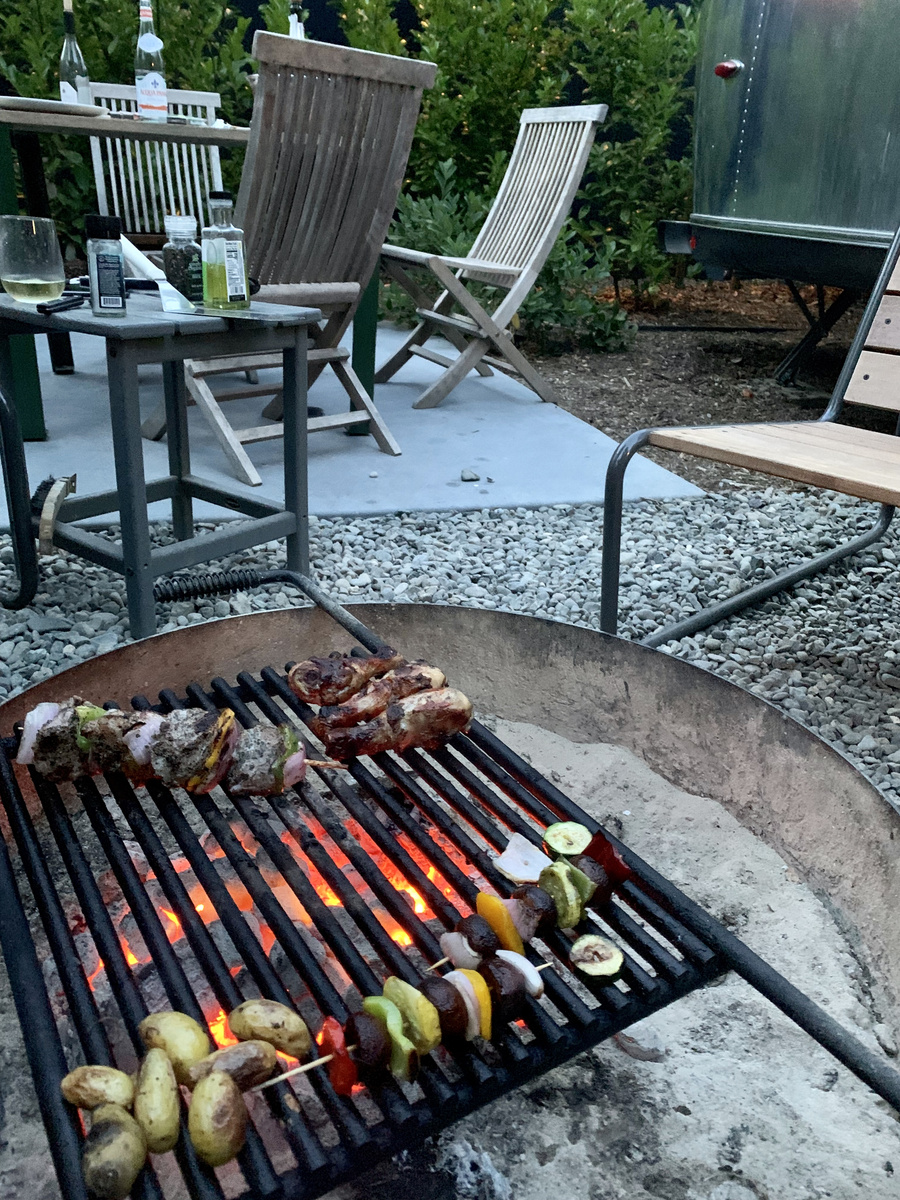
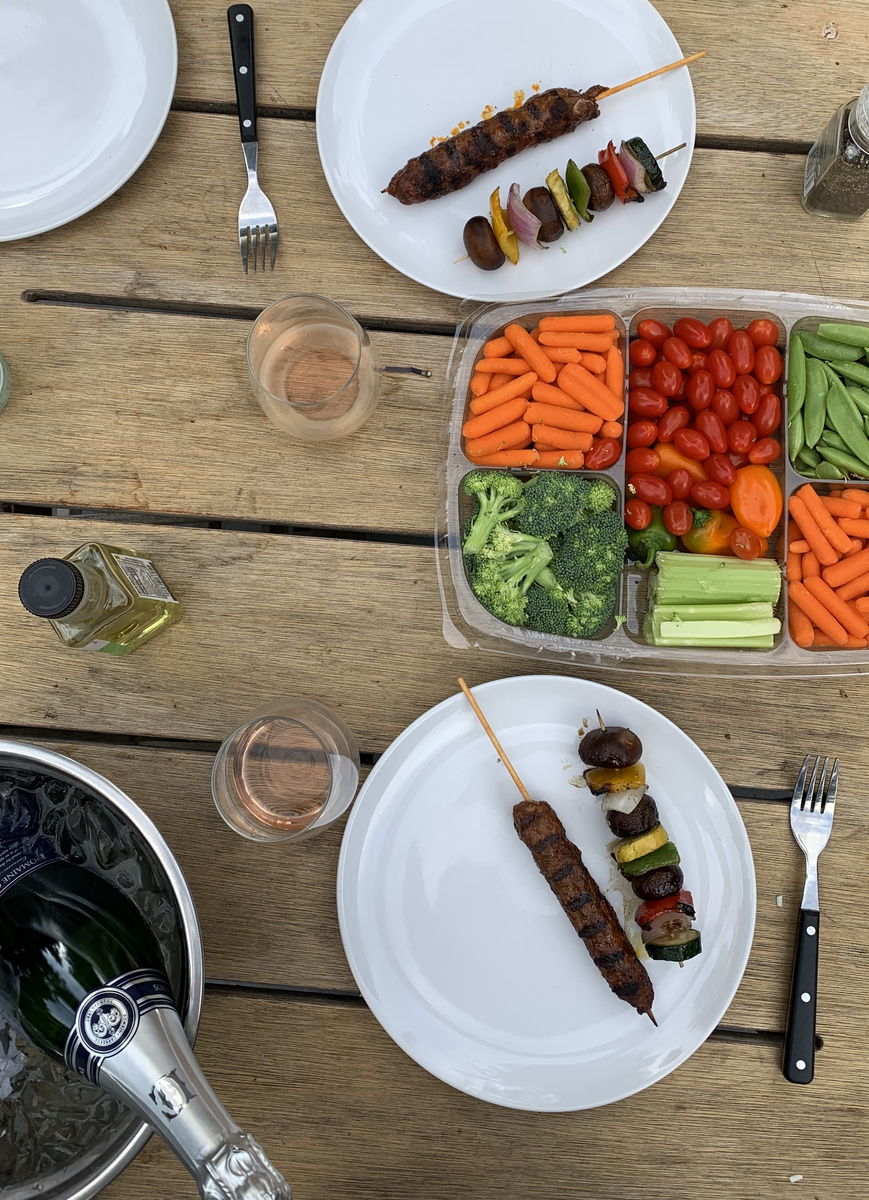
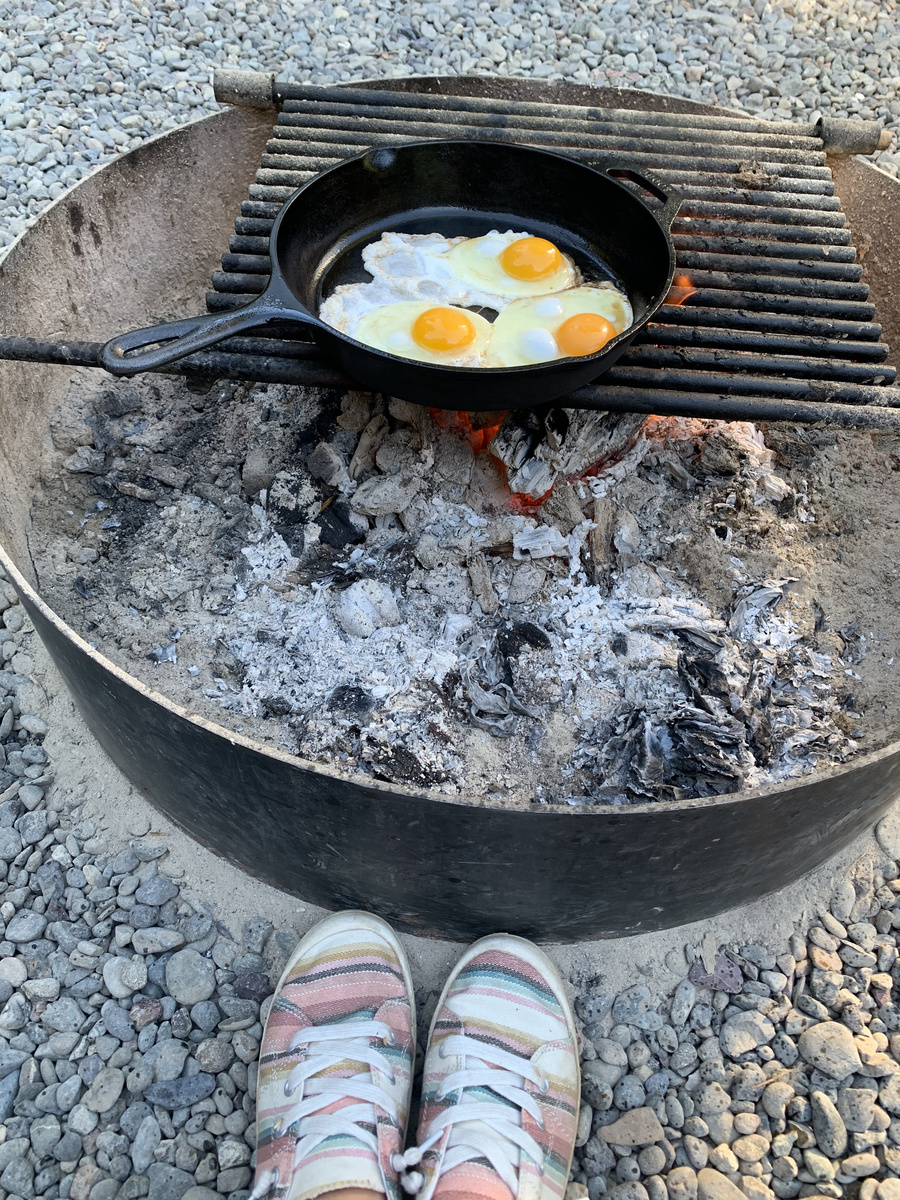
This was the balance I had wanted. We could sleep in a good bed, take a hot shower and make coffee without improvising, yet dinner still required fire, timing and attention. AutoCamp removed discomfort without removing the rituals that had made me want to camp.
Our self-catering was a choice, but today’s guests are not left entirely to their own provisions. AutoCamp Sonoma currently offers complimentary coffee, tea and granola in the clubhouse each morning, and supplies pour-over coffee and tea with the accommodation. Its General Store sells charcuterie essentials and snacks, as well as local beer and wine. It is a light breakfast rather than a continental spread; for anything more substantial, I would still plan to cook or go into Guerneville.
Where I would eat now
If I were returning today, lunch would keep the landscape in sight. The Farmhand, five minutes by car from AutoCamp, serves house-made deli food from a deck above the Russian River. On a Fort Ross day, Café Aquatica in Jenner is the more atmospheric pause: coastal sandwiches, chowder and pastries beside the estuary. For a Californian kind of street food, the Vazquez brothers have run the Guerneville Taco Truck for more than three decades; in summer, I would carry lunch to Johnson’s Beach and eat beneath the trees beside the river.
Dinner can be as close or as ambitious as the evening allows. Saucy Mama’s Jook Joint is roughly ten minutes on foot and turns a Sonoma family barbecue legacy into ribs, fried chicken, catfish and cornbread waffles. For an early dinner, AutoCamp’s seasonal bicycles make boon eat + drink a quick ride into town for organic, seasonal California cooking and Russian River wines. A short drive east reaches The Restaurant at Farmhouse Inn, the polished wine-country choice, with ingredient-led menus rooted in Sonoma’s farms, forests and coast. Opening days and reservations are worth checking directly.
The river and the tallest trees
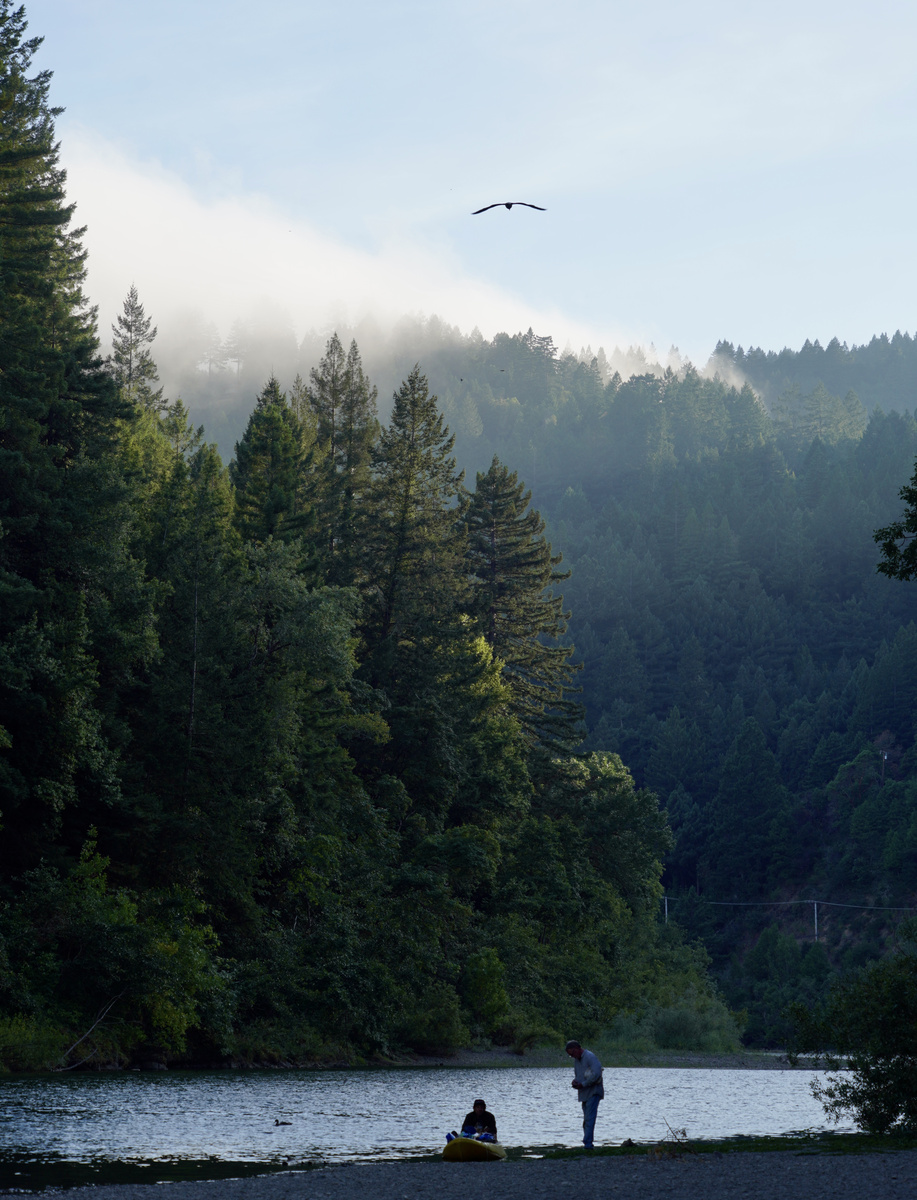
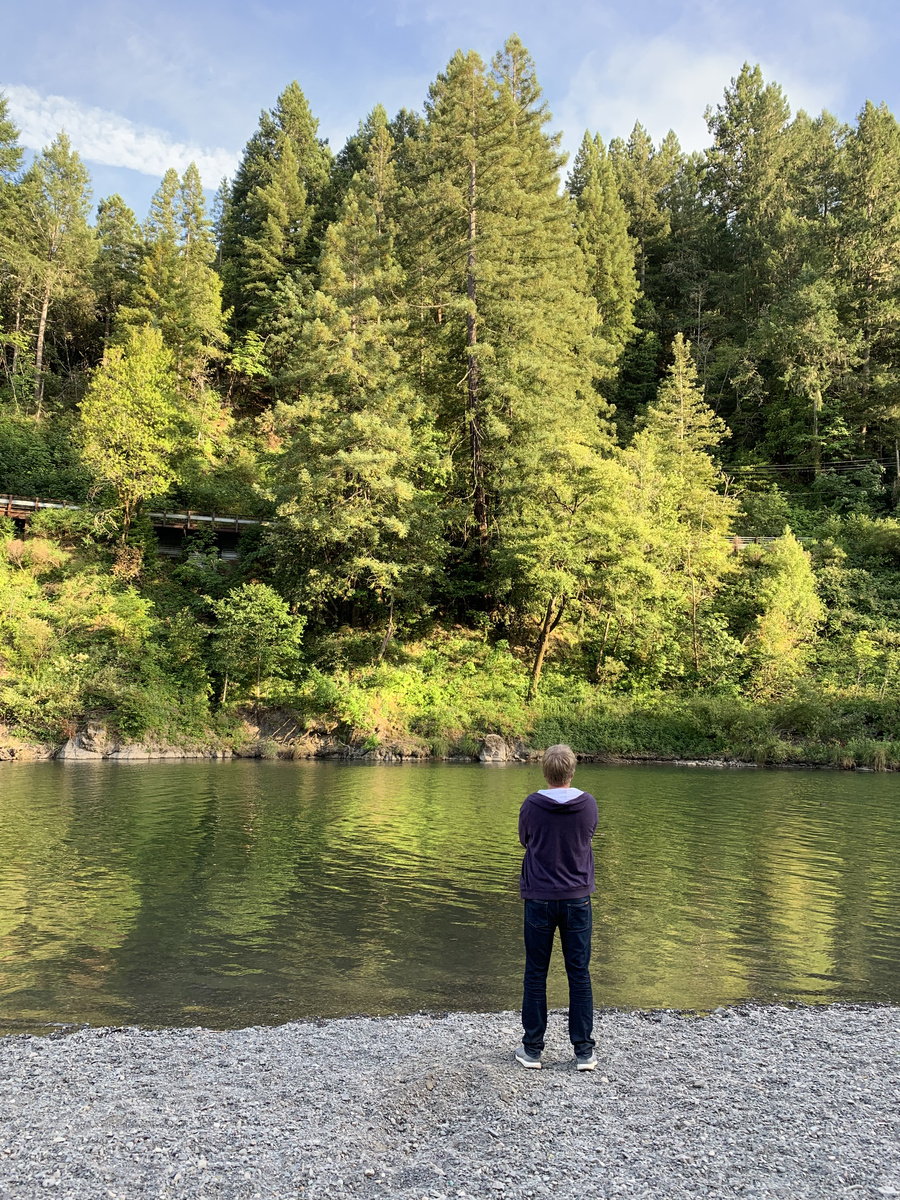
The property worked because the world beyond it was not an afterthought. The Russian River was only a few minutes away. We went down to its stony bank and also kayaked on the water; in the morning, mist held above the river while the wooded hills disappeared into cloud.
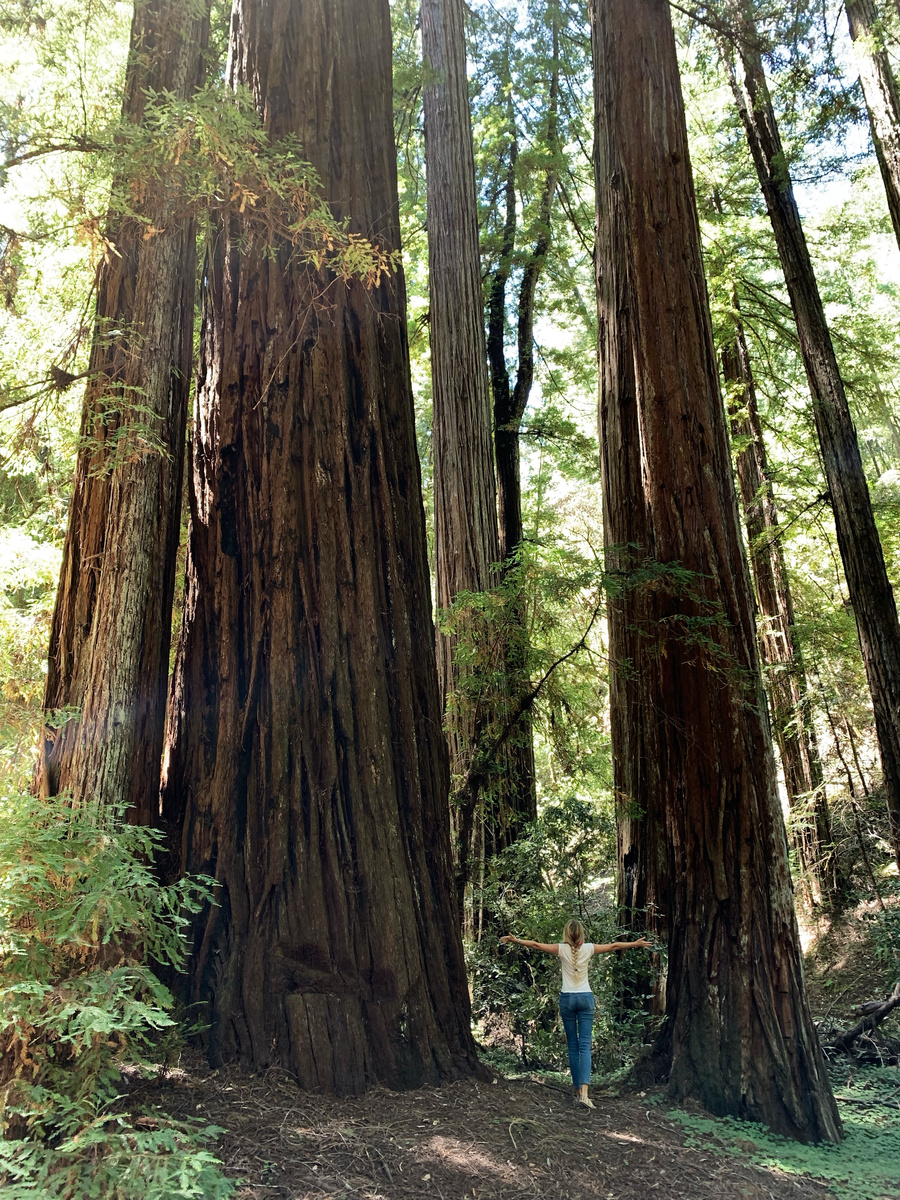
Armstrong Redwoods State Natural Reserve was close enough to reach easily from camp. The paths took us among coast redwoods whose dimensions made the Airstream seem less like a design object and more like a small silver visitor in an ancient forest.
Fort Ross and a tasting at Benovia
Two excursions from AutoCamp pulled the landscape in opposite directions. At Fort Ross State Historic Park, the road reached the Pacific and a former Russian-American Company settlement established in 1812. Fort Ross was intended as an agricultural base for Russia’s settlements in Alaska. That connection reaches across the North Pacific to my Kamchatka story, where Alaska appears as the neighbouring land Russia sold while Kamchatka remained its remote eastern frontier.
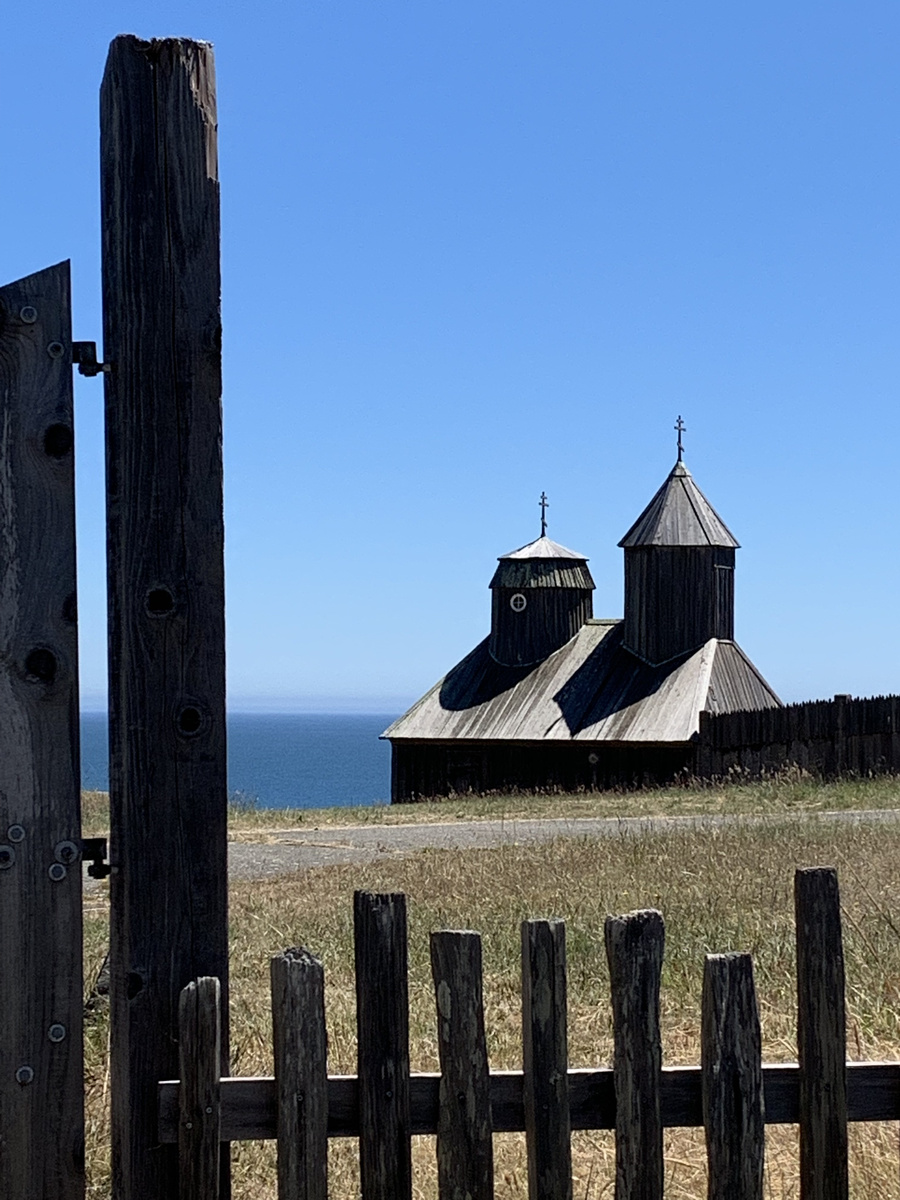
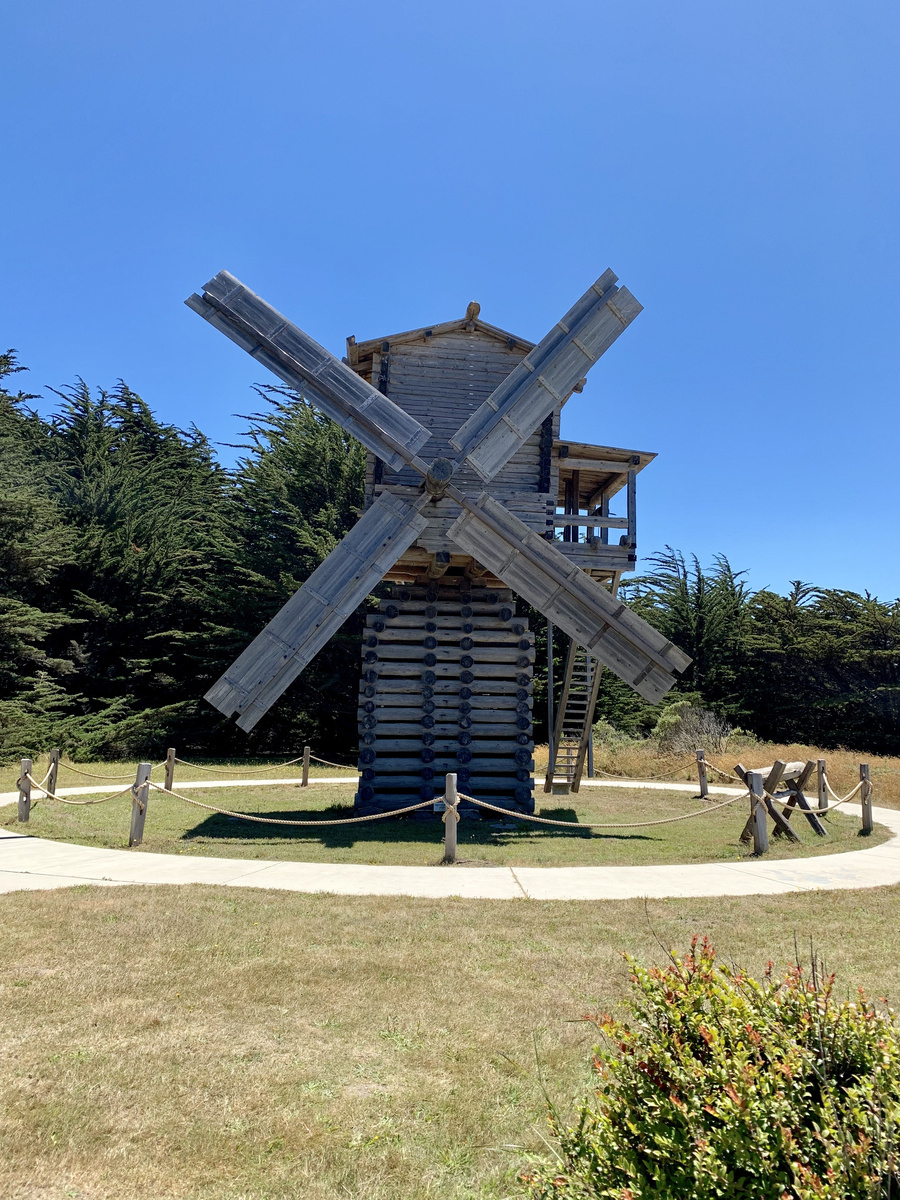
Fort Ross’s own history is more complicated than the old romance of a Russian fort on the California coast: Russians, Alaska Native people and the local Kashaya Pomo all form part of the place. Inside the reconstructed stockade, the timber chapel and windmill looked austere against the open sky.
On the road back we ate at Russian House #1 in Jenner, a Russian restaurant and cultural experiment founded after its creators discovered Fort Ross. There was no regular menu or listed price; conversation between Russians and Americans was part of the idea. It closed at the end of 2021 and now belongs to the memory of this journey rather than a current itinerary.
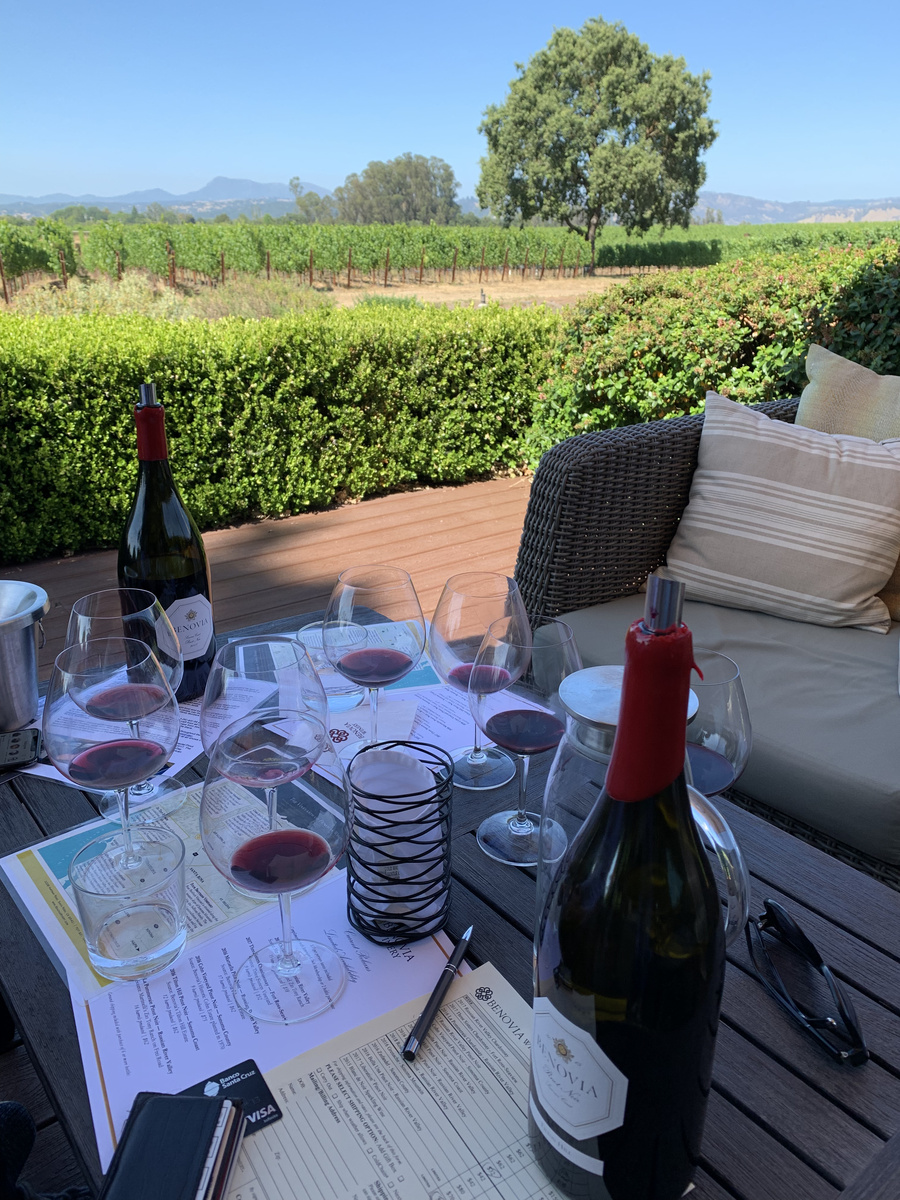
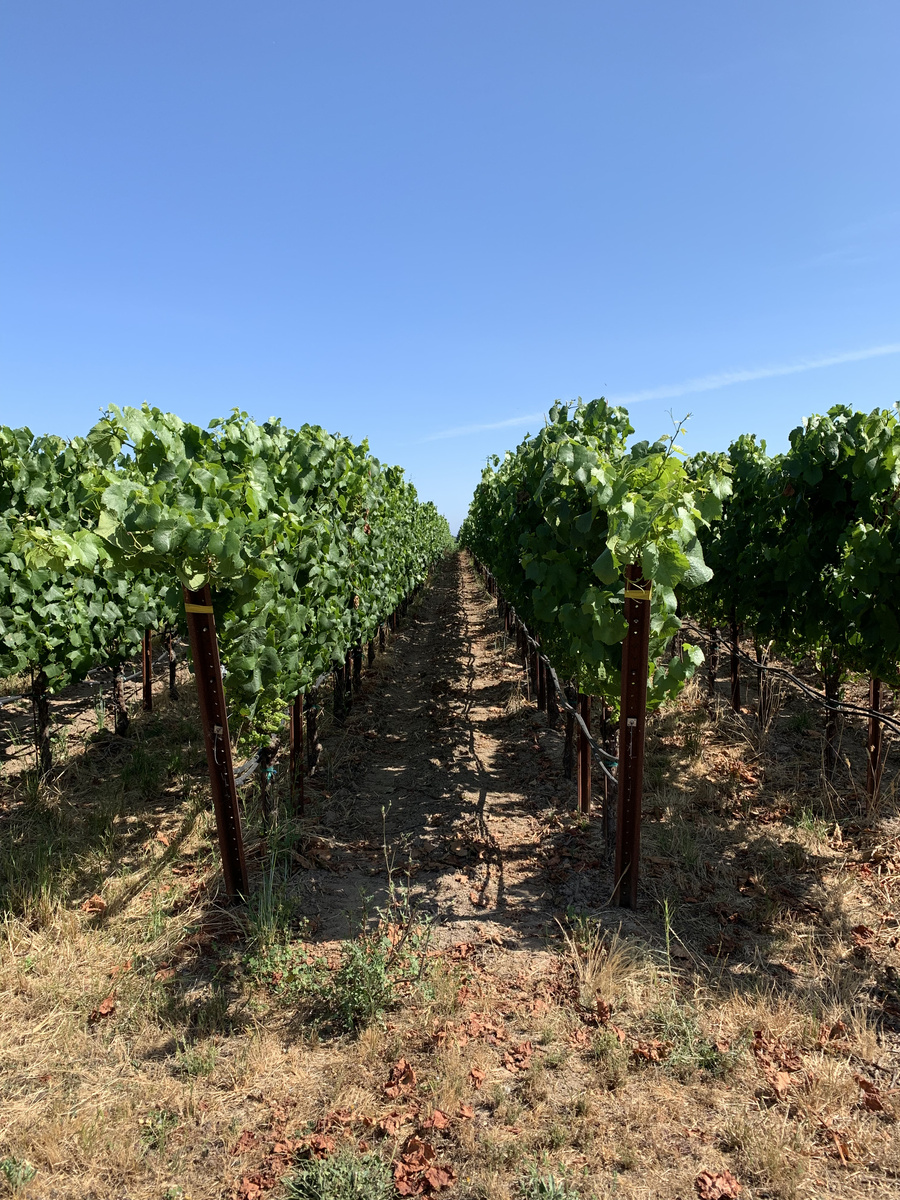
Benovia Winery offered a gentler counterpoint: a tasting table above rows of vines in the Russian River Valley. Benovia is a small, family-owned producer best known for Pinot Noir and Chardonnay. We came for a wine tasting after Fort Ross—history giving way to agriculture, the Pacific coast to the warm inland vineyard.
Why we returned
The property is now presented by AutoCamp as AutoCamp Sonoma, and current accommodation details should be confirmed directly. Benovia currently receives tasting guests by appointment, while the state-park pages are the right place to check access and conditions at Armstrong Redwoods and Fort Ross.
The private firepit had drawn me to this particular camp, but the Airstream was what made the stay work. It gave us a good bed and a dry kitchen after the river, Fort Ross and the vineyard, then opened its door back onto the redwoods.
A few years later, we stayed at AutoCamp Yosemite. The second stay confirmed that our attachment was not just to one forest or one holiday. We had fallen for the Airstream itself: its compact intelligence, its independence, the way its door opened directly onto whatever landscape we had chosen. We liked it so much that we seriously considered buying one of our own. The silver trailer had stopped looking like accommodation and begun to look like a possible life.