
My suitcase would not close on the morning I left Tashkent. Everything went wrong from there. Without this sort of drama, however, my journeys would be nothing but gloomy transfers.
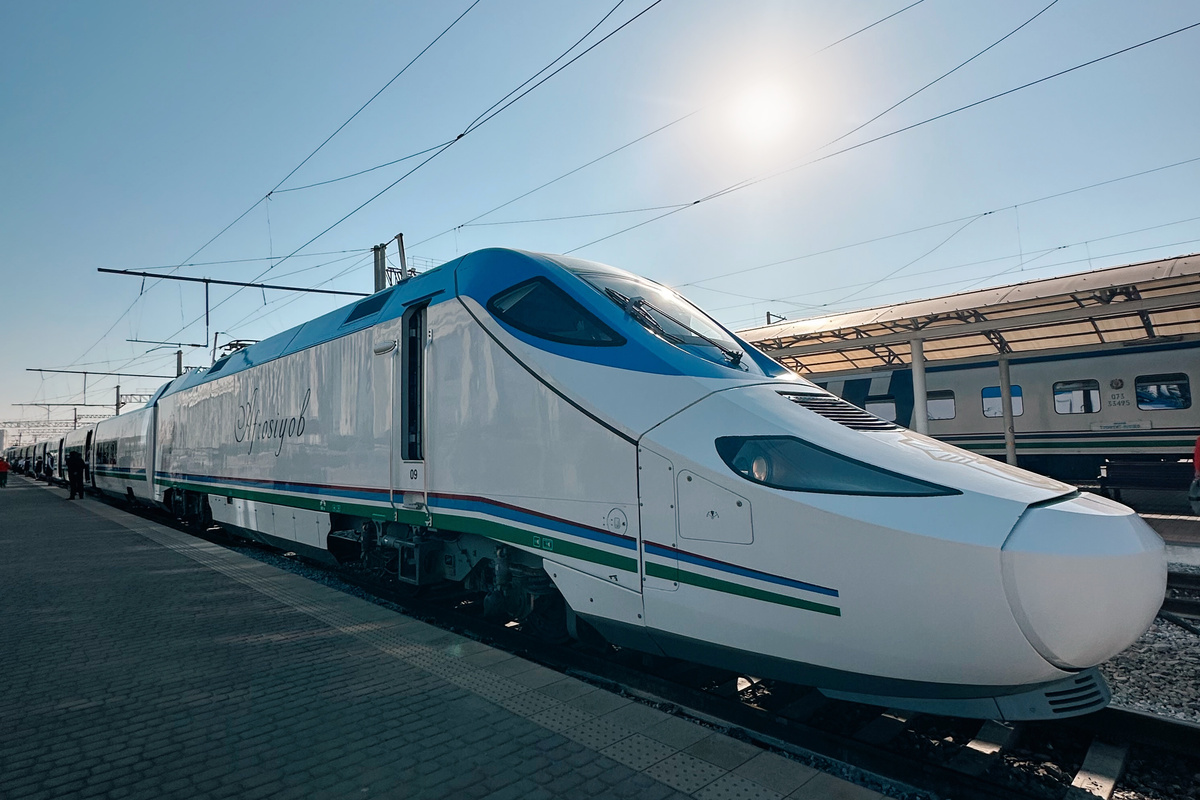
I ran. I made it. Then the disorder of the morning gave way to the calm of the Afrosiyob, the sleek white train carrying me west towards Samarkand. I had taken plenty of trains in Europe, yet this was better than many of them.
The phrase Silk Road suggests a single romantic line. It is an evocative name and an inaccurate map. UNESCO describes the Silk Roads as a shifting network of land and sea routes along which goods travelled together with beliefs, languages, techniques and ideas. Tashkent, Samarkand and Bukhara belong to that story, but they do not feel like variations of one city.
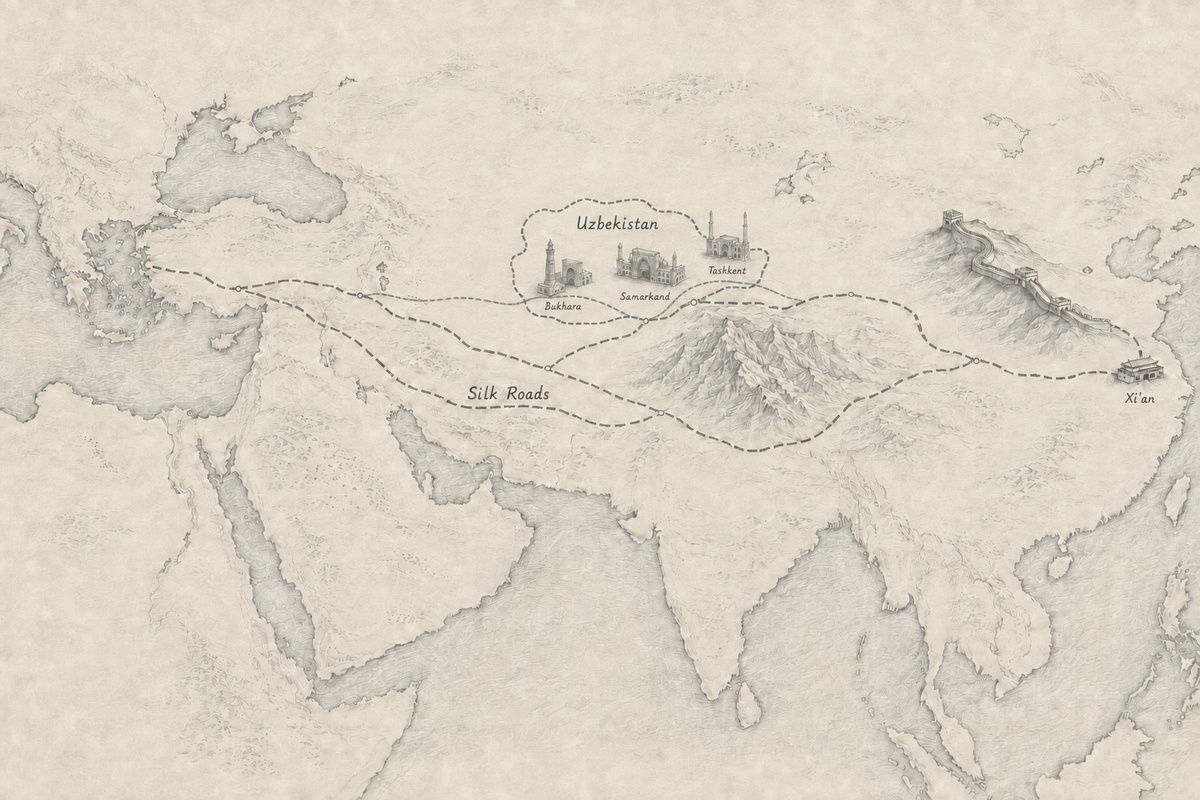
The railway allowed me to meet them in sequence. Tashkent taught me how easily the country worked. Samarkand stopped me in my tracks. Bukhara made the past feel inhabited. The old Silk Road had become a modern journey with a timetable.
My route: Tashkent to Samarkand to Bukhara
My own line ran from Tashkent to Samarkand and then to Bukhara. It is a satisfying first route through Uzbekistan because the train does more than connect the cities. It gives the journey a shape.
Tashkent is the practical beginning: an international capital with a metro, broad avenues, markets and the habits of everyday life. Samarkand brings the monumental centre of the Timurid world. Bukhara is more intimate, a place where the historic centre still behaves like a city rather than a ceremonial enclosure.
For a longer journey, Khiva draws the route farther west, towards the old oasis of Khorezm and the walls of Itchan Kala.
The official Uzbekistan Railways ticket site currently offers searches between Tashkent, Samarkand and Bukhara. Schedules, train numbers and prices change, so I would book the principal rail legs first and arrange hotels around them. If the Afrosiyob is available, it remains my first choice.
Tashkent: learning how the country works
Tashkent made Uzbekistan feel manageable from the beginning. From the airport onwards, taxis were straightforward, the city was comfortable to cross, and nobody tried to turn my arrival into an opportunity. Travelling alone, I felt safe.
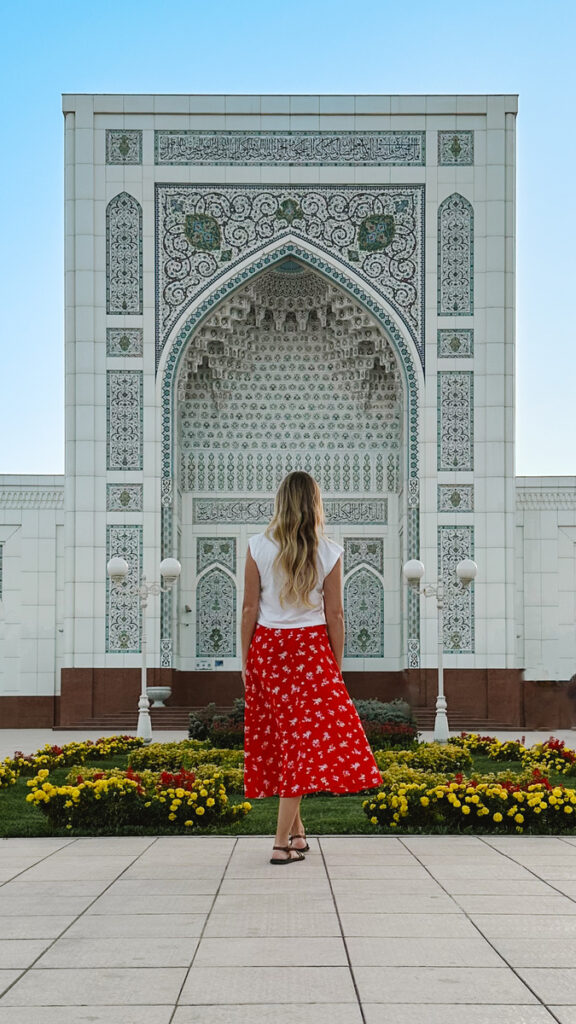
I moved between the old-city complex at Hazrat Imam, Chorsu Bazaar, the richly decorated metro and the pale Minor Mosque near sunset. Soviet scale sat beside Islamic architecture and modern Central Asian life. Tashkent wore the mixture easily.
Food gave the day its centre. If I had time for only one meal in Tashkent, I would still choose a plov centre, where the rice is cooked in enormous kazan cauldrons rather than dressed up for visitors. Uzbek food rewards appetite more than ceremony.
Some travellers worry about crossing the country without Russian or Uzbek. Russian made my own journey easier, and my familiarity with Turkish helped me recognise parts of Uzbek. English was not widely spoken, even around major sights, but the English-speaking travellers I met managed with translation apps, patience and gestures. None described the language barrier as a reason not to go.
If you would like a guide to help make sense of that mixture, this Tashkent city tour connects Khast Imam, Chorsu and the metro, with a car for the longer stretches. For a day that gives food equal billing, I would look at the walking and food tour instead; choose the food option if you want the meal included.
By the time I boarded the first train, I was no longer wondering whether the country would be difficult. I was wondering whether my suitcase would shut.
The Afrosiyob west
I had travelled often by sleeper train when I was younger, so in Uzbekistan I deliberately chose the fastest and most polished option. The Afrosiyob looked almost futuristic on the platform. Its long white nose was an unlikely companion to the names ahead: Samarkand and Bukhara.
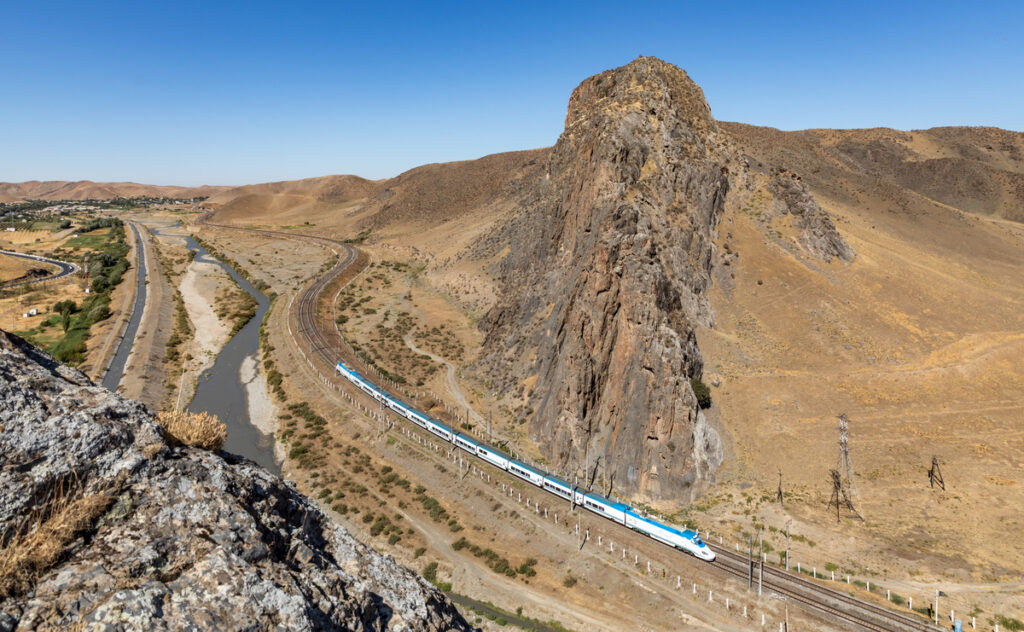
Travelling by rail meant I did not need a car or an organised tour. In the cities I walked whenever the distance made sense and used a taxi for stations and outlying places. The train took care of the long spaces in between.
It also preserved a sense of movement. Flying could have delivered me to the same coordinates, but the railway kept the cities on one line. Arrival in Samarkand felt like the next sentence rather than the beginning of another story.
Samarkand: where the route turns blue
From my room in Samarkand, I could look towards the great Bibi-Khanym Mosque. The city did not believe in discreet introductions.
Registan Square was the obvious centre, yet it did not become ordinary after the first visit. I returned in the evening, when the scale of the three madrasahs became theatrical. On one of those evenings I was extraordinarily lucky: Ludovico Einaudi performed in the square. Music filled a place once used for trade, public ceremony and judgment. For a little while, the old centre of Samarkand became an open-air concert hall.
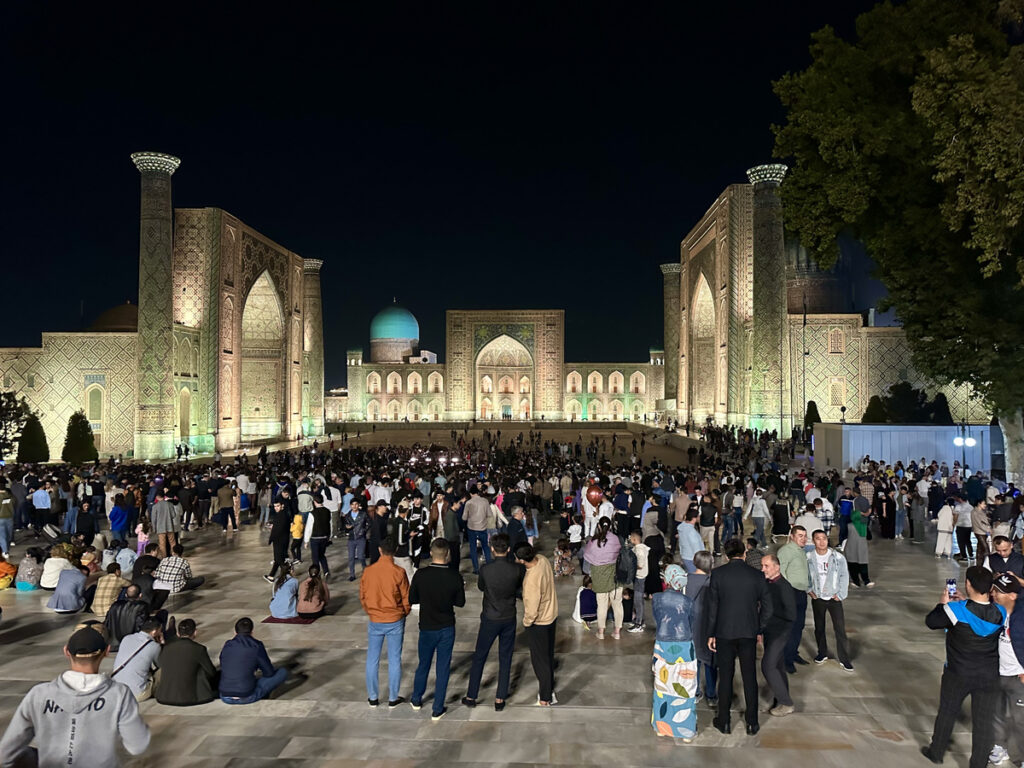
For an evening with someone to tell the stories behind the facades, there is a Samarkand walk after sunset past the illuminated Registan, Gur-e-Amir and Bibi-Khanym. It is a walk around their exteriors, which makes it a pleasant second look after seeing the interiors by day.
Inside the Tilya-Kori Madrasah, the architecture played a quieter trick. Its richly painted ceiling appears to rise into a dome, although the surface is flat. I lost track of time looking at the illusion. Outside was the enormous public square; inside, one detail made my eyes unreliable.
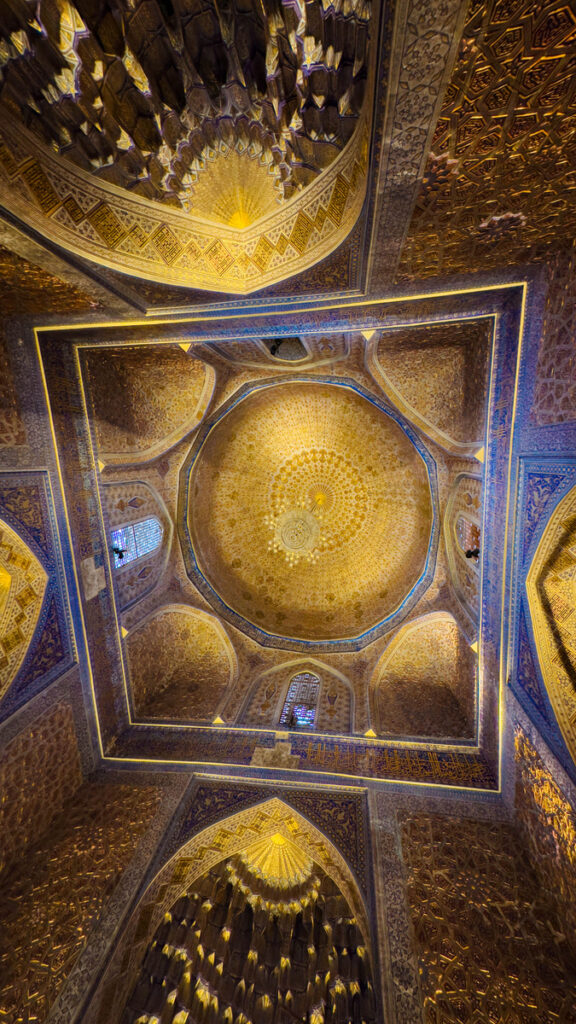
Shah-i-Zinda became my favourite place in the city. Its avenue of mausoleums compressed an extraordinary range of tilework into one passage. I had seen intricate Islamic decoration across Arab countries, but I could not find an easy comparison for these blues and patterns. Every few steps changed the facade and the rhythm.
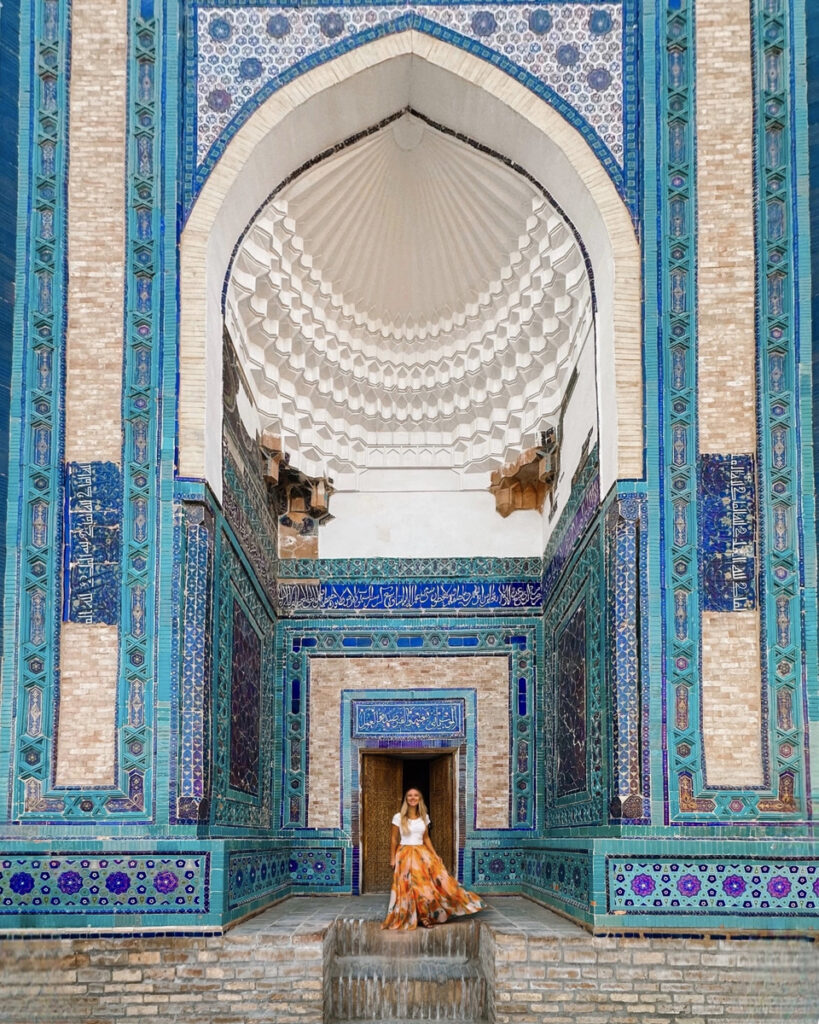
UNESCO calls Samarkand a crossroad of cultures, shaped most decisively during the Timurid period. I understood the phrase through smaller things: music in Registan after dark, a ceiling that refused to look flat, and the feeling that Shah-i-Zinda contained more beauty than one site should reasonably hold.
There is plenty here to want explained. A guided walk through Samarkand’s main monuments joins Gur-e-Amir, Registan, Bibi-Khanym and Shah-i-Zinda in one route. I would use it to get my bearings, then return to the place that held me longest; monument tickets are paid separately.
Bukhara: the Silk Road still living
The train continued west to Bukhara, and the mood changed again. Samarkand’s great monuments often felt like an open-air museum. Bukhara felt like a living city that happened to contain one.
Its historic centre is dense enough to explore on foot. Madrasahs, trading domes, mosques, courtyards and shops lead into one another without a formal beginning or end. UNESCO describes Bukhara as one of Central Asia’s best-preserved Islamic cities, but preservation was only part of its appeal for me. The old fabric still held commerce and ordinary movement.
I bought ceramics from Rishtan and looked seriously at suzani embroidery. Bukhara was the strongest shopping city on my route. Craft still seemed connected to the rooms and buildings around it.
The entrance to the Abdulaziz Khan Madrasah became my favourite architectural detail in Bukhara. Its carved arch and mosaic work had the richness I expected from Samarkand, but in a more intimate setting.
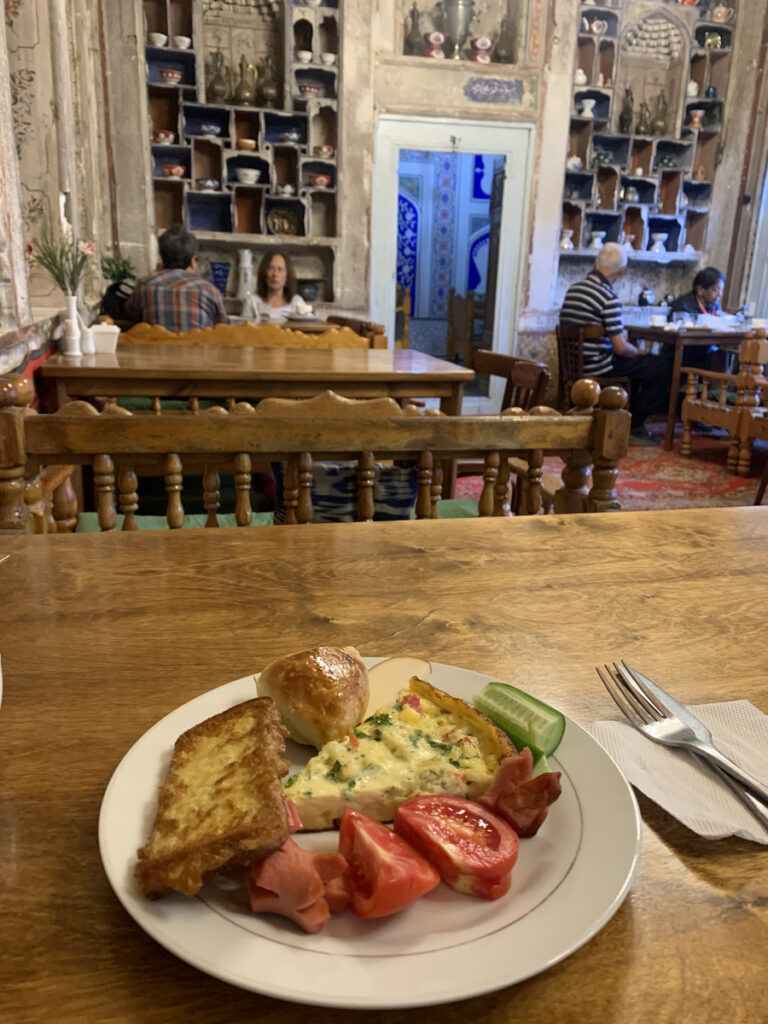
Breakfast completed that impression. I ate in my hotel’s nineteenth-century dining room, among carved niches, painted wood and shelves of ceramics. It felt less like visiting a historical display than being allowed to begin the morning inside one. By then the Silk Road was no longer only a sequence of famous monuments. It had become a room still in use.
If you like to know whose world you are walking through, a small-group walk through old Bukhara connects the trading domes, Abdulaziz Khan Madrasah and Kalyan; the Ark is viewed from outside. For more time with a guide of your own, this private Bukhara city walk spreads the sightseeing over a longer day and also reaches Chor Minor. Either would leave me with plenty of reasons to go wandering again.
Khiva: beyond Bukhara, a city within walls
Khiva gives a longer Silk Road journey a different sense of distance. Its old inner town, Itchan Kala, stands behind walls that reach some ten metres high. UNESCO describes it as a final resting place for caravans before the desert crossing towards Persia. That is a useful way to imagine the city: a place to gather provisions, shelter and resolve before the road became harder.
The most memorable interruption in its skyline is Kalta Minor. Muhammad Amin Khan began the minaret in 1852 with ambitions for an enormous tower; work stopped after his death in 1855. Its unfinished form gives the building an unusually human story. The ambition survives, and so does the abrupt end of the man who commissioned it.
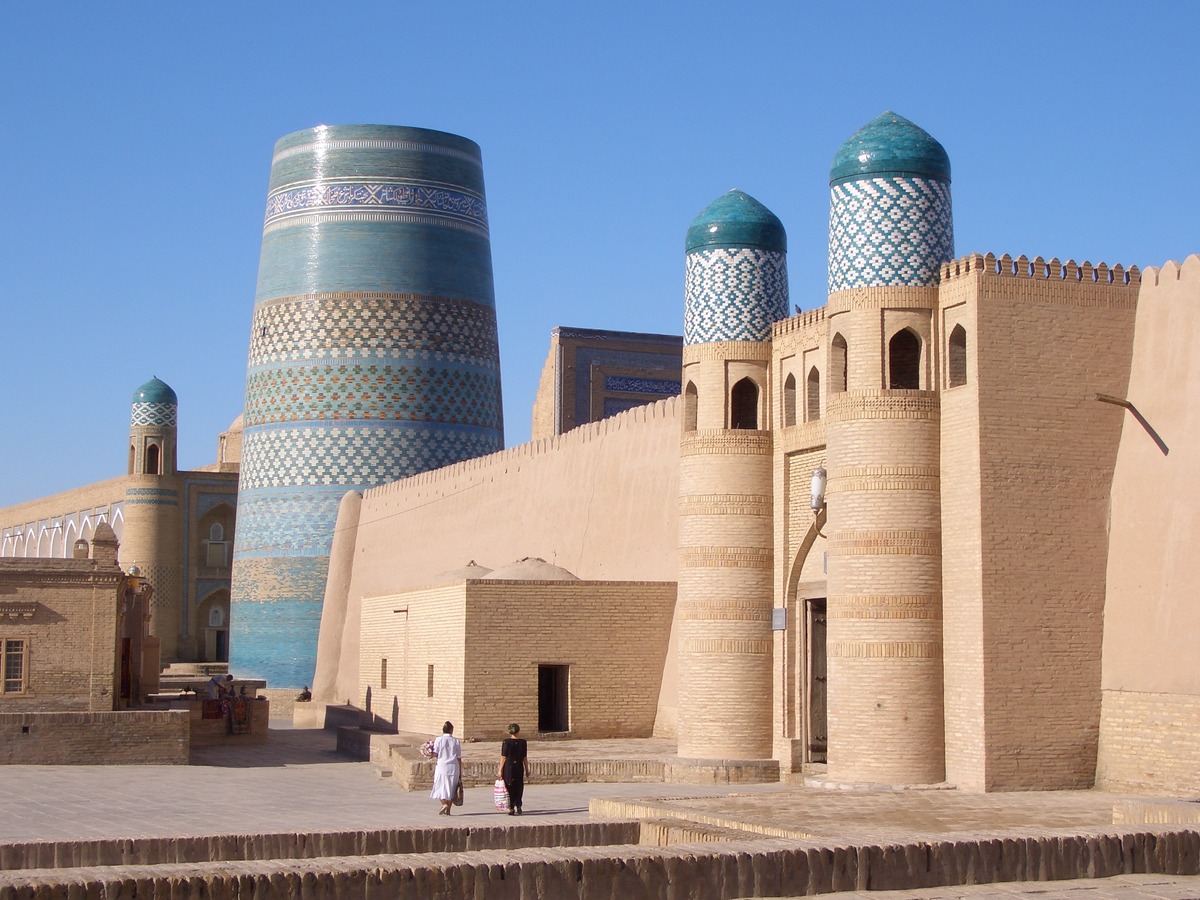
Elsewhere inside the walls, Juma Mosque brings the scale down to repeated columns and a covered prayer hall. UNESCO records 212 columns beneath its roof. Between the major buildings lie houses, courtyards and narrow streets: the attraction is how much of a city fits together inside one enclosure. I would leave time for those connections, with room to turn down a street simply because it looked interesting.
Khiva deserves space in the travel plan. For this extension, I would check the onward rail journey before choosing hotels, then give the city a full day of its own. A half-day walk through Itchan Kala would put Juma Mosque, the Islam Khoja Minaret and the Pakhlavon Makhmud Mausoleum into context. If you would rather have a guide to yourself for a longer exploration, there is also this private Khiva city tour. Allow for monument entrance tickets separately on either.
How I would plan the journey now
- Secure the trains first. Search the official rail site before fixing non-refundable hotels. I would choose Afrosiyob where possible and keep slower services as alternatives.
- Use Tashkent as more than an airport. Its markets, metro, mosques and plov give useful context before the monumental cities.
- Do not rush Samarkand into daylight hours. Registan changes in the evening. Leave room to return rather than treating every sight as a single completed visit.
- Give Bukhara time on foot. Its pleasure lies in the connection between monuments, shops, courtyards and daily life.
- Keep a translation app ready. English alone may require patience, but it need not make the journey difficult.
- Expect stations to require a taxi. The historic centre is not always beside the platform. Build that transfer into the day.
My first movement was a run, suitcase in hand, towards a train I nearly missed. My last clear image is slower: walking into breakfast in Bukhara, surrounded by the accumulated work of other centuries. Somewhere between those two moments, the Silk Road had become my way.
Discussion on
Continue the story
Watch the related post, then continue with the conversation it sparked. Replies open on Facebook.

Голубые купола